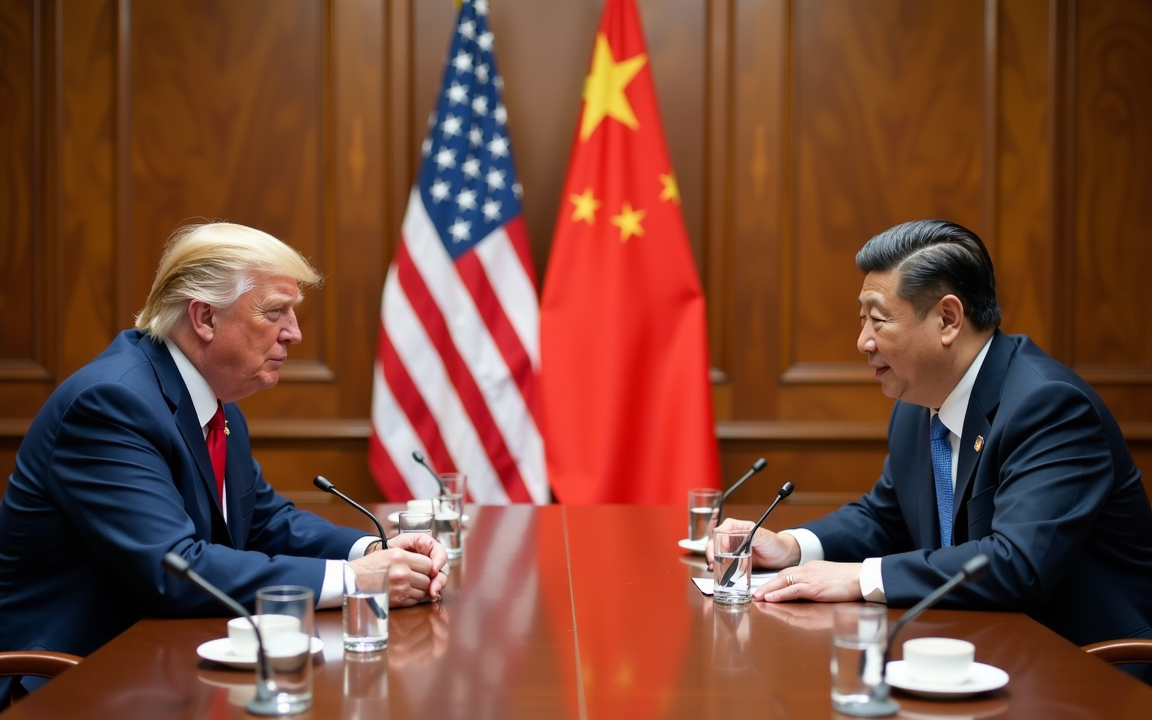
Trump’s two-day summit with Xi Jinping is now underway in Beijing, marking his first visit to China in nearly nine years.
More than a dozen top US executives have joined him, highlighting how closely markets are watching the trip for both business outcomes and diplomatic signals.
Early expectations remain modest as the talks are more likely to deliver limited agreements on trade and investment than a sweeping reset.
The investors are focused on one key question: Does this summit genuinely ease tensions, or simply delay the next round of friction?
Five issues that may define the summit
1. Trade is the easiest win, and the most likely headline.
Agriculture and aviation are back on the table, with the White House pushing for larger Chinese purchases of US soybeans and other farm goods. China is expected to announce purchases tied to Boeing aircraft and energy.
China may need to clarify how it will meet a prior commitment to buy 25 million metric tons of soybeans annually through 2028, even as its reliance on US beans has fallen sharply in recent years.
A Boeing order of up to 500 737 MAX jets, plus about 100 widebody aircraft in separate talks, would be the kind of deal that gives both leaders something to sell at home.
2. The real bargaining chip is technology versus rare earths.
Beijing wants relief from US restrictions on advanced semiconductor exports and has also objected to proposed rules limiting access to critical chipmaking equipment.
Washington is pressing China on rare earths and other critical minerals that have already strained aerospace and semiconductor supply chains.
The shortages of yttrium and scandium have worsened for US aerospace and chip makers, while Beijing has used export controls as leverage before and has expanded its economic pressure toolkit during the truce.
3. The Iran war and the Strait of Hormuz have turned this into a commodity-market summit.
US officials want China to help press Iran over the waterway, and the State Department has said senior US and Chinese officials agree no country should be allowed to exact shipping tolls in the Strait of Hormuz.
Trump and Xi are expected to discuss the conflict in Beijing, with China’s energy security under strain as the war has disrupted crude flows and complicated Beijing’s own diplomatic balancing act.
Any movement here would have immediate implications for oil, inflation expectations and risk assets.
4. Taiwan remains the summit’s biggest landmine.
Trump has said he will discuss arms sales to Taiwan, and he also plans to raise the case of jailed Hong Kong publisher Jimmy Lai.
Beijing has been signaling that Taiwan sits at the center of the talks and is pushing Washington to adjust its wording on Taiwan independence.
5. Jimmy Lai is the human-rights wild card that could trigger the most public friction.
Lai’s case is not likely to produce a deal, but it could produce a clash. Trump’s decision to raise it reflects both domestic politics and a willingness to use human-rights pressure as negotiating leverage.
China sees the issue as interference in internal affairs, which makes it one of the least soluble items on the agenda and one of the easiest to turn into a public spat if the summit sours.
The post 5 flashpoints that could make or break the Trump-Xi summit appeared first on Invezz