Altech Batteries (ATC:AU) has announced Altech – CERENERGY Project Secures German Grant Approval
Download the PDF here.
This post appeared first on investingnews.com


Altech Batteries (ATC:AU) has announced Altech – CERENERGY Project Secures German Grant Approval
Download the PDF here.

Highlights
– Altech Batteries GmbH’s CERENERGY(R) battery project has received conditional binding funding approval under Germany’s federal ‘STARK’ economic development program.
– The approval relates to a grant covering approximately 30% of eligible project CAPEX, with funding of up to EUR46.11M.
– The funding commitment is conditional on achieving full project financial close by 30 June 2026 and parliamentary approval of funds under Germany’s 2026 Federal Budget.
Conditional Binding Funding Commitment
The funding is being provided as part of the federal STARK program, which is supported by the Federal Ministry for Economic Affairs and Energy in cooperation with the EU. The aim of this program is to lead regions undergoing structural change into an ecologically, economically and socially sustainable future.
With the approval of the funding, the project has successfully completed the second and decisive stage of the approval process. The funding covers approximately 30% of the eligible investment costs and represents a significant milestone for the construction of the planned 120 MWh CERENERGY(R) battery factory in Germany.
This decision underscores the importance of the innovative CERENERGY(R) technology, which is being developed in collaboration with the Fraunhofer Society. The Sodium-Chloride Solid-State battery offers a safe, sustainable and strategically independent alternative to lithium-ion batteries and is expected to play an important role in future stationary energy storage solutions – especially for the European market.
Mr Daniel Raihani, Managing Director & Chief Executive Officer, commented ‘Securing conditional binding funding approval of up to EUR46.11 million under Germany’s STARK program is a major milestone for the CERENERGY(R) project. The support reflects the strategic importance of establishing advanced, nonlithium energy storage manufacturing capability in Europe and recognises the technical progress achieved to date in collaboration with Fraunhofer IKTS.
‘Importantly, the grant materially de-risks the project’s capital structure by covering approximately 30% of eligible investment costs and provides a strong foundation as we progress toward full project financing and construction of the planned 120 MWh production facility in Saxony, Germany.
‘We remain focused on completing financial close by mid-2026 and advancing the CERENERGY(R) technology toward commercial deployment to support long-duration, safe and sustainable stationary energy storage solutions for the European market’.
As is customary for projects of this size, the funding commitment is subject to final financial close of the CERENERGY(R) battery project by June 2026 and budgetary approval of the funds in the 2026 federal budget.
*To view tables and figures, please visit:
https://abnnewswire.net/lnk/918BT5H8
About Altech Batteries Ltd:
Altech Batteries Limited (ASX:ATC,OTC:ALTHF) (FRA:A3Y) is a specialty battery technology company that has a joint venture agreement with world leading German battery institute Fraunhofer IKTS (‘Fraunhofer’) to commercialise the revolutionary CERENERGY(R) Sodium Alumina Solid State (SAS) Battery. CERENERGY(R) batteries are the game-changing alternative to lithium-ion batteries. CERENERGY(R) batteries are fire and explosion-proof; have a life span of more than 15 years and operate in extreme cold and desert climates. The battery technology uses table salt and is lithium-free; cobalt-free; graphite-free; and copper-free, eliminating exposure to critical metal price rises and supply chain concerns.
The joint venture is commercialising its CERENERGY(R) battery, with plans to construct a 100MWh production facility on Altech’s land in Saxony, Germany. The facility intends to produce CERENERGY(R) battery modules to provide grid storage solutions to the market.
Source:
Altech Batteries Ltd
Contact:
Daniel Raihani
Managing Director
Altech Batteries Limited
Tel: +61-8-6168-1555
Email: info@altechgroup.com
Martin Stein
Chief Financial Officer
Altech Batteries Limited
Tel: +61-8-6168-1555
Email: info@altechgroup.com
News Provided by ABN Newswire via QuoteMedia
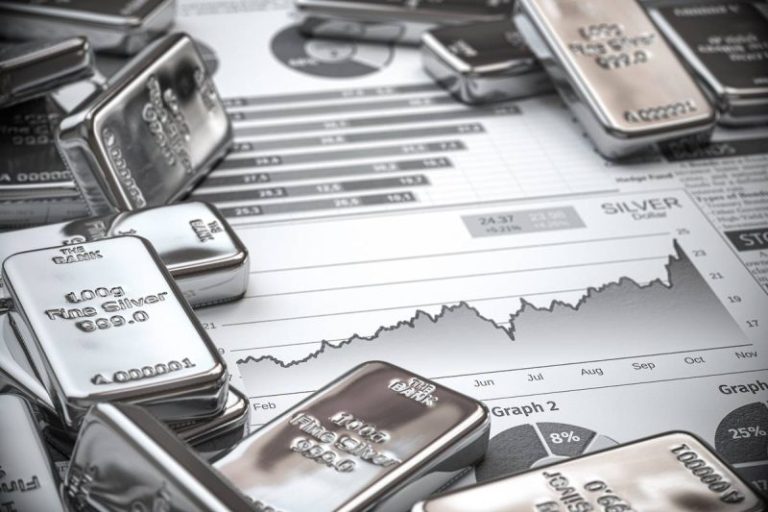
The silver price remains historically high despite a recent pullback, and many silver stocks haven’t kept pace.
Silver’s strong performance over the past year is the result of a perfect storm of factors, including an entrenched supply deficit, growing industrial demand, a weakening US dollar and deepening geopolitical and economic uncertainty.
For these reasons, investors are flocking to silver for both its safe-haven status and its developing role as a critical metal in energy, artificial intelligence and defense technologies.
As of early February, the silver price was trading in a range of US$70 to US$80 per ounce, while the Amplify Junior Silver Miners ETF (ARCA:SILJ) was trading between about US$31 to US$32 per share.
SILJ tracks small-cap and mid-cap producers, developers and explorers that derive most of their revenue from silver. The profit margins of this segment of the silver-mining industry are the most sensitive to rising silver prices, hence SILJ tends to outperform the price of physical silver during bull markets.
During a presentation at the Vancouver Resource Investment Conference (VRIC), held from January 25 to 26, Peter Krauth, editor of Silver Stock Investor and Silver Advisor, looked at the performance of silver stocks relative to the price of physical silver, honing in on the silver-mining exchange-traded funds.
‘So we actually have had negative leverage in silver stocks versus silver. If you look back over one year, two years, we’re essentially even. You’ve gotten no reward for taking on additional risk by being in the silver stocks.’
Why are silver stocks, particularly those on the SILJ, lagging behind the performance of the physical metal?
Krauth explained that valuation models for these stocks are still factoring in silver prices at US$25 to US$30, even though last quarter the price was averaging around US$70 per ounce. “They essentially almost all need to be revalued because silver is so much higher, and that hasn’t happened yet,” he said.
“I think they’re going to have to redo their calculations for gold and silver miners.”
“That caps their earnings. Well, the good news for speculators, investors and mining stocks is that those hedges expire,” said Penny, who believes that the relative outperformance of the silver stocks to the silver price will “kick in soon.’
Penny is looking for those hedges to expire over the first few quarters of the year.
“Then that’s where these mining stocks, the profits are just going to go through the roof. I mean, even if we pull back to the mid US$60s — not expecting that — but even if that were to happen, these mining stocks are not pricing in US$60 silver. They’re still pricing in sub-US$50 silver. So a lot of upside potential here for the mining stocks,” he said.
Barton is also looking for a move sooner rather than later, especially with earning calls coming up.
“I think we have a catch-up trade coming. I think it’s coming soon. So if no one has taken advantage of this yet, I think you need to act like now,” said Barton, who later added, “Assuming the silver price could stay above, you know, US$75 an ounce or so, that should blow out expectations. And I think it’ll be a really nice trade. I really do.”
But that won’t be the end of the party for silver. Krauth sees strong potential over the next two or three years for a “dramatic run” for the silver sector. And like his peers, he sees that run starting soon.
“I think what we’re going to see is over the next few quarters, as those projects, producers, cashflows, get revalued at higher input prices, we’re going to see the profit margins really explode and expand,” he said. “We’re going to see when those numbers get reported, the market is going to start to appreciate that and start to re-rate a lot of these stocks.”
Rick Rule, investment guru and proprietor at Rule Investment Media, is already making plays in this latest silver bull market, leveraging the profits he’s made in physical silver to better position himself for the next stage.
“My reasoning being as follows: if silver goes nowhere for a year, if it stays rangebound, the best silver producers are discounting US$45 silver a year from now, if the price is at US$75 or US$80 they’ll be discounting US$75 or US$80 silver, which means the stock will be up 50, 60, 70 percent,” he explained.
“The speculative outlook for the silver stocks seemed to be better than the speculative outcome for silver. If silver stays flat for a year, by definition, silver won’t give me any return. But if it stays flat, the silver stocks would give me 50 or 60 percent so it was a better speculative outcome,’ Rule added.
What did he do with the rest of his gains from his physical silver investment? He parked 25 percent in physical gold. “That’s how I save. I maintain liquidity in US currency, and I save in gold,” said Rule.
The other 25 percent went into oil and gas stocks. “As you know, my motto is that I buy hate and I sell love. Silver was loved, so I sold it. Oil and gas were hated, so I bought it.”
Both Krauth and Barton are on board with Rick’s Rules for silver investment.
“(Rule) has had for a long time a significant position in physical silver, and has sold a good portion of that because he is looking for value all the time and not sitting still. And he decided that those proceeds were going to go to where he saw value,” said Krauth. “And that’s part of my thesis going forward as well — that the value, or the unrealized value, in the silver space is now, especially in the miners.”
Barton also sees value in this strategy. “I have been selling some physical silver, and I’ve been putting it into oil stocks, and I’ve been putting it into gold and silver miners because they have not played that catch-up trade, right?,” he said. “Spot gold and silver are relatively expensive compared to very good silver and very good gold miners. So that could be a place where you could take some profits and rotate into the next leg up.”
Securities Disclosure: I, Melissa Pistilli, hold no direct investment interest in any company mentioned in this article.
On Thursday (November 13), Canadian Prime Minister Mark Carney announced a second round of nation-building projects that will be referred to the Major Projects Office. The office was established earlier in the year to streamline the regulatory and funding processes for projects deemed to be in the national interest.
The first set of projects, announced on September 11, included support for the expansion of Newmont’s (NYSE:NEM,ASX:NEM) Red Chris mine in Northern British Columbia, LNG Canada’s phase 2 expansion of its facility in Kitimat, BC, and Foran Mining’s (TSX:FOM) McIlvenna Bay copper-zinc project in Saskatchewan.
According to the Prime Minister’s Office (PMO), the new set of projects represents more than C$56 billion in new investment and supports the creation of 68,000 new jobs.
Critical mineral projects on the list consist of:
Outside of critical minerals projects, the announcement included support for the Ksi Lisims liquefied natural gas (LNG) project near Prince Rupert in Northwest BC. The Nisga’a First Nation is leading the project and, when complete, it will become Canada’s second-largest LNG facility after LNG Canada’s Kitimat facility. According to the PMO, the project is expected to generate almost C$30 billion in investment and create thousands of jobs.
Additionally, support will be made available for the North Coast Transmission line, which will provide low-cost electricity and improved telecommunications to communities along BC’s north coast. Likewise, the Iqaluit Nukkiksautiit hydro energy project will receive support to provide hydroelectric energy to communities in Nunavut and reduce the reliance on diesel imports.
For more on what’s moving markets this week, check out our top market news round-up.
Canadian equity markets were mixed this week.
The S&P/TSX Composite Index (INDEXTSI:OSPTX) rose 1.89 percent over the week to close Friday (November 14) at 30,326.46.
Meanwhile, the S&P/TSX Venture Composite Index (INDEXTSI:JX) rebounded to gain 1.33 percent to 879.88. The CSE Composite Index (CSE:CSECOMP) had another bad week, plunging 9.01 percent to close at 150.19.
The gold price rose significantly this week, climbing from its open of US$4,000 to US$4,243 by Thursday morning. However, it pulled back to end the week up 2.01 percent at US$4,080.64 per ounce by 4:00 p.m. EST Friday.
The silver price performed even better. After opening at US$48.35, it tested all-time highs at US$54.31 Thursday before ultimately ending the week up 4.57 at US$50.56.
Meanwhile, in base metals, the copper price gained 1.79 percent to US$5.11 per pound.
The S&P Goldman Sachs Commodities Index (INDEXSP:SPGSCI) rose 1.28 percent to end Friday at 559.27.
How did mining stocks perform against this backdrop?
Take a look at this week’s five best-performing Canadian mining stocks below.
Stocks data for this article was retrieved at 4:00 p.m. EST on Friday using TradingView’s stock screener. Only companies trading on the TSX, TSXV and CSE with market caps greater than C$10 million are included. Mineral companies within the non-energy minerals, energy minerals, process industry and producer manufacturing sectors were considered.
Weekly gain: 157.14 percent
Market cap: C$40.63 million
Share price: C$0.09
Adex Mining is an exploration company that holds a 100 percent stake in the Mount Pleasant project in Southwest New Brunswick, Canada.
The property contains two main deposits: the Fire Tower zone, which hosts tungsten and molybdenum mineralization, and the North zone, which hosts tin, zinc and indium.
The asset consists of 102 mineral claims covering 1,600 hectares, as well as equipment and facilities from historic mining operations conducted by BHP (ASX:BHP,NYSE:BHP,LSE:BHP) between 1983 and 1985.
According to its most recent investor presentation released on June 11, the property hosts the world’s largest indium reserve and North America’s largest tin deposit. Indicated resources for the North zone demonstrated contained metal values of 47 million kilograms of tin, and 789,000 kilograms of indium from 12.4 million metric tons with average grades of 0.38 percent tin and 64 parts per million indium.
Additionally, the company engaged Moneta Securities in June to oversee selling the mine following a strategic review.
Adex has not released news in the past week. However, its Fire Tower zone bears similarities to Northcliff’s Sisson tungsten-molybdenum project in New Brunswick, which the Canadian government referred to the Major Projects Office on Thursday.
Weekly gain: 118.82 percent
Market cap: C$42.58 million
Share price: C$1.86
Trident Resources, formerly Eros Resources, is a gold and copper exploration company focused on projects in Saskatchewan, Canada.
A three-way merger in early 2025 between Eros Resources, MAS Gold and Rockridge Resources allowed the companies to consolidate a portfolio of assets in Saskatchewan, including the Contact Lake and Greywacke gold projects in the La Ronge gold belt as well as the Knife Lake copper project.
Its primary focus has been on its flagship Contact Lake gold project, a 21,440 hectare property located near La Ronge, Saskatchewan. The project hosts four primary deposits: Contact Lake, Preview SW, Preview North and North Lake.
On Wednesday (November 12), the company released assay results from diamond drilling at Contact Lake, the first exploration conducted on the property in nearly 30 years. Highlights from the initial three holes included one hole with 7.03 grams per metric ton (g/t) gold over 43.25 meters, including an intersection of 30.06 g/t gold over 9.25 meters.
The company noted that, while it was still in the early stages of exploration at the property, it was encouraged by results that bore similarities to early results of other significant high-grade discoveries in the region.
Weekly gain: 116.22 percent
Market cap: C$279.18 million
Share price: C$0.4
Northcliff Resources is a development and exploration company advancing its Sisson tungsten-molybdenum project in New Brunswick, Canada.
The 14,140 hectare property has seen extensive exploration dating back to the early 1980s.
A 2013 mineral reserve estimate demonstrated total proven and probable quantities of 22.2 million metric tons of tungsten oxide and 154.8 million pounds of molybdenum from 334.36 million metric tons of ore with average grades of 0.07 percent tungsten oxide and 0.02 percent molybdenum.
The project is currently in the development stage, and on Friday, it announced it was granted a five-year extension to the construction commencement timeline by New Brunswick’s Department of Environment and Climate Change. Construction is now anticipated to begin in December 2025.
The project was also one of six that were included in the second-tranche of Canadian nation-building projects referred to the Major Projects Office on Thursday. The inclusion on the list will give Northcliff access to a streamlined regulatory process and open funding assistance to facilitate the development of Sisson.
Commenting on the news, Northcliff Chairman, President and CEO Andrew Ing indicated the company is excited with its inclusion and that its goal is to contribute to building a resilient critical mineral supply chain.
The release also outlined significant financial funding received since the start of the year, including US$15 million from the US Department of Defense and C$8.21 million from Natural Resources Canada.
Weekly gain: 61.54 percent
Market cap: C$334.66 million
Share price: C$1.68
Canada Nickel is an exploration and development company advancing its flagship Crawford nickel sulphide project in Ontario, Canada.
The property consists of 116 crown patents and 150 single- and multi-cell mining claims covering an area of approximately 9,600 hectares near Timmins and has seen exploration dating back to the 1960s.
A feasibility study released in October 2023 demonstrated the project’s economics, with a post-tax net present value of US$2.48 billion and an internal rate of return of 17.1 percent.
The included ore reserve estimate reported proven and probable reserves of contained metal values of 3.7 million metric tons of nickel, 9.7 million metric tons of chromium, 215,000 metric tons of copper, 777,000 ounces of palladium, and 519,000 ounces of platinum.
The metal is contained in 1.72 billion metric tons of ore with average grades of 0.22 percent nickel, 0.57 percent chromium, 0.013 percent copper, 0.014 g/t palladium and 0.01 g/t platinum.
Shares in Canada Nickel rose sharply this week after Crawford was included in the second round of projects referred to the Canadian government’s Major Project Office.
In its release following the announcement, Canada Nickel’s CEO said that the company looks forward to working with the government and the MPO to secure financing and permits to begin construction at Crawford by the end of 2026.
He also stated that the project represents a secure, domestic supply of critical minerals, including nickel and North America’s only source of chromium.
Weekly gain: 57.89 percent
Market cap: C$51.71 million
Share price: C$0.15
Gold Terra is an exploration company advancing the Con Mine gold property in the Northwest Territories, Canada.
The project was initially acquired as part of a 2021 agreement with Newmont that gave Gold Terra the option to earn a 100 percent interest in the asset for meeting certain exploration milestones and regulatory approvals, along with a C$8 million cash payment to Newmont.
The agreement was then amended in September 2024, extending the timeline by 2 years to November 21, 2027.
The property consists of 138 mining leases and 165 claims covering a total area of 79,046 hectares and hosts the historic Con Mine, which produced more than 6.1 million ounces of gold.
A mineral resource estimate included in an October 2022 technical report demonstrated a total inferred resource of 1.21 million ounces of gold from 24.3 million metric tons with an average grade of 1.54 g/t gold.
Shares in Gold Terra gained this week after the company announced a C$6.3 million non-brokered private placement that included a new strategic investment from Franco-Nevada (TSX:FNV,NYSE:FNV) Co-Founder David Harquail and existing shareholder Eric Sprott.
The company said it will use proceeds for general corporate purposes and to fund a drilling program scheduled for January 2026 at the southern end of the Campbell Shear target at the Con Mine property. The program aims to expand the property’s indicated and inferred resources.
The TSX, or Toronto Stock Exchange, is used by senior companies with larger market caps, and the TSXV, or TSX Venture Exchange, is used by smaller-cap companies. Companies listed on the TSXV can graduate to the senior exchange.
As of May 2025, there were 1,565 companies listed on the TSXV, 910 of which were mining companies. Comparatively, the TSX was home to 1,899 companies, with 181 of those being mining companies.
Together, the TSX and TSXV host around 40 percent of the world’s public mining companies.
There are a variety of different fees that companies must pay to list on the TSXV, and according to the exchange, they can vary based on the transaction’s nature and complexity. The listing fee alone will most likely cost between C$10,000 to C$70,000. Accounting and auditing fees could rack up between C$25,000 and C$100,000, while legal fees are expected to be over C$75,000 and an underwriters’ commission may hit up to 12 percent.
The exchange lists a handful of other fees and expenses companies can expect, including but not limited to security commission and transfer agency fees, investor relations costs and director and officer liability insurance.
These are all just for the initial listing, of course. There are ongoing expenses once companies are trading, such as sustaining fees and additional listing fees, plus the costs associated with filing regular reports.
Investors can trade on the TSXV the way they would trade stocks on any exchange. This means they can use a stock broker or an individual investment account to buy and sell shares of TSXV-listed companies during the exchange’s trading hours.
Article by Dean Belder; FAQs by Lauren Kelly.
Securities Disclosure: I, Dean Belder, hold no direct investment interest in any company mentioned in this article.
Securities Disclosure: I, Lauren Kelly, hold no direct investment interest in any company mentioned in this article.

During the Mining Share panel at the New Orleans Investment Conference, participants underscored that the gold bull market will continue — however, just where we are in that bull run was up for debate.
For conference host and Gold Newsletter editor Brien Lundin, there is still some way to go.
“The gold bull market is still in place. We don’t know how long it’s going to last. That’s the hard part. I think gold’s going to US$6,000 to US$8,000 (per ounce) in the cycle, maybe more. (The) mining share bull market, I would say we’re probably in the fourth inning, fifth inning, maybe. But you know, we could go to extra innings,” he said.
Strategic investor Jeff Phillips also believes the gold bull market is at an early stage.
‘I would say that we are in the third or fourth inning,” he said. “This is early on in the bull market, but I do think there’ll be a rain delay, since we’re talking about baseball terminology. I think this is an epic bull market that we’re in.”
Phillips went on to compare today’s setup to past cycles, noting the strong run gold saw between 2003 and 2007, before the financial crisis briefly derailed momentum. Although he anticipates another correction at some point, he remains confident in the broader bull market and said he is continuing to buy and stay patient.
For Jordan Roy-Byrne, understanding the difference between a secular and cyclical bull market is imperative.
“Secular — that’s the major long-term trend that usually lasts a decade or longer. Cyclically, it can be anywhere from two to five years or so,’ explained the editor and publisher of the Daily Gold.
“I think the cyclical bull has three or four more years left. The risk when that gets long in the tooth is then you have what happened at 1975 to 1976, and also 2008 — that’s when you have your 65 or 60 percent decline in the shares.”
Although Roy-Byrne believes that type of correction is “far off into the future,” he was adamant that something like that will happen before the current secular bull market comes to an end.
Jennifer Shaigec, principal at Sandpiper Trading, said central bank buying shows the bull market is in its infancy.
“I think we’re still actually in fairly early innings,” she said. “The underlying fundamentals for why central banks have been buying gold have not changed. In fact, I can see it accelerating.”
Shaigec went on to acknowledge that gold often experiences a seasonal dip at this time of year, and that some investors may be waiting for a pullback. But she emphasized that the broader fundamentals remain strong.
Drawing a parallel to 2008, when gold fell about 22 percent before rebounding above previous highs within six months, she urged investors to keep a long-term perspective and be mentally prepared for short-term volatility. Shaigec also pointed out that gold has historically been among the first assets to recover after market downturns.
Rounding out the panel, Nick Hodge, publisher at Digest Publishing, told attendees that the gold correction has found short-term support at the US$4000 level, but longer-term support is around US$3,600.
“All the fundamental drivers, ie. the debt, central bank buying, etc., are still in place and haven’t abated,” he said. “Silver hasn’t had its move yet, so that tells me we still have some time to go. And GDX, GDXJ just started outperforming the gold price in August, so it’s still early to the middle days in the precious metal bull market.”
From there, panel moderator and well-known investor Rick Rule, proprietor at Rule Investment Media, emphasized that the recent pullback in gold is minor in the context of a much larger, long-running bull market.
Rule agreed with Roy-Byrne’s distinction between cyclical dips and broader secular trends, noting that many investors seem rattled by what is essentially a normal fluctuation.
He pointed out that gold is still up dramatically over the past year, and that past cycles have seen far sharper drops — including a 50 percent decline in 1975 — that ultimately didn’t break the long-term trend.
Noting that precious metals cycles tend to follow a familiar pattern, beginning with strength in gold and moving outward into other segments, Rule asked the panel participants which companies in the gold sector — explorers, developers or potential M&A targets — are now best positioned as the market progresses.
For Hodge, exploration and brownfields development are a strong choice as the precious metals cycle evolves.
He noted that the VanEck Gold Miners ETF (ARCA:GDX) outperformed gold over the summer, prompting some investors to take profits and rotate capital into earlier-stage opportunities — momentum he expects to continue.
Hodge added that market cycles now move faster due to the speed of information, accelerating the shift from producers to companies further down the value chain as miners look to replace reserves.
Additionally, he pointed to a growing influx of risk-tolerant investors who cut their teeth in crypto and are increasingly drawn to gold and mining equities as they learn about fiat currency and counterparty risk. Their appetite for speculation, he said, is likely to push more capital into smaller, higher-risk exploration names over the next year.
Shaigec echoed Hodge’s sentiment.
“I agree there’s a lot of speculative money that has yet to rotate over to precious metals,” she said.
“I’m seeing a lot of oversubscribed private placements. I just think that juniors are still the place to be. There’s some grassroots exploration, which actually hit an all-time low in 2023, and we’ve still had decades of lack of investment in exploration. We have a lot of room yet to run there,’ Shaigec added.
Roy-Byrne advised watching silver, underscoring the value that gold’s sister metal has yet to gain.
“Silver, after this correction, has a chance to make a historic move,” he told the audience. “We’re probably going to see a lot of money jump in next year when that happens.”
Referring to an analogy he once heard, Phillips compared a precious metals bull market to the crack of a whip: producers move first, followed by mid-tier and single-asset developers, with exploration companies snapping into action at the very end. In his view, the market is only just reaching that final stage, and explorers have yet to see real upside.
Phillips also echoed other panelists’ comments that younger crypto investors are becoming more aware of inflation, money printing and the value of hard assets.
That shift, he said, is already showing up in unconventional moves, from stablecoin companies buying gold royalties to major tech firms and even governments directing capital into mining-related assets.
All of that suggests the speculative end of the sector is only beginning to come alive, he said.
Toward the end of the discussion, Rule asked each panelist to provide stock picks for the attentive audience.
First was Lundin, who praised the list of more than 100 exhibitors at the 51st New Orleans Investment Conference.
He recommended Delta Resources (TSXV:DLTA,OTCQB:DTARF), highlighting its “large, still undefined, gold resource in the Thunder Bay region.” He also likes Getchell Gold (CSE:GTCH,OTCQB:GGLDF), a company focused on gold in Nevada, and Seabridge Gold (TSX:SEA,NYSE:SA), which he dubbed a “permanent optionality play.”
For Phillips, Empress Royalty’s (TSXV:EMPR,OTCQB:EMPYF) management team, cashflow-positive status and focus on gold and silver puts the company at the top of his list.
Almadex Minerals (TSXV:DEX,OTCQX:AAMMF), where management has a history of finding multimillion-ounce deposits, and prospect generator Headwater Gold (CSE:HWG,OTCQB:HWAUF), were also among his stock selections.
Shaigec veered away from precious metals in recommending SPC Nickel (TSXV:SPC,OTCQX:SPCNF), a company with good geology and a management team that owns 36 percent of the firm’s shares.
She also mentioned Pacifica Silver (CSE:PSIL,OTCQB:PAGFF) citing the company’s recent private placement, which included First Majestic Silver (TSX:AG,NYSE:AG). Her last stock pick and “absolute favorite” is Camino Minerals (TSXV:COR,OTCID:CAMZF), a Peru-focused copper company with good management.
Rounding out the list were Hodge’s selections, starting with Northshore Uranium (TSXV:NSU) due to its US deposit. He also chose Kincora Copper (TSXV:KCC,OTCQB:BZDLF), citing its small market cap, strong investor interest and robust portfolio, and Kingsmen Resources (TSXV:KNG,OTCQX:KNGRF), a company that has seen its share price grow from C$0.25 to C$0.75 in the last year.
Securities Disclosure: I, Georgia Williams, hold no direct investment interest in any company mentioned in this article.
The gold price was back in action this week, breaking above the US$4,200 per ounce level after spending about two weeks trading at lower price points.
Silver was on the rise again as well, pushing briefly past US$54 per ounce.
Both precious metals saw their biggest gains midway through the week as the US government shutdown came to an end. At 43 days, it was the longest in history, and finished on Wednesday (November 12) as eight Democrats broke ranks to vote in line with Republicans on a funding package.
US economic data has been scarce during the shutdown, and government agencies are now beginning to play catch up as workers return to their posts. While some reports are scheduled to come out next week, others could take weeks or may never be released at all.
‘Based on past shutdowns, we anticipate data originally scheduled for release in the first half of October — primarily data covering September — will be released fairly quickly. However, the timetable will vary depending on the normal data collection process for each indicator’ — Nancy Vanden Houten, Oxford Economics
From a gold perspective, all eyes are on numbers that may impact the US Federal Reserve’s interest rate decision next month. While the Fed has now made two cuts in 2025, Chair Jerome Powell emphasized after the central bank’s last meeting that a December reduction is not guaranteed.
More recent commentary from other Fed officials points to continued dissent, and CME Group’s (NASDAQ:CME) FedWatch tool currently shows an almost even split between a cut or a pause.
That uncertainty weighed on gold and silver prices as the week drew to a close. Gold was at the US$4,080 level as of Friday (November 14) afternoon, while silver was around US$50.60.
For our bullet briefing this week, I want to share a few highlights from the New Orleans Investment Conference, which our team attended from November 2 to 5.
At the time, the gold price was around US$4,000 and the silver price was in the US$48 dollar range, and my main takeaway from the experts I heard from was that the pullback would be temporary.
Given this week’s price activity, it looks like that idea is already being proven right. That said, it’s worth noting that most of the people I heard from weren’t expecting such a quick turnaround — in general, the consensus was that prices could remain at lower levels for weeks or months, with some saying gold could fall as low as US$3,600.
Does that mean a deeper correction is coming? Time will tell…
On that note, another topic that came up at the event frequently was taking profits. Quite a few people discussed how they did some trimming in October, when gold and silver prices were really running, and then put the money to work in other parts of the market.
For example, Rick Rule of Rule Investment Media talked about how he sold 25 percent of his junior gold stocks at that time. Here’s how he explained his decision:
‘We were in a period five weeks ago where there were no asks, there were all bids. And I’ve learned in the market to do what’s easy. If there’s no bids, be a bid. If there’s no asks, be an ask. And the sector was white hot. There were so many junior financings, and when a company’s financing, they’re telling you that your cash is worth more than their stock. Well, they should know what their stock is worth. Since they were selling, I decided I would sell some too.
‘But what was most important to me was personal. I’ve been a heavy investor in the sector since 2020, and I was at a period of time where I could, by selling a quarter of my position, recoup all of my capital and pay the capital gains tax and have the rest for free. I can be very patient with that remaining 75 percent.’
He redeployed the cash he got from selling gold juniors into physical gold, Agnico Eagle Mines (TSX:AEM,NYSE:AEM), Franco-Nevada (TSX:FNV,NYSE:FNV), Wheaton Precious Metals (TSX:WPM,NYSE:WPM) and oil and gas stocks.
Finally, while I’m always keen to understand what’s happening now, I also wanted to use this conference to start talking about what sectors will do well in 2026.
I asked almost all of my interviewees what they think next year’s top-performing asset will be, and I was surprised to get a fairly wide variety of responses.
Precious metals were definitely mentioned, with multiple people saying that while silver has made impressive moves this year, it hasn’t truly had a chance to shine.
But copper was also brought up numerous times, as was uranium. And I got a couple of outlier responses, including emerging markets, which Peter Schiff of Euro Pacific Asset Management discussed, and oil and gas, which Rule said would be his pick for top-performing asset in terms of risk to reward.
Rule also highlighted small-scale community banks in the US.
You can view the full New Orleans Investment Conference playlist here.
Securities Disclosure: I, Charlotte McLeod, hold no direct investment interest in any company mentioned in this article.
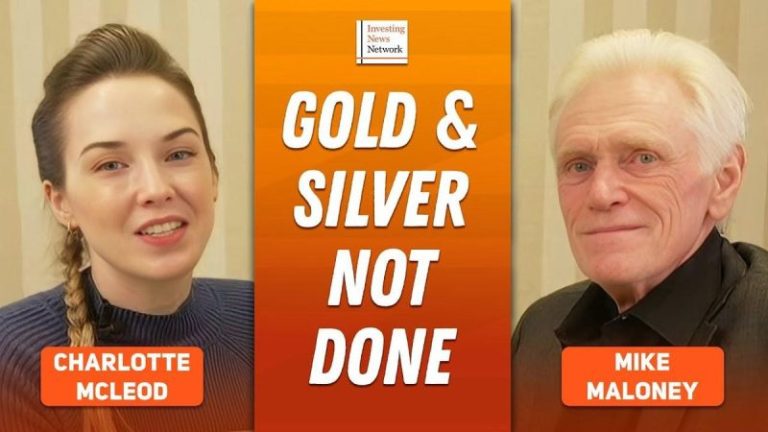
Mike Maloney, founder of GoldSilver.com, explains why this time really is different for gold and silver, pointing to factors including growing mainstream adoption.
‘This to me signals the beginning of the third and final phase of the bull market — and that is where you have the greatest amount of gains in the shortest period of time,’ he said.
Securities Disclosure: I, Charlotte McLeod, hold no direct investment interest in any company mentioned in this article.

Dana Samuelson, president of American Gold Exchange, discusses this year’s unusual market dynamics for gold and silver, saying there have been three big moves of physical metal.
‘To me, this is literally a run on the bank of gold globally — it’s global, it’s widespread and it’s deep, and I don’t see it changing anytime soon,’ he explained.
Securities Disclosure: I, Charlotte McLeod, hold no direct investment interest in any company mentioned in this article.

The lithium market heads into 2026 after one of its most punishing years in recent memory, shaped by deep oversupply, weaker-than-expected electric vehicle (EV) demand and sustained price pressure.
In 2025, lithium carbonate prices in North Asia sank to four year lows, forcing production cuts and project delays as the industry grappled with the consequences of years of aggressive supply growth.
The second half of the year saw a rebound as lithium carbonate began a slow ascent. By December 29, prices had risen 56 percent from their January start position of US$10,798.54 per metric ton to US$16,882.63.
While volatility and brief price rallies highlighted the market’s sensitivity to sentiment and policy signals, analysts increasingly see the sector’s first-half downturn as an inflection point. With high-cost supply under strain and inventories gradually tightening, expectations are building that 2026 could mark the start of a rebalancing phase, supported by long-term demand tied to electrification, energy storage and the broader energy transition.
Energy storage is emerging as the fastest-growing pillar of battery demand, with major implications for the lithium market heading into 2026. Indeed, according to Benchmark Mineral Intelligence’s Iola Hughes, growth in this segment is accelerating well ahead of the broader battery market.
“We’re expecting about 44 percent growth (in 2025),” she said. That’s compared with roughly 25 percent growth across total battery demand. As a result, energy storage is set to account for about a quarter of total global battery demand in 2025, a share that is rising rapidly. The shift is even more pronounced in the US, where Hughes expects storage to make up a significant “35 to 40 percent of battery demand in the next few years.”
That growth is being driven by falling costs and the growing role of lithium iron phosphate (LFP) chemistry, which Hughes described as the dominant technology in stationary storage.
“It very much is the story of LFP right now,” she said, pointing to recent innovation and lower costs, which have helped to make LFP “the best chemistry” for most storage applications.
Globally, deployment remains highly concentrated. China and the US account for roughly 87 percent of cumulative grid-scale storage installations, but new markets are emerging quickly.
Saudi Arabia, Hughes noted, has surged from effectively zero to the world’s third largest market in a matter of months, deploying around 11 gigawatt-hours in the first quarter alone. “That really goes to show just how early this market is in its story,” she said; it also indicates how quickly new sources of battery demand can materialize.
Cost declines sit at the core of the expansion. Fully integrated storage systems in China are now approaching, and in some cases falling below, US$100 per kilowatt-hour. Hughes said this has fundamentally changed the economics of storage, making deployments viable even as policy support tightens. “The prices are so much cheaper, the economics are a lot stronger, even in a normal, unsubsidized environment,” she said.
In the US, growth remains concentrated in a handful of states — led by California and Texas — but Hughes stressed how early stage the market still is. New Mexico, now the fifth largest storage market, is built on just a few projects.
At the same time, the scale of energy storage projects is increasing rapidly. Giga-scale installations, defined as projects larger than 1 gigawatt-hour, are moving from novelty to norm.
Hughes said nine such projects are expected to come online this year, accounting for about 20 percent of battery demand, with more than 20 in the pipeline for next year, representing close to 40 percent.
Policy remains a key variable. While investment tax credits for storage remain in place in the US, Hughes warned that tighter sourcing and eligibility rules are reshaping supply chains, particularly for LFP. The pipeline of announced LFP gigafactories has grown sharply this year — up more than 60 percent — led largely by Korean manufacturers.
“We’re in a much better position when it comes to sourcing of cells for energy storage than we were even three months ago,” she said, though challenges remain around production tax credits and heavy reliance on Chinese cathode supply.
Underlying the storage boom is a broader shift in electricity demand.
After more than a decade of stagnation, US power demand is rising again, driven by data centers, AI, electrification and reshoring of manufacturing. Hughes said estimates now point to electricity demand rising 20 to 30 percent by 2030, placing energy storage at the center of energy security planning. “Storage has become a central topic in the energy security conversation,” she said, adding that its role will only grow.
Looking ahead, Hughes said LFP is likely to dominate shorter-duration storage, while sodium-ion and other battery technologies compete in longer-duration segments.
For the lithium market, the message is clear: as storage scales up in size, geography and strategic importance, it is becoming one of the most powerful demand drivers shaping the sector’s outlook for 2026 and beyond.
Howard Klein, RK Equity co-founder and partner, argued that falling costs remain a central driver of LFP battery adoption, reflecting a familiar economic dynamic: as prices decline, demand accelerates.
While lithium is a key input, he suggested that ongoing manufacturing efficiencies and economies of scale are likely to continue pushing LFP battery costs lower over time, potentially offsetting upward pressure from higher lithium prices.
Klein emphasized that even if LFP costs rise modestly, battery storage will remain highly competitive as a source of grid power. Compared with conventional generation options such as gas or coal, storage already offers a compelling cost and performance proposition, he said, and does not rely solely on subsidies to remain economically viable.
Critical minerals are increasingly at the center of US foreign policy, and that shift is set to reshape the lithium value chain through 2026, according to Klein. He noted that geopolitics now underpins many of Washington’s strategic priorities, from Eastern Europe to Africa and the Arctic.
“The entire foreign policy agenda is largely being driven by critical minerals,” Klein said, citing regions including Ukraine, Russia, the Democratic Republic of Congo, Greenland and Canada.
China’s willingness to weaponize its dominance in key supply chains has sharpened that focus.
On that note, Klein pointed to Beijing’s renewed rare earths export restrictions in October, noting that these measures were applied globally, not just against the US.
“They showed that they wield a significant negotiating stick, and they’re willing to use it,” he said.
In Klein’s view, that move has triggered a forceful response from western governments. “I think they’ve overplayed their hand to some degree, because now you’ve had this very big reaction from the US.”
That reaction is translating into a renewed push to localize and reshore critical mineral supply chains — an effort that has gained rare bipartisan backing in Washington.
“Unlike so many other things in America, which are hyper-partisan, both sides agree we need to resolve this,” Klein said, adding that the policy momentum will continue to shape the lithium industry.
While rare earths remain the immediate pressure point, Klein said the policy lens is widening. The US recently added 10 minerals to its critical minerals list, which now stands at a total of 60. Lithium, he said, sits high on that agenda, not out of enthusiasm for the metal itself, but because of its role in batteries.
“It’s an understanding by the government that batteries and battery technology are very, very important, and the entire battery supply chain needs to be supported,” Klein said. That support extends beyond lithium to graphite, manganese, nickel, cobalt and battery components such as anodes and cathodes.
The approach is increasingly coordinated across western economies. Klein described it as “a G7 effort,” with the EU and Canada aligned alongside the US through a mix of bilateral and multilateral initiatives.
That coordination is already translating into capital flows. He pointed to US-backed progress at Thacker Pass, EU funding for Vulcan Energy Resources (ASX:VUL,OTC Pink:VULNF) and a 360 million euro grant for European Metals Holdings (LSE:EMH,ASX:EMH,OTCQB:EMHLF) as early examples. Canada, he added, is also ramping up support.
“Canada announced C$6 billion over 26 investments,” Klein said, adding that more announcements are likely by the time the Prospectors & Developers Association of Canada convention rolls around in March.
Klein sees geopolitics, industrial policy and supply chain security converging into powerful lithium tailwinds. “This is a super hot topic,” he said, and one that is likely to drive increased lithium-related activity well into 2026.
To dilute China’s grip on the sector, Klein is advocating for a strategic lithium reserve in the US as a more effective and market-neutral alternative to company-specific subsidies. He argues that the industry’s core challenge is not demand, but extreme price volatility caused by global oversupply and what he describes as non-market behavior, which has driven prices below sustainable levels and distorted investment signals across the sector.
“The problem in lithium is volatile prices — prices below the marginal cost, catastrophically low prices that put companies out of business,” he said, pointing to persistent oversupply as the primary distortion.
In Klein’s view, a reserve would act as a counterweight by creating steady, large-scale demand that stabilizes prices within a sustainable range. “The main focus is to stabilize price … not at a super high level, but at a level where companies can make an economic return,” he said. That stability, he added, is essential to incentivize investment in mines, processing and conversion facilities across the US, Canada and allied jurisdictions.
Unlike targeted government support, Klein said a reserve would allow the market to determine which projects succeed.
“I want the market to decide which projects and companies are the best, not necessarily the government,” he said, noting the diversity of competing lithium resources, from US clay and brine projects to Canadian hard-rock deposits.
A more predictable price environment with fewer large swings would lower the cost of capital and give private investors greater confidence to finance viable projects.
Klein stressed that a lithium reserve should not be confused with a stockpile.
“People use ‘stockpile’ and ‘reserve’ like they’re the same thing, and they’re not,” he said. While a stockpile focuses on availability for emergencies, a reserve is designed as a market-stabilizing mechanism that can buy and sell material to smooth volatility. Availability, he said, is a secondary benefit.
He sees the concept as most relevant for mid-sized, fast-growing markets like lithium, graphite and other battery materials that lack deep futures markets and long-term hedging tools.
“Those are the markets that could be amenable to a reserve,” he said, contrasting them with large, liquid commodities like copper or very small, niche minerals tied mainly to military use.
Looking longer term, Klein said a lithium reserve aligns closely with the growth of EVs, energy storage, data centers and grid electrification, as well as geopolitical efforts to diversify supply chains away from China.
“This is no longer just a renewables or EV thing — this is national security, clean energy and building an electro-state,” he said, arguing that reducing volatility would make it easier for automakers, utilities and manufacturers to commit capital without fear of being caught on the wrong side of wild price swings.
Gerardo Del Real, publisher at Digest Publishing, also highlighted the impact of geopolitics on the lithium value chain, emphasizing the need for North American coordination to reduce reliance on dominant producers like China.
“I think this is the path towards that. It has to happen,” he said, noting that collaboration between the US, Canada and potentially Mexico could strengthen regional supply security and reduce vulnerability to global disruptions.
Del Real framed the issue in broader energy terms, pointing to the strategic value of domestic resources: “If we are serious as a country and as a region in being somewhat independent from China and from the Russians … we have a luxury of resources in the US, in Canada … there could be a very powerful path forward.”
On market dynamics, he suggested investors are focused on timing and catalysts, with policy shifts, demand surprises or supply disruptions likely to drive sentiment in 2026.
He also warned that the market may be underestimating the importance of coordinated regional supply initiatives as a factor shaping pricing and project economics.
Securities Disclosure: I, Georgia Williams, hold no direct investment interest in any company mentioned in this article.
Cyprium Metals (CYM:AU) has announced Senior Loan Facility Refinanced with Nebari
Download the PDF here.