Author

admin

Browsing

President Donald Trump’s global roller coaster of peace moves — led by him and his team to end wars around the world — is now picking up speed in Sudan, where a 30-month war has left tens of thousands dead, and some 14 million displaced from their homes.

‘Ending wars is a priority for President Trump, and the United States remains focused on working with our partners and other stakeholders to resolve the crisis in Sudan,’ a State Department spokesperson told Fox News Digital on Wednesday, adding, ‘Engagement with all relevant stakeholders is essential to achieving this goal. Given the immediate urgency of de-escalating the violence, we will continue to engage with the belligerents to end the conflict.’

Talks to end the fighting between the Rapid Support Forces (RSF) militia, led by Gen. Muhammad Hamdan Dagalo Musa, known as Hemedti, and the Khartoum government’s Sudan Armed Forces (SAF), under the control of Gen. Abdel Fattah al-Burhan, began during the Biden administration but failed to make headway. They have since gained momentum under President Trump, with the U.S. forming a so-called international Quad in September with Egypt, Saudi Arabia and the United Arab Emirates.

Since the weekend, the pace of peace talks has become positively frenetic. The White House’s senior advisor for Arab and African Affairs, Massad Boulos, fresh from brokering a ceasefire in the 30-year war between the Democratic Republic of the Congo and Rwanda, held talks with Egypt’s Foreign Minister Badr Abdelatty in Cairo on Sunday.

On Monday, Boulos met with the Arab League, with the League stating that Trump’s envoy had briefed them on U.S. efforts to ‘halt the war, expedite aid delivery, and initiate a political process.’

The Sudan Tribune then quoted Boulos as saying later on Monday, ‘Both parties have agreed in principle, and we have not recorded any initial objection from either side. We are now focusing on the fine details.’

But the two sides are still fighting. On Tuesday, Sudan’s Defense Minister Hassan Kabroun talked to the country’s state television network, following a government council meeting in Khartoum, saying, ‘We thank the Trump administration for its efforts and proposals to achieve peace,’ but added: ‘Preparations for the Sudanese people’s battle are ongoing. Our preparations for war are a legitimate national right.’

Also on Tuesday, White House Press Secretary Karoline Leavitt weighed in, telling reporters, ‘The United States is actively engaged in efforts to bring about a peaceful resolution to the terrible conflict in Sudan. We remain committed to working with our international partners, including Quad members — Egypt, Saudi Arabia and the UAE — as well as others to lead a negotiated peace process that addresses both the immediate humanitarian crisis and the longer-term political challenges.’

Leavitt continued, ‘I actually spoke with Secretary Rubio about this, this morning, as, of course, there’s been, you know, kind of an uptick in recent reporting on the matter. And he assured me that the administration is very much engaged. We’re in pretty frequent communication with those Arab partners that I just mentioned. And we want to see this conflict come to a peaceful end, just as we have with so many others. But it’s — the reality is — it’s a very complicated situation on the ground right now.’

Analysts say last week’s fall of the Sudanese city of El-Fasher, and with it the Darfur region to RSF fighters, effectively cutting the country in two, may have spurred all parties into action. ‘The RSF’s full control of the Darfur region could have dangerous and worrying consequences in the future in terms of partition,’ Boulos told Al Jazeera.

On Tuesday U.N. Secretary General Antonio Guterres called for an immediate ceasefire in Sudan. Speaking on the sidelines of a conference in Qatar, Guterres said the war was ‘spiraling out of control.’

‘The fall of El-Fasher to the RSF is a defining moment in Sudan’s brutal civil war’, Mariam Wahba, research analyst at the Foundation for Defense of Democracies (FDD), told Fox News Digital. Wahba continued: ‘It marks the militia’s full control of the Darfur region and leaves Sudan effectively split in two.’

The human cost is staggering. On Monday, the U.N. reported that ‘over 21 million people across Sudan are facing high levels of acute food insecurity — the largest such crisis in the world.’ The latest Integrated Food Security Phase Classification (IPC) found that famine is ongoing in the now-captured El-Fasher and in Kadugli, South Kordofan, with families trapped and surviving on leaves, animal feed and grass.

The Yale School of Public Health’s Humanitarian Research Lab released satellite images taken over El-Fasher over the last week, stating Tuesday, ‘Evidence of body disposal activities include at least two earth disturbances consistent with mass graves at a mosque and the former Children’s Hospital; there is one new instance of removal of objects consistent with bodies. This activity appears consistent with RSF conducting cleanup of their alleged mass atrocities.’

Sources say intense negotiations led by the U.S. team are continuing. Details of what’s on offer have not been revealed, but it’s understood an agreement would start with a three-month humanitarian truce, to allow aid delivery in, followed by a permanent ceasefire and a civilian-led transition.

‘For Washington, the stakes in Sudan are rising by the day,’ the FDD’s Wahba told Fox News Digital, adding, ‘The more time the RSF has to cement its control over Darfur and push toward Khartoum again, the harder it will become to prevent the country’s permanent collapse. What happens next in Sudan will shape the balance of power across the Horn of Africa and signal to America’s adversaries whether the United States still has the will to confront instability before it spreads in this critical region of the world.’

This post appeared first on FOX NEWS

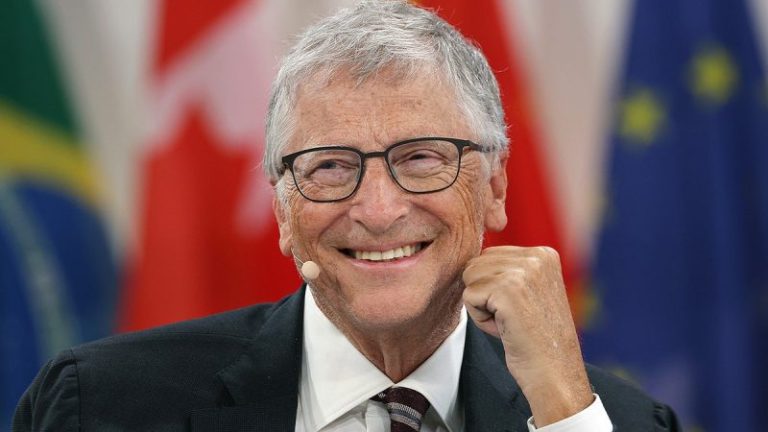
The UN Climate Change Conference, COP30, starts Nov. 6 with a world leader summit and runs to Nov. 21. It will emphasize ‘the urgency of the climate crisis and the need for accelerated and collective climate actions.’ However, Microsoft founder Bill Gates just issued a memo aimed at COP30 attendees proposing a fundamental shift in priorities: focus on poverty reduction rather than climate modification.

Gates, who previously gave primary importance to measures to reduce near-term emissions, has drawn criticism for arguing that ‘a metric that should count even more than emissions and temperature change [is] improving lives. Our chief goal should be to prevent suffering, particularly for those in the toughest conditions who live in the world’s poorest countries.’

His argument rests on three key premises: climate change poses serious challenges but does not represent an existential threat to civilization; temperature metrics alone inadequately measure climate-related progress; and improved health and economic prosperity provide the most effective defense against climate change.

Gates provides data to show that achieving net-zero emissions would result in a 1.9-degree Celsius temperature increase from 1990 levels, while inaction would produce a 2.9-degree increase. This one-degree differential, he argues, suggests that resources allocated toward net-zero goals might yield greater humanitarian benefits if redirected toward energy access and disease prevention.

The correlation between energy consumption and economic prosperity is striking. Nations with annual per capita incomes below $1,145 consume approximately 1,100 kilowatts per person annually, while those exceeding $14,005 in per capita income utilize 55,000 kilowatts per person annually, according to data cited by Gates.

The genuine inequity, Gates contends, lies in human development disparities. A child born in South Sudan faces mortality risks 39 times higher before age five compared to a Swedish child. These vulnerable populations require enhanced access to energy, nutrition and healthcare infrastructure.

The relationship between economic development and energy consumption is unequivocal: no nation has achieved high per capita income with low per capita energy usage, and conversely, no country maintains high energy consumption alongside persistent poverty.

Increased energy access facilitates improved living standards through enhanced productivity, agricultural advancement and household consumption, thereby reducing dependence on subsistence farming. Energy availability either provides farmers with modern agricultural technologies or enables economic mobility to pursue alternative livelihoods.

High-energy nations benefit from superior healthcare infrastructure and water sanitation systems, resulting in reduced maternal and child mortality rates and greater capacity for environmental protection measures.

Hurricane Melissa’s destruction in Jamaica illustrates how natural disasters inflict disproportionate damage on developing nations compared to wealthy countries, due to disparities in energy infrastructure, resilient construction and recovery capabilities. Affordable energy access is essential to addressing these inequalities.

Energy poverty in many African and Latin American nations drives migration pressures, as residents seek higher living standards in fossil fuel-rich regions, particularly Europe and North America.

To support emerging economies and alleviate migration pressures, President Donald Trump has reversed restrictions on loans to developing countries for fossil fuel energy projects. Financial institutions are no longer compelled to finance exclusively renewable energy initiatives.

The 140 private banks from 44 countries that participated in the United Nations Net Zero Banking Alliance — including Barclays, JP Morgan Chase and Sumitomo — have suspended their commitments to restrict fossil fuel financing. The World Bank, which has historically discouraged fossil fuel and nuclear power lending while prioritizing renewables, may reassess its position.

This policy shift enables developing nations to secure financing for conventional power plants, transmission infrastructure, distribution networks and household connections. Importantly, this change diminishes China’s strategic advantage in lending to African and Latin American nations — often securing ports and other assets as collateral.

Gates’s reversal in the climate debate challenges the international community to confront an uncomfortable reality. While climate conferences convene in developed nations with reliable electricity and healthcare systems, billions lack access to the energy that makes such gatherings possible.

His argument suggests that the most effective climate strategy may be ensuring that vulnerable populations have the resources to adapt and thrive, rather than pursuing emissions targets that may perpetuate the very poverty that exacerbates climate vulnerability. Whether policymakers at COP30 will heed this message remains uncertain, but Gates has succeeded in reframing the conversation around what climate action should ultimately serve: economic progress, not merely atmospheric targets.

This post appeared first on FOX NEWS

Matthew Piepenburg, partner at Von Greyerz, breaks down what’s really driving the gold price, going beyond headlines to the ongoing debasement of the US dollar.

He also discusses silver market dynamics.

Securities Disclosure: I, Charlotte McLeod, hold no direct investment interest in any company mentioned in this article.

This post appeared first on investingnews.com

Donald J. Trump was inaugurated for a second term as president exactly one year ago. It is safe to say the country, and the world, will never be the same. 

President Trump has engaged in energetic and bold governing and diplomacy, fulfilling campaign promises like boosting domestic energy production, while also seeking peace in turbulent parts of the world and attempting to follow through on long-term ambitions, like acquiring Greenland.

He has engaged with the press on a near-daily basis, boosted recruitment for our military, dismantled harmful left-wing shibboleths like DEI, convinced our NATO allies to spend more on their own defense, junked burdensome regulations that interfered with our country’s progress, challenged our woke universities, extracted and jailed alleged drug kingpin Nicolás Maduro, defended women’s sports, significantly derailed Iran’s nuclear program, overseen new health initiatives like ridding our food of artificial dyes, shrunk the ever-expanding federal bureaucracy, and pushed through a reconciliation bill that lowered taxes for middle-class Americans. It is an incredible boatload of accomplishments.

But Trump’s first year is most notable for closing the southern border that predecessor Joe Biden opened to millions of unvetted illegal immigrants, and for resetting U.S. trade relations through the introduction of tariffs. As he might boast, few imagined that these efforts would succeed; however, neither has been without controversy.

Today, President Trump is at a crossroads. He begins midterm campaigning with approval ratings that are underwater, according to polling aggregated by RealClearPolitics, even on his signature issues of immigration and the economy. He has, in particular, lost favor with independents and with some of the groups that helped him win in 2024, like young voters and Hispanics. 

Surveys suggest voters think the president is spending too much time on foreign affairs instead of working to reduce the cost of living. While he pursues peace between Ukraine and Russia, Americans want lower cereal prices and cheaper housing. 

President Trump is trying to do too many things at once. On the one hand, we applaud the energy and pace of this president, a welcome change from the inert Joe Biden. On the other hand, Americans want stability, not chaos.

President Trump is aggrieved that the country is not giving him high marks for booming economic growth, a declining fiscal deficit, new investments flowing into the U.S., a declining trade gap, rising middle-class wages, all-time high oil production and record stock prices. And, inflation is substantially lower than the decades-high 9.1% recorded during the Biden presidency.

Public perceptions about the economy will play a decisive role in the midterm elections. Given today’s subdued consumer sentiment, President Trump faces the very real prospect that Republicans will lose their slim control of the House and maybe even their advantage in the Senate. He has warned more than once that should Democrats take over, they will almost certainly move to impeach him; he may well be right. 

Faced with that threat, and seemingly rattled by Democrats’ new ‘affordability’ pitch, Trump has unleashed a barrage of new policies meant to address the cost of living, some of which appear half-baked. He has proposed capping interest rates on credit cards at 10% and has strategized about that controversial notion with progressive Sen. Elizabeth Warren, D-Mass., a development giving most Republicans hives. In addition, he has launched an attack on corporate-owned housing, which he claims has driven up rents. The number of homes bought up by businesses in recent years is small, and not likely to be a major source of rent inflation.

The frustrated president is also lashing out at adversaries, threatening to sue JPMorgan CEO Jamie Dimon for ‘debanking’ him in 2021 and waging war against Federal Reserve Chair Jay Powell, for instance. 

Trump blames the Fed chair for keeping interest rates too high, which in turn drives up the cost of living. The Justice Department’s investigation into whether the Fed Chair lied to Congress about the costly renovation of the Fed’s headquarters was a foolish miscalculation; it has backfired as Powell has dug in and caused the Senate to balk at confirming his successor.

Trump has also recently rolled out ‘The Great Healthcare Plan,’ which would make payments directly to households to cover health expenses rather than send federal subsidies to insurers on consumers’ behalf. This proposal comes as Congress continues to debate extending enhanced premium subsidies on Obamacare; the lapsing of payments augmented during COVID-19 will raise some peoples’ insurance costs significantly. For not being ready with a solution to this dilemma, which was anticipated for more than a year, voters should blame Republicans in Congress, not President Trump. Nonetheless, attempting to reconfigure our dysfunctional healthcare system, nearly one fifth of our economy, should not be done on the fly.

Most recently, Trump has again threatened to slap onerous tariffs on European Union countries unless Denmark agrees to sell Greenland. This is a mistake, as it undermines the president’s constructive use of tariffs, indicates our partners cannot trust hard-fought trade agreements, and again plunges America’s commitment to NATO into uncertainty.

President Trump is trying to do too many things at once. On the one hand, we applaud the energy and pace of this president, a welcome change from the inert Joe Biden. On the other hand, Americans want stability, not chaos.

They especially don’t want chaos on the streets of Minneapolis, with ICE agents under attack. They also don’t want chaos in our dealings with foreign nations. And, they don’t want chaos in our economy, with tariffs being raised and lowered according to the latest push from the Oval Office and with major proposals being spun out almost daily.

The president has accomplished a great deal in his first year in office. He needs to build on the wins, and remind voters why they elected him. That begins with deescalating some of his confrontations and restoring confidence through steady leadership. It continues with hitting the campaign trail, talking to the American people, and bringing them back on board.

President Trump’s agenda is not complete; let us hope he reboots and wins for three more years to continue making America great again.   

This post appeared first on FOX NEWS

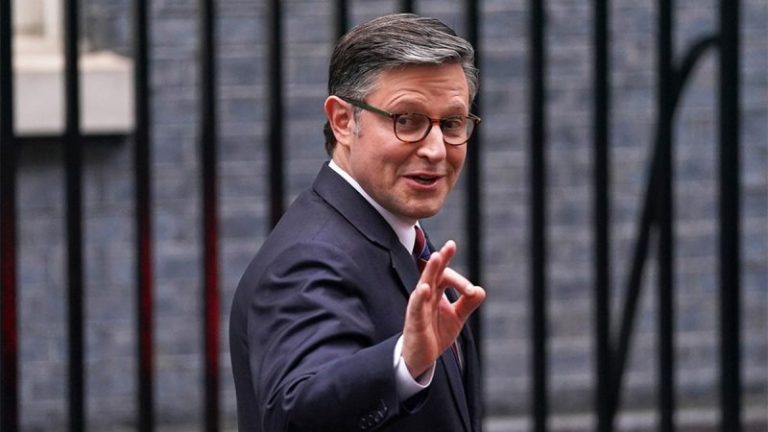
U.S. House Speaker Mike Johnson addressed Britain’s Parliament on Tuesday, telling them that he had come to ‘calm the waters,’ as tensions between Washington and its European allies have intensified in recent weeks over President Donald Trump’s push to acquire Greenland.

Johnson’s address — the first ever delivered by a sitting U.S. House speaker to the British Parliament — came on the eve of the United States’ 250th anniversary and against a backdrop of strain in transatlantic relations, including Trump’s sharp criticism of UK Prime Minister Keir Starmer hours earlier over a deal involving the Chagos Islands.

‘I spoke to President Trump at length yesterday, and I told him that I really felt that my mission here today was to encourage our friends and help to calm the waters, so to speak,’ Johnson said. 

Johnson emphasized that despite current disagreements, the U.S. and UK remain bound by a durable alliance built on shared history, values and security interests.

‘We’ve always been able to work through our differences calmly as friends. We will continue to do that,’ he said. ‘I want to assure you this morning that that is still the case.’

The speaker said his visit had taken on new urgency as geopolitical tensions escalated in recent days. He described his role as reinforcing stability among allies while signaling resolve to adversaries.

Johnson tied his remarks to the approaching 250th anniversary of American independence, framing the milestone not simply as a celebration, but as a moment of reflection and recommitment — particularly as Western nations confront external threats and internal divisions.

He warned that U.S. adversaries are increasingly challenging Western democracies through ‘increasingly sophisticated forms of subversion.’ 

‘We see China, Russia and Iran grow more aggressive and emboldened as they intensify their efforts to exert economic, political, and military influence around the world,’ Johnson said. ‘We see a callous disregard for basic human rights, new provocations, and even the theft of intellectual property on a scale like we have never seen before.’

Johnson said Trump is focused on those threats, particularly in strategically sensitive regions such as the Arctic.

‘Clearly, President Trump is taking seriously the modern and dynamic threats that China and Russia pose to our global security, and especially and in focus the last few days as it relates to the Arctic,’ he said.

While acknowledging room for debate among allies, Johnson stressed that the dangers posed by rival powers must be confronted collectively.

‘While we can have thoughtful debate among our friends about how best to counter these threats, we all certainly agree they must be countered,’ he said.

Speaker Johnson praised Britain and other allies for recent cooperation, including enforcement of sanctions. He clarified that Trump’s ‘America First’ agenda does not mean ‘America alone.’ 

He praised NATO members for increasing defense spending and highlighted cooperation through alliances such as AUKUS, calling them evidence that national interests and collective security can coexist.

‘Whether it’s NATO’s nations historic commitment to raise their investment in defense… or the AUKUS alliance deepening its cooperation in submarines and undersea defense, our partnership is proving that nations can prioritize their individual interests responsibly,’ he said.

Johnson invoked the shared heritage of the U.S. and UK, warning that military strength and economic power are meaningless without confidence in a shared set of values.

‘Strong and lethal militaries matter,’ he said. ‘Robust and thriving economies matter, but they mean little if we forget what we’re fighting for.’ 

This post appeared first on FOX NEWS

Optimism was building at last year’s Vancouver Resource Investment Conference (VRIC), with fresh capital flowing back into the mining sector, lifting project financings and investor portfolios alike.

This year’s VRIC, which ran from January 25 to 26, saw that optimism tip into outright exuberance.

Record-breaking gold and silver prices drew a larger, more diverse crowd, while speakers openly compared the current market to the great bull runs of the late 1970s and early 1980s.

Yet beneath the enthusiasm, a note of caution emerged. While few questioned the strength of the rally, debates centered on whether the move is still in the early innings or edging closer to bubble territory.

Gold, silver and the need to take profits

Precious metals were front and center throughout VRIC.

The price of gold crossed the US$5,200 per ounce mark during the show, and silver’s incredible run peaked at US$116 per ounce, gaining more than 250 percent since January 2025.

Over the past couple of years, gold’s shine has been brought about by significant central bank buying. Considered the ultimate buy-and-hold participants, these entities have been acquiring large quantities of gold for several reasons, including runaway global debt and concerns over the weaponization of the US dollar.

Central bank purchases, along with geopolitical and financial uncertainty, have helped to revive a beleaguered retail segment, effectively pouring gasoline onto the fire.

For silver, structural shortages that have developed over the past several years came into focus and were exacerbated by a surge of investors seeking a cheaper physical asset alternative to gold.

Flashpoints in the Middle East, a simmering trade war driven by tariff threats, disrupted supply lines and currency devaluation have also helped bring the monetary aspects of gold and silver to the forefront.

In the 2026 ‘Gold Forecast’ panel at VRIC, Gold Royalty (NYSEAMERICAN:GROY) Chair and CEO David Garofalo explained why precious metals were one of the best-performing asset classes last year.

“Gold has been a one-way trade for 50 years … the purchasing power of our dollars has gone down 99 percent over that period of time. The negative correlation between the gold price and the purchasing power of our underlying currencies is undeniable,” he said, adding that “gold can only go in one direction.”

Garofalo added that the debt-to-GDP ratio rose to 350 percent in 2025 from 100 percent in the 1970s, creating a “ticking time bomb” that leaves central banks with no wiggle room to raise interest rates. “Gold can only go in one direction in that market because there is a limited supply of gold. Gold can’t be printed,” Garofalo said.

With those circumstances in mind, how high can gold and silver prices go? There were differing perspectives throughout the conference on whether precious metals are in a bull market or a bubble.

At the ‘This Isn’t Our First Bull Market’ panel, Ross Beaty, Equinox Gold (TSX:EQX,NYSEAMERICAN:EQX) chair and Canadian Mining Hall of Famer, was one of those who suggested the market is in a bubble.

He also compared the state of the market to the late 1970s and early 1980s, and spoke about how gold went above US$700 per ounce before crashing to US$250 an ounce in a matter of months. “You only know you’re at the top after the fact. From my standpoint today, it is. It’s a bubble, it’s a frothy market,” Beaty said.

Fellow panelist Rick Rule, proprietor at Rule Investment Media, didn’t go so far as to say the market is in a bubble, but did point out that even in a strong bull market, there are risks.

He pointed out that in 1975, as the gold bull market was running, the gold price fell by half.

Both speakers suggested there is still upside in the market, but acknowledged that now is a good time for investors to take some profits. For his part, Beaty was blunt in his advice.

“It is time to take some money off the table. I think probably not all, because I think we have more room to run, but we’re not in the early innings of this game, we’re in the late innings,” he said.

Rule’s approach was more one of preparation, especially for less experienced investors.

“If you aren’t financially and psychologically prepared to deal with 30 or 35 percent declines, or 50 percent declines, you really have to get some money in the bank now, because you’re going to experience that,” Rule said.

During VRIC, Rule also spoke about how he recently sold off 25 percent of his junior mining portfolio, noting, “I sold off 25 percent of my upside, and I eliminated 100 percent of my downside.”

Copper, uranium and the AI bubble

If industry stalwarts like Beaty, Rule and Garofalo are suggesting it’s time to take some money off the table, were there any suggestions where to look next?

On the gold panel, Incrementum AG Managing Partner and Fund Manager, Ronald-Peter Stöferle gave insight that his fund had cycled funds from precious metals into other areas of the resource sector.

“We reallocated some capital, took some profits, because the risk has been too dominant and reallocated into oil, into copper, into uranium,” he said.

What’s become more apparent over recent years is the growing need to add gigawatts to the electrical grid. To meet growing demand, electricity must be generated, and uranium is increasingly used as a fuel. However, delivering it requires infrastructure, and copper remains one of the best ways to do so.

However, both copper and uranium have demand exceeding supply.

While copper has been in balance over the last couple of years, incidents at Freeport-McMoRan’s (NYSE:FCX) Grasberg mine and Ivanhoe’s (TSX:IVN,OTCQX:IVPAF) Kamoa-Kakula mines tipped the market into supply deficits in 2025, and it’s likely to stay there for some time.

Both copper and uranium have been increasingly tied to the artificial intelligence (AI) revolution.

At the ‘Copper Forecast’ panel, Independent Speculator Editor Lobo Tiggre noted the connection but pointed out that underlying fundamentals beyond AI continue to make the case for investing in copper and uranium. He noted that the release of Chinese AI DeepSeek affected Western equities tied to the AI boom.

“If you think it (AI) is a bubble, remember what happened in the DeepSeek moment. Copper wobbled, uranium wobbled … The good news, in my view, is that means that whenever the next wobble comes, there’s potentially a buying opportunity, given the fundamentals we’re talking,” he said.

The fundamentals are that AI and data centres are just additional demand. Through several of his appearances, Rick Rule noted that there are a billion people on the planet who don’t have access to reliable electricity.

Additionally, global infrastructure needs to be upgraded as more people rely on electricity for a wider range of uses, including EVs. However, there are only a few new mines on the horizon, and not enough to meet baseline demand.

Ivan Bebek, CEO and chair of Coppernico Metals (TSX:COPR,OTCQB:CPPMF), said on the copper panel that all the easy copper deposits have been found.

“Copper mines are hidden behind geopolitical boundaries, social issues or undercover. They’re mined, and all the easy ones have been found. Look at the chart I presented earlier, and it shows the decline basically falls off a cliff in 2015. There hasn’t been any major copper discovery of consequence since then,” he said.

It’s not just a lack of discovery; copper mines require significant capital investment and can take decades to complete permitting.

Likewise, uranium is in a similar boat. Although it’s far from its US$140 per pound high in 2007, uranium has solid supply and demand fundamentals and has significant upside potential.

In his fireside chat, Uranium Energy (NYSEAMERICAN:UEC) CEO Amir Adnani said that he expects uranium prices to continue to increase.

“The uranium price has no business hanging around under US$100 per pound. The uranium price should be doing what silver and gold are doing. It will do that, in my opinion, because it is fundamentally in a structural deficit,” he said.

Adnani pointed to a cumulative shortage of 379 to 840 million pounds over the next 10 to 15 years, and stated it should be at least US$1,000 per pound. He noted that both China and the US have designated uranium a critical mineral, with the US even establishing a strategic reserve.

Investors are faced with choices

With consensus at the conference that AI is a bubble that’s ready to burst, the overall fundamentals for copper and uranium remain strong even without it.

As for precious metals, given the strain on global financial systems in recent years, and uncertainty when it comes to US debt loads and a weakening US dollar, they should still hold a place in an investor’s portfolio.

However, as many at the conference suggested, the time to take profits is before the peak, not after investors look back on it.

Though some suggest cycling that money into other equities to take advantage of copper and uranium, there was also the suggestion that holding cash can be a good thing, remaining liquid and ready to take advantage of pullbacks and corrections in the market.

Securities Disclosure: I, Dean Belder, hold an investment interest in Equinox Gold.

This post appeared first on investingnews.com

Nextech3D.ai (CSE:NTAR,OTCQB:NEXCF,FSE:1SS) is a pure-play AI and blockchain company transforming the global event and ticketing industry. Its end-to-end event management platform powers every stage of live, virtual, and hybrid events—from registration and ticketing to engagement and analytics.

With the acquisitions of Eventdex and the Event Token ecosystem, Nextech3D.ai now offers a fully unified platform combining AI matchmaking, blockchain ticketing, registration, mobile apps, and badge printing in one seamless, secure system—eliminating the fragmentation of traditional event tech.

Backed by 500+ returning customers and a 95% retention rate, Nextech3D.ai generates predictable SaaS-style revenue with 88 percent gross margins. The company is now scaling rapidly, driven by the rollout of blockchain ticketing and AI-powered event automation.

Company Highlights

  • AI + Blockchain Convergence: Nextech3D.ai delivers a unified, full-stack platform for event management, ticketing and conferences, combining AI automation and blockchain ticketing into a single ecosystem that powers the entire event lifecycle.
  • Disrupting a Legacy Industry: Positioned to modernize a global +$85 billion event and ticketing market, Nextech’s integrated platform replaces fragmented vendor systems with one intelligent, secure and data-driven solution.
  • Recurring High-margin Growth: With 88 to 95 percent gross margins, over 500 recurring customers, and a 95 percent retention rate, Nextech operates a SaaS-style business model built on predictable, repeat revenue.
  • Blockchain Ticketing First Mover: Its Ethereum-based blockchain ticketing and Event Token ecosystem eliminate fraud and enable programmable resale royalties, sponsor airdrops and cross-event loyalty rewards.
  • Founder-led with Strong Insider Alignment: CEO Evan Gappelberg is the company’s single largest shareholder with approximately 30 million shares, ensuring management’s interests are fully aligned with long-term investors.
  • Strategic Growth Path to Profitability: With disciplined cost control, sequential quarterly growth, and new integrations via the Eventdex acquisition, Nextech3D.ai is entering a period of accelerating revenue and sustainable profitability

This Nextech3D.ai profile is part of a paid investor education campaign.*

Click here to connect with Nextech3D.ai (CSE:NTAR,OTCQB:NEXCF, FSE:1SS) to receive an Investor Presentation

This post appeared first on investingnews.com

Palladium is a lesser-known option for precious metals investors compared to gold and silver, but there are several avenues for investing in the platinum-group metal.

Recently, growing demand and a supply deficit and increased interest have driven interest in ways to invest in palladium. At the same time, precious metals such as gold, silver and the platinum group metals are seeing an influx of safe-haven buying.

Here’s an overview of different ways that market participants can invest in palladium, including profiles of palladium stocks, plus palladium ETFs, bullion and futures.

In this article

    What is palladium?

    Palladium is a silver-white precious metal that is ductile, durable and resistant to corrosion. The metal also has a high melting point. Its symbol on the periodic table of elements is Pd.

    Palladium is included in the platinum-group metals (PGMs) category, which also includes platinum, rhodium, iridium, ruthenium and osmium.

    What is palladium used for? Palladium’s biggest use is in catalytic converters in gasoline-powered vehicles as it converts pollutants like hydrocarbons and carbon monoxide into water, carbon dioxide and more.

    Palladium demand trends

    Total palladium demand for 2025 is expected to come in at 9.63 million ounces, down about 4 percent from the previous year’s demand, according to the World Platinum Investment Council (WPIC), which provides quarterly market overviews.

    Palladium’s four biggest demand sectors are automotive at 80.7 percent, industrial at 14.1 percent, investment at 2.9 percent and jewelry at 2.3 percent.

    In the automotive industry, palladium is used in catalytic converters for vehicle exhaust systems, especially for gasoline engines. High prices for the metal in the early 2020s led to its sister metal platinum being increasingly substituted for palladium.

    Demand from this sector is expected to decline by more than 4 percent year-on-year in 2025 to 7.74 million ounces as global auto sales and production are dropping during this period of economic uncertainty.

    Another important factor impacting this segment of the market is the growing market for electric vehicles (EVs), which do not require catalytic converters as they don’t create polluting emissions. The transition to electric is placing downward pressure on palladium demand from the auto sector. However, the slowdown in EV adoption worldwide is lessening the impact.

    Demand dynamics are shifting within the auto sector following the enactment of the Trump Administration’s One Big Beautiful Bill. Part of the legislation includes an end to EV tax credits that provided up to US$7,500 to consumers who purchased an EV.

    Palladium supply trends

    In top palladium country South Africa, there have been many mine disruptions in recent years, largely due to strikes, energy shortages and a lack of long-term investment in production facilities. Despite those risks, miners are still moving forward with palladium development in the region.

    Russia is the source of 39 percent of global mined palladium supply. The country’s war in Ukraine has placed it at the other end of the sanctions sword as the world’s leaders try to force President Vladimir Putin to end the bloodshed. In April 2022, bourses in London and Chicago suspended two state-owned Russian refiners from their goods-delivery and sponge-accreditation lists. The US and UK took further steps in 2024 to banned trading of refined Russian metals, including palladium, from exchanges.

    Despite a 4 percent decline year-over-year in palladium supply, the WPIC estimates that palladium is set to face supply deficits in 2025 and 2026. This is a continuation of an ongoing supply-demand imbalance in the palladium market. Mine supply of the metal is expected to decline by a compound annual growth rate of 1.1 percent from 2024 to 2029.

    In 2025, according to WPIC estimates, palladium supply will see a shortfall of 260,000 ounces of the metal, down significantly from the 689,000 ounce deficit recorded in the previous year.

    The market is expected to transition into a surplus in 2027. However, that outlook could change if the palladium recycling segment does not ramp up.

    “Notably, the forecast of palladium going into surplus is entirely contingent on recycling supply growth,” states the WPIC. “If this does not materialise then palladium could remain in a deficit for the foreseeable future, which could materially alter palladium value expectations.”

    How to invest in palladium

    Investors who want exposure to palladium’s market dynamics and the palladium price may be interested in investing in the metal. There are several ways to invest in palladium, including palladium mining stocks, PGM ETFs, palladium bars and coins, and palladium futures.

    Palladium stocks

    One option investors can use to gain exposure to palladium is investing in palladium mining stocks and junior exploration stocks. Investors can buy palladium stocks through stock brokers and online stock-trading platforms.

    Investing in primary palladium companies can be tricky, as most of the world’s palladium is produced as a by-product of platinum and nickel mines. However, companies with diversified exposure to metals can also provide protection during down markets for palladium with revenue from their other products.

    To help you learn about palladium stocks you can buy, we profile palladium miners and junior PGM exploration companies below.

    Major palladium mining stocks

    Eastern Platinum (TSX:ELR,OTC Pink:ELRFF)
    Eastern Platinum, or Eastplats, has a number of directly and indirectly owned PGM assets in the Bushveld Complex of South Africa. Eastplats is ramping up production of PGMs, including palladium, and chrome concentrates at Crocodile River’s new Zandfontein underground mine.

    Impala Platinum Holdings (OTCQX:IMPUF,JSE:IMP)
    Impala Platinum, or Implats, is one of the most prominent platinum and palladium mining companies in the world. The company has majority ownership or joint ventures in four PGM mining operations and a refining facility in South Africa’s Bushveld Complex, two PGM mining operations in Zimbabwe and the Lac des Iles PGM mine in Ontario, Canada.

    Sibanye Stillwater (NYSE:SBSW,JSE:SSW)
    Sibanye Stillwater is one of the world’s largest primary platinum and palladium producers, and its circular economy business model includes palladium recycling. The company has numerous PGM operations in South Africa and the US. Its US Stillwater and East Boulder operations are in Montana’s Stillwater Complex, the country’s largest source of PGMs.

    Valterra Platinum (LSE:VALT,JSE:VAL,OTC Pink:ANGPY)
    Valterra Platinum, formerly Amplats, is a leading primary producer of PGMs, supplying mined and recycled platinum products. The company’s operations are the Mogalakwena PGM mine, Amandelbult complex and Mototolo mine in South Africa’s Bushveld Complex. Valterra was demerged from Anglo American (LSE:AAL,OTC Pink:AAUKF) in 2025.

    Junior palladium stocks

    The following TSXV- and TSX-listed companies are examples of smaller-scale stocks that offer investors exposure to palladium, in addition to platinum and other metals.

    Bravo Mining (TSXV:BRVO,OTCQX:BRVMF)
    Bravo Mining owns the Luanga PGM-gold-nickel project in the Carajás Mineral Province of Brazil. The project’s 2025 mineral resource estimate shows measured and indicated resources of 10.4 million ounces of palladium equivalent at 2.04 grams per metric ton (g/t).

    Canada Nickel Company (TSXV:CNC,OTCQX:CNIKF)
    Canada Nickel Company is advancing its Crawford nickel-cobalt sulfide project in the Timmins-Cochrane mining camp of Ontario. The project also hosts significant palladium and platinum mineralized zones.

    Canadian North Resources (TSXV:CNRI,OTCQX:CNRSF),
    Canada North Resources owns the late-stage Ferguson Lake exploration project in the Kivalliq Region of Nunavut, Canada. The polymetallic project hosts base metals nickel, copper and cobalt as well as PGMs, including 3.53 million ounces of palladium and 630,000 ounces of platinum in the indicated category.

    Chalice Mining (ASX:CHN)
    Chalice Mining owns the Gonneville project in Western Australia, which holds palladium, platinum, nickel, cobalt and copper. The Western Australia government designated Gonneville a strategic project in recognition of the project’s importance for the country’s critical metals industry, and Chalice expects to complete its pre-feasibility study in November 2025.

    Clean Air Metals (TSXV:AIR,OTCQB:CLRMF)
    Clean Air Metals is focused on its wholly owned exploration-stage Thunder Bay North critical minerals project in the Thunder Bay region of Ontario, Canada. The project hosts platinum, palladium, copper and niobium mineralization, with an indicated resource of 1.2 million ounces of combined platinum and palladium.

    GT Resources (TSXV:GT)
    GT Resources is developing critical green transportation metals projects in North America and Europe. Its portfolio includes the North Rock copper-palladium-platinum project in Canada, and the Läntinen Koillismaa copper-palladium-platinum project in Finland.

    Ivanhoe Mines (TSX:IVN,OTCQX:IVPAF),
    Ivanhoe Mines is developing the Platreef project in South Africa. The Robert Friedland-led company is working on a phased expansion of the project, which is expected to become one of the world’s largest and lowest-cost producers of palladium, platinum, rhodium, nickel, copper and gold.

    Lifezone Metals (NYSE:LZM)
    Lifezone Metals has developed Hydomet, a hydrometallurgical processing technology, as a cleaner alternative to smelting for base and precious metals refining. The company has a joint venture partnership agreement with Glencore (LSE:GLEN,OTC Pink:GLCNF) in which Lifezone will use Hydromet to recycle palladium, platinum and rhodium, and Glencore will act as the offtaker and marketer.

    New Age Metals (TSXV:NAM)
    New Age Metals is a junior mineral exploration company developing its discrict-scale River Valley property in Ontario, considered one of North America’s largest undeveloped platinum group element projects. The company also holds a 100 percent interest in the Genesis PGE-copper-nickel project in Alaska.

    Platinum Group Metals (TSX:PTM,NYSE:PLG)
    Platinum Group Metals is working to bring into production its advanced-stage Waterberg PGM deposit in South Africa’s Bushveld Complex. First discovered by the company, the project is now a joint venture with key partners that include Implats at 14.86 percent. Platinum Group retains a 50.16 percent position in Waterberg and will be the majority operator.

    Stillwater Critical Minerals (TSXV:PGE,OTCQB:PGEZF)
    Stillwater Critical Minerals is advancing its large-scale flagship Stillwater West platinum, palladium, nickel, copper, cobalt and gold project in Montana, US.

    Ramp Metals (TSXV:RAMP)
    Ramp Metals owns the Rottenstone SW and PLD projects in Saskatchewan, Canada. Rottenstone is situated adjacent to a northeast-southwest geological formation connected to the historic Rottenstone mine, which produced nickel, PGMs and gold, although Ramp is currently focused on gold and copper at the site.

    Palladium ETFs

    Palladium-backed exchange-traded funds (ETFs) and products (ETPs) track the precious metal like an index fund, but trade like stocks on an exchange. These palladium and PGM ETFs allow US, Canadian and Australian investors access to the palladium price.

    Sprott Physical Platinum and Palladium Trust Unit (ARCA:SPPP,TSX:SPPP)
    The Sprott Physical Platinum and Palladium Trust ETF was created to invest and hold substantially all of its assets in physical palladium and platinum bullion. It currently holds over 155,000 ounces of palladium and over 235,000 ounces of platinum. The portfolio is held in custody at a federal crown corporation of the Canadian government.

    Aberdeen Standard Physical Palladium Shares (ARCA:PALL)
    The Aberdeen Standard Physical Palladium Shares is designed to track the performance of the palladium price, less expenses. It holds over 500,000 ounces of palladium in London at a secured vault belonging to JPMorgan Chase & Co. (NYSE:JPM).

    Global X Physical Palladium Structured (ASX:ETPMPD)
    Global X Physical Palladium is an ASX-listed platinum ETP that provides Australian investors access to palladium held in JP Morgan storage facilities.

    Palladium bars and coins

    Another option for investing in palladium is by holding physical assets directly, such as bullion. In fact, financial investors may buy palladium bullion bars, palladium bullion coins or collectible palladium coins for portfolio growth. This approach may suit multiple kinds of investors, from those looking to invest small amounts of money in the metal to those with larger quantities of cash.

    Kitco’s online physical palladium market is an example of where investors can buy and sell palladium bars and palladium coins, and this option includes home delivery. Another option is BullionVault’s online palladium marketplace, which allows investors to trade palladium that is stored in vaults, although they do not get to physically hold their metals themselves.

    For more information on how to invest in precious metals coins and bullion, check out our guide on buying physical gold, as much of the advice also applies to physical palladium investing.

    Palladium futures

    Palladium futures, a derivative instrument tied directly to the price of the actual metal, are another key option.

    Palladium futures are available for trade on the New York Mercantile Exchange (NYMEX), which is part of the CME Group. For more information on precious metals futures investing, see our guides to gold futures and silver futures.

    For investors unfamiliar with futures investing, futures are a financial contract between an investor and a seller, in which the investor agrees to purchase an asset from the seller at an agreed-upon price based on a date set in the future.

    Rather than owning physical metals themselves, investors speculating in the futures market are instead making bets on whether the price of a particular commodity will rise or fall in the near future.

    For example, if you buy a palladium futures contract believing the price of metal is set to rise, and your prediction proves correct, you could gain a return on your investment by selling the now more valuable futures contract before it expires.

    However, they’re not for novice investors, so be sure to do further research if you decide to use this investment method.

    Securities Disclosure: I, Melissa Pistilli, hold no direct investment interest in any company mentioned in this article.

    This post appeared first on investingnews.com

    Sankamap Metals Inc. (CSE: SCU) (‘Sankamap’ or the ‘Company’) further to the Company’s news release dated October 21, 2025, the Company continues to work towards the filing of its annual audited financial statements and management’s discussion and analysis for the fiscal year ended June 30, 2025 (the ‘Required Filings’).

    The audit of Sankamap’s subsidiary is nearing completion and is expected to be finalized within the next few days. Sankamap has provided the auditor with all required planning materials and supporting documentation; however, the commencement of Sankamap’s audit in full remains dependent upon the completion of the subsidiary audit. From Sankamap’s perspective, all necessary preparations for the audit have been completed, and only potential adjustments, if any, are anticipated following the finalization of the subsidiary audit. Sankamap continues to anticipate that the audited financial statements will be completed and filed on or before November 28, 2025.

    The Required Filings were due to be filed by October 28, 2025. In connection with the anticipated delays in making the Required Filings, the Company made an application for a Management Cease Trade Order (‘MCTO‘) under National Policy 12-203 Management Cease Trade Orders (‘NP 12-203‘) to the Alberta Securities Commission, as principal regulator for the Company, and the MCTO was issued on October 29, 2025. The MCTO restricts all trading by the Company’s CEO and CFO in securities of the Company, whether direct or indirect. The issuance of the MCTO will not affect the ability of persons who are not directors, officers or insiders of the Company to trade their securities. The MCTO will remain in effect until the Required Filings are filed or until it is revoked or varied.

    The Company expects to proceed with the filing of its interim first-quarter financial statements shortly after the Required Filings have been completed and submitted.

    Both the Company and its auditors are working diligently towards the completion and filing of the Required Filings, and the Company will provide additional updates.

    The Company confirms that it intends to satisfy the provisions of the alternative information guidelines described in NP 12-203 by issuing bi-weekly default status reports in the form of a news release until it meets the Required Filings requirement. The Company has not taken any steps towards any insolvency proceeding and the Company has no material information relating to its affairs that has not been generally disclosed.

    About Sankamap Metals Inc.

    Sankamap Metals Inc. (CSE: SCU) is a Canadian mineral exploration company dedicated to the discovery and development of high-grade copper and gold deposits through its flagship Oceania Project, located in the South Pacific. The Company’s fully permitted assets are strategically positioned in the Solomon Islands, along a prolific geological trend that hosts major copper-gold deposits; including Newcrest’s Lihir Mine, with a resource of 71.9 million ounces of gold¹ (310 Mt containing 23 Moz Au at 2.3 g/t P+P, 520 Mt containing 39 Moz Au at 2.3 g/t indicated, 81 Mt containing 5 Moz Au at 1.9 g/t measured, 61 Mt containing 4.9 Moz Au at 2.3 g/t Inferred).

    Exploration is actively advancing at both the Kuma and Fauro properties, part of Sankamap’s Oceania Project in the Solomon Islands. Historical work has already highlighted the mineral potential of both sites, which lie along a highly prospective copper and gold-bearing trend, suggesting the possibility of further, yet-to-be-discovered deposits.

    At Kuma, the property is believed to host an underexplored and largely untested porphyry copper-gold (Cu-Au) system. Historical rock chip sampling has returned consistently elevated gold values above 0.5 g/t Au, including a standout sample assaying 11.7% Cu and 13.5 g/t Au2; underscoring the area’s significant potential.

    At Fauro, particularly at the Meriguna Target, historical trenching has returned highly encouraging results, including 8.0 meters at 27.95 g/t Au and 14.0 meters at 8.94 g/t Au3. Complementing these results are exceptional grab sample assays, including historical values of up to 173 g/t Au3, along with recent sampling by Sankamap at the Kiovakase Target, which returned numerous high-grade copper values, reaching up to 4.09% Cu. In addition, limited historical shallow drilling intersected 35.0 meters at 2.08 g/t Au3, further underscoring the property’s strong mineral potential and the merit for continued exploration. With a commitment to systematic exploration and a team of experienced professionals, Sankamap aims to unlock the untapped potential of underexplored regions and create substantial value for its shareholders. For more information, please refer to SEDAR+ (www.sedarplus.ca), under Sankamap’s profile.

    1. Newcrest Technical Report, 2020 (Lihir: 310 Mt containing 23 Moz Au at 2.3 g/t P+P, 520 Mt containing 39 Moz Au at 2.3 g/t indicated, 81 Mt containing 5 Moz Au at 1.9 g/t measured, 61 Mt containing 4.9 Moz Au at 2.3 g/t Inferred)

    2. Historical grab, soil and BLEG samples from SolGold Kuma Review June 2015, and SolGold plc Annual Report 2013/2012

    3. September 2010-June 2012 press releases from Solomon Gold Ltd. and SolGold Fauro Island Summary Technical Info 2012

    QP Disclosure

    The technical content for the Oceania Project in this news release has been reviewed and approved by John Florek, M.Sc., P.Geol., a Qualified Person in accordance with CIM guidelines. Mr. John Florek is in good standing with the Professional Geoscientists of Ontario (Member ID:1228) and a director and officer of the Company.

    ON BEHALF OF THE BOARD OF DIRECTORS

    s/ ‘John Florek’
    John Florek, M.Sc., P.Geol
    Chief Executive Officer
    Sankamap Metals Inc.

    Contact:
    John Florek, CEO
    T: (807) 228-3531
    E: johnf@sankamap.com

    The Canadian Securities Exchange has not approved nor disapproved this press release.

    Forward-Looking Statements

    Certain statements made and information contained herein may constitute ‘forward-looking information’ and ‘forward-looking statements’ within the meaning of applicable Canadian and United States securities legislation. These statements and information are based on facts currently available to Sankamap and there is no assurance that the actual results will meet management’s expectations. Forward-looking statements and information may be identified by such terms as ‘anticipates,’ ‘believes,’ ‘targets,’ ‘estimates,’ ‘plans,’ ‘expects,’ ‘may,’ ‘will,’ ‘could’ or ‘would.’

    This press release contains forward-looking statements, including, but not limited to, statements regarding management’s expectations about obtaining the MCTO and completing the Required Filings within the anticipated timeline. Forward-looking statements are subject to various risks, uncertainties, and other factors that could cause actual results or events to differ materially from those expressed or implied by such statements. Sankamap does not undertake any obligation to update forward-looking statements or information, except as required by applicable securities laws. For more information on the Company, investors should review the Company’s continuous disclosure filings that are available at www.sedarplus.ca .

    To view the source version of this press release, please visit https://www.newsfilecorp.com/release/273235

    News Provided by Newsfile via QuoteMedia

    This post appeared first on investingnews.com