
Author

admin

Browsing

Two federal judges admitted that members of their staff used artificial intelligence to prepare court orders over the summer that contained errors.

The admissions, which came from U.S. District Judge Julien Xavier Neals in New Jersey and U.S. District Judge Henry Wingate in Mississippi, came in response to an inquiry by Sen. Chuck Grassley, R-Iowa, who chairs the Senate Judiciary Committee.

Grassley described the recent court orders as ‘error-ridden.’

In letters released by Grassley’s office on Thursday, the judges said the rulings in the cases, which were not connected, did not go through their chambers’ usual review processes before they were released.

The judges both said they have since adopted measures to improve how rulings are reviewed before they are posted.

Neals said in his letter that a June 30 draft decision in a securities lawsuit ‘was released in error – human error – and withdrawn as soon as it was brought to the attention of my chambers.’

The judge said a law school intern used OpenAI’s ChatGPT to perform legal research without authorization or disclosure that he also said was contrary to the chamber’s policy and relevant law school policy.

‘My chamber’s policy prohibits the use of GenAI in the legal research for, or drafting of, opinions or orders,’ Neals wrote. ‘In the past, my policy was communicated verbally to chamber’s staff, including interns. That is no longer the case. I now have a written unequivocal policy that applies to all law clerks and interns.’

Wingate said in his letter that a law clerk used Perplexity ‘as a foundational drafting assistant to synthesize publicly available information on the docket,’ adding that releasing the July 20 draft decision ‘was a lapse in human oversight.’

‘This was a mistake. I have taken steps in my chambers to ensure this mistake will not happen again,’ the judge wrote.

Wingate had removed and replaced the original order in the civil rights lawsuit, declining at the time to give an explanation but saying it contained ‘clerical errors.’

Grassley had requested that the judges explain whether AI was used in the decisions after lawyers in the respective cases raised concerns about factual inaccuracies and other serious errors.

‘Honesty is always the best policy. I commend Judges Wingate and Neals for acknowledging their mistakes and I’m glad to hear they’re working to make sure this doesn’t happen again,’ Grassley said in a statement.

‘Each federal judge, and the judiciary as an institution, has an obligation to ensure the use of generative AI does not violate litigants’ rights or prevent fair treatment under the law,’ the senator continued. ‘The judicial branch needs to develop more decisive, meaningful and permanent AI policies and guidelines. We can’t allow laziness, apathy or overreliance on artificial assistance to upend the Judiciary’s commitment to integrity and factual accuracy. As always, my oversight will continue.’

Lawyers have also faced scrutiny from judges across the country over accusations of AI misuse in court filings. In response, judges have issued fines or other sanctions in several cases over the past few years.

Reuters contributed to this report.

This post appeared first on FOX NEWS

Statistics Canada released July’s monthly mineral production survey on Friday (September 19). The data showed gold production increased month-over-month, while copper and silver declined; shipments, however, saw broad declines from June for all three metals.

Gold production increased significantly to 18,855 kilograms compared to 16,935 kilograms in June. Meanwhile, copper production fell to 37.99 million kilograms from 39.17 million kilograms in June, and silver production slipped to 25,345 kilograms from 28,390 kilograms.

As for shipments, gold shipments slid to 16,748 kilograms from 18,554, copper fell to 39.28 million kilograms from 45.96 million, and silver decreased to 26,397 kilograms from 31,181.

StatsCan released August’s consumer price index (CPI) data on Tuesday (September 16), the day before the Bank of Canada’s interest rate decision. The release showed that all-items inflation rose 1.9 percent on a yearly basis, up from the 1.7 percent recorded in July.

The agency attributed the faster growth in headline inflation in part to a slower year-over-year decline in gasoline prices, which fell 12.7 percent in August versus 16.1 percent in July, resulting in a less moderating effect on inflation than during the previous month.

StatsCan noted that without volatile gasoline prices included, CPI in August rose 2.4 percent year-over-year after registering a 2.5 percent increase in the three previous months.

The Bank of Canada chose to reduce its benchmark lending rate by 25 basis points to 2.5 percent on Wednesday (September 17), noting ‘a weaker economy and less upside risk to inflation.’ It marks the first cut since March, when it set the rate at 2.75 percent.

South of the border, the US Federal Reserve held its September meeting of the Federal Open Market Committee on Tuesday and Wednesday. The US central bank also chose to cut 25 basis points from the Federal Funds Rate, bringing it to the 4 percent to 4.25 percent range. It is the first change to the interest rate since the last 25 basis point cut in December 2024.

For more on what’s moving markets this week, check out our top market news roundup.

Markets and commodities react

Canadian equity markets were in positive territory this week.

The S&P/TSX Composite Index (INDEXTSI:OSPTX) set another new record high this week, ending the week up 1.29 percent to 29,768.36. The S&P/TSX Venture Composite Index (INDEXTSI:JX) performed even better, climbing 2.65 percent to finish Friday at 904.80, its first close above 900 since January 2022. The CSE Composite Index (CSE:CSECOMP) also jumped, gaining 4.98 percent to end the week at 162.04.

The gold price was in focus again this week as it climbed to another new record, reaching an intraday high of US$3,707 per ounce on Wednesday ahead of the FOMC meeting. While the price retreated slightly to US$3,642 on Thursday, it ended the week up 1.15 percent overall at US$3,685.26 per ounce.

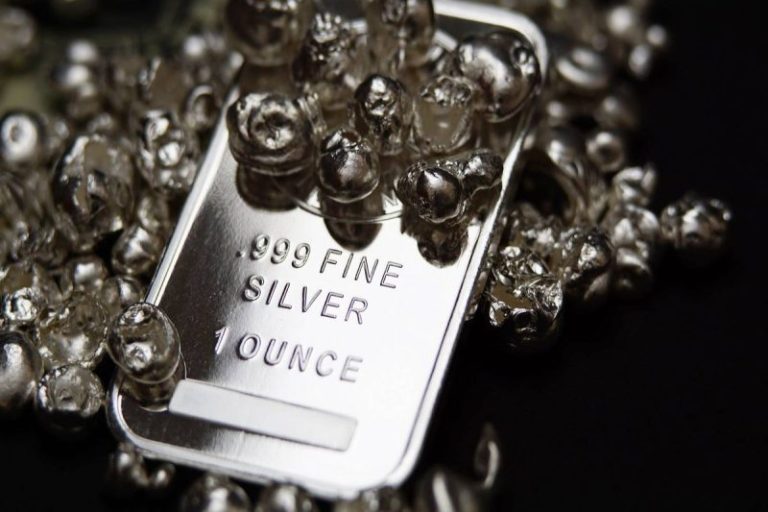
The silver price was also volatile, rising to US$42.83 per ounce early in the week before dipping below US$42 per ounce in mid-week trading. It bounced back to end the week on 14 year highs, gaining 2.11 percent to close Friday at US$43.08.

Copper saw its mid-week gains erased by the end of the week, closing Friday largely flat at US$4.63 per pound. The S&P Goldman Sachs Commodities Index (INDEXSP:SPGSCI) echoed those movements with a 0.06 percent gain to end the week at 545.95.

Top Canadian mining stocks this week

How did mining stocks perform against this backdrop?

Take a look at this week’s five best-performing Canadian mining stocks below.

Stocks data for this article was retrieved at 4:00 p.m. EDT on Friday using TradingView’s stock screener. Only companies trading on the TSX, TSXV and CSE with market caps greater than C$10 million are included. Mineral companies within the non-energy minerals, energy minerals, process industry and producer manufacturing sectors were considered.

1. Japan Gold (TSXV:JG)

Weekly gain: 119.05 percent
Market cap: C$50.3 million
Share price: C$0.23

Japan Gold is an exploration company focused on a portfolio of Japan-based gold assets.

Its most advanced property is the Mizobe gold project located in Southern Kyushu. The site hosts several exploration targets covering an area of 2 kilometers by 2.5 kilometers and has produced river float samples up to 18.9 g/t of gold.

The company is also working on a trio of projects with Barrick (TSX:ABX,NYSE:B), the most advanced of which is the Hakuryu project located in Northern Hokkaido. The company has identified several targets, including the Hakuryu No. 3 vein, which hosts a 360 meter main zone with a thickness of 20 meters.

Shares in Japan Gold gained significantly at the end of the week; however, the company has not released news since September 9, when it reported that it had mobilized for a four-hole, 1,600 meter drill program at Mizobe.

2. Minnova (TSXV:MCI)

Weekly gain: 110 percent
Market cap: C$21.06 million
Share price: C$0.21

Minnova is an exploration and development company advancing its brownfield PL gold mine in Manitoba, Canada.

The property consists of 28 mining claims and covers an area of 5,114 hectares. An April 2018 feasibility study for the project indicated project economics with an after-tax net present value of C$36.7 million, an internal rate of return of 53 percent and a payback period of 1.2 years, calculated at a gold price of US$1,250 per ounce.

The company has been working to restart the mine over the past few years, but faced funding shortfalls. Trading for Minnova was halted on August 6 as it worked to resolve financial issues to maintain its listing on the TSXV.

On September 11, the company announced that trading would resume on the TSXV alongside a corporate update. It disclosed that it had a working capital deficiency of C$544,611 and is planning a private placement to address the shortfall. Funds will also go towards ongoing activities at PL, including drilling, test work and updated NI 43-101 techno-economic studies.

Minnova also announced that it is advancing plans for preliminary open-pit and underground mine design and layout, and that work on a new mine development plan that takes into account higher gold prices is underway.

Shares in Minnova have surged since trading resumed earlier this week from their price of under C$0.10 before the halt.

3. Stamper Oil and Gas (TSXV:STMP)

Weekly gain: 98.26 percent
Market cap: C$16.02 million
Share price: C$0.018

Stamper Oil and Gas is an exploration and development company working to advance offshore projects in Namibia.

The company holds an interest in five exploration blocks in Namibia; its most significant holding is a 32.9 percent stake in PEL 107 located in the Orange Basin. PEL 107 covers an area of 5,484 square kilometers and is located 210 kilometers from shore in an area that hosts three multi-billion-barrel discoveries since 2022.

The company has been conducting seismic work ahead of the planned drilling of an exploration well set to commence in 2027.

Stamper completed the acquisition of its holdings in the Namibian blocks on September 10, when it reported it had closed its purchase of BISP Exploration, originally announced on May 12.

4. New Break Resources (CSE:NBRK)

Weekly gain: 93.33 percent
Market cap: C$17.03 million
Share price: C$0.29

New Break Resources is a gold exploration company working to advance its Moray gold project in Northeastern Ontario, Canada.

The property is located near Timmins, within the Abitibi Greenstone Belt, and spans an area of 10,326 hectares. Additionally, it is situated 32 kilometres northwest of Alamos Gold’s (TSX:AGI) Young-Davidson gold mine, which produced 174,000 ounces of gold in 2024.

On Wednesday, New Break announced results from its six-hole, 1,502-meter maiden diamond drilling program at the site. The company highlighted one assay with an average grade of 4.11 grams per metric ton (g/t) gold over 31.3 meters, including an interval of 6.75 g/t over 7.1 meters.

The prior week, the company closed the final tranche of an oversubscribed private placement. In total, the company raised proceeds of C$1 million over three tranches, which will be used for ongoing exploration at Moray and for general working capital purposes.

5. Clean Tech Vanadium Mining (TSXV:CTV)

Weekly gain: 91.67 percent
Market cap: C$15.77 million
Share price: C$0.115

CleanTech Vanadium is an exploration company working to advance several critical mineral projects in the US.

Its most recent focus has been on its Kentucky-Illinois fluorspar projects, which consist of over a dozen deposits covering over 8,150 acres along the border of Kentucky and Illinois. Mining in the region dates back to the late 1800s and has produced 12.5 million metric tons of fluorspar, according to the company.

CleanTech also owns the Gibellini vanadium project in Nevada, US. The project has been approved for multiple state permits and received a positive environmental impact statement from the Bureau of Land Management. According to the project page, the site covers 21 kilometers and hosts a measured and indicated vanadium oxide resource of 127 million pounds.

Additionally, the company announced on August 6 that it had acquired the El Triunfo gold-antimony project near La Paz, Bolivia, from Silver Elephant for cash considerations of C$155,000.

The most recent announcement from CleanTech came on Tuesday when it welcomed an additional US$1 billion in funding programs from the Department of Energy (DoE) that was announced on August 13. It also highlighted the continued inclusion of fluorspar, germanium, gallium, indium and vanadium on the US Geological Survey’s Critical Minerals list.

CleanTech stated that it intends to explore funding options with the DoE, with a focus on advancing its Illinois-Kentucky fluorspar district. The company noted that the Department of Defense is funding research at the nearby Hicks Dome rare earth and fluorspar project in Illinois.

FAQs for Canadian mining stocks

What is the difference between the TSX and TSXV?

The TSX, or Toronto Stock Exchange, is used by senior companies with larger market caps, and the TSXV, or TSX Venture Exchange, is used by smaller-cap companies. Companies listed on the TSXV can graduate to the senior exchange.

How many mining companies are listed on the TSX and TSXV?

As of May 2025, there were 1,565 companies listed on the TSXV, 910 of which were mining companies. Comparatively, the TSX was home to 1,899 companies, with 181 of those being mining companies.

Together, the TSX and TSXV host around 40 percent of the world’s public mining companies.

How much does it cost to list on the TSXV?

There are a variety of different fees that companies must pay to list on the TSXV, and according to the exchange, they can vary based on the transaction’s nature and complexity. The listing fee alone will most likely cost between C$10,000 to C$70,000. Accounting and auditing fees could rack up between C$25,000 and C$100,000, while legal fees are expected to be over C$75,000 and an underwriters’ commission may hit up to 12 percent.

The exchange lists a handful of other fees and expenses companies can expect, including but not limited to security commission and transfer agency fees, investor relations costs and director and officer liability insurance.

These are all just for the initial listing, of course. There are ongoing expenses once companies are trading, such as sustaining fees and additional listing fees, plus the costs associated with filing regular reports.

How do you trade on the TSXV?

Investors can trade on the TSXV the way they would trade stocks on any exchange. This means they can use a stock broker or an individual investment account to buy and sell shares of TSXV-listed companies during the exchange’s trading hours.

Article by Dean Belder; FAQs by Lauren Kelly.

Securities Disclosure: I, Dean Belder, hold no direct investment interest in any company mentioned in this article.

Securities Disclosure: I, Lauren Kelly, hold no direct investment interest in any company mentioned in this article.

This post appeared first on investingnews.com

Mayor Eric Adams formally endorsed former Gov. Andrew Cuomo to replace him as the next mayor of New York City on Thursday, less than one month after Adams suspended his re-election campaign.

The endorsement followed Wednesday night’s final mayoral debate, where Cuomo, who is running as an Independent, faced off against Democratic nominee Zohran Mamdani and Republican candidate Curtis Sliwa. Rather than speak to reporters after the debate, Cuomo dashed off to Madison Square Garden to watch the end of the New York Knicks game courtside with Adams.

‘I’m fighting for the family of New York,’ Adams said. ‘That’s why I’m here today, to endorse Andrew Cuomo, to be part of this fight, and I’m going to give him my all these next few days to make sure that Black and Brown communities, specifically, who have believed there’s nothing at stake in this election for them. It is.’

‘Am I angry that I’m not the one taking down Zohran, the socialist and the communist?’ Adams said, eliciting President Donald Trump’s moniker for Mamdani. ‘You’re darn right I am. But, you know what, the city means more to me than anything, and it is time for us as a family to come together.’

‘Today confirms what we’ve long known: Andrew Cuomo is running for Eric Adams’ second term,’ Mamdani said in a statement Thursday. ‘It’s no surprise to see two men who share an affinity for corruption and Trump capitulation align themselves at the behest of the billionaire class and the president himself. We are going to turn the page on the politics of big money and small ideas that these two disgraced executives embody and build a city every New Yorker can afford.’

Mamdani reiterated his criticism of the endorsement during a campaign event in Manhattan on Thursday.

‘We also know that this is the art of the deal,’ Mamdani said before adding, ‘We know that in a moment when New Yorkers are looking for an answer to the authoritarianism that we’re seeing from Washington, D.C., they don’t want the continuation of making City Hall into an embassy of that same administration.’

Adams has aligned with Trump since he was elected in November, visiting both Mar-a-Lago and the White House. Trump’s Justice Department dropped bribery, wire fraud and conspiracy charges against Adams earlier this year. 

Gov. Kathy Hochul, D-N.Y., weighed removing Adams from office following a slew of City Hall resignations after Adams’ case was dropped. Hochul has since endorsed Mamdani’s campaign, although Mamdani has yet to endorse Hochul’s re-election campaign. 

Pressure had been mounting since Mamdani won the Democratic primary for Adams or Cuomo to drop out of the race to consolidate support against Mamdani.

‘The mayor put his own personal ambition and ego aside to make sure he’s doing everything he can to make sure that New York remains New York,’ Cuomo said Thursday.

Adams announced he was suspending his campaign in a video on Sunday, Sept. 28, prompting the leading mayoral candidates to sharpen their political jabs against each other.

Similar pressure from billionaires, including Red Apple Media CEO John Catsimatidis and hedge fund CEO Bill Ackman, has intensified this week for Sliwa to drop out of the race in order to clear a pathway to victory for Cuomo.

The Democratic nominee, who handily defeated Cuomo in the primary, elicited Adams’ own words against the former governor in the days after he suspended his re-election campaign.

‘Even hearing Eric Adams, the way that he described Andrew Cuomo as a snake and a liar, is something that I’ve heard from a number of New Yorkers in wanting to turn that page,’ Mamdani said.

While Adams and Cuomo have had their fair share of disagreements, the Democrats agreed on Thursday that Mamdani should not become the next mayor of New York City. Adams addressed his own criticism of Adams during the announcement Thursday. 

‘He called me names. But you know what? Now it’s time to fight for the family, and I’m going to fight for the family with Andrew Cuomo as the next mayor of the city of New York,’ Adams said. 

The latest Fox News survey, conducted Oct. 10-14, ahead of the first general election debate last week, revealed that Mamdani has a substantial lead in the race. According to the poll, Mamdani has a 21-point lead among New York City registered voters with 49% of voters backing Mamdani, while 28% go for Cuomo and 13% favor Sliwa.

Mamdani also rose above the 50% threshold among likely voters, garnering 52% support, while Cuomo picked up 28%, and Sliwa received just 14%.

But as Mamdani, ever the social media-savvy candidate, warned his followers on Wednesday, it was Cuomo who was the favorite to win the nomination just weeks before the Democratic primary.

By consolidating support with New York City Comptroller Brad Lander, and cross-endorsing each other to topple Cuomo through ranked-choice voting, Mamdani pulled off the political upset that has since landed him on the national stage.

This post appeared first on FOX NEWS

Modern warfare is evolving quickly alongside emerging technologies, unlocking unprecedented investment opportunities in diverse areas of the defense sector.

Escalating conflicts in Europe and the Middle East are prompting governments worldwide to increase military spending. Looking at the US alone, the passage of the One Big Beautiful Bill Act has the potential to bring a US$150 billion investment into the defense industry. In addition, the Trump administration is proposing a US$1 trillion defense budget for 2026 with a focus on cybersecurity, artificial intelligence (AI) and autonomous systems capabilities.

The biggest US defense contractors and exchange-traded funds (ETFs) are expected to benefit greatly from the huge government spending expected in the sector. As for up-and-coming American defense companies that offer investors growth opportunities, those that can quickly develop and commercialize dual-capability technologies (i.e. for both civil sector and defense markets) are looking equally as attractive.

“If the opportunity is purely in the defense sector, that’s a big, but ultimately limited, opportunity. If the opportunity is in defense and a range of other sectors because the technology has got a transversal application, then it becomes far more interesting for an investor,” notes Joe Cassidy, partner, technology, media and telecom at KPMG in the UK.

Defense and security trends: Nature of war is changing

Defense spending jumped nearly 10 percent in 2024, according to a KPMG report on emerging trends in the aerospace and defense sector, representing “its fastest growth rate in nearly four decades.’

The firm attributes this growth to geopolitical destabilization both in Europe and in the Middle East. The global trade war surrounding rare earths, platinum-group metals, aluminum, steel and semiconductors is adding further pressure.

This increase in domestic defense spending has been translating into big wins for defense and security stocks. As Raymond James’ September Defense & Government Market Intel Report shows, publicly traded companies in the US defense sector are up by 57.8 percent since September 2024.

In a June interview with Federal News Network’s Terry Gerton, Sam Maness, managing director of Raymond James’ Defense and Government Group, ascribed the growth to the anticipated increase in funding for domestic defense contractors. He noted that US-China tensions and other geopolitical conflicts are “lead(ing) to bullishness for anything that is more meaningfully touching mission, and defense technology naturally does that.’

Looking forward, analysts expect supply chain sovereignty and cutting-edge technological advancements to be the major themes in this sector as nations look to cost effectively build out their domestic defense industries. At the same time, new weapons systems are reshaping the nature of war both on the battlefield and online.

“The way conflicts are resolved is changing rapidly and new technologies are disrupting the battlefield strategy,” states KPMG in its report. “Defense departments need rapid innovation and are no longer willing to wait years for a custom system when an ‘80% Solution’ can be purchased off-the-shelf.”

So what technologies are getting the most attention in the defense sector?

As mentioned, cybersecurity, autonomous systems and AI solutions are in the spotlight, and companies with dual-capability technologies are getting recognition. Below are examples of defense stocks tracked by Raymond James that are focused on providing these technologies to both the civil and defense sectors.

Cybersecurity defense stocks

One of the greatest threats to modern militaries is cyber attacks. This makes securing military IT infrastructure, communications networks and weapons systems mission critical for today’s armed forces.

L3Harris Technologies (NYSE:LHX) is a leading US defense contractor that provides cybersecurity solutions such as end-to-end technologies across air, land, sea, space and cyber domains.

The firm also serves public safety sectors such as law enforcement and fire; commercial sectors such as utilities and transportation; the commercial aviation space; and the healthcare industry.

Mercury Systems (NASDAQ:MRCY) develops secure processing subsystems, embedded computing and mission-critical technologies with advanced cybersecurity features for military and defense applications.

The company also supplies the aviation and industrial sectors.

V2X (NYSE:VVX) supplies vehicle-to-everything cybersecurity to secure communications between military vehicles, drones and command centers. It is in the process of acquiring federal IT business of QinetiQ Group (LSE:QQ), which provides data engineering, intel mission support and cyber solutions for US intelligence agencies.

In the civil and commercial space, the company provides solutions to first responders, commercial fleets and the auto sector, as well as urban mobility and utilities.

Zscaler (NASDAQ:ZS) is a leader in cloud-native security and its zero-trust architecture platforms are used by the US Department of Defense, intelligence agencies and other defense contractors. In August, the company acquired Red Canary, adding to its portfolio of cybersecurity detection and response solutions for US defense and intelligence agencies. Zscaler also serves the healthcare, finance, retail, energy, manufacturing and public sectors.

    Autonomous system defense stocks

    The changing nature of war is probably best represented in the rapid innovation and adoption of lower-cost autonomous systems such as drones, unmanned ground vehicles, robotics and counter-drone technologies.

    A key supplier to the US military, AeroVironment (NASDAQ:AVAV) designs and manufactures unmanned aerial vehicles and robotics systems primarily for military surveillance and reconnaissance.

    The company also provides electric energy systems to the commercial and public sectors.

    Kratos Defense & Security Solutions (NASDAQ:KTOS) specializes in advanced defense technologies such as unmanned systems, satellite communications and hypersonics, while adapting them for commercial markets.

    Teledyne Technologies (NYSE:TDY) provides drones, unmanned vehicles and robotics-related technologies to the defense sector through its subsidiary Teledyne FLIR.

    It also provides these technologies for the civil aviation, manufacturing and energy sectors.

    Through its subsidiary Textron Systems, Textron (NYSE:TXT) develops and integrates autonomous and robotics systems for the US Department of Defense and military operations for intelligence, surveillance and reconnaissance missions. The company’s autonomous technologies portfolio also extends into civil aviation, law enforcement and critical infrastructure protection for government and civilian operations.

      Artificial intelligence defense stocks

      AI technologies are rapidly being integrated into existing and emerging defense tech, including unmanned aerial and ground vehicles, reconnaissance and surveillance systems as well as hypersonic weapons.

      Curtiss-Wright (NYSE:CW) is a global engineering company that provides products such as sensors, controls and data acquisition systems for the defense, aviation, nuclear power and industrial markets. Its defense solutions division has produced AI-optimized rugged embedded computing systems for use on the battlefield.

      Leonardo DRS (NASDAQ:DRS) specializes in AI-enabled computing and sensing for tactical military platforms, including for use in US Army ground vehicles. Its technology is also used for public safety and infrastructure protection during disaster responses, as well as in industrial automation, medical diagnostics and commercial transportation.

      Palantir Technologies (NASDAQ:PLTR) is a leading defense contractor that delivers AI platforms for the US military and its allies. It partners with other major defense industry companies such Northrop Grumman (NYSE:NOC) and Anduril Industries. Palantir’s technology is also widely used in the civil sector, as well as by more than half of Fortune 500 companies in sectors such as healthcare, energy, finance and manufacturing.

      Voyager Technologies (NYSE:VOYG) is a defense- and space-focused AI technology company that provides national security solutions with partners such as Palantir. In August, it acquired Electromagnetic Systems, adding AI-based automated target recognition software and intelligence analytics for space-based radar systems to its portfolio. Voyager’s AI tech is also used by NASA and commercial satellite operators.

        Securities Disclosure: I, Melissa Pistilli, hold no direct investment interest in any company mentioned in this article.

        This post appeared first on investingnews.com

        Yvonne Blaszczyk, president and CEO of BMG Group, sees the gold price hitting US$5,000 per ounce in Q1 on the back of a complex geopolitical landscape.

        ‘In terms of the geopolitical configuration of the world, we are witnessing history right now,’ she said.

        Securities Disclosure: I, Charlotte McLeod, hold no direct investment interest in any company mentioned in this article.

        This post appeared first on investingnews.com

        The global lithium market enters 2026 after a punishing 2025 marked by oversupply, weaker-than-expected EV demand and sustained price pressure, although things began turning around for lithium stocks in Q4.

        Lithium carbonate prices in North Asia fell to four-year lows early in the year, triggering production cuts and project delays, before rebounding sharply in the second half. By late December, prices had jumped 56 percent from their January levels, signaling the start of a potential market rebalancing.

        Analysts point to tightening inventories and high-cost supply under strain as early signs of a recovery, while long-term demand from electrification, energy storage and the energy transition remains intact.

        Battery energy storage systems are emerging as a major growth driver, expected to account for roughly a quarter of global battery demand in 2025. In the US, storage could make up 35 to 40 percent of battery demand in the coming years, according to Benchmark Mineral Intelligence’s Iola Hughes.

        “LFP is the story right now,” Hughes said, highlighting falling costs and technological innovation as key enablers for large-scale deployment. Global storage remains concentrated in China and the US, but new markets like Saudi Arabia are scaling rapidly.

        As storage expands in scale, geography and strategic importance, it is set to become a central pillar of lithium demand heading into 2026.

        1. Lithium Argentina (NYSE:LAR)

        Year-to-date gain: 106.39 percent
        Market cap: US$891.03 million
        Share price: US$5.49

        Lithium Argentina produces lithium carbonate from its Caucharí-Olaroz brine project in Argentina, developed with Ganfeng Lithium (OTC Pink:GNENF,HKEX:1772). The company was spun out from Lithium Americas in October 2023 and changed its name from Lithium Americas (Argentina) in January 2025.

        In mid-April, Lithium Argentina executed a letter of intent with Ganfeng Lithium to jointly advance development across the Pozuelos-Pastos Grandes basins.

        In August, Lithium Argentina agreed to form a new joint venture with Ganfeng Lithium that will combine the companies’ projects in the Pozuelos and Pastos Grandes basins of Salta, Argentina.

        The joint venture will bring together Ganfeng’s wholly owned Pozuelos-Pastos Grandes (PPG) project and Lithium America’s Pastos Grandes and Sal de la Puna projects, in which Ganfeng currently holds a 15 percent and 35 percent stake respectively.

        Once completed, Ganfeng will hold a 67 percent stake in the consolidated PPG project, and Lithium Argentina will hold a 33 percent interest.

        In Q4, Lithium Argentina released a positive scoping study for the PPG project, confirming its scale and strong economics. The consolidated project hosts a measured and indicated resource of 15.1 million metric tons of lithium carbonate equivalent (LCE) and is designed for staged production of up to 150,000 metric tons per year over a 30 year mine life.

        In the same announcement, the company confirmed receipt of an environmental approval for Stage 1 from the Secretariat of Mining and Energy of the Province of Salta.

        Lithium Argentina released its Q3 results in November, noting approximately 8,300 metric tons of lithium carbonate production at its Caucharí-Olaroz operation during the quarter, with 24,000 metric tons produced between January and September.

        Company shares rose to a year-to-date high of US$5.58 on December 31, in line with rising lithium carbonate prices.

        2. Sociedad Química y Minera (NYSE:SQM)

        Year-to-date gain: 87.39 percent
        Market cap: US$19.66 billion
        Share price: US$68.98

        SQM is a major global lithium producer, with operations centered in Chile’s Salar de Atacama. The company extracts lithium from brine and produces lithium carbonate and hydroxide for use in batteries.

        SQM is expanding production and holds interests in projects in Australia and China, including a 50/50 joint venture for the Mt Holland lithium operation in Western Australia. In July, the company produced its first battery-grade lithium hydroxide production at its Kwinana refinery in the state.

        In late April, Chile’s competition watchdog approved the partnership agreement between SQM and state-owned copper giant Codelco aimed at boosting output at the Atacama salt flat. The deal, first announced in 2024, reached another milestone when it secured approval for an additional lithium quota from Chile’s nuclear energy regulator CChEN.

        SQM ended the year finalizing the agreement. The partnership was formalized through SQM’s subsidiary SQM Salar absorbing Codelco’s Minera Tarar and being renamed Nova Andino Litio.

        SQM reported a net income of US$404.4 million for the first nine months of 2025, rebounding from a US$524.5 million loss in the same period of 2024. Revenue totaled US$3.25 billion, down 5.9 percent year-over-year, while gross profit reached US$904.1 million.

        The company’s third-quarter performance highlighted the turnaround, as SQM achieved record lithium sales volumes. It reported net income of US$178.4 million, up 36 percent from Q3 2024, and revenue of US$1.17 billion, up 8.9 percent. Gross profit for the quarter climbed 23 percent to US$345.8 million.

        SQM attributed the rebound to higher realized lithium prices and improved operational efficiency, signaling a strong recovery trajectory for the remainder of 2025.

        Shares of SQM reached a year-to-date high of US$71.63 on December 26.

        3. Albemarle (NYSE:ALB)

        Year-to-date gain: 64.29 percent
        Market cap: US$16.71 billion
        Share price: US$142.01

        North Carolina-based Albemarle is dividing into two primary business units, one of which — the Albemarle Energy Storage unit — is focused wholly on the lithium-ion battery and energy transition markets. It includes the firm’s lithium carbonate, hydroxide and metal production.

        Albemarle has a broad portfolio of lithium mines and facilities, with extraction in Chile, Australia and the US. Looking first at Chile, Albemarle produces lithium carbonate at its La Negra lithium conversion plants, which process brine from the Salar de Atacama, the country’s largest salt flat. Albemarle is aiming to implement direct lithium extraction technology at the salt flat to reduce water usage.

        Albemarle’s Australian assets Wodgina hard-rock lithium mine in Western Australia, which is owned and operated by the 50/50 MARBL joint venture with Mineral Resources (ASX:MIN,OTC Pink:MALRF). Albemarle wholly owns the on-site Kemerton lithium hydroxide facility. The company’s other Australian joint venture is the Greenbushes hard-rock mine, in which it holds a 49 percent interest.

        In late October, Albemarle signed an agreement to sell its 51 percent stake in its refining catalyst business, Ketjen, leaving it with 49 percent ownership, part of a broader portfolio reshaping that also includes the sale of Ketjen’s 50 percent stake in the Eurecat joint venture to partner Axens.

        The combined deals are expected to generate approximately US$660 million in pre-tax cash proceeds and strengthen Albemarle’s financial flexibility. Both transactions are anticipated to close in the first half of 2026, subject to regulatory approvals.

        In November, Albemarle reported third‑quarter results that reflected improved operations amid continued lithium market headwinds. The company logged net sales of roughly US$1.31 billion, a slight year‑over‑year decline driven by lower energy storage pricing.

        Albemarle generated US$356 million in quarterly cash from operations, noting the company remained on track to reduce full‑year capital expenditures to around US$600 million while targeting positive free cash flow of US$300 million to US$400 million in 2025.

        Shares of Albemarle marked a year-to-date high of US$150.01 on December 26, amid strengthening lithium prices.

        4. Lithium Americas (NYSE:LAC)

        Year-to-date gain: 47 percent
        Market cap: US$1.24 billion
        Share price: US$4.41

        US-focused Lithium Americas is developing its flagship Thacker lithium Pass project located in Humboldt County in northern Nevada. The project is a joint venture between Lithium Americas at 62 percent and General Motors (NYSE:GM) at 38 percent.

        According to the company, Thacker Pass holds the “largest measured lithium reserve and resource in the world.”

        In March, Lithium Americas secured a US$250 million investment from Orion Resource Partners to advance Phase 1 construction of the project, which is expected to fully cover development costs through the construction phase. On April 1, the joint venture partners made a final investment decision for the project, with completion targeted for late 2027.

        Shares of Lithium Americas surged in late September, rising from US$3.07 to US$7.37 in three days. Its share price reached a 2025 high of US$10.05 on October 13.

        Lithium Americas’ share price rose on news of renegotiation talks over its US$2.26 billion Department of Energy loan tied to the Thacker Pass project. According to media reports, the Trump administration was seeking up to a 10 percent equity stake as part of amendments to the loan’s repayment structure.

        In response, Lithium Americas offered no-cost warrants for 5 to 10 percent of its shares and agreed to cover related administrative costs, while requesting changes to the amortization schedule without altering the loan’s term or interest.

        An agreement was reached on October 1 and Lithium Americas received the first US$435 million installment of the loan on October 20.

        The company ended the year by announcing it was being added to the S&P/TSX Composite Index (INDEXTSI:OSPTX).

        5. Sigma Lithium (NASDAQ:SGML)

        Year-to-date gain: 20.23 percent
        Market cap: US$1.5 billion
        Share price: US$13.49

        Sigma Lithium is a Brazil-focused lithium producer supplying chemical-grade lithium concentrate to the global battery market. The company operates the Grota do Cirilo project in Minas Gerais, one of the world’s largest hard-rock lithium operations.

        Sigma’s Greentech industrial lithium plant currently produces about 270,000 metric tons per year of lithium concentrate, equivalent to roughly 38,000 to 40,000 metric tons of LCE. The company is building a second processing plant that is expected to lift total capacity to approximately 520,000 metric tons of concentrate annually.

        In September, Sigma Lithium’s flagship Grota do Cirilo operation in Brazil faced both regulatory scrutiny and operational disruption.

        That month, Brazilian prosecutors requested a pause in operations after a technical review flagged shortcomings in the project’s Environmental Impact Assessment, citing potential water-management risks to the Piauí stream from planned open pits, a key water source for nearby communities, particularly during droughts.

        While it denied issues with its EIA, Sigma paused mining to upgrade equipment and improve efficiency. The company phased down operations in September and shut the mine throughout October, leading to a sharp drop in output.

        In mid-November, Sigma reported a strong Q3 2025, with net revenue rising 69 percent quarter-over-quarter and 36 percent year-over-year. The company generated US$24 million from final price settlements on sales completed by the end of Q3, with a further US$4 million in cash expected from additional settlements.

        Sigma also expects to receive approximately US$33 million from the sale of 950,000 metric tons of lithium-bearing material that can be reprocessed by its customers, providing an additional near-term cash inflow.

        Operationally, it said mining activities would restart by the end of November, with full ramp-up targeted for the first quarter of 2026. Because the company took over mining operations from its equipment contractor earlier in 2025, the restart is supported by upgraded equipment leased directly from manufacturers and operated in-house.

        Sigma Lithium shares rose to a year-to-date high of US$14.50 on December 26.

        Securities Disclosure: I, Georgia Williams, currently hold no direct investment interest in any company mentioned in this article.

        This post appeared first on investingnews.com

        In today’s political environment, it is hard to envision important issues where Republicans and Democrats can find common ground. Protecting the safety and security of citizens from the Chinese Communist Party (CCP) is hopefully still that issue. 

        In recent years, we have seen growing agreement among lawmakers that the CCP is actively working against the security of the U.S. Whether through coercive trade practices, espionage, military aggression or technology theft, the CCP is intent on undermining American strength. 

        President Donald Trump has rightly identified our nation’s increased dependence on Chinese companies as a clear threat to national security. In response, he has taken action to rebuild our domestic industrial manufacturing bases. This is especially true in critical security industries like defense, nuclear development, pharmaceutical manufacturing and data center infrastructure. 

        The Trump administration should now look at medical devices. This lesser-known threat to American privacy and security lurks within our hospitals, health care facilities and even in the homes of everyday Americans. Used to treat patients, monitor patient health and inform medical decisions made by health care professionals, medical devices are critical tools used in the everyday care of our most vulnerable members of society. 

        It is no wonder, then, that medical devices made by Chinese companies not only have the potential to take advantage of that intimate access, but have already been shown to exploit those vulnerabilities to gain access to the personal, private data of American patients.

        Just this month, it was reported that medical hardware from Shanghai-based United Imaging has been installed in some of the country’s top research labs. In some instances, these labs were even funded by the National Institutes of Health (NIH). Not only has United Imaging worked alongside the Chinese military and the state-run Chinese Academy of Sciences, according to the FBI, the company has also bribed employees working at an NIH-funded lab to backchannel non-public information about their research to United Imaging and the Chinese Academy of Sciences. 

        Earlier this year, the Food and Drug Administration (FDA) issued a warning about a patient monitor made by Chinese-based company Contec, specifically calling attention to a software backdoor on the device that once connected to the internet ‘begins gathering patient data, including personally identifiable information (PII) and protected health information (PHI), and exfiltrating (withdrawing) the data outside of the health care delivery environment.’ 

        The Department of Homeland Security’s Cybersecurity and Infrastructure Security Agency (CISA) followed up with its own report, saying that the backdoor enabled remote actors to engage in ‘remote code execution and device modification with the ability to alter its configuration.’

        Far from being an idle threat, CISA explained that this vulnerability in a machine that monitors and displays critical information like electrocardiograms and blood pressure could result in life-or-death consequences: ‘This introduces risk to patient safety as a malfunctioning monitor could lead to improper responses to vital signs displayed by the device.’

        Medical devices made by Chinese companies have quietly made their way into many hospitals and clinics in the United States, bringing with them hidden risks that are waiting to be abused by the CCP. 

        First, patient privacy is compromised when unknown actors can access and siphon the most sensitive and confidential data from every patient in America, undermining the very foundation of trust in our health care system. 

        Compounded with the fact that Chinese law compels Chinese companies to cooperate and share information with the CCP and that China prizes big data and is gathering information on individuals around the world, we can be assured that whatever private information is gathered on American patients is not in our national interest.

        Second, we cannot trust that information siphoning will not escalate to more serious tactics that put patient lives at risk. Remote access to medical devices could result in real-world harm to patients if those devices were reconfigured to display false information that then led to unnecessary and harmful medical interventions. 

        Third, the U.S. healthcare system is becoming too dependent on Chinese companies to run our hospitals. It does not take much of a leap to think about what would happen if the CCP decided to cut off the supply of medical devices. Just like critical minerals, energy or military equipment, depending on Chinese companies for medical devices is a clear threat to American security.

        What these threats amount to is that the U.S. can no longer blindly outsource medical devices – some of our most vital and sensitive equipment – to companies that operate at the behest of foreign adversarial governments like the CCP. It is critical that America has a domestic supply chain of medical devices. 

        Now is the time that lawmakers, both at the federal and state level, take this threat seriously and take meaningful steps to reduce the risks posed by these medical devices. 

        Protecting Americans from threats to their health and security should be an easy, bipartisan win.

        This post appeared first on FOX NEWS

        Front-runners for New York City mayor, Zohran Mamdani and Andrew Cuomo, wasted little time attacking each other on alleged personal scandals they have been involved in during a Wednesday night debate between the pair and GOP candidate Curtis Sliwa.  

        Mamdani and Sliwa took the opportunity during Wednesday’s debate to drill down on past sexual harassment allegations against Cuomo, the former governor of New York, ahead of an impeachment inquiry that preceded Cuomo’s 2021 resignation. Cuomo was also hit by Mamdani over accusations he has – while in public office – failed to meet with Muslim constituents and only began doing so amid pressure from his mayoral campaign, and over his alleged poor handling of the COVID-19 virus in New York after Cuomo was party to issuing guidance forcing nursing homes and long-term care facilities to admit COVID-19 positive patients.

        Meanwhile, Cuomo did not hold back on targeting Mamdani over alleged controversies that have embattled his campaign. Cuomo blasted the self-proclaimed socialist over his lack of experience, ties to radical politics, and past radical comments about law enforcement, Israel and the situation in Gaza.

        ‘My main opponent has no new ideas. He has no new plan. … He’s never run anything, managed anything. He’s never had a real job,’ Cuomo said of Mamdani during the debate. Cuomo also branded Mamdani as someone who has proven to be ‘a divisive force in New York,’ pointing to past incidents that have garnered Mamdani heat from critics. 

        One of those incidents included a picture he took with a hard-lined Ugandan lawmaker who has pushed policies of imprisoning people for being gay, which Mamdani took while taking a break from the campaign trail to visit his home country of Uganda for a wedding. Cuomo also hit the controversy over whether Mamdani supports Jewish New Yorkers, as his critics have claimed he is anti-Israel pointing to statements he has made, like ‘globalize the intifada.’ 

        Cuomo also accused Mamdani of disrespecting Italian-Americans after a video of him surfaced giving the middle finger to a statue of Christopher Columbus, while also pointing to criticism the self-proclaimed socialist candidate has garnered from 9/11 first-responders after posting a photo with a Muslim cleric who served as a character witness for the mastermind behind the September 11, 2001 attacks. 

        ‘You have been a divisive force in New York, and I believe that’s toxic energy for New York. It’s with the Jewish community. It’s with the Italian-American community – when you give the Columbus statue the finger. It’s with the Sunni Muslims when you say decriminalize prostitution, which is Haram. It’s the Hindus,’ Cuomo continued. ‘Then, you take a picture with Rebecca Kadaga, deputy Prime Minister of Uganda. … She’s known as Rebecca ‘Gay Killer.’ … You’re a citizen of Uganda. You took the picture. You said you didn’t know who she was. It turns out you did. How do you not renounce your citizenship or demand BDS against Uganda for imprisoning people who are gay just by their sexual orientation? Isn’t that a basic violation of human rights?’

        Mamdani shot back that his politics have remained ‘consistent’ and that they are built on a belief in human rights for all people, including LGBTQ+ folks. Had he known Kadga’s role in drafting legislation to imprison gay folks, Mamdani said, he never would have taken the picture. 

        ‘This constant attempt to smear and slander me is an attempt to also distract from the fact that, unlike myself, you do not actually have a platform or a set of policies,’ Mamdani shot back at Cuomo before introducing his own claims about the former governor regarding past accusations of sexual harassment.

        ‘Mr. Cuomo. In 2021, 13 different women who worked in your administration credibly accused you of sexual harassment. Since then, you have spent more than $20 million in taxpayer funds to defend yourself, all while describing these allegations as entirely political,’ Mamdani said while attacking Cuomo Wednesday night. 

        ‘You have even gone so far as to legally go after these women. One of those women, Charlotte Bennett, is here in the audience this evening. You sought to access her private gynecological records. She cannot speak up for herself because you lodged a defamation case against her. I, however, can speak. What do you say to the 13 women that you sexually harassed?’ 

        Cuomo, in 2021, was accused of multiple incidents of sexual harassment that preceded his resignation as governor that year. A subsequent report from New York Attorney General Letitia James confirmed Cuomo ‘sexually harassed multiple women from 2013 through 2020,’ while in January 2024, the U.S. Department of Justice announced it had reached a nearly $500,000 settlement with Cuomo’s executive office over one of the claims. However, no criminal charges were ever filed against Cuomo, with some district attorneys citing insufficient evidence.

        Cuomo defended himself against Mamdani’s accusations, noting the cases were eventually dropped, before returning to questions about Mamdani’s alleged past. 

        Meanwhile, Sliwa didn’t skip an opportunity to slam Cuomo over the sexual assault allegations either, saying early in the debate during a discussion about homelessness that Cuomo ‘fled’ the governor’s office amid an impeachment inquiry that was investigating him.

        ‘Andrew, you didn’t ‘leave.’ You fled from being impeached by the Democrats in the state legislature,’ Sliwa began before getting into the homelessness issue, earning him a round-of-applause from the audience. 

        ”Leave?’ You fled!’ Sliwa continued to applause. ‘But let’s get back on topic.’ 

        This post appeared first on FOX NEWS

        Here’s a quick recap of the crypto landscape for Wednesday (September 17) as of 9:00 p.m. UTC.

        Get the latest insights on Bitcoin, Ethereum and altcoins, along with a round-up of key cryptocurrency market news.

        Bitcoin and Ethereum price update

        Bitcoin (BTC) was priced at US$115,680, a one percent decrease in 24 hours. Its lowest valuation of the day was US$114,940, and its highest was US$116,225.

        Bitcoin price performance, September 17, 2025.

        Chart via TradingView.

        The crypto markets showed immediate volatility following today’s US Federal Reserve interest rate decision, which was a widely anticipated 25 basis points, lowering the target range to 4 to 4.25 percent.

        Bitcoin initially rose slightly above US$116,000, but then dropped below US$115,000 as traders digested Fed Chair Jerome Powell’s remarks. He noted that inflation risks are currently tilted to the upside, while employment risks are to the downside, posing a challenging situation for policy balance.

        Ether (ETH) hovered near US$4,500, showing some cautious optimism against the macro backdrop. It was priced at US$4,519.07 at the closing bell, its highest valuation of the day and an increase of 0.6 percent over the past 24 hours. Its lowest valuation on Wednesday was US$4440.

        Crypto derivatives analytics and market indicators

        Total BTC Futures Open Interest was at 727.55K BTC, equivalent to US$84.19 billion, up by 1.15 percent over four hours and 0.04 percent over 24 hours. The perpetual funding rate for BTC was at 0.0057 percent, while the ETH funding rate stood at 0.0041 percent, indicating bullish market sentiment.

        Liquidations reached US$143.67 million over the past four hours, with long positions representing the majority, signaling strong selling pressure that could push prices down.

        BTC dominance stands at 55.8 percent.

        ETF data

        Institutional Bitcoin demand is now outpacing new issuance. Bitwise data shows that US spot Bitcoin exchange-traded fund (ETF) inflows far exceed new Bitcoin supply. Monday’s (September 15) Bitcoin ETF inflows were about US$260 million versus ETH’s US$360 million, followed by an uptick to US$292 million on Tuesday (September 16).

        This seven day inflow streak (US$2.9 billion) is the largest since July, pushing total Bitcoin ETF assets to US$151.7 billion, or around 6.6 percent of Bitcoin’s market cap. Data shows that 97 percent of this surge came from US spot funds, pushing their combined holdings to a record 1.32 million BTC.

        Fear and Greed Index snapshot

        Sentiment gauges have cooled from recent highs.

        CMC’s Crypto Fear & Greed Index currently stands around 51 (neutral), down from “greed” levels last week.

        The neutral reading, which is up only slightly from 49 last week, shows that while neither bullish nor bearish sentiments are dominant, investors are still cautiously optimistic buoyed by ETF inflows and Fed hopes of favorable interest rates.

        CMC Crypto Fear and Greed Index, Bitcoin price and Bitcoin volume.

        Chart via CoinMarketCap.

        Altcoin price update

        Altcoins continued to show strength midweek, with many outperforming Bitcoin.
        • Solana (SOL) was priced at US$238.66, an increase of 0.4 percent over the last 24 hours and its highest valuation of the day. Its lowest valuation on Wednesday was US$232.78.
        • XRP was trading for US$3.04, down by 0.4 percent in the past 24 hours. Its lowest valuation of the day was US$2.99, and its highest value was US$3.06.
        • SUI (Sui) was valued at US$3.68, trading at its highest valuation of the day and up by 1.3 percent over the past 24 hours. Its lowest price point today was US$3.54.
        • Cardano (ADA) was priced at US$0.8832, up by 1.3 percent over 24 hours to its highest value of the day. Its lowest valuation was US$0.8634.

        Today’s crypto news to know

        Bitcoin ETF inflows surge to highest level since July

        Bitcoin exchange-traded products drew their largest weekly inflows since late July, according to K33 Research, as institutional investors piled back into the market.

        Net inflows totaled 20,685 BTC, pushing US spot ETFs’ combined holdings to a record 1.32 million BTC.

        Analysts say the fresh demand is outpacing new supply nearly nine times over, creating strong upward pressure on prices. Bitwise notes that this reallocation is coming at the expense of Ethereum, with capital flowing back into Bitcoin after months of mixed positioning. ETF inflows have become a critical driver of performance, with Bitwise data showing an unprecedented correlation between flows and price action.

        With more than 22,000 BTC accumulated via funds in the last month, compared with just 14,000 newly mined, analysts see this as a bullish signal for the final quarter of the year.

        Forward Industries files for US$4 billion ATM equity offering

        Forward Industries (NASDAQ:FORD), a prominent Solana treasury company, has filed with the US Securities and Exchange Commission (SEC) to establish an at-the-market (ATM) equity offering program.

        This initiative, announced on Wednesday, will be facilitated by Cantor Fitzgerald and will enable the company to incrementally sell up to US$4 billion of its common stock on the open market.

        The company said it plans to use the net proceeds for general corporate purposes, including working capital, its Solana token strategy and acquiring income-generating assets.

        Chairman of the Board, Kyle Samani, stated this offering provides a flexible mechanism to deploy capital for its Solana treasury strategy, scale its position, which already has over 6.8 million SOL purchased, strengthen its balance sheet and pursue growth initiatives.

        Google, Coinbase partner for stablecoin payments in AI protocol

        Google (NASDAQ:GOOGL) and Coinbase Global (NASDAQ:COIN) have joined forces to integrate stablecoin payments into AP2, a new open-source artificial intelligence (AI) payments protocol.

        Developed in close collaboration with Coinbase, Google’s AP2 enables AI applications and agents to autonomously send and receive payments using both traditional methods and stablecoins. The AP2 system aims to establish a universal, secure, compliant, and flexible payment language for both legacy financial rails and emerging digital assets.

        Ultimately, this will enable AI agents to conduct financial transactions in applications like personal shopping or financial advising, without human intervention, a significant step toward an AI economy powered by digital payments.

        The initiative extends beyond Google and Coinbase, including the Ethereum Foundation and over 60 other companies from both the crypto and traditional finance sectors, such as Salesforce (NYSE:CRM), American Express (NYSE:AXP) and Etsy.

        This partnership ensures the payment infrastructure supports stablecoins and integrates with Coinbase’s existing AI-driven crypto payment system, positioning Coinbase centrally in Google’s efforts to merge AI with digital money, capitalizing on the growing adoption and interest in stablecoins.

        Bullish secures New York BitLicense

        Bullish has secured a BitLicense from the New York State Department of Financial Services, a key regulatory approval allowing the company’s US entity to legally provide cryptocurrency spot trading and custody services to institutional clients and advanced traders in New York State. This regulatory milestone in New York, a major financial hub, is critical for Bullish’s full-scale launch and expansion in the US market. The company is one of a handful of crypto firms licensed under this rigorous state framework, joining firms like Gemini and Paxos.

        The BitLicense will enable Bullish to offer regulated, institutional-grade digital asset services in New York, increasing access for hedge funds, asset managers, banks, and other institutional players.

        CEO Tom Farley emphasized the company’s commitment to regulatory compliance and building trusted infrastructure. President Chris Tyrer highlighted that clear regulation drives responsible market evolution and institutional engagement.

        Metaplanet expands to US with new Bitcoin income unit

        Metaplanet (TSE:3350,OTCQX:MTPLF) has established a Miami-based subsidiary to oversee its Bitcoin income generation business, following the close of a US$1.44 billion global equity sale earlier this month.

        The new arm, Metaplanet Income, received an initial US$15 million capital injection and will focus on derivatives trading and related yield strategies separate from the company’s core treasury holdings.

        Upsized from an original plan of 180 million shares to 385 million due to strong demand, the offering raised ¥212.9 billion in gross proceeds. Funds are earmarked for further Bitcoin purchases through October as well as expansion of income products that have generated steady revenue since late 2024. Management says the new US subsidiary will not materially affect 2025 earnings but strengthens its long-term operational footprint.

        Saudi Arabia doubles down on digital payments with Google and Ant

        Saudi Arabia is accelerating its financial technology ambitions through new partnerships with Google Pay and Ant International, its central bank confirmed at the Money20/20 conference in Riyadh. Google Pay will now integrate with the country’s mada network, allowing cardholders to manage payments through Google Wallet.

        Meanwhile, a collaboration with Ant International aims to enable cross-border QR code payments linking mada with Alipay+ by 2026. The push is expected to benefit small and mid-sized merchants.

        Securities Disclosure: I, Giann Liguid, hold no direct investment interest in any company mentioned in this article.

        Securities Disclosure: I, Meagen Seatter, hold no direct investment interest in any company mentioned in this article.

        This post appeared first on investingnews.com

        Over a decade ago, Sen. Ted Cruz, R-Texas, predicted that healthcare premiums would skyrocket, even in the face of subsidies put into effect under Obamacare that were meant to bring them down. 

        Today, the ballooning of those premiums and their accompanying subsidies are at the center of the 22-day shutdown that looks poised to get longer still.

        ‘Despite Obamacare subsidies, many Americans will still be paying higher premiums in 2014 as a result of Obamacare,’ Cruz said in 2013, referring to the Affordable Care Act (ACA).

        In his 2013 floor speech, Cruz pointed to research from Avik Roy, a healthcare researcher who, at the time, was a senior fellow at the Manhattan Institute. Roy’s research made the case that subsidies passed by the Obama administration would do little to stop government-backed healthcare plans from growing more expensive over time or competing effectively with non-government-backed plans. 

        But even those forecasts have paled in comparison to the costs of the government’s emergency response to the COVID-19 pandemic.

        The subsidies under Obamacare have vastly expanded in recent years. An emergency provision included in President Joe Biden’s 2021 American Rescue Plan widened the range of eligible applicants as a response to the global pandemic. 

        Now that those COVID-era provisions are set to sunset at the end of 2025, an expiration date set by Democrats themselves, Democrats are voicing alarm that Obamacare policyholders will have to shoulder the costs of health insurance without the enhanced supplemental aid. 

        According to the Committee for a Responsible Federal Budget, a nonpartisan think tank that focuses on fiscal policy, continuing the expanded credits could cost upwards of $30 billion annually. Findings by KFF, a healthcare policy group, say that over 90% of the 24 million Obamacare enrollees make use of the enhanced credits.

        KFF analysis indicates that the enhanced premium tax credits saved subsidized enrollees an average of $705 last year. 

        Democrats in Congress, led by House Minority Leader Hakeem Jeffries, D-N.Y., and Senate Minority Leader Chuck Schumer, D-N.Y., have demanded some sort of extension to the already expanded COVID-era subsidies as a condition for passing spending legislation to end the current government shutdown, which is now the longest full shutdown in history.

        Republicans, who maintain that the subsidies are completely unrelated to government funding considerations, have said lawmakers will address the subsidies when the government is open again.

        The most conservative members in Congress have said cutting back on the subsidies is key to returning the government to pre-COVID levels of funding.

        Lawmakers in the Senate have voted 11 times on a short-term spending extension meant to keep the government open through Nov. 21 but have so far failed to move past the gridlock over the enhanced premium tax credits.

        Cruz did not immediately respond to Fox News Digital’s request for comment.

        This post appeared first on FOX NEWS