
Author

admin

Browsing

The gold price declined from its recent all-time highs this week, sinking to nearly US$4,000 per ounce and recording its biggest one-day decline in more than 12 years.

Silver took a similar hit, slipping back below the US$50 per ounce level.

The drops have been attributed to factors like a stronger US dollar and lower US-China tensions, as well as profit taking, potentially from traders who are new to the market.

Many experts have been anticipating a correction for the metals — their latest rise has been quick, and no asset can go straight up forever.

However, there’s also a broad consensus that gold has entered a new phase. For example, Patrick Tuohy of Goldstrom believes gold won’t fall below US$3,000 again.

Here’s what Tuohy said:

‘Is this a short-term phenomenon that’s going to have some some dynamics that are going to turn it on its head and it reverses 50, 60 percent? I don’t believe that is the case. I think within our group … the consensus is that it’s unlikely that we’ll see gold below US$3,000 again in our lifetimes. So let’s say that that’s the floor. That’s a fairly significant move from where we were two years ago. So that’s comfortable.’

Next week, all eyes will be on the US Federal Reserve, which is set to meet from October 28 to 29. CME Group’s (NASDAQ:CME) FedWatch tool shows strong expectations for another interest rate cut.

While the release of US government data has been affected by the ongoing shutdown, September consumer price index numbers were released on Friday (October 24).

The report was the first major piece of federal economic data to come out since the shutdown began, and it has confirmed expectations of another rate reduction.

Bullet briefing — What’s next for gold and silver?

Gold and silver prices perked up to end the week, rising to the US$4,100 and US$48.60 levels, respectively. But with the metals still off from their all-time highs, investors are wondering what’s next.

Opinions vary, but I’ve pulled together a couple of quotes that illustrate what I’m hearing.

First is Ed Steer of Ed Steer’s Gold and Silver Digest. He’s well known for his commentary on the precious metals space, and he weighed in on what’s next for silver, saying that today really is different compared to the other times silver rose to the US$50 level.

Here’s how he explained it:

‘It’s irrelevant what the price is today. You look at the big picture, and look at the fact that the BRICS+ have become an absolutely awesome juggernaut, and it’s absolutely unstoppable. And as we shift from the west to the east, as this continues economically, financially, it’s impossible to say where this is going to end up.

‘But what we’re living right now is we’re living through a major, major shift in financial power, from one area of the world to another, and we’re going to be — they’re going to be writing about this 1,000 years from now. So we’re living through history.’

Next we have Don Durrett of GoldStockData.com. This interview is from the week before last, so it’s a little older, but definitely still relevant. I’ve kept thinking about a comment Durrett made about one way we can tell the gold cycle is still early. This is what he said:

The thing that really reveals how early we are is the stock market is only 2 percent from an all-time high. What in the world is the stock market doing at an all-time high and gold at an all-time high? Those are antagonistic. Gold is supposed to be a hedge against uncertainty. The stock market is supposed to show basically confidence.

And so if you have an all-time high, people should be confident. Everything’s fine. We don’t need this. But people are not confident. People have said this is the most scary bull market ever. Nobody really believes in it, right? … So the question is, who’s telling the truth? Is the stock market telling the truth at an all time high, or is it gold is telling the truth? Well, it’s pretty obvious that gold’s the one telling the truth.

In It To Win It interview

Finally, if you’d like to hear more from me, I was recently interviewed by Steve Barton of In It To Win It.

Securities Disclosure: I, Charlotte McLeod, hold no direct investment interest in any company mentioned in this article.
This post appeared first on investingnews.com

Last-minute closed-door talks between Senate Republicans and Democrats failed to prevent a ‘nuclear option’ in the upper chamber, as frustrations on both sides killed a deal to move ahead with President Donald Trump’s nominees.  

Lawmakers were inching closer to a deal that would have allowed sub-Cabinet-level nominees to be voted on in bunches, but neither side could reach a final agreement.

Senate Republicans argued that a majority of their counterparts agreed with the new proposal, but that Senate Minority Leader Chuck Schumer, D-N.Y., was still standing in the way.

‘I think the majority of Democrats are on board with it,’ Sen. James Lankford, R-Okla., told Fox News Digital. ‘And Schumer is blocking it from actually having consent to come to the floor.’

The failed deal was a modified version of a proposal first unveiled by Senate Democrats in 2023, and would have allowed 15 nominees to be batched together en bloc and voted on while still requiring two hours of debate for the group.

But when Lankford brought the proposal to the floor for consideration, Sen. Brian Schatz, D-Hawaii, blocked it.

Schatz argued that Senate Republicans were trying to rush through the negotiating process ahead of their plan to leave Washington for the weekend.

‘What they’re asking for is unanimity, and we don’t have it,’ he said. ‘And so, if you’re interested in enacting this on a bipartisan basis, the process for doing that — It is available to you. But again, it’s more a matter of running out of patience than running out of time.’

Senate Majority Leader John Thune, R-S.D., fired back ‘how much time is enough?’

‘Give me a break,’ he said. ‘Two years. Not long enough. How about eight months? Eight months of this.’

With the prospects of bipartisan deal to move nominees through Democrats’ blockade, Senate Republicans are expected to continue down the path of the ‘nuclear option.’

That means that their initial proposal, which would allow for an unlimited number of sub-cabinet level nominees to be voted on en bloc with 30 hours of debate tacked on, is expected to pass with a simple majority, and effectively change the confirmation process in the Senate.

‘We are achingly close to doing this like adults,’ Schatz said.

This post appeared first on FOX NEWS

The NASDAQ Biotechnology Index (INDEXNASDAQ:NBI) is trading at three year highs despite market volatility, responding to breakthrough innovations and increased deals involving NASDAQ biotech stocks.

After dropping to a low of 3,637.05 in October 2023, the index climbed to a nearly three year peak of 4,954.813 on September 19, 2024. While the index pulled back to 4,530.69 in August 2025, it staged a robust recovery in the second half of the year, closing at 5,766.59 on December 29, 2025, a gain of approximately 34 percent for the year.

The top NASDAQ biotech stocks have seen sizeable share price increases over the past year. For those interested in investing in biotech companies, the best-performing small-cap biotech stocks are outlined below.

Data was gathered on December 29, 2025, using TradingView’s stock screener. Small-cap biotech stocks with market caps between US$50 million and US$500 million at that time were considered for this list.

1. SELLAS Life Sciences Group (NASDAQ:SLS)

Year-to-date gain: 210.19 percent
Market cap: US$477.18 million
Share price: US$3.35

SELLAS Life Sciences Group is a late-stage biopharmaceutical company focused on novel cancer immunotherapies. The company’s approach involves ‘teaching’ the immune system to recognize and kill cancer cells by targeting specific proteins that are overexpressed in tumors.

Its flagship asset is galinpepimut-S (GPS), a vaccine-like immunotherapy for patients with acute myeloid leukemia (AML) who are in remission but at high risk of relapse. Its secondary asset, SLS009, is a highly selective CDK9 inhibitor currently showing promise in Phase 2 trials for various blood cancers.

The company’s stock price surged on December 29 after SELLAS shared an update on the Phase 3 REGAL trial evaluating GPS as a maintenance therapy in patients with AML. The trial is designed as a blind survival study, with the end point triggered on the 80th patient death.

In the update, the company reported that 72 deaths had occurred as of December 26. Because it is taking longer than expected for the trial to complete, which was previously anticipated to happen before the end of 2025, investors are speculating that the patients in the trial are living significantly longer than the historical average.

2. IO Biotech (NASDAQ:IOBT)

Year-to-date gain: 129.47 percent
Market cap: US$144.28 million
Share price: US$2.16

IO Biotech is developing immune-modulating therapeutic cancer vaccines based on its T-win technology platform, designed to activate T cells to target both tumor cells and the immune-suppressive cells.

The clinical-stage biopharmaceutical company’s lead cancer vaccine candidate is IO102-IO103, which has the brand name Cylembio. IO102-IO103 has breakthrough therapy designation from the US Food and Drug Administration (FDA) when used in combination with Merck’s (NYSE:MRK) anti-PD-1 therapy Keytruda for the treatment of advanced melanoma based on positive Phase 1/2 first line metastatic melanoma data.

The candidate reached a major milestone in August 2025 with the readout of its pivotal Phase 3 trial of IO102-IO103 with Keytruda for treating advanced melanoma. While the vaccine combined with Keytruda showed a significant survival benefit — reaching 19.4 months of progression-free survival compared to 11 months for Keytruda alone — it narrowly missed the strict statistical significance threshold.

Following a December meeting with the FDA to discuss a path forward for Cylembio, IO Biotech ended the year focused on a new registrational trial to address the Phase 3 miss and securing further funding to extend its operations into 2026.

Throughout 2025, the company continued to expand its pipeline. In November, it presented new pre-clinical data for IO112 targeting arginase 1 and for IO170 targeting transforming growth factor.

3. Tiziana Life Sciences (NASDAQ:TLSA)

Year-to-date gain: 124.64 percent
Market cap: US$184.22 million
Share price: US$1.55

Tiziana Life Sciences is a clinical-stage biopharma which is developing therapies for autoimmune and inflammatory diseases, degenerative diseases and cancer-related to the liver. Its pipeline of candidates is built on its patented drug delivery technology that provides a possible alternative to intravenous delivery.

Tiziana’s lead candidate is intranasal foralumab, a fully human anti-CD3 monoclonal antibody, which it is currently studying for treatment of a range of conditions.

In March, the company filed an investigational new drug application with the FDA for a Phase 2 clinical trial in amyotrophic lateral sclerosis (ALS), which is supported by the ALS Association. The Phase 2 trial is slated to begin in January 2026. Tiziana also began dosing patients in a Phase 2a trial for multiple system atrophy in August.

In April, John Hopkins University and the University of Massachusetts commenced dosing of the biotech company’s intranasal foralumab in Phase 2 trials for patients with non-active secondary progressive multiple sclerosis (MS). On May 7, the company shared positive results from the use of its lead candidate in improving the quality of life for patients with that form of MS.

Tiziana is also studying the use of intranasal foralumab for treating moderate Alzheimer’s disease. On May 9, it announced that PET scans of a patient with moderate Alzheimer’s showed a significant reduction in microglia activation associated with neuroinflammation after three months of treatment.

On July 21, the company announced an ‘unexpected discovery’ following immunologic analysis of the patient with Alzheimer’s disease: ‘The analysis revealed an increase in phagocytosis markers in classical monocytes, suggesting that nasal foralumab may enhance their ability to clear amyloid plaques. This unexpected effect may open new avenues for treating Alzheimer’s Disease by targeting both inflammation and amyloid accumulation.’

The company dosed the first patient in its randomized Phase 2 Alzheimer’s trial in December.

To end the year, Tiazana submitted a comprehensive safety report to the FDA documenting over 37 patient-years of treatment with no serious drug-related adverse events across its studies.

4. Spero Therapeutics (NASDAQ:SPRO)

Year-to-date gain: 119.05 percent
Market cap: US$129.58 million
Share price: US$2.30

Spero Therapeutics is developing novel treatments for rare diseases and multi-drug resistant bacterial infections with high unmet need.

The company’s lead drug candidate is tebipenem pivoxil hydrobromide (HBr), a late-stage development asset developed in collaboration with pharma giant GSK (NYSE:GSK). GSK has an exclusive license agreement to commercialize the drug candidate in most markets.

Tebipenem HBr is an oral carbapenem developed to treat complicated urinary tract infections (cUTIs), including pyelonephritis. The FDA granted tebipenem HBr qualified infectious disease product and fast-track designations.

Spero’s stock surged 245 percent on May 28 to reach US$2.35 after the company reported that its Phase 3 trial evaluating tebipenem HBr for treating cUTIs met its primary endpoint and stopped early for efficacy.

On December 19, GSK officially filed the new drug application resubmission to the FDA for tebipenem HBr for treating cUTIs supported by the Phase 3 results. This filing triggered a US$25 million milestone payment to Spero that is expected in Q1 2026.

5. OKYO Pharma (NASDAQ:OKYO)

Year-to-date gain: 60.50 percent
Market cap: US$74.85 million
Share price: US$1.91

OKYO Pharma is a clinical-stage biopharma company developing therapies for the treatment of neuropathic corneal pain and dry eye disease. Its lead candidate is urcosimod, a non-steroidal anti-inflammatory and non-opioid analgesic.

OKYO is currently evaluating urcosimod for the treatment of neuropathic corneal pain. The treatment received fast track designation from the FDA in May after the company ended its Phase 2 clinical trial early to analyze data.

On July 17, the company posted strong top-line data from the Phase 2 trial and stated it is planning a meeting with the FDA to discuss next steps for its lead drug candidate. The following day, OKYO received US$1.9 million in non-dilutive funding to support its clinical development of urcosimod.

In September, OKYO announced a 120 patient, multi-center multiple ascending dose clinical trial designed to identify the optimal dose for Phase 3 registration.

A scientific breakthrough followed on December 11, when new imaging data revealed that urcosimod may actually help restore corneal nerve structure, showing median increases in nerve fiber count and length, while those in the placebo group saw median decreases for both.

Securities Disclosure: I, Meagan Seatter, hold no direct investment interest in any company mentioned in this article.

This post appeared first on investingnews.com

Ed Steer of Ed Steer’s Gold and Silver Digest shares his thoughts on silver’s run past US$50 per ounce, saying that in his view the bull market is just getting started.

‘One way or another we’re going to run into a supply/demand brick wall, and when that day happens we could see triple-digit silver prices in a very, very short period of time,’ he said.

Securities Disclosure: I, Charlotte McLeod, hold no direct investment interest in any company mentioned in this article.

This post appeared first on investingnews.com

U.S. Secretary of State Marco Rubio said on Thursday that the U.S. would respond after former Brazilian President Jair Bolsonaro was convicted of plotting a coup to remain in power after his loss in the 2022 election, although the secretary did not go into detail about what a U.S. response would look like.

‘The political persecutions by sanctioned human rights abuser Alexandre de Moraes continue, as he and others on Brazil’s supreme court have unjustly ruled to imprison former President Jair Bolsonaro,’ Rubio wrote on X.

‘The United States will respond accordingly to this witch hunt,’ he continued.

Brazil’s Foreign Ministry argued that Rubio’s comment represented a threat that ‘attacks Brazilian authority and ignores the facts and the compelling evidence in the records.’

The ministry said Brazilian democracy would not be intimidated by the U.S. government.

Bolsonaro was sentenced to 27 years and three months in prison when he was convicted by the country’s Supreme Court on Thursday on charges of plotting a coup to stop President Luiz Inácio Lula da Silva from taking office in January 2023.

The former Brazilian leader was a close ally of U.S. President Donald Trump during the first Trump administration.

‘Well, I watched that trial. I know him pretty well. I thought he was a good president of Brazil, and it’s very surprising that could happen very much like they tried to do with me, but they didn’t get away with it at all,’ Trump told reporters, noting the legal cases against the U.S. president in recent years at the state and federal level, which included his conviction in New York.

‘But I can always say this: I knew him as president of Brazil. He was a good man,’ he added.

Trump has criticized the Brazilian judicial system and threatened tariffs on the country for its case against Bolsonaro.

In July, the U.S. president placed 50% tariffs on most Brazilian goods in response to a ‘witch hunt’ against Bolsonaro. He later exempted some Brazilian exports, including passenger vehicles and numerous parts and components used in civil aircraft.

Brazilian Supreme Court Justice Alexandre de Moraes, his unspecified allies on the court and his immediate family members will face visa revocations, according to Rubio, who criticized what he called a ‘political witch hunt’ against the former president.

That same month, Rubio announced visa revocations on Brazilian Supreme Court Justice Alexandre de Moraes, who presided over Bolsonaro’s criminal case, and his unspecified allies on the court after the court issued search warrants and restraining orders against Bolsonaro.

The U.S. Treasury Department had also sanctioned the judge over allegations of authorizing arbitrary pre-trial detentions and suppressing freedom of expression.

Bolsonaro’s son, Brazilian Congressman Eduardo Bolsonaro, said he anticipates additional U.S. sanctions against Brazilian justices following his father’s conviction.

‘We are going to have a firm response with actions from the U.S. government against this dictatorship that is being installed in Brazil,’ he told Reuters on Thursday.

He warned that justices who voted to convict the former president could face sanctions under the Magnitsky Act, which was previously used by the Trump administration against de Moraes.

‘If these Supreme Court justices keep following Moraes, they also run the risk of facing the same sanction,’ he said.

Reuters contributed to this report.

This post appeared first on FOX NEWS

After an attempt to secure a bipartisan deal failed, Senate Republicans went nuclear for the fourth time in the Senate’s history Thursday to speed up confirmation of President Donald Trump’s nominees.

Republicans had threatened turning to the ‘nuclear option,’ which would allow for a rule change with a simple majority vote, to blast through the blockade from Senate Democrats and Senate Minority Leader Chuck Schumer, D-N.Y. 

Lawmakers were frustrated that, through the first eight months of Trump’s presidency, not a single nominee had moved through fast-track unanimous consent or voice votes.

Senate Majority Leader John Thune, R-S.D., argued it shouldn’t have come as a surprise to Democrats what Republicans intended to do. 

‘I’ve been saying all week, ‘We’re going to vote on this on Thursday, one way or the other,” Thune said. 

‘We’re going to change this process in a way that gets us back to what every president prior has had when it comes to the way that these nominees are treated here in the United States Senate — by both sides, Republicans and Democrats; both presidents, Republicans and Democrats.’ 

The GOP’s rule change, which was born from a revived Democratic proposal from 2023, will now allow lawmakers to vote on Trump’s nominees in batches.

Senate Republicans’ rule change, which has been pitched as beneficial to the current and future administrations, would only apply to nominees subject to the Senate’s requirement for two hours of debate, which includes sub-Cabinet-level positions and executive branch picks.

Judicial nominees, like district court judges and district attorneys, don’t fall under the rule change. Lawmakers are expected to plow through dozens of nominees early next week under the new rules with the intent of clearing the backlog of Trump’s picks, which grew to more than 140 and counting. 

With the change in place, it will only take a simple majority vote to confirm the picks. Still, the decision to do bloc packages will require 30 hours of debate before a final confirmation vote. 

Schumer panned the move and contended Republicans had turned the Senate into ‘a conveyor belt for unqualified Trump nominees.’

‘This is a sad, regrettable day for the Senate, and I believe it won’t take very long for Republicans to wish they had not pushed the chamber further down this awful road,’ he said. 

However, before resorting to the nuclear option, lawmakers were close to a bipartisan deal that would have allowed for 15 nominees to be voted on in groups with two hours of debate.

Sen. Brian Schatz, D-Hawaii, blocked the new proposal on the floor and argued that Senate Republicans were trying to rush through the negotiating process ahead of their plan to leave Washington for the weekend.

‘What they’re asking for is unanimity, and we don’t have it,’ he said. ‘And, so, if you’re interested in enacting this on a bipartisan basis, the process for doing that — it is available to you. But, again, it’s more a matter of running out of patience than running out of time.’

A frustrated Thune fired back, ‘How much time is enough?

‘Give me a break,’ he said. ‘Two years. Not long enough. How about eight months? Eight months of this.’

The nuclear process began earlier this week when Thune teed up 48 nominees, all of which moved through committee on a bipartisan basis, for confirmation on the floor.

‘It’s time to move,’ Thune said. ‘Time to quit stalling. Time to vote. It’s time to fix this place. And the ideal way to fix it would be in a bipartisan way.’

Both parties have turned to the nuclear option a handful of times since 2010. In 2013, Senate Majority Leader Harry Reid, D-Nev., used the nuclear option to allow for all executive branch nominees to be confirmed by simple majority.

Four years later, Senate Majority Leader Mitch McConnell, R-Ky., went nuclear to allow for Supreme Court nominees to be confirmed by a simple majority. In 2019, McConnell reduced the debate time to two hours for civilian nominees.

This post appeared first on FOX NEWS

Homerun Resources Inc. (TSXV: HMR,OTC:HMRFF) (OTCQB: HMRFF) (‘Homerun’ or the ‘Company’) announces that the Company has submitted its formal application for conditional approval of the previously announced $6-million financing with a single institutional investor. The Company is now awaiting conditional approval from the TSX Venture Exchange.

The Company also reports, that further to its October 6, 2025, news release, the Company is oversubscribed for its $3-million unit private placement at $1.00. This financing will close after the above financing, as several subscribers have requested that the closing of the $6-million institutional financing be a precedent, and so the Company has requested and received approval from the TSX Venture Exchange to extend the closing of that financing for a standard 30-day period to November 24, 2025.

Both financings are anticipated to close in the immediate term, subject to TSX-V approval.

On behalf of the Board of Directors of
Homerun Resources Inc.

‘Brian Leeners’

Brian Leeners, CEO & Director
brianleeners@gmail.com / +1 604-862-4184 (WhatsApp)

Tyler Muir, Investor Relations
info@homerunresources.com / +1 306-690-8886 (WhatsApp)

FOR THE ADEQUACY OR ACCURACY OF THIS RELEASE
The information contained herein contains ‘forward-looking statements’ within the meaning of applicable securities legislation. Forward-looking statements relate to information that is based on assumptions of management, forecasts of future results, and estimates of amounts not yet determinable. Any statements that express predictions, expectations, beliefs, plans, projections, objectives, assumptions or future events or performance are not statements of historical fact and may be ‘forward-looking statements’.

Neither the TSX Venture Exchange nor its Regulation Services Provider (as that term is defined in policies of the TSX Venture Exchange) accepts responsibility for the adequacy or accuracy of this release.

To view the source version of this press release, please visit https://www.newsfilecorp.com/release/271921

News Provided by Newsfile via QuoteMedia

This post appeared first on investingnews.com

This week began on a strong note, with emerging signs that US-China tensions could ease and White House Economic Advisor Kevin Hassett’s suggestion that the federal government shutdown could soon end.

US stocks rallied broadly, led by small caps and semiconductors, with the PHLX Semiconductor Sector (INDEXNASDAQ:SOX) hitting an all-time high amid reduced concerns about regional bank credit quality.

On Tuesday (October 21), hotter-than-expected Canadian inflation data weighed on the S&P/TSX Composite Index (INDEXTSI:OSPTX), while the Nasdaq Composite (INDEXNASDAQ:.IXIC) outperformed.

Wednesday (October 22) saw profit taking in high-growth names as Tesla (NASDAQ:TSLA) and IBM (NYSE:IBM) reported after the bell, and as reports of potential new US export curbs on China pressured equities.

IBM beat revenue forecasts with US$9.5 billion in artificial intelligence (AI) revenue, but offered cautious guidance, leading its share price to fall after-hours. Tesla missed revenue estimates, with margins falling to 5.8 percent due to price cuts and reduced regulatory credits, despite record deliveries. CEO Elon Musk reiterated medium-term goals in AI, autonomy and robotics, though the firm didn’t update its financial guidance. Tesla shares also dropped after hours.

Despite the pullback, the tech sector rebounded sharply on Thursday (October 23), driven by optimism about AI and cloud infrastructure. Quantum computing companies such as IonQ (NASDAQ:IONQ), Rigetti Computing (NASDAQ:RGTI) and D-Wave Quantum (NYSE:QBTS) surged on reports of increased US government funding.

North of the border, Canadian Prime Minister Mark Carney and Ontario Premier Doug Ford unveiled a C$3 billion joint investment in small modular reactors at the Darlington site, located east of Toronto in Bowmanville.

Later, Intel (NASDAQ:INTC) surpassed expectations with a 3 percent year-on-year revenue increase, reaching US$13.7 billion, with gross margins doubling to 38 percent. The demand for AI accelerators and x86 processors contributed to these strong results. CEO Lip-Bu Tan expressed confidence in continuing AI-driven compute demand.

Following the announcement, shares rose and opened nearly 5 percent higher the next day.

Intel’s standout earnings boosted sentiment heading into Friday. Markets opened higher after delayed US inflation data came in cooler than expected, showing easing underlying pressures and reinforcing expectations for another Fed rate cut next week. Tech stocks led the advance once again.

3 tech stocks that moved markets this week

1. Micron Technology (NASDAQ:MU)

Micron Technology shares rose 4.46 percent this week, hitting a record high above US$214 on Monday (October 20) after analysts at Barclays (NYSE:BCS) raised their price target from US$195 to US$240, citing robust earnings and margin expansion as signs of operational strength. The company has reported surging demand for its high-bandwidth memory chips, with supply fully sold out through 2026. Other semiconductor stocks, such as ON Semiconductor (NASDAQ:ON) and KLA (NASDAQ:KLAC), also gained, reflecting broad semiconductor strength.

2. Apple (NASDAQ:AAPL)

Apple’s share price is up 2.7 percent for the week, boosted by an overall bullish sentiment for high-value tech stocks, as well as momentum from strong M5 MacBook demand and solid sales of the iPhone 17 in the US and China.

CEO Tim Cook later announced the opening of the company’s Texas manufacturing facility on Thursday, two months ahead of schedule, further boosting sentiment.

3. NVIDIA (NASDAQ:NVDA)

Top AI stock NVIDIA saw gains of 1.67 percent this week following a joint announcement with Taiwan Semiconductor Manufacturing Company (NYSE:TSM). The companies said the first Blackwell wafer has been produced in the US at Taiwan Semiconductor’s semiconductor fab in Phoenix.

It is the first of its kind to be domestically manufactured in recent American history.

NVIDIA remains the bellwether for the AI sector, and its share price performance is widely regarded as a barometer for risk-on sentiment in the AI and tech sectors, with its share price movements often reflecting investor appetite for growth and optimism about the future of AI-driven innovation.

Micron Technology, NVIDIA and Apple performance, October 21 to 24, 2025.

Chart via Google Finance.

Tech ETF performance

This week, the iShares Semiconductor ETF (NASDAQ:SOXX) advanced by 1.83 percent, while the Invesco PHLX Semiconductor ETF (NASDAQ:SOXQ) saw a weekly gain of 1.91 percent.

The VanEck Semiconductor ETF (NASDAQ:SMH) increased by 1.59 percent.

Other tech market news

  • Amazon Web Services experienced a major outage this week, raising concerns about cloud infrastructure resilience and spotlighting the critical dependency on hyperscale providers.

        Tech news to watch next week

        Next week, investors will be eyeing interest rate decisions from the Bank of Canada and the US Federal Reserve. The Bank of Canada is expected to hold rates steady, reflecting ongoing cautiousness amid cooling inflation, while US investors are betting on a rate cut from the the country’s central bank.

        Earnings results from tech giants will also be closely watched, with Alphabet (NASDAQ:GOOGL), Microsoft and Meta reporting on Wednesday (October 29), and Apple and Amazon on Thursday (October 30).

        Strong beats or cautious guidance from these heavyweight companies could either boost confidence in the tech sector’s growth trajectory or temper enthusiasm in the final quarter of 2025.

        Securities Disclosure: I, Meagen Seatter, hold no direct investment interest in any company mentioned in this article.
        This post appeared first on investingnews.com

        The first day of opening statements in Ryan Routh’s federal trial ended with Judge Aileen Cannon noting the case was ‘moving at a pretty fast clip,’ after a lengthy day of testimony that put the Secret Service agent who spotted Routh in the bushes, a civilian witness who chased him down, and FBI agents on the stand.

        Routh is accused of attempting to assassinate President Donald Trump last year while he was golfing.

        The morning began with Routh’s own rambling opening statement, which lasted just seven minutes before Cannon cut him off for going off-topic.

        ‘What is intent? … Why are we here? What is our intent? To love one another … Is this so difficult?’ Routh asked. He went on to reference Adolf Hitler, Vladimir Putin, Sudan’s civil war and Israeli Prime Minister Benjamin Netanyahu.

        ‘We have limited patience, and you don’t have unlimited license to go forward and make a mockery of the dignity of this courtroom,’ Cannon told him.

        Federal prosecutors opened their case against Routh on Thursday, telling the 12 jurors he had come ‘within seconds’ of assassinating Trump during a round of golf in West Palm Beach last year.

        Assistant U.S. Attorney John Shipley read Routh’s own words to the jury — ‘Trump cannot be elected’ and ‘I need Trump to go away’ — before laying out what he described as a ‘deadly serious’ plan to kill a major presidential candidate.

        Shipley said Routh had traveled from Hawaii to the mainland with a Chinese military-grade assault rifle, 20 rounds of ammunition, 10 burner phones, three aliases, stolen license plates and ‘a trail of lies from Honolulu to Florida.’

        Jurors then heard from Special Agent Robert Fercano, who testified he was five feet away when he saw Routh’s face and the barrel of a rifle pointing directly at him on the sixth hole of Trump International Golf Course. ‘

        ‘This appeared to be a textbook ambush scenario,’ he told the jury, describing how he fired while walking backward to cover. Prosecutors showed the Chinese-made SKS rifle and played Fercano’s radio calls, where ‘shots fired, shots fired, shots fired’ could be heard.

        Routh, representing himself, opened his cross-examination with: ‘Good to see ya. First question, is it good to be alive?’ Fercano replied, ‘Yes, it is good to be alive.’ The agent repeatedly identified Routh as the man who smiled at him from the bushes.

        Later, jurors heard from Tommy McGee, a mental health professional who testified he saw a frantic man running from the golf course and later helped authorities track down Routh’s black Nissan Xterra. McGee identified Routh in court and in video shown to the jury. Routh’s cross-examination drew objections after he asked McGee if he supported Trump and whether ‘Madea, Beyoncé and Michelle Obama will be mad’ if he did.

        Additional agents who testified described recovering the rifle and other gear, and processing Routh after his arrest. One FBI agent displayed the clothing Routh allegedly wore the day he was captured, along with a debit card in his name.

        Routh’s questions grew increasingly odd as the afternoon wore on — at one point asking an agent whether ‘someone who loses things’ might drill a hole in a debit card to keep it on a key ring.

        Routh has pleaded not guilty to federal charges of attempting to assassinate a major presidential candidate and assaulting a federal officer. Prosecutors say he had been armed with an AK-style rifle when Secret Service agents stopped him near Trump’s golf course in West Palm Beach in September 2024. The attempt came just months after Trump had been shot and narrowly survived an assassination attempt in Butler, Pennsylvania.

        The trial resumes Friday morning in Fort Pierce federal court.

        This post appeared first on FOX NEWS

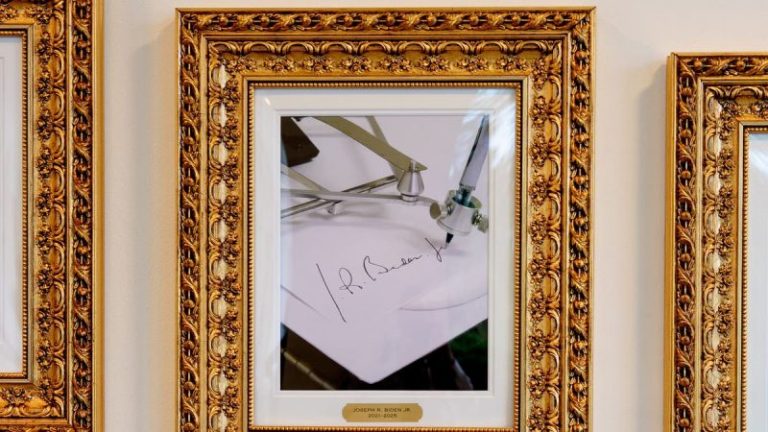
        The Department of Justice (DOJ) is continuing its investigation into former President Joe Biden’s use of an autopen in the final months of his administration — focusing on pardons and commutations — though a senior official said Biden is unlikely to face criminal exposure.

        A senior DOJ official told Fox News the autopen investigation is ongoing and not closed, adding investigators are reviewing clemency actions taken in the final months of the Biden administration.

        The official also pointed out, however, that the use of an autopen by a sitting president is ‘established law.’

        The issue under review is whether the autopen was used in violation of the law, specifically, whether Biden personally approved each name included on pardon and commutation lists.

        ‘These types of cases are tough. Executive privilege issues come into play,’ the official said.

        What is also clear, the official indicated, is that the target of any potential prosecution would not likely be Biden.

        ‘It’s hard to imagine how [Biden] could be criminally liable for pardon power,’ the senior DOJ official said.

        The official noted that one reason the former president would be unlikely to face charges stems from a 2024 Supreme Court ruling that originally involved current President Donald Trump but would also apply to Biden.

        ‘We conclude that under our constitutional structure of separated powers, the nature of Presidential power requires that a former President have some immunity from criminal prosecution for official acts during his tenure in office,’ the Supreme Court ruled in Trump v. United States in 2024. 

        ‘At least with respect to the President’s exercise of his core constitutional powers, this immunity must be absolute.’

        Sources familiar with the matter told Fox News Digital that U.S. Attorney Jeanine Pirro’s team continues to review the Biden White House’s reliance on an autopen, contradicting a recent New York Times report that indicated the investigation had been paused.

        Trump has pushed for consequences over the autopen controversy, alleging on social media that aides acted unlawfully in its use and raising the prospect of perjury charges against Biden.

        Biden has rejected those claims, saying in a statement last year he personally directed the decisions in question.

        ‘Let me be clear: I made the decisions during my presidency,’ Biden said. ‘I made the decisions about the pardons, executive orders, legislation and proclamations. Any suggestion that I didn’t is ridiculous and false.’

        The House Oversight Committee has homed in on Biden’s clemency actions, including five controversial pardons for family members in the final days of his presidency, citing what it described as a lack of ‘contemporaneous documentation’ confirming that Biden directly ordered the pardons.

        The committee asked the DOJ to investigate ‘all of former President Biden’s executive actions, particularly clemency actions, to assess whether legal action must be taken to void any action that the former president did not, in fact, take himself.’

        Fox News Digital’s Ashley Oliver contributed to this report.

        Related Article

        Top Biden officials questioned and criticized how his team issued pardons, used autopen: report
        This post appeared first on FOX NEWS