Author

admin

Browsing

Here’s a quick recap of the crypto landscape for Wednesday (February 11) as of 9:00 p.m. UTC.

Get the latest insights on Bitcoin, Ether and altcoins, along with a round-up of key cryptocurrency market news.

Bitcoin (BTC) was priced at US$67,551.42, down 18 percent over the last 24 hours.

Bitcoin price performance, February 11, 2026.

Chart via TradingView.

“Bitcoin appears to be entering a stabilization phase before its next directional move. In the near term, prices are likely to consolidate around the US$70,000 level as the market digests recent volatility and continued profit-taking, but the broader setup points to a gradual recovery toward the US$85,000 to US$95,000 range by mid-2026.

“The key driver is institutional behavior: ETF outflows are slowing rather than accelerating, suggesting that forced selling pressure is easing and longer-term allocators are becoming more selective instead of exiting outright. At the same time, regulatory progress — particularly around stablecoin frameworks and clearer market structure — continues to strengthen Bitcoin’s position as a maturing asset within global portfolios, especially as investors look for inflation hedges amid ongoing macro uncertainty.

“While short-term price action may remain uneven, innovation across DeFi and tokenized assets is reinforcing the underlying crypto ecosystem, creating conditions that have historically supported post-correction recoveries and attracted long-term capital back into Bitcoin.”

Ether (ETH) was priced at US$1,955.33, down by 2.8 percent over the last 24 hours.

Altcoin price update

  • XRP (XRP) was priced at US$1.38, down by 1.2 percent over 24 hours.
  • Solana (SOL) was trading at US$79.64, down by 3.5 percent over 24 hours.

Today’s crypto news to know

Robinhood shares Q4 earnings

Robinhood Markets (NASDAQ:HOOD) released its latest quarterly report on Wednesday, revealing net income totaling US$605 million for Q4 2025 and US$1.9 billion for the year.

The company reported a record US$1.28 billion in quarterly revenue, a 27 percent increase year-on-year, but shy of estimates of about US$1.36 billion. Its full‑year 2025 revenue reached US$4.5 billion, up 52 percent.

However, crypto revenue fell 38 percent to US$221 million in Q4.

Despite a fundamentally solid quarter, with record earnings per share of US$0.66 in Q4 and US$2.05 for 2025, shares dropped between 7 and 12 percent after the print and closed 9 percent lower on the day.

In other news, Robinhood launched a public testnet for Robinhood Chain, an Ethereum Layer 2 built on Arbitrum technology and designed to support tokenized real‑world and digital assets.

Developers can begin building and testing apps on it ahead of a future mainnet launch. The testnet offers network access, developer docs and compatibility with standard Ethereum tools, plus early support from infrastructure providers such as Alchemy, Chainlink and LayerZero. Robinhood also said it is committing US$1 million to the 2026 Arbitrum Open House program to encourage developer activity on the testnet and eventual mainnet.

Banks dig in on stablecoin yield as CLARITY Act stalls

US banks are hardening their position on stablecoin rules, escalating a policy clash that has left the long-awaited CLARITY Act stuck in Congress. During a White House-hosted meeting led by the administration’s crypto council, banking groups circulated a proposal calling for an outright ban on paying interest or other incentives to stablecoin holders.

The draft language states: “No person may provide any form of financial or non-financial consideration to a stablecoin holder” in connection with holding or using a payment stablecoin.

Banking groups warned that allowing yield on stablecoins could “drive deposit flight that would undercut Main Street lending,” while crypto advocates argued innovation should not be stifled. The dispute centers on whether stablecoin rewards resemble bank deposits, potentially siphoning funds from traditional lenders.

‘As we noted during the meeting, that framework can and must embrace financial innovation without undermining safety and soundness, and without putting the bank deposits that fuel local lending and drive economic activity at risk. We look forward to ongoing discussions to move market structure legislation forward,’ the American Bankers Association said in a statement following the meeting.

The standoff has become the main obstacle preventing the CLARITY Act from advancing, despite earlier passage of the GENIUS Act, which created a federal framework for dollar-backed stablecoins.

Goldman Sachs maintains US$1 billion Bitcoin ETF exposure

Goldman Sachs (NYSE:GS) disclosed in its latest US Securities and Exchange Commission filing that it holds just over US$1 billion in exposure to Bitcoin through exchange-traded funds (ETFs).

The exposure is split across products, including BlackRock’s iShares Bitcoin Trust ETF (NASDAQ:IBIT) and Fidelity’s Wise Origin Bitcoin ETF (NEO:FBTC). Bitcoin has dropped roughly 47 percent from its high and is trading near US$67,000, part of a broader US$2 trillion drawdown across the crypto market. ETF flows have been volatile, with more than US$6 billion exiting spot Bitcoin funds since November, according to industry data.

Despite the slump, Goldman has also expanded into Ether, XRP and Solana ETFs.

Monad launches Nitro accelerator

Blockchain company Monad announced Tuesday (February 10) launch of a new three month accelerator program, Nitro, supported by notable firms including Paradigm, Electric Capital, Dragonfly and Castle Island Ventures.

According to commentary provided in a media briefing accompanying the announcement, “The program is designed to address a common issue in crypto venture funding: teams often raise capital quickly but struggle to ship production-ready products or reach product-market fit. Nitro is structured around execution, shipping cadence, and validation, rather than short-term growth metrics or token-driven incentives.”

The press release notes that the Monad ecosystem has already seen US$108 million raised by projects.

The three month program includes an in-person first month in New York City, and will be followed by two months of focused execution, concluding with a Demo Day for crypto and tech investors.

Interactive Brokers adds Coinbase nano contracts

Interactive Brokers said it is adding “nano contracts’ from Coinbase Global’s (NASDAQ:COIN) derivatives arm to its trading platform. These contracts control fractions of a Bitcoin or Ether coin and require less upfront investment.

Clients can trade these futures, some with set expiry dates and others that track the current price over time, 24/7 within Interactive Brokers’ standard brokerage environment, alongside stocks and options.

The move is meant to make it easier and cheaper for people to get exposure to crypto prices and manage risk, while still using a regulated broker and exchange.

Securities Disclosure: I, Meagen Seatter, hold no direct investment interest in any company mentioned in this article.

Securities Disclosure: I, Giann Liguid, hold no direct investment interest in any company mentioned in this article.
This post appeared first on investingnews.com

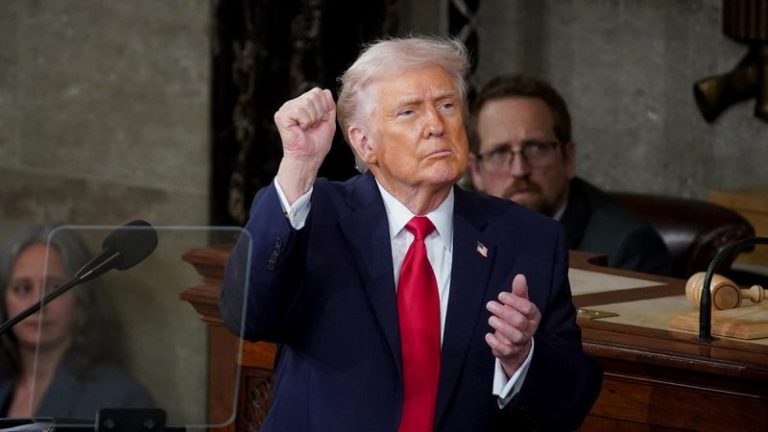
Many conservatives quickly took to social media to praise President Trump’s State of the Union speech, which lasted just under two hours, energizing Republicans and riling Democrats.

‘It’s not just an excellent speech, it’s mostly POTUS himself,’ conservative radio host Mark Levin posted on X. ‘ He’s a truly historic leader. I know it drives DC nuts. Who cares.’

‘Trump is a colossus; an amazingly patriotic speech,’ FOX Business Senior Correspondent Charles Gasparino posted on X. 

‘This is the best State of the Union Address I’ve ever seen,’ conservative commentator Buck Sexton posted on X. ‘Not just by Trump. By any President.’

‘President Trump’s State of the Union put America’s greatness on full display—celebrating our war heroes, everyday heroes, and Olympic champions,’ former GOP House Speaker Kevin McCarthy posted on X. 

‘The President delivered a home run State of the Union tonight,’ GOP Rep. Chip Roy posted on X. 

Democrats on social media struck a different tone, with many prominent faces of the party bashing the president as the speech developed, including California Gov. Gavin Newsom who accused Trump of ‘destroying the country’ and posted ‘that was boring.’

‘That State of the Union speech by Trump was humiliating for both him and the Republican Party,’ liberal influencer Harry Sisson posted on X. ‘He rambled incoherently and Republicans clapped like seals the whole time no matter what was said. I’m glad military heroes were honored, but he lied the entire time.’

Trump’s speech, which was the longest State of the Union in history, focused on what he called a ‘turnaround for the ages’ in the United States during his second term. 

Trump invited a swath of various guests to the speech, including everyday Americans, Turning Point USA co-founder Charlie Kirk’s widow, Erika Kirk, the U.S. men’s hockey team fresh off their gold medal win, military members who acted heroically in the time of crisis and families who have suffered tragedy at the hands of illegal immigrants.

Trump’s speech came as the GOP prepares to defend its majority in the House and Senate as the November midterms loom, and also as the nation prepares to celebrate its 250 years of independence.

‘This July 4th, we will mark two and a half centuries of liberty and triumph, progress and freedom in the most incredible and exceptional nation ever to exist on the face of the earth. And you’ve seen nothing yet,’ Trump said. ‘We’re going to do better and better and better. This is the golden age of America.’

Fox News Digital’s Emma Colton contributed to this report
 

Related Article

Trump takes jab at Pelosi by name over history of controversial stock trading
This post appeared first on FOX NEWS

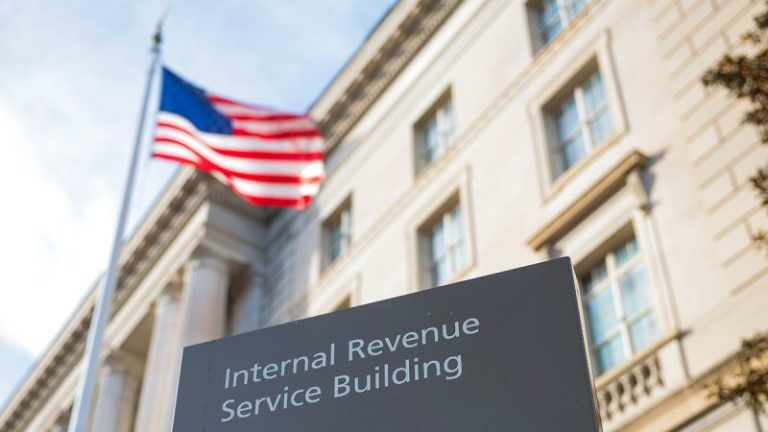
President Donald Trump has filed a $10 billion lawsuit against the IRS, accusing the agency of unlawfully leaking his confidential tax returns in a politically motivated violation of federal privacy laws.

A spokesman for Trump’s legal team told Fox News ‘a rogue, politically motivated’ IRS employee disclosed private and confidential tax information involving Trump, his family and the Trump Organization to outlets, including The New York Times and ProPublica.

The suit claims the disclosures were illegal and harmed millions by violating federal privacy laws.

That contractor at the heart of the leak, Charles Littlejohn, pleaded guilty in October 2023 to a single felony count of unauthorized disclosure of tax return information and is serving a five-year prison sentence.

Littlejohn admitted to stealing and leaking Trump’s tax records to The New York Times and to disclosing confidential tax data involving wealthy individuals to ProPublica.

According to the lawsuit, Littlejohn testified in a 2024 deposition that the Trump materials he leaked included information on all of Trump’s business holdings.

As previously reported by Fox News Digital, Littlejohn refused to testify before Congress, invoking his Fifth Amendment rights while appealing his sentence.

According to a June 2025 Judiciary Committee press release, DOJ prosecutors said Littlejohn’s disclosures were ‘unprecedented in its scope and scale.’ 

This is a developing story. Check back for updates.

This post appeared first on FOX NEWS

President Donald Trump warned the U.K. Thursday against strengthening ties with China, hours after Prime Minister Keir Starmer met President Xi Jinping in Beijing to reset relations after a long period of strain.

Trump’s remarks came as Starmer and Xi had called for a renewed ‘strategic partnership,’ highlighting the pressures facing them amid global instability.

Speaking to Fox News while traveling to Florida for the premiere of first lady Melania Trump’s documentary, Trump was asked about the U.K. ‘getting into business with China.’

‘Well, it’s very dangerous for them to do that,’ Trump said. ‘And it’s even more dangerous, I think, for Canada to get into business with China.’

Trump added that China was not the solution for Western economies despite his personal relationship with Xi. ‘I know China very well. I know President Xi is a friend of mine, and I know him very well, but that’s a big hurdle to get over,’ he said, before joking that Beijing might ban Canada from playing ice hockey. 

‘That’s not good. Canada’s not going to like that,’ he added. 

Trump had previously criticized Canadian Prime Minister Mark Carney after Carney’s visit to China and warned then that ‘China will eat Canada alive.’

Trump’s latest comments followed an 80-minute meeting in Beijing between Starmer and Xi in which the leaders sought to thaw relations after several years of diplomatic chill.

The Associated Press reported that neither leader mentioned Trump directly in their discussions Thursday.

‘In the current turbulent and ever-changing international situation, China and the United Kingdom need to strengthen dialogue and cooperation to maintain world peace and stability,’ Xi told Starmer, according to Chinese state broadcaster CCTV.

Xi also warned that if major powers failed to uphold international law, the world risked sliding into a ‘jungle.’

Starmer said cooperation on climate change and global stability was ‘precisely what we should be doing,’ The Associated Press also reported.

The outlet also reported that Starmer described the meeting as ‘very productive,’ and mentioned progress on whisky tariffs, visa-free travel to China for British citizens and cooperation on migration.

As previously reported by Fox News Digital, Starmer sought Xi’s help to disrupt the supply of China-made small boat engines that the U.K. leader’s office says are used to smuggle people across the English Channel.

He also raised human rights concerns and the Iran nuclear program.

Starmer is the first British prime minister to visit China in eight years and the fourth U.S.-allied leader to do so this month, signaling a push by Beijing to re-engage Western partners.

The visit also came as the U.K. navigates trade alignment with the U.S., defense cooperation in Arctic regions and negotiations over the sovereignty of the Chagos Islands.

In November, the U.S. and China reached a deal easing some tariffs and export controls, boosting U.S. agricultural exports, curbing fentanyl precursor flows and relieving pressure on American semiconductor and shipping companies.

Fox News Digital has reached out to the White House for comment.

This post appeared first on FOX NEWS

The Trump administration announced Thursday it was easing sanctions on the Venezuelan oil industry, as the U.S. aims to ramp up production in the South American country following the capture of dictator Nicolás Maduro earlier this month.

The U.S. Treasury said it is authorizing transactions involving the government of Venezuela and state-owned oil company PdVSA that are ‘ordinarily incident and necessary to the lifting, exportation, reexportation, sale, resale, supply, storage, marketing, purchase, delivery, or transportation of Venezuelan-origin oil, including the refining of such oil, by an established U.S. entity.’

The new license includes significant carve-outs, with sanctions remaining fully intact for persons or entities in Russia, Iran, North Korea or Cuba.

It also excludes transactions with blocked vessels, Chinese-owned or controlled entities operating in Venezuela or the U.S., and debt swaps, gold payments, or cryptocurrency payments, including Venezuela’s petro.

The announcement came as President Donald Trump pushes for the expansion of oil production in Venezuela.

‘We have the major oil companies going to Venezuela now, scouting it out and picking their locations, and they’ll be bringing back tremendous wealth for Venezuela and for the United States and the oil companies will do fine too.’ Trump said during a cabinet meeting Thursday.

Trump also announced during the meeting that commercial airspace over Venezuela would reopen, after the Federal Aviation Administration (FAA) released an emergency notice earlier this month blocking civil flight operations by U.S. aircraft over the South American country.

‘I just spoke to the president of Venezuela and informed her that we’re going to be opening up all commercial airspace over Venezuela,’ Trump said. ‘American citizens will be very shortly able to go to Venezuela, and they’ll be safe there and be safe. It’s under very strong control.’

 Earlier Thursday, Venezuela’s government approved opening the nation’s oil sector to privatization, with Acting President Delcy Rodríguez signing the reform into law — a move that reverses a core principle of the socialist movement that has ruled the country for more than two decades.

Fox News Digital’s Diana Stancy and The Associated Press contributed to this report.

This post appeared first on FOX NEWS

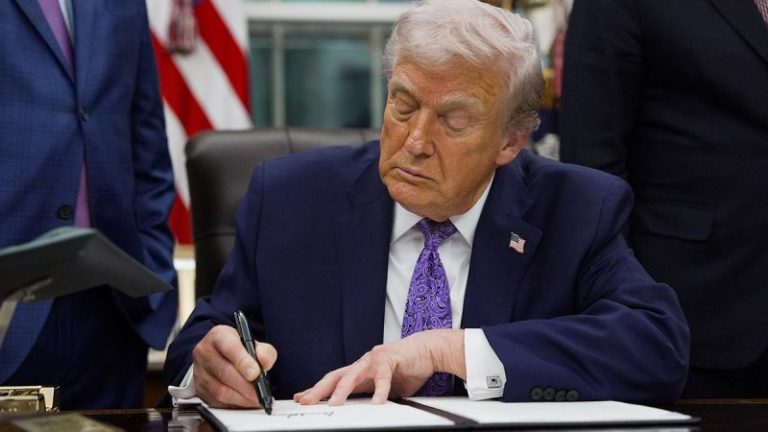
President Donald Trump on Thursday declared a national emergency via an executive order over Cuba, accusing the communist regime of aligning with hostile foreign powers and terrorist groups while moving to punish countries that supply the island nation with oil.

Thursday’s executive order states that the policies and actions of the Cuban government constitute ‘an unusual and extraordinary threat, which has its source in whole or substantial part outside the United States, to the national security and foreign policy of the United States.’

To address that threat, Trump ordered the creation of a tariff mechanism that allows the U.S. to impose additional duties on imports from foreign countries that ‘directly or indirectly sell or otherwise provide any oil to Cuba,’ according to the order.

The White House said the move marks a significant escalation in U.S. pressure on the Cuban government, aimed at protecting American national security and foreign policy interests.

In the order, Trump said Cuba aligns itself with and provides support for ‘numerous hostile countries, transnational terrorist groups, and malign actors adverse to the United States,’ naming Russia, China, Iran, Hamas and Hezbollah.

The administration said Cuba hosts Russia’s largest overseas signals intelligence facility, which the order states attempts to steal sensitive U.S. national security information. The order also says Cuba continues to deepen intelligence and defense cooperation with China.

According to the order, Cuba ‘welcomes transnational terrorist groups, such as Hezbollah and Hamas.’

Trump also cited the Cuban government’s human rights record, accusing the regime of persecuting and torturing political opponents, denying free speech and press freedoms, and retaliating against families of political prisoners who protest peacefully.

‘The United States has zero tolerance for the depredations of the communist Cuban regime,’ Trump said in the order, adding that the administration will act to hold the regime accountable while supporting the Cuban people’s aspirations for a free and democratic society.

Under the order, the Commerce Department will determine whether a foreign country is supplying oil to Cuba, either directly or through intermediaries. The State Department, working with Treasury, Homeland Security, Commerce and the U.S. Trade Representative, will decide whether and how steep the new tariffs should be if so.

Secretary of State Marco Rubio is tasked with monitoring the national emergency and reporting to Congress, while the Commerce Department will continue tracking which countries are supplying oil to Cuba.

In a fact sheet, the White House said the order is designed to protect U.S. national security and foreign policy from the Cuban regime’s ‘malign actions and policies,’ and described the move as part of Trump’s broader effort to confront regimes that threaten American interests.

The administration said the action builds on Trump’s first-term Cuba policy, which reversed Obama-era engagement and reinstated tougher measures against the communist government.

The executive order is set to take effect Friday.

The White House did not immediately respond to Fox News Digital’s request for additional comment.

This post appeared first on FOX NEWS

Last week, Secretary of War Pete Hegseth released the 2026 National Defense Strategy (NDS), a Pentagon blueprint that elevates Israel as a ‘model ally’ and translates President Trump’s national security doctrine into concrete military policy.

‘Israel has long demonstrated that it is both willing and able to defend itself with critical but limited support from the United States. Israel is a model ally, and we have an opportunity now to further empower it to defend itself and promote our shared interests, building on President Trump’s historic efforts to secure peace in the Middle East,’ the NDS states.

The document is now influencing parallel debates over the future of U.S. security assistance to Israel and whether the next Memorandum of Understanding, or MOU, should continue delivering traditional U.S. military aid to Israel, amid dissenting voices that portray the alliance as a burden rather than a strategic asset.

According to the strategy, Israel proved its ability and willingness to defend itself following the Oct. 7 attacks, demonstrating that it is not a passive partner but an operational force that supports U.S. interests in the region. The strategy emphasizes empowering capable allies rather than constraining them, building on President Trump’s earlier push for regional integration through the Abraham Accords.

Jonathan Ruhe, director of foreign policy at the Jewish Institute for National Security of America, said the strategy reflects a broader American shift toward partnerships that strengthen both U.S. security and domestic industry.

‘U.S. defense assistance to Israel in the MOU is spent in dollars here in America to support our industry,’ Ruhe told Fox News Digital. ‘And like in the national security strategy, it then enables Israel to go and do more to protect U.S. interests.’

He said a future agreement would likely extend beyond funding alone. ‘A new MOU would also likely be broader and include things that are more 50-50 partnership, like joint research and development, co-production, intelligence sharing and things like that to reflect the changing partnership going forward,’ Ruhe said.

The strategy also highlights the importance of revitalizing the American defense industrial base, noting that allies purchasing U.S. systems help strengthen domestic production while enabling partners to shoulder greater responsibility for regional security.

Avner Golov, vice president of the Israeli think tank Mind Israel, said the document makes clear that Israel is viewed not merely as a recipient of aid, ‘Israel is in the fight. We are protecting ourselves by ourselves. We just need the tools to do that. And by doing so, we enhance not only America’s standing in the Middle East, but also worldwide and contribute to the American economy.’

That framing comes as Israel and the United States prepare for negotiations over the next 10-year MOU, which governs U.S. military assistance to Israel. The current agreement, signed in 2016, provides $3.3 billion annually in foreign military financing, along with $500 million a year for missile defense cooperation.

The debate follows tensions during the Biden administration, when the White House paused the delivery of certain U.S. weapons to Israel in May 2024, including a shipment of 2,000-pound bombs. At the time, Netanyahu warned that Israel ‘will stand alone’ if Washington halted weapons deliveries, reflecting concern that limits or delays in U.S. military support could undermine Israel’s readiness and deterrence. 

Experts have noted that U.S. leaders have not always approved every Israeli weapons request and that roughly 70% of Israel’s military imports come from the United States, underscoring the strategic calculus behind Prime Minister Netanyahu’s recent push for greater independent production.

Golov criticized that approach, arguing it risks prioritizing optics over readiness. ‘I believe that is a short-term vision,’ Golov said. ‘In the long term, Israel must first be prepared for the next round of escalation. If we are not ready, we will face another war. If we are prepared, perhaps we can deter it.’

‘Israel must remain the strongest army in the region, and that is also a fundamental American interest,’ Golov said.

Ruhe said the debate reflects lessons learned from nearly two years of war. ‘You’ve got this sort of topsy-turvy world now where the Israelis are saying we don’t want to take any more U.S. money, and the Americans are saying, no, you’re going to take our money,’ he said.

According to Ruhe, the conflict exposed vulnerabilities created by heavy dependence on U.S. supply chains and political delays.

‘The war of the last two years showed that Israel can’t afford to be as dependent on the U.S. or continue to maintain the same defense partnership that it has because that creates a dependence,’ he said. ‘Israel becomes vulnerable to U.S. shortages in weapons output or politically motivated embargoes and holdups that can impact Israel’s readiness.’

At the same time, Ruhe noted that Israel remains reliant on the United States for major platforms.

‘Even Israel will say we’re utterly dependent on the U.S. for those big-ticket platforms,’ he said, pointing to aircraft such as the F-15 and F-35 that Israel has already committed to purchasing.

For that reason, Ruhe argued that maintaining stable funding under the next MOU may be the most practical path forward.

‘It’s actually much easier for Congress just to go ahead and approve that money,’ he said, explaining that predictable funding reduces annual political battles on Capitol Hill.

Golov said Israel’s long-term objective should not be reducing ties with Washington, but deepening them. ‘I don’t want to reduce dependency,’ he said. ‘I want to increase contribution to America.’

He described the emerging vision as a fundamental shift in how the alliance is structured. ‘We are moving from a 20th-century aid model to a 21st-century strategic merger,’ Golov said. ‘Israel is the only partner that delivers a 400% return on investment without asking for a single American soldier.’

Golov said the proposed framework is built around three pillars: an industrial defense ecosystem, a joint technology ecosystem and a regional ecosystem connecting Israeli innovation, Gulf infrastructure and American power.

He emphasized that maintaining U.S. security assistance during the transition period is critical.

‘We need a final ten-year ‘bridge’ with the current security aid MOU,’ Golov said. ‘A sudden cut would be a dangerous signal of American retreat to our enemies and may hinder IDF preparedness.’

‘I don’t know who the next president of the United States will be,’ he added. ‘This is where our enemies can read it in a very dangerous way.’

This post appeared first on FOX NEWS

Nvidia and AMD have agreed to share 15% of their revenue from sales to China with the U.S. government, the White House confirmed Monday, sparking debate about whether the move could affect the chip giants’ business and whether Washington might seek similar deals.

In exchange for the revenue cut, the two semiconductor companies will receive export licenses to sell Nvidia’s H20 and AMD’s MI308 chips in China, according to the Financial Times.

“We follow rules the U.S. government sets for our participation in worldwide markets. While we haven’t shipped H20 to China for months, we hope export control rules will let America compete in China and worldwide,” Nvidia said in a statement to NBC News. “America cannot repeat 5G and lose telecommunication leadership. America’s AI tech stack can be the world’s standard if we race.”

AMD said in a statement that its initial license applications to export MI308 chips to China have been approved.

The arrangement crafted by President Donald Trump’s administration is “unusual,” analysts told CNBC, but underscores his transactional nature. Meanwhile, investors see the move as broadly positive for both Nvidia and AMD, which once more secure access to the Chinese market.

Nvidia’s H20 is a chip that has been specifically created to meet export requirements to China. It was previously banned under export curbs, but the company last month said it expected to receive licenses to send the product to China.

Also in July, AMD said it would resume exports of its MI308 chips.

At the time, there was no suggestion that the resumption of sales to China would come with conditions or any kind of revenue forfeiture, and the step was celebrated by markets because of the billions of dollars worth of potential sales to China that were back on the table.

On Monday, Nvidia shares rose modestly, while AMD’s stock was up more than 2%, highlighting how investors believe the latest development is not a major negative for the companies.

“From an investor perspective, it’s still a net positive, 85% of the revenue is better than zero,” Ben Barringer, global technology analyst at Quilter Cheviot, told CNBC.

“The question will be whether Nvidia and AMD adjust their prices by 15% to account for the levy, but ultimately it’s better that they can sell into the market rather than hand the market over entirely to Huawei.”

Huawei is Nvidia and AMD’s closest Chinese rival.

Uncertainty, nevertheless, still looms for both U.S. companies over the longer term.

“In the short term, the deal gives both companies some certainties for their exports to China,’ George Chen, partner and co-chair of the digital practice at The Asia Group, told CNBC. ‘For the long term, we don’t know if the U.S. government may want to take a bigger cut from their China business especially if their sales to China keep growing.’

Multiple analysts told CNBC that the deal is “unusual,” but almost par for the course for Trump.

“It’s a good development, albeit a strange one, and feels like the sort of arrangement you might expect from President Trump, who is a deal-maker at heart. He’s willing to yield, but only if he gets something in return, and this certainly sets an unusual precedent,” Barringer said.

Neil Shah, partner at Counterpoint Research, said the revenue cut is equivalent to an “indirect tariff at source.”

Daniel Newman, CEO of The Futurum Group, also posted Sunday on X that the move is a “sort of ‘tax’ for doing business in China.”

But such deals are unlikely to be cut for other companies.

“I don’t anticipate it extending to other sectors that are just as important to the U.S. economy like software and services,” Nick Patience, practice lead for AI at The Futurum Group, told CNBC.

The U.S. sees semiconductors as a strategic technology, given they underpin so many other tools like artificial intelligence, consumer electronics and even military applications. Washington has therefore put chips under an export control regime unlike that of any other product.

“Semiconductor is a very unique business and the pay-to-play tactic may work for Nvidia and AMD because it’s very much about getting export approval from the U.S. gov,” the Asia Group’s Chen said.

“Other business like Apple and Meta can be more complicated when it comes to their business models and services for China.”

Semiconductors have become a highly sensitive geopolitical topic. Over the last two weeks, China has raised concerns about the security of Nvidia’s chips.

Late last month, Chinese regulators asked Nvidia to “clarify” reports about potential security vulnerabilities and “backdoors.” Nvidia rejected the possibility that its chips have any “backdoors” that would allow anyone to access or control them. On Sunday, Nvidia again denied that its H20 semiconductors have backdoors after accusations from a social media account affiliated with Chinese state media.

China’s state-run newspaper Global Times slammed Washington’s tactics, citing an expert.

“This approach means that the US government has repudiated its original security justification to pressure US chip makers to secure export licenses to China through economic leverage,” the Global Times article said.

The Chinese government is yet to comment on the reported revenue agreement.

Trump’s deal with Nvidia and AMD will likely stir mixed feelings in China. On the one hand, China will be unhappy with the arrangement. On the other hand, Chinese firms will likely want to get their hands on these chips to continue to advance their own AI capabilities.

“For China, it is a conundrum as they need those chips to advance their AI ambitions but also the fee to the US government could make it costlier and there is a doubt of US ‘backdoors’ considering US has agreed for chipmakers to supply,” Counterpoint Research’s Shah said.

— CNBC’s Erin Doherty contributed to this report.

This post appeared first on NBC NEWS

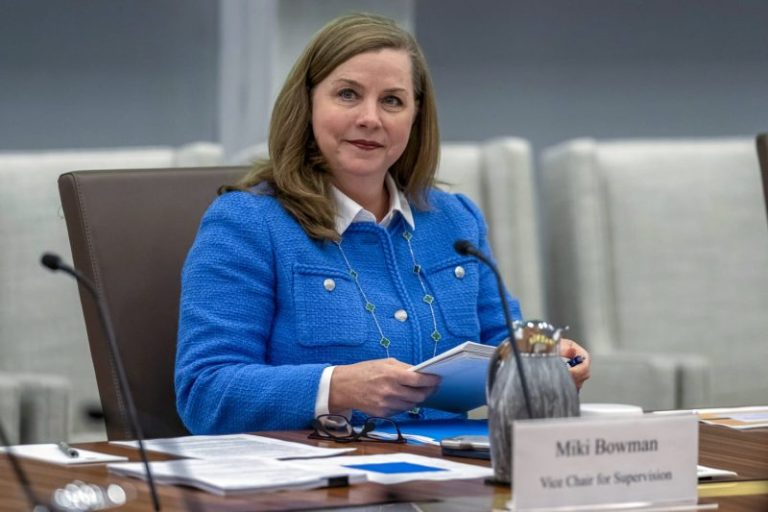
NEW YORK — A top official at the Federal Reserve said Saturday that this month’s stunning, weaker-than-expected report on the U.S. job market is strengthening her belief that interest rates should be lower.

Michelle Bowman was one of two Fed officials who voted a week and a half ago in favor of cutting interest rates. Such a move could help boost the economy by making it cheaper for people to borrow money to buy a house or a car, but it could also threaten to push inflation higher.

Bowman and a fellow dissenter lost out after nine other Fed officials voted to keep interest rates steady, as the Fed has been doing all year. The Fed’s chair, Jerome Powell, has been adamant that he wants to wait for more data about how President Donald Trump’s tariffs are affecting inflation before the Fed makes its next move.

At a speech during a bankers’ conference in Colorado on Saturday, Bowman said that “the latest labor market data reinforce my view” that the Fed should cut interest rates three times this year. The Fed has only three meetings left on the schedule in 2025.

The jobs report that arrived last week, only a couple of days after the Fed voted on interest rates, showed that employers hired far fewer workers last month than economists expected. It also said that hiring in prior months was much lower than initially thought.

On inflation, meanwhile, Bowman said she is getting more confident that Trump’s tariffs “will not present a persistent shock to inflation” and sees it moving closer to the Fed’s 2% target. Inflation has come down substantially since hitting a peak above 9% after the pandemic, but it has been stubbornly remaining above 2%.

The Fed’s job is to keep the job market strong, while keeping a lid on inflation. Its challenge is that it has one main tool to affect both those areas, and helping one by moving interest rates up or down often means hurting the other.

A fear is that Trump’s tariffs could box in the Federal Reserve by sticking the economy in a worst-case scenario called “stagflation,” where the economy stagnates but inflation is high. The Fed has no good tool to fix that, and it would likely have to prioritize either the job market or inflation before helping the other.

On Wall Street, expectations are that the Fed will have to cut interest rates at its next meeting in September after the U.S. jobs report came in so much below economists’ expectations.

Trump has been calling angrily for lower interest rates, often personally insulting Powell while doing so. He has the opportunity to add another person to the Fed’s board of governors after an appointee of former President Joe Biden stepped down recently.

This post appeared first on NBC NEWS

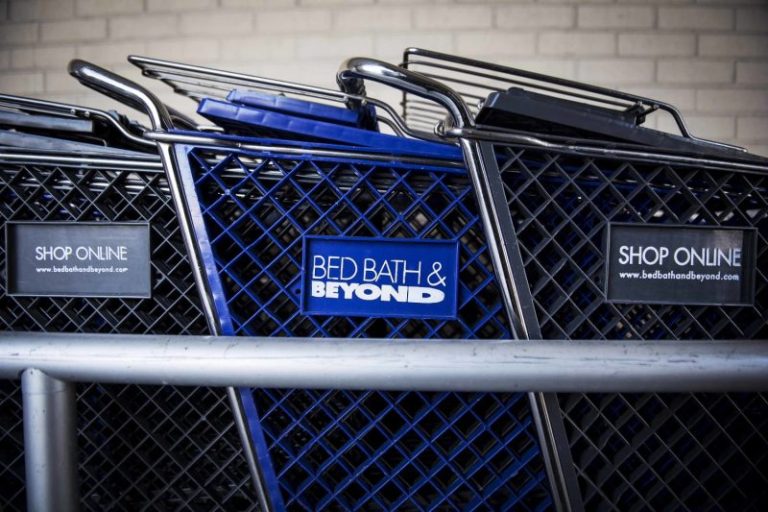
Bed Bath & Beyond is back — kind of.

The bankrupt home goods chain is being resurrected by the owners and licensees of its intellectual property, which opened the first new Bed Bath & Beyond store in Nashville, Tennessee, on Friday with potentially dozens of more to come.

This time around, the store has a new name — Bed Bath & Beyond Home — and marks a “fresh start” for the beloved brand, said Amy Sullivan, the CEO of The Brand House Collective, the store’s operator.

“We’re proud to reintroduce one of retail’s most iconic names with the launch of Bed Bath & Beyond Home, beautifully reimagined for how families gather at home today,” Sullivan said in a news release. “With Bed Bath & Beyond Home we’re delivering on our mission to offer great brands, for any budget, in every room. It’s a powerful addition to our portfolio and a meaningful step forward in our transformation.”

In honor of the brand’s legacy, the new store will accept the brand’s famous 20% coupon, regardless of when it expired.

“We encourage guests to bring in their legacy Bed Bath & Beyond coupons which we will gladly honor,” the company said in a news release. “The coupon we all know and love is back and for those who need one, a fresh version will be waiting at the door.”

Bed Bath and Beyond 2.0 has been several years in the making and involved a rigmarole of corporate acquisitions and rebrandings. When the original Bed Bath and Beyond filed for bankruptcy in April 2023 following a string of corporate missteps, it struggled to find a buyer and ended up liquidating and selling off its business in parts. Overstock.com later bought the brand’s intellectual property, rebranded its business to Beyond Inc. and launched an online-only version of Bed Bath and Beyond.

What followed from there was a dizzying array of corporate deal-making. Ultimately, Beyond took an ownership stake in Kirkland’s Inc., a home decor chain with around 300 stores across the U.S., and gave it the exclusive license to develop and create Bed Bath & Beyond Home stores, as well as Buy Buy Baby stores.

Kirkland’s later rebranded to The Brand House Collective and plans to convert some of its existing Kirkland’s Home stores into more Bed Bath and Beyond shops. Friday’s launch in Nashville is the first of six planned for the market and, pending the results, it plans to convert around 75 additional stores through 2026.

The company said it chose Nashville for the launch because of its proximity to its corporate headquarters, which will allow it to “closely manage every detail and set the standard for future rollouts.”

While the relaunch is exciting for fans of the legacy brand, it comes at a difficult time for the home decor market. In many ways, Bed Bath & Beyond’s bankruptcy was the fault of its management team and execution missteps, but it also faced macro challenges as well, experts said at the time. Competition from players like Amazon, Walmart, Home Goods and Wayfair has made it harder for other brands to capture customer spend, and the overall sector has been soft for several years because of high interest rates and the sluggish housing market.

Even the current leaders in the home decor space have seen soft trends and it’s unlikely that will change until interest rates fall and the housing market picks back up, some analysts have said.

This post appeared first on NBC NEWS