
Author

admin

Browsing

We also break down next week’s catalysts to watch to help you prepare for the week ahead.

In this article:

    This week’s tech sector performance

    Markets opened the week subdued with investors eyeing the US Federal Reserve’s rate decision, leading to modest gains in the tech-heavy Nasdaq Composite (INDEXNASDAQ:.IXIC) and the S&P 500 (INDEXSP:.INX).

    Reports of US President Donald Trump’s approval for NVIDIA (NASDAQ:NVDA) H200 chip sales to China boosted chip stocks and sustained AI enthusiasm. Tuesday’s (December 9) JOLTS report delivered data suggesting a cooling labour market amid tariff uncertainty but offering limited new clarity ahead of the Federal Reserve’s two-day meeting.

    Markets rallied sharply on Wednesday (December 10) after the meeting resulted in a 25 basis point rate cut to 3.5 to 3.75 percent; however, Nasdaq gains were tempered, hinting at continued caution around AI capex sustainability ahead of earnings from Oracle and Broadcom.

    Rate-sensitive areas like financials and industrials led the rally, pushing the Dow Jones Industrial Average (INDEXDJX:.DJI) ahead of the Nasdaq, which closed slightly down. This highlighted a shift from tech dominance to a more diversified market. The S&P ended up 0.21 percent at a record 6,901.

    Markets interpreted Fed Chair Jerome Powell’s measured tone during his post-meeting press conference — hawkish on cuts but dovish on recession — as reinforcing a gradual easing despite tariff caution.

    Gains moderated toward the end of the week as Oracle (NYSE:ORCL) and Broadcom (NASDAQ:AVGO) reported earnings that garnered a mixed reaction from investors and analysts.

    Tech stocks have whipsawed in recent weeks, rallying on Fed rate cut bets and trade negotiation optimism before sharp pullbacks triggered by AI bubble fears and overvaluation concerns.

    3 tech stocks moving markets this week

    1. NVIDIA (NASDAQ:NVDA)

    Nvidia’s shares initially surged on Tuesday (December 9) on reports that President Trump would permit H200 exports to pre-approved Chinese clients, subject to a 25 percent US federal surcharge.

    However, these early gains diminished as further reports emerged that Beijing is reviewing its domestic chip prioritization strategy.

    Meanwhile, companies like ByteDance and Alibaba (NYSE:BABA) are reportedly seeking large orders, pending approval. On Friday, Reuters reported that Nvidia is considering increasing H200 chip output due to robust Chinese demand. Its share price was US$175.02 at Friday’s close, a modest decrease of 4.35.

    2. Oracle (NYSE:ORCL)

    Oracle shares dropped over 7 percent after hours on Wednesday after the company’s Q2 earnings missed revenue forecasts, coming at US$16.1 billion compared to expectations of US$16.2 billion.

    The report showed cloud sales rose 34 percent, while infrastructure revenue increased by 68 percent. Both figures were below analyst expectations of 35 and 71 percent, respectively.

    Oracle shares plunged further after executives disclosed on a conference call that this fiscal year’s capital expenditure would reach around US$50 billion, higher than prior guidance, including around US$12 billion spent this quarter on data centers.

    On a more positive note, some analysts viewed capex as a strategic investment, citing AI’s growth potential and pointing to Oracle’s US$523 billion backlog of deals with companies like Meta Platforms (NASDAQ:META) and Nvidia.

    Oracle shares closed more than 16 percent lower this week at a price of US$189.97 on Friday afternoon.

    3. Broadcom (NASDAQ:AVGO)

    Conversely, Broadcom shares rose post-market on Thursday after reporting its Q4 2025 earnings results, which revealed a 74 percent increase in AI chip revenue, with custom XPUs now comprising 65 percent of its semiconductor business.

    Total revenue reached US$18.02 billion year-over-year, exceeding expectations of US$17.46 billion.

    Looking ahead, the company projects semiconductor revenue to double to US$8.2 billion in the next fiscal year. Q1 2026 guidance calls for US$19.1 billion total revenue.

    During the earnings call, Broadcom CEO Hock Tan named Anthropic as the newly qualified fourth hyperscale, confirming its US$11 billion additional order for custom XPUs and AI racks. Shipments are expected to ramp up in late FY26.

    After an initial rise, stocks fell during the call after the company guided low quarterly growth for its non-AI chips and a tax rate increase to 16.5 percent due to normalized post-acquisition tax benefits expiring.

    Still, JPMorgan (NYSE:JPM) analyst Vivek Arya reset his price target on Broadcom stock from US$460 to US$500 on Friday (December 12).

    Despite the positive sentiment, Broadcom shares saw a decline of 11.79 to US$359.93 from the start of the week due to Friday’s sell-off.

    Broadcom, Nvidia and Oracle’s performance, December 8 to 12, 2025.

    Chart via Google Finance.

    Top tech news of the week

        Tech ETF performance

        Tech exchange-traded funds (ETFs) track baskets of major tech stocks, meaning their performance helps investors gauge the overall performance of the niches they cover.

        This week, the iShares Semiconductor ETF (NASDAQ:SOXX) declined by 3.88 percent, while the Invesco PHLX Semiconductor ETF (NASDAQ:SOXQ) saw a gain of 1.31 percent.

        The VanEck Semiconductor ETF (NASDAQ:SMH) also decreased by 3.71 percent.

        Tech news to watch next week

        Speeches from Fed Governors Stephen Miran and Christopher J. Waller on Monday (December 15) and Wednesday (December 17) next week may further clarify the Fed’s dot plot.

        Bank of Canada Governor Tiff Macklem will also speak in Montreal on Tuesday (December 16), while key jobs, manufacturing and retail sales data in the US throughout the week could shift rate cut bets, pressuring growth stocks.

        Earnings from Micron Technology (NASDAQ:MU) and BlackBerry (TSX:BB) will be released on Wednesday and Thursday (December 18), respectively.

        Securities Disclosure: I, Meagen Seatter, hold no direct investment interest in any company mentioned in this article.


        This post appeared first on investingnews.com

        Rio Silver Inc. (the ‘Company’ or ‘Rio Silver’) (TSX.V: RYO,OTC:RYOOF) (OTC: RYOOF) announces that, following regulatory approval, the closing of the previously-announced transaction (the ‘Transaction’) with Peruvian Metals Corp. (‘Peruvian’) to acquire 100% of the issued and outstanding common shares of Mamaniña Exploraciones S.A.C. (the ‘Subsidiary’), a Peruvian corporation, which holds mining rights in the Maria Norte project (the ‘Maria Norte Property’) located in Peru. The details and the terms of the Transaction are summarized in the Company’s previous press releases on March 26, June 25 and September 17, 2025.

        Pursuant to the terms of the Transaction, on closing, Rio Silver has acquired from Peruvian 100% of the issued and outstanding common shares of the Subsidiary. In consideration, Rio Silver issued to Peruvian 3,999,999 common shares of the Company, representing 9.27 of the Company’s issued and outstanding share capital (accounting for the recent 5:1 share consolidation completed on July 3, 2025), and, in addition, under the terms of the Transaction, the Company is required to pay an aggregate of US$250,000 by making semi-annual payments to Peruvian over a period of five years commencing on June 15, 2025. To date, the Company has made the following cash payments (i) CDN$15,000 upon signing; (ii) US$22,500 upon an amendment; and (ii) US$25,000 option payment on June 15, 2025, resulting in US$225,000 payable in remaining option payments.

        A geological report prepared in accordance with National Instrument 43-101 in respect of the Maria Norte Property will be filed at the Company’s profile on SEDAR+.

        ON BEHALF OF THE BOARD OF DIRECTORS OF Rio Silver INC.

        Chris Verrico
        Director, President and Chief Executive Officer
        Neither the TSX Venture Exchange nor its Regulation Services Provider accepts responsibility for the adequacy or accuracy of this release.

        For further information,

        Christopher Verrico, President, CEO
        Tel: (604) 762-4448
        Email: chris.verrico@riosilverinc.com
        Website: www.riosilverinc.com

        This news release includes forward-looking statements that are subject to risks and uncertainties. All statements within, other than statements of historical fact, are to be considered forward looking. Although the Company believes the expectations expressed in such forward-looking statements are based on reasonable assumptions, such statements are not guarantees of future performance and actual results or developments may differ materially from those in forward-looking statements. Factors that could cause actual results to differ materially from those in forward-looking statements include market prices, exploitation and exploration successes, continued availability of capital and financing, and general economic, market or business conditions. There can be no assurances that such statements will prove accurate and, therefore, readers are advised to rely on their own evaluation of such uncertainties. We do not assume any obligation to update any forward-looking statements except as required by applicable laws.

        News Provided by GlobeNewswire via QuoteMedia

        This post appeared first on investingnews.com

        (TheNewswire)

        Vancouver, Canada, December 12, 2025 TheNewswire – Spartan Metals Corp. (‘ Spartan ‘ or the ‘ Company ‘) (TSX-V: W | OTCQB: SPRMF | FSE: J03) announces, effectively immediately, it has terminated the previously announced (November 17, 2025) investor relations agreement with ValPal Management Consultancy.

        About Spartan Metals Corp.

        Spartan Metals is focused on developing critical minerals projects in well-established and stable mining jurisdictions in the Western United States, with an emphasis on building a portfolio of diverse strategic defense minerals such as Tungsten, Rubidium, Antimony, Bismuth, and Arsenic.

        Spartan’s flagship project is the Eagle Project in eastern Nevada that consists of the highest-grade historic tungsten resource in the USA (the past-producing Tungstonia Mine) along with significant under-defined resources consisting of: high-grade rubidium; antimony; bismuth; indium; as well as precious and base metals. More information about Spartan Metals can be found at www.SpartanMetals.com

        On behalf of the Board of Spartan

        ‘Brett Marsh’

        President, CEO & Director

        Further Information:

        Brett Marsh, M.Sc., MBA, CPG

        President, CEO & Director

        1-888-535-0325

        info@spartanmetals.com

        Neither the TSX Venture Exchange nor its Regulation Service Provider (as that term is defined in the policies of the TSX Venture Exchange) accepts responsibility for the adequacy or accuracy of this press release.

        Copyright (c) 2025 TheNewswire – All rights reserved.

        News Provided by TheNewsWire via QuoteMedia

        This post appeared first on investingnews.com

        2025 is drawing to a close, and silver seems determined to end the year with a bang.

        The white metal’s breakout continued this week, with the price crashing through US$60 per ounce and continuing on up, even briefly passing US$64. It ultimately finished at just under US$62.

        Year-to-date silver is now up over 110 percent, far outpacing gold’s gain of about 63 percent.

        Its latest rise kicked off on November 28, the same day the Comex experienced an outage that lasted about 10 hours. Since then, positive drivers have continued to pile up.

        Chief among them this week was the most recent interest rate reduction from the US Federal Reserve. As was widely expected, the central bank made a 25 basis point cut at its meeting, which wrapped up on Wednesday (December 10), taking the target range to 3.5 to 3.75 percent.

        Both silver and gold tend to fare better in lower-rate environments, and while gold remains below its all-time high, it retook the US$4,300 per ounce level this week.

        Key Fed meeting takeaways

        It’s worth noting that although the Fed’s cut went through, three out of 12 officials voted against it, a situation that hasn’t happened since September 2019. Two wanted rates to stay the same, while Governor Stephen Miran was calling for a 50 basis point reduction.

        Miran took his spot on the Fed’s Board of Governors in September after being nominated by President Donald Trump, who has been critical of the Fed — and Chair Jerome Powell in particular — for not lowering rates as quickly as he would like. Powell’s term ends in May 2026, and it’s anticipated that his replacement will follow Trump’s vision. Kevin Hassett of the National Economic Council is said to be a strong contender, with 84 percent of respondents to a CNBC survey saying they think it will be him.

        While the Fed’s rate decision was in focus this week, market watchers are also closely eyeing its post-meeting statement, as well as press conference comments from Powell, to figure out what the central bank’s policy will look like heading into the new year and beyond.

        The latest dot plot shows that Fed officials expect only one rate cut in 2026, plus another in 2027. That’s unchanged from projections made in September, but experts have pointed out that the dot plot also highlights the growing divide between Federal Open Market Committee members.

        Another important facet is the news that the Fed will start buying short-dated bonds as of Friday (December 12), with an initial round involving purchasing US$40 billion worth of treasuries per month. This move comes after the end of quantitative tightening measures on December 1, and is being looked at as a step in the direction of quantitative easing.

        ‘This is basically another way of saying quantitative easing, and we’re going to continue to print money,’ said David Erfle of Junior Miner Junky. ‘The Federal Reserve is in a situation where, ‘Hey, we’ve got to continue to issue new debt to pay off the old debt.’ So now the yield curve is going to steepen as the Fed pivots toward these treasury bills, and private investors are going to have to absorb more duration risk. So basically, this means loose monetary conditions are on the way, and that’s positive for both gold and especially now silver.’

        Will the silver price keep rising?

        With that in mind, what exactly is next for the silver price?

        I’ve been asking guests on our channel where the metal goes from here, and many have said it’s becoming harder and harder to predict as silver enters uncharted territory.

        Peter Krauth of Silver Stock Investor and Silver Advisor said that a ‘relatively conservative’ outlook for 2026 would be US$70. However, he also emphasized that higher levels are possible:

        ‘It’s taken 45 years for (silver) to finally break out through that US$50 level. And so we’re in uncharted waters, uncharted territory, and this being the kind of market that we’re in — fundamentally, as well as macroeconomically, as well as geopolitically — I think odds are silver is going to continue to climb higher.

        ‘And I think it’s going to convert a lot of doubters into into believers that silver is going to go on setting new record highs, and that it’s still relatively early in this market. We’re going to see it perform very, very well for several more years.’

        For his part, Erfle weighed in on upside and downside for silver, outlining how the precious metal could get close to the US$100 level. Here’s what he said:

        ‘If you consider the supply/demand fundamentals, this is a fifth year of a supply deficit in silver, which has constantly been outpacing supply.

        ‘All these forces have converged to take the silver price so much higher, and looking at upside targets, the next target is the US$66, US$68 area, and then US$80 to US$83 if the momentum continues into January. But the long-term measured target of the cup-and-handle breakout is US$96.’

        I’ll be having more conversations about silver next week with experts like Gareth Soloway, John Rubino and John Feneck, so drop a comment on our YouTube channel if you have any questions.

        Securities Disclosure: I, Charlotte McLeod, hold no direct investment interest in any company mentioned in this article.
        This post appeared first on investingnews.com

        House Republicans have released a 111-page plan for reforming healthcare that they hope to vote on next week.

        House GOP leadership aides also told reporters on Friday afternoon that they expected a vote on extending enhanced Obamacare subsidies to also happen next week as part of the amendment process to the final bill, called the ‘Lower Health Care Premiums for All Americans Act.’ The subsidies have been the subject of fierce inter-party debate for Republicans.

        ‘We expect that there will be an amendment that I believe is being worked on, so the process will allow for that amendment,’ aides said.

        The plan as-is includes provisions to codify association health plans, which allow small businesses and people who are self-employed to band together to purchase healthcare coverage plans, giving them access to greater bargaining power.

        Republicans also plan to appropriate funding for cost-sharing reductions beginning in 2027, which are designed to lower out-of-pocket medical costs in the individual healthcare market. House GOP leadership aides said it would bring down the cost of premiums by 12%.

        New transparency requirements for pharmacy benefit managers (PBMs) are also in the legislation, aimed at forcing PBMs to be more upfront about costs to employers.

        PBMs are third parties that act as intermediaries between pharmaceutical companies and those responsible for insurance coverage, often responsible for administrative tasks and negotiating drug prices.

        PBMs have also been the subject of bipartisan ire in Congress, with both Republicans and Democrats accusing them of being part of a broken system to inflate health costs.

        But the most divisive measure for Republicans is likely not yet fleshed out. 

        A majority of House Republicans are against extending the enhanced Obamacare subsidies, which were designed to get affordable health insurance for more Americans during the COVID-19 pandemic.

        Democrats voted to pass the enhanced subsidies in 2021 and extended them through 2022 when they controlled Congress.

        A group of moderate House Republicans has joined Democrats now in vehemently pushing for those subsidies to be extended again, as millions of Americans face near-certain healthcare price hikes beginning in January.

        Two separate bipartisan efforts have been launched to force a vote on extending the subsidies in some form. But any such push would require support from virtually all House Democrats to succeed, and their leaders have not given their blessing to either plan.

        ‘We’re going to evaluate every single good faith proposal. But it has to meaningfully provide certainty to the American people who are at risk of having their health care ripped away from them,’ House Minority Leader Hakeem Jeffries, D-N.Y., told reporters on Friday.

        But conservatives have warned they would not support any such extension unless paired with significant reforms to what they view as a long-broken system that fuels healthcare price inflation.

        ‘I think that would be a disastrous plan. I mean, we’ve clearly seen that Obamacare is the Titanic. It’s going down. I think throwing money after it is just going to be wasteful,’ House Freedom Caucus member Rep. Eric Burlison, R-Mo., told Fox News’ Chad Pergram on Friday.

        This post appeared first on FOX NEWS

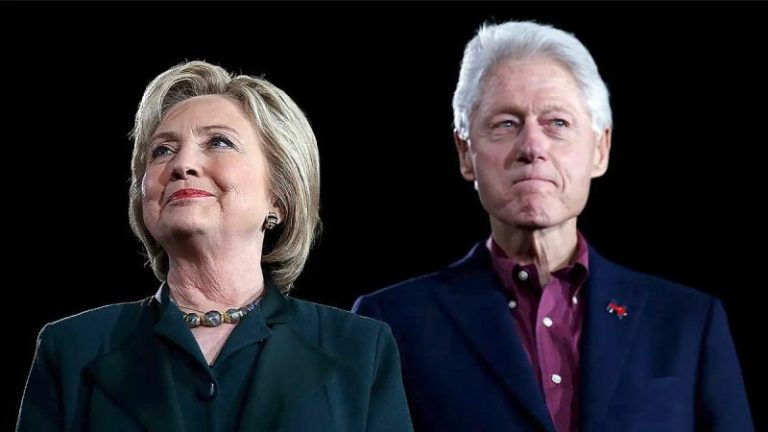
        GOP House Oversight Committee Chairman James Comer said he plans to commence contempt of Congress proceedings against Bill and Hillary Clinton for ignoring the committee’s subpoenas related to its ongoing probe into the Jeffrey Epstein scandal. 

        In July, a bipartisan House Oversight Subcommittee approved motions to subpoena Bill and Hillary Clinton and a slew of other high-profile political figures to aid its investigation looking into how the federal government handled Epstein’s sex trafficking case. 

        The subpoenas were then sent out in early August, and the Clinton’s were scheduled to testify Dec. 17-18. 

        ‘It has been more than four months since Bill and Hillary Clinton were subpoenaed to sit for depositions related to our investigation into Jeffrey Epstein and Ghislaine Maxwell’s horrific crimes. Throughout that time, the former president and former secretary of state have delayed, obstructed, and largely ignored the committee staff’s efforts to schedule their testimony,’ Comer said in a press release issued Friday evening.

        ‘If the Clintons fail to appear for their depositions next week or schedule a date for early January, the Oversight Committee will begin contempt of Congress proceedings to hold them accountable.’

        Comer’s threats come as Democrats from the House Oversight Committee released a new batch of photos obtained from Epstein’s estate, which included further images of the disgraced financier with powerful figures like President Donald Trump and former President Bill Clinton. Thousands of images were reportedly released, with potentially more to come.

        Other high-profile figures subpoenaed by the Oversight Committee include James Comey, Loretta Lynch, Eric Holder, Merrick Garland, Robert Mueller, William Barr, Jeff Sessions and Alberto Gonzales.

        In addition to testimony from these individuals, Comer and the Oversight Committee issued subpoenas to the Department of Justice (DOJ) for all documents and communications pertaining to the case against Epstein.

        In September, the committee released tens of thousands of pages of Epstein-related records in compliance with the subpoena, and the Oversight Committee indicated the DOJ would continue producing even more records as it works through needed redactions and other measures that must occur before they are released.

        This post appeared first on FOX NEWS

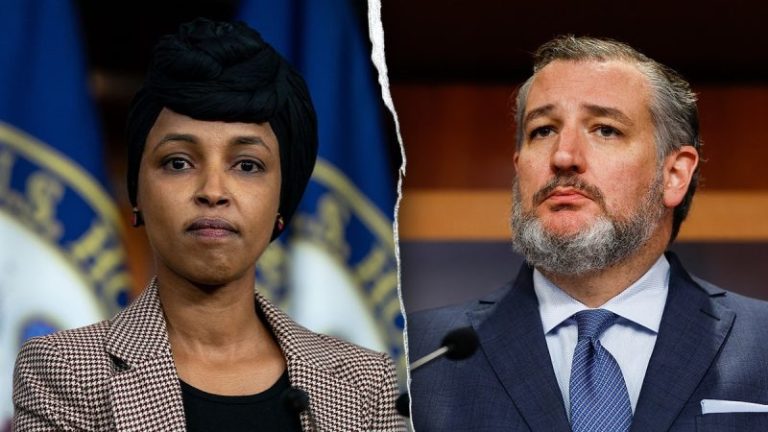
        A top Senate Republican argued that if allegations against ‘Squad’ member Rep. Ilhan Omar, D-Minn., that she married her brother to enter the U.S. were true, she’d be breaking several laws.

        Sen. Ted Cruz, R-Texas, joined the long-standing scrutiny against Omar Friday after President Donald Trump revived the allegations during a rally pushing his affordability agenda in Pennsylvania earlier this week.

        In a post on X responding to a White House social media account that charged, ‘Yes, [Omar] married her brother,’ Cruz listed a trio of federal and state laws the progressive lawmaker may have violated.

        ‘If this is true, then Omar faces criminal liability under three different statutes,’ Cruz said.

        Cruz argued that Omar could have committed federal marriage fraud, which stipulates that it is a felony to knowingly enter into a marriage to evade immigration laws, and could lead to up to five years in prison, a $250,000 fine and deportation.

        Omar was born in Somalia and came to the U.S. in 1995 after her family was granted asylum. She became a citizen in 2000. Omar, who is Muslim, has been married legally three times, first in a religious marriage to Ahmed Abdisalan Hirsi in 2002, then to Ahmed Nur Said Elmi in 2009 before later divorcing and legally marrying Hirsi. In 2020, she married political aide Tim Mynett. 

        Cruz noted that Omar could also be breaking Minnesota’s state incest law, a felony in the state punishable by jail time up to 10 years. He also contended that she could be liable for tax fraud, specifically if joint tax returns were filed while she was not legally married.

        That violation would levy up to a $100,000 fine and up to three years in prison.

        The Senate Republican’s legal analysis of the situation comes after Trump resurrected the unsubstantiated claims that Omar had married her brother for immigration purposes that have dogged the lawmaker since she entered politics nearly a decade ago. She has denied the allegations.

        Still, Trump charged, ‘She married her brother to get in, right?’

        ‘If I married my sister to get my citizenship, do you think I’d last for about two hours or something less than that? She married her brother to get in,’ he said. ‘Therefore, she’s here illegally. She should get the hell out.’

        Fox News Digital did not immediately hear back for comment from Omar’s office.

        This post appeared first on FOX NEWS

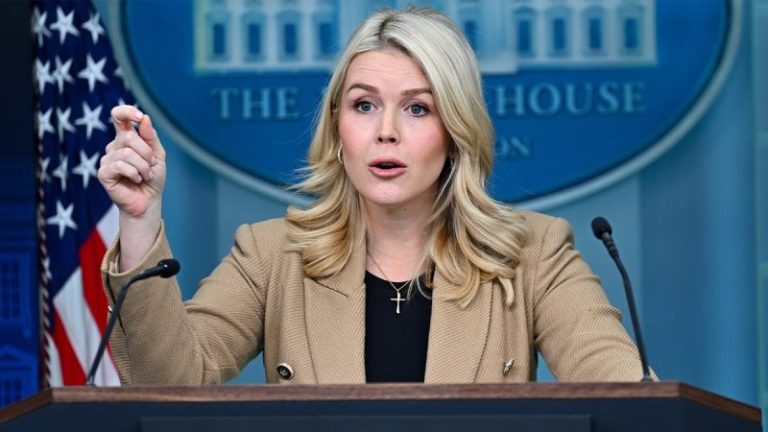
        White House press secretary Karoline Leavitt is making an example of former President Barack Obama for encouraging voters and lawmakers to reject adopting national voter ID laws. 

        ‘You know how badly the Democrats are panicking when they bring out Obama to spread lies about voter ID,’ Leavitt posted to X Thursday. ‘The fact is that nearly 90% of voters support’ voter ID laws, she continued before posting two screenshots showing two polls reflecting Americans support such laws at around 83% support to 84% support. 

        Leavitt’s comments follow the House passing a massive election integrity overhaul bill Wednesday, which includes requiring voters to show a photo ID when casting ballots in federal elections. The bill overall aims to prevent noncitizens from voting in U.S. federal elections, with all but one Democrat, Rep. Henry Cuellar, D-Texas, voting against it. 

        Obama was among prominent Democrats encouraging House lawmakers to vote against the measure, claiming it will disenfranchise voters. 

        ‘Republicans are still trying to pass the SAVE Act—a bill that would make it harder to vote and disenfranchise millions of Americans,’ he posted to X Wednesday evening. ‘Join @RedistrictAct and tell your member of Congress to vote no.’ 

        Democrats have argued that voter ID laws can disenfranchise eligible voters because they often require specific, current government-issued IDs that may be a struggle to obtain due to costs, paperwork hurdles or limited DMV access. Republicans have rejected that argument, calling the requirement a common-sense safeguards that would boost confidence in elections, while simultaneously noting that most Americans already need IDs for everyday tasks.

        In another post, Leavitt shared that Obama presented his own driver’s license to vote in the 2012 election. Obama voted early that cycle and was seen on camera pulling his Illinois driver’s license from his wallet to flash to poll workers. 

        ‘Here is Barack Obama showing his photo ID to vote in a past election,’  Leavitt posted. ‘Why are Democrats in Congress so opposed to making this a requirement across the country? Voter ID laws are common sense.’ 

        White House spokeswoman Taylor Rogers added that IDs are frequently used by Americans to buy alcohol or get on a plane, which she said shows the hypocrisy of Democrats pushing against the election security overhaul. 

        ‘Barack Obama and the rest of the Democrats think Americans are stupid, which is why they are blatantly lying about the commonsense election integrity provisions in the popular SAVE Act,’ Rogers told Fox News Digital. 

        ‘Americans need to show ID to buy alcohol, get on a plane, and even get into the Democratic National Convention — but these hypocrite Democrats don’t want voters to show their ID to cast a ballot. Congressional Democrats’ opposition to the SAVE America Act is indefensible and wildly out of step with the views of the American people.’ 

        Fox News Digital reached out to Obama’s office Thursday for comment but did not immediately receive a reply. 

        Called the SAVE Act, the legislation would additionally require information-sharing between state election officials and federal authorities in verifying citizenship on current voter rolls, as well as enable the Department of Homeland Security to pursue immigration cases if non-citizens were found to be listed as eligible to vote.

        If passed, the new requirements could be implemented for the November midterm elections. It must first pass the Senate before it could land on President Donald Trump’s desk. 

        This post appeared first on FOX NEWS

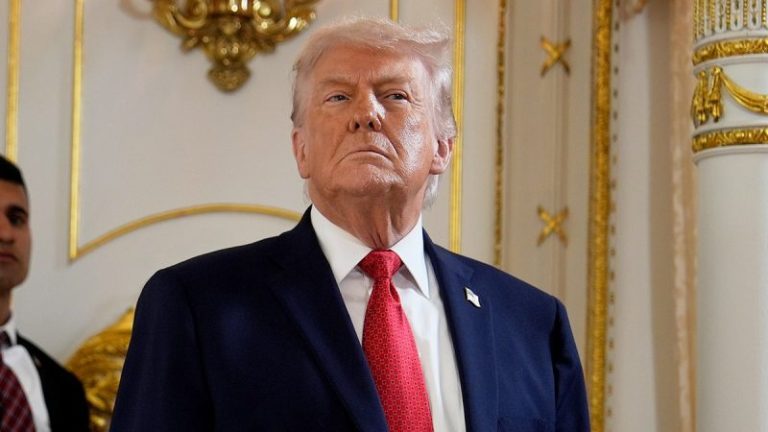
        President Donald Trump on Wednesday nominated federal prosecutor Colin McDonald to serve in the newly formed role of assistant attorney general for national fraud enforcement.

        McDonald is currently serving as an associate deputy attorney general at the Department of Justice.

        ‘I am pleased to nominate Colin McDonald to serve as the first ever Assistant Attorney General for National FRAUD Enforcement, a new Division at the Department of Justice, which I created to catch and stop FRAUDSTERS that have been STEALING from the American People,’ Trump wrote on Truth Social.

        ‘My Administration has uncovered Fraud schemes in States like Minnesota and California, where these thieves have stolen Hundreds of Billions of Taxpayer Dollars,’ he continued.

        Trump praised McDonald as a ‘very smart, tough and highly respected America First federal prosecutor who has successfully delivered justice in some of the most difficult and high-stakes cases our country has ever seen.’

        ‘Together, we will END THE FRAUD, and RESTORE INTEGRITY to our Federal Programs. Congratulations Colin — STOP THE SCAMS!’ the president wrote.

        McDonald has been serving in the office of Deputy Attorney General Todd Blanche, who said McDonald was ‘instrumental’ in the federal government’s efforts to curb crime across the country.

        ‘Colin is a rockstar, who was instrumental in our team’s mission of Making America Safe Again,’ Blanche wrote on X. ‘He is a consummate prosecutor who loves God, family, and country and will serve the President and the American people well.’

        Vice President JD Vance announced the new role and the creation of the National Fraud Enforcement Division at the Department of Justice during a White House press briefing earlier this month, as the administration seeks to pursue a crackdown on alleged systemic fraud in federal programs, including in Minnesota and California.

        ‘Colin McDonald is widely regarded as a thorough and highly competent attorney. He has an exceptional prosecutorial track record, which we look forward to seeing him put to use in his new role as Assistant Attorney General,’ Vance said at the time ahead of McDonald’s formal nomination.

        This post appeared first on FOX NEWS

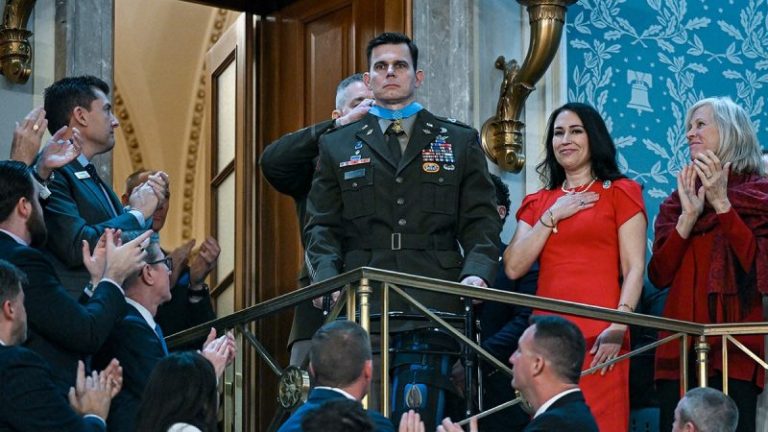
        President Donald Trump used part of his State of the Union address on Tuesday to spotlight American military heroism, awarding U.S. Army Chief Warrant Officer Eric Slover and U.S. Navy Captain E. Royce Williams with the nation’s highest military honor. 

        Recounting what he described as a high-risk January raid targeting Venezuelan leader Nicolás Maduro, Trump detailed Slover’s role in leading the mission. He said Slover was piloting a Chinook helicopter transporting U.S. forces into heavily fortified enemy territory under the cover of darkness. As the aircraft approached the target, it came under intense machine gun fire from multiple directions.

        ‘There were many heroes on that January raid to capture Maduro. Really great heroes. It was very dangerous,’ Trump said, describing the perilous mission.

        ‘He absorbed four agonizing shots, shredding his leg into numerous pieces,’ the president continued, telling lawmakers that ‘the success of the entire mission and the lives of his fellow warriors hinge on Eric’s ability’ to keep flying as blood ‘pour[ed] down the aisle.’

        Slover, still recovering from his wounds, attended the address with his wife, Amy, as he was presented with the nation’s highest military award.

        Trump also presented the Medal of Honor to Williams, a 100-year-old Korean War veteran and retired Navy captain, for his extraordinary combat valor during a long-classified 1952 aerial dogfight over the Sea of Japan. 

        Flying a single F9F Panther jet from the USS Oriskany, Williams engaged and shot down four Soviet MiG-15 fighters during a 35-minute battle despite being heavily outnumbered and flying an aircraft considered inferior in speed and climb rate. 

        At the time, the U.S. government kept the encounter secret to avoid escalating tensions with the Soviet Union, which was not officially acknowledged as a combatant in the war. Decades later, after the details were declassified, Williams’ actions were formally recognized with the nation’s highest military honor.

        The back-to-back Medal of Honor ceremonies underscored the administration’s emphasis on military service, drawing extended applause from lawmakers and guests in the chamber.

        Related Article

        Inside the lightning US strike that overwhelmed Venezuela’s defenses and seized Maduro
        This post appeared first on FOX NEWS