Author

admin

Browsing

John Feneck, portfolio manager and consultant at Feneck Consulting, weighs in on recent silver and gold price milestones and shares his next targets.

He also discusses stocks he’s watching in sectors like silver, gold and ‘special situations.’

Securities Disclosure: I, Charlotte McLeod, hold no direct investment interest in any company mentioned in this article.

This post appeared first on investingnews.com

Artificial intelligence (AI) has cemented its role as a key sector for investors, but its path forward is shifting.

Several catalysts, including sustained AI infrastructure spending and US Federal Reserve interest rate cuts, are poised to drive tech sector growth in 2026; however, massive capital expenditure digestion by hyperscalers, alongside increasing demands for a return on investment and persistent power supply limitations, are influencing a rotation in focus, with risks like high valuations and policy uncertainty potentially capping AI industry gains.

Overall, experts are calling for the technology sector to navigate a delicate balance between aggressive expansion and necessary financial discipline in 2026, with AI at the heart of these matters.

Capex digestion and AI verticalization

AI capital expenditures by hyperscalers are projected to fuel demand for semiconductors, data centers and related infrastructure in the year head, as per Nicholas Mersch, portfolio manager at Purpose Investments.

According to notes from multiple analysts, the Big Four — Meta Platforms (NASDAQ:META), Microsoft (NASDAQ:MSFT), Alphabet (NASDAQ:GOOGL) and Amazon (NASDAQ:AMZN) — are slated to spend over US$300 billion on AI infrastructure. Mersch cited forecasts that see hyperscaler capex hitting roughly US$600 billion in 2026.

“Over the next 12 to 24 months, the narrative likely shifts from who can build fastest to who can drive the highest revenue and margin per dollar of AI infrastructure,’ Mersch added. “This is where verticalization matters. The companies that can capture the full stack, from silicon to applications, look like they will win.’

His top pick in this arena is Google, followed by Microsoft.

While the cloud layer remains a high-stakes game of concentration among a few platforms, Mersch said the hardware layer underneath is beginning to fragment as the chip stack quietly diversifies.

“Large multi-year AI chip deals are broadening the market beyond NVIDIA (NASDAQ:NVDA), with Advanced Micro Devices (NASDAQ:AMD) and custom application-specific integrated circuit (ASIC) programs winning meaningful share. High-bandwidth memory (HBM) has become the real bottleneck and profit pool, with tri-sourced HBM3E, an emerging HBM4 race and surging HBM demand from ASICs,’ the expert said.

‘The result is a more plural, multi-vendor accelerator ecosystem. Looking out to the second half of the decade, total AI silicon spend can keep growing even if individual GPU vendors see more competition and pricing pressure, with memory, packaging and custom silicon capturing a larger share of the economics.’

Chip diversification, however, is now colliding with HBM and packaging shortages, constraining output from 2026 to 2027. BMI’s Cedric Chehab notes that rapid capex growth is outpacing supply, ruling out near-term oversupply, but warns of volatility if data center investments fail to deliver profitability amid persistent infrastructure shortages.

Power as a binding constraint for AI

Power limits are a specter looming above AI expansion heading into 2026.

“Individual campuses are pushing past 1 gigawatt, utilities in key regions are scrambling to add generation and transmission and Big Tech is signing multi-gigawatt nuclear and long-term power deals, including restarts of previously shuttered plants,” explained Mersch. US data center demand is now poised to triple by 2030, thrusting utilities, nuclear operators and grid infrastructure into prime investment orbits.

“Even Google has acknowledged that serving capacity needs to double roughly every six months,” he added.

Alphabet, the parent company of Google, and other hyperscalers became active infrastructure developers in 2025, inking high-profile strategic deals designed to secure 24/7 — and carbon-free — energy for AI data centers.

Google’s deal with Elementl Power in May to provide capital to develop three advanced nuclear sites in the US represents a shift toward nuclear energy that is perhaps the most significant structural change in the AI landscape today, further extending the verticalization narrative into the power grid itself.

The shift toward energy-backed AI is being institutionalized at the highest levels of finance. In late 2025, JPMorgan Chase (NYSE:JPM) launched its US$1.5 trillion Security and Resiliency Initiative, a decade-long plan specifically targeting the intersection of AI, grid infrastructure and nuclear energy.

By earmarking US$10 billion in direct equity for US firms, the initiative effectively underwrites the full-stack transition.

Are AI stocks in a bubble?

The path for AI is moving from building technology to proving its value. While many experts remain optimistic, the transition from deployment to execution introduces new risks that could define the industry’s next winners and losers.

As organizations fully embed AI into their core workflows, the operational stakes are shifting. Infrastructure strategies are diversifying as security-conscious businesses seek more control over their high-value AI workloads.

Simultaneously, the rise of agentic AI, which automates full workflows, combined with cost and complexity issues on major hyperscalers, will lead to a trend of cloud repatriation toward regional and bare-metal platforms.

Despite concerns over a potential bubble, the industry will continue to receive massive institutional backing. B2BROKER’s John Murillo rejects the idea of an AI bubble, comparing OpenAI to Edison’s plants amid giants’ resilience.

‘In the case of dot-coms, everyone was investing just to invest; it didn’t matter what exactly to choose and some of the projects didn’t have a solid foundation. With AI, it’s not like this. The technology proves its worthiness every day, and it has already swept away many junior analysts,’ Murillo emphasized.

Nevertheless, high AI valuations risk corrections if adoption disappoints or energy constraints emerge.

The success of the current capex cycle will depend on whether these investments translate into measurable operating leverage and cost savings through the back half of the decade.

“The bubble scenario is very unlikely,” Murillo added. “I think in the current economic situation, there are problems much worse than a potential bubble.”

For example, geopolitical tensions, sticky inflation and US midterm elections could spark volatility, prompting sector rotations away from overvalued mega caps.

Investor takeaway

The investment focus in AI is shifting from the initial narrative to tangible execution and quantifiable profitability. While the challenges of elevated valuations and geopolitical instability persist, some experts dismiss comparisons to a technology bubble, arguing the sector’s demonstrated value offers a stable underpinning.

Future leaders in the AI industry will be distinguished by their capacity to convert infrastructure spending into significant operating leverage and cost efficiencies.

Securities Disclosure: I, Meagen Seatter, hold no direct investment interest in any company mentioned in this article.

This post appeared first on investingnews.com

Saskatchewan has introduced a new royalty framework for lithium production, marking a major step toward supporting the province’s growing role in Canada’s critical minerals sector.

The amendments to 2017 subsurface mineral royalty regulations formally establish a 3 percent Crown royalty on the value of brine mineral sales, coupled with a two year holiday for new productive capacity.

Provincial officials said the change aligns Saskatchewan’s royalties for lithium with those already applied to potash, salt and sodium sulfate, and keeps the province competitive with leading jurisdictions worldwide.

“Lithium is a critical mineral that is expected to see strong demand and growth in the decades ahead, and Saskatchewan is well-positioned to take advantage of this opportunity,” Energy and Resources Minister Colleen Young said.

“By putting this royalty framework in place now, we are providing certainty for industry, while ensuring the people of Saskatchewan benefit as this sector develops,” Young added.

Industry participants have welcomed the move, calling it a clear signal that the province intends to be a serious player in the global lithium supply chain. Canada-based explorer EMP Metals (CSE:EMPS,OTCQB:EMPPF) described the royalty rate as internationally competitive and a meaningful boost for project economics.

“This is very welcome news. The government of the province of Saskatchewan has once again proven itself to be supportive of lithium production in the province,” EMP Metals CEO Karl Kottmeier said. “This is a highly competitive royalty rate internationally, and a two-year royalty holiday on new production immediately makes a positive impact on financial modelling of what is already a compelling business case for our Project Aurora lithium production project.”

Grounded Lithium (TSXV:GRD) President and CEO Gregg Smith noted that the policy encourages further investment, while recognizing the high upfront costs of developing processing capacity.

“This new regulatory framework provides a reasonable royalty rate while also recognizing the significant risk and initial investment companies make in processing facilities to ultimately achieve commercial production,” he said.

Saskatchewan has emerged as one of Canada’s top destinations for mining investment. The Fraser Institute’s annual mining company survey ranked it the country’s leading jurisdiction, with the province projected to attract over US$7 billion in mining investment this year — more than a quarter of Canada’s total.

The lithium framework also aligns with the province’s broader Critical Minerals Strategy, launched in 2023 to position Saskatchewan as a key contributor to Canada’s resource independence and energy transition.

The plan targets a 15 percent share of national mineral exploration by 2030, the doubling of critical mineral production, and the expansion of existing potash, uranium, and helium output.

Securities Disclosure: I, Giann Liguid, hold no direct investment interest in any company mentioned in this article.

This post appeared first on investingnews.com

Major miner BHP (ASX:BHP,NYSE:BHP,LSE:BHP) welcomed October with the news that it will invest over AU$840 million in its Olympic Dam copper operation in South Australia.

In an October 1 release, the commodities giant said that the funding is for a series of “growth-enabling projects” at the site, focused on strengthening underground mining productivity.

The company outlines several priority projects it intends to pursue at Olympic Dam, namely the construction of an underground access tunnel, a new backfill system, expansion of ore pass capacity and the installation of a new oxygen plant to improve smelter performance and support increased copper-processing capability.

“We expect to grow our copper base from 1.7 million tonnes to around 2.5 million tonnes per annum,” shared BHP COO Edgar Baston. “Achieving that scale requires significant copper growth, and we are fortunate to have a world-class copper province right here in South Australia to do just that.” According to Baston, BHP’s South Australian copper province has been delivering over 300,000 tonnes a year for the past three years.

Copper demand set to rise

In a global trade update shared in May, UN Trade & Development notes that global demand for copper is expected to grow by over 40 percent by 2040. This projected demand increase will drive supply requirements, with the organisation citing the need for around 80 new mines and US$250 billion in investment by 2030 to keep up.

For its part, BHP notes that global copper demand is projected to grow 70 percent by 2050 due to population growth, rising living standards and the energy transition. It adds that this poses a general opportunity for South Australia, underlining that it holds about two-thirds of Australia’s copper resources.

History of Olympic Dam

Olympic Dam was acquired by BHP in 2005 through its acquisition of Western Mining. It has become a cornerstone of BHP’s copper portfolio, with copper accounting for around 70 percent of the asset’s total revenue.

In its 2025 fiscal year, BHP reported a production of over 2 million tonnes of copper for the first time.

Don Farrell, Australian minister for trade and tourism, commented on the company’s investment in Olympic Dam, noting, ‘Australia is at the forefront of the energy transition in which copper is a vital resource and by securing the continued flow of copper from Olympic Dam, BHP is ensuring South Australia’s position as a key global supplier.”

BHP October updates

Also in early October, BHP iron ore cargoes were banned by Chinese iron ore buyer China Mineral Resources Group. The move reportedly stems from pricing disputes and has raised concerns for Australia.

Australia remains China’s top provider of iron ore, and BHP continues to be among the country’s major iron ore exporters, alongside Rio Tinto (ASX:RIO,NYSE:RIO,LSE:RIO) and Fortescue (ASX:FMG,OTCQX:FSUMF).

BHP has not commented on the matter as of writing.

On a positive note, BHP launched the fourth edition of its Xplor Critical Minerals Accelerator Program.

As in previous cohorts, Xplor 2026 participants can receive up to US$500,000 in equity-free funding, mentorship and access to BHP’s global network of suppliers and service providers.

Submissions close on October 15 at 11:59 p.m. AEST.

Securities Disclosure: I, Gabrielle de la Cruz, hold no direct investment interest in any company mentioned in this article.

This post appeared first on investingnews.com

Gold marked a new price milestone on Wednesday (October 8), breaking US$4,000 per ounce.

The spot price hit a fresh record, rising as high as US$4,056.14 in midday trading. Future prices for gold breached US$4,000 for the first time on Tuesday (October 7) and have continued to climb higher.

The yellow metal’s rise follows a summer of consolidation. After several months of relatively flat trading, the price began pushing higher toward the end of August, quickly reaching US$3,500 and continuing on up.

Gold futures are up about 12 percent in the last month, and just over 54 percent year-to-date.

Gold price, October 1 to October 8, 2025.

Gold’s latest rise began last week, after US Congress failed to reach an agreement on a spending bill ahead of the new fiscal year, triggering a government shutdown. The closure has now lasted a week, with a key sticking point between Democrats and Republicans being an extension to billions of dollars in subsidies for Obamacare.

US President Donald Trump said Monday (October 6) that negotiations were taking place with Democrats and ‘could lead to very good things’ in terms of healthcare. However, Senator Chuck Schumer and Representative Hakeem Jeffries, Congress’ two Democrat leaders, said no talks were happening and that the White House ‘has gone radio silent.’

Various issues are emerging as the shutdown progresses, with one of the most recent being the Trump administration’s suggestion that furloughed federal workers may not receive backpay.

Beyond current events, gold’s rise is underpinned by factors like strong central bank buying, global geopolitical uncertainty, concerns about the US dollar and other fiat currencies and expectations of lower interest rates.

Those elements have many experts predicting a rise well beyond US$4,000 for the precious metal, likely before the end of the year, although a correction is widely expected beforehand.

Gold’s sister metal silver is also surging higher this week, despite a pullback in the the price on Tuesday.

Silver price, October 1 to October 8, 2025.

The white metal rose as high as US$48.74 per ounce on Monday, but retreated on Tuesday to the US$47.80 level. On Wednesday, silver followed gold higher to US$49.42 by midday.

Silver was last at these price points in 2011, and is close to its 1980 all-time high.

As with gold, experts see a silver correction as natural given its rapid ascent, but think the rally is far from over.

‘The idea that this bull market is over is a fallacy. I would exercise caution, because I believe we’re due a correction. But I’m very happy with silver’s performance so far year-to-date,’ said analyst Ted Butler.

Securities Disclosure: I, Melissa Pistilli, hold no direct investment interest in any company mentioned in this article.

This post appeared first on investingnews.com

Platinum is the third most traded precious metal in the world after gold and silver, and investment demand is growing.

It is also an industrial metal that is widely used in a variety of sectors. The four main uses of platinum are in catalytic converters for the automotive industry; as a material in jewelry; in industrial applications in various sectors including fertilizers, hard drives, electronics, and glass manufacturing; and in medical devices and pharmaceuticals.

The long-term outlook for platinum is strong, making the sector potentially compelling for investors. In September 2025, platinum prices surged above US$1,500 for the first time since July 2014, and crossed US$1,600 before the month closed.

Here’s a brief overview of platinum supply and demand dynamics, as well as a look at a few different ways to start investing in platinum, namely bullion, platinum stocks, exchange-traded funds (ETFs) and futures.

In this article

    What is platinum?

    Platinum is a silvery-white precious metal that is soft and ductile. It is highly prized for its durability and excellent catalytic properties, such as a high melting point, resistance to corrosion and simple acids, and ability to serve as a carbon monoxide oxidation catalyst. Platinum’s symbol on the periodic table of elements is Pt.

    Platinum is the most abundant and widely used of the platinum-group metals (PGMs), which also includes palladium, rhodium, iridium and other metals.

    Platinum is not typically mined on its own, but rather alongside palladium and other PGMs within nickel and copper ores or chromitite.

    Platinum demand trends

    Platinum’s diversity of applications helps to create a resilient market for this metal even in an economic downturn. The four biggest demand sectors for platinum are automotive at 39 percent, jewelry at 28 percent, industrial at 24 percent and investment at 9 percent.

    Total platinum demand for 2025 is expected to come in at 7.88 million ounces, down about 4 percent from the previous year’s demand, according to the World Platinum Investment Council (WPIC), which provides quarterly market overviews.

    ‘An upgrade to jewellery demand expectations and continued robust investment demand, driven by strength in bar and coin in China, are offset by slightly weaker automotive demand and a cyclical trough in glass demand within the industrial segment,’ the WPIC noted in its Q2 2025 report.

    Automotive

    In the automotive industry, both platinum and fellow PGM palladium are used in catalytic converters for vehicle exhaust systems. Due to their differing properties, platinum is preferred for diesel engines and palladium is the metal of choice for gasoline engines.

    In recent years, platinum has been increasingly substituted for palladium in gas-powered vehicles due to high prices for palladium seen in the early 2020s. Although the price disparity has decreased, analysts expect that the substitution trend will continue for some time.

    Demand from this sector is expected to decline by 3 percent year-on-year in 2025 to 3.03 million ounces as global auto sales and production are in decline, especially in Europe, according to the WPIC.

    Another important factor impacting this segment of the market is the growing market for electric vehicle (EVs), which do not require catalytic converters to control emissions. Although EV demand growth has been slower than anticipated, which has proven positive for platinum, EVs made up over 20 percent of global new car sales in 2024.

    The transition to electric and US tariffs affecting the industry are weighing on platinum demand from the auto sector, but the WPIC says this segment of the market is ‘proving resillient’ despite these downward forces.

    Industrial

    Demand from the industrial sector is expected to be the largest drag on overall platinum demand in 2025, with the WPIC predicting it will drop by 22 percent in 2025 to 1.49 million ounces. WPIC predicts that a cyclical slowdown in new capacity in glass manufacturing will cause a 74 percent year-over-year reduction in demand from this segment of the industrial sector, translating to a drop of 515,000 ounces.

    Jewelry

    Global jewelry consumption is projected to grow by 11 percent in 2025 to reach 2.23 million ounces. Regionally, demand growth is centered in China as platinum becomes a much more affordable option compared to gold. Chinese platinum jewelry fabrication is expected to grow by 42 percent in 2025.

    Investment

    Regarding investment demand for platinum, in 2025 WPIC expects a 2 percent jump over the previous year to 718,000 ounces of the metal. Specifically looking at platinum bars and coins, the WPIC is forecasting demand in this segment to grow by 45 percent year-on-year to a two-year high of 282,000 ounces.

    Hydrogen

    In recent years, the transition to a green economy and the growth of hydrogen technologies has created another growing market for platinum. The WPIC has noted that the hydrogen market, specifically proton exchange membrane electrolyzers and hydrogen fuel-cell electric vehicles, is expected to become ‘a meaningful component of global demand by 2030 and potentially the largest segment by 2040.’

    For now, the hydrogen sector represents less than 1 percent of total platinum demand, although it is expected to increase by 19 percent this year to 49,000 ounces.

    Platinum supply trends

    The 22 percent decline year-over-year in platinum demand has not alleviated the ongoing supply-demand imbalance. The platinum market is destined to remain in a supply deficit for a third-straight year in 2025, according to WPIC estimates, with a shortfall of 850,000 ounces of the metal.

    Analysts are forecasting total platinum supply of 7.03 million ounces in 2025, a net decrease of 3 percent year-over-year.

    Recycled platinum supply is anticipated to reach 1.6 million ounces in 2025, a 6 percent jump year-over-year, as higher platinum prices incentivizing recycling of the metal.

    On the other hand, mined platinum supply is expected to fall 6 percent to 5.43 million ounces in 2025, which the WPIC attributed to lower production out of South Africa, Zimbabwe and North America.

    South Africa is by far the largest platinum country in terms of mined platinum and reserves, according to the US Geological Survey data, accounting for about 67 percent of global output. The country’s Bushveld Complex is the largest PGM resource in the world. However, ongoing electricity shortages and transport line disruptions have restrained platinum mine output from the country in recent years.

    How to invest in platinum

    Investors who believe the above market dynamics will eventually result in a higher platinum price may be interested in investing in the metal. There are several ways to invest in platinum, from platinum mining stocks and platinum ETFs to physical bars and coins and platinum futures.

    Platinum stocks

    One way to invest in platinum is to own shares of a platinum-mining company. Depending on your risk tolerance, both major platinum miners, junior exploration companies offer an easy entry point.

    Major platinum mining stocks

    Eastern Platinum (TSX:ELR,OTC Pink:ELRFF)
    Eastern Platinum, or Eastplats, has a number of directly and indirectly owned PGM assets in the Bushveld Complex of South Africa. In addition to its ongoing work recovering chrome from historical tailings at the Crocodile River mine, Eastplats is ramping up production of PGM and chrome concentrates at Crocodile River’s new Zandfontein underground mine last year.

    Impala Platinum Holdings (OTCQX:IMPUF,JSE:IMP)
    Impala Platinum, or Implats, is one of the most prominent platinum producers in the world. The company has majority ownership or joint ventures in four PGM mining operations and a refining facility in South Africa’s Bushveld Complex, two PGM mining operations in Zimbabwe and the Lac des Iles PGM mine in Ontario, Canada.

    Sibanye Stillwater (NYSE:SBSW)
    Sibanye Stillwater has a diverse metals mining portfolio and is one of the world’s largest primary platinum and palladium producers. It also adopted a circular economy business model that includes platinum recycling. The company has numerous PGM operations in South Africa and the United States. Its US Stillwater and East Boulder operations are in Montana’s Stillwater Complex, the country’s largest source of PGMs.

    Tharisa (LSE:THS,JSE:THA,OTC Pink:TIHRF)
    Tharisa is a vertically integrated PGM company, and through its subsidiaries its operations span from exploration through to production, beneficiation and distribution. Tharisa’s PGM assets include the Tharisa platinum-chrome mine in South Africa’s Bushveld Complex and the Karo platinum mine in Zimbabwe, which is now under construction.

    Valterra Platinum (LSE:VALT,JSE:VAL,OTC Pink:ANGPY)
    Valterra Platinum, formerly Amplats, is a leading primary producer of PGMs, supplying mined and recycled platinum products. The company was demerged from Anglo American (LSE:AAL,OTC Pink:AAUKF) in 2025. The company operates the Mogalakwena mine, Amandelbult complex and Mototolo mine in South Africa’s Bushveld Complex.

    Junior mining stocks

    Bravo Mining (TSXV:BRVO,OTCQX:BRVMF)
    Bravo Mining is advancing its wholly owned Luanga PGM-gold-nickel project in the Carajás Mineral Province of Brazil. The project’s 2025 mineral resource estimate shows measured and indicated resources of 10.4 million ounces of palladium equivalent at 2.04 grams per metric ton (g/t).

    Canada Nickel Company (TSXV:CNC,OTCQX:CNIKF)
    Canada Nickel Company is advancing its wholly owned flagship Crawford nickel-cobalt sulfide project located in the Timmins-Cochrane mining camp of Ontario, Canada. The project also hosts significant platinum and palladium mineralized zones.

    Canada North Resources (TSXV:CNRI,OTCQX:CNRSF)
    Canada North Resources wholly owns the late-stage Ferguson Lake exploration project in the Kivalliq Region of Nunavut, Canada. The polymetallic project hosts base metals nickel, copper and cobalt as well as PGMs, including 630,000 ounces of platinum and 3.53 million ounces of palladium in the indicated category.

    Chalice Mining (ASX:CHN)
    Chalice Mining owns the Gonneville project in Western Australia. The project hosts a mix of metals, including palladium, platinum, nickel, cobalt and copper. The Western Australia government has designated Gonneville a Strategic Project in recognition of the project’s importance for the country’s critical metals industry, and Chalice expects to complete its pre-feasibility study in Q4 2025.

    Clean Air Metals (TSXV:AIR,OTCQB:CLRMF)
    Clean Air Metals is focused on its wholly owned exploration-stage Thunder Bay North critical minerals project in the Thunder Bay region of Ontario, Canada. The project hosts platinum, palladium, copper and niobium mineralization, with an indicated resource of 1.2 million ounces of combined platinum and palladium.

    Lifezone Metals (NYSE:LZM)
    Lifezone Metals has developed a hydrometallurgical processing technology, which it calls Hydromet Technology, as a cleaner alternative to smelting for base and precious metals refining. The company has a joint venture partnership agreement with Glencore (LSE:GLEN); Lifezone will use its Hydromet Technology to recycle platinum, palladium and rhodium in the Un, and Glencore will act as the offtaker and marketer. Lifezone also owns the Kabanga nickel-copper-cobalt project in Tanzania.

    Platinum Group Metals (TSX:PTM,NYSE:PLG)
    Platinum Group Metals is working to bring into production its advanced-stage Waterberg PGM deposit in South Africa’s Bushveld Complex. First discovered by the company, the project is now a joint venture with key partners that include Implats at 14.86 percent. Platinum Group retains a 50.16 percent position in Waterberg and will be the majority operator.

    Ramp Metals (TSXV:RAMP)
    Ramp Metals owns the Rottenstone SW and PLD projects in Saskatchewan, Canada. Rottenstone is situated adjacent to a northeast-southwest geological formation connected to the historic Rottenstone mine, which produced nickel, PGMs and gold, although Ramp is currently focused on gold and copper at the site.

    Platinum bars and coins

    Another investment option is the direct purchase of physical platinum bars or platinum coins through a bullion dealer.

    One example is BullionVault’s online physical platinum market, which is supported by the WPIC, and gives private individuals access to vaulted platinum for the same prices currently paid by institutional investors. The market is open 24 hours a day, seven days a week.

    Investors in the United States can also now buy 1 ounce platinum bars and coins at Costco, an option you can learn more about here.

    For more information on how to invest in precious metals coins and bullion, check out our guide on buying physical gold, as much of the advice also applies to physical platinum investing.

    Platinum ETFs

    Those interested in platinum can also gain exposure via platinum ETFs and platinum exchange-traded notes (ETNs). Here are a few to get you started.

    iShares MSCI Global Metals & Mining Producers ETF (NYSE:PICK)
    The iShares MSCI Global Metals & Mining Producers ETF provides investors with access to the global mining industry through an international basket of companies engaged in the extraction and production of metals, including platinum. Its holdings include platinum mining companies Valterra Platinum, Implats and Sibanye Stillwater. It has the lowest expense ratio on this list at 0.39 percent.

    Aberdeen Physical Platinum Shares ETF Trust (ARCA:PPLT)
    The Aberdeen Physical Platinum Shares ETF is designed to reflect the performance of the price of physical platinum less the trust’s expenses and holds platinum bars in a secure vault. It has an expense ratio of 0.6 percent.

    Sprott Physical Platinum and Palladium Trust Unit (ARCA:SPPP)
    The Sprott Physical Platinum and Palladium Trust is another option that provides access to the physical platinum bullion market while allowing the flexibility of an exchange-traded security. It has the highest expense ratio on this list at 0.98 percent.

    GraniteShares Platinum Shares (ARCA:PLTM)
    The GraniteShares Platinum Trust tracks the spot price of platinum less trust expenses, and holds a physical portfolio of platinum ingots kept in a vault in London, UK. It has an expense ratio of 0.5 percent.

    Global X Physical Platinum Structured (ASX:ETPMPT)
    Global X Physical Platinum is an ASX-listed platinum ETF that provides Australian investors access to platinum held in JP Morgan storage facilities. It has a management fee of 0.49 percent.

    Platinum futures

    Another option for those looking to invest in platinum is platinum futures, a derivative instrument tied directly to the price of the actual metal. Futures are a financial contract between an investor and a seller. The investor agrees to purchase an asset from the seller at an agreed-upon price based on a date set in the future.

    Rather than intending to take possession of the material asset, investors speculating in the futures market are instead making bets on whether the price of a particular commodity will rise or fall in the near future.

    For example, if you buy a platinum futures contract believing the price of metal is set to rise, and your prediction proves correct, you could gain a return on your investment by selling the now more valuable futures contract before it expires. However, be advised that trading futures contracts is not for the novice investor.

    Platinum futures are available for trade on the New York Mercantile Exchange (NYMEX), which is part of the CME Group. For more information on precious metals futures investing, see our guides to gold futures and silver futures.

    Securities Disclosure: I, Melissa Pistilli, hold no direct investment interest in any company mentioned in this article.

    This post appeared first on investingnews.com
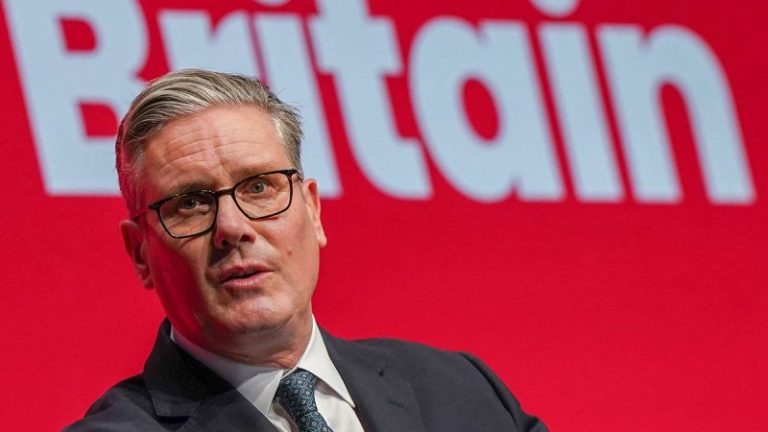
    More than 2.8 million Brits have signed a petition as of Wednesday, calling on the U.K. government to reverse its mandatory Digital ID system over concerns it will lead to ‘mass surveillance and digital control.’

    The ID program, dubbed ‘Brit Card’ and announced last week by U.K. Prime Minister Keir Starmer, is set to be rolled out by August 2029 in an attempt by the Labour government to crack down on illegal immigration as it would bar anyone who doesn’t have a digital ID from working in the U.K.

    But critics of the plan argue its effects on illegal immigration will not be significant enough to make up for the privacy concerns it poses. 

    The White House confirmed to Fox News Digital that this controversial step to curb immigration is not currently being considered by President Donald Trump, despite his commitment to curbing illegal immigration and his security crackdowns in cities across the U.S.

    But according to one security expert, digital ID is actually not nearly as concerning as most opponents of the system believe it to be.

    ‘When the government issues a digital ID, they’re issuing it to the individual. That means, just like your paper ID sits in your physical wallet, your digital ID sits in your digital wallet, it’s not stored at a central location,’ Eric Starr, founder and CEO of Ultrapass Identity Corp, told Fox News Digital.

    ‘When you pass your digital ID to a relying party, they don’t ping a central database,’ he continued. ‘They look at the digital ID you’ve presented, and through cryptography, can determine the authenticity of the digital document.’

    Starr, whose company works with governments around the world to provide decentralized digital ID options, said the controversy around digital ID comes down to poor conception and a lack of understanding.  

    The tech guru said he believes the U.K. went about its rollout of a digital ID the wrong way by making it mandatory and releasing few details on the system itself. 

    Starr argued that governments have the right to know who its citizens are and nations, including the U.S., already have systems in place that keep track of its people, including by issuing social security numbers – a system that the U.S. has relied on since 1936.

    When pressed about concerns relating to a government’s ability to enforce mass surveillance through the ease that the technology could offer, even if that is not the original intent, Starr said it comes down to establishing those protections for personal privacy from the get-go. 

    ‘We care deeply about personal freedom in ways that other countries don’t think about it, and generally speaking, individuals don’t want the federal government in their business every day,’ Starr explained in reference to the American public. ‘The fear that people have about digital identity is that it’s a surveillance opportunity.’

    Starr explained that some are concerned that any time a digital ID is used, it will then alert or ‘phone home’ a government tracking system – a concern that privacy advocates like the Electronic Frontier Foundation and the ACLU have flagged.

    ‘It’s not about the technology, but managing fear and managing what actually gets deployed,’ he added, noting that safeguards can be put in place to counter these concerns.

    Even though there is no federal version of a digital ID, more than a dozen states have already begun issuing mobile driver’s licenses.

    A federal version of a digital ID would, in theory, just include an individual’s information that the government already has access to, including details like passport information.

    But there’s another major concern people flag when it comes to digital IDs – how to ensure personal information is protected from identity theft, which has become a major concern in recent years amid mass cyber breaches.

    According to Starr, the ‘architecture of digital identity’ is different from centralized databases used by institutions like hospitals, which have found themselves vulnerable to cyber-attacks and data breaches.

    Decentralized systems, as in the case of a digital ID, make hacking ‘nearly impossible’ because ‘the only way to hack a million IDs is to hack a million phones,’ he explained. 

     ‘There are solutions. It’s not a technology issue, it’s an education issue, it’s a fear issue,’ Starr said. ‘It’s also poorly conceived solutions that open the door for bad behavior.’

    This post appeared first on FOX NEWS

    Senate Republicans aren’t ready to go ‘nuclear’ again to change the rules around the Senate filibuster as Senate Democrats dig deeper against the GOP’s push to reopen the government.

    Senate Majority Leader John Thune, R-S.D., and Republicans need at least eight Democrats to cross the aisle and vote for their continuing resolution (CR) to pass through the Senate’s 60-vote filibuster threshold.

    But only three Democratic caucus members have joined Republicans after six failed attempts to pass the short-term funding extension as the shutdown enters its second week.

    Republicans have already turned to the ‘nuclear option’ to unilaterally change the rules this year to blast through Senate Minority Leader Chuck Schumer, D-N.Y., and Democrats’ blockade of President Donald Trump’s nominees. But for many, the notion of changing the rules and nuking the filibuster is a third rail.

    ‘Never, never, ever, never, none,’ Sen. Roger Marshall, R-Kan., told Fox News Digital when asked if he would consider changing the rules.

    ‘I’ve never heard that since the Democrats tried to do it, and I think we would all fight it pretty hard,’ he continued.

    The last time the filibuster was put under the microscope was when Democrats controlled the Senate in 2022. Schumer, who was majority leader at the time, tried to change the rules for a ‘talking filibuster’ in order to pass voting rights legislation.

    However, the effort was thwarted when then-Sens. Joe Manchin, D-W.Va., and Kyrsten Sinema, D-Ariz., joined Republicans to block the change. Both have since retired from the Senate and become Independents.

    Republicans are not actively discussing changes to the filibuster.

    ‘I don’t think that’s a conversation we’ve had,’ Sen. Eric Schmitt, R-Mo., told Fox News Digital. ‘Right now, we think that the Democrats’ position has been untenable, and the more they hear from their constituents of their unreasonable activities, that will break this because we got a clean CR, so we got the better argument.’

    Because of the filibuster, spending bills like a CR are generally bipartisan in nature. However, Senate Democrats have panned Republicans’ bill to reopen the government as partisan and argue that they had no input on it before it passed through the House late last month.

    ‘I’m generally aware of how important it is to try to keep things bipartisan, using the filibuster as the tool to do that, but I also get the fact that after a while, the frustration just boils over,’ Sen. Cynthia Lummis, R-Wyo., told Fox News Digital.

    Frustrations reached a new level in Congress on Wednesday, with Sens. Ruben Gallego, D-Ariz., and Mark Kelly, D-Ariz., publicly arguing with House Speaker Mike Johnson, R-La., over the shutdown. Then there was another public back-and-forth between House Minority Leader Hakeem Jeffries, D-N.Y., and Rep. Mike Lawler, R-N.Y.

    Still, neither side in the upper chamber is ready to budge from their positions.

    Most Senate Democratic caucus members are rooted in their position that unless they get a deal on expiring Obamacare tax credits, they will not join Republicans to reopen the government.

    Republicans have been adamant that negotiations on extending the subsidies — with reforms — can happen, but only after the government is reopened.

    Sen. John Fetterman, D-Pa., is the lone Senate Democrat who has voted with Republicans each time to reopen the government. He pointed out that Republicans had just changed Senate rules last month to advance Trump’s nominees.

    ‘I think we probably should. If you’re able to get out of the filibuster to prevent either party to make it a lot harder to shut the government down, I’d absolutely support that,’ Fetterman said. 

    This post appeared first on FOX NEWS

    Sen. Cynthia Lummis, R-Wyo., is demanding information from the FBI on whether she has been subjected to additional surveillance, following revelations that former Special Counsel Jack Smith tracked her phone calls, calling the action ‘one of the most serious infringements on the separation of powers in American history.’ 

    Fox News Digital first reported Monday that Smith and his’Arctic Frost’ team investigating Jan. 6 allegedly monitored the phone calls of Lummis and fellow GOP Sens. Lindsey Graham of South Carolina, Marsha Blackburn of Tennessee, Ron Johnson of Wisconsin, Josh Hawley of Missouri, Bill Hagerty of Tennessee, Dan Sullivan of Alaska, Tommy Tuberville of Alabama and GOP Rep. Mike Kelly of Pennsylvania.

    Fox News Digital exclusively obtained an FBI document stating the names of the lawmakers and that an FBI special agent on Smith’s team ‘conducted preliminary toll analysis’ on the toll records associated with them.

    An FBI official told Fox News Digital that Smith and his team were able to view which phone numbers the senators called, along with the location each call originated and where it was received.

    Lummis is now seeking more information on the matter, writing a letter to FBI Director Kash Patel thanking him, President Donald Trump and Attorney General Pam Bondi for their ‘transparency regarding the blatantly unconstitutional surveillance activities conducted on the U.S. Senate and House of Representatives by the Biden Administration during Operation Arctic Frost.’

    ‘Your willingness to expose these abuses is crucial to getting the FBI and Department of Justice focused back on its core mission of delivering justice for all,’ she wrote in the letter to Patel, obtained by Fox News Digital.

    Lummis is now demanding all FBI and DOJ records that identify which members of the Biden administration ‘authorized or approved the surveillance of my phone records and communications.’

    Lummis is asking for the names of all DOJ officials, FBI officials, and any White House officials involved; the entire data file collected on her, including all phone records and any recordings or transcripts of her private communications; any legal statutes cited to justify the data collection; and any individuals with whom the information was shared.

    She is also requesting documentation of ‘any other surveillance conducted by the FBI or DOJ from January 20, 2021, through January 20, 2025, on me related to my official duties as a United States senator.’

    ‘I believe that the surveillance of sitting United States Senators by the executive branch represents one of the most serious infringements on the separation of powers in American history,’ she wrote. ‘It seriously impinges on both my civil rights and my constitutional duties as a legislator, especially since this surveillance was directly connected to core legislative activities protected by the Speech or Debate Clause of the United States Constitution.’

    Lummis added that ‘the American people deserve to know the truth about how the Biden administration weaponized federal law enforcement against their elected representatives.’

    ‘Those responsible will be held accountable,’ she wrote. ‘Thank you for your prompt attention to these requests, and for restoring integrity to the FBI.’

    ‘Arctic Frost’ was opened inside the bureau on April 13, 2022. Smith was appointed as special counsel to take over the probe in November 2022. 

    An FBI official told Fox News Digital that ‘Arctic Frost’ is a ‘prohibited case,’ and that the review required officials to go ‘above and beyond in order to deliver on this promise of transparency.’ The discovery is part of a broader, ongoing review.

    ‘The American people deserve the truth, and under my leadership, they will have it,’ Patel told Fox News Digital. ‘We promised accountability for those who weaponized law enforcement, and we will deliver it.’

    Patel added: ‘Under our watch, the FBI will never again be turned against the American people.’

    ‘It is a disgrace that I have to stand on Capitol Hill and reveal this — that the FBI was once weaponized to track the private communications of U.S. lawmakers for political purposes,’ FBI Deputy Director Dan Bongino, who briefed senators on the matter, told Fox News Digital. ‘That era is over.’

    Bongino added: ‘Under our leadership, the FBI will never again be used as a political weapon against the American people.’

    Meanwhile, the FBI has terminated employees and disbanded the CR-15 squad. Patel announced the actions were taken in response to the revelation of the ‘baseless monitoring’ of U.S. lawmakers.

    ‘We are cleaning up a diseased temple three decades in the making — identifying the rot, removing those who weaponized law enforcement for political purposes and those who do not meet the standards of this mission while restoring integrity to the FBI. I promised reform, and I intend to deliver it,’ Patel said in a statement to Fox News Digital.

    Patel also posted about it on X, saying, ‘Transparency is important, and accountability is critical. We promised both, and this is what promises kept looks like… We terminated employees, we abolished the weaponized CR-15 squad, and we initiated an ongoing investigation with more accountability measures ahead.’

    This post appeared first on FOX NEWS

    Democratic Sen. John Fetterman of Pennsylvania, a staunch supporter of Israel, congratulated President Donald Trump on Wednesday shortly after the commander in chief announced in a Truth Social post that Hamas and Israel agreed to phase one of a peace plan.

    Fetterman said that he and the president are both unflinchingly committed to the U.S. ally.

    ‘I congratulate @POTUS on this historic peace plan that releases all the hostages. Now, enduring peace in the region is possible. Our parties are different but we have a shared ironclad commitment to Israel and its people,’ the senator noted on X while including a screenshot of Trump’s Truth Social post.

    Israel launched a war effort in the wake of the heinous Oct. 7, 2023, Hamas attack in which terrorists committed atrocities including murder, rape and kidnapping. 

    Trump, who has been brokering a peace deal, declared in a Truth Social post on Wednesday, ‘I am very proud to announce that Israel and Hamas have both signed off on the first Phase of our Peace Plan. This means that ALL of the Hostages will be released very soon, and Israel will withdraw their Troops to an agreed upon line as the first steps toward a Strong, Durable, and Everlasting Peace. 

    ‘All Parties will be treated fairly! This is a GREAT Day for the Arab and Muslim World, Israel, all surrounding Nations, and the United States of America, and we thank the mediators from Qatar, Egypt, and Turkey, who worked with us to make this Historic and Unprecedented Event happen. BLESSED ARE THE PEACEMAKERS!’ the president added.

    Commerce Secretary Howard Lutnick and others have said Trump should receive the Nobel Peace Prize for the deal, but GOP Rep. Randy Fine argued that the award would be insufficient if lasting peace is obtained, instead suggesting that presidential term limits should be abolished.

    ‘The Nobel Peace Prize isn’t enough. If every living hostage is returned and lasting peace in the Middle East is secured, we should repeal the 22nd Amendment and thank the Lord for every day @realdonaldtrump can be our President. There will never be another one like him,’ he said in a post on X.

    This post appeared first on FOX NEWS