Author

admin

Browsing

Highlights:

  • All conditions in relation to the $20 million placement to Clean Elements Fund have been satisfied.
  • Due diligence undertaken by Clean Elements Fund validates the standing of Hombre Muerto West ( HMW ) as a world class lithium project, offering exceptional scale and grade.
  • Galan is now fully funded to complete the construction of Phase 1 at HMW (at 4ktpa LCE) with first production of lithium chloride concentrate planned during H1 2026.

Galan Lithium Limited (ASX: GLN,OTC:GLNLF) ( Galan or the Company ) is pleased to announce that all conditions relating to the $20 million share placement ( Placement ) to the Clean Elements Fund ( Clean Elements ) have now been completed.

The Placement, which was undertaken at a significant premium to the prevailing share price when originally announced, was subject to certain conditions including shareholder approvals (received at a General Meeting held on Friday, 22 August 2025 ) as well as the satisfactory completion by Clean Elements of technical and legal due diligence in respect of the Company and HMW in Argentina.

Clean Elements has advised that all conditions to the Placement have been satisfied. As such, the Placement will now proceed to settlement, providing Galan with the funding required for the finalisation of the HMW Phase 1 construction over the remainder of the 2025 calendar year, with first production of lithium chloride concentrate scheduled for H1 2026.

Settlement will take place in two equal tranches of $10 million .  Tranche 1 settlement will occur within the next 5 business days and Tranche 2 of the Placement will settle no later than 22 November 2025 , in line with the timing set out in the relevant shareholder approval.

Managing Director, Juan Pablo Vargas de la Vega , commented: ‘With the support of Clean Elements, Galan now has the funding certainty to complete Phase 1 construction at HMW and is firmly on track to deliver first lithium chloride concentrate production in H1 2026.

The due diligence undertaken by Clean Elements Fund has confirmed, what we at Galan already know – HMW is an exceptional lithium project, combining substantial scale and grade with execution capability that places it among the best globally.

The team at Galan remains focussed on advancing project delivery at HMW and we look forward to creating significant long-term value for shareholders as we progress towards production.’

Clean Element’s Chairman, Ofer Amir , commented: We are thrilled to confirm a binding and unconditional commitment to complete both tranches of the placement—an outcome that underscores strong confidence in Galan’s strategic direction.

Our specialist lithium brine adviser highlighted that HMW is the premier lithium brine resource globally. HMW’s brine is the highest grade in Argentina with the lowest impurity profile. It also contains significantly less magnesium and calcium than the levels found in the Salar de Atacama in Chile which, when combined with HMW’s high lithium grades, gives rise to the highest lithium recoveries in the lithium brine sector to date.

This exceptional resource quality enables a low-cost, evaporation process—positioning Galan to become a high-margin, globally competitive lithium producer. In our view, Galan will not just be participating in the lithium market; it will be setting a new benchmark.’

The Galan Board has authorised this release.

For further information contact:

COMPANY

MEDIA

Juan Pablo (‘JP’) Vargas de la Vega

Matt Worner

Managing Director

Vector Advisors

jp@galanlithium.com.au

mworner@vectoradvisors.au

+ 61 8 9214 2150

+61 429 522 924

View original content: https://www.prnewswire.com/news-releases/galan-lithium-limited-successful-due-diligence-completed—20m-placement-to-proceed-302537458.html

SOURCE Galan Lithium Limited

News Provided by PR Newswire via QuoteMedia

This post appeared first on investingnews.com

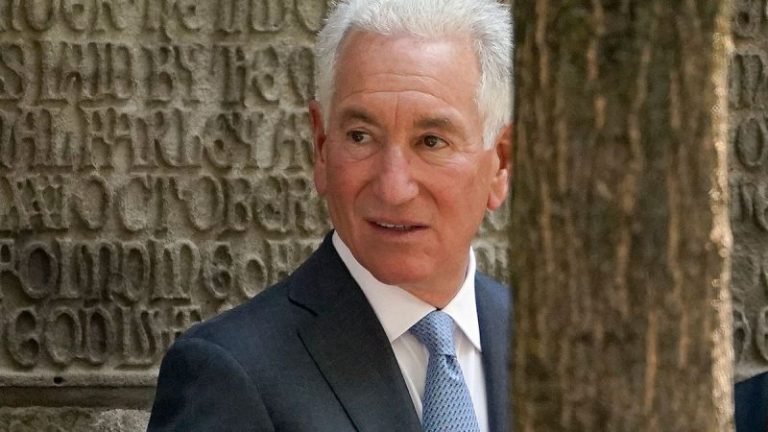
France has summoned American ambassador Charles Kushner to Paris, after the diplomat accused the country of not doing enough to combat antisemitism in a letter to French President Emmanuel Macron.

France’s foreign ministry said in a statement issued Sunday that Kushner’s allegations ‘are unacceptable,’ and announced it had summoned the U.S. diplomat to appear Monday at the French Ministry for Europe and Foreign Affairs.

Kushner, who is Jewish, wrote in the letter that antisemitic incidents in France have been fueled by French government statements about recognizing a Palestinian state.

‘Public statements haranguing Israel and gestures toward recognition of a Palestinian state embolden extremists, fuel violence, and endanger Jewish life in France. In today’s world, anti-Zionism is antisemitism – plain and simple,’ Kushner wrote.

Kushner further urged Macron ‘to act decisively: enforce hate-crime laws without exception, ensure the safety of Jewish schools, synagogues and businesses … and abandon steps that give legitimacy to Hamas and its allies.’

The French foreign ministry said in its statement that ‘France firmly rejects these allegations’ from Kushner, adding that French authorities have ‘fully mobilized’ to combat a rise in antisemitic acts since Hamas launched a deadly attack on Israel on Oct. 7, 2023. The ministry further deemed antisemitic acts ‘intolerable.’

The ministry said Kushner’s allegations violate international law and the obligation not to interfere with the internal affairs of another country, adding that they ‘also fall short of the quality of the transatlantic partnership between France and the United States and of the trust that must prevail between allies.’

The U.S. State Department, however, said it backed Kushner and his comments, department spokesperson Tommy Pigott said Sunday evening.

‘Ambassador Kushner is our U.S. government representative in France and is doing a great job advancing our national interests in that role,’ Pigott said.

Macron has been critical of Israeli Prime Minister Benjamin Netanyahu as the war in Gaza continues, while President Donald Trump has been a staunch supporter of the Israeli leader.

Kushner, a real estate developer, is the father of Jared Kushner, who is married to Trump’s daughter Ivanka Trump.

At the end of his first presidential term, Trump pardoned Charles Kushner, who pleaded guilty years earlier to tax evasion and making illegal campaign donations.

The Associated Press contributed to this report.

This post appeared first on FOX NEWS

Jeffrey Epstein did not have the same level of impact in the Senate as the House, but the discourse pushed by many congressional Democrats, and some Republicans, is unlikely to go away when lawmakers return next week.

And the level of Epstein hysteria in Congress may have had an unlikely impact in derailing Republicans’ push in the upper chamber to ram through President Donald Trump’s nominees.

Senate Republicans tried and failed to strike a deal with Senate Democrats to push through dozens of non-controversial nominees, particularly picks that made it through committee with bipartisan support.

Only Secretary of State Marco Rubio, who glided through the Senate unanimously earlier this year, has not been met by Democrats’ blockade.

Rules changes are in the works, but the avenue of using recess appointments, which requires the Senate to adjourn and the House to come into session for the president to elevate his picks on a temporary basis, was all but shot down after House Speaker Mike Johnson, R-La., sent lawmakers home early to sidestep the simmering push to release documents related to Epstein’s case.

‘When the House had an opportunity to take votes on the Epstein files, Speaker Johnson skedaddled out of town, launching the Epstein recess,’ Senate Minority Leader Chuck Schumer, D-N.Y., said last month. ‘This is not complicated.’  

‘After promising full transparency for years, every single time Trump, his administration, Republican leaders have had a chance to be transparent about the Epstein files, they’ve chosen to hide. The evasions, the delays, the excuses, they’re not just odd, they’re alarming.’

Many Republicans in the upper chamber agree that there should be more transparency, but caution that no materials should be released until the names or identifying traits of victims are combed through and kept safe.

Others question why Democrats suddenly care about the Epstein situation.

Sen. Roger Marshall, who supported turning to recess appointments to break Democrats’ log jam, told Fox News Digital that it didn’t ‘make sense to me, and this is part of their psychosis, that they are so separated from reality,’ to keep pushing the Epstein issue.

‘They had four years to do something with this, and it was just quite the opposite,’ the Kansas Republican said. ‘As I recall, just quite the opposite. It was almost like they were hiding something.’

‘My frustration is how they used it to circumvent the agenda of the American people… this is all they’ve got,’ he continued. ‘What else do they have? They don’t have a leader, they don’t have an agenda. They don’t have solutions. All they know is, if it’s President Trump, they’re not going to like it, very matter of fact, they’re going to hate it at the sacrifice of the entire country.’

Meanwhile, Epstein engulfed Washington once again on Friday, with the House Oversight Committee receiving a trove of related documents and the interview between Epstein accomplice Ghislaine Maxwell and Deputy Attorney General Todd Blanche becoming public.

When asked about the files eventually coming to light, Trump told reporters that he was in support of keeping them ‘totally open,’ and charged that Democrats were using Epstein as a smokescreen to detract from his administration’s work.

‘The whole Epstein thing is a Democrat hoax,’ he said. ‘We had the greatest six months, seven months in the history of the presidency, and the Democrats don’t know what to do, so they keep bringing up that stuff.’

This post appeared first on FOX NEWS

President Donald Trump on Sunday blasted the Senate’s ‘blue slip’ tradition, calling it an unconstitutional affront to his appointment power and alleging that his rights have ‘been completely taken away from me in States that have just one Democrat United States Senator.’

The president is referring to his ability to nominate judges and U.S. Attorneys, accusing the custom of essentially giving Democrats veto power over his nominees.

U.S. Sen. Chuck Grassley is defending the century-old process, saying he views it as a norm worth preserving for balance and state input.

Blue slips are a long-standing tradition but are not a codified law, and constitutionally he is only allowed the power to nominate while the Senate ultimately approves or rejects that nomination.

Trump’s frustration with the Senate’s blue slip practice isn’t new. In July, Trump called the tradition a ‘hoax’ and a ‘scam’ used by Democrats to block his nominees and demanded that Grassley stop supporting them.

‘Put simply, the president of the United States will never be permitted to appoint the person of his choice because of an ancient, and probably unconstitutional, ‘CUSTOM,’’ his post said.

In his first term, Trump was able to appoint 234 federal judges, including three Supreme Court justices and 54 appellate court judges. However, this term he has only confirmed five in the first seven months.

Trump went on in his post to suggest he was willing to apply pressure and that Grassley shouldn’t acquiesce. 

‘The only candidates that I can get confirmed for these most important positions are, believe it or not, Democrats! Chuck Grassley should allow strong Republican candidates to ascend to these very vital and powerful roles, and tell the Democrats, as they often tell us, to go to HELL!’ he wrote.

Trump’s comments come after U.S. District Judge Matthew Brann recently ruled that Alina Habba had been unlawfully serving as acting U.S. attorney for New Jersey beyond the 120-day limit allowed for temporary prosecutors and that the administration had been using an unusual maneuver to keep her in the role.

Trump’s pressure campaign could shape how many judicial vacancies he can realistically fill in the months ahead.

This post appeared first on FOX NEWS

Russian officials said Ukrainian drones ignited an overnight fire at a nuclear plant in Russia’s Kursk region.

The strikes coincided with Ukraine’s 34th Independence Day, marking its 1991 break from the Soviet Union.

Russia said the strikes hit several power facilities. The plant fire was quickly extinguished. A transformer was damaged, but radiation levels remained normal, and no injuries were reported.

The U.N. nuclear watchdog said it was aware of media reports of a transformer fire ‘due to military activity,’ but had not independently confirmed them.

Director General Rafael Mariano Grossi said ‘every nuclear facility must be protected at all times.’

A fire also broke out at the port of Ust-Luga in Russia’s Leningrad region, home to a major fuel export terminal.

The regional governor said about 10 Ukrainian drones were shot down in the area and that debris sparked the blaze.

Russia’s Defense Ministry said air defenses intercepted 95 Ukrainian drones over Russian territory Sunday.

Ukraine’s air force said Russia launched 72 drones and decoys and a cruise missile overnight; 48 drones were shot down or jammed.

President Volodymyr Zelenskyy spoke in a video from Kyiv’s Independence Square.

‘We are building a Ukraine that will have enough strength and power to live in security and peace,’ he said, calling for a ‘just peace.’

‘What our future will be is up to us alone,’ he said, while acknowledging the U.S.-Russia summit in Alaska earlier this month, which many worried would sideline Ukrainian interests.

‘And the world knows this. And the world respects this. It respects Ukraine. It perceives Ukraine as an equal,’ he said.

The Associated Press contributed to this report.

This post appeared first on FOX NEWS

Senate Republicans confirmed nearly 100 of President Donald Trump’s nominees, leapfrogging previous administrations and his own first term in the process in their sprint to finish off the year. 

The confirmation of 97 of Trump’s picks on Thursday with a 53-43 vote marked one of the final bits of floor action in the upper chamber following a blistering pace set out by Senate Majority Leader John Thune, R-S.D., once Republicans gained control of the Senate in January.

Senate Republicans overcame several obstacles throughout the year, including mending intra-party rifts to pass the president’s signature legislation, the ‘one big, beautiful bill,’ and reopening the government after the longest shutdown in history.

But it was confirming Trump’s nominees that proved near impossible within the confines of Senate rules, given that Senate Democrats laid out a blanket objection to even the lowest level positions throughout the government.

Senate Majority Whip John Barrasso, R-Wyo., noted that Republicans kicked off the year by confirming Trump’s Cabinet at a breakneck pace, but they soon slammed into a wall of ‘unprecedented obstruction from the Democratic minority.’

‘We began the year by confirming President Trump’s Cabinet faster than any Senate in modern history,’ Barrasso said. ‘And by week’s end, President Trump will have 417 nominees confirmed by the Senate this year. That’s far more than the 365 that Joe Biden had in his first year in office.’

In response, Republicans turned to the nuclear option in September and changed the vote threshold for confirming sub-Cabinet-level positions, and have since confirmed 417 of Trump’s picks.

Thune argued that Senate Democrats, led by Senate Minority Leader Chuck Schumer, D-N.Y., were engaging in ‘nothing more than petty politics,’ not allowing nominees through the typical fast-track processes, like voice votes or unanimous consent, to install low-level presidential nominations.

‘Democrats cannot deal with the fact that the American people elected President Trump, and so they’ve engaged in this pointless political obstruction in revenge,’ Thune said.

With the latest batch of confirmations, Senate Republicans have nearly cleared the backlog of nominees that over the summer had ballooned to nearly 150 picks awaiting lawmakers’ decision. Now, there are only 15 picks left to be confirmed.

Among the list of now-confirmed nominees are former Rep. Anthony D’Esposito, R-N.Y., to serve as inspector general at the Department of Labor and two picks for the National Labor Relations Board, James Murphy and Scott Mayer, along with several others in nearly every federal agency.

Lawmakers are set to tee up another nominee, Joshua Simmons, who Trump tapped to be the CIA’s special counsel, before the night is over. And they’re still working to move forward with a colossal spending package that ties five appropriations bills together. 

But some Senate Democrats are objecting to the minibus spending package, jeopardizing its chances of hitting the floor before lawmakers flee Capitol Hill. Conversations between Republicans and Democrats are ongoing, and could go deep into the night on a path forward. 

Thune, as he walked onto the Senate floor Thursday night, said that the plan was to at least knock out the nominees package first. 

‘We’ll see where it goes from there,’ he said.

This post appeared first on FOX NEWS

Japan announced that it has successfully retrieved mineral-rich seabed sediment from nearly 6,000 meters below the ocean’s surface near the remote island of Minamitorishima.

Officials say the technical milestone could help reduce the country’s dependence on China.

The work was carried out by deep-sea drilling vessel Chikyu, which collected the sediment as part of a government-backed test program aimed at assessing the feasibility of mining rare-earths-bearing mud from the deep ocean.

According to Japan’s Agency for Marine-Earth Science and Technology, Chikyu departed last month for Minamitorishima — about 1,950 kilometers southeast of Tokyo — and arrived at the test site on January 17.

The first batch of sediment was recovered on February 1.

“It is a first step toward industrialization of domestically produced rare earth in Japan,” Prime Minister Sanae Takaichi said in a statement posted on X. “We will make efforts toward achieving resilient supply chains for rare earths and other critical minerals to avoid overdependence on a particular country.”

Rare earths are essential in the high-performance magnets used in electric vehicles, wind turbines, electronics and defense systems. China currently dominates global production and processing of heavy rare earths, giving Beijing significant influence over prices and supply, a vulnerability that has increasingly worried world governments.

Japan’s latest test comes amid heightened geopolitical tension in the region.

Tokyo has grown more concerned about potential supply disruptions after China recently suspended exports of certain dual-use goods to Japan. While rare earths were not explicitly named, the move raised fears that Beijing could use its control over critical minerals as leverage as it has in the past.

Japanese researchers first identified rare-earth-rich mud deposits around Minamitorishima in the 2010s. Since then, the government has funded research, development and feasibility studies under its Strategic Innovation Promotion Program, focusing on whether those resources could support a domestic supply chain.

The current trial is designed to test not only the ability to retrieve sediment from extreme depths, but also the logistics of deep-sea mining. Officials cautioned that the work is still at an early stage. Details such as the concentration of rare earth elements in the retrieved mud and the overall recovery rates are still being analyzed. Moving toward commercial production would require demonstrating the entire process, from seabed extraction to separation and refining.

Japan plans to continue testing through mid-February. If the trials are successful, larger-scale demonstrations could follow, potentially including the construction of a dedicated processing facility on Minamitorishima later this decade.

US targets rare earths security with Project Vault

While Japan pushes deeper into rare earths supply diversification, developments in the US underscore how deeply critical minerals policies are shaping markets on both sides of the Pacific.

On Monday (February 2), the Trump administration rolled out Project Vault, a roughly US$12 billion strategic critical minerals reserve aimed at reducing US dependence on China for rare earths and other essential metals.

The initiative, anchored by a US$10 billion loan from the US Export‑Import Bank and about US$2 billion in private capital, is designed to stockpile strategic materials like rare earths, cobalt and lithium.

The program’s backers say the reserve will function much like America’s Strategic Petroleum Reserve, offering a buffer against global supply disruptions and insulating manufacturers from price shocks that have plagued markets during recent US-China trade tensions. Analysts say the effort signals an ongoing shift toward industrial policy that treats critical minerals as strategic assets, even as completion details and long‑term execution remain uncertain.

The financial markets responded quickly. Shares of Australian rare earths producer Lynas Rare Earths (ASX:LYC,OTCQX:LYSDY) rallied more than 3 percent on Tuesday (February 3), closing at AU$15.25, reflecting renewed investor interest tied to the policy news and the broader rare earth narrative.

Lynas’ recent movements come against a backdrop of broader gains in non‑Chinese mineral producers, as investors reposition around supply chain security and government policy support.

Rare earths stocks more generally saw upticks in the US market after the country’s critical minerals plan came into focus, with producers like MP Materials (NYSE:MP) and USA Rare Earth (NASDAQ:USAR) gaining on reports of increased government engagement in critical mineral sourcing.

Securities Disclosure: I, Giann Liguid, hold no direct investment interest in any company mentioned in this article.

This post appeared first on investingnews.com

~ Previously announced Light-Duty divestiture providing non-dilutive capital that strengthens Westport’s cash position~

Westport Fuel Systems Inc. (‘Westport’) (TSX:WPRT Nasdaq: WPRT), a supplier of alternative fuel systems and components for the global transportation industry, today announced that it has received $6.5 million (Euro 5.5 million) as part of its previously announced sale of the Light-Duty segment. The escrow payment was triggered under the terms of the sale agreement following the achievement of a defined post-closing milestone.

‘This milestone payment reflects continued progress in the post-closing steps of our Light-Duty business divestiture,’ said Elizabeth Owens, Chief Financial Officer at Westport. ‘While additional payments are expected as the transaction phases are completed, this interim payment strengthens our cash position today to support ongoing operations and our strategic initiatives. We remain disciplined in executing the remaining elements of the divestiture process along with our ongoing operational efficiency improvements.’

Additional information relating to the Light-Duty divestiture can be found in news releases posted on Westport’s website HERE.

About Westport
Westport is a technology and innovation company connecting synergistic technologies to power a cleaner tomorrow. As a leading supplier of affordable, alternative fuel, low-emissions transportation technologies, we design, manufacture, and supply advanced components and systems that enable the transition from traditional fuels to cleaner energy solutions.

Our proven technologies support a wide range of clean fuels – including natural gas, renewable natural gas, and hydrogen – empowering OEMs and commercial transportation industries to meet performance demands, regulatory requirements, and climate targets in a cost-effective way. With decades of expertise and a commitment to engineering excellence, Westport is helping our partners achieve sustainability goals—without compromising performance or cost-efficiency – making clean, scalable transport solutions a reality.

Westport is headquartered in Vancouver, Canada. For more information, visit Westport.com.

Cautionary Note Regarding Forward Looking Statements
This press release contains forward-looking statements, including statements regarding the receipt and timing of additional milestone-based payments related to the divestiture of our Light-Duty business, the impact of the Euro 5.5 million escrow release disclosed herein, expectations regarding our cash position, and our ongoing operational and strategic initiatives, including efficiency improvements. These forward-looking statements are neither promises nor guarantees but involve known and unknown risks and uncertainties and are based on both the views of management and assumptions that may cause actual results to differ materially from those expressed or implied. These risks, uncertainties and assumptions include those related to the completion of remaining post-closing obligations connected to the Light-Duty divestiture, the timing and satisfaction of conditions required for any additional milestone payments, general economic conditions of and access to the capital and debt markets, solvency, governmental policies and regulation, foreign exchange rate fluctuations, supply-chain factors and other risks and assumptions described in our most recent Annual Information Form and other filings with securities regulators. Readers should not place undue reliance on any such forward-looking statements, which speak only as of the date of publication. We disclaim any obligation to publicly update or revise such statements to reflect any change in our expectations or in events, conditions or circumstances on which any such statements may be based, or that may affect the likelihood that actual results will differ from those set forth in these forward looking statements except as required by National Instrument 51-102. The contents of any website, RSS feed or twitter account referenced in this press release are not incorporated by reference herein.

Contact Information
Westport Investor Relations
T: +1 604-718-2046


News Provided by GlobeNewswire via QuoteMedia

This post appeared first on investingnews.com

Senate Republicans gained a key ally in their quest to enshrine voter ID into law, but the lawmaker’s support comes with a condition.

A trio of lawmakers, led by Sen. Mike Lee, R-Utah, have undertaken a campaign to convince their colleagues to support the Safeguarding American Voter Eligibility (SAVE) America Act, working social media and closed-door meetings to secure the votes.

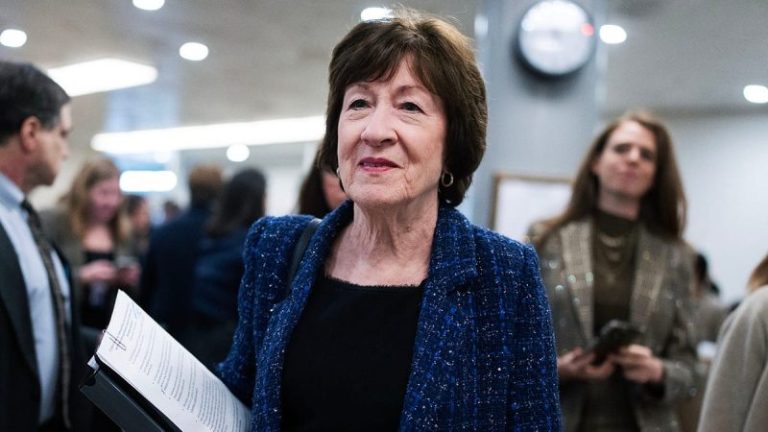
The campaign has proven successful, with the cohort gaining a crucial vote from Sen. Susan Collins, R-Maine, who announced that she would back the SAVE America Act, which recently passed the House. With Collins, Senate Republicans have at least a slim majority backing the act.

‘I support the version of the SAVE America Act that recently passed the House,’ Collins said in a statement first reported by the Maine Wire. ‘The law is clear that in this country only American citizens are eligible to vote in federal elections.’

‘In addition, having people provide an ID at the polls, just as they have to do before boarding an airplane, checking into a hotel, or buying an alcoholic beverage, is a simple reform that will improve the security of our federal elections and will help give people more confidence in the results,’ she continued.

Collins noted that she did not support the previous version of the bill, known simply as the SAVE Act, because it ‘would have required people to prove their citizenship every single time they cast a ballot.’

Her decision gives Lee and Senate Republicans the votes needed to clear a key procedural hurdle in the Senate.

‘We now have enough votes to pass a motion to proceed to the House-passed bill — even without any additional votes — with Vice President JD Vance breaking the tie,’ Lee said in a post on X.

That tie-breaking scenario would only present itself if Republicans turn to the standing, or talking, filibuster. It’s a move that Lee has been pushing his colleagues to make, and one that would require actual, physical debate over the bill. 

It’s the precursor to the current version of the filibuster, where the only hill lawmakers have to climb is acquiring 60 votes. Lee and other conservatives believe that if they turn to the standing filibuster, rather than the ‘zombie filibuster,’ they can barrel through Democratic resistance.

But some fear that turning to that tool could paralyze the Senate floor for weeks or even months, depending on Senate Democrats’ resolve.  

And Collins’ support is not enough to smash through the 60-vote Senate filibuster.

Complicating matters, Collins made clear that she does not support doing away with the filibuster, as do several other Senate Republicans, including Senate Majority Leader John Thune, R-S.D., who reiterated earlier this week that the GOP doesn’t have the votes to eliminate the legislative tool.

‘I oppose eliminating the legislative filibuster,’ Collins said. ‘The filibuster is an important protection for the rights of the minority party that requires Senators to work together in the best interest of the country.’

‘Removing that protection would, for example, allow a future Congress controlled by Democrats to pass provisions on anything they want — D.C. statehood, open borders, or packing the Supreme Court — with just a simple majority of Senators,’ she continued.

GOP senators Mitch McConnell of Kentucky, and Lisa Murkowski, of Alaska, remain the only Republicans who have not pledged support for the SAVE Act.

This post appeared first on FOX NEWS