
Author

admin

Browsing

A broad selloff in heavyweight tech stocks at the start of the week abruptly reversed after US Federal Reserve Chair Jerome Powell delivered a speech that bolstered expectations of a September interest rate cut.

Speaking at the Jackson Hole Economic Policy Symposium, Powell took a more dovish tone than investors may have been expecting, noting a slowdown in both worker supply and demand that could lead to employment risks.

He stated that the shifting balance of risks may warrant adjusting the Fed’s policy stance, stressing the need to balance both sides of the central bank’s dual mandate when goals are in tension.

This is a change from the Fed’s previous stance, which had been more focused on the need to keep rates high to fight inflation. Powell acknowledged the visible, though likely temporary, effects of tariffs, cautioning about the potential for persistent inflation, but signaled that the Fed is now also seriously considering the downside risks to employment.

A risk-on rally ensued, impacting various market sectors: the S&P 500 (INDEXSP:.INX), Dow Jones Industrial Average (INDEXDJX:.DJI) and Nasdaq Composite (INDEXNASDAQ:.IXIC) all closed up by more than 1.5 percent.

Bitcoin climbed above US$116,800, the Russell 2000 Index (INDEXRUSSELL:RUT) surged by 3.9 percent and 10 year treasury yields decreased by 0.07 percentage points to 4.26 percent. Traders now have higher expectations for a September rate cut, with probabilities exceeding 83 percent according to CME Group’s (NASDAQ:CME) FedWatch tool.

Here’s a look at the other drivers that shaped the tech sector this week.

1. Softbank to invest US$2 billion in Intel

Intel’s (NASDAQ:INTC) share price got a boost this week after a series of major announcements, beginning with SoftBank Group’s (TSE:9984) Monday (August 18) announcement that it plans invest US$2 billion in the company.

“Semiconductors are the foundation of every industry. For more than 50 years, Intel has been a trusted leader in innovation,’ said Masayoshi Son, chairman and CEO of SoftBank, in a press release.

‘This strategic investment reflects our belief that advanced semiconductor manufacturing and supply will further expand in the United States, with Intel playing a critical role,” he added.

Following that news, sources confirmed last week’s reports that the US government was seeking an equity stake in Intel in exchange for Biden-era Chips Act funding. Then, on Friday (August 22), US Secretary of Commerce Howard Lutnick announced that Intel had agreed to sell an 8.9 percent stake to the federal government, a move that will convert billions of dollars in previously awarded grants into a passive ownership stake.

Intel performance, July 28 to August 18, 2025.

Chart via Google Finance.

These developments have sent Intel’s market value soaring, with its share price increasing over 28 percent from the start of the month. Shares of Intel closed up on Friday at US$24.80.

2. Figure files for Nasdaq IPO

Figure Technology filed for an initial public offering (IPO) on the Nasdaq on Monday under the ticker symbol FIGR, joining a growing list of crypto-related companies looking to access public markets following the successful debut of stablecoin issuer Circle Internet Group (NYSE:CRCL).

Figure leverages blockchain to streamline financial services. The company’s filing reveals a strong financial performance, with profit reaching US$29 million in the first half of 2025, compared to a US$13 million loss in the same period last year. Its revenue for the first half of the year was US$191 million.

Goldman Sachs (NYSE:GS), Jefferies Financial Group (NYSE:JEF) and Bank of America Securities are acting as lead underwriters for the offering. The number of shares and price ranges are yet to be confirmed.

3. Google unveils new Pixel and more

Google (NASDAQ:GOOGL) made headlines this week with several new developments spanning its business lines.

The week kicked off with the tech giant announcing it has increased its stake in data center operator and Bitcoin miner TeraWulf (NASDAQ:WULF) to roughly 14 percent, worth US$3.2 billion.

The company also revealed a partnership with advanced nuclear startup Kairos Power and the Tennessee Valley Authority to power its data centers in Tennessee and Alabama using a new nuclear reactor.

On Wednesday (August 20), Google unveiled its latest Pixel smartphone, the Pixel 10, and accessories, with upgrades including a health coach powered by artificial intelligence (AI).

The week culminated with reports of a US$10 billion cloud computing agreement with Meta Platforms (NASDAQ:META) to provide the necessary servers and infrastructure for Meta’s expanding AI operations. The news sent Google’s share price up by over 3 percent and Meta’s up by over 2 percent.

4. NVIDIA tumbles amid China tension and chip sales

NVIDIA (NASDAQ:NVDA) experienced a volatile week, with its share price slipping in early trading on Monday following reports of renewed tensions with China. The downturn was triggered by news that Beijing will move to restrict sales of the H20 AI chip, the company’s most advanced product approved for the Chinese market.

China’s internet and telecom regulator, as well as the state planning agency, issued informal guidance to major tech companies, instructing them to halt new orders of the H20 chips, citing security concerns.

According to unnamed officials who spoke to the Financial Times, the decision was also influenced by “insulting” remarks from US Secretary of Commerce Howard Lutnick.

In response to the Chinese directive, NVIDIA has reportedly instructed its component suppliers, including Foxconn Technology (TPE:2354), Samsung Electronics (KRX:005930) and Amkor Technolgy (NASDAQ:AMKR), to suspend production of the H20 chip; the company also said it is working on a new AI chip for China.

Alphabet, NVIDIA, Palo Alto Networks and Meta Platforms performance, August 19 to 22, 2025.

Chart via Google Finance.

NVIDIA saw the greatest losses midweek, falling over 4 percent between Tuesday and Thursday. The company recovered some of its losses during Friday’s rally, but finished the week over one percent lower.

5. Palo Alto Networks rises on strong forecast

Palo Alto Networks (NASDAQ:PANW) surged over 7 percent on Tuesday after the cybersecurity company forecast that revenue and profit for its 2026 financial year will come in above estimates.

The company gave a strong performance in its 2025 fiscal year, with total revenue increasing 15 percent year-on-year to US$9.2 billion, fueled by an increase in revenue from newer, cloud-based security products. This growth occurred alongside a 24 percent rise in its future contracted business to US$15.8 billion.

The company also surpassed a US$10 billion revenue run rate while maintaining its “Rule-of-50” status — a measure of the balance between growth and profitability — for the fifth consecutive year.

Securities Disclosure: I, Meagen Seatter, hold no direct investment interest in any company mentioned in this article.
This post appeared first on investingnews.com

Statistics Canada released July’s consumer price index (CPI) data on Tuesday (August 19). The figures show that inflation decelerated in the month, posting a 1.7 percent year-on-year gain, down from the 1.9 percent recorded in June.

The most significant contributor to the fall was a 16.1 percent decline in gasoline prices from the same period last year.

Excluding the lower costs at the pumps, CPI remained steady at 2.5 percent, the same increase as May and June.

The national reporting agency released June’s mineral production survey on Wednesday (August 20).

The data indicates that production and shipments increased across the board, with copper production rising to 39.17 million kilograms, gold rising to 16,935 kilograms and silver increasing to 29,081 kilograms.

For shipments, copper increased to 45.96 million kilograms from 34.38 million kilograms, gold shipments rose to 18,554 kilograms from 16,725, and silver jumped to 31,391 kilograms from 27,614 kilograms.

On Thursday (August 21), Canadian Prime Minister Mark Carney had a phone call with US President Donald Trump. Although the prime minister’s office has provided few details, the two leaders reportedly had a “productive and wide-ranging conversation” about the current trade dispute, as well as economic and security relations.

Carney and Trump are expected to speak again soon.

South of the border, US Federal Reserve Chair Jerome Powell gave his speech at the Jackson Hole Economic Policy Symposium on Friday (August 22). In his remarks, he said that the Fed’s dual mandate goal is in balance, with the labor market remaining near maximum employment, while inflation has eased from post-pandemic highs.

However, he also said that “a shifting balance of risks may warrant adjusting our policy stance,” hinting at a near-term cut to the Fed’s benchmark interest rate. Expectations are high for a 25 basis point cut in September.

Markets and commodities react

Canadian equity markets were positive this week. The S&P/TSX Composite Index (INDEXTSI:OSPTX) was in record territory, closing the week up 1.44 percent to set at another all-time high of 28,333.13. The S&P/TSX Venture Composite Index (INDEXTSI:JX) did even better, climbing 2.45 percent to finish Friday at 803.61. The CSE Composite Index (CSE:CSECOMP) slumped mid-week but recovered on Friday to post a slight gain of 0.48 percent to 158.82.

US equity markets were mixed this week, but strong gains on Friday following Powell’s comments kept them in record high territory. The S&P 500 (INDEXSP:INX) was up 1.52 percent on Friday, but down by 0.16 percent over the past five days to 6,466.92, while the Nasdaq 100 (INDEXNASDAQ:NDX) rose 1.51 percent on Friday, but sank 1.33 percent on the week to 23,497.83 on Wednesday. Meanwhile, the Dow Jones Industrial Average (INDEXDJX:.DJI) was the sole weekly gainer, rising 1.89 percent on Friday and 1.04 percent on the week to post a new record high of 45,631.73.

The gold price was largely flat this week, but also surged on Friday after Powell hinted at a near-term rate cut, rising 1.11 percent on the week to US$3,373.21 per ounce by 4:00 p.m. EDT on Friday.

Silver saw similar movements, but ended the week with a more significant gain of 2.62 percent US$38.90 per ounce.

Copper saw little change again this week, posting a 0.22 percent decrease to US$4.52 per pound. The S&P GSCI (INDEXSP:SPGSCI) commodities index posted an increase of 1.92 percent by close on Friday, finishing at 545.11.

Top Canadian mining stocks this week

How did mining stocks perform against this backdrop?

Take a look at this week’s five best-performing Canadian mining stocks below.

Stock data for this article was retrieved at 4:00 p.m. EDT on Friday using TradingView’s stock screener. Only companies trading on the TSX, TSXV and CSE with market caps greater than C$10 million are included. Mineral companies within the non-energy minerals, energy minerals, process industry and producer manufacturing sectors were considered.

1. StrategX Elements (CSE:STGX)

Weekly gain: 63.64 percent
Market cap: C$11.57 million
Share price: C$0.18

StrategX Elements is advancing a portfolio of projects in the Northwest Territories and Nunavut, Canada.

Its most recent focus has been its Nagvaak project in Nunavut, which hosts a 6 kilometer mineralized zone with deposits of nickel, vanadium, cobalt, copper, silver and platinum-group metals.

On March 3, the company discovered a wide zone of high-grade graphite mineralization at Nagvaak, with one assay returning an average of 15 percent graphitic carbon over 32 meters, including an intersection of 22 percent graphitic carbon over 17 meters. StrategX said the hole also returned encouraging concentrations of other minerals, including nickel, copper and silver, supporting potential for a multi-mineral system.

The most recent news from the project came on July 30, when the company announced it was in the process of mobilizing for a 2025 drill program intended to delineate and validate the discoveries.

On Tuesday, the company completed a non-brokered private placement for 3.71 million shares, raising gross proceeds of C$296,960. It announced the placement on August 7 and said funds would be used for general working capital.

2. Max Resource (TSXV:MAX)

Weekly gain: 62.5 percent
Market cap: C$12.59 million
Share price: C$0.065

Max Resource is an explorer working to advance a portfolio of projects in Colombia.

Its Sierra Azul property is a district-scale copper and silver project consisting of 20 mining concessions covering an area of 188 square kilometers in northeastern Colombia.

The asset is covered by a May 2024 earn-in agreement with Freeport-McMoRan (NYSE:FCX), in which Freeport can receive up to an 80 percent stake by funding of C$50 million over 10 years. The site hosts multiple target areas with high-grade copper and silver mineralization, including a 20 kilometer red-bed style copper system at the AM district.

Max also owns the Florália hematite direct-shipping ore iron project located in the Minas Gerais region. The company completed the acquisition of the property in October 2024 from Jaguar Mining (TSX:JAG,OTCQX:JAGGF) for total cash considerations of US$1 million and 4 million performance share units, contingent upon reaching certain milestones. The site hosts hematite deposits with grades over 60 percent iron. Max intends to use a direct-shipping ore process to mine, crush and screen the ore before exporting the material directly to steel mills.

The company’s most recent announcement came this past Tuesday, when it secured the right to acquire Mora title, which lies adjacent to Aris Mining’s (TSX:ARIS,NYSEAMERICAN:ARMN) Marmato mine. The property hosts 40 historic workings with five active mines, with reserves with grades of 3.2 grams per metric ton (g/t) gold from 31.3 million metric tons and a resource of 9 million ounces of gold grading 3 g/t from 61.5 million metric tons.

3. Maple Gold Mines (TSXV:MGM)

Weekly gain: 50 percent
Market cap: C$45.6 million
Share price: C$0.105

Maple Gold Mines is a gold exploration company focused on the advancement of its Douay and Joutel projects located in the Abitibi greenstone belt in Québec, Canada.

The Douay project covers an area of 357 square kilometers. In a 2022 technical report, the company said the site hosts an indicated resource of 511,000 ounces of gold from 10 million metric tons with an average grade of 1.59 g/t gold, with an additional inferred resource of 2.53 million ounces from 76.7 million metric tons at 1.02 g/t.

Joutel is located directly south of Douay. The company announced on May 5 that it had staked an additional 128 mining claims, bringing the total land area at the property to 111 square kilometers from the original 39. The site hosts Agnico Eagle Mines’ (TSX:AEM,NYSE:AEM) past-producing Eagle-Telbel gold mine, which operated from 1974 to 1993. To date, the company has used 250,000 meters of historic drill results to create 3D models to aid in current exploration efforts.

The most recent news from Maple came on Wednesday when it announced a C$5 million non-brokered private placement led by strategic investor Michael Gentile. Additionally, the company reported that Agnico Eagle has indicated it intends to participate in the offering to maintain its pro rata ownership interest in Maple Gold.

The release also said that it has appointed Marc Legault and Chris Adams to the board of directors.

4. Capitan Silver (TSXV:CAPT)

Weekly gain: 40.45 percent
Market cap: C$113.2 million
Share price: C$1.25

Capitan Silver is an explorer focused on advancing silver and gold projects in Durango, Mexico.

The company’s flagship asset is the 100 percent owned Cruz de Plata project, in the heart of Mexico’s historic Penoles Mining District. The district is known for hosting significant silver mineralization and historic mining.

The Cruz de Plata project encompasses two historic silver mines — Jesus Maria and San Rafael — and the El Capitan oxide gold prospect, all within a 22.9 square kilometer land package.

To date, the company has completed 86 diamond drill holes totaling over 11,550 meters.

A 2020 technical report demonstratesd an inferred resource of 16.99 million ounces of contained silver and 331,000 ounces of contained gold from 28.3 million metric tons of ore with grades of 18.7 g/t silver and 0.36 g/t gold.

The most recent news from Capitan came on Friday, when it announced it executed a definitive agreement to acquire a strategic land package at its Cruz de Plata property from Fresnillo (LSE:FRES,OTC Pink:FNLPF) for total cash considerations of US$4 million. The transaction was initially announced in June.

The new parcel consists of seven mineral concessions covering an area of 2,171.4 hectares and increases its total holdings in the area by 85 percent and the surface expression of the silver and gold trend by 1.2 kilometers to the east.

5. District Metals (TSXV:DMX)

Weekly gain: 36.9 percent
Market cap: C$163.98 million
Share price: C$1.15

District Metals is a uranium exploration company focused on advancing a portfolio of assets in Sweden.

Its flagship Viken property covers an area of 38,657 hectares in Jämtland County and in addition to uranium hosts mineral deposits of vanadium, molybdenum, nickel, copper and zinc.

On June 13, District filed a technical report for the project’s updated mineral resource estimate. It shows an indicated resource of 176 million pounds of U3O8 from 456 million metric tons of ore with a grade of 175 parts per million (ppm) U3O8 and an inferred resource of 1.54 billion pounds of U3O8 from 4.3 billion metric tons with a grade of 161 ppm.

The company has also been advancing its Tomtebo-Stollberg zinc project in South-Central Sweden. The project is part of an October 2023 definitive agreement in which Boliden (STO:BOL) can earn an 85 percent interest in the property by spending C$10 million over four years and District can earn a 15 percent stake in Boliden’s Stollberg property.

Tomtebo covers an area of 5,144 hectares and hosts the historic Tomtebo and Lovas mines, while Stollberg covers an area of 5,180 hectares and is located near Boliden’s Garpengerg mine.

The most recent update from Tomtebo came on July 29, when District released assays from a five hole, 2,485 meter drill program conducted between February and April. One highlighted drill hole recorded multiple zones of silver and base metals mineralization, including 88 g/t silver, 3 percent zinc and 1.9 percent lead over 7.85 meters.

The company has not released any news since.

FAQs for Canadian mining stocks

What is the difference between the TSX and TSXV?

The TSX, or Toronto Stock Exchange, is used by senior companies with larger market caps, and the TSXV, or TSX Venture Exchange, is used by smaller-cap companies. Companies listed on the TSXV can graduate to the senior exchange.

How many mining companies are listed on the TSX and TSXV?

As of February 2025, there were 1,572 companies listed on the TSXV, 905 of which were mining companies. Comparatively, the TSX was home to 1,859 companies, with 181 of those being mining companies.

Together the TSX and TSXV host around 40 percent of the world’s public mining companies.

How much does it cost to list on the TSXV?

There are a variety of different fees that companies must pay to list on the TSXV, and according to the exchange, they can vary based on the transaction’s nature and complexity. The listing fee alone will most likely cost between C$10,000 to C$70,000. Accounting and auditing fees could rack up between C$25,000 and C$100,000, while legal fees are expected to be over C$75,000 and an underwriters’ commission may hit up to 12 percent.

The exchange lists a handful of other fees and expenses companies can expect, including but not limited to security commission and transfer agency fees, investor relations costs and director and officer liability insurance.

These are all just for the initial listing, of course. There are ongoing expenses once companies are trading, such as sustaining fees and additional listing fees, plus the costs associated with filing regular reports.

How do you trade on the TSXV?

Investors can trade on the TSXV the way they would trade stocks on any exchange. This means they can use a stock broker or an individual investment account to buy and sell shares of TSXV-listed companies during the exchange’s trading hours.

Article by Dean Belder; FAQs by Lauren Kelly.

Securities Disclosure: I, Dean Belder, hold no direct investment interest in any company mentioned in this article.
Securities Disclosure: I, Lauren Kelly, hold no direct investment interest in any company mentioned in this article.

This post appeared first on investingnews.com

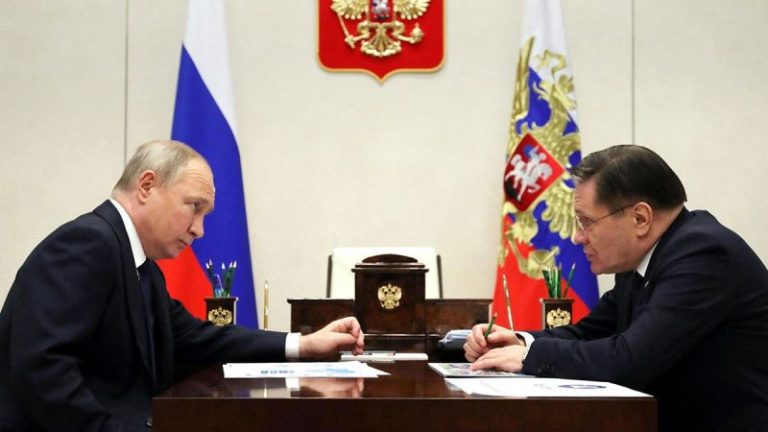
Russia’s top nuclear official this week said Moscow is facing ‘colossal threats’ and needs to update its nuclear capabilities.

Without directly naming where Russia’s chief nuclear threat is coming from, Director General of the State Atomic Energy Corporation Rosatom Alexei Likhachev said, ‘the current geopolitical situation, is a time of colossal threats to the existence of our country.’

‘Therefore, the nuclear shield, which is also a sword, is a guarantee of our sovereignty,’ he added, according to Russian state news agency RIA. ‘We understand today that the nuclear shield must only be improved in the coming years.’

The comments came less than a week after Russian President Vladimir Putin and President Donald Trump convened for a face-to-face meeting that marked the first time a U.S. leader has met with the Kremlin chief since Russia invaded Ukraine in 2022. 

While Trump and Putin appeared positive following the talks, little seemed to have been concretely accomplished in the meeting and hope surrounding a Russia-Ukraine ceasefire appeared to decline as the week progressed. 

It is unclear why Likhachev issued comments regarding Russia’s nuclear program at this time, and he did not detail what sort of updates he would be looking to make to Moscow’s ‘shield’ program. 

Trump issued similar comments earlier this year when in May he announced his plans to develop the ‘Golden Dome’ missile defense system — inspired by Israel’s ‘Iron Dome’ defense system — and which is expected to cost at least $175 billion.

Though security experts have been sounding the alarm when it comes to China’s escalating nuclear development, together Russia and the U.S. continue to possess 90% of the world’s nuclear arsenal.

Moscow continues to hold nearly 4,400 nuclear warheads, over 1,500 of which are ‘strategically deployed’ while the U.S. possesses more than 3,700 warheads in its stockpiles with 1,400 deployed, according to the Arms Control Association. 

While nuclear disarmament was the standing international goal following the end of the Cold War, the trajectory of this policy remains dubious as relations between Washington and Moscow have once again turned precarious amid Putin’s war in Ukraine, and his burgeoning relationship with Chinese President Xi Jinping. 

The New Start Treaty remains the only bilateral nuclear arms control agreement between the U.S. and Russia, and though it was extended in 2021, it is set to expire in February 2026. The future of the treaty – first signed in 2010 – also remains unclear as Moscow paused its participation in the agreement in 2023.

Putin said that this suspension meant he would continue to abide by stockpile limits under the treaty, but he would not allow for continued U.S. inspections. 

Fox News Digital could not immediately reach the International Atomic Energy Agency (IAEA) for comment as nations increasingly look to expand their nuclear capabilities just six months ahead of when the New Start Treaty is set to expire. 

This post appeared first on FOX NEWS

EXCLUSIVE – New Republican National Committee (RNC) chair Joe Gruters outlined his mission as he took over steering the GOP’s national party committee.

‘The midterms are ahead, where we must expand our major majority in the House, in the Senate, and continue electing Republicans nationwide,’ Gruters said as he addressed committee members moments after being unanimously elected chair at the RNC’s summer meeting, held this year in Atlanta, Georgia.

Gruters, a state senator and RNC committee member from Florida, who, until his election as chair on Friday, briefly served as the national party committee’s treasurer, is a longtime ally of President Donald Trump. His move to the RNC chairmanship cements Trump’s dominance over the GOP as it prepares for midterm battles next year.

And a month ago, Trump endorsed Gruters to succeed now-former RNC chair Michael Whatley, who stepped down as he runs for the Senate in battleground North Carolina in the blockbuster race to succeed retiring GOP Sen. Thom Tillis.

The ascension of Gruters to RNC chair is the latest sign of Trump’s complete control over the national party committee.

‘This is the president’s party. This is the president’s vision, overall. The party fully embraces the president,’ Gruters said as he and Whatley stood for an exclusive interview with Fox News Digital.

Whatley, who Trump picked to steer the RNC a year and a half ago, noted that ‘we have transformed the RNC, basically the way that President Trump has transformed the Republican Party.’

Gruters has been a major Trump supporter dating back to the president’s first campaign for the White House. Gruters served as Florida co-chair Trump’s 2016 campaign.

The Democratic National Committee, taking aim at Gruters following his election as chair, claimed that ‘Gruters and Trump will have a lot to bond over while they turn the Republican Party into even more of a personal propaganda machine for Trump.’

Republicans swept back to power last November, with Trump winning the White House, the GOP retaking control of the Senate and holding onto their fragile majority in the House.

But looking ahead to next year’s midterms, when the party in power traditionally faces political headwinds and loses House and Senate seats, the GOP will be defending their congressional majorities.

A key part of the RNC’s strategy going forward is Trump.

‘We’re gonna ride the president all the way to victory in the midterms, and we are going to win big,’ Gruters emphasized.

Asked about the top three items on his to-do list as he takes over as RNC chair, Gruters said, ‘number one, it’s still election integrity. That’s the most important thing, protecting the vote. And it’s about winning the midterms.’

‘It’s about going back to the fundamentals of registering voters and turning our voters out,’ the new chair added.

Gruters also highlighted Trump’s sweeping GOP-crafted domestic policy bill, which the Republican majorities in Congress passed this summer along near-party lines.

‘It’s our agenda,’ Whatley said in a Fox News Digital interview last month, as he pointed to the massive tax cuts and spending bill that Trump signed into law on July 4.

The measure is stuffed full of Trump’s 2024 campaign trail promises and second-term priorities on tax cuts, immigration, defense, energy and the debt limit. 

It includes extending the president’s signature 2017 tax cuts and eliminating taxes on tips and overtime pay. 

By making his first-term tax rates permanent – they were set to expire later this year – the bill will cut taxes by nearly $4.4 trillion over the next decade, according to analysis by the Congressional Budget Office and the Committee for a Responsible Federal Budget. 

The measure also provides billions for border security and codifies the president’s controversial immigration crackdown.

And the new law also restructures Medicaid – the almost 60-year-old federal program that provides health coverage to roughly 71 million low-income Americans. 

The changes to Medicaid, as well as cuts to food stamps, another one of the nation’s major safety net programs, were drafted in part as an offset to pay for extending Trump’s tax cuts. The measure includes a slew of new rules and regulations, including work requirements for many of those seeking Medicaid coverage.

Democrats, for months, have repeatedly blasted Republicans over the social safety net changes. And they’ve spotlighted a slew of national polls conducted both  before and after the measure was passed into law, that indicate the bill’s popularity in negative territory.

But Gruters sees the new law as campaign ammunition.

‘Every single Democrat in Congress voted for a tax increase on average everyday Americans,’ Gruters argued. ‘And that big, beautiful bill has something for every single American, whether you’re working class, whether you’re a small business owner, everybody benefits, and we’re going to be able to ride that bill all the way to victory.’

This post appeared first on FOX NEWS

On Saturday, Israeli tanks and troops began maneuvering ever closer to Gaza City’s outskirts in preparation for a full-scale offensive. Eyewitness accounts reported intensified shelling as Israel is moving toward what could be the defining battle of its war against Hamas terrorists: the capture of Gaza City.

Israel’s security cabinet approved the operation, known as Gideon’s Chariots B, and has deployed up to five IDF divisions toward the city’s outskirts—a highly significant mobilization. Thousands of reservists—some 60,000—have been called up.

John Spencer, chair of urban warfare studies at the Madison Policy Forum and executive director of the Urban Warfare Institute, told Fox News Digital the scale of this operation is unprecedented. ‘This will be a bigger challenge than anything the IDF has faced, arguably ever. It is the densest location in Gaza, the heart of Hamas’s stronghold. And you don’t really know what the tunnels are until you get into them.’

Spencer said that ‘Hamas built semi-circles of defenses oriented at Israel. But the IDF has shown creativity in maneuvering around obstacles.’ Israel plans to send more combat power into Gaza City than it has deployed across the entire Strip thus far. ‘If your goal is to clear Gaza City of Hamas’s military capabilities and search for hostages, you need that scale,’ he said.

Gadi Shamni, former commander of the Gaza Division and ex-head of IDF Central Command, told Fox News Digital, ‘It is a crowded city with refugee camps, dense neighborhoods, high-rises and a highly developed underground. People say the IDF controls above and below ground, but in the last campaign we saw that wasn’t always true. Even when you destroy tunnels, Hamas can rebuild them quickly. The longer you stay with more forces, the more opportunities you create for the other side to attack.’

A former senior Israeli security official, speaking on the condition of anonymity, told Fox News Digital, ‘The IDF can militarily conquer Gaza, but the costs will be immense on both sides. The IDF will fight with a method of ‘destroy everything first’—air force bombs, massive charges, detonating streets from afar, wiping out entire areas and advancing slowly.

‘The IDF has gained enormous experience over the past two years and will use those tactics in this battle. … You are strong, the enemy is weak, and you have patience. Even the weather is on Israel’s side, with winter not arriving until January.’

The tunnels remain the most formidable element of Hamas’s defense. Unlike ISIS terrorists in Mosul, Spencer said, Hamas has built an underground tunnel network that allows commanders and fighters to move between positions avoid strikes, and conceal hostages. ‘The IDF that will go into Gaza City is not the IDF of 2023,’ Spencer said, pointing to rapid adaptations in the use of drones, robots, and specialized units for tunnel warfare. ‘They’ve learned so much. But this will still be slow, very careful, and costly.’

To illustrate the scale, Spencer pointed to the 2004 battle for Fallujah in Iraq. ‘It took the Marine Corps about two weeks to clear Fallujah—every single home, building, shop. About 68,000 structures were cleared, as if somebody physically looked in them,’ he said. ‘If all five of these [IDF] divisions were doing that, absolutely, you could get it done in a few months. But the enemy always gets a vote. You can’t rush to failure.’

The former Israeli senior security official described the operation as ‘telescopic—very slow, with pistons working one by one. This pace also gives Hamas the chance at every stage to try to cut a deal.’

On the fate of hostages possibly held in Gaza City, the official was blunt: ‘Some of the hostages will die. I wouldn’t be surprised if more brigades are brought in—the IDF is using immense ground power to seize urban terrain.’

Shamni also warned Hamas may relocate hostages, 50 hostages, of whom 20 are still believed to be alive, into combat zones to deter strikes—a tactic he said the IDF would be reluctant to engage for fear of harming captives, a conflict between military necessity and core values.

Shamni highlighted a particularly fraught dilemma: evacuating civilians. ‘You don’t know who will leave, how many will leave, how they’ll react—or whether Hamas will even allow them to leave,’ he said. ‘I assume many will not evacuate, and then you face the hard dilemma of fighting in a place full of noncombatants.’

Spencer added that history shows around 10% of civilians stay behind. ‘Even 10% of a million is 100,000 people,’ he said.

Shamni forecast a protracted operation: ‘It could take months. Two months might seize the surface, but then you still have to clear tunnels. It will cost many lives—including civilians. The worst-case scenario is that no hostages are found alive or dead because of the destruction.’

Shamni, who also served as Israel’s military attaché in Washington, warned that the dual goals of defeating Hamas and returning hostages are contradictory, risking years of drawn-out fighting. 

Spencer, however, called the decision to press forward a ‘calculated risk,’ explaining that while military action carries dangers, ‘you weigh the risk of Hamas killing the hostages against the certainty that they’re being starved and tortured. Military pressure is the last resort. Without conquering Gaza City, Hamas will continue to hold a sanctuary.’


This post appeared first on FOX NEWS

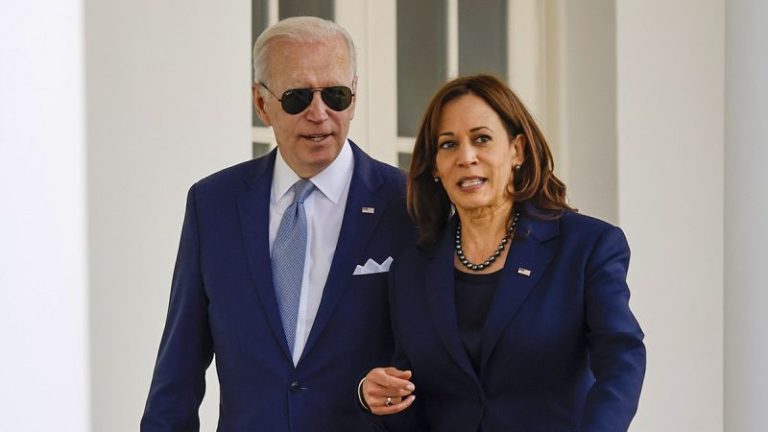
As the 11th member of former President Joe Biden’s administration appeared before the House Oversight Committee this week, Fox News Digital asked senators on Capitol Hill if former Vice President Kamala Harris should testify next. 

‘I think they should take her behind closed doors and figure out what she knows and what she’s willing to talk about,’ Sen. Roger Marshall, R-Kan., said. 

House Oversight Committee Chair James Comer, R-Ky., is leading the investigation into the alleged cover-up of Biden’s cognitive decline and use of the autopen during his tenure as president. 

Comer said on Fox News’ ‘The Ingraham Angle’ last month that the ‘odds’ of Harris getting a subpoena to appear before the House Oversight Committee are ‘very high.’ 

While Marshall told Fox News Digital that Harris should testify, he admitted, ‘I don’t think you need her testimony to show Americans what I knew as a physician a long time ago, that Joe Biden had a neurodegenerative disease of some sort.’

Marshall has a medical degree from the University of Kansas and practiced medicine for more than 25 years before running for public office. 

‘All you had to do is look at his very fixed, flat face,’ Marshall explained. ‘Look at his gait, the way he walked. He had a shuffled walk. He didn’t move his arms, hardly at all. When he talked, it was very monotone, a very soft voice. He had malingering thought processes. I don’t think it took much to figure that out.’

After listing the former president’s symptoms, the Kansas senator lamented that Biden ‘turned weakness into war,’ creating a national security threat. 

During Biden’s presidency, the United States’ withdrawal from Afghanistan resulted in the death of 13 U.S. soldiers, Russia invaded Ukraine and Hamas attacked Israel, triggering the ongoing war in Gaza.

But as Republicans demand transparency, Sen. Richard Blumenthal, D-Conn., told Fox News Digital he is far more worried about the ‘challenges we face right now,’ particularly on the economy, inflation and the effect of Trump’s tariff policies. 

Meanwhile, Sen. John Hoeven R-N.D., defended the accountability argument, telling Fox News Digital that Americans ‘always want more information and more transparency.’

‘If you’re involved in an administration, you [should] always be willing to come in and say what you did and why you did it, and you know what it’s all about. I mean, that’s how it works, and that’s what the American people want,’ he said. 

Fox News Digital reached out to Biden and Harris for comment but did not immediately receive a response. 

Fox News Digital’s Elizabeth Elkind contributed to this report. 

This post appeared first on FOX NEWS

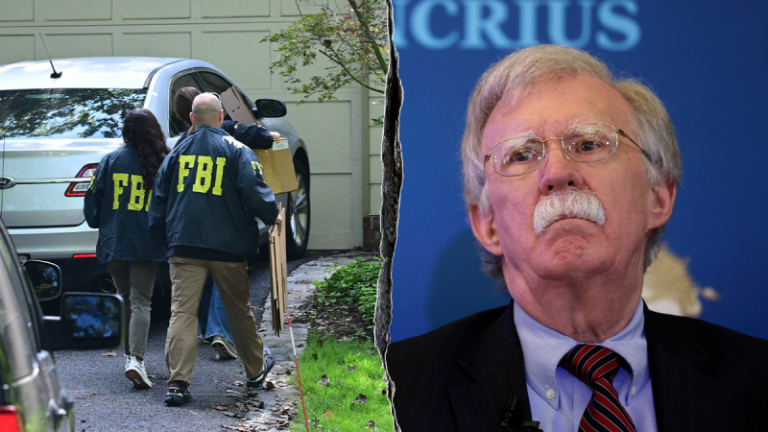
FBI agents raided the Bethesda, Md., home of former national security adviser John Bolton on Friday morning, marking a new tension point in his difficult relationship with President Donald Trump. Agents also raided Bolton’s D.C. office.

The reason behind the raids was reportedly linked to a probe of allegations that Bolton sent classified documents to his family from a private email server while working at the White House, according to the New York Post. The Post cited a Trump administration official who said FBI Director Kash Patel ordered the raid.

The outlet also reported that yet-to-be-unsealed search warrants reference a controversy over his memoir to establish a pattern of behavior. However, a senior U.S. official told the Post the probe was a ‘clean break’ from the investigation regarding Bolton’s book.

Shortly after the raid began, Patel wrote on X that ‘no one is above the law… [FBI] agents on a mission.’

FBI Deputy Director Dan Bongino shared the post and wrote, ‘Public corruption will not be tolerated.’

Bolton, who served in Trump’s first administration, has not been arrested or taken into custody. Trump revoked his security clearance and Secret Service detail in January 2025.

Trump was asked about the raid on Friday and said he did not know about it ahead of time, claiming he saw it on television. The president then made clear his disdain for his former national security adviser.

‘I’m not a fan of John Bolton. He’s a real lowlife,’ Trump told reporters. He went on to call Bolton ‘not a smart guy’ and said ‘he could be very unpatriotic.’

The president also said Bolton was ‘a very quiet person except on television if he can say something bad about Trump.’

Vice President JD Vance told ‘Meet the Press’ on Friday that ‘we’re in the very early stages of an ongoing investigation into John Bolton.’ Vance denied Bolton was being targeted for criticizing Trump.

A source familiar with the Bolton raid and the evidence used to justify it told Fox News Digital that ‘Bolton really had some nerve to attack Trump over his handling of classified information,’ but would not give more details.

Bolton criticized Trump’s handling of classified documents after the FBI raided Mar-a-Lago in 2022. Trump was later indicted on 37 felony counts, which expanded to 40 before the case was dropped in July 2024.

During Trump’s first administration, a probe into classified documents was launched but later shut down by the Biden administration. The Justice Department argued that Bolton’s 2020 memoir, ‘The Room Where it Happened,’ contained classified material and attempted to block it from being published. 

The FBI and Bolton’s office declined to comment on the matter.

Reporting contributed by Axios and Fox News’ Michael Dorgan, David Spunt, Breanne Deppisch, Emma Woodhead and Brooke Singman.

This post appeared first on FOX NEWS

The energy revolution is here to stay, and electric vehicles (EVs) have become part of the mainstream narrative.

The shift toward green energy is gathering momentum, with governments adding more incentives to accelerate this transition. Increasing EV sales are good news for battery metals investors, as EVs are significant drivers for commodities such as lithium, cobalt and graphite, key components in the cathodes of EV batteries. Additionally, interest in EV options outside of Tesla is heating up, and Chinese EVs are increasing in popularity outside of the country.

Read on to learn about the top US and Chinese EV stocks, and the batteries and battery suppliers they’re using for their current and upcoming models.

1. Tesla (NASDAQ:TSLA)

Market cap: US$1.62 trillion

First on the list is EV maker Tesla, which has brought significant attention to the EV narrative.

The company’s story starts in 2003, when it was founded by Martin Eberhard and Marc Tarpenning. Elon Musk invested in the company in 2004, becoming the largest shareholder, and eventually became its CEO in 2008. A well-known story for battery metals investors, the company made headlines in 2014 when it broke ground at its first gigafactory in Nevada, US, an unthinkable proposition at the time.

Outside of the US, Tesla also has gigafactories in China and Germany. Tesla’s massive Shanghai Gigafactory was the company’s first auto plant outside of the United States. The company produces Model 3s and Model Ys for China and global export.

Tesla uses a range of different lithium-ion batteries in its models. In partnership with Panasonic (TSE:6752), at its Nevada gigafactory Tesla produces batteries with nickel-cobalt-aluminum (NCA) cathodes — different from most of Tesla’s competitors, which use a nickel-cobalt-manganese (NCM) mix.

Tesla announced in 2021 that it was changing the battery chemistry for its standard-range vehicles to lithium-iron-phosphate (LFP) cathodes, which are cobalt- and nickel-free. China’s largest battery maker, CATL (SZSE:300750), is a key supplier of LFP batteries for Tesla, particularly for the Shanghai and Berlin gigafactories.

Changes in US tariffs on EVs made or sourced in China have impacted Tesla’s business, leading the company to try diversifying its supply chain. Last year, South Korea’s LG Energy Solution (KRX:373220) signed a US$4.3 billion deal to supply Tesla with LFP batteries from its factory in Michigan, US, starting in 2027.

On the other hand, Tesla’s prime EV position got a boost in the first quarter of 2026 Canada announced it would allow imports of up to 49,000 Chinese-made EVs per year, and lowered tariffs on them from 100 to 6.1 percent. Half of that quota could apply to Tesla’s EVs made in Shanghai, while the other half is dedicated to EVs priced under C$35,000.

Image via Tesla.

2. BYD Company (OTCPK:BYDDY,HKEX:1211)

Market cap: US$116 billion

Leading Chinese EV maker BYD Company was founded in 1995 and is a top producer of several kinds of rechargeable batteries, including nickel-metal hydride batteries and NCM batteries. BYD has a vertically integrated supply chain, from mineral battery cells to battery packs.

Backed by Warren Buffett, in 2020 BYD officially launched its Blade battery, a less bulky LFP battery. The following year, the company announced that it would use the Blade LFP batteries for all of its pure electric models.

In April 2025, BYD released two new EV models, the Han L sedan and Tang L SUV, based on its new Super e-platform, which allows users to add 400 kilometers (248 miles) of range in five minutes of charging, and charge to 100 percent in 20 minutes.

BYD’s range of models include low-cost options such as the Seagull and Dolphin. Because of this, the company stands to benefit from Canada’s decision to allow imports and slash tariffs for up to 49,000 Chinese EVs per year, half of which must be under C$35,000.

For the first time, in 2025, BYD overtook Tesla as the world’s biggest EV seller in terms of annual sales. BYD sold 2.25 million units for the year, up 28 percent over 2024, compared to the 1.64 million units sold by Tesla in 2025, down 9 percent from the previous year.

Image via BYD.

3. Rivian Automotive (NASDAQ:RIVN)

Market cap: US$18.08 billion

Founded in 2009 in Florida, US, Rivian designs, develops and manufactures EVs and accessories and sells them directly to customers in the consumer and commercial markets.

The US company is based in Irvine, California, and manufactures its vehicles in Illinois.

The carmaker announced plans to use cells made with LFP chemistries for its standard-level vehicles in 2022, and in 2023 announced plans to switch its entire lineup to this type of battery. South Korea’s Samsung SDI (KRX:006400) and LG Energy Solutions are Rivian’s current battery suppliers.

Last year, the company revealed e-scooters to market through its spinoff electric micromobility company named Also. The scooters are expected to hit the market in mid-2026. It has plans to launch a three-wheel EV line as well.

In early January 2026, Rivian reached a major milestone toward full-scale production of its new R2 with the manufacturing of validation builds at its plant in Illinois. This latest reiteration will be priced starting at US$45,000, with first deliveries slated for the first half of this year. Rivian sold 42,247 EVs in 2025.

Image via Rivian.

4. XPeng (NYSE:XPEV)

Market cap: US$17.49 billion

Xpeng is a Chinese EV maker focused on smart EVs. The company’s main manufacturing plant is located in Guangdong province.

Xpeng now uses LFP batteries for 99 percent of its EV lineup. CALB (HKEX:3931) is Xpeng’s largest battery supplier, and its other suppliers include CATL, BYD, Sunwoda Electronic (SZSE:300207) and EVE Energy (SZSE:300014).

Last year, the company showcased its 2025 XPENG X9 flagship vehicle, with self-driving capabilities powered by Xpeng’s self-developed Turing AI chip. At the same time, Xpeng unveiled its AEROHT Land Aircraft Carrier, slated for mass production in 2026. The company bills it as ‘the world’s first modular flying car.’

XPeng’s 2025 EV sales reached 429,445 units. The company has ambitious goals for 2026, aiming to sell between 550,000 and 600,000 EVs during the year. XPeng is launching four new SUV models this year: the XPeng G01 and XPeng G02, as well as two models from the Mona series, the D02 and D03.

Image via Xpeng.

5. Li Auto (NASDAQ:LI)

Market cap: US$17.03 billion

Li Auto bills itself as a pioneer in successfully commercializing extended-range EVs in China, and is a leader in China’s full-size and large SUV markets. The company started volume production of its first model, Li ONE, in November 2019, and launched its initial public offering in July 2020, raising US$1.1 billion.

Li Auto has battery supply agreements with CATL, Sunwoda Electronic and SVOLT Energy Technology.

One of the main differences between Li Auto and the other companies on this list is that Li Auto’s models allow battery pack charging with electricity or gas. The company calls this design extended-range EV technology.

Li Auto launched its first all-electric car, Li MEGA MPV, in 2024. In 2025, the company followed that with its second all-electric vehicle, the i8 SUV, which uses an NMC battery and maxes out at 536 horsepower. Li Auto also broadened its markets last year, launching three core models (Li L9, Li L7 and Li L6) in Egypt, Kazakhstan and Azerbaijan.

Li Auto achieved a significant milestone in 2025, with annual sales surpassing 1.5 million units. This made it “the first among China’s new EV startups to reach that mark,” according to the company’s Chairman and CEO Li Xiang.

Image via Li Auto.

6. NIO (NYSE:NIO)

Market cap: US$10.36 billion

Founded in 2014, Chinese EV maker NIO designs, jointly manufactures and sells smart and connected premium EVs.

NIO’s strategy includes its battery-as-a-service endeavor, a subscription purchasing model where buyers lease vehicle batteries. The company says the idea behind this move is to reduce vehicle costs. The service is run by a battery asset company, with NIO and leading battery maker CATL owning a stake. CATL is already NIO’s sole battery supplier.

The company has built battery swap stations that allow drivers with low batteries to pull up and have it swapped for a full battery within minutes. Its fifth generation swap stations are expected to roll out starting in 2026.

In September 2021, the company introduced a standard-range hybrid-cell battery that combines NCM and LFP cells. NIO is also offering the world’s longest-range semi-solid-state battery on a rental basis through its partnership with Beijing WeLion New Energy Technology.

In 2024, NIO launched its newest EV brand, Firefly, in China. The first model in this brand is a small car for city dwellers who struggle with finding convenient parking, as it can locate available spots and use parking assist to maneuver into them. Drivers are also be able to access the above-mentioned battery swap program.

NIO reported 2025 vehicle sales of 326,028 units, an increase of 46.9 percent year-over-year. Launched in September 2025, its flagship ES8 SUV became the fastest-selling EV in China in its price category by the end of the year. The company plans to bring three new large SUV models to the market in 2026, and expand into Australia and New Zealand in the second half of the year.

Image via Nio Newsroom.

7. VinFast Auto (NASDAQ:VFS)

Market cap: US$7.72 billion

VinFast Auto, Vietnam’s first global automotive manufacturer, is a multinational EV manufacturer producing both affordable and luxury EVs. The company’s lineup also includes an electric pickup truck known as the VF Wild.

VinFast has showrooms and service centers in North America, including in 14 US states and the Canadian provinces of Ontario, British Columbia and Québec.

Vietnam is the EV maker’s largest market, and it significantly expanded its footprint in Asia in 2025, adding numerous showrooms in the Philippines, Indonesia and India. Last year, the company brought a new manufacturing facility online in India and opened its first Indonesian assembly plant in December. It is scheduled to scale up production and launch new models, including electric two-wheelers, in 2026.

Image via VinFast.

8. Zhejiang Leapmotor Technology (OTC Pink:ZJLMF,HKEX:9863)

Market cap: US$7.58 billion

The Leapmotor brand first launched in China in 2017. The EV manufacturer designs and supplies its own battery packs for its vehicles.

Major auto maker Stellantis (NYSE:STLA) became a 20 percent shareholder in late 2023. The following year, the two entities formed the 51/49 joint venture company Leapmotor International, in which Stellantis holds the controlling interest. The joint venture is focused on selling and manufacturing Leapmotor vehicles outside of China.

The company’s current models in the market include seven seater SUV C16, mid-size crossover SUV C10, smart electric SUV C11, smart-tech C11 SUV, compact SUV B10, the new B01 sedan and T03 city EV.

Leapmotor unveiled its B01 electric sedan in April 2025. The vehicle is powered by LFP batteries from Gotion High-tech, CALB and Zenergy.

At the 2026 Brussels Motor Show, Leapmotor showcased the three EVs it has launched in Europe since expanding into the market: the B03X compact electric SUV, the B05 hatchback and the B10 range-extended electric vehicle.

Image via Wikimedia Commons.

9. Lucid Group (NASDAQ:LCID)

Market cap: US$3.59 billion

Headquartered in California, Lucid Group was founded in 2007 and produces luxury electric cars. The company’s first car, Lucid Air, is a state-of-the-art luxury sedan that is being produced at its US factory in Casa Grande, Arizona.

In April 2025, Lucid announced the acquisition of select Arizona-based facilities and assets of battery and fuel-cell EV company Nikola Corporation.

Lucid Motors uses high-performance Panasonic battery cells for its long-range electric vehicles. These cells are currently manufactured in Japan, but the company is transitioning to using batteries from Panasonic’s new facility in Kansas by mid-2026 to avoid Trump’s import tariffs.

Lucid plans to launch a full-scale manufacturing facility in Saudi Arabia in 2026, with an annual capacity of 150,000 vehicles by 2029.

The company’s Gravity SUV was named Esquire’s 2026 Car of the Year.

Image via Lucid.

10. Polestar Automotive (NASDAQ:PSNY)

Market cap: US$1.41 billion

Sweden-based electric performance car brand Polestar is owned by Geely Automobile Holdings (OTC Pink:GELYF,HKEX:80175). Up until early 2024, Volvo Cars was also a part owner, but it decided to hand Polestar entirely over to Geely to operate as an independent brand, attributing the move to slowing global demand for EVs.

Polestar’s current lineup includes the five door liftback Polestar 2, the luxury performance Polestar 3 SUV, the Polestar 4 compact coupe SUV and the Polestar 5 performance sedan, the last of which was released in 2025. The company is also planning the Polestar 7 compact SUV and the Polestar 6 roadster.

Polestar has experienced some difficulties in the last couple years, including software challenges in 2023 that caused delays in the rollout of the Polestar 3. In 2024, the company recorded a 15 percent drop in deliveries.

The EV maker’s bad luck seems to be turning around in 2025. Polestar sold a record 60,119 vehicles during the year, a 34 percent improvement over 2024.

This is in part thanks to Polestar’s efforts to capitalize on Tesla’s struggles with Musk and its brand image. In February 2025, Polestar began offering Tesla owners in the US and Canada discounts of up to $20,000 on new leases of its models. Its Q1 2025 sales jumped 76 percent year over year.

Image via SlashGear.

Securities Disclosure: I, Melissa Pistilli, hold no direct investment interest in any company mentioned in this article.
This post appeared first on investingnews.com

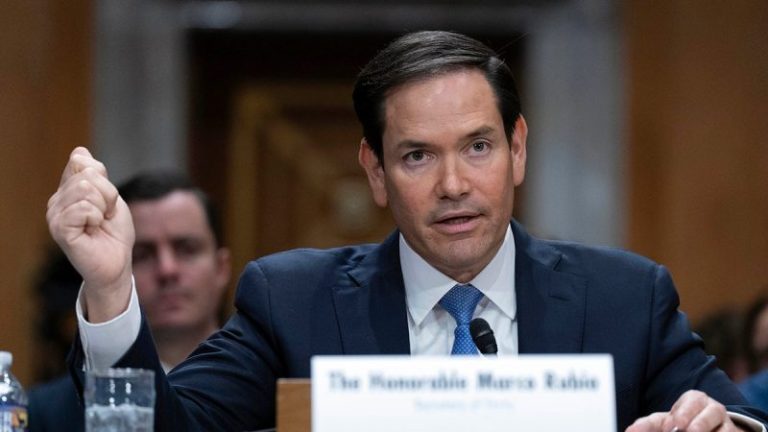
Those worried about shuttering the U.S. Agency for International Development (USAID) were wrong, according to Secretary of State Marco Rubio, who touted the agency’s record in delivering support in the wake of Hurricane Melissa that ravaged the Caribbean in October. 

Although USAID historically functioned as an independent agency to deliver aid to impoverished countries and development assistance, the State Department announced in March that it would absorb remaining operations and functions in an effort to streamline operations to deliver foreign assistance amid concerns that USAID did not advance U.S. core interests. The move resulted in cuts for thousands of USAID employees. 

Critics including Sen. Bernie Sanders, I-Vt., said that upending the agency would ‘lead to millions of preventable deaths,’ while a group of House Democrats wrote a letter to President Donald Trump in February as USAID cuts got underway that changes would lead to increased maternal and child mortality. 

But Rubio now claims those skeptics’ fears were unfounded. 

‘Alarmists in politics and the media forecasted that the closure of USAID would result in catastrophe. Now, nearly a year later, they’ve been proven wrong,’ Rubio said in a statement to Fox News Digital. ‘The State Department has realigned foreign assistance with the interests of the American people, streamlined disaster response capabilities, and leveraged the ingenuity of American companies to save lives.’ 

Specifically, Rubio pointed to the assistance the State Department provided in the aftermath of Hurricane Melissa, which hit Jamaica as a Category 5 hurricane and was the strongest to strike Kingston since the island started tracking its storms 174 years ago.

The State Department deployed a regional disaster assistance response team (DART) and activated U.S.-based urban search and rescue (USAR) teams to support response efforts in the region as part of recovery efforts. 

Likewise, the State Department allocated roughly $1 million to go toward administering food and other resources to those in need, using predesignated supplies housed in 12 different warehouses across the region. Ultimately, the State Department coordinated with the United Nations World Food Program to distribute 5,000 family food packs to families in Jamaica. 

‘This new era of foreign assistance eliminates extreme ideological projects that previous administrations forced the American people to subsidize, cuts out the wasteful NGO industrial complex, and puts the American people first,’ Rubio said. 

Sanders’ office did not respond to a request for comment from Fox News Digital. 

The Department of Government Efficiency (DOGE) targeted USAID in its push to eliminate wasteful spending during a review earlier in 2025. The agency attracted scrutiny for a series of funding choices, including allocating $1.5 million for a program that sought to ‘advance diversity, equity and inclusion in Serbia’s workplaces and business communities’ and a $70,000 program for a ‘DEI musical’ in Ireland.

USAID was officially closed down in July — a move that attracted criticism from Democrats and former Presidents George W. Bush and Barack Obama. 

‘Gutting USAID is a travesty, and it’s a tragedy,’ Obama said in a video that was shown to departing USAID employees, according to The Associated Press. ‘Because it’s some of the most important work happening anywhere in the world.’

Obama labeled the decision to upend USAID ‘a colossal mistake,’ and said, ‘sooner or later, leaders on both sides of the aisle will realize how much you are needed.’

Meanwhile, the State Department is undergoing its own transformation. In addition to absorbing USAID, the State Department has undergone a massive overhaul as part of the largest restructuring for the agency since the Cold War. 

Additionally, it rolled out an America First Global Health Strategy in September to deliver health aid worldwide by working directly with recipient country’s governments instead of through non-governmental organizations and other aid programs.

In December, Kenya became the first country to sign a five-year, $2.5 billion Health Cooperation Framework agreement with the U.S. in alignment with this new strategy, which also aims for recipient countries to eventually bear more responsibility for their own health expenditures. 

Fox News’ Emma Colton contributed to this report. 

This post appeared first on FOX NEWS

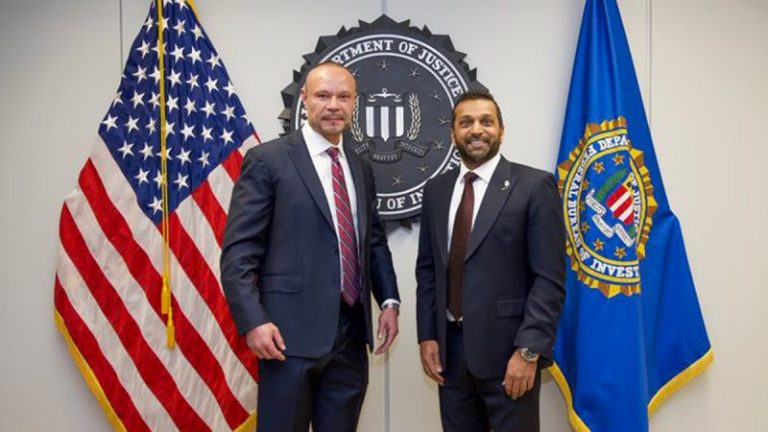
Deputy FBI Director Dan Bongino, who announced on Wednesday that he will be departing from his role in January, later replied to FBI Director Kash Patel, who gave him a glowing review.

‘Dan is the best partner I could’ve asked for in helping restore this FBI. He brought critical reforms to make the organization more efficient, led the successful Summer Heat op, served as the people’s voice for transparency, and delivered major breakthroughs in long unsolved cases like the pipe bomb investigation. And that’s only a small part of the work he went about every single day delivering for America,’ Patel said in a post on X.

‘He not only completed his mission – he far exceeded it. We will miss him but I’m thankful he accepted the call to serve. Our country is better and safer for it,’ Patel added.

Bongino replied, thanking Patel.

‘Thank you my friend, it’s been the honor of a lifetime to serve beside you,’ he wrote.

Bongino, a former Secret Service agent who stepped aside from his work hosting a popular show as a conservative commentator to join the FBI, will depart the federal law enforcement agency less than a year after his swearing-in ceremony, which occurred in March 2025.

Prior to Bongino’s announcement on Wednesday, President Donald Trump said, ‘Dan did a great job,’ noting that he thinks Bongino wants to return to his show.

Attorney General Pam Bondi shared Bongino’s announcement post, commenting, ‘Americans are safer because of @FBIDDBongino’s service. Thank you, Dan.’

This post appeared first on FOX NEWS