Author

admin

Browsing

Nickel prices have experienced volatility in the past few years due to supply and demand uncertainty.

While demand has been consistent, prices have been mainly influenced by structural oversupply stemming from high output from Indonesia, which rapidly increased output in recent years to become the world’s top nickel producer.

Low prices led several companies to curtail production in 2024 and 2025, and ultimately prompted Indonesia to lower its mining quota in February. While prices haven’t recovered, they stabilized above US$15,000 per metric ton in H2.

Demand from the electric vehicle industry is one reason nickel’s outlook looks bright further into the future. Battery nickel demand is poised to triple by 2030, according to Benchmark Mineral Intelligence.

In Canada, nickel is listed as a top priority in the government’s Critical Minerals Strategy. The country is the world’s fourth largest producer of nickel, with much of its production coming from mines in Ontario’s Sudbury Basin.

Against that backdrop, how did Canadian nickel stocks perform in 2025? Below are the top nickel stocks in Canada on the TSX, TSXV and CSE by share price performance so far this year.

All year-to-date and share price data was obtained on December 22, 2025, using TradingView’s stock screener. Canadian nickel stocks with market caps above C$10 million at that time were considered.

1. Talon Metals (TSX:TLO)

Year-to-date gain: 617.65 percent
Market cap: C$654.99 million
Share price: C$0.61

Talon Metals is a nickel exploration and development company working to advance its Tamarack nickel-copper-cobalt project in Minnesota, US, toward production.

The project is a joint venture with Rio Tinto (ASX:RIO,NYSE:RIO,LSE:RIO). Talon currently holds a 51 percent interest in the property, but under the terms of the deal, it has the option to increase its stake to up to 60 percent.

In November 2022, Talon released a resource estimate, reporting an indicated resource of 8.56 million metric tons with an average grade of 1.73 percent nickel, and an inferred resource of 8.46 million metric tons grading 0.83 percent.

The company is currently working to produce a preliminary economic assessment (PEA), and noted on October 20 that it had received a 12 month extension from Rio Tinto to complete the PEA as part of the earn-in agreement. Talon said the extended deadline will allow it to better time the release with an environmental assessment.

Talon’s share price has increased significantly on a series of massive sulfide discoveries at Tamarack throughout the year at what it has named the Vault Zone. Most recently, on December 11 Talon released results from step-out drilling at the Vault Zone at Tamarack, reporting that two of the three holes intersected the same massive sulfide, extending the zone.

The third demonstrated the zone’s copper enrichment, with highlights from the hole showing grades of 2.38 percent nickel and 4.72 percent over 19.11 meters, including 3.22 meters grading 2.77 percent nickel and 11.69 percent copper.

Additionally, Talon announced on May 28, that it secured a site from Westmoreland Mining that it will use to develop its Beulah Minerals Processing Facility. The facility has been separated from Tamarack to streamline the environmental review for the mine. Construction on the facility is slated to begin in 2027.

The company is also the operator of the Boulderdash nickel-copper discovery and numerous high-grade nickel-copper prospects in Michigan, US, for which Talon entered option agreements for Lundin Mining (TSX:LUN,OTC Pink:LUNMF) to acquire a 70 percent interest in the group of projects in early March.

2. Nickel Creek Platinum (TSXV:NCP)

Year-to-date gain: 400 percent
Market cap: C$16.19 million
Share price: C$2.55

Nickel Creek Platinum is advancing its flagship Nickel Shäw project toward production. Located in Yukon, Canada, it consists of 711 mineral claims and 91 quartz mining leases covering 14,650 hectares. Mineralization at the property was first discovered in 1952, with historic mining operations being carried out between 1972 and 1973.

A resource estimate included in a 2023 prefeasibility study demonstrates a measured and indicated nickel resource of 2.47 billion pounds from 436.7 million metric tons of ore with an average grade of 0.26 percent nickel. It also holds an inferred resource of 668 million pounds of nickel from 114.02 million metric tons grading 0.27 percent.

Nickel Creek is planning for a 2026 drill program at Nickel Shäw, and stated the next step is a feasibility study.

On November 19, the company announced the closing of the first tranche of a private placement for proceeds of C$1.5 million. The company’s largest shareholder, Electrum Strategic Opportunities Fund, joined in the placement for up to C$800,000. As of May, Electrum held a 49.85 percent stake in Nickel Creek.

This was followed by an announcement on December 10 that it closed the second and final tranche of the placement for an additional C$276,000. The company said it intends to use the funds raised for a 2026 exploration drill program and permitting activities at Nickel Shäw.

Shares of Nickel Creek Platinum reached a year-to-date high of C$3.86 on October 13.

3. Grid Metals (TSXV:GRDM)

Year-to-date gain: 314.29 percent
Market cap: C$33.79 million
Share price: C$0.145

Grid Metals is an exploration company focused on a portfolio of projects in Manitoba, Canada.

Among its properties is the Makwa project located within the Bird River greenstone belt of Southeastern Manitoba. The project hosts nickel, copper and platinum group metals (PGMs) mineralization.

A June 2024 mineral resource estimate (MRE) for the Makwa deposit demonstrated an indicated open pit resource of 68,243 metric tons of nickel with an average grade of 0.48 percent from 14.21 million metric tons of ore, as well as 317 million pounds of copper and 452,000 ounces of combined PGMs and gold.

In December 2024, Grid signed a definitive option and joint venture agreement with Teck Resources (TSX:TECK.A,TECK.B,NYSE:TECK) to explore and develop the project. Under the terms of the agreement, Teck can earn up to a 70 percent interest in Makwa through cumulative expenditures of C$15.7 million and cash payments of C$1.6 million.

The company also owns the nearby Mayville nickel-copper-PGM project. In the 2024 MRE, the company reported an open-pit indicated resource of 51,230 metric tons of nickel, averaging 0.16 percent, from 32.02 million metric tons of ore.

On April 3, the company announced Teck was advancing towards a Phase One drill program at Makwa that would include 2,500 meters within an initial target area identified through an aerial geophysical survey.

Then on August 11, Grid reported that initial exploration at Makwa led to the discovery of surface-level semi-massive nickel mineralization, with grab samples returning grades of up to 1.1 percent, at the new Pavo anomaly. The company said the anomaly, which was identified through the aerial survey, would become the priority target for the drill program.

In a follow-up on November 11, the company announced that it received the necessary drilling permits for Makwa and that the drill rigs had been mobilized to the site.

In addition to its nickel properties, Grid Metals owns the Falcon West cesium and Donner lithium-cesium projects, also located in Southeastern Manitoba. Its cesium projects were another significant area of focus for Grid in 2025.

Shares in Grid Metals reached a year-to-date high of C$0.175 on November 20

4. SPC Nickel (TSXV:SPC)

Year-to-date gain: 300 percent
Market cap: C$25.76 million
Share price: C$0.08

SPC Nickel is an exploration company working to advance a pair of projects in Nunavut and Ontario, Canada.

Its Muskox property is a copper, nickel and platinum group metals exploration project in Nunavut, consisting of 26 mining claims and two prospector permits covering a total land area of 49,600 hectares. Mineralization at the site was first identified in the 1950s.

On July 21, SPC announced it would be carrying out a property-wide 1,000 line kilometer magneto-telluric (MobileMT) electromagnetic geophysical survey at Muskox that will be used to develop a 3D model.

In an exploration update released on September 17, the company said its summer exploration program had advanced the geologic understanding of the mineralization system present on the property, and that the MobileMT survey was the most thorough and modern survey ever flown at the site.

On November 24, the company released results from its exploration program, which included 77 grab samples across four primary and several additional target areas along the 125 kilometer long Muskox Intrusion.

In the report, SPC said results confirmed widespread high-grade mineralization of copper, nickel and platinum-group metals. The highest-grade nickel highlight was from the Speers Lake target, where one grab sample returned 6.24 percent nickel, while one sample from the Equinox target graded 70.62 percent copper equivalent.

Then, on December 8, SPC announced that the MobileMT survey outlined “numerous strong conductors … along the margins of the Muskox Intrusion and within the Feeder Dyke.” It noted that some of the conductors coincide with known mineralized zones, and some define new exploration targets.

The company is also working on its advanced-stage Lockerby East project near Sudbury, Ontario.

A March 2024 resource estimate demonstrates an indicated in-pit resource of 179.1 million pounds of nickel from 19.23 million metric tons with an average grade of 0.42 percent nickel and an out-of-pit resource of 45.7 million pounds of nickel from 3.24 million metric tons grading 0.64 percent from the West Graham target. It also shows an additional 17.2 million pounds of nickel from 665,000 metric tons grading 1.17 percent at the LKE deposit.

The most recent news from the project came on October 23, when the company announced it started a 1,000 meter drill program at the site designed to test anomalies located down-dip from the LKE deposit.

Shares in SPC Nickel reached a year-to-date high of C$0.80 on December 1.

5. Stillwater Critical Minerals (TSXV:PGE)

Year-to-date gain: 208.33 percent
Market cap: C$90.94 million
Share price: C$0.37

Stillwater Critical Minerals is an exploration and development company advancing its flagship Stillwater West nickel project in Montana, US. The property hosts 14 multi-kilometer-scale exploration targets and boasts 32 kilometers of strike length that adjoins the adjacent Sibanye-Stillwater mine property.

A resource estimate released in January 2023, shows an inferred nickel resource of 1.05 billion pounds from 254.8 million metric tons of ore with an average grade of 0.19 percent. The project also holds platinum group elements, copper, cobalt and gold.

In late March, the company reported multiple large-scale magmatic sulfide targets following analysis of a property-wide third-party MobileMT geophysical survey completed in late 2024.

The data from the survey was also used to build a new 3D geological model of the lower Stillwater Igneous Complex that the company used to further prioritize targets at Stillwater West for its 2025 drill campaign.

In June, the company mobilized for a new drill program focused on the advanced project areas, while testing adjacent targets identified using the 3D model.

In an exploration update released on September 15, Stillwater noted that it had completed over 3,100 meters in its 2025 campaign and was working on the fifth and sixth holes. It plans to use results from the program, combined with other drill data, to support an updated resource estimate in the first half of 2026.

On November 6, the company released a corporate update stating that the program’s results were pending and would be released when they became available. Additionally, Stillwater noted that 14 drill holes from the past two drill campaigns would be used to update the project MRE.

The company is anticipating completion of the MRE during the first half of 2026.

Stillwater’s most recent news came on December 15 when it increased the size of a bought deal from C$10 million to C$15 million. Proceeds from the fundraising will be used for exploration of Stillwater West and for general corporate purposes.

Shares of Stillwater Critical Minerals reached a year-to-date high of C$0.57 on October 8.

FAQs for nickel investing

How to invest in nickel?

There are a variety of ways to invest in nickel, but stocks and exchange-traded products are the most common. Nickel-focused companies can be found globally on various exchanges, and through the use of a broker or a service such as an app, investors can purchase companies and products that match their investing outlook.

Before buying a nickel stock, potential investors should take time to research the companies they’re considering; they should also decide how many shares will be purchased, and what price they are willing to pay. With many options on the market, it’s critical to complete due diligence before making any investment decisions.

Nickel stocks like those mentioned above could be a good option for investors interested in the space. Experienced investors can also look at nickel futures.

What is nickel used for?

Nickel has a variety of applications, including stainless steel, coins and lithium-ion batteries. Its main use is an alloy material for products such as stainless steel, and it is also used for plating metals to reduce corrosion. As for coins, its uses include the 5 cent coin, named the nickel, in the US and Canada; the US nickel is made up of 25 percent nickel and 75 percent copper, while Canada’s nickel has nickel plating that makes up 2 percent of its composition.

Nickel is also used in certain lithium-ion battery compositions, bringing demand from sectors like electric vehicles and energy storage systems.

Where is nickel mined?

The world’s top nickel-producing countries are primarily in Asia: Indonesia, the Philippines and Russia make up the top three. Rounding out the top five are Canada and China. Indonesia’s production stands far ahead of the rest of the pack, with 2024 output of 2.2 million metric tons compared to the Philippines’ 330,000 metric tons and Canada’s 190,000 metric tons.

Significant nickel miners include Norilsk Nickel (MCX:GMKN), Nickel Asia, BHP (ASX:BHP,NYSE:BHP,LSE:BHP) and Glencore (LSE:GLEN,OTC Pink:GLCNF).

Securities Disclosure: I, Dean Belder, hold no direct investment interest in any company mentioned in this article.

This post appeared first on investingnews.com

The House Oversight Committee has released another tranche of files related to Jeffrey Epstein on Monday night, which includes a message from former President Bill Clinton in the late pedophile’s infamous ‘birthday book.’

The surprise document dump by the GOP-led panel came hours after Epstein’s estate turned materials over to House investigators, pursuant to a congressional subpoena.

Among the documents released by the committee is the reported book compiled by Epstein accomplice Ghislaine Maxwell for the late pedophile’s 50th birthday.

What appears to be an entry by Clinton praises Epstein’s ‘childlike curiosity, the drive to make a difference, and the [illegible] of friends.’

The book also appears to include entries by former Epstein attorney Alan Dershowitz and President Donald Trump, though the White House and the president himself have vehemently denied its veracity on multiple occasions.

‘As I have said all along, it’s very clear President Trump did not draw this picture, and he did not sign it. President Trump’s legal team will continue to aggressively pursue litigation,’ White House press secretary Karoline Leavitt wrote on X, specifically in reference to a Wall Street Journal story that first mentioned allegations of Trump writing in the book.

Fox News Digital also reached out to Clinton’s office for comment.

Epstein and Clinton were known to have a cordial relationship, and Clinton is known to have flown on Epstein’s plane on numerous occasions. 

Neither he nor Trump have been accused of any wrongdoing related to Epstein, however.

Speaker Mike Johnson, R-La., told reporters when asked about Trump’s entry in the book, ‘I’m told that it’s fake.’

The entry under Dershowitz’s name references a news article that he took for influencing, perhaps in a joking manner, changing the focus from Epstein to Clinton.

‘Dear Jeffrey, As a birthday gift to you, I managed to obtain an early version of the Vanity Unfair article. I talked them into changing the focus from you to Bill Clinton, as you will see from the enclosed excerpt. Happy birthday and best regards,’ the entry said.

Dershowitz has also consistently denied wrongdoing as it relates to Epstein.

A cartoon drawn underneath, that was not attributed to anyone, shows a man at a bar with the caption, ‘I’ve come to the conclusion that I should be thinking less about money and more about naked women, and biomathematical research.’

Other entries in the ‘birthday book’ appear to be Epstein during various stages of his life.

Another entry appeared to make a joke about Epstein being a U.S. intelligence asset. Below a photo of Epstein next to a woman with her face redacted reads a note, ‘He is the boyfriend of [redacted]…We think he works for the CIA.’

A photo on another page shows a young Epstein in front of what appears to be a store counter, with the accompanying caption, ‘Are you sure this will make my ‘winkie’ grow?’

The tranche of documents released by the House Oversight Committee also includes details of Epstein’s last will and testament, what appears to be an address book of contacts, and details of his 2007-2008 non-prosecution agreement with the U.S. Attorney’s Office in Southern Florida.

In a statement upon the files’ release, House Oversight Committee Chairman James Comer, R-Ky., criticized Democrats for earlier releasing only the portion of the files that included Trump’s name – and asserted that the president was not implicated in any wrongdoing.

‘It’s appalling Democrats on the Oversight Committee are cherry-picking documents and politicizing information received from the Epstein Estate today. Oversight Committee Republicans are focused on running a thorough investigation to bring transparency and accountability for survivors of Epstein’s heinous crimes and the American people,’ Comer said.

‘President Trump is not accused of any wrongdoing and Democrats are ignoring the new information the Committee received today. The Committee will pursue additional Epstein bank records based on this new information. Democrats must decide if their priority is justice for the survivors or politics.’

The release comes a day before former Obama administration Attorney General Loretta Lynch is set to appear before Comer’s panel for a closed-door deposition on Epstein.

This post appeared first on FOX NEWS

In comments to Fox News Digital, the State Department’s position on Sudan’s warring parties has hardened, as a 500-day siege of the Darfur city of El Fasher has trapped hundreds of thousands of civilians. 

Sudan suffers from the world’s largest displacement: Between 13 million and 15 million people have been ripped from their homes, and an estimated 150,000 people have been killed since the rebel Rapid Support Forces (RSF) and the Sudanese government’s Sudanese Armed Forces (SAF) started fighting in April 2023. The civil war’s roots lie in tensions following the 2019 ousting of President Omar al-Bashir.

‘The RSF, during the siege of El Fasher and surrounding areas, committed myriad crimes against humanity, including murder, torture, enslavement, rape, sexual slavery, sexual violence, forced displacement and persecution on ethnic, gender and political grounds,’ an Independent International Fact-Finding Mission for Sudan reported to the U.N.’s Human Rights Council last Friday. 

The report agreed with other accounts that the RSF is trying to starve El Fasher’s residents to death, stating, ‘The RSF and its allies used starvation as a method of warfare.’

Aid is being blocked from going into El Fasher, the U.N. Secretary-General’s spokesperson, Stéphane Dujarric, stated Aug. 29  ‘Supplies are pre-positioned nearby but efforts by the United Nations and its partners to move them into El Fasher continue to be hampered.

‘The situation in El Fasher remains dire,’ Mariam Wahba, research analyst at the Foundation for Defense of Democracies, told Fox News Digital.  ‘The RSF has effectively encircled the city, cutting off key supply routes and subjecting civilians to indiscriminate shelling. Satellite images indicate a wall is being built to trap civilians inside, consistent with RSF tactics used elsewhere. These ‘kill zones’ leave residents with no means of escape. El-Fasher is the last major SAF-held city in Darfur. If it falls, the RSF would control nearly all of Darfur, consolidating both territory and economic assets, particularly lucrative gold mines.’

President Donald Trump’s Special Advisor for Africa, Massad Boulos, met Sudan’s army chief, Abdel Fattah al-Burhan in Switzerland last month. From the tone of the State Department’s responses to Fox News Digital’s questions on Sudan this week, there appears to be little progress on the path to peace. 

A spokesperson stated, ‘since the April 2023 outbreak of conflict in Sudan, we have witnessed significant backsliding in Sudan’s overall respect for fundamental freedoms, including religious freedom.

‘In order to safeguard U.S. interests, to include the protection of religious freedom in Sudan, U.S. efforts seek to limit negative Islamist influence in Sudan’s government and curtail Iran’s regional activities that have contributed to regional destabilization, conflict, and civilian suffering.’

Wahba is also concerned about the activities of foreign ‘bad actors’ in Sudan. ‘Iran has provided the SAF with drones and technical support. Emerging reports point to Iranian interest in helicopter facilities. Iran sees its involvement in Sudan as a gateway for extending its footprint in Africa.’

Wahba continued, ‘Russia has played both sides of the conflict. It has pursued a naval base on Sudan’s Red Sea coast, which would give Moscow direct access to critical shipping lanes, while also profiting from gold smuggling through RSF-linked networks.’

‘Regional powers are also advancing their own interests. Egypt has publicly backed the SAF, aligning with Sudan’s ruler, Abdel Fattah al-Burhan. Saudi Arabia is aligned with Egypt in backing al-Burhan. The United Arab Emirates, on the other hand, has provided significant support to the RSF, viewing its commander, Mohamed Hamdan Dagalo – widely known as Hemedti – as the custodian of Sudan’s gold exports and the path to its plans for port development along the Red Sea coast.’

Wahba concluded, ‘Burhan’s willingness to engage with Washington is a potential opening. This does not mean the U.S. should unconditionally back the SAF, but it could form the basis for a more defined U.S. strategy, one that makes U.S. engagement contingent on the SAF reining in, or removing, its Islamist militias and leadership.

This post appeared first on FOX NEWS

Investor Insight

Spartan Metals offers a compelling investment opportunity in the US critical minerals sector through its high-grade, 100-percent-owned Eagle tungsten-silver-rubidium project in Nevada. With strong grades, multi-metal exposure, and alignment with US defense and supply chain initiatives, Spartan provides investors with exceptional leverage to the growing demand for domestically sourced strategic critical minerals.

Overview

Spartan Metals (TSXV:W) is a US-focused critical minerals explorer advancing its high-grade tungsten and rubidium asset in Nevada. Through its flagship Eagle project, the company is unlocking American critical mineral resources essential to defense, technology and energy independence. Spartan’s projects are strategically positioned to contribute directly to the United States’ onshoring objectives under the Defense Production Act and related supply-chain initiatives.

Eagle project site in Nevada

The Eagle tungsten-silver-rubidium project in eastern Nevada anchors a district-scale opportunity covering 4,936 acres across three historic mine areas – Tungstonia, Rees and Antelope. With historic production of 8,379 units of tungsten trioxide (WO₃) at grades between 0.6 to 0.9 percent, the project hosts one of the highest-grade past-producing tungsten systems in the United States, enriched by rubidium and other US defense-critical metals such as antimony, bismuth, indium and arsenic. Spartan is now executing an exploration program to validate and expand this potential through modern geochemistry, geophysics and tailings drilling.

Led by a team with deep Nevada exploration experience and direct US Department of Defense (DOD) engagement, Spartan is pursuing a partnership-driven approach to project advancement. It combines early-stage exploration and reprocessing opportunities and joint ventures to accelerate development. With a strong insider ownership base (42 percent) and exposure to multiple critical metals, Spartan Metals is an emerging US leader in strategic mineral discovery and domestic supply security.

Company Highlights

  • Flagship Eagle Project: One of the highest-grade, past-producing tungsten mines in the US.
  • Multi-metal Exposure: Targets tungsten, rubidium, antimony, bismuth, and silver – all listed as US critical minerals.
  • Tier-1 Mining Jurisdiction: Located in eastern Nevada, a world-class mining state with established infrastructure and regulatory clarity.
  • Strong Management and Technical Team: Led by a CEO and VP of exploration with proven discovery track
  • Alignment with US Critical Minerals Strategy: Positioned to benefit from Department of Defense and US government initiatives supporting domestic critical mineral supply chains.
  • Attractive Capital Structure: Tight share strucuture with management and board holding ~42 percent of shares outstanding, ensuring strong alignment with investors.

Key Asset: Eagle Project

Spartan’s 100-percent-owned Eagle project in White Pine County, Nevada, is a nationally significant critical mineral asset which includes the past-producing Tungstonia, Rees and Antelope mines. The Eagle project historically produced over 8,000 units of WO₃ between 1915 and 1956, and now presents a rare opportunity to redefine one of the highest-grade tungsten and rubidium systems in the United States.

With multiple mineralized zones, district-scale potential and strong alignment with US strategic metal initiatives, the Eagle project is the cornerstone of Spartan’s growth strategy.

Project Highlights

  • District-scale Footprint with High-grade Legacy Production: 4,936 acres (20 sq km) across 244 BLM claims in eastern Nevada; Past-producing Tungstonia and Rees mines averaged 0.6 to 0.9 percent WO₃, with channel samples up to 5.32 percent WO₃
  • Rubidium Discovery: Rock chip assays up to 2,264 parts per million (ppm) rubidium, positioning Eagle as a potentially significant US rubidium source
  • Polymetallic Opportunity: System hosting tungsten-rubidium-silver with antimony, bismuth and arsenic, all metals critical for US defense sector
  • Three Deposit Types: Features porphyry, skarn and carbonate replacement deposit (CRD) styles, a rare combination that indicates a large, long-lived hydrothermal system capable of hosting multiple mineralization centers, supporting district-scale exploration potential
  • Active 2025 Exploration Program: Fieldwork commenced in October 2025, executing Phase 1 of its NI 43-101-recommended program and part of Phase 2. Activities include drilling of historic Tungstonia tailings, detailed soil and rock sampling, geologic mapping and CSAMT/MT geophysics to define high-priority tungsten-rubidium drill targets and support future resource modeling.
  • Tailings Reprocessing Opportunity: ~9,000 tonnes of tailings averaging 0.14 percent WO₃ and 460 ppm rubidium offer near-term reclamation value-add
  • Tier-1 Mining Jurisdiction: Excellent access to infrastructure near Ely, Nevada
  • Strategic Positioning: Fully aligned with US DOD and Department of Energy initiatives to secure domestic tungsten and rubidium supply chains

Management Team

Brett R. Marsh – President, CEO and Director

Brett Marsh is a professional geologist with more than 25 years of experience in mineral exploration and project development across North America and internationally. Marsh previously led major exploration initiatives for both junior and mid-tier mining companies and has extensive experience in tungsten and critical mineral systems. He oversees Spartan’s technical and strategic direction and is the company’s “qualified person under NI 43-101..

Rebecca Ball – Vice-president, Exploration

Rebecca Ball brings over a decade of exploration and operational experience across base, precious and critical minerals. She specializes in greenfield targeting and geological modeling, most recently leading the McDermitt Lithium stratigraphy initiative that expanded its resource significantly. Her expertise is instrumental in defining the next phase of resource development at the Eagle project.

Michael Harp – Director

Currently VP Exploration at Ridgeline Minerals, Michael Harp has over 15 years of exploration experience in Nevada, including the discovery of over 5 million ounces of gold in the Carlin Trend’s Railroad-Pinion district. His extensive field and project management experience supports Spartan’s Nevada-focused exploration programs.

Terese Gieselman – Chief Financial Officer and Corporate Secretary

Terese Gieselman is a seasoned financial executive with over 30 years of experience in public company management and corporate finance in the mining sector. She brings expertise in governance, financial reporting, and capital markets strategy that will support Spartan’s growth.

This post appeared first on investingnews.com

Chris Vermeulen, chief market strategist at TheTechnicalTraders.com, weighs in on gold’s record-setting price run and what could be next for the metal.

Vermeulen also discusses the outlook for silver, platinum and palladium.

Securities Disclosure: I, Charlotte McLeod, hold no direct investment interest in any company mentioned in this article.

This post appeared first on investingnews.com
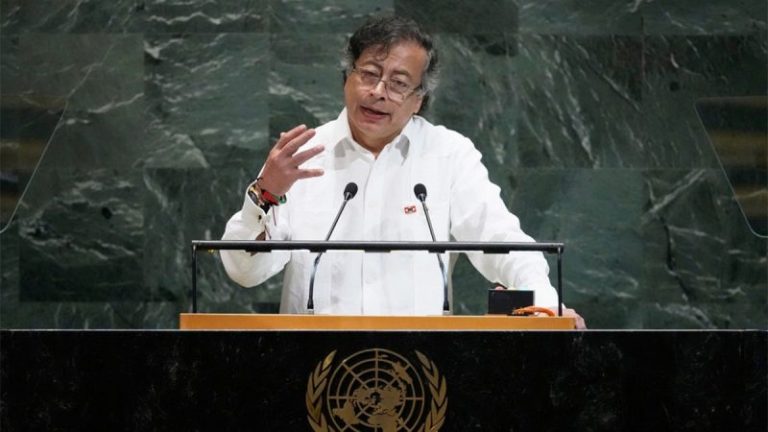
President Donald Trump just took a pivotal step to make healthcare affordable again.

On Sept. 4, his administration announced that most Americans will now be eligible to buy what are known as ‘copper plans’ on the ObamaCare exchanges. Before this reform, nearly all Americans were legally barred from buying these much more affordable plans. But now working families can get the plans they need at a price they can afford – and many uninsured people will likely get covered as a result.

The president is fixing one of the fundamental problems with ObamaCare. That law forced Americans who get their insurance on the individual market to buy costly plans, and in the 11 years since the law went into effect, they’ve gotten even pricier.  

ObamaCare plans have risen by nearly 200% since 2013. What’s more, prices for all plans are expected to rise another 18% by the start of next year.

ObamaCare’s authors knew their law would make healthcare more expensive. That’s why they quietly created an actually affordable option, which they called ‘copper plans.’ These plans cover pre-existing conditions, essential health benefits and everything else that ObamaCare requires, but they come with slightly higher out-of-pocket costs in exchange for dramatically lower premiums. 

Tens of millions of people could benefit from these options, but the federal government only allowed a minuscule number of Americans to buy them. Basically, you had to be under the age of 30. While anyone else could apply for a ‘hardship exemption’ to become eligible, the federal government rarely, if ever, granted these requests, forcing people to pay much more.

No longer. The Trump administration has effectively said that most Americans are now eligible for a hardship exemption, meaning anyone can buy a copper plan. Research from my organization shows that, on average, copper plans have 22% lower premiums than the typical bronze plan – and they cost up to 60% less than ObamaCare’s gold plans. By choosing these options, families can literally save hundreds or even thousands of dollars per year.

The return of affordability is reason enough to praise the president’s move. But this reform will have the added benefit of empowering uninsured people to finally get coverage they can afford. Nearly 27 million Americans are uninsured, many – if not most – because health insurance costs too much. They’ve needed access to copper plans, but their own government has blocked them. Now they’re free to buy better coverage.

Crucially, the uninsured population has the exact groups of people who can help the ObamaCare exchanges become more sustainable. The second and third-largest groups of the uninsured are between the ages of 26 and 34 and 35 and 44, respectively. These tend to be healthier people who don’t need costly plans because they don’t need much health care. As such, they don’t mind the higher out-of-pocket costs that come with the typical copper plan.

By helping to get more of these people covered, President Trump may very well stop the doom loop that has defined ObamaCare – a doom loop of ever-higher prices driving more and more people out of the markets altogether. And with fewer uninsured Americans and more people on private coverage, hospitals will see their uncompensated care costs drop. So hospitals – especially rural hospitals – will be on stronger footing.

This single reform could help millions – if not tens of millions – get more affordable coverage. It also meshes well with another commonsense policy issued by President Trump. He has reversed the Biden administration’s restrictions on short-term plans, empowering Americans to buy even more affordable coverage options for years at a time. 

This reform will also expand coverage to more uninsured people, while enabling others to get plans that better fit their budgets. We’re talking Americans of all ages who are in between jobs and looking for work, those who’ve retired but aren’t yet eligible for Medicare, and working families desperately looking for affordable coverage.

Americans urgently need this healthcare relief. While Democrats and the media are demanding that Republicans merely expand ObamaCare subsidies to prevent people from losing coverage, that’s not a real or sustainable solution. 

More government subsidies only make health insurance more expensive, not less. President Trump has taken the better road by giving Americans greater access to more affordable plans.

When it comes to helping families out, the president’s short-term reform will make a long-term difference, and his copper plans reform gets a gold star.

This post appeared first on FOX NEWS

The House is preparing to take up its annual defense policy bill this week, with Democrats filing hundreds of amendments — many aimed at rebuking President Donald Trump’s administration and current GOP priorities

Lawmakers submitted roughly 450 proposed amendments to the fiscal 2026 National Defense Authorization Act (NDAA). Among them are measures dealing with diversity, Israel funding and Trump’s crackdown on illegal immigration.

The House Rules Committee will review the bill Monday afternoon and set parameters for debate, paving the way for a floor vote later this week.

Most of the progressive amendments are unlikely to survive, underscoring their symbolic nature. Still, Democrats are using the traditionally bipartisan defense package to spotlight opposition to the White House and Republican leadership.

Rep. Jasmine Crockett, D-Texas, filed several amendments, including one to strike the NDAA’s prohibition on using defense funds for diversity, equity and inclusion (DEI) efforts.

Similarly, Reps. Luz Rivas, D-Calif., and Jill Tokuda, D-Hawaii, offered an amendment to block a ban on DEI programs at the Pentagon.

Crockett also introduced language aimed at halting construction of migrant detention facilities on military installations, directly challenging Trump administration policy.

Rep. Maxwell Frost, D-Fla., put forward an amendment barring Defense Department funds from supporting migrant processing and detention operations.

The Pentagon announced last month it is building the country’s largest federal migrant detention center in Fort Bliss, Texas.

Rep. Delia Ramirez, D-Ill., filed two amendments targeting Trump-era immigration policies. One would prohibit funding for family separation, while another ‘prohibits funds from being used to transfer non-citizens to foreign prisons, except under treaties and extradition laws,’ according to the Rules Committee website. The latter proposal would effectively block deportations to El Salvador.

Reps. Rashida Tlaib, D-Mich., and Ilhan Omar, D-Minn., introduced measures aimed at limiting U.S. support for Israel.

Tlaib’s amendment would ban U.S. arms sales to countries whose governments include officials with outstanding International Criminal Court (ICC) arrest warrants. The ICC issued warrants in late 2024 for Israeli Prime Minister Benjamin Netanyahu and senior officials.

Omar’s proposal seeks to repeal Israel’s emergency access to a U.S.-managed weapons stockpile located in the country.

The NDAA is a bill passed every fiscal year that sets national security and defense policy for the U.S. government.

More than 1,000 total amendments have been introduced to this year’s bill.

This post appeared first on FOX NEWS

Silver’s performance in 2025 is drawing attention to silver-mining companies as investors look to gain exposure to the metal’s success.

During Q3 2025, the silver price closed in on all-time highs, reaching a quarterly high of US$46.92 per ounce on September 29. Since that time, silver has soared even higher, breaking the US$50 mark and setting a new all-time high silver price of US$52.64 on October 13.

The price has seen firm support from fundamentals, as silver continues to experience structural supply deficits, while industrial silver demand remains near record levels. Investment demand is also rising as investors return to the market, seeking a more affordable safe-haven alternative to gold.

How has silver’s price movement benefited Canadian silver stocks on the TSX, TSXV and CSE? The five companies listed below have seen the best performances since the start of the year.

Data was gathered using TradingView’s stock screener on October 13, 2025, and all companies listed had market caps over C$10 million at that time.

1. Santacruz Silver (TSXV:SCZ)

Year-to-date gain: 765.45 percent
Market cap: C$866.79 million
Share price: C$2.38

Santacruz Silver is an Americas-focused silver producer with operations in Bolivia and Mexico. Its producing assets include a 45 percent stake in the Bolivar and Porco mines, which it shares with the Bolivian government, and a 100 percent ownership of the Caballo Blanco Group mines in Bolivia, along with the Zimapan mine in Mexico.

In its Q2 2025 results, Santacruz reported silver production of 1.42 million ounces from the mines, as well as silver equivalent production of 3.55 million ounces, which includes its zinc, lead and copper production.

In addition to its producing assets, Santacruz also owns the greenfield Soracaya project, an 8,325 hectare land package located in Potosi, Bolivia. According to an August 2024 technical report, the site hosts an inferred resource of 34.5 million ounces of silver derived from 4.14 million metric tons of ore with an average grade of 260 g/t.

In October 2021, Santacruz acquired Glencore’s (LSE:GLEN,OTC Pink:GLCNF) 45 percent stake in the Bolivar and Porco mines and a 100 percent interest in the Soracaya project. Under the terms of the deal, Santacruz made an initial payment of US$20 million and was obligated to make an additional US$90 million over a four-year period from the closing of the transaction. Glencore also retained a 1.5 percent net smelter return.

The pair amended the deal in October 2024, giving Santacruz the option to either pay off the US$80 million base purchase price through annual US$10 million installments or to accelerate the repayment by paying US$40 million by November 2025. The deal also includes additional terms such as monthly payments to Glencore contingent on zinc pricing benchmarks.

Santacruz chose the accelerated option through a structured payment plan, allowing it to satisfy the base purchase price of the properties while saving US$40 million compared to the annual installment option. On September 4, the company announced that it had made its fourth and fifth payments, completing all payments to Glencore.

The most recent news for the Soracaya project was announced on October 7, when Santacruz stated that it was initiating development activities and would be applying for a full production permit.

Shares in Santacruz reached a year-to-date high of C$2.79 on September 29.

2. Andean Precious Metals (TSX:APM)

Year-to-date gain: 563.48 percent
Market cap: C$1.14 billion
Share price: C$7.63

Andean Precious Metals is a precious metals company with a pair of operating assets in the Americas.

Its primary silver-producing operation is the San Bartolomé facility in the Potosi Department of Bolivia. The onsite processing facility has an annual ore capacity of 1.8 million metric tons. The company has transitioned from conventional mining and is processing feed from both its low-cost fines deposit facility and third-party ore purchases.

Its other producing asset is the Golden Queen mine in Kern County, California, US. It hosts a 12,000 metric tons per day cyanide heap leach and a Merrill-Crowe processing facility. A mineral reserve statement showed a measured and indicated silver resource of 11.24 million ounces from 41.81 million metric tons at an average grade of 8.37 g/t silver. The company acquired Golden Queen from Auvergne Umbrella in November 2023 for total consideration of US$15 million.

On June 2, Andean announced it entered into an exclusive, long-term agreement with the Bolivian state-owned mining company Corporacion Minera de Bolivia to acquire up to 7 million metric tons of oxide ore from mining concessions in Bolivia.

The ore is located within a 250 kilometer radius of the processing facility at its San Bartolomé operation, where it will process the ore. Under the terms of the 10 year agreement, Andean will immediately receive an initial 250,000 metric tons of ore, with the remaining to be delivered in tranches of 50,000 metric tons.

On July 17, Andean released its Q2 operating results. During the first half of the year, it produced 2.04 million ounces of silver across its operations, toward the upper end of its guidance of 1.84 million to 2.16 million ounces. It also noted that it anticipates further ramp-up at both its mines in the second half of the year.

In its Q2 financial results released on August 12, the company reported an increase in net income for the first half of the year to US$32.02 million, compared to US$9.31 million during the first half of 2024.

Shares in Andean Precious Metals reached a year-to-date high of C$8.83 on October 1.

3. Avino Silver & Gold Mines (TSX:ASM)

Year-to-date gain: 455.12 percent
Market cap: C$1.06 billion
Share price: C$7.05

Avino Silver & Gold Mines is a precious metals miner with two primary silver assets: the producing Avino silver mine and the neighboring La Preciosa project in Durango, Mexico.

The Avino mine is capable of processing 2,500 metric tons of ore per day, and according to its FY24 report released on January 21 the mine produced 1.1 million ounces of silver, 7,477 ounces of gold and 6.2 million pounds of copper last year. Overall, the company saw broad production increases with silver rising 19 percent, gold rising 2 percent and copper increasing 17 percent year over year.

In addition to its Avino mining operation, Avino is working to advance its La Preciosa project toward the production stage. The site covers 1,134 hectares, and according to a February 2023 resource estimate, hosts a measured and indicated resource of 98.59 million ounces of silver and 189,190 ounces of gold.

In a January 15 update, Avino announced it had received all necessary permits for mining at La Preciosa and begun underground development at La Preciosa. It is now developing a 350 meter mine access and haulage decline. The company said the first phase at the site is expected to cost less than C$5 million, which will be funded from cash reserves.

In Avino’s Q2 financial report released on August 13, the company noted that work was progressing at the site according to plan, with blasting and construction of the San Fernando main access decline underway. It added that a new jumbo drill was working on the ramp towards intercepting the Gloria and Abundancia veins.

On the production and finance side, the company reported improved cost-per-ounce metrics, with cash costs per silver equivalent payable ounce decreasing 7 percent to US$15.11 and all-in-sustaining costs decreasing 8 percent to US$20.93. It also reported a 50 percent year-over-year increase in revenue during the quarter to US$40.64 million, from US$27.18 million during the same period in 2024.

Avino indicated silver production of 549,300 ounces in the first half of 2025, an increase of 1 percent over H1 2024, and 283,619 silver ounces in Q2 alone, a decrease of 3 percent over Q2 2024.

Avino shares reached a year-to-date high of C$7.60 on October 3.

4. Capitan Silver (TSXV:CAPT)

Year-to-date gain: 404.76 percent
Market cap: C$181.29 million
Share price: C$1.59

Capitan Silver is an explorer focused on advancing silver and gold projects in Durango, Mexico. The company’s flagship asset is the 100 percent owned Cruz de Plata project in the heart of Mexico’s historic Peñoles Mining District. The region is known for hosting significant silver mineralization and historic mining.

The Cruz de Plata project encompasses two historic silver mines — Jesús Maria and San Rafael — and the El Capitan oxide gold deposit.

According to a 2020 technical report, the Jesús Maria deposit hosts an inferred resource of 15.16 million ounces of contained silver and 26,000 ounces of gold from 7.57 million metric tons of ore with average grades of 62.3 g/t silver and 0.12 g/t gold.

El Capitan hosts an inferred resource of 1.83 million ounces of silver and 305,000 ounces of gold from 20.72 million metric tons of ore grading 2.8 g/t and 0.46 g/t respectively.

Capitan Silver has made a series of strategic acquisitions during the second and third quarters.

On June 11, the company completed the purchase of a 2 percent net smelter royalty in place at Cruz de Plata from Exploraciones del Altiplano and eliminated the royalty. Total costs incurred by Capitan were US$1 million.

Then, on August 22, the company executed a definitive agreement to acquire a strategic land package surrounding its Cruz de Plata property from Fresnillo (LSE:FRES,OTC Pink:FNLPF) for total cash consideration of US$4 million. The transaction was initially announced in June.

The new parcel consists of seven mineral concessions covering 2,171.4 hectares. It increases Capitan’s total holdings in the area by 85 percent and the surface expression of the silver-gold trend by 1.2 kilometers to the east.

Capitan’s most recent news from Cruz de Plata came on October 1, when the company reported it identified six priority targets and is advancing them a drill-ready stage. It also increased the total length of known veins containing silver mineralization from 7 kilometers to 20 kilometers.

As for the exploration program at the site, the company expanded its Phase 1 drill program by 50 percent to 15,000 meters, and is expecting a property-wide geophysical survey to be completed during the first quarter of 2026.

Shares in Capitan reached a year-to-date high of C$1.85 on September 22.

5. Americas Gold and Silver (TSX:USA)

Year-to-date gain: 312.14 percent
Market cap: C$1.59 billion
Share price: C$5.77

Americas Gold and Silver is a US and Mexico-focused precious metals producer. The company is one of the US’ largest primary silver miners.

Its primary operations consist of the Galena Complex in Idaho, US, and the Cosala Operations in Sinaloa, Mexico.

The Galena complex operates in the Silver Valley, a historic mining district that is home to Bunker Hill, Sunshine and Lucky Friday mines.

Americas Gold and Silver is currently working on a two phase plan to increase efficiency at the mine’s No. 3 shaft. On September 16, the company announced it completed the first phase, upgrading the hoisting capacity from 40 tons to 80 tons per hour of material movement.

It also said that Phase 2 upgrades are scheduled to begin before the end of 2025, including upgrades to the hoist pads, the installation of a hoist control console and the deployment of an antenna system in the shaft that will support upgrades to automation.

The Cosala operations in Sinaloa comprise 67 mining concessions spanning 19,385 hectares and include the Los Braceros processing facility, the San Rafael mine, and the EC120 development project.

The company is currently transitioning its operations away from San Rafael to the EC120 orebody, aiming to bring EC120 into production by the end of 2025. While San Rafael contains higher levels of zinc and lead, EC120 hosts higher grades of silver and copper.

In its second quarter results released on August 11, Americas Gold and Silver reported a 36 percent year-over-year increase in consolidated silver production during the quarter to 689,000 ounces, with zinc and lead by-products bringing its production to 839,000 silver equivalent ounces.

Despite the increase in production, the company noted a 19 percent decrease in revenue at US$27 million versus US$33.2 million during Q2 2024. It attributed the revenue decline to lower production and byproduct revenue from zinc and lead sales as it transitioned away from San Rafael.

Shares in Americas reached a year-to-date high of C$6.02 on October 8.

Securities Disclosure: I, Dean Belder, hold no direct investment interest in any company mentioned in this article.

This post appeared first on investingnews.com

Supreme Court Justice Amy Coney Barrett pushed back against partisan portrayals of the Supreme Court, telling Fox News’ Bret Baier that justices ‘wear black, not red or blue’ and follow the Constitution, not politics.

She appeared on Fox to promote her new book, ‘Listening to the Law,’ and to address public perceptions of the Court’s work and independence.

Barrett stressed that the Court is not divided into partisan teams. She also defended its approach to presidential power, clarified misconceptions about the Dobbs decision, and reflected on her originalist judicial philosophy.

Her book touches on details such as assigned seating, courtroom traditions, and the gap between outside perception and inside reality.

‘You know, we don’t wear red and blue, we all wear black because judges are nonpartisan. And the idea is that we are all listening to the law. We’re all trying to get it right. We’re not playing for a team,’ she told Baier. ‘We don’t sit on specific sides of the bench, left and right. You know, we sit in order of seniority.’

Barrett underscored the disconnect between public perception and the Court’s inner workings, noting:

‘I often ask new law clerks what surprised you most when you started? And one of the most common answers is the difference between what’s happening on the inside and what people think is happening on the inside.’

Critics on the left argue the Court is shielding former President Donald Trump, a view reflected in headlines from outlets such as The New York Times and NBC.

Barrett responded by placing the Court’s work in historical context, stressing that cases on presidential power extend beyond any one occupant of the office.

‘We’re not deciding cases just for today, and we’re not deciding cases based on the president,’ Barrett said. ‘As the current occupant of the office, we’re deciding cases about the presidency. So we’re taking each case, and we’re looking at the question of presidential power as it comes. And the cases that we decide today are going to matter.

‘Four presidencies from now, six presidencies from now, and so on. Each of these cases that we’re getting, you know, well, I mean, some of them overlap, but many present different constitutional issues,’ she added.

She stressed the Court rules on the presidency as an institution, with decisions that resonate across administrations.

Turning to the Dobbs decision, Barrett said the ruling did not outlaw abortion but returned the issue to the political process—a point she argued has been widely misunderstood.

‘Dobbs did not say that abortion is illegal. Dobbs said it belongs to the political process,’ Barrett said.

Barrett acknowledged growing threats to judges, stressing violence should not be ‘the cost of public service.’

Returning to public perception, she said the Court must follow the law even when rulings are unpopular, stressing integrity over public opinion.

‘The court… can’t take into account public opinion in making individual decisions… you have to follow the law where it leads, even if it leads in a place where the majority of people don’t want you to go,’ she said.

This post appeared first on FOX NEWS