
Author

admin

Browsing

French nuclear group Orano said that it “strongly condemns” the removal of uranium from the SOMAÏR mine in northern Niger.

The company called the transfer illegal and a direct breach of the International Centre for Settlement of Investment Disputes’ (ICSID) September ruling, which prohibits the material from being sold or moved without the company’s consent.

Orano said it learned of the shipment only after media reports disclosed that uranium had been taken from the Arlit-based facility, which has been under the control of Niger’s military government since late 2024.

The company went on to explain “ (it) is not the initiator of this shipment,” adding that it has no official information on the quantity removed, the shipment’s destination, or the conditions of its transport.

The incident deepens an already severe standoff that has been building for more than a year, following the military junta’s decision in December 2024 to block Orano from operating the mine despite the company’s majority stake.

At the time, Orano publicly confirmed it had lost operational control, noting that board-approved directives were no longer being carried out and that authorities were preventing the suspension of production expenses.

The situation escalated further in June 2025, when Niger announced it would nationalize SOMAÏR outright.

The government accused Orano—a firm it described as “owned by the French state—a state openly hostile toward Niger since July 26, 2023” — of “irresponsible, illegal, and unfair behaviour.”

Authorities said the mining agreement had expired in December 2023 and argued that nationalization was an assertion of “full sovereignty.” Orano, which held a 63 percent stake in the venture, declined to comment at the time but continued to pursue arbitration and legal action.

The dispute produced a ruling favorable to Orano in September. The ICSID tribunal ordered Niger “not to sell, transfer, or even facilitate the transfer to third parties of uranium produced by SOMAÏR” that was being held in violation of Orano’s rights.

That decision has now become central to the new controversy, with the latest shipment appearing to defy the tribunal’s directive.

Orano said the uranium transfer constitutes a “breach” of the ruling and warned it is prepared to take further steps in response. The company said it reserves the right to take any additional action necessary, including criminal proceedings against third parties, should the material be taken in violation of its offtake entitlement.

Securities Disclosure: I, Giann Liguid, hold no direct investment interest in any company mentioned in this article.

This post appeared first on investingnews.com

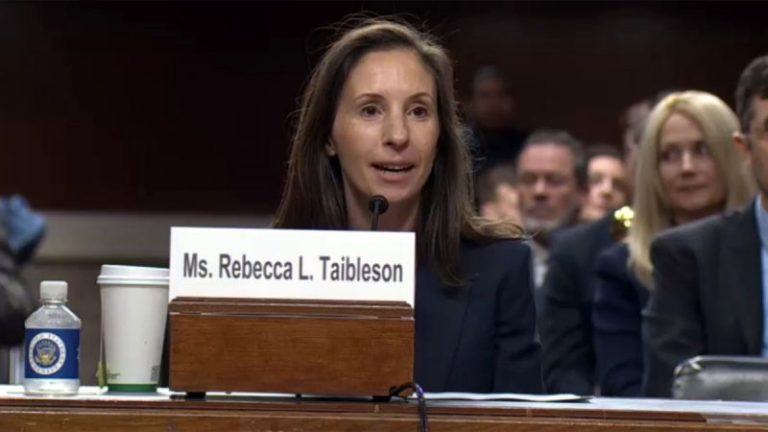
Recently, Rebecca Taibleson appeared before the Senate Judiciary Committee for her confirmation hearing to a Wisconsin-based seat on the United States Court of Appeals for the Seventh Circuit, a key step toward further solidifying President Trump’s strong judicial legacy. In choosing Taibleson, Trump selected a standout from a highly qualified field. She’s not only a seasoned prosecutor and sharp legal thinker, but she’s a proven defender of the Constitution and conservative values.

Taibleson spent over a decade as a federal prosecutor in the Eastern District of Wisconsin, putting violent criminals behind bars. She doesn’t just theorize about public safety–she delivers it. She handles complex appeals and knows how to write strong legal arguments, and she wins cases and protects communities. Every day in her career, she applies the law with clarity, discipline, and purpose.

Most importantly, in her role as the co‑chief of the Appellate Division of that U.S. Attorney’s office for nearly a decade, not only did Taibleson imprison violent and dangerous criminals who were terrorizing the community, she ensured they stayed there. There are too many weak judges who free criminals when they should rot in prison for their crimes. Rebecca Taibleson is not one of them.

Her credentials speak for themselves. She clerked for the late, great Justice Antonin Scalia and then-Judge Brett Kavanaugh. She embraced a constitutionalist philosophy early in her career and never wavered. At her Senate confirmation hearing, she made it crystal clear: judges must interpret the law as written, not how they wish it were written. Judges must not rewrite laws based on personal views or political trends. She follows the original public meaning of the law and honors the Constitution.

Taibleson also knows how to stand her ground. During one of the most brutal nomination fights in recent memory, she stepped up and testified in support of her former boss Brett Kavanaugh, a nomination fight for which I helped lead the charge as Chairman Chuck Grassley’s chief counsel for nominations on the Senate Judiciary Committee. While the left smeared and attacked, Rebecca Taibleson didn’t flinch. She stood firm in defense of the rule of law and the truth. That moment proved her courage and character.

She also served in President Trump’s solicitor general’s office — the top government appellate advocates. She fought and won legal battles at the Supreme Court. She defended Trump administration policies on immigration, religious liberty, and constitutional limits. She didn’t just serve under President Trump, she helped him win. Her record shows loyalty, competence, and backbone.

Some groups have raised concerns—and even opposition before they had a chance to watch her testimony at her Senate confirmation hearing. Some are fair points; most are not. They wanted someone else. They’re circulating misleading claims and ignoring facts. They’re criticizing a nominee who far exceeds the standard for confirmation. President Trump and his team reviewed many good candidates. Like with any nominee, they balanced all the pros and cons. While no nominee is ever perfect, Rebecca Taibleson proved through her long record and unflinching public testimony that she is outstanding. She has a proven track record of being bold and fearless.

Taibleson handled her confirmation hearing exactly the way a strong nominee should. She didn’t dodge questions or pander. She answered directly and confidently and laid out her commitment to textualism, originalism, and constitutionalism. She emphasized the separation of powers and reminded the Senate that judges don’t make policy. Elected officials do.

On precedent, she spoke with clarity. She said Dobbs v. Jackson controls abortion law, and she will follow it. She refused to play politics with hot-button issues, but she left no doubt about her commitment to the Constitution.

She also promised to bring civility and discipline to the bench. She won’t use opinions to take swipes at parties, public officials, or opposing views. She respects the role of the judiciary and knows the difference between law and politics. She pledged to uphold judicial restraint.

Taibleson’s background shows real-world depth. Early in her career, she worked with Israel’s national emergency medical, disaster, ambulance, and blood bank service Magen David Adom during the Second Intifada. She helped defend civilians from terrorist attacks. That experience gave her a deeper understanding of law, national security, justice, and what is at stake for Western civilization. It also showed her values: courage, service, and loyalty to free societies under attack.

Taibleson has answered the questions raised by her detractors from the left and the right. She addressed every issue and demonstrated exactly why she belongs on the Seventh Circuit. Her hearing and record proves her fitness. She showed strength, clarity, and deep legal knowledge. And she put to bed any concerns.

President Trump built the best judicial legacy in a generation. He transformed the Supreme Court into the first constitutionalist Court in 90 years. He reshaped the federal judiciary with principled, constitutionalist judges. He made those choices carefully, and he made the same careful decision here. Rebecca Taibleson fits that mold. She brings real experience, proven loyalty, and a first-rate legal mind.

The Senate must confirm this bold and fearless judicial nominee. She earned this seat by standing up when it counted. She served President Trump with distinction and fought for her country in the courts. She prosecuted criminals and protected communities. She embraces originalism and the rule of law.

President Trump chose right. The Senate must finish the job.

This post appeared first on FOX NEWS

Senate Republicans rammed through dozens of President Donald Trump’s nominees on Thursday in their first flex of the Senate’s new rules for confirmations.

Lawmakers voted along party lines to confirm 48 of Trump’s nominees, many being for undersecretary or assistant secretary positions in a variety of agencies throughout the federal government and ambassadorships.

Senate Republicans went ‘nuclear’ last week to make the change after a last-minute deal with Democrats fell apart.

The change ushered in by the ‘nuclear option’ allows lawmakers to confirm an unlimited number of nominees in batches, also known as en bloc, with a simple majority vote in the upper chamber. However, the process is time-consuming, given that lawmakers must jump through procedural hoops and allow for 30 hours of debate.

‘Why has not a single nominee been confirmed by voice vote or by unanimous consent? We know why,’ Senate Majority Whip John Barrasso, R-Wyo., said on the Senate floor. ‘It’s Democrat obstruction.

‘The country has never seen anything like this,’ he continued. ‘Senate Democrats are freezing the Senate floor, freezing the federal government and freezing our nation’s progress. This harms America’s safety. It hamstrings the agenda that Americans voted for.’

Among this batch of nominees were Kimberly Guilfoyle, who Trump tapped to be the U.S. ambassador to Greece, and Callista Gingrich, who was picked to be the U.S. ambassador to Switzerland.

Republicans argued that the change would benefit both parties now and in the future and viewed the change as an option of last resort to break through Senate Democrats’ blockade of Trump’s picks.

Typically, subcabinet-level nominees, particularly those with bipartisan support out of committee, are sped through the Senate either by unanimous consent or through a voice vote, two fast-track procedural moves in the upper chamber. All the nominees in this first round made it out of committee on a bipartisan basis.

However, Senate Minority Leader Chuck Schumer, D-N.Y., and his caucus wouldn’t allow either to be used and caused a backlog of nominees to lower level positions in the Trump administration to pile up. As of Thursday, the list had swollen to 173.

The only one of Trump’s nominees that easily moved through the chamber was Secretary of State Marco Rubio, who was confirmed in January on a near unanimous vote. 

This post appeared first on FOX NEWS

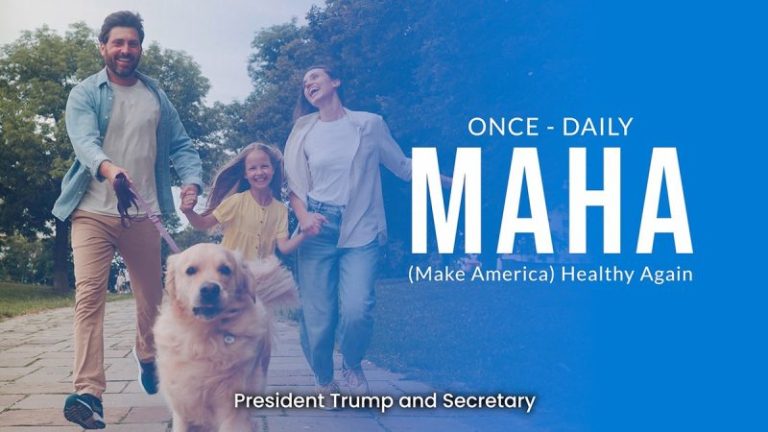
Shortly after announcing a strategy to go after deceptive direct-to-consumer advertising by the pharmaceutical industry, Robert F. Kennedy Jr. and the Department of Health and Human Services released a parody video of a drug advertisement – a pointed way of emphasizing the fact that the United States is largely unique in allowing drug ads.

‘Tired of endless drug ads promising quick fixes but leaving you sicker than you were before? That can change today. Ask your doctor about MAHA,’ the parody commercial begins, referring to Kennedy’s ‘Make America Healthy Again’ initiative. 

‘MAHA may cause healthier living, fewer chronic diseases, and lower drug costs,’ the video’s narrator continues. ‘Some Americans reported more time spent with family instead of at the pharmacy. Other side effects may include healthier children, a stronger nation, more transparency in healthcare, honest advertising, and accountability from Big Pharma.’

The drug advertisement parody comes after Kennedy and HHS laid out their plans to target direct-to-consumer drug advertising – something that isn’t widely allowed outside the United States – in a new children’s health strategy released earlier this month. 

The strategy said it will ramp up enforcement of current prescription drug advertising laws, with a priority on ‘egregious violations demonstrating harm from current practices.’ The strategy noted these violations could include the dissemination of ‘risk information and quality of life through misleading and deceptive advertising on social media and digital platforms.’

The strategy to go after direct-to-consumer drug ads will also include inter-agency cooperation to explore the development of potential new industry guidelines that limit direct-to-consumer advertising for certain ‘unhealthy foods’ to children. These efforts include ‘evaluating the use of misleading claims and imagery,’ the MAHA children’s strategy stated. 

Kennedy said alongside the release of HHS’s parody advertisement that the Trump administration plans to begin holding the pharmaceutical industry accountable for not sharing full safety information in their drug ads on television, radio and beyond.


‘No more hiding vital information in small print, or pushing it off to a website, or a 1-800 number,’ Kennedy said in a video released in conjunction with the parody advertisement. He also noted that regulators have been letting pharmaceutical manufacturers avoid providing complete warnings in their marketing materials.

Kennedy said in the accompanying video that, in the past, regulators let companies mention a vague ‘major statement’ of risk that required consumers to go elsewhere for important details about the drug. The secretary said this ‘loophole’ opened the door to a ‘tsunami’ of misleading advertisements.

‘Drug ads drove up prescription drug costs and distorted doctor-patient conversations. Patients saw glossy ads and often asked for new medications,’ Kennedy continued. ‘Big Pharma’s marketing hooked the country on prescription drugs. We’re taking action to end that practice.’

This post appeared first on FOX NEWS

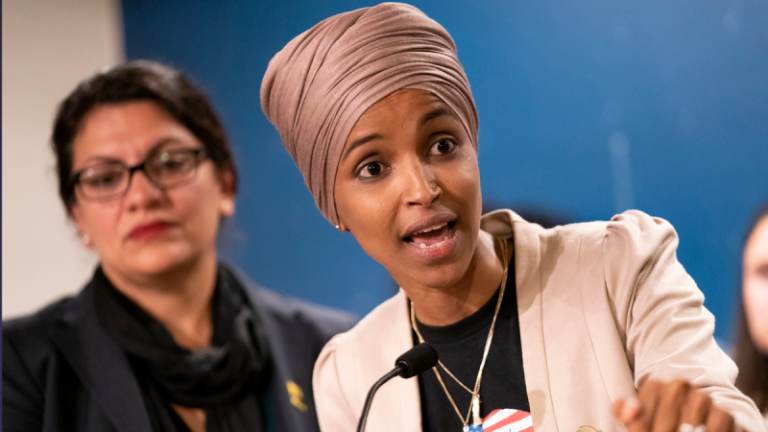
House Main Street Caucus Chairman Mike Flood, R-Neb., will refer Democratic colleague Rep. Ilhan Omar, D-Minn., for a House Ethics Committee investigation, he first told Fox News Digital.

It is the latest move in the GOP-led fallout over Omar’s response to the assassination of Charlie Kirk, a conservative activist who was shot and killed in Utah during a college campus speaking event last week.

‘I will be filing tomorrow … a complaint with the Committee on Ethics in the House of Representatives with 18 very concerning incidents and/or behaviors and/or statements that, on their face, reflect poorly on the House of Representatives,’ Flood said of Omar.

The top of the list of complaints will include the progressive Democrat’s ‘obnoxious, insulting and dismissive comments following the assassination of Charlie Kirk,’ he said.

‘Second, harboring illegal immigrants. I believe in February of this year that Omar hosted a workshop advising Somalians on how to avoid being deported after protecting the laws of the United States,’ Flood continued of his points. ‘No. 3, she’s used TikTok for mixed official and campaign content, which specifically violates other House rules.’

Flood was one of four House Republicans to help Omar narrowly avoid being censured by the House on Wednesday evening.

Rep. Nancy Mace, R-S.C., moved to force a vote on censuring Omar over her reaction to Kirk’s killing, but the move was quashed when four Republicans and all Democrats voted to table the measure.

Flood said at the time of his vote, ‘Ilhan Omar’s statements and social media posts are reprehensible and should be referred to the Ethics Committee. The appropriate time to consider a censure motion would be after ethics reviews her conduct.’

He told Fox News Digital on Thursday that initiating an ethics investigation would make a censure ‘far more credible.’

Flood pointed out that he similarly voted to table a censure threat against Rep. LaMonica McIver, D-N.J., for her conduct outside a New Jersey ICE facility before the ethics committee could issue a report on the matter.

‘And so I have gathered enough information, starting yesterday, before I voted to table, understanding that this was an issue,’ Flood said.

He also disagreed with the other three House Republicans who all said Omar’s comments were protected by the First Amendment.

‘This isn’t a free speech issue. This is a ‘Have you demonstrated that you are behaving at all times in a manner that reflects credibly on the House?’’ Flood said.

Omar specifically faced backlash over an interview with progressive news outlet Zeteo, in which she criticized Kirk’s past commentary and Republicans’ reaction to the shooting. She later accused Republicans of taking her words out of context, and she called Kirk’s death ‘mortifying.’

She previously told Zeteo days after Kirk’s assassination that he had ‘downplayed slavery and what Black people have gone through in this country by saying Juneteenth shouldn’t exist.’

‘There are a lot of people who are out there talking about him just wanting to have a civil debate,’ the ‘Squad’ member said. ‘There is nothing more effed up, you know, like, than to completely pretend that, you know, his words and actions have not been recorded and in existence for the last decade or so.’

She later posted on X amid the backlash, ‘While I disagreed with Charlie Kirk vehemently about his rhetoric, my heart breaks for his wife and children. I don’t wish violence on anyone. My faith teaches me the power of peace, empathy, and compassion. Right-wing accounts trying to spin a false story when I condemned his murder multiple times is fitting for their agenda to villainize the left to hide from the fact that Donald Trump gins up hate on a daily basis.’

Omar also reposted a video on X, where others not associated with the congresswoman said, ‘Don’t be fooled, these people don’t give a single s— about Charlie Kirk. They’re just using his death to further their Christo-fascist agenda.’

The Minnesota Democrat’s colleagues have vehemently defended her against Mace’s censure and Republican criticism.

Fox News Digital reached out to Omar’s office for a response to Flood but did not immediately hear back.

This post appeared first on FOX NEWS

Hunter Biden was involved in discussions about pardons toward the end of his father’s White House term, a source familiar with Jeff Zients’ interview with the House Oversight Committee told Fox News Digital on Thursday.

Zients met with House investigators behind closed doors for over six hours — the final former Biden administration official to appear in House Oversight Committee Chair James Comer’s probe into ex-President Joe Biden’s use of the autopen.

Comer, R-Ky., is also investigating whether Biden’s top aides covered up signs of mental decline in the former president, and whether executive decisions signed via autopen — including myriad clemency orders Biden approved — were executed with his full awareness.

Zients told investigators that Hunter was involved in some of those pardon discussions and attended a few meetings on the subject with White House aides, the source said.

It’s not clear how much say Hunter had in those meetings, or if he was involved in discussions about his own controversial pardon.

The former president issued a ‘full and unconditional’ pardon for his son in early December, just under two months before leaving office. 

That’s despite Biden and his staff denying the possibility of such a move on several occasions.

Biden approved nearly 2,500 commutations on Jan. 17, just days before leaving the White House, setting a record for most clemency orders ever granted by a U.S. president — more than 4,200 in total — and the most ever in a single day.

Weeks earlier, he issued pardons for several family members, including Hunter.

It had been previously reported by NBC News and other outlets that Hunter sat in on White House meetings with Biden’s aides in the wake of the former president’s disastrous June 2024 debate against then-candidate Donald Trump.

Zients is the final former Biden aide expected to appear before the House Oversight Committee in its autopen probe.

The source familiar with his sit-down told Fox News Digital that Zients ‘admitted that President Biden’s speech stumbles increased as he aged.’

‘He also noted that the president’s difficulty remembering dates and names worsened over time, including during the administration,’ the source said.

A second source familiar with Zients’ comments to the House Oversight Committee defended his comments. 

‘As chief of staff, Jeff’s job was to ensure that the president met with a range of advisors to thoroughly consider issues so that the president could make the best decisions,’ the second source told Fox News Digital.

‘Throughout Jeff’s time working with him, while President Biden valued input from a wide variety of advisors and experts, the final decisions were made by the president and the president alone,’ the second source said.

‘Jeff had full confidence in President Biden’s ability to serve as president and is proud of what President Biden accomplished during his four years in office.’

Fox News Digital reached out to Zients’ attorney and the law firm of Abbe Lowell, who was known to have defended Hunter previously, for comment but did not immediately hear back.

This post appeared first on FOX NEWS

The recently launched ‘GenAI’ tool for U.S. service members and Department of War workers is a ‘critical first step’ in the future of warfare, according to a military expert.

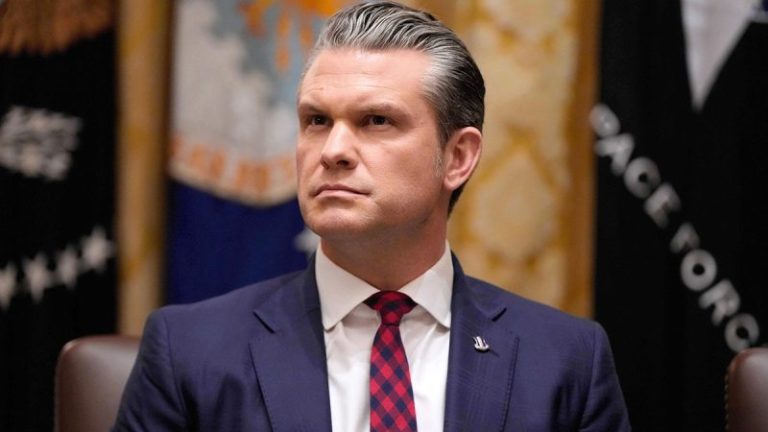
This month, the Pentagon announced the launch of GenAI.mil, a military-focused AI platform powered by Google Gemini. Secretary of War Pete Hegseth said the platform is designed to give U.S. military personnel direct access to AI tools to help ‘revolutioniz[e] the way we win.’

On Monday, the Department of War also announced that the Pentagon is further integrating Elon Musk’s xAI Grok family of models into the GenAI platform, allowing employees to use xAI safely on secure government systems for routine work, including tasks involving sensitive but unclassified information.

In an interview with Fox News Digital, Emelia Probasco, a Navy veteran, former Pentagon official and senior fellow at Georgetown University’s Center for Security and Emerging Technology, explained that the tool will help train Department of War service members and civilians on the use of artificial intelligence in their everyday workflow, preparing them for further integration of AI in military matters.

Probasco said the tool will have a ‘big impact’ on the everyday functioning of the Department of War.

‘Prior to the rollout of this new website and having Gemini 3 available to the force, folks were either using sort of a tool that wasn’t as capable … or even worse, they were sort of going to their home computers and trying to do various things on their home computers, which they’re not supposed to do, but it was probably happening,’ Probasco explained. ‘Now they’ve got a more secure environment where they can experiment with these tools and really start to learn what they’re good for and what they’re not good for.’

While Probasco said she does not believe the tools, such as the GenAI platform, ‘fully changes war,’ she thinks ‘it’s the critical first step in training so that we know how to use it well.’

She said that the Department of War has ‘made it very clear in the past year that they want to forge ahead and be innovative and try new things and adopt AI.’

The GenAI tool, Probasco said, gives the department a type of sandbox to experiment with for still bigger innovations to come.

‘There are responsible people in the department who are trying to figure out what is the best use of this tool. Let’s try lots of experiments in sort of sandboxes or in safe places so that when a conflict comes, we are ready and ahead, frankly, of any adversary who has started to play with the tools,’ she explained.

Probasco said the Department of War understands that adversaries such as China are also developing and experimenting with artificial intelligence. Indeed, this month, President Donald Trump announced he would be partially reversing a Biden-era restriction on high-end chip exports, permitting Nvidia to export its artificial-intelligence chips to China and other countries.

The H200 chips are high-performance processors made by Nvidia that help run artificial intelligence programs, like chatbots, machine learning and data-center tasks. 

Lawmakers on Capitol Hill voiced that they are split over the decision, with some seeing the move as a dangerous concession and others as strategic.

Either way, Probasco said ‘we have lots of evidence’ that China ‘is doing rapid experimentation [with AI] across all domains of warfare.’

‘And it’s not, can I use a chatbot, but rather, ‘Can I gather up lots of information to start to target individuals for espionage?’ For example, [and], ‘Can I use data to create more sophisticated cyber-attacks?’’ she explained.

‘There is this sort of dynamic of a race between the two sides trying to figure out how to adopt it,’ she explained.

Though important, Probasco said the GenAI tool is ‘not going to necessarily be the weapon system that gains [the U.S.] an advantage.’

She assured the AI tool that will truly give the U.S. a military advantage ‘is underway,’ but said ‘that’s not the sort of thing you just roll out for every service member to use.’

‘It’s important to remember that using a chatbot to help you think through certain problems or do talking points is not what’s going to win the war. There are much more sophisticated military systems that use generative AI; they use other kinds of what’s called ‘good old-fashioned AI.’ There are lots of other techniques that militaries need to use,’ she said.

‘Those are already in the works, and they’ve been in the works for years,’ Probasco explained, adding, ‘That’s not going to be rolled out in a big public announcement where everybody can play with it.’

This post appeared first on FOX NEWS

Turning Point USA’s AmericaFest is very much like a circus, and I mean that in the best possible way. A circus can travel anywhere, put up its tents and put on a show.

The scale of last weekend’s event in Phoenix was nothing short of monumental, with 31,000 in attendance. That isn’t so far off of the estimated 50,000 souls who went to the 2024 Republican National Convention in Milwaukee.

To put it bluntly, TPUSA, along with other organizations, are capable of producing a much-needed midterm convention and a city like Phoenix, which hosted the conservative confab admirably, is exactly where it should be held.

As I’ve written in this column before, a midterm GOP conventionmidterm GOP convention, though a tad unconventional as a concept, is exactly what Republicans need to put Trump and his policy wins front and center before the electorate.

John and Lucy, a couple in their 40s who I met at the event, told me it was their first AmFest.

‘The energy is amazing,’ Lucy said. ‘I didn’t know what to expect, but I didn’t expect this.’

John concurred, saying, ‘This is like a rock concert, fireworks and loud music, I think it gets everyone pumped up.’

The atmosphere at AmFest was a whizzing and whirring technicolor explosion of light and sound, all resounding toward the goal of forwarding the conservative movement.

There is little doubt that 10 minutes at a pulsating and intense live event like Amfest – or a Trump rally – is worth 10 days of on-screen ads. It hits attendees in each of their five senses, and 50,000 may not sound like much, but that’s a veritable army to send back home in an off-year election.

One eager young conservative I met, Matt, who is studying finance in grad school and sports what might now be called the TPUSA mustache, told me, ‘I’d totally go to a midterm convention. Hell, I’d just go for the parties.’

That may sound a bit shallow to some, but it also sounds like exactly the kind of positive energy that a winning political movement needs.

When it comes to the question of where to hold a midterm convention, Phoenix can teach would-be convention planners a lot about the key question of location, location, location.

In places like New York City or Chicago, AmFest would have brought out hundreds of protesters, including many of the dangerous Antifa variety. Even vastly smaller events like a recent Mom’s For Liberty conference in Philadelphia attracted angry mobs.

In Phoenix, I never saw more than a dozen or so, and they were far more silly than menacing.

It’s worth noting that the local news channels did choose to focus almost as much attention on this bedraggled band of apparently unemployed naysayers as they did the tens of thousands inside the event.

Funny that.

But around the clean and very pretty downtown of soft light and perfect temperatures, one felt little to no resentment or pushback at the sudden flood of red MAGA hats and sparkly Trump outerwear. Everything was cool.

I asked one of my Uber drivers, a longtime Phoenix resident, why he thought the city was so welcoming in this way.

‘Nobody is uptight about politics. Everyone has weird ideas, we have weird politicians,’ he told me, laughing at his own joke for moment before adding, ‘It’s always been like this.’

Phoenix is not the only prime location for a midterm convention. Oklahoma City is another, as is Nashville. These are thriving places with better than average governance that truly do highlight the accomplishments of the Trump administration.

JD VanceJD Vance told the crowd at AmFest, ‘Why do we penalize corporations that ship American jobs overseas? Because we believe in the inherent dignity of human work and every person who works a good job in this country.’

The best place to sell that very popular message is in the smaller American cities where the jobs are being created, not one of the great metropolises still clinging to the dream that one day everyone can just work for the government.

As of now, the GOP has somewhere just north of seven months to put together a midterm convention, but the good news is that it is also flush with campaign cash. And the conservative movement has organizations like TPUSA that are capable of coming together to pull it off.

If Republicans want to hold onto Congress and give Trump a runway for his final two years, then their first priority for the coming fall should be to bring the circus back to town.

This post appeared first on FOX NEWS

As President Donald Trump rolls out his TrumpRx proposal to cut prescription drug prices, economists are raising questions about what happens when prices are capped and whether short-term savings for consumers come at the expense of future medical breakthroughs.

On Friday, Trump announced deals with nine pharmaceutical companies to lower prices on certain medications for Americans, along with $150 billion in promised new investments in domestic manufacturing and pharmaceutical research.

The announcement builds on the administration’s Trump Rx initiative, a government-run portal designed to steer consumers toward lower-cost prescription drugs offered directly by manufacturers. The program is central to Trump’s effort to tie U.S. drug prices to those paid in other wealthy countries, a policy known as ‘most favored nation’ pricing.

But economists caution that price-lowering agreements don’t eliminate costs and often shift them elsewhere, particularly into reduced drug development, delayed innovation, or higher prices in other parts of the market.

Michael Baker, director of healthcare policy at the American Action Forum, said government price setting shifts costs rather than eliminating them.

‘At the most basic level, government price setting only limits what patients pay for a drug — usually reflected in an out-of-pocket or co-insurance payment,’ Baker said. ‘This does nothing to address the overall cost of the drug, which someone still has to pay, nor does it lower the cost associated with development.’

As a result, Baker said, patients ultimately bear those costs through tighter coverage rules, fewer treatment options or reduced future innovation.

‘Patients will experience far less of the crown jewel of the U.S. healthcare system that they are currently accustomed to receiving,’ he added.

Economists say the effects of permanent price caps would also be felt upstream, in research and development.

‘We know for sure that if drug prices are capped permanently below the levels the firm would have set, that will lead to lower incentives for R&D to discover new drugs and bring them to market,’ explained Mark V. Pauly, professor of healthcare management at The Wharton School at the University of Pennsylvania.

Pauly added that the impact is expected to be negative, but its scale — including how many drugs might never be developed and their potential value — remains highly uncertain.

‘I do not know the answer, but I know for sure no one else does either,’ he added.

Others argue the administration’s approach avoids the most damaging forms of price control.

Ed Haislmaier, an expert in healthcare policy and markets at The Heritage Foundation, said recent agreements appear to involve companies trading lower prices for benefits such as expanded market access or relief from other costs, including tariffs.

‘In such cases, companies are likely calculating that revenue losses from lower prices will be offset by revenue gains from more sales,’ Haislmaier told Fox News Digital.

‘The kind of government price controls that are most damaging to innovation are ones that limit the initial price a company can charge for a new product. That is the situation in some countries, but fortunately not yet the in the United States,’ he added.

Ryan Long, Paragon’s director of congressional relations and a senior research fellow, suggested that pricing pressure abroad could force foreign governments to shoulder a greater share of drug development costs.

Long said this strategy would lead ‘to lower prices for American consumers without sacrificing U.S. leadership in biopharmaceutical innovation that leads to new treatments and cures.’

This post appeared first on FOX NEWS