Author

admin

Browsing

Platinum is heading for a third consecutive annual deficit in 2025, with the World Platinum Investment Council (WPIC) projecting an 850,000 ounce shortfall as demand continues to outpace weak mine supply.

In its latest Platinum Quarterly, the WPIC states that despite a 22 percent year-on-year decline in demand, a lack of metal is expected to create a supply shortfall that’s only 13 percent lower than 2024’s 968,000 ounce shortfall.

Its call comes amid a price breakout for platinum, which pushed past US$1,450 per ounce in July.

Why is the platinum market in deficit?

The biggest challenge for platinum has been weak refined production, which slipped to 1.45 million ounces during the quarter from 1.54 million ounces produced during the same time last year.

This has led the WPIC to predict a 6 percent decrease in primary supply to 5.43 million ounces, down from the 5.76 million ounces produced in 2024. Output declines in top producer South Africa have had outsized effects on supply, as Q1 output came in at just 713,000 ounces, as heavy rainfalls negatively impacted production.

Although output grew to 1.05 million ounces in the second quarter, it was still 8 percent lower than in Q2 2024.

Additional decreases to output are also expected in Zimbabwe and North America, slipping 4 percent and 26 percent, respectively. However, Russia is set to see a 1 percent rise in output, increasing to 686,000 ounces from 677,000 in 2024.

On a more positive note, recycling supply saw an increase to 423,000 ounces during Q2 from 379,000 reported in 2024. This has led the WPIC to predict a 6 percent annual increase to 1.6 million ounces from 1.52 million last year.

The majority of this increase comes from growth in automotive recycling, aided by higher platinum group basket prices. However, the WPIC notes that despite the growth, recycling will remain depressed compared to historic levels.

The WPIC predicts an overall supply decrease of 3 percent in 2025 to 7.03 million ounces, from 7.28 million ounces in 2024. With three years of deficits, the group is also expecting further drawdowns of above-ground stocks with a 22 percent decrease to 2.98 million ounces, representing four and a half months of demand coverage.

In recent years, stockpiles have fallen from 5.51 million ounces in 2022 to 4.8 million ounces in 2023 and 3.83 million ounces in 2024.

“I don’t think we’re going to see any meaningful mine supply response at these levels. It’s also worth bearing in mind that these are, for the most part, deep-level underground mines. So even if we had another 50 percent increase in the basket price, you’re still not going to see a supply response over the near to medium term,” he said.

Watch Sterck discuss the platinum market.

He went on to explain that development times for mining operations will take several years and wouldn’t be possible on time frames shorter than 18 months.

“Recycling is definitely much more price elastic than mine supply over the near to medium term,” Sterck said.

However, he added that while people tend to scrap vehicles at a consistent rate, the pace and overall supply entering the market from the auto sector is constrained.

“Yes, we’ve seen quite a big increase in the platinum price year to date, but it’s not the main driver of the economics for those scrap aggregators and recyclers. It’s really more of a palladium story, even more so than rhodium. So, you need a sustained increase in palladium prices to drive a meaningful change there,” Sterck said.

Demand to weaken in 2025, jewelry a bright spot

Despite the expected deficit, the WPIC expects demand to weaken this year.

Q2 saw automotive demand fall to 769,000 ounces, down from 788,000 ounces in the year-ago period.

The WPIC’s expectation is that the auto sector will require 3.03 million ounces of platinum in 2025, a 3 percent decrease from the 3.11 million ounces needed in 2024. Likewise, the council is expecting a decrease in industrial demand for the metal as consumption drops off by 22 percent to 1.9 million, down from 2.42 million ounces last year.

Jewelry demand, however, has been on the rise, with the expectation that it will increase by 11 percent to 2.23 million ounces in 2025. The WPIC suggests the higher growth is owed to its discount relative to gold, and notes that it is seeing the most substantial increase in China — fabrication is seen growing 42 percent in 2025 to 585,000 ounces.

“What’s driving that increase has been fabrication funded by wholesalers, and they’re promoting platinum because they’ve seen a huge drop in their gold jewelry sales,” Sterck explained.

Despite an increase in holdings of bars, coins and exchange-traded funds, overall investment demand was dragged down in Q2 by a 317,000 ounce decrease in stocks held in exchanges due to tariff-related concerns.

Sterck said ongoing uncertainty in the platinum market earlier this year caused physical metal to shift from overseas markets into the US as traders began to worry about tariffs being applied.

Although movement reversed as traders were told tariffs wouldn’t be applied, fears were later stoked when copper tariffs were announced, and an “ideological disconnect” between the White House and South Africa emerged.

“Given that the current US administration has shown that it is willing to use tariffs as a kind of stick, if you like, for enacting foreign policy, you kind of come back to this sort of whole situation where there’s a non-zero chance of platinum being subject to tariffs in the US,” Sterck commented during the conversation.

Overall, the WPIC expects total platinum demand to drop by 4 percent year-on-year in 2025 to 7.88 million ounces.

Will the platinum price rise further in 2025?

Fundamentals should remain the primary driver for platinum. Despite weakening demand through the first half of 2025, a structural deficit in the market still exists due to a lack of supply to close the gap.

However, Sterck suggested the mining supply is likely to increase before the end of the year.

“This year was particularly accentuated by flooding in South Africa during the first quarter of the year, so we do expect a bit of an increase in mining supply,” he said. However, he also noted that until there are more significant changes to the amount of supply, the price conditions aren’t likely to change much.

“Fundamentally, at the moment, it just appears that the platinum price at current levels isn’t sufficient to attract enough metal into the market to really ease those market conditions,” Sterck noted.

Securities Disclosure: I, Dean Belder, hold no direct investment interest in any company mentioned in this article.

This post appeared first on investingnews.com

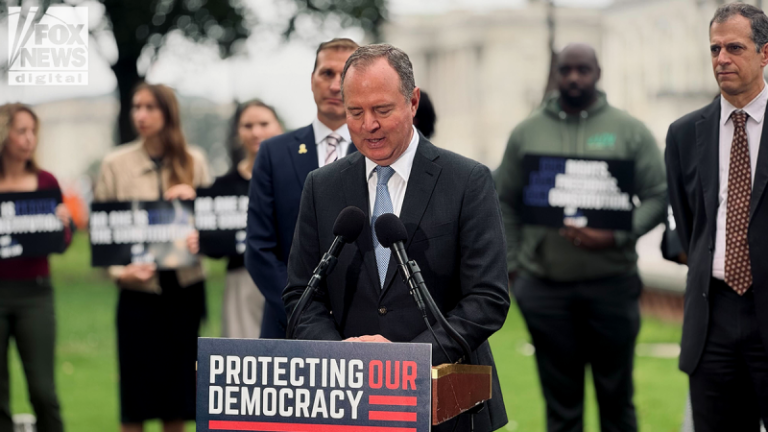
Democratic Rep. Sarah McBride of Delaware, who identifies as a transgender woman, accused President Donald Trump of waging an attack against ‘American democracy.’

‘This president is taking notes from his favorite dictator. Let’s be clear: a president with popular policies wouldn’t need to illegally gerrymander districts, ban voting machines, or abolish vote-by-mail,’ a Monday night post on the lawmaker’s @Rep_McBride X account declared. ‘This is an all-out assault not just on free and fair elections—but on American democracy itself.’ 

Fox News Digital reached out to the White House for comment early on Tuesday morning.

Trump, who has been aiming to help bring an end to the Russia-Ukraine war, met with Ukrainian President Volodymyr Zelenskyy and multiple other European figures in Washington, D.C., on Monday after meeting with Russian President Vladimir Putin in Alaska on Friday.

During an interview with Fox News Channel’s Sean Hannity on Friday after meeting with Putin, Trump said of the foreign leader, ‘Vladimir Putin, smart guy, said you can’t have an honest… election with mail-in voting.’

Trump declared in a Truth Social post on Monday that he will ‘lead a movement to’ eliminate voting machines and mail-in balloting from U.S. elections.

‘WE WILL BEGIN THIS EFFORT … by signing an EXECUTIVE ORDER to help bring HONESTY to the 2026 Midterm Elections,’ he declared in part of the lengthy post.

‘ELECTIONS CAN NEVER BE HONEST WITH MAIL IN BALLOTS/VOTING, and everybody, IN PARTICULAR THE DEMOCRATS, KNOWS THIS. I, AND THE REPUBLICAN PARTY, WILL FIGHT LIKE HELL TO BRING HONESTY AND INTEGRITY BACK TO OUR ELECTIONS. THE MAIL-IN BALLOT HOAX, USING VOTING MACHINES THAT ARE A COMPLETE AND TOTAL DISASTER, MUST END, NOW!!!’ the president exclaimed in another portion of the post.

This post appeared first on FOX NEWS

Newmont (TSX:NGT,NYSE:NEM,ASX:NEM) is preparing to withdraw from the Toronto Stock Exchange later this month, the latest in a string of moves to streamline operations and rein in costs following its US$15 billion takeover of Newcrest Mining in 2023.

The Denver-based miner said Wednesday it has applied for a voluntary delisting of its common shares from the TSX, effective at the close of trading on September 24.

The company cited “low trading volumes” on the Canadian exchange and said the decision is expected to “improve administrative efficiency and reduce costs for the benefit of Newmont’s shareholders.”

Newmont’s shares will continue to trade on the New York Stock Exchange, where it maintains its primary listing, as well as on the Australian Securities Exchange and the Papua New Guinea Stock Exchange under the ticker symbol NEM.

Rising costs and restructuring plans

Newmont’s all-in sustaining costs reached record levels earlier this year, eroding profits even as bullion prices hit all-time highs above US$3,500 an ounce in April and remained above US$3,300 through most of the summer.

The company has acknowledged that its cost base has outpaced peers. In the second quarter, Newmont’s costs were nearly 25 percent higher than those of Agnico Eagle Mines, a Canadian rival considered one of the industry’s leanest producers.

Costs have also risen more than 50 percent over the past five years, driven by higher energy, labor, and material prices, as well as integration expenses tied to Newcrest’s operations.

Chief Executive Officer Tom Palmer told investors in July that Newmont was pursuing additional measures to lower its expenses.

Behind the scenes, Newmont has been preparing for more aggressive measures.

People familiar with the matter told Bloomberg News that management has set an internal target to lower costs by as much as US$300 per ounce, or roughly 20 percent.

Meeting that benchmark could require thousands of layoffs across the company’s global workforce of about 22,000, excluding contractors.

While Newmont has not disclosed the scope of planned reductions, some employees have already been informed of redundancies, according to the report. Managers have also been briefed on potential curbs to long-term incentive programs as part of a broader restructuring.

A company spokesperson confirmed earlier this year that Newmont launched a cost and productivity improvement program in February.

Alongside cost cutting, Newmont has moved swiftly to divest non-core assets acquired in the Newcrest deal.

Since late 2024, the company has sold multiple Canadian operations: the Eleonore mine for about US$795 million, the Musselwhite mine in Ontario for $850 million, and its stake in the Porcupine operations for US$425 million.

The asset sales are intended not only to cut debt but also to sharpen focus on higher-margin operations, particularly in North America and Australia.

Despite higher costs, Newmont shares have surged 95 percent this year, followed by also announcing a US$3 billion share repurchase program in July.

Securities Disclosure: I, Giann Liguid, hold no direct investment interest in any company mentioned in this article.

This post appeared first on investingnews.com

‘oMg, diD tHe wHiTE hOuSE reALLy PosT tHis?’

That became one of the most common reactions across the White House’s feeds. The answer was always yes.

Serving as director of digital content for President Donald Trump was the most meaningful and intense chapter of my professional life. From the moment we rebooted the administration’s online presence on Inauguration Day, the mission was clear: speak in a voice that resonated with real Americans and make sure our MAGA message could not be ignored.

We did not build a cautious, government-style account. We built a fast, culturally fluent content machine designed to cut through the noise and win online. And it worked.

In just six months, the administration’s platforms added over 16 million new followers, with the fastest growth among Americans aged 18–34. We generated billions of video views and gained more than half a million new YouTube subscribers – nearly triple the previous administration’s total growth over four years.

But it was never just about numbers. Our success came from echoing the humor, passion and identity of a movement that was already alive. We did not invent the culture. We gave it a megaphone.

This was not entertainment for entertainment’s sake. Our meme-heavy, content-first strategy was aligned with the president’s priorities. Digital was not a sideshow. It was a frontline tool for shaping narratives, building momentum, and applying pressure. 

That was clearest during the push for President Trump’s One Big Beautiful Bill Act. We were not writing legislation. We were making sure Americans understood what was at stake. We turned policy into content people wanted to share – and that shifted the conversation.

That agility was only possible because of President Trump. His decisiveness gave us the freedom to move fast and take risks. Whether it was an ASMR-style video of deportations, a Jedi Trump with a bicep vein battling the deep state, or a surreal ‘Make It Rain’ Gemini AI-generated storm of cash over the White House, every post had intention. Every choice matched the cultural moment.

These were not random stunts. They were designed to draw younger Americans, many of whom had tuned out politics, back into the conversation. And it worked.

We did not wait to react to headlines. We inspired them. From the 100-day mugshot display on the North Lawn to anime-style fentanyl dealers crying on camera, we pushed the boundaries of political communication. 

Major media outlets took notice. Even Democrats are playing catch-up. Gavin Newsom has pretty much stolen podcasts, memes and trolling tactics that came straight from the MAGA playbook. That is not coincidence. That is proof of impact.

Here is the truth. We did not go viral because we were chasing virality. We went viral because we paid attention. We knew our audience. We stayed sharp on the message. And we operated like creators, not bureaucrats.

That kind of approach takes a rare team. The White House digital staff I had the honor to serve with are some of the smartest and most imaginative minds in politics today. They understand what many still miss: politics and culture are inseparable. You move them together or you do not move them at all. 

I have full confidence in the team under White House deputy communications director Kaelan Dorr to continue winning, and as Dorr put it best: ‘The arrests will continue. The memes will continue.’

As I step away from my role at the White House and return to leading my public relations and digital firm, I do so with pride. We did not just manage accounts. We reinvented how people experience the presidency online. Others are only now beginning to understand that reality. We will continue to lead – because we not only understand the tools. We understand the Americans who use them.

This post appeared first on FOX NEWS

Canadian Prime Minister Mark Carney has announced the country’s first five nation-building projects.

In March and April, the Build Canada Strong platform was a cornerstone of Carney’s election campaign, which came amid increasing trade tensions between Canada and the US. Among his promises was to create a Major Projects Office (MPO) that would review projects deemed to be in the national interest.

That office was established over the summer, with a release saying it would be headquartered in Calgary and overseen by former TransAlta (TSX:TA,NYSE:TSE) and Trans Mountain CEO Dawn Farrell.

The MPO was created as part of a shift in the regulatory framework for approving infrastructure and resource projects in Canada. Part of that will involve streamlining reviews and assessments, as well as reducing duplication between the federal and provincial governments, an issue that has hindered investment in Canada over the last 20 years.

“One of many studies has shown that the regulatory requirements in Canada have increased by more than 40 percent since 2006 and that’s been suppressing investment growth by 9 percent,” Carney said on Thursday (September 11).

In his statement, the prime minister introduced the first tranche of projects, and suggested the second will be announced before the Canadian Football League’s Grey Cup match, scheduled for November 16.

He also outlined criteria for projects to be covered by the MPO. They must be in the national interest, and must strengthen Canada’s autonomy, resilience and security; they must also have clear benefits for Canadians.

The first group of projects selected by the MPO has already seen significant development.

The prime minister noted that they have already been through extensive consultation with Indigenous communities, and have worked with provincial and territorial governments to meet necessary regulatory standards.

For these, Carney said the goal is for the MPO to get them across the finish line.

“In some cases, they are in the last stages of regulatory approvals. In most cases, there is some aspect of the financing or support packages for the projects that remain to be determined,” he said.

Mining, energy projects highlighted in first tranche

Among the first five projects featured are three involving Canada’s mining and energy sectors:

        Additionally, the MPO has committed to supporting the Darlington New Nuclear Project in Clarington, Ontario. This project aims to develop the first small modular reactor in a G7 country.

        The MPO will also help speed up the expansion of the Contrecour Terminal container project at the Port of Montreal. This expansion is expected to boost shipping volumes along the St. Lawrence Seaway.

        A project that could be included in a future announcement is the Pathways Plus carbon capture project, which the prime minister said will eventually lead to further oil sands development and the construction of a pipeline to reach markets beyond the US. Additionally, Carney said the MPO is looking at upgrades to the Port of Churchill, as well as an Arctic economic and security corridor, a high-speed rail corridor between Toronto and Québec City and Wind West Atlantic Energy, which would provide wind power to the provinces on the Atlantic coast.

        Securities Disclosure: I, Dean Belder, hold no direct investment interest in any company mentioned in this article.

        This post appeared first on investingnews.com

        Perth, Australia (ABN Newswire) – Altech Batteries Limited (ASX:ATC,OTC:ALTHF) (FRA:A3Y) (OTCMKTS:ALTHF) is pleased to announce the latest performance results of the CERENERGY(R) cell and battery pack prototypes. These results confirm the technological maturity and robustness of the CERENERGY(R) technology and mark another decisive step towards industrialisation.

        Highlights

        – 650+ cycles with no capacity loss, proving exceptional material stability and long operational lifespan compared to conventional batteries

        – Near 100% Coulombic efficiency, confirming minimal side reactions and strong intrinsic safety of sodium nickel chloride chemistry

        – High energy efficiency of up to 92%, surpassing typical 70-80% levels of competing battery technologies

        – Proven safety under extreme conditions – cells remained stable during overcharge, deep discharge, and thermal cycling up to 300 degC with no gassing, leakage, or rupture

        – Robust and reliable chemistry – sodium nickel chloride avoids flammable electrolytes and runaway risks, confirming suitability for safe, large-scale grid and renewable energy storage

        – ABS60 prototype validated under real-world conditions -tested across diverse load profiles, high-current pulses up to 50 A, and thermal variations

        – Stable, efficient performance – achieved ~88% round-trip efficiency with no observable capacity fade over 110+ cycles

        CELL PERFORMANCE

        The CERENERGY(R) prototype cells have successfully completed over 650 charge-discharge cycles without any detectable capacity loss. Cycle life is a critical measure of battery durability, as most conventional batteries experience gradual degradation with every cycle. Achieving such performance highlights the outstanding stability of the materials and points to the potential for a long operational lifespan.

        For stationary energy storage systems (ESS), this translates into fewer battery replacements, lower lifetime operating costs, and greater reliability for end users.

        The cells also delivered nearly 100% Coulombic efficiency alongside an energy efficiency of up to 92% across 650 cycles. Coulombic efficiency reflects the proportion of charge recovered during discharge relative to what was supplied during charging. A value approaching 100% indicates minimal side reactions or parasitic losses, confirming the intrinsic stability and safety of sodium nickel chloride chemistry. This high efficiency demonstrates that the cells are not expending energy on unwanted processes such as electrode degradation. Such performance is vital for scalability, ensuring reliable, longterm operation in commercial energy storage applications.

        Energy efficiency represents the proportion of energy delivered relative to the energy supplied. Competing technologies, including conventional high-temperature batteries and many flow batteries, typically achieve only around 70-80%. By reaching 92%, CERENERGY(R) positions itself in a highly competitive class, offering more cost-effective energy storage, stronger economics for grid operators, and seamless compatibility with the requirements of renewable energy integration.

        The cells achieved a nominal capacity of 100 Ah and 250 Wh, with reliable performance even at higher discharge rates. A key feature is their ability to support multiple daily charge-discharge cycles within the 20-80% state of charge (SoC) range at 25 A. This capability positions CERENERGY(R) as a highly flexible solution for grid operators and energy storage providers, enabling cost-efficient, long-life performance in applications that demand frequent cycling such as renewable integration, peak shaving, and backup power.

        CERENERGY(R) prototype cells underwent rigorous abuse testing, including overcharge to 4 V, deep discharge to 0.2 V, and thermal cycling between room temperature and 300 degC. In all cases, the cells remained stable with no gassing, leakage, or rupture -clear proof of their outstanding safety. These results highlight the intrinsic stability of sodium nickel chloride chemistry, which avoids the flammable electrolytes and runaway risks common in lithium-ion batteries. The ability to withstand extreme electrical and thermal stress demonstrates CERENERGY(R)’s robustness and confirms its suitability for safe, largescale deployment in grid, renewable, and industrial energy storage applications. This was achieved over 3 cycles with 1.8 Full Charge Equivalent (FCE) into 22 hours.

        BATTERY PACK ABS60 (60 kWh) PROTOTYPE

        The first ABS60 battery pack prototype has been successfully validated under real-world operating conditions, marking a major step forward in product readiness. Testing included diverse load profiles,

        continuous discharges at 25 A (equivalent to C-rate of C/4 (discharges in 4 hours), or one-quarter of the pack’s rated capacity per hour) at 80% depth of discharge (DoD), short-duration high-current pulses up to 50 A, and carefully controlled thermal variations.

        The pack consistently demonstrated stable performance, achieving ~88% round-trip efficiency while maintaining reliable thermal management. Efficiency refers to the proportion of input energy that can be retrieved during operation-a critical measure of economic viability for large-scale storage. Over more than 110 cycles, results showed no observable capacity fading and only a slight increase in internal resistance. Capacity fading refers to the gradual decline in usable energy over repeated cycles, while internal resistance influences power delivery and heat generation.

        The absence of meaningful degradation confirms the durability and electrochemical stability of the ABS60 design. These outcomes are highly significant as they demonstrate that the pack can withstand real-world duty cycles while retaining performance and efficiency, translating into longer service life, fewer replacements, and lower total cost of ownership.

        For grid operators and renewable integration projects, this combination of robust cycling capability, efficiency, and thermal stability underscores the ABS60’s commercial readiness and competitive advantage in the stationary energy storage market.

        These results are a strong confirmation of CERENERGY(R)’s technological leadership and a clear signal of the technology’s competitiveness and robustness for future applications in energy storage and industrial markets.

        Group Managing Director, Iggy Tan said ‘These results confirm CERENERGY(R)’s robustness and readiness for market adoption. Demonstrating long cycle life, high efficiency, and unmatched safety, we are now strongly positioned to deliver a competitive and sustainable alternative for grid and industrial energy storage.’

        *To view photographs, tables and figures, please visit:
        https://abnnewswire.net/lnk/17QS44T3

        About Altech Batteries Ltd:

        Altech Batteries Limited (ASX:ATC,OTC:ALTHF) (FRA:A3Y) is a specialty battery technology company that has a joint venture agreement with world leading German battery institute Fraunhofer IKTS (‘Fraunhofer’) to commercialise the revolutionary CERENERGY(R) Sodium Alumina Solid State (SAS) Battery. CERENERGY(R) batteries are the game-changing alternative to lithium-ion batteries. CERENERGY(R) batteries are fire and explosion-proof; have a life span of more than 15 years and operate in extreme cold and desert climates. The battery technology uses table salt and is lithium-free; cobalt-free; graphite-free; and copper-free, eliminating exposure to critical metal price rises and supply chain concerns.

        The joint venture is commercialising its CERENERGY(R) battery, with plans to construct a 100MWh production facility on Altech’s land in Saxony, Germany. The facility intends to produce CERENERGY(R) battery modules to provide grid storage solutions to the market.

        Source:
        Altech Batteries Ltd

        Contact:
        Corporate
        Iggy Tan
        Managing Director
        Altech Batteries Limited
        Tel: +61-8-6168-1555
        Email: info@altechgroup.com

        Martin Stein
        Chief Financial Officer
        Altech Batteries Limited
        Tel: +61-8-6168-1555
        Email: info@altechgroup.com

        News Provided by ABN Newswire via QuoteMedia

        This post appeared first on investingnews.com

        After meeting with Russian President Vladimir Putin in Alaska last week, President Donald Trump touted that he had a ‘very good meeting’ with Ukrainian President Volodymyr Zelenskyy and other European leaders at the White House on Monday.

        Trump, who has voiced he would like to put an end to mass bloodshed in Eastern Europe, called the multilateral meetings on Monday ‘a very good, early step for a War that has been going on for almost four years.’

        In a Truth Social post after the discussions, Trump wrote, ‘I had a very good meeting with distinguished guests,’ and that ‘everyone is very happy about the possibility of PEACE for Russia/Ukraine.’

        Here are the top five takeaways from the president’s ‘big day’ with European leaders.

        1. Smiles all around

        Monday’s summit marked a dramatic and noticeable shift from Trump and Vice President JD Vance’s now-infamous Oval Office meeting with Zelenskyy in February.

        During that meeting, the leaders were caught on camera getting into a heated argument over several topics, including Zelenskyy allegedly not being sufficiently grateful for U.S. support.

        On Monday, all the tension seemed to have disappeared. Both Trump and Zelenskyy were all smiles throughout the day, and the Ukrainian leader received a warm welcome from Trump’s Cabinet, including Vance, Secretary of State Marco Rubio and Defense Secretary Pete Hegseth.

        Both Zelenskyy and European leaders appeared more at ease with Trump throughout the day and took an optimistic tone. After the meetings, European Union President Ursula von der Leyen posted on X, ‘We are here, as allies and friends, for peace in Ukraine and in Europe. This is an important moment, as we continue to work on strong security guarantees for Ukraine and a lasting and durable peace.’

        2. Wardrobe upgrade

        Another marked shift from February was Zelenskyy breaking from his trademark jumpsuit attire to wear a suit, something he even joked with the press about while sitting in the Oval Office with Trump.

        Zelenskyy, who has been criticized for wearing casual attire to meetings with world leaders, wore all-black attire, including a button-down shirt and jacket. 

        ‘First of all… President Zelenskyy, you look fabulous in that suit,’ a reporter told Zelenskyy after he sat down with Trump in the Oval Office. 

        ‘You look good,’ the reporter said before Trump added, ‘I said the same thing.’ 

        At another point during the Zelenskyy-Trump bilateral press meeting, the Ukrainian president ribbed a reporter for wearing the same suit he had in February.

        ‘You’re in the same suit. You see, I changed, you’re not,’ Zelenskyy quipped as both he and Trump burst into laughter.

        3. Ceasefire not needed

        On a more substantive note, Trump doubled down on his position that a ceasefire is ‘not needed’ to broker a permanent peace between Ukraine and Russia. He cited his recent successes in negotiating peace agreements between other countries across the globe.

        ‘I don’t think you need ceasefire. You know, if you look at the six deals that I settled this year, they were all at war,’ Trump said during his press conference with Zelenskyy.

        ‘I didn’t do any ceasefires,’ he went on, adding, ‘And I know that it might be good to have, but I can also understand strategically why, you know, one country or the other wouldn’t want it.’ 

        In a rare tense moment during the day, Trump clashed with German Chancellor Friedrich Merz over the need for a ceasefire.

        Speaking with Trump and other leaders gathered around a large conference table in the White House, Merz said, ‘To be honest, we all would like to see a ceasefire at the latest from the next meeting on,’ adding, ‘I can’t imagine that the next meeting would take place without a ceasefire. So, let’s work on that.’

        He urged the leaders, ‘Let’s try to put pressure on Russia, because the credibility of this effort, these efforts we are undertaking today are depending on, at least, a ceasefire from the beginning of the serious negotiations from the next step on. So, I would like to emphasize this aspect and would like to see a ceasefire from the next meeting, which should be a trilateral meeting wherever it takes place.’

        In response, Trump shot back that he is determined ‘to go directly to a peace agreement’ without a ceasefire, saying, ‘Well, we’re going to let the president [Zelenskyy] go over and talk to the president [Putin], and we’ll see how that works out.’

        4. United European front

        In addition to Zelenskyy, seven major European leaders were present at the White House on Monday, a rare occurrence signaling a united European front and something Trump called an ‘honor’ for the U.S.

        This follows Zelenskyy doubling down on Sunday that Ukraine will not agree to cede Crimea or any of its territory to Russia as part of a peace deal.  

        ‘Since the territorial issue is so important, it should be discussed only by the leaders of Ukraine and Russia at the trilateral [talks with] Ukraine, United States, Russia,’ Zelenskyy said.

        Trump said that though the U.S. would be involved with providing Ukraine with security guarantees after the war’s end, he said going forward, Europe must take much of that ‘burden.’

        ‘I think that the European nations are going to take a lot of the burden,’ Trump said. ‘We’re going to help them, and we’re going to make it very secure. We also need to discuss the possible exchanges of territory, taking into consideration the current line of contact. That means the war zone, the war line center. Pretty obvious. Very sad, actually, to look at them and negotiating positions.’

        Meanwhile, French President Emmanuel Macron said Europe is aware that it will shoulder much of the weight of responsibility tied to various security guarantees — and acknowledged it is necessary in order to preserve each respective country’s safety. 

        ‘In order to have such a long-standing peace for Ukraine and for the whole continent, we do need the security guarantees,’ Macron said. ‘And the first one is clearly a credible Ukrainian army. For the years and decades to come. And the second one is our own commitments. All of us… You can be sure that the Europeans are very lucid about the fact that they have their fair share in the security guarantees for Ukraine, but their own security is clearly at stake in this situation.’

        5. Putin on the line

        Trump shared that he called Putin after the meetings and that there is already movement on the next step, that is, scheduling a meeting between Zelenskyy and the Russian president. After that meeting, Trump said there would then be a trilateral meeting between Zelenskyy, Putin and himself.

        ‘At the conclusion of the meetings, I called President Putin, and began the arrangements for a meeting, at a location to be determined, between President Putin and President Zelenskyy. After that meeting takes place, we will have a Trilat, which would be the two Presidents, plus myself,’ wrote Trump.

        In another post, Trump called the summit ‘a big day at the White House.’

        ‘We have never had so many European Leaders here at one time. A great honor for America!!!’ he wrote. ‘Lets see what the results will be???’ 

        Fox News Digital’s Diana Stancy, Emma Colton and Amanda Macias contributed to this report.

        This post appeared first on FOX NEWS

        Investor Insight

        Heliostar offers a rare combination of immediate cash flow from two producing mines and a significant growth story driven by the high-grade Ana Paula development project. This blend of near-term production, strong margins and a robust pipeline positions the company as a compelling emerging mid-tier gold producer.

        Overview

        Heliostar Metals (TSXV:HSTR,OTCQX:HSTXF,FRA:RGG1) is an emerging mid-tier gold producer focused on unlocking high-grade gold production in Mexico’s premier mining regions.

        The company rapidly expanded its asset base by acquiring a diverse portfolio of producing and development-stage assets. This positions it for long-term, scalable production growth supported by both high-grade underground and large open-pit heap-leach operations.

        Heliostar now holds two producing mines – La Colorada and San Agustin, with combined production of 30,000 to 40,000 oz of gold – and is advancing the development of its flagship Ana Paula project. Two additional development assets in Mexico, Cerro del Gallo and San Antonio, in addition to exploration projects in North Sonora and Unga in Alaska complete Heliostar’s portfolio. This diversified platform enables the company to fund development through operating cash flow while continuing to expand its resource base.

        Heliostar prioritizes capital discipline and low-cost acquisitions, significantly expanding its asset base while maintaining a lean financial structure. With a growing operating cash flow, the company is reducing reliance on equity financing for development.

        The company is positioned for strong year-over-year production growth as San Agustin restarts in Q4 2025, La Colorada executes its updated 2025 mine plan, and Ana Paula advances toward construction and expected first production in 2028, following a positive underground PEA in November 2025 and an ongoing feasibility study. These milestones support the company’s strategy of building a multi-asset production base with increasing scale and margins.

        Looking ahead, the company has a long-term vision of achieving 500,000 ounces of gold production annually by 2030. This growth will be driven by the development of Ana Paula, followed by Cerro del Gallo and San Antonio, with continued exploration success and strategic acquisitions supplementing organic growth.

        Company Highlights

        • Heliostar Metals is rapidly advancing from a junior explorer to a mid-tier gold producer, targeting 150,000 oz per year in the near term and 500,000 oz annually by 2030.
        • Heliostar has rapidly expanded its portfolio with key acquisitions, now controlling two producing mines and three advanced-stage growth assets in Mexico. Added 3.5 million measured and indicated gold ounces for just US$15 million, reinforcing a capital-efficient growth model.
        • The company prioritizes capital discipline and low-cost acquisitions to expand its asset base and maintain a lean financial structure. Unlike many juniors that rely on dilution to grow, Heliostar leverages gold production cash flows to drive project development.
        • Annual gold production at La Colorada and San Agustin mines as of 2025 is between 30,000 to 40,000 oz, with mine operations earning $14.2 million in Q3 2025. Cash flow from these two mines funds Heliostar’s exploration and development without significant dilution.
        • CEO Charles Funk leads a seasoned team of mine builders and exploration experts with a track record of developing world-class deposits.
        • The company also features a favorable shareholder registry: 53 percent institutional investors, 42 percent high-net-worth and retail investors, and 5 percent held by the board and management.

        Key Projects

        Ana Paula (Flagship Development Project)

        Ana Paula is Heliostar’s flagship high-grade underground gold project located in the Guerrero Gold Belt, one of Mexico’s most prolific precious metals regions.

        The November 2025 underground PEA confirms Ana Paula as a low-cost, high-margin development opportunity with a nine-year mine life producing approximately 875,000 ounces of gold, averaging roughly 101,000 ounces per year after ramp-up. The project benefits from a wide, high-grade panel that continues to demonstrate strong continuity and exceptional grades, supported by a mineral resource of 710,920 ounces of measured and indicated gold at 6.6 grams per ton (g/t) and 447,500 ounces of inferred gold at 4.24 g/t.

        Heliostar has transitioned the project to an underground-only development plan to enhance economics, minimize surface disturbance and reduce capital intensity. The company is advancing engineering and permitting programs, including a permit amendment to convert the existing open-pit approval into an underground operation. A recently expanded 20,000-metre drill program is underway to upgrade inferred resources, expand the mineral envelope and support the ongoing feasibility study. Recent results included 83.2m grading 17.35 g/t gold from 76.0 m and 70.7 m grading 9.38 g/t gold from 49.65 m.

        Heliostar intends to advance the existing decline in 2026 to access underground drilling platforms and complete bulk sampling, enabling a construction decision shortly thereafter and positioning the project for first production in 2028. Ana Paula is expected to become the cornerstone asset underpinning Heliostar’s long-term production growth.

        La Colorada Mine

        La Colorada, located in Sonora, Mexico, is a fully operating open-pit heap-leach mine that underwent a major turnaround in early 2025. Mining was restarted in January 2025, and an updated October 2025 technical report outlines a significantly strengthened operation with a 6.1-year mine life and total production of 286,000 ounces of gold. The mine is expected to produce between 17,500 and 23,800 gold-equivalent ounces in 2025 at competitive cash costs and all-in sustaining costs, benefiting from strong gold prices and improved operational performance.

        La Colorada has meaningful opportunities for growth through drilling of the Veta Madre Plus area, which could add up to 28,000 ounces of additional near-surface resource, and the evaluation of the underground potential at El Creston, where deeper drilling has returned high-grade gold and silver intercepts. Further optimization of low-grade stockpiles also offers a route to additional production with minimal capital requirements. With its expanded reserves, improving margins and active exploration pipeline, La Colorada remains a key cash-flow generator and a vital contributor to Heliostar’s self-funded growth strategy.

        San Agustin Mine

        San Agustin is a heap-leach gold mine in Durango, Mexico, that produced approximately 14,700 ounces of gold in 2024 and continues to generate cash flow through stockpile processing in 2025. The mine is scheduled to restart active mining in the fourth quarter of 2025 following approval of the Corner Permit Area, with the restart plan outlining roughly 44,500 ounces of total gold production over a 1.2-year mine life. The restart requires just US$4.2 million in initial capital, funded entirely from Heliostar’s balance sheet, and delivers strong economics with significant leverage to higher gold prices. Beyond the restart, San Agustin provides meaningful growth potential through near-surface oxide expansion and deeper sulfide and breccia targets, where drilling has identified encouraging mineralization.

        Cerro del Gallo Project

        Cerro del Gallo is a large-scale, gold-silver development project in the Guanajuato district with 2.86 Moz of measured and indicated gold resources and an additional 1 Moz inferred. The project is advancing through permitting and a pre-feasibility study expected in Q4 2025, which is evaluating a long-life heap-leach operation targeting 80,000 to 100,000 ounces of annual gold production. With its scale, simple metallurgy and strong development profile, Cerro del Gallo represents a cornerstone growth asset supporting Heliostar’s strategy to expand production later this decade

        San Antonio Project

        San Antonio is an open-pit heap-leach development project in Baja California Sur hosting 1.74 million ounces of measured and indicated gold resources. A January 2025 PEA outlines robust economics, including 1.1 Moz of total production over 13 years, low AISC and an after-tax NPV5 of US$715 million at US$2,600 gold. The project is progressing through additional studies and environmental permitting and provides significant medium-term growth potential within Heliostar’s pipeline.

        Unga Project

        The Unga project in Alaska is a high-grade gold exploration asset, with an inferred resource of 384,000 oz gold (13.8 g/t). While not a primary focus, the project remains a long-term high-grade growth opportunity.

        Management Team

        Charles Funk – President & CEO

        Charles Funk brings over 18 years of experience in business development and exploration. Before joining Heliostar, he held senior roles at Newcrest Mining and OZ Minerals, two of the world’s most prominent mining companies. Funk led the Panuco discovery for Vizsla Silver in 2020, demonstrating his strong expertise in identifying and advancing high-potential gold and silver deposits. Under his leadership, Heliostar has pursued transformational acquisitions that have rapidly expanded the company’s asset base while maintaining capital efficiency.

        Gregg Bush – Chief Operating Officer

        A highly regarded mine builder, Gregg Bush has a strong track record in mine development, project integration, and operations management. He previously served as COO of Capstone Mining for nine years and as SVP of Mexico for Equinox Gold. With deep experience in Latin American mining operations, Bush plays a pivotal role in advancing Heliostar’s production assets, optimizing operations and ensuring efficient project execution.

        Sam Anderson – VP Projects

        Sam Anderson brings 20 years of experience in mine geology and project management, including 17 years at Newmont, where he served as mine geology superintendent and senior manager of exploration business development. He played a significant role in the development of Newmont’s Merian Mine in Suriname, from resource stage to steady-state operation. His expertise in mineral resource expansion and project evaluation is crucial to advancing Ana Paula and Cerro del Gallo toward production.

        Mike Gingles – VP of Corporate Development

        With over 35 years of corporate and entrepreneurial experience in the mining industry, Mike Gingles has been a key player in major mining deals. He led the Pueblo Viejo and Turquoise Ridge transactions for Placer Dome, two of the largest gold assets in North America. His expertise in strategic partnerships, corporate finance, and project acquisitions has positioned Heliostar for transformational growth.

        Hernan Dorado – VP Sustainability & Special Projects

        As a fifth-generation miner, Hernan Dorado has more than 20 years of experience in the mining sector, including a founding role at Guanajuato Silver, where he served as COO. He has extensive experience in Mexican mining operations, permitting and sustainability practices, ensuring that Heliostar’s projects meet the highest environmental and social responsibility standards.

        Vitalina Lyssoun – Chief Financial Officer

        Vitalina Lyssoun is a chartered professional accountant (CPA, CA) with over 16 years of financial expertise with a focus on the resource sector. She has strengths in Canadian and US public company reporting, regulatory and tax compliance, and internal controls. She is fluent in Spanish and has experience in operations based in Mexico, Central America and West Africa. Most recently, Lyssoun built and led the corporate accounting team at Gatos Silver, including through their recent merger with First Majestic Silver.

        Stephen Soock – VP Investor Relations & Development

        Stephen Soock has been in the mining industry for almost 20 years in both technical and capital markets roles. He has worked in various technical roles at mine sites across Canada, including Vale’s Thompson Nickel operation, Mosaic’s Belle Plaine solution potash mine and Rio Tinto’s Diavik Diamond mine complex. Prior to joining Heliostar, Stephen spent eight years as a sell-side research analyst covering growth and development companies in the junior precious metals space. He graduated from Queen’s University with a B.Sc. in Mining Engineering, is a CFA Charterholder, and a Brendan Woods ranked analyst.

        This post appeared first on investingnews.com

        I’m with President Trump: ‘There’s no deal until there’s a deal.’

        And now that he has changed his stance and is openly siding with Vladimir Putin, despite vehement objections from Volodymyr Zelenskyy, who visited the White House yesterday, a deal seems rather elusive.

        Putin’s interest in peace is underscored by his continued bombardment of Ukraine, the country he illegally invaded, with the latest round killing 10 people. Which is to say the Kremlin dictator has no conceivable interest in peace, except on his maximalist terms.

        Look, I’m rooting for Trump. If he can somehow square the circle of this brutal and bloody war, and bring things to an end, he will deserve the Nobel Peace Prize. And Hillary said she’d nominate him.

        But the negative reviews of the Alaska sitdown has rankled Trump and prompted him to lash out at Fake News on Truth Social:

        ‘If we had the Summit elsewhere, the Democrat run and controlled media would have said what a terrible thing THAT was. These people are sick!’

        Okay, he doesn’t like the press. Except we now know, thanks to his in-flight comments to Fox’s Bret Baier, that he enjoys the sparring, likening it to a golf game. The reporters are all trying to get him to make a mistake. If he makes no breaking news, he wins. If he does say something that’s breaking news, he didn’t put the ball in the hole and they’ve got him. 

        I watched Sunday morning as Zelenskyy and top European officials said only Russia can end the war and that Ukraine would not be surrendering the Donbas region, home to more than 200,000 people.  

        As Gen. Wesley Clark told me on ‘Media Buzz,’ once you get past the Donbas region, it’s a ‘straight shot’ to Kyiv, so the brave Ukrainians, who have held off the far bigger Russian war machine, would be defenseless. 

        It’s mildly encouraging that media reports say Putin has accepted the need for security forces to protect Ukraine, meaning the Europeans – and the U.S. – would send troops for a peacekeeping unit.

        When special envoy Steve Witkoff, who was in the room during the Putin session, was asked about Trump’s change of position, I thought he’d deny it, but he didn’t. That confirms the stories are true, and certainly complicates matters.

        German Chancellor Friedrich Merz said over the weekend that Trump ‘said himself that a ceasefire was his absolute most important and highest priority. So, it was a joint demand, which isn’t happening now. We would have indeed hoped for a cease-fire first. The Russian side was obviously unwilling to do that.’

        So what exactly is Putin giving up? Nothing, as far as I can see. Every day without a cease-fire is another day that the indicted war criminal gets to cement his battlefield gains.

        And, under these circumstances, Trump expects Ukraine’s president to join in a trilateral meeting with him and Putin? 

        Responding to Fox’s Peter Doocy, Trump said: ‘I think if everything works out well today, we’ll have a trilat and I think there will be a reasonable chance of ending the war when we do that.’ 

        Zelenskyy, who repeatedly praised Trump–he wasn’t going to make the same mistake twice after getting kicked out of the White House following his meltdown back in February–reminded reporters that ‘we live under, each day, attacks. You know, that today have been a lot of attacks and a lot of wounded people. And the child was dead, small one, one year and half.

        ‘So we need to stop this war, to stop Russia. And we need to support American and European partners that will do our best, for this. So, and I think we show that we are strong people and we supported the idea of the united system of personnel, President Trump to stop this war, to make a diplomatic way of finishing this war. And we are ready for trilateral as presidents.’

        Now that stunned me. He’s willing to sit down with Putin and Trump after insisting on a cease-fire first – which was also the president’s position until he flipped and abandoned it after the sitdown with the indicted war criminal?

        So what was the mood afterward?

        ‘I’m optimistic that collectively we can reach an agreement that would deter any future aggression against Ukraine,’ Trump said. He added, ‘I have a feeling you and President Putin are going to work something out.’

        Zelenskyy ‘praised the constructive specific meeting,’ adding: ‘There is a lot of people in prison. So we need them back and guarantees which will work for the years. We spoke about it and I showed president a lot of details on the battlefield, on the map.’ 

        But will Putin, who views Zelenskyy as an illegitimate leader, attend?

        All the chatter about the red carpet and other atmospherics is meaningless. Yes, Zelenskyy wore a suit, albeit a military-style one.

        We should all be rooting for Trump. Even if he falls short, and the war drags on, it can only end with a negotiated settlement.

        At one point, Trump broke away from the session and called Putin, rather than waiting till afterwards.

        Trump posted that this was ‘a very good early step,’ and early may be the operative word. The war could certainly drag on. But it can’t end on the battlefield. We wouldn’t have gotten this far without Trump’s unique preference for leader-to-leader talks, even though he’s now openly siding with Vladimir Putin. Sometimes that produces results and sometimes it doesn’t, as with Kim Jong-un. But it’s given him – and us – a shot. 

        This post appeared first on FOX NEWS

        President Donald Trump described his White House negotiations with Ukrainian President Volodymyr Zelenskyy and European leaders as ‘a very good, early step’ toward ending the nearly four-year-old Russia-Ukraine war, announcing that he has already spoken with Russian President Vladimir Putin about arranging a direct meeting with Zelenskyy.

        Trump said the group of world leaders held discussions on security guarantees for Ukraine, with commitments coming primarily from European nations ‘in coordination with the United States’ in a statement on Truth Social after the meetings.

        ‘Everyone is very happy about the possibility of PEACE for Russia/Ukraine,’ Trump said, adding that Vice President JD Vance, Secretary of State Marco Rubio, and special envoy Steve Witkoff are now leading follow-up talks with Moscow and Kyiv.

        Zelenskyy signaled he too was ready to meet directly with Putin. 

        A Kremlin readout of the Trump-Putin call confirmed the pair ‘discussed the idea of raising the level of direct Russian-Ukrainian negotiations,’ but did not say whether Putin had agreed. 

        Trump outlines next steps

        Trump revealed that following the Oval Office meetings he phoned Putin to begin making ‘arrangements for a meeting, at a location to be determined, between President Putin and President Zelenskyy.’ If that takes place, he said, the next stage would be a ‘Trilat’ — a trilateral meeting involving himself, Putin, and Zelenskyy.

        Zelenskyy said he would be open to a meeting with Trump and Putin or a meeting with just Putin next. 

        ‘We confirmed that we are ready for a trilateral meeting,’ the Ukrainian president told reporters after the meeting. ‘And if Russia proposed to the President of the United States bilateral, and then we will see the result of the bilateral, then it can be trilateral. So I said, always, Ukraine will never stop on the way to peace, and we are ready for any kind of format but on the level of leaders.’

        While Trump has previously cast himself as a mediator rather than a dealmaker, the suggestion that Putin is open to meeting face-to-face with Zelenskyy marked the biggest breakthrough in peace negotiations yet. ‘Again, this was a very good, early step for a war that has been going on for almost four years,’ he said.

        Security guarantees under discussion

        The idea of ‘security guarantees’ has long been central to Ukraine’s demands. According to Trump, these would be provided primarily by European states, coordinated with Washington. Ahead of the meetings, Trump had not ruled out U.S. military involvement in the guarantees, but he has since stressed that Europe will bear the primary burden of defending Ukraine.

        Trump also reiterated his view that U.S. support should come through arms sales rather than aid packages. ‘We’re not giving anything. We’re selling weapons,’ he said earlier this week. Ukraine has reportedly floated a proposal to buy as much as $100 billion in U.S.-made weapons with European financing, according to the Financial Times. 

        Land swaps may be on the table 

        During the meeting, Trump and Zelenskyy were pictured viewing a map outlining the front lines of the war and the Ukrainian territory currently occupied by Russia, about 20% of the country. Trump may have used the map to discuss with Zelenskyy which regions he could realistically part with in order to obtain peace. 

        According to a source familiar with Zelenskyy’s visit planning, clarity on U.S. and European security guarantees could help the Ukrainian leader make the case domestically for any territorial concessions — a likely core element of talks with Russia. The question of which areas Ukraine could ‘let go’ and which it must retain remains deeply sensitive in Kyiv, where public opinion has hardened after years of fighting and heavy civilian losses.

        Russia’s categorical rejection

        Moscow strongly opposed the concept of NATO-style guarantees. The Russian foreign ministry released a statement during the White House talks warning that any arrangement involving NATO countries could trigger ‘uncontrolled escalation’ with ‘unpredictable consequences,’ according to state media outlet RIA. That categorical rejection underscores the difficulty of bridging the gap between Ukraine’s security needs and Russia’s demands.

        European leaders weigh in

        German Chancellor Merz stressed that no meaningful talks could occur without at least a temporary ceasefire.

        ‘I can’t imagine that the next meeting would take place without a ceasefire,’ Merz said. ‘So let’s work on that and put pressure on Russia, because the credibility of these efforts depends on at least a ceasefire.’

        Fox News’ Jacqui Heinrich contributed to this report. 

        This post appeared first on FOX NEWS