Author

admin

Browsing

Having covered Ukraine … and Russia … for over three decades, especially the war between the two countries for the last several years, I’ve naturally been fascinated by the latest Trump administration effort to broker peace.

The reaction I’ve been getting from contacts in Ukraine to the 28-point plan to end the war is not all that positive.  

‘It’s not worth the paper it’s written on,’ said one observer.

‘Any deal would have to include Ukraine…and Europe,’ noted another. 

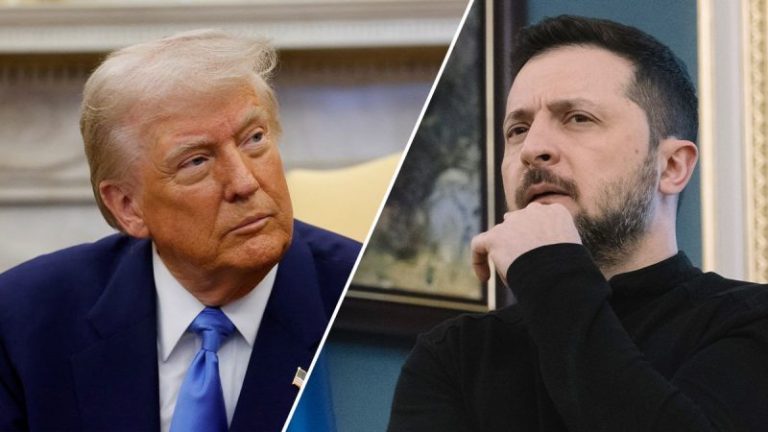
The overall consensus of analysts is that the document is slanted heavily towards Moscow. The man at the center of things, Ukrainian President Volodymyr Zelenskyy, has been diplomatic in various statements, basically saying he’s ‘reviewing the points’ aiming at arriving at a ‘dignified peace.’

There are all sorts of talks happening now between the U.S. and Ukraine and among European leaders. We’re even hearing from Russian President Vladimir Putin. It’s no wonder: The stakes in this war for Europe and the world are enormous. If I were to send a quick note to Zelenskyy, it would go something like this: 

Dear Volodymyr, 

So far so good. You haven’t freaked out, and you’re promising to engage. Rejection of this plan out of hand would have been a non-starter.

You’re staying cool (though a bit grim and determined), and you’re talking to people. 

My overall advice is … pick your fights, don’t sweat the small stuff, and keep the big picture in mind. 

I know what your country is going through. Every time I’m in Kyiv, I go to the same military cemetery outside the city, and it keeps getting bigger and bigger and sadder.

So, as to the points of the plan: There are a lot easy ‘gimmes’ to Russia. Re-joining the G-8. Gradual dropping of sanctions. Granting of amnesty for everything Russian troops have done. I know this stuff is going to stick in your craw, but little of it affects your country’s future. 

I mentioned that you shouldn’t ‘sweat the small stuff.’ Some of the points might sound like a big deal. Like prohibiting ‘Nazi ideology’ in Ukraine. And adopting ‘EU rules on religious tolerance and linguistic minorities.’ That’s pretty much window-dressing for Moscow. Having the Russian language and Russian church regain official status is not horrendous. 

In fact, the plan’s glass is at least one-third full for you guys. Confirming your sovereignty. Russia expected not to invade you again. You will receive reliable security guarantees. Rebuilding pledges and humanitarian promises. They are all good. Just nail down the specifics. Get all sides to commit for sure.

Now to three of the points which cross, according to analysts, your red line. 

Like handing over the rest of the eastern Donetsk region to Russia even though Moscow’s troops haven’t even taken it. The region is referred to as a demilitarized zone in the plan. A ‘DMZ’ ala the divider between North and South Korea. Well, hold them to that. No troops from either side. Tough security on both sides. A neutral body running things. And see if you can get them to not call it Russian!

Then there’s the reduction by a third of your military. Troop strength limited to 600,000. That’s a huge cut, but it’s still not a bad-sized force. That is if…it was properly trained, well-armed, and finely-positioned.  Guarantees are needed for all of this to happen.

And then there’s the other red line : No NATO troops in Ukraine. That would seem to scupper the plan to have foreign peace-keepers on the ground, which has been in the works, to monitor the peace. A possible compromise? They’re stationed around Ukraine’s borders, surveillance keeps a close eye on things and rapid-response forces are at the ready. 

There are also a few ‘gimmes’ for the U.S. in all this, like sharing in the profits of reconstruction. But that’s the price of doing business with President Trump. 

As for that Thanksgiving deadline to sign the deal? The president has already signaled he’s willing to let that slide if there’s talking. 

And that other deadline? One-hundred days until a new election? I know it’s a tough time for you politically with those corruption charges getting near. It might be something you have to live with. 

Anyway, for what it’s worth, that’s my take. 

Negotiations will probably sink on any hard discussion of any of these main points. But you know what the old adage is : ‘jaw-jaw’ is better than ‘war-war.’ 

For the proud people of Ukraine, who have suffered so much during this time, it’s worth your best shot.

Sincerely,

Greg

This post appeared first on FOX NEWS

The Republican National Committee (RNC) is taking a big step toward holding its first-ever midterm convention.

The RNC on Friday approved a change to the party’s rules that would allow Chair Joe Gruters to convene a convention during a midterm election year.

National political conventions, where party delegates from around the country formally nominate their party’s presidential candidates, normally take place during presidential election years.

But with Republicans aiming to protect their narrow control of the Senate and their razor-thin House majority in this year’s elections, President Donald Trump announced in September that the GOP would hold a convention ahead of the midterms ‘in order to show the great things we have done’ since recapturing the White House.

As first reported by Fox News Digital, the rule change was adopted Thursday evening by the RNC’s Rules Committee during the party’s winter meeting in Santa Barbara, California.

The full RNC membership, meeting Friday during the confab’s general session, approved the rule change in a unanimous vote.

A memo obtained by Fox News Digital highlighted ‘the possibility of an America First midterm convention-style gathering aligned with President Trump’s vision for energizing the party this fall.’

And speaking with reporters on Friday, Gruters called the convention a ‘Trump-a-palooza’ where ‘we can really highlight all the incredible things that this president has done.’

But the president’s approval ratings remain well underwater, with many Americans giving him a big thumbs down on the job he’s doing with the economy and the issue of affordability.

‘Trump has historically low approval ratings because he has put America last, sold out working families to hand out favors to billionaires, and made life unaffordable,’ Democratic National Committee (DNC) Chair Ken Martin told Fox News Digital in a statement.

The party in power, in this case the Republicans, normally faces stiff political headwinds in the midterms. And the hope among Trump and top Republicans is that a midterm convention would give the GOP a high-profile platform to showcase the president’s record and their congressional candidates running in the midterms.

Gruters, in a statement to Fox News Digital, touted that the RNC’s winter meeting ‘shows how completely united Republicans are behind President Trump and our efforts to win the midterms. The RNC has been aggressively focused on expanding our war chest, turning out voters and protecting the ballot in this fall’s elections. We’re building the operation needed to protect our majorities and give President Trump a full four-year term with a Republican Congress.’

Details on the date and location of the midterm convention will come at a later date and will likely be announced by the president.

But a Republican source told Fox News Digital it’s probable the convention would be held at the same time as the RNC’s summer meeting, which typically occurs in August.

The DNC may also hold a midterm convention. Sources confirmed to Fox News Digital last summer that Martin and other party leaders were quietly pushing the idea of a convention ahead of the midterms.

Democrats held a handful of midterm conventions in the 1970s and 1980s.

This post appeared first on FOX NEWS

Venezuelan opposition leader María Corina Machado on Friday issued a warning to the Trump administration that interim Venezuela President Delcy Rodríguez does not represent the views of the people.

‘I want to insist on this: Delcy Rodriguez, yes, she’s a communist. She’s the main ally and representation of the Russian regime, the Chinese and the Iranians, but that’s not the Venezuelan people and that’s not the armed forces, as well,’ Machado said while addressing a crowd at an event organized by the Heritage Foundation. 

Machado said that the situation was complex as allies of Nicolás Maduro continued to do ‘dirty work’ after his capture by the U.S. on Jan. 3. However, the opposition leader said that she is ‘profoundly confident’ that there will be an orderly transition of power.

‘This is a complex place we are right now. Some of the dirty work is being done by them, but then the result of a stable transition will be a proud Venezuela, who is going to be the best ally the United States has ever had in the Americas,’ she said.

The opposition leader’s comments came amid reports that CIA Director John Ratcliffe met with Rodriguez in Caracas.

Ratcliffe and Rodriguez reportedly discussed intelligence cooperation, economic stability and the need to ensure that Venezuela would no longer be a ‘safe haven for America’s adversaries.’ 

On Wednesday, Rodriguez, a Maduro ally who served as his vice president, announced that the government would continue the release of political prisoners detained under Maduro in an initiative she touted as a ‘new political moment,’ according to The Associated Press.

Just days before Rodriguez made the announcement, the interim government freed at least four U.S. citizens detained in Venezuela, marking the first known release of American prisoners since Maduro was ousted in a U.S. military operation earlier this month.

While speaking at the Heritage Foundation event, the opposition leader vowed that Venezuela would become ‘the best ally the United States has ever had in the Americas.’ Machado said that she believes Venezuelans are cohesive and joined by shared values but have been forced by the regime to make difficult choices and suffer severe hardships.

Following the capture of Maduro on Jan. 3, President Donald Trump said that the U.S. would ‘run’ Venezuela temporarily, though he did not detail further plans regarding transfers of power.

Trump, who met with Machado on Thursday, has yet to back the opposition leader and has even expressed doubts about the amount of support she has among the people of Venezuela. Despite not having his clear support, Machado praised Trump and emphasized the critical role that he and his administration would play in the future of Venezuela.

‘The only thing I want to assure the Venezuelans people is that Venezuela is going to be free and that’s going to be achieved with the support of the people of the United States and the president, Donald Trump of the United States,’ Machado told the crowd at the Heritage Foundation event.

She also commented early in her remarks that the Venezuelan people were grateful for Trump and his team’s historic mission to capture Maduro. Machado said that it ‘took a lot of courage’ to pull off the operation.

This post appeared first on FOX NEWS

Former President John F. Kennedy’s granddaughter, Tatiana Schlossberg, announced on Saturday — exactly 62 years after he was assassinated — that she has terminal cancer.

The 35-year-old said she was diagnosed with acute myeloid leukemia, with a rare mutation called Inversion 3, soon after the birth of her daughter in May 2024, and that doctors recently told her she probably has about a year to live.

‘My first thought was that my kids, whose faces live permanently on the inside of my eyelids, wouldn’t remember me,’ she wrote in an essay for The New Yorker. ‘My son might have a few memories, but he’ll probably start confusing them with pictures he sees or stories he hears.’

She said she ‘didn’t ever really get to take care of my daughter—I couldn’t change her diaper or give her a bath or feed her, all because of the risk of infection after my transplants. I was gone for almost half of her first year of life. I don’t know who, really, she thinks I am, and whether she will feel or remember, when I am gone, that I am her mother.’

She said the diagnosis was shocking because she felt perfectly healthy.

‘I did not—could not—believe that they were talking about me,’ she wrote of the first talk of leukemia. ‘I had swum a mile in the pool the day before, nine months pregnant. I wasn’t sick. I didn’t feel sick. I was actually one of the healthiest people I knew.’

She said the cancer is mostly seen in older patients and doctors frequently asked her if she had spent much time at Ground Zero in New York City, which she had not.

Schlossberg, who is the daughter of Caroline Kennedy, JFK’s oldest surviving daughter, described in heartbreaking detail her months on end of different treatments to beat the cancer.

She went through a round of chemotherapy to ‘reduce the number of blast cells in my bone marrow,’ then received a bone-marrow transplant with the help of her sister.

She said after she went into remission and went home she had no immune system and had to get all of her childhood vaccines again.

Then she relapsed, her doctor telling her that leukemia with her mutation ‘liked to come back.’

At the beginning of the year, she joined a clinical trial of CAR-T-cell therapy, ‘a type of immunotherapy that has proved effective against certain blood cancers.’

That was followed by another round of chemotherapy and a second blood transfusion from an unrelated donor.

‘During the latest clinical trial, my doctor told me that he could keep me alive for a year, maybe,’ she wrote.

She also wrote of her concerns after her cousin Robert F. Kennedy Jr., whom she called an ’embarrassment,’ was nominated as secretary of Health and Human Services.

‘Suddenly, the health-care system on which I relied felt strained, shaky,’ she wrote. ‘Doctors and scientists at Columbia [Presbyterian hospital], including [her husband] George, didn’t know if they would be able to continue their research, or even have jobs.’

She praised the rest of her family, whom she said sat at her bedside while she endured treatments and took care of her children.

Of her husband, urologist George Moran, she wrote, ‘he is perfect, and I feel so cheated and so sad that I don’t get to keep living the wonderful life I had with this kind, funny, handsome genius I managed to find.’

Her brother Jack Schlossberg, who is running for congress in New York, wrote on his Instagram on Saturday, ‘Life is short, let it rip.’


View this post on Instagram


Her mother’s cousin, Maria Shriver, shared her essay on Instagram, writing, ‘If you can only read one thing today, please make take the time for this extraordinary piece of writing by my cousin Caroline’s extraordinary daughter Tatiana. Tatiana is a beautiful writer, journalist, wife, mother, daughter, sister, and friend.’

Tatiana added in her essay, ‘For my whole life, I have tried to be good, to be a good student and a good sister and a good daughter, and to protect my mother and never make her upset or angry. Now I have added a new tragedy to her life, to our family’s life, and there’s nothing I can do to stop it.’

Robert F. Kennedy Sr., her mother, Caroline Kennedy’s uncle, was assassinated five years after JFK, and along with having two siblings who died in infancy, Caroline’s only surviving brother, JFK Jr, died in a plane crash in 1999.

Schlossberg’s grandmother, Jacqueline Kennedy Onassis, also died of cancer in 1994, of non-Hodgkin lymphoma when she was 64.

She finished her essay by saying that she lives to be with her children now.

‘But being in the present is harder than it sounds, so I let the memories come and go,’ she admitted. ‘So many of them are from my childhood that I feel as if I’m watching myself and my kids grow up at the same time.’

She added, ‘Sometimes I trick myself into thinking I’ll remember this forever, I’ll remember this when I’m dead. Obviously, I won’t. But since I don’t know what death is like and there’s no one to tell me what comes after it, I’ll keep pretending. I will keep trying to remember.’

This post appeared first on FOX NEWS

For nearly a decade, conservatives have argued President Donald Trump and his allies have been targeted by federal law enforcement agencies. The media and so-called intel experts tried to convince us that Hunter Biden’s laptop was fake news and the Steele Dossier was God’s honest truth. Why? Because of deep political bias against Trump. Rather than sweep these injustices under the rug, I want to set the record straight.  

In September, former FBI Director James Comey, known for misusing his power against the president, was indicted for lying to Congress. I’ve been arguing for five years that Comey’s actions should be examined carefully, including the possibility of criminal misconduct. 

In analyzing the prosecution of Comey, it’s important to review the facts that led to this moment. In July 2016, Comey’s FBI opened Crossfire Hurricane, a counterintelligence operation centered around whether Trump was colluding with Russia during his campaign. The genesis for this theory largely stemmed from the Steele Dossier prepared by Christopher Steele, who we now know was hired on behalf of the Clinton campaign.  

Within a month of opening Crossfire Hurricane, Comey attended a meeting at the White House where then-CIA Director John Brennan briefed then-President Barack Obama, then-Vice President Joe Biden and other high-ranking officials on credible intelligence suggesting then-Secretary of State Hillary Clinton’s campaign may have been behind the narrative that Trump was colluding with the Russians. A few weeks later, Comey also received a memo from the intelligence community supporting the idea that the Clinton campaign signed off on an effort to link Trump to Russia. 

Fast-forward to January 2017, the Russian subsource who provided the information for the Steele Dossier told the FBI that the information in the dossier was unreliable and nothing but hearsay. Despite this interview, Comey and others continued to apply for warrants against Carter Page, an official adviser to the Trump campaign. 

One would think that alarm bells would go off in the FBI when the man primarily responsible for creating the document used to get a warrant in the FISA court had recanted the authenticity of the document. Apparently, this bombshell revelation in the bureau’s most high-profile investigation sat in the bowels of the FBI and never made it to Comey. I find that hard to believe. 

At that time, the FBI clearly possessed exculpatory information exonerating Trump. Despite the fact that the DOJ and FBI have a duty to share exculpatory information and evidence that might undercut the reliability of a warrant application with the FISA court, they never did. 

In 2020, Comey testified during a hearing I called as chairman of the Senate Judiciary Committee that he was never informed of the dossier’s lack of credibility and that the intelligence reports indicating the Clinton campaign was behind the Russia narrative did not ‘ring any bells.’ I had a hard time then — as I do now — believing that the former FBI director was telling the truth. 

The other matter to consider is the Biden Justice Department’s persecution of Trump. Three days after he announced he would seek the White House in 2024, the Biden DOJ appointed Jack Smith as special counsel.  

Within nine months of launching his campaign, Trump was indicted on 91 criminal counts across four separate jurisdictions — two of which were started by Smith. It is my firm belief that if Trump had decided not to seek the presidency in 2024, none of this would have happened. Many Americans agree with me that these indictments were politically motivated and that Smith was not a fair arbiter of the law.  

It has been the DOJ’s long-standing policy to not charge political candidates before Election Day to avoid the appearance of impropriety. However, Smith obliterated this policy. Within a month before the 2024 election, Smith was allowed to publicly release a brief containing his own version of the evidence against Trump, and he was even allowed to release an unredacted version two weeks before the election.  

Smith not only went after Trump but also his allies in Congress. During their investigation, agents working for Smith obtained records from the phone calls I — as well as eight of my colleagues — made between Jan. 4-7, 2021. At that time, I was the chairman of the Senate Judiciary Committee. These actions are an egregious violation of the Constitution’s separation of powers and should concern every American, regardless of their politics.  

 I’ve been arguing for five years that Comey’s actions should be examined carefully, including the possibility of criminal misconduct. 

The common theme between Comey and Smith is that they cut corners and ignored procedures in their pursuit of Trump. Comey disregarded evidence exonerating Trump during Crossfire Hurricane, and Smith released damaging information about him just weeks before the 2024 election. These misguided investigations resulted in numerous indictments, flooded the media with negative stories about Trump and wasted millions of taxpayer dollars.  

Fortunately, the American people saw through these examples of weaponization by the DOJ and FBI, but Comey, Smith and others still inflicted great damage on our country. Their misconduct eroded trust in our institutions and threatened the Constitution’s fundamental principle of equal justice under law. 

These abuses by Comey and Smith come along with numerous other examples of Democratic administrations targeting conservatives, including the RNC, parents attending school board meetings, Americans going to church, the America First Policy Institute, among others. When you hear Republicans say the law has been weaponized against President Trump and his supporters, at least have some understanding of why we feel that way. To suggest otherwise defies reality and common sense. 

I will join my Republican colleagues and fellow Americans in refusing to be intimidated. We will keep pushing to hold accountable those who were responsible for outrageous abuses of power in an effort to destroy all things Trump. 

This post appeared first on FOX NEWS

Colombia’s former defense minister Juan Carlos Pinzón warned that the once-close U.S.–Colombia alliance has ‘collapsed’ under President Gustavo Petro, accusing the leftist leader of aligning with Venezuela’s Nicolás Maduro and turning Colombia into a ‘narco-state.’

Pinzón, who is weighing a presidential run, told Fox News Digital he could ‘repair U.S.-Colombian relations in a week’ and urged international oversight of Colombia’s May elections amid what he called growing cartel influence and political corruption.

‘Petro has made himself an ally to [Venezuelan dictator Nicolás] Maduro’s regime, a narco-state, and a regime that is held mainly by the Cartel de los Soles,’ Pinzón said. ‘He has justified the existence of drug trafficking in Colombia … he has aligned himself with the idea of something that he calls ‘Total Peace,’ which implies that he’s providing benefits to drug traffickers and terrorist organizations and in general terms to organized crime.’

Relations between Washington and Bogotá — historically one of the closest U.S. security partnerships in Latin America — have deteriorated sharply under Petro, who has sought warmer ties with Caracas while distancing Colombia from the U.S. and Western allies.

During his tenure as defense minister from 2011 to 2015 under President Juan Manuel Santos, Pinzón oversaw some of Colombia’s most aggressive operations against the FARC and other armed groups, helping drive coca production and kidnappings to historic lows. As ambassador to Washington from 2015 to 2017, he helped secure Colombia’s designation as a major non-NATO ally, expanding intelligence sharing and military training programs with the U.S. — partnerships he now says have been ‘dismantled’ under Petro.

Under Petro’s ‘Total Peace’ policy, the Colombian government negotiates directly with armed criminal groups in an effort to end decades of internal conflict and integrate fighters into civilian life. Critics, including Pinzón, say the initiative has legitimized cartels and weakened the country’s security forces.

‘Homicide has gone up, terrorist actions have gone up, kidnappings have gone up, and the killing of police officers and military is increasing,’ he said. ‘All this is very bad for my country. And this is why I’m so committed to fight this, to confront this.’

Pinzón, who previously served as both defense minister and ambassador to Washington, is positioning himself as a pro-U.S. alternative ahead of Colombia’s 2026 presidential race. ‘I might announce a decision in the coming weeks,’ he said. ‘That’s something that I’m really considering.’

He also called for international election monitoring, warning that criminal networks could interfere in the vote. ‘If I were to ask something to the world today and to the international community — to the U.S., to the European Union, and even to countries in Asia — it’s that they make sure Colombian elections are not tainted by drug trafficking, illegal mining or terrorist hands,’ Pinzón said.

After a recent spat where Petro accused the U.S. of killing a Colombian fisherman in one of its seven Caribbean strikes targeting drug traffickers, Trump announced he would cut off all counter-narcotics aid to Colombia and hike tariffs on the nation. 

Pinzón urged Washington not to punish ordinary Colombians for Petro’s policies.

‘It’s not regular Colombians who are doing this,’ he said. ‘Most of us completely disagree with what is going on under Petro. We don’t want to see tariffs that can affect jobs and businesses in Colombia.’

While he praised Trump’s stance against narco-trafficking and corruption, Pinzón said he hopes the U.S. will avoid cutting counternarcotics aid, which he described as vital to Colombia’s military and police forces on the front lines of the drug war. ‘Our military and police are the real fighters against drugs,’ he said. ‘They continue to sacrifice, they continue to confront terrorism and drug trafficking. If that support disappears, it’s the criminals who are going to benefit.’

Instead, Pinzón said Washington should focus on targeted financial sanctions—such as those imposed by the Treasury Department’s Office of Foreign Assets Control (OFAC)—to hit specific traffickers, corrupt officials and their enablers rather than imposing measures that ‘hurt regular Colombians.’ ‘We would prefer OFAC-style sanctions on the people committing crimes,’ he said, ‘not policies that punish those who oppose Petro’s agenda.’

Looking ahead to potential ties with Washington, Pinzón said he could quickly rebuild the partnership through renewed security and intelligence cooperation, technology exchange, and educational programs.

‘I will just come to the U.S., speak openly and clearly with President Trump and the U.S. leadership, and speak on the need of creating a security agreement again on intelligence, on air mobility, on technology, on combating drug trade, but also on critical minerals and education,’ he said. ‘We want more Colombians to come to U.S. schools and enhance their capabilities and come back to Colombia to create knowledge, wealth and prosperity. We’re going to be again the closest ally of the United States strategically in the region.’

If Colombia continues on its current course, Pinzón warned, it could destabilize the entire hemisphere. ‘Colombia is a stabilizer at the end,’ he said. ‘If Colombia fails, the whole region will fail.’

Asked if he would seek U.S. backing, Pinzón said he values bipartisan support. ‘Everybody knows that I will have a very good relationship with the United States, certainly with the current administration, with President Trump,’ he said.

Pinzón also accused Petro of ‘abandoning’ Colombian citizens during a diplomatic spat with Washington after refusing deportation flights from the U.S. because the migrants were shackled. He said he would cooperate on deportations and be open to broader agreements if asked.

‘When Afghanistan fell, we offered the U.S. even to take care of some of the Afghanis if necessary,’ Pinzón said. ‘When you have a strong relationship as the one we used to have between Colombia and the U.S., and we will have if I can get to the presidency, what we’re going to see is a lot of good coordination and a lot of good things for both the people of Colombia and the people of the United States.’

Fox News Digital reached out to the Colombian Embassy for comment but did not receive a response before publication.

This post appeared first on FOX NEWS

A group of House Republicans is raising concerns about the potential effects of the U.S. importing Argentinian beef after President Donald Trump floated the idea earlier this week.

Rep. Julie Fedorchak, R-N.D., is leading seven other House GOP lawmakers in a letter to the president on Tuesday evening, warning the potential plan has rattled the multibillion-dollar American ranching industry.

‘America’s cattle producers are among the most resilient and hardworking in the nation,’ the Republicans wrote. ‘Collectively, the cattle industry supports thousands of jobs across our districts and contributes $112 billion to rural economies nationwide.’

‘In recent days, we have heard strong concerns from producers regarding reports that the U.S. may import beef from Argentina.’

The House Republicans acknowledged the ‘importance of strong trade relationships and diverse markets’ but added that beef producers in their districts ‘are seeking clarity on how this decision will be made, what safety and inspection standards will apply, and how this policy aligns with your administration’s commitment to strengthening American agriculture.’

Trump suggested Sunday that buying beef from Argentina could help lower prices for Americans at home, amid a wider promise to lower costs for U.S. citizens.

‘One of the things we’re thinking about doing is beef from Argentina,’ Trump told reporters aboard Air Force One.

He later elaborated in his conversation with reporters, ‘We would buy some beef from Argentina. If we do that, that will bring our beef prices down.’

‘Our groceries are down, our energy prices are down. I think we’re going to have $2 gasoline pretty soon. We’re getting close and everything’s down. The one thing that’s kept up is beef,’ Trump said.

He added that it would not be ‘that much’ but argued it would help Argentina, a U.S. ally, as well.

But the House Republicans questioned whether imported beef would be held to the same food safety and animal health requirements as that of the U.S., which they called ‘the gold standard.’

‘Any import policy must hold foreign suppliers to those same rigorous standards. Introducing beef from countries with inconsistent safety or inspection records could undermine the confidence that U.S. ranchers have worked decades to earn,’ the lawmakers warned.

‘We respectfully request additional information on this matter and urge your administration to ensure that any future decisions are made with full transparency, sound science, and a firm commitment to the U.S. cattle industry. America’s producers can compete with anyone in the world. If given an opportunity, they will continue to respond quickly to the market demand for more quality American beef in our grocery stores.’

In addition to Fedorchak, the letter is also signed by Reps. Michelle Fischbach, R-Minn., Troy Downing, R-Mont., Gabe Evans, R-Colo., Dusty Johnson, R-S.D., Derek Schmidt, R-Kan., Jeff Hurd, R-Colo., and Republican Study Committee Chair August Pfluger, R-Texas.

White House spokesman Kush Desai told Fox News Digital in response, ‘The Trump administration remains committed to addressing the needs and concerns of American cattle producers and safeguarding their interests at home and abroad. That’s why the administration has secured billions in new export opportunities for American agricultural products in our historic trade deals with the UK, Japan, the EU, and others.’

‘It’s also why the administration is focused on reversing a prolonged decrease in the supply of live cattle by growing American cattle herds with robust action to deliver disaster relief to cattle country, support new ranchers, and reduce risk for cattle producers,’ Desai said.

Trump’s proposal has stirred some anxiety among some Republicans whose constituencies depend on cattle ranching.

Sen. Deb Fischer, R-Neb., posted on X Tuesday, ‘If the goal is addressing beef prices at the grocery store, this isn’t the way.’

‘The U.S. has safe, reliable beef, and it is the one bright spot in our struggling ag economy. Nebraska’s ranchers cannot afford to have the rug pulled out from under them when they’re just getting ahead or simply breaking even,’ Fischer wrote.

Meanwhile, Fox News Digital was told that Rep. Harriet Hageman, R-Wyo., also raised significant concerns about what importing beef from Argentina could do to the U.S. cattle ranching industry during a call with fellow House Republicans on Tuesday.

But some Republican responses were more muted. Sen. Markwayne Mullin, R-Okla., told reporters that Trump ‘definitely identified a problem’ regarding a shortage of cattle in the U.S. He added, ‘I understand what he’s trying to get done. I think there’s more ways to implement it.’

Fedorchak herself told Fox News Digital, ‘We’ve all received a number of questions and calls from our constituents over the last few days, so we are asking for clarity on the administration’s long-term plans. Our farmers and ranchers stand ready to deliver on the president’s America-First agenda. North Dakotans take great pride in producing the safest, highest-quality beef in the world — and we should be building on that success.’

This post appeared first on FOX NEWS

Lawyers for John Bolton and the Trump administration appeared in federal court in Maryland Friday to discuss next steps in the criminal case for Trump’s former national security adviser, who was indicted last month on charges of mishandling classified and sensitive materials.

Bolton was indicted last month on 18 criminal charges stemming from his alleged retention and transmission of classified and sensitive materials during Trump’s first term, including national defense information.

Authorities have accused him of sending more than 1,000 ‘diary-like’ updates to his wife and daughter between 2018 and 2019 via emails and texts, including classified information from intelligence briefings and meetings with foreign officials. 

The pre-trial hearing in Bolton’s case on Friday was largely a procedural one, centered on next steps for both parties to review the breadth of discovery materials Bolton is accused of illegally retaining and transmitting.

If nothing else, it underscored the fact that Bolton’s trial is unlikely to take place for quite some time. The deadlines that both parties agreed to will put discovery in the case well into 2026, with a status conference in the case scheduled for October of next year. A trial date has not yet been set.

U.S. District Judge Theodore D. Chuang seemed reluctant to accept the government’s lengthy proposed timeline for the document review process to take place, noting the government’s obligations under the Speedy Trials Act, which sets time limits for federal criminal trials. 

Seven months ‘is a very long time,’ Chuang told Thomas Sullivan, the lead prosecutor for the Justice Department, referring to the proposed May 22, 2026, date to produce discovery.

‘How many documents are in play here? Frankly, most of this should have been done before the indictment,’ Chuang noted. ‘Even assuming that couldn’t be completed, I still can’t understand why it would take seven months.’

In response, prosecutors noted that they still need to sort through some 1,000 pages of single-space documents obtained from Bolton’s home, and reiterated they have set ‘aggressive deadlines’ for the intelligence community to review the documents.

Bolton’s lawyer, Abbe Lowell, said in response that there are as many as three electronic devices that they haven’t ‘even started the process’ of reviewing, and which all must be reviewed by the filter team. 

Chuang ultimately agreed to grant a modified review schedule for the documents in question. Parties were ordered to submit by January 12 the first tranche of 10 documents prosecutors have described as being at the ‘heart’ of Bolton’s indictment.

They will also submit a joint status report detailing for the court where they are in the discovery process, and proposing the next interim deadline and the scope of materials that will be reviewed before then. 

The hearing comes as Bolton has attempted to cast his criminal case as part of a broader effort by the Trump administration to go after his perceived political foes, including former FBI Director James Comey and New York Attorney General Letitia James.

Still, the case against Bolton differs significantly. 

Unlike those cases, Bolton’s investigation into his handling of classified materials moved forward in part during the Biden administration, and career prosecutors in the U.S. Attorney’s office signed off on the charges — a contrast to the cases against Comey and James, which were brought by Trump’s former attorney, Lindsey Halligan.

Bolton, who pleaded not guilty to all charges last month, was ordered released by a magistrate judge on the condition that he remain in the continental United States and surrender his passport.

In a statement released after his indictment, Bolton said, ‘I have become the latest target in weaponizing the Justice Department to charge those he deems to be his enemies with charges that were declined before or distort the facts.’

This post appeared first on FOX NEWS

Speaker Mike Johnson, R-La., is signaling openness to making it harder for House lawmakers to punish each other via a censure resolution.

The congressional leader sat down for an interview with Fox News Digital on Friday, the first week the House returned since the beginning of the 43-day government shutdown began on Oct. 1.

But the five-day legislative week was marked by volatile politics, with three separate lawmakers forcing votes on rebuking one of their colleagues — out of five total threats to do so.

‘There is a large groundswell of bottom up consternation about that. The members are so frustrated by what this has become — and I mean across the Republican conference, and I think on the Democrat side as well,’ Johnson said. ‘I’ve told everybody I’m open to those discussions, because I’m more frustrated than anyone about how this is devolved. I think we’ve got to protect the institution.’

Johnson said those talks have focused specifically on raising the threshold it takes to push a censure. 

Currently, any one lawmaker can introduce a censure resolution against another. Both Republicans and Democrats have also wielded a mechanism this week known as a ‘privileged resolution’ to force an immediate vote on rebuking a colleague.

Johnson said there’s ‘a lot of ideas’ being floated on changing the system.

‘I’ve had members from across the conference bringing me their thoughts and ideas on that, and we’ll be going through that in a deliberative fashion to figure out what makes the most sense,’ he said.

The speaker did not directly commit to a House-wide vote on legislation to change the rule on censure, but he said, ‘I think most of the discussion thus far, again this is coming from members, is that we should raise the threshold so that it can’t just be a one-off individual quest by someone. You’ve got to have some agreement by some small group of members to do it.’

‘That would probably make it a more meaningful and useful tool, and not one that’s abused,’ Johnson said. ‘We don’t have consensus around any particular idea, but it is something that the vast majority of the members of the body are talking about right now.’

He also pushed back on media reports that suggested he wanted to change rules around discharge petitions, another mechanism rank-and-file lawmakers can use to force their will on House leaders.

Johnson said it was not something he was even considering at the moment.

A discharge petition allows lawmakers to initiate a vote on a measure despite leadership’s objections, provided that petition has support from a majority of the House.

It was most recently used successfully by Reps. Ro Khanna, D-Calif., and Thomas Massie, R-Ky., on a bill forcing the Department of Justice (DOJ) to release its files on Jeffrey Epstein.

Johnson ended up voting for the bill along with all but one House lawmaker, despite airing concerns about its language possibly not doing enough to protect the privacy of Epstein’s victims and other innocent people whose names may be caught up in the process.

He told Fox News Digital, however, that he is not looking at making changes to that process.

‘Somebody quoted me as saying, ‘I’m going to raise the threshold for discharges’, but that hasn’t even been part of the discussion and not something that I’ve anticipated,’ Johnson said. ‘This discussion has been solely focused on the censure, because it’s so commonly used now.’

Censures are traditionally a rare rebuke reserved for the most egregious instances of violating House decorum. They’ve been used more and more frequently, however, in today’s increasingly tense political environment.

This post appeared first on FOX NEWS

Former first son Hunter Biden is claiming that his father only pardoned him because Donald Trump reclaimed the presidency in November 2024 — and ‘would not have’ done so under ‘normal circumstances’ while the appeals process played out.

‘Donald Trump went and changed everything,’ Hunter said in an interview released Monday on journalist Tommy Christopher’s Substack platform.

‘And I don’t think that I need to make much of an argument about why it changed everything.’

The 55-year-old — who pleaded guilty last year to evading $1.4 million in back taxes to the IRS and was convicted on felony gun charges — declined to mention that he had apparently been present for discussions on pardons during Joe Biden’s final months in the White House.

‘I’ve said this before,’ Hunter went on.

‘My dad would not have pardoned me if President Trump had not won, and the reason that he would not have pardoned me is because I was certain that in a normal circumstance of the appeals [I would have won].’

The Biden scion added that Trump was planning a ‘revenge tour’ against his father, which would have made himself the ‘easiest target to just to intimidate and to not just impact me, but impact my entire family into, into silence in a way that at least he is not — it’s not as easy for him to do [with] me being pardoned.’

‘I realize how privileged I am,’ Hunter went on.

‘I realize how lucky I am; I realize that I got something that almost no one would have gotten.

‘But I’m incredibly grateful for it and I have to say that I don’t think that it requires me to make much of a detailed argument for why it was the right thing to do, at least from my dad, from his perspective.’

Ex-White House chief of staff Jeff Zients spilled last month that Hunter ‘was involved’ in clemency talks and even ‘attended a few meetings,’ a source with knowledge of the Biden official’s testimony to the House Oversight Committee told The Post.

This post appeared first on FOX NEWS