Author

admin

Browsing

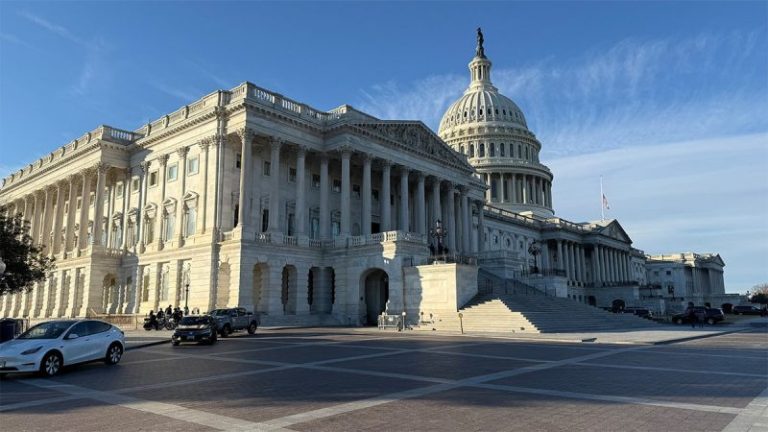
The Senate advanced the annual defense policy bill on an overwhelmingly bipartisan vote on Monday, teeing up final passage later in the week.

The National Defense Authorization Act (NDAA) of 2026 is one of the must-pass legislative packages that Congress deals with on an annual basis, and it unlocked billions of dollars in funding for the Pentagon and several other defense-related items.

Lawmakers pushed the colossal authorization package through a key procedural hurdle on a 76-20 vote. Senators will get their chance to tweak the package with several amendment votes in the coming days.

The roughly $901 billion package, which is about $8 billion over what President Donald Trump requested earlier this year, typically acts as a bookend for Congress, capping off the year as one of the few must-pass items on the docket. And, given that there is no government funding deadline to contend with, the NDAA is getting primetime treatment in the Senate.

Still, there are myriad items that lawmakers hope to tackle before leaving until the new year, including a fix to expiring Obamacare subsidies, confirming nearly 100 of Trump’s nominees, and a potential five-bill funding package that, if passed, would go a long way toward warding off the specter of another government shutdown come Jan. 30.

Scattered throughout the colossal package’s roughly 3,000 pages are several provisions dealing with decades-old war authorities, strikes on alleged drug boats in the Caribbean, Ukraine, lifting sanctions, and Washington, D.C.’s, airspace.

This year’s NDAA would scrap the 1991 and 2002 authorizations of use of military force (AUMFs) for the Gulf War and Iraq War, respectively. Lawmakers have found rare bipartisan middle ground in their desire to nix the AUMFs, which have been used by previous administrations to engage in conflicts in the Middle East for decades.

Then there is a policy that includes several requirements to fulfill the Pentagon’s travel budget, one of which would force the agency to hand over all unedited footage from the Trump administration’s strikes against alleged drug boats.

It’s a pointed provision that underscores the bipartisan concern from Congress over the administration’s handling of the strikes, particularly in the wake of a double-tap strike on Sept. 2 that has seen several lawmakers demand more transparency and access to the footage.

There is also a provision that has stirred up controversy among Senate Republicans and Democrats alike that would roll back some safety standards in the Washington, D.C., airspace. It comes on the heels of the collision between a Black Hawk helicopter and passenger jet near Ronald Reagan Washington National Airport earlier this year.

Senate Commerce, Science and Transportation Committee Chair Ted Cruz, R-Texas, and Sen. Maria Cantwell, D-Wash., the top ranking Democrat on the panel, are pushing to have the provision stripped with their own amendment, which would codify the safety tweaks made after the midair collision.

Cruz said alongside family members of the victims of the crash, which killed 67, that the provision didn’t go through the ordinary clearances.’ 

‘Normally, when you’re adding a provision to the NDAA that impacts aviation, you would request clearance from the chairman and ranking member of the Senate Commerce Committee,’ Cruz said. ‘No clearance was requested. We discovered this provision when the final version of the bill dropped out of the House and it was passed.’

There are also several provisions that deal with Ukraine, including an extension of the Ukraine Security Assistance Initiative, which would authorize $400 million each year to buy weapons from U.S. defense companies.

There’s a provision that would prevent the U.S. from quietly cutting off intelligence support to the country by requiring at least 48-hours notice detailing why, how long it would last and the impact on Ukraine.

There’s also a provision that would beef up reporting requirements for all foreign aid flowing to Ukraine from the U.S. and other allies supporting the country in its conflict with Russia.

This post appeared first on FOX NEWS

After the U.S. seized a tanker carrying Venezuelan crude oil, the shadowy fleet of ‘ghost ships’ used to evade sanctions drifted squarely into President Donald Trump’s crosshairs.

On Dec. 10, Trump announced the seizure of the ‘Skipper,’ a vessel that secretly ferries oil in defiance of sanctions. 

The broader fleet, a clandestine armada of roughly 1,000 tankers, quietly navigates global sea routes to move oil from sanctioned countries like Russia, Iran and Venezuela.

The so-called ‘ghost ships’ sail under foreign flags to obscure their origins, repeatedly change names, shift ownership through shell companies, disable transponders to evade tracking and conduct mid-sea transfers to mask their cargo.

The result is a labyrinthine system of handoffs and disguised voyages.

Benjamin Jensen, who heads the Futures Lab at the Center for Strategic and International Studies, said the challenge extends well beyond Venezuela.

‘I do think it’s time that the United States and other countries start to address what really is a global problem,’ explained Benjamin Jensen, director of the Futures Lab at the Washington, D.C.-based Center for Strategic and International Studies.

Jensen said the seizure sends a shock not just to Caracas but to other actors as well. 

‘What we don’t know is how they’re following that up behind the scenes,’ he said, adding that further seizures under Trump are possible.

With Venezuela’s economy tethered almost entirely to oil revenue, he noted that even a single interdiction can have an outsized impact. 

‘Anything you do that puts pressure on their ability to bypass sanctions and trade in oil is a direct threat to the economy and, by extension, the regime,’ he said. 

Meanwhile, the Trump administration has signaled that the seizure of the ‘Skipper’ is only the opening salvo in a new effort to cut off the oil revenues that keep Moscow, Tehran and Caracas afloat.

White House Press Secretary Karoline Leavitt said Thursday that the vessel is ‘undergoing a forfeiture process.’

‘Right now, the United States currently has a full investigative team on the ground, on the vessel and individuals on board the vessel are being interviewed, and any relevant evidence is being seized,’ Leavitt said, adding that the U.S. will take hold of the oil after the legal process is completed.

The move comes as China continues to be the leading importer of Iranian oil and the second-largest buyer of Russian crude, much of it routed through a growing fleet of nondescript tankers evading U.S. sanctions.

Earlier this year, the 19-year-old crude oil tanker named ‘Eventin’ was seized by German authorities after the ship suffered engine failure in the Baltic Sea. The vessel was previously identified as a ship that exports Russian crude oil and other petroleum products.

German authorities discovered that the Panama-flagged vessel, which was previously named Charvi and Storviken, was carrying 99,000 tons, or approximately $45 million worth, of Russian oil.

This post appeared first on FOX NEWS

Erika Kirk has announced that she is to meet privately with commentator Candace Owens marking the first direct conversation between the two after a period of public discussion and differing perspectives that emerged after her late husband’s death.

Kirk shared the update in a brief statement on X on Sunday, saying both women had agreed to pause all public commentary until after the meeting.

‘Candace Owens and I are meeting for a private, in-person discussion on Monday, December 15,’ Erika said.

‘@RealCandaceO and I have agreed that public discussions, livestreams, and tweets are on hold until after this meeting. I look forward to a productive conversation. Thank you,’ Erika added.

The planned discussion between Erika and the former Turning Point USA employee reflects an effort by the women to address weeks of mounting tensions over conspiracy theories online in a more thoughtful and personal setting.

At a recent CBS town hall Erika expressed the emotional toll of widespread online speculation surrounding her husband’s passing, ‘Stop. That’s it. That’s all I have to say. Stop.’ when asked what she had to say to people making unfounded claims.

‘When you go after my family, my Turning Point USA family, my Charlie Kirk Show family, when you go after the people that I love, and you’re making hundreds and thousands of dollars every single episode going after the people that I love because somehow they’re in on this, no,’ Erika also said on ‘Outnumbered’ Dec. 10.

The relationship between the two women has deteriorated sharply in recent months, despite their earlier history of collaboration and personal friendship.

The recent events have placed them on different sides of a sensitive moment and their decision to meet privately shows signs of a mutual desire to speak directly while reducing misunderstandings and avoiding further speculation.

Kirk, who now leads TPUSA, has been focused publicly on preserving her husband Charlie Kirk’s legacy since his tragic death in September.

This post appeared first on FOX NEWS

Secretary of State Marco Rubio is leading the U.S. delegation to the high-profile Munich Security Conference — one year after Vice President JD Vance took the German stage in a speech that stunned many in Europe and became one of the defining moments of Trump’s early second term abroad. 

‘President Trump has assembled the most talented team in history, including Vice President Vance and Secretary Rubio, who are working in lockstep to notch wins for the American people,’ White House spokeswoman Olivia Wales told Fox News Digital ahead of Rubio’s speech. 

‘The President and his team have flexed their foreign policy prowess to end decades-long wars, secure peace in the Middle East, and restore American dominance in the Western Hemisphere. The entire administration is working together to restore peace through strength and put America First.’

The Munich Security Conference is an annual high-level forum in Germany that draws hundreds of senior decision-makers — including heads of state, top ministers, military leaders and policy influencers — for closed-door and public talks on global security crises. 

Former Secretary of State Hillary Clinton, New York Democratic Rep. Alexandria Ocasio-Cortez and Gov. Gavin Newsom of California are among notable Democrats attending the conference, in addition to Rubio. 

Vance became one of the central figures at the 2025 Munich gathering after a widely publicized speech that drew heavy attention and applause from conservatives following the Biden administration. It also sparked backlash among some European officials who viewed his remarks as confrontational. 

Rubio’s attendance at the 2026 meeting follows a lengthy history of the State Department chief earning a series of different roles under the second administration, including acting national security advisor, secretary of state, acting archivist of the United States and acting administrator of the U.S. Agency for International Development. 

Amid rising trans-Atlantic tension, the secretary of state issued a warning to Europe as he departed for his trip to Germany Thursday. 

‘The Old World is gone,’ Rubio told reporters as he departed for Europe Thursday. ‘Frankly, the world I grew up in, and we live in a new era in geopolitics, and it’s going to require all of us to re-examine what that looks like and what our role is going to be.’

President Donald Trump and his administration repeatedly have put Europe on notice for allegedly devolving into a culture of political correctness, speech policing, and a security system that heavily relies on U.S. funding and military might. Amid the rhetoric on Europe, the administration has continued to underscore the importance of U.S.-Europe relations, including Rubio on Thursday. 

‘We’re very tightly linked together with Europe,’ he told reporters. ‘Most people in this country can trace both, either their cultural or their personal heritage, back to Europe. So, we just have to talk about that.’

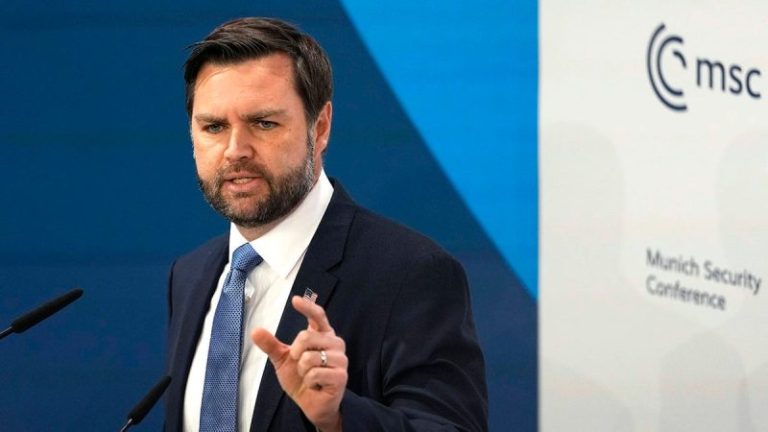
Vance used his Munich Security Conference speech to deliver a blunt warning to Europe’s political class 2025, arguing the continent’s biggest danger is not Moscow or Beijing, but what he described as internal democratic decay that has festered due to political correctness and censorship. 

He accused European governments and institutions of drifting toward censorship, citing policies he said police speech, curb religious expression and pressure online platforms. He also argued elites allegedly were trying to manage elections and debate by dismissing unwelcome outcomes and branding dissent as ‘misinformation’ to sideline populists and blunt voter backlash.

‘What I worry about is the threat from within, the retreat of Europe from some of its most fundamental values — values shared with the United States of America,’ Vance said in 2025 in the speech that left many European leaders stunned, according to reports at the time. 

Vance also is overseas this week, holding meetings with Armenia and Azerbaijan, including signing a peaceful nuclear cooperation with Armenia and a strategic partnership with Azerbaijan. 

That trip followed both Vance and Rubio joining a bilateral meeting with Prime Minister Giorgia Meloni earlier in February in Italy, and Vance leading a delegation that included Rubio during the Olympics’ opening ceremony in Milan. 

A source familiar told Fox News Digital that there were never plans for the vice president to attend the 2026 conference in Munich. 

Vance’s foreign policy footprint became subject of political media scrutiny earlier in 2026 when the U.S. military successfully captured Venezuelan dictator Nicolás Maduro. Vance was not among high-profile U.S. leaders who joined Trump at his Mar-a-Lago, Florida, resort to monitor the operation, unlike Rubio who was with the president. 

The VP’s office brushed off media alarm over his absence, citing  Trump and Vance limit the ‘frequency and duration’ of time they spend together outside the White House due to ‘increased security concerns.’ 

The vice president is by no means is expected to attend the Munich Security Conference each year, with former Vice President Mike Pence, for example, attending the conference twice under the first Trump administration, and former Vice President Kamala Harris attending three times under the Biden administration. Previous secretaries of state such as John Kerry, Antony Blinken and Hillary Clinton have attended and addressed the body in previous years. 

Vance additionally attended a separate Munich Security Conference event, the Leaders Conference, in Washington, D.C., in May 2025.

Trump praised Vance’s 2025 speech as ‘brilliant’ in a statement to reporters at the time, remarking that ‘they’re losing their wonderful right of freedom of speech’ in Europe and that Vance made a strong case against much of Europe’s lax immigration polices. 

Since then, Trump’s team repeatedly has echoed the same critique in official channels, including a State Department push that has blasted European speech restrictions and targeted the European Union’s Digital Services Act as ‘Orwellian’ censorship, alongside new visa restrictions aimed at foreign officials accused of censoring Americans online.

Just in December 2025, Trump blasted European nations for not being ‘recognizable’ at the World Economic Forum in Davos, Switzerland, teeing up what could be another fiery speech from Americans on European soil on Saturday. 

‘I don’t want to insult anybody and say I don’t recognize it,’ Trump said during his special address in Davos. ‘And that’s not in a positive way. That’s in a very negative way. And I love Europe and I want to see Europe do good, but it’s not heading in the right direction.’

Fox News Digital reached out to the State Department for comment on the address Friday. 

This post appeared first on FOX NEWS

Emboldened congressional Democrats are expanding their battleground map for this year’s midterm elections, when Republicans will be defending their razor-thin majority in the House.

But the National Republican Congressional Committee (NRCC) chairman, Rep. Richard Hudson, isn’t buying it.

‘I mean, I’ve read fiction my whole life, and I recognize it when I see it,’ Hudson said in an exclusive with Fox News.

Republicans currently control the House 218-214, with two right-tilting districts and one left-leaning seat currently vacant. Democrats need a net gain of just three seats in the midterms to win back the majority for the first time in four years.

The Democratic Congressional Campaign Committee (DCCC) this week added five more offensive opportunities in Colorado, Minnesota, Montana, South Carolina and Virginia to their list of what they consider are vulnerable Republican-held House districts.

That brings the total number of districts Democrats are hoping to flip to 44. The DCCC notes that all five of the new districts they’re adding to their list of ‘offensive targets’ were carried by President Donald Trump by 13 points or fewer in the 2024 elections.

‘Democrats are on offense, and our map reflects the fact that everyday Americans are tired of Republicans’ broken promises and ready for change in Congress,’ DCCC Chair Suzan DelBene emphasized earlier this week.

And DCCC Spokesperson Viet Shelton told Fox News Digital, ‘In a political environment where Democrats are overperforming by more than 17 points in congressional special elections, it’s pretty clear we’re poised to re-take the majority. Momentum and the American people are on our side while Republicans are running scared.’

Asked about the DCCC’s move, Hudson scoffed.

‘They’ve got to have a list they can present to their donors,’ he said as he pointed to the DCCC. ‘But it’s not realistic. I mean, if you look at the map, there are very few seats up for grabs, and the majority of those seats are held by Democrats, but they’re seats that Donald Trump has carried or came very close….if you look at the seats that we’ll be competing for this fall. They’re they’re all favoring Republicans.’

The House GOP campaign chair added, ‘If you look at the map, it’s a Republican map. We just got to go out and win those races.’

The move by the DCCC comes as Democrats are energized, despite the party’s polling woes. Democrats, thanks to their laser focus on affordability amid persistent inflation, scored decisive victories in the 2025 elections and have won or over performed in a slew of scheduled and special ballot box contests since Trump returned to the White House over a year ago.

Republicans, meanwhile, are facing traditional political headwinds in which the party in power in the nation’s capital normally suffers setbacks in the midterm elections. And the GOP is also dealing with Trump’s continued underwater approval ratings.

The latest national surveys, including the most recent Fox News poll, indicate the Democrats ahead of the Republicans by mid-single digits in the so-called generic ballot question, which asks respondents whether they’d back the Democratic or GOP candidate in their congressional district without offering specific candidate names.

Asked about the polls, Hudson said, ‘We almost never lead in the generic ballot. But a single digit generic ballot, we do very well.’

And the House GOP campaign chair added he remains ‘very bullish.’

Cost of living concerns helped boost Trump and Republicans to sweeping victories in 2024, but affordability and overall economic concerns may work against them this year.

While the latest AP/NORC national poll indicated the GOP with a slight advantage over Democrats on handling the economy, a bunch of surveys, including the latest Fox News poll, indicate many Americans feel things are worse off than they were a year ago and remain pessimistic about the economy.

But on Friday the latest government numbers indicated that inflation eased during January.

And Hudson says the economy is still a winning issue for Republicans.

Pointing to the numerous tax cuts kicking in this year in the GOP’s sweeping One Big Beautiful Bill Act, which Trump signed into law last summer, Hudson touted ‘we put policies in place that are going to bring prosperity to the American people, and they’re starting to feel it.’

‘And as we move into tax season…folks who work overtime, folks who work for tips, they’re going to see a lot more money in their pocket thanks to no tax on tips, no tax on overtime,’ he added.

The GOP is also dealing with a low propensity issue: MAGA voters who don’t always go to the polls when Trump’s name isn’t on the ballot.

‘Our voters tend to be more working-class voters, and you have to put in extra effort to get them to the polls,’ Hudson said. ‘We know that’s our challenge. President Trump knows that’s the challenge, and he’s committed to helping us.’

Pointing to the NRCC’s annual fundraising gala, which Trump will once again headline this year, Hudson said this dinner will be a great kickoff for this year. We raised a whole lot of money with President Trump last year. We plan to raise a lot of money in March with President Trump, and then he’s going to get out on the campaign trail and help us turn out those voters and make that case.’

Asked about midterm election predictions, Hudson shied away from giving any hard numbers.

‘Not going to give you a number, but we’re going to hold the majority,’ he predicted. ‘President Trump was elected with a very specific agenda. We delivered almost his entire domestic agenda, and we’re going to go back to the voters and say promises made, promises kept, and they’re going to keep this House majority.’

This post appeared first on FOX NEWS

After more than eight years of Democrat lawfare against President Trump, his aides and his allies, the Justice Department under Attorney General Pam Bondi is bringing much-needed accountability — which is what American voters demanded in our last presidential election. But Democrat activist judges are doing what they do best: weaponization and sabotage.

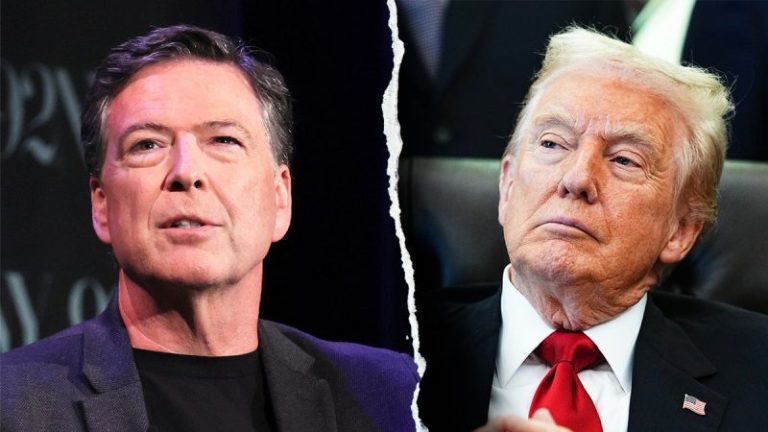
In South Carolina, Clinton-appointed Judge Cameron Currie — handpicked by a Biden-appointed judge — wrongly disqualified Eastern District of Virginia U.S. Attorney Lindsey Halligan, the bold and fearless prosecutor who had secured an indictment against former FBI Director James Comey for lying and obstruction of a Senate investigation into his politicization, weaponization, and corruption of the intel agencies and law enforcement to go after political enemies and protect political allies. The government is appealing that decision to the Fourth Circuit Court of Appeals.  Now, another Clinton-appointed judge in the District of Columbia, Colleen Kollarr-Kotelly, has interfered even more egregiously with the government’s case. This ruling threatens the separation of powers essential to the Republic, and either the D.C. Circuit or Supreme Court must intervene immediately.

Comey was indicted on two charges: making false statements to Congress and obstruction of Congress. The indictment stemmed from the events surrounding Operation Crossfire Hurricane, more colloquially known as the Russiagate hoax. Comey used his longtime friend, Columbia Law Professor Daniel Richman, as a conduit to leak material unfavorable to President Trump to media outlets. In addition to being a law professor, Richman was a government contractor. He and Comey communicated frequently via email on government and private accounts. Communications on a government email account enjoy no reasonable expectation of privacy — the standard under the Fourth Amendment as a result of Justice Harlan’s concurrence in Katz v. United States (1967) — because the government can monitor its own email servers.

Six years ago, even Obama-appointed Judge James Boasberg, a judicial disgrace about whom we often have written, signed a warrant authorizing the search and seizure of emails on Richman’s computer and iCloud account and his account at Columbia. Richman was able to review all emails and withhold the information he deemed privileged from all but one account. Now, Richman — who was the recipient of many emails from Comey and the sender of many emails to him — has sought to reclaim those emails pursuant to Federal Rule of Criminal Procedure 41(g). This rule allows an individual to ask a court to reclaim his property obtained pursuant to an unlawful search and/or seizure in violation of the Fourth Amendment.

Shockingly, Kollar-Kotelly granted the motion and has ordered the FBI to destroy the emails by 4 p.m. on Monday.  Kollar-Kotelly’s ruling ordered the destruction of emails obtained pursuant to a warrant signed by another (Obama) judge six years ago.  She claims that the seized information relates to a new investigation; however, she is basing this assertion on a decision by Eastern District of Virginia U.S. Magistrate Judge William Fitzpatrick. Fitzpatrick issued a suppression-like decision even though suppression was not briefed by the parties — yet another example of blatant and unlawful judicial sabotage by partisans in robes.

Collar-Kotelly has ordered that a copy of the emails be given to Biden-appointed Judge Michael Nachmanoff, who is presiding over the Comey case in Virginia. This salvation of a copy of the emails, however, does not lessen the impact of Kollar-Kotelly’s horrible ruling. The FBI and the prosecution will be unable to review them in their efforts to seek a new indictment if Currie’s dismissal ruling survives on appeal. The statute-of-limitations law allows the government only six months after an indictment’s dismissal, suspended during the appellate process, to seek a new indictment. The inability to view this evidence would substantially increase the time necessary to seek an indictment.  Even if a higher court reverses Currie, the government’s inability to review the emails to use as evidence and prepare for trial would massively hamper its case.

Kollar-Kotelly’s decision is more disturbing because it implicates the separation of powers. Usually, Rule 41(g) comes into play where a defendant has had property wrongly seized, and he moves to reclaim it. Here, Comey is not seeking to reclaim anything; Richman, a then-government contractor with whom Comey communicated extensively about government business, is seeking this evidence. Richman has run to a partisan Democrat judge not even involved in the criminal case — and not even in the same district — to procure the destruction of crucial evidence in that case in an obvious effort to assist his friend Comey. Comey cannot challenge the warrant against Richman because he lacks standing to do so. Incredibly, Kollar-Kotelly suggested that Richman could move to quash this evidence in Virginia.  She’s going way out of her way to help Comey. Judges presiding over cases often have excluded evidence against defendants as having been obtained in violation of the Fourth Amendment. It is, however, extraordinary for a different judge — especially in a different district — to interfere in and dramatically hamper the prosecution’s case based on a claim by a third party of a wrongful search and seizure, especially when the evidence the government wishes to use consists of communications between that third party and the defendant — a defendant who was a senior government official.

The government obtained the evidence it wishes to use against Comey pursuant to a lawful warrant, even one signed by a highly partisan Obama-appointed judge. Now, a Clinton-appointed judge who is not presiding over the case — and is not even in the same district — is blatantly trying to aid Comey by preventing the government from using that evidence either to re-indict Comey or try him if the original indictment is reinstated. This ruling contravenes the normal way in which Rule 41(g) applies. The Clinton judge’s staggering timeline — destruction by tomorrow afternoon — also illustrates her agenda. She should have stayed a ruling of such magnitude to allow the appellate process to play out.  Instead, she has put the government in an incredibly precarious position: having to obtain a stay from either the D.C. Circuit or the Supreme Court in just a few hours. Kollar-Kotelly’s order had no legal basis, and a higher court must put a stop to it.

Kollar-Kotelly’s ruling is part of a larger pattern. Leftist judges like Obama-appointed D.C. Judge Tanya Chutkan — who presided over President Trump’s January 6-related case, Boasberg, who signed off on the national disgrace that was Operation Arctic Frost, and many other Democrat judges did nothing to stop and did much to escalate the lawfare waged against President Trump, his aides, and his allies. Now, the Justice Department is seeking legal accountability for lawfare perpetrators like Comey. Currie and Kollar-Kotelly have endeavored to prevent — or, at the very least, drastically decrease the chances of — such legal accountability. Courts do not order the FBI to destroy evidence in pending investigations, except when the evidence is harmful to a lawfare perpetrator like Comey. The inconsistency between the treatment afforded lawfare perpetrators and lawfare targets threatens the very legitimacy of the federal judiciary. If higher courts do not reign in these rogue judges, Congress must do so through oversight, withholding of funds from judicial appropriations, and impeachment.  A system where the judiciary enables lawfare and then shields its perpetrators from legal consequences is unsustainable, and higher courts must put a stop to it.

This post appeared first on FOX NEWS

The federal government has entered its third partial shutdown of the last half-year after Congress failed to reach an agreement on all 12 of its annual spending bills.

Unlike past shutdowns, however, this one just affects the Department of Homeland Security (DHS). It comes after Democrats walked away from a bipartisan deal to fund the department amid uproar over President Donald Trump’s immigration crackdown in Minneapolis.

And while some 97% of the federal government has been funded at this point, a DHS shutdown will still have effects on everyday Americans — effects that will become more apparent the longer the standoff continues.

Air travel delays

Disruptions to the TSA, whose agents are responsible for security checks at nearly 440 airports across the country, could perhaps be the most impactful part of the partial shutdown to Americans’ everyday lives.

Acting Administrator Ha Nguyen McNeill told lawmakers at a hearing on Wednesday that around 95% of TSA employees — roughly 61,000 people — are deemed essential and will be forced to work without pay in the event of a shutdown.

‘We heard reports of officers sleeping in their cars at airports to save money on gas, selling their blood and plasma, and taking on second jobs to make ends meet,’ she said of the last shutdown.

But it would take some time before TSA funding could translate to delays. TSA agents, like other essential federal workers, received back pay once the shutdown was over. Those who did not miss shifts also got a $10,000 bonus for added relief.

TSA paychecks due to be issued on March 3 could see agents getting reduced pay depending on the length of the shutdown. Agents would not be at risk of missing a full paycheck until March 17.

If that happens, however, Americans could see delays or even cancellations at the country’s busiest airports as TSA agents are forced to call out of work and get second jobs to make ends meet.

Natural disaster reimbursement

The Federal Emergency Management Agency (FEMA) is one of the largest and most critical recipients of federal funding under DHS.

Associate Administrator of the Office of Response and Recovery Gregg Phillips told lawmakers on Wednesday that FEMA has enough funds to continue disaster response through a shutdown in the immediate future, but that its budget would be strained in the event of an unforeseen ‘catastrophic disaster.’

That means Americans hit by an unexpected natural disaster during the shutdown could see delayed federal reimbursement for their homes and small businesses.

Others who have already lived through a natural disaster in the last year but still have not received their checks — FEMA is currently working through a backlog worth billions of dollars — could see that relief delayed even further during the shutdown.

‘In the 45 days I’ve been here … we have spent $3 billion in 45 days on 5,000 projects,’ Phillips said. ‘We’re going as fast as we can. We’re committed to reducing the backlog. I can’t go any faster than we actually are. And if this lapses, that’s going to stop.’

Worker visa processing

American business owners who rely on certain types of worker visas could see processing times extended during a DHS shutdown.

That’s because United States Citizenship and Immigration Services (USCIS) programs are run under DHS and are responsible for processing most immigration applications as well as temporary visas.

The majority of those programs are funded by fees and are largely untouched. However, areas like e-Verify, the EB-5 Immigrant Investor Regional Center Program, Conrad 30 J-1 doctors, and non-minister religious workers all rely on funding appropriated by Congress, according to the American Immigration Lawyers Association.

USCIS could allow employers to use alternate processes if e-Verify is disrupted during a shutdown, but it’s not clear how much time it would add to business owners’ day-to-day responsibilities to learn a new route for that paperwork.

This post appeared first on FOX NEWS

China has spent decades building a land-based missile force designed to keep the United States out of a fight over Taiwan — and U.S. officials say it now threatens every major airfield, port and military installation across the Western Pacific.

As Washington races to build its own long-range fires, analysts warn that the land domain has become the most overlooked — and potentially decisive — part of the U.S.–China matchup. Interviews with military experts show a contest defined not by tanks or troop movements, but by missile ranges, base access and whether U.S. forces can survive the opening salvos of a war that may begin long before any aircraft take off.

‘The People’s Liberation Army Rocket Force … has built an increasing number of short-, medium-, and long-range missiles,’ Seth Jones of the Center for Strategic and International Studies told Fox News Digital. ‘They have the capability to shoot those across the first and increasingly the second island chains.’

For years, Chinese officials assumed they could not match the United States in air superiority. The Rocket Force became the workaround: massed, land-based firepower meant to shut down U.S. bases and keep American aircraft and ships outside the fight.

‘They didn’t think that they could gain air superiority in a straight-up air-to-air fight,’ said Eric Heginbotham, a research scientist at the Massachusetts Institute of Technology. ‘So you need another way to get missiles out — and that another way is by building a lot of ground launchers.’

The result is the world’s largest inventory of theater-range missiles, backed by hardened underground facilities, mobile launchers and rapid shoot-and-scoot tactics designed to overwhelm U.S. defenses.

Despite China’s numerical edge, American forces still hold advantages Beijing has not yet matched — particularly in targeting and survivability. 

U.S. missiles, from Tomahawks to SM-6s to future hypersonic weapons, are tied into a global surveillance network the People’s Liberation Army cannot yet replicate. American targeting relies on satellites, undersea sensors, stealth drones and joint command tools matured over decades of combat experience.

‘The Chinese have not fought a war since the 1970s,’ Jones said. ‘We see lots of challenges with their ability to conduct joint operations across different services.’ 

The U.S., by contrast, has built multi-domain task forces in the Pacific to integrate cyber, space, electronic warfare and precision fires — a level of coordination analysts say China has yet to demonstrate.

Jones said China’s defense industry also faces major hurdles. 

‘Most of (China’s defense firms) are state-owned enterprises,’ he said. ‘We see massive inefficiency, the quality of the systems … we see a lot of maintenance challenges.’

Still, the United States faces a near-term problem of its own: missile stockpiles.

‘We still right now … would run out (of long-range munitions) after roughly a week or so of conflict over, say, Taiwan,’ Jones said.

Washington is trying to close that gap by rapidly expanding production of ground-launched weapons. New Army systems — Typhon launchers, high mobility artillery rocket system, batteries, precision strike missiles and long-range hypersonic weapons with a range exceeding 2,500 kilometers — are designed to hold Chinese forces at risk from much farther away.

Heginbotham said the shift is finally happening at scale. 

‘We’re buying anti-ship missiles like there’s no tomorrow,’ he said.

If current plans hold, U.S. forces will field roughly 15,000 long-range anti-ship missiles by 2035, up from about 2,500 today.

China’s missile-heavy strategy is built to overwhelm U.S. bases early in a conflict. The United States, meanwhile, relies on layered air defenses: Patriot batteries to protect airfields and logistics hubs, terminal high altitude area defense (THAAD) interceptors to engage ballistic missiles at high altitude, and Aegis-equipped destroyers that can intercept missiles far from shore.

Heginbotham warned the U.S. will need to widen that defensive mix. 

‘We really need a lot more and greater variety of missile defenses and preferably cheaper missile defenses,’ he said.

One of Washington’s biggest advantages is its ability to conduct long-range strikes from beneath the ocean. U.S. submarines can fire cruise missiles from virtually anywhere in the Western Pacific, without relying on allied basing and without exposing launchers to Chinese fire — a degree of stealth China does not yet possess.

Command integration is another area where Beijing continues to struggle. American units routinely train in multi-domain operations that knit together air, sea, cyber, space and ground-based fires. 

Jones and Heginbotham both noted that the People’s Liberation Army has far less experience coordinating forces across services and continues to grapple with doctrinal and organizational problems, including the dual commander–political commissar structure inside its missile brigades.

Alliances may be the most consequential difference. Japan, the Philippines, Australia and South Korea provide depth, intelligence sharing, logistics hubs and potential launch points for U.S. forces. 

China has no comparable network of partners, leaving it to operate from a much narrower geographic footprint. In a missile war, accuracy, integration and survivability often matter more than sheer volume — and in those areas the United States still holds meaningful advantages.

At the heart of this competition is geography. Missiles matter less than the places they can be launched from, and China’s ability to project power beyond its coastline remains sharply constrained.

‘They’ve got big power-projection problems right now,’ Jones said. ‘They don’t have a lot of basing as you get outside of the first island chain.’

The United States faces its own version of that challenge. Long-range Army and Marine Corps fires require host-nation permission, turning diplomacy into a form of firepower. 

‘It’s absolutely central,’ Heginbotham said. ‘You do need regional basing.’

Recent U.S. agreements with the Philippines, along with expanded cooperation with Japan and Australia, reflect a push to position American launchers close enough to matter without permanently stationing large ground forces there.

A U.S.–China land conflict would not involve armored columns maneuvering for territory. The decisive question is whether missile units on both sides can fire, relocate and fire again before being targeted.

China has invested heavily in survivability, dispersing its brigades across underground bunkers, tunnels and hardened sites. Many can fire and relocate within minutes. Mobile launchers, decoys and deeply buried storage complexes make them difficult to neutralize.

U.S. launchers in the Pacific would face intense Chinese surveillance and long-range missile attacks. After two decades focused on counterterrorism, the Pentagon is now reinvesting in deception, mobility and hardened infrastructure — capabilities critical to surviving the opening stages of a missile war.

Any U.S. intervention in a Taiwan conflict would also force Washington to confront a politically charged question: whether to strike missile bases on the Chinese mainland. Doing so risks escalation; avoiding it carries operational costs.

‘Yes … you can defend Taiwan without striking bases inside China,’ Heginbotham said. ‘But you are giving away a significant advantage.’

Holding back may help prevent the conflict from widening, but it also allows China to keep firing. 

‘It’s a reality of conflict in the nuclear age that almost any conflict is gonna be limited in some ways,’ Heginbotham said. ‘Then the question becomes where those boundaries are drawn, can you prevent it from spreading? What trade-offs you’re willing to accept?’

A U.S.–China clash on land would not be fought by massed armies. It would be a missile war shaped by geography, alliances and survivability — a contest where political access and command integration matter as much as raw firepower.

For the United States, the challenge is clear: build enough long-range missiles, secure the basing needed to use them and keep launchers alive under fire. For China, the question is whether its vast missile arsenal and continental depth can offset weaknesses in coordination, command structure and real-world combat experience.

The side that can shoot, relocate and sustain fire the longest will control the land domain — and may shape the outcome of a war in the Pacific.

This is the third installment of a series comparing U.S. and Chinese military capabilities. Feel free to check out earlier stories comparing sea and air capabilities.

This post appeared first on FOX NEWS

The Trump administration’s latest offensive move against Venezuela, the seizure of a tanker carrying U.S.-sanctioned oil, has triggered predictable outrage from Venezuelan President Nicolás Maduro’s government. 

But behind the rhetorical fire, analysts say the regime has few practical ways to hit back without doing even more damage to itself.

Experts say that Maduro could target U.S. oil interests in Venezuela, but doing so would almost certainly inflict more pain on his own cash-starved regime than on the United States.

Maduro could also halt U.S.-chartered deportation flights, but again, would be harming his own interests, experts say. 

‘Venezuelans are just leaving the country because of the terrible conditions the regime has created,’ said Connor Pfeiffer, a Western Hemisphere analyst at FDD Action. ‘By having people come back, even if they’re on U.S. charter deportation flights, it kind of counters that narrative.’

Western oil firms have significantly decreased their presence in Venezuela, home to world’s largest proven oil reserves, in recent years due to sanctions. 

But U.S.-owned Chevron does still maintain a license to operate there, on the condition that the Maduro regime does not financially benefit from its operations. Instead, Chevron hands over to Maduro half of its oil production as payment, according to multiple reports.

‘Chevron’s operations in Venezuela continue in full compliance with laws and regulations applicable to its business, as well as the sanctions frameworks provided for by the U.S. government,’ a Chevron spokesperson told Fox News Digital.  

Imports of Venezuelan crude have declined to roughly 130,000 barrels per day (bpd) to 150,000 bpd in recent months, below the nearly 300,000 bpd seen under the prior petroleum licensing regime under the Biden administration. Most of Venezuela’s exports are now routed to Asia, with the bulk ultimately landing in China through intermediaries, according to data from Kplr. 

Despite that flow of crude, analysts say the idea of Caracas striking back at Chevron is more potent as a talking point than as a viable policy option.

Shutting down or seizing the company’s operations would instantly cut off one of the few lifelines still feeding Venezuela’s collapsing oil sector. It also would risk triggering a swift and politically difficult American response, including a full reinstatement of the sanctions relief the regime has quietly relied on.

Pfeiffer noted that the Maduro government has been ‘very supportive of Chevron continuing to operate’ because the arrangement provides tens of thousands of barrels a day of oil with minimal investment from Venezuelan-owned Petróleos de Venezuela, S.A. Other analysts say that reality sharply limits Maduro’s room to maneuver: any attack on Chevron would strike at his own revenue stream first.

Another theoretical lever — military or maritime escalation — is widely viewed as even less credible. Venezuela has taken delivery of small Iranian-built fast attack craft equipped with anti-ship missiles, a fact that has fueled speculation Maduro could threaten U.S. or allied vessels.

But Venezuela’s navy suffers from years of maintenance failures and lacks the ability to sustain operations against American forces deployed in the Caribbean. Any aggressive move at sea would almost certainly invite a U.S. military response the regime is in no position to absorb.

Diplomatically, Caracas could suspend remaining channels with Washington, or file legal challenges in U.S. courts or international forums. Yet previous efforts to contest sanctions-related seizures have gone nowhere, and Venezuela’s relationships in the hemisphere offer limited leverage. 

Regional bodies have little sway over U.S. sanctions law, and even supportive governments in Russia, China, or Iran are unlikely to intervene beyond issuing critical statements. Beijing, now the primary destination for Venezuelan crude, has economic interests at stake but few practical avenues to challenge U.S. enforcement actions.

Absent direct military strikes, cracking down on sanctioned oil exports is one of the most potent ways the U.S. can weaken the regime, according to Pfeiffer. 

‘This is one of his main sources of revenue keeping the regime afloat.’

This post appeared first on FOX NEWS

The State Department is so far refusing to comment on a growing corruption crisis engulfing the Balkan nation of Albania, a vital U.S. ally in the region. 

Following an Albanian court’s decision to remove Deputy Prime Minister Belinda Balluku from her position on allegations she interfered in two construction bids, socialist Prime Minister Edi Rama took the issue to the country’s Constitutional Court, which on Friday reinstated Balluku until a ‘final decision’ could be made, according to media reports.

The Special Anti-Corruption and Organized Crime Structure (SPAK) issued a criminal indictment against Balluku on Oct. 31, alleging she had been improperly influenced in her decision to favor one company in a tender for the construction of a 3.7-mile tunnel in southern Albania, Reuters reported. SPAK delivered an additional charge for violating rules in a Tirana road construction project on Nov. 21, the date when Balluku was removed from office.

The day before her November court appearance, Balluku told the country’s parliament the accusations against her amounted to ‘mudslinging, insinuations, half-truths and lies.’

As the second member of Rama’s cabinet to face corruption accusations since 2023, her charges have drawn the ire of Rama opponents.

Agim Nesho, former Albanian ambassador to the U.S. and the United Nations, told Fox News Digital that Balluku’s case demonstrates ‘the Rama government shows no sign of assuming moral responsibility or allowing justice the space to act independently. Instead, it appears intent on shielding Ms. Balluku, portraying the judiciary’s actions as an attack on the executive.’

Tirana’s ex-ambassador to Washington argued that ‘influencing the Constitutional Court may be an attempt to set a protective precedent — one that could prove useful if investigators ever seek to involve Mr. Rama himself in their investigations.’

‘It’s becoming increasingly clear that the emperor has no clothes,’ Nesho said, adding that Rama’s rule has amounted to ‘state capture’ as the ‘lack of checks and balances has enabled a recurring system of corruption across multiple of his terms.’

Nesho also claimed that Balluku had pointed to broader involvement of the Rama government in decision-making. Former Deputy Prime Minister Arben Ahmetaj, allegedly on the run after coming under SPAK investigation, has likewise alleged that Rama ‘directed all key decisions on tenders, finances and public assets,’ according to Nesho’s claims.

Ahmetaj’s accusations included allegations that Rama is involved with mafia bosses. Rama responded to these insinuations by saying Ahmetaj ‘should not be taken seriously. Albanian politics is not tainted by the mafia,’ Balkanweb reported.

The U.S. has funded efforts for judicial reforms in Albania to aid its efforts toward accession into the European Union by cutting down on corruption. However, those reforms have led to legal backlogs that have drawn frustration and violence from the public.

Nesho said ‘it is hard to see how a government that behaves like a banana republic gains accession to the EU.’ He said, ‘Albania is a living contradiction in terms of law and order.’ 

While Nesho says Rama’s opposition has been ‘decimated by ‘lawfare’ and the compromising of legal institutions,’ Rama remains in office despite ‘documented multibillion-dollar corruption scandals, documented electoral thefts across multiple voting cycles, and, most concerning, documented links to international drug cartels like the Sinaloa Cartel.’

Allegations that Rama is linked to the Sinaloa Cartel emerged after the prime minister met with Sinaloa-connected Luftar Hysa, who is sanctioned by the U.S. Department of Treasury. Rama told an Albanian news outlet he met with Hysa just once.

With Balluku’s removal, Nesho says ‘public anger is directed not only at [her] but also at the irresponsible conduct of a regime that rules without accountability, abuses public property and finances, and faces no consequences despite society’s reaction.’ 

Nesho said many in the country have given the prime minister the nickname ‘Ramaduro,’ saying it’s ‘a direct comparison to the Venezuelan dictator Nicolás Maduro.’

Rama’s press office told Fox News Digital it declined to comment on Nesho’s allegations against him.

In May 2021, the State Department sanctioned former Prime Minister Sali Berisha over corruption allegations, which forbade him from traveling to the U.S. Fox News Digital asked the State Department whether it had plans to issue similar sanctions against Balluku.

A State Department spokesperson told Fox News Digital, ‘We have no comment on ongoing legal matters.’

The U.S. Embassy in Tirana issued the same response to Fox News Digital when asked whether it would suspend Balluku’s visa as a result of her removal from office.

This post appeared first on FOX NEWS