Author

admin

Browsing

President Donald Trump is threatening to back election challengers against the six House Republicans who joined Democrats in voting to reverse his tariffs on Canada.

The president sent out an ominous warning to GOP lawmakers in the House and Senate just before his agenda suffered a blow on Capitol Hill Wednesday evening.

‘Any Republican, in the House or the Senate, that votes against TARIFFS will seriously suffer the consequences come Election time, and that includes Primaries!’ Trump posted on Truth Social.

He argued that the trade deficit was reduced significantly while U.S. financial markets hit significant high points because of his tariff policies.

‘In addition, TARIFFS have given us Great National Security because the mere mention of the word has Countries agreeing to our strongest wishes,’ Trump continued. 

‘TARIFFS have given us Economic and National Security, and no Republican should be responsible for destroying this privilege.’

Democrats successfully got a vote on a measure to reverse Trump’s national emergency at the northern border using a mechanism for forcing votes over the objections of House majority leadership called a privileged resolution.

The six Republicans who voted in favor of the measure are Reps. Dan Newhouse, R-Wash., Kevin Kiley, R-Calif., Don Bacon, R-Neb., Jeff Hurd, R-Colo., and Brian Fitzpatrick, R-Pa. 

One Democrat, Rep. Jared Golden, D-Maine, voted with the majority of Republicans on the matter. It passed 219-211.

It’s not clear how much impact Trump’s threat will have, however.

Both Newhouse and Bacon are not running for re-election in the 2026 midterms, and Trump is already endorsing a primary challenger against Massie.

Kiley, whose district was severely impacted by California Democrats’ new congressional map, has not yet said whether he will run for re-election or where he will do it.

Fitzpatrick and Hurd are both well-liked incumbents in their districts, which are top targets for Democrats come November.

Trump signed an executive order in February 2025, enacting an additional 25% tariff on most goods from Canada and Mexico. Energy from Canada was subject to an additional 15% tariff.

At the time, the White House said it was punishment for those countries’ unwillingness to do more to stop the flow of illegal immigrants and illicit drugs into the U.S.

Opponents of Trump’s tariff strategy have criticized his moves against Canada in particular, arguing it was unjustly harming one of the closest allies of the U.S. and trading partners to the detriment of Americans themselves.

But Republicans who voted against the legislation pointed out that Trump said the fentanyl crisis was the reason for issuing the emergency in the first place, and said the drug was still killing Americans.

The legislation now heads to the Senate, where Republicans have voted to rebuke Trump’s tariff strategy in the past despite similar warnings from the president.

This post appeared first on FOX NEWS

Director of National Intelligence Tulsi Gabbard announced she was ending the work of a task force that sought to reform the U.S. intelligence community, including rooting out what she described as the politicization of intelligence gathering, after less than a year since its creation.

Gabbard established the group in April, when it was also tasked with probing ways to reduce spending on intelligence and whether reports on high-profile topics such as COVID-19 should be declassified.

In a statement on Wednesday, Gabbard said the task force’s work was always intended to be temporary after she was tapped to oversee coordination of the 18 U.S. intelligence agencies.

‘In less than one year, we’ve brought a historic level of transparency to the intelligence community,’ Gabbard said in her statement. ‘My commitment to transparency, truth, and eliminating politicization and weaponization within the intelligence community remains central to all that we do.’

The number of officers assigned to the task force, as well as their identities, are classified, according to Gabbard’s office.

The officers will now return to other intelligence agencies to continue the work the group started, her office added.

The group sparked criticism against Gabbard after its creation, with Democrats and some intelligence insiders raising questions about whether it would be used to undermine intelligence agencies and bring them under tighter control of President Donald Trump.

Sen. Mark Warner, D-VA, vice chairman of the Senate Intelligence Committee, said last year that the group appeared to be a ‘pass for a witch hunt’ designed to target intelligence officers deemed disloyal to Trump.

‘This seems to be just a pass for a witch hunt and that’s going to further undermine our national security,’ Warner told Reuters at the time.

Gabbard has implemented significant changes to the country’s intelligence gathering in the last year, including by using agencies to back up Trump’s claims about alleged interference in the 2016 and 2020 elections.

In August, she revealed plans to cut her office’s workforce and slash more than $700 million from its annual budget. She also fired two top intelligence officials in May after concluding that they opposed Trump.

Since Gabbard took over as director, the federal government has revoked the security clearances of dozens of former and current officials, including high-profile political opponents of the president, which critics have panned as being a punishment for siding against Trump rather than posing security risks.

Gabbard’s presence for a recent FBI search of a Georgia election office in connection to the 2020 election has led to criticism from Democrats who argue she is blurring the traditional lines between foreign intelligence collection and domestic law enforcement.

The CIA has also released additional information about its investigations into the origins of COVID-19, such as an assessment released last year that affirmed the position that it most likely originated in a lab in China.

The Associated Press contributed to this report.

This post appeared first on FOX NEWS

Uncle Herschel is returning to the Cracker Barrel chair.

After online outrage by conservatives who accused the country-themed restaurant chain of changing its values or going “woke” when it rolled out a new logo, the company said Tuesday that it was returning to its old branding.

‘We thank our guests for sharing your voices and love for Cracker Barrel. We said we would listen, and we have. Our new logo is going away and our ‘Old Timer’ will remain,’ Cracker Barrel said on Facebook.

‘At Cracker Barrel, it’s always been — and always will be — about serving up delicious food, warm welcomes, and the kind of country hospitality that feels like family,’ the company said. ‘As a proud American institution, our 70,000 hardworking employees look forward to welcoming you to our table soon.’

The new Cracker Barrel logo on a menu in a restaurant in Homestead, Fla., on Thursday.Joe Raedle / Getty Images file

Cracker Barrel, which has restaurants in 43 states, on Aug. 18 announced its new ‘All the More’ campaign and logo change, which removed the old man perched on a chair and the barrel from Cracker Barrel signs.

The new logo did not go over well in some spheres, and on social media, conservative critics accused the restaurant chain of abandoning its traditional values or of being ‘woke.’

President Donald Trump weighed in on the matter earlier Tuesday, writing on his social media platform, Truth Social, that the company should return to the old logo.

After Cracker Barrel announced the reversal Tuesday, Trump said on the platform: ‘Congratulations ‘Cracker Barrel’ on changing your logo back to what it was. All of your fans very much appreciate it.’ Trump also wished the company good luck.

Paul Weaver / SOPA Images/LightRocket via Getty Images

Taylor Budowich, a deputy White House chief of staff, claimed on X that he’d spoken with people at Cracker Barrel by phone Tuesday about the issue and said, ‘They thanked President Trump for weighing in on the issue of their iconic ‘original’ logo.’

Cracker Barrel did not immediately respond to a request for comment about a White House call.

Shares of Cracker Barrel jumped sharply Tuesday night after it announced the reversal. Since the debut of the new logo on Aug. 18, shares are down nearly 13%.

Cracker Barrel tried to tamp down the controversy Monday by admitting ‘we could’ve done a better job sharing who we are and who we’ll always be’ and issuing reassurances that its values had not changed.

The change was part of a “strategic transformation” that started in 2024 to revitalize the brand, CNBC reported when the new logo was introduced. The company has said that the initiative included ‘refreshing the brand identity’ and making changes to its menu.

Other companies have been met with right-wing outrage for advertising or other business decisions, including when Bud Light had a branded content partnership with transgender TikToker Dylan Mulvaney.

This post appeared first on NBC NEWS

When you open a chatbot, stream a show or back up photos to the cloud, you are tapping into a vast network of data centers. These facilities power artificial intelligence, search engines and online services we use every day. Now there is a growing debate over who should pay for the electricity those data centers consume.

During President Trump’s State of the Union address this week, he introduced a new initiative called the ‘ratepayer protection pledge’ to shift AI-driven electricity costs away from consumers. The core idea is simple. 

Tech companies that run energy-intensive AI data centers should cover the cost of the extra electricity they require rather than passing those costs on to everyday customers through higher utility rates.

It sounds simple. The hard part is what happens next.

Get my best tech tips, urgent security alerts and exclusive deals delivered straight to your inbox. Plus, you’ll get instant access to my Ultimate Scam Survival Guide — free when you join my CYBERGUY.COM newsletter.

Why AI is driving a surge in electricity demand

AI systems require enormous computing power. That computing power requires enormous electricity. Today’s data centers can consume as much power as a small city. As AI tools expand across business, healthcare, finance and consumer apps, energy demand has risen sharply in certain regions.

Utilities have warned that the current grid in many parts of the country was not built for this level of concentrated demand. Upgrading substations, transmission lines and generation capacity costs money. Traditionally, those costs can influence rates paid by homes and small businesses. That is where the pledge comes in.

What the ratepayer protection pledge is designed to do

Under the ratepayer protection pledge, large technology companies would:

  • Cover the full cost of additional electricity tied to their data centers
  • Build their own on-site power generation to reduce strain on the public grid

Supporters say this approach separates residential energy costs from large-scale AI expansion. In other words, your household bill should not rise simply because a new AI data center opens nearby. So far, Anthropic is the clearest public backer. CyberGuy reached out to Anthropic for a comment on its role in the pledge. A company spokesperson referred us to a tweet from Anthropic Head of External Affairs Sarah Heck.

‘American families shouldn’t pick up the tab for AI,’ Heck wrote in a post on X. ‘In support of the White House ratepayer protection pledge, Anthropic has committed to covering 100% of electricity price increases that consumers face from our data centers.’

That makes Anthropic one of the first major AI companies to publicly state it will absorb consumer electricity price increases tied to its data center operations. Other major firms may be close behind. The White House reportedly plans to host Microsoft, Meta and Anthropic in early March to discuss formalizing a broader deal, though attendance and final terms have not been confirmed publicly.

Microsoft also expressed support for the initiative. 

‘The ratepayer protection pledge is an important step,’ Brad Smith, Microsoft vice chair and president, said in a statement to CyberGuy. ‘We appreciate the administration’s work to ensure that data centers don’t contribute to higher electricity prices for consumers.’  

Industry groups also point to companies such as Google and utilities including Duke Energy and Georgia Power as making consumer-focused commitments tied to data center growth. However, enforcement mechanisms and long-term regulatory details remain unclear.

How this could change the economics of AI

AI infrastructure is already one of the most expensive technology buildouts in history. Companies are investing billions in chips, servers and real estate. If firms must also finance dedicated power plants or pay premium rates for grid upgrades, the cost of running AI systems increases further. That could lead to:

  • Slower expansion in some markets
  • Greater investment in renewable energy and storage
  • More partnerships between tech firms and utilities

Energy strategy may become just as important as computing strategy. For consumers, this shift signals that electricity is now a central part of the AI conversation. AI is no longer only about software. It is also about infrastructure.

The bigger consumer tech picture

AI is becoming embedded in smartphones, search engines, office software and home devices. As adoption grows, so does the hidden infrastructure supporting it. Energy is now part of the conversation around everyday technology. Every AI-generated image, voice command or cloud backup depends on a power-hungry network of servers.

By asking companies to account more directly for their electricity use, policymakers are acknowledging a new reality. The digital world runs on very physical resources. For you, that shift could mean more transparency. It also raises new questions about sustainability, local impact and long-term costs.

What this means for you

If you are a homeowner or renter, the practical question is simple. Will this protect my electric bill? In theory, separating data center energy costs from residential rates could reduce the risk of price spikes tied to AI growth. If companies fund their own generation or grid upgrades, utilities may have less reason to spread those costs among all customers.

That said, utility pricing is complex. It depends on state regulators, long-term planning and local energy markets.

Here is what you can watch for in your area:

  • New data center construction announcements
  • Utility filings that mention large commercial load growth
  • Public service commission decisions on rate adjustments

Even if you rarely use AI tools, your community could feel the effects of a nearby data center. The pledge is intended to keep those large-scale power demands from showing up in your monthly bill.

Think your devices and data are truly protected? Take this quick quiz to see where your digital habits stand. From passwords to Wi-Fi settings, you’ll get a personalized breakdown of what you’re doing right and what needs improvement. Take my Quiz here: Cyberguy.com.

Kurt’s key takeaways

The ratepayer protection pledge highlights an important turning point. AI is no longer only about innovation and speed. It is also about energy and accountability. If tech companies truly absorb the cost of their expanding power needs, households may avoid some of the financial strain tied to rapid AI growth. If not, utility bills could become an unexpected front line in the AI era.

As AI tools become part of daily life, how much extra power are you willing to support to keep them running? Let us know by writing to us at Cyberguy.com.

Get my best tech tips, urgent security alerts and exclusive deals delivered straight to your inbox. Plus, you’ll get instant access to my Ultimate Scam Survival Guide – free when you join my CYBERGUY.COM newsletter.

Copyright 2026 CyberGuy.com. All rights reserved.

Related Article

Scoop: Trump brings Big Tech to White House to curb power costs amid AI boom
This post appeared first on FOX NEWS


President Donald Trump said Sunday that Iran’s new leader is ‘not going to last long’ without U.S. approval as Operation Epic Fury continues into its second week.

‘He’s going to have to get approval from us,’ Trump told ABC News in an interview. ‘If he doesn’t get approval from us he’s not going to last long. We want to make sure that we don’t have to go back every 10 years, when you don’t have a president like me that’s not going to do it.’

‘I don’t want people to have to go back in five years and have to do the same thing again or worse let them have a nuclear weapon,’ the president continued.

Trump’s comments come after Iranian state media reported that a majority consensus had been reached on a new supreme leader following the Feb. 28 assassination of Ayatollah Ali Khamenei.

Mohammadmehdi Mirbaqeri, who serves on Iran’s Assembly of Experts, the clerical body tasked with selecting the supreme leader, did not offer any names but acknowledged to the Mehr News Agency that there are still ‘some obstacles.’

ABC News reported that Trump said it’s possible he would be in favor of someone with ties to the old regime.

‘I would, in order to choose a good leader I would, yeah, I would. There are numerous people that could qualify,’ he said.

The Associated Press reported that several figures are being viewed as potential successors to Iran’s supreme leadership. They include:

  • Mojtaba Khamenei — Son of late Supreme Leader Ali Khamenei
  • Ali Reza Arafi — Senior Shiite cleric
  • Hassan Rouhani — Former president of Iran
  • Hassan Khomeini — Grandson of Ayatollah Ruhollah Khomeini, founder of the Islamic Republic
  • Mohammed Mehdi Mirbagheri — Head of the Islamic Cultural Center in Qom

Israel’s Defense Minister Israel Katz warned Iranian leadership in a post on X last week that any successor who tries to ‘destroy Israel, to threaten the United States and the free world and the countries of the region, and to suppress the Iranian people’ will be an ‘unequivocal target for elimination.’

‘It does not matter what his name is or the place where he hides,’ Katz said.

Related Article

Iran’s senior clerics ‘exposed’ after building strike in Qom, succession choice looms
This post appeared first on FOX NEWS
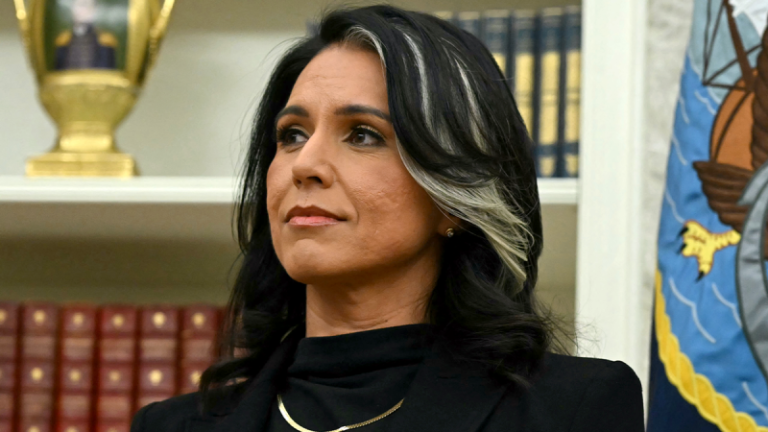
The Justice Department has installed a Missouri-based U.S. prosecutor to head the Trump administration’s election probe in Fulton County, Georgia, according to recent court records, marking the latest instance in which an out-of-state prosecutor has been tasked with a leading role in a politically charged case.

The involvement of Thomas Albus, U.S. attorney for the Eastern District of Missouri, was revealed last month when he signed off on a Fulton County search warrant that authorized the FBI’s raid of a key Georgia election hub. The warrant authorized federal agents to seize a broad range of election records, voting rolls, and other data tied to the 2020 election, according to a copy reviewed by Fox News Digital.

The news, and the timing of Albus’ appointment, have sparked questions over the scope of the effort, including whether it is a one-off designed to shore up election-related vulnerabilities ahead of the midterms or part of a broader test case for expanded federal authority.

It also prompted Fulton County officials to sue the FBI earlier this month, demanding the return of the seized ballots.

The FBI’s decision to order the raid remains unclear, adding further uncertainty as to why Trump may have tapped Albus.

But the scope of the case is significant. Fulton County officials told reporters this month that FBI agents were seen carrying some 700 boxes of ballots from a warehouse near the election hub and loading them into a truck.

More answers could be revealed soon. The judge assigned to rule on Fulton County’s motion ordered the Justice Department to file by 5 p.m. Tuesday the arguments it made in its effort to obtain the search warrant. 

But it’s unclear how much information will be revealed as many of the documents are widely expected to remain under seal. 

Still, the installation comes as Fulton County emerged as ‘ground zero’ for complaints about voter fraud in the wake of the 2020 presidential elections, including from Trump, who lost the state to former President Joe Biden by a razor-thin margin.

And while it’s not the first time Trump’s Justice Department has sought to assign prosecutors to issues outside their district lines, unlike other efforts, the legality of Albus’s role in the district is likely to be upheld. 

Attorney General Pam Bondi reportedly tapped Albus last month to oversee election integrity cases nationwide, according to multiple news outlets. 

The DOJ did not immediately return Fox News Digital’s request for comment on the nature of his role in Georgia or elsewhere.

Under federal law — 28 U.S. Code § 515 — Bondi has the legal authority to appoint an individual to coordinate civil and criminal cases, including grand jury proceedings, across all federal districts nationwide. 

Albus also spent years as an assistant U.S. attorney for the Justice Department, where he helped prosecute hundreds of federal cases and jury trials, including on charges of white-collar crime, tax offenses, public corruption, and more.

Still, his installment is not completely without criticism. 

Some have played up his role as a former deputy attorney for then-Missouri Attorney General Eric Schmitt in 2020. 

Schmitt, now a U.S. senator, was one of 17 Republican attorneys general who filed a brief supporting Trump’s push to invalidate the election results of four battleground states after the election. 

There are key differences between his installment and the installment of former Trump lawyer Lindsey Halligan, tapped last year to serve as interim U.S. attorney for the Eastern District of Virginia. She was also the sole prosecutor who secured the indictments against former FBI director James Comey and New York Attorney General Letitia James.

A judge ruled in November she was illegally appointed to her role, prompting the dismissals of both cases.

Legal experts have cited differences between Halligan’s role and Albus’s role, which appears to enjoy wide protection under federal law.

‘Unlike Halligan, Albus’ appointment appears to be lawful under a federal statute that permits the attorney general to direct ‘any other officer of the Department of Justice’ to ‘conduct any kind of legal proceeding, civil or criminal … whether or not he is a resident of the district in which the proceeding is brought,’’ Barbara McQuade, a former U.S. attorney and University of Michigan Law School professor, said in a Bloomberg op-ed.

‘But sidelining Atlanta U.S. Attorney Theodore Hertzberg in favor of Albus is concerning nonetheless — especially given his ties to Trump allies.’

This post appeared first on FOX NEWS

Senate Democrats aren’t ready to concede in their push for stringent reforms to the Department of Homeland Security (DHS) and are ready to buck Senate Republicans’ plans to avert a partial shutdown. 

Their resistance comes as Senate Republicans and the White House have floated a counteroffer to Democrats’ proposed DHS and Immigration and Customs Enforcement (ICE) reforms. But the two sides remain far apart on a deal to fund the agency, and they are quickly running out of time.

Sen. Chris Murphy, D-Conn., the top-ranking Senate Democrat on the Homeland Security spending panel, said he would not support another short-term DHS funding extension unless Republicans made meaningful concessions on immigration enforcement.

Murphy also dismissed the White House’s proposal as a list of ‘sophomoric talking points.’

‘We had plenty of time, they wasted two weeks,’ Murphy said. ‘They still haven’t given us any meaningful answer or response.’ 

His position is shared by several Senate Democrats who have unified around a push to codify a list of 10 DHS reforms. Those include requirements that ICE agents obtain judicial warrants, unmask and display identification, provisions Republicans have labeled red lines.

The standoff follows criticism late Monday from Senate Minority Leader Chuck Schumer, D-N.Y., and House Minority Leader Hakeem Jeffries, D-N.Y., who rejected President Donald Trump’s counteroffer.

In a joint statement, the leaders said the proposal ‘is both incomplete and insufficient in terms of addressing the concerns Americans have about ICE’s lawless conduct.’ Jeffries added he would not support another short-term funding patch, known as a continuing resolution (CR), Tuesday morning. 

Schumer argued that there was plenty of time to hash out a deal. 

‘There’s no reason we can’t get this done by Thursday,’ he said. 

With Friday’s funding deadline approaching, Senate Majority Leader John Thune, R-S.D., teed up a backup plan Tuesday night as the risk of a shutdown grew.

Thune and Senate Republicans have warned since Trump and Schumer finalized a broader funding agreement earlier this month that Congress did not have enough time to negotiate and pass a revised DHS funding bill in just two weeks.

‘I understand that, on the other side of the Capitol, the Democrats are already objecting to that, which is no big surprise since they haven’t voted for anything yet,’ Thune said.

‘I think there are Democrats in both the House and the Senate who do want to see this addressed,’ he added. ‘I’m hopeful the conversations lead to an outcome, but we probably won’t know by the time the current CR expires.’

As with most funding fights, both parties accuse the other of failing to negotiate in good faith.

‘I’m not for putting DHS on a CR until they show us they are serious about doing something,’ Sen. Patty Murray, D-Wash., the top-ranking Democrat on the Senate Appropriations Committee, told Fox News Digital.

Republicans counter that Democrats spent more than a week drafting their proposal, while the White House produced a counteroffer in less than two days.

Sen. Markwayne Mullin, R-Okla., told Fox News Digital Republicans didn’t expect their counterparts to accept their offer, ‘but we didn’t accept theirs either.’ 

‘Hopefully, this is a working footprint,’ Mullin said. ‘We can start negotiating because we’re definitely not accepting their things. But the thing is, what we’re trying to do is protect the ability for ICE and our border agents to do their job. I think it’s pretty clear, though, unless the Democrats want to shut down DHS, we’re going to have to do another CR.’

This post appeared first on FOX NEWS
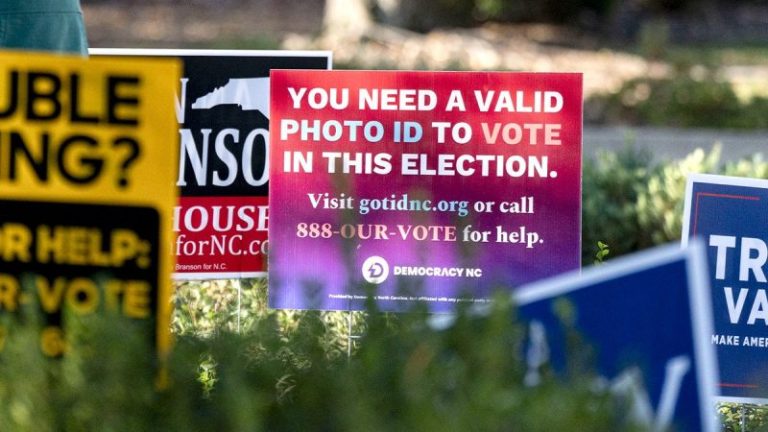
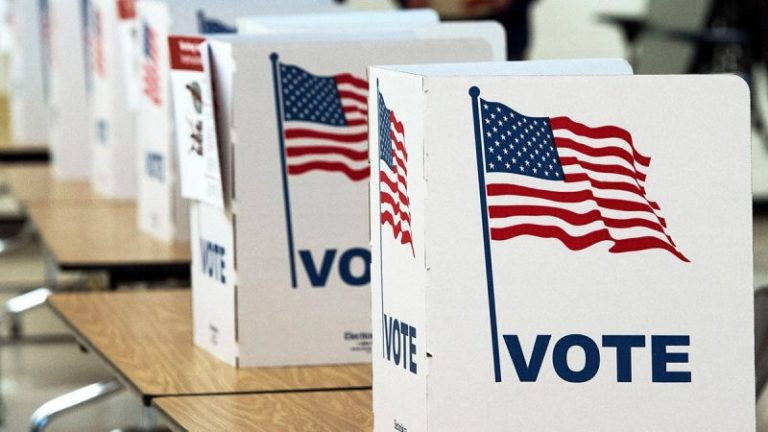
The House of Representatives is readying to vote on a bill that would mandate photo identification for voters across the United States in the coming 2026 midterm elections.

The House Rules Committee, the final gatekeeper before most bills see a chamber-wide vote, advanced the SAVE America Act on Tuesday as conservatives continue to pressure the Senate to take up the bill after its likely House passage.

It’s a sweeping piece of legislation aimed at keeping non-citizens from participating in U.S. elections.

Democrats have attacked the bill as tantamount to voter suppression, while Republicans argue that it’s necessary after the influx of millions of illegal immigrants who came to the U.S. during the four years of the Biden administration.

Speaker Mike Johnson, R-La., told reporters it would get a vote on Wednesday.

The legislation is led by Rep. Chip Roy, R-Texas, in the House, and Sen. Mike Lee, R-Utah, in the Senate.

It is an updated version of Roy’s Safeguarding American Voter Eligibility (SAVE) Act, which passed the House in April 2025 but was never taken up in the Senate.

Whereas the SAVE Act would create a new federal proof of citizenship mandate in the voter registration process and impose requirements for states to keep their rolls clear of ineligible voters, the updated bill would also require photo ID to vote in any federal elections.

It would also require information-sharing between state election officials and federal authorities in verifying citizenship on current voter rolls and enable the Department of Homeland Security (DHS) to pursue immigration cases if non-citizens were found to be listed as eligible to vote.

The legislation is highly likely to pass the House, where the vast majority — if not virtually all — Republicans have supported similar pushes in the past.

But in the Senate, where current rules say 60 votes are needed to overcome a filibuster and hold a final vote on a bill, at least seven Democrats would be needed even if all Republicans stuck together.

It’s why House conservatives are pushing Senate GOP leaders to change rules in a way that would effectively do away with the 60-vote threshold, even if alternative paths mean paralyzing the upper chamber with hours of nonstop debate.

‘[Senate Majority Leader John Thune, R-S.D.] will take it up. The only question is, will he take it up in an environment where it can pass?’ Roy posed to Fox News Digital on Tuesday. 

‘My view is that the majority leader can and should. I’m not afraid of amendment votes…we should table all their amendments, force them to run through all their speaking, make them take the floor and filibuster.’

This post appeared first on FOX NEWS

The U.S. Food and Drug Administration (FDA) refused to consider Moderna’s application for a new flu vaccine using mRNA technology, the company announced Tuesday, a decision that could delay the introduction of a shot designed to offer stronger protection for older adults.

Moderna said it received what’s known as a ‘refusal-to-file’ (RTF) letter from the FDA’s Center for Biologics Evaluation and Research (CBER), citing the lack of an ‘adequate and well-controlled’ study with a comparator arm that ‘does not reflect the best-available standard of care.’

Stéphane Bancel, chief executive officer of Moderna, said the FDA’s decision did not ‘identify any safety or efficacy concerns with our product’ and ‘does not further our shared goal of enhancing America’s leadership in developing innovative medicines.’

‘It should not be controversial to conduct a comprehensive review of a flu vaccine submission that uses an FDA-approved vaccine as a comparator in a study that was discussed and agreed on with CBER prior to starting,’ Bancel said in a statement. ‘We look forward to engaging with CBER to understand the path forward as quickly as possible so that America’s seniors, and those with underlying conditions, continue to have access to American-made innovations.’

The rare decision from the FDA comes amid increased scrutiny over vaccine approvals under Health Secretary Robert F. Kennedy Jr., who has criticized mRNA vaccines and rolled back certain COVID-19 shot recommendations over the past year.

Kennedy previously removed members of the federal government’s vaccine advisory panel and appointed new members, and moved to cancel $500 million in mRNA vaccine contracts.

The FDA authorized COVID-19 vaccines for the fall for high-risk groups only. Last May, Kennedy announced the vaccines would be removed from the CDC’s routine immunization schedule for healthy children and pregnant women.

According to Moderna, the refusal-to-file decision was based on the company’s choice of comparator in its Phase 3 trial — a licensed standard-dose seasonal flu vaccine — which the FDA said did not reflect the ‘best-available standard of care.’

Moderna said the decision contradicts prior written communications from the FDA, including 2024 guidance stating a standard-dose comparator would be acceptable, though a higher-dose vaccine was recommended for participants over 65.

Moderna said the FDA ‘did not raise any objections or clinical hold comments about the adequacy of the Phase 3 trial after the submission of the protocol in April 2024 or at any time before the initiation of the study in September 2024.’

In August 2025, following completion of the Phase 3 efficacy trial, Moderna said it held a pre-submission meeting with CBER, which requested that supportive analyses on the comparator be included in the submission and indicated the data would be a ‘significant issue during review of your BLA.’

Moderna said it provided the additional analyses requested by CBER in its submission, noting that ‘at no time in the pre-submission written feedback or meeting did CBER indicate that it would refuse to review the file.’

The company requested a Type A meeting with CBER to understand the basis for the RTF letter, adding that regulatory reviews are continuing in the European Union, Canada and Australia.

Fox News has reached out to the Department of Health and Human Services for comment.

Fox News Digital’s Alex Miller and The Associated Press contributed to this report.

This post appeared first on FOX NEWS
Israeli Prime Minister Benjamin Netanyahu will meet President Donald Trump at the White House on Wednesday in a visit expected to center on Iran, as Washington weighs diplomacy against the threat of military action and Israel pushes to shape the scope of negotiations.

Trump has signaled the Iranian file will dominate the agenda. In a phone interview with Axios, the president said Tehran ‘very much wants to reach a deal,’ but warned, ‘Either we make a deal, or we’ll have to do something very tough — like last time.’

Netanyahu, speaking before departing Israel for Washington, said he intends to present Israel’s position. ‘I will present to the president our concept regarding the principles of the negotiations — the essential principles that are important not only to Israel but to anyone who wants peace and security in the Middle East,’ he told reporters.

The meeting comes days after U.S. and Iranian officials resumed talks in Oman for the first time since last summer’s 12-day war, while the United States continues to maintain a significant military presence in the Gulf — a posture widely viewed as both deterrence and for holding leverage in negotiations with Tehran.

From the U.S. perspective, Iran is seen as a global security challenge rather than a regional one, according to Jacob Olidort, chief research officer and director of American security at the America First Policy Institute. ‘It’s an important historic time of potentially seismic proportions,’ he told Fox News Digital.

‘Iran is not so much a Middle East issue. It’s a global issue affecting U.S. interests around the world,’ he added, calling the regime ‘probably the world’s oldest global terror network… [with] thousands of Americans killed through proxies.’

Olidort said the administration’s strategy appears to combine diplomacy with visible military pressure. ‘The president has been clear… should talks not be successful, the military option cannot be off the table,’ he said. ‘Military assets in the region serve as part of the negotiation strategy with Iran.’

For Israel, the main concern is not only Iran’s nuclear program but also its ballistic missile arsenal and regional network of armed groups.

Trump indicated to Axios that the United States shares at least part of that view, saying any agreement would need to address not only nuclear issues but also Iran’s ballistic missiles. 

Israeli intelligence expert Sima Shein has warned that negotiations narrowly focused on nuclear restrictions could leave Israel exposed. ‘The visit signals a lack of confidence that American envoys, Witkoff and Kushner, alone can represent Israel’s interests in the best way. They were in Israel just a week ago — but Netanyahu wants to speak directly with Trump, so there is no ambiguity about Israel’s position,’ she added.

Shein says Iran may be stalling diplomatically to see whether Washington limits talks to nuclear issues while avoiding missile constraints. Her analysis further suggests that a sanctions-relief agreement that leaves Iran’s broader capabilities intact could stabilize the regime at a moment of internal pressure while preserving its military leverage. 

‘An agreement now would effectively save the regime at a time when it has no real solutions to its internal problems. Lifting sanctions through a deal would give it breathing room and help stabilize it,’ she said.

‘If there is an agreement, the United States must demand the release of all detainees and insist on humanitarian measures, including medical support for those who have been severely injured. Washington would need to be directly involved in enforcing those provisions.’

Netanyahu said before leaving Israel that he and Trump would discuss ‘a series of topics,’ including Gaza, where a U.S.-backed postwar framework and ceasefire implementation remain stalled. 

According to Israeli reporting, Netanyahu plans to tell Trump that phase two of the Gaza peace plan ‘is not moving,’ reflecting continued disputes over disarmament, governance and security arrangements.

The timing of Netanyahu’s visit may also allow him to avoid returning to Washington the following week for the inaugural session of the Board of Peace, Shein said, noting the initiative is controversial in Israel’s parliament. 

‘Israel is deeply concerned about the presence of Turkey and Qatar on the board of peace and their malign influence on other members as well as on the Palestinian authority’s technocratic government,’ Dan Diker, president of the Jerusalem Center for Security and Foreign Affairs, told Fox News Digital.

‘Hamas’s control of Gaza has not weakened, while international commitments to disarm Hamas have appeared to weaken,’ he added, ‘The longer the U.S. waits before taking action against the Iranian regime, the more compromised Israel is in its ability and determination to forcibly disarm Hamas, both of which require the sanction and the blessing of the new international structures on Gaza.’

‘The prime minister’s deep concern is the stalled state of affairs both against the Iranian regime and apparently in Gaza. Timing is critical on both fronts. And for Israel, the window seems to be closing,’ Diker said.  


This post appeared first on FOX NEWS