
Author

admin

Browsing

Over the past year, the spot price of silver has surged past a 40 year record and into triple-digit territory, reaching a high of US$121 per ounce this past January.

For silver investors who bought into the physical market when the price was low, this first leg of the silver bull market has provided an opportunity to take ample profits.

At the Vancouver Resource Investment Conference, Rick Rule, proprietor at Rule Investment Media, shared his strategy for leveraging profits made in the physical silver market.

“That’s how I save. I maintain liquidity in US currency and I save in gold,” he said.

What did Rule do with the remaining half of his gains from selling physical silver?

He deposited those profits into high-quality silver-mining stocks.

“My reasoning being as follows: If silver goes nowhere for a year, if it stays rangebound, the best silver producers are discounting US$45 silver a year from now. If the price is at US$75 or US$80 they’ll be discounting US$75 or US$80 silver, which means the stock will be up 50, 60, 70 percent,” said Rule.

“The speculative outlook for the silver stocks seemed to be better than the speculative outcome for silver. If silver stays flat for a year, by definition silver won’t give me any return. But if it stays flat, the silver stocks would give me 50 or 60 percent. So it was a better speculative outcome,’ he added.

Here’s a look at the five silver stocks Rule invested in after selling his physical silver. Market cap figures were accurate as of February 12, 2026.

1. Wheaton Precious Metals (TSX:WPM,NYSE:WPM)

TSX market cap: C$88.43 billion
NYSE market cap: US$64.53 billion

Wheaton Precious Metals is the world’s biggest precious metals streaming company.

Its business model involves making upfront payments to precious metals companies in order to gain the right to purchase all or a portion of their metal production at a low, fixed cost. Investors benefit from gaining exposure to a wide range of precious metals companies operating in politically stable jurisdictions, while reducing the risk associated with investing in individual mining stocks. The company pays a quarterly dividend.

Wheaton currently has streaming agreements in place for 23 operating mines and 25 development-stage projects across five continents. This includes investments in Newmont’s (NYSE:NEM,ASX:NEM) Peñasquito mine in Mexico, Sibanye Stillwater’s (NYSE:SBSW) Stillwater and East Boulder mines in Montana, US, and Glencore’s (LSE:GLEN,OTCPL:GLCNF) Antamina silver mine in Peru.

2. Pan American Silver (TSX:PAAS,NASDAQ:PAAS)

TSX market cap: C$33.3 billion
NASDAQ market cap: US$23.67 billion

Pan American Silver holds interest in five silver-producing mines located in four Latin American countries.

This includes its three wholly owned mines: Huaron in Peru, Cerro Moro in Argentina and La Colorada in Mexico — its largest silver-producing asset. The company also holds a 95 percent interest in the San Vicente mine in Bolivia and a 44 percent stake in the Juanicipio mine in Mexico, operated by Fresnillo (LSE:FRES,OTCPL:FNLPF). Pan American’s gold-producing segment includes its second largest silver mine by production, the El Peñon gold-silver mine in Chile.

Ranked among the world’s largest primary silver producers, Pan American’s 2025 silver production total came in at 22.8 million ounces, alongside 742,200 ounces of gold. It’s set its silver production guidance for 2026 to between 25 million and 27 million ounces, white its expected gold production for the year is 700,000 to 750,000 ounces.

3. Industrias Penoles (OTCPL:IPOAF)

OTC market cap: US$26.14 billion

Founded in 1887, Mexico-based Industrias Peñoles is a vertically integrated metals company and a global leader in refined silver production. The company holds a majority stake in Fresnillo, the world’s leading primary silver producer.

Industrias Peñoles is also a top producer of refined gold and lead in Latin America, and one of the world’s leading producers of refined zinc and sodium sulfate. Its mining portfolio includes the Sabinas mine in Zacatecas, the Tizapa mine in Zacazonapan and the Velardeña mine in Durango. In the first half of 2025, Industrias Peñoles’ overall silver production from its mining operations came in at 30.3 million ounces of the metal.

4. AbraSilver Resource (TSXV:ABRA,OTCQX:ABBRF)

TSXV market cap: C$2.15 billion
OTC market cap: US$1.57 billion

Canadian junior Abrasilver Resource’s wholly owned flagship asset is the advanced-stage Diablillos silver-gold project in Salta, Argentina. It hosts five significant deposits: Oculto, JAC, Fantasma, Laderas and Sombra.

In December 2024, the company published an updated prefeasibility study for Diablillos, outlining a net present value (NPV) of US$747 million after tax at a 5 percent discount, as well as a 27.6 percent internal rate of return (IRR) and a two year payback period. An updated mineral resource estimate from July 2025 totals approximately 199 million ounces of silver and 1.72 million ounces of gold in the measured and indicated category.

Abrasilver has been busy expanding the upside potential at Diablillos via a Phase 6 drill program. The 15,000 meter campaign is aimed at extensions across various exploration targets. Results coming in from previous campaigns continue to demonstrate the potential for identifying gold and silver resources outside of the current resource estimate.

5. Vizsla Silver (TSXV:VZLA,NYSEAMERICAN:VZLA)

TSX market cap: C$1.73 billion
NYSEAMERICAN market cap: US$1.25 billion

Vizsla Silver is advancing toward production at its Panuco silver-gold project in Sinaloa, Mexico. Its expected to reach first silver production in the second half of 2027. In May 2025, the company acquired the producing Santa Fe silver-gold mine and property located to the south of Panuco. Production at the mine between 2020 and 2024 amounted to 370,366 metric tons of ore, with an average head grade of 203 grams per metric ton (g/t) silver and 2.17 g/t gold.

At Panuco, Vizsla completed a feasibility study in November 2025, outlining over 17.4 million ounces of silver equivalent production annually over an initial 9.4 year mine life, an after-tax NPV of US$1.8 billion at a 5 percent discount, an 111 percent IRR and a seven month payback at US$35.50 silver and US$3,100 per ounce gold.

The company has several upcoming catalysts for 2026. In the first half of the year, management is focused on completing detailed engineering, underground drilling, geophysical surveys and optimization work in order to make a construction decision in the second half of 2026 once permits are received. Throughout 2026, Vizsla is expecting to conduct 60,000 meters of diamond drilling across the Panuco district. A fifth phase of metallurgical testwork to optimize silver and gold recoveries using material from a 10,000 tonne bulk sample program is also planned.

After the interview with Rule took place, 10 workers were abducted from Panuco. Mexican authorities have since recovered 10 bodies as part of an investigation into the incident, with five being identified as Vizsla workers. The company has suspended operations at the site, although engineering-based remote work continues.

Securities Disclosure: I, Melissa Pistilli, hold no direct investment interest in any company mentioned in this article.

This post appeared first on investingnews.com

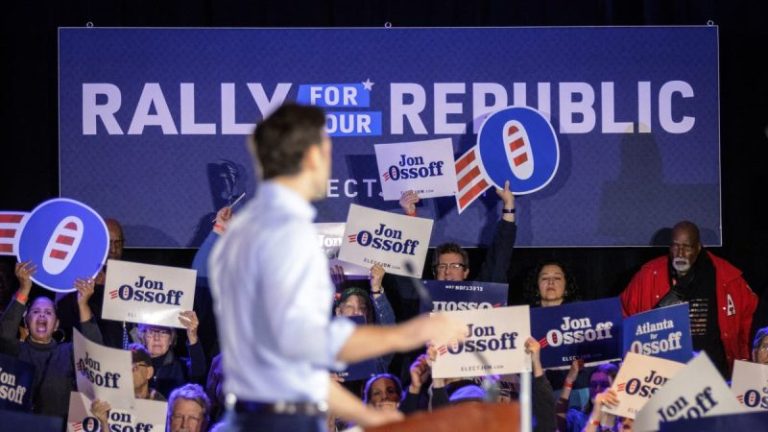
A new attack ad from Republicans targeting U.S. Sen. Jon Ossoff, D-Ga., is slamming the vulnerable Democrat senator for requiring entrants at his political rallies to show proof of identification, but arguing that identification requirements for voting are a form of voter suppression. 

Want to get into a Jon Ossoff rally?’ the advertisement’s narrator begins, before it goes into a montage of staffers at Ossoff’s Feb. 7 rally asking for entrants’ IDs.

‘Don’t forget your ID’ rally staff can be heard saying as folks walked into the Georgia International Convention Center located in metro Atlanta.

‘Also, do you have your ID with you?’ another staffer can be heard asking entrants in the video captured by a GOP tracker. ‘I’ll just grab your ID from you. Thank you so much,’ another said. Please have your IDs ready, please, thank you.’

Meanwhile, Ossoff has referred to attempts to establish stricter photo-identification rules for voting and voter registration in federal elections as ‘nakedly partisan, totally unworkable, [and] bad faith.’

Ossoff’s team declined to comment for this story. 

On Wednesday, Republicans in the House of Representatives passed the latest iteration of a voter integrity law aiming at requiring stricter in-person documentation requirements, such as needing a photo-ID to vote. This bill is a broader and stricter version of the 2025 version of the bill which focused predominantly on registering to vote as opposed to the act of voting itself.

Ahead of the vote’s passage, one of Ossoff’s Republican challengers in the upcoming U.S. Senate race in Georgia, Rep. Buddy Carter, R-Ga., called out the incumbent Democrat Senator for ‘once [saying] that voter ID was ‘right and appropriate,’ [but] now supports his party as reframing it as ‘voter suppression.”

‘The law didn’t change. Public opinion didn’t change. What changed was he – and other Democrat politicians like him – realized that illegal immigrants could no longer vote to keep Democrats in office,’ Carter asserted. ‘They oppose this bill because it chips away at their voting base; plain and simple.’

Despite Ossoff’s previous opposition to voter integrity laws, his campaign event framed the requirement for photo ID as a security measure.

‘Due to security requirements … be ready to show ID that matches our RSVP list and these arrival instructions (printed or on your phone),’ the campaign event’s confirmation email said.

Fox News Digital’s Leo Briceno contributed to this report.

This post appeared first on FOX NEWS

: A trio of Republican senators are moving to overhaul how federal childcare funds are distributed after what they call ‘mass fraud’ in Minnesota exposed a system that paid providers before verifying children were ever in the room.

Sen. Ted Cruz, R-Texas, joined by Sens. Mike Lee, R-Utah, and Rick Scott, R-Fla., is introducing the Payment Integrity Act, legislation that would require states to distribute federally funded childcare dollars based on verified attendance — not enrollment claims.

‘Programs in Minnesota for welfare and childcare were designed to channel resources into protecting vulnerable children, but were treated like an open ATM by criminals,’ Cruz told Fox News Digital.

‘The mass fraud in Minnesota shows that American taxpayers can no longer rely on local and state politicians to prevent abuses, because those politicians often have electoral and partisan incentives to look the other way. My legislation reduces the risk of the waste and fraud we’ve seen and ensures that resources are provided to children and families who need it.’

The bill would reverse a 2024 Biden administration rule requiring states to pay childcare providers before attendance verification. Under Cruz’s proposal, providers would be paid only after services are confirmed — shifting from enrollment-based payments to attendance-based billing.

Cruz’s bill comes as the outspoken Texan led a Senate Judiciary Subcommittee hearing on alleged Somali fraudsters last week. There, lawmakers heard directly from David Hoch — a journalist seen accompanying blogger Nick Shirley to addresses proclaimed to be Somali daycares.

‘There are few crimes more morally repugnant than stealing from vulnerable children. Every dollar stolen is a meal not eaten, a doctor’s visit missed, and a future diminished,’ Cruz said, adding that such fraud ‘plunders our children’s potential.’

Gesturing towards a photo of the ‘Quality Learing Center’ in Minneapolis during the hearing, an allegedly fraudulent childcare provider Cruz called ’emblematic’ of the crisis, he said the fraud was occurring not in ‘some distant or lawless place, but in the heart of America’s Midwest.’

Co-sponsor Lee said that support for childcare should ‘go to real kids, not empty rooms.’

‘Fake childcare operations are stealing funding from the ones who are actually taking care of America’s children in need. Our bill will address this massive fraud by granting funding based on actual attendance rather than reported enrollment, and allowing states to pay retroactively instead of in advance,’ Lee said, adding such ‘diligence’ should have been the law all along.

The Payment Integrity Act also puts into law January rule from Health and Human Services that established attendance-based billing procedures

That rule, according to Secretary Robert F. Kennedy’s deputy Jim O’Neill was also spurred on by what has been happening in Minnesota.

‘We’ve seen credible and widespread allegations of fraudulent daycare providers who were not caring for children at all. The reforms we are enacting will make fraud harder to perpetrate,’ O’Neill said in a statement.

The Payment Integrity Act officially amends the Child Care and Development Block Grant Act signed into law by President George Herbert Walker Bush, to include such ‘attendance-based billing.’

‘Nothing in this subchapter shall be construed to require a lead agency to make a payment to a child care provider prior to the provision of child care services,’ the bill reads, a direct reversal of the pre-payment system Cruz says allowed fraud to flourish.

This post appeared first on FOX NEWS

: A trio of Republican senators are moving to overhaul how federal childcare funds are distributed after what they call ‘mass fraud’ in Minnesota exposed a system that paid providers before verifying children were ever in the room.

Sen. Ted Cruz, R-Texas, joined by senators Mike Lee, R-Utah, and Rick Scott, R-Fla., is introducing the Payment Integrity Act, legislation that would require states to distribute federally funded childcare dollars based on verified attendance, not enrollment claims.

‘Programs in Minnesota for welfare and childcare were designed to channel resources into protecting vulnerable children but were treated like an open ATM by criminals,’ Cruz told Fox News Digital.

‘The mass fraud in Minnesota shows that American taxpayers can no longer rely on local and state politicians to prevent abuses because those politicians often have electoral and partisan incentives to look the other way. My legislation reduces the risk of the waste and fraud we’ve seen and ensures that resources are provided to children and families who need it.’

The bill would reverse a 2024 Biden administration rule requiring states to pay childcare providers before attendance verification. Under Cruz’s proposal, providers would be paid only after services are confirmed, shifting from enrollment-based payments to attendance-based billing.

Cruz’s bill comes as the outspoken Texan led a Senate Judiciary Subcommittee hearing on alleged Somali fraudsters last week. There, lawmakers heard directly from David Hoch, a journalist who accompanied blogger Nick Shirley to sites claiming to be Somali daycare centers.

‘There are few crimes more morally repugnant than stealing from vulnerable children. Every dollar stolen is a meal not eaten, a doctor’s visit missed and a future diminished,’ Cruz said, adding that such fraud ‘plunders our children’s potential.’

Gesturing toward a photo of the ‘Quality Learing Center’ in Minneapolis during the hearing, an alleged fraudulent childcare provider Cruz called ’emblematic’ of the crisis, he said the fraud was occurring not in ‘some distant or lawless place, but in the heart of America’s Midwest.’

Co-sponsor Lee said support for childcare should ‘go to real kids, not empty rooms.’

‘Fake childcare operations are stealing funding from the ones who are actually taking care of America’s children in need. Our bill will address this massive fraud by granting funding based on actual attendance rather than reported enrollment and allowing states to pay retroactively instead of in advance,’ Lee said, adding such ‘diligence’ should have been the law all along.

The Payment Integrity Act also puts into law the January rule from Health and Human Services that established attendance-based billing procedures.

That rule, according to Secretary Robert F. Kennedy’s deputy, Jim O’Neill, was also spurred by what has been happening in Minnesota.

‘We’ve seen credible and widespread allegations of fraudulent daycare providers who were not caring for children at all. The reforms we are enacting will make fraud harder to perpetrate,’ O’Neill said in a statement.

The Payment Integrity Act amends the Child Care and Development Block Grant Act signed into law by President George H.W. Bush, to include such ‘attendance-based billing.’

‘Nothing in this subchapter shall be construed to require a lead agency to make a payment to a child care provider prior to the provision of child care services,’ the bill states in a direct reversal of the prepayment system Cruz says allowed fraud to flourish.

This post appeared first on FOX NEWS

President Donald Trump on Friday said he was ordering every federal government agency to stop using Athropic AI immediately.

‘THE UNITED STATES OF AMERICA WILL NEVER ALLOW A RADICAL LEFT, WOKE COMPANY TO DICTATE HOW OUR GREAT MILITARY FIGHTS AND WINS WARS! That decision belongs to YOUR COMMANDER-IN-CHIEF, and the tremendous leaders I appoint to run our Military,’ Trump began in a lengthy Truth Social post Friday afternoon.

He added, ‘The Leftwing nut jobs at Anthropic have made a DISASTROUS MISTAKE trying to STRONG-ARM the Department of War, and force them to obey their Terms of Service instead of our Constitution. Their selfishness is putting AMERICAN LIVES at risk, our Troops in danger, and our National Security in JEOPARDY.’

The president said he would immediately direct every federal agency to stop using Anthropic technology.

‘We don’t need it, we don’t want it, and will not do business with them again!’ he continued.

There will be a six-month phase out period for agencies such as the Department of War, he added.

‘Anthropic better get their act together, and be helpful during this phase out period, or I will use the Full Power of the Presidency to make them comply, with major civil and criminal consequences to follow,’ he wrote.

He continued, ‘WE will decide the fate of our Country — NOT some out-of-control, Radical Left AI company run by people who have no idea what the real World is all about.’

Earlier this week, Anthropic CEO Dario Amodei refused demands from the Department of War to use its artificial intelligence for ‘all lawful purposes,’ but Amodei said no, concerned over the possibility it could be used for ‘mass domestic surveillance’ or ‘fully autonomous weapons.’

‘The Department of War has stated they will only contract with AI companies who accede to ‘any lawful use’ and remove safeguards in the cases mentioned above. They have threatened to remove us from their systems if we maintain these safeguards; they have also threatened to designate us a ‘supply chain risk’ — a label reserved for US adversaries, never before applied to an American company — and to invoke the Defense Production Act to force the safeguards’ removal,’ Amodei said in a Thursday statement.

He declared that the ‘threats do not change our position: we cannot in good conscience accede to their request.’

Assistant to the Secretary of War for Public Affairs Sean Parnell declared in a post on X that the department does not want to engage in either of those activities but is asking to use Anthropic’s AI for all legal purposes.

‘The Department of War has no interest in using AI to conduct mass surveillance of Americans (which is illegal) nor do we want to use AI to develop autonomous weapons that operate without human involvement,’ Parnell said in the post. ‘Here’s what we’re asking: Allow the Pentagon to use Anthropic’s model for all lawful purposes.’

‘This is a simple, common-sense request that will prevent Anthropic from jeopardizing critical military operations and potentially putting our warfighters at risk. We will not let ANY company dictate the terms regarding how we make operational decisions. They have until 5:01 PM ET on Friday to decide. Otherwise, we will terminate our partnership with Anthropic and deem them a supply chain risk for DOW,’ he noted.

Under Secretary of War for Research and Engineering Emil Michael accused Anthropic and Amodei of lying.

In a post on X, Michael called Amodei ‘a liar’ who ‘has a God-complex.’ 

‘He wants nothing more than to try to personally control the US Military and is ok putting our nation’s safety at risk. The @DeptofWar will ALWAYS adhere to the law but not bend to whims of any one for-profit tech company,’ he asserted.

In another post he asserted, ‘Anthropic is lying. The @DeptofWar doesn’t do mass surveillance as that is already illegal. What we are talking about is allowing our warfighters to use AI without having to call @DarioAmodei for permission to shoot down an enemy drone swarms that would kill Americans.’

‘It is the Department’s prerogative to select contractors most aligned with their vision. But given the substantial value that Anthropic’s technology provides to our armed forces, we hope they reconsider,’ Amodei said in a statement sent on Thursday to Fox News Digital. ‘Our strong preference is to continue to serve the Department and our warfighters — with our two requested safeguards in place. Should the Department choose to offboard Anthropic, we will work to enable a smooth transition to another provider, avoiding any disruption to ongoing military planning, operations, or other critical missions. Our models will be available on the expansive terms we have proposed for as long as required.’

‘We remain ready to continue our work to support the national security of the United States,’ he added.

On Friday, after Trump’s announcement, Hegseth claimed Anthropic ‘delivered a master class in arrogance and betrayal as well as a textbook case of how not to do business with the United States Government or the Pentagon.’

He added in a lengthy X post: ‘Our position has never wavered and will never waver: the Department of War must have full, unrestricted access to Anthropic’s models for every LAWFUL purpose in defense of the Republic.’

‘In conjunction with the President’s directive for the Federal Government to cease all use of Anthropic’s technology, I am directing the Department of War to designate Anthropic a Supply-Chain Risk to National Security,’ he added. ‘Effective immediately, no contractor, supplier, or partner that does business with the United States military may conduct any commercial activity with Anthropic. Anthropic will continue to provide the Department of War its services for a period of no more than six months to allow for a seamless transition to a better and more patriotic service.’

The General Services Administration also announced on Friday it was removing Anthropic from USAi.gov and their Multiple Award Schedule (MAS). 

‘GSA stands with the President in rejecting attempts to politicize work dedicated to America’s national security,’ GSA Administrator Edward C. Forst said in a statement. ‘Building resilient, secure, and scalable AI solutions demands alignment, trust, and a willingness to make hard calls. We’re committed to delivering results for Americans, and working with our AI industry partners who fit the bill.’

Anthropic did not immediately respond to Fox News Digital’s request for comment. 

Fox News Digital’s Alex Nitzberg contributed to this report.

Related Article

Tech company refuses Pentagon demands on unrestricted use of its AI
This post appeared first on FOX NEWS

(TheNewswire)

Toronto, Ontario February 17, 2026 TheNewswire Laurion Mineral Exploration Inc. (TSX-V: LME | OTCQB: LMEFF | FSE: 5YD) (‘LAURION’ or the ‘Company’) is pleased to announce the appointment of Sankarsan (‘Sean’) Ghosal as a strategic advisor. His addition further strengthens the Company’s governance, capital markets expertise, and strategic capabilities as LAURION advances its Ishkōday Gold-Polymetallic Project in Ontario.  


Mr. Ghosal brings a highly complementary blend of mining engineering, capital markets research, and structured mining finance experience. He is currently an Associate on the Streaming & Royalties team at Sprott, where he supports deal origination, technical and financial due diligence, structuring, and portfolio monitoring for large-scale private resource investment strategies. Prior to joining Sprott, Mr. Ghosal worked in mining equity research at Stifel Financial, covering base and precious metals companies. He previously held engineering and project development roles supporting mining projects from study stage through execution. His cross-functional background across operations, engineering, research, and investment analysis is expected to provide LAURION with a disciplined, investor-focused perspective as the Company works towards key technical and value-definition milestones for the Ishkōday Project.


Cynthia Le Sueur-Aquin, President and CEO of LAURION, stated: ‘Sean brings exactly the skillset and perspective we are seeking to support the Board as the Ishkōday Project enters its next stage of development. He combines a hands-on understanding of mining operations with a rigorous, capital markets-driven approach to decision-making. His ability to bridge technical decisions with financial outcomes directly aligns with LAURION’s strategic vision. We remain focused on advancing the Ishkōday Project in a manner that is consistent with best practices and on delivering real, durable value for shareholders. Sean’s addition strengthens our governance capabilities and supports our long-term strategy.’


Strategic Addition Aligned with Value Creation


Mr. Ghosal’s appointment reflects the Company’s focus on capital discipline, technical rigor, and alignment with sophisticated investor expectations. His experience evaluating mining assets, from both an engineering and capital allocation perspective, is expected to enhance LAURION’s ability to:


  • Strengthen governance as the Company advances toward a Mineral Resource Estimate (MRE‘) and subsequent technical milestones. 


  • Align technical decision-making with capital market expectations, including with respect to the Company’s ongoing evaluation of strategic alternatives. 


About LAURION Mineral Exploration Inc.

LAURION is a mid-stage junior mineral exploration company listed on the TSX Venture Exchange under the symbol ‘LME’. The Company currently has 278,716,413 common shares outstanding. LAURION’s President and CEO, Cynthia Le Sueur-Aquin, is the Company’s largest shareholder, directly or indirectly holding an aggregate of 17,221,306 common shares. Together with long-term ‘Friends and Family’ investors, this reflects alignment between management, the Board, and shareholders, which is reflected in management’s long-term commitment to disciplined execution, technical value definition, and responsible project advancement at Ishkōday. LAURION’s primary focus is the 100%-owned, district-scale Ishkōday Project, a 57 km² land package hosting gold-rich polymetallic mineralization.


LAURION’s strategy is centered on deliberate value creation. The Company is prioritizing systematic technical advancement, integrated geological and structural modeling, and the evaluation of optional, non-dilutive pathways, including historical surface stockpile processing, that may support flexibility in LAURION’s exploration plans without diverting the Company’s focus from its core exploration objectives.


The Company’s overarching objective is to build project value before monetization, ensuring that any future strategic outcomes are supported by technical clarity, reduced execution risk, and demonstrated scale. While the Board remains attentive to strategic interest that may arise, LAURION is not driven by transaction timing. Instead, the Company is focused on advancing the Ishkōday Project in a manner that strengthens long-term shareholder value.


LAURION will continue to communicate updates through timely disclosure and will issue press releases in accordance with applicable securities laws should any material information arise.


FOR FURTHER INFORMATION, CONTACT:

Laurion Mineral Exploration Inc.

Cynthia Le Sueur-Aquin – President and CEO

Tel: 1-705-788-9186 Fax: 1-705-805-9256


Douglas Vass – Investor Relations Consultant

Email: dvass@laurion.ca

Website: http://www.LAURION.ca

Follow us on: X (@LAURION_LME), Instagram (laurionmineral) and LinkedIn ()


Caution Regarding Forward-Looking Information

This press release contains forward-looking statements, which reflect the Company’s current expectations regarding future events including with respect to LAURION’s business, operations and condition, management’s objectives, strategies, beliefs and intentions, the Company’s ability to advance the Ishkōday Project, the nature, focus, timing and potential results of the Company’s exploration, drilling and prospecting activities, including the Company’s plans to complete an MRE, diamond drill program, and other planned activities and technical milestones for the Ishkōday Project, and the statements regarding the Company’s exploration or consideration of any possible strategic alternatives and transactional opportunities, as well as the potential outcome(s) of this process, the possible impact of any potential transactions referenced herein on the Company or any of its stakeholders, and the ability of the Company to identify and complete any potential acquisitions, mergers, financings or other transactions referenced herein, and the timing of any such transactions, as well as the anticipated benefits of the Company’s new strategic advisor. The forward-looking statements involve risks and uncertainties. Actual events and future results, performance or achievements expressed or implied by such forward-looking statements could differ materially from those projected herein including as a result of a change in the trading price of the common shares of LAURION, the TSX Venture Exchange or any other applicable regulator not providing its approval for any strategic alternatives or transactional opportunities, the interpretation and actual results of current exploration activities, changes in project parameters as plans continue to be refined, future prices of gold and/or other metals, possible variations in grade or recovery rates, failure of equipment or processes to operate as anticipated, the failure of contracted parties to perform, labor disputes and other risks of the mining industry, delays in obtaining governmental approvals or financing or in the completion of exploration, as well as those factors disclosed in the Company’s publicly filed documents. Investors should consult the Company’s ongoing quarterly and annual filings, as well as any other additional documentation comprising the Company’s public disclosure record, for additional information on risks and uncertainties relating to these forward-looking statements. The reader is cautioned not to rely on these forward-looking statements. Subject to applicable law, the Company disclaims any obligation to update these forward-looking statements. All sample values are from grab samples and channel samples, which by their nature, are not necessarily representative of overall grades of mineralized areas. Readers are cautioned to not place undue reliance on the assay values reported in this press release.


NEITHER THE TSX VENTURE EXCHANGE NOR ITS REGULATION SERVICE PROVIDER (AS THAT TERM IS DEFINED IN THE POLICIES OF THE TSX VENTURE EXCHANGE) ACCEPTS RESPONSIBILITY FOR THE ADEQUACY OR ACCURACY OF THE CONTENT OF THIS NEWS RELEASE.


Copyright (c) 2026 TheNewswire – All rights reserved.

News Provided by TheNewsWire via QuoteMedia

This post appeared first on investingnews.com

Google has eliminated more than one-third of its managers overseeing small teams, an executive told employees last week, as the company continues its focus on efficiencies across the organization.

“Right now, we have 35% fewer managers, with fewer direct reports” than at this time a year ago, said Brian Welle, vice president of people analytics and performance, according to audio of an all-hands meeting reviewed by CNBC. “So a lot of fast progress there.”

At the meeting, employees asked Welle and other executives about job security, “internal barriers” and Google’s culture after several recent rounds of layoffs, buyouts and reorganizations.

Welle said the idea is to reduce bureaucracy and run the company more efficiently.

“When we look across our entire leadership population, that’s mangers, directors and VPs, we want them to be a smaller percentage of our overall workforce over time,” he said.

The 35% reduction refers to the number of managers who oversee fewer than three people, according to a person familiar with the matter. Many of those managers stayed with the company as individual contributors, said the person, who asked not to be named because the details are private.

Google CEO Sundar Pichai weighed in at the meeting, reiterating the need for the company “to be more efficient as we scale up so we don’t solve everything with headcount.”

Google eliminated about 6% of its workforce in 2023, and has implemented cuts in various divisions since then. Alphabet finance chief Anat Ashkenazi, who joined the company last year, said in October that she would push cost cuts “a little further.” Google has offered buyouts to employees since January, and the company has slowed hiring, asking employees to do more with less.

Regarding the buyouts, executives at the town hall said that a total of 10 product areas have presented “Voluntary Exit Program” offers. They’ve applied to U.S.-based employees in search, marketing, hardware and people operations teams this year.

Fiona Cicconi, Google’s chief people officer, said at last week’s meeting that between 3% and 5% of employees on those teams have accepted the buyouts.

“This has been actually quite successful,” she said, adding “I think we can continue it.”

Pichai said the company executed the voluntary buyouts after listening to employees, who said they preferred that route to blanket layoffs.

“It’s a lot of work that’s gone into implementing the VEP program, and I’m glad we’ve done it,” Pichai said. “It gives people agency, and I’m glad to see it’s worked out well.”

Cicconi said one of the main reasons employees are taking the buyouts is because they want to take time off from work.

“It’s actually quite interesting to see who’s taking a VEP, and it’s people sort of wanting a career break, sometimes to take care of family members,” she said.

CNBC previously reported that the layoffs hurt morale as the company was downsizing while at the same time issuing blowout earnings and seeing its stock price jump. Alphabet’s shares are up 10% this year after climbing 36% in 2024 and 58% the year prior.

At another point in the town hall, employees asked if Google would consider a policy similar to Meta’s “recharge,” a month-long sabbatical that employees earn after five years at the company.

“We have a lot of leaves, not least our vacation, which is there for exactly that — resting and recharging,” said Alexandra Maddison, Google’s senior director of benefits.

She said the company is not going to offer paid sabbatical.

“We’re very confident that our current offering is competitive,” Maddison said.

Meta didn’t immediately respond to a request for comment.

Other executives jumped in to compare the two companies’ benefits.

“I don’t think they have a VEP at Meta by the way,” Cicconi said.

Pichai then asked, to some laughs from the audience, “Should we incorporate all policies of Meta while we’re at it? Or should we only pick and choose the few policies we like?”

“Maybe I should try running the company with all of Meta’s policies,” he continued. “No, probably not.”

This post appeared first on NBC NEWS

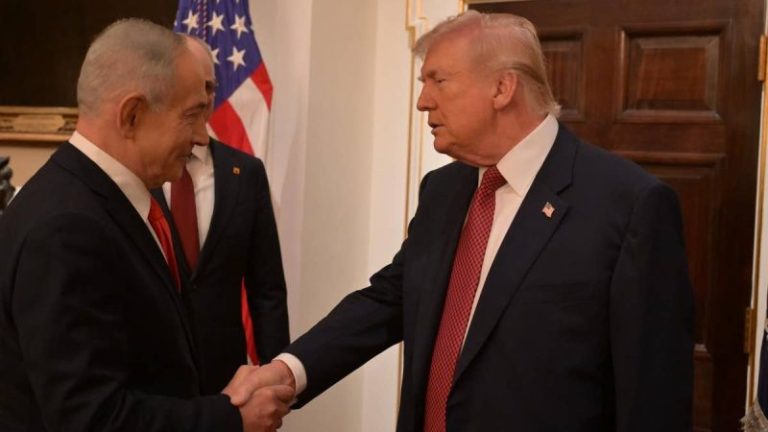
Iran dominated the agenda in Wednesday’s White House meeting between President Donald Trump and Israeli Prime Minister Benjamin Netanyahu, with both leaders signaling that diplomacy with Tehran remains uncertain and that coordination will continue if talks fail.

In a post on Truth Social following the meeting, Trump said he pushed for continued negotiations but left open other options.

‘There was nothing definitive reached other than I insisted that negotiations with Iran continue to see whether or not a deal can be consummated. If it can, I let the Prime Minister know that will be a preference. If it cannot, we will just have to see what the outcome will be… Last time Iran decided that they were better off not making a deal, and they were hit with Midnight Hammer — That did not work well for them.’

Netanyahu’s office said the leaders discussed Iran, Gaza and broader regional developments and agreed to maintain close coordination, adding that the prime minister emphasized Israel’s security needs in the context of negotiations.

Earlier in the day, Netanyahu formally joined the U.S.-backed Board of Peace, signing onto the initiative ahead of the meeting after weeks of hesitation. The move places Israel inside a forum that includes Western partners as well as Turkey and Qatar, whose involvement in Gaza has drawn criticism in Jerusalem.

Experts say the decision reflects strategic calculations tied to both Gaza and Iran.

Dr. Dan Diker, president of the Jerusalem Center for Security and Foreign Affairs, said Netanyahu’s participation is directly linked to cooperation with Washington and to shaping postwar arrangements in Gaza.

‘It is in Israel’s interest for Prime Minister Benjamin Netanyahu to join the Board of Peace. He needs a place at that table even alongside adversarial powers such as Muslim Brotherhood-aligned countries Qatar and Turkey. Netanyahu’s membership in the Board of Peace is an important element in his cooperation with President Trump to help implement the 20-point plan, with deradicalization, disarming Hamas and demilitarization as the first three non-negotiable actions.’

Diker said the decision is also tied to Iran. ‘More strategic reason that Netanyahu’s membership on the Board of Peace is important is that it represents an element of cooperation to counter the Iranian regime. Netanyahu is likely counting on action against the Iranian regime from the Iranian people themselves and from the United States in the coming weeks. In exchange, Netanyahu continues to cooperate in implementing the 20-point plan in Gaza as part of a quid pro quo.’

Blaise Misztal, vice president for policy at the Jewish Institute for National Security of America, described Israel’s move as a pragmatic choice shaped by the incomplete implementation of the Gaza deal and the broader regional threat environment.

‘The implementation of the Gaza peace deal leaves much to be desired. Hamas, despite being given 72 hours to release all hostages, took over 100 days to do so; Hamas has still not disarmed; there is neither an International Stabilization Force nor any countries jumping at the chance to join it; and the Board of Peace comprises countries that have shown themselves enemies of peace with Israel.’

He said Israel ultimately chose engagement over isolation. ‘Proceeding with the deal — including joining the Board of Peace — is Israel’s least bad option. Israel has a better chance of countering or balancing Turkish and Qatari influence on the Board of Peace by being in the room with them, rather than outside it.’

Misztal also linked the timing to Iran. ‘With the United States having a real chance to disarm, or even topple, the Iranian regime and the risk that Tehran might yet lash out at Israel, there is no interest in doing anything that would risk restarting the war in Gaza.’

This post appeared first on FOX NEWS

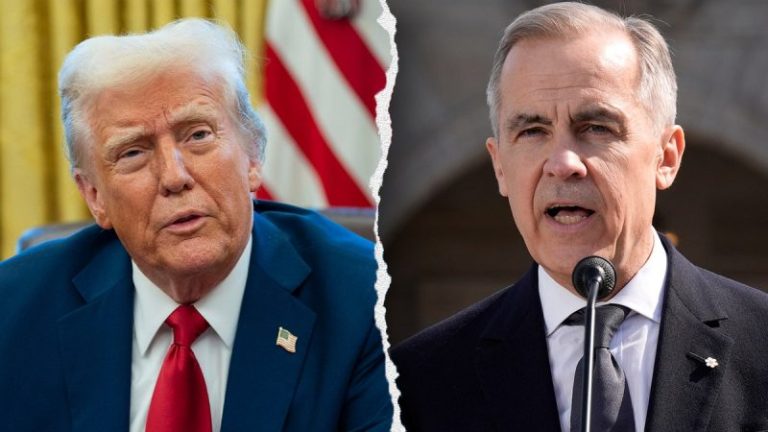
President Donald Trump is threatening to back election challengers against the six House Republicans who joined Democrats in voting to reverse his tariffs on Canada.

The president sent out an ominous warning to GOP lawmakers in the House and Senate just before his agenda suffered a blow on Capitol Hill Wednesday evening.

‘Any Republican, in the House or the Senate, that votes against TARIFFS will seriously suffer the consequences come Election time, and that includes Primaries!’ Trump posted on Truth Social.

He argued that the trade deficit was reduced significantly while U.S. financial markets hit significant high points because of his tariff policies.

‘In addition, TARIFFS have given us Great National Security because the mere mention of the word has Countries agreeing to our strongest wishes,’ Trump continued. 

‘TARIFFS have given us Economic and National Security, and no Republican should be responsible for destroying this privilege.’

Democrats successfully got a vote on a measure to reverse Trump’s national emergency at the northern border using a mechanism for forcing votes over the objections of House majority leadership called a privileged resolution.

The six Republicans who voted in favor of the measure are Reps. Dan Newhouse, R-Wash., Kevin Kiley, R-Calif., Don Bacon, R-Neb., Jeff Hurd, R-Colo., and Brian Fitzpatrick, R-Pa. 

One Democrat, Rep. Jared Golden, D-Maine, voted with the majority of Republicans on the matter. It passed 219-211.

It’s not clear how much impact Trump’s threat will have, however.

Both Newhouse and Bacon are not running for re-election in the 2026 midterms, and Trump is already endorsing a primary challenger against Massie.

Kiley, whose district was severely impacted by California Democrats’ new congressional map, has not yet said whether he will run for re-election or where he will do it.

Fitzpatrick and Hurd are both well-liked incumbents in their districts, which are top targets for Democrats come November.

Trump signed an executive order in February 2025, enacting an additional 25% tariff on most goods from Canada and Mexico. Energy from Canada was subject to an additional 15% tariff.

At the time, the White House said it was punishment for those countries’ unwillingness to do more to stop the flow of illegal immigrants and illicit drugs into the U.S.

Opponents of Trump’s tariff strategy have criticized his moves against Canada in particular, arguing it was unjustly harming one of the closest allies of the U.S. and trading partners to the detriment of Americans themselves.

But Republicans who voted against the legislation pointed out that Trump said the fentanyl crisis was the reason for issuing the emergency in the first place, and said the drug was still killing Americans.

The legislation now heads to the Senate, where Republicans have voted to rebuke Trump’s tariff strategy in the past despite similar warnings from the president.

This post appeared first on FOX NEWS

The House of Representatives passed legislation on Wednesday aimed at reversing President Donald Trump’s tariffs on Canada after several Republicans joined Democrats for a rare rebuke of the GOP commander-in-chief.

Democrats successfully got a vote on a measure to reverse Trump’s national emergency at the northern border using a mechanism for forcing votes over the objections of House majority leadership, called a privileged resolution.

Trump signed an executive order in February 2025 implementing an additional 25% tariff on most goods from Canada and Mexico. Energy from Canada was subject to an additional 15% tariff.

At the time, the White House said it was punishment for those countries’ unwillingness to do more to stop the flow of illegal immigrants and illicit drugs into the U.S.

Opponents of Trump’s tariff strategy have criticized his moves against Canada in particular, arguing it was unjustly harming one of the U.S.’s closest allies and trading partners to the detriment of Americans themselves.

‘In the last year, tariffs have cost American families nearly $1,700. And that cost is expected to increase in 2026,’ Rep. Gregory Meeks, D-N.Y., who is leading the legislation, said during debate on Wednesday.

‘And since these tariffs were imposed, U.S. exports to Canada have fallen by more than 21%. When I go home, my constituents aren’t telling me that they have an extra $1,700 to spare. They’re asking me to lower grocery prices, lower the price of healthcare, and make life more affordable.’

Meeks also said, ‘Canada is our friend. Canada is our ally. Canadians have fought alongside Americans, whether it was in World War II or the war in Afghanistan, where 165 Canadians gave their lives after our country was attacked. There is no national emergency, there is no national security threat underpinning these threats.’

House Foreign Affairs Committee Chairman Brian Mast, R-Fla., argued the text of the resolution itself would end a national emergency related to fentanyl.

‘The gentleman over here, 5,000 people per year die in his state alone from fentanyl,’ Mast said of Meeks. ‘So if he wants to beg the question of who’s going to pay the price of him trying to end an emergency, that actually, for the first time, has Canada dealing with fentanyl because of the pressure being put on them — who’s going to pay the price? It’s going to be 5,000 more of his state’s residents. That’s who’s going to pay the price.’

He said the resolution was ‘not a debate about tariffs’ but rather Democrats trying to ‘ignore that there is a fentanyl crisis.’

The resolution was filed by Democrats months ago but was put on hold by an active measure by House GOP leaders that blocked the House from reversing Trump’s emergency declarations.

The president has used emergency declarations to bypass Congress on the subject of tariffs, a move that has drawn mixed reviews from Capitol Hill.

But that measure expired last month, and House GOP leaders’ bid to extend it through July 31 crashed and burned on Tuesday night when three Republicans joined Democrats to oppose it.

‘It is time for Congress to make its voice heard on tariffs,’ Rep. Don Bacon, R-Neb., one of the Republicans who voted in opposition to the Trump policy both on Tuesday and Wednesday, told Fox News Digital.

The legislation now heads to the Senate, which has voted in the past to restrict Trump’s tariff authority.

Even if it succeeds there, however, it’s likely to be hit with a veto from the president.

This post appeared first on FOX NEWS