Author

admin

Browsing

Sigma Lithium (TSXV:SGML,NASDAQ:SGML) has secured another large-scale sale of high-purity lithium fines and activated a production-backed revolving credit facility as it ramps up operations in Brazil.

The lithium producer announced it has agreed to sell 150,000 metric tons (MT) of high-purity lithium fines containing 1 percent lithium oxide at a net final price of US$140 per MT upon warehouse delivery at the port of Vitória.

The buyer has the option to purchase a further 350,000 MT at market prices.

Sigma, which refers to the high-purity fines as a low-grade product, said the optional volumes provide flexibility to respond to market conditions and customer requirements.

According to the company, the sale of its low-grade product could generate proceeds equivalent to the sale of 70,000 MT of its high-grade lithium oxide concentrate. Sigma attributes the marketability of the fines to the processing technology at its Greentech plant, which uses dense media separation and dry stacking.

According to the São Paulo-based company, clients have achieved up to 60 percent recovery when reprocessing the material, producing lithium concentrate with over 4 percent lithium oxide content.

That higher-grade concentrate is currently priced at about US$1,370 per MT on average by Shanghai Metals Market.

“Our sequential sales of the Low Grade Product show how this material can generate recurring value, demonstrating its marketability,” said Marina Bernardini, Sigma vice president of business development. “Continuous demand for the Low Grade Product has supported the creation of an additional revenue stream for the Company.”

The February 13 agreement follows Sigma’s January sale of 100,000 MT of high-purity lithium fines.

At the time, the company reiterated that mining remobilization was proceeding as planned and pushed back against what it described as inaccurate media reports regarding an administrative process related to waste piles.

Alongside the new sale, Sigma confirmed that the resumption of production of its high-grade lithium oxide concentrate has triggered the start of pre-payments under a US$96 million revolving facility.

The unsecured binding agreement, signed with what the company describes as a leading company in the battery materials supply chain, calls for the delivery of 70,500 MT of high-grade concentrate in 2026.

Under the terms, fixed pre-payments of US$8 million are made 30 days prior to production and delivery to the port of Vitória. The first pre-payment was disbursed on January 13.

Each pre-payment carries interest at SOFR plus 1 percent for 30 days until final sale upon delivery. Pricing for each shipment is tied to prevailing spot market prices for high-grade lithium concentrate, as reflected in major industry indexes.

Securities Disclosure: I, Giann Liguid, hold no direct investment interest in any company mentioned in this article.

This post appeared first on investingnews.com

Alphabet’s Google must share data with rivals to open up competition in online search, a judge in Washington ruled on Tuesday, while rejecting prosecutors’ bid to make the internet giant sell off its popular Chrome browser and Android operating system.

Google CEO Sundar Pichai expressed concerns at trial in the case in April that the data-sharing measures sought by the U.S. Department of Justice could enable Google‘s rivals to reverse-engineer its technology.

Google has said previously that it plans to file an appeal, which means it could take years before the company is required to act on the ruling.

U.S. District Judge Amit Mehta also barred Google from entering into exclusive agreements that would prohibit device makers from preinstalling rival products on new devices.

Google had argued that loosening its agreements with device makers, browser developers and mobile network operators was the only appropriate remedy in the case. Its most recent deals with device makers Samsung Electronics and Motorola and wireless carriers AT&T and Verizon allow them to load rival search offerings, according to documents shown at trial in April.

The ruling results from a five-year legal battle between one of the world’s most profitable companies and its home country, the U.S., where Mehta ruled last year that the company holds an illegal monopoly in online search and related advertising.

At a trial in April, prosecutors argued for far-reaching remedies to restore competition and prevent Google from extending its dominance in search to artificial intelligence.

Google said the proposals would go far beyond what is legally justified and would give away its technology to competitors.

In addition to the case over search, Google is embroiled in litigation over its dominance in other markets.

The company recently said it will continue to fight a ruling requiring it to revamp its app store in a lawsuit won by “Fortnite” maker Epic Games.

And Google is scheduled to go to trial in September to determine remedies in a separate case brought by the Justice Department where a judge found the company holds illegal monopolies in online advertising technology.

The Justice Department’s two cases against Google are part of a larger bipartisan crackdown by the U.S. on Big Tech firms, which began during President Donald Trump’s first term and includes cases against Meta Platforms, Amazon and Apple.

This post appeared first on NBC NEWS

After radical students overthrew Iran’s shah in 1979 and took hostages in the U.S. embassy, the Middle Eastern nation became a strident and blood-soaked adversary of what its new Islamic fundamentalist dictatorship has long called the ‘Great Satan.’

Since then, Tehran has sponsored terrorism around the globe, including targeting the U.S. in multiple, high-profile instances. Former Reagan Justice Department Chief of Staff Mark Levin said Sunday there are at least 44 examples of Iran targeting Americans either directly or indirectly.

‘The Iranian-Nazi regime … [has] murdered more than 1,000 Americans [and] relentlessly pursued nuclear weapons to use against us — they are genocidal warmongers,’ said Levin, an author, attorney and Fox News Channel host.

The stage for Iran’s transformation from ally to enemy of the U.S. was set in the 1960s, when Shah Mohammed Reza Pahlavi began clashing with influential Islamic cleric Ruhollah Khomeini. The monarch infuriated the theocrat by liberalizing the national constitution to allow faiths other than Islam to be sworn into office on holy books of their choice.

Khomeini’s rhetoric from France, where he was exiled, intensified during the period known as the White Revolution, including misogynistic and xenophobic sermons and demands that Pahlavi be ousted.

Early aggression toward the US

With Pahlavi as a U.S.-aligned leader, this marked an early instance of antagonism by proxy. As protests engineered by Khomeini broke out in fall 1978, the shah declared martial law, and military police fired on a massive crowd of protesters.

Pahlavi and Empress Farah Pahlavi soon fled on a ‘vacation’ to Egypt but never returned. By February 1979, Khomeini returned to Tehran with significant sectarian support.

Failed Carter strategy develops into hostage crisis

Carter National Security Adviser Zbigniew Brzezinski — the father of ‘Morning Joe’ host Mika Brzezinski — coined the term ‘arc of crisis’ and advanced an ultimately failed ‘Green Belt’ strategy that supported an arc of largely unstable but fundamentalist regimes across the Middle East that were also viewed as oppositional to the Soviet Union.

Brzezinski’s envisioned buffer strategy soon collapsed when Khomeini proved to be just as anti-American as anti-Soviet.

In October 1979, after months of debate over whether to admit him to the U.S. amid the new turmoil in Iran, President Jimmy Carter relented and permitted the cancer-stricken shah to seek medical care in New York.

That November, the group ‘Muslim Student Followers of the Imam’s Line’ stormed the U.S. embassy, beginning 444 days of captivity for 52 American hostages.

The U.S. severed diplomatic ties the following April, and one rescue mission failed and left several U.S. servicemembers dead. The shah died that summer in Egypt, leaving Khomeini in full control of the government.

In what was seen as the final offense to Carter, Iran suddenly released the hostages minutes into President Ronald Reagan’s administration on Jan. 20, 1981.

Lebanon hostage crisis

On July 5, 1982, the years-long saga known as the Lebanon Hostage Crisis began with the systematic abductions of foreigners, including Americans, by Hezbollah and Iranian proxies in the Mideast country, according to United Against a Nuclear Iran.

That group, founded by former Florida Gov. Jeb Bush and former Ambassador Mark Wallace, maintains a comprehensive history of Iranian aggression on its website and is a nonpartisan policy organization formed to combat the threats posed by the Islamic Republic.

During the Lebanon Hostage Crisis, several victims spent years imprisoned by Hezbollah, where they were forced to undergo psychological and medical torture, including CIA Beirut Station Chief William Buckley, who was not related to the National Review founder of the same name. 

Buckley was tortured for months by Dr. Aziz al-Abub, a Lebanese Hezbollah psychiatrist and medical expert who reportedly forced him to take phenothiazines and experimented on him to induce interrogation and make an example of him to the West.

Buckley reportedly died in custody amid these experiments on June 3, 1985.

The CIA later memorialized him on its wall in Langley, Va., and Obama-era Director John Brennan said in a 2014 statement that ‘we remember Bill not for the manner in which he died but for the legacy he left behind. From his time as an Army lieutenant colonel to his tenure with the Agency, Bill inspired those around him to do great things despite often dangerous conditions.’

The agency later caught up with the figurehead of the Hezbollah-linked Islamic Jihad terrorist group — carrying out what the Washington Institute described as a rare contemporary CIA assassination nearly 25 years later.

Imad Mughniyeh’s group had announced Buckley’s execution in October 1985, but the actual date was determined later, with allegations that he died not from execution but from the side effects of the medical torture he endured. Former hostage David Jacobsen told the institute that Buckley was often sick and delirious in his cell and ultimately died ‘drowning in his own lung fluids’ after a bout of torture.

David Dodge, then-president of the American University in Beirut, was also kidnapped for about a year, and U.S. journalist Terry Anderson was held in captivity for more than six years.

Reagan-era bombings and murders of American servicemembers

On April 18, 1983, an Iran-backed group seen as the predecessor to today’s Lebanese Hezbollah bombed the U.S. embassy in Beirut, killing 63 people, including 17 Americans.

That October, a suicide truck bomb linked to Iran hit a U.S. Marine barracks in Lebanon, killing 241 servicemembers, in what remains the deadliest single day for the Corps since Iwo Jima.

According to the MEMRI translation of Khomeini’s representative to Lebanon, Sayyed Issa Tabatabai’s interview with the IRNA: ‘I quickly went to Lebanon and provided what was needed in order to [carry out] martyrdom operations in the place where the Americans and Israelis were.’ 

He added, ‘The efforts to establish [Hezbollah] started in [Lebanon’s] Baalbek area, where members of [Iran’s] Islamic Revolutionary Guards Corps (IRGC) arrived. I had no part in establishing the [political] party [Hezbollah], but God made it possible for me to continue the military activity with the group that had cooperated with us prior to the [Islamic] Revolution’s victory.’

The MEMRI report continued, ‘It is noteworthy that the part of the interview in which Tabatabai acknowledged receiving Khomeini’s fatwa ordering attacks on American and Israeli targets in Lebanon was removed by IRNA from its website shortly after publication. This is apparently because no official representative of Khomeini, the father of the Islamic Republic, or of Khamenei, Iran’s Supreme Leader, had ever said that Iran had any involvement in ordering, planning and carrying out the massive bombings in Lebanon against U.S.’

In 1985, Iran-backed Hezbollah hijacked Trans World Airlines (TWA) Flight 847 as it departed Athens. The hijackers collected IDs from the passengers and singled out U.S. Navy Seabee Robert Stethem of Waldorf, Md., mistaking him for a Marine and blaming him for involvement in the Lebanese Civil War.

The hijackers tortured Stethem as they flew to Beirut before shooting him dead, dumping him on the tarmac, and shooting him again.

Operation Praying Mantis

In 1988, the USS Samuel B. Roberts struck an Iranian mine in the Persian Gulf and nearly sank. The Roberts had been escorting Kuwaiti oil tankers as a protective measure.

After the mines were matched to the Iranian ship Ajr, which had been captured by the Americans earlier that year, President Reagan sprang into retaliatory action.

Reagan’s operation destroyed two oil platforms reportedly used as Iranian Revolutionary Guard Corps (IRGC) surveillance structures, leading Iran to begin attacking nonmilitary targets.

The mission also claimed two other Iranian ships and was considered the largest naval surface engagement since World War II.

Two Americans died in a helicopter crash during the operation, while dozens of Iranian officers were killed.

Clinton-Bush-Obama era; 9/11

The FBI linked a 1996 attack on an American military housing complex in Saudi Arabia to another Iranian-backed terrorist group.

Hezbollah al-Hejaz was blamed for the Khobar Towers bombing in June of that year, which killed 19 U.S. servicemembers.

In the aftermath of Al Qaeda’s 2000 attack on the U.S.S. Cole destroyer in Aden, Yemen, American courts found Iran indirectly liable in that it provided support for the terrorists – in part by letting them be trained in Tehran-linked Hezbollah bases in Lebanon.

In 2015, FISA Judge Rudolph Contreras found Iran and Sudan liable, and during the Biden administration. Sudan agreed to settle claims of murdered sailors’ families.

After 9/11, when the U.S. went to war in Iraq, Iran and its proxies were suspected of causing a large portion of American casualties by supplying land mines to the Iraqi Shia insurgents. In 2019, the Department of Defense officially raised its estimate to more than 600 troop casualties directly tied to Iran or its proxies, meaning one in six Iraq War losses were caused by Tehran.

Navy Cmdr. Sean Robertson told the Army Times at the time that ‘these [American] casualties were the result of explosively formed penetrators (EFPs), other improvised explosive devices (IEDs), improvised rocket-assisted munitions (IRAMs), rockets, mortars, rocket-propelled grenades (RPGs), small arms, sniper fire, and other attacks in Iraq.’

During his first term in the White House, President Donald Trump ordered a strike on the IRGC, killing its legendary commander, Qassem Soleimani.

While Iran was not directly implicated as having specific knowledge of the Sept. 11, 2001 attacks in New York, Pennsylvania and Virginia, it was found to be complicit in facilitating the planned terrorism.

The report, led by former New Jersey Republican Gov. Tom Kean Sr., found a ‘persistence of contacts’ between Iranian officials and Al Qaeda.

Chapter 7 of the report found that Iran at least knew that the terrorists being trained by Hezbollah were going to act against the U.S. and/or Israel. The findings thereby blew apart critics’ claims that the Sunni terror group could get along with its religious archenemy, the Shia who ran Iran.

Tehran border patrol officials also did not stamp passports of Al Qaeda operatives traveling around the region, as the marking would have been flagged upon application for any U.S. visa.

In 2016, hackers linked to the IRGC were indicted by the Justice Department – including one 34-year-old Iranian national who allegedly gained access to the controls of a major dam in Rye Brook, N.Y., near the confluence of Interstate 287 and the New England Thruway.

In 2011, the U.S. also foiled an IRGC plot targeting the homeland, in which a District of Columbia restaurant was to be bombed to kill Saudi Ambassador to the U.S. Adel al-Jubeir.

Iranian-born U.S. citizen Manssoor Arbabsiar and Quds Force member Gholam Shakuri were charged in the incident. Arbabsiar was arrested at New york’s JFK Airport and Shakuri remains at large.

A confidential federal source met with Arbabsiar in Mexico that July, where the suspect agreed to pay $100,000 toward a $1.5 million bounty placed on al-Jubeir, according to the Justice Department.

Then-FBI Director Robert Mueller said at the time that the arrests depict the U.S. ‘increased ability … to bring together the intelligence and law enforcement resources necessary to better identify and disrupt those threats, regardless of their origin.’

Biden era

By 2020, Iran was blamed for several recent attacks on commercial oil tankers, and after Trump ordered the killing of Soleimani, Ayatollah Ali Khamenei dispatched ballistic missiles at Al-Asad Air Base in Iraq.

Several dozen U.S. troops were wounded.

After Hamas militants massacred Israelis on Oct. 7, 2023, Iran-backed Hamas and Hezbollah launched about 180 attacks on Western forces in the region, including a drone strike on a base in Jordan that killed three Americans.

Trump era: Assassination plot on the president

After an Afghan-born Iranian proxy and two American men were charged with allegedly trying to hunt down and assassinate an Iranian-born American critic of the ayatollah’s regime, the Justice Department disclosed that Trump was also the subject of a similar assassination plot.

Farhad Shakeri, who had spent 14 years in a New York state prison for robbery and made U.S. contacts to create a ‘network of criminal associates’ to ‘supply the IRGC with operatives’ domestically, was allegedly seeking to kill Masih Alinejad — a journalist who often appears on Fox News Channel.

Shakeri remained at large, likely in Iran, as of 2024, but his American counterparts were put on trial in Brooklyn.

Jonathon Loadholt of Staten Island and Carlisle Rivera of Brooklyn allegedly ‘were recruited as part of that network to silence and kill, on U.S. soil, an American journalist who has been a prominent critic of the regime,’ according to then-Attorney General Merrick Garland.

‘We will not stand for the Iranian regime’s attempts to endanger the American people and America’s national security,’ Garland said, as the criminal complaint suggested Shakeri and Rivera first met while serving time.

The two men stalked Alinejad and were also accused of rotating plates on Loadholt’s car to avoid suspicion, while then-FBI Director Christopher Wray mentioned Trump as another target of an Iranian plot in a related statement on the Alinejad case.

Shakeri reportedly spoke to the FBI voluntarily from Iran, where he disclosed efforts to assassinate Trump, according to The New York Times.

Shakeri said he was told to create a plan to kill Trump after an IRGC meeting that October and that, if he could not, the assumption from the militia was that Trump would lose to Kamala Harris and be ‘easier to assassinate’ while out of office.

‘Thanks to the hard work of the FBI, their deadly schemes were disrupted.  We’re committed to using the full resources of the FBI to protect our citizens from Iran or any other adversary who targets Americans,’ Wray said in a statement at the time.

Trump has since warned Iran repeatedly to back down, with Secretary of War Pete Hegseth overseeing 2025 airstrikes on nuclear facilities, and the administration ultimately taking what it described as long-term military action to force regime change.

‘Our objective is to defend the American people by eliminating imminent threats from the Iranian regime,’ Trump said Saturday.

Fox News Digital’s Benjamin Weinthal contributed to this report.

This post appeared first on FOX NEWS

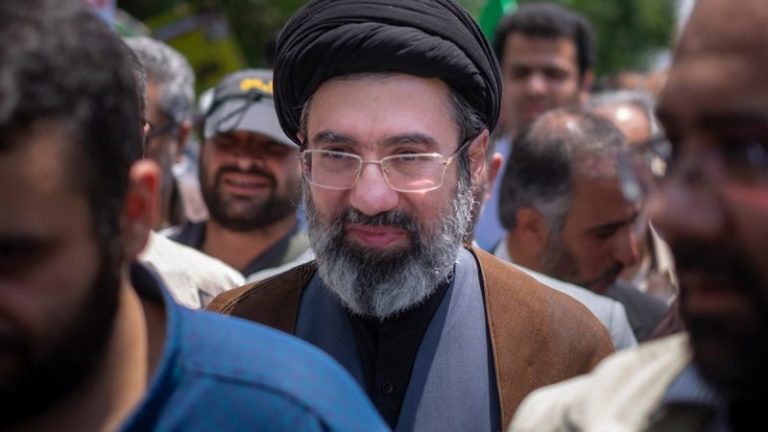
Iran’s Assembly of Experts has elected Mojtaba Khamenei, the son of the late Supreme Leader Ayatollah Ali Khamenei, as the country’s new supreme leader, according to reports.

Iran International cited sources who claimed the decision was made ‘under pressure’ from the Islamic Revolutionary Guard Corps (IRGC).

Mojtaba Khamenei, 56, is the second-eldest son of Ali Khamenei and was born in Mashhad in 1969.

His early childhood coincided with his father’s rise as a revolutionary figurehead opposing the monarchy of Shah Mohammad Reza Pahlavi.

After the Islamic Revolution in 1979, Ali Khamenei moved from a dissident cleric to a senior government official, holding key posts in the regime including deputy defense minister.

The family moved from Mashhad to Tehran, where Mojtaba attended Alavi High School, which is a school that is known for educating members of Iran’s political and religious elite.

There, he received a general and religious education and graduated in 1987. In 1989, after the death of Ayatollah Ruhollah Khomeini, Ali Khamenei was appointed supreme leader.

That same year, Mojtaba began his formal clerical studies in Tehran. He studied under his father as well as Mahmoud Hashemi Shahroudi, who later served as Iran’s chief justice.

Over the years, Mojtaba was seen constantly with his father and was also regarded as an influential figure behind the scenes.

In 2019, the U.S. sanctioned Mojtaba Khamenei under Executive Order 13867. The U.S. Treasury Department stated that he had been ‘representing the supreme leader in an official capacity despite never being elected or appointed to a government position aside from work in the office of his father.’

The Treasury also said that the supreme leader had delegated part of his leadership responsibilities to Mojtaba. 

It said he worked closely with commanders of the IRGC’s Quds Force and the Basij Resistance Force, positioning him as a key player in both domestic and international security affairs.

Mojtaba is married to the daughter of former Iranian Parliament Speaker Gholam Ali Haddad-Adel.

Among Ali Khamenei’s sons, he is considered the most powerful and politically influential, according to reports.

Initial reports had indicated Mojtaba was among around 40 officials killed in Feb. 28’s strike targeting Iran’s highest-ranking cleric.

As previously reported by Fox News Digital, President Trump said strikes on Iran eliminated much of the regime’s anticipated leadership succession bench.  ‘Most of the people we had in mind are dead,’ Trump told reporters Tuesday.

As yet, Iranian state media has not confirmed the succession reports.

Related Article

Trump says Iran’s succession bench wiped out as Israeli strike hits leadership deliberations
This post appeared first on FOX NEWS
As coordinated U.S. and Israeli strikes on Iran continue, current and former defense officials say that while a limited strike lasting several days is feasible, sustaining a broader confrontation — one involving potentially hundreds of incoming missiles — is far more complicated.

The U.S. and Israel undertook a mission known as Operation Epic Fury, targeting Iranian leadership and military sites Saturday. Its duration is still unclear, but the campaign may go on for days, according to U.S. officials. 

Sustaining operations beyond the initial window presents a more complex challenge — one shaped by a ‘zero-sum’ competition for missile defense inventories between the Middle East and Europe.

Officials and analysts warn that certain U.S. missile and air-defense interceptor inventories have been severely drawn down by the relentless pace of recent operations. The strategic dilemma for the Pentagon is that the systems required to shield U.S. bases from Iranian retaliation are the same ones being depleted by the defense of Ukraine and the ongoing protection of Israel.

Iran already has fired counterattacks near U.S. positions in Bahrain, Qatar, the United Arab Emirates, Kuwait and Jordan, with several host governments saying their air defense systems intercepted incoming projectiles. No U.S. service member fatalities or injuries have been reported as of Saturday, a U.S. official told Fox News Digital. 

U.S. authorities have not publicly released casualty figures or formal damage assessments.

During the intense June 2025 Iran–Israel conflict, U.S. forces fired more than 150 Terminal High Altitude Area Defense Interceptors — roughly a quarter of the total global inventory — and a large number of ship-based standard missiles to protect allies, according to published defense assessments.

This shortfall largely is attributed to the dual pressure of supplying Ukraine against Russian cruise missiles and the surge of batteries to the Middle East. Replenishing these high-end systems can take more than a year, analysts say, because production lines are optimized for peacetime and cannot be surged overnight.

Independent groups have noted the U.S. currently produces roughly 600–650 Patriot PAC-3 MSE missiles annually, reflecting recent contracts to boost production capacity. Analysts say that in a high-intensity war with a near-peer adversary like Iran — where multiple interceptors are often used to defeat a single incoming missile — even a year’s worth of production could be consumed in a matter of weeks, especially after recent drawdowns in Ukraine and the Middle East.

‘The Department of War has everything it needs to execute any mission at the time and place of the President’s choosing and on any timeline,’ Chief Pentagon spokesman Sean Parnell said in response to readiness questions.

Retired Air Force Gen. Charles Wald, former deputy commander of U.S. European Command, said the United States retains the ability to surge conventional strike munitions into the region and draw from prepositioned stocks if a campaign is ordered. 

‘From a conventional munition standpoint, we can always fly in more weapons from around the world,’ Wald told Fox News Digital. ‘There are a lot of weapons stored there with this type of mission in mind.’

The greater concern, he acknowledged, lies on the defensive side. 

‘The issue will be defensive weapons — Patriot, SM-3, and the Arrow system in Israel,’ Wald said. ‘You can never have enough defense.’

Regional analysts caution that in a sustained missile exchange, interceptor inventories — not offensive strike weapons — could become the binding constraint. 

‘There is a limit to how many THAAD missiles can be used,’ Israeli defense analyst Ehud Eilam said. ‘These are not systems you can reproduce overnight.’

Iran is believed to possess between 1,500 ballistic missiles and 2,000 ballistic missiles, as well as drones and shorter-range rockets capable of striking U.S. bases and Gulf energy infrastructure.

Several experts also pointed to the psychological impact of recent U.S. operations. 

The swift Operation Absolute Resolve in Venezuela in January 2026 and summer 2025’s 12-day exchange with Iran have reinforced confidence in American military capability. However, one former defense official cautioned that success in these tightly scoped missions can create a false sense of momentum toward action in far more complex scenarios.

‘Iran is a very different problem,’ the official said — a large, heavily armed state with extensive missile forces and regional proxy networks that would not resemble a short, surgical operation.

Wald acknowledged that risk. 

‘You don’t want to get people so confident that you don’t consider the risks. It’s not going to be as clean or pure as, say, Venezuela was, or the 12-day war.’

Even as the strikes continue, officials warn that retaliation from Iran and its network of allied militias could broaden the conflict. Iran’s ballistic missiles and drones — coupled with allied groups in Iraq, Lebanon and Yemen — already have prompted missile salvos against U.S. bases and Gulf partners, according to defense reporting.

Experts say the 2025 conflict underscored how quickly escalation can test both defensive systems and political will. 

‘Once these things break, you own what follows,’ one former official said, underscoring the risk that missiles and proxy actions could quickly widen a limited U.S. strike.

Wald warned that even a successful military phase would not eliminate the political uncertainty. 

‘Bombing Iran is not going to do regime change,’ he said, emphasizing that air power can degrade capability but cannot guarantee a stable political outcome.

Beyond the immediate exchange, officials say the economic consequences could prove just as consequential. Roughly one-fifth of the world’s oil supply transits the Strait of Hormuz, and even limited disruption could send global energy markets sharply higher.

For Washington, the strategic calculus extends beyond the Middle East. China remains the primary long-term competitor, with the war in Ukraine already consuming significant resources. 

A sustained regional conflict would draw on naval assets and air-defense systems that planners must also consider for potential future contingencies in Taiwan or North Korea.

Officials familiar with internal deliberations say President Donald Trump has sought a high degree of confidence in how an Iran contingency would unfold — a standard that becomes harder to meet in scenarios involving escalation and political fallout.

Fox News Digital has reached out to the White House for comment.

Related Article

Trump issues stern Iran warning as Tehran angrily reacts to speech amid muted world reaction
This post appeared first on FOX NEWS

A new push by states to tax the real estate of the wealthy has sparked a backlash among brokers and potential buyers, who say the taxes punish the most important local spenders.

From tax hikes on pricey second homes in Rhode Island and Montana to Cape Cod’s proposed transfer tax on homes over $2 million and the L.A. mansion tax, state and local governments see a revenue gold mine in the pricey properties of the wealthy.

“It’s a smack in the face to people who just spend money here,” said Donna Krueger-Simmons, sales agent with Mott & Chace Sotheby’s International in Watch Hill, Rhode Island.

The tax hikes are being driven by tighter state budgets and populist anger over housing costs. States are looking to offset budget cuts expected from the new tax and spending bill in Washington. At the same time, the housing market has become a tale of two buyers, with the middle class and younger families struggling to afford homes while the luxury housing market thrives from wealthy all-cash buyers.

The solution for many states: tax the homes of the rich.

Rhode Island’s new levy, nicknamed “The Taylor Swift Tax,” is among the most extreme. The popstar bought a beach house in the state’s elite Watch Hill community in 2013.

The measure imposes a new surcharge on second homes valued at more than $1 million. For non-primary residences, or those not occupied for more than 182 days a year, the state will charge $2.50 for every $500 in assessed value above the first $1 million. That charge is on top of existing property taxes and will add up to big increases for luxury homes in Newport, Watch Hill and other well-heeled, summer communities in the state.

A version of this article appeared in CNBC’s Inside Wealth newsletter with Robert Frank, a weekly guide to the high-net-worth investor and consumer. Sign up to receive future editions, straight to your inbox.

Swift’s house, for instance, is assessed at around $28 million, according to local real estate records. Her current property taxes are estimated at around $201,000 a year. The new charges will add another $136,442 to her annual taxes, bringing her yearly total to $337,442 — even though locals say she rarely visits.

Real estate brokers say the increase targets the very taxpayers who already contribute the most. Wealthy second-homeowners pay hefty property taxes but don’t use many local services, since their primary residences are in New York; Boston; Palm Beach, Florida; or other locales. Their kids typically don’t attend the local schools, and they’re infrequent users of the police, fire, water and other municipal services since most stay for only 10 to 12 weeks out of the year.

“These are people who just come here for the summer, spend their money and pay their fair share of taxes,” said Krueger-Simmons. “They’re getting penalized just because they also live somewhere else.”

Brokers and longtime residents say the summer residents of Newport, Watch Hill and other seasonal beach towns are the economic engines for local businesses, restaurants and hotels.

“You’re just hurting the people who support small business,” said Lori Joyal, of the Lila Delman Compass office in Watch Hill. “You’re chasing away the people who spend most of the money in these towns.”

Rhode Island is also hiking its conveyance tax on luxury real estate starting in October. The tax on real estate sales will be an additional $3.75 for each $500 paid above $800,000 for a real estate purchase. At the same time, the state’s steep estate tax deters many of the ultra-wealthy from living there full-time.

Brokers say some second-home owners are considering selling and many would-be buyers are pausing their purchases. While the tax hike alone isn’t expected to lead to any significant wealth flight, Joyal said potential buyers in Rhode Island are already looking at coastal towns in Connecticut as alternatives.

“It’s always about choices,” she said. “At the end of the day it’s about how they can choose to spend their discretionary dollars. Connecticut has some beautiful coastal towns without some of these other high taxes.”

Montana has passed a similar tax. The influx of Californians and other affluent newcomers who poured into the state during Covid has led to soaring home prices and growing resentment over gentrification. Meanwhile, the state’s low income tax rate and lack of a sales tax has left it little room for revenue increases to handle the necessary increase in services.

In May, the state passed a two-tier property tax plan, lowering rates for full-time residents and raising taxes on second homes and short-term rentals. For primary residences and long-term rentals valued at or below the state’s median home price, the tax rate will be 0.76%. Homes worth more than that will face a tiered-rate system of up to 1.9% on any value over four times the median price.

The Montana Department of Revenue expects the changes, which will start next year, will hike second-home taxes by an average of 68%. Brokers say some buyers are waiting to see the tax bills next year before making any decisions about whether to buy or sell.

“I’ve heard about some buyers who have put on the brakes to wait for the dust to settle and see what happens,” said Valerie Johnson, with PureWest Christie’s International Real Estate in Bozeman, Montana.

Johnson said that while the tax was touted by legislators as hitting wealthy second-home owners, it will also hit longtime locals who own investment homes and rent them out for income.

“These are small businesses for many people,” she said.

Manish Bhatt, a senior policy analyst at the Tax Foundation, said tax hikes aimed at wealthy second-home owners may be popular politically, but they rarely make for successful or efficient tax policy. Real property tax reform should be broad based, rather than focused on taxpayers who are singled out just because they don’t live in a community full-time, he said.

“There is a grab to find revenue right now,” he said. “But taxing second-home owners could have the opposite impact — dissuading people from owning a second home or continue to own in those communities.”

While the new taxes alone might not drive out the wealthy, “we do know that taxes are important to businesses and individuals and could cause people to make a decision to buy in another nearby state,” Bhatt said.

The projected revenue from the new taxes may also disappoint. When Los Angeles passed its so-called “mansion tax” in 2022, proponents touted revenue projections of between $600 million to $1.1 billion a year. The tax, imposed on real estate sales over $5 million, has only raised $785 million after more than two years, according to the Los Angeles Housing Department.

Higher interest rates that hurt the housing market have played a role, experts say. Yet Michael Manville, professor of urban planning at the UCLA Luskin School of Public Affairs, said wealthy buyers and sellers also reduced transactions in response to the tax.

“The lower revenue is a reason to be concerned because it suggests that the tax might actually be reducing transactions, which in turn can reduce housing production and property tax revenue,” he said.

This post appeared first on NBC NEWS

Silverco Mining (TSXV:SICO) is a production-stage silver company targeting opportunities in Mexico’s Sierra Madre Occidental belt. Its primary technical focus is optimizing the wholly owned Cusi Mining Complex in Chihuahua, an 11,665-hectare district-scale property. The site benefits from established, institutional-quality infrastructure—such as direct access to the national power grid and paved roads—significantly lowering the capital requirements for restarting operations.

The company is undertaking a definitive transition toward mid-tier producer status through a binding agreement to acquire Nuevo Silver. This deal gives Silverco control of the La Negra mine in Querétaro, a currently producing asset that delivers immediate top-line revenue. By pairing the near-term restart of the Cusi 1,200 tpd mill with ongoing production at La Negra, Silverco is effectively bypassing the multi-year development cycle typically faced by junior miners.

This “buy-and-build” strategy is driven by a technical team with specialized expertise in Mexican epithermal vein systems and complex underground mine engineering, positioning the company to accelerate growth while maintaining operational discipline.

Company Highlights

  • The $62.5 million upsized bought deal financing (closing Q1 2026) and Eric Sprott’s $10 million lead order provide cornerstone validation from a legendary mining investor and the necessary liquidity to fast-track production restarts.
  • The updated Mineral Resource Estimate of 41.2 million ounces of silver equivalent (AgEq) in the Measured and Indicated category establishes a high-confidence geological foundation at Cusi, supporting long-term mine planning.
  • The dual-track growth strategy involving the Cusi restart and the Nuevo Silver/La Negra acquisition provides immediate production scale and a diversified cash-flow profile across two distinct Mexican mining jurisdictions.
  • Pure-play silver exposure with significant de-risking is achieved via the 1,200 tonne-per-day (tpd) Cusi mill, which was producing as recently as 2023, ensuring that surface infrastructure is ‘warm’ and capable of a rapid return to service.
  • Imminent exploration catalysts exist following the completion of a 15,000-metre drill program at Cusi; results are currently pending and are expected to define high-grade extensions at the San Miguel vein.

This Silverco Mining profile is part of a paid investor education campaign.*

Click here to connect with Silverco Mining (TSXV:SICO) to receive an Investor Presentation

This post appeared first on investingnews.com

Kraft Heinz will split into two companies, reversing much of the blockbuster $46 billion merger from a decade ago that created one of the biggest food companies in the world.

The first of the two new companies, which are not yet named, will primarily include shelf-stable meals and will be home to brands such as Heinz, Philadelphia and Kraft mac and cheese. Kraft Heinz said that company on its own would have $15.4 billion in 2024 net sales, and approximately 75% of those sales would come from sauces, spreads and seasonings.

Kraft Heinz said the second new company would be a “scaled portfolio of North America staples” and would include items such as Oscar Mayer, Kraft singles and Lunchables. That company will have approximately $10.4 billion in 2024 net sales.

“Kraft Heinz’s brands are iconic and beloved, but the complexity of our current structure makes it challenging to allocate capital effectively, prioritize initiatives and drive scale in our most promising areas,” said Miguel Patricio, executive chair of the board for Kraft Heinz. “By separating into two companies, we can allocate the right level of attention and resources to unlock the potential of each brand to drive better performance and the creation of long-term shareholder value.”

The deal that created Kraft Heinz in 2015 was the brainchild of Warren Buffett’s Berkshire Hathaway and private equity firm 3G Capital. While investors originally cheered the merger, the luster began to fade as the combined company’s U.S. sales faltered.

Then came a disclosure in February 2019 that Kraft Heinz had received a subpoena from the Securities and Exchange Commission related to its accounting policies and internal controls. The company also slashed its dividend by 36% and took a $15.4 billion write-down on Kraft and Oscar Mayer, two of its biggest brands. Days later, Buffett told CNBC that Berkshire Hathaway had overpaid for Kraft.

A leadership shakeup and more write-downs of iconic brands, like Maxwell House and Velveeta, followed. Kraft Heinz also began divesting some of its businesses, selling off most of its cheese unit to French dairy giant Lactalis and its nuts division, including the Planters brand, to Hormel.

In recent quarters, the company has invested in boosting some of its brands, like Lunchables and Capri Sun. Despite turnaround efforts, shares of Kraft Heinz have slid roughly 60% since the merger closed in 2015.

The split comes as more big food companies pursue breakups to divest from slower-growth categories and impress investors again.

In August, Keurig Dr Pepper announced that it will undo the 2018 deal that merged a coffee company with the 7 Up owner. Keurig Dr Pepper plans to separate after it closes its $18 billion acquisition of Dutch coffee company JDE Peet’s. And two years ago, Kellogg spun off its snacks business into Kellanova and renamed itself as WK Kellogg.

This post appeared first on NBC NEWS

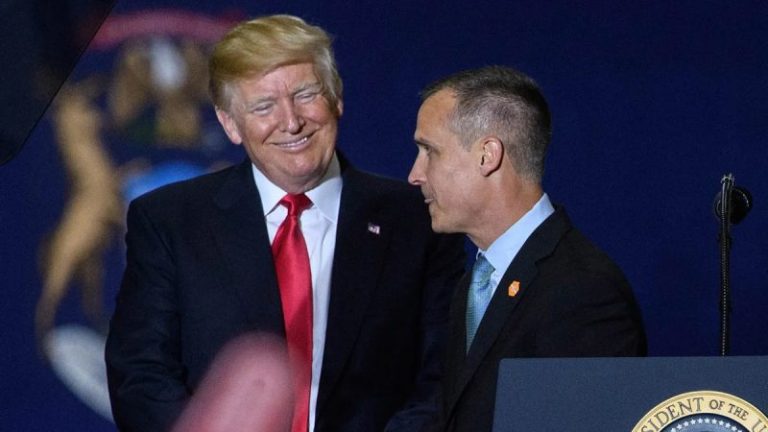
At least two more allies of President Donald Trump have said the Biden-era FBI secretly sought their records, in addition to the records of FBI Director Kash Patel and White House Chief of Staff Susie Wiles.

Republican operative Corey Lewandowski, who currently serves as a Department of Homeland Security aide, said Thursday he received the same type of notice that White House Deputy Chief of Staff Dan Scavino disclosed last year regarding records seizures. Both men said they were notified in 2024 that Google had complied with FBI legal demands for information tied to their accounts, underscoring how broadly the bureau’s investigation into Trump extended and fueling Republicans’ claims that President Joe Biden ‘weaponized’ law enforcement to target his political opponents.

‘Funny – I received the same notice,’ Lewandowski wrote on X. ‘Where is the media outcry. Right, they don’t care when it happens to Trump people.’

Lewandowski and Scavino both said the notices they received indicated that Google had been under a court-authorized gag order and could not notify them sooner about the demands for their records. Prosecutors commonly obtain such gag orders as part of their investigations.

Patel, meanwhile, confirmed the existence of the subpoenas for his and Wiles’ phone records in a statement to Fox News this week and said the subpoenas were difficult to access because the files for them had added layers of protection.

‘It is outrageous and deeply alarming that the previous FBI leadership secretly subpoenaed my own phone records — along with those of now White House Chief of Staff Susie Wiles — using flimsy pretexts and burying the entire process in prohibited case files designed to evade all oversight,’ Patel said.

Fox News was told that the subpoenas sought Patel’s and Wiles’ toll records, which include dates and times and phone numbers related to messages and calls but do not include the contents of them. The subpoenas themselves have not been made public, so the details about what they sought remain unconfirmed.

Two FBI officials told Fox News that in 2023, agents also recorded a phone call between Wiles and her lawyer. The officials said the lawyer was aware the call was being recorded and consented, but Wiles was not.

The claim about the lawyer has however been disputed. An unnamed lawyer representing Wiles at the time of the phone call in question denied to Axios that he knew of the FBI recording a phone call between him and his client.

‘If I ever pulled a stunt like that I wouldn’t — and shouldn’t — have a license to practice law. I’m as shocked as Susie,’ the lawyer told the outlet.

While it is unclear exactly what the FBI was investigating, the timing and targets signal the subpoenas could be related to the bureau’s probe into President Donald Trump’s handling of classified documents. Patel and Wiles, both private citizens during the Biden administration, were known witnesses in the classified documents case, in which special counsel Jack Smith alleged Trump violated the Espionage Act by hoarding national security-related documents at his Mar-a-Lago residence.

It has previously been widely reported that Patel was summoned to give grand jury testimony in exchange for immunity in 2022 as part of the same probe.

The FBI investigated Trump over both his alleged retention of classified documents and his alleged attempts to subvert the 2020 election. Documents released by Congress show that the FBI — and later Smith, after he became special counsel — issued hundreds of subpoenas targeting Republican entities and figures, including the phone records of several GOP lawmakers. Republican targets have characterized Smith’s actions as an egregious abuse of power and hyper-politicized, while Smith has repeatedly defended his work as by-the-book and apolitical.

In line with his claims of a weaponized FBI, Patel fired at least 10 bureau employees around the same time he revealed the subpoenas. The move drew condemnation from the FBI Agents Association, which represents thousands of employees and has maintained that agents’ actions are typically the result of following orders within the chain of command.

‘The FBIAA condemns today’s unlawful termination of FBI Special Agents, which—like other firings by Director Patel—violates the due process rights of those who risk their lives to protect our country,’ the FBIAA said. ‘These actions weaken the Bureau by stripping away critical expertise and destabilizing the workforce, undermining trust in leadership and jeopardizing the Bureau’s ability to meet its recruitment goals—ultimately putting the nation at greater risk.’

Former U.S. Attorney John Fishwick of Virginia told Fox News the firings could keep Patel ‘in good stead with President Trump,’ saying Patel did not ‘look like a prototypical G-man’ during his viral and widely reported on celebration at the Olympics in the Team USA men’s ice hockey team’s locker room.

The White House referred Fox News to the FBI when asked for comment. The FBI gave no additional comment. A representative for Smith had no comment.

Fox News’ David Spunt contributed to this report.

Related Article

JONATHAN TURLEY: Jack Smith’s secret surveillance of Patel and Wiles should alarm us all
This post appeared first on FOX NEWS
Spirit Airlines on Friday filed for bankruptcy protection, just months after the budget carrier failed to secure better financial footing when it came out of Chapter 11 protection in March.

The Dania Beach, Florida-based airline said under this bankruptcy, it will reduce its network and shrink its fleet, cuts that it said will reduce costs by “hundreds of millions of dollars” a year.

In a release, Spirit said guests can continue to book, travel and use tickets, credits and loyalty points. Wages and benefits will continue to be paid and honored, including contractors, it said. Spirit intends to pay vendors and suppliers for goods and services provided on or after the filing date in the ordinary course.

“Since emerging from our previous restructuring, which was targeted exclusively on reducing Spirit’s funded debt and raising equity capital, it has become clear that there is much more work to be done and many more tools are available to best position Spirit for the future,” Spirit CEO Dave Davis said in a news release on Friday.

Spirit had just gotten out of bankruptcy in March after four months, only to be dragged down by continued high costs and weaker U.S. domestic demand. The carrier had struggled for years as it dealt with a glut of U.S. flights, a Pratt & Whitney engine recall and a failed takeover by JetBlue Airways, a deal that was blocked in court.

Firms that used Spirit’s aircrafts had reached out to rival airlines in recent weeks to gauge executives’ interest in some of the carrier’s planes, according to people familiar with the matter.

Spirit is the United States’ largest budget airline, followed closely by rival Frontier Airlines which has tried and failed to merge with Spirit repeatedly since 2022. Frontier on Tuesday announced 20 new routes that compete with Spirit to win over its struggling competitor’s customers.

This post appeared first on NBC NEWS