Author

admin

Browsing

We also break down next week’s catalysts to watch to help you prepare for the week ahead.

In this article:

    This week’s tech sector performance

    The US market kicked off the holiday‑shortened week with many tech stocks opening lower after Alibaba (NYSE:BABA) unveiled its new AI model, Qwen 3.5, on Monday (February 16), amplifying concerns about risks from the Chinese market. Major indices closed little changed after a day of subdued trading.

    This caution, she added, is compounded by uncertainty in the broader macro backdrop, driving down stocks in AI‑exposed sectors. She concluded that this process reflects a maturing market, predicting that in 2026, capital will concentrate around firms with clear, monetizable AI strategies.

    Futures gained ground on Wednesday morning (February 17) ahead of the release of the FOMC minutes from its latest meeting, which highlighted a divide: some participants favored another rate hike if inflation remains above target, directly contradicting market expectations of additional cuts amid forecasts of economic weakness.

    Also on Wednesday, Federal Reserve Governor Michael Barr outlined three potential scenarios for how AI could impact the labor market during a speech at the New York Association for Business Economics.

    The first, and currently favored, scenario is gradual adoption, where slow AI integration minimizes job loss and any brief skill mismatch is addressed through training. The second scenario is rapid advancement, where AI outpaces the labor market, potentially rendering many people “unemployable.” In this case, fast‑moving AI startups could displace older firms, triggering mass unemployment and requiring a complete overhaul of the social safety net to share productivity gains.

    The third possibility suggests that electricity or capital shortages will limit AI’s full potential, making it an indispensable tool but not a truly revolutionary force. Barr concluded that the degree of disruption will ultimately depend on societal investment in creating new jobs, training workers, and implementing mitigation strategies.

    Stocks rallied midday but pulled back in a late‑session softening tied in part to the release of the FOMC minutes. A volatile session in tech saw the Nasdaq Composite (INDEXNASDAQ:.IXIC) pare earlier strength, finishing up 0.8 percent.

    On Thursday (February 19), the market retraced the mid‑week bounce, with the Nasdaq closing down 0.3 percent.

    Friday’s PCE report suggested inflation could be reigniting, keeping rate‑sensitive equities range‑bound in early trading, but the Supreme Court’s decision to strike down US President Trump’s global tariffs caused a rally in Wall Street’s heavyweights in the afternoon.

    3 tech stocks moving markets this week

    1. Shopify (NYSE:SHOP)

    Shopify led NDXT gainers, advancing 14.73 percent. Phillip Securities upgraded the stock to “Strong‑Buy”.

    2. AppLovin (NASDAQ:APP)

    AppLovin saw a 14.68 percent gain, extending its post‑earnings rally.

    2. DoorDash (NASDAQ:DASH)

    DoorDash advanced by 9.36 percent after Bank of America (NYSE:BAC) raised its price target to U$272, citing AI and chatbot efficiencies as well as grocery expansion, while Citizens analyst Andrew Boone reiterated “market outperform” on strong order growth and unchanged 2026 EBITDA outlook.

    Shopify, DoorDash and AppLovin performance, February 16 to 20, 2026.

    Chart via Google Finance.

    Top tech news of the week

                                  Tech ETF performance

                                  Tech exchange-traded funds (ETFs) track baskets of major tech stocks, meaning their performance helps investors gauge the overall performance of the niches they cover.

                                  This week, the iShares Semiconductor ETF (NASDAQ:SOXX) advanced by 1.83 percent, while the Invesco PHLX Semiconductor ETF (NASDAQ:SOXQ) advanced by 1.77 percent.

                                  The VanEck Semiconductor ETF (NASDAQ:SMH) also increased by 1.76 percent.

                                  Tech news to watch next week

                                  Next week, tech‑focused investors will be watching NVIDIA’s Q4 print on February 25 as the key driver of sentiment across semiconductor and other AI‑related names.

                                  Securities Disclosure: I, Meagen Seatter, hold no direct investment interest in any company mentioned in this article.

                                  This post appeared first on investingnews.com

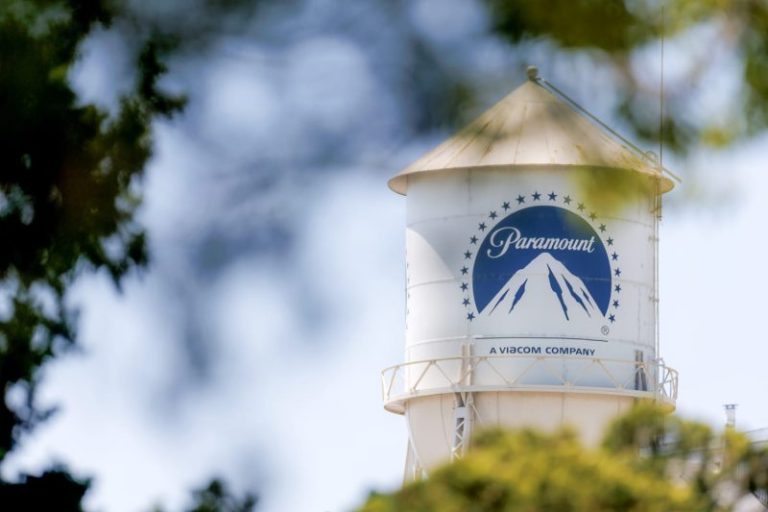
                                  David Ellison continues to put his stamp on Paramount after its acquisition by Skydance.

                                  The CEO and chairman told employees Thursday that they will be expected to work in the office five days a week starting Jan. 5, 2026, according to a memo obtained by CNBC. Employees who do not wish to make the transition can seek a buyout starting Thursday and until Sept. 15.

                                  “To achieve what we’ve set out to do — and to truly unlock Paramount’s full potential — we must make meaningful changes that position us for long-term success,” Ellison wrote to staffers. “These changes are about building a stronger, more connected, and agile organization that can deliver on our goals and compete at the highest level. We have a lot to accomplish and we’re moving fast. We need to all be rowing in the same direction. And especially when you’re dealing with a creative business like ours, that begins with being together in person.”

                                  The move could help Paramount thin the herd ahead of looming staffing cuts.

                                  Variety reported last month that the company is expected to lay off between 2,000 and 3,000 employees as part of its postmerger cost-cutting measures. These cuts are slated for early November, Variety reported.

                                  Paramount is looking to take $2 billion in costs out of the conglomerate amid advertising losses and industrywide struggles with traditional cable networks.

                                  Phase one of Ellison’s back-to-work plan will see employees in Los Angeles and New York returning to a full five-day workweek in the new year.

                                  Phase two will focus on offices outside LA and New York, including international locations. A similar buyout program will be offered in 2026 for those who operate in these locations.

                                  “We recognize this represents a significant change for many, and we’re committed to supporting you throughout this transition,” Ellison wrote. “We will work closely with managers to ensure you have the time and flexibility to make the necessary adjustments.”

                                  This post appeared first on NBC NEWS

                                  When Tim Cook gifted President Donald Trump a gold and glass plaque last month, the Apple CEO was hailed by Wall Street for his job managing the iPhone-maker’s relationship with the White House.

                                  Cook, Wall Street commentators said, had largely navigated the threat of tariffs on Apple’s business successfully by offering Trump an additional $100 billion U.S. investment, a win the president could tout on American manufacturing. But despite the 24-carat trophy Cook handed Trump, the true costs of those tariffs may finally show up for Apple customers later this month.

                                  “Thank you all, and thank you President Trump for putting American innovation and American jobs front and center,” Cook said at the event, which brought Apple’s total planned spend to $600 billion in the U.S. over the next five years. Trump, at the event, said that Apple would be exempt from forthcoming tariffs on chips that could double their price.

                                  But as Apple prepares to announce new iPhones on Tuesday, some analysts are forecasting the company to raise prices on its devices even after all Cook has done to avoid the worst of the tariffs.

                                  “A lot of the chatter is: Will the iPhone go up in price?” said CounterPoint research director Jeff Fieldhack.

                                  Although smartphones haven’t seen significant price increases yet, other consumer products are seeing price increases driven by tariffs costs, including apparel, footwear, and coffee. And the tariffs have hit some electronics, notably video games — Sony, Microsoft and Nintendo, have raised console prices this year in the U.S.

                                  Some Wall Street analysts are counting on Apple to follow. Jeffries analyst Edison Lee baked in a $50 price increase into his iPhone 17 average selling price projections in a note in July. He’s got a hold rating on Apple stock.

                                  Goldman Sachs analysts say that the potential for price increases could increase the average selling price of Apple’s devices over time, and the company’s mix of phones have been skewing toward more expensive prices.

                                  Analysts expect Apple to release four new iPhone models this month, which will likely be named the “iPhone 17” series. Last year, Apple released four iPhone 16 models: the base iPhone 16 for $829, the iPhone 16 Plus at $899, the iPhone 16 Pro at $999 and the iPhone 16 Pro Max at $1,199.

                                  This year, many supply chain watchers expect Apple to replace the Plus model, which has lagged the rest of the lineup, with a new, slimmer device that trades extra cameras and features for a thinner, lighter body.

                                  The “thinner, lighter form factor may drive some demand interest,” wrote Goldman analysts, but tradeoffs like battery life may make it hard to compete with Apple’s entry-level models.

                                  Analysts have said they expect the slim device to cost about $899, similar to how much the iPhone 16 Plus costs, but they haven’t ruled out a price bump. That would still undercut Samsung’s thin Galaxy Edge, which debuted earlier this year at $1,099.

                                  Apple did not respond to a request for comment.

                                  When Trump announced sweeping tariffs on China and the rest of the world in February, it seemed like Apple was in the crosshairs.

                                  Apple famously makes the majority of its iPhones and other products in China, and Trump was threatening to place tariffs that could double Apple’s costs or more. Some of Trump’s so-called “reciprocal” tariffs would hit countries like Vietnam and India where Apple had hedged its production bets.

                                  But seven months later, Apple has weathered the tariffs better than many had imagined.

                                  The U.S. government has paused the most draconian Chinese tariffs several times, smartphones got an exemption from tariffs and Cook in May told investors that the company was able to rearrange its supply chain to import iPhones to the U.S. from India, where tariffs are lower.

                                  Cook also successfully leaned on his relationship with Trump, visiting him in White House and taking his side in August, when Cook presented the shiny keepsake to Trump. That commitment bolstered Trump’s push to bring more high-tech manufacturing to the U.S. In exchange, Trump said he would exempt Apple from a forthcoming semiconductor tariff, too. And Trump’s IEEPA tariffs were ruled illegal in late August, although they are still in effect.

                                  Apple hasn’t completely missed the tariff consequences. Cook said the company spent $800 million on tariff costs in the June quarter, mainly due to the IEEPA-based tariffs on China. That was less than 4% of the company’s profit, but Apple warned it could spend $1.1 billion in the current quarter on tariff expenses.

                                  After months of eating the tariff costs itself, Apple may finally pass those costs to consumers with this month’s launch of the iPhone 17 models.

                                  Apple has been judicious about hardware price increases in the U.S. The smaller Pro phone, for example, hasn’t gotten a price increase since its debut in 2017, holding at $999. But Apple has made some price changes.

                                  The company raised the price of its entry level phones from $699 to $829 in 2020. And in 2022 when Apple eliminated the smaller iPhone Mini that started at $699, the company replaced it with the bigger-screen Plus that costs $899. The Pro Max also got a hike in 2023 when Apple bumped it from $1,099 to its current price of $1,199.

                                  If Apple does increase prices on its phones this year, don’t expect management to blame tariffs.

                                  The average selling price of smartphones around the world is rising, according to IDC. The price of smartphone components, such as the camera module and chips, have been increasing in recent years.

                                  Apple is much more likely to focus on highlighting its phones’ new features and quietly note the new price. Analysts expect the new iPhones to have larger screens, increased memory and new, faster chips for AI.

                                  “No one’s going to come out and say it’s related to tariffs,” said IDC analyst Nabila Popal.

                                  One way that Apple could subtly raise prices is by eliminating the entry-level version of its phones, forcing users to upgrade to get more storage at a higher starting price. Apple typically charges $100 to double the amount of the iPhone’s storage from 128GB to 256GB.

                                  That’s what JPMorgan analysts expect Apple to announce next week.

                                  They forecast that Apple will leave the prices of the entry level and high-end Pro Max models alone, but they wrote that they expect the company to eliminate the entry-level version of the Pro, meaning that users will have to pay $1,099 for an iPhone 17 Pro that has more starting-level storage than its predecessor. That’s how Apple raised the price of the entry-level Pro Max in 2023.

                                  “However, with Apple’s recent announcements relative to investments in US, the assumption is that the company will largely be shielded from tariffs, driving expectations for limited pricing changes except for those associated with changes in the base storage configuration for the Pro model,” wrote JP Morgan analyst Samik Chatterjee.

                                  When Cook was asked about potential Apple price increases on an earnings call in May, he said there was “nothing to announce.”

                                  “I’ll just say that the operational team has done an incredible job around optimizing the supply chain and the inventory,” Cook said.

                                  This post appeared first on NBC NEWS

                                  Investor Insight

                                  Tartisan Nickel offers investors exposure to a high-grade, advanced-stage nickel sulfide and Copper project in Northwestern, Ontario with existing infrastructure and clear near-term catalysts, alongside a past-producing silver project in Sault Ste. Marie, Ontario providing significant upside and growth potential.

                                  Overview

                                  Tartisan Nickel (CSE:TN, OTCQX:TTSRF, FSE:8TA) is a Canadian exploration and critical mineral development company focused on advancing high-quality critical mineral assets in Ontario. The company’s primary asset, the Kenbridge Nickel-Copper Project in Northwestern Ontario, is an advanced-stage nickel sulfide copper deposit hosting nickel, copper and cobalt. Management’s strategy for Kenbridge is straight forward and execution-focused: increase the size and confidence of the Kenbridge resource through drilling, extend mine life, advance to pre-feasibility which will continue de-risk the project.

                                  The Kenbridge project has undergone extensive historical work, including 120,000 meters of drilling.

                                  At the same time, Tartisan controls the Sill Lake Silver Project, a past-producing silver-lead property near Sault Ste. Marie, Ontario. With strong commodity fundamentals across nickel, copper and silver, management views Tartisan as a company with “more than one leg under the table,” offering investors exposure to multiple value drivers within a single platform.

                                  Company Highlights

                                  • Clear focus on drilling-driven value creation, with active programs designed to upgrade inferred resources, expand the deposit at depth, and extend the mine life into the mid-teens
                                  • Low-capex development profile relative to many peer Nickel-Copper projects, supported by a 622m shaft, all-season road access, and established infrastructure
                                  • Sill Lake Silver Project provides additional, underappreciated value, offering exposure to silver through a brownfield, past-producing asset with a defined historic resource
                                  • Experienced leadership team with deep capital markets and mine development experience, focused on disciplined capital allocation and unlocking value from opportunity-acquired assets

                                  Key Projects

                                  Kenbridge Nickel-Copper-Cobalt Project

                                  The Kenbridge Project is Tartisan’s flagship asset and the company’s primary focus. It is a high-grade, Class 1 nickel sulfide Copper deposit located in a mining-friendly jurisdiction with established infrastructure and access. Kenbridge benefits from extensive historical work, including 120,000 metres of drilling and a three-compartment shaft extending to a depth of 622 metres, placing the project closer to a brownfield’s asset – and ultimately full feasibility than many earlier-stage peers.

                                  A preliminary economic assessment (PEA) completed in 2022 outlined a potentially economic underground mining operation, supported by relatively modest initial capital requirements compared to large, low-grade nickel projects.

                                  Current drilling is aimed at upgrading inferred resources to measured and indicated categories and expanding the deposit both along strike and at depth, where historical data indicate improving grades.

                                  The company’s near-term objective is to meaningfully extend the mine life beyond the nine years outlined in the PEA, with the longer-term goal of positioning Kenbridge as a strategic asset in a tightening nickel market. With all-season road access, proximity to power, and ongoing engagement with Treaty #3 First Nations ,the Kenbridge Nickel-Copper Deposit is viewed as an advanced stage project with clear pathways to further value creation.

                                  Tartisan Nickel Corp. has been engaging with Treaty # 3 First Nations since May 2007.

                                  Sill Lake Silver-Lead Project

                                  The Sill Lake Project is a 100-percent-owned, past-producing silver-lead asset located approximately 30 kilometres north of Sault Ste. Marie, Ontario. The property hosts an NI 43-101-compliant historic mineral resource and benefits from existing underground development, including ramp access and historic workings.

                                  Tartisan considers Sill Lake a brownfields opportunity with relatively low capital intensity, particularly in the context of stronger silver prices. Planned work includes validation of historic data, evaluation of multiple mineralized trends, and the potential for future drilling and bulk sampling. Importantly, management believes Sill Lake’s value is largely unrecognized by the market, providing investors with additional upside that is not currently built into Tartisan’s valuation.

                                  Management Team

                                  Mark Appleby – President, CEO and Director

                                  Mark Appleby has 40 years of experience in investment banking, corporate finance and capital markets. He has helped lead numerous public resource companies through exploration, development and financing cycles, and brings a strong focus on disciplined capital allocation and asset-driven value creation.

                                  Yves Clément – Director

                                  Yves Clément is a professional geologist with more than 36 years of experience in mineral exploration and development across Canada, South America and West Africa, contributing deep technical oversight at the board level.

                                  Carl J. McGill – Director

                                  Carl McGill has over 32 years of experience in capital markets and financial management, with a background spanning banking, corporate finance and public company leadership.

                                  Dean MacEachern – P. Geo., Independent Geological Advisor

                                  Dean MacEachern has more than 36 years of global exploration experience and has worked on the Kenbridge project under previous ownership, providing valuable continuity and geological insight as a Qualified Person under NI 43-101.

                                  Greg Edwards – Kenbridge Project Manager

                                  Greg Edwards brings over 26 years of Canadian exploration and project development experience and plays a key role in advancing Kenbridge while supporting community and First Nations engagement.

                                  This post appeared first on investingnews.com

                                  On Tuesday (February 17) Canadian Prime Minister Mark Carney announced the creation of Canada’s first Defense Industrial Strategy, aimed at supporting the nation’s defense sector and overall sovereignty.

                                  The strategy will shift procurement’s focus to prioritize Canadian manufacturers, aiming to create 125,000 new jobs throughout the supply chain, and will include accelerating critical mineral projects.

                                  Not included in the prime minister’s official announcement, the strategy will also create a critical minerals stockpile to support the independence of domestic supply chains. The news follows a February 7 announcement out of the US, which said it will create its own critical minerals stockpile through Project Vault, a multibillion-dollar plan aimed at reducing dependence on the foreign supply chain and providing access to minerals needed for advanced manufacturing.

                                  Statistics Canada released its December monthly mineral production survey on Friday (February 20).

                                  The data shows an increase in the production and shipment of gold and copper over November’s figures.

                                  Copper output increased to 43.65 million kilograms, from 39.7 million the previous month; meanwhile, gold production rose to 18,210 kilograms from 18,086 kilograms in November. For shipments, copper jumped to 57.86 million kilograms from 45.87 million kilograms, while gold shipments increased to 19,233 kilograms from 17,625 kilograms.

                                  As for silver, production saw a slight fall to 22,747 kilograms from 23,198 kilograms in November, meanwhile shipments increased to 26,888 kilograms versus 26,207 kilograms.

                                  For more on what’s moving markets this week, check out our top market news round-up.

                                  Markets and commodities react

                                  Canadian equity markets were mixed this week.

                                  The S&P/TSX Composite Index (INDEXTSI:OSPTX) gained 3.96 percent over the week to close Friday (February 13) at 33,817.51, while the S&P/TSX Venture Composite Index (INDEXTSI:JX) rose 4.99 percent to 1,042.56.

                                  The CSE Composite Index (CSE:CSECOMP) gained 2.6 percent to 165.86.

                                  The gold price gained 3.5 percent to close at US$5,094.04 per ounce on Friday at 4:00 p.m. EST. The silver price fared better, closing the week up 11.89 percent at US$84.16 on Friday.

                                  In base metals, the Comex copper price recorded a 1.71 percent increase this week to US$5.93.

                                  The S&P Goldman Sachs Commodities Index (INDEXSP:SPGSCI) was up 3.3 percent to end Friday at 602.33.

                                  Top Canadian mining stocks this week

                                  How did mining stocks perform against this backdrop?

                                  Take a look at this week’s five best-performing Canadian mining stocks below.

                                  Stocks data for this article was retrieved at 4:00 p.m. EST on Friday using TradingView’s stock screener. Only companies trading on the TSX, TSXV and CSE with market caps greater than C$10 million are included. Mineral companies within the non-energy minerals, energy minerals, process industry and producer manufacturing sectors were considered.

                                  1. Belo Sun Mining (TSX:BSX)

                                  Weekly gain: 108.93 percent
                                  Market cap: C$508.45 million
                                  Share price: C$1.17

                                  Belo Sun Mining is an explorer and developer focused on advancing its Volta Grande gold project in Brazil.

                                  The property covers approximately 2,400 hectares within the Tres Palmeiras greenstone belt in Pará, Brazil. The company has been working on the project since 2003, and acquired the necessary development permits in 2014 and 2017.

                                  A 2015 mineral reserve estimate demonstrated a proven and probable reserve of 3.79 million ounces of gold from 116 million metric tons of ore with an average gold grade of 1.02 per metric ton (g/t).

                                  Development at the site stalled in April 2017 after a suspension order was issued by the Brazilian Federal Regional court until an indigenous study was completed. The decision was later upheld by courts in December of that year.

                                  Then, early in 2018, a federal judge ruled that the Federal Brazilian Institute of the Environment (IBAMA) would be the competent authority for issuing environmental permits. The decision was overturned in 2019, with the Secretariat of Environment and Sustainability of the State of Pará (SEMAS) reassuming its permitting authority. The decision was once again reversed in September 2023, returning authority to IBAMA.

                                  In January 2025, Belo Sun announced that the Federal Court of Appeals had reassigned SEMAS as the permitting authority for the Volta Grande project. The company said it was pleased with the decision, as the agency is familiar with the project and enjoys a constructive and transparent relationship with it.

                                  The most recent news on the case came on February 14, when the company announced that the project’s installation license had been reinstated. The court found Belo Sun had complied with the conditions imposed to complete the Indigenous Component Study and that consultation had been conducted in good faith and accordance with protocol.

                                  The company noted that respondents to the appeal will be given the opportunity to file their response with the court and said they would provide further updates as appropriate.

                                  2. Walker River Resources (TSXV:WRR)

                                  Weekly gain: 48.05 percent
                                  Market cap: C$32.66 million
                                  Share price: C$0.57

                                  Walker River is an exploration company focused on advancing its Lapon Gold project in Nevada, US.

                                  The project, located southeast of Reno, consists of 149 claims covering 3,101 acres and hosts three key target areas: Pikes Peak, Lapon Canyon/Rose, and Range Front Rattlesnake.

                                  According to the project page, small-scale underground historic mining at the site dates back to 1914, with more modern exploration occurring in the 1990s after it was acquired by Teck Resources (TSX:TECK.A,TECK.B,NYSE:TECK). During its exploration, low-grade surface-mineralization was discovered over a strike length of 450 meters.

                                  In December 2025, Walker River announced the most recent assays from the site, which returned grades of 3.05 grams per metric ton (g/t) over 117.4 meters, which included an intersection of 6.67 g/t over 18.3 meters.

                                  The company has not released news in the past week.

                                  3. Chesapeake Gold (TSXV:CKG)

                                  Weekly gain: 37.43 percent
                                  Market cap: C$228.17 million
                                  Share price: C$4.92

                                  Chesapeake Gold is a precious metals explorer and developer advancing the Metates and Lucy projects in Mexico. Metates is the more advanced of the two projects and is located northeast of Mazatlan. A July 2021 preliminary economic assessment (PEA) for the project indicated a post tax net present value of US$930 million, with an internal rate of return of 55.9 percent and a payback period of 1.6 years based on a gold spot price of US$1,786 per ounce.

                                  The PEA also reports a measured and indicated resource of 19.8 million ounces of gold and 542 million ounces of silver with average grades of 0.47 g/t gold and 12.9 g/t silver from 1.3 billion metric tons of ore.

                                  The company also owns the less-advanced Lucy project in Sinaloa, Mexico. The property covers 483 hectares and hosts zinc- and gold-bearing skarn systems. A 10 hole, 900 meter exploration program in 2024 produced one highlighted sample grading 6.11 g/t gold over 24 meters from surface.

                                  The most recent news from the company came on Tuesday, when it announced it was named to this year’s TSX Venture 50 list. It delivered annual share price growth of 388 percent and a 415 percent increase to its market cap.

                                  4. New Zealand Energy (TSX:NZ)

                                  Weekly gain: 33.33 percent
                                  Market cap: C$12.85 million
                                  Share price: C$0.38

                                  New Zealand Energy is an oil and gas producer focusing on projects in New Zealand’s Taranaki basin.

                                  According to the company’s December 2024 oil and gas reserves summary, it holds proven and probable quantities of 1.15 million barrels of oil equivalent across a range of producing, non-producing, and undeveloped projects. The main producing projects are the Tariki 5 and Tariki 5A wells, which are 50 percent joint ventures with L&M Energy.

                                  The most recent news from New Zealand came on February 9, when it announced that it had closed a non-brokered private placement for 17.5 million common shares for gross proceeds of C$3.5 million.

                                  The company said that the funds raised will be directed to advancing its gas storage project and general working capital.

                                  5. Unigold (TSXV:UGD)

                                  Weekly gain: 32.43 percent
                                  Market cap: C$64.66 million
                                  Share price: C$0.245

                                  Unigold is an exploration company advancing its Nieta Concession in the Dominican Republic.

                                  The property consists of two primary areas, Nieta Sur and Nieta Norte, totaling approximately 21,000 hectares in the Northwest Dominican Republic, near the border with Haiti.

                                  The Candelones project, Unigold’s main focus, is hosted at Nieta. A December 2022 feasibility study for the project indicated a post-tax net present value of US$30.64 million with an internal rate of return of 43.6 percent.

                                  The study also included a mineral resource estimate with measured and indicated open-pit quantities of 974,000 ounces of gold, 59.24 million pounds of copper, and 2.43 million ounces of silver with average grades of 1.56 g/t gold, 0.14 percent copper, and 3.89 g/t silver from 19.37 million metric tons of ore.

                                  The most recent news from Unigold came on Tuesday, when it announced the appointments of Juana Barcelo and Andrés Marranzini to its board of directors. Barcelo has more than 15 years of business and legal experience in the Latin American and Caribbean mining sector, and was most recently the president/country manager for the Barrick Mining (TSX:ABX,NYSE:B) and Newmont (NYSE:NEM,ASX:NEM) joint venture, Barrick Pueblo Viejo.

                                  Meanwhile, Marranzini is a lawyer and the current CEO of Punta Bergantín Development, and has previously held positions within the Dominican government.

                                  FAQs for Canadian mining stocks

                                  What is the difference between the TSX and TSXV?

                                  The TSX, or Toronto Stock Exchange, is used by senior companies with larger market caps, and the TSXV, or TSX Venture Exchange, is used by smaller-cap companies. Companies listed on the TSXV can graduate to the senior exchange.

                                  How many mining companies are listed on the TSX and TSXV?

                                  As of December 2025, 898 mining companies and 71 oil and gas companies are listed on the TSXV, combining for more than 60 percent of the 1,531 total companies listed on the exchange.

                                  As for the TSX, it is home to 175 mining companies and 51 oil and gas companies. The exchange has 2,089 companies listed on it in total.

                                  Together, the TSX and TSXV host around 40 percent of the world’s public mining companies.

                                  How much does it cost to list on the TSXV?

                                  There are a variety of different fees that companies must pay to list on the TSXV, and according to the exchange, they can vary based on the transaction’s nature and complexity. The listing fee alone will most likely cost between C$10,000 to C$70,000. Accounting and auditing fees could rack up between C$25,000 and C$100,000, while legal fees are expected to be over C$75,000 and an underwriters’ commission may hit up to 12 percent.

                                  The exchange lists a handful of other fees and expenses companies can expect, including but not limited to security commission and transfer agency fees, investor relations costs and director and officer liability insurance.

                                  These are all just for the initial listing, of course. There are ongoing expenses once companies are trading, such as sustaining fees and additional listing fees, plus the costs associated with filing regular reports.

                                  How do you trade on the TSXV?

                                  Investors can trade on the TSXV the way they would trade stocks on any exchange. This means they can use a stock broker or an individual investment account to buy and sell shares of TSXV-listed companies during the exchange’s trading hours.

                                  Article by Dean Belder; FAQs by Lauren Kelly.

                                  Securities Disclosure: I, Dean Belder, hold no direct investment interest in any company mentioned in this article.

                                  Securities Disclosure: I, Lauren Kelly, hold no direct investment interest in any company mentioned in this article.

                                  This post appeared first on investingnews.com

                                  This year’s TSX Venture 50 list represents a major shift in investor sentiment, particularly to gold and silver.

                                  The TSX Venture 50 ranks the top 50 companies on the TSX Venture Exchange based on annual performance using three criteria: one year share price appreciation, market cap growth and Canadian consolidated trading value.

                                  This year’s list includes 51 companies due to a tie based on the ranking system.

                                  Together, the 51 companies have an average share price appreciation of 431 percent — that’s compared to just 207 percent achieved by last year’s group. These companies successfully raised C$1.5 billion in new capital.

                                  Market value growth was an impressive 775 percent for C$17.9 billion in market cap creation.

                                  That market value growth is not only more than double the 333 percent averaged in 2025, but also represents the largest annual gain since the TSX Venture 50 list began in 2006.

                                  The unprecedented performance of the TSX Venture 50 companies, even in the face of mounting global economic uncertainty, is a clear indication that investor confidence in Canadian capital markets remains solid.

                                  “The Venture 50 list this year really does reflect the global interest in mining and this entrance into a commodity super cycle,’ said Robert Peterman, chief commercial officer at TSX & Global Capital Formation.

                                  Overall the list’s composition highlights how historic 2025 was for junior miners. Compared to last year’s list, which included only 10 mining companies, this year’s list is made up of 48 mining companies, the vast majority of which are gold and silver juniors. With an average share price increase of 443 percent in 2025, they have a total market cap value of C$19.9 billion.

                                  1. Prospector Metals (TSXV:PPP)

                                  Share price appreciation: 1,130 percent
                                  Market cap growth: 3,122 percent

                                  Prospector Metals’ flagship property is the 10,869-hectare ML gold project near Dawson City and 25 kilometers northeast of the former Brewery Creek God Mine in Yukon, Canada. It’s located within the Tintina Gold Belt which hosts significant historic mining operations and current exploration and development projects. B2Gold (TSX:BTO,NYSEAMERICAN:BTG) is a strategic partner in the project and holds a 19.9 percent equity stake in Prospector Metals.

                                  Prospector’s exploration work at ML in 2025 led to the discovery of the new TESS gold-copper zone in October. High-grade and near surface intercepts included 288 g/t over 1 meter within 21.93 g/t over 24.65 meters.

                                  Keep an eye out for more drill results coming from Prospector as the company has more than C$40 million in working capital and plans to kick off a 25,000 meters program in 2026.

                                  2. Santacruz Silver (TSXV:SCZ)

                                  Share price appreciation: 1,100 percent

                                  Market cap growth: 1,137 percent

                                  Santacruz Silver has producing operations in Bolivia and Mexico which include a 45 percent stake in the Bolivar and Porco mines and a 100 percent ownership of the Caballo Blanco Group mines in Bolivia and its wholly-owned Zimapan mine in Mexico.

                                  For 2025, Santacruz Silver’s production came in at 5,598,680 ounces of silver, down 17 percent from the year prior. The company attributed the decline to a major flooding event at Bolivar in May which led to a temporary shutdown of mining activities in certain areas. However, its silver production has consistently improved in the last two quarters of the year.

                                  For 2026, Santacruz is working toward improving operational efficiencies and recovery rates at its operations in order to increase production.

                                  3. Goldgroup Mining (TSXV:GGA)

                                  Share price appreciation: 875 percent
                                  Market cap growth: 2,711 percent

                                  Goldgroup Mining is building a portfolio of high-quality gold assets in Mexico, its cornerstone property is the producing Cerro Prieto heap-leach gold mine in Sonora. In the same state, the company recently acquired the formerly producing San Francisco gold mine and is evaluating the potential to restart production.

                                  Cerro Prieto has been in continuous production since 2013 and currently produces about 11,500 ounces of gold annually. For 2026, Goldgroup is undertaking an optimization and exploration program to more than double the mine’s output to more than 30,000 ounces.

                                  Through a definitive merger agreement with Gold Resource (NYSE:GORO), Goldgroup will soon add the producing Don David gold mine in Oaxaca to its portfolio. The deal is expected to close in Q2 2026.

                                  4. Golconda Gold (TSXV:GG)

                                  Share price appreciation: 700 percent
                                  Market cap growth: 695 percent

                                  Golconda is a precious metals producer and explorer with mining operations and exploration projects in South Africa and New Mexico. This includes the producing Galaxy Gold mine in South Africa’s prolific gold district, the Barberton Greenstone Belt. In New Mexico, the company is working to restart the Summit high-grade silver-gold mine.

                                  In 2025, Golconda’s Galaxy mine produced 13,020 ounces of gold, up 69 percent compared to the previous year. Golconda’s goal is to triple production over the next three years.

                                  At Summit, the company is working to bring the mine back into production in Q2 2026 and then spin it out as a standalone US-focused gold-silver producer by the end of the year.

                                  5. Fuerte Metals (TSXV:FMT)

                                  Share price appreciation: 646 percent
                                  Market cap growth: 1,481 percent

                                  Fuerte Metals is exploring and developing advanced base and precious metals projects across Canada, Mexico and Chile. Its flagship project is the wholly-owned Coffee gold project in the Yukon, Canada. A measured and indicated resource estimate of 3.0 million ounces of gold makes it one of the top 10 largest heap-leach development projects in the world.

                                  Fuerte’s asset portfolio also includes the Placeton-Caballo Muerto copper-gold project in Chile and the Christina gold-silver-zinc project and Yecora copper-silver-molybdenum project in Mexico. Fuerte’s shareholder base includes Newmont (NYSE:NEM,ASX:NEM) and Agnico Eagle Mines (TSX:AEM,NYSE:AEM).

                                  The Coffee project is in the final stages of permitting, engineering, and resource expansion drilling as Fuerte prepares for a construction decision.The company expects to complete a Preliminary Economic Assessment for the first half of 2026, and a feasibility study in the second half of the year.

                                  Securities Disclosure: I, Melissa Pistilli, hold no direct investment interest in any company mentioned in this article.

                                  This post appeared first on investingnews.com
                                  The Walt Disney Company will pay $10 million to settle Federal Trade Commission allegations that it enabled the unlawful collection of children’s personal data on YouTube.

                                  The FTC claimed the company allowed data to be collected from kids who viewed videos directed at children on YouTube without notifying parents or obtaining their consent.

                                  The complaint alleged that Disney violated the Children’s Online Privacy Protection Rule by not labeling some YouTube videos as being made for children. The agency claimed the company was able to collect data from viewers of child-directed content who were under the age of 13 and use it for targeted advertising.

                                  In 2019, after a settlement with the FTC, YouTube began requiring content creators to list whether uploaded videos were “made for kids” or “not made for kids.” The designation ensures that personal information is not collected from the “made for kids” videos and personalized ads will not be served to viewers. Comments are also disabled on those videos.

                                  The proposed settlement would require Disney to pay a $10 million civil penalty, comply with the children’s data protection rule and implement a program to review whether videos posted to YouTube should be designated as “made for kids.”

                                  “Supporting the well-being and safety of kids and families is at the heart of what we do,” the company said in a statement obtained by CNBC. “This settlement does not involve Disney owned and operated digital platforms but rather is limited to the distribution of some of our content on YouTube’s platform. Disney has a long tradition of embracing the highest standards of compliance with children’s privacy laws, and we remain committed to investing in the tools needed to continue being a leader in this space.”

                                  Axios was the first to report the settlement.

                                  This post appeared first on NBC NEWS

                                  Shares in the Trump family’s latest cryptocurrency made its stock market debut Wednesday, triggering more ethical concerns as the Trumps look to cash in on crypto as the president’s administration weakens regulations for the nascent industry.

                                  American Bitcoin, a firm co-founded this spring by Eric Trump, the president’s son, saw its share price climb as much as 39% by early afternoon to about $9.60.

                                  It ended the day at $8.04, lower than its opening price of $9.22.

                                  According to a release, the company is set up to accumulate bitcoin through computer “mining” of the cryptocurrency, as well as “opportunistic bitcoin purchases.” By owning a share of American Bitcoin, investors are betting that the company will be able to grow its bitcoin holdings faster than competitors. It also assumes bitcoin’s price will keep going up.

                                  American Bitcoin’s stock debut is renewing ethics concerns about the Trump family’s ability to benefit from the president’s influence on the crypto industry, where it is increasingly seeing windfalls.

                                  On Monday, the first public sales of a digital token minted by World Liberty Financial, a crypto firm co-founded by the Trump family, created as much as $5 billion in paper wealth for them and other insiders based on existing holdings. Last week, Trump Media and Technology Group, the parent company of President Donald Trump’s Truth Social platform, announced it had struck a deal with Crypto.com to accumulate Crypto.com’s native token Cronos, or CRO. Since the announcement, the value of CRO has climbed about 69%.

                                  Shortly before 1 p.m, the value of Eric Trump’s American Bitcoin stake had climbed to as much as $600 million, according to calculations by Bloomberg News. Donald Trump Jr. also owns a stake, though its extent was not immediately clear. A representative for Trump Jr. did not respond to a request for comment.

                                  “There’s no question there’s a conflict of interest here,” said Virginia Canter, chief counsel for ethics and anticorruption with the Democracy Defenders Action group, a bipartisan advocacy group that seeks to oppose authoritarianism. Canter served as a legal adviser in four different presidential administrations. Beyond having the ability to appoint regulators charged with overseeing the crypto industry, Trump can also create an uneven playing field for other crypto market participants who might believe they may pay a price for competing with his entities — or failing to engage with them, Canter said.

                                  In a post on X last night, Sen. Elizabeth Warren, D-Mass., said of the start of American Bitcoin’s stock trading: “it’s corruption, plain and simple.”

                                  A representative for the Trump Organization did not respond to a request for comment about the ethics concerns.

                                  Estimates about how much President Trump and his family have earned from their crypto ventures vary. Reuters calculated that they made as much $500 million from the World Liberty decentralized finance platform, which debuted last year.

                                  The figure is a moving target. In May, Zach Witkoff, a World Liberty co-founder and the son of White House Middle East envoy Steve Witkoff, announced that an Abu Dhabi-based firm had purchased $2 billion-worth of World Liberty’s stablecoin as part of an investment in the Binance crypto exchange. In July, Trump Media announced it had accumulated roughly $2 billion in bitcoin and related assets, accounting for about two-thirds of Trump Media’s total liquid assets. The Donald J. Trump Revocable Trust, a financial instrument Trump created in advance of returning to the Oval Office, owns 52% of Trump Media.

                                  The group that created Trump’s memecoin, $TRUMP, earned $350 million from initial sales, the Financial Times reported in March, though its ownership structure and Trump family members’ direct stakes are unclear.

                                  The White House has maintained that the president is not involved in the day-to-day affairs of Trump family businesses. Some ethics experts have argued that presidents are exempt from conflict-of-interest laws because they oversee too many areas to make enforcement practical.

                                  In a statement, the White House blasted any insinuation of a conflict of interest.

                                  “The media’s continued attempts to fabricate conflicts of interest are irresponsible and reinforce the public’s distrust in what they read,” White House press secretary Karoline Leavitt said. “Neither the President nor his family have ever engaged, or will ever engage, in conflicts of interest.” She said the administration “is fulfilling the President’s promise to make the United States the crypto capital of the world by driving innovation and economic opportunity for all Americans.”

                                  At a conference last week, Eric Trump said the bitcoin community had embraced his father “unlike anything I had ever seen before.” Since then, the crypto industry has become one of the most influential players in politics: Its super PAC, Fairshake, was the largest-single donor group during the 2024 election and has already accumulated $140 million in advance of next year’s midterms, Politico reported.

                                  The Trump brothers have announced a flurry of business moves since their father took office that parallel the president’s policies and agenda. Last month, they announced they would serve as advisers to New America, a firm that aims to buy businesses that “play a meaningful role in revitalizing domestic manufacturing, expanding innovation ecosystems, and strengthening critical supply chains.”

                                  The brothers are receiving a combined 5 million shares in the company, which seeks to raise $300 million from investors in advance of going public.

                                  This post appeared first on NBC NEWS

                                  Families who lost loved ones in two crashes of Boeing 737 Max jetliners may get their last chance to demand the company face criminal prosecution Wednesday. That’s when a federal judge in Texas is set to hear arguments on a U.S. government motion to dismiss a felony charge against Boeing.

                                  U.S. prosecutors charged Boeing with conspiracy to commit fraud in connection with the crashes that killed 346 people off the coast of Indonesia and in Ethiopia. Federal prosecutors alleged Boeing deceived government regulators about a flight-control system that was later implicated in the fatal flights, which took place less than five months apart in 2018 and 2019.

                                  Boeing decided to plead guilty instead of going to trial, but U.S. District Chief Judge Reed O’Connor rejected the aircraft maker’s plea agreement in December. O’Connor, who also will consider whether to let prosecutors dismiss the conspiracy charge, objected to diversity, equity and inclusion policies potentially influencing the selection of an independent monitor to oversee the company’s promised reforms.

                                  Lawyers representing relatives of some of the passengers who died cheered O’Connor’s decision, hoping it would further their goal of seeing former Boeing executives prosecuted during a public trial and more severe financial punishment for the company. Instead, the delay worked to Boeing’s favor.

                                  The judge’s refusal to accept the agreement meant the company was free to challenge the Justice Department’s rationale for charging Boeing as a corporation. It also meant prosecutors would have to secure a new deal for a guilty plea.

                                  The government and Boeing spent six months renegotiating their plea deal. During that time, President Donald Trump returned to office and ordered an end to the diversity initiatives that gave O’Connor pause.

                                  By the time the Justice Department’s criminal fraud section briefed the judge in late May, the charge and the plea were off the table. A non-prosecution agreement the two sides struck said the government would dismiss the charge in exchange for Boeing paying or investing another $1.1 billion in fines, compensation for the crash victims’ families, and internal safety and quality measures.

                                  The Justice Department said it offered Boeing those terms in light of “significant changes” Boeing made to its quality control and anti-fraud programs since entering into the July 2024 plea deal.

                                  The department also said it thought that persuading a jury to punish the company with a criminal conviction would be risky, while the revised agreement ensures “meaningful accountability, delivers substantial and immediate public benefits, and brings finality to a difficult and complex case whose outcome would otherwise be uncertain.”

                                  Judge O’Connor has invited some of the families to address the court on Wednesday. One of the people who plans to speak is Catherine Berthet, whose daughter, Camille Geoffrey, died at age 28 when a 737 Max crashed shortly after takeoff from Ethiopia’s Addis Ababa Bole International Airport.

                                  Berthet, who lives in France, is part of a group of about 30 families who want the judge to deny the government’s request and to appoint a special prosecutor to take over the case.

                                  “While it is no surprise that Boeing is trying to buy everyone off, the fact that the DOJ, which had a guilty plea in its hands last year, has now decided not to prosecute Boeing regardless of the judge’s decision is a denial of justice, a total disregard for the victims and, above all, a disregard for the judge,” she said in a statement.

                                  Justice Department lawyers maintain the families of 110 crash victims either support a pre-trial resolution or do not oppose the non-prosecution agreement. The department’s lawyers also dispute whether O’Connor has authority to deny the motion without finding prosecutors acted in bad faith instead of the public interest.

                                  While federal judges typically defer to the discretion of prosecutors in such situations, court approval is not automatic.

                                  In the Boeing case, the Justice Department has asked to preserve the option of refiling the conspiracy charge if the company does not hold up its end of the deal over the next two years.

                                  Boeing reached a settlement in 2021 that protected it from criminal prosecution, but the Justice Department determined last year that the company had violated the agreement and revived the charge.

                                  The case revolves around a new software system Boeing developed for the Max. In the 2018 and 2019 crashes, the software pitched the nose of the plane down repeatedly based on faulty readings from a single sensor, and pilots flying then-new planes for Lion Air and Ethiopian Airlines were unable to regain control.

                                  The Transportation Department’s inspector general found that Boeing did not inform key Federal Aviation Administration personnel about changes it made to the MCAS software before regulators set pilot training requirements for the Max and certified the airliner for flight.

                                  Acting on the incomplete information, the FAA approved minimal, computer-based training for Boeing 737 pilots, avoiding the need for flight simulators that would have made it more expensive for airlines to adopt the latest version of the jetliner.

                                  Airlines began flying the Max in 2017. After the Ethiopia crash, the planes were grounded worldwide for 20 months while the company redesigned the software.

                                  In the final weeks of Trump’s first term, the Justice Department charged Boeing with conspiring to defraud the U.S. government but agreed to defer prosecution and drop the charge after three years if the company paid a $2.5 billion settlement and strengthened its ethics and legal compliance programs.

                                  The 2021 settlement agreement was on the verge of expiring when a panel covering an unused emergency exit blew off a 737 Max during an Alaska Airlines flight over Oregon at the beginning of last year. No one was seriously injured, but the potential disaster put Boeing’s safety record under renewed scrutiny.

                                  A former Boeing test pilot remains the only individual charged with a crime in connection with the crashes. In March 2022, a federal jury acquitted him of misleading the FAA about the amount of training pilots would need to fly the Max.

                                  This post appeared first on NBC NEWS

                                  Nuvau Minerals Inc. (TSXV: NMC,OTC:NMCPF) (the ‘Company’ or ‘Nuvau’) announces that, further to its news release dated January 30, 2026, it has amended the terms of its previously announced ‘best efforts’ brokered private placement offering, co-led by Clarus Securities Inc. and Integrity Capital Group Inc. (together, the ‘Agents’), comprised of (i) the offering of up to 18,750,000 units of the Company (the ‘Units’) at a price of $0.80 per Unit for gross proceeds of up to $15,000,000 (the ‘Unit Offering’) and the offering of up to 5,555,555 FT Shares (as defined herein) at a price of $0.90 per FT Share for gross proceeds of up to $5,000,000 (the ‘FT Offering’ and together with the Unit Offering, the ‘Offering’).

                                  As amended, the Company proposes to issue up to 5,555,555 flow-through common shares of the Company (the ‘FT Shares‘) at an offering price of $0.90 per FT Share (the ‘FT Share Price‘). All FT Shares will be common shares of the Company that qualify as ‘flow-through shares’ within the meaning of subsection 66(15) of the Income Tax Act (Canada) and section 359.1 of the Taxation Act (Québec). The gross proceeds from the offering of FT Shares will be used by the Company to incur eligible ‘Canadian exploration expenses’ (as defined in the ITA), a portion of which may qualify as ‘flow-through mining expenditures’ and at least 30% of which will qualify as ‘flow-through critical mineral mining expenditures’ (‘FTCMME‘) (each as defined in the ITA) (the ‘Qualifying Expenditures‘). At the sole discretion of the Company certain subscribers of FT Shares may be allocated a higher percentage of Qualifying Expenditures that qualify as FTCMME. All Qualifying Expenditures will be incurred by the Company on or before December 31, 2027, and will be renounced in favour of the subscribers of the FT Shares with an effective date on or before December 31, 2026.

                                  All other terms of the Offering remain unchanged. Please refer to the Company’s news release dated January 30, 2026, for additional information.

                                  In connection with the Offering, a director of the Company, plans to sell up to 400,000 common shares of the Company (‘Common Shares‘) held, directly or indirectly, through the facilities of the TSX Venture Exchange (the ‘Exchange‘) and intends to use the proceeds from such sales to subscribe for 400,000 FT Shares under the FT Offering. The sale of such Common Shares is expected to be effected pursuant to pre-arranged trades made through the facilities of the Exchange.

                                  Participation in the Offering by a director of the Company constitutes a ‘related party transaction’ within the meaning of Multilateral Instrument 61-101 – Protection of Minority Security Holders in Special Transactions (‘MI 61-101‘). The Company intends to rely on the exemptions from the formal valuation and minority shareholder approval requirements provided under sections 5.5(a) and 5.7(1)(a) of MI 61-101 on the basis that the fair market value of the transaction, insofar as it involves interested parties, will not exceed 25% of the Company’s market capitalization.

                                  Closing of the Unit Offering is expected to occur on or about February 24, 2026, with the closing of the FT Offering expected to occur on or about March 6, 2026. Completion of the Offering remains subject to certain conditions, including, but not limited to, the conditional approval of Exchange. All securities issued under the Offering will be subject to a hold period expiring four months and one day from the date of issuance thereof.

                                  The Agents will have an option (the ‘Agent’s Option‘), exercisable in whole or in part up to 48 hours prior to the closing of the Unit Offering, to offer for sale up to any combination of additional Units (or any combination of their underlying components) and/or additional FT Shares, at their respective offering prices, to raise up to an additional $5,000,000 in gross proceeds.

                                  The securities offered have not been registered under the U.S. Securities Act, and may not be offered or sold in the United States absent registration or an applicable exemption from the registration requirements. This news release shall not constitute an offer to sell or the solicitation of an offer to buy nor shall there be any sale of the securities in any State in which such offer, solicitation or sale would be unlawful.

                                  About Nuvau
                                  Nuvau is a Canadian mining company, incorporated under the OBCA, currently in the exploration and development phase. Nuvau’s principal asset is its right to earn-in a 100% undivided interest from Glencore in the Matagami property located in Abitibi region of central Québec, Canada pursuant to an amended and restated earn-in agreement dated January 28, 2026, among Nuvau, Nuvau Minerals Corp., and Glencore.

                                  Further Information
                                  All information contained in this news release with respect to the Company was supplied by the respective party for inclusion herein, and each party and its directors and officers have relied on the other party for any information concerning the other party.

                                  For further information please contact:
                                  Nuvau Minerals Inc.
                                  Peter van Alphen 
                                  President and CEO
                                  Telephone: 416-525-6063
                                  Email: pvanalphen@nuvauminerals.com

                                  Cautionary Statements
                                  This news release contains forward-looking statements and forward-looking information (collectively, ‘forward-looking statements‘) within the meaning of applicable securities laws. Any statements that are contained in this news release that are not statements of historical fact may be deemed to be forward- looking statements. Forward-looking statements are often identified by terms such as ‘may’, ‘should’, ‘anticipate’, ‘will’, ‘estimates’, ‘believes’, ‘intends’ ‘expects’ and similar expressions which are intended to identify forward-looking statements. More particularly and without limitation, this news release contains forward-looking statements concerning the timing and ability of the Company to close the Offering on the terms announced, the proposed use of proceeds of the Offering, the Company’s ability to incur Qualifying Expenditures and renounce the Qualifying Expenditures to subscribers, and the Company’s ability to obtain exchange approval for the Offering. Forward-looking statements are inherently uncertain, and the actual performance may be affected by a number of material factors, assumptions and expectations, many of which are beyond the control of the Company, including expectations and assumptions concerning the Company and the Matagami Property. Readers are cautioned that assumptions used in the preparation of any forward-looking statements may prove to be incorrect. Events or circumstances may cause actual results to differ materially from those predicted as a result of numerous known and unknown risks, uncertainties and other factors, many of which are beyond the control of the Company. Readers are further cautioned not to place undue reliance on any forward-looking statements, as such information, although considered reasonable by the management of the Company at the time of preparation, may prove to be incorrect and actual results may differ materially from those anticipated.

                                  The forward-looking statements contained in this news release are made as of the date of this news release, and are expressly qualified by the foregoing cautionary statement. Except as expressly required by securities law, the Company does not undertake any obligation to update publicly or to revise any of the included forward-looking statements, whether as a result of new information, future events or otherwise.

                                  Neither the TSX Venture Exchange nor its Regulation Services Provider (as that term is defined in the policies of the TSX Venture Exchange) accepts responsibility for the adequacy or accuracy of this news release. No stock exchange, securities commission or other regulatory authority has approved or disapproved the information contained herein.

                                  NOT FOR DISTRIBUTION TO U.S. NEWSWIRE SERVICES OR FOR DISSEMINATION IN THE UNITED STATES

                                  To view the source version of this press release, please visit https://www.newsfilecorp.com/release/284780

                                  News Provided by TMX Newsfile via QuoteMedia

                                  This post appeared first on investingnews.com