
Author

admin

Browsing

Chibougamau Copper-Gold Project, Canada

HIGHLIGHTS:

  • Cygnus sets up value drivers for 2026 with exploration and resource growth a high priority
  • At Cedar Bay, Downhole Electromagnetics (‘DHEM’) is in progress to identify follow-up targets from recent intersections1 such as:
    • 28.9m at 2.5g/t AuEq (1.0g/t Au, 1.0% Cu & 12.0g/t Ag) (CDR-25-16)
    • 10.6m at 4.1g/t AuEq (3.6g/t Au, 0.3% Cu & 2.8g/t Ag) (CDR-25-11W1)
  • This is the first time DHEM is being used at Cedar Bay in over 20 years
  • Drilling has started at Golden Eye to test extensions below the current resource, which stands at 0.5Mt at 5.6g/t AuEq for 91koz AuEq (Indicated) and 1.2Mt at 4.6g/t AuEq for 182koz AuEq (Inferred)2
  • At Joe Mann, a detailed Induced Polarisation (‘IP’) survey is underway to identify walk-up drill targets analogous to IAMGOLD’s Nelligan Complex deposits which contain 4.3Moz Au (M&I) and 7.5Moz Au (Inferred)3 located just 10km west of Joe Mann
  • Permits are being submitted for the Gwillim prospect for drilling in the coming quarter; This will co-funded by 50% JV partner Alamos Gold, which has a market capitalisation of ~C$25B. Initial targets will follow up historic intersections4 of:
    • 7.6m @ 38.1g/t Au from 314.9m (87-KOD-18);
    • 15.2m @ 9.4g/t Au from 155.1m (87-KOD-1); and
    • 16.4m @ 8.3g/t Au from 168.3m (87-KOD-10).
  • Cygnus believes there is significant potential to continue growing the Chibougamau resource, which stands at 6.4Mt at 3% CuEq for 193kt CuEq (M&I) and 8.5Mt at 3.5% CuEq for 295kt CuEq (Inferred)2

Cygnus Executive Chairman David Southam said: ‘There is overwhelming evidence which points to the potential for substantial resource growth at Chibougamau. The resources remain open in many places and we have a pipeline of compelling targets to test.

‘We have devised an extensive program of drilling and geophysics to unlock this upside. This will include brownfields drilling as well as testing new targets. After growing the resource by 29 per cent last year, we are confident that our exploration strategy will deliver more strong results and create more value for shareholders.

‘We are now drilling at Golden Eye and Cedar Bay, which provide substantial resource upside.

‘Joe Mann and Gwillim have excellent discovery potential and have been materially overlooked for the last 20 years. With this potential and the current gold price we are excited to commence exploration on these targets’.

Cygnus Metals Limited (ASX: CY5; TSXV: CYG,OTC:CYGGF; OTCQB: CYGGF) (‘Cygnus’ or the ‘Company’) is pleased to announce the start of extensive exploration programs aimed at growing the resources at its Chibougamau Copper-Gold Project in Quebec.

Resource growth and discovery remain a key pillar of Cygnus’ growth strategy as the Company continues to unlock the Chibougamau district. A key focus is brownfields exploration, including extensions to deposits such as Cedar Bay and Golden Eye.

At Cedar Bay, Downhole Electromagnetics (‘DHEM’) is in progress to define follow up drill targets from recent exploration drilling1 which returned:

  • 28.9m at 2.5g/t AuEq (1.0g/t Au, 1.0% Cu & 12.0g/t Ag) (CDR-25-16)
  • 10.6m at 4.1g/t AuEq (3.6g/t Au, 0.3% Cu & 2.8g/t Ag) (CDR-25-11W1)

Recent drilling successfully demonstrated extensions to the current resource at Cedar Bay of 0.3Mt at 8.1g/t AuEq for 67koz (M&I) and 0.8Mt at 7.8g/t AuEq for 205koz (Inferred).2 DHEM aims to define resource extensions as well as identifying high grade shoots which are typically associated with semi massive sulphides. This will be the first time DHEM is being used at Cedar Bay in over 20 years, presenting a huge opportunity for Cygnus.

At Golden Eye, drilling has commenced with three rigs to grow the Indicated Resource and extend the resource below the currently defined depth of just 450m. Golden Eye was a new resource defined by Cygnus last year of 0.5Mt at 5.6g/t AuEq for 91koz (Indicated) and of 1.2Mt at 4.6g/t AuEq for 182koz (Inferred)2 and remains open at depth with one of the deepest intersections5 from last year of:

  • 2.9m @ 10.2g/t AuEq (8.3g/t Au, 1.4% Cu & 3.3g/t Ag) from 463.8m (LDR-25-08)

The Company also has a strong focus on defining new resources and making discoveries. Two key areas identified as high priority are gold targets Joe Mann and Gwillim.

At Joe Mann, the Company has commenced a detailed Induced Polarisation (‘IP’) survey along major structures to identify walk-up drill targets for Q2 this year. Cygnus is targeting analogous mineralisation to IAMGOLD’s Nelligan Complex, which is located just 10km west of the project and contains 4.3Moz Au (M&I) and 7.5Moz Au (Inferred).3

This survey will help to generate further drill targets in addition to some of the high-grade historic intersections which also require follow up.4 These include:

  • 0.7m @ 480.2g/t Au from 92.3m (H-118);
  • 3.8m @ 20.8g/t Au from 287.2m (H-214); and
  • 8.4m @ 6.3g/t Au from 175.6m (H-374).

At Gwillim, permits are underway for drilling to commence in the coming quarter. Drilling at Gwillim will be co-funded by 50% JV partner Alamos Gold, which has a market capitalisation of ~C$25B. Gwillim is just 12km from the Chibougamau processing facility and has high potential for defining new resources. Initial drilling will focus on following up high-grade historic intersections4 such as:

  • 7.6m @ 38.1g/t Au from 314.9m (87-KOD-18);
  • 15.2m @ 9.4g/t Au from 155.1m (87-KOD-1); and
  • 16.4m @ 8.3g/t Au from 168.3m (87-KOD-10).

The Chibougamau area has well-established infrastructure, giving the Project a significant headstart as a copper-gold development opportunity. This infrastructure includes a 900,000tpa processing facility, local mining town, sealed highway, airport, regional rail infrastructure and 25kV hydro power to the processing site. Significantly, the Chibougamau processing facility is the only processing facility within a 250km radius.

Figure 1: Exploration progressing across mutiple fronts with a focus on both resource extensions and discovery

Figure 2: Joe Mann IP survey covering key structures from IAMGOLD’s major deposits Nelligan and Phillibert3

This announcement has been authorised for release by the Board of Directors of Cygnus.

David Southam
Executive Chair
T: +61 8 6118 1627
E: info@cygnusmetals.com
Nicholas Kwong
President & CEO
T: +1 647 921 0501
E: info@cygnusmetals.com
Media:
Paul Armstrong
Read Corporate
T: +61 8 9388 1474


About Cygnus Metals

Cygnus Metals Limited (ASX: CY5, TSXV: CYG,OTC:CYGGF, OTCQB: CYGGF) is a diversified critical minerals exploration and development company with projects in Quebec, Canada and Western Australia. The Company is dedicated to advancing its Chibougamau Copper-Gold Project in Quebec with an aggressive exploration program to drive resource growth and develop a hub-and-spoke operation model with its centralised processing facility. In addition, Cygnus has quality lithium assets with significant exploration upside in the world-class James Bay district in Quebec, and REE and base metal projects in Western Australia. The Cygnus team has a proven track record of turning exploration success into production enterprises and creating shareholder value.

Forward Looking Statements

This release may contain certain forward-looking statements and projections regarding estimates, resources and reserves; planned production and operating costs profiles; planned capital requirements; and planned strategies and corporate objectives. Such forward looking statements/projections are estimates for discussion purposes only and should not be relied upon. They are not guarantees of future performance and involve known and unknown risks, uncertainties and other factors, many of which are beyond Cygnus’ control. Cygnus makes no representations and provides no warranties concerning the accuracy of the projections and disclaims any obligation to update or revise any forward-looking statements/projections based on new information, future events or otherwise except to the extent required by applicable laws. While the information contained in this release has been prepared in good faith, neither Cygnus or any of its directors, officers, agents, employees or advisors give any representation or warranty, express or implied, as to the fairness, accuracy, completeness or correctness of the information, opinions and conclusions contained in this release. Accordingly, to the maximum extent permitted by law, none of Cygnus, its directors, employees or agents, advisers, nor any other person accepts any liability whether direct or indirect, express or limited, contractual, tortuous, statutory or otherwise, in respect of the accuracy or completeness of the information or for any of the opinions contained in this release or for any errors, omissions or misstatements or for any loss, howsoever arising, from the use of this release.

End Notes

  1. Refer to Cygnus’ ASX announcements dated 30 October 2025 and 8 December 2025.
  2. Refer to Cygnus’ ASX announcement dated 17 September 2025 and subsequent technical report dated 31 October 2025 titled ‘NI 43-101 Technical Report Chibougamau Hub and Spoke Complex, Québec, Canada’ prepared in accordance with National Instrument 43-101 Standards of Disclosure for Mineral Projects (‘NI 43-101’) and the Joint Ore Reserves Committee (JORC) Code (2012 Edition).
  3. Refer to IAMGOLD’s news release dated 17 February 2026.
  4. Refer to Cygnus’ ASX announcement dated 20 January 2026.
  5. Refer to Cygnus’ ASX announcement dated 8 May 2025.

Qualified Persons and Compliance Statements

The scientific and technical information in this announcement has been reviewed and approved by Mr Louis Beaupre, the Quebec Exploration Manager of Cygnus, a ‘qualified person’ as defined in National Instrument 43-101 – Standards of Disclosure for Mineral Projects.

The information in this release that relates to the Mineral Resource Estimate for the Chibougamau Project reported in accordance with the JORC Code (2012 Edition) and NI 43-101 was released by Cygnus in an announcement titled ‘Major Resource Update’ released to the ASX on 17 September 2025 and subsequent technical report dated 31 October 2025 titled ‘NI 43-101 Technical Report Chibougamau Hub and Spoke Complex, Québec, Canada’ prepared in accordance with National Instrument 43-101 Standards of Disclosure for Mineral Projects (‘NI 43-101’) and the JORC Code (2012 Edition). Details of the Mineral Resource Estimate are included in Appendix A.

The information in this announcement that relates to previously reported Exploration Results at the Company’s projects has been previously released by Cygnus in ASX Announcements as noted in the End Notes.

Individual grades for the metals included in the metal equivalents calculations for the Mineral Resource Estimate, as well as the price assumptions, metallurgical recoveries and metal equivalent calculations themselves, are in Appendix A of this release. Individual grades for the metals included in the metal equivalents calculation for the exploration results are in the original market announcements. Metal equivalents for exploration results have been calculated at a copper price of US$8,750/t, gold price of US$2,350/oz and silver price of US$25/oz, with copper equivalents calculated based on the formula CuEq(%) = Cu(%) + (Au(g/t) x 0.77258)+(Ag(g/t) x 0.00822). Metallurgical recovery factors have been applied to the copper equivalents calculations for the exploration results, with copper metallurgical recovery assumed at 95% and gold metallurgical recovery assumed at 85% based upon historical production at the Chibougamau Processing Facility, and the metallurgical results contained in Cygnus’ announcement dated 28 January 2025. It is the Company’s view that all elements in the copper and gold equivalent calculations have a reasonable potential to be recovered and sold.

Cygnus is not aware of any new information or data that materially affects the information in these announcements, and in the case of estimates of Mineral Resources, that all material assumptions and technical parameters underpinning the estimates in the relevant market announcement continue to apply and have not materially changed. The Company confirms that the form and context in which the Competent Persons’ findings are presented have not been materially modified from the original market announcements.

Neither TSX Venture Exchange nor its Regulation Services Provider (as that term is defined in policies of the TSX Venture Exchange) accepts responsibility for the adequacy or accuracy of this release.

APPENDIX A – Mineral Resource Estimate for the Chibougamau Project as at 17 September 2025

Cu
Project
Classification COG
CuEq
Tonnage Average Grade Contained Metal
Cu Au Ag CuEq AuEq Cu Au Ag CuEq AuEq
% Mt % g/t g/t % g/t kt koz koz kt koz
Corner Bay Indicated 1.2 4.9 2.5 0.3 8.4 2.8 4.1 124 43 1,316 137 638
Inferred 5.4 2.7 0.2 8.9 3.0 4.3 146 41 1,543 159 744
Devlin Measured 1.5 0.1 2.7 0.3 0.5 2.9 4.7 4 1 2 4 19
Indicated 0.6 2.0 0.2 0.2 2.1 3.4 13 4 5 13 69
M&I 0.8 2.1 0.2 0.3 2.3 3.6 16 5 7 17 88
Inferred 0.3 2.0 0.2 0.3 2.1 3.4 7 2 3 7 36
Joe Mann Inferred 2.0 0.7 0.2 6.0 4.6 6.3 2 143 34 151
Cedar Bay Indicated 1.8 0.3 1.6 6.0 9.9 6.4 8.1 4 50 82 16 67
Inferred 0.8 2.0 5.1 11.8 6.1 7.8 17 134 309 50 205
Golden Eye Indicated 0.5 1.0 4.3 9.9 4.4 5.6 5 69 161 22 91
Inferred 1.2 0.9 3.4 7.9 3.6 4.6 11 134 313 45 182
Project Classification Tonnage Average Grade Contained Metal
Cu Au Ag CuEq AuEq Cu Au Ag CuEq AuEq
Mt % g/t g/t % g/t kt koz koz kt koz
Hub and Spoke Measured 0.1 2.7 0.3 0.5 2.9 4.7 4 1 2 4 19
Indicated 6.3 2.3 0.8 7.8 3.0 4.3 146 166 1,563 189 865
M&I 6.4 2.3 0.8 7.6 3.0 4.3 149 167 1,565 193 884
Inferred 8.5 2.1 1.7 7.9 3.5 4.8 182 454 2,168 295 1,318


Notes:

  1. Cygnus’ Mineral Resource Estimate for the Chibougamau Copper-Gold project, incorporating the Corner Bay, Devlin, Joe Mann, Cedar Bay, and Golden Eye deposits, is reported in accordance with the JORC Code and the Canadian Institute of Mining, Metallurgy and Petroleum (‘CIM’) (2014) definitions in NI 43-101.
  2. Mineral Resources are estimated using a long-term copper price of US$9,370/t, gold price of US$2,400/oz, and silver price of US$30/oz, and a US$/C$ exchange rate of 1:1.35.
  3. Mineral Resources are estimated at a CuEq cut-off grade of 1.2% for Corner Bay and 1.5% CuEq for Devlin. A cut-off grade of 1.8 g/t AuEq was used for Cedar Bay and Golden Eye; and 2.0 g/t AuEq for Joe Mann.
  4. Corner Bay bulk density varies from 2.85 tonnes per cubic metre (t/m3) to 3.02t/m3 for the estimation domains and 2.0 t/m3 for the overburden. At Devlin, bulk density varies from 2.85 t/m3 to 2.90 t/m3. Cedar Bay, Golden Eye, and Joe Mann use a bulk density of 2.90 t/m³ for the estimation domains.
  5. Assumed metallurgical recoveries are as follows: Corner Bay copper is 93%, gold is 78%, and silver is 80%; Devlin copper is 96%, gold is 73%, and silver is 80%; Joe Mann copper is 95%, gold is 84%, and silver is 80%; and Cedar Bay and Golden Eye copper is 91%, gold is 87%, and silver is 80%. 
  6. Assumptions for CuEq and AuEq calculations (set out below) are as follows: Individual metal grades are set out in the table. Commodity prices used: copper price of US$9,370/t, gold price of US$2,400/oz and silver price of US$30/oz. Assumed metallurgical recovery factors: set out above. It is the Company’s view that all elements in the metal equivalent calculations have a reasonable potential to be recovered and sold.
  7. CuEq Calculations are as follows: (A) Corner Bay = grade Cu (%) + 0.68919 * grade Au (g/t) + 0.00884 * grade Ag (g/t) ; (B) Devlin = grade Cu (%) + 0.62517 * grade Au (g/t) + 0.00862 * grade Ag (g/t); (C) Joe Mann = grade Cu (%) + 0.72774* grade Au (g/t); and (D) Golden Eye and Cedar Bay = grade Cu (%) + 0.78730* grade Au (g/t) + 0.00905 * grade Ag (g/t).
  8. AuEq Calculations are as follows: (A) Corner Bay = grade Au (g/t) + 1.45097* grade Cu(%)+0.01282* grade Ag (g/t); (B) Devlin = grade Au (g/t) + 1.59957* grade Cu(%)+0.01379* grade Ag (g/t); (C) Joe Mann = grade Au (g/t) + 1.37411* grade Cu (%); and (D) Cedar Bay and Golden Eye = grade Au (g/t) + 1.27016 * grade Cu (%) + 0.01149 * grade Ag (g/t).
  9. Wireframes were built using an approximate minimum thickness of 2 m at Corner Bay, 1.8 m at Devlin, 1.2 m at Joe Mann, and 1.5 m at Cedar Bay and Golden Eye.
  10. Mineral Resources are constrained by underground reporting shapes.
  11. Mineral Resources that are not Mineral Reserves do not have demonstrated economic viability.
  12. Totals may vary due to rounding.

Photos accompanying this announcement are available at:

https://www.globenewswire.com/NewsRoom/AttachmentNg/9f3d9271-0c1d-4946-b6b7-907187bb4f3a

https://www.globenewswire.com/NewsRoom/AttachmentNg/bf51280f-9701-4436-8255-c21949f90dfe

News Provided by GlobeNewswire via QuoteMedia

This post appeared first on investingnews.com

LimeWire, the filesharing service that set the internet ablaze in the 2000s before being shut down for copyright infringement, said Tuesday that is acquiring the rights to Fyre Festival.

And it appreciates the irony.

‘LimeWire Acquires Fyre Festival Brand — What Could Possibly Go Wrong?’ the company titled its news release.

LimeWire said it would “unveil a reimagined vision for Fyre — one that expands beyond the digital realm and taps into real-world experiences, community, and surprise.” The company offered no additional details about how the Fyre brand will be relaunched.

For years, LimeWire operated as a competitor to fellow file-sharing platform Napster before being effectively shut down by a court ruling in 2010 after a judge ruled it had facilitated large-scale copyright violations. In 2022, Austrian brothers Julian and Paul Zehetmayr bought LimeWire’s intellectual property and turned it into an NFT service.

Fyre Festival was a 2017 music festival that saw ticket buyers spend thousands of dollars for a weekend in the Bahamas only to be met with a logistics debacle that included portable bathrooms taking the place of regular toilets, and low-budget food options that betrayed promises of celebrity chef fare. Organizer Billy McFarland was later convicted of fraud and sentenced to six years in prison.

“Fyre became a symbol of hype gone wrong, but it also made history,” LimeWire CEO Julian Zehetmayr said. “We’re not bringing the festival back — we’re bringing the brand and the meme back to life. This time with real experiences, and without the cheese sandwiches.”

LimeWire said its bid was backed by Maximum Effort, the creative agency co-founded by the actor and entrepreneur Ryan Reynolds.

“Congrats to LimeWire for their winning bid for Fyre Fest,” Reynolds said in the release. “I look forward to attending their first event but will be bringing my own palette of water.”

This post appeared first on NBC NEWS

Fast-food restaurants are losing breakfast customers to convenience stores.

Morning meal traffic to fast-food chains rose 1% in the three months ended in July, while visits to food-forward convenience stores climbed 9% in the same period, according to market research firm Circana.

“Over the long run, convenience stores have taken share, really at foodservice overall, but the morning meal has been their strong suit,” David Portalatin, Circana senior vice president and foodservice industry advisor, told CNBC, noting the trend has largely been driven by what the group calls “food-forward convenience stores.”

For decades, McDonald’s and its rivals have tried to lure consumers away from home to eat their early morning offerings, betting that convenience and unique items will win over diners.

While fast-food chains have made some inroads, 87% of what consumers eat and drink in the morning comes from their own refrigerators or pantries, according to Portalatin. That leaves plenty of opportunity for fast-food chains — and anyone else who wants a slice of the breakfast pie.

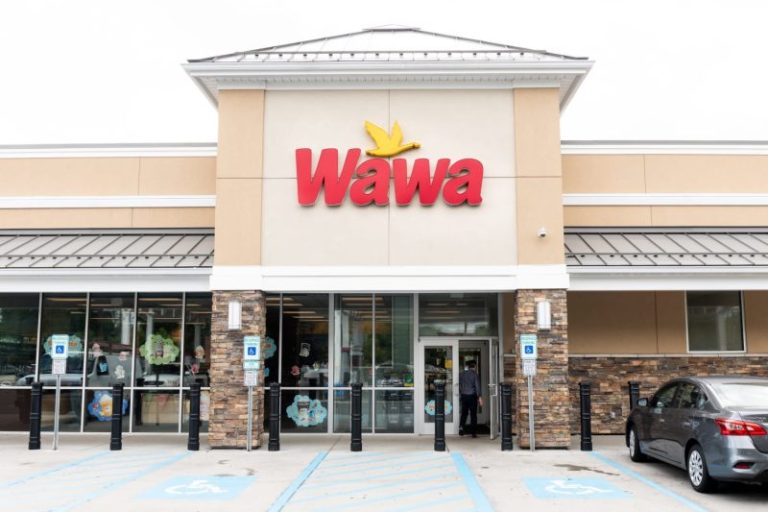
Before the pandemic, fast-food chains started seeing a new rival for their breakfast customers: convenience stores. Regional chains like Wawa in the Northeast and Casey’s General Store in the Midwest were expanding their reach and investing in their foodservice options, taking pages from the fast-food companies’ own playbooks.

For a time, lockdowns and the shift to hybrid work reversed those market share gains. But in the three months ended in July, food-forward convenience stores once again gained the upper hand in the battle to serve consumers breakfast, according to Portalatin.

Circana separates food-forward convenience stores like Buc-ee’s and Sheetz from the broader industry, although more chains may soon fit under that umbrella. 7-Eleven, the biggest convenience, or c-store, in the U.S., is planning to invest more in its prepared foods business, inspired by the success of its Japanese business. C-store chain RaceTrac on Wednesday announced that it’s buying Potbelly for about $566 million, although it’s unclear what its plans for the sandwich chain include beyond expanding its footprint.

In recent years, more diners have been watching their budgets, conscious of rising menu prices and a tight job market.

Year-over-year morning traffic to fast-food chains has fallen every quarter for the last three years, according to data from Revenue Management Solutions, which advises restaurants on how to increase sales and profits. In the second quarter, fast-food breakfast visits fell 8.7%.

To see the struggles, look no further than McDonald’s, which dominates the quick-service breakfast category.

″The breakfast daypart is the most economically sensitive daypart, because it’s the easiest daypart of a stressed consumer to either skip breakfast or choose to eat breakfast at home,” McDonald’s CEO Chris Kempczinski said on the company’s earnings call in late July. “And we, as well as the rest of the industry, are seeing that the breakfast daypart is absolutely the weakest daypart in the day.”

McDonald’s morning visits accounted for 33.5% of its traffic in the first half of 2019 but fell to 29.9% in the first half of 2025, according to Placer.ai data. To try to drum up traffic, the chain has included breakfast items in its new Extra Value Meals, including a deal for a Sausage McMuffin with Egg with a hash brown and a small coffee for $5.

To reverse breakfast’s slide, fast-food chains are taking hints from their competition. After years of convenience stores looking to fast-food chains for ideas on how to grow prepared food sales, from installing ordering kiosks to new menu items, the dynamic has flipped.

″[Quick-service restaurants] are looking at late-night sales and early morning sales, and they are directly looking at convenience stores and saying, ‘What is working? How can we bring that to our stores?’” National Association of Convenience Stores spokesperson Jeff Lenard told CNBC.

Prepared foods have offered a lifeline for convenience stores as demand for gasoline, tobacco and lottery tickets has fallen over time. The industry’s overall foodservice sales reached $121 billion in 2024, according to data from the NACS.

Most customers visit the gas pump during the morning and evening rush hours, on their way to and from work, presenting the perfect opportunity for c-stores to sell them breakfast or dinner. This year, 72% of consumers surveyed by InTouch Insight said they saw c-stores as a real alternative to fast-food chains, up from 56% a year ago and 45% two years ago.

Broadly, the c-stores that have focused on fresh food have been winning over more customers.

For example, Wawa has seen its customer base grow by 11.5% since 2022, while fast-food chains McDonald’s, Burger King and Wendy’s have seen their combined customer base shrink 3.5% in the same time, according to data from Indagari, a transaction data analytics firm.

The majority of 1,170 respondents to an InTouch Insight survey for CNBC said that they have purchased made-to-order breakfast from a c-store in the morning in the past three months. Forty-eight percent of respondents said that when they choose breakfast from a convenience store, they are replacing a visit that they might otherwise make to a fast-food restaurant like McDonald’s or Dunkin’.

Buying coffee and breakfast from a c-store likely won’t be cheaper than making it at home. But consumers perceive it as “good bang for their buck,” according to Sarah Beckett, vice president of sales and marketing for InTouch Insight.

Plus, c-store customers get a wider breadth of options. In addition to coffee, gas stations sell energy drinks, protein shakes and yogurt smoothies. And customers can pick up a granola bar or banana to accompany their breakfast sandwich. Fast-food chains lack that kind of variety.

But above all, what matters to consumers is the food itself.

“While [a] convenience store broadly does have some tailwind from being a lower price point, the ultimate differentiator, and what’s really going to set apart the winners from losers, is that quality aspect of it,” Circana’s Portalatin said.

Brady Caviness, a 33-year-old account executive at Bailiwick who lives in Minneapolis, told CNBC that he indulges in a breakfast pizza from Casey’s General Store when he’s traveling. If he’s back home, where there isn’t a Casey’s nearby, he’ll stop by McDonald’s, Dunkin’ or Starbucks if he’s in the mood to buy his breakfast.

The Iowa-based chain is the country’s third-largest c-store chain and claims to be the fifth-largest pizza concept based on its number of locations. Casey’s reported same-store sales growth of 5.6% for its prepared food and dispensed beverages for the three months ended July 31.

Like Taco Bell’s Mexican Pizza, Casey’s breakfast pizza, topped with cheese, scrambled eggs and a choice of bacon, sausage or vegetables, has grown a cult following since its launch in 2001.

“I think Casey’s is kind of a unique thing,” Caviness said. “My whole life, I’ve had the Egg McMuffins.”

This post appeared first on NBC NEWS

Gold and silver prices experienced declines early in the week, but ended higher.

The yellow metal closed the week at US$5,111.88 per ounce, while silver finished at US$84.65 per ounce, buoyed by reignited tariff uncertainty out of the US.

On Friday (February 20), the US Supreme Court stuck down tariffs put in place by President Donald Trump using the International Emergency Economic Powers Act. He quickly responded by announcing a new 10 percent global tariff and then increasing it to 15 percent, ramping up trade tensions.

Earlier in the week, Wednesday (February 18) brought the release of the US Federal Reserve’s latest meeting minutes, which show that although officials largely agreed with the January decision to hold interest rates steady, they aren’t aligned about the path forward as 2026 continues.

What’s received more attention is the Lunar New Year holiday.

Most Asian markets are closed for the occasion, and will reopen next week. I asked Ole Hansen of Saxo Bank about the significance of the closure, and he said that in his view, the more important question is what will happen when they’re back in business next week.

Here’s how he thinks that could play out:

‘I think … if they come back to more or less unchanged prices, they will see that probably as a buying opportunity. Simply — well, they probably hope that they might be able to pick it up cheaper in the absence. But if we can manage to hold these levels, then there could be a positive story building as we as we see China reopen.’

Hansen is bullish on gold this year, saying he sees it reaching US$6,000 in the next 12 months.

But interestingly, he has a different take on silver — he thinks the white metal’s upside could be limited by demand-side factors like substitution and higher supply from scrap material.

‘Gold over time can go to US$10,000, it can go to US$20,000 — it’s a monetary metal, which doesn’t really depend on demand from areas where demand could be negatively impacted with the price.

‘Silver hasn’t got that luxury. And that basically means if gold moves towards US$6,000, I would believe that — I would think that silver, at some point, will struggle to keep up, and we will see basically gold relatively outperform silver. But when that point, when that time comes, I can’t see. Again it’s very unclear, especially given the speculative demand, which can carry on for a while longer.’

I also heard this week from Christopher Aaron of iGold Advisor and Elite Private Placements, who has a much brighter outlook for silver — he said given that the metal has just broken out of a 45 year consolidation period, it still has much further to go:

‘Now that whole process, the 45 year consolidation breakout and now coming back, that is — for a number of people here — that is going to be a once-in-a-lifetime breakout. We’re talking a multi-generational breakout happening in silver right now. And it’s really important to — I mean, the bottom line is this: After 45 years of consolidation, a market doesn’t end just two months after a breakout and then kind of withering and petering out for the next 45 years. Again, that’s not how 45 year breakouts happen when we look back.’

Ultimately Aaron sees US$250 to US$350 as a reasonable price level for silver.

Bullet briefing — TSX Venture 50, BHP/Wheaton deal

Gold, silver dominate TSX Venture 50

The latest TSX Venture 50 list was released on Wednesday, with gold and silver juniors dominating. In fact, of the companies included, only three fall outside the mining sector.

The list ranks TSXV companies’ annual performance by market cap growth, share price performance and Canadian consolidated trading value. Taking the top spot was Santacruz Silver Mining (TSXV:SCZ,NASDAQ:SCZM), which had an impressive share price increase of over 1,100 percent.

As a group, the companies on the list delivered a share price increase of 431 percent.

We’ll have to wait and see whether these types of gains are repeated — or exceeded — in 2026, but the list definitely underscores the strength in gold and silver prices, and shows that their momentum is boosting not just the majors, but also the juniors.

BHP, Wheaton sign streaming deal

On the M&A side, BHP (ASX:BHP,NYSE:BHP,LSE:BHP) has entered into a long-term streaming agreement with Wheaton Precious Metals (TSX:WPM,NYSE:WPM).

Under the deal, which was signed by subsidiaries of BHP and Wheaton, BHP will receive an upfront payment of US$4.3 billion in exchange for the delivery of silver from the Peru-based Antamina mine, plus ongoing payments when metal is delivered. According to BHP, this is the most valuable streaming transaction to date based on upfront consideration received.

Antamina is a joint venture between commodities giants BHP, Glencore (LSE:GLEN,OTCPL:GLCNF), Teck Resources (TSX:TECK.A,TECK.B,NYSE:TECK) and Mitsubishi (TSE:8058,OTCPL:MSBHF), and Wheaton already has a silver stream in place with Glencore. Once the BHP arrangement closes, Wheaton will receive a combined 67.5 percent of the mine’s silver.

Securities Disclosure: I, Charlotte McLeod, hold no direct investment interest in any company mentioned in this article.

This post appeared first on investingnews.com

The Labor Department has announced an inquiry into the Bureau of Labor Statistics over recent changes to its data practices.

In a letter published Wednesday, the office of the inspector general for the Labor Department cited the BLS’ recent decision to reduce data collection activities for two key inflation reports, as well as the large downward revision in employment estimates it announced Tuesday. It said it is reviewing the ‘challenges’ the agency has faced ‘in collecting and reporting closely watched economic data.’

The probe comes one month after President Donald Trump fired the head of the BLS as part of a broader pressure campaign that critics say has risked politicizing a part of the government that has long played a crucial role in the business world. The BLS, which is tasked with collecting data on economic indicators such as jobs and inflation, had generally been left alone by previous administrations.

But Trump began zeroing in on the BLS as his frustrations with the Federal Reserve mounted, coinciding with economic numbers that started to warn about a broader U.S. slowdown.

Since then, the labor market has slowed considerably. Just before the head of the BLS was fired, the department released a weaker-than-expected jobs report, citing claims of data manipulation that critics say are unfounded.

Federal Reserve Chair Jerome Powell, another frequent target of Trump’s, has said Fed policymakers are ‘getting the data that we need to do our jobs’ and stressed the importance of the federal statistical agencies.

‘The government data is really the gold standard in data,’ he added. ‘We need it to be good and to be able to rely on it.’

Trump then nominated E.J. Antoni, an economist with the far-right Heritage Foundation, as the new head of the BLS, a move many economists have criticized.

Trump and other BLS critics have focused on the department’s revisions to its reports, a practice that dates back decades and has been generally seen as a necessary part of the challenge of collecting near-term economic data. It has also faced other challenges in data collection, including budget challenges and low response rates to its collection efforts.

The BLS previously said the decision to reduce inflation data surveys was necessary given existing budget constraints. Meanwhile, mainstream economists say the latest downward revisions — while large — are part of a routine annual process known as benchmarking.

While response rates to the bureau’s surveys have been declining, researchers recently found that revisions and falling response rates did not reduce the reliability of the jobs and inflation reports.

This post appeared first on NBC NEWS

The average rate on the 30-year fixed mortgage dropped 16 basis points to 6.29% Friday, according to Mortgage News Daily, following the release of a weaker-than-expected August employment report.

It’s the lowest rate since Oct. 3 and the biggest one-day drop since August 2024. Rates are finally breaking out of the high 6% range, where they’ve been stuck for months.

“This was a pretty straightforward reaction to a hotly anticipated jobs report,” said Mortgage News Daily Chief Operating Officer Matt Graham. “It’s a good reminder that the market gets to decide what matters in terms of economic data, and the bond market has a clear voting record that suggests the jobs report is always the biggest potential source of volatility for rates.”

Graham said in a post on X that many lenders are “priced better” than Oct. 3 and would be quoting in the high 5% range.

The drop is a major change from May, when the rate on the 30-year fixed peaked at 7.08%. It’s big for buyers out shopping for a home today, especially given high home prices.

Take, for example, someone purchasing a $450,000 home, which is just above August’s national median price, using a 30-year fixed mortgage with a 20% down payment. Not including taxes or insurance, the monthly payment at 7% would be $2,395. At 6.29%, that payment would be $2,226, a difference of $169 per month.

That might not sound like a lot to some, but it can mean the difference in not just affording a home, but qualifying for a mortgage.

Homebuilder stocks reacted favorably Friday, with names like Lennar, DR Horton and Pulte all up roughly 3% midday. Homebuilding ETF ITB has been running hot for the last month as rates slowly moved lower. It’s up close to 13% in the past month.

The big question is whether the drop in rates will be enough to get homebuyers back in the market.

Mortgage demand from homebuyers, an early indicator, have yet to respond to gradually improving rates. Applications for a mortgage to purchase a home last week were 6.6% lower from four weeks before, according to the Mortgage Bankers Association.

“Homebuyers grapple with a lack of affordability, sellers contend with more competition, and builders deal with lower buyer demand,” Danielle Hale, chief economist at Realtor.com, said Friday in a statement after the release of the August employment report. “These conditions haven’t spelled catastrophe, but have created a cruel summer for the housing market.”

Some analysts have argued that buyers need to see mortgage rates in the 5% range before it really makes a difference. Home prices remain stubbornly high, and while the gains have definitely cooled, they are not yet coming down on a national level. In addition, uncertainty about the state of the economy and the job market has left many would-be buyers on the sidelines.

This post appeared first on NBC NEWS

Shares of Kenvue fell more than 10% on Friday after a report that Health Secretary Robert F. Kennedy Jr. will likely link autism to the use of the company’s pain medication Tylenol in pregnant women.

HHS will release the report that could draw that link this month, The Wall Street Journal reported on Friday.

That report will also suggest a medicine derived from folate — a water-soluble vitamin — can be used to treat symptoms of the developmental disorder in some people, according to the Journal.

In a statement, an HHS spokesperson said, “We are using gold-standard science to get to the bottom of America’s unprecedented rise in autism rates.”

“Until we release the final report, any claims about its contents are nothing more than speculation,” they added.

Tylenol could be the latest widely used and accepted treatment that Kennedy has undermined at the helm of HHS, which oversees federal health agencies that regulate drugs and other therapies. Kennedy has also taken steps to change vaccine policy in the U.S., and has amplified false claims about safe and effective shots that use mRNA technology.

Kennedy has made the disorder a key focus of HHS, pledging in April that the agency will “know what has caused the autism epidemic” by September and eliminate exposures. He also said that month that the agency has launched a “massive testing and research effort” involving hundreds of scientists worldwide that will determine the cause.

In a statement, Kenvue said it has “continuously evaluated the science and [continues] to believe there is no causal link” between the use of acetaminophen, the generic name for Tylenol, during pregnancy and autism.

The company added that the Food and Drug Administration and leading medical organizations “agree on the safety” of the drug, its use during pregnancy and the information provided on the Tylenol label.

The FDA website says the agency has not found “clear evidence” that appropriate use of acetaminophen during pregnancy causes “adverse pregnancy, birth, neurobehavioral, or developmental outcomes.” But the FDA said it advises pregnant women to speak with their health-care providers before using over-the-counter drugs.

The American College of Obstetricians and Gynecologists maintains that acetaminophen is safe during pregnancy when taken as directed and after consulting a health-care provider.

Some previous studies have suggested the drug poses risks to fetal development, and some parents have brought lawsuits claiming that they gave birth to children with autism after using it.

But a federal judge in Manhattan ruled in 2023 that some of those lawsuits lacked scientific evidence and later ended the litigation in 2024. Some research has also found no association between acetaminophen use and autism.

In a note on Friday, BNP Paribas analyst Navann Ty said the firm believes the “hurdle to proving causation [between the drug and autism] is high, particularly given that the litigation previously concluded in Kenvue’s favor.”

This post appeared first on NBC NEWS