Author

admin

Browsing

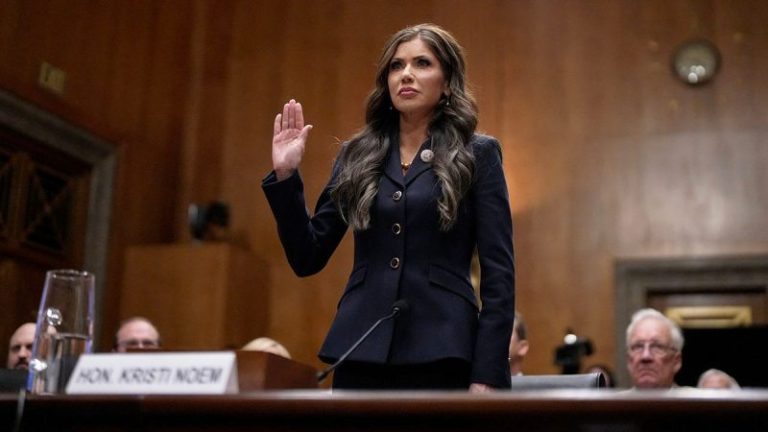
Homeland Security Secretary Kristi Noem heads to Capitol Hill Tuesday to face lawmakers demanding she resign, be fired or impeached.

Her appearance before the Senate Judiciary Committee comes as members of both parties criticize her handling of the Trump administration’s immigration operations throughout the country. Some Democrats have called for her to face impeachment.

Her testimony has been in the works for months. Senate Judiciary Chair Chuck Grassley, R-Iowa, had been seeking her appearance to conduct routine oversight of the Department of Homeland Security (DHS).

But it wasn’t until after the fatal shootings of Alex Pretti and Renee Nicole Good during immigration operations in Minneapolis that Noem agreed to testify.

Last month, President Donald Trump dismissed the idea of firing Noem.

‘Why would I do that?’ Trump said. ‘We have the strongest border in the history of our country. We have the best crime numbers we’ve ever had, going back to the year 1900 — that’s 125 years.’

Still, she is expected to face tough questioning from Senate Democrats.

Sen. Dick Durbin, D-Ill., the top Democrat on the committee, said at the time the hearing was announced that Noem previously ‘refused to appear before the Senate Judiciary Committee last year and now tells us that she will be available in five weeks — should she still be DHS Secretary at that time.’

‘With all of the violence and deaths involving DHS, the Secretary is apparently in no hurry to account for her mismanagement of this national crisis,’ Durbin said in a statement. ‘And she expects us to rubber stamp her record-breaking budget in the meantime.’

And there’s at least one Senate Republican on the panel, Sen. Thom Tillis, R-N.C., who has emerged as one of her top critics.

In January, Tillis said he would place holds on DHS nominees coming through the committee until Noem agreed to testify — a move that would block Trump’s picks for the agency.

‘I’m not going to get into impeachment,’ Tillis said at the time. ‘I think it should be a management decision. She needs to go.’

Her testimony also comes as a partial government shutdown affecting only DHS enters its third week.

Some Republicans have expressed concern that the shutdown could hamper the agency’s ability to respond proactively to potential threats in the U.S., particularly following Trump’s weekend strikes in Iran, along with other security challenges that could arise during a prolonged closure.

The White House and Senate Democrats, led by Minority Leader Chuck Schumer, D-N.Y., have been negotiating for weeks, but neither side has reached a breakthrough.

The White House sent its latest offer to Democrats, which a White House official described as ‘serious’ in a statement to Fox News Digital. Still, no agreement has been reached, and the agency remains shuttered.

‘Democrats need to make a move to end the shutdown before more Americans are harmed by a lack of funding for critical services like disaster relief,’ the official said.

Related Article

DHS funding stalemate thaws as White House sends Democrats ‘serious’ counteroffer
This post appeared first on FOX NEWS

Vice President JD Vance confirmed Monday that negotiations with Iran over its nuclear program collapsed after U.S. officials concluded Tehran’s claims did not ‘pass the smell test,’ prompting President Donald Trump to authorize Operation Epic Fury.

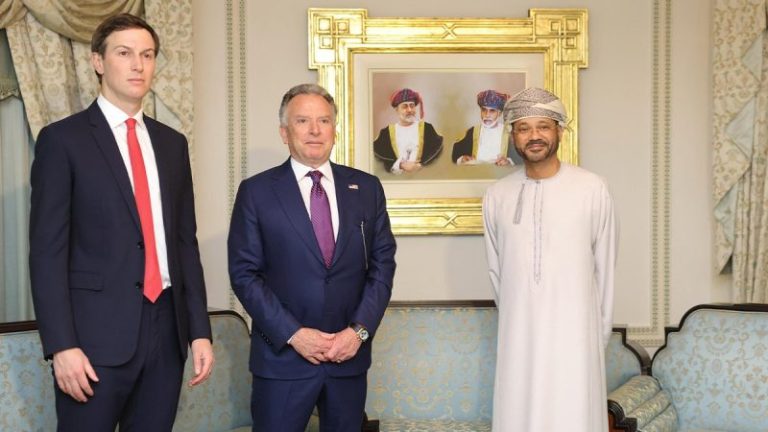
Speaking on ‘Jesse Watters Primetime,’ Vance said U.S. envoys — including Steve Witkoff, Secretary of State Marco Rubio and Jared Kushner — had conducted rounds of ‘deliberate’ talks in Geneva with the Iranian delegation.

The discussions were aimed at curbing Tehran’s nuclear program in exchange for sanctions relief and averting a broader conflict, he said, but ultimately broke down.

‘But the Iranians would come back to us, and they’d say, ‘Well, you know, having enrichment for civilian purposes, for energy purposes, is a matter of national pride,’’ Vance said.

‘And so we would say, ‘OK, that’s interesting, but why are you building your enrichment facilities 70 feet underground? And why are you enriching to a level that’s way beyond civilian enrichment and is only useful if your goal is to build a nuclear bomb?’’ he said.

‘Nobody objects to the Iranians being able to build medical isotopes; the objection is these enrichment facilities that are only useful for building a nuclear weapon,’ Vance clarified.

‘It just doesn’t pass the smell test for you to say that you want enrichment for medical isotopes, while at the same time trying to build a facility 70 to 80 feet underground,’ he explained.

Vance spoke as Operation Epic Fury ended its third day. Launched on Feb. 28, U.S. and Israeli forces carried out coordinated precision strikes deep inside Iran aimed at crippling Tehran’s missile arsenal and nuclear infrastructure.

A key issue had been Iran enriching uranium to high levels, including material around 60% purity — a fraction of weapons-grade but far above limits set under the 2015 nuclear deal — keeping international alarm high over proliferation risks.

‘We destroyed Iran’s ability to build a nuclear weapon during President Trump’s term,’ Vance told Watters. ‘We set them back substantially. But I think the President was looking for the long haul,’ he said.

‘Trump was looking for Iran to make a significant long-term commitment that they would never build a nuclear weapon, that they would not pursue the ability to be on the brink of a nuclear weapon.’

‘He wanted to make sure that Iran could never have a nuclear weapon, and that would require fundamentally a change in mindset from the Iranian regime.’

‘The president is not going to rest until he accomplishes that all-important objective of ensuring that Iran can’t have a nuclear weapon, not just for the next few years, not just because we obliterated Fordow or some other enrichment facility.’

‘There’s just no way that Donald Trump is going to allow this country to get into a multiyear conflict with no clear end in sight and no clear objective,’ Vance added while describing that the administration would prefer to see ‘a friendly regime in Iran, a stable country, a country that’s willing to work with the United States.’

Related Article

Why Trump invoked regime change in attacking Iran, and the media must learn from past mistakes
This post appeared first on FOX NEWS

Leftists in the U.S. are seriously confused. While Iranians around the world celebrate the death of the thuggish Ayatollah Khamanei, who ruled their country with an iron fist, liberals in the U.S. are condemning President Donald Trump’s war to liberate the Persian nation.  

Opposition to the U.S.-Israel joint attack on Iran was broad and swift, powered in part by Trump Derangement Syndrome — if he’s behind it, they’re reliably against it — and also tinged with antisemitism.  

The smoke had not yet cleared from the bombings in Iran before Democrats started shrieking their objections, with Connecticut Democrat Sen. Chris Murphy, for instance, calling it ‘dangerously illegal and a mistake of staggering scale,’ and denouncing the president as a ‘would-be dictator.’ Murphy has also called Israel’s policy in Gaza and in the West Bank ‘immoral’, and recently announced that he would not support additional military aid to Israel.

Anti-Israel Democrats in the House were especially strident, with ‘Squad’ member Rashida Tlaib from Michigan posting, ‘It’s clear that the genocidal govt of Israel doesn’t care about children + human life including our own loved ones in the military.’ She also posted, ‘The government of Israel is addicted to bombing hospitals, schools, refugee camps which are all war crimes.’ 

Democrats have been pulling away from their traditional backing of Israel for some time, and especially since the far left took hold of their party. Axios reported in December that the DNC’s still-secret ‘autopsy’ of why Vice President Kamala Harris was defeated by Trump in 2024 concluded that the former VP ‘lost significant support because of the Biden administration’s approach to the war in Gaza…’ 

Iran has brought nothing but bloodshed and destruction to Israel, the United States and the Middle East for decades.

That is, in sifting the ashes of the 2024 election for clues as to why an inarticulate candidate who admitted she couldn’t think of a thing she’d do differently from the wildly unpopular Joe Biden went down in flames, Democrat officials determined…it was Israel’s fault! Democrats are quick learners — their support of the Jewish state is dwindling fast.

It isn’t just Democrats piling on. Criticism also came from far-right conspiracy theorists, too.

We also heard criticism from the utterly worthless and anti-Israel U.N., with Secretary-General António Guterres condemning the U.S.-Israeli airstrikes on Iran and demanding immediate negotiations ‘to pull the region, and our world, back from the brink.’ 

Guterres has overseen a U.N. with ‘a glaring anti-Israel bias, advancing biased and one-sided efforts to isolate and delegitimize the Jewish state’, reports the pro-Jewish group AIPAC. A bias AIPAC can document and which, astonishingly, has ‘escalated dramatically since Hamas’ October 7 attack.’

Spineless European leaders stood on the sidelines, initially distancing themselves from the U.S.-Israeli initiative. UK Prime Minister Keir Starmer at first declined to give the U.S. permission to use its air bases, thus forcing American jets to undertake a 20-plus hour flight to carry out their mission. He then relented, earning ridicule from all sides.   

Of course, witless students also weighed in, with Columbia University’s most renowned anti-Israel group, responsible for last year’s ‘encampment’ built to protest the Gaza conflict, posting    ‘death to America’ in Persian after the U.S. and Israel killed Iran’s Supreme Leader Ali Khamenei. That prompted Sen. Tex Cruz, R-Texas, to demand that foreign students sending out such anti-American messages be ‘deported immediately.’ He’s right.

One student protester told an interviewer that the U.S. ‘should align with Iranian regime instead of Israel because Iran ‘is not fascist.”

Zohran Mamdani, the newly installed Muslim mayor of New York, harshly condemned President Trump’s war with Iran, saying, ‘Today’s military strikes on Iran — carried out by the United States and Israel — mark a catastrophic escalation in an illegal war of aggression.’ He also said, ‘Additionally, I want to speak directly to Iranian New Yorkers: you are part of the fabric of this city — you are our neighbors, small business owners, students, artists, workers, and community leaders.’ The mayor assured them, ‘You will be safe here.’ 

Mamdani misread the room, assuming that Iranians living in the U.S. would react as he had to the attack on the mullahs. Instead, joyful Iranians gathered in Times Square to celebrate the end of one of the most hated and savage regimes in history.

They apparently felt perfectly safe, as indeed they were.

There are certainly valid reasons to fear a military confrontation with Iran. The country hosts a huge arsenal of ballistic missiles, it has a well-trained and now vengeful military, and it can disrupt the world’s oil supply by mining the Straits of Hormuz. Also, it is a large country of 90 million people; Iran’s citizens may hate the mullahs but they have no weapons with which to bring down the theocracy.

But Iran has brought nothing but bloodshed and destruction to Israel, the United States and the Middle East for decades. There could be no peace or progress in the region while Iran continues to fund its terror proxies and doggedly pursues long-range missiles and a nuclear bomb. 

Democrats who mourn the scrapping of President Obama’s nuclear deal with Iran, protesting that the JCPOA was preventing the regime from acquiring a nuke, surely know better. The deal was seriously flawed, it was unverifiable and from day one the mullahs prevented U.N. inspectors from carrying out agreed-upon certification of the pact.

President Trump has ended the mullahs’ reign of terror and united the region in a manner no one could have imagined.

This is a righteous endeavor. Let us hope that on the other side, a free Iran will become a trusted ally.

Related Article

Iranians celebrate worldwide after supreme leader is killed in Israeli strikes
This post appeared first on FOX NEWS

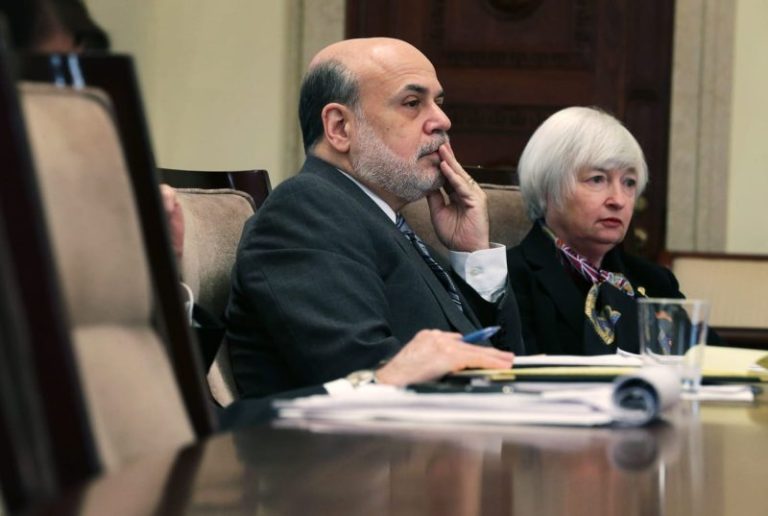
A group of the country’s top economic leaders, including every living former Federal Reserve chair, filed an amicus brief with the Supreme Court on Thursday in support of Fed governor Lisa Cook, who President Donald Trump is seeking to remove.

The group, led former central bank chiefs Alan Greenspan, Ben Bernanke and Janet Yellen, said that “allowing the removal of Governor Lisa D. Cook while the challenge to her removal is pending would threaten that independence and erode public confidence in the Fed.”

The bipartisan group, which also includes former Treasury Secretaries Robert Rubin, Larry Summers, Hank Paulson, Jack Lew and Timothy Geithner, added that “the independence of the Federal Reserve, within the limited authority granted by Congress to achieve the goals Congress itself has set, is a critical feature of our national monetary system.”

As the U.S. central bank, the Federal Reserve is part of the U.S. government and its leaders are put in place by elected officials, but it also retains a considerable amount of independence that is meant to allow it to make decisions purely out of economic concerns rather than political ones.

The former economic officials said that an erosion of Fed independence could result “in substantial long-term harm and inferior economic performance overall.”

The Supreme Court is considering whether Trump has the authority to fire Cook, who has been a target for the White House for weeks as part of a broader pressure campaign to push the Fed to more aggressively cut interest rates.

Cook’s attempted removal stems from allegations of mortgage fraud, made in August by top Trump ally and Federal Housing Finance Authority Director Bill Pulte.

Cook has repeatedly denied the allegations and has not been charged with any crime. Documents reviewed by NBC News in mid-September appeared to contradict Pulte’s allegations.

Two courts have so far blocked Cook’s removal, leading Trump to ask the Supreme Court a week ago to allow him to fire her. In a court filing, Solicitor General D. John Sauer said a judge’s ruling that blocked the firing constituted “improper judicial interference.”

In a filing to the Supreme Court on Thursday, Cook’s lawyers said that ‘she committed neither ‘fraud’ nor ‘gross negligence’ in relation to her mortgages.’

Cook asked the court to deny Trump’s attempt to remove her while the case is argued.

The White House has repeatedly maintained that Trump “lawfully removed Lisa Cook for cause.”

The brief filed Thursday is a who’s who of the country’s top economic minds. Former Fed governor Dan Tarullo is also listed as a signatory to the brief, as well as the economists Ken Rogoff, Phil Gramm and John Cochrane.

Glenn Hubbard, Greg Mankiw, Christina Romer, Cecilia Rouse, Jared Bernstein and Jason Furman, a group who served as top officials on the White House’s council of economic advisers during Republican and Democrat administrations, also signed the brief.

None of the officials who signed the filing have served in either of Trump’s administrations.

Lisa Cook is sworn in during a Senate Banking hearing in 2023.Drew Angerer / Getty Images file

Trump is the first president in U.S. history to try to remove a sitting Fed official.

‘There is broad consensus among economists, based on decades of macroeconomic research, that a more independent central bank will lead to lower and more stable inflation without creating higher unemployment — thus helping to achieve the Federal Reserve’s statutory objective of price stability and maximum employment,’ the officials said in the brief.

‘The Federal Reserve walks a careful line in pursuit of its goals.’

They noted that ‘elected officials often favor lowering interest rates to boost employment, particularly leading up to an election.’

‘Although that approach may satisfy voters temporarily, it does not lead to lasting gains for unemployment or growth and can instead lead to persistently higher inflation in the long-term and thus ultimately harm the national economy.’

The former Fed chairs and economic officials, in their filing, highlight a notorious case of political pressure on the Fed:

‘In the early 1970s, President Richard Nixon famously exerted political pressure over then-Chair of the Fed Arthur Burns to lower unemployment by reducing interest rates. During this period ‘the Fed made only limited efforts to maintain policy independence and, for doctrinal as well as political reasons, enabled a decade of high and volatile inflation.’ This contributed to an ‘inflationary boom’ and deep recession that took years to bring back under control.’

This post appeared first on NBC NEWS

Here’s a quick recap of the crypto landscape for Monday (February 23) as of 9:00 p.m. UTC.

Get the latest insights on Bitcoin, Ether and altcoins, along with a round-up of key cryptocurrency market news.

Bitcoin (BTC) was priced at US$64,409.84, down by 4.4 percent over the last 24 hours.

Bitcoin price performance, February 23, 2026.

Chart via TradingView.

XS.com senior market analyst Linh Tran suggested that the medium-term uptrend is limited without major catalysts. She predicts that Bitcoin will fluctuate between US$65,000 support and US$70,000 resistance; however, if current pressures persist, there is a risk of Bitcoin retesting the US$60,000 low, which could trigger a deeper decline.

Software stocks slipped alongside a further decline in crypto prices after Anthropic said its Claude platform can help ‘break the cost barrier to COBOL modernization,’ a high-level, compiled computer programming language that the firm says ‘runs in production every day, powering critical systems in finance, airlines, and government.’

Ether (ETH) was priced at US$1,860.34, down by 4.1 percent over the last 24 hours.

Altcoin price update

  • XRP (XRP) was priced at US$1.36, down by 2 percent over 24 hours.
  • Solana (SOL) was trading at US$78.37, down by 5.6 percent over 24 hours.

Today’s crypto news to know

Yield Basis thrives on market volatility

Some parts of the DeFi ecosystem have benefited from the chaos of Bitcoin’s sudden price drop in January, which liquidated billions of dollars’ worth of positions. A DeFi project called Yield Basis, which helps people trade Bitcoin and Ether through its liquidity pools, says it’s handled US$769 million in trades since the beginning of 2026, with more than half occurring after January 28, when crypto prices began swinging wildly.

According to a recent report, the protocol has collected US$12.15 million in fees since it launched its v2 pools in November 2025, compared to US$5.31 million worth of tokens it paid out as rewards, leaving about US$6.84 million in net profit for the users providing liquidity and holding the project’s tokens.

Open-source AI project distances itself from crypto

An open-source AI agent framework known as OpenClaw has inadvertently become the center of a crypto controversy. The project, built to power autonomous agents capable of browsing the web and executing complex tasks, was briefly rebranded amid a naming dispute before scammers launched a fake Solana-based token using its former branding.

The token’s market capitalization surged to roughly US$16 million within hours before collapsing more than 90 percent after developer Peter Steinberger disavowed any connection.

Steinberger publicly rejected the speculation, writing on X: “To all crypto folks: please stop pinging me, stop harassing me. I will never do a coin. Any project that lists me as coin owner is a SCAM.”

USDT contraction flashes rare stress signal

Tether’s USDT stablecoin is signaling liquidity strain reminiscent of the market turmoil following the FTX collapse.

According to CryptoQuant, the 60 day change in USDT supply has dropped to negative US$3 billion, which marks only the second time such a contraction has occurred. Bloomberg reported that USDT is on pace for its steepest monthly supply decline since December 2022, already shrinking by roughly US$1.5 billion in February alone.

Large-scale redemptions typically suggest institutions or major holders are pulling capital out of the crypto ecosystem rather than simply rotating between tokens. The last comparable contraction came as Bitcoin fell toward US$16,000 during the FTX crisis before stabilizing and beginning a multi-year recovery.

Securities Disclosure: I, Meagen Seatter, hold no direct investment interest in any company mentioned in this article.

Securities Disclosure: I, Giann Liguid, hold no direct investment interest in any company mentioned in this article.

This post appeared first on investingnews.com

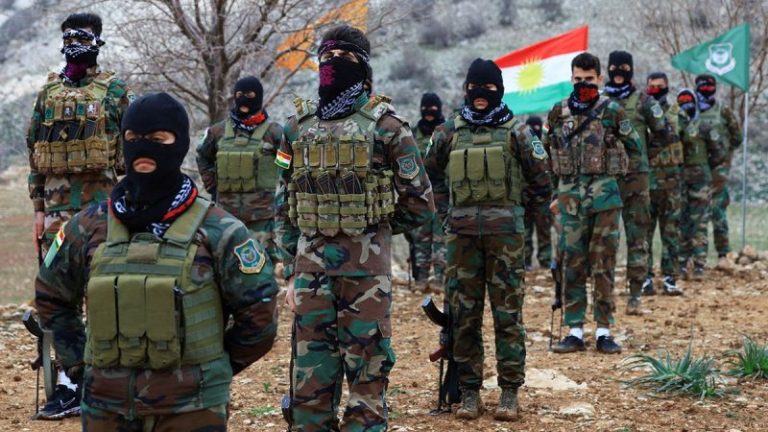
Iranian Kurdish opposition groups say they are prepared to challenge Tehran but are holding back for now as the war between the United States, Israel and the Islamic Republic continues to unfold.

Khalid Azizi, spokesperson for the Democratic Party of Iranian Kurdistan (KDPI), told Fox News Digital in an exclusive interview that Kurdish forces are closely watching developments but have no plans to launch a ground offensive at this stage.

Reports in recent days have suggested that President Donald Trump spoke with Mustafa Hijri, the leader of KDPI, as Washington explores possible Kurdish involvement in pressure on Iran. 

Azizi declined to confirm or deny whether such a conversation took place.

Azizi himself has firsthand experience with Iran’s military retaliation. 

In 2018, Iran’s Islamic Revolutionary Guard Corps launched ballistic missiles at the KDPI headquarters in Koy Sanjaq in Iraq’s Kurdistan region during a leadership meeting, killing at least 18 people and injuring dozens.

‘We have been targeted by the Islamic Republic,’ Azizi said. ‘The first Iranian missile was sent to my headquarters and I was personally injured in that attack.’

Despite the risks, Azizi said Kurdish resistance remains strong after decades of confrontation with Iran. 

‘The Iranian Kurdish resistance movement is actually very strong because we have been on the ground since the Iranian revolution,’ he said.

Azizi spoke from Washington, D.C., where he said Kurdish representatives were meeting with policymakers and institutions to discuss the situation in Iran and the role Kurdish groups could play if the conflict evolves.

But for now, Kurdish groups say they are waiting to see how the broader war develops.

‘We are ready and our party is well organized,’ Azizi said. ‘But right now we do not have any intention to enter Iranian Kurdistan because the ground forces in this war have not been a topic.’

‘It’s very easy to start a war,’ he added. ‘But it will be more complicated how to end this war.’

The KDPI is one of the oldest Kurdish opposition movements fighting Iran’s Islamic Republic. The group is a member of the Socialist International and operates primarily from bases in the Kurdistan region of Iraq and has been in armed and political opposition to Tehran since the 1979 Iranian Revolution.

Azizi said Kurdish political movements have recently taken a significant step by forming a joint alliance aimed at coordinating their political strategy.

‘We have managed to create a unity among the Kurdish political parties,’ he said. ‘This has been welcomed by the Iranian Kurdish people and by different Iranian political parties.’

The alliance, known as the Coalition of Political Forces of Iranian Kurdistan, brings together several historically divided Kurdish factions that oppose the Islamic Republic.

Azizi said the future of Iran will ultimately depend on whether Iranians themselves rise up against the regime.

‘If you look at the goal of the United States and Israel in this war, they have been targeting the Iranian military, security and political institutions. In this aspect Iran has been weakened,’ he said.

‘But the regime still remains in power because people are not on the streets and there is no alternative right now to replace this regime.’

Azizi urged Western governments to focus not only on the military campaign but also on helping Iranian opposition movements coordinate politically.

Iran, he said, is a multi-ethnic country whose future stability will depend on building a democratic system that includes all of its communities.

‘The path and the roadmap for rebuilding Iran must be based on the participation of all ethnic groups,’ Azizi said. ‘Iran is a multi-ethnic society.’

For now, he said, Kurdish fighters remain in a holding pattern.

‘We have the ability and we have the capacity,’ Azizi said. ‘But it is not easy right now for us to make any decision regarding entering Iranian Kurdistan.’

This post appeared first on FOX NEWS
The Strait of Hormuz region became a flashpoint Sunday after U.S.-Israeli strikes on Iran under Operation Epic Fury triggered electronic warfare activity and multiple ‘attacks’ on vessels along one of the world’s most critical energy waterways, according to reports.

The sudden escalation followed a Feb. 28 warning from U.S. maritime authorities urging commercial vessels to avoid strategic waterways if possible, including the Persian Gulf, Gulf of Oman and Arabian Sea, citing heightened security risks.

‘It is recommended that vessels keep clear of this area if possible,’ the advisory warned.

‘The Persian Gulf, Strait of Hormuz and adjacent waters are the most dangerous place right now for commercial shipping,’ Jakob P. Larsen, head of maritime security at BIMCO, told Fox News Digital.

‘Ships in the Persian Gulf are under threat from Iranian attacks,’ Larsen said.

‘To protect themselves, most ships stay as far away from Iran as they can,’ he added before describing how ships are ‘trying to depart from the Persian Gulf to get away from the threat.’

The United Kingdom Maritime Trade Operations (UKMTO) and regional authorities reported multiple maritime incidents listed as ‘attacks’ Sunday.

One vessel west of Sharjah, UAE, was rocked by an explosion from an unknown projectile that detonated close alongside, and another tanker north of Muscat, Oman, was struck above the waterline, sparking a fire that was later brought under control, according to data.

A third vessel northwest of Mina Saqr, UAE, was also hit by a projectile that ignited a blaze aboard, the organization reported.

Compounding the physical threats is a surge in electronic warfare with maritime intelligence firm Windward reporting widespread GPS and Automatic Identification System (AIS) interference, impacting 1,000-plus ships.

Windward cited widespread navigation disruption near Iran’s Bandar Abbas port, with ships falsely appearing at airports, a nuclear power plant and inland locations.

Several new AIS jamming clusters were also identified across Emirati, Qatari, Omani and Iranian waters, Windward said.

Major shipping company Maersk announced it would reroute some services away from the region, citing crew and cargo safety.

Roughly 20% of global oil and gas exports pass through the Strait, and traffic has already thinned, with some tankers reversing course or switching off AIS signals.

Industry groups also warned of Houthi retaliation in the Red Sea and Gulf of Aden, while analysts cautioned that Iran could seize vessels tied to U.S. or Israeli interests.

‘The Houthis have threatened to resume attacks on ships in the Red Sea, Bab el-Mandeb Strait and Gulf of Aden,’ Larsen explained.

Ships with business connections to U.S. or Israeli interests are considered more likely targets, though others could be struck deliberately or in error, he said.

Tanker owners’ association Intertanko also warned members that ‘the expectation is that the Houthis may respond and recommence attacks on shipping,’ although immediate intelligence remained unclear.

‘There are no signs of Iranian attempts to close the Strait with sea mines or naval mines, although this can change at short notice,’ Larsen added before confirming that GPS interference has ‘increased significantly following the initiation of hostilities.’

Related Article

Historic US-Israel strikes on Iran underway as Tehran faces regime survival test
This post appeared first on FOX NEWS

President Donald Trump vowed Sunday to ‘avenge’ the deaths of three U.S. service members killed in action as the conflict involving Iran deepens across the Middle East.

‘As one nation, we grieve for the true American patriots who have made the ultimate sacrifice for our nation,’ Trump said in a video statement posted on Truth Social. 

‘Even as we continue the righteous mission for which they gave their lives, we pray for the full recovery of the wounded and send our immense love and eternal gratitude to the families of the fallen.’

The president struck a somber note, warning that ‘sadly, there will likely be more before it ends.’

‘America will avenge their deaths and deliver the most punishing blow to the terrorists who have waged war,’ Trump said. ‘Our resolve and likewise that of Israel has never been stronger.’

Trump’s remarks, his first public statement since the U.S.-Israel strikes that led to the death of Iran’s Supreme Leader Ayatollah Ali Khamenei and several senior Iranian officials, signaled a potentially prolonged confrontation.

‘This wretched and vile man had the blood of hundreds and even thousands of Americans on his hands and was responsible for the slaughter of countless thousands of innocent people all across many countries,’ Trump said.

He said U.S. forces had struck ‘hundreds of targets’ inside Iran, including key Revolutionary Guard facilities, air defense systems and naval assets. Trump said the U.S. ‘knocked out nine Iranian ships ‘in a matter of literally minutes.’ Military operations, he added, would continue ‘until all of our objectives are achieved.’

He went on to issue a direct warning to Iran’s Revolutionary Guard and military leadership, urging them to surrender in exchange for immunity or face ‘certain death.’ 

Ahead of the strikes, the U.S. military amassed what Trump previously called an ‘armada’ in Iran’s backyard. Mapped out across the Persian Gulf and beyond, the deployment tells its own story, one of calculated pressure backed by credible capability.

At the center of the U.S. presence are two aircraft carrier strike groups — the USS Abraham Lincoln and USS Gerald R. Ford — each supported by guided-missile destroyers and cruisers and capable of sustained air and missile operations.

More than a dozen additional U.S. warships are also operating in the region in support roles, according to defense officials.

Meanwhile, Tehran has vowed retaliation for the strikes. 

Iranian President Masoud Pezeshkian declared that avenging Khamenei’s killing is both a ‘legitimate duty and right,’ and added that Tehran ‘will forcefully crush the enemy’s bases.’

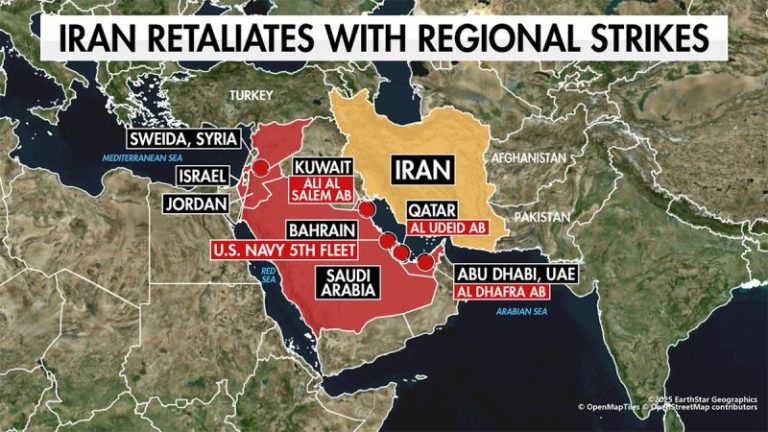
The confrontation has already included missile and drone strikes launched by Iran against U.S. bases in Bahrain, the United Arab Emirates and Iraq, though U.S. Central Command has denied Tehran’s claims of successfully targeting American carriers.

The unfolding conflict has ignited reactions far beyond the Middle East, including anti-war protests in U.S. cities and heightened diplomatic tensions near American embassies, underscoring how quickly the crisis has expanded beyond the region.

In Austin, authorities are investigating a recent shooting as potentially an act of terrorism, further heightening concerns about spillover effects at home.

Meanwhile, federal and local law enforcement have boosted security as a precaution, though officials say no specific, credible threats have been identified. 


Related Article

Enemy within: Counterterrorism experts fear sleeper cells could be poised inside US
This post appeared first on FOX NEWS
U.S. forces launched a sweeping military assault on Iranian targets on Saturday, unleashing overwhelming air, sea and missile power in a coordinated operation with Israel.

The mission — dubbed ‘Operation Epic Fury’ — began at 1:15 a.m. and struck more than 1,000 sites across Iran within its first 24 hours, according to U.S. Central Command (CENTCOM). Iranian Supreme Leader Ali Khamenei and dozens of senior regime officials were eliminated in the strikes.

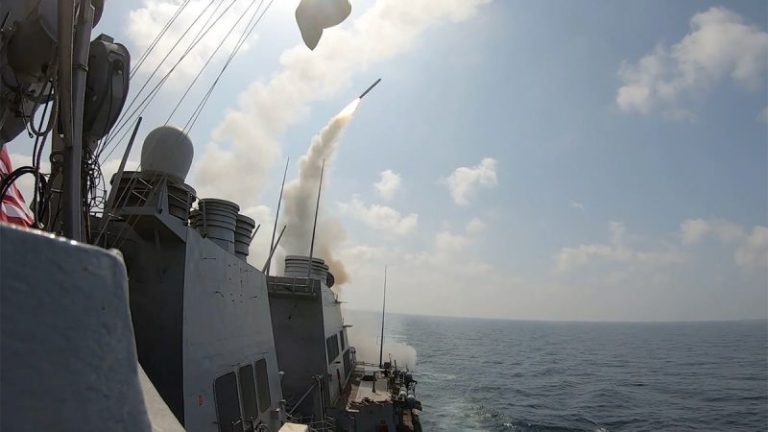
The barrage featured B-2 stealth bombers, F-22 and F-16 fighter jets, A-10 attack aircraft, EA-18G electronic warfare planes, and an array of airborne early warning and communications platforms, CENTCOM said.

Missile defense systems, including Patriot interceptors and THAAD anti-ballistic missile defenses, were deployed as part of the operation.

Other assets included RC-135 reconnaissance aircraft, MQ-9 Reaper drones, HIMARS rocket systems, nuclear-powered aircraft carriers, guided-missile destroyers, refueling tankers, and C-17 and C-130 transport aircraft, CENTCOM said.

The command also released images of Tomahawk cruise missiles, as well as F-18 and F-35 fighter jets roaring into combat, according to Reuters.

CENTCOM additionally confirmed it deployed one-way attack drones in combat for the first time.

The Low-Cost Unmanned Combat Attack System — known as LUCAS — is modeled after Iran’s Shahed drones.

‘CENTCOM’s Task Force Scorpion Strike — for the first time in history — is using one-way attack drones in combat during Operation Epic Fury,’ CENTCOM wrote on X. ‘These low-cost drones, modeled after Iran’s Shahed drones, are now delivering American-made retribution.’

Developed by Arizona-based engineering firm SpektreWorks, the LUCAS drone can be launched from catapults, vehicles or mobile ground platforms, according to Business Insider. 

The drones cost roughly $35,000 each, Reuters reported.

The strikes targeted command and control centers, the Islamic Revolutionary Guard Corps (IRGC) Joint Headquarters and Aerospace Forces Headquarters, integrated air defense systems, ballistic missile sites, Iranian Navy ships and submarines, anti-ship missile sites and military communications infrastructure, according to CENTCOM.

Iran retaliated by launching waves of missiles across the Middle East, targeting major U.S. bases in Qatar, Bahrain, Kuwait and the United Arab Emirates, Business Insider reported.

Three U.S. service members were killed and five others were ‘seriously wounded’ as part of Operation Epic Fury, CENTCOM said Sunday morning. The joint military operation is expected to carry on for days.

CENTCOM did not immediately respond to Fox News Digital’s request for comment.

Reuters and Fox News Digital’s Michael Dorgan contributed to this report.

Related Article

Sustained war with Iran could drain US missile stockpiles, test escalation control
This post appeared first on FOX NEWS

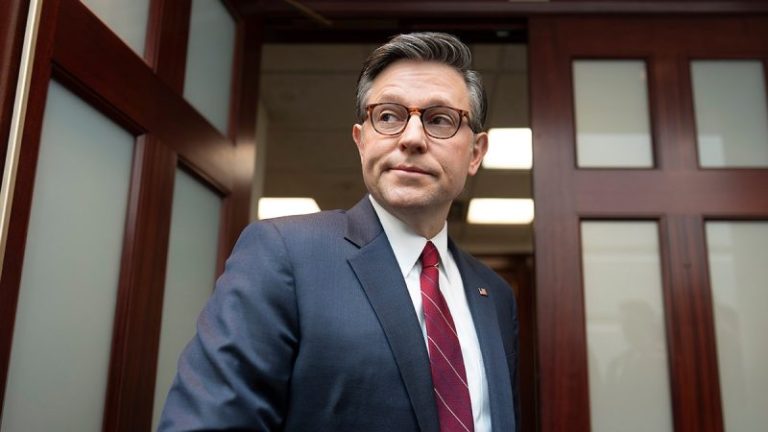
Several House Republicans are pushing Speaker Mike Johnson, R-La., to go to war with the Senate GOP over an election security bill that has little chance of passing the upper chamber under current circumstances.

House GOP leaders convened a lawmaker-only call on Sunday in the wake of a massive military operation against Iran launched by the U.S. and Israel.

After leaders briefed House Republicans on how the chamber would respond to the ongoing conflict — including a vote on ending Democrats’ weeks-long government shutdown targeting the Department of Homeland Security (DHS) — Fox News Digital was told that several lawmakers raised concerns about the Senate not yet taking up the Safeguarding American Voter Eligiblity (SAVE America) Act. Among other provisions, the act would require voters in federal elections to produce valid ID and proof of citizenship.

Rep. Derrick Van Orden, R-Wis., was among those pushing the House to reject any bills from the Senate until the measure was taken up, telling Johnson according to multiple sources on the call, ‘If we don’t get this done, or at least show that we’ve got some backbone, we’re done. The midterms are over.’

At least three other House Republicans shared similar concerns. Sources on the call said Rep. Brandon Gill, R-Texas, argued that GOP voters were ‘not enthused’ heading into November and that ‘the single biggest thing’ to turn that around would be forcing the Senate to pass the SAVE America Act.

The SAVE America Act passed the House last month with support from all Republicans and just one Democrat, Rep. Henry Cuellar, D-Texas.

Republicans have pointed out on multiple occasions that voter ID measures have bipartisan support across multiple public polls and surveys. But Democrats have dismissed the legislation as an attempt at voter suppression ahead of the 2026 midterms.

The legislation would require 60 votes in the Senate to break filibuster, which it’s likely not to get given Democrats’ near-uniform opposition. But House Republicans have pressured Senate Majority Leader John Thune to use a mechanism known as a standing filibuster to circumvent that — which Thune has signaled opposition to, given the vast amount of time it would take up in the Senate and potential unintended consequences in the amendment process.

It also comes as Congress grapples with the fallout from the strikes on Iran and the need to ensure safety for the U.S. domestically and for service members abroad, both of which will require close coordination between the two chambers.

Johnson told Republicans several times on the Sunday call that he was privately pressuring Thune on the bill but was wary of creating a public rift with his fellow GOP leader, sources said.

‘If we’re going to go to war against our own party in the Senate, there may be implications to that,’ Johnson said at one point, according to people on the call. ‘So we want to be thoughtful and careful.’

At another point in the call, sources said Rep. Andrew Clyde, R-Ga., suggested pairing a coming vote on DHS funding with the SAVE America Act in order to force the Senate to take it up.

But both Johnson and House Homeland Security Committee Chairman Andrew Garbarino, R-N.Y., were hesitant about such a move given the enhanced threat environment in the wake of the U.S. operation in Iran.

Both spoke out in favor of the SAVE America Act, people told Fox News Digital, but warned the current situation merited leaving the DHS funding bill on its own in a bid to end the partial shutdown, so the department could fully function as a national security shield.

Related Article

Sen Lee dares Democrats to revive talking filibuster over SAVE Act, slamming criticism as ‘paranoid fantasy’
This post appeared first on FOX NEWS