Author

admin

Browsing

Electronic Arts, maker of video games like “Madden NFL,” “Battlefield,” and “The Sims,” is being acquired for $52.5 billion in what could become the largest-ever buyout funded by private-equity firms.

The private equity firm Silver Lake Partners, Saudi Arabia’s sovereign wealth fund PIF, and Affinity Partners will pay EA’s stockholders $210 per share. Affinity Partners is run by President Donald Trump’s son-in-law, Jared Kushner.

PIF, which was already the largest insider stakeholder in Electronic Arts, will be rolling over its existing 9.9% stake in the company.

The commitment to the massive deal is inline with recent activity by Saudi Arabia’s sovereign wealth fund, wrote Andrew Marok of Raymond James.

“The Saudi PIF has been a very active player in the video gaming market since 2022, taking minority stakes in most scaled public video gaming publishers, and also outright purchases of companies like ESL, FACEIT, and Scopely,” he wrote. “The PIF has made its intentions to scale its gaming arm, Savvy Gaming Group, clear, and the EA deal would represent the biggest such move to date by some distance.”

Electronic Arts would be taken private and its headquarters will remain in Redwood City, California.

The total value of the deal eclipses the $32 billion price paid to take Texas utility TXU private in 2007.

If the transaction closes as anticipated, it will end EA’s 36-year history as a publicly traded company that began with its shares ending its first day of trading at a split-adjusted 52 cents.

The IPO came seven years after EA was founded by former Apple employee William “Trip” Hawkins, who began playing analog versions of baseball and football made by “Strat-O-Matic” as a teenager during the 1960s.

CEO Andrew Wilson has led the company since 2013 and he will remain in that role, the firms said Monday.

“Electronic Arts is an extraordinary company with a world-class management team and a bold vision for the future,” said Kushner, who serves as CEO of Affinity Partners. “I’ve admired their ability to create iconic, lasting experiences, and as someone who grew up playing their games — and now enjoys them with his kids — I couldn’t be more excited about what’s ahead.”

This marks the second high-profile deal involving Silver Lake and a technology company with a legion of loyal fans in recent weeks. Silver Lake is also part of a newly formed joint venture spearheaded by Oracle involved in a deal to take over the U.S. oversight of TikTok’s social video platform, although all the details of that complex transaction haven’t been divulged yet.

Silver Lake has also previously bought out two other well-known technology companies, the now-defunct video calling service Skype in a $1.9 billion deal completed in 2009, and a $24.9 billion buyout of personal computer maker Dell in 2013. After Dell restructured its operations as a private company, it returned to the stock market with publicly traded shares in 2018.

By going private, EA will be able to reprogram its operations without being subjected to the investment pressures and scrutiny that sometimes compel publicly held companies to make short-sighted decisions aimed at meeting quarterly financial targets. Although its video games still have a fervent following, EA’s annual revenues have been stagnant during the past three fiscal years, hovering from $7.4 billion to $7.6 billion.

Meanwhile, one of its biggest rivals Activision Blizzard was snapped up by technology powerhouse Microsoft for nearly $69 billion in 2023, while the competition from mobile video game makers such as Epic Games has intensified.

After being taken private, formerly public companies often undergo extensive cost-cutting that includes layoffs, although there has been no indication that will be the case with EA. After jettisoning about 5% of its workforce in 2024, EA ended March with 14,500 employees and then laid off several hundred people in May.

The deal is expected to close in the first quarter of 2027. It still needs approval from EA shareholders.

EA’s stock rose more than 5% before the opening bell.

This post appeared first on NBC NEWS

An Iranian refugee held at gunpoint at school before fleeing Iran during the 1979 revolution is calling for hope, democracy and prayers for his homeland as the U.S. joins Israel in targeting Iran’s ruling clerical regime.

David Nasser, now an American pastor, spoke to Fox News Digital six days after Operation Epic Fury was launched in Iran — an event that reignited haunting memories for him and of the time when he was 9 years old.

‘As a child, my family and I were forced to escape Iran and run for our lives,’ Nasser, President and CEO of David Nasser Outreach recalled.

‘We found safe harbor as refugees granted political asylum here in the United States,’ Nasser said, before describing how his father had been a high-ranking officer in Iran’s military, meaning ‘his family became targets as the government collapsed.’

‘One of my most vivid memories of realizing that nothing was ever going to be the same again was at a school assembly on a military base – a soldier called out three names and mine was called first,’ he said.

‘When I got to the front, the soldier dropped a piece of paper, took a gun out of his holster and put it to my head and quoted the Quran. He told me that he was sent to make an example out of me,’ Nasser added.

The principal intervened, but the message he relayed was unmistakable. Nasser recalled.

‘They’re killing everybody who’s anybody. They’re trying to make an example out of people like our family, and they’re using fear,’ he remembered hearing at the time.

‘That’s one of my first memories of the revolution, but really just being completely scared for my life.’

Soon after, Nasser’s family devised an escape plan. They would pretend Nasser’s mother needed emergency heart surgery in Switzerland and buy round-trip tickets to avoid raising suspicion.

‘We bought round-trip airline tickets, like we were going and coming back, but we weren’t coming back. We were running for our lives,’ he said.

At the airport, Nasser remembers gripping his father’s hand tightly and hearing words he will never forget.

”If they find out we’re escaping, they’re going to kill us right here on the spot,” my father said as his hands shook, holding mine, he said. ‘The last time I was in Iran, I was a 9-year-old little boy running for my life,’ he said.

Now, watching events unfold in Iran from the safety of the U.S., Nasser said his heart remains with millions of desperate Iranians facing uncertainty.

‘We see them — I see them, I hear them. My heart is beating really fast for them right now, with hope and with prayers for their protection and their provision,’ Nasser said.

‘Protection. I’m praying for protection for them. I want to be a part of the provision for them. If Iran transitions from a theocracy to a democracy,’ he said, ‘I want to help rebuild.’

‘If this moment actually comes, and they go from a theocracy to a democracy, I want to be a part of the solution — for that 9-year-old little boy that I once was. I want to do this for him.’

Beyond political change, Nasser, who is also Teaching Pastor at New Vision Baptist Church, said he takes solace in what he describes as spiritual transformation already underway, calling it ‘the fastest-growing church in the world right now, or the underground church in Iran.’

‘We know there’s at minimum 4 million, at maximum 8 million Christians right now in Iran,’ he said.

‘In Iran, if you convert from Islam to Christianity, that can be a death sentence. If they come into your home and you’re gathering for Christian worship, they will take your home title, you will lose your home.’

‘They’re in prison. They’re being tortured. They’re being ridiculed. They’re being mocked,’ he added.

‘Above all, I came to America, and it was a land of opportunity, and I was given the gift of democracy, so I would love to see democracy in Iran, where all the boys and girls are afforded what I was afforded when I managed to escape.’

Related Article

Exiled Iranian crown prince says US strikes mark ‘beginning of the very end’ for regime
This post appeared first on FOX NEWS

The partial government shutdown of the Department of Homeland Security could impact how the federal government is able to address potential terror threats in the U.S., a public safety expert said, warning that the escalating conflict with Iran could encourage those wishing to harm Americans.

Jeffrey Halstead, a retired police chief in Fort Worth, Texas, and a former commander for Homeland Security for Phoenix police, told Fox News Digital that U.S. military actions could ‘escalate the mindset of some of these outlying or outlier terrorist entities’ wanting to take action. 

‘We’ve seen historically that any time there is a conflict, especially in the Middle East with escalating tensions, military action and now a declaration of war, there is a significant impact on the ability for us to work collectively to share intelligence and gather information in a timely manner from our federal partners,’ Halstead said. ‘With the current Department of Homeland Security shutdown, if something were to occur here in the United States, there could be some significant delays because FEMA and other very, very critical divisions of the federal government are basically shut down.’

He specifically pointed out the terrorist attack in Austin, Texas, over the weekend, which left 2 people dead and 14 injured. The suspect, Ndiaga Diagne, a 53-year-old naturalized citizen born in Senegal, was also killed.

Authorities said they are investigating the shooting, which took place at a bar at about 2 a.m. on Sunday, as a ‘potential nexus to terrorism’ as Diagne appeared to wear a ‘Property of Allah’ sweatshirt and an undershirt depicting the Iranian flag. A Quran was also later recovered from his vehicle, and an Iranian flag and images of regime leaders were found at his home.

That attack comes after U.S.-Israeli joint military strikes, which began against Iran on Saturday morning, killed the Islamic Republic’s Supreme Leader Ali Khamenei and other leaders, triggering a wider conflict in the Middle East.

Halstead, who is also the director of strategic accounts at Genasys, a communications hardware and software provider that helps communities during emergencies, warned that events in the U.S. later this year, such as World Cup soccer matches and America’s 250th anniversary, could make the U.S. an ‘escalated target’ if the conflict in the Middle East remains active.

He also said anytime there is a government shutdown, there seems to be a ‘pretty significant distraction, both politically and administratively, in every facet of our federal government and the manner in which the government operates.’

‘Sometimes there is reduced staffing in some of these critical agencies, and some of the agencies aren’t being funded at all,’ he said. ‘This will delay and possibly impede some of that critical intelligence, which could be terroristic threat level intelligence, that needs to be in the hands of local police, so that the beat officers, the patrol officers, as well as all the supervisors, understand the latest and greatest threats, including high-profile targets that could be on the radar of some of these active cells in the United States.’

He added that the government shutdown has an impact on the ability to ‘get that intelligence as fast as possible into the hands of those that need it’ and that delays could be ‘very, very catastrophic’ if the information is ignored or not sent.

Halstead noted that he has not seen any evidence that the shooting in Austin is directly tied to the government shutdown.

‘However, when there are military actions overseas, especially in a lot of these high-profile terrorist organizations or terrorist hosting countries, it elevates the mindset for other people to take actions against American citizens and institutions in America,’ he explained. ‘That could be schools and religious sites, and it could be the way that we live our lives with freedom.’

‘When these incidents overseas happen that are terror-related, it does instill in the mindset of some of these lone wolf-style actors to take action,’ he continued. ‘And if you look at [the case in Austin], that is exactly what the FBI has profiled to date, that this was a lone wolf probably acting upon the military action that was taken against Iran, and then wearing a shirt, ‘Property of Allah,’ that speaks to his either religious belief and/or possibility of some terroristic ties.’

In a statement to Fox News Digital, Department of Homeland Security Secretary Kristi Noem said: ‘I am in direct coordination with our federal intelligence and law enforcement partners as we continue to closely monitor and thwart any potential threats to the homeland.’

DHS, President Donald Trump and Republican lawmakers on Capitol Hill continue to place blame on Democrats for the shutdown. After the conflict with Iran began over the weekend, Democratic lawmakers remain unmoved, including those who voted to end the government shutdown in November.

Sen. Tim Kaine, D-Va., argued that DHS still has plenty of money left from Trump’s spending bill signed last year and that Democrats are not going to suddenly abandon their demands for reform. Sen. Angus King, I-Maine, told The Hill that he sees no correlation between the funding negotiations and the ongoing war in Iran.

‘I don’t think there’s any relationship between FEMA and Iran — or the Coast Guard, for that matter,’ King said.

Republicans contend that the conflict makes DHS funding even more necessary, with House Majority Leader Steve Scalise, R-La., writing on X: ‘Following the successful strikes on Iran and the FBI’s warning of elevated threats here at home, it is dangerous for Democrats in Washington to keep the Department of Homeland Security shut down.’

Halstead said the funding fight ‘looks like all the other shutdowns that we’ve seen,’ adding that it ‘becomes one side against the other, and then they will make some strong allegations and statements and then publicly the other side will make retaliation.’

‘This is probably some of the worst infighting I think I’ve seen in almost 40 years,’ he said.

Related Article

DHS shutdown leaves local emergency responders on their own amid extreme weather, expert warns
This post appeared first on FOX NEWS

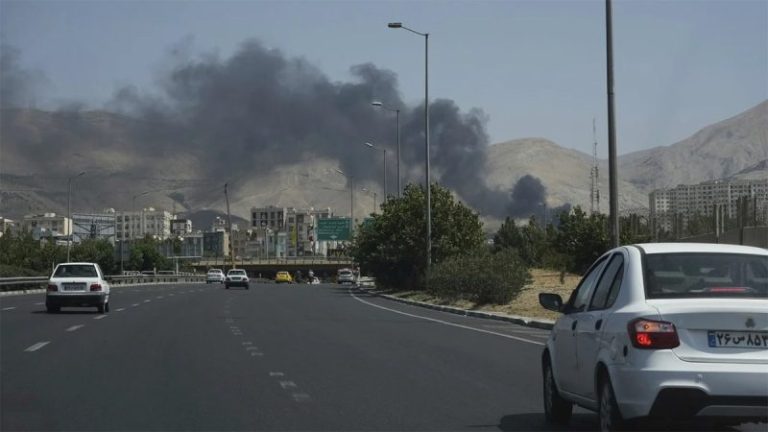
Iran’s tyrannical and ruthless regime is disintegrating. After yet again massacring thousands of its own citizens for voicing their dreams for liberty and better governance, the Iranian regime meantime resumed pursuing nuclear capability and its aggressive ICBM program. The regime’s overconfidence in U.S. inaction cost it its leader and its core military capabilities are going up in smoke. Against this backdrop, the conflict has spread to the Gulf, threatening the Strait of Hormuz, a chokepoint for roughly one-fifth of the world’s petroleum, and forcing the rest of the world to rethink how it prices energy risk and political alignment.

This is not another regional flare-up. This is a rupture of an old equilibrium in which sanctioned oil, shadow fleets and calibrated escalation kept markets stable enough to function. That equilibrium is now breaking. A rapid political-military shift in the Middle East is unfolding alongside a restructuring of the global energy order.

When I was in Afghanistan during the surge, Tehran’s active support for the insurgency fighting the United States and Afghan forces fomented instability and amplified violence for which civilians paid the biggest price, a dynamic that so many across several nations have tragically encountered for decades. But Iran was never a contained regional problem.

While its terrorism was widely perceived as a Middle East issue, its cyber and intelligence operations spanned continents, with assassination plots that included the American president. As to global effects, Iran’s energy has always made its regime globally significant.

At this stage of the conflict, the most economically significant and immediate geography is the Strait of Hormuz which Iran is working to choke off. Roughly one-fifth of global petroleum and a substantial portion of liquefied natural gas move through that narrow corridor. As strikes intensified, vessels paused transit, insurers reassessed exposure and operators rerouted cargoes. Markets adjusted immediately. Energy security and geopolitical stability are now inseparable; maritime risk has become the pressure valve through which regional conflict spills into global consequence. 

This realignment did not begin in the Gulf this weekend. It started with U.S. actions in Venezuela. Caracas holds the world’s largest proven crude reserves — about 303 billion barrels — and even marginal normalization under a more U.S.-cooperative government alters the supply calculus for Washington and its allies.

The new U.S.–Venezuela arrangement has already generated roughly $2 billion in transactions in just weeks, pulling Venezuelan barrels back into wider circulation and altering the discount ecosystem Moscow had grown accustomed to. Stack that with a post-crisis Iran re-entering markets on different terms, and the shadow ecosystem of discounted, sanctioned crude — Russia, Iran, Venezuela — begins to fracture and reprice simultaneously.

But the most consequential energy recalibration runs through Beijing. China is essentially Iran’s oil export market. In 2025, China bought more than 80% of Iran’s shipped oil, averaging ~1.38 million barrels per day, about 13.4% of China’s seaborne crude imports—meaning Beijing is simultaneously Tehran’s economic lifeline and its strategic choke chain.

By turning a sanctioned producer into a quasi-captive supply relationship — sustained through gray-market routing, reflagging and intermediary hubs — Beijing secured discounted barrels in normal times and leverage in crisis. Any sustained disruption of Iranian flows forces China into replacement buying that tightens global markets and exposes China’s own energy security; Iran exports about 1.6 million bpd mainly to China and such disruptions pushes Beijing to pivot to alternatives.

The relationship is therefore best understood as a dependency loop: Iran needs China for revenue and sanctions relief-by-proxy; China uses Iran as a discount supplier and as a pressure valve in the sanctioned crude system — one that can be tightened or loosened depending on Beijing’s broader negotiation posture with Washington and its appetite for risk in the Gulf. That Iran-China dependency is no longer stable.  With Iranian oil flows disrupted, China faces a choice between turning to alternative suppliers at higher cost or even tapping strategic reserves. Tightening global crude markets resulting from U.S. actions in Venezuela and now Iran give Washington leverage in energy pricing.

Beyond the tanker decks, this shift underscores the larger theme of reconfiguration: resources once bundled to manage sanctions are now subject to heightened geopolitical risk, forcing China to rethink dependencies while the U.S. and its partners are positioning to shape the post-conflict energy order. Energy supply patterns will restructure global power relations. And where China is recalibrating exposure, Russia is recalculating opportunity.

The same forces reshaping China’s calculations are altering Moscow’s. As India trims Russian purchases, Moscow has been pushing more barrels into China, and Reuters reports China’s Russian crude imports hitting new records in February while Russian sellers widened discounts to keep demand — Urals trading roughly $9–$11 below Brent for China deliveries, and other Russian grades also cutting hard as sellers chase Chinese refiners.

The new U.S.–Venezuela arrangement has already generated roughly $2 billion in transactions in just weeks, pulling Venezuelan barrels back into wider circulation and altering the discount ecosystem Moscow had grown accustomed to. 

This matters because China is also the anchor buyer for sanctioned Iranian crude; the ‘discount market’ is not infinite, so Russia and Iran are now competing for the same limited pool of Chinese buyers, driving deeper concessions and leaving cargoes idling — exactly the kind of sanctions-economy dynamic.

Add the West’s tightening focus on Russia’s ‘shadow fleet’ and the risk of seizures or insurance denial, and you get an energy chessboard where coercion moves from rhetoric to logistics: who can ship, insure and clear payments reliably becomes as strategic as who can produce.

In that context, Russia’s loud warnings about Hormuz disruption are not just diplomacy, they are a reminder that Moscow profits from volatility, but also needs a functioning gray-market channel to China, and Iran’s crisis threatens to scramble the very discount ecosystem Russia has used to finance its war in Ukraine. Structural realignment threatens the very gray-market architecture on which Moscow has relied.

Energy is only one layer of a global shift. Strategic minerals remain critical. The Trump administration has increased economic and maritime pressure on Cuba, tightening an effective oil blockade that choked off fuel imports. President Donald Trump has authorized tariffs targeting countries supplying oil to Havana.

This is not simply punitive policy. It reflects a broader strategic doctrine: deny adversarial regimes energy lifelines while repositioning the Western Hemisphere’s resource base toward U.S. leverage. Oil is only one domain. Rare earth elements are a strategic asset. Cuba’s nickel and cobalt output, combined with China’s tightening grip through rare-earth export controls indicates that leverage is not just oil fields but also supply chains. America achieving rare earth elements sovereignty will remain a strategic goal and such a global realignment on this front is much needed.

By the close of the first weekend, Iran appeared intent on accelerating its own collapse by compounding strategic error with strategic error. Iran felt it wise to respond to U.S. and Israeli strikes by pushing a half dozen other nations against it. On Saturday afternoon, Feb. 28, Iran launched attacks on seven sovereign nations – Bahrain, Saudi Arabia, UAE, Kuwait, Qatar, Jordan and Israel. It added Oman shortly after.

These nations now have a legal and political basis to deepen security ties with the U.S. and Israel that they could never have justified domestically before today. Iran has arguably done more to consolidate the anti-Iran regional architecture in one afternoon than a decade of American diplomacy. Watch for accelerated Abraham Accords-adjacent normalization with Saudi Arabia in the coming weeks.

Any sustained disruption of Iranian flows forces China into replacement buying that tightens global markets and exposes China’s own energy security…

After massacring thousands of its own citizens for demanding better governance, the regime’s long-standing presumption of U.S. inaction cost the 1979 Revolution its dream of ruling over Iranians perpetually. After 47 years, its leader is gone, and its core military capabilities are being dismantled.

The lesson is not simply that the Iranian regime is falling. It is that when it falls amid energy chokepoints and great-power competition, supply chains, alliances and leverage structures shift simultaneously. Iran’s collapse is not the end of the story; it is the catalyst for a broader redistribution of power across energy, alliances, and great-power leverage. America should exploit these shifting dynamics fully. 

The views expressed here are his and do not reflect the policy or positions of the Department of Homeland Security, Homeland Security Advisory Council, U.S. Army or Department of Defense. 

Related Article

Gas prices could jump as Middle East tensions threaten global oil supply
This post appeared first on FOX NEWS

Jeremy Carl, President Donald Trump’s nominee for assistant secretary of state for international organization affairs, withdrew his nomination Tuesday after facing bipartisan criticism over past comments about race, religion and Israel.

Carl, a conservative commentator and senior fellow at the Claremont Institute, wrote on X that he lacked the unanimous Republican support needed to advance his nomination out of the Senate Foreign Relations Committee. He was nominated to the State Department role by President Donald Trump and Secretary of State Marco Rubio.

‘I am withdrawing my nomination for consideration as Assistant Secretary of State for International Organization Affairs,’ he wrote Tuesday afternoon. ‘I am tremendously grateful to President Trump for nominating me and then (upon expiration of my original nomination) renominating me for this role, and I am also grateful to Secretary Rubio and his team for their continued support throughout this long and time-consuming process.’

Republicans hold a 12-10 majority on the panel, meaning a single GOP defection would result in a tie vote and block the nomination from moving to the full Senate.

‘Unfortunately, at this time this unanimous support was not forthcoming,’ Carl wrote, adding that he did not want the administration to ‘waste valuable time and energy’ attempting to change the outcome.

During his confirmation hearing last month, senators pressed Carl on previous remarks concerning ‘white identity,’ immigration and Israel. Sen. John Curtis, R-Utah, specifically pressed him on an October 2024 podcast, in which Carl said, ‘the United States spends too much time and energy on Israel, often to the detriment of our own national interests.’ Curtis challenged Carl on what American interests were harmed, and asked if he recognized the benefits that the U.S. gains from the relationship with Israel. Carl dodged the questions, but did say that he wishes that ‘the UN would stop being antisemitic all the time.’

Curtis also cited the same podcast, in which the host accused Jews of claiming a ‘special victim status’ over the Holocaust, and said, ‘Israel is not a victim, but instead a perpetrator,’ to which Carl responded, ‘Right, right. Yeah, no, I mean, I think that’s true.’ Carl at first said that he would have to review the question, but when Curtis noted that he gave Carl’s exact words, Carl admitted, ‘I’m sure that they’re accurate.’

Curtis said afterward that Carl was not the ‘right person to represent our nation’s best interests in international forums.’

Sen. Chris Murphy, D-Conn., questioned Carl about his references to ‘white identity’ and what he believed was being ‘erased.’ Carl responded that he was concerned about the erosion of what he described as a majority American culture due to mass immigration, saying he stood by those comments. Murphy later called him a ‘legit white nationalist’ on social media.

Carl rejected that characterization, saying he is ‘not a White nationalist’ and that his remarks referred to a broadly shared American culture that people of all backgrounds could embrace.

‘Unfortunately, for senior positions such as this one, the support of the President and Secretary of State is very important but not sufficient,’ Carl added on X. ‘We also needed the unanimous support of every GOP Senator on the Committee on Foreign Relations, given the unanimous opposition of Senate Democrats to my candidacy, and unfortunately, at this time this unanimous support was not forthcoming.’

The position Carl was nominated to oversees U.S. engagement at the United Nations and other multilateral organizations. He previously served as a deputy assistant interior secretary during Trump’s first term.

‘I remain extremely confident in President Trump, Secretary Rubio, and the rest of the outstanding team at State (a group of leaders that includes many close friends),’ Carl concluded on X. ‘I know they will continue to pursue a foreign policy that puts America first, and that they will work to ensure America is able to exercise its power and influence in the world like never before.’

Fox News Digital reached out to the White House and the State Department for comment and has not heard back.

Reuters contributed to this report.

This post appeared first on FOX NEWS

President Donald Trump on Thursday announced a new round of punishing tariffs, saying the United States will impose a 100% tariff on imported branded drugs, 25% tariff on imports of all heavy-duty trucks and 50% tariffs on kitchen cabinets.

Trump also said he would start charging a 30% tariff on upholstered furniture next week.

He said the new heavy-duty truck tariffs were to protect manufacturers from “unfair outside competition” and said the move would benefit companies such as Paccar-owned PCAR.O Peterbilt and Kenworth and Daimler Truck-owned DTGGe.DE Freightliner.

Trump has launched numerous national security probes into potential new tariffs on a wide variety of products.

He said the new tariffs on kitchen, bathroom and some furniture were because of huge levels of imports that were hurting local manufacturers.

“The reason for this is the large-scale ‘FLOODING’ of these products into the United States by other outside Countries,” Trump said, citing national security concerns about U.S. manufacturing.

The U.S. Chamber of Commerce urged the department not to impose new tariffs, noting the top five import sources are Mexico, Canada, Japan, Germany and Finland “all of which are allies or close partners of the United States posing no threat to U.S. national security.”

Mexico is the largest exporter of medium- and heavy-duty trucks to the United States. A study released in January said imports of those larger vehicles from Mexico have tripled since 2019.

Higher tariffs on commercial vehicles could put pressure on transportation costs just as Trump has vowed to reduce inflation, especially on consumer goods such as groceries.

Tariffs could also affect Chrysler-parent Stellantis STLAM.MI, which produces heavy-duty Ram trucks and commercial vans in Mexico. Sweden’s Volvo Group VOLVb.ST is building a $700 million heavy-truck factory in Monterrey, Mexico, set to start operations in 2026.

Mexico is home to 14 manufacturers and assemblers of buses, trucks, and tractor trucks, and two manufacturers of engines, according to the U.S. International Trade Administration.

The country is also the leading global exporter of tractor trucks, 95% of which are destined for the United States.

“We need our Truckers to be financially healthy and strong, for many reasons, but above all else, for National Security purposes!” Trump added.

Mexico opposed new tariffs, telling the Commerce Department in May that all Mexican trucks exported to the United States have on average 50% U.S. content, including diesel engines.

Last year, the United States imported almost $128 billion in heavy vehicle parts from Mexico, accounting for approximately 28% of total U.S. imports, Mexico said.

The Japanese Automobile Manufacturers Association also opposed new tariffs, saying Japanese companies have cut exports to the United States as they have boosted U.S. production of medium- and heavy-duty trucks.

This post appeared first on NBC NEWS

Strong demand in the face of looming supply shortages has pushed copper to new heights in recent years.

With a wide range of applications in nearly every sector, copper is by far the most industrious of the base metals. In fact, for decades, the copper price has been a key indicator of global economic health, earning the red metal the moniker “Dr. Copper.” Rising prices tend to signal a strong global economy, while a significant longer-term drop in the price of copper is often a symptom of economic instability.

After bottoming out at US$2.17 per pound, or US$5,203.58 per metric ton (MT), in mid-March 2020, copper has largely been on an upward trajectory.

Why is copper so expensive in 2026? Higher copper prices over the past few years have largely been attributed to a widening supply/demand gap. Copper mining and refining activities simply haven’t kept up with the rebound in economic activity in recent years, and rising demand from AI infrastructure and electrification are raising demand even higher.

Now, global copper mine supply is tightening at a time when US President Donald Trump’s tariffs are placing further strains on copper supply. In response, copper prices hit multiple new records in 2025 and 2026.

In this article

    What key factors drive the price of copper?

    Robust demand has long been one of the strongest factors driving copper prices. The ever-growing number of copper uses in everyday life — from building construction and electrical grids to electronic products and home appliances — make it the world’s third most-consumed metal.

    Copper’s anti-corrosive and highly conductive properties are why it’s the go-to metal for the construction industry, and it’s used in products such as copper pipes and copper wiring. In fact, construction is responsible for nearly half of global copper consumption. Rising demand for new homes and home renovations in both Asian and Western economies is expected to support copper prices in the long term.

    In recent decades, copper price spikes have been strongly tied to rising demand from China as the economic powerhouse injects government-backed funding into new housing and infrastructure. Industrial production and construction activity in the Asian nation have been like rocket fuel for copper prices.

    Additionally, copper’s conductive properties are increasingly being sought after for use in renewable energy applications, including thermal, hydro, wind and solar energy.

    However, the biggest driver of copper consumption in the renewable energy sector is rising global demand for electric vehicles (EVs), EV charging infrastructure and energy storage applications. As governments push forward with transportation network electrification and energy storage initiatives as a means to combat climate change, copper demand from this segment is expected to surge.

    New energy vehicles use significantly more copper than internal combustion engine vehicles, which only contain about 22 kilograms of copper. In comparison, hybrid EVs use an average of 40 kilograms, plug-in hybrid EVs use 55 kilograms, battery EVs use 80 kilograms and battery electric buses use 253 kilograms.

    In 2025, EV sales worldwide increased by 20 percent over 2024 to come in at about 20.7 million units, and analysts at Rho Motion expect that trend to continue in the coming years despite some headwinds in the near-term.

    On the supply side of the copper market, the world’s largest copper mines are facing depleting high-grade copper resources, while over the last decade or more new copper discoveries have become few and far between. This is a challenging problem considering it can take as many as 10 to 20 years to move a project from discovery to production.

    There have also been ongoing production issues at copper mines over the past few years. In late 2023, First Quantum Minerals (TSX:FM,OTCPL:FQVLF) was forced to shut down its Cobre Panama mine by the government following wide-spread protests. Then, in 2025, accidents at Ivanhoe’s (TSX:IVN,OTCQX:IVPAF) Kamoa-Kakula mine in Mali and Freeport-McMoRan’s (NYSE:FCX) Grasberg mine in Indonesia wiped out hundreds of thousands of metric tons of production.

    While all three mines are expected to return to production, it will take time before they reach full capacity and will continue to exacerbate supply deficits in the copper market.

    The International Energy Agency (IEA) is forecasting a 30 percent shortfall in the amount of copper needed to meet demand by 2035. “This will be a major challenge. It’s time to sound the alarm,” IEA Executive Director Fatih Birol said.

    This has increased the need for end users to turn to the copper scrap market to make up for the supply shortage. Sometimes referred to as “the world’s largest copper mine,” recycled copper scrap contributes significantly to supplying and balancing the copper market.

    “We are seeing signs this could change. Much of the growth over the last five years has come from brownfield expansions rather than greenfield/new discoveries,’ she said. ‘Technology will likely help increase the chance of discovery, and broadly I would say that policymakers are now more supportive of mineral exploration as the push to secure critical raw materials supply has moved up the agenda.’

    Joannides offered some examples of greenfield projects in the pipeline: Capstone Copper’s (TSX:CS,OTC Pink:CSCCF) Santo Domingo in Chile, Southern Copper’s (NYSE:SCCO) Tia Maria in Peru and Teck Resources’ (TSX:TECK.A,TECK.B,NYSE:TECK) Zafranal in Peru.

    How has the copper price moved historically?

    Taking a look back at historical price action, the copper price has had a wild ride for more than two decades.

    Sitting at US$1.38 per pound in late January 2005, the copper price followed global economic growth up to a high of US$3.91 in April 2008. Of course, the global economic crisis of 2008 soon led to a copper crash that left the metal at only US$1.29 by the end of year.

    Once the global economy began to recover in 2011, copper prices posted a new record high of US$4.58 per pound at the start of the year. However, this high was short-lived as the copper price began a five year downward trend, bottoming out at around US$1.95 in early 2016.

    Copper prices stayed fairly flat over the next four years, moving in a range of US$2.50 to US$3 per pound.

    20 year COMEX copper price chart, 2006 to 2026.

    Chart via Macrotrends.

    The pandemic’s impact on mine supply and refined copper in 2020 pushed prices higher despite the economic slowdown. The copper price climbed from a low of US$2.17 in March to close out the year at US$3.52.

    In 2021, signs of economic recovery and supercharged interest in EVs and renewable energy pushed the price of copper to rally higher and higher. Copper topped US$4.90 per pound for the first time ever on May 10, 2021, before falling back to close at US$4.76.

    Also affecting the copper price at that time was expectations for higher copper demand amid supply concerns out of two of the world’s major copper producers: Chile and Peru. In late April 2021, port workers in Chile called for a strike, while in Peru presidential candidate Pedro Castillo proposed nationalizing mining and redrafting the country’s constitution.

    In early May 2021, news broke that copper inventories were at their lowest point in 15 years. Expert market watchers such as Bank of America commodity strategist Michael Widmer warned that further inventory declines into 2022 could lead to a copper market deficit.

    After climbing to start 2022 at US$4.52, the copper price continued to spike on economic recovery expectations and supply shortages to reach US$5.02 per pound on March 6. Throughout the first quarter, fears of supply chain disruptions and historically low stockpiles amid rising copper demand drove prices higher.

    However, copper prices pulled back in mid-2022 on worries that further COVID-19 lockdowns in China, as well as a growing mortgage crisis, would slow down construction and infrastructure activity in the Asian nation. Rising inflation and interest hikes by the Fed also placed downward pressure on a wide basket of commodities, including copper. By late July 2022, copper prices were trading down at nearly a two year low of around US$3.30.

    In the early months of 2023 the copper price was trading over the US$4 per pound level after receiving a helpful boost from continuing concerns about low copper inventories, signs of rebounding demand from China, and news about the closure of Peru’s Las Bambas mine, which accounts for 2 percent of global copper production.

    However, that boost turned to a bust in the second half of 2023 as China continued to experience real estate sector issues, alongside the economic woes of the rest of the world. The price of copper dropped to a low for the year of US$3.56 per pound in mid October.

    Elevated supply levels kept copper trading in the US$3.50 to US$3.80 range for much of Q1 2024 before experiencing strong gains that pushed the price of the red metal to US$4.12 on March 18.

    Those gains were attributed to in part to tighter copper concentrate supply following the closure of First Quantum Minerals’ Cobre Panama mine, guidance cuts from Anglo American (LSE:AAL,OTCQX:AAUKF) and declining production at Chile’s Chuquicamata mine. In addition, China’s top copper smelters announced production cuts after limited supply led to lower profits from treatment and refining charges.

    BHP’s (ASX:BHP,NYSE:BHP,LSE:BHP) attempted takeover of Anglo American also stoked fears of even tighter global copper mine supply. These supply-side challenges continued to juice copper prices in Q2 2024, causing a jump of nearly 29 percent from US$4.04 per pound on April 1 to a then all-time high of US$5.20 by May 20, 2024.

    After starting 2025 at US$3.99 per pound, copper prices were lifted in Q1 by increasing demand from China’s economic stimulus measures, renewable energy and artificial intelligence (AI) technologies and stockpiling brought on by fear of US President Trump’s tariff threats.

    At the time, Trump had said the US was considering placing tariffs of up to 25 percent on all copper imports in a bid to spark increased domestic production of the base metal.

    In late February, he signed an executive order instructing the US Commerce Department to investigate whether imported copper poses a national security risk under Section 232 of the Trade Expansion Act of 1962. The price of copper reached a new high price of US$5.24 per pound on March 26 as tariff tensions escalated.

    Trump’s tariff talk sparked yet another copper price rally in early July when he announced he plans to impose a 50 percent tariff on all imports of the red metal, and it moved higher towards the end of the month in anticipation of them entering effect. By the end of the month, the copper price had climbed to US$5.96 per pound.

    However, copper’s price plummeted back toward the US$4 mark on July 31 following the reveal that tariffs would not be imposed on imports of raw or refined copper, instead targeting semi-finished copper products.

    The price began to rebound once again in September following the accident at Freeport McMoRan’s Grasberg mine, ultimately tipping the market from a surplus position into a deficit.

    The price crossed back above the US$5 mark by the end of October, and, with supply and demand fundamentals fueling its momentum, copper was trading at US$5.60 by the end of 2025.

    What was the highest price for copper ever?

    The highest ever copper price on the COMEX is US$6.61 per pound, while the highest LME copper price is US$14,572.54 per metric ton. Copper hit both of these new all-time highs on January 29, 2026. Read on to found out how the copper price reached those heights.

    Why did the copper price hit an all-time high in 2026?

    The new copper high on January 29, 2026, resulted from a buying spree driven by speculative trading, primarily out of China amid growing expectations of higher growth in the US economy and an increased global spending on data centers and power infrastructure projects.

    That day, copper prices on the LME jumped 11 percent, although the gain had lessened to a 4 percent jump by the close of trading.

    Looking at the bigger picture, copper’s rally in recent years has encouraged bullish sentiment on prices looking ahead. In the longer term, the fundamentals for copper are expected to get tighter as demand increases from sectors such as EVs and energy storage.

    A May 2024 report from the International Energy Forum (IEF) projected that as many as 194 new copper mines may need to come online by 2050 to support massive demand from the global energy transition.

    Additionally, a January 2026 report from S&P Global stated that the world will need 14 million more metric tons of copper annually to meet demand compared to 2025’s 27 million MT of copper. The firm reports that supply is expected to peak in 2030 without expansion.

    Looking at renewable energy, according to the Copper Development Association, solar installations require about 5.5 MT of copper for every megawatt, while onshore wind turbines require 3.52 MT of copper and offshore wind turbines require 9.56 MT of copper.

    The rise of AI technology is also bolstering the demand outlook for copper. Commodities trader Trafigura has said AI-driven data centers could add 1 million MT to copper demand by 2030, reports Reuters.

    Where can investors look for copper opportunities?

    Copper market fundamentals suggest a return to a bull market cycle for the red metal in the medium-term. The copper supply/demand imbalance also presents an investment opportunity for those interested in copper-mining stocks.

    If you’re looking to diversify your portfolio with other investment options, check out copper ETFS and ETNs or copper futures contracts.

    Securities Disclosure: I, Dean Belder, hold no direct investment interest in any company mentioned in this article.

    This post appeared first on investingnews.com

    Republicans sharply criticized former President Joe Biden over rising prices at the gas pump, but a spike in energy prices amid the U.S.-Israeli conflict in Iran threatens to scramble the party’s affordability messaging.

    The Iran conflict has led to a surge in gas prices for Americans, leading to an average 50 cents a gallon increase since Operation Epic Fury began on Feb. 28.

    The average price of gas reached $3.54 per gallon on Tuesday, according to AAA. Diesel prices have also risen to $4.72 per gallon. The increases have been mostly fueled by volatility in oil prices, which rose above $100 per barrel on Monday as the Strait of Hormuz remained effectively shuttered.

    The president characterized the gas price hike amid the Iran conflict as ‘a very small price to pay’ in a Truth Social post Sunday.

    That statement represented a sharp break with Trump’s typical messaging touting low gas prices prior to Operation Epic Fury.

    ‘Gasoline, which reached a peak of over $6 a gallon in some states under my predecessor — it was quite honestly a disaster — is now below $2.30 a gallon in most states. And in some places, $1.99 a gallon,’ President Donald Trump said during his Feb. 27 State of the Union address. ‘And when I visited the great state of Iowa just a few weeks ago, I even saw $1.85 a gallon for gasoline.’

    The surge in gas and diesel prices threatens to undermine the economic message of President Trump and congressional Republicans, who have touted low gas prices as a major win in the lead-up to November’s midterm elections. Cost of living issues are expected to be a key concern among voters as both parties claim to be laser-focused on making everyday life more affordable.

    During the 2024 presidential contest, Trump frequently campaigned on ending Biden’s ‘war on American energy’ and pledged to reverse a surge in gas prices that occurred under his predecessor’s tenure.

    Gas prices averaged $3.45 per gallon across all fuel grades during Biden’s four-year term, surging to a record high of more than $5 per gallon in June 2022 after the outbreak of the Russia-Ukraine war, according to the U.S. Energy Information Administration.

    ‘Starting on Day 1, we will drive down prices and make America affordable again,’ Trump said during a speech at the Republican National Committee convention in July 2024. ‘People can’t live like this.’

    Democrats have seized on rising prices at the pump amid the conflict in Iran.

    ‘I wish the administration thought about this before they started this unnecessary war,’ Sen. Angus King, I-Maine, who caucuses with Democrats, said Monday when asked about the gas price hike.

    ‘Donald Trump’s war has sent gas prices skyrocketing through the roof,’ Senate Minority Leader Chuck Schumer, D-N.Y., wrote on social media Monday. ‘What contempt. What cluelessness.’

    Schumer has called on the president to release oil from America’s Strategic Petroleum Reserve to combat supply bottlenecks in the Middle East. The top Democrat notably opposed a Trump-led effort to replenish the stockpile in his first term when oil prices were much lower.

    Republicans have voiced confidence that the rise in gas prices would be temporary. GOP lawmakers have frequently cited their efforts to roll back Biden-era energy regulations and boost domestic production as evidence that their policies are working to lower energy prices.

    ‘It’s going to be probably volatile for a period of time. I think what’s going to be key is ensuring we can get safe access to the Strait of Hormuz,’ Sen. Steve Daines, R-Mont., said Monday, adding that he was confident the disruption would be short-lived.

    Daines, who abruptly suspended his re-election campaign last week, highlighted that average gas prices were under $3 per gallon prior to Trump’s State of the Union speech. 

    ‘That’s an important win for the American people,’ the retiring Montana lawmaker said. ‘Something you’re reminded of usually weekly when you’re gassing up your vehicle.’

    Some Republicans and Trump administration officials are also arguing that a defeated Iran will ultimately spur lower gas prices, even if there is pain in the short run.

    White House press secretary Karoline Leavitt characterized the recent increase in oil and gas prices as ‘temporary’ during a briefing Tuesday.

    ‘Once the national security objectives of Operation Epic Fury are fully achieved, Americans will see oil and gas prices drop rapidly, potentially even lower than they were prior to the start of the operation,’ Leavitt said.

    ‘At the end of the day, we’re going to destroy this regime, and their ability to disrupt oil is going to be less, and we’re going to have more production, not less,’ Sen. Lindsey Graham, R-S.C., told reporters Monday. ‘Once you take the largest state sponsor of terrorism off the planet, who depends on oil for their revenue, that’s a more stable world.’

    Nearly seven in 10 Americans — including 44% of Republicans — expect gas prices to keep increasing in the coming months, according to a Reuters-Ipsos poll released Monday.

    Trump has threatened Iran with unprecedented force if the flow of oil through the Strait of Hormuz is further restricted.

    ‘Death, Fire, and Fury will reign upon them — But I hope, and pray, that it does not happen!’ Trump wrote Monday on Truth Social.

    This post appeared first on FOX NEWS

    Iran is waging a mass drone campaign across the Middle East, unleashing waves of low-cost, one-way attack drones also known as unmanned aerial vehicles (UAVs), against Western-linked targets to impose ‘exponential cost on the U.S.,’ a defense expert has warned.

    As Tehran reportedly launched thousands of Shahed drones across the region and Iranian state media shared footage of underground stockpiles, Cameron Chell, CEO of drone maker and tech company Draganfly, said Iran’s strategy is designed to force high-end defenses to counter cheap aerial threats.

    ‘Even a hundred of these drones in the hands of a decentralized unit can cause terror in a neighboring state like never before imagined,’ Chell told Fox News Digital. ‘The Iranians cannot win the war with these drones, but like the [communist] Viet Cong [during the Vietnam War], they have an asymmetric capability that can prolong this war and create political pressure.’

    ‘Iran can drive terror in unimaginable ways and drive exponential costs on the U.S. side, having to target these small, very hard-to-detect drone units,’ he added.

    Chell’s warning comes as tensions spiraled following Saturday’s joint U.S.-Israel strikes on Iran targeting nuclear sites, missile facilities and leadership that killed Supreme Leader Ayatollah Ali Khamenei and several commanders.

    The Iranian drones have proved deadly, having killed six U.S. service members in an attack on a tactical center in Kuwait earlier this week.

    A CIA station in the U.S. Embassy in the Saudi capital of Riyadh was struck in an Iranian drone attack Tuesday, causing a limited fire but no reported injuries.

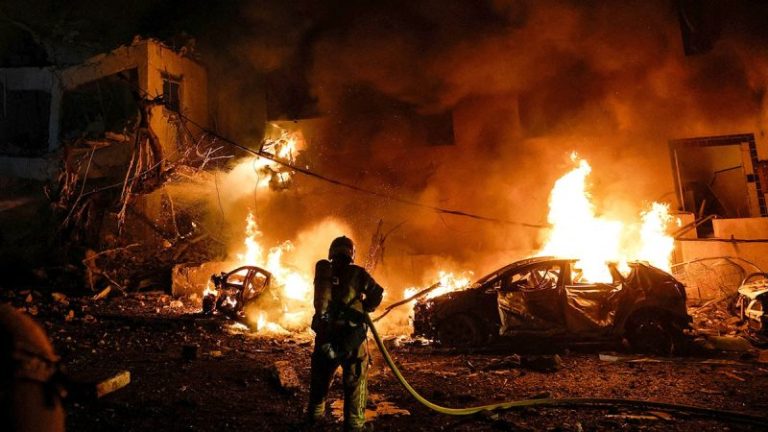
    In Bahrain, drones reportedly identified as Iranian Shahed models smashed into the upper floors of the Era View Tower in Manama, about one mile from a U.S. Navy base.

    An Iranian drone also struck a parking lot outside the U.S. Consulate in Dubai, while the United Arab Emirates said it intercepted Iranian missiles and drone attacks targeting the country.

    ‘Based on the engine sound, the apparent attack angle and the implied speed, to the best of my knowledge, this was a Shahed-class one-way attack drone,’ Chell said of the Dubai consulate attack video before suggesting the drone footage showed ‘a Shahed 191.’

    Fars News Agency also released footage purporting to show scores of attack drones stockpiled in vast underground tunnels in Iran.

    The video appeared to show rows of triangular-shaped drones on rocket launchers, missiles lined up, four to a launcher vehicle and walls adorned with Iranian flags and photographs of Khamenei. Outlets noted that the video’s timing and location remain unverified.

    ‘It is hard to confirm that Iran has the capability now to produce these drones in these volumes during wartime,’ Chell said of the stockpiling footage.

    ‘To the extent they were producing these in those numbers, a more-than-significant portion would have been for delivery to Russia — which does not seem impossible. That said, the drones in the underground propaganda video are Shahed 191 drones.’

    A new report from the Carnegie Endowment for International Peace also underscored Chell’s comments on expense and range.

    ‘Right now, Iran is using a mixture of ballistic missiles and attack drones,’ said senior fellow Dara Massicot. ‘The methods are effective, but targeting drones in this way is resource-intensive and expensive, and it will drain certain types of interceptors quickly.’

    ‘Ground-based air defense interceptor missiles are not infinite, and the United States and its partners and allies have had stockpile challenges in this area for years,’ she added.

    Another senior fellow, Steve Feldstein, added, ‘An important point is that the world is entering a new age of drone war as unmanned aircraft are proliferating on the battlefield in major conflicts and smaller ones.’

    Related Article

    Gulf states intercept hundreds of Iranian missiles and drones, issue joint condemnation with US
    This post appeared first on FOX NEWS