MILAN — Giorgio Armani has appointed deputy managing director Giuseppe Marsocci as chief executive with immediate effect, the Italian fashion house said on Thursday, confirming media reports.
Marsocci, who has been with the company for 23 years, serving as global chief commercial officer for the past six years, steps into the role previously held by founder Giorgio Armani, who died in September.
Armani kept a tight grip on the fashion empire he set up 50 years ago, but a new structure is emerging for its next phase.
Marsocci will oversee the planned sale of a 15% stake, with priority to be given to the luxury conglomerate LVMH.PA, beauty heavyweight L’Oreal OREP.PA, eyewear leader EssilorLuxottica ESLX.PA or another group of “equal standing,” as outlined in Armani’s will.
“His international professional experience, deep knowledge of the sector and the company, discretion, loyalty, and team spirit, together with his closeness to Mr. Armani in recent years, make Giuseppe the most natural choice to ensure continuity with the path outlined by the founder,” said Armani‘s partner and head of men’s design, Pantaleo Dell’Orco, who has taken on the role of chairman.
Dell’Orco has also recently been appointed to chair the Giorgio Armani Foundation, which controls 30% of the voting rights of his business empire. Dell’Orco already controls 40% of the luxury group’s voting rights.
The appointment of Marsocci, 61, was unanimously proposed by the Giorgio Armani Foundation, the luxury group said.
Giorgio Armani’s niece Silvana, head of women’s style, will be appointed vice president, according to the statement.
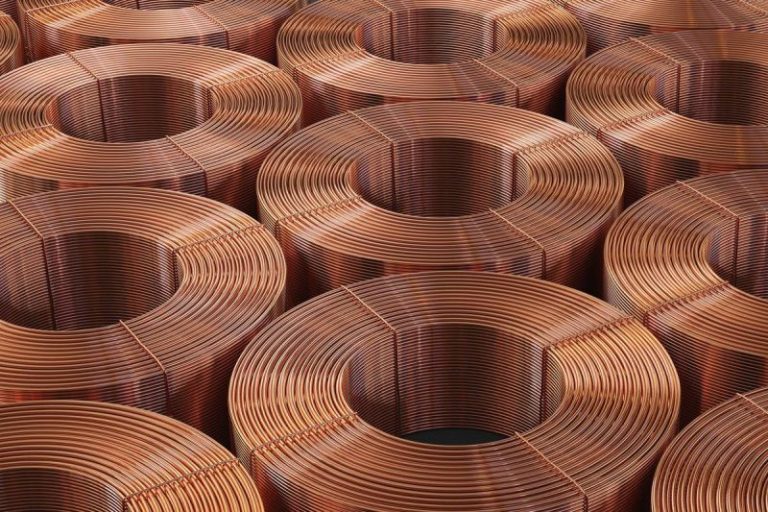
Copper miners with productive assets have much to gain as supply and demand tighten.
The price of copper reached new all-time highs in 2026 on both the COMEX in the United States and the London Metals Exchange (LME) in the United Kingdom.
In 2025, the copper price on the COMEX surged during the third quarter as it climbed to US$5.94 per pound after the White House announced tariffs on the red metal in late August. However, prices moderated in August after refined products were excluded. However, as the quarter ended, supply and demand fundamentals took over, pushing the price back to historic highs, reaching US$11,067.50 per metric ton on the LME on October 29.
Since that time, the price has maintained momentum, and on January 29, the copper price reached record highs of US$6.61 per pound on the COMEX and US$14,572.54 per metric ton on the LME.
Copper is one of the most important resources for the energy transition, but demand for the red metal is outpacing mining supply. While construction and electrical grids have long been major markets for copper, today the rise in demand for electric vehicles, EV charging infrastructure and energy storage applications are emerging drivers of copper consumption.
Another trend driving future copper demand is the rapid urbanization in the Global South, as rural populations migrate to cities, putting pressure on electricity grids.
Due to the challenges associated with finding, developing, permitting and mining copper deposits, the higher demand is being met by slow growth of new supply. Mines that are in operation tend to be quite large and operate for decades as copper producers concentrate on mine expansions and brownfield projects aimed at extending mine lifetimes.
Given those factors, investors should keep an eye on the world’s top copper miners and their operations.
This list of the 10 largest copper-mining companies in the world is ranked by attributable copper production for 2024.
1. BHP (ASX:BHP,NYSE:BHP,LSE:BHP)
Copper production: 1.5 million metric tons
BHP is one of the world’s largest mining companies, and its global portfolio of assets includes significant copper mining operations in Chile, Australia and Peru.
According to the company’s quarterly operational review data, the mining giant’s attributable copper production totaled 1.5 million metric tons across the calendar year 2024.
Its most significant copper asset is the Escondida mine, the world’s largest copper mine. BHP holds a 57.5 percent stake in the Chilean operation, which produced 1.24 million metric tons of copper in 2024, of which 713,805 was attributable to BHP. Its other Chilean copper operation is its wholly owned Pampa Norte mine, which produced 313,600 metric tons of copper in 2024.
BHP also owns the Olympic Dam polymetallic mine, the largest mine in Australia. The South Australian mine hosts one of the world’s largest copper deposits as well as the largest uranium deposit. In 2023, BHP expanded its portfolio in the state with its acquisition of OZ Minerals and its Prominent Hill and Carrapateena copper operations.
In January, BHP announced its acquisition of Filo Mining and its Filo del Sol project located Argentina. As part of the announcement, BHP said it had formed a joint venture company with Lundin Mining Corporation (TSX:LUN,OTC Pink:LUNMF) to combine Filo del Sol with Lundin’s Josemaria project in the Vicuna mining district, with each company owning a 50 percent stake.
2. Codelco
Copper production: 1.44 million metric tons
The Chilean state-owned Codelco is the world’s third-largest producer with copper production of 1.44 million metric tons in 2024. According to its 2024 annual report, its copper output increased 1.2 percent from 1.42 million metric tons in 2023.
Its largest asset is the Chuquicamata mine located in Northern Chile, between 2017 and 2021 annual production was in the 700 million to 850 million pound range. However, lower grades in recent years have led to production falling below 600 million pounds. In 2024, Chuquicamata increased slightly to 637 million pounds.
The mine transitioned from an open pit to an underground mine beginning in 2019. In its operational report for the quarter ending September 30, the company stated that Phase 1 of its continuity infrastructure project had reached 85 percent completion. It added that feasibility studies were underway for potential expansion of the current mine level, as were prefeasibility studies assessing ‘the development of a potential deeper mine level.’
The company’s other significant Chilean mines include El Teniente, Quebrada Blanca and Andina.
3. Freeport-McMoRan (NYSE:FCX)
Copper production: 1.26 million metric tons
Freeport-McMoRan is consistently ranked among the world’s top copper producers, and its share of copper production from its mines totaled 1.26 million metric tons of copper in 2024. The company reported producing 4.21 billion pounds, or 1.9 million metric tons, of the red metal, calculated on a 100 percent basis for all operations except its Morenci joint venture.
The largest contributor to its output is the Grasberg copper-gold mine in Indonesia. The mine itself is a joint venture between Freeport and state-owned Indonesia Asahan Aluminum, with the entities holding interests of 48.76 percent and 51.24 percent respectively. According to MDO, copper output for the mine in 2024 totaled 1.8 billion pounds.
Grasberg has undergone a transition from an open pit to an underground block cave, and expansion work continues at the site. As of the close of 2024, the mine had 469 open drawbells.
In September, the main Grasberg Block Cave suffered an ingress of wet material that killed seven workers and forced the closure of the operation. While Freeport stated that unaffected portions of Grasberg would open by the end of 2025, the Grasberg Block Cave would see a phased restart beginning in the second quarter of 2026, and increasing through the end of the year and into 2027.
Additionally, Freeport holds a 55 percent stake in the Cerro Verde copper-molybdenum complex in Peru. The mine routinely produces between 800 million and 1 billion pounds of copper and is expected to be in operation until 2052.
Its largest US based operation is its 72 percent owned Morenci mine in Arizona, which produced 700 million pounds in 2024. It also owns the Safford and Sierrita mines in the same state.
4. Glencore (LSE:GLEN,OTC Pink:GLCNF)
Copper production: 951,600 metric tons
Mining major Glencore copper production dipped by 6 percent in 2024 to 951,600 metric tons from the 1.01 million metric tons produced in 2023. The company’s 2024 annual report attributed the decline to lower planned production at its Antapaccay and Collahuasi mines due to factors including lower grades, water constraints and geotechnical challenges.
Located along Chile’s coast, Collahuasi is the company’s largest operation, a 44/44/12 joint operation between Glencore, Anglo American (LSE:AAL,OTCQX:NGLOY) and Japan’s Mitsui & Co. (OTC Pink:MITSF,TSE:8031). The mine produced 558,600 metric tons of copper in 2024.
The partners are working to build a large-scale desalination plant designed to help overcome water shortage issues. In Glencore’s third-quarter production report, it indicated that water restrictions at Collahuasi have eased since the staged commissioning started, with further improvements through Q4. Once open, it will provide 1,050 liters of desalinated water per second to the mine via a 194 kilometer pipeline.
Other significant copper-producing assets in the company’s portfolio include Antamina in Peru, Mount Isa in Australia and the Katanga Complex in the Democratic Republic of the Congo.
5. Southern Copper (NYSE:SCCO)
Copper production: 883,462 metric tons
A majority-owned, indirect subsidiary of Grupo Mexico (OTC Pink:GMBXF), Southern Copper recorded 883,462 metric tons of total copper production for 2024, a 6.9 percent increase over 2023. In the company’s 2024 results, the company attributed the increase to higher production across all operations, with a 10.7 percent increase from its Peruvian assets and a 4.3 percent increase from Mexican production.
The company operates major copper mines in Peru and Mexico and has exploration projects in Argentina, Chile, Ecuador, Mexico and Peru.
Its largest copper-producing asset is the Buenavista mine in Northern Mexico, which sits atop one of the world’s largest porphyry copper deposits. According to MDO, the site produces approximately 700 billion to 750 billion pounds of copper per year.
Its other copper operations include the Cuajone and Toquepala mines in Peru and the La Caridad mine in Mexico.
6. Anglo American (LSE:AAL,OTCQX:NGLOY)
Copper production: 772,700 metric tons
British miner Anglo American reported a 6.5 percent decrease in copper production to 772,700 metric tons from 826,200 metric tons in 2023.
The company attributed the decline to lower recovery and grades at the Collahuasi and Los Bronces operations in Chile, noting that the planned closure of the Los Bronces processing plant also impacted production. The company holds a 44 percent stake in Collahuasi and 50 percent in Los Bronces.
In addition to Collahuasi, the company also owns a 60 percent stake in the Quellaveco mine in Peru, with Mitsubishi owning the remaining 40 percent. The open pit mine started operating in 2022 and, according to MDO, produced 675 million pounds of copper in 2024.
It also owns a 50 percent stake in the El Soldado mine in Chile, which it operates in partnership with Mitsui, which holds a 30 percent stake, and Mitsubishi Materials (OTC Pink:MIMTF), which holds the remaining 20 percent. Data from MDO shows that the mine produced 48,200 metric tons of copper in 2024.
On September 9, Anglo American announced plans to combine with Canadian mining giant Teck Resources (TSX:TECK.A,TECK.B,NYSE:TECK) in a ‘merger of equals’ to form Anglo Teck, which would be headquartered in Canada. The merged company would focus on critical minerals and become a top-five global copper producer.
7. KGHM Polska Miedz (FWB:KGHA.F)
Copper production: 729,700 metric tons
Poland’s KGHM Polska Miedz has operations in Europe, North America and South America, and says that it controls over 40 million metric tons of copper ore resources worldwide. In 2024, KGHM produced 729,700 metric tons of copper, a slight increase from the 710,900 metric tons of copper produced in 2023.
According to MDO, KGHM’s largest operation is the Polkowice-Sieroszowice mine in Western Poland. The mine has been in operation since 1968 and produces approximately 430 million to 440 million pounds of copper annually.
The company’s Polish operations also include the Rudna mine, which produced 338 million pounds of copper last year, and the Lubin mine, which produced 156 million pounds.
Other options under the KGHM banner include the Robinson mine in Nevada, United States, and the 55 percent owned Sierra Gorda mine in Chile.
8. CMOC Group (OTC Pink:CMCLF,HKEX:3993)
Copper production: ~502,600 metric tons
CMOC Group is a new addition to the top 10 after its copper production jumped significantly in 2024, with its share of production from its joint venture copper-cobalt mines in the Democratic Republic of the Congo totaling approximately 502,600 metric tons. On a 100 percent basis, the company reported annual copper production of 650,161 metric tons.
The majority of CMOC’s copper production came from its Tenke Fungurume copper-cobalt mine, an 80/20 joint venture with the state-owned mining firm Gecamines. According to MDO data, the mine has experienced significant growth over the past few years, ramping up from 400 million pounds of copper in 2020 to 618 million pounds in 2023. In 2024, Tenke Fungurume’s copper production soared to 992 million pounds, or 450,138 metric tons.
Its other DRC mine is Kisanfu, a 71/24/5 joint venture with Chinese battery manufacturer Contemporary Amperex Technology (SZSE:300750) and the DRC government. The mine produced 200,013 metric tons of copper cathode in 2024, up substantially from 114,000 in 2023.
9. Antofagasta (LSE:ANTO,OTC Pink:ANFGF)
Copper production: 448,800 metric tons
Antofagasta’s share of copper production from its four joint venture operations in Chile totaled 448,800 metric tons in 2024.
The company’s largest operation is its 60 percent owned Los Pelambres mine, a joint venture with Mitsubishi. According to MDO, Los Pelambres’ copper production totaled 320,000 metric tons in 2024, up from 300,000 the previous year.
Its Centinela mine is another significant producer, with 224,000 metric tons of copper mined in 2024. The company is constructing a second concentrator at Centinela that, once it comes online in 2027, should add 144,000 metric tons of copper production annually and extend Centinela’s mine life by 15 years to 2051.
The company’s other Chilean joint ventures are the Antucoya and Zaldivar mines.
10. Teck Resources (TSX:TECK.A,TECK.B,NYSE:TECK)
Copper production: 358,910 metric tons
Rounding out the top 10 is Canada’s Teck Resources, which increased consolidated copper production by 50 percent in 2024, reaching 446,000 metric tons. On an attributable basis, the copper company’s production totaled 358,910 metric tons in 2024.
Much of the gain came from the ramp-up of the Quebrada Blanca mine in Chile. The mine started production in 2023 and produced just 122 million pounds of copper that year. 2024 saw a significant advancement, with the mine producing 458 million pounds of the red metal.
Teck holds a 60 percent ownership stake in the mine, while Japan’s Sumitomo (OTC Pink:SSUMF,TSE:8053) controls a 30 percent stake and Chile’s state-run Codelco owns the final 10 percent.
Teck also owns the Highland Valley mine in British Columbia, Canada. The mine is one of the largest open pit mines in Canada and produced 226 million pounds of copper in 2024.
Other copper operations in the Teck portfolio include Antamina in Peru and Carmen de Andacollo in Chile.
On September 8, Teck announced a planned merger of equals with Anglo American to focus on critical minerals and copper production. The combined company is set to be called Anglo Teck and will be headquartered in Canada. The merger is expected to take 12 to 18 months to be completed.
Securities Disclosure: I, Dean Belder, hold no direct investment interest in any company mentioned in this article.
1911 Gold Corporation (‘1911 Gold’ or the ‘Company’) (TSXV: AUMB,OTC:AUMBF) (OTCQX: AUMBF) (FRA: 2KY) announces that, pursuant to the Company’s long-term incentive plan (the ‘LTIP’), it has granted stock options (the ‘Options’) to Suzette Ramcharan, an employee of the Company who provides investor relation services, to purchase 500,000 shares of the Company (the ‘Shares’) at a price of $1.15 per Share until February 25, 2031. The Options will vest ¼ three months after the date of the grant; ¼ six months after the date of the grant; ¼ nine months after the date of the grant; and ¼ twelve months after the date of the grant. The foregoing Options are subject to acceptance by the TSX Venture Exchange.
About 1911 Gold Corporation
1911 Gold is an advanced gold explorer and developer focused on its 100%-owned True North Gold Project in the Archean Rice Lake Greenstone Belt in Manitoba, Canada. The Company controls a large, highly prospective ~62,000-hectare land package with numerous past-producing gold operations within trucking distance of the fully built and permitted True North mine and mill complex. 1911 Gold is positioning itself to restart operations in 2027 and offers a unique, near-term production story with significant exploration upside. The strategy is to build a district-scale gold mining operation around a centralized, and readily expandable infrastructure to support a socially and environmentally responsible, long-term mining operation with little development risk and a growing mineral resource base.
1911 Gold’s True North complex and the exploration land package are located within and among the First Nation communities of the Hollow Water First Nation and the Black River First Nation. 1911 Gold looks forward to maintaining open, cooperative, and respectful communications with all of our local communities and stakeholders to foster mutually beneficial working relationships.
ON BEHALF OF THE BOARD OF DIRECTORS
Shaun Heinrichs President and CEO
CAUTIONARY STATEMENT REGARDING FORWARD-LOOKING INFORMATION
This news release contains forward-looking information or forward-looking statements within the meaning of applicable securities laws (collectively, ‘forward-looking statements‘). Often, but not always, forward-looking statements can be identified by the use of words and phrases such as ‘plans’, ‘expects’ or ‘does not expect’, ‘is expected’, ‘budget’, ‘scheduled’, ‘estimates’, ‘forecasts’, ‘intends’, ‘anticipates’ or ‘does not anticipate’, or ‘believes’, or that describe a ‘goal’, or variations of such words and phrases, or statements that certain actions, events or results ‘may’, ‘could’, ‘would’, ‘might’ or ‘will’ be taken, occur or be achieved.
All forward-looking statements reflect the Company’s beliefs and assumptions based on information available at the time the statements were made. Actual results or events may differ from those predicted in these forward-looking statements. All of the Company’s forward-looking statements are qualified by the assumptions that are stated or inherent in such forward-looking statements, including the assumptions listed below. Although the Company believes that these assumptions are reasonable, this list is not exhaustive of factors that may affect any of the forward-looking statements.
Forward-looking statements involve known and unknown risks, future events, conditions, uncertainties and other factors which may cause the actual results, performance or achievements to be materially different from any future results, predictions, projections, forecasts, performance or achievements expressed or implied by the forward-looking statements, including, but not limited to, the terms of the Options, the ability of the Company to receive necessary regulatory approvals for the grant of the Options, and the planned restart of mining operations in 2027, and the timing of such event.
Although 1911 Gold has attempted to identify important factors that could cause actual actions, events or results to differ materially from those described in forward-looking statements, there may be other factors that cause actions, events or results not to be as anticipated, estimated or intended. There can be no assurance that forward-looking statements will prove to be accurate, as actual results and future events could differ materially from those anticipated in such statements. Accordingly, readers should not place undue reliance on forward-looking statements.
All forward-looking statements contained in this news release are given as of the date hereof. The Company disclaims any intention or obligation to update or revise any forward-looking statements whether as a result of new information, future events or otherwise, except in accordance with applicable securities laws.
Neither TSX Venture Exchange nor its Regulation Services Provider (as that term is defined in policies of the TSX Venture Exchange) accepts responsibility for the adequacy or accuracy of this release.
SOURCE 1911 Gold Corporation
View original content to download multimedia: http://www.newswire.ca/en/releases/archive/February2026/25/c5296.html
A group of House Republicans is urging the Trump administration to choke off Russia’s profits from one of its largest energy companies as global oil prices spike.
It comes as the U.S. and Israel’s conflict with Iran, one of Russia’s closest allies and another major energy producer, is threatening to spiral the market out of control both overseas and here at home.
Rep. August Pfluger, R-Texas, who chairs the Republican Study Committee, is leading five fellow GOP lawmakers in a letter to Treasury Secretary Scott Bessent regarding Lukoil — which accounts for roughly 2% of the world’s oil output.
Western sanctions have forced Lukoil to announce it would sell certain international assets as countries like the U.S. and U.K. attempt to whittle down Russia’s control over global energy.
‘The U.S. government has a significant role — in fact, a responsibility — in determining the ultimate fate of these oil and gas assets. We encourage you to exercise the utmost caution to ensure we do not inadvertently squander this opportunity and relinquish our leverage to U.S. adversaries,’ the Republicans wrote.
They warned against a situation where ‘transaction loopholes or back-room deals with Lukoil’s senior management’ could allow Lukoil assets to ‘slip back into Russia’s hands as tensions subside or U.S. sanctions are lifted.’
The six Republicans on the letter, all from Texas, are also lobbying the administration to ease a pathway for Lone Star State companies to acquire those assets.
‘President Trump has created a once-in-a-generation opportunity not only to defund Russia’s war machine but also for leading American energy companies — including at least two headquartered in the great State of Texas — to acquire the LIG portfolio, permanently removing globally significant oil and gas assets from Russian control, enhancing energy security, affordability, and reliability, and strengthening President Trump’s America First agenda,’ they argued.
‘[W]e encourage the Department of the Treasury — in concert with the White House and Departments of Energy, State, and War — to scrutinize every detail of the various proposals to ensure that any sale of LIG’s assets ‘completely severs’ ties with the Russian parent company, paving the way for American energy companies to meet this moment with the urgency and precision it so deserves.’
The push comes at a particularly consequential time on the world stage as Iran continues to retaliate against U.S. allies in the Middle East.
Earlier this month, the U.S. and Israel began a joint operation launching strikes against Iran that targeted its military and nuclear assets as well as top leadership ranks.
Russia, which has been wreaking havoc on European energy markets with its invasion of Ukraine since February 2022, has reportedly been aiding Iran against the U.S. operation.
The Washington Post reported that Moscow was providing intelligence to Tehran to help it target U.S. forces in the region. It’s a particularly significant development in the wake of eight U.S. service members’ deaths since the conflict began.
Pfluger cited the conflict in the new letter, but did not mention Russia’s alleged role in aiding Iran.
‘American energy dominance is critical to our national security, and as the events of the last several days in Iran and the broader Middle East region have highlighted, our ability to promote peace through strength is enabled by our role in facilitating the stable and secure supply of energy to world markets,’ the letter said.
‘In this increasingly complex geopolitical era, we believe America’s energy companies, and not those of our adversaries, should continue leading the way.’
Meanwhile, AAA reported that the average national gas price in the U.S. rose by 27 cents to $3.25 as of March 5 since the Iran conflict began.
As of March 11, AAA’s calculations put the national gas price average at nearly $3.58.
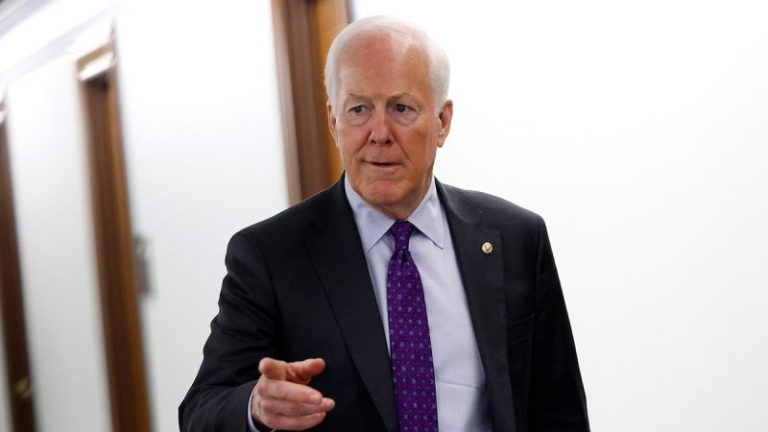
In a sharp break from his long-standing defense of the Senate filibuster, Sen. John Cornyn, R-Texas, urged Republicans Wednesday to enact ‘whatever changes’ necessary to send a Trump-backed voter ID bill to President Donald Trump’s desk before November’s midterm elections.
Cornyn, who is locked in a fierce runoff against Texas Attorney General Ken Paxton, is pressing Senate Republicans to pass the SAVE (Safeguarding American Voter Eligibility) America Act — even if it means scrapping the chamber’s 60-vote legislative filibuster.
His appeal marks a significant reversal for the Texas Republican, who long argued the filibuster served as a safeguard against Democrats advancing sweeping left-wing priorities with a simple majority.
‘For many years, I believed that if the U.S. Senate scrapped the filibuster, Texas and our nation would stand to lose more than we would gain,’ Cornyn wrote in a New York Post op-ed Wednesday morning. ‘But when the reality on the ground changes, leaders must take stock and adapt.’
Senate Majority Leader John Thune, R-S.D., is expected to put the SAVE America Act to a vote in the Senate next week, but the measure could fail on the floor given widespread opposition from Democrats. The Department of Homeland Security (DHS) is also facing a weeks-long shutdown over Democrats’ refusal to fund the agency absent vast reforms to immigration enforcement.
Under Senate rules, both pieces of legislation would have to overcome the 60-vote threshold — meaning buy-in from some Democrats — to survive a key procedural vote before final passage.
‘Today, Democrats are weaponizing the Senate’s rules to block the SAVE America Act, defund the Department of Homeland Security and hurt the American people — all to spite President Donald Trump,’ Cornyn wrote.
‘After careful consideration, I support whatever changes to Senate rules that may prove necessary for us to get the SAVE America Act and Homeland Security funding past the Democrats’ obstruction, through the Senate and on the president’s desk for his signature,’ Cornyn added.
Trump has repeatedly called on the Senate to pass the voter ID bill, calling it the ‘number one priority’ during an address to House Republicans on Monday.
The House-passed legislation would require proof-of-citizenship to vote in federal elections, impose voter ID requirements and require states to remove noncitizens from voter rolls. Trump has asked Republicans to add provisions that crack down on mail-in ballots, prohibit biological males’ participation in women’s sports and ban child sex-change procedures.
Trump has also threatened not to sign any legislation into law until the SAVE America Act clears the Senate. The White House later clarified that DHS funding was not included in the president’s ultimatum.
‘We can either unilaterally disarm, or we can stand and fight,’ Cornyn wrote. ‘The answer is clear: We need to stand, fight and win.
Both Cornyn and Paxton are vying for Trump’s endorsement ahead of the late May runoff election that will decide who will face Democratic candidate James Talarico, a Texas state senator, in the November general election. Trump said last week that he would ‘soon’ back a candidate, but he has yet to issue an endorsement. Cornyn, who has served in the upper chamber since 2002, is seeking his fifth Senate term.
Paxton said last week that he would consider exiting the race if the Senate were to circumvent the filibuster and pass the SAVE America Act.
‘The SAVE America Act is the most important bill the U.S. Senate could ever pass, and I’m committed to helping President Trump get it done,’ Paxton wrote.
Despite Cornyn’s new openness to filibuster reform, the SAVE America Act still faces an uphill battle in the Senate. The bill passed the House last month in a vote mostly along party lines.
Thune, a supporter of the SAVE America Act, has repeatedly said that the votes do not exist to scrap the 60-vote filibuster and advance the voter ID measure.
The majority leader has also warned against using the talking filibuster — a little-used maneuver preferred by some conservatives — arguing that approach would have unintended consequences and risks jamming the Senate floor for an indefinite period.
‘The votes aren’t there for a talking filibuster,’ Thune said Tuesday.
‘I’m the person who has to deliver sometimes the not-so-good news that the math doesn’t add up, but those are the facts and there’s no getting around it,’ he continued.
Thousands of U.S.-bound packages shipped by UPS are trapped at hubs across the country, unable to clear the maze of new customs requirements imposed by the Trump administration.
As packages flagged for customs issues pile up in UPS warehouses, the company told NBC News it has begun “disposing of” some shipments.
Frustrated UPS customers describe waiting for weeks and trying to make sense of scores of conflicting tracking updates from the world’s largest courier.
“I’ve never seen anything like this before,” Matthew Wasserbach, brokerage manager of Express Customs Clearance, said of the UPS backlog. “It’s totally unprecedented.”
Wasserbach’s New York City-based shipping services firm helps clients move shipments through customs. He said the company has seen a spike in inquiries for help with UPS customs clearance.
A Boeing 747 operated by UPS on the tarmac at Louisville International Airport in Kentucky during a winter storm on Feb. 3, 2022.Luke Sharrett / Bloomberg via Getty Images file
More than two dozen people who are waiting for their UPS packages explained the circumstances of their shipments to NBC News.
They described shipments of tea, telescopes, luxury glassware, musical instruments and more — some worth tens of thousands of dollars — all in limbo or perhaps gone.
Others have deep sentimental value: notebooks, diplomas and even engagement rings.
The frustration has exploded online, with customers sharing horror stories on Reddit of missing skin care products, art and collectibles.
They are confused and angry, and they want answers.
“It’s almost impossible to get through to anybody to figure out what is happening,” said Ashley Freberg, who said she is missing several boxes she shipped via UPS from England in September.
“Are my packages actually being destroyed or not?”
Freberg’s boxes of journals, records and books were shipped on Sept. 18, according to tracking documents she shared with NBC News.
Over the next two weeks, she received two separate notifications from UPS that her personal mementos had not cleared customs and as a result had been “disposed of” by UPS.
Then, on Oct. 1, a UPS tracking update appeared for her packages, saying they were on the way. The tracking updates Freberg showed NBC News for that shipment revealed it was the most recent update she had received.
UPS transport jets wait to be loaded with packages at UPS Worldport in Louisville, Ky., on April 27, 2021.Timothy D. Easley / AP file
While sentimental value is impossible to measure, other customers fear they will not be able to recover financially if their goods were destroyed.
Tea importer Lauren Purvis of Portland, Oregon, said five shipments from Japan, mostly containing matcha green tea and collectively worth more than $127,000, were all sent via UPS over the last few weeks and arrived at UPS’ international package processing hub in Louisville, Kentucky. Purvis has yet to receive any of the shipments, only a flurry of conflicting tracking updates from UPS.
A series of notifications for one shipment, which she shared with NBC News, said that the shipment had not cleared customs and that UPS had disposed of it.
But a subsequent tracking update said the shipment had cleared customs and was on the way.
“We know how to properly document and pay for our packages,” Purvis said. “There should be zero reason that a properly documented and paid-for package would be set to be disposed of.”
At least a half-dozen people described an emotional seesaw they were put through by weeks of contradictory UPS tracking updates about their shipments. The updates, they said, compounded the stress of not knowing what had really happened to their possessions.
A UPS Boeing 767 aircraft taxis at San Diego International Airport, in San Diego, Calif., August 15, 2025.Kevin Carter / Getty Images file
AJ, a Boston man who asked that NBC News use only his initials to protect his privacy, said he shipped a package from Japan via UPS on Sept. 12 including Japanese language books, a pillow and a backpack.
After it sat in Louisville for nearly two weeks, AJ got a tracking update on Sept. 26, one of several that he shared with NBC News. “We’re sorry, your package did not clear customs and has been removed from the UPS network. Per customs guidelines, it has been destroyed. Please contact the sender for more information,” it read.
UPS tracking updates for a package shipped from Japan to the United States.Obtained by NBC News
Three days later, on Sept. 29, he received another, and this one read: “On the Way. Import Scan, Louisville, KY, United States.” For a moment, it appeared as though AJ’s shipment might have been found.
But less than 24 hours after his hopes were raised, another tracking update arrived: “We’re sorry,” it began. It was the same notice that his package had “been destroyed” that he had received on the 26th.
Two minutes later, he got his final update: “Unable to Deliver. Package cannot clear due to customs delay or missing info. Attempt to contact sender made. Package has been disposed of.”
International shipping was thrown into chaos after the long-standing “de minimis” tariff exemption for low-value packages ended on Aug. 29.
Packages with values of $800 or less, which were previously allowed to enter the United States duty-free, are now subject to a range of tariffs and fees.
They include hundreds of country-specific rates, or President Donald Trump’s so-called reciprocal tariffs, as well as new levies on certain products and materials.
President Donald Trump holds a chart as he speaks about reciprocal tariffs at a ‘Make America Wealthy Again’ event at the White House on April 2.Brendan Smialowski / AFP – Getty Images file
The result is that international shipping to the United States today is far more complex and costly than it was even two months ago.
The sweeping changes have caught private individuals and veteran exporters alike in a customs conundrum.
It is difficult to know the exact number of the packages that are stuck in UPS customs purgatory. Shipping companies guard their delivery data closely.
UPS reported to investors that in 2023, its international service delivered around 3.2 million packages per day.
This week, the company told NBC News that it is clearing more than 90% of the packages it handles through customs on the first day.
The rest of the packages, or less than 10%, require more time to clear customs and need to be held until they do. That could easily mean that thousands of UPS packages every day are not clearing customs on their first try.
In a statement to NBC News, UPS said it is doing its best to get all packages to their destinations while abiding by the new customs requirements.
“Because of changes to U.S. import regulations, we are seeing many packages that are unable to clear customs due to missing or incomplete information about the shipment required for customs clearance,” it said.
UPS said it makes several attempts to get any missing information and clear delayed shipments, contacting shippers three times.
“In cases where we cannot obtain the necessary information to clear the package, there are two options,” it said.
“First, the package can be returned to the original shipper at their expense. Second, if the customer does not respond and the package cannot be cleared for delivery, disposing of the shipment is in compliance with U.S. customs regulations. We continue to work to bridge the gap of understanding tied to the new requirements and, as always, remain committed to serving our customers.”
A conveyor belt carries envelopes and small packages past UPS workers to their destinations at Worldport on Nov. 20, 2015.Patrick Semansky / AP, file
NBC News asked UPS precisely what it does with packages when it tells customers their shipments have been unable to clear customs and have been “disposed of.” It would not say.
On Sept. 27, a shipper in Stockholm received a formal notification from UPS that two packages her glassware company sent to the United States — which failed to clear customs — would be destroyed.
“We are sorry, but due to these circumstances and the perishable nature of the contents, we are now required to proceed with destruction of the shipment in accordance with regulatory guidelines,” UPS told Anni Cernea in an email she shared with NBC News.
The email continued, “There is no need to contact our call center for further information or to attempt to clear this shipment.”
Cernea said, “It’s just outrageous that they can dispose of products like this without approval from either the sender or recipient.”
From now on, Cernea said, she plans to ship her products via UPS rival FedEx.
Cernea’s decision to switch carriers hints at the worst-case scenario for UPS, which is that people could abandon the company. It is a potential crisis for the roughly $70 billion company.
The company’s stock price is already down more than 30% this year, which analysts attribute to a mix of tariffs, competition and shifting shopping habits.
As she awaits her missing journals and diplomas from England, Freberg is looking ahead to the biggest shipping months of the year.
“I can’t even imagine how bad the holidays are going to be, because that’s a time where loads of people are shipping stuff overseas,” she said.
“If it doesn’t get solved soon, I can only see it becoming an even bigger issue.”
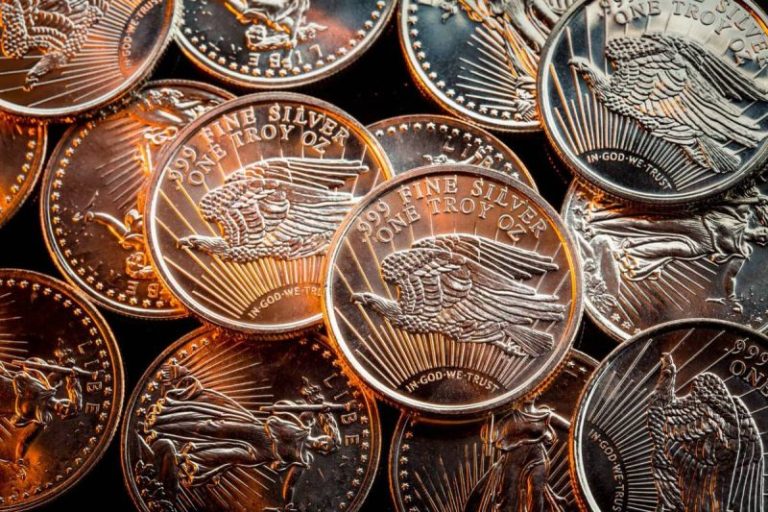
Precious metals are recovering their safe-haven demand appeal this week.
Gold, silver and platinum are up this week, all still down from the all-time highs recorded in January. Escalating geopolitical tensions and US trade policy shifts are once again at center stage in this sector of the commodities market.
Let’s take a look at what’s got the precious metals moving over the past week.
Gold price
After dropping as low as US$4,400 per ounce on February 2, this past week gold has taken another run well above the key psychological US$5,000 mark; albeit still hundreds of dollars away from its record high of close to US$5,600 reached on January 28.
After trading in a tight range of US$4,985 to US$5,000 for much of Thursday (February 19), the price of gold managed to rise as high as US$5,107 on Friday. That upward climb continued on Monday (February 23) to an intraday high of US$5,248 — a level gold hasn’t seen in a month.
The yellow metal lost that steam by Tuesday’s close with the precious metal trading back down at US$5,143. By Wednesday morning, gold was once again making a run at the US$5,200 level to reach an intraday high of US$5,217.58 at 9:10 a.m. PST. However, it couldn’t hang on for long, sinking back down to US$5,166.25 as of 1:40pm PST on profit-taking and a stronger dollar.
Gold price chart, February 18, 2026 to February 25, 2026.
Here are the primary drivers for gold this past week:
Dips this week were brought on by slight downward pressure due to profit-taking and a stronger US dollar.
In other gold news, JPMorgan Chase (NYSE:JPM) raised its gold forecast to US$6,300 by the end of 2026, citing a ‘reserve currency paradigm shift’ as countries diversify away from the dollar, and ‘significant investor diversification’.
Looking at major events in the gold mining sector, Kinross Gold’s (TSX:K,NYSE:KGC) Great Bear development in the Red Lake district of Ontario, Canada, has been designated for a reduced permitting timeline under the provincial government’s One Project, One Process (1P1P) framework. 1P1P is a streamlined approval system aimed at reducing government review times by 50 percent. The high-grade, combined open-pit and underground operation is expected to produce more than 500,000 ounces of gold annually during its peak years.
Silver price
The price of silver is still well below its all-time high of more than US$120 per ounce it reached on January 29, 2026. For the most part, the white metal continued to track the same trends as gold this week.
Like gold, silver traded sideways Thursday (February 19) in the US$77.50 to US$78.50 range, and then surged the following day to an intraday high of US$84.61.
For most of Monday (February 23), silver continued higher but at a much slower pace, to reach as high as US$88.96. Tuesday brought another day of tight trading in the US$86.70 to US$88.10; however, by Wednesday morning the silver price had managed to break through the US$90 level on the same safe-haven demand forces pushing gold prices higher this week.
The price of silver hit an intraday high of US$91.15 at 11:55am PST before sliding back down below US$89 in the afternoon session.
Silver price chart, February 18, 2026 to February 25, 2026.
Silver may still not be back into the triple digits, but its showing strong support despite a slump in artificial intelligence (AI) tech stocks. Silver, the most electrically and thermally conductive metal on the planet, is considered a key material for AI tech, particularly in data centers and high-performance computing. Silver is also in a structural supply deficit which continues to provide upward pressure on silver prices
In silver mining news, Lundin Gold (TSX:LUG,OTCQX:LUGDF) announced a US$670 million silver stream deal with LunR Royalties (TSXV:LUNR) on its Fruta del Norte mine.
Platinum price
Platinum continues to be one of the top performing metals, reaching a 12-year high in recent weeks. This past week it has gained more than 8 percent. Sideways trading on Thursday (February 19) turned into an upward climb on Friday with prices for platinum rising from a low of US$2,060.10 to a high of US$2,117.40 per ounce.
The first few days of this new week were marked by volatility with wider price swings. The platinum price reached a three week high of US$2,226.30 in late day trading Tuesday. The jump was driven by a combination of geopolitical tensions, trade uncertainty, and structural supply constraints.
Platinum continued its ascent in overnight trading, reaching as high as US$2,360.50 in early morning trading, and managed to finish off the day just below the US$2,300 level.
Platinum price chart, February 18, 2026 to February 25, 2026.
Platinum prices are benefitting from renewed tariff jitters, geopolitical safe-haven demand, and persistent supply tightness from major producer South Africa.
The emerging hydrogen economy is also adding to demand for the metal on top of robust demand from the auto sector. Consumers are shifting back toward internal combustion engine and diesel vehicles as hurdles to EV adoption remain challenging. This is highly supportive of demand for platinum as its primary use is in automotive catalysts.
On the supply side, global platinum reserves remain critically low, especially as the world’s biggest producer South Africa continues to be plagued by power shortages and operational disruptions.
In platinum mining news, Valterra Platinum declared a dividend of 45 rand a share for a total 2025 payout of 12 billion rand (US$757 million) after its net income more than doubled to 15.4 billion rand. Bloomberg reported that the size of the dividend “smashed analyst expectations as earnings jumped last year on soaring metals prices”.
Palladium price
Palladium has been the black sheep of the precious metals family for the past few years, remaining well below its March 2022 all-time record of US$3,440.76 per ounce.
On Thursday (February 19), unlike its sister metals, palladium rallied 4.8 percent to an intraday high of US$1,767.50. The metal closed out last week with another nearly 3.9 percent gain to US$1,836.
On Monday, palladium lost some of that ground to close out the day at US$1,820. After dipping to a low of US$1,763 in early morning trading on Tuesday, the price of the metal regained those losses and more by the end of the trading day reaching as high as US$1,843.
Wednesday (February 25) morning brought a spike in palladium prices to US$1,935 as the metal went along for the same ride as platinum, before falling back to the US$1,860 level in afternoon trading.
Palladium price chart, February 18, 2026 to February 25, 2026.
As is the case with platinum, demand for palladium is getting support from the auto sector. Rising prices for platinum are leading automakers to make the swap to palladium.
The US Department of Commerce’s preliminary statement of support for anti-dumping duties of approximately 133 percent on unwrought Russian palladium imports is still shaping the outlook for palladium on the supply side. This follows a petition from Sibanye-Stillwater (NYSE:SBSW) over allegations that Russian metal is being sold in the US at less than fair value. A final decision is expected in the case by June of this year.
Securities Disclosure: I, Melissa Pistilli, hold no direct investment interest in any company mentioned in this article.
As a physician and a mother, I have seen firsthand how Washington’s decisions ripple into the exam room and around the kitchen table. At a time when healthcare debates often divide, it is worth recognizing leaders who safeguard freedom while tackling real health needs. The Trump administration is doing exactly that: protecting access, preserving choice and confronting public-health challenges while trusting families and their physicians to decide what is best.
President Donald Trump is proving that when Washington listens to everyday Americans and acts with urgency, real change is possible. For too long, the crushing cost of prescription drugs has forced families to make an impossible choice between filling a prescription and paying their bills.
Lowering drug prices has been a cornerstone of his presidency, and he has taken meaningful steps to deliver by expanding generics and biosimilars, implementing historic price transparency rules, capping insulin costs for seniors, advancing TrumpRX to increase competition to increase competition and direct access, and pursuing a ‘Most Favored Nation’ policy, so Americans are no longer paying more for medications than patients in other developed countries.
These policies represent an important shift toward putting patients, not middlemen, first. It’s a strong and necessary start, but sustaining this momentum by increasing competition and expanding access will be critical to finally bringing lasting relief to Americans.
This is not the first time Trump has revolutionized healthcare access. He set the tone during his first term with Operation Warp Speed, a milestone in American biomedical history, after COVID-19 paralyzed the world six years ago this month. By pairing private‑sector innovation with decisive federal coordination, it accelerated effective vaccine development and distribution; proving speed and rigor can coexist when government clears paths instead of creating bottlenecks. Just as important, it expanded options for patients and families, reinforcing a simple principle: access first, always.
What followed, however, is where public trust began to erode. Not because of Operation Warp Speed, but because its success was taken over by bureaucratic overreach. I watched in real time as public trust in health institutions collapsed, common sense was dismissed, legitimate debate was shut down and universal COVID vaccine mandates were imposed. Patients did not turn away from the vaccine recommendations because of the science; they turned away because of coercion despite evolving science and varying risk levels.
When personal autonomy gave way to mandates, they undermined confidence in both institutions and vaccines themselves. The result wasn’t the product of Trump’s leadership and scientific progress; it was the consequence of power being prioritized over personal choice.
Today, this administration is again pursuing strong public‑health outcomes without treating Americans as bystanders. Trust should be built where it matters most: in the home and in the doctor’s office. Parents want choice. Doctors want access. Parents overwhelmingly trust their own physicians. Doctors who know a child’s history and needs should remain the most trusted voices and, increasingly, America’s health agencies are speaking that same language.
The recent shift in tone from top health leaders is significant and worth recognizing. Acting Centers for Disease Control and Prevention Director Jay Bhattacharya is urging Americans to get the measles vaccine as cases rise and the U.S. risks losing its hard-won elimination status. He called the decision ‘deeply personal’ while making clear that ‘measles is preventable and vaccination remains the most effective way to protect yourself and those around you.’
Centers for Medicare & Medicaid Services Administrator Mehmet Oz echoed that in February: ‘There will never be a barrier to Americans getting access to the measles vaccine. It is part of the core schedule.’ This is what responsible public health communication looks like: honest, direct, and rooted in science, without coercion.
President Donald Trump is proving that when Washington listens to everyday Americans and acts with urgency, real change is possible.
The challenge now is sustaining this posture. Keeping vaccines available, affordable and accessible is not a concession to one side of the political debate, it’s broadly popular across the spectrum and conservatives are no exception. Skepticism of mandates and top-down health edicts does not translate into a desire to see vaccines become harder to get or more expensive to access. Americans want the freedom to make their own choices alongside their doctors and that freedom is only meaningful when access is guaranteed.
At the same time, the message must be clear: removing mandates does not mean vaccines are no longer recommended, or they have somehow been deemed unsafe. Vaccines remain one of the most effective tools in modern medicine. When vaccination rates fall, history and modern-day show that preventable disease and mortality rise.
Trump understands this, and his agencies need to hold the line: speak honestly about what the science says, respect personal decision-making and ensure that no American faces a barrier to a vaccine they want. That’s a winning posture politically — and more importantly, it’s the right thing to do.
Gold royalty companies offer investors exposure to gold and silver with the benefits of diversification, lower risk and a steady income stream.
Royalty companies operating in the resource sector will typically agree to provide funding for the exploration or development of a resource in exchange for a percentage of revenue from the deposit if it begins producing. Similarly, a company with a streaming model may work out an agreement with a resource company for a share of the metal produced from a deposit in exchange for an investment.
These kinds of arrangements benefit both parties. Streamers get access to the underlying commodity at a fixed price and are shielded from cost overruns and spikes in production. Further, if there is a price decrease the metals can be warehoused until the market conditions improve.
In both cases, mining companies receive considerable upfront investment during the expensive construction and expansion phases, and unlike loans these investments have longer-term payouts at a fixed amount.
Let’s take a deeper look at how royalties and streaming works, the benefits of the royalty business model, and the gold and silver royalty and streaming stocks you can invest in.
In this article
How do gold and silver royalties work?
Gold and silver royalty agreements involve royalty companies agreeing to provide funding for the exploration or development of a precious metals resource in exchange for a percentage of revenue from the deposit if it begins producing metals.
The foundation for royalties dates back a few hundred years. Originally, they were payments made to the British monarchy in exchange for miners’ rights to operate gold and silver mining operations on lands held by the crown. Today, these arrangements still exist, with mining operators paying the government a share of the revenues generated from exploiting resources on public lands.
The first royalty paid to a company in the gold sector was an agreement in 1986 in which Franco-Nevada (TSX:FNV,NYSE:FNV) made a US$2 million investment into Western States Minerals’ Goldstrike small heap-leach mine in Nevada, US, for a 4 percent share of revenues collected from the mine. Western States was sold the same year to Barrick Gold (TSX:ABX,NYSE:GOLD). Barrick discovered a far larger resource at the site, and the royalty has since earned Franco-Nevada more than US$1 billion and continues to pay out approximately US$20 million per year.
This early example set a precedent for the industry. It saw Franco-Nevada, which was then a gold exploration company, lock itself into what became one of the largest gold mineral resources in the world at a relatively low overhead while avoiding future costs associated with the growth and maintenance of the mine.
How do gold and silver streams work?
Gold and silver streams work in a similar manner to the royalty model but returns are in the form of physical metals rather than funds. In return for investing in an asset, a gold streaming company may work out an agreement with a resource company for a share of the metal produced from a deposit, or for the ability to purchase the metal at a lower price than market value.
This is also a popular model with base metal mining companies whose operations result in gold and/or silver by-products. In these cases, gold and silver streaming companies may work out a deal with a base metal mining operation to take delivery of a certain amount of precious metals at an agreed upon price.
The Goldstrike royalty made Franco-Nevada what it is today, but its largest contributing asset in its portfolio is a deal with Lundin Mining (TSX:LUN,OTC Pink:LUNMF) for a stream of the gold and silver resources extracted from its Candelaria copper mine in Chile.
Under the terms of the deal, which was part of Lundin’s 2014 acquisition of Freeport-McMoRan’s (NYSE:FCX) stake in Candelaria, Franco-Nevada provided a US$648 million deposit in exchange for a 68 percent stream of the asset’s silver and gold. This will decrease to 40 percent once 720,000 ounces of gold and 12 million ounces of silver have been delivered.
While Franco-Nevada does have to pay for the metal, the agreed upon amount is far under the current market value. At the time, the deal was set at US$400 for each ounce of gold and US$4 per ounce of silver with a 1 percent inflationary adjustment, or market price if that was less.
Are royalty and streaming companies a good investment?
Royalty and streaming companies are largely seen as a lower-risk investment than mining companies. Lower operational costs and higher portfolio diversification means they are hedged against a mine shutdown, natural disaster, market forces or the politics that may affect the nature of an operation or project. However, that’s not to say royalty and streaming deals aren’t without their risks.
In many ways, gold royalty companies are like venture capitalists in the tech industry, working to fund many projects in the hopes that some will see big payoffs that offset the loss from the ones that don’t make it. This means they need large access to funding in order to build their portfolios.
To get funding, royalty and streaming companies have several options: using cash on hand, raising debt through loans or issuing more shares. Each of these options carries risk. Using cash to pay for investments could reduce the size of the safety net and eat into company liquidity, debt needs to be managed to ensure that payments don’t exceed income and the issuance of stock could lead to an overall devaluation of share price and impact investor sentiment.
Once companies have developed strong cash flows and good liquidity, they are able to take advantage of their own reserves, without the need to worry about loans or stock dilution. The same cannot be said for the up-and-coming companies who need to rely on external funding to make deals, making them riskier.
These companies provide a good entry point for investors with lower share price, and have more potential to return higher percentage gains in share price, they also bear more risk. With more reliance on raising external capital, there is a greater need for deals to be successful and a greater chance for a company to incur more debt load or stock dilution.
Diverse portfolios can help reduce the risk associated with a royalty company, and companies like Franco-Nevada have the industry knowledge and financial capital to take some risks. As of February 2025, the company has 430 assets on their books; of those, 119 are producing, and 38 are in the advanced stages of development. It’s the 273 more that are in the exploration phase, many of which will never provide returns, that represent the greatest risk.
Of course, unforeseen events can affect both mining and royalty companies alike, particularly when assets that take up a larger percentage or a portfolio are affected. Franco-Nevada had more than US$1 billion invested in First Quantum’s (TSX:FM,OTC Pink:FQVLF) Cobre Panama mine before it was shuttered by the Panamanian government following protests at the end of 2023. The mine brought in US$223.3 million for Franco-Nevada in 2022 and represented nearly a quarter of its precious metal income. While it fared better than First Quantum, the royalty company’s share price took a significant hit.
Top 5 gold and silver royalty companies
The biggest companies in the precious metals royalty and streaming space have long histories and have built positive reputations on the backs of strong investments. They offer a means for investors to de-risk an entry into the gold sector by maintaining an arms-length attachment to it.
The five large-cap gold and silver royalty and streaming companies on this list had market caps above $1 billion in their respective currencies as of February 24, 2026.
1. Wheaton Precious Metals (TSX:WPM,NYSE:WPM)
Market cap: C$96.95 billion Share price: C$215.66
Wheaton Precious Metals was established in 2004 as Silver Wheaton with a focus on silver streaming. Goldcorp held a majority interest, but began to reduce it in 2006 and by 2008 had completely divested itself. By that time, Silver Wheaton had begun to diversify into other precious metals. The following year, Silver Wheaton acquired rival silver streaming stock Silverstone Resources in a C$190 million deal.
Silver Wheaton changed its name in 2017 to Wheaton Precious Metals and has since built itself into one of the largest players in the gold and silver royalty and streaming space, with investments in 23 operating mines and 25 development projects across five continents.
Included in Wheaton’s assets are investments in Newmont’s (TSX:NGT,NYSE:NEM,ASX:NEM) Peñasquito mine in Mexico, Sibanye Stillwater’s (NYSE:SBSW) Stillwater and East Boulder mines in Montana, United States, and Hudbay Minerals’ (TSX:HBM,NYSE:HBM) Copper World Complex project in Arizona, US.
2. Franco-Nevada (TSX:FNV,NYSE:FNV)
Market cap: C$71.55 billion Share price: C$374.47
A trailblazer in the gold royalty business, Franco-Nevada has set a high bar. The current iteration of the company was spun out of Newmont in what became a C$1.1 billion initial public offering, one of the biggest IPOs of 2007.
Franco-Nevada now has a portfolio of royalties and streams on 119 producing assets around the world including gold, silver, base metal and oil and gas operations, which generate more than US$1.2 billion for the company annually. Additionally, the company’s portfolio includes 38 advanced-stage assets and 273 exploration-stage assets.
Among the producing assets for which Franco-Nevada has precious metals streams and royalties are Glencore’s (LSE:GLEN,OTC Pink:GLCNF) Antapaccay mine in Peru, Agnico Eagle’s (NYSE:AEM,TSX:AEM) Detour Lake mine in Ontario, Canada, and Gold Fields’ (NYSE:GFI) Salares Norte mine in Chile.
See the sections above for more information on Franco-Nevada’s royalty and streaming deals.
Royal Gold got its start in 1981 as oil and gas exploration and production company Royal Resources.
Responding to shifts in the overall resource market, by 1987, Royal Gold was born with a focus on building a portfolio of minority positions in significant gold properties operated by major mining firms.
Today, Royal Gold is a leading precious metals streaming and royalty company with interest in about 400 properties, of which 82 are producing assets, across 31 countries.
About half of its portfolio came from its October 2025 acquisition of Sandstorm Gold and Horizon Copper, which combined for 230 royalty assets, including 40 producing assets.
Among Royal Gold’s royalty assets are Barrick Mining (TSX:ABX,NYSE:B) and Newmont’s Cortez mine in Nevada, US, Teck’s (TSX:TECK.A,TECK.B,NYSE:TECK) Andacollo mine in Chile and Centerra Gold’s (TSX:CG,NYSE:CGAU) Mount Milligan mine in British Columbia, Canada.
4. Triple Flag Precious Metals (TSX:TFPM)
Market cap: C$10.96 billion Share price: C$53.67
Triple Flag Precious Metals was founded in 2016 by Shaun Usmar, a former Barrick executive and current CEO of Vale’s (NYSE:VALE) Vale Base Metals.
Although the company is a relative newcomer to the royalty and streaming space, it has quickly established itself as a frontrunner through several significant deals. Among them was the acquisition of Maverix Metals in January 2023, which helped them become the fourth-largest precious metals royalty company.
Today, Triple Flag has a global portfolio of gold and silver assets on nearly every continent, comprising 33 production assets and 206 in development or exploration.
Highlights from its portfolio include streaming and royalty deals on Evolution Mining’s (ASX:EVN,OTC Pink:CAHPF) Northparkes mine in New South Wales, Australia, Nexa Resources’ (NYSE:NEXA) Cerro Lindo mine in Peru, and Westgold Resources’ (ASX:WGX,OTC Pink:WGXRF) Beta Hunt mine in Western Australia.
5. OR Royalties (TSX:OR,NYSE:OR)
Market cap: C$11.49 billion Share price: C$62.31
Previously named Osisko Gold Royalties, OR Royalties was created in 2014 as a spinoff deal between Osisko Mining (TSX:OSK), Yamana Gold and Agnico Eagle Mines (TSX:AEM,NYSE:AEM). The deal was made in an attempt to prevent a hostile takeover of Osisko Mining and its Canadian Malartic gold complex by Goldcorp, now part of Newmont.
In the deal, OR Royalties carried with it a 5 percent net smelter return royalty from the Canadian Malartic mine. Now owned by Agnico Eagle, the complex in Québec remains a cornerstone of the royalty company’s business today.
The gold and silver royalty and streaming company has gone on to amass royalties, streams and offtakes for 195 assets, 22 of which are producing, across six continents.
The majority are located in North America, including one of the most well-known gold-producing mines in the world, Agnico Eagle’s Canadian Malartic complex in Québec, as well as SSR Mining’s (NASDAQ:SSRM,TSX:SSRM) Seabee mine in Saskatchewan, Canada, and Kinross Gold’s (TSX:K,NYSE:KGC) Bald Mountain mine in Nevada.
Small-cap gold and silver royalty companies
There are also small-cap gold and silver royalty and streaming companies you can invest in and offer a lower-cost option for investors who are comfortable with a little more risk. Like their larger counterparts, small-cap gold royalty stocks offer a lower-risk investment than getting into a small-cap mining company but still provide access to the underlying precious metals market.
The five small-cap gold and silver royalty companies on this list had market caps above $10 million in their respective currencies as of February 24, 2026.
1. Gold Royalty (NYSEAMERICAN:GROY)
Market cap: US$1.04 billion Share price: US$4.59
Gold Royalty is building a diversified portfolio of more than 240 gold royalty and gold streaming interests based on net smelter return royalties on properties in the Americas.
The company’s revenue generating investments include Agnico Eagle’s Canadian Malartic complex in Québec, DPM Metals’ (TSX:DPM) Vareš mine in Bosnia and Herzegovina, and Discovery Silver’s (TSX:DSV,OTCQX:DSVSF) Borden mine in Ontario.
Metalla Royalty & Streaming focuses on gold, silver and copper projects. The company’s royalty model involves acquiring royalties and streams by offering resource companies Metalla shares and cash.
The mid-tier royalty and streaming company’s asset portfolio includes more than 100 projects across North America, South America and Australia. Its cornerstone assets include IAMGOLD (TSX:IMG,NYSE:IAG) and Sumitomo Metal Mining’s (OTC Pink:SSUMF,TSE:5713) Côté gold mine in Ontario, Canada, and First Quantum Minerals’ (TSX:FM) Taca Taca project in Argentina.
3. Vox Royalty (TSX:VOXR,NASDAQ:VOXR)
Market cap: C$518.16 million Share price: C$7.81
Vox Royalty is a precious metals focused royalty company first established in 2014. The company has acquired an asset portfolio of 70 royalties, 32 of which were added since 2019, across Australia, the Americas and South Africa.
Roughly 70 percent of its portfolio is dedicated to gold, silver and platinum group companies. The remainder of its portfolio is diversified across a wide range of resources, including copper, uranium, iron and diamonds.
The majority of the eight producing assets in its portfolio are located in Australia, including a 1 percent net smelter return from Black Cat Syndicate’s Bulong gold mine, and a 2.5 percent net smelter return from Northern Star Resources’s (ASX:NST,OTCPL:NESRF) Otto Bore gold mine.
As for development stage projects, its assets in Canada include a 1 percent net smelter return on NexGold Mining’s (TSXV:NEXG,OTCQX:NXGCF) Goldlund project and a 2 percent gross proceeds royalty on Alamos Gold’s (TSX:AGI,NYSE:AGI) Lynn Lake project in Canada.
4. Sailfish Royalty (TSXV:FISH,OTCQX:SROYF)
Market cap: C$324.08 million Share price: C$3.79
Founded in 2014, Sailfish Royalty’s asset portfolio is much smaller than the other gold royalty stocks on this list. It consists of one producing mine as well as two development-stage and two exploration-stage properties in the Americas.
In Nicaragua, Sailfish has a gold stream equivalent to a 3 percent net smelter return on Mako Mining’s (TSXV:MKO,OTCQX:MAKOF) San Albino gold mine and a 2 percent net smelter return on the area surrounding the mine. The company also holds a 13,500 ounce per quarter silver stream at the property, which was set to expire in May 2025. At the end of April 2025, Sailfish chose to exercise its option to purchase all silver for the life of the mine.
5. Nations Royalty (TSXV:NRC,OTCQB:NRYCF)
Market cap: C$160.68 million Share price: C$1.16
Nations Royalty is a fledgling royalties company that first began trading in June 2024 and holds Indigenous-owned royalties. It was founded by the Nisga’a Nation of British Columbia, Canada, and by Wheaton Precious Metals co-founder Frank Giustra. It is the first publicly traded company in Canada to have a majority Indigenous ownership.
The company has a portfolio of royalties covering one production and four development assets, all located in Northwestern British Columbia. The majority of these royalties are in the form of annual payments equal to a percentage of the mineral tax the assets’ operators pay.
The producing mine in its portfolio is Newmont’s (NYSE:NEM,ASX:NEM) Brucejack gold-silver operation. The four development assets consist of Ascot Resources’ (TSX:AOT,OTCID:AOTVF) Premier and Red Mountain projects, Seabridge Gold’s (TSX:SEA,NYSE:SA) KSM project and New Moly’s Kitsault molybdenum project.
Gold and silver royalty ETFs
Those who want more broad exposure to the precious metals markets may want to buy shares of an exchange-traded fund that includes gold and silver royalty and streaming stocks. Here are a few to get you started, including ASX gold ETFs and a US gold ETF.
Betashares Global Royalties ETF (ASX:ROYL) The Betashares Global Royalties ETF is an Australian ETF that tracks the performance of an index of global companies that earn a significant amount of their revenue from royalty income, royalty-related income and intellectual property income. The fund’s top two holdings are Wheaton Precious Metals and Franco-Nevada, with Royal Gold and OR Royalties also among its significant holdings.
Betashares Global Gold Miners ETF (ASX:MNRS) The Betashares Global Gold Miners ETF tracks the performance of an index of the world’s largest gold mining companies outside of Australia, hedged into Australian dollars. Wheaton Precious Metals, Franco-Nevada and Royal Gold are also among the fund’s top holdings.
VanEck Gold Miners ETF (ARCA:GDX) The VanEck Gold Miners ETF is a US gold ETF that aims to replicate the performance of the MarketVector Global Gold Miners Index by holding large-cap gold mining stocks and precious metals royalty companies. As with the other gold ETFs on this list, its top holdings include Franco-Nevada, Wheaton Precious Metals and Royal Gold.
Securities Disclosure: I, Dean Belder, hold no direct investment interest in any company mentioned in this article.
The newly formed media corporation Paramount Skydance has acquired The Free Press, an online news and commentary outlet co-founded by Bari Weiss, who will join CBS News as editor-in-chief.
Weiss launched The Free Press in 2021 with her wife, Nellie Bowles, and her sister, Suzy Weiss. They have presented the publication as a heterodox alternative to the legacy news media and a bulwark against “ideological narratives,” particularly on the political left.
Bari Weiss in New York in 2024.Noam Galai / Getty Images for The Free Press file
The acquisition is one of Skydance chief David Ellison’s most significant early moves to reshape the news unit at Paramount, which he acquired in a blockbuster $8 billion deal earlier this year.
In seeking federal approval of the merger, Skydance vowed to embrace “diverse viewpoints” and represent “the varied ideological perspectives of American viewers.” The company also pledged to install an ombudsman at the nearly 100-year-old CBS News operation.
“This partnership allows our ethos of fearless, independent journalism to reach an enormous, diverse, and influential audience,” Weiss said in a news release. “We honor the extraordinary legacy of CBS News by committing ourselves to a singular mission: building the most trusted news organization of the 21st Century.”
The Free Press has roughly 1.5 million subscribers on Substack, with more than 170,000 of them paid, according to Paramount Skydance. The Financial Times estimated that the publication generates more than $15 million in annual subscription revenue. NBC News has not independently verified that figure.
“Bari is a proven champion of independent, principled journalism, and I am confident her entrepreneurial drive and editorial vision will invigorate CBS News,” Ellison said in a statement. “This move is part of Paramount’s bigger vision to modernize content and the way it connects — directly and passionately — to audiences around the world.”
The acquisition talks between Ellison and Weiss were first reported in late June by Status, a media industry newsletter. Ellison is the son of billionaire tech mogul Larry Ellison, the co-founder of the software firm Oracle.
Weiss co-founded The Free Press after quitting the opinion section of The New York Times. In a resignation letter that was published online, Weiss decried what she characterized as the “illiberal environment” at the newspaper.
The Free Press earned wide attention in April 2024 after it published an essay from Uri Berliner, a senior business editor at National Public Radio who accused his employer of organizing around a “progressive worldview.” Berliner then resigned from NPR and joined The Free Press.
The publication’s regular stable of columnists includes Tyler Cowen, an economist and podcaster; Matthew Continetti, the author of a book about the evolution of American conservatism; and Niall Ferguson, a British-American historian.
CBS News has repeatedly found itself in the national spotlight in recent months. President Donald Trump filed a lawsuit last year against Paramount accusing “60 Minutes” of deceptively editing an interview with then-Vice President Kamala Harris.
CBS denied the claim. Paramount settled Trump’s lawsuit for $16 million.
The Federal Communications Commission is still investigating whether CBS engaged in “news distortion.” The commission is chaired by Brendan Carr, who was appointed by Trump at the start of his second term.