Author

admin

Browsing

HONG KONG — China outlined new curbs on exports of rare earths and related technologies on Thursday, extending controls over use of the elements critical for many high-tech and military products ahead of a meeting in about three weeks between President Donald Trump and Chinese leader Xi Jinping.

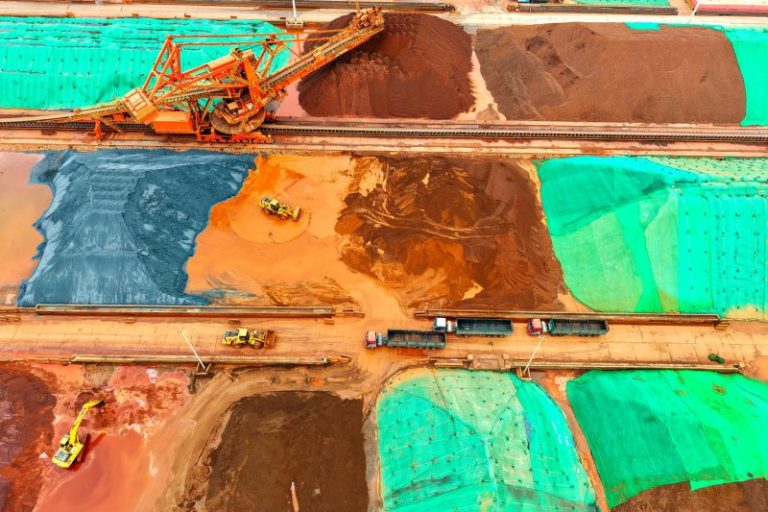
The regulations announced by the Ministry of Commerce require foreign companies to get special approval to export items that contain even small traces of rare earths elements sourced from China. These critical minerals are needed in a broad range of products, from jet engines, radar systems and electric vehicles to consumer electronics including laptops and phones.

Beijing will also impose permitting requirements on exports of technologies related to rare earths mining, smelting, recycling and magnet-making, it said.

China accounts for nearly 70% of the world’s rare earths mining. It also controls roughly 90% of global rare earths processing. Access to such materials is a key point of contention in trade talks between Washington and Beijing.

As Trump has raised tariffs on imports of many products from China, Beijing has doubled down on controls on the strategically vital minerals, raising concerns over potential shortages for manufacturers in the U.S. and elsewhere.

It was not immediately clear how China plans to enforce the new policies overseas.

During a cabinet meeting Thursday, Trump said he had yet to be briefed on the new rules but suggested that the U.S. could stop buying Chinese goods. “We import from China massive amounts,” Trump said. “Maybe we’ll have to stop doing that.”

Neha Mukherjee, a rare earths analyst at Benchmark Mineral Intelligence, called the new export controls “a strategic move by China that mirror some of Washington’s new chip export rules.

“Most rare earth magnet manufacturers in the U.S., Japan and elsewhere remain heavily dependent on rare earths from China, so these restrictions will force some difficult decisions — especially for any company involved in military uses of rare earths because most of those export licenses are expected to be denied, he said.

“The message is clear: if the U.S. and its allies want supply chain security, they must build independent value chains from mine to magnet,” Mukherjee said.

The new restrictions are to “better safeguard national security” and to stop uses in “sensitive fields such as the military” that stem from rare earths processed or sourced from China or from its related technologies, the Commerce Ministry said.

It said some unnamed “overseas bodies and individuals” had transferred rare earths elements and technologies from China abroad for military or other sensitive uses which caused “significant damage” to its national security.

The new curbs were announced just weeks ahead of an expected meeting between Trump and Chinese President Xi Jinping on the sidelines of the Asia-Pacific Economic Cooperation forum in South Korea, that begins at the end of this month.

“Rare earths will continue to be a key part of negotiations for Washington and Beijing,” George Chen, a partner at The Asia Group, said in an emailed comment. “Both sides want more stability but there will be still a lot of noises before the two leaders, President Trump and Xi, can make a final deal next year when they meet. Those noises are all negotiation tactics.”

These new restrictions will likely prompt additional government and private investments in developing a mine-to-magnet supply chain outside of China. Mukherjee said that $520 million of investments in the American rare earths industry were announced just in the second quarter with most of that coming from the government.

And there is some progress already being made with American magnet maker Noveon announcing an agreement with Lynas Rare Earths this week to secure a supply of rare earths outside of China from Lynas’ mine in Australia, and MP Materials preparing to begin producing magnets later this year at its new plant in Texas that uses rare earths from the only U.S. mine that it operates in California.

In July, the U.S. Defense Department agreed to invest $400 million in shares of the Las Vegas company, establish a floor for the price of key elements, and ensure that all of the magnets made at a new plant in the first 10 years are purchased.

An MP Materials spokesperson said China’s action “reinforces the need for forward-leaning U.S. industrial policy. Building resilient supply chains is a matter of economic and national security.”

Wade Senti, president of the U.S. permanent magnet company AML, said it’s time to innovate.

“The game of chess that China is playing underscores the importance of developing innovation that changes the game and puts the United States in leading position,” Senti said.

Nazak Nikakhtar, a former Commerce Department undersecretary, said the new restrictions are “a significant development and escalation” by extending controls to related technology and equipment and to sectors like chipmakers. “This should be a wake-up call to the U.S. government that we need to invest in and appropriate more to domestic capabilities. Both are critical to rebuild America’s rare earths industrial base,” she said.

In April, Chinese authorities imposed export curbs on seven rare earth elements shortly after Trump unveiled his steep tariffs on many trading partners including China.

While supplies remain uncertain, China approved some permits for rare earth exports in June and said it was speeding up its approval processes.

This post appeared first on NBC NEWS

U.S. forces destroyed 16 Iranian mine-laying vessels near the Strait of Hormuz Tuesday, U.S. Central Command said, in what officials described as a move to prevent Iran from disrupting one of the world’s most critical maritime choke points.

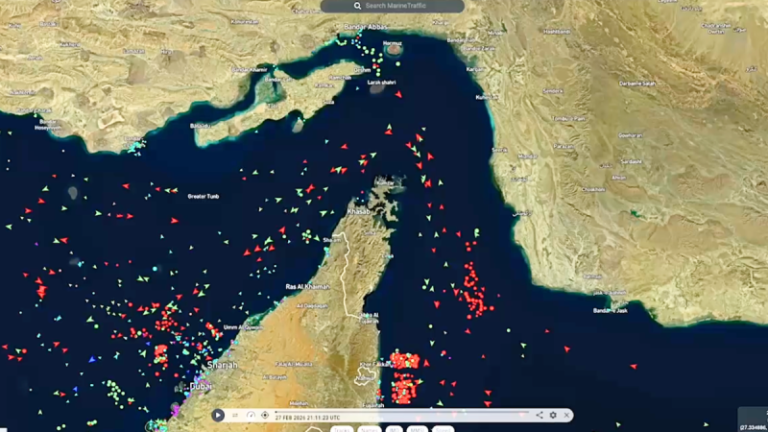
The strikes come as oil traffic through the strait remains at a near standstill, threatening a corridor that carries roughly 20 million barrels per day — about one-fifth of global consumption — and squeezing Gulf exporters like Iraq and Kuwait that rely on the narrow passage to ship their primary source of revenue.

Prior to taking out the mining vessels, Trump demanded Iran remove them ‘IMMEDIATELY!’ warning that if it doesn’t, ‘the Military consequences to Iran will be at a level never seen before.’

U.S. officials have long warned that Iran maintains a significant naval mine inventory and has rehearsed tactics designed to threaten commercial shipping in the Gulf. The destruction of the vessels appears aimed at stopping any potential deployment before mines could be laid in shipping lanes.

The Strait of Hormuz, bordered by Iran to the north and Oman and the United Arab Emirates to the south, is a critical artery for global energy markets. Even the threat of mining operations can further disrupt traffic and spike insurance and shipping costs.

It was not immediately clear whether any mines had already been placed in the water before the U.S. action. Citing intelligence sources, CNN reported Iran had laid a few dozen mines in the strait in recent days and had the capability to place hundreds more. 

Since Friday, seven vessels, including four tankers and three bulk carriers, have passed through the strait, according to data from trade intelligence platform Kpler.

The U.S. Navy has been weighing escorts for commercial ships through the strait. 

‘We’re looking at a range of options there and will figure out how to solve problems as they come to us,’ Joint Chiefs Chairman Gen. Dan Caine told Fox News Tuesday. 

The world is watching to see whether the Navy will step in to try to free up shipping. Immediately after an inaccurate and since-deleted post from Energy Secretary Chris Wright claiming the Navy had escorted a tanker, oil prices fell nearly 12%.

European allies are moving in as well: France sent two frigates to join a European Union-led escort mission for ships through the strait, though their arrival timeline is unclear.

While U.S. Secretary of War Pete Hegseth has claimed the U.S. and Israel have ‘total air dominance’ over Iran’s skies, that doesn’t mean the threat from missiles and drones is entirely eliminated yet. 

The Navy won’t escort tankers until Iran’s missile and drone threat is eliminated, retired Gen. Jack Keane told FOX Business. 

‘Makes no sense in terms of the risk when we’re going to finish them off entirely in a few weeks,’ he said.  

Recognizing the squeeze on prices around the globe, Trump announced Monday the U.S. would remove oil-related sanctions. 

‘We are also waiving certain oil-related sanctions to reduce prices,’ he said during a press conference. ‘So in some countries, we’re going to take those sanctions off until this straightens out. Then, who knows, maybe we won’t have to put them on.’

The United States currently maintains sanctions affecting oil Iran, Venezuela, Russia, Syria and North Korea. 

White House press secretary Karoline Leavitt declined to detail what that relief would look like. A 30-day waiver was already recently issued for Russian oil stranded at sea to reach India.

A naval mine costing only a few thousand dollars can cripple or even sink a $2 billion U.S. destroyer. 

The danger is not theoretical: In 1988, USS Samuel B. Roberts nearly sank after striking an Iranian mine in the Persian Gulf. 

Mine-laying operations are often conducted covertly at night using small vessels such as fishing dhows or fast-attack craft, allowing mines to be deployed with little warning and potentially devastating consequences.

This post appeared first on FOX NEWS

Dubbed a “central bottleneck of the electrified future,” copper demand is expected to far exceed supply. A recent outlook from S&P Global projects the market could face a shortfall of up to 10 million metric tons by 2040.

Against this backdrop, Domestic Metals (TSXV:DMCU) offers a timely opportunity for investors. Listed on TSX Venture Exchange, OTCQB and Frankfurt Stock Exchange, the company is advancing its flagship Smart Creek Project in Montana, targeting discovery of a porphyry system and a carbonate replacement deposit (CRD).

Smart Creek’s potential is further bolstered by its proximity to significant discoveries like Ivanhoe Electric’s (NYSEAmerican:IE,TSX:IE) Hog Heaven project, which announced the intersection of a porphyry copper-gold-molybdenum system within a large, deep anomaly.

Company Highlights

  • Exceptional Surface Grades: The 2025 field campaign returned high-grade samples, highlighted by 102 g/t gold, 23.1 percent copper, and 3,810 g/t silver.
  • World-Class Team: Dr. Peter Megaw, a globally recognized authority on Carbonate Replacement Deposits (CRDs) and discoverer of MAG Silver’s Juanicipio, has joined the team to guide exploration, together with President & CEO Gordon Neal who has had a successful track record building MAG Silver and New Pacific Metals
  • Mining-Friendly Jurisdiction: Operations are focused in Montana, USA, a mining-friendly state ranked 6th in 2024 by the Fraser Institute for investment attractiveness, with a legacy of massive production at the nearby Butte Mine.

This Domestic Metals profile is part of a paid investor education campaign.*

Click here to connect with Domestic Metals (TSXV:DMCU) to receive an Investor Presentation

This post appeared first on investingnews.com

Charlie Javice, the founder of a startup company that sought to dramatically improve how students apply for financial aid, was sentenced Monday to more than seven years in prison for cheating JPMorgan Chase out of $175 million by greatly exaggerating how many students it served.

Javice, 33, was sentenced in Manhattan federal court for her March conviction by Judge Alvin K. Hellerstein, who said she committed “a large fraud” by duping the bank giant in the summer of 2021. She made false records that made it seem the company, called Frank, had over 4 million customers when it had fewer than 300,000, Hellerstein found.

The judge said Javice had assembled a “very powerful list” of her charitable acts, which included organizing soup kitchens for the homeless when she was 7 years old and designing career programs for formerly incarcerated women.

In court papers, defense lawyers noted that Javice has faced extraordinary public scrutiny, reputational destruction and professional exile, “making her a household name” in the same way Elizabeth Holmes became synonymous with her blood-testing company, Theranos.

Defense attorney Ronald Sullivan told Hellerstein that his client was very different from Holmes because what she created actually worked, unlike Holmes, “who did not have a real company” and whose product “in fact endangered patients.”

In seeking a 12-year prison sentence for Javice, prosecutors cited a 2022 text Javice sent to a colleague in which she called it “ridiculous” that Holmes got over 11 years in prison.

Hellerstein largely dismissed arguments that he should be lenient because the acquisition pitted “a 28-year-old versus 300 investment bankers from the largest bank in the world,” as Sullivan put it.

Still, the judge criticized the bank, saying “they have a lot to blame themselves” after failing to do adequate due diligence. He quickly added, though, that he was “punishing her conduct and not JPMorgan’s stupidity.”

Sullivan said the bank rushed its negotiations because it feared another bank would acquire Frank first.

A prosecutor, Micah Fergenson, though, said JPMorgan “didn’t get a functioning business” in exchange for its investment. “They acquired a crime scene.”

Fergenson said Javice was driven by greed when she saw that she could pocket $29 million from the sale of her company.

“Ms. Javice had it dangling in front of her and she lied to get it,” he said.

Given a chance to speak, Javice said she was “haunted that my failure has transformed something meaningful into something infamous.” She said she “made a choice that I will spend my entire life regretting.”

Javice, sometimes speaking through tears, apologized and sought forgiveness from “all the people touched or tarnished by my actions,” including JPMorgan shareholders, Frank employees and investors, along with her family.

Javice, who lives in Florida, has been free on $2 million bail since her 2023 arrest.

At trial, Javice, a graduate of the University of Pennsylvania’s Wharton School of Business, was convicted of conspiracy, bank fraud and wire fraud charges. Her lawyers had argued that JPMorgan went after Javice because it had buyer’s remorse.

In her mid-20s, Javice founded Frank, a company with software that promised to simplify the arduous process of filling out the Free Application for Federal Student Aid, a complex government form used by students to apply for aid for college or graduate school.

Frank’s backers included venture capitalist Michael Eisenberg. The company said its offering, akin to online tax preparation software, could help students maximize financial aid while making the application process less painful.

The company promoted itself as a way for financially needy students to obtain more aid faster, in return for a few hundred dollars in fees. Javice appeared regularly on cable news programs to boost Frank’s profile, once appearing on Forbes’ “30 Under 30” list before JPMorgan bought the startup in 2021.

Javice was among a number of young tech executives who vaulted to fame with supposedly disruptive or transformative companies, only to see them collapse amid questions about whether they had engaged in puffery and fraud while dealing with investors.

In their pre-sentence submission, prosecutors wrote that they were requesting a lengthy prison sentence to send a message that fraud in the sale of startup companies is “no less blameworthy than other types of fraud and will be punished accordingly.”

Prosecutors added that the message was “desperately needed” because of “an alarming trend of founders and executives of small startup companies engaging in fraud, including making misrepresentations about their companies’ core products or services, in order to make their companies attractive targets for investors and/or buyers.”

This post appeared first on NBC NEWS

Investor Insight

Copper Quest Exploration controls more than 40,000 hectares of copper porphyry projects across tier one jurisdictions in Canada and the United States, offering investors diversified exposure to drill ready targets and multiple near term discovery catalysts.

Overview

Copper Quest Exploration (CSE:CQX,OTCQB:IMIMF,FRA:3MX) is a North American mineral exploration company focused on discovering and advancing copper porphyry systems in established mining jurisdictions. Its portfolio spans more than 40,000 hectares across projects in British Columbia and Idaho, including several district scale land packages within proven copper belts.

Copper Quest holds a diversified portfolio of exploration assets, including 100 percent interests in the Stars, Stellar, Thane, and Kitimat projects, and the option to earn up to 80 percent in the Rip project. The company has rapidly expanded its portfolio and identified multiple high-priority exploration targets through strategic acquisitions, targeted drilling, and geophysical surveys.

In late 2025 and early 2026, Copper Quest significantly extended its presence with the acquisition of two key gold assets: the past-producing Alpine Gold Property in British Columbia’s West Kootenay region—a 4,611-hectare project with historical high-grade gold resources and existing underground workings—and an option to acquire the drill-permitted Auxer Gold Property in Bonner County, Idaho, a road-accessible, high-grade orogenic gold asset.

Copper Quest is focused on advancing its assets through systematic exploration including induced polarization surveys, mapping, sampling and drilling. Its strategy is to build value through discovery while leveraging partnerships or joint ventures to accelerate development where appropriate.

Company Highlights

  • Large Tier One Land Position: More than 40,000 hectares across British Columbia and Idaho, coveringmultiple porphyry belts.
  • Flagship Discovery atStars: Drill interceptsincluding 0.466 percent copper over 195.07 m confirm a fertile coppermolybdenum system.
  • District Scale Portfolio: Core projects Stars, Stellar, Rip and Thanecollectively span 19,853 hectares within the Bulkley porphyry district alone.
  • US Expansion Strategy: Acquisition of the Nekash copper gold project inLemhi County adds exposure to the Idaho Montana porphyry belt.
  • Strategic Acquisitionsin British Columbia: Agreements to acquirethe Kitimat Copper Gold Project and the Alpine Gold Property expand regionalfootprint.
  • Multiple UntestedTargets: Large geophysicalanomalies and historic showings across several properties remain undrilled.
  • Strong Technical Bench: Leadership and advisors include former seniorexecutives from major mining companies with global discovery and developmenttrack records.
  • Clear ExplorationPipeline: Planned drilling,geophysics and target testing across multiple projects with multiple plannedexploration catalysts.

Key Projects

Stars Project — British Columbia

The Stars project is a 9,694 hectare road accessible copper molybdenum property in the Bulkley porphyry belt. The project hosts a 5 by 2.5-kilometre annular magnetic anomaly coincident with a mineralized monzonite intrusion. Historic and modern drilling has confirmed widespread mineralization, including 0.466 percent copper over 195.07 m from 23 m and 0.2 percent copper over 396.67 m from 28.37 m.

Drilling indicates a productive porphyry environment characterized by strong alteration, multi phase veining and elevated copper values ranging from 10 times to 400 times background levels. Only one location along the intrusion contact has been drill tested, suggesting significant discovery potential across more than 30 km of untested contacts. Planned work includes step out drilling at the Tana Zone, IP surveys and testing of additional targets such as the Big Dipper anomaly.

Rip Project — British Columbia

The Rip project covers 4,770 hectares located about 60 km south of Houston. A 2024 airborne magnetic survey and 3D DCIP program identified two concentric chargeability anomalies surrounding separate magnetic highs, classic signatures of porphyry systems.

Two diamond drill holes totaling 1,033 m completed in 2024 intersected multi phase porphyry intrusions with quartz, pyrite, chalcopyrite, molybdenite veining and long intervals of anomalous copper above 0.1 percent. The southern anomaly remains untested and represents the highest priority target. Copper Quest can earn up to 80 percent ownership by spending $1 million by the end of 2025.

Stellar Project — British Columbia

The 5,389-hectare Stellar property lies immediately north of Stars and consolidates multiple historic showings into a single geological framework. The project hosts several priority targets including the Cassiopeia anomaly, a 2.5-kilometre-diameter magnetic bullseye with an 800 m magnetic low core consistent with porphyry models.

The Jewelry Box area hosts eight documented showings across a 15 sq km zone with historical samples returning grades up to 36.7 percent copper, 31.2 percent copper, 22.6 percent copper with 4,860 g/t silver and gold values up to 42 g/t. Additional targets include the Galena Zone and Northwest showings. Planned work includes IP surveys, mapping, sampling and drill targeting across the property.

Thane Project — British Columbia

The 20,658 hectare Thane project is located in the Toodoggone District within the Quesnel Terrane. The property contains a 14 by 6 kilometre alteration footprint hosting at least ten mineralized centres including Cirque, Fairway, Bananas, Gail and Aten.

Historic exploration totaling more than $5 million identified strong copper and gold mineralization, with rock samples returning copper values exceeding 9,000 ppm and gold values up to 12.8 g/t. Only 12 short drill holes have been completed, all in one area, leaving much of the system untested. New high resolution geophysics is expected to help vector future drilling. Copper Quest is evaluating potential joint venture opportunities to advance the project.

Nekash Project — Idaho

The Nekash project consists of 70 unpatented federal lode claims covering about 585 hectares in Lemhi County along the Idaho Montana porphyry belt. Historic sampling confirmed high grade surface mineralization including up to 3.8 percent copper, 0.9 g/t gold and 25 g/t silver over 6.4 m, as well as porphyry style veins grading up to 6.6 percent copper.

The property is fully road accessible and was acquired for 4.25 million shares with no cash payment or royalties. The project adds US exposure and early stage discovery potential supported by geophysical, geochemical and drilling programs.

Kitimat Copper-Gold Project — British Columbia

Copper Quest has acquired a 100 percent interest in the Kitimat copper-gold project, located approximately 10 km northwest of the deep-water port of Kitimat. Covering nearly 2,954 hectares, the project offers year-round road access, proximity to rail, hydroelectric infrastructure, and is situated within a prolific copper-gold belt, strengthening the company’s strategic presence in western Canada.

Alpine Gold Property — British Columbia

The Alpine Gold Property is a road-accessible, 4,611.49-hectare project featuring a 2018 historical inferred resource of 142,000 ounces of gold (Au) from 268,000 tonnes at an average grade of 16.52 g/t Au, estimated using a 5.0 g/t gold cut-off grade. The current resource is based on only about 300 meters of the roughly two-kilometer-long vein system, indicating substantial potential to expand the resource along strike and to depth.

The property includes 1,650 meters of clean underground workings and a mineralized stockpile estimated at 24,000 tonnes on the surface, which could offer near-term cash flow. Additionally, the property hosts at least four other relatively unexplored vein systems—Black Prince, Cold Blow, Gold Crown, and past-producing King Solomon—all with historic high-grade gold values, suggesting multiple avenues for future exploration and resource growth.

Auxer Gold Project — Idaho

The Auxer Gold Property is a road-accessible, high-grade orogenic gold opportunity located in Bonner County, Idaho. Under an option agreement signed in 2026, Copper Quest has the right to earn up to 75 percent interest in the project by funding exploration, advancing a drill-ready gold target within a favorable mining jurisdiction. The property is strategically situated near existing infrastructure and historic gold workings, enhancing access and permitting potential.

Gold mineralization at Auxer has been identified through surface sampling and historic data, with notable results including significant gold in soils and rock samples, supporting multiple structural targets. The addition of Auxer diversifies Copper Quest’s portfolio beyond copper porphyries into a precious metals domain, providing near term exploration catalysts that complement its existing projects. Planned work includes systematic mapping, sampling and drill permitting to define high-priority targets for follow up drilling.

Management Team

Brian Thurston — President, CEO and Director

Brian Thurston is a professional geologist with over 32 years of experience specializing in porphyry deposits in British Columbia, the Yukon and Peru. Thurston has more than 20 years of corporate leadership experience and has founded several public companies, serving as director, officer and committee member across multiple resource ventures.

Dong Shim — Chief Financial Officer

Dong Shim is a chartered professional accountant with extensive experience in public company auditing and financial reporting in both the United States and Canada. Shim has helped numerous startups achieve listings on the TSX Venture Exchange, CSE and OTC Markets and is a CPA registered in Illinois and a member of the Chartered Professional Accountants of British Columbia.

Dr. Mark Cruise — Director

Dr. Mark Cruise has more than 25 years of experience in mine discovery, development and operations across Europe, South America, Canada and Africa. Cruise is the founder of Trevali Mining, which he built into a top ten global zinc producer, and previously worked as a senior geologist at Anglo American.

Jason Nickel — Director

Jason Nickel is a mining engineer with over 25 years of experience in operations, feasibility and development projects. Nickel has served as mine manager for major copper and gold producers and has led underground and open pit operations across British Columbia, Alaska and the Arctic.

Cameron MacDonald — Director

Cameron MacDonald has more than 18 years of capital markets experience as founder and CEO of the Macam Group of Companies. MacDonald has helped raise over $300 million in equity and more than $650 million in debt financings and has invested in startup companies since 2002.

Joshua White – Technical Advisor

Joshua White is an exploration geologist with more than 13 years of experience and is principal of Aqua Terra Geoscientists LLC. White previously worked for Kinross Gold as a project generation geologist supporting exploration programs across four continents.

This post appeared first on investingnews.com

A top Senate Republican wants answers on why the Biden administration drained the nation’s oil stockpile but did little to replenish it.

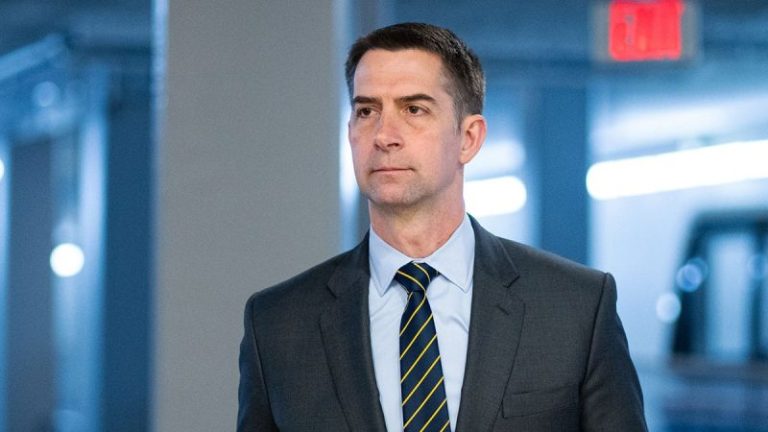
Sen. Tom Cotton, R-Ark., charged that decisions under President Joe Biden to tap the Strategic Petroleum Reserve (SPR) could have a ripple effect as the U.S. continues its war with Iran and as the Iranian government continues its chokehold on the Strait of Hormuz.

Cotton, in a letter first obtained by Fox News Digital to Department of Energy Secretary Chris Wright, charged that the Biden administration released 180 million barrels from the nation’s reserves in 2022 ‘to suppress gas prices ahead of the midterm elections.’

‘That decision drained the reserve to a 40-year low,’ Cotton wrote. ‘The decision to drain the SPR was not a response to a supply emergency; it was a deliberate political act designed to protect Democrats from the consequences of their own failed energy policies.’

Biden tapped the reserve twice — once in 2021 to relieve soaring fuel prices as the nation still grappled with the economic fallout from the COVID-19 pandemic and again the following year to combat increased energy costs at the onset of the war between Russia and Ukraine.

The SPR has capacity for over 700 million barrels of crude oil, but currently, the reserve has far less following the drawdown under the previous administration.

At the end of Biden’s term, the reserve had about 415 million barrels of crude on hand, according to data from the Department of Energy.

Cotton said that it wasn’t ‘the first time Democrats undermined the reserve’ and noted that Senate Minority Leader Chuck Schumer, D-N.Y., and congressional Democrats blocked President Donald Trump’s bid to refill the SPR in 2020, when barrels were cheap, with $3 billion from a colossal COVID-19 stimulus package moving through Congress.

He also said that in 2021, Biden signed an executive order that halted new oil and gas leases on federal lands and offshore, which Cotton charged ‘constrained domestic production while the administration was draining the reserve.’

Cotton demanded that Wright answer how blocking the $3 billion oil purchase and halting oil and gas leases impacted the nation’s overall domestic supplies that could have been used to replenish the SPR.

Meanwhile, congressional Democrats are demanding that Trump tap into the SPR after oil prices spiked to four-year highs over the weekend as the war in Iran intensifies.

Schumer said that the reserve ‘exists for moments exactly like this.’

‘The Strait of Hormuz is the world’s most important oil transit choke point, with roughly 20% of global petroleum liquids consumption moving through it in recent years,’ Cotton said. ‘That is precisely why the SPR must be treated as a strategic national security asset, not a political tool.’

This post appeared first on FOX NEWS

YouTube said Monday it would settle a lawsuit brought by President Donald Trump for more than $24 million, adding to a growing list of settlements with tech and media companies that have amassed millions of dollars for Trump’s projects.

Trump sued after his YouTube account was banned in 2021. After the Jan. 6 riot, YouTube said content posted to Trump’s channel raised “concerns about the ongoing potential for violence.” His account was reinstated in 2023.

Monday’s settlement makes YouTube the last major tech platform to settle a lawsuit with Trump, who similarly sued Meta and Twitter for banning his accounts in the aftermath of Jan. 6. Meta, the owner of Facebook and Instagram, settled for $25 million, while Twitter, since renamed X, settled for about $10 million.

A notice of settlement for Trump’s lawsuit against YouTube details that $22 million of it will go toward building a new White House ballroom. Trump has touted that the addition will have room for 900 people, and the White House has said it could cost $200 million to build.

Other plaintiffs that joined Trump’s suit, such as the American Conservative Union and a number of other people, will get $2.5 million of the settlement.

In addition to tech companies, many major media outlets have settled lawsuits with Trump over the past year.

In July, Paramount Global settled with him for $16 million after he took issue with a “60 Minutes” interview with Kamala Harris that aired on CBS.

In December, Disney settled with Trump over a lawsuit in which he accused ABC and anchor George Stephanopoulos of defamation in an interview with Rep. Nancy Mace, R-S.C. Disney paid Trump’s future presidential library $15 million as part of the settlement.

Disney came under pressure from the administration again when it recently suspended “Jimmy Kimmel Live!” for nearly a week after two major station owners threatened to stop airing the show. One of the station owners, Nexstar, is seeking clearance from Trump’s Federal Communications Commission chairman for a $6.2 billion merger.

The other station owner, Sinclair, is reportedly considering a merger, which the FCC would also need to approve.

Trump is also suing The Wall Street Journal over its reporting about his friendship with Jeffrey Epstein, and he recently sued The New York Times for $15 billion. A judge struck down that lawsuit, though Trump could refile it.

This post appeared first on NBC NEWS

Investor Insights

Blackstone Minerals, through its subsidiary Crescent Mining and Development Corporation (CMDC) is focused on the Mankayan copper-gold project, an advanced exploration project in the Philippines. Mankayan is one of Southeast Asia’s largest undeveloped copper-gold porphyry, offering leveraged exposure to tightening global copper supply and increased copper demand.

Overview

Global decarbonization and electrification are driving sustained growth in copper demand, while new, large-scale copper discoveries remain scarce and development timelines lengthen. Long-life, high-quality copper projects with scale, grade, and infrastructure access are increasingly strategic and required to meet this future demand.

Historical Drilling Results at Mankayan

Blackstone Minerals (ASX:BSX), through CMDC, is advancing the Mankayan Copper-Gold Project in the Philippines following its merger with IDM International.

Mankayan stands out for its size, grade, and geological continuity, supported by extensive historical drilling and proximity to existing infrastructure. These attributes underpin a flexible development pathway and potential for long-life production.

As part of a strategic move, Blackstone has streamlined its asset base to prioritize Mankayan. A previously advanced nickel project in Vietnam is now subject to a binding strategic agreement with a local partner, materially reducing holding costs while allowing management and capital to be focused on the Company’s copper-gold strategy.

Company Highlights

  • Flagship Copper-Gold Asset: Mankayan is a globally significant copper-gold porphyry system with a large 793 million tonne JORC-compliant resource.
  • Indigenous Approval – The Mankayan Project holds a 25-year Mineral Production Sharing Agreement and has completed the social license with an FPIC finalized and a MoA in place.
  • Scale and Development Optionality: A large, continuous mineral system supporting both staged, higher-grade development and long-life bulk mining scenarios.
  • Established Mining District: Located in Northern Luzon, Philippines, near existing mining operations and infrastructure.
  • 2026 Clear and focused roadmap: to derisk the Mankayan Project by advancing its Pre-Feasibility Study.
  • Strengthened Leadership: Strong in-country team along with recent Board and management appointments enhance technical, operational, and regional capability.
  • Strong Copper Leverage: Copper is a critical metal for electrification, renewable energy, and grid infrastructure, with long-term supply constraints supporting project optionality.

Key Project

Mankayan Copper-Gold Project – Philippines

The project is located in the prolific mineral belt of Northern Luzon, approximately 340 km north of Manila by road and around 2.5 km from the operating Lepanto gold mine and the Far Southeast project area.

Mankayan is one of the largest undeveloped copper-gold porphyry systems in Asia, extending over approximately 1,100 metres of strike and 600 metres of width, with mineralisation open along strike and at depth.

More than 56,000 metres of historical diamond drilling support a JORC compliant (2012) mineral resource estimate of 793 million tonnes at 0.35 percent copper and 0.38 grams per ton (g/t) gold, equivalent to 0.65 percent copper equivalent (CuEq*) at a 0.25% CuEq cut-off. Within this, a high-grade core of 170 million tonnes at 0.48 percent copper and 0.58 g/t gold, 0.93 percent (CuEq*) at a 0.8 percent cutoff provides potential for staged development scenarios.

Notable historical intercepts include:

  • 911 m at 1.00 percent CuEq, including 253 m at 1.43 percent CuEq
  • 543 m at 1.08 percent CuEq, including 277 m at 1.43 percent CuEq
  • 1,119 m at 0.86 percent CuEq, including 352 m at 1.15 percent CuEq
  • 754 m at 1.03 percent CuEq, including 430 m at 1.21 percent CuEq

Recent field activities have identified additional surface copper-gold mineralisation proximal to the main deposit, with rock-chip samples returning up to 6 g/t gold and 1.9 percent copper, highlighting further exploration upside across the broader project area.

CMDC is in the process of commencing a pre-feasibility study encompassing various mining scenarios and environmental studies.

Management Team

Geoff Gilmour – Executive Chairman

Appointed following Blackstone’s merger with IDM, Geoff Gilmour brings more than 30 years of distinguished leadership in the junior resources sector, with a proven track record of value creation. His career includes senior executive roles as Managing Director of Amex Resources, Brightstar, and Rift Valley Resources, and is highlighted by the successful creation of Andean Resources.

Gilmour has also served as chairman of IDM, where he played a pivotal role in advancing the Mankayan Project and leading the company through its merger with Blackstone Minerals. He currently serves as a director of Blackstone Minerals Ltd, continuing to drive strategic growth and development.

Oliver Cairns –Non-executive Director

Oliver Cairns brings key, hands-on experience to the company’s flagship Mankayan project in the Philippines and was part of the IDM International team that was responsible for the acquisition and management of the Mankayan project before the merger with

Blackstone in June 2025. He has deep familiarity with the Mankayan asset, including four years of actively working with the in-country team. In addition, Cairns offers more than 25 years of strategic corporate, IR and commercial experience.

Greg Cunnold – Non-executive Director

Greg Cunnold is a geologist with over 30 years of experience in the evaluation, exploration, and development of mineral deposits. Cunnold has worked on base and precious metals deposits, bulk commodities, rare earth elements, industrial minerals, and critical mineral projects. His assignments have spanned the globe, including Africa, Asia, Australia, Europe, and South America.

Over the years, Cunnold has played a pivotal role in numerous projects, contributing to the discovery, delineation, and development of valuable mineral deposits. His expertise ranges from grassroots exploration through to definitive feasibility studies. Cunnold is a Competent Person as defined by the JORC and NI 43-101 codes and has served corporately as a board member of private, public unlisted, and listed companies.

Mark Williams – Non-executive Director

Mark Williams’ career in the mining industry spans more than three decades and includes operational experience across a diverse range of assets in both mature and emerging global markets, with extensive in-country experience in the Philippines.

Most recently, Williams led mid-tier Australian gold producer Red 5 Limited (ASX: RED) for 10 years, overseeing an operational turnaround of its foundational asset in the Philippines, the Siana Gold Project, before initiating a transformational pivot to the West Australian goldfields through the acquisition, financing, development, construction and operation of the King of the Hills Gold Mine growing Red 5 to a $1.5 billion company in 2024 prior to its merger with Silver Lake Resources.

James Bahen – Company Secretary

James Bahen is a director and equity partner of SmallCap Corporate. He commenced his career in audit and assurance with an international chartered accounting firm. He is currently a non-executive director and company secretary to a number of ASX-listed companies and has a broad range of corporate governance and capital markets experience. Bahen is a member of the Governance Institute of Australia and holds a Graduate Diploma of Applied Finance and a Bachelor of Commerce degree majoring in accounting and finance.

This post appeared first on investingnews.com

Three years ago, I came to the United States as a graduate student with the intention of studying public and international affairs at Columbia University, with a focus on public service. Like many who come here from across the world, I had a vision of the United States as the land of the free, a place where freedom of speech was cherished and where I could study freely. I thought it was a place where I could stand up for what I believed in without fear of retaliation from the government.

On March 8, 2025, that vision shattered. Multiple plainclothes ICE agents in unmarked cars grabbed me, without a warrant, from the lobby of my apartment building in New York and threw me on a plane to a federal detention center in Louisiana. As a green card holder with a U.S. citizen wife — who was 8 months pregnant at the time — I couldn’t believe what was happening. I had been targeted by the government because of my lawful speech in support of Palestinian rights, for protesting the use of my tax dollars and tuition fees to support the Israeli occupation.

Throughout my 104 days in federal detention, during which I missed the birth of my first child, I considered myself a political prisoner. The government had deprived me of my liberty, not because I had broken any laws, but because it didn’t like what I had to say.

Once I challenged my detention and Secretary Rubio’s determination that my political views posed a foreign policy threat, the government scrambled to add new accusations. They alleged, baselessly, that I had committed fraud on my green card application. Claims invented not out of evidence, but out of retaliation. Recent evidence in federal court revealed that DHS itself acknowledged, a day before my arrest, that there were no issues with the information I provided on my green card application because everything was complete, true, and correct. Yet I was arrested anyway.

I was not alone. Other students and scholars with valid immigration status were similarly targeted for detention and deportation despite having committed no crime. They were pulled off streets by masked agents, targeted outside of their homes, and tricked into arrests during citizenship appointments. What happened to us is exactly what the First Amendment is designed to prevent: the government deciding which speech is acceptable and which is not. Once that protection is weakened, everyone is at risk.

The Supreme Court recognized eighty years ago that the First Amendment protects all of us in the United States — citizens and noncitizens alike — from government persecution for our beliefs. If we allow that boundary to be violated for noncitizens, or when the government claims a foreign policy concern, a precedent is created that can be used against all of us. Even citizens. Even people who disagree with me vehemently about Palestine.

The government has argued that federal courts must let people sit in immigration detention for months or years before reviewing allegations of constitutional violations. They have argued that Pro-Palestine speech constitutes a foreign policy threat. They have argued that I deserve to be deported because they dislike my ideas. If they can do this to a lawful permanent resident with a U.S. citizen wife and newborn U.S. citizen child, there’s no telling who else they will come for.

The government isn’t allowed to control how we can speak and think. Attorneys representing me in my case, and others like me in similar cases, argued this point in court and secured our release from detention. But my case is still ongoing, and the executive branch’s immigration agency may soon order my deportation. So, I ask Americans directly: do you want to live in a country where you can be snatched off the street by plainclothes agents for your thoughts?

In Assad’s Syria, where I grew up in a Palestinian refugee camp, that was routine. Since the beginning of 2025, the United States, a country whose Constitution protects freedom of speech, has seen an increase in these actions that I once associated with Assad: abductions by plainclothes officers without warrants, forced detention of people who express views the government doesn’t like, and the targeted silencing of dissent.

I will continue to use my platform to advocate for human rights in Palestine. But I ask each and every person reading this to use their voice to defend our First Amendment rights. The right to speak our minds, no matter who holds power, is the foundation of our democracy, and it is in peril. Whatever you may think of me or my views, that foundation belongs to all of us.

This post appeared first on FOX NEWS

Red Mountain Mining Limited (ASX: RMX, US CODE: RMXFF, or “Company”), a Critical Minerals exploration and development company with an established portfolio in Tier-1 Mining Districts in the United States and Australia, is pleased to announce an update on the Company’s portfolio of high-quality Antimony projects in the United States.

Over the past six months, Red Mountain has moved decisively to acquire assets in Tier-1 regions in highly prospective antimony mineral districts in Montana, Utah and Idaho, USA, placing the Company in a strong strategic position as the US Government moves aggressively to secure domestic supply of Antimony which is classified as a Critical Metal by the United States and Australian Governments.

HIGHLIGHTS:

  • Red Mountain continues to deliver repeated successful project and development programs across its high-quality Critical Minerals portfolio, systematically advancing its United States and Australian projects toward development and directly supporting the US Government’s drive to secure domestic supply of critical metals

Thompson Falls Antimony Project, High-grade Antimony next to UAMY Antimony Smelter

  • Thompson Falls Antimony Project is 4.2km from the operations of United States Antimony Corporation (NYSE: UAMY; Market Cap $A1.5 billion), with the country’s only operating Antimony smelter
    • Initial sampling from Red Mountain’s Thompson Falls Project returned high-grade values of up 36.5% Sb and 0.65g/t Au
    • Additional assay results are now expected to be received by the end of February
  • Comprehensive surface mapping and sampling program to fast-track the definition of the Thompsons Falls Antimony Project resource potential, planned to launch next month
  • Red Mountain has recently strengthened its US technical team with dedicated drill-permitting expertise, driving the permitting process forward across all of the Company’s US Projects

Utah Antimony Project, Antimony Mining District

  • Utah Antimony Project adjoins American Tungsten and Antimony Ltd’s (ASX: AT4; Market cap A$200 million) Antimony Canyon Project (ACP), one of the largest and highest-grade Antimony projects in the USA, which has reported assays of up to 33% Sb and has a defined conceptual Exploration Target of 12.8 to 15.6 Mt @ 0.75% to 1.5% Sb, containing between 96,000 to 234,000 tons of Antimony metal
    • Recent visible stibnite mineralisation observed between AT4’s claims and RMX’s project provides evidence the ACP system may extend into the Utah Antimony Project*
    • Mapping analysis previously undertaken by RMX suggests that both the same type of host rocks and extensions of the large epithermal Antimony mineralising system targeted by AT4 at Antimony Canyon are present within the Utah Antimony Project**

Exceptionally Strong Antimony results from Thompson Falls and further assays pending

Red Mountain acquired the Thompson Falls Antimony Project on 5 February1, next to the only operating antimony smelter in the USA, US Antimony Corporation’s (NYSE: UAMY; Market Cap ~AU$1.5 billion) Thompson Falls Smelter and UAMY’s Stibnite Hill Mine in Montana (Figure 1).

First-pass exploration of Red Mountain’s Thompson Falls Antimony Project, by the Company’s US field team, successfully located three historical underground mines and pit within the project area. Initial sampling of material from Eastern Star returned multiple samples with high antimony and gold results, with peak results of 36.5% Sb and 0.65g/t Au1 (Figure 1; Figure 2).

Samples collected from Eastern Star closely resemble the quartz-stibnite veins mined at UAMY’s Stibnite Hill deposit, ~7km east of Red Mountain’s Thompson Falls Project area, although these veins are not recorded as producing gold. Red Mountain’s field team also collected additional rock samples from the project area, with assay results expected this month.

Click here for the full ASX Release

This post appeared first on investingnews.com