
Author

admin

Browsing

Most congressional precedents emanate from Capitol Hill.

Most presidential precedents emerge from 1600 Pennsylvania Ave.

But a precedent which may echo around the halls of Congress and the White House for years materialized in recent days in the snow-covered, wooded village of Chappaqua, New York.

That’s where former President Bill Clinton testified under subpoena to the House Oversight Committee as part of its investigation into Jeffrey Epstein. Lawmakers said the panel’s ability to compel testimony from a former president could establish a new precedent going forward — including in matters involving President Trump and the Epstein files.

According to congressional historians, never before has a congressional committee deposed a former president. It was rare enough to have former First Lady and former Secretary of State Hillary Clinton testify the day before. Republicans noted that former President Clinton had previously acknowledged knowing Epstein and traveling on trips that included him.

‘I do not recall ever encountering Mr. Epstein. I never flew on his plane or visited his island, homes or offices,’ said Hillary Clinton after nearly six hours of closed-door testimony before the panel.

House Oversight Committee Chairman James Comer, R-Ky., said Hillary Clinton declared ‘‘You’ll have to ask my husband,’’ more than ‘a dozen’ times during her deposition ahead of Bill Clinton’s the following day.

There are no accusations of wrongdoing against either of the Clintons in connection with Epstein. But the former president’s past ties to Jeffrey Epstein have spurred questions from lawmakers.

‘It’s very difficult to get people in for these depositions of great power and great wealth,’ said Comer. ‘It took seven months, seven months to get the Clintons in here. But we’ve got them in here.’

‘Here’ was Chappaqua, about an hour north of New York City. The Clintons have resided in Chappaqua since President Clinton left office in 2001 and when Hillary Clinton ran for Senate from New York in 2000. Hillary Clinton served as a senator from New York from 2001 until 2009, when she became President Obama’s first Secretary of State.

More specifically, the ‘here’ for the Clintons’ testimony was not a bland office in the Rayburn House Office Building. House members questioned the Clintons at the Chappaqua Performing Arts Center, known locally as ‘ChappPAC,’ a white structure with simple arcades and Greek columns atop a hillside above the Saw Mill River.

The Epstein inquiry is serious, and the unusual venue underscored the extraordinary nature of the proceeding.

Rep. Lauren Boebert, R-Colo., appeared to snap a photo of Hillary Clinton during the deposition, then shared it with conservative media outlets.

‘I admire (Hillary Clinton’s) blue suit. So I wanted to capture that for everyone,’ said Boebert outside the venue.

‘Why did you send the picture?’ asked a reporter.

‘Why not?’ retorted Boebert.

‘We are sitting through an incredibly unserious, clown show of a deposition, where Members of Congress and the Republican Party are more concerned about getting their photo op of Secretary Clinton than actually getting to the truth and actually holding anyone accountable,’ charged Rep. Yassamin Ansari, D-Ariz.

After concluding her testimony, Hillary Clinton told reporters she found the ‘end’ of the deposition to be ‘quite unusual because I started being asked about UFOs and a series of questions about Pizzagate, one of the most vile, bogus conspiracy theories that was propagated on the internet.’

That is a reference to a conspiracy theory that emerged during the 2016 presidential campaign between Hillary Clinton and President Trump. Proponents falsely claimed Democrats operated a child sex trafficking ring out of the Comet Ping Pong pizza shop in Washington. A North Carolina man later drove to Washington, D.C., and fired shots inside the restaurant, telling authorities he was there to rescue children.

Rep. Nancy Mace, R-N.C., asserted that Hillary Clinton was ‘screaming’ at lawmakers during the deposition.

‘She was unhinged,’ said Mace. ‘And I hope that President Clinton is less unhinged today than his wife was yesterday.’

Rep. Anna Paulina Luna, R-Fla., emerged from the Chappaqua Performing Arts Center about 90 minutes into former President Clinton’s deposition to speculate about what may have been behind Epstein and his sex trafficking operation. Luna noted she was speaking only for herself and not other members of the committee.

‘It has become very evident even in the last 24 hours in lines of questioning that Jeffrey Epstein was running an intelligence gathering operation,’ said Luna. ‘I do believe it was a honey pot operation.’

Luna added that it was possible a U.S. intelligence ally was involved, though she provided no evidence for the claim.

One of the five agreed-upon areas of questioning for the Clintons was how Epstein used his connections with powerful figures to hide his crimes. That is why individuals such as former President Clinton and President Trump have surfaced in previously released Epstein-related documents.

The presidency is a unique office, and even President Trump expressed some sympathy for Bill Clinton’s appearance before the Oversight Committee.

‘I don’t like seeing him deposed. But they certainly went after me a lot more than that,’ said the president.

When pressed on Friday, President Trump said he was unfamiliar with the Epstein files.

‘I don’t know anything about the Epstein files. I’ve been totally exonerated,’ said President Trump.

Oversight Committee Republicans were asked whether they agreed with that claim.

‘From all the evidence I’ve seen he’s been exonerated for a long time,’ replied Comer.

‘The Epstein victims have exonerated President Trump. This is a trope that you guys are — a rabbit hole you guys are going down. But he’s been exonerated over and over again by Epstein victims,’ said Mace.

But Democrats questioned why the committee sought testimony from former President Clinton and not President Trump.

‘There is a lot of email correspondence that included President Clinton,’ said Comer.

Rep. Robert Garcia, D-Calif., the top Democrat on the Oversight panel, argued the move set a broader standard.

‘There’s a precedent now,’ said Garcia. ‘We now want President Trump to come in and to testify under oath in front of the Oversight Committee. We want the First Lady, who we know had a relationship as well with Jeffrey Epstein, to come under oath and testify to the Oversight Committee. That is the new precedent that Republicans wanted to set here.’

Garcia added that President Trump ‘has not been exonerated, and we have serious questions for President Trump.’

Rep. Suhas Subramanyam, D-Va., argued that the committee spoke ‘to the wrong president.’

It is unclear whether the panel will seek testimony from President Trump. Democrats have indicated they would consider doing so if they gain control of the House in the fall midterm elections.

Separation of powers is a key component of America’s constitutional system. Only a handful of presidents have ever testified before Congress — and none had previously been deposed as a former president.

The nation’s history includes small communities that have taken on outsized political significance. Lawmakers and legal observers say Chappaqua could now join that list if presidential testimony before Congress becomes more common.

Related Article

Why keeping lawmakers in DC during shutdown may have caused more harm than good
This post appeared first on FOX NEWS

SEATTLE — Amazon has reached a historic $2.5 billion settlement with the Federal Trade Commission, which said the online retail giant tricked customers into signing up for its Prime memberships and made it difficult for them to cancel after doing so.

The Seattle company will pay $1 billion in civil penalties — the largest fine in FTC history, and $1.5 billion will be paid to consumers who were unintentionally enrolled in Prime, or were deterred from canceling their subscriptions, the agency said Thursday. Eligible Prime customers include those who may have signed up for a membership via the company’s “Single Page Checkout” between June 23, 2019 to June 23, 2025.

The Federal Trade Commission sued Amazon in U.S. District Court in Seattle two years ago alleging more than a decade of legal violations. That included a violation of the Restore Online Shoppers’ Confidence Act, a 2010 law designed to ensure that people know what they’re being charged for online.

Amazon admitted no wrong-doing in the settlement. It did not immediately respond to requests by The Associated Press for comment Thursday.

Amazon Prime provides subscribers with perks that include faster shipping, video streaming and discounts at Whole Foods for a fee of $139 annually, or $14.99 a month.

It’s a key and growing part of Amazon’s business, with more than 200 million members. In its latest financial report, the company reported in July that it booked more than $12 billion in net revenue for subscription services, a 12% increase from the same period last year. That figure includes annual and monthly fees associated with Prime memberships, as well as other subscription services such as its music and e-books platforms.

The company has said that it clearly explains Prime’s terms before charging customers, and that it offers simple ways to cancel membership, including by phone, online and by online chat.

“Occasional customer frustrations and mistakes are inevitable — especially for a program as popular as Amazon Prime,” Amazon said in a trial brief filed last month.

But the FTC said Amazon deliberately made it difficult for customers to purchase an item without also subscribing to Prime. In some cases, consumers were presented with a button to complete their transactions — which did not clearly state it would also enroll them in Prime, the agency said.

Getting out of a subscription was often too complicated, and Amazon leadership slowed or rejected changes that would have made canceling easier, according to an FTC complaint.

Internally, Amazon called the process “Iliad,” a reference to the ancient Greek poem about the lengthy siege of Troy during the Trojan war. The process requires the customer to affirm on three pages their desire to cancel membership.

The FTC began looking into Amazon’s Prime subscription practices in 2021 during the first Trump administration, but the lawsuit was filed in 2023 under former FTC Chair Lina Khan, an antitrust expert who had been appointed by Biden.

The agency filed the case months before it submitted an antitrust lawsuit against the retail and technology company, accusing it of having monopolistic control over online markets.

This post appeared first on NBC NEWS

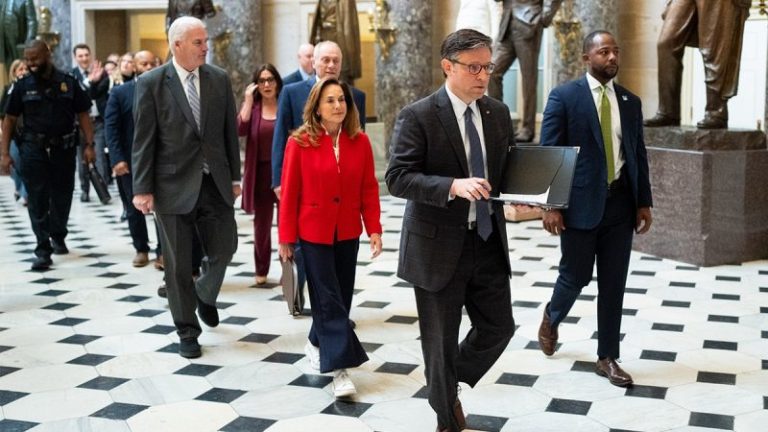
Some House Republicans are getting worried over the prospect of colleagues quiet-quitting after losing their primary races as election season heats up, threatening to whittle down the GOP’s already perilously slim majority.

House Republicans will likely only be able to lose two votes on any party-line measure after a special election in a deep-red Georgia district this week. 

Some told Fox News Digital they’re worried, however, that their colleagues could begin missing key votes before the end of their terms if their ambitions for higher office do not go as planned.

‘It’s a real problem,’ one House Republican who was granted anonymity to speak candidly told Fox News Digital. ‘Is one of them going to be gone for his runoff? Will another not come back at all because he’s mad? Is another one not going to come back because he lost?’

Asked if such absences could translate to Republicans losing a functional majority in the House, that GOP lawmaker said, ‘We could, that’s why everybody’s nervous about it.’

In the Lone Star State alone, two House Republicans are guaranteed not to be returning next year after last week’s primaries. Rep. Wesley Hunt, R-Texas, lost his bid to unseat Sen. John Cornyn, R-Texas, who is headed for a runoff with state Attorney General Ken Paxton. And Rep. Dan Crenshaw, R-Texas, faced an upset against a primary challenger running to his right, conservative state lawmaker Steve Toth.

Neither has indicated they will be skipping House votes for the remainder of the term due to those losses, but Hunt’s attendance record has already generated frustration among his colleagues.

Aside from them, there are 18 other House Republicans currently vying for different positions in upcoming primaries and general elections.

Rep. Mario Diaz-Balart, R-Fla., a high-ranking member of the House Appropriations Committee, told Fox News Digital that he too was worried about GOP attendance as election season heats up.

‘Our margins are as razor-thin as they can possibly be, so we need everybody to show up,’ he said. ‘So yeah, that could potentially be an issue. I hope it isn’t.’

Rep. Russell Fry, R-S.C., told Fox News Digital, ‘I think it’s a concern.’

‘I hope that they recognize the moment. There’s still a lot of lane left in this Congress, and people have put their faith in their elected representatives to get the job done. So they need to be here,’ Fry said.

But the election season starting up is not the first time this Congress — or even this year — that worries about the GOP’s margins have flared up.

For example, a small group of Republicans was able to join with Democrats to successfully force a vote on extending expired Obamacare subsidies that the GOP largely opposed. And just last month, President Donald Trump’s tariff strategy faced a public setback when a similarly small number of GOP lawmakers voted with Democrats to rebuke it.

Neither of those measures will likely be taken up in the Republican-held Senate, but it’s a testament to the slim margins Speaker Mike Johnson, R-La., is presiding over.

And aside from the legislative setbacks seen earlier this year, the sudden, tragic death of one House Republican and abrupt resignation of another have served to further whittle down the conference’s numbers.

Car accidents and other health problems have also at times forced the House to amend its schedule. It’s prompted House GOP leaders to warn their lawmakers to be as cautious as possible when outside of Washington.

‘The margins are really, really close. A few of us were in a car the other day, driving … if that became an accident, that would have tipped the scale,’ Rep. Ryan Zinke, R-Mont., told Fox News Digital back in January. ‘It’s a big deal to change power outside of a normal election cycle.’

House Majority Leader Steve Scalise, R-La., told reporters last week that attendance is ‘always a concern’ but was optimistic about navigating through it.

‘We’ve had elections along the way, and yet we’re still able to move our agenda,’ Scalise said. ‘We track people that have surgeries, tell us in advance, and we work around that. But at the end of the day, we’ve been able to move President Trump’s agenda and our agenda, and get the things done for the American people that we ran on.’

This post appeared first on FOX NEWS

Jerry Greenfield, co-founder of the Ben & Jerry’s ice cream brand, has stepped down from the company he started 47 years ago citing a retreat from its campaigning spirit under parent company Unilever.

Greenfield wrote in an open letter late Tuesday night — shared on X by his co-founder Ben Cohen — that he could no longer ‘in good conscience’ remain an employee of the company and said the company had been ‘silenced.’

He said the company’s values and campaigning work on ‘peace, justice, and human rights’ allowed it to be ‘more than just an ice cream company’ and said the independence to pursue this was guaranteed when Anglo-Dutch packaged food giant Unilever bought the brand in 2000 for $326 million.

Cohen’s statement didn’t mention Israel’s ongoing military operation in Gaza, but Ben & Jerry’s has been outspoken on the treatment of Palestinians for years and in 2021 withdrew sales from Israeli settlements in what it called ‘Occupied Palestinian Territory.’

Greenfield’s resignation comes five months after Ben & Jerry’s filed a lawsuit accusing Unilever of firing its chief executive, David Stever, over his support for the brand’s political activism. In November last year Ben & Jerry’s filed another lawsuit accusing Unilever of silencing its public statements in support of Palestinian refugees.

‘It’s profoundly disappointing to come to the conclusion that that independence, the very basis of our sale to Unilever, is gone,’ Greenfield said.

‘And it’s happening at a time when our country’s current administration is attacking civil rights, voting rights, the rights of immigrants, women, and the LGBTQ community,’ he added.

Jerry Greenfield, left, and Bennett Cohen, the founders of Ben and Jerry’s founders, in Burlington, Vt., in 1987.Toby Talbot / AP file

Richard Goldstein, the then president of Unilever Foods North America, said in a statement after the sale in 2000 that Unilever was ‘in an ideal position to bring the Ben & Jerry’s brand, values and socially responsible message to consumers worldwide.’

But now Greenfield claims Ben & Jerry’s ‘has been silenced, sidelined for fear of upsetting those in power.’ He said he would carry on campaigning on social justice issues outside the company.

The financial performance of the Ben & Jerry’s brand isn’t made public but Unilever’s ice cream division made 8.3 billion Euros ($9.8 billion) in revenue in 2024. Unilever is in the process of spinning off its ice cream division, however, into a separate entity which involves cutting some 7,500 jobs across its brands globally.

Cohen and Greenfield founded the business in 1978 in Burlington, Vermont, where it is still based.

NBC News has contacted Unilever for comment overnight but had not received any at the time of publication.

This post appeared first on NBC NEWS

Vietnam’s trade ministry is urging businesses to encourage employees to work from home to curb fuel consumption as the country grapples with supply disruptions and sharp price increases triggered by the U.S.-Israeli war involving Iran.

In a statement on Tuesday, the government said Vietnam has been among the nations hardest hit by the turmoil due to its heavy reliance on energy imports from the Middle East. Citing a report from the Ministry of Industry and Trade, it called on companies to ‘encourage work-from-home when possible to reduce the need for travel and transportation.’

Fuel prices have surged since the end of last month, with gasoline up 32%, diesel rising 56% and kerosene climbing 80%, according to data from Petrolimex, the country’s top fuel trader. Long lines of cars and motorbikes were seen at petrol stations in Hanoi on Tuesday.

The ministry also urged businesses and individuals not to hoard or speculate on fuel.

Prime Minister Pham Minh Minh on Monday held calls with leaders of Kuwait, Qatar and the United Arab Emirates to secure additional fuel and crude oil supplies. The government has also removed import tariffs on fuels through the end of April in a bid to ease pressure on the market.

President Donald Trump’s strikes on Iran have made for volatile crude markets, with prices surging to $120 a barrel in the U.S. over the weekend before dipping back to just over $80 on Monday night as Trump spoke to a Republican retreat in Florida.

Prices have stabilized after Trump assured investors the Strait of Hormuz will be safe for oil tankers in the Middle East, a notorious chokepoint for the largely dismantled Iranian regime.

The situation in the region remains tenuous as Iran has announced Mojtaba Khamenei as the next supreme leader, a decision that Trump told Fox News that he ‘was not happy’ about.

‘I don’t believe he can live in peace,’ Trump said from Air Force One.

Iran’s Revolutionary Guard said Tuesday they would not let any oil out of the Middle East until U.S. and Israeli attacks cease, a threat that had prompted Trump to threaten to hit Iran ’20 times harder’ if it blocked exports.

Despite the defiant rhetoric from both sides, investors placed strong bets Tuesday that Trump would call off his war soon, before the unprecedented disruption it has caused to energy supplies causes a global economic meltdown.

‘I’m hearing they want to talk badly,’ Trump said, as the Department of War has claimed 50 Iranian naval vessels have been sunk and Trump is suggesting the war objections are weeks ahead of schedule, if not nearly ‘complete.’

‘It’s possible,’ Trump added of engaging the new Iranian leadership, descendants of the deceased leaders, but said it ‘depends on what terms, possible, only possible.’

‘You know, we sort of don’t have to speak anymore, you know, if you really think about it, but it’s possible,’ he said.

Fox News’ Trey Yingst and Reuters contributed to this report.

This post appeared first on FOX NEWS

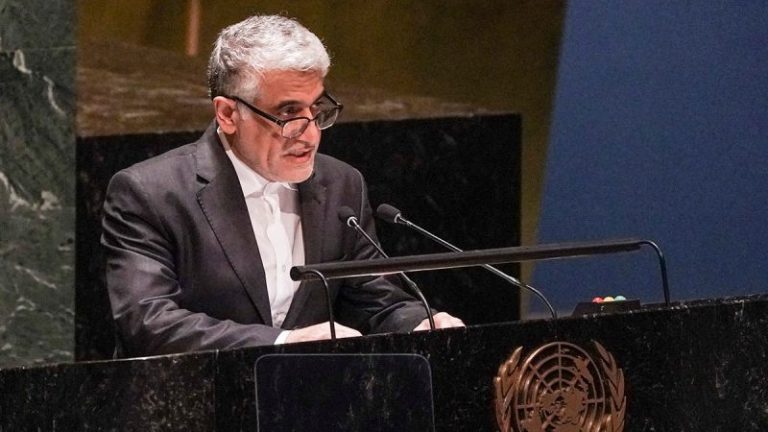
Iranian Ambassador to the United Nations Amir-Saeid Iravani condemned U.S. strikes against Iran that targeted the country’s military leadership and killed Supreme Leader Ali Khamenei, calling the attack a double standard and promising the country would defend itself at a U.N. Security Council meeting Saturday.

Iravani accused the U.S. of undermining its claims of pursuing international stability while attacking a sovereign country for its ‘domestic’ activities.

‘Neither the charter nor international law recognize internal matters of a state as justification for the use of force by other states. The rule of law would be replaced by the rule of force,’ Iravani said.

‘Iran will continue to exercise its right of self-defense decisively and without hesitation until the aggression ceases in full and unequivocal terms.’

On Saturday morning, President Donald Trump ordered the execution of Operation Epic Fury, citing Tehran’s continued efforts to develop a nuclear weapon.

‘It has always been the policy of the United States, in particular my administration, that this terrorist regime can never have a nuclear weapon. I’ll say it again. They can never have a nuclear weapon,’ Trump said in remarks about the attack Saturday.

Trump said the strikes were meant to ‘defend the American people by eliminating imminent threats from the Iranian regime’ and that they had come after Iran had refused to abandon plans to develop nuclear capabilities.

Iravani called the attack a continuation of longstanding U.S. aggression against Iran.

‘Mr. president, this morning the United States regime, jointly and in coordination with the Israeli regime, initiated an unprovoked and premeditated aggression against the Islamic Republic of Iran for the second time in recent months,’ Irvani said, referring to strikes the U.S. carried out against its nuclear enrichment sites last year.

‘The president of the United States and the prime minister of the Israeli regime have openly claimed responsibility for this act of aggression and have explicitly articulated regime change as their objective, an unmistakable admission of their intent to violate Iran’s sovereignty and territorial integrity.’

U.N. Ambassador Mike Waltz pushed back on Iravani’s characterizations.

‘For 47 years, the Iranian regime has chanted, quote, ‘Death to America’ at every turn. At every opening, it has sought to eradicate the state of Israel. It has waged an unending campaign of bloodshed and mass murder,’ Waltz said.

Iravani did not address the negotiations between the U.S. and Iran on its nuclear development plans.

Related Article

Bipartisan revolt targets Trump’s war powers after massive Iran strikes
This post appeared first on FOX NEWS

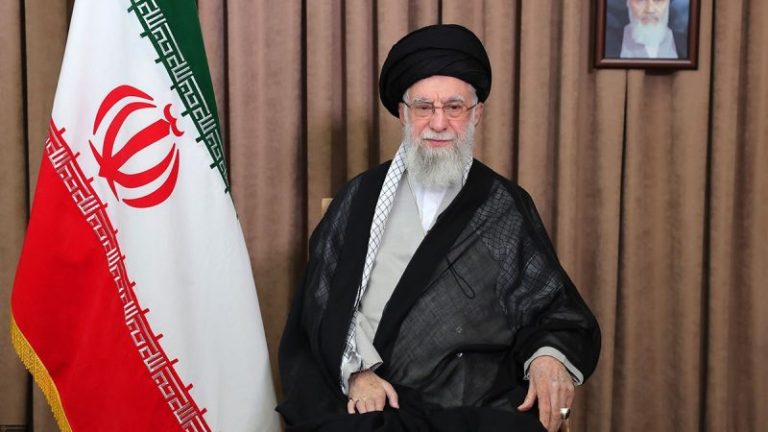
Iran entered a new chapter Saturday after Supreme Leader Ayatollah Ali Khamenei was killed, abruptly ending more than three decades of authoritarian rule and setting in motion a leadership transition the regime has long prepared.

A senior Arab diplomat told The Times of Israel that while Khamenei’s demise is a ‘massive blow’ to the Islamic Republic, Tehran anticipated the possibility and took steps to withstand such a scenario.

‘Mere survival, at this point, would be considered a victory,’ the diplomat said of the regime, according to the outlet, following U.S. and Israeli strikes across the country.

A recent report from the Council on Foreign Relations (CFR) outlined three broad trajectories for a post-Khamenei Iran: managed regime continuity, an overt or creeping military takeover, or systemic collapse.

CFR cautioned that even a leadership change at the top would not necessarily translate into meaningful political reform in the near term, given the regime’s deeply institutionalized power structure and its record of using force to maintain control.

The report notes that the real balance of power rests within a tight circle of clerical elites and the Islamic Revolutionary Guard Corps (IRGC).

It describes a likely ‘continuity’ scenario as producing ‘Khamenei-ism without Khamenei,’ in which a successor from within the regime preserves the ideological framework of the Islamic Republic while relying on established security institutions to preserve stability.

‘The Islamic Republic’s constitution includes a succession process. The Assembly of Experts, a clerical body, is constitutionally charged with selecting the next supreme leader,’ Jason Brodsky, policy director of United Against Nuclear Iran (UANI), told Fox News Digital. 

‘In the interim, should there be a leadership vacancy, an interim leadership council is formed comprised of the president, chief justice, and a member of the Guardian Council selected by the Expediency Council,’ he added. ‘The IRGC is a key stakeholder in this process, and will heavily influence its outcome.’

Over the past three decades, the Bayt-e Rahbari, or the Office of the Supreme Leader, expanded into what a February report by UANI described as a ‘sprawling parallel state’ operating alongside Iran’s formal institutions.

The analysis characterizes the Office as the regime’s ‘hidden nerve center,’ extending control across the military, security establishment and major economic foundations in ways that make the system’s authority institutional rather than dependent on Khamenei’s physical presence.

‘The supreme leader today is no longer just one man; he is represented through an all-encompassing institution that consolidates power, manages succession, and guarantees continuity,’ the non-partisan policy organization said. ‘The Islamic Republic’s most enduring strength lies in this hidden architecture of control, which will continue to shape the country’s future long after Khamenei himself departs from the scene.’

Related Article

World leaders split over military action as US-Israel strike Iran in coordinated operation
This post appeared first on FOX NEWS

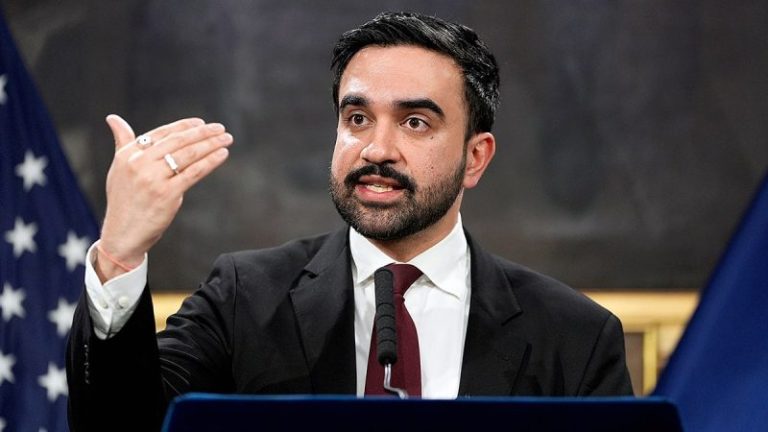
New York City’s socialist Mayor Zohran Mamdani is facing blowback from conservatives on social media over his post condemning the U.S. attack on Iran that led to the killing of Iran’s supreme leader, Ayatollah Ali Khamenei.

On Saturday, as a joint strike on Iran by the United States and Israel was developing, Mamdani blasted the Trump administration’s decision in a post on X that has been viewed roughly 20 million times. 

‘Today’s military strikes on Iran — carried out by the United States and Israel — mark a catastrophic escalation in an illegal war of aggression,’ Mamdani wrote.

‘Bombing cities. Killing civilians. Opening a new theater of war. Americans do not want this. They do not want another war in pursuit of regime change.’

Mamdani said Americans prefer ‘relief from the affordability crisis’ before speaking directly to Iranians in New York City.

‘You are part of the fabric of this city — you are our neighbors, small business owners, students, artists, workers, and community leaders,’ Mamdani said. ‘You will be safe here.’

The post was quickly slammed by conservatives on social media making the case that Mamdani’s response appeared sympathetic to Iran’s brutal regime and pointing to his lack of public reaction to the Iranian protesters killed in recent years.

‘Comrade Mayor is rooting for the Ayatollah,’ GOP Sen. Ted Cruz posted on X. ‘They can chant together.’

‘Do u say anything pro American ?’ Fox News host Brian Kilmeade posted on X. ‘do u know any Iranians – ? they hate @fr_Khamenei they celebrate his death, you should be celebrating his death ! hes killed thousands of American’s and just killed 30k Iranians, did u even say a word about that? You are an embarrassment !! Please quit.’

‘I don’t feel safe in New York listening to someone like you, Mamdani, who sympathizes with the regime that killed more than 30,000 unarmed Iranians in less than 24 hours,’ Iranian American journalist Masih Alinejad posted on X. 

‘We Iranians do not allow you to lecture us about war while you had nothing to say when the Islamic Republic shot schoolgirls and blinded more than 10,000 innocent people in the streets. You were busy celebrating the hijab while women of my beloved country Iran were jailed and raped by Islamic Security forces for removing it. 

‘And NOW you find your voice to defend the regime? No. I will not let you claim the moral high ground. The people of Iran want to be free. Where were you when they needed solidarity?’

‘How is it that you can’t differentiate between good and evil?’ Billionaire hedge fund manager Bill Ackman posted on X. ‘Why is this so hard for you?’

‘It takes a particular kind of audacity, or ignorance, for a city mayor to appoint himself the conscience of American foreign policy while his constituents step over garbage on their way to work,’ GOP Rep. Nancy Mace posted on X. ‘History will not remember his bravery. It will not remember him at all.’

‘Iranian New Yorkers are thrilled today and see right through you,’ Republican New York City Councilwoman Vickie Paladino posted on X. 

‘When Kuwait, Saudi Arabia, Qatar, Turkey, UAE, Bahrain all support today’s operation eliminating world’s #1 sponsor of terror, but New York City’s Mayor @ZohranMamdani is shilling for Iran,’ Republican New York City Councilwoman Inna Vernikov posted on X. 

Fox News Digital reached out to Mamdani’s office for comment.

Shortly after Mamdani’s post, it was announced by President Trump and Israeli officials that the military operation resulted in Khamenei’s death.

Israeli leaders confirmed Khamenei’s compound and offices were reduced to rubble early Saturday after a targeted strike in downtown Tehran.

‘Khamenei was the contemporary Middle East’s longest-serving autocrat. He did not get to be that way by being a gambler. Khamenei was an ideologue, but one who ruthlessly pursued the preservation and protection of his ideology, often taking two steps forward and one step back,’ Behnam Ben Taleblu, senior director of FDD’s Iran program, told Fox News Digital.

Related Article

Omar, Squad lash out at Trump in response to Iran strike: ‘Illegal regime change war’
This post appeared first on FOX NEWS

WASHINGTON — Americans are more likely to watch newly released movies from the comfort of their own homes instead of heading out to a theater, according to a new poll.

About three-quarters of U.S. adults said they watched a new movie on streaming instead of in the theater at least once in the past year, according to the survey from The Associated Press-NORC Center for Public Affairs Research, including about 3 in 10 who watched new movies on streaming at least once a month.

Meanwhile, about two-thirds of Americans said that they’ve watched a recently released movie in a theater in the past year, and only 16% said they went at least once a month.

The results suggest that, on the whole, American moviegoers are more likely to stream a film than see it in the theaters, a shifting tide that was only accelerated during the COVID-19 pandemic and its aftermath. Convenience and cost are both factors for many people who can’t find the time to go to a theater or pay the increasingly high price for a ticket.

Sherry Jenkins, 69, of New Jersey, turns to streaming for all of her moviegoing needs.

“It’s much more convenient,” Jenkins said. “I can watch anything I want, I just have to wait a month or two after the movies are released because they usually go to streaming pretty quickly.”

In the post-pandemic era, films end up on streaming services more quickly. In 2017, a 90-day exclusive theatrical window was common. Now, theaters are fighting for an industrywide standard of 45 days. For studios, the strategy seems to be different for every movie. This year’s best picture winner, “Anora,” had a 70-day exclusive theatrical window. “Wicked,” meanwhile, was available to purchase on demand only 40 days after opening in theaters — and that was a case in which the film was, and continued to be, a box-office hit. It was also profitable on streaming.

There is some overlap between theatergoers and people who opt for streaming — 55% of U.S. adults have seen a new movie in a theater and skipped the theater in favor of streaming at least once in the past year — but only watching new movies on streaming is more common than only going to the theater.

Some in the film industry believe that movies that start in theaters still have more cultural cachet, but Jenkins doesn’t see it that way.

“The studios now are so closely affiliated with the streaming services,” Jenkins said. “There’s really no logic behind why some skip the theaters.”

The last time she regularly went to the movie theaters was, she thinks, about 20 years ago. But as a tech-savvy retiree, there just hasn’t been enough of a reason to make the trek to the theater. A subscriber to Acorn, BritBox, Paramount+, Peacock, Netflix and Hulu, Jenkins doesn’t even see the need for cable anymore.

“People tell me, ‘Oh, you have to go to the theaters and see ‘Top Gun: Maverick,’ ” Jenkins said. “But my TV is 75 inches, and I’m comfortable. I’m at home.”

Maryneal Jones, 91, of North Carolina, said she likes to go to the movies but finds them too expensive.

“There’s some movies I would like to see, and I say to myself, I’ll just wait until they show them on TV or I’ll go visit a friend who has those apps,” Jones said. “But I just don’t want to pay 12 bucks.”

The average cost of a movie ticket in the U.S. is $13.17, according to data firm EntTelligence. In 2022, it was $11.76.

Jones does not subscribe to any streaming services, but she also sees more movies in theaters than many others. She estimates she sees about six to eight a year. Recent films she’s watched in the theater include “The Life of Chuck” and the French romantic comedy “Jane Austen Wrecked My Life.”

The AP-NORC poll also indicates that streaming may be a more accessible option for lower-income Americans. Higher-income adults are more likely than low-income adults to be at least occasional moviegoers for new releases, but the gap is smaller for watching movies on streaming instead of going to the theater.

New movies are more popular among young adults, regardless of how they see them. But streaming is more of a go-to for the younger generation.

Slightly less than half of adults under age 30 say they watched a recently released movie on streaming instead of going to the theater at least once a month in the past year, compared with about 2 in 10 who watched a movie in the theater with that frequency.

Eddie Lin, an 18-year-old student in Texas, said he mostly watches movies at home, on streamers like Crunchyroll, Hulu, HBO Max and Prime Video, but will go to the theaters for “bigger things” like “A Minecraft Movie,” which is the biggest movie of the year in North America.

“A couple of my friends wanted to see it,” Lin said. “And there were the memes. I felt like the audience would be more interactive and it would be enhanced by being there with, like, a bunch of people.”

While streaming will continue to be formidable competition for audience attention and dollars, there has also been rising interest in the value of seeing certain films in IMAX or on other premium format screens, whether it’s “Sinners” or “Oppenheimer.”

The North American box office is currently up more than 4% from last year, but the industry has struggled to reach pre-pandemic levels of business. Compared with 2019, the annual box office is down more than 22%.

“I used to go more when I was younger, with my family, seeing all the Marvel movies up to ‘Endgame,’ “ Lin said. “I like movie theaters. It’s an experience. For me, it’s mostly a time thing. But I do feel like a certain charm of watching movies in theaters is gone.”

This post appeared first on NBC NEWS

The era of “smooth globalization” is over, and mining is entering a more fragmented, politically charged phase defined by strategic nationalism, according to speakers at S&P Global’s latest webinar.

Jason Holden, who opened the “State of the Market: Mining Q4 2025” session with a macro overview, said the industry is operating in a world increasingly shaped by supply chain security and state intervention.

“For decades we operated under a model of frictionless trade,” said Holden, a senior mining analyst at the firm. “That era is over. We’ve entered a world of strategic re-nationalization.”

While the base economic outlook remains resilient, with moderate growth and easing headline inflation, Holden warned that “sticky core inflation remains stubbornly high.”

For mining companies, that has two major implications: higher capital costs and less room for the easy-money valuation surges seen in past cycles. Central banks, led by the US Federal Reserve, are no longer aggressively tightening, but are also not on a clear-cut path to interest rate cuts.

“We’re no longer on a predictable path of easing,” Holden explained to listeners. “The market is now focused on if and when cuts might resume.” At the same time, geopolitical disputes are increasingly spilling into trade policy. The conversation around critical minerals, he noted, has shifted decisively.

“It’s no longer just about economics,’ said Holden. “It’s explicitly framed as national security.”

That shift is driving greater government intervention, subsidies, capital screening and “friend-shoring,” where materials are sourced from politically aligned nations.

Gold’s insurance premium

Nowhere has geopolitical risk been more visible than in gold.

The metal surged to fresh highs in early 2026 after setting 40 new records in 2024 and 53 more in 2025, a pace not seen since 1979. The price briefly pushed beyond US$5,500 per ounce at the start of the year.

“The message from this price action is unmistakable,” Holden said. “In an uncertain world, the market is paying a premium for insurance, and gold is the ultimate safe asset.”

While short-term flashpoints helped fuel the rally, the structural driver has been central bank buying. Since sanctions in 2022 prompted reserve managers to rethink US dollar exposure, official sector purchases have accelerated.

“The sustained buying from central banks is the real engine behind the rally,” Holden said.

S&P’s base case sees gold averaging US$4,247 per ounce in 2026, with upside potential toward US$6,000 by 2027 in a more bullish scenario.

Copper tightness, nickel politics

Luiz Amaral from S&P’s exploration team said copper ended 2025 on strong footing, with London Metal Exchange (LME) prices reaching US$12,500 per metric ton in December.

Supply-side tightness, a weaker US dollar and copper’s growing role in electrification supported prices. The US decision to formally list copper as a critical mineral reinforced its strategic importance.

S&P has lifted its 2026 copper price forecast to US$11,400 per metric ton, projecting a 543,000 metric ton concentrate deficit next year. However, the refined market is expected to move into surplus later in the decade as new smelter capacity ramps up. Longer term, the concentrate picture darkens again.

“Our base case shows a 3 million metric ton shortfall by 2036,” Amaral said.

Nickel’s recent rally, by contrast, has been driven more by policy than fundamentals. The price broke above US$18,000 per metric ton in January after Indonesia reduced its 2026 production quota.

“The market is responding emotionally to policy updates,” Amaral said, noting that despite the rally, the broader market remains in surplus and LME inventories are building.

Lithium rebounds amid persistent surplus

Lithium prices have also staged a sharp rebound, rising 57 percent in China between mid-December and mid-January on renewed demand optimism and supply concerns. Yet S&P expects the market to remain oversupplied for most of the decade, with deficits not emerging until the early 2030s.

New supply from Australia, Latin America and China continues to outpace demand growth, even as electric vehicles account for roughly 75 percent of lithium consumption through 2035.

Diverging margins

At the mine level, gold producers are enjoying some of the strongest margins in years, with prices rising faster than all-in sustaining costs. Silver has outperformed even more dramatically, climbing 154 percent in 2025 versus gold’s 71 percent gain, compressing the gold-silver ratio to below 70.

Battery metals face a tougher backdrop.

“Lithium and nickel continue to face margin pressure as prices lag elevated costs amid oversupply,” said Monica Ramirez from S&P’s mine economics and emissions team.

Across 12 metals analyzed, S&P sees a structurally higher cost environment emerging due to inflation, energy expenses and maturing ore bodies. Precious metals retain the strongest buffers, while copper remains positive but increasingly sensitive at the upper end of the cost curve.

Exploration at a crossroads

Despite record prices in some commodities, exploration spending tells a more cautious story.

Global exploration budgets totaled US$12.4 billion in 2025, down 1 percent year-on-year. Adjusted for inflation, spending has slipped back to levels last seen nearly two decades ago.

“Gold continues to dominate,” Amaral said, accounting for roughly half of global exploration budgets. Lithium, once a standout, saw budgets fall nearly 50 percent amid weaker prices.

More concerning is the structural shift away from grassroots exploration.

In the mid-1990s, two-thirds of spending targeted generative programs. Today, that share has fallen to a record low as companies prioritize near-mine and late-stage work.

“We are underinvesting at the very front end of the supply chain,” Amaral warned. Without renewed grassroots spending, the long-term discovery pipeline could suffer.

M&A: Quality over quantity

Mining M&A remained active into late 2025, though deal value normalized after earlier mega-mergers. Transaction value fell 45 percent quarter-on-quarter to US$16.1 billion, but deal count rose to its highest level in more than five years.

Gold led activity, with buyers focusing on large-scale, long-life assets in low-risk jurisdictions.

“Gold M&A today is no longer about simple volume growth,” Ramirez emphasized to viewers. “It’s about asset quality, jurisdictional safety and durable cashflow.”

As the webinar made clear, mining is navigating a landscape defined by geopolitical risk, tighter capital and structural cost pressures. For companies able to secure high-quality assets and control costs, opportunities remain, but the margin for error is narrowing.

Securities Disclosure: I, Georgia Williams, hold no direct investment interest in any company mentioned in this article.

This post appeared first on investingnews.com