
Author

admin

Browsing

The Trump administration said Friday that it had taken a 10% stake in Intel, the president’s latest extraordinary move to exert federal government control over private business.

The United States will not seek direct representation on Intel’s board and pledged to vote with the current Board of Directors on matters requiring shareholder approval, ‘with limited exceptions,’ according to a joint release from the Trump administration and Intel. The move also comes as the United States vies with China in the race to dominate the artificial intelligence industry.

President Donald Trump announced the deal on his Truth Social platform Friday, praising the company’s CEO just two weeks after he called on the executive to resign over alleged China ties.

‘It is my Great Honor to report that the United States of America now fully owns and controls 10% of INTEL, a Great American Company that has an even more incredible future,’ he wrote. ‘I negotiated this Deal with Lip-Bu Tan, the Highly Respected Chief Executive Officer of the Company. The United States paid nothing for these Shares, and the Shares are now valued at approximately $11 Billion Dollars. This is a great Deal for America and, also, a great Deal for INTEL. Building leading edge Semiconductors and Chips, which is what INTEL does, is fundamental to the future of our Nation.’

While the U.S. held temporary stakes in firms at the center of the 2008-2009 global financial meltdown as part of a bailout, this move is unusual since the economy is not embroiled in a crisis. Congress published a study in 2003 that examined the impact of the federal government taking direct stakes in public companies, concluding that doing so would “not offer a free lunch” and expose taxpayers to “greater risk” alongside the upside potential.

The stake will be paid for through $5.7 billion in grants previously awarded to Intel under the 2022 U.S. CHIPS and Science Act, plus $3.2 billion awarded to the company as part of a program called Secure Enclave. It’s a formerly classified initiative that Congress appropriated funds for in 2024 after lobbying by Intel, Politico reported in 2024.

Including $2.2 billion in CHIPs grants Intel has received so far, the total investment is $11.1 billion, or 9.9%. Intel is valued at about $108 billion on the stock market.

Trump continues to bulldoze through long-held norms regarding government and business, departing from the free-market ethos that has long prevailed in both major U.S. political parties.

This month, Trump persuaded the chipmakers Nvidia and AMD to pay the U.S. government 15% of their revenues from some sales to China in return for securing export licenses there.

While those firms have seen their fortunes rise amid the larger artificial intelligence boom, a windfall from any of them is no sure thing. In the case of California-based Intel, the company has struggled to keep up with rivals in recent years, with its shares down some 60% from the highs seen during the pandemic.

But amid the ongoing artificial intelligence arms race — and the goal of making computer chips a national security priority — Trump officials zeroed in on Intel as a means of leveling up U.S. control over semiconductor production.

Earlier this week, Japan’s SoftBank also announced it would invest $2 billion in Intel to “deepen their commitment to investing in advanced technology and semiconductor innovation in the United States.’

Some Democrats signaled they were on board with the move.

‘U.S. leadership is critical for both our economy and national security,’ U.S. Senator Mark Warner, D-Virginia, said in a statement Friday evening.

‘Taking an equity stake in Intel may or may not be the right approach, but one thing is clear: allowing cutting-edge chips to flow to China without restraint will erode the value of any investment we make here at home. We need a strategy that protects American innovation, strengthens our workforce, and keeps the technologies of the future firmly in American hands.’
This post appeared first on NBC NEWS

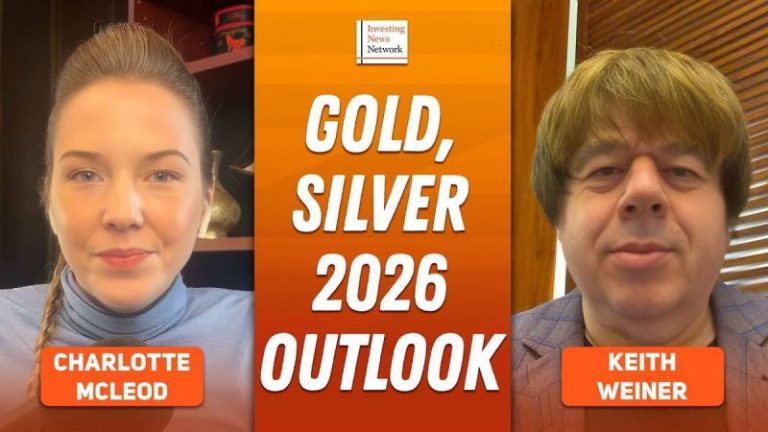
Keith Weiner, founder and CEO of Monetary Metals, shares his outlook for gold and silver in 2026, saying that while he expects higher prices there will be volatility.

He also outlines his thoughts on the role of precious metals in the monetary system.

Securities Disclosure: I, Charlotte McLeod, hold no direct investment interest in any company mentioned in this article.

This post appeared first on investingnews.com

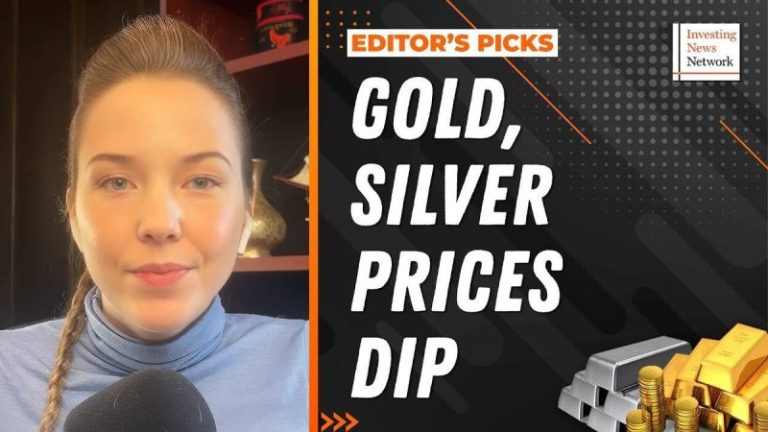
Gold and silver were having a fairly quiet week until Thursday (February 12), when both precious metals experienced steep drops early in the day.

The gold price, which had been steady above US$5,000 per ounce, and even briefly breached US$5,100, tumbled by over US$100, bottoming out around US$4,900.

Meanwhile, silver sank from above US$80 per ounce to below US$75.

Market watchers have presented various reasons for these declines, with a mainstream talking point being that the precious metals were moving in line with the broader stock market.

Thursday brought declines in major US indexes as investors reportedly reacted to concerns that various industries could be negatively impacted by AI automation.

Of course, with gold and silver it’s always possible that there’s more going on beneath the surface. Many of our popular YouTube channel guests reacted to this week’s price drop on X, with some, including Willem Middelkoop and Craig Hemke, suggesting manipulation was at play.

I’ve also read that a Russian memo seen by Bloomberg may have had a dampening effect on gold — the report details proposals sent by the Kremlin that could see the country return to the US dollar settlement system as part of an economic partnership with the Trump administration.

Whatever the reason for the decrease was, gold and silver had bounced back by Friday (February 13), with silver getting back above US$77 and gold closing at the US$5,043 level.

The rebound came despite slightly cooler than expected US consumer price index data, which eased inflation concerns and boosted interest rate cut expectations from the US Federal Reserve.

Looking forward, I want to emphasize again that the broad consensus among the experts I’ve been speaking to continues to be that the run in gold and silver prices isn’t over.

However, that doesn’t mean the path will be straight up. I heard this week from Keith Weiner of Monetary Metals, who spoke about the importance of weathering volatility:

‘I mean, we’re in dollar bear market for reasons. And so people better be prepared for the volatility, because as things go off the rails, which is what’s happening to the dollar, yeah, there’s volatility. And there’s days when people can’t sell the dollar enough, and there’s days when they’re desperately, urgently trying to grab as many fistfuls of dollars as they can, and the dollar is extremely well bid — you’ll see that as the price of gold falling. So you’re going to get it both ways, but the trend is clear and the drivers are clear.’

Keith is calling for US$6,000 gold in 2026 and a silver price of US$120 by the end of the year. The US$6,000 number is in line with recent projections from BNP Paribas and CIBC, whose forecasts indicate that major banks also still see strength in gold.

Bullet briefing — Top takeover candidates

Merger talks between commodities giants Rio Tinto (ASX:RIO,NYSE:RIO,LSE:RIO) and Glencore (LSE:GLEN,OTCPL:GLCNF) have fallen through, nixing what would have been the mining industry’s biggest-ever deal, but M&A activity in the space continues to heat up.

A new survey from TD Cowen identifies IAMGOLD (TSX:IMG,NYSE:IAG) as the year’s top takeover candidate, with close to 20 percent of the 58 respondents pointing to the company.

Artemis Gold (TSXV:ARTG,OTCQX:ARGTF) was in second place at 11 percent, while Arizona Sonoran Copper Company (TSX:ASCU,OTCQX:ASCUF) was third at 7 percent.

Almost all of the respondents, who included institutional investors and mining executives, said they expect to see more gold, silver and copper M&A in 2026 compared to last year.

We’ll have to wait and see how any potential deals play out, including Barrick Mining’s (TSX:ABX,NYSE:B) planned initial public offering for its North American gold assets.

Newmont (NYSE:NEM,ASX:NEM), Barrick’s partner at the Nevada Gold Mines joint venture, said it is concerned about the management of the operation, and wants to see improvements — a clash between the two miners could end up disrupting Barrick’s plans.

Securities Disclosure: I, Charlotte McLeod, hold no direct investment interest in any company mentioned in this article.

This post appeared first on investingnews.com

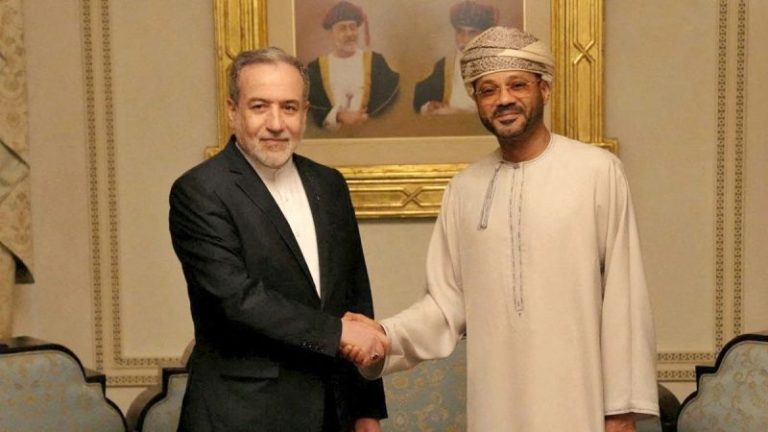
Iranian Foreign Minister Abbas Araghchi said that indirect nuclear talks with the U.S. in Oman were ‘a good start’ and that there was a ‘consensus’ that the negotiations would continue.

‘After a long period without dialogue, our viewpoints were conveyed, and our concerns were expressed. Our interests, the rights of the Iranian people, and all matters that needed to be stated were presented in a very positive atmosphere, and the other side’s views were also heard,’ Araghchi said.

‘It was a good start, but its continuation depends on consultations in our respective capitals and deciding on how to proceed,’ he added.

Omani Foreign Minister Badr al-Busaidi met with both Iranian and American officials on Friday, the Foreign Ministry of Oman said on X. The ministry said that al-Busaidi held separate meetings with Araghchi and U.S. special envoy Steve Witkoff and Jared Kushner.

‘The consultations focused on preparing the appropriate conditions for resuming diplomatic and technical negotiations, while emphasizing their importance, in light of the parties’ determination to ensure their success in achieving sustainable security and stability,’ the Foreign Ministry of Oman said.

Oman reportedly put out a public statement acknowledging the talks after journalists with The Associated Press saw Iranian and American officials separately visit the palace, the outlet reported. The AP said it was not immediately clear if talks were done for the day, but noted that the palace was empty after the convoys left.

The Iranian representatives reportedly met with al-Busaidi first, and only after their convoy left the palace did another set of vehicles arrive, one of which had an American flag, according to the AP. The outlet said the SUV flying the American flag stayed at the palace for an hour and a half.

The talks were initially set to take place in Turkey, but were later moved, according to Secretary of State Marco Rubio, who confirmed the change in venue on Wednesday.

‘We thought we had an established forum that had been agreed to in Turkey. It was put together by a number of partners who wanted to attend and be a part of it,’ Rubio said when taking questions from reporters on Wednesday.

‘I saw conflicting reports yesterday from the Iranian side saying that they had not agreed to that. So, that’s still being worked through. At the end of the day, the United States is prepared to engage in, has always been prepared to engage with Iran.’

Iranian officials also reportedly tried to limit the talks to a bilateral U.S.-Iran format, excluding other Arab and regional countries, according to Axios.

Tensions between Iran and the U.S. have been high since Washington bombed Tehran’s nuclear facilities in the summer of 2025. Things escalated further as the U.S. condemned Iran’s treatment of anti-regime protesters, with President Donald Trump threatening to act if government actors used violence against demonstrators.

Trump recently said in an interview with NBC News that Iranian Supreme Leader Ayatollah Ali Khamenei ‘should be very worried,’ though the president acknowledged that the two countries were ‘negotiating.’

When pressed about why he has not followed through on threats to take action if the regime used violence against protesters, Trump said that the U.S. ‘had their back’ and that the ‘country’s a mess right now because of us,’ referring to the strikes on Iran’s nuclear facilities. Trump also told NBC News that the U.S. had learned that Iran was attempting to build a new nuclear site in a different part of the country.

The president said that he issued a threat that if Iran were to build a new nuclear facility, the U.S. would ‘do very bad things.’

It is not immediately clear whether there will be more discussions over the course of the weekend or if there are any plans for direct discussions between Iranian and American officials.

The State Department did not immediately respond to Fox News Digital’s request for comment.

This post appeared first on FOX NEWS

House Oversight Chairman James Comer, R-Ky., announced Friday that he’s investigating companies linked to Ilhan Omar’s, D-Minn., husband, citing a dramatic increase in value in a short time and raising questions about whether their success could be tied to widespread fraud schemes uncovered in Minnesota. 

In a letter published Friday morning, Comer said the Oversight Committee would conduct a closer look at the ventures of Tim Mynett, who married Omar in March 2020.

‘We want to know: who’s funding this? And who’s buying access?’ Comer said.

In his letter, Comer described how two of Mynett’s companies, eStCru LL. and Rose Lake Capital LL., went from being worth $51,000 in 2023 to up to $30 million in 2024.

‘Given that these companies do not publicly list their investors or where their money comes from, this sudden jump in values raises concerns that unknown individuals may be investing to gain influence with your wife,’ Comer wrote in his letter to Mynett, citing congressional financial disclosures.

The Oversight Committee is asking Mynett to produce communications regarding the companies’ latest audits, communications with the Securities and Exchange Commission (SEC), correspondence with any other federal agencies and travel records to or from the United Arab Emirates, Somalia or Kenya.

Comer did not explain how the committee is approaching the investigation but hinted that lawmakers were on guard for possible connections to the fraud schemes in Minnesota.

‘The Committee on Oversight and Government Reform is investigating widespread fraud in Minnesota’s social service programs,’ Comer told Mynett in his letter.

Mynett and Omar have come under public scrutiny in recent months as financial reports revealed that the pair’s wealth has grown exponentially since Omar arrived in Congress in 2019.

Those concerns overlap with ongoing federal, state and congressional probes into as much as $9 billion in state funding that Minnesota may have lost to fraud. Through scores of schemes, fraudsters allegedly siphoned funding from government programs like daycare centers and health clinics while returning no benefits, greatly exaggerating their services and pocketing government funding.

Rep. Tom Emmer, R-Minn., the House whip and No. 2 Republican in the chamber, said he expects the public will soon secure answers through the Oversight Committee’s demands for additional details.

‘As President Trump said last month: Time will tell all. I’m confident that Rep. Comer’s investigation into Ilhan Omar’s suspiciously exploding wealth will reveal the truth. The truth sets some people free, but it may send Ilhan packing.’

The committee has asked to see its requested information no later than Feb. 19.

Rep. Omar’s office did not immediately respond to a request for comment.

This post appeared first on FOX NEWS

Sen. Lindsey Graham, R-S.C., swiftly pulled the plug on a meeting with Lebanese Chief of Defense Gen. Rodolphe Haykal after the Lebanese official refused to confirm that the Iranian regime-backed Hezbollah movement is a terrorist organization.

Graham posted to X a blunt message about his frustration with the state of Lebanon in particular and Mideast power politics in general.

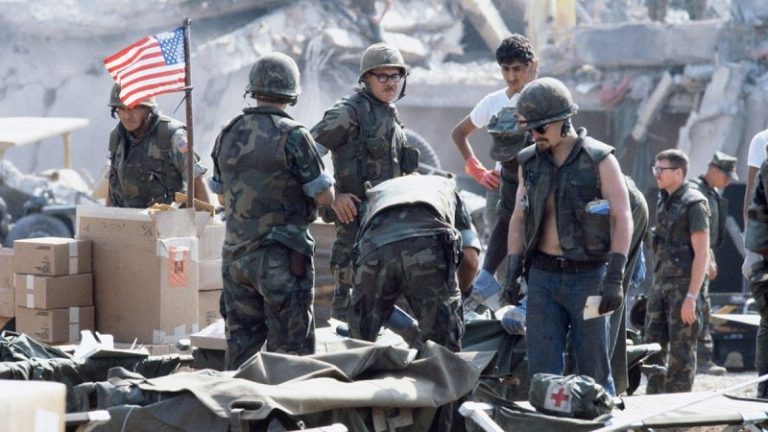
 ‘I just had a very brief meeting with the Lebanese Chief of Defense General Rodolphe Haykal. I asked him point blank if he believes Hezbollah is a terrorist organization. He said, ‘No, not in the context of Lebanon.’ With that, I ended the meeting. They are clearly a terrorist organization. Hezbollah has American blood on its hands. Just ask the U.S. Marines,’ 

He continued, ‘They have been designated as a foreign terrorist organization by both Republican and Democrat administrations since 1997 – for good reason. As long as this attitude exists from the Lebanese Armed Forces, I don’t think we have a reliable partner in them. I am tired of the double speak in the Middle East. Too much is at stake.’

Haykal’s refusal to recognize that Hezbollah is a terrorist organization set off security alarm bells among leading experts on the movement.

Matthew Levitt, a leading scholar on Hezbollah from the Washington Institute, told Fox News Digital that, ‘Gen. Haykal’s comment is only going to further concerns that the LAF sees Hezbollah as an actor with which it should deconflict, rather than disarm. The ceasefire agreement is clear that Hezbollah must be disarmed, in both the south and north of the country. In several instances to date, the LAF appears to have shared with Hezbollah targeting intelligence obtained from Israel through the US-led mechanism rather than acting on it.’

He added, ‘At a time when the LAF is seeking international aid, purportedly to disarm Hezbollah, failing to recognize the group as an adversary not only of Israel but of Lebanon as well undermines the case for further funding.’

Fox News Digital sent multiple press queries to Lebanon’s embassy in Washington, D.C.

Sarit Zehavi, a leading Israeli security expert on Hezbollah from the Israel Alma Research and Education Center, told Fox News Digital that, ‘I was not surprised by what Haykal said. This is exactly the problem. Hezbollah is not designated as a terrorist organization in Lebanon. The Lebanese army… is not willing to clash with Hezbollah. Hezbollah is not willing to voluntarily disarm. It will not happen as long as there is no clash.’

Zehavi claimed the Lebanese Armed Forces has ‘helped Hezbollah to conceal is military activity and weapons storages in south Lebanon.’

The U.S. brokered a ceasefire in Nov. 2024 between Hezbollah and Israel. In August, Lebanon’s government accepted an American plan to disarm the group by the end of 2025. That deadline does not seem to have been met.

U.S. Ambassador to Turkey, Thomas Barrack, who also serves as envoy to Syria, said at a recent Milken Institute event that Lebanon is a ‘failed state.’ 

Barrack said, ‘The confessional system does not work. A Maronite president, a Sunni prime minister and a Shia speaker; 128 parliamentary seats split equally between Islam and Christians; everything is a deadlock.’

He said, ‘Hezbollah is a foreign terrorist by U.S. standards,’ and ‘it also happens to be a large political party within Lebanon that has blocking rights… This idea of saying you have to disarm Hezbollah … you’re not actually gonna do it militarily.’

Barrack said, ‘The U.S. is saying Hezbollah needs to be disarmed, Hezbollah is a foreign terrorist organization, it cannot exist. My personal opinion is you kill one terrorist, you create 10. That can’t be the answer.’ He urged the Lebanese political leadership to ‘run to Israel and make a deal…there is no other answer.’

Walid Phares, an American academic expert on Hezbollah and Lebanon who has advised U.S. presidential candidates, told Fox News Digital that ‘The disarming of Hezbollah is not just a U.S. and international request but also and most importantly a request by a majority of Lebanese since at least the Cedars Revolution in 2005, when 1.5 million Lebanese Christians, Druze and Sunnis rallied against the Syrian occupation and the Khomeinist militia.’

He added, ‘While the Assad forces withdrew, Hezbollah remained armed. In May 2008, the radical Shia militia conducted an urban military coup against the pro-Western government and seized full power until the Israel-Iran war, known as the 12-day war of 2025. The latter was provoked by Hezbollah siding with Hamas during the Oct. 7 war.’

Fox News Digital reported in November that the Trump administration ramped up pressure on the Lebanese government to disarm Hezbollah.

This post appeared first on FOX NEWS

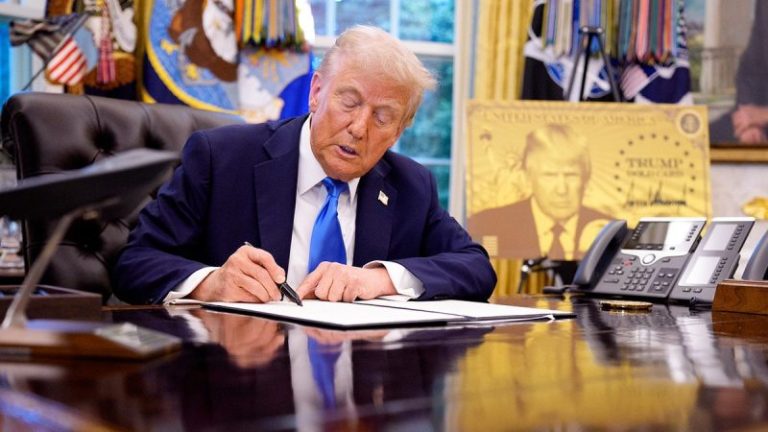
President Donald Trump on Thursday signed an executive order requiring the government to assess foreign weapons sales based on their impact on U.S. production capacity for key systems and to favor allies whose defense investments and strategic importance align with U.S. national security priorities.

Under the order, obtained first by Fox News Digital, the Departments of War, State and Commerce are instructed to ensure that U.S. arms transfers support weapons systems deemed most operationally relevant to the National Security Strategy, reinforce critical supply chains, and prioritize partners that have invested in their own defense and occupy strategically important regions.

The administration argues that past arms transfer policy allowed foreign demand to shape U.S. production decisions, contributing to backlogs, cost overruns and delivery delays that left both the U.S. military and its allies waiting years for critical equipment.

‘The America First Arms Transfer Strategy will now leverage over $300 billion in annual defense sales to strategically reindustrialize the United States and rapidly deliver American-manufactured weapons to help our partners and allies establish deterrence and defend themselves,’ according to a White House fact sheet.

A central goal of the order is to speed up a foreign military sales process that defense officials and industry leaders have long criticized as slow and overly bureaucratic. The order directs federal agencies to identify ways to streamline enhanced end-use monitoring requirements, third-party transfer approvals and the congressional notification process — steps the administration says have contributed to years-long delays in delivering U.S. weapons overseas.

The order also creates a new Promoting American Military Sales Task Force charged with overseeing implementation of the strategy and tracking major defense sales across the government. In a move aimed at increasing accountability, the administration says agencies will be required to publish aggregate quarterly performance metrics showing how quickly defense sales cases are being executed.

 The strategy also signals a shift in how the United States prioritizes its partners. The order directs the government to favor countries that have invested in their own defense and occupy strategically important regions, effectively tying arms sales decisions more closely to U.S. military planning and geographic priorities.

Other partners could face longer timelines or lower priority if their requests do not align with U.S. strategic or industrial objectives. While the order does not name specific countries, it reflects an effort to focus limited U.S. production capacity on allies viewed as most critical to executing the National Security Strategy.

The order also instructs the War, State and Commerce departments to ‘find efficiencies in the Enhanced End Use Monitoring criteria, the Third-Party Transfer process, and the Congressional Notification process.’

Congress will likely be watching how the administration implements the order, especially provisions aimed at speeding both oversight of U.S. weapons once they are sold abroad and the process for notifying lawmakers about major arms deals. Lawmakers have argued those steps help prevent misuse of U.S. weapons, even as they have criticized delays that slow deliveries to allies.

The order follows a series of recent defense-related executive actions taken by Trump. In January 2026, he signed an order directing defense contractors to prioritize production capacity, innovation and on-time delivery over stock buybacks and other corporate distributions.

That built on an April 2025 order aimed at improving speed and accountability in the foreign military sales system, as well as a January 2025 order focused on modernizing defense acquisitions and reducing red tape across the defense industrial base.

This post appeared first on FOX NEWS

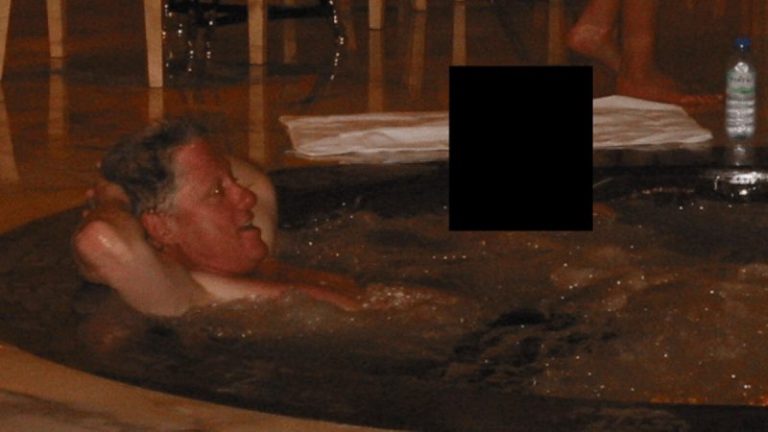
Former president Bill Clinton said on X that he has shared what he knows about the crimes of disgraced financier Jeffrey Epstein in a sworn statement shared with the House Oversight Committee, which both Bill and Hillary Clinton have agreed to testify in front of under subpoena pressure.  

‘I have called for the full release of the Epstein files. I have provided a sworn statement of what I know,’ the former president said on X, formerly Twitter, Friday afternoon. ‘And just this week, I’ve agreed to appear in person before the committee. But it’s still not enough for Republicans on the House Oversight Committee.’

In the wake of news that the Clintons would comply with House Republicans’ subpoenas to testify, after concerns they would not and threats of contempt, Republicans accused the Clintons of ‘requesting special treatment.’

After the Clinton’s attorneys sent the House Oversight Committee a letter indicating they would comply and testify under certain conditions, Democrat Ranking Member of the committee, Robert Garcia, said the letter amounted to full compliance with the committee’s demands.

However, House Oversight Committee Chairman James Comer disputed the characterization, telling Fox News Digital the agreement lacked specificity.  

‘The Clintons’ counsel has said they agree to terms, but those terms lack clarity yet again, and they have provided no dates for their depositions,’ Comer said. ‘The only reason they have said they agree to terms is because the House has moved forward with contempt. I will clarify the terms they are agreeing to and then discuss next steps with my committee members.’

The Clintons’ change of heart led the House to temporarily pause proceedings on holding them in contempt on Monday night. 

Democrats on the committee have pointed out that Comer has not pushed to hold others who did not appear in contempt, nor has he made any threats against the DOJ for failing to produce all of its documents on Epstein by a deadline agreed to by Congress late last year. The department has produced a fraction of the documents expected so far.

‘Now, Chairman Comer says he wants cameras, but only behind closed doors. Who benefits from this arrangement? It’s not Epstein’s victims, who deserve justice,’ Clinton said in his X post on Friday afternoon. ‘Not the public, who deserve the truth. It serves only partisan interests. This is not fact-finding, it’s pure politics.’

‘Now, Chairman Comer says he wants cameras, but only behind closed doors,’ he continued. ‘Who benefits from this arrangement? It’s not Epstein’s victims, who deserve justice. Not the public, who deserve the truth. It serves only partisan interests. This is not fact-finding, it’s pure politics.’


Fox News Digital’s Greg Wehner and Elizabeth Elkind contributed to this report.

This post appeared first on FOX NEWS

The Department of Justice on Thursday sued five additional states, requesting that their election data be shared with the Trump administration amid its push for access to voter rolls from states across the country.

Four states President Donald Trump carried in the last three presidential elections — Utah, Oklahoma, Kentucky and West Virginia — were slapped with the latest legal action, along with New Jersey.

The DOJ has now sued more than two dozen states in efforts to access election records, with most of the states being controlled by Democrats.

Assistant Attorney General for Civil Rights Harmeet Dhillon suggested that state election officials were ‘choosing to fight us in court rather than show their work’ with voter roll access.

‘We will not be deterred, regardless of party affiliation, from carrying out critical election integrity legal duties,’ she said in a statement on Thursday.

‘The Justice Department will continue to fulfill its oversight role dutifully, neutrally, and transparently wherever Americans vote in federal elections,’ Dhillon said.

The Trump administration has intensified its efforts to take over elections in recent months even though the U.S. Constitution gives states, not federal officials, the authority to run elections. Most states have their secretary of state oversee elections.

Access to election information varies by state, but election officials generally release redacted versions of their voter rolls to the public and government agencies, according to Politico. However, the DOJ has demanded that states give the federal government unredacted files, including voters’ private data such as their driver’s license numbers and the last four digits of their Social Security numbers.

‘Accurate, well-maintained voter rolls are a requisite for the election integrity that the American people deserve,’ Attorney General Pam Bondi said in a statement. ‘This latest series of litigation underscores that this Department of Justice is fulfilling its duty to ensure transparency, voter roll maintenance, and secure elections across the country.’

The DOJ has argued the states are in violation of the Civil Rights Act of 1960, which affirms that the attorney general can request voter records from election officials, but state officials contend that the department is seeking an escalation of the administration’s wider attempts to become involved in state election proceedings.

‘Neither state nor federal law entitles the Department of Justice to collect private information on law-abiding American citizens. Utahns can be assured that my office will always follow the Constitution and the law, protect voters’ rights, and administer free and fair elections,’ Utah Lt. Gov. Deidre Henderson said in a statement to Politico.

Kentucky Secretary of State Michael Adams also criticized the lawsuit, saying the state’s elections were ‘a national success story.’

‘Kentucky law protects voters’ personal information, and I will not voluntarily commit a data breach by providing Kentuckians’ personal data to the federal bureaucracy unless a court order tells me to,’ he said in a statement to the outlet.

West Virginia Secretary of State Kris Warner’s office said it had not yet been served with a lawsuit.

‘Regardless, I think Secretary Warner’s comments to the DOJ were pretty clear. Bring it on! The federal government is not going to get any personal information on West Virginia voters as long as Kris Warner is Secretary of State,’ spokesperson Mike Queen said in a statement to Politico.

Earlier this month, the FBI executed a search warrant at an election office in Fulton County, Georgia, seizing ballots and other voting records from 2020, according to local officials. The Peach State went to former President Joe Biden in 2020, but Trump carried the state in 2024.

In efforts to ensure only American citizens are voting, Trump has also urged Congress to pass the SAVE America Act, which would require voters in federal elections to prove citizenship by providing a photo ID and other documentation, such as a passport or birth certificate.

Related Article

Georgia’s Fulton County files motion seeking return of 2020 election materials seized by FBI
This post appeared first on FOX NEWS

ROCHESTER, Minnesota, Aug 22 (Reuters) – U.S. farmers will harvest a record corn crop in 2025 after ideal weather across much of the Midwest this summer, but the bounty will fall short of the U.S. government’s lofty outlook as pockets of plant disease and heat stress dented yields in spots across the farm belt, crop consultancy Pro Farmer said on Friday.

Growers are also expected to reap a bumper soybean crop, although dry conditions in parts of the eastern Midwest and pockets of disease pressure in Iowa may limit yield potential, Pro Farmer said after its annual four-day tour across seven top-producing states this week.

The United States is the world’s top corn exporter and No. 2 soybean exporter, and favorable weather in most of the main growing states supported crops but pushed futures prices to recent multi-year lows.

The warm and wet conditions that fueled crop growth also fostered fungal diseases such as tar spot, southern rust and northern blight in corn, and sudden death syndrome in soybeans.

“Each day we’ve noted the disease pressure in corn. Tar spot, southern rust more widespread than we’ve ever seen before. Those are going to be some real yield robbers,” said Lane Akre, Pro Farmer economist and one of the leaders of the tour’s eastern leg.

Pro Farmer projected 2025 U.S. corn production at a record 16.204 billion bushels, with an average yield of 182.7 bushels per acre, and soybean production at 4.246 billion bushels, with an average yield of 53.0 bpa.

The outlook is below the U.S. Department of Agriculture’s latest forecast for corn production at a record 16.742 billion bushels with yields averaging 188.8 bpa, and soybean production at 4.292 billion bushels with record average yields of 53.6 bpa.

Crop scouts on the Pro Farmer tour saw more disease-hit fields than normal across the Midwest farm belt this week, although it is not yet clear whether these diseases will blow up into significant yield loss.

At one stop in northwest Illinois, the corn field appeared healthy and green from the roadside, but 30 to 40 steps in, leaves were streaked with rust, leaving crop scouts covered in color. Overhead, bright yellow crop dusters banked low as they sprayed wide white plumes of fungicide.

Jake Guse, a Minnesota row crop farmer and crop scout on the eastern leg of the tour, said disease levels were the worst and most widespread that many crop scouts had ever seen on the tour.

“As we traveled across Indiana, we started seeing more (disease). In Illinois, started getting bad — and it was all over Iowa,” Guse said of three of the largest producing states.

However, crop scouts also found exceptional yield prospects that could help cushion any disease-related yield decline.

The strong production prospects may not be welcome news to farmers, who are facing a third straight year of declining corn prices due to excess supplies and only a modest improvement in soybean prices, according to USDA data.

Production costs remain high while trade tensions with key markets like China, the top soybean importer, have left demand uncertain.

While the USDA is forecasting that the nation’s farm economy will improve in 2025, that boost will largely come from a massive influx of federal funding the Trump administration plans to send to rural America, according to USDA data.

Corn and soybean futures on the Chicago Board of Trade firmed this week as reports from the crop tour suggested that recent USDA harvest forecasts may be too high.

The benchmark CBOT December corn contract CZ25 ended the week up 1.5%, its first weekly gain in a week in five weeks, while November soybeans SX25 also rose 1.5% and hit a one-month high.

This post appeared first on NBC NEWS