
Author

admin

Browsing

More than three decades after diamonds transformed Canada’s Northwest Territories (NWT) into a global mining powerhouse, the industry that once defined the region’s modern economy is facing a painful reckoning.

While governments and investors have spent the past several years focused on critical minerals and battery metals, the NWT’s diamond mines are grappling with falling prices, lab-grown competition, tariff disruptions and mounting financial strain.

With one major mine set to close within weeks and others under pressure, leaders across the North are asking a seemingly once unthinkable question: what comes after diamonds?

From staking rush to global player

The modern diamond era in the NWT began in November 1991, when geologists Chuck Fipke and Stewart Blusson discovered 81 small diamonds at Lac de Gras. The find triggered the largest diamond staking rush in North American history and led to the development of the EKATI Diamond Mine, Canada’s first.

By 2004, more than 28 million hectares across the NWT and Nunavut had been staked. Canada rose to become the world’s third-largest diamond producer by value, behind Botswana and Russia, largely on the strength of the NWT’s output.

For decades, the sector generated thousands of high-paying jobs and helped build Indigenous-owned businesses across the territory. At its peak, more than 3,000 Indigenous workers were employed at the region’s three diamond mines.

Today, that foundation is starting to show cracks.

All pressure, no diamonds

Rio Tinto’s (ASX:RIO,NYSE:RIO,LSE:RIO) Diavik mine, one of the pillars of the industry, is scheduled to close next month.

Although the company recently unveiled a rare 158.2-carat yellow diamond from the site last year, described by COO Matt Breen as a “miracle of nature,” the symbolic discovery cannot reverse the mine’s finite life.

In addition, De Beers ( a subsidiary of Anglo American (LSE:AAL,OTCQX:NGLOY)) and Mountain Province Diamonds’ (TSX: MPVD,OTC:MPVD) Gahcho Kué mine has paused a project that would have extended operations from 2027 to 2030, raising concerns about its longevity.

Meanwhile, EKATI, owned by Australia’s Burgundy Diamond Mines (ASX:BDM), is battling financial distress after diamond prices fell at least 20 percent following its acquisition of the asset.

In the legislature this week, Monfwi MLA Jane Weyallon Armstrong warned of the consequences.

“The closure of Diavik and Gahcho Kué will have a significant impact on Tłı̨chǫ communities and today, the GNWT has no meaningful alternative,” she said.

Premier R.J. Simpson acknowledged the challenge. “We’re at a point now where we know the diamond mines are winding down, and the question has been: ‘OK, well, what’s next?’” he said in a recent interview.

Market headwinds multiply

The industry’s struggles are not simply a matter of geology. Natural diamond prices have been under sustained pressure, battered by several macroeconomic forces converging at once.

For instance, lab-grown diamonds—chemically identical to natural stones and available at a fraction of the price—have rapidly gained acceptance among consumers. What was once a niche product is now mainstream, particularly among younger buyers drawn to lower costs.

Canadian diamonds long marketed themselves as ethical alternatives to so-called “blood diamonds.” But synthetic stones can make similar claims, weakening one of the natural industry’s key selling points.

Luxury spending has also softened, and new trade barriers have added further strain. A 50 percent US tariff on Indian imports has disrupted the global polishing pipeline, since most rough diamonds are cut and finished in India before being sold into the US market.

The owner of EKATI has linked its financial difficulties in part to those tariffs, as well as to the broader collapse in natural diamond prices. The company recently received a C$115 million federal loan under a facility designed to assist businesses affected by US trade disruptions.

Even so, EKATI suspended parts of its operations last year and has faced criticism from workers over layoffs and severance payments. Burgundy has publicly acknowledged serious financial problems and indicated it may need additional funding if prices fail to recover.

At Gahcho Kué, Mountain Province Diamonds is navigating its own funding challenges. Acting president and CEO Jonathan Comerford said the company’s difficulties reflect “the prolonged weakness in the diamond sector.”

“In this environment, our focus remains on carefully managing costs, protecting liquidity, and making measured decisions to support the long-term sustainability of our operations,” Comerford said.

The company has received in-kind funding notices from joint-venture partner De Beers totalling approximately C$49.2 million related to unpaid cash calls.

Political pressure builds

Territorial leaders are also under growing pressure to respond.

Minister of Industry Caitlin Cleveland described the Gahcho Kué announcement as “serious news for the Northwest Territories.”

“Prices are weak, costs are high, and companies are having to make difficult calls,” Cleveland said in a recent statement. She emphasized that while the GNWT cannot control global markets, it will work to ensure worker supports are accessible and employers meet labour standards if job impacts occur.

But some structural issues are harder to address. Yellowknife North MLA Shauna Morgan questioned how the government can enforce socio-economic commitments made by mining companies when they established operations.

Simpson conceded that those agreements lack enforcement clauses such as fines.

“This is about building relationships and ensuring that we’re staying on top of this,” he said.

Meanwhile, calls for diversification are growing louder. “This announcement also reinforces a broader reality for our territory: our economic base remains too dependent on a single commodity,” Cleveland said.

Searching for the next chapter

There are hopes that critical minerals could help fill the gap. Exploration for rare earths and other strategic metals is increasing, reflecting global demand tied to electrification and defense technologies.

Weyallon Armstrong has argued that infrastructure, including expanded road connections from the Tłı̨chǫ region, could unlock new development corridors.

“We may not have a Ring of Fire, but we could have a frosty circle,” she said, referencing Ontario’s mineral-rich region.

Yet even optimistic observers acknowledge that no single project is likely to replicate the scale and stability diamonds once provided. For community leaders, the uncertainty is deeply personal.

“It’s kind of a scary situation,” Chief Fred Sangris of the Yellowknife Ndilo community of the Dene First Nation told the New York Times last year. “Where do we go from here? What’s the next project?”

Diamonds have long symbolized permanence. In the Northwest Territories, especially this Valentine’s season where icons of everlasting love dominate the market, that symbolism now feels more strained than ever.

Securities Disclosure: I, Giann Liguid, hold no direct investment interest in any company mentioned in this article.

This post appeared first on investingnews.com

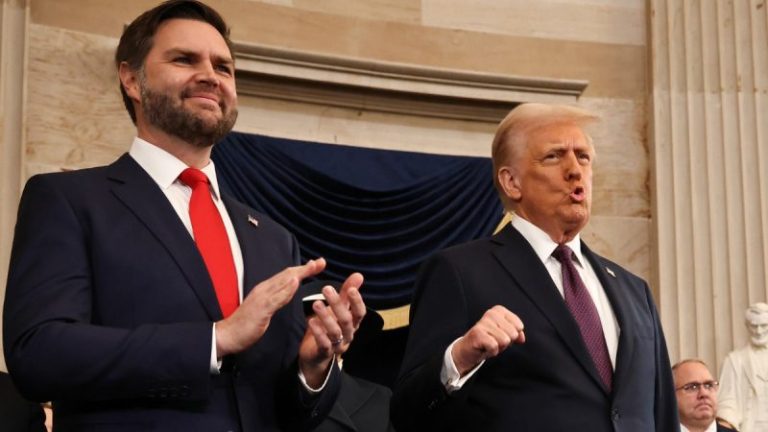
As the Trump administration appoints Vice President JD Vance to lead a nationwide ‘War on Fraud,’ a coalition of conservative state financial officers says it has already uncovered and stopped billions in taxpayer waste and is pledging to partner with the White House to root out corruption nationwide.

In a Thursday letter to the White House, the State Financial Officers Foundation (SFOF) praised President Donald Trump’s focus on what he called fraud scandals that have ‘resulted in tens of billions of dollars being stolen from American taxpayers,’ writing that such corruption ‘shreds the fabric of a nation’ 

SFOF CEO OJ Oleka told Vance that the group’s 40 conservative state treasurers, auditors and comptrollers across 28 states stand ready to support the administration’s anti-fraud mission, noting they collectively oversee more than $3 trillion in state funds.

The letter accompanied SFOF’s inaugural 2025 Oversight Report, which claims that affiliated state financial officers safeguarded more than $28 billion of waste, fraud, and abuse in 2025 alone.

The report highlights some of the most egregious examples within that $28 billion including in Florida, where Chief Financial Officer Blaise Ingoglia just under $2 billion in excessive spending and in Kentucky, where Auditor Allison Ball found more than $836 million in improper Medicaid payments.

Medicaid fraud has been of particular interest to the Trump administration given the massive fraud scandal that has unfolded in Minnesota and Vance said on Wednesday the administration has ‘decided to temporarily halt certain amounts of Medicaid funding that are going to the state of Minnesota in order to ensure that the state of Minnesota takes its obligations seriously to be good stewards of the American people’s tax money.’

The report also highlights North Carolina, where it says State Auditor Dave Boliek discovered more than $1 billion in lapsed salaries from long term vacancies in the state. Additionally, Utah auditor Tina Cannon identified more than $518 million in fraud, waste and abuse across agencies and nonprofits receiving state and federal funds.

In his letter, Oleka told Vance that SFOF’s members are ‘allies already on the battlefield’ and stand ready to assist the administration in protecting taxpayer dollars.

‘The American people deserve nothing less,’ he wrote.

SFOF argues that state-level financial watchdogs, often elected independently of governors and legislatures, are uniquely positioned to expose mismanagement and enforce fiscal discipline.

With billions already identified at the state level, the group says a coordinated federal-state approach could dramatically expand the scope of fraud detection nationwide, potentially reshaping how taxpayer dollars are safeguarded across the country.

‘By working together, we can protect our nation’s treasure to the fullest extent against every foe and every plot to endanger it,’ Oleka wrote.

Related Article

JD Vance spearheads ‘war on fraud,’ promises to root out taxpayer money ‘stolen’ by illegal immigrants
This post appeared first on FOX NEWS

War Secretary Pete Hegseth said Thursday that some cartel drug traffickers operating in the U.S. Southern Command area of responsibility have halted narcotics activity following recent U.S. military strikes in the Caribbean.

‘WINNING: Some top cartel drug-traffickers in the @SOUTHCOM AOR have decided to cease all narcotics operations INDEFINITELY due to recent (highly effective) kinetic strikes in the Caribbean,’ Hegsth wrote in a post on X.

Hegseth credited President Donald Trump with directing the military actions, calling the effort a lifesaving deterrent.

‘This is deterrence through strength. @POTUS is SAVING American lives,’ he wrote.

Republican Sen. Lindsey Graham of South Carolina praised the military action, writing on X, ‘Well done @SecWar and to all under your command. We must continue to verify and monitor. We can’t trust drug cartels.’

The Trump administration has been pursuing a policy of conducting deadly attacks against vessels of alleged ‘narco-terrorists.’

SOUTHCOM announced a strike that killed two on Thursday.

‘On Feb. 5, at the direction of #SOUTHCOM Commander Gen. Francis L. Donovan, Joint Task Force Southern Spear conducted a lethal kinetic strike on a vessel operated by Designated Terrorist Organizations. Intelligence confirmed the vessel was transiting along known narco-trafficking routes in the Eastern Pacific and was engaged in narco-trafficking operations. Two narco-terrorists were killed during this action. No U.S. military forces were harmed,’ Southern Command noted in a post on X.

This post appeared first on FOX NEWS

Iran seized two foreign oil tankers in the Persian Gulf Thursday, accusing them of smuggling fuel and detaining 15 foreign crew members ahead of high-stakes U.S.–Iran talks Friday in Oman.

Iran’s Islamic Revolutionary Guard Corps (IRGC) navy said it intercepted the two ships near Farsi Island, claiming they were carrying about 1 million liters of smuggled fuel, Reuters reported.

The crews, made up of 15 foreign nationals, were taken into custody and referred to Iran’s judicial authorities, according to Iranian state media.

The IRGC alleged the vessels were part of an organized fuel-smuggling network that had been operating in the region for several months.

Iranian officials said the ships were identified through intelligence monitoring and seized during coordinated naval operations in the Persian Gulf, a vital artery for global energy markets.

According to The Jerusalem Post, Iranian authorities framed the operation as a significant blow to illegal fuel trafficking, though they did not immediately disclose the vessels’ nationalities or destinations.

The seizures come as Iranian rhetoric toward the U.S. has grown hostile.

Ezzatollah Zarghami, a former Iranian minister and ex–state broadcaster chief, issued a warning, threatening violence in the Strait of Hormuz, through which around one-fifth of the world’s oil and petroleum product consumption passes.

‘I am sure that the Strait of Hormuz will be the place of massacre and hell for the U.S.,’ Zarghami said Thursday.

‘Iran will show that the Strait of Hormuz has historically belonged to Iran. The only thing the Americans can think of is playing with their vessels and moving them from one place to another.’

Zarghami later repeated the threat, calling the Strait a potential ‘killing field’ for American forces and signaling Iran’s willingness to escalate amid mounting regional pressure.

Special envoy Steve Witkoff and Jared Kushner are scheduled to meet Iranian officials in Oman Friday.

The pair are traveling from Abu Dhabi after two days of talks related to Russia and Ukraine.

White House press secretary Karoline Leavitt confirmed Thursday that Friday’s talks were still on, stating ‘diplomacy is always [Trump’s] first option.’

This post appeared first on FOX NEWS

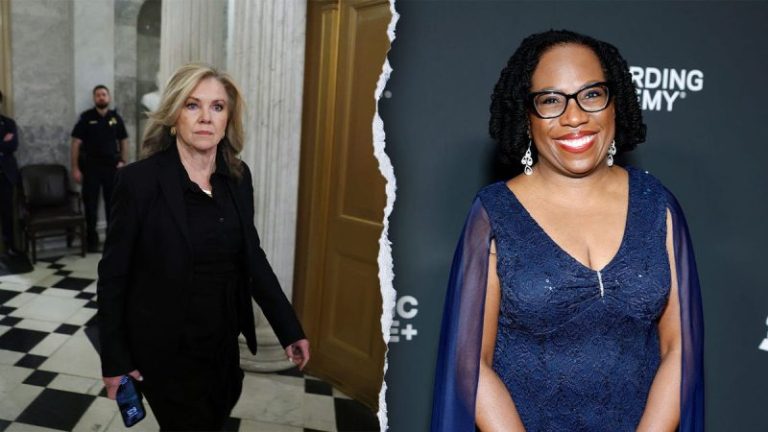
Sen. Marsha Blackburn, R-Tenn., is urging U.S. Supreme Court Chief Justice John Roberts to launch an investigation into Justice Ketanji Brown Jackson over her attendance at the Grammy Awards on Sunday amid anti-ICE rhetoric from celebrities and artists at the event. 

Jackson was in attendance at this year’s politically-charged event because of her nomination for narrating the audiobook version of her memoir, ‘Lovely One.’ 

However, critics said Jackson clapped as various speakers criticized U.S. Immigration and Customs Enforcement (ICE).

‘While it is by no means unheard of or unusual for a Supreme Court justice to attend a public function, very rarely—if ever—have justices of our nation’s highest Court been present at an event at which attendees have amplified such far-left rhetoric,’ Blackburn wrote in a letter to Roberts. 

Blackburn, who sits on the Senate Judiciary Committee, called for an investigation into whether Jackson’s actions violate the high court’s Code of Conduct and would require her to recuse herself from certain cases. 

‘To that end, in the interest of a fair-minded, impartial, and independent federal judiciary, I urge you to initiate an investigation into Justice Jackson’s attendance at this event and if her participation in any way would require recusal from matters that will come before the Court,’ her letter states. 

Attendees at the awards were seen wearing ‘ICE Out’ lapel pins, and some winners spewed anti-ICE rhetoric such as ‘No one is illegal on stolen land’ and ‘F— ICE.’

Jackson’s appearance at the event raises questions considering the court is slated to take on cases revolving around the Trump administration, including birthright citizenship and immigration. 

Fox News Digital has reached out to Blackburn’s office and the Supreme Court. 

In her letter, Blackburn noted that Democrats and the news media have smeared Republican-appointed justices to the court as ‘corrupt’ and ‘partisan.’

She recalled how Sens. Dick Durbin, D-Ill., and Sheldon Whitehouse, D-RI., wrote a letter to Roberts urging him to ensure that conservative Justice Samuel Alito would recuse himself from cases related to the 2020 election and Jan. 6, 2021 Capitol riot because his wife put up a Revolutionary War-era flag at their home.

‘Unlike these meritless claims against Justice Alito and Justice Thomas, there are serious questions regarding Justice Jackson’s participation in such a brazenly political, anti-law enforcement event and her ability to remain an impartial member of the Supreme Court,’ Blackburn wrote. 

This post appeared first on FOX NEWS

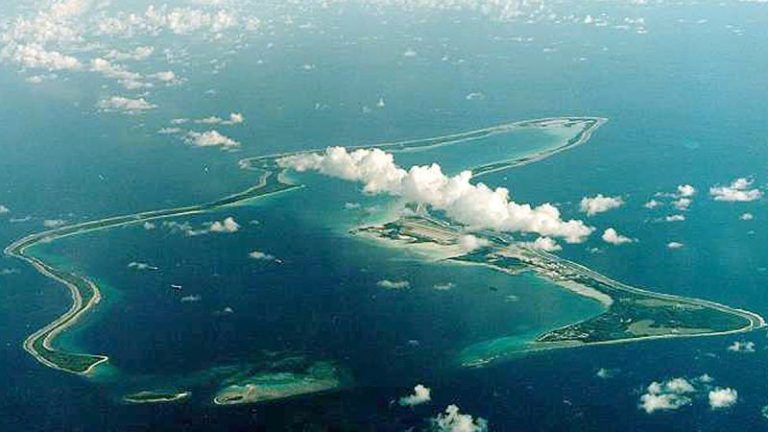
President Donald Trump has warned that the U.S. could use military force to secure the Diego Garcia air base in the Chagos Islands if any future deal threatens access to the joint U.S.-U.K. installation.

Trump made the comments Thursday in a Truth Social post while also signaling his willingness to move past tensions with British Prime Minister Keir Starmer after what he described as ‘very productive discussions’ about the Indian Ocean base.

Emphasizing the base’s strategic importance, Trump said the role of Diego Garcia was essential to U.S. national security.

‘It is the site of a major U.S. military base, strategically situated in the middle of the Indian Ocean and, therefore, of great importance to the national security of the United States,’ Trump wrote.

Trump also acknowledged that the U.K. struck what he called ‘the best deal he could make’ under a controversial agreement to transfer sovereignty of the islands to Mauritius while leasing Diego Garcia back for at least 99 years.

‘However, if the lease deal, sometime in the future, ever falls apart, or anyone threatens or endangers U.S. operations and forces at our base, I retain the right to militarily secure and reinforce the American presence in Diego Garcia,’ Trump warned.

‘Let it be known that I will never allow our presence on a base as important as this to ever be undermined or threatened by fake claims or environmental nonsense.’

The comments marked a slight shift in tone from Trump, who in January criticized the U.K.-Mauritius deal as an ‘act of great stupidity’ and an ‘act of total weakness,’ accusing Britain of surrendering a critical military asset.

Diego Garcia serves as a hub for long-range bombers, logistics, intelligence collection and military communications across the Middle East, the Indo-Pacific and Africa, hosting around 2,500 U.S. and military and civilian personnel.

The island base has been used for long-range U.S. operations such as in Afghanistan and in Yemen.

According to Reuters, Downing Street had confirmed Trump and Starmer discussed Diego Garcia during a recent call and agreed to safeguard the base’s continued operation.

‘Turning to Diego Garcia, and the deal the U.K. has secured to maintain control of the U.S.-U.K. military base to protect national security, the leaders recognized its strategic importance,’ a No. 10 spokeswoman said.

‘The leaders agreed their governments would continue working closely to guarantee the future operation of the base and speak again soon.’

Under the agreement, British taxpayers are projected to pay roughly £35 billion [$47 billion] over the next century, including annual payments of about £160 million [$216 million] to Mauritius, according to public estimates.

Britain has also agreed to approximately £3 billion [$4 billion] in compensation over the life of the deal, with an option to extend the lease for an additional 50 years.

The agreement has also drawn criticism from Britain’s Conservative Party, which argues the deal weakens the U.K.’s strategic position and risks undermining long-standing security ties with the U.S.

Mauritius has said its sovereignty over the islands is ‘unequivocally recognized’ under international law and has called for swift implementation of the agreement.

As previously reported by Fox News Digital, a Downing Street spokesperson also said in January the U.K. is continuing efforts to ‘allay any concerns’ in Washington.

‘We will continue to engage with the U.S. on this important matter and the importance of the deal to secure U.S. and U.K. interests,’ the spokesperson said. 

Fox News Digital has reached out to the White House and Downing Street for comment.

This post appeared first on FOX NEWS

The film ‘Melania,’ a documentary about First Lady Melania Trump, made nearly $8 million on its opening weekend, making it the highest-grossing documentary in a decade. It’s a huge win for the first lady and a crushing defeat for those rooting against her.

The director of ‘Melania,’ Brett Ratner, has previously helmed Hollywood blockbusters such as ‘Rush Hour’ and ‘X-Men: The Last Stand.’ The fact that Ratner is already an established brand in Hollywood is noteworthy. During the first Trump term, it would have been unlikely that a Hollywood director would take a chance on a documentary about Melania Trump. Ratner still took a risk making the film, because Hollywood is traditionally lockstep on politics and quick to cut off anyone who steps outside the line. It’s easier to make a film like this in 2026 than it was in 2017, but only marginally so.

The film is a soft-focus look at Melania Trump’s life as first lady, offering a glossy, feel-good glance into what people normally don’t get to see inside the private first lady’s life. Still, it wouldn’t have mattered what was in the film — the media would have hated it anyway.

The reviews in the mainstream press aren’t so much scathing as personal. Variety called the film a ‘cheeseball infomercial of staggering inertia,’ while The Guardian noted it was ‘dispiriting, deadly and unrevealing’ and ‘unredeemable.’

In the film, it’s true we see Melania in her beautiful outfits and flawless makeup, but we also see her as the woman behind the man.

In one scene in the film, Melania advises the president to include the word ‘unifier’ in his inaugural speech. On Jan. 20, as he said the words, ‘My proudest legacy will be that of a peacemaker and unifier. That’s what I want to be: a peacemaker and a unifier,’ the president turned around to look at his wife. Of course, Melania wants her husband to be both a peacemaker and a unifier. She is rooting for him to succeed because it helps us all. A vicious media refuses to concede that she may want what is best for the country.

The film portrays a marriage where the first lady cares about her husband, worrying about his security on Inauguration Day and expressing relief when festivities are moved indoors. This portrayal flies in the face of the frequent commentary claiming the marriage is in name only. Why would the first lady care about her husband’s safety if she’s only in the union for glory or money? The New York Times counted how many days Melania has spent in the White House during this term, and Trump biographer Michael Wolff has claimed, without evidence, that they are separated. This film answers those accusations and rumors directly, in Melania’s own words.

In a 2018 interview with ABC, Melania was asked about her marriage and said, ‘I know people like to speculate and media like to speculate about our marriage. It’s not always pleasant, of course. But I know what is right and what is wrong and what is true or not true.’

She does, and she shows it in this film.

On the review site Rotten Tomatoes, the film ‘Melania’ is setting another kind of record: the largest discrepancy between the scores of film reviewers and filmgoers in the site’s history. It makes sense, since most of the reviewers went into the film with a rating in mind, whether or not they actually enjoyed the movie. The people who spent their money to go watch their first lady on the screen were going to be more honest, even if some were swayed by their enthusiasm for their president.

The media has three more years of the Trump administration and Melania Trump. They can stop having outbursts about the first lady and give her a fair hearing — something more than half the country would commend. Or they can continue to descend into irrelevance, as everyone knows even their panning of a film will be political. The choice is theirs.

This post appeared first on FOX NEWS

Shares of Cracker Barrel Old Country Store plummeted roughly 10% on Thursday after the restaurant unveiled its new logo earlier this week as part of a larger brand refresh.

The new logo removes the image of a man leaning against a barrel that was prominently featured in the original, leaving behind just the words Cracker Barrel against a yellow background. The phrase “old country store” has also been removed.

The company said the colors in the logo were inspired by the chain’s scrambled eggs and biscuits.

Cracker Barrel’s new logo.Cracker Barrel

The change is part of a “strategic transformation” to revitalize the brand that started back in May 2024. Under that mission, Cracker Barrel’s brand refresh includes updates to visual elements, restaurant spaces and food and retail offerings.

Cracker Barrel said in March that the refresh will still maintain the brand’s “rich history of country hospitality” and “authentic charm that has made the brand a beloved destination for generations of families.”

“We believe in the goodness of country hospitality, a spirit that has always defined us. Our story hasn’t changed. Our values haven’t changed,” Chief Marketing Officer Sarah Moore said in a media release.

However, many social media users have criticized the new logo, especially those in conservative circles. The president’s son, Donald Trump Jr., amplified a post on Wednesday suggesting that the logo change was led by CEO Julie Felss Masino to erase the American tradition aspect of the branding and make it more general, as a way of leaning into diversity, equity and inclusion efforts.

Conservative activist Robby Starbuck added his commentary on Thursday, writing in a post on X, “Good morning @CrackerBarrel! You’re about to learn that wokeness really doesn’t pay.”

The company has a relatively small market cap of about $1.2 billion compared with other restaurant chains.

Customers have also complained on social media about the interior redesign of many Cracker Barrel restaurants, saying that the new decor favors a more sterile and modern style over its tried-and-true country feel.

On the restaurant’s latest earnings call in June, Masino said Cracker Barrel had completed 20 remodels and 20 refreshes. She said the company will be sharing more information about the remodeling initiative in September.

“Employees had given us great feedback about working in those newly remodeled and refreshed stores and guests continue to tell us that they’re lighter, brighter, more welcoming and they’re enjoying them,” Masino said on the call.

Cracker Barrel is not the only stock to see large swings based on political social media posts.

Earlier this month, shares of American Eagle soared after Trump posted that an ad featuring Sydney Sweeney, which faced significant social media pushback from the left, was “the ‘HOTTEST’ ad out there.”

Back in 2023, Anheuser-Busch InBev faced heavy criticism from conservatives after a collaboration between Bud Light and social influencer Dylan Mulvaney, who is transgender.

This post appeared first on NBC NEWS

Walmart on Thursday raised its full-year earnings and sales outlook as its online business posted another quarter of double-digit gains, even as the company said costs are rising from higher tariffs.

The big-box retailer topped Wall Street’s quarterly sales estimates but fell short of earnings expectations, the first time it missed on quarterly earnings since May 2022. The company said it felt pressure on profits for the period, including from some one-time expenses, such as restructuring costs, pricier insurance claims and litigation settlements.

Walmart said it now expects net sales to grow 3.75% to 4.75% for the fiscal year, up from its previous expectations of 3% to 4%. It raised its adjusted earnings per share outlook slightly to $2.52 to $2.62, up from a prior range of $2.50 to $2.60 per share.

In an interview with CNBC, Chief Financial Officer John David Rainey said the company is working hard to keep prices low — including speeding up imports from overseas and stepping up the number of Rollbacks, or limited-time discounts, in its stores.

“This is managed on an item-by-item and category-by-category basis,” he said. “There are certainly areas where we have fully absorbed the impact of higher tariff costs. There are other areas where we’ve had to pass some of those costs along.”

But he added “tariff-impacted costs are continuing to drift upwards.”

Even so, Rainey said Walmart hasn’t seen a change in customer spending. For example, sales of private label items, which typically cost less than national brands, were roughly flat year over year, he said.

“Everyone is looking to see if there are any creaks in the armor or anything that’s happening with the consumer, but it’s been very consistent,” he said. “They continue to be very resilient.”

Yet on the company’s earnings call, CEO Doug McMillon said middle- and lower-income households have been more sensitive to tariff-related price increases, particularly in discretionary categories.

“We see a corresponding moderation in units at the item level as customers switch to other items, or in some cases, categories,” he said.

Here’s what the big-box reported for the fiscal second quarter compared with what Wall Street expected, according to a survey of analysts by LSEG:

Walmart shares fell about 2% in premarket trading Thursday.

Walmart’s net income jumped to $7.03 billion, or 88 cents per share, in the three-month period that ended July 31, compared with $4.50 billion, or 56 cents per share, in the year-ago quarter.

Revenue rose from $169.34 billion in the year-ago quarter.

Comparable sales for Walmart U.S. climbed 4.6% in the second quarter, excluding fuel, compared with the year-ago period, as both the grocery and health and wellness category saw strong growth. That was higher than the 4% increase that analysts expected. The industry metric, also called same-store sales, includes sales from stores and clubs open for at least a year.

At Sam’s Club, comparable sales jumped 5.9% excluding fuel, higher than the 5.2% that analysts anticipated.

E-commerce sales jumped 25% globally and 26% in the U.S., as both online purchases and advertising grew. In the U.S., Walmart said sales through store-fulfilled delivery of groceries and other items grew nearly 50% year over year, with one-third of those orders expedited. The company charges a fee for some of those faster deliveries, and others are included as a benefit of its subscription-based membership program, Walmart+.

Its global advertising business grew 46% year over year, including Vizio, the smart TV maker it acquired for $2.3 billion last year. Its U.S. advertising business, Walmart Connect, grew by 31%.

As Walmart’s online business drums up more revenue from home deliveries, advertising and commissions from sellers on its third-party marketplace, e-commerce has become a profitable business. The company marked a milestone in May — posting its first profitable quarter for its e-commerce business in the U.S. and globally.

Rainey said on Thursday that Walmart doubled its e-commerce profitability in the fiscal second quarter from the prior quarter.

In the U.S., shoppers both visited Walmart more and spent more on those trips during the quarter. Customer transactions rose 1.5% year over year and average ticket increased 3.1% for Walmart’s U.S. business.

As the largest U.S. retailer, Walmart offers a unique window into the financial health of American households. As higher duties have come in fits and starts — with some getting delayed and others going into effect earlier this month — Wall Street has tried to understand how those costs will ripple through the U.S. economy.

Walmart warned in May that it would have to raise some prices due to higher levies on imports, even with its size and scale. The company’s comments drew the ire of President Donald Trump, who said in a social media post that Walmart should “EAT THE TARIFFS.”

About a third of what Walmart sells in the U.S. comes from other parts of the world, with China, Mexico, Canada, Vietnam and India representing its largest markets for imports, Rainey said in May.

According to an analysis by CNBC of about 50 items sold by the retailer, some of those price changes have already hit shelves. Items that rose in price at Walmart over the summer included a frying pan, a pair of jeans and a car seat.

Rainey on Thursday declined to specify items or categories where Walmart had increased prices, saying the company is “trying to keep prices as low as we can.”

He said one of the company’s strategies has been bringing in inventory early, particularly for Sam’s Club as it gets ready for the second half of the fiscal year and its crucial holiday season. At the end of the quarter, inventory was up about 3.5% at Sam’s Club, Rainey said. It was up 2.2% for Walmart U.S.

On the company’s earnings call, McMillon said the impact of tariffs has been “gradual enough that any behavioral adjustments by the customer have been somewhat muted.”

“But as we replenish inventory at post-tariff price levels, we’ve continued to see our costs increase each week, which we expect will continue into the third and fourth quarters,” he said.

Yet even with higher costs from tariffs, Walmart has fared better than its retail competitors as it has leaned into its reputation for value, competed on faster deliveries to customers’ homes and attracted more business from higher-income households.

The Arkansas-based retailer’s performance has diverged sharply from rival Target, which posted another quarter of sales declines on Wednesday and named the new CEO who will be tasked with trying to turn around the company.

Walmart has gained from Target’s struggles. It has followed the Target playbook by launching more exclusive and trend-driven brands, including grocery brand BetterGoods and activewear brand Love & Sports. It has also expanded its third-party marketplace to include prestige beauty brands and more.

Sales of general merchandise, items outside of the grocery department, were a bright spot for Walmart in the fiscal second quarter, Rainey said. That category struggled during peak inflation in recent years, as consumers spent less on discretionary items because of rising grocery bills.

Comparable sales for general merchandise rose by a low-single-digit percentage and accelerated throughout the quarter, Rainey told CNBC. He added clothing and fashion sales “really shined for us.”

This post appeared first on NBC NEWS

NORTH KINGSTOWN, R.I. — The winged passenger ferry gliding over the surface of Narragansett Bay could be a new method of coastal transportation or a new kind of warship.

Its maker, Regent Craft, is betting on both.

Twelve quietly buzzing propellers line the 65-foot wingspan of Paladin, a sleek ship with an airplane’s nose. It looks nothing like the sailboats and fishing trawlers it speeds past through New England’s largest estuary.

“We had this vision five years ago for a seaglider — something that is as fast as an aircraft and as easy to drive as a boat,” said CEO Billy Thalheimer, jubilant after an hours-long test run of the new vessel.

On a cloudy August morning, Thalheimer sat in the Paladin’s cockpit and, for the first time, took control of his company’s prototype craft to test its hydrofoils. The electric-powered watercraft has three modes — float, foil and fly.

Billy Thalheimer, CEO and co-founder of REGENT, gestures after piloting the Viceroy Seaglider, a winged passenger ferry, following a test run on Narragansett Bay on Aug. 6.Charles Krupa / AP

From the dock, it sets off like any motorized boat. Farther away from land, it rises up on hydrofoils — the same kind used by sailing ships that compete in America’s Cup. The foils enable it to travel more than 50 miles per hour — and about a person’s height — above the bay.

What makes this vessel so unusual is that it’s designed to soar about 30 feet above the water at up to 180 miles per hour — a feat that hasn’t quite happened yet, with the first trial flights off Rhode Island’s seacoast planned for the end of summer or early fall.

If successful, the Paladin will coast on a cushion of air over Rhode Island Sound, lifting with the same “ground effect” that pelicans, cormorants and other birds use to conserve energy as they swiftly glide over the sea. It could zoom to New York City — which takes at least three hours by train and longer on traffic-clogged freeways — in just an hour.

As it works to prove its seaworthiness to the U.S. Coast Guard and other regulators around the world, Regent is already lining up future customers for commercial ferry routes around Florida, Hawaii, Japan and the Persian Gulf.

Regent is also working with the U.S. Marines to repurpose the same vessels for island-hopping troops in the Pacific. Those vessels would likely trade electric battery power for jet fuel to cover longer journeys.

With backing from influential investors including Peter Thiel and Mark Cuban, Thalheimer says he’s trying to use new technology to revive the “comfort and refined nature” of 1930s-era flying boats that were popular in aviation’s golden age before they were eclipsed by commercial airlines.

This time, Thalheimer added, they’re safer, quieter and emission-free.

“I thought they made travel easier in a way that made total sense to me,” Cuban said by email this week. “It’s hard to travel around water for short distances. It’s expensive and a hassle. Regent can solve this problem and make that travel fun, easy and efficient.”

Co-founders and friends Thalheimer, a skilled sailor, and chief technology officer Mike Klinker, who grew up lobster fishing, met while both were freshmen at the Massachusetts Institute of Technology and later worked together at Boeing. They started Regent in 2020.

They’ve already tested and flown a smaller model. But the much bigger, 12-passenger Paladin — prototype of a product line called Viceroy — began foil testing this summer after years of engineering research and development. A manufacturing facility is under construction nearby, with the vessels set to carry passengers by 2027.

The International Maritime Organization classifies “wing-in-ground-effect” vehicles such as Regent’s as ships, not aircraft. But a database of civilian ships kept by the London-based organization lists only six around the world, all of them built before it issued new safety guidance on such craft in 2018 following revisions sought by China, France and Russia.

The IMO says it treats them as marine vessels because they operate in the vicinity of other watercraft and must use the same rules for avoiding collisions. The Coast Guard takes a similar approach.

“You drive it like a boat,” Thalheimer said. “If there’s any traffic on the harbor, you’ll see it on the screen. If you see a boat, you’d go around it. We’re never flying over boats or anything like that.”

The REGENT Viceroy Seaglider on a test run on Aug. 6.Charles Krupa / AP

One of the biggest technical challenges in Regent’s design is the shift from foiling to flying. Hydrofoils are fast for a seafaring vessel, but far slower than the speeds needed to lift a conventional airplane from a runway.

That’s where air blown by the 12 propellers comes in, effectively tricking the wing into generating high lift at low speeds.

All of this has worked perfectly on the computer simulations at Regent’s headquarters in North Kingstown, Rhode Island. The next step is testing it over the water.

For decades, the only warship known to mimic such a ground-effect design was the Soviet Union’s hulking ekranoplan, which was built to fly under radar detection but never widely used. Recently, however, social media images of an apparent Chinese military ekranoplan have caught the attention of naval experts amid increasingly tense international disputes in the South China Sea.

Regent has capitalized on those concerns, pitching its gliders to the U.S. government as a new method for carrying troops and cargo across island chains in the Indo-Pacific region. It could also do clandestine intelligence collection, anti-submarine warfare and be a “mothership” for small drones, autonomous watercraft or medical evacuations, said Tom Huntley, head of Regent’s government relations and defense division.

They fly below radar and above sonar, which makes them “really hard to see,” Huntley said.

While the U.S. military has shown increasing interest, questions remain about their detectability, as well as their stability in various sea states and wind conditions, and their “cost at scale beyond a few prototypes and maintainability,” said retired U.S. Navy Capt. Paul S. Schmitt, an associate research professor at the Naval War College, across the bay in Newport, Rhode Island.

Schmitt, who has seen Paladin from afar while sailing, said he also has questions about what kind of military mission would fit Regent’s “relatively short range and small transport capacity.”

The possibilities that most excite Cuban and other Regent backers are commercial.

Driving Interstate 95 through all the cities that span Florida’s Atlantic Coast can take the better part of a day, which is one reason why Regent is pitching Miami as a hub for its coastal ferry trips.

The Viceroy seagliders can already carry more passengers than the typical seaplane or helicopter, but a growing number of electric hydrofoil startups, such as Sweden’s Candela and California-based Navier, are trying to stake out ferry routes around the world.

Thalheimer sees his vehicles as more of a complement than a competitor to electric hydrofoils that can’t travel as fast, since they will all use the same docks and charging infrastructure but could specialize in different trip lengths.

This post appeared first on NBC NEWS