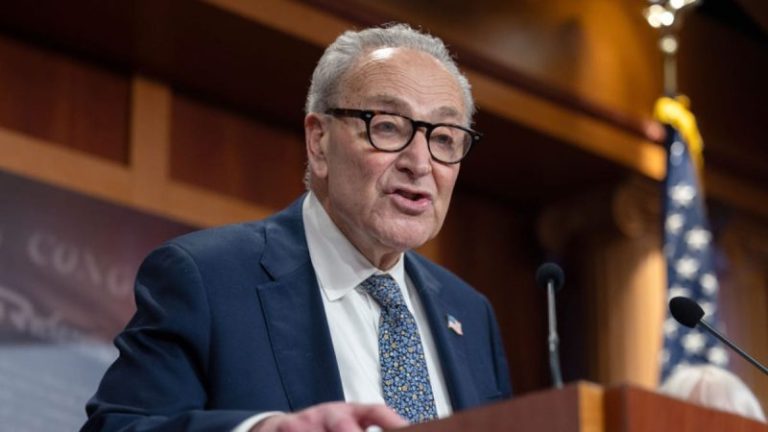
Senate Minority Leader Chuck Schumer stood in the way of the Safeguard American Voter Eligibility Act (SAVE) this week, claiming that it represents ‘Jim Crow’ segregation laws, leading many on social media to bring up his identical claim about a Georgia voting law that resulted in record Black turnout.
Schumer pushed back on a Republican plan to add the SAVE Act, which would require states to obtain proof of citizenship in-person when people register to vote and remove non-citizens from voter rolls, to the spending package being debated in Congress.
‘I have said it before and I’ll say it again, the SAVE Act would impose Jim Crow-type laws to the entire country and is dead on arrival in the Senate,’ Schumer said on Monday. ‘It is a poison pill that will kill any legislation that it is attached to… The SAVE Act is reminiscent of Jim Crow era laws and would expand them to the whole of America. Republicans want to restore Jim Crow and apply it from one end of this country to the other. It will not happen.’
Many on social media quickly pointed to Schumer previously calling a Georgia election integrity law ‘Jim Crow 2.0’ before the law resulted in record Black turnout in the 2022 state election.
‘Schumer used the same line to describe Georgia laws that indisputably expanded voter access back in 2022,’ commentator and writer AG Hamilton posted on X. ‘It’s incredibly offensive and unserious to pretend that every voting law equates to a renewal of Jim Crow.’
Many Democrats, from Schumer, to President Joe Biden, to failed Georgia Democratic gubernatorial candidate Stacey Abrams, warned that the Georgia voter integrity law would be ‘Jim Crow 2.0’ and Major League Baseball even pulled its All-Star Game from Atlanta in 2021 amid public pressure.
Ultimately, the Georgia Secretary of State revealed that the law did not suppress turnout, but rather increased it, particularly among minority voters.
‘Chuck Schumer sounds like a broken record,’ Honest Elections Project Executive Director Jason Snead told Fox News Digital. ‘When Georgia passed a new voting law in 2021, Schumer labeled it ‘Jim Crow’ even though the state went on to see explosive turnout in 2022.’
Snead pointed to a University of Georgia poll after the 2022 election finding that 0% of Black respondents had a poor experience voting.
Snead continued, ‘Now, Schumer is smearing the SAVE Act the same way because he has no legitimate excuse for opposing a law that makes sure only American citizens are voting—which more than 80% of Americans support. Schumer’s smears were false then, and they are false now.
‘Schumer and the Democrats keep trying to rig the rules of our elections by pushing failed, California-style election laws that invite chaos and fraud. That’s not what Americans want.’
Fox News Digital reached out to Schumer’s office for comment.
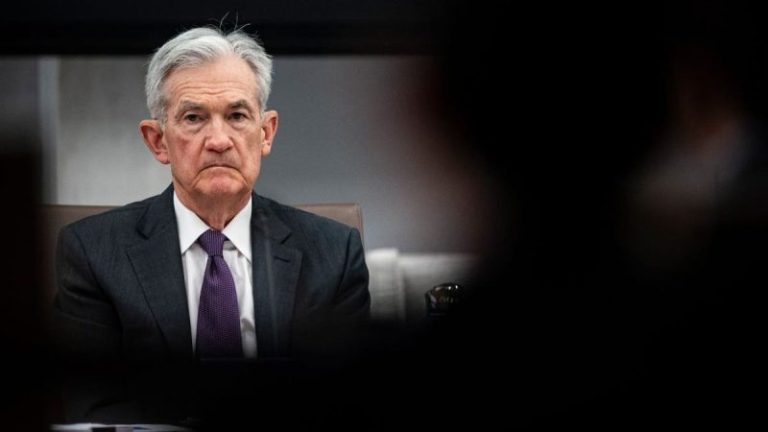
Buried among the roughly 3 million pages of Justice Department documents is a brief exchange revealing disgraced financier Jeffrey Epstein discussing the removal of Federal Reserve Chair Jerome Powell with then–Trump advisor Steve Bannon.
The 2018 emails, bearing the subject line ‘Re: Trump has discussed firing Fed chief after latest interest rate hike: report,’ show Epstein and Bannon weighing who should exit the Trump administration next.
Epstein opened the exchange by endorsing the idea of removing Powell, who Trump had appointed to the role a year prior.
‘Should have been done months ago too old!!!!’ Epstein wrote.
The exchange took place two days after then–Defense Secretary James Mattis stunned Washington with his resignation, and Epstein dismissed the foreign policy upheaval as secondary to changes at the Fed.
‘Getting rid of Powell much more important than Syria/Mattis. I guess Pompeo, only one left,’ Epstein wrote in a follow-up email, adding that ‘Jared and Ivanka need to go,’ referencing Trump’s daughter and son-in-law who held positions in the administration.
Bannon responded by asking whether Powell or then–Treasury Secretary Steve Mnuchin could be removed.
‘Can u get rid of Powell or really get rid of Mnuchin,’ Bannon wrote.
Epstein replied that Mnuchin should remain in place.
‘No, Mnuchin is ok,’ Epstein wrote.
The revelation of the email correspondence underscores a moment years in the making, as President Donald Trump moves forward with a criminal investigation into Powell and names Kevin Warsh as the next chair of the central bank.
: A group led by conservative moms is stepping into the fight against illegal Chinese-made vapes, inspired by the Trump administration’s efforts, and announcing it will be mounting an ‘aggressive’ 2026 campaign to educate parents on the dangers of illegal e-cigarettes.
Moms for America Action, the nation’s largest conservative mothers organization, announced in a press release it will make combating illegal Chinese vapes a top priority in the 2026 election cycle, mobilizing parents and placing ads nationwide to demand tougher enforcement and accountability for manufacturers flooding the U.S. market with illicit products.
The group says the action is in line with the Trump administration’s crackdown on illegal vape products manufactured in China that are marketed to children with a variety of flavors.
‘For moms, this is personal,’ Emily Stack, executive director of Moms for America Action, said in the press release.
‘Illegal Chinese vapes are showing up in our schools, our neighborhoods, and our homes every single day. Moms are fed up, and we’re taking action to stop these products from targeting our kids.’
Moms for America Actions says it will ‘mobilize moms’ to ‘advocate for stronger enforcement, accountability for foreign manufacturers, and protections for children and families.’
In the press release, the group points out that many illicit Chinese vapes are ‘deliberately designed’ to appeal to children and says that will be a main focus of their campaign’s pushback.
‘This is not an accident; it’s by design,’ Stack explained. ‘China has built a billion-dollar industry on addicting American kids to illegal products that have no place in our communities. Moms are fed up, and we fully support the Trump administration’s aggressive actions to shut down this black market.’
The group’s efforts are in line with the Trump administration’s push to combat illicit Chinese vapes, highlighted by an $86.5 million seizure of illegal vapes in Chicago last year that accompanied ‘Operation Vape Trail,’ an operation by Trump’s Drug Enforcement Agency to stem illegal vape sales.
‘The Chinese are getting richer while our children get sicker,’ Health and Human Services Secretary Robert F. Kennedy Jr. posted on X last September. ‘We’re putting an end to that.’
‘We are targeting illegal Chinese vapes, and we will stop them from poisoning our children.’
China’s vape industry is estimated at $28 billion, and despite federal restrictions, government data indicates that two-thirds of its products reach U.S. consumers. More than 80% of vapes sold nationwide are illicit and not authorized for sale.
‘President Trump’s actions send a clear message: profiting off the addiction of our children will not be tolerated,’ Stack said. ‘Moms want safe communities, honest enforcement of the law, and leaders who put American families first. We are committed to making sure these dangerous products are removed from our schools and neighborhoods for good.’
A House Foreign Affairs Middle East and North Africa Subcommittee hearing on Tuesday underscored what lawmakers and witnesses repeatedly described as a ‘historic’ but ‘narrowing’ opportunity to weaken Hezbollah and restore Lebanese state sovereignty, while exposing sharp disagreement over whether current U.S. policy is moving fast or forcefully enough.
Opening the hearing, Chairman Mike Lawler, R-NY., said Lebanon is ‘at a crossroads’ following the Nov. 2024 Israel-Hezbollah ceasefire, arguing the moment offers ‘an unprecedented opportunity’ to help Lebanon ‘break free of the shackles of Iran’s malign influence.’ He warned, however, that progress has been uneven, saying implementation of the Lebanese Armed Forces’ has been ‘haphazard at best.’
The ranking member, Rep. Brad Sherman, D-Calif., struck a more confrontational tone toward the administration, warning that Hezbollah is already rebuilding and that U.S. policy risks squandering the moment.
‘There is a historic opportunity in Lebanon to disarm Hezbollah and remove its grip on the Lebanese state,’ he said. ‘That window of opportunity, however, is narrow. Hezbollah is working hard to rebuild, rearm and to reconstitute itself.’
He criticized cuts to non-security assistance and faulted comments by a Trump administration envoy who described Hezbollah as ‘a political party that also has a militant aspect to it,’ arguing such language ‘sent the wrong signals’ at a critical moment.
David Schenker, senior fellow at The Washington Institute for Near East Policy, testified that while Hezbollah has been weakened militarily, the pace of disarmament remains slow and obstructed.
‘The LAF has a presence in the south that it didn’t have prior to November 2024,’ Schenker said. ‘But they are not in control. Hezbollah still controls the region.’
Schenker said the obstacle is no longer capability but political will. ‘At this point, the question of disarmament is not a matter of capability but of will,’ he told lawmakers, warning that Hezbollah continues to thrive amid corruption and a cash-based economy.
Hanin Ghaddar, senior fellow at The Washington Institute for Near East Policy, said that even full weapons surrender would not dismantle Hezbollah’s power.
‘Hezbollah is not sustained by weapons alone,’ Ghaddar said. ‘It survives through an economic and political ecosystem that protects cash flows, penetrates state institutions and enables military rebuilding.’
She warned that Lebanon’s unregulated cash economy has become Hezbollah’s most durable asset. ‘Weapons can be collected, but money keeps flowing,’ Ghaddar said. ‘Disarmament without dismantling the cash economy… will not be durable.’
All three witnesses emphasized U.S. support should be tied to measurable performance such as progress on disarmament of Hezbollah and economic reform.
Schenker called for renewed sanctions against corrupt Lebanese officials, saying, ‘We should be sanctioning leaders right now… who are obstructing reform.’
Dana Stroul, director of research and senior fellow at The Washington Institute for Near East Policy, warned that Washington’s approach remains incomplete.
‘For the past year, U.S. policy has focused on Hezbollah disarmament, which is critical, but on its own is only a partial strategy,’ Stroul said.
She cautioned that upcoming parliamentary elections could either ‘strengthen or undermine the anti-Hezbollah government,’ calling it the ‘worst-case outcome’ if Hezbollah-aligned politicians retain power.
Ghaddar said Hezbollah’s weakening has shifted Lebanese public discourse. ‘The mythology of resistance has shattered,’ she said. ‘Peace is no longer taboo.’
She argued that normalization with Israel would raise the political cost of Hezbollah’s rearmament and help lock in reform. ‘Without a credible peace horizon, disarmament and economic reform will be temporary. With one, they become structural,’ Ghaddar said.
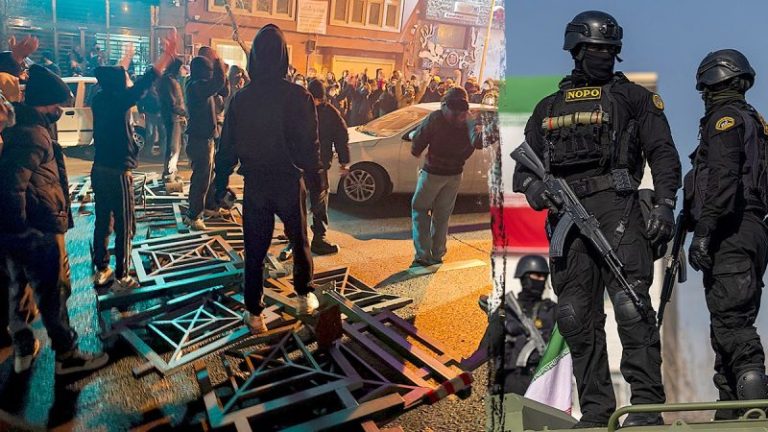
Leaked documents from the Iranian regime reveal a coordinated plan by its security apparatus, approved by Supreme Leader Ayatollah Ali Khamenei, to violently suppress nationwide protests using force, surveillance and internet shutdowns.
Excerpts of the documents, reviewed by Fox News Digital, show that Iran’s Supreme National Security Council developed the strategy after the 2019 nationwide protests that came amid fuel price hikes and economic collapse.
At a National Council of Resistance of Iran (NCRI) press briefing Tuesday covering the regime’s pre-planned orders behind the protests and mass killings, Alireza Jafarzadeh, deputy director of the Washington office, said the documents ‘were obtained from within the regime’ and later cited The People’s Mojahedin Organization of Iran (MEK) as having gained access to them.
‘This Directive by the National Security Council was obtained by the network in Iran of the MEK, which has access to sources within the regime,’ he confirmed to Fox News Digital.
‘These documents show the regime’s efforts to prevent the resurgence of the uprising and, if it occurred, to suppress it,’ Jafarzadeh added before stating that there are ‘clear operational plans allocated to the IRGC to use lethal force to kill as many people as needed to stay in power.’
The first document, classified ‘top secret,’ was issued Mar. 3, 2021, with the regime codifying four escalating law enforcement and security conditions. The regime defined how unrest would be handled and which authorities would be in command at each stage.
Initial law enforcement and non-armed security situations placed command authority with Iran’s national police force, with support from the Islamic Revolutionary Guard Corps (IRGC) and the Intelligence Ministry (VAJA).
In the most severe category, designated an ‘armed security situation,’ full command authority rapidly shifted to the IRGC.
‘For now, this compilation should be communicated for two years,’ Khamenei wrote before ordering the blueprint implemented nationwide.
The secret guidelines became the blueprint for crushing the January 2026 protests, which erupted amid soaring inflation, currency collapse and anger toward clerical rule.
According to the Human Rights Activists News Agency (HRANA), at least 6,854 people have been killed during the protests, with 11,280 cases under investigation.
Internal regime assessments cited in other leaked files describe three phases of the 2026 uprising: an initial law enforcement phase, followed by a non-armed security phase and finally an armed security situation beginning Jan. 8 when authority shifted fully to the IRGC that played the command role and carried out armed killings.
The documents specify that during armed security situations, the IRGC operated with support from other security bodies, while Iran’s Ministry of Communications was ordered to impose internet restrictions, including full shutdowns.
A second classified document, compiled in 2024 by the IRGC’s Sarallah Headquarters, reveals how far the regime went to prepare for dissent.
The 129-page ‘Comprehensive Security Plan of Tehran’ details extensive surveillance and repression measures, identifying members of the opposition MEK and family members of executed dissidents as ‘level number one’ enemies subject to monitoring and control.
‘It also shows how far the regime is prepared to go to kill as many people as needed, which they did in January 2026. However, these killings further convinced the people that there is only one way to end the killings, and that is to overthrow the regime,’ Jafarzadeh added.
‘There are more people, especially young ones, who have joined the ranks of the organized force to confront the IRGC and liberate the nation,’ he said.
Rua Gold INC. (TSXV: RUA,OTC:NZAUF) (OTCQB: NZAUF) (‘Rua Gold’ or the ‘Company’) is pleased to announce that the Company will be uplisting to the Toronto Stock Exchange (the ‘TSX’). The common shares of the Company (the ‘Common Shares’) will be voluntarily delisted from the TSX Venture Exchange effective as of close of market on Friday, February 13, 2026, and will commence trading on the TSX effective at the opening of the market on Tuesday, February 17, 2026 under its current ticker symbol, ‘RUA’.
Robert Eckford, CEO of Rua Gold, commented: ‘Graduating to the TSX is a significant milestone for Rua Gold. The uplisting will enhance our visibility in the capital markets and enable us to continue to attract key institutional and retail investors as we continue to develop the Reefton Project and Glamorgan Project in New Zealand.’
Rua Gold will continue to remain a ‘reporting issuer’ under applicable Canadian securities laws, and the Common Shares will also remain listed on the OTCQB under the symbol ‘NZAUF’. Shareholders are not required to take any action in connection with the TSX uplisting.
About Rua Gold
Rua Gold is an exploration company, strategically focused on New Zealand. With decades of expertise, their team has successfully taken major discoveries into producing world-class mines across multiple continents. The team is focused on maximizing the asset potential of Rua Gold’s two highly prospective high-grade gold projects.
The Company controls the Reefton Gold District as the dominant landholder in the Reefton Goldfield on New Zealand’s South Island with over 120,000 hectares of tenements, in a district that historically produced over 2Moz of gold grading between 9 and 50g/t.
The Company’s Glamorgan Project solidifies Rua Gold’s position as a leading high-grade gold explorer on New Zealand’s North Island. This highly prospective project is located within the North Islands’ Hauraki district, a region that has produced an impressive 15Moz of gold and 60Moz of silver. Glamorgan is adjacent to OceanaGold Corporation’s biggest gold mining project, Wharekirauponga.
FOR FURTHER INFORMATION PLEASE CONTACT: Robert Eckford Phone: (604) 655-7354 Email: reckford@ruagold.com
Neither the TSXV nor its Regulation Services Provider (as that term is defined in the policies of the TSXV) accepts responsibility for the adequacy or accuracy of this release.
Forward-Looking Information
This news release includes certain statements that may be deemed ‘forward-looking statements’. All statements in this news release, other than statements of historical facts, that address events or developments that the Company expects to occur, are forward-looking statements. Forward-looking statements are statements that are not historical facts and are generally, but not always, identified by the words ‘expects’, ‘plans’, ‘anticipates’, ‘believes’, ‘intends’, ‘estimates’, ‘projects’, ‘potential’ and similar expressions, or that events or conditions ‘will’, ‘would’, ‘may’, ‘could’ or ‘should’ occur and specifically include statements regarding: the Company’s strategies, expectations, planned operations or future actions including but not limited to exploration programs at its New Zealand properties; the intended listing date on the TSX and the delisting date on the TSX Venture Exchange. Although the Company believes the expectations expressed in such forward-looking statements are based on reasonable assumptions, such statements are not guarantees of future performance and actual results may differ materially from those in the forward-looking statements.
Investors are cautioned that any such forward-looking statements are not guarantees of future performance and actual results or developments may differ materially from those projected in the forward-looking statements. A variety of inherent risks, uncertainties and factors, many of which are beyond the Company’s control, affect the operations, performance and results of the Company and its business, and could cause actual events or results to differ materially from estimated or anticipated events or results expressed or implied by forward looking statements. Some of these risks, uncertainties and factors include: general business, economic, competitive, political and social uncertainties; risks related to the effects of the Russia-Ukraine war; risks related to climate change; operational risks in exploration, delays or changes in plans with respect to exploration projects or capital expenditures; the actual results of current exploration activities; conclusions of economic evaluations; changes in project parameters as plans continue to be refined; changes in labour costs and other costs and expenses or equipment or processes to operate as anticipated, accidents, labour disputes and other risks of the mining industry, including but not limited to environmental hazards, flooding or unfavorable operating conditions and losses, insurrection or war, delays in obtaining governmental approvals or financing, and commodity prices. This list is not exhaustive of the factors that may affect any of the Company’s forward-looking statements and reference should also be made to the Company’s documents filed under its SEDAR+ profile at www.sedarplus.ca for a description of additional risk factors.
Forward-looking statements are based on the beliefs, estimates and opinions of the Company’s management on the date the statements are made. Except as required by applicable securities laws, the Company undertakes no obligation to update these forward-looking statements in the event that management’s beliefs, estimates or opinions, or other factors, should change.
To view the source version of this press release, please visit https://www.newsfilecorp.com/release/283786
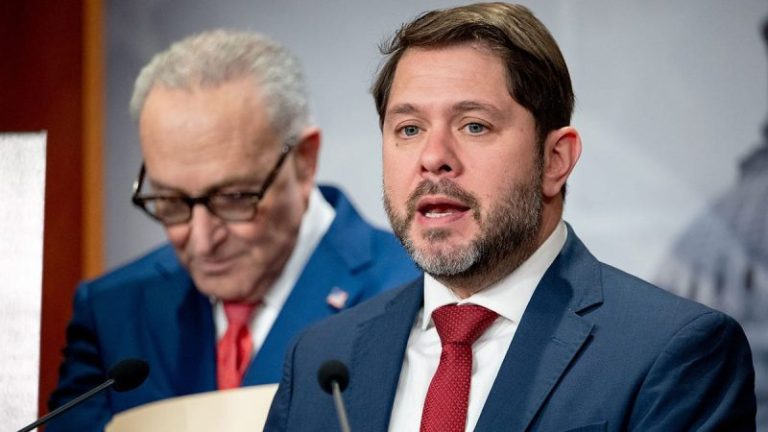
A Senate Democrat is demanding that the Trump administration refund billions in tariff revenue to Americans following last week’s Supreme Court decision, according to a letter first obtained by Fox News Digital.
Sen. Ruben Gallego, D-Ariz., wrote in a letter to President Donald Trump charging that he was concerned over the White House’s ‘lack of action’ to issue refunds to families and small businesses impacted by tariffs.
His appeal to the president comes after the Supreme Court ruled in a 6-3 decision last week that Trump’s use of the International Emergency Economic Powers Act (IEEPA), the law undergirding his sweeping duties, ‘does not authorize the President to impose tariffs.’
‘The invalidation of these IEEPA tariffs is a chance to make American families and small businesses whole — not to retain unlawfully collected funds or enable additional corporate profit,’ Gallego wrote.
Gallego’s letter comes as Congress wrestles with its next move on tariffs and as Trump has vowed to sidestep lawmakers in his quest to continue levying duties on other countries.
Some Republicans want to see Trump’s tariffs considered through budget reconciliation — the same party-line move used to pass his ‘big, beautiful bill’ last year — to meet the deliberative parameters established in the court’s decision.
Others think Trump doesn’t need to come to Congress. The president already moved to reinstate 10% tariffs that are set to last for 150 days and will require lawmakers to weigh in on continuing them.
Several congressional Democrats want to see the administration tender full refunds from the billions raked in under Trump’s tariffs — 25 Senate Democrats back a newly introduced bill led by Sen. Ron Wyden, D-Ore., to refund all duties with interest.
And Gallego specifically wants guardrails to ensure that money ends up in the hands of families and small businesses.
‘Absent action from this administration, over $100 billion in tariff revenue collected under those unlawful tariffs will not make it into the hands of American families and small businesses but instead will remain either in government coffers or in corporate accounts,’ Gallego wrote.
Since the start of the current fiscal year in October, Trump’s IEEPA tariffs are estimated to have generated roughly $155 billion, according to data from the Treasury Department.
He also raised concerns about large corporations taking advantage of the ‘chaotic and expansive nature of the IEEPA tariffs’ to crank up prices on products in response to the duties.
Gallego included several requests of the administration in his letter to be met no later than March 4, including whether the administration will issue tariff refunds, who will be eligible, how much revenue has been collected as of Feb. 20 and whether corporations will be required to disclose tariff costs passed on to consumers, among several others.
He also warned that corporations, armed with the financial firepower to hire ‘high-priced lawyers and lobbyists,’ would have a leg up on Americans without the same means.
‘Without your administration providing a structured process to determine how refunds should be distributed, American families and small businesses will once again be left behind,’ Gallego wrote.
Related Article
Democrats cheer Supreme Court move blocking Trump tariffs — despite past support for trade duties
A ticket-reselling operation used a network of fake accounts to bypass Ticketmaster’s security protocols to grab hundreds of thousands of tickets to hugely popular tours for artists like Taylor Swift and Bruce Springsteen and then re-sold them for millions, federal regulators said Monday.
The Federal Trade Commission alleges the operation used illicit software that masked IP addresses, as well as repurposed credit cards and SIM phone cards, as part of the scheme. It was run through various guises, like TotalTickets.com, TotallyTix and Front Rose Tix, but was run by three key individuals, the agency said.
In total, the group is accused of buying 321,286 tickets to 3,261 live performances from June 2022 to December 2023, in bunches of 15 or more tickets to each event at a total cost of approximately $46.7 million and then reselling them for $52.4 million, netting approximately $5.7 million.
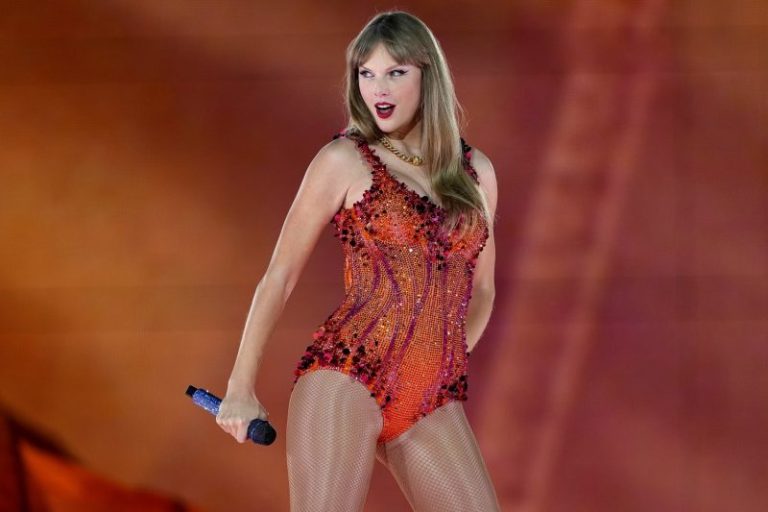
Taylor Swift.Lewis Joly / AP file
That includes $1.2 million from reselling tickets in 2023 for Taylor Swift’s record-breaking “The Eras Tour.” In one instance, the suspects used 49 different accounts to purchase 273 tickets for Swift’s March 2023 tour stop in Las Vegas, vastly exceeding Ticketmaster’s six-ticket limit, which they then sold for $120,000, the FTC alleges.
Another part of the alleged scheme involved using friends, family and paid strangers to open Ticketmaster accounts. The FTC says the defendants at one point printed up flyers in places like Baltimore claiming that participants could “make money doing verified van sign ups” in just “3 easy steps,” earning $5 for the account creation and $5 to $20 each time they received a Verified Fan presale code.
Ticketmaster came in for heavy criticism after fans complained of faulty technology and eye-watering prices for 2022 sales for Taylor Swift and Bruce Springsteen’s tours. The Verified Fan pre-sale for Swift’s tour crashed its site, which it blamed on “bot attacks” and bot fans who didn’t have invite codes. It was subsequently forced to postpone the sale date for the general public seeking tickets to Swift’s tour “due to demands on ticketing systems and insufficient remaining ticket inventory.”
In response, Swift alluded to broken “trust” with Ticketmaster, though she didn’t name it directly.
“It’s really difficult for me to trust an outside entity with these relationships and loyalties, and excruciating for me to just watch mistakes happen with no recourse,” she wrote in an Instagram message in 2022, adding: “I’m not going to make excuses for anyone because we asked them multiple times if they could handle this kind of demand and we were assured they could.”
Springsteen said in a statement at the time that “ticket buying has gotten very confusing, not just for the fans, but for the artists also” but that most of his tickets are “totally affordable.”
In March, President Donald Trump signed an executive order focused on curbing exploitative ticket reselling practices that raise costs for fans.
On Monday, FTC Chairman Andrew N. Ferguson said Trump’s order made clear ‘that unscrupulous middlemen who harm fans and jack up prices through anticompetitive methods will hear from us.”
“Today’s action puts brokers on notice that the Trump-Vance FTC will police operations that unlawfully circumvent ticket sellers’ purchase limits, ensuring that consumers have an opportunity to buy tickets at fair prices,” he said in a statement.
Ticketmaster itself has remained under federal scrutiny for violating a prior agreement to curb what regulators said was anti-competitive behavior. In 2024, the Justice Department and FTC under President Joe Biden opened a lawsuit against Ticketmaster’s parent company, LiveNation, that accused it of monopolizing the live events industry.
It was not immediately clear whether that suit is still active. In July, the parent company of the alleged operation charged Monday by the FTC, Key Investment Group, sued the agency to block its pending investigation into its sales practices, saying that ticket purchases on its site did not use automated software, or bots, and did not violate the 2016 Better Online Ticket Sales (BOTS) Act.
Representatives for the FTC and Justice Department did not respond to a request for comment. Ticketmaster is not accused of wrongdoing in the latest suit. It did not respond to a request for comment.
Strangely, in the latest complaint, the FTC includes a slide from an internal Ticketmaster presentation from 2018 that suggests the company was weighing the economic impact of imposing stricter purchasing caps that would curb bots but potentially hurt its finances. On a page labeled “evaluating potential actions” a data table is shown under the heading “serious negative economic impact if we move to 8 ticket limit across the board.”
It also includes an email from one of the defendants in which he “owns up” to having exceeded the ticket-purchase limit for a May 2024 Bad Bunny show in Miami and offers to have the orders canceled, to which a Ticketmaster rep simply responds that “as long as the purchases were made using different accounts and cards, it’s within the guidelines.”
Efforts to reach the three defendants — Taylor Kurth, Elan Rozmaryn and Yair Rozmaryn — named in the suit announced Monday were unsuccessful. In 2018, Kurth signed a deal, or consent decree, with regulators in the state of Washington that committed him to not use software designed to circumvent companies’ security policies.
The FTC is seeking unspecified damages and civil penalties against the defendants.
CORRECTION (Aug. 19, 2025, 11:41 a.m. ET): An earlier version of this article incorrectly named a party suing the FTC and which investigation it was suing over. Key Investment Group, the parent of the alleged operation cited in the suit filed Monday by the FTC, sued the agency in July to halt an investigation into its practices. Ticketmaster and its parent, Live Nation, are not directly involved in that investigation or Key’s suit against the agency.
Copper Quest Exploration Inc. (CSE: CQX,OTC:IMIMF; OTCQB: IMIMF; FRA: 3MX) (‘Copper Quest’ or the ‘Company’) announces that it has entered into a securities for debt settlement agreement dated February 11, 2026 (the ‘Agreement’) with a professional advisor of the Company.
Pursuant to the Agreement, the Company has agreed to settle debt in the amount of $113,405.28 through the issuance of 872,348 units (each, a ‘Unit‘) at a deemed price of $0.13 per Unit, whereby each Unit shall be comprised of one (1) common share in the capital of the Company (each a ‘Share‘) and one (1) Share purchase warrant (each whole, being a ‘Warrant‘). Each Warrant will be convertible into an additional Share (a ‘Warrant Share‘) at an exercise price of $0.165 per Warrant Share and will expire on the date that is two (2) years following the date of issuance (the ‘Expiry Date‘). The Expiry Date shall be subject to acceleration should the closing price of the Shares on the Canadian Securities Exchange (or any such other stock exchange in Canada as the Shares may trade at the applicable time) equal or exceed $0.50 for ten (10) consecutive trading days at any time from the date which is 4 months following their date of issue, the Company may accelerate the expiry date of the Warrants such that the Warrants shall expire on the date which is 30 calendar days following the date a news release is issued by the Company announcing the accelerated expiry date of the Warrants.
The Agreement and the issuance of the securities thereunder are subject to the approval of the CSE. The securities will be subject to a hold period of four months and one day pursuant to CSE policies and applicable securities laws.
About Copper Quest
The company’s land holdings comprise 7 projects that span over 45,000 hectares in great mining jurisdictions of Canada and the USA. Copper Quest is committed to building shareholder value through acquisitions, discovery-driven exploration, and responsible development of its North American critical mineral portfolio of assets. The Company’s common shares are principally listed on the Canadian Stock Exchange under the symbol ‘CQX’. For more information on Copper Quest, please visit the Company’s website at www.copper.quest.
Copper Quest has a 100% interest in the past-producing Alpine Gold Mine located approximately 20 kilometers northeast of the City of Nelson British Columbia, spanning 4,611.49 hectares with a 2018 National Instrument 43-101 Standards of Disclosure for Mineral Projects historical inferred resource of 268,000 tonnes, estimated using a cut-off grade of 5.0 g/t Au and an average grade of 16.52 g/t Au, that represents an inferred resource of 142,000 oz of gold (McCuaig & Giroux, 2018)*. Apart from the Alpine Mine itself the property hosts 4 other less explored significant vein systems including the past-producing King Solomon vein workings, the Black Prince and the Cold Blow veins system, and the Gold Crown vein system. *The Company has not yet completed sufficient work to verify the 2018 historic inferred resource results.
Copper Quest has a 100% interest in the road accessible Stars Porphyry Copper-Molybdenum Property, spanning 9,693 hectares in central British Columbia’s Bulkley Porphyry Belt with Tana Zone discovery drill intersection highlights of 0.466% Cu over 195.07m* in drill hole DD18SS004 from 23.47m, 0.200% Cu over 396.67m* in drill hole DD18SS010 from 29.37m, and 0.205% Cu over 207.27m* in drill hole DD18SS015 from 163.98m. This highly prospective, approximately 5 X 2.5 kilometer annular magnetic anomaly is interpreted to represent an altered monzonite intrusion and surrounding hornfels.
Copper Quest has a 100% interest in the road accessible Kitimat Copper-Gold Property, spanning 2,954 hectares within the Skeena Mining Division of northwestern British Columbia located northwest of the deep-water port community of Kitimat, British Columbia. The property benefits from exceptional infrastructure, being within 10 km of tidewater, 1.5 km of rail, and 6 km of high-voltage hydroelectric transmission lines. Exploration on the Kitimat property dates to the late 1960s, with the most significant historical work conducted by Decade Resources Ltd. (2010), which completed 16 diamond drill holes totaling 4,437.5 meters in the Jeannette Cu-Au Zone, and drill intersection highlights of 1.03 g/t Au, 0.54% Cu over 117.07 m in Hole J-7 from 1.52 m, 1.00 g/t Au, 0.55% Cu over 103.65m in Hole J-1 from 9.15 m, 0.80 g/t Au, 0.45% Cu over 107.01m in Hole J-2 from 6.10 m, and 0.41 g/t Au, 0.33% Cu over 112.20m in Hole J-8 from 11.89 m.
Copper Quest has a 100% interest in the Nekash Copper-Gold Project, a porphyry exploration opportunity located in Lemhi County, Idaho, USA, along the prolific Idaho-Montana porphyry copper belt that hosts world-class systems such as Butte and CUMO. The project is fully road-accessible via maintained U.S. highways and forest service roads and consists of 70 unpatented federal lode claims covering 585 hectares.
Copper Quest has a 100% interest in the road accessible Stellar Property, spanning 5,389-hectares in British Columbia’s Bulkley Porphyry Belt contiguous to the Stars Property.
Copper Quest has a 100% interest in the Thane Project located in the Quesnel Terrane of Northern British Columbia spanning over 20,658 hectares with 10 priority targets identified demonstrating significant copper and precious metal mineralization potential.
Copper Quest has an earn-in option of up to 80% and joint-venture agreement on the road accessible Rip Porphyry Copper-Molybdenum Project, spanning 4,700-hectares located in the Bulkley Porphyry Belt in central British Columbia.
On behalf of the Board of Copper Quest Exploration Inc.
Brian Thurston, P.Geo. Chief Executive Officer and Director Tel: 778-949-1829
For further information contact: Investor Relations info@copper.quest
This news release contains certain ‘forward-looking information’ and ‘forward-looking statements’ (collectively, ‘forward-looking statements‘) within the meaning of applicable securities legislation. All statements, other than statements of historical fact included herein, including without limitation, future operations and activities of Copper Quest, are forward-looking statements. Forward-looking statements are frequently, but not always, identified by words such as ‘expects’, ‘anticipates’, ‘believes’, ‘intends’, ‘estimates’, ‘potential’, ‘possible’, and similar expressions, or statements that events, conditions, or results ‘will’, ‘may’, ‘could’, or ‘should’ occur or be achieved. Forward-looking statements reflect the beliefs, opinions and projections on the date the statements are made and are based upon a number of assumptions and estimates based on or related to many of these factors. Such factors include, without limitation, risks associated with possible accidents and other risks associated with mineral exploration operations, the risk that the Company will encounter unanticipated geological factors, risks associated with the interpretation of exploration results, the possibility that the Company may not be able to secure permitting and other governmental clearances necessary to carry out the Company’s exploration plans, the risk that the Company will not be able to raise sufficient funds to carry out its business plans, and the risk of political uncertainties and regulatory or legal changes that might interfere with the Company’s business and prospects. Readers should not place undue reliance on the forward-looking statements and information contained in this news release concerning these items. The Company does not assume any obligation to update the forward-looking statements of beliefs, opinions, projections, or other factors, should they change, except as required by applicable securities laws.
The Canadian Securities Exchange has not reviewed, approved or disapproved the contents of this press release, and does not accept responsibility for the adequacy or accuracy of this release.
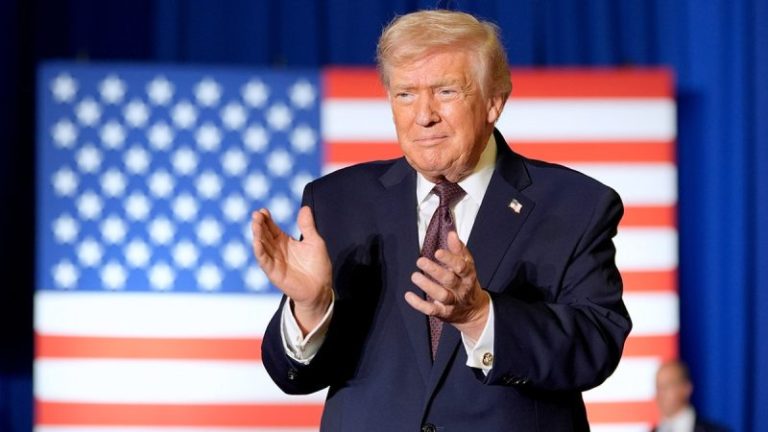
President Donald Trump has drawn his line. Now the clock is running.
After publicly giving Iran roughly 10 days to 15 days to reach a nuclear agreement, Trump used his State of the Union address to make clear the deadline is backed by force.
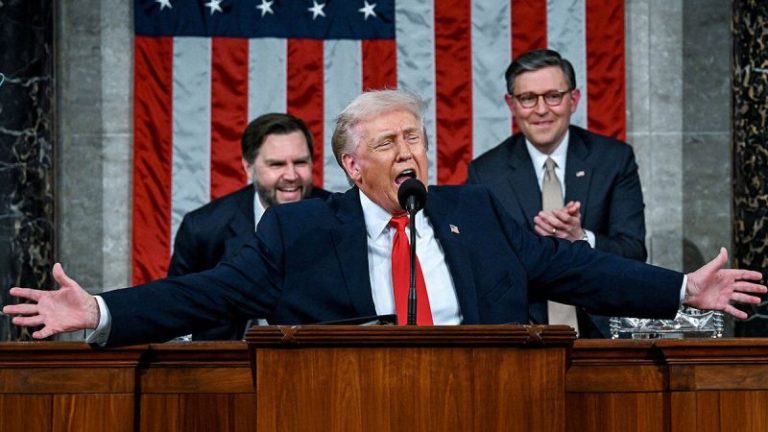
‘I will never allow the world’s number one sponsor of terror … to have a nuclear weapon,’ he told lawmakers Tuesday night.
The president first outlined the short timeline Feb. 19, saying the world would know within ‘probably 10 days’ whether Tehran was prepared to strike what he called a meaningful deal.
‘I would think that would be enough time — 10, 15 days, pretty much maximum,’ Trump said, warning that absent an agreement, ‘it’s going to be unfortunate for them.’
On Tuesday, he reinforced the pressure from the House chamber, telling Congress negotiations are underway, but Iran has not met his core condition.
‘We are in negotiations with them,’ Trump said. ‘They want to make a deal, but we haven’t heard those secret words: ‘We will never have a nuclear weapon.”
He also pointed back to the 2025 U.S. strike on Iranian nuclear infrastructure, describing Operation Midnight Hammer as having ‘obliterated Iran’s nuclear weapons program.’
After that operation, he said, Tehran was warned ‘to make no future attempts to rebuild its weapons program,’ adding that Iran is now ‘starting it all over again.’
The combination of a defined diplomatic window and a public reminder of U.S. military action marks a sharper phase in the standoff, as talks in Geneva unfold under mounting pressure.
Trump has not detailed what specific action would follow if Iran refuses his terms. But he told reporters in mid-February that if a meaningful agreement does not materialize, ‘bad things will happen,’ and acknowledged he is considering further steps.
With the State of the Union complete and the president’s timeline already in motion, the coming days are likely to determine whether the administration secures a nuclear concession — or shifts toward a more confrontational path in the Middle East.
The diplomatic ultimatum is underscored by the largest assembly of U.S. naval power in the Middle East since the 2003 invasion of Iraq.
The world’s most advanced aircraft carrier, the USS Gerald R. Ford, arrived at Souda Bay, Crete, Monday. The Ford joined the USS Abraham Lincoln, which has been conducting 24-hour flight operations in the Arabian Sea since late January.
Between the two strike groups, the U.S. now commands a fleet of 14 major warships, including nine Arleigh Burke-class destroyers armed with Tomahawk cruise missiles.
Meanwhile 12 U.S. F-22 Raptor stealth fighters touched down at Ovda Airbase in southern Israel.
As national security analyst Joe Funderburke noted in the Small Wars Journal, ‘The F-22 is not a simple show-of-force aircraft. It is designed to suppress enemy air defenses and protect penetrating strike platforms like the B-2 Spirit bomber, the same combination used to devastate Iran’s deeply buried nuclear facilities at Fordow and Natanz nine months ago.’
The president’s reminder of Operation Midnight Hammer — which utilized B-2 bombers to drop 30,000-pound ‘bunker buster’ munitions — serves as the tactical blueprint for what follows the current deadline.
While the 2025 operation was a ‘surgical’ surprise strike, the current buildup suggests a far broader mission set, potentially due to Iran’s threat of an aggressive response.
Iran’s response to Operation Midnight Hammer was measured and the U.S. had warning. This time, Iran has vowed a more forceful response and says any U.S. troops operating in the Middle East could be open targets.
Amid his sharper diplomatic timeline, Trump also asserted that Iranian authorities had killed some 32,000 protesters in weeks of demonstrations that began in early January — a number far above independent estimates and Tehran’s own death toll.
‘Just over the last couple of months with the protests, they’ve killed at least, it looks like, 32,000 protesters — 32,000 protesters in their own country,’ the president said. ‘They shot them and hung them.’
Administration officials have signaled that any agreement would require Iran to halt all uranium enrichment and provide verifiable guarantees that its program cannot be reconstituted — terms Iran repeatedly has objected to.
Both Washington and Iran appear to believe the other is bluffing.
Trump has framed the timeline as a final opportunity for diplomacy backed by overwhelming force. Iranian leaders, meanwhile, have publicly dismissed U.S. threats and warned that any strike would trigger retaliation against American forces and regional allies.
Still, U.S. negotiators will meet with Iranian envoys once again in Geneva Thursday.
Related Article
Trump gives Iran 10-day ultimatum, but experts signal talks may be buying time for strike