Author

admin

Browsing

Gold and silver are wrapping up yet another record-setting week that’s seen economic uncertainty and geopolitical tensions combine to push prices upward.

The yellow metal moved decisively through US$4,600 per ounce on Monday (January 12), trading above that level for a decent amount of the week.

For its part, silver reached what’s perhaps an even more impressive price milestone, surging past US$90 per ounce and breaking US$93 on Wednesday (January 14).

At this point, there’s a very long list of factors providing support for the precious metals, and we don’t have time to touch on all of them today. Instead let’s take a look at a few that have been making headlines over the past week or so and break them down.

First, there’s the latest news in the clash between US President Donald Trump and Federal Reserve Chair Jerome Powell. On Sunday (January 11), Powell said that two days earlier, the Department of Justice had served the Fed with grand jury subpoenas threatening a criminal indictment.

I had the chance to speak with Mario Innecco, who runs the @maneco64 channel on YouTube, not long after Powell’s statement — here’s how he summed it up:

‘They’ve subpoenaed documents, and it’s supposed to be related to the renovation of the Fed’s headquarters in Washington, DC. But Jay Powell came out and said it’s not, it’s basically because they want him to cut rates.

‘And he’s probably right. I think they’re using any kind of, let’s say tricks, to try to get rid of him, because I think the administration, even though they talk about how the economy is doing so great, they are desperate.’

Trump himself has said he had no knowledge of the investigation, and has also asserted that he’s not interested in firing Powell, whose term as Fed chair wraps up in May.

Nevertheless, the situation has reignited concerns about Fed independence, and has provided support for gold and silver, which tend to fare better when rates are lower. The next Fed chair, who has not yet been appointed, is widely expected to fall in line with Trump.

In addition to that, geopolitical tensions have remained high. Venezuela is still in the spotlight after its former president was removed by the US last week, and this week Trump warned that the US would intervene in Iran if its executions of anti-government protesters did not stop.

Iran responded by saying it would strike US bases if that happened.

Those events and others are boosting safe-haven demand for gold, as well as silver, but I want to hone in on a couple more points on the silver side that I think are worth looking at.

One of those is the news that the US plans to hold off on new critical minerals tariffs after receiving the results of a Section 232 investigation launched last year.

While a presidential proclamation states that imports of processed critical minerals and their derivative products do constitute a national security risk for the US, the country will first take steps such as negotiating supply agreements with other nations.

Silver was recently designated a critical mineral in the US, and some market watchers believe this news out of the US was responsible for a midweek price dip for the white metal. However, others continue to highlight silver’s deeper underlying drivers.

I heard recently from Andy Schectman of Miles Franklin, who emphasized that a key element supporting silver right now is the fact that more and more entities are standing for physical delivery.

Here’s how he explained what he’s seeing:

‘For years I’ve been saying … that the most well-informed, well-funded traders — and I’ll highlight well informed, that being the central banks — have been standing for delivery since 2020. Very unusual, because really no one ever stood for delivery. And this started to accelerate. But all along, the US was not part of this game. We were seeing it in the Global South with the BRICs. And now all of a sudden we are seeing the most well-informed traders in North America stand for delivery in massive amounts.’

Gold ended the week just below US$4,600, while silver was slightly above US$90.

Securities Disclosure: I, Charlotte McLeod, hold no direct investment interest in any company mentioned in this article.
This post appeared first on investingnews.com

It’s been a wild couple of weeks for gold and silver.

After surging to record highs at the end of January, prices for both precious metals saw significant corrections, creating turmoil for market participants.

This week brought some relief, with gold bouncing back from its low point and even trading above US$5,000 per ounce for a brief period of time.

Silver, which is known for outperforming gold on both the upside and the downside, was more volatile, but seems to have found support around the US$70 per ounce level.

Why did gold and silver drop, and more importantly, what’s next? As always, there are a variety of different factors at play, but I’ll give you a rundown of what I’ve been hearing.

Starting with the pullback, I spoke with Joe Cavatoni of the World Gold Council, who pointed to speculative players as a key reason for gold’s price decline. Here’s how he explained it:

‘At the end of this, you’re looking at a lot of people who were pushing the price higher — speculative in nature — pulling back and taking money off the table. That’s why I think we’re seeing a correction in the price. I don’t think that we have an issue with, fundamentally, what’s going on in the gold market.’

Gary Savage of the Smart Money Tracker newsletter made a similar comment, saying that there are times when sentiment gets so bullish that eventually there’s no one left to buy.

However, on the silver side he saw signs of market manipulation as well:

‘Some of it is just (that) we got way too bullish, ran out of buyers. We were due for some kind of correction anyway, and I think the banks took advantage of that and coordinated a huge overnight attack that dropped silver … I think it was almost 30 percent, or maybe it was 30 percent, almost overnight. That allowed them to get out of their shorts, because a lot of those contracts were going to stand for delivery, and they were going to have to buy physical silver at US$120 an ounce to to deliver.’

Adding more nuance to the silver story this week was the news that billionaire Chinese trader Bian Ximing has reportedly established the largest net short position on the Shanghai Futures Exchange, with his bet against the white metal clocking in at US$300 million.

Bloomberg analysis of exchange data shows he started ‘ramping up silver shorts’ in the last week of January, although he initially began shifting from a long silver stance this past November.

Aside from silver, Bian is known for his moves in gold and copper.

There’s also been commentary suggesting that the nomination of Kevin Warsh for the US Federal Reserve chair position has weighed on gold and silver prices.

President Donald Trump announced his choice on January 30, with market watchers quickly pointing to Warsh’s hawkish reputation and questioning whether he will fall in line with Trump’s calls for lower interest rates. Rates have been a sticking point between Trump and current Fed Chair Jerome Powell.

However, in the days since the news broke, the tone has shifted, with Trump himself saying that Warsh wouldn’t have gotten the job if he said he wanted to raise rates.

Taking a step back from what’s happening now, I want to emphasize that the majority of the experts I’ve been speaking with recently don’t believe gold and silver are topping.

In a January 25 interview, Adrian Day of Adrian Day Asset Management said exactly that, pointing to previous bull markets where both metals moved steeply down before continuing up. This quote is from before last week’s correction, but I think you’ll see why it’s still relevant:

‘A pullback is always in the cards. And people forget, everybody talks about … 1974 to 1975, when gold dropped almost 50 percent. But people forget, the same thing happened in 2006. Halfway through the bull market, you had a 30 percent correction in gold, which of course means a much bigger correction for gold stocks.

‘So a pullback at some point is always not just a possibility, but it’s almost a certainty. But if we rephrase the question to, ‘Is this a top?’ You know, absolutely not. In my view, we are absolutely nowhere near a top.’

With that said, a point that’s come up repeatedly in my interviews lately is personalization — while it’s valuable to listen to other people’s views, what’s really important is to form your own opinions and understand why you own the assets in your portfolio. If you can do that, you’ll be better equipped to weather any storms, and to buy and sell when it’s time.

Securities Disclosure: I, Charlotte McLeod, hold no direct investment interest in any company mentioned in this article.
This post appeared first on investingnews.com

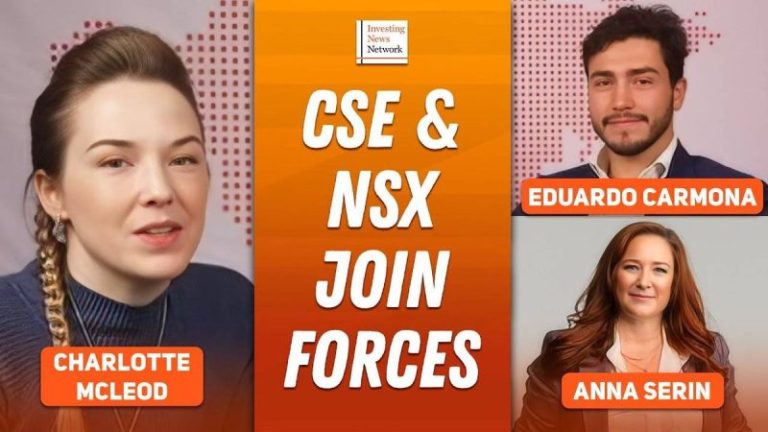
Anna Serin of the Canadian Securities Exchange (CSE) and Eduardo Carmona of the National Stock Exchange of Australia (NSX) discuss the CSE’s recent acquisition of the NSX, outlining what it means for both companies and investors.

‘What we’re hoping to create, and where we think the opportunity lies in Australia, is creating the venture market a little bit like the CSE’s done (in Canada),’ Carmona explained.

Securities Disclosure: I, Charlotte McLeod, hold no direct investment interest in any company mentioned in this article.
This post appeared first on investingnews.com

Dalaroo Metals Ltd (ASX: DAL, “Dalaroo” or “Company”) is pleased to announce the results of its 2025 exploration program completed at the Company’s 100%-owned Blue Lagoon Project in Greenland (Figure 1).

Highlights

  • Maiden sampling program at the Blue Lagoon Project (Blue Lagoon) unlocks new Zirconium (Zr) and Rare Earth Elements (REE) potential district in Greenland.
  • First sampling program at Blue Lagoon since 1979 has successfully returned elevated Zr + REE mineralisation. All 113 samples returned anomalous values, across a ~2.7km strike – indicating a highly prospective new critical metals district in Greenland.

Zirconium & Hafnium

  • Exceptional high-grade Zirconium Oxide (ZrO2) and Hafnium Oxide (HfO2) surface samples include:
    • 4.42% ZrO2 & 98ppm HfO2 (Sediment Sample 26818D)
    • 4.09% ZrO2 & 99ppm HfO2 (Sediment Sample 26817D)
    • 3.82% ZrO2 & 82ppm HfO2 (Sediment Sample 26808D)
    • 3.58% ZrO2 & 61ppm HfO2 (Sediment Sample 26820D)
    • 3.13% ZrO2 & 62ppm HfO2 (Sediment Sample 26803D)
    • 2.85% ZrO2 & 73ppm HfO2 (Sediment Sample 26806D)
  • >2% ZrO2 and >40ppm HfO2 encountered in auger holes and sediment samples across the entire ~2.7km strike, indicating a large-scale, broad and well mineralised target area.
  • Hafnium is a critical semiconductor metal, which has become vital for supercharging the next-generation microchips and semiconductors, due to its high-K constant (dielectric constant) allowing Hafnium to store significantly more electrical charge than traditional SiO2 based semiconductors.
  • HfO2 has a K-constant approximately ~6x higher than SiO2, with one of the highest melting points of any compound, resulting in >1000x reduction in electron leakage through transistors versus SiO2 – underpinning the next generation of high-performing semiconductors1.
  • HfO2 (High Purity) indicative sale price currently at AU $16,297/kg, reflecting its advanced chemical properties, increasing demand in high‑tech applications, and the scarcity of hafnium‑bearing minerals2.
    • Blue Lagoon sampling has confirmed a ~2.7km strike with >2% ZrO2 and >40ppm HfO2 at surface, with potential for Hafnium grades to concentrate further at depth, subject to drilling confirmation.

Rare Earths

  • The Blue Lagoon Project has returned high-grade REE results with consistent elevated Magnet Rare Earth Oxides (MREO)13 encountered at surface, with Total Rare Earth Oxide (TREO)13,16 grades highlighted by:
    • 8,079 ppm TREO with 29% MREO (Sediment Sample 26824D)
    • 6,491 ppm TREO with 27% MREO (Sediment Sample 26801D)
    • 5,668 ppm TREO with 27% MREO (Sediment Sample 26824C)
    • 5,654 ppm TREO with 27% MREO (Sediment Sample 26823D)
    • 5,519 ppm TREO with 25% MREO (Sediment Sample 26818D)
  • Blue Lagoon has shown exceptional Heavy Rare Earth Oxides (HREO)14,15 enriched in Dysprosium (Dy2O3) and Terbium (Tb4O7) grades encountered at surface, unlocking a new completely untapped district in Greenland:
    • 886ppm HREO (Sediment Sample 26824D)
    • 752ppm HREO (Sediment Sample 26801D)
    • 742ppm HREO (Sediment Sample 26823D)
    • 682ppm HREO (Sediment Sample 26807D)
    • 654ppm HREO (Sediment Sample 26806D)
    • 628ppm HREO (Sediment Sample 26818D)
    • 615ppm HREO (Sediment Sample 26808D)
    • 597ppm HREO (Sediment Sample 26824C)
    • 596ppm HREO (Sediment Sample 26817D)
    • 589ppm HREO (Sediment Sample 26822D)
    • 559ppm HREO (Sediment Sample 26820D)
  • TREO grades and HREO grades have the strong potential to improve as Dalaroo continues to assess full district potential of the Blue Lagoon Project and drill test immediate targets to determine the scale of the mineralised system.
  • Importantly, sampling at Blue Lagoon has returned low Uranium levels, with a maximum reading of 25ppm U3O8 which has the potential to simplify processing complexities and encouragingly falls below the 100ppm uranium threshold levels for permitting in Greenland
  • Placer & Liberated REE Potential: These exceptional REE grades were encountered at surface, consistently over the entire ~2.7km strike. With the natural weathering having enriched the REE into beach-like alluvial sediments – indicating potential for a proximal placer style REE deposit, where REE grains have been freely-liberated and has the potential to produce a REE concentrate through low CAPEX, simple physical separation methods.

Click here for the full ASX Release

This post appeared first on investingnews.com

Syntholene Energy (TSXV:ESAF,FSE:3DD0) is a next-generation clean energy company developing high-performance, carbon-negative synthetic liquid fuels, with aviation as its initial target market. The company is commercializing its proprietary Hybrid Thermal Production System, a breakthrough technology designed to enable low-cost, large-scale production of ultrapure synthetic jet fuel (eSAF).

Syntholene targets production costs up to 70 percent lower than the nearest competing technologies, positioning its fuel to be cost-competitive with — and ultimately cheaper than — conventional fossil fuels. With a mission to deliver the world’s first truly high-performance, low-cost, and carbon-neutral eFuel at industrial scale, Syntholene aims to unlock a new era of affordable, sustainable aviation and clean energy solutions

Syntholene is progressing its Hybrid Thermal Production System from laboratory-scale validation toward a real-world demonstration facility in Iceland, leveraging abundant geothermal resources and long-term expansion potential.

Company Highlights

  • Proprietary Production Technology – Synthetic fuel (eFuel) produced through a fully integrated, proprietary pathway designed for superior performance and materially lower cost than conventional power-to-liquid methods
  • Low-Cost, High-Performance Fuel – Engineered to deliver high energy efficiency while significantly reducing production costs
  • Sustainable Feedstocks – Manufactured using renewable electricity, green hydrogen, and captured carbon
  • Ultra-Low Emissions – Delivers up to 90 percent lower lifecycle emissions compared to conventional jet fuel
  • Drop-In Compatibility – Fully compatible with existing aircraft engines and global fueling infrastructure
  • Scalable Clean Energy Solution – Designed for industrial-scale deployment to accelerate the transition to sustainable aviation fuel

This Syntholene Energy profile is part of a paid investor education campaign.*

Click here to connect with Syntholene Energy (TSXV:ESAF) to receive an Investor Presentation

This post appeared first on investingnews.com

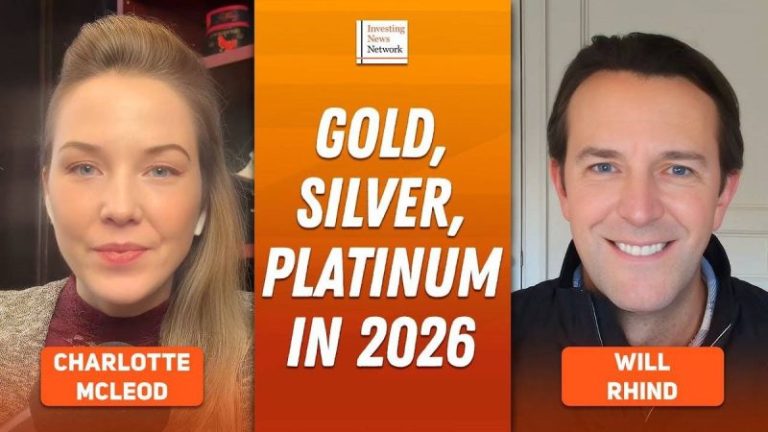
Will Rhind, CEO of GraniteShares, outlines his thoughts on gold and silver heading into 2026, noting that historical precedents point to higher prices.

‘Clearly when you look back on some of those other periods for gold — and silver particularly — where they went to all-time highs, then we could be talking about a lot higher prices,’ he said.

Securities Disclosure: I, Charlotte McLeod, hold no direct investment interest in any company mentioned in this article.

This post appeared first on investingnews.com

The solar industry is turning to base metals and innovation to bypass the soaring silver price.

Silver’s exceptional electrical and thermal conductivity make it a critical material in the production of photovoltaics (PV). However, record-high prices are forcing key solar industry players to find more cost-effective alternatives.

In a September 2025 report, BNEF analysts note that silver represents about 14 percent of the total cost of production for solar panels, up from 5 percent in 2023. At the time, silver was trading in the US$42 to US$46 per ounce range.

Since then, the white metal’s price has exploded, hitting an all-time high of US$93.77 on Wednesday (January 14). That’s double the level it was in September, and a nearly 200 percent increase from the year before.

In an industry already fraught with intense competition, such a large leap in the price for a major component is unsustainable. In response, top manufacturers in China such as LONGi Green Energy Technology (SHA:601012) are turning to base metals and technological innovations to help manage solar panel input costs.

Solar panel makers bypassing silver

China dominates the global solar PV industry, representing more than 80 percent of worldwide manufacturing capacity across the supply chain, including polysilicon, wafers, cells and modules.

In early January, Bloomberg reported that starting in Q2, LONGi Green Energy is planning to start mass producing solar cells using base metals instead of silver in an effort to reduce costs.

Di Giacomo believes that because LONGi Green Energy is one of the solar industry’s technological leaders, its move away from silver marks a significant turning point for the sector.

Bloomberg notes that the company has joined the ranks of other Chinese solar manufacturers looking to sidestep silver’s price volatility. In December, JinkoSolar Holding (NYSE:JKS), which is headquartered in China, but listed in the US, said it was looking to roll out large-scale production of solar panels using base metals. Additionally, smaller firm Shanghai Aiko Solar Energy (SHA:600732) is producing 6.5 gigawatt solar cells without silver.

“Other major manufacturers, such as JinkoSolar and AIKO Solar, are also exploring silver-free technologies or solutions that minimize the use of this metal,” said Di Giacomo. “The convergence of efforts among leading players suggests this is not an isolated trend, but rather a structural shift in how solar panels are designed and manufactured.”

Is copper a viable alternative to silver?

Copper is the prized favorite among the base metals for swapping out silver.

While both metals have seen unprecedented price rallies on the back rising industrial demand from clean technologies and artificial intelligence, silver maintains an enormous premium over copper. Currency, the price of a troy ounce of silver is trading at about 22,000 percent higher than a troy ounce of copper.

“Although its conductivity is slightly lower, copper is far more abundant, cheaper and supported by a more diversified supply chain,” stated Di Giacomo. “These characteristics make it an attractive option for an industry seeking to scale production without exposure to bottlenecks in critical raw materials.”

The red metal may be a great electrical conductor, but it doesn’t match silver’s capabilities. There’s also the tendency for copper to oxidize and degrade, testing the long-term viability and reliability of copper-based solar components. For those reasons, subbing in copper presents technical challenges for PV makers.

One area of concern for replacing silver with copper is the high temperatures needed in the fabricating process for tunnel oxide passivated contact (TOPCon) cells, the technology currently dominating the solar panel industry.

This might not be as big an issue for LONGi Green Energy, which manufactures back-contact (BC) cells. The technical processes for adapting copper to this new type of solar cell architecture is much simpler compared to TOPCon cells.

“New generations of copper-metallized cells are achieving efficiency levels increasingly close to those of traditional silver-based models,” said Di Giacomo. “In some cases, improvements are even being observed in mechanical strength and module durability, key factors for long-term solar installations and operation under demanding environmental conditions.”

BC cells have also been shown to generate more power from the same amount of sunlight compared to TOPCon cells. A white paper from renewable energy advisory company Rinnovabili states that field data indicates that BC modules are capable of producing up to 11 percent more energy over their lifetime compared to TOPCon technology.

How will substitution impact silver?

In a November 2025 report, the Silver Institute reported that industrial silver demand is projected to drop by 2 percent in 2025 to 665 million ounces. One of the contributing factors in the decline is an approximate 5 percent decrease in silver demand from the solar industry, even though the number of global PV installations set a new record high for the year. This is “due to a sharp drop in the amount of silver used in each module,” according to the firm.

“A sustained reduction in solar sector silver demand could alter market dynamics,” warned Di Giacomo.

However, at this point it’s too early to tell. For one, TOPCon technology is expected to account for 70 percent of the market in 2026. The cost of manufacturing BC cells is not expected to reach parity with TOPCon cells until the end of the decade, said Molly Morgan, senior research analyst at CRU Group, as reported by pv magazine.

“That’s why we believe we might see a coexistence of the two technologies in the 2028 to 2030 timeframe,” she said.

Securities Disclosure: I, Melissa Pistilli, hold no direct investment interest in any company mentioned in this article.
This post appeared first on investingnews.com

(TheNewswire)


Prismo’s Interest Currently Stands at 95% With Option for Full Control

Vancouver, British Columbia, January 16th, 2025 TheNewswire – Prismo Metals Inc. (‘Prismo’ or the ‘Company’) (CSE: PRIZ,OTC:PMOMF) (OTCQB: PMOMF) is pleased to announce that it has completed its previously announced transaction with Infinitum Copper Corp. (TSXV: INFI) (‘Infinitum’) whereby Prismo has increased its interest in the Hot Breccia copper project, located in the heart of Arizona’s prolific copper belt, from 75% to 95%. In addition, Prismo has obtained an irrevocable option to acquire Infinitum’s remaining 5% interest, providing a clear path to 100% interest in the project.

Alain Lambert, CEO of Prismo commented: ‘This transaction marks a significant milestone for Prismo and provides a clear mechanism to securing full ownership of Hot Breccia. It materially improves the strategic flexibility of the project.’

He added: ‘Prismo remains firmly committed to advancing Hot Breccia. The recent extension of certain milestone obligations under the option agreement with Walnut Mines LLC, the owner of the Hot Breccia claims, together with the completion of the transaction with Infinitum, provides the Company with additional flexibility as we evaluate a range of strategic alternatives. Each of these pathways’ goal is to drill what we consider to be one of the most compelling copper exploration opportunities in Arizona and the broader United States.

Dr. Linus Keating, manager of Walnut Mines LLC, enthusiastically commented: ‘Walnut Mines is solidly in favor of any action that moves Hot Breccia closer to a serious drill program. We are hopeful that this transaction will accomplish that goal in 2026. In our opinion, this property remains one of the best copper exploration opportunities in North America.’

Under the terms of the transaction, Prismo paid Infinitum CA $185,000 to acquire a 20% additional interest in the Hot Breccia project and assumed all of Infinitum’s remaining obligations under the existing option agreement with Walnut to issue shares to Walnut, which has been satisfied by the issuance to Walnut of 450,630 common shares at a deemed issue price of $0.11 per share. Prismo has also agreed to pay Infinitum 5% of any consideration received in connection with a transaction in which Prismo assigns its interest in Hot Breccia to a third party to acquire the 5% interest held by Infinitum.

Prismos Hot Breccia project lies at the heart of the Arizona Copper Belt, which hosts several globally significant porphyry copper deposits.  Examples of these significant deposits are Freeport McMoRan’s Miami-Inspiration mining complex, BHP’s San Manuel mine, Rio Tinto and BHP’s Resolution deposit and others (see Figure 1).  


Figure 1. Location of the Hot Breccia Project in the Arizona Copper Belt.

The Company wishes to update its January 12th, 2026 news release to confirm that the Company issued 2,250,000 units for gross proceeds of $225,000 and issued 140,000 Finder’s Warrants and paid finder’s commissions of $14,000 to a certain qualified finder. Each Unit consisted of one common share in the capital of the Company (a ‘Share‘) and one common share purchase warrant of the Company (a ‘Warrant‘). Each Warrant entitles the holder to purchase one Share for a period of thirty-six (36) months from the date of issue at an exercise price of $0.175. Prismo intends to proceed next week a final closing of 1,500,000 Units for gross proceeds of $150,000.

About Prismo Metals Inc.

Prismo (CSE: PRIZ,OTC:PMOMF) is a mining exploration company focused on advancing its Hot Breccia copper project in Arizona and its Palos Verdes silver project in Mexico.

Please follow @PrismoMetals on , , , Instagram, and

Prismo Metals Inc.

1100 – 1111 Melville St., Vancouver, British Columbia V6E 3V6  Phone: (416) 361-0737

Contact:

Alain Lambert, Chief Executive Officer alain.lambert@prismometals.com

Gordon Aldcorn, President gordon.aldcorn@prismometals.com

Cautionary Note Regarding Forward-Looking Information

This release includes certain statements and information that may constitute forward-looking information within the meaning of applicable Canadian securities laws. Forward-looking statements relate to future events or future performance and reflect the expectations or beliefs of management of the Company regarding future events. Generally, forward-looking statements and information can be identified by the use of forward-looking terminology such as intends‘ or anticipates, or variations of such words and phrases or statements that certain actions, events or results may’, could‘, should‘, would‘ or occur. This information and these statements, referred to herein as ‘forwardlooking statements’, are not historical facts, are made as of the date of this news release and include without limitation, statements regarding discussions of future plans, estimates and forecasts and statements as to management’s expectations and intentions with respect to, among other things: the timing, costs and anticipated results of drilling at Hot Breccia; the ability of Prismo to fund drilling and pursue potential third-party partnerships; the Company’s strategic flexibility with respect to the Hot Breccia project going forward; the number of shares issuable by Prismo to Walnut pursuant to the transaction described in this news release; and the Company’s expectations regarding mineralization and other qualities of the Hot Breccia project.

These forwardlooking statements involve numerous risks and uncertainties, and actual results might differ materially from results suggested in any forward-looking statements. These risks and uncertainties include, among other things: delays in obtaining or failure to obtain appropriate funding to finance the exploration program at Hot Breccia; the risk that the Company will not enter into a third-party partnership with respect to the Hot Breccia project; the risk that mineralization will not be as anticipated at the project; the risk that the Company will not be able to take advantage of geological information to refine drill targeting; metal prices; market uncertainty; and other risks and uncertainties application to exploration activities and the Company’s business as set forth in the Company’s disclosure documents available for viewing under the Company’s profile on SEDAR+ at www.sedarplus.com.

In making the forward-looking statements in this news release, the Company has applied several material assumptions, including without limitation, that: the ability to raise capital to fund the drilling campaign at Hot Breccia and the timing of such drilling campaign; the ability of the Company to enter into a third-party partnership on the project; that the project will have the anticipated mineralization and other qualities; and the  Company will be able to take advantage of geological information to refine drill targeting.

Although management of the Company has attempted to identify important factors that could cause actual results to differ materially from those contained in forward-looking statements or forward-looking information, there may be other factors that cause results not to be as anticipated, estimated or intended. There can be no assurance that such statements will prove to be accurate, as actual results and future events could differ materially from those anticipated in such statements. Accordingly, readers should not place undue reliance on forward-looking statements and forward-looking information. Readers are cautioned that reliance on such information may not be appropriate for other purposes. The Company does not undertake to update any forward-looking statement, forward-looking information or financial out-look that are incorporated by reference herein, except in accordance with applicable securities laws. We seek safe harbor.

Copyright (c) 2026 TheNewswire – All rights reserved.

News Provided by TheNewsWire via QuoteMedia

This post appeared first on investingnews.com

For investors who want to gain exposure to artificial intelligence stocks, exchange-traded funds (ETFs) are a popular avenue, because AI ETFs allow investors exposure to the overall market rather than individual AI stocks.

AI investing has exploded in popularity in recent years, particularly with the proliferation and advancement of generative AI technology. Today, many of the world’s largest tech stocks are focused on increasing their AI capabilities, or developing and supplying the hardware and technology needed to support the industry.

However, the sector has a long history. The phrase ‘artificial intelligence’ has been around since 1955, when it was used to describe a new computer science subdiscipline. Today, we use AI to describe simulated intelligence in machines. In other words, machines with AI are capable of simulating thinking like people and mimicking their actions.

As applications for AI rapidly expand, it’s clear that this market isn’t going away anytime soon.

1. Global X Artificial Intelligence & Technology ETF (NASDAQ:AIQ)

Assets under management: US$7.97 billion

The Global X Artificial Intelligence & Technology ETF is passively managed, tracking the Indxx Artificial Intelligence & Big Data Index. The Global X fund, which was established in May 2018, has an expense ratio of 0.68 percent.

‘AIQ is passively managed to invest in developed market companies that are involved in the use of artificial intelligence to analyze big data, whether for their own operations, as a service to other companies, or through the production of related hardware,’ according to ETF.com.

The Global X Artificial Intelligence & Technology ETF’s 87 holdings include Samsung Electronics (KRX:005930), Alphabet (NASDAQ:GOOGL) and Micron Technology (NASDAQ:MU).

2. Defiance Quantum ETF (NASDAQ:QTUM)

Assets under management: US$3.67 billion

The Defiance Quantum ETF launched in September 2018. It tracks an index composed of 84 companies that derive at least half of their annual revenues from quantum computing and machine learning technology development activities.

The fund has the lowest expense ratio of the five AI funds on this list at 0.4 percent.

Some of the ETF’s top holdings include Quantum Emotion (TSX:QNC), Micron Technology and MKS (NASDAQ:MKSI).

3. Dan IVES Wedbush AI Revolution ETF (ARCA:IVES)

Assets under management: US$1.04 billion

The newest addition to this list, the Dan Ives Wedbush AI Revolution ETF launched on June 4, 2025, as Wedbush Fund’s inaugural ETF. The ETF’s holdings are based on the research of Dan Ives, Wedbush’s Global Head of Technology Research, and on the IVES AI 30 list, which is updated on a quarterly basis. It has an expense ratio of 0.75 percent.

The Dan Ives Wedbush AI Revolution ETF has 32 holdings comprising mostly large-cap tech stocks based in North America. Its top holdings include Micron Technology, Taiwan Semiconductor Manufacturing Company (NYSE:TSM) and NVIDIA (NASDAQ:NVDA).

4. Roundhill Generative AI & Technology ETF (ARCA:CHAT)

Assets under management: US$1.036 billion

The Roundhill Generative AI & Technology ETF launched on May 13, 2023, and focuses on companies that will benefit from the growth of generative AI. Companies must derive 50 percent of their revenue from generative AI or tech to qualify for its portfolio.

This AI ETF is actively managed and does not track an index. It has an expense ratio of 0.75 percent.

The ETF has 49 holdings, with 98 percent being large-cap companies. Its top holdings include Alphabet, NVIDIA and Microsoft (NASDAQ:MSFT), and it offers exposure to North American and Asian tech firms.

5. Invesco AI and Next Gen Software ETF (ARCA:IGPT)

Assets under management: US$715.8 million

The last AI ETF on this list is the Invesco AI and Next Gen Software ETF. It is the longest running compared to the other ETFs on this list, having launched in June 2005. The fund has an expense ratio of 0.58 percent.

It is based on the STOXX World AC NexGen Software Development Index and tracks the performance of companies that derive a direct revenue from technologies or products that contribute to future software development.

The Invesco AI and Next Gen Software ETF’s 100 holdings include Micron Technology, Meta Platforms (NASDAQ:META) and Advanced Micro Devices (NASDAQ:AMD).

Securities Disclosure: I, Lauren Kelly, hold no direct investment interest in any company mentioned in this article.

This post appeared first on investingnews.com