
Author

admin

Browsing

Sankamap Metals Inc. (CSE: SCU) (‘Sankamap’ or the ‘Company’) the Company and its auditor continue to work diligently toward the completion and filing of the Company’s annual audited financial statements and management’s discussion and analysis for the fiscal year ended June 30, 2025 (the ‘Required Filings’). The Company has obtained approval from the Alberta Securities Commission to extend the Management Cease Trade Order (‘MCTO’) under National Policy 12-203 Management Cease Trade Orders (‘NP 12-203’) until January 31, 2026. Sankamap confirms that it has received the crucial confirmations from the Solomon Islands government, and that the majority of the audit work has now been completed, with only a limited number of minor confirmations and outstanding items remaining. The Company is actively working to provide the remaining items and is contacting any parties from whom confirmations are still outstanding. Subject to the completion of these remaining items, the audit file is expected to enter the final stages of review and be nearing completion.

The Required Filings were due to be filed by October 28, 2025. In connection with the anticipated delays in making the Required Filings, the Company made an application for a MCTO under NP 12-203 to the Alberta Securities Commission, as principal regulator for the Company, and the MCTO was issued on October 29, 2025. The MCTO restricts all trading by the Company’s CEO and CFO in securities of the Company, whether direct or indirect. The MCTO does not affect the ability of persons who are not directors, officers or insiders of the Company to trade their securities. The MCTO will remain in effect until the Required Filings are filed or until it is revoked or varied.

The Company expects to proceed with the filing of its interim first-quarter financial statements shortly after the Required Filings have been completed and submitted.

The Company confirms that it intends to satisfy the provisions of the alternative information guidelines described in NP 12-203 by issuing bi-weekly default status reports in the form of a news release until it meets the Required Filings requirement. The Company has not taken any steps towards any insolvency proceeding and the Company has no material information relating to its affairs that has not been generally disclosed.

For further information with respect to the MCTO, please refer to the Company’s news releases dated October 21, 2025, November 4, 2025, November 18, 2025, December 3, 2025, December 17, 2025 and December 30, 2025, available for viewing on the Company’s SEDAR+ profile at www.sedarplus.ca.

About Sankamap Metals Inc.

Sankamap Metals Inc. (CSE: SCU) is a Canadian mineral exploration company dedicated to the discovery and development of high-grade copper and gold deposits through its flagship Oceania Project, located in the South Pacific. The Company’s fully permitted assets are strategically positioned in the Solomon Islands, along a prolific geological trend that hosts major copper-gold deposits; including Newcrest’s Lihir Mine, with a resource of 71.9 million ounces of gold¹ (310 Mt containing 23 Moz Au at 2.3 g/t P+P, 520 Mt containing 39 Moz Au at 2.3 g/t indicated, 81 Mt containing 5 Moz Au at 1.9 g/t measured, 61 Mt containing 4.9 Moz Au at 2.3 g/t Inferred).

Exploration is actively advancing at both the Kuma and Fauro properties, part of Sankamap’s Oceania Project in the Solomon Islands. Historical work has already highlighted the mineral potential of both sites, which lie along a highly prospective copper and gold-bearing trend, suggesting the possibility of further, yet-to-be-discovered deposits.

At Kuma, the property is believed to host an underexplored and largely untested porphyry copper-gold (Cu-Au) system. Historical rock chip sampling has returned consistently elevated gold values above 0.5 g/t Au, including a standout sample assaying 11.7% Cu and 13.5 g/t Au2; underscoring the area’s significant potential.

At Fauro, particularly at the Meriguna Target, historical trenching has returned highly encouraging results, including 8.0 meters at 27.95 g/t Au and 14.0 meters at 8.94 g/t Au3. Complementing these results are exceptional grab sample assays, including historical values of up to 173 g/t Au3, along with recent sampling by Sankamap at the Kiovakase Target, which returned numerous high-grade copper values, reaching up to 4.09% Cu. In addition, limited historical shallow drilling intersected 35.0 meters at 2.08 g/t Au3, further underscoring the property’s strong mineral potential and the merit for continued exploration. With a commitment to systematic exploration and a team of experienced professionals, Sankamap aims to unlock the untapped potential of underexplored regions and create substantial value for its shareholders. For more information, please refer to SEDAR+ (www.sedarplus.ca), under Sankamap’s profile.

1.Newcrest Technical Report, 2020 (Lihir: 310 Mt containing 23 Moz Au at 2.3 g/t P+P, 520 Mt containing 39 Moz Au at 2.3 g/t indicated, 81 Mt containing 5 Moz Au at 1.9 g/t measured, 61 Mt containing 4.9 Moz Au at 2.3 g/t Inferred)

2. Historical grab, soil and BLEG samples from SolGold Kuma Review June 2015, and SolGold plc Annual Report 2013/2012

3. September 2010-June 2012 press releases from Solomon Gold Ltd. and SolGold Fauro Island Summary Technical Info 2012

QP Disclosure

The technical content for the Oceania Project in this news release has been reviewed and approved by John Florek, M.Sc., P.Geol., a Qualified Person in accordance with CIM guidelines. Mr. John Florek is in good standing with the Professional Geoscientists of Ontario (Member ID:1228) and a director and officer of the Company.

ON BEHALF OF THE BOARD OF DIRECTORS

s/ ‘John Florek’
John Florek, M.Sc., P.Geol
Chief Executive Officer
Sankamap Metals Inc.

Contact:
John Florek, CEO
T: (807) 228-3531
E: johnf@sankamap.com

The Canadian Securities Exchange has not approved nor disapproved this press release.

Forward-Looking Statements

Certain statements made and information contained herein may constitute ‘forward-looking information’ and ‘forward-looking statements’ within the meaning of applicable Canadian and United States securities legislation. These statements and information are based on facts currently available to Sankamap and there is no assurance that the actual results will meet management’s expectations. Forward-looking statements and information may be identified by such terms as ‘anticipates,’ ‘believes,’ ‘targets,’ ‘estimates,’ ‘plans,’ ‘expects,’ ‘may,’ ‘will,’ ‘could’ or ‘would.’

This press release contains forward-looking statements, including, but not limited to, statements regarding management’s expectations about obtaining the MCTO and completing the Required Filings within the anticipated timeline. Forward-looking statements are subject to various risks, uncertainties, and other factors that could cause actual results or events to differ materially from those expressed or implied by such statements. Sankamap does not undertake any obligation to update forward-looking statements or information, except as required by applicable securities laws. For more information on the Company, investors should review the Company’s continuous disclosure filings that are available at www.sedarplus.ca .

To view the source version of this press release, please visit https://www.newsfilecorp.com/release/280320

News Provided by Newsfile via QuoteMedia

This post appeared first on investingnews.com

The cobalt market entered 2025 under pressure from a prolonged supply glut, but the balance shifted sharply as the year unfolded, due almost entirely to intervention from the Democratic Republic of Congo (DRC).

After starting the year near nine year lows of US$24,343.40 per metric ton, cobalt metal prices had risen to US$53,005 by the end of December, pushed upward by supply concerns stemming from export limits in the DRC.

“The cobalt market in 2025 was characterised by a significant price recovery following the DRC banning the export of all cobalt from its borders in February,” said Aubry. “By the end of 2025, sulphate prices increased 266 percent, hydroxide increased by 328 percent and metal prices by 130 percent year-to-date.”

Q1: Cobalt moves from glut to supply shock

As mentioned, cobalt metal prices hit their weakest level since 2016 in January. Global mine output had more than doubled over five years, far outpacing demand growth from electric vehicles and other end uses.

That dynamic changed abruptly in late February, when the DRC — which supplies roughly three-quarters of the world’s cobalt — imposed a four month suspension on cobalt hydroxide exports.

The news lifted cobalt from US$24,495 at the start of the year to above US$34,000 by the end of March, with intra-month highs nearing US$36,300. The move marked the sector’s first meaningful rebound in nearly two years.

As the DRC exhibited control over cobalt supply, the market began to look to the world’s second largest cobalt-producing nation: Indonesia. Indonesia’s cobalt output is largely a by-product of its laterite nickel industry, produced through high-pressure acid leaching (HPAL) plants that process nickel-rich ores.

These facilities generate mixed hydroxide precipitate (MHP), an intermediate containing both nickel and cobalt that can be further refined into battery-grade materials. The model has enabled Indonesia to rapidly scale its cobalt supply, leveraging its dominant nickel position and integrated processing infrastructure.

Indonesia produced about 31,000 metric tons of cobalt in 2024 — roughly 10 percent of global supply — cementing its position as the world’s second largest producer behind the DRC.

Output growth is being driven by HPAL projects targeting up to 500,000 tons per annum (tpa) of mixed hydroxide precipitate, potentially yielding 50,000 tpa of cobalt, though scaling up may prove challenging.

Indonesian MHP, a lower-cost intermediate that is rich in nickel and cobalt, is increasingly viewed by Chinese refiners as a substitute for DRC-sourced cobalt hydroxide.

Q2 and Q3: A fragile equilibrium forms

The DRC’s export ban continued to underpin prices through the second quarter.

Standard-grade cobalt metal was trading near US$15 to US$16 per pound at the time, while cobalt sulfate posted even sharper gains. Despite the rally, sentiment remained cautious. Chinese refiners drew on existing inventories, and trade data showed cobalt units still flowing into China, particularly from Indonesia.

By June, prices had begun to ease as uncertainty mounted over how long the DRC would maintain controls.

Although China imported significant volumes earlier in the year, analysts warned Indonesian supply would be insufficient to fully offset reduced DRC cobalt shipments. Later that month, the DRC extended its export restrictions through September, reinforcing expectations that the market would move toward balance.

By mid-year, Chinese import data confirmed the impact — cobalt hydroxide inflows had fallen sharply, with analysts projecting constrained refinery feed into late 2025 or early 2026.

Prices stabilized in a broad US$33,000 to US$37,000 range through Q3, supported by tightening supply and diminishing inventories. Market participants increasingly viewed the DRC’s actions as a structural shift rather than a temporary correction, signaling the end of the cobalt surplus that had defined the previous two years.

By late 2025, the cobalt market had transformed from one of chronic oversupply to one approaching equilibrium — a reset driven not by demand growth, but by decisive supply-side intervention.

Q4: Cobalt quotas replace DRC ban, prices climb

After months of supply disruption, the DRC lifted its full cobalt export ban in mid-October, replacing it with a rigid quota system that will shape the market through 2026.

Under the new framework, annual DRC exports are capped at about 96,600 metric tons, roughly half of 2024 levels, with just 18,125 metric tons scheduled for shipment in Q4 2025.

This structural tightening helped sustain elevated prices that surged above US$47,000 by late October, levels not seen since early 2023, amid persistent feedstock shortages and constrained exports.

DRC quotas have provided a degree of market clarity, with major producers like CMOC Group (OTCPL:CMCLF) receiving significant allocations that underpin production plans. Despite robust output guidance, inventories outside the DRC remain tight, and market participants see continued upward price pressure as the quota system curtails supply.

“The DRC’s quota system is set to squeeze supply in the next two years — unless the country revises quotas higher,” wrote Fastmarkets’ Oliver Masson in a December market update.

“Prices are already considerably higher than they were at the beginning of the year, and they are likely to remain elevated for as long as current quota levels remain in force,’ he said. ‘Cobalt is mostly used in batteries, and the longer prices remain elevated, the more likely it is that EV manufacturers will seek to move to low-cobalt or cobalt-free chemistries where feasible. This could slow demand in the medium term.”

Cobalt price forecast for 2026

Looking ahead to 2026, analysts see the cobalt market shifting into a deficit as export caps bite and global feedstock availability shrinks. Fastmarkets projects a structural shortfall of about 10,700 metric tons against demand near 292,300 metric tons, driven by DRC quota limits and ongoing drawdowns of stocks.

Industry forecasters also anticipate that reduced shipments, combined with a stubbornly tight pipeline, will support stronger average prices next year. Some forecasts suggest cobalt could average near US$55,000 in 2026 as export quotas supplant the 2025 ban. Indonesian supply is emerging as a secondary source, with production climbing, but most analysts agree it will be insufficient to offset DRC constraints in the near term.

After a year of dramatic swings driven by supply policy in the DRC, 2026 is shaping up as the first sustained deficit environment in the cobalt market, with prices expected to remain elevated amid structural tightening.

“Prices have substantially recovered over 2025 and are expected to remain elevated in 2026 as the DRC limits exports,” said Aubry. “There is a significant potential upside risk as dwindling ex-DRC stocks present the risk of demand destruction towards the end of the year.”

Securities Disclosure: I, Georgia Williams, hold no direct investment interest in any company mentioned in this article.

This post appeared first on investingnews.com

Sen. Rand Paul, R-Ky., accused his ‘pro-life’ Republican colleagues of not caring about the people killed in boat strikes near Venezuela who the Trump administration, without providing evidence, claims were trafficking fentanyl.

During an appearance on ‘The Joe Rogan Experience’ released on Tuesday, Paul said GOP lawmakers ‘don’t give a s‑‑-‘ about the people who died on the vessels, blasting his colleagues for not granting the presumption of innocence.

‘I look at my colleagues who say they’re pro-life, and they value God’s inspiration in life, but they don’t give a s‑‑- about these people in the boats,’ Paul said. ‘Are they terrible people in the boats? I don’t know. They’re probably poor people in Venezuela and Colombia.’

‘I guess what I don’t feel connected to my Republican colleagues is that those lives don’t matter at all, and we just blow them up. And against all justice, and against all laws of war, all laws of just war, we have never blown up people who were shipwrecked,’ he added, referring to the administration’s reported targeting and killing of survivors of initial strikes who were clinging to wreckage.

The liberty-minded Republican said it is ‘against the military code of justice to do that.’

‘We’re doing it and everybody just says, ‘Oh, well, they’re drug dealers,” he said.

Paul criticized his fellow GOP lawmakers who have repeated the administration’s claims about the boats carrying fentanyl. He also took issue with colleagues who hold the position of, ‘Well, we’re at war with them. They’re committing war by bringing drugs into America.’

‘They’re not even coming here,’ Paul explained. ‘They’re going to these islands in the south part of the Caribbean. The cocaine — and it’s not fentanyl at all — the cocaine’s going to Europe.’

He emphasized that ‘those little boats can’t get here.’

‘No one’s even asked this common question: Those boats have these four engines on them. They’re outboard boats. You can probably go about 100 miles before you have to refuel. Two thousand miles from us, they’d have to refuel 20 times to get here,’ Paul said.

The senator accused the administration of conducting the boat strikes to create ‘a pretense and a false argument’ ahead of the operation to attack Venezuela and arrest its president, Nicolás Maduro.

‘It’s all been a pretense for arresting Maduro,’ he said. ‘So, we have to set up the predicate. We got to show you we care about drugs.’

Paul helped the Senate advance a resolution last week that would limit Trump’s ability to conduct further attacks against Venezuela after the U.S. military’s recent move to strike the country and capture Maduro, which the Kentucky Republican said amounts to war. The Upper Chamber could pass the measure later this week, although it faces an uphill battle in the House despite some support from Republicans.

‘I think bombing a capital and removing the head of state is, by all definitions, war,’ Paul told reporters before the procedural vote last week. ‘Does this mean we have carte blanche that the president can make the decision any time, anywhere, to invade a foreign country and remove people that we’ve accused of a crime?’

The lawmaker has repeatedly criticized the administration’s boat strikes on alleged narco-terrorists in recent months, often raising concerns about killing people without due process and the possibility of killing innocent people. The senator previously cited Coast Guard statistics that show a significant percentage of boats boarded on suspicion of drug trafficking are innocent.

Paul said on ‘The Joe Rogan Experience’ that he believes the administration might attack Mexico next, which Trump has signaled could be a future target.

‘They want to do that next. They want to bomb Mexico,’ Paul said.

Trump has said cartels are ‘running Mexico’ and that ‘something’s going to have to be done’ because Mexican President Claudia Sheinbaum is ‘very frightened’ of the cartels.

This post appeared first on FOX NEWS

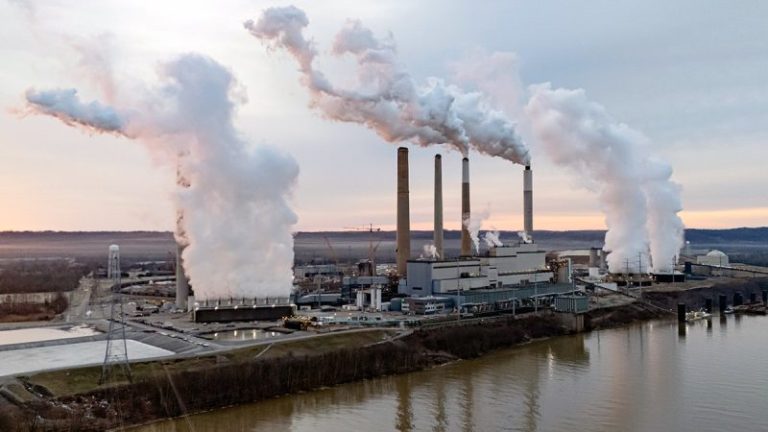
A leading domestic energy advocacy group praised EPA Administrator Lee Zeldin’s announcement that his agency would undo recent additions to the federal ‘mercury and air-toxics standards’ (MATS) for coal-fired power plants.

Zeldin said removing the restrictions allows the already ‘robust’ MATS standards to remain in effect, ensuring both public health and the health of America’s coal industry amid a push for U.S. energy dominance.

‘The Biden-Harris Administration’s anti-coal regulations sought to regulate out of existence this vital sector of our energy economy. If implemented, these actions would have destroyed reliable American energy,’ Zeldin said at the Mills Creek Power Plant in Kentucky, adding that protecting the environment and supporting industry and baseload power is not a ‘binary choice.’

In response, Power the Future founder Daniel Turner told Fox News Digital the move is a significant step toward revitalizing the American coal industry and, in turn, fueling economies in economically depressed industrial communities throughout Appalachia and beyond.

‘Since the war on coal, we have weakened our grid, driven electricity prices through the roof, outsourced major industries to Mexico and China, but most of all driven tens of thousands of Americans into ruin because of a globalist agenda,’ Turner said Friday, adding that the costs of a crippled coal industry went far beyond shuttered infrastructure:

‘The cruel Obama-led war on coal ruined numerous towns across rural America, drove families into poverty, caused alcoholism, opioid addiction, domestic violence, and suicide to skyrocket.’

‘Power The Future started because of coal miners, the acceptable casualties in the globalist climate change agenda,’ said Turner, whose group is based in coal-heavy Virginia.

‘Restoring America’s coal dominance is good for our national security and economy, and it restores the dignity of small-town coal workers whose labor is vital to America’s survival.’

Many of America’s poorest counties are in what were once very wealthy coal communities — including McDowell and Mingo counties in West Virginia and Bell, Letcher, McCreary, and Breathitt counties in Kentucky, where Vice President JD Vance’s family is from.

During much of the 20th century, McDowell County — and its seat, Welch — was the No. 1 coal-producing county in the U.S. and home to 100,000 people — a population boom some credit with spurring construction of what became the nation’s first parking deck, which is still standing today in Welch.

Now, about one-quarter of McDowell residents live in poverty while the median income is around $30,000.

Turner alluded to those conditions in comments to Fox News Digital, saying people must ‘never forget or forgive the drivers of the war on coal for their cruel attacks on a vital industry found only in rural America.’

‘[Anti-coal politicians] fly private jets to attend global climate summits while they orchestrated an evil attack on the coal miner making America weaker and China richer.’

Turner quipped that any ‘anti-coal activist’ is invited to join him in visiting coal-producing communities but may be unhappy to get dirt on their clothing and find lodging not up to ‘Four Seasons’ standards.

‘We need coal. There is not one product around you right now that was not touched by coal, and to lower prices, bring market stability and ensure economic growth, we need to dominate the coal industry,’ Turner said.

‘Sadly, the liberal elite who launched the war on coal are too ignorant or too indifferent to know this. The ignorant can be educated, and that’s what I try to do at Power The Future. But the indifferent must be defeated, as they are a threat to our liberty, property and prosperity. I will never stop until I defeat them all,’ he said, calling President Donald Trump the ‘greatest coal president in history.’

Former EPA Administrator Gina McCarthy fired back at the policy change, telling the AP that ‘by weakening pollution limits and monitoring for brain-damaging mercury and other pollutants, they are actively undermining any attempt to make America — and our children — healthy.’

This post appeared first on FOX NEWS

The CIA on Friday said that director John Ratcliffe had ordered the retraction or ‘substantive revision’ of 19 intelligence assessments over the past decade that were deemed to be politically biased.

In a release, the CIA included three redacted assessments from between 2015 and 2021 that related to White women’s extremist radicalization, attacks on LGBT activists in the Middle East and Africa, and the COVID-19 pandemic limiting access to birth control in developing countries.

‘The intelligence products we released to the American people today — produced before my tenure as DCIA — fall short of the high standards of impartiality that CIA must uphold and do not reflect the expertise for which our analysts are renowned,’ Ratcliffe said in a statement.

He added, ‘There is absolutely no room for bias in our work and when we identify instances where analytic rigor has been compromised, we have a responsibility to correct the record. These actions underscore our commitment to transparency, accountability, and objective intelligence analysis. Our recent successes in Operation ABSOLUTE RESOLVE and Operation MIDNIGHT HAMMER exemplify our dedication to analytic excellence.’

The CIA release said the assessments were identified by the President’s Intelligence Advisory Board, which did an independent review on hundreds of reports from the last decade, adding that the assessments ‘did not meet CIA and IC analytic tradecraft standards and failed to be independent of political consideration.’

The agency said an internal review led by Deputy Director Michael Ellis ‘agreed that they did not meet the high standards the American people expect from CIA’s elite analytic workforce.’

The first of the three reports included in the release was titled ‘Women Advancing White Racially and Ethnically Motivated Violent Extremist Radicalization and Recruitment,’ and was published in October 2021, in the first year of the Biden administration.

It focused on women in groups overseas ‘that incite, facilitate or conduct violence because they believe that their perception of an idealized, white European ethnic identity is under attack from people who embody and support multiculturalism and globalization.’

The second report was titled ‘Middle East-North AfricaLGBT Activists Under Pressure, and was released near the end of the Obama administration.

That assessment claimed that ‘The tough stance taken against the lesbian, gay, bisexual, and transgender (LGBT) community by governments in the Middle East probably is driven by conservative public opinion and domestic political competition from Islamists, and is hindering US initiatives in support of LGBT rights.’

The last declassified report included in the CIA release was titled ‘Worldwide: Pandemic-Related Contraceptive Shortfalls Threaten Economic Development, and was published in July 2020, nearly the end of President Donald Trump’s first term.

‘The COVID-19 pandemic is limiting contraceptive access in the developing world and will probably undermine efforts to address population pressures there that are hindering economic development,’ it stated.

A senior administration official who spoke to The New York Times on condition of anonymity said that most of the rest of the flagged assessments dealt with diversity, equity and inclusion.

The Times added that former officials it spoke to both questioned the decision to declassify the three documents and the claims that the assessments were flawed, believing they just showed the policy priorities of past administrations.

This post appeared first on FOX NEWS

Proceeds to be used to Accelerate Procurement and Component Assembly for Demonstration Facility Deployment in Iceland

Syntholene Energy CORP. (TSXV: ESAF,OTC:SYNTF) (FSE: 3DD0) (OTCQB: SYNTF) (the ‘Company’ or ‘Syntholene’) announces that it intends to complete a non-brokered private placement of up to $2.0 million (the ‘Financing’).

The Financing is expected to consist of the issuance of units of the Company (the ‘Units’) at a price of $0.45 per Unit, with each Unit comprising one common share of the Company (a ‘Common Share’) and one non-transferable common share purchase warrant (each whole warrant, a ‘Warrant’). Each whole Warrant will entitle the holder to purchase one additional Common Share at an exercise price of $0.63 for a period of two years from the date of issuance, subject to an acceleration provision in accordance with the terms of the Financing.

Gross proceeds from the Financing are expected to be used as follows: up to approximately $1.5 million toward the procurement and assembly of components for the Company’s planned demonstration facility in Iceland, and up to approximately $0.5 million toward corporate marketing initiatives, investor relations and working capital.

The Company expects that insiders of the Company may participate in the Financing. The extent of insider participation, if any, has not been determined at this time. Any insider participation will be disclosed in accordance with the policies of the TSX Venture Exchange and applicable securities laws.

Finder’s fees may be payable in connection with the Financing, subject to compliance with applicable securities laws and the policies of the TSX Venture Exchange.

All securities issued pursuant to the Financing will be subject to a statutory hold period of four months and one day from the date of issuance, in accordance with applicable securities laws. Completion of the Financing remains subject to the receipt of all required regulatory approvals, including approval of the TSX Venture Exchange.

The securities offered pursuant to the Financing have not been and will not be registered under the United States Securities Act of 1933, as amended, and may not be offered or sold in the United States absent registration or an applicable exemption from the registration requirements. This news release does not constitute an offer to sell or a solicitation of an offer to buy securities in any jurisdiction in which such offer, solicitation or sale would be unlawful.

About Syntholene

Syntholene is actively commercializing its novel Hybrid Thermal Production System for low-cost clean fuel synthesis. The target output is ultrapure synthetic jet fuel, manufactured at 70% lower cost than the nearest competing technology today. The company’s mission is to deliver the world’s first truly high-performance, low-cost, and carbon-neutral synthetic fuel at an industrial scale, unlocking the potential to produce clean synthetic fuel at lower cost than fossil fuels, for the first time.

Syntholene’s power-to-liquid strategy harnesses thermal energy to power proprietary integrations of hydrogen production and fuel synthesis. Syntholene has secured 20MW of dedicated energy to support the Company’s upcoming demonstration facility and commercial scale-up.

Founded by experienced operators across advanced energy infrastructure, nuclear technology, low-emissions steel refining, process engineering, and capital markets, Syntholene aims to be the first team to deliver a scalable modular production platform for cost-competitive synthetic fuel, thus accelerating the commercialization of carbon-neutral eFuels across global markets.

For further information, please contact:
Dan Sutton, CEO
comms@syntholene.com
www.syntholene.com
+1 608-305-4835

Investor Relations
KIN Communications Inc.
604-684-6730
ESAF@kincommunications.com

Neither TSX Venture Exchange nor its Regulation Services Provider (as that term is defined in policies of the TSX Venture Exchange) accepts responsibility for the adequacy or accuracy of this release.

Forward-Looking Statements
This press release contains forward-looking statements within the meaning of applicable securities laws. The use of any of the words ‘expect’, ‘anticipate’, ‘aims’, ‘continue’, ‘estimate’, ‘objective’, ‘may’, ‘will’, ‘project’, ‘should’, ‘believe’, ‘plans’, ‘intends’ and similar expressions are intended to identify forward-looking information or statements. All statements, other than statements of historical fact, including but not limited to statements regarding the completion of the Financing, the proposed use of proceeds of the Financing, TSXV approval, development of the test facility, commercial scalability, technical and economic viability, anticipated geothermal power availability, anticipated benefit of eFuel, and future commercial opportunities, are forward-looking statements.

The forward-looking statements and information are based on certain key expectations and assumptions made by the Company, including without limitation the assumption that the Company will be able to complete the Financing on the proposed terms or at all, that the TSXV will approve the Financing, the Company will be able to execute its business plan, including that it will use the Proceeds of the Financing, if any, as described herein, that the Company will be able to advance its planned test facility, that the eFuel will have its expected benefits, that there will be market adoption, and that the Company will be able to access financing as needed to fund its business plan. Although the Company believes that the expectations and assumptions on which such forward-looking statements and information are based are reasonable, undue reliance should not be placed on the forward-looking statements and information because the Company can give no assurance that they will prove to be correct. Since forward-looking statements and information address future events and conditions, by their very nature, they involve inherent risks and uncertainties.

The forward-looking statements and information are based on certain key expectations and assumptions made by the Company, including without limitation the assumption that the Company will be able to execute its business plan, that the eFuel will have its expected benefits, that there will be market adoption, and that the Company will be able to access financing as needed to fund its business plan. Although the Company believes that the expectations and assumptions on which such forward-looking statements and information are based are reasonable, undue reliance should not be placed on the forward-looking statements and information because the Company can give no assurance that they will prove to be correct. Since forward-looking statements and information address future events and conditions, by their very nature, they involve inherent risks and uncertainties.

Actual results could differ materially from those currently anticipated due to a number of factors and risks, including, without limitation, Syntholene’s ability to meet production targets, realize projected economic benefits, overcome technical challenges, secure financing, maintain regulatory compliance, manage geopolitical risks, and successfully negotiate definitive terms. Syntholene does not undertake any obligation to update or revise these forward-looking statements, except as required by applicable securities laws.

Readers are advised to exercise caution and not to place undue reliance on these forward-looking statements.

NOT FOR DISSEMINATION IN THE UNITED STATES OR THROUGH U.S. NEWSWIRE SERVICES

To view the source version of this press release, please visit https://www.newsfilecorp.com/release/282924

News Provided by TMX Newsfile via QuoteMedia

This post appeared first on investingnews.com

Survey also validates significant mineralization and unlocks new targets

Highlights

  • Direct correlation with mineralization : The modeled geophysical plates explain the presence of semi-massive to massive sulfides intersected in holes TOM-25-009 to TOM-25-015.
  • Priority target BER-14C : Identification of a major 160 x 300 m plate, open at depth and to the northeast , suggesting the presence of a significant massive sulfide lens near drill hole TOM-25-014.
  • Confirmation of Berrigan Deep : The TOM-25-015 drill hole perfectly intersects the southeast extension of the BER-14C plate, validating the continuity of the mineralized system at a depth of over 450 metres .

TomaGold Corporation (TSXV: LOT,OTC:TOGOF; OTCPK: TOGOF) (‘ TomaGold ‘ or the ‘ Company ‘) is pleased to announce the interpretation results of the borehole electromagnetic (BHEM) survey completed on its Berrigan Mine project, located in the Chibougamau mining camp.

This press release features multimedia. View the full release here: https://www.businesswire.com/news/home/20260205830419/en/

Figure 1: TomaGold’s borehole EM survey confirms Berrigan Deep Zone

The survey, conducted by Abitibi Geophysics, modeled ten conductive plates of varying orientation and size that not only corroborate the high-grade intersections already announced, but also indicate significant extension potential, particularly with the discovery of the Berrigan Deep zone.

David Grondin, President and CEO of TomaGold, stated: ‘The geophysics confirm what our drill cores indicated: Berrigan Mine sits on a large-scale mineralized system. The BER-14C plate, in particular, extends the mineralization signature of holes TOM-25-014 and TOM-25-015 with a vector pointing to an even more conductive zone to the northeast.’

Technical analysis of the plates

The survey uses Terrascope PRO5U transmitters (up to 15 kW) powered by a Wildcat generator to transmit a bipolar signal in a 530 x 560 m surface loop with a current of 30 A. The borehole measurements are taken at frequencies of 5 Hz and 1 Hz using a GPS-synchronized DigiAtlantis triaxial probe, which captures the components of the magnetic field. Finally, the data is processed and modeled using specialized Maxwell and Oasis Montaj software, with the conductive plates shown in green in Figure 1.

Table 1: Comparative analyses Drilling/BHEM

Sector / Drill hole

Intersection (base interval)

Geophysical plate

Conductance (S)

Plate dimensions (m)

Berrigan Deep (TOM-25-015)

1.98% Zn, 0.82 Au g/t and 3.21 Ag g/t over 98.50 m

BER-14C

5000

160×300

West Extension (TOM-25-014)

4.55% Zn, 4.94 Au g/t and 56.44 Ag g/t over 2.10 m

TOM-25-014_B

5000

85×90

Main Zone (TOM-25-009)

1.40% Zn, 1.12 Au g/t and 7.55 Ag g/t over 48.05 m

TOM-25-009_C

4000

40×40

North Zone (TOM-25-012/13)

Results pending

TOM-25-12+13_A

1900

70×220

Source: Rapport technique d’Abitibi Géophysique (25QC084-BT TomaGold, Berrigan, BHEM, 2026)

Note: TomaGold has reverted to reporting elemental assay results rather than metal equivalent grades. The mineralization style encountered at Berrigan Mine differs from typical sulphide deposits in the surrounding area, including Scott Lake, Lemoine and Mattagami, as well as outside the immediate region such as Normétal, Rouyn-Noranda and Timmins. As a result, metallurgical recovery assumptions remain uncertain at this stage and cannot currently support the use of metal equivalent calculations.

Next Steps

TomaGold plans to:

  1. Drill three new holes (TOM-26-016 to TOM-26-018) to test the northeast and depth extensions of the BER-14C conductive plate.
  2. Conduct additional follow-up drilling to extend holes TOM-25-010, 011, and 013 with the goal of reaching modeled targets, and drill a corner hole from hole TOM-25-015.
  3. Conduct a low-frequency surface electromagnetic (EM) survey to better define the thickness, continuity, and lateral extent of the mineralized system.

About the Berrigan Mine Project
The Berrigan Mine property consists of 16 claims totalling 483 hectares located 4 km north-northwest of the town of Chibougamau. TomaGold has an option to acquire 100% of the property from Chibougamau Independent Mines Inc.

The property has been the subject of more than one historical estimate. Met-Chem Canada Inc. prepared the most recent of these in April 2001 in a report titled: ‘Pre-feasibility study: Etude Conceptuelle, Projects Berrigan and Tortigny’ by Chuinard et al. In the report, a resource estimate completed using polygonal estimation techniques stated 1.39 Mt grading 3.17% Zn and 1.77 g/t Au on the main Berrigan Mine zone. No resource classifications were given for the resource (GM61359).

The mineral resource estimate presented above is historical in nature and was not prepared in accordance with National Instrument 43-101 standards. Accordingly, the reader is cautioned not to rely on this estimate, as the Company is not treating the estimate as a current mineral resource. The qualified person has not done sufficient work to make the resource current. Substantial data compilation, verification, and, potentially, additional drilling and resampling would be required by a qualified person before the historical estimate could be classified as a current mineral resource. There can be no assurance that any portion of the historical mineral resource will ultimately be confirmed or demonstrated to be economically viable. For further information regarding the Berrigan Mine Project, please consult the press release dated September 13, 2023 .

Technical Disclosure
The drilling program was managed by Explo-Logik of Val-d’Or, Québec. Drill core was split in half, with one half submitted to AGAT Laboratories at Val-d’Or for analysis. Gold was analyzed by fire assay (50 g) with atomic absorption finish, while base metals were analyzed by four-acid digestion with ICP-OES finish. Samples with gold grades greater than 10 g/t are reprocessed using metallic screening with a 106 µm cutoff. The processed material is split and analyzed by fire assay with ICP-OES finish to extinction. A separate split is prepared to independently analyze mineralized intervals with a target grade greater than 1.00% Cu-Zn using a Na₂O₂ fusion with ICP-OES or ICP-MS finish. Sample preparation duplicates, certified reference standards, and blanks are inserted into the sample stream.

The technical content of this press release has been reviewed and approved by Jean Lafleur, P.Geo., Vice President of Exploration of the Company, and Suzie Tremblay, P.Geo., Vice President of Operations at Explo-Logik Inc. and a consultant to TomaGold, each acting as a Qualified Person under National Instrument 43-101.

About TomaGold
TomaGold Corp. (TSXV: LOT,OTC:TOGOF, OTCPK: TOGOF) is a Canadian junior mining company focused on the acquisition, exploration, and development of high-potential precious and base metal projects, with a primary focus on gold and copper in Québec and Ontario. The Company’s core assets are located in the Chibougamau Mining Camp in northern Québec, where it owns the Obalski gold-copper-silver project and holds options to acquire 12 additional properties, including the Berrigan Mine, Radar, David, and Dufault projects. TomaGold also holds a 24.5% joint venture interest in the Baird gold property near the Red Lake Mining Camp in Ontario. In addition, the Company has lithium and rare earth element (REE) projects in the James Bay region, strategically positioned near significant recent discoveries.

Follow TomaGold:

WhatsApp: https://www.whatsapp.com/channel/0029Vb79qG6LdQeiiErI1e27
LinkedIn: https://www.linkedin.com/company/tomagold-corporation
Facebook: https://www.facebook.com/TomaGoldCorporation
Instagram: https://www.instagram.com/tomagoldcorp
X: https://x.com/tomagoldcorp

Cautionary Statement on Forward-Looking Information
This news release includes certain statements that may be deemed ‘forward-looking statements’. All statements in this news release, other than statements of historical facts, that address events or developments that the Company expects to occur, are forward-looking statements. Forward-looking statements are statements that are not historical facts and are generally, but not always, identified by the words ‘expects’, ‘plans’, ‘anticipates’, ‘believes’, ‘intends’, ‘estimates’, ‘projects’, ‘potential’ and similar expressions, or that events or conditions ‘will’, ‘would’, ‘may’, ‘could’ or ‘should’ occur. Although the Company believes the expectations expressed in such forward-looking statements are based on reasonable assumptions, such statements are not guarantees of future performance and actual results may differ materially from those in the forward-looking statements. Factors that could cause the actual results to differ materially from those in forward-looking statements include the potential results of exploration and drilling activities, market prices, continued availability of capital and financing, and general economic, market or business conditions. Investors are cautioned that any such statements are not guarantees of future performance and actual results or developments may differ materially from those projected in the forward-looking statements. Forward-looking statements are based on the beliefs, estimates and opinions of the Company’s management on the date the statements are made. Except as required by applicable securities laws, the Company undertakes no obligation to update these forward-looking statements in the event that management’s beliefs, estimates, opinions, or other factors should change.

Neither TSX Venture Exchange nor its Regulations Services Provider (as that term is defined in the policies of the TSX Venture Exchange) accepts responsibility for the adequacy or accuracy of this news release.

View source version on businesswire.com: https://www.businesswire.com/news/home/20260205830419/en/

David Grondin
President and Chief Executive Officer
(514) 583-3490
www.tomagoldcorp.com

News Provided by Business Wire via QuoteMedia

This post appeared first on investingnews.com

President Donald Trump on Friday signed an order imposing a 10% ‘global tariff’ following the Supreme Court’s 6-3 decision that he does not have the authority to levy sweeping tariffs under a specific emergency powers law.

‘It is my Great Honor to have just signed, from the Oval Office, a Global 10% Tariff on all Countries, which will be effective almost immediately,’ Trump wrote in a Truth Social post Friday evening.

The order was issued under Section 122 and applies in addition to the standard tariffs that are already in place, the president announced during a White House press briefing Friday afternoon.

He also announced the launch of several Section 301 investigations and other inquiries aimed at shielding the U.S. from what he described as unfair trade practices by foreign governments and companies.

The high court blocked Trump’s tariffs levied under the International Emergency Economic Powers Act in what amounts to a major test of executive branch authority. 

The president noted he will pursue ‘alternatives’ to tariffs under emergency law.

‘Other alternatives will now be used to replace the ones that the court incorrectly rejected,’ Trump said. ‘We have alternatives. Great alternatives. Could be more money. We’ll take in more money, and we’ll be a lot stronger for it. We’re taking in hundreds of billions of dollars. We’ll continue to do so.’

Trump called the ruling ‘deeply disappointing,’ saying he was ‘ashamed’ of certain members of the court.

‘I’m ashamed of certain members of the court, absolutely ashamed, for not having the courage to do what’s right for our country,’ the president said. ‘In actuality, I was very modest in my ask of other countries and businesses because… I wanted to be very well-behaved.

‘I didn’t want to do anything that would affect the decision of the court, because I understand the court. I understand how they are very easily swayed. I want to be a good boy. I have very effectively utilized tariffs over the past year to make America great again,’ he said.

A source outside the Trump administration told Fox News that an aide came into the closed-door White House breakfast with governors earlier Friday and handed Trump a note about the Supreme Court ruling.

The source said Trump ‘called it a disgrace, and then he went on with the remarks.’

Some of the Supreme Court’s nine justices will likely be sitting in the audience when the president delivers the State of the Union address on Tuesday.

‘The Democrats on the court are thrilled, but they will automatically vote no,’ Trump said during the news conference. ‘They also are a, frankly, disgrace to our nation… They’re very unpatriotic and disloyal to our Constitution. It’s my opinion that the court has been swayed by foreign interests and a political movement that is far smaller than people would ever think.’

In the opinion, the high court declared, ‘Our task today is to decide only whether the power to ‘regulate… importation,’ as granted to the President in IEEPA, embraces the power to impose tariffs. It does not.’

Trump has made tariffs a key plank of his economic agenda since retaking the Oval Office last year, but his policies have not come without controversy.

Republican reaction to the ruling has been mixed.

Rep. Buddy Carter, R-Ga., slammed the high court’s decision.

‘The Supreme Court just undercut the President’s ability to defend American workers. President Donald Trump was elected to fight unfair trade and stop the United States from being ripped off. I’m outraged by this decision; it’s clearly judicial overreach,’ Carter asserted in a post on X.

But Sen. Rand Paul, R-Ky., welcomed the ruling.

‘In defense of our Republic, the Supreme Court struck down using emergency powers to enact taxes. This ruling will also prevent a future President such as AOC from using emergency powers to enact socialism,’ Paul noted in a post on X.

Rep. Don Bacon, R-Neb., also hailed the decision.

‘The Constitution’s checks and balances still work. Article One gives tariff authority to Congress. This was a common-sense and straightforward ruling by the Supreme Court. I feel vindicated as I’ve been saying this for the last 12 months. In the future, Congress should defend its own authorities and not rely on the Supreme Court. Besides the Constitutional concerns I had on the Administration’s broad-based tariffs, I also do not think tariffs are smart economic policy. Broad-based tariffs are bad economics,’ Bacon wrote in a post on X.

House Speaker Mike Johnson, R-La., said Congress and the administration will determine the ‘best path forward’ in the coming weeks.

‘No one can deny that the President’s use of tariffs has brought in billions of dollars and created immense leverage for America’s trade strategy and for securing strong, reciprocal America-first trade agreements with countries that had been taking advantage of American workers for decades,’ Johnson wrote in an X post.

This is a developing story. Please check back for updates.

This post appeared first on FOX NEWS

For more than a month, Michal Weits has kept suitcases packed by the front door of her house in Tel Aviv.

‘We have our bags ready for weeks,’ she said. ‘Three weeks ago, there were rumors that it was the night the U.S. would attack Iran. At midnight, we pulled the kids out of their beds and drove to the north, where it is supposed to be safer.’

Weits, the artistic director of the international documentary film festival Docaviv, is speaking from her own traumatic experience. During the 12-day war, an Iranian missile struck her Tel Aviv home. She, her husband, and their two young children were inside the safe room when it collapsed on her.

‘After an Iranian missile hit our home and we lost everything we had, we also lost the feeling of ‘it won’t happen to me,’’ she said. ‘We are prepared, as much as it’s really possible.’

Weits remembers the surreal contrast of those days. Four days after being injured in the missile strike, while still in the hospital, she was told she had won an Emmy Award for the documentary she produced about the Nova massacre on Oct. 7.

‘Four days earlier an 800-kilogram explosive missile fell on our home and I was injured, and four days later I woke up on my birthday to news that I had won an Emmy,’ she said. ‘It can’t be more surreal than this. That is the experience of being Israeli, from zero to one hundred.’

She says Israelis have learned to live inside that swing. ‘Inside all of this, life continues,’ she said. ‘Kids go to school, you go to the supermarket, Purim arrives and you prepare, and you don’t know if any of it will actually happen. We didn’t make plans for this weekend because we don’t know what will happen.’

That gap — between visible routine and private fear — defines this moment. The fear she describes is now part of the national atmosphere.

On the surface, Israel looks normal. The beaches are crowded in the warm weather. Cafés are full. The Tel Aviv Stock Exchange has risen in recent days. Children go to school as Israelis prepare for the Jewish holiday of Purim and costumes are being prepared.

But inside homes and across local news broadcasts, one question dominates: when will it happen? When will President Donald Trump decide whether to strike Iran — and what will that mean for Israel?

Prime Minister Benjamin Netanyahu has instructed the Home Front Command and emergency services to prepare for possible escalation, with Israeli media reporting a state of ‘maximum alert’ across security bodies.

Speaking at an officer graduation ceremony this week, Netanyahu warned Tehran: ‘If the ayatollahs make a mistake and attack us, they will face a response they cannot even imagine.’ He added that Israel is ‘prepared for any scenario.’

The military message was echoed by the IDF. ‘We are monitoring regional developments and are aware of the public discourse regarding Iran,’ IDF Spokesperson Brig. Gen. Effie Defrin said. ‘The IDF remains vigilant in defense, our eyes are open in every direction and our readiness in response to any change in the operational reality is greater than ever.’

Yet the psychological shift inside Israel goes deeper than official statements.

For years, Israelis lived with rockets from Hamas. The Iranian strikes felt different.

‘The level of destruction from Iran was something Israelis had not experienced before,’ said Israeli Iran expert Benny Sabti. ‘People are used to rockets from Gaza. This was a different scale of damage. It created real anxiety.’

Iron Dome, long seen as nearly impenetrable, was less effective against heavier Iranian missiles. Buildings collapsed. Entire neighborhoods were damaged.

‘People are still traumatized,’ Sabti said. ‘They are living on the edge for a long time now.’

At the same time, he stressed that the country is better prepared today.

‘There are feelings, and there are facts,’ Sabti said. ‘The facts are that Israel is better prepared now. The military level is doing serious preparation. They learned from the last round.’

The earlier wave of protests inside Iran had sparked hope in Israel that internal pressure might weaken or topple the regime. Weits told Fox News Digital, ‘I am angry at the Iranian government, not the Iranian people. I will be the first to travel there when it’s possible. I hope they will be able to be free — that all of us will be able to be free.’

Despite losing her home and suffering hearing damage from the blast, she says the greater loss was psychological. ‘There is no more complacency,’ she said. ‘The ‘it won’t happen to me’ feeling is gone.’

Across Israel, that sentiment resonates.

This post appeared first on FOX NEWS

Doug Casey of InternationalMan.com and the podcast Doug Casey’s Take shares his thoughts on gold, silver and more heading into the new year.

Casey, who is also a best-selling author, sees higher prices for both precious metals ahead.

Securities Disclosure: I, Charlotte McLeod, hold no direct investment interest in any company mentioned in this article.

This post appeared first on investingnews.com