
Author

admin

Browsing

CALGARY, AB / ACCESS Newswire / January 13, 2026 / Valeura Energy Inc. (TSX:VLE,OTC:VLERF)(OTCQX:VLERF) (‘Valeura’ or the ‘Company’) announces: (i) the Company’s Q4 2025 performance was in line with its guidance outlook for 2025 and resulted in a new record cash position; (ii) completion of a successful drilling campaign at Block B5/27 drove strong ongoing oil production and is expected to contribute to reserves replacement; and (iii) a guidance outlook for 2026 supporting its objective to continue generating long-term value for shareholders.

Q4 and Full Year 2025 Highlights

  • Record cash position of US$305.7 million as at 31 December 2025 with no debt;

  • Oil production averaged 24,721 bbls/d in Q4 2025, resulting in full year average oil production of 23,242 bbls/d(1) for 2025;

  • 2.523 million bbls of oil were sold in Q4 2025, with 8.466 million bbls sold for the full year 2025;

  • Price realisations in Q4 2025 averaged US$64.0/bbl, resulting in revenue of US$161.4 million, and US$594.4 million of revenue for the full year 2025;

  • Greenhouse gas (‘GHG’) intensity reduced by 13% for full year 2025, yielding a 30% reduction since Valeura originally acquired its Thailand portfolio in 2023; and

  • Nine production-oriented development wells were completed at the Jasmine and Ban Yen fields in Q4 2025 with 100% success rate, including a new record length for a horizontal well in the Gulf of Thailand.

2026 Guidance Highlights

  • Full year oil production mid-point of 21,000 bbls/d(1);

  • Capex and exploration spending mid-point of US$185 million, including approximately US$70 million associated with the Wassana field redevelopment; and

  • Adjusted Opex mid-point of US$205 million(2).

(1) Working interest share production, before royalties.

(2) Adjusted Opex is a non-IFRS financial measure, more fully described in Valeura’s Management’s Discussion and Analysis dated 14 November 2025. Includes lease spending of US$25 million.

Dr. Sean Guest, President and CEO commented:

‘We closed out 2025 with strong production performance and an even stronger financial position. Our Q4 drilling programme at Jasmine and Ban Yen was ambitious and innovative, and delivered a 100% success rate, with all wells being completed as producers. All across the business, our team remains committed to this type of world class performance and I believe this is reflected in the continual strengthening of our balance sheet, which now includes over US$300 million in cash, and no debt.

That commitment to excellence is also apparent in our strong safety performance and positive direction of travel on key environmental, social, and governance metrics. We saw no deviations from our high standards during the year and continue to show progress in our GHG intensity, which has now been reduced by approximately 30% under Valeura’s operatorship.

As we raise our sights to the year ahead, our long-term objective of delivering 20 – 25 mbbls/d(1) from our four producing assets remains intact, with this year’s performance expected around 21 mbbls/d(1), a number we see as a lull in advance of the start-up of our Wassana field redevelopment, which remains on track for first oil production in Q2 2027.

We continue to aggressively pursue other growth ambitions as well. The spirit of collaboration is strong between our team and our operating partners both in the large farm-in blocks in the Gulf of Thailand, and in our deep gas play in Türkiye where testing operations are now underway.

Our aspirations to grow inorganically are continuing as a priority. We believed that our appetite for larger, more transformative deals is well-supported, both by the financial wherewithal we bring to bear, and by the rich opportunity set we see emerging within our core Asia-Pacific region.’

(1) Working interest share oil production, before royalties.

Q4 and Full Year 2025 Overview
Working interest share oil production before royalties averaged 24.7 mbbls/d in Q4 2025. This was an increase of 7.6% over the prior quarter, reflecting the impact of new oil production wells coming on stream at Block B5/27, in addition to ongoing steady operations at the Company’s other producing fields. On a full year basis, working interest share oil production before royalties was higher as well, averaging 23.2 mbbls/d in 2025, an increase of 1.8% over 2024.

Oil sales totalled 2.523 million bbls in Q4 2025, which was higher than the 2.274 million bbls produced in the quarter, as a result of sales from crude oil held in inventory at the beginning of the quarter. The resultant revenue was US$161.4 million, based on an average sales price of US$64.0/bbl. The Company continues to realise a premium to the benchmark Brent crude oil price. For the full year 2025, the effect of quarterly over-lift / under-lift positions is negligible, with oil sales totalling 8.466 million bbls, a figure which is very close to the full year’s production of 8.483 million bbls. Valeura’s average 2025 sales price was US$70.2/bbl.

Valeura’s cash position strengthened to a new high of US$305.7 million at 31 December 2025, with no debt.

Operations Update
Operations progressed safely throughout 2025, and with no deviations from the Company’s high standards for environmental, social, and governance stewardship. Of note, Valeura is continuing to pursue efficiency gains across its portfolio that have a positive impact on the Company’s GHG emissions. Valeura estimates that its GHG intensity has reduced by 13% compared to the Company’s 2024 performance, and overall has achieved a 30% reduction since originally acquiring its Thailand portfolio.

Construction activities of a new-build central processing platform (‘CPP’) for the Wassana field redevelopment are progressing ahead of schedule. The project is now approximately 45% complete, underpinning management’s confidence in achieving first oil production from the redeveloped Wassana field (100% operated interest) on time, as planned, in Q2 2027. Moreover, with the majority of project costs either locked in or subject to fixed-price contracts, the Wassana field redevelopment project also remains on budget.

At the Company’s deep gas play in the Thrace basin of Türkiye, Transatlantic Petroleum LLC (‘Transatlantic’), who are conducting operations on Valeura’s behalf, have re-entered and hydraulically stimulated the Devepinar-1 well. Gas has been continually produced to surface through the well’s casing for over three weeks. With this success, Transatlantic has opted to continue work on the well, and is now installing production tubing to facilitate a longer-term production test. Transatlantic has satisfied its earning requirements and is now entitled to a 50% undivided working interest in the western portion of the Company’s lands, as further described in Valeura’s 15 October 2025 announcement. Once approved by the regulator, Transatlantic will hold a 50.0% working interest in the western portion of the Company’s lands, Valeura will hold 31.5%, and Pinnacle Turkey, Inc. will hold the remaining 18.5%. Valeura’s working interest in the eastern portion of the lands (Banarli licences) remains at 100%, subject to Transatlantic completing the drilling and testing of a new well. The Company intends to release more details on the Devepinar-1 well test and the future plans for the deep gas play later in Q1 2026.

Block B5/27 Drilling
Valeura has just completed the drilling of one deviated and eight horizontal wells on the Jasmine and Ban Yen fields at Block B5/27 in the Gulf of Thailand (100% operated interest). The drilling programme primarily focused on accessing unswept oil accumulations within producing reservoirs. All wells were successful and have been completed as producers. As a result, oil production rates before royalties from Block B5/27 have increased from approximately 7,300 bbls/d over the seven-day period prior to start of the drilling programme, to recent rates of approximately 8,600 bbls/d over the seven-day period immediately following the drilling programme.

Several of the wells were engineered to intersect additional appraisal targets while drilling toward their primary development targets. As a result, Valeura has identified various additional oil accumulations which will form the basis of future infill drilling campaigns on Block B5/27. This success is expected to add to the ultimate production potential of the block, which has already exceeded its production expectations many times over, and has seen its economic field life extended every year under Valeura’s operatorship.

Since taking over operatorship of its Thai portfolio in 2023, Valeura has been introducing new technologies and drilling approaches which are expected to increase the ultimate recovery of the fields and lower costs. One well in the recent drilling programme, JSB-28ST2H, achieved a new record as the longest horizontal well interval ever drilled in the Gulf of Thailand, at 3,875′. In addition, two of the wells drilled from the Jasmine B platform used a novel new approach whereby the shallower sections of the pre-existing wells were re-used, with the new well bores being drilled as sidetracks through the existing 7′ casing. This approach reduces drilling time and mitigates certain downhole drilling risks. Further, all horizontal wells drilled in this campaign were completed using autonomous inflow control devices which reduces the inflow of non-oil fluids into the wellbore. This technology has now been adopted extensively by Valeura as a value-enhancing innovation, across all its Gulf of Thailand assets.

2026 Work Programme andGuidance Synopsis
Valeura currently has one drill rig on contract, with a charter term spanning January through August 2026. The Company’s planned work programme for 2026 entails drilling an aggregate of 16 development and appraisal wells on the Jasmine, Nong Yao, and Manora fields. The overall objective of the development and appraisal programme is to mitigate natural production declines while also continuing the Company’s multi-year performance of adding reserves. The base plan also includes the planned drilling of two exploration wells across its operated Gulf of Thailand portfolio.

The Company is planning total capex and exploration spending of US$175 – 195 million in 2026. This amount includes approximately US$70 million for the completion of construction and installation of the new CPP at the Wassana field, in preparation for development drilling in Q1 2027. The Company is planning exploration expenditure of approximately US$7 million.

Valeura continues to model that its portfolio of four producing Gulf of Thailand fields will deliver working interest share oil production before royalties within the range of 20,000 – 25,000 bbls/d into the 2030’s. The Company’s 2026 work programme is in line with this expectation, with full year average production guidance of 19,500 – 22,500 bbls/d, or a mid-point of 21,000 bbls/d (working interest share, before royalties).

Adjusted opex in 2026 is forecast as US$190 – 220 million and at the midpoint would be the lowest opex that the Company has achieved since assuming operatorship in Thailand. Of note, adjusted opex guidance includes anticipated spending of approximately US$25 million on leases related to floating production, storage, and offloading vessels employed across the Company’s operations.

The Company’s production and capex forecast is predicated on the Company having one drilling rig on contract for approximately eight months of the year. Should prevailing economic conditions warrant revising the drilling programme to include more drilling, Valeura would update its guidance expectations accordingly.

Valeura is also actively working with PTT Exploration and Production Plc (‘PTTEP’) to pursue both exploration and development planning on Blocks G1/65 and G3/65 in the Gulf of Thailand, where Valeura is farming in to earn a 40% non-operated working interest (the ‘Farm-in Transaction’). High priority work streams are focussed on the Bussabong gas development area, which could result in an investment decision in 2026, and the Nong Yao northeast oil exploration area, to define a suitable timeframe for exploration drilling. Upon completion of the Farm-in Transaction, Valeura intends to more fully articulate a work programme for both blocks and will update the guidance at that time. Completion of the Farm-in Transaction requires government approval, which is expected following Thailand’s general election in Q1 2026.

Upcoming Announcements
Valeura intends to announce the results of a third-party reserves and resources evaluation as of 31 December 2025 in approximately the second half of February 2026. Thereafter, the Company plans to release its full audited financial and operating results for the year ended 31 December 2025 on approximately 18 March 2026.

For further information, please contact:

Valeura Energy Inc. (General Corporate Enquiries)+65 6373 6940
Sean Guest, President and CEO
Yacine Ben-Meriem, CFO
Contact@valeuraenergy.com

Valeura Energy Inc. (Investor and Media Enquiries) +1 403 975 6752 / +44 7392 940495
Robin James Martin, Vice President, Communications and Investor Relations
IR@valeuraenergy.com

Contact details for the Company’s advisors, covering research analysts and joint brokers, including Auctus Advisors LLP, Beacon Securities Limited, Canaccord Genuity Ltd (UK), Cormark Securities Inc., Research Capital Corporation, Roth Canada Inc., and Stifel Nicolaus Europe Limited, are listed on the Company’s website at www.valeuraenergy.com/investor-information/analysts/.

About the Company

Valeura Energy Inc. is a Canadian public company engaged in the exploration, development and production of petroleum and natural gas in Thailand and in Türkiye. The Company is pursuing a growth-oriented strategy and intends to re-invest into its producing asset portfolio and to deploy resources toward further organic and inorganic growth in Southeast Asia. Valeura aspires toward value accretive growth for stakeholders while adhering to high standards of environmental, social and governance responsibility.

Additional information relating to Valeura is also available on SEDAR+ at www.sedarplus.ca.

Advisory and Caution Regarding Forward-Looking Information
Certain information included in this news release constitutes forward-looking information under applicable securities legislation. Such forward-looking information is for the purpose of explaining management’s current expectations and plans relating to the future. Readers are cautioned that reliance on such information may not be appropriate for other purposes, such as making investment decisions. Forward-looking information typically contains statements with words such as ‘anticipate’, ‘believe’, ‘expect’, ‘plan’, ‘intend’, ‘estimate’, ‘propose’, ‘project’, ‘target’ or similar words suggesting future outcomes or statements regarding an outlook. Forward-looking information in this news release includes, but is not limited to, anticipated 2026 full year oil production rates; anticipated capex and exploration spending in 2026, including the proportion included for the Wassana redevelopment project and for exploration expenditure; anticipated 2026 adjusted opex, and the proportion thereof relating to leases; the Company’s reduced GHG intensity representing an ongoing ‘direction of travel’; the Company’s ability to realise its long-term objective of delivering 20 – 25 mbbls/d from its four producing assets; timing for development drilling and for first oil production from the Wassana field redevelopment; the Company’s continued aggressive pursuit of its growth ambitions; the ability for the Company’s financial wherewithal and opportunity set to support inorganic growth; the Company continuing to realise a premium to the benchmark Brent crude oil price; the Company continuing to pursue and achieve efficiency gains across its portfolio; the transfer of working interest in the deep gas play to Transatlantic and resultant working interests of the parties, and the Company obtaining regulatory approval thereof; the Company’s intention to release more details on the Devepinar-1 well test and the future plans for the deep gas play and the timing thereof; additional oil accumulations at the Jasmine and Ban Yen fields forming the basis of future infill drilling campaigns on the block; drilling success adding to the ultimate production potential of the B5/27 Block; new technologies and drilling approaching resulting in an increase in the ultimate recovery of its fields; the duration and composition of Valeura’s 2026 drilling programme; the Company’s anticipated exploration expenditure for 2026; the ability for drilling to mitigate natural production declines while also continuing the Company’s multi-year performance of adding reserves; and government approval and timing for completion of the Farm-in Transaction.

Forward-looking information is based on management’s current expectations and assumptions regarding, among other things: political stability of the areas in which the Company is operating; continued safety of operations and ability to proceed in a timely manner; continued operations of and approvals forthcoming from governments and regulators in a manner consistent with past conduct; future drilling activity on the required/expected timelines; the prospectivity of the Company’s lands; the continued favourable pricing and operating netbacks across its business; future production rates and associated operating netbacks and cash flow; decline rates; future sources of funding; future economic conditions; the impact of inflation of future costs; future currency exchange rates; interest rates; the ability to meet drilling deadlines and fulfil commitments under licences and leases; future commodity prices; the impact of the Russian invasion of Ukraine; royalty rates and taxes; future capital and other expenditures; the success obtained in drilling new wells and working over existing wellbores; the performance of wells and facilities; the availability of the required capital to funds its exploration, development and other operations, and the ability of the Company to meet its commitments and financial obligations; the ability of the Company to secure adequate processing, transportation, fractionation and storage capacity on acceptable terms; the capacity and reliability of facilities; the application of regulatory requirements respecting abandonment and reclamation; the recoverability of the Company’s reserves and contingent resources; future growth; the sufficiency of budgeted capital expenditures in carrying out planned activities; the impact of increasing competition; the ability to efficiently integrate assets and employees acquired through acquisitions; global energy policies going forward; future debt levels; and the Company’s continued ability to obtain and retain qualified staff and equipment in a timely and cost efficient manner. In addition, the Company’s work programmes and budgets are in part based upon expected agreement among joint venture partners and associated exploration, development and marketing plans and anticipated costs and sales prices, which are subject to change based on, among other things, the actual results of drilling and related activity, availability of drilling, offshore storage and offloading facilities and other specialised oilfield equipment and service providers, changes in partners’ plans and unexpected delays and changes in market conditions. Although the Company believes the expectations and assumptions reflected in such forward-looking information are reasonable, they may prove to be incorrect.

Forward-looking information involves significant known and unknown risks and uncertainties. Exploration, appraisal, and development of oil and natural gas reserves and resources are speculative activities and involve a degree of risk. A number of factors could cause actual results to differ materially from those anticipated by the Company including, but not limited to: the ability of management to execute its business plan or realise anticipated benefits from acquisitions; the risk of disruptions from public health emergencies and/or pandemics; competition for specialised equipment and human resources; the Company’s ability to manage growth; the Company’s ability to manage the costs related to inflation; disruption in supply chains; the risk of currency fluctuations; changes in interest rates, oil and gas prices and netbacks; potential changes in joint venture partner strategies and participation in work programmes; uncertainty regarding the contemplated timelines and costs for work programme execution; the risks of disruption to operations and access to worksites; potential changes in laws and regulations, the uncertainty regarding government and other approvals; counterparty risk; the risk that financing may not be available; risks associated with weather delays and natural disasters; and the risk associated with international activity. See the most recent annual information form and management’s discussion and analysis of the Company for a detailed discussion of the risk factors.

The forward-looking information contained in this new release is made as of the date hereof and the Company undertakes no obligation to update publicly or revise any forward-looking information, whether as a result of new information, future events or otherwise, unless required by applicable securities laws. The forward-looking information contained in this new release is expressly qualified by this cautionary statement.

This news release does not constitute an offer to sell or the solicitation of an offer to buy securities in any jurisdiction, including where such offer would be unlawful. This news release is not for distribution or release, directly or indirectly, in or into the United States, Ireland, the Republic of South Africa or Japan or any other jurisdiction in which its publication or distribution would be unlawful.

Neither the Toronto Stock Exchange nor its Regulation Services Provider (as that term is defined in the policies of the Toronto Stock Exchange) accepts responsibility for the adequacy or accuracy of this news release.

This information is provided by Reach, the non-regulatory press release distribution service of RNS, part of the London Stock Exchange. Terms and conditions relating to the use and distribution of this information may apply. For further information, please contact rns@lseg.com or visit www.rns.com.

SOURCE: Valeura Energy Inc.

View the original press release on ACCESS Newswire

News Provided by ACCESS Newswire via QuoteMedia

This post appeared first on investingnews.com

Doug Casey of InternationalMan.com and the podcast Doug Casey’s Take shares his thoughts on gold, silver and more heading into the new year.

Casey, who is also a best-selling author, sees higher prices for both precious metals ahead.

Securities Disclosure: I, Charlotte McLeod, hold no direct investment interest in any company mentioned in this article.

This post appeared first on investingnews.com

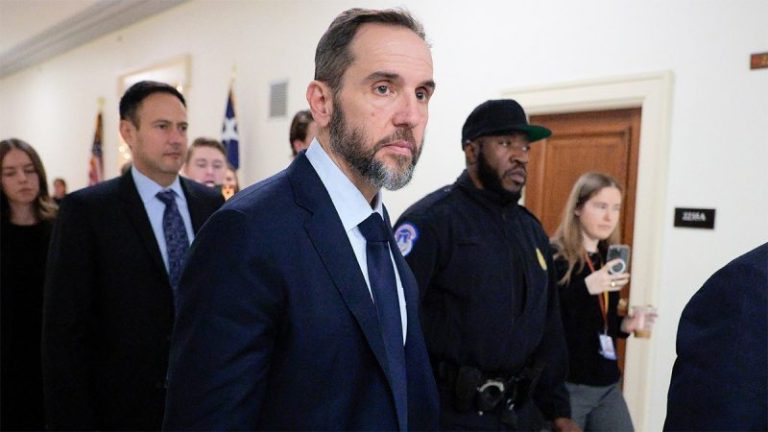
Former special counsel Jack Smith will testify in a hearing before the House Judiciary Committee next week, giving Republican and Democratic lawmakers on the panel a chance to grill him in a public setting on his prosecutions of President Donald Trump.

Smith will appear before the committee on Jan. 22, one month after he sat for a closed-door deposition with the committee and testified for eight hours about his special counsel work, a source familiar told Fox News Digital.

Smith had long said he wanted to speak to the committee publicly, and although Chairman Jim Jordan, R-Ohio, first demanded the deposition, the chairman also said an open hearing was on the table.

Smith investigated Trump and brought two indictments against him over the 2020 election and alleged retention of classified documents. Trump pleaded not guilty and aggressively fought the charges, and Smith dropped both cases when Trump won the 2024 election, citing a Department of Justice policy that discourages prosecuting sitting presidents.

In a public hearing, House lawmakers will be able to question Smith in five-minute increments, whereas in the deposition, each party questioned Smith in one-hour sessions. Politico first reported that Smith would appear for a hearing sometime this month.

Smith gave little new information during his initial meeting with the committee and defended his work.

‘I made my decisions in the investigation without regard to President Trump’s political association, activities, beliefs, or candidacy in the 2024 presidential election,’ Smith said, according to a transcript of the deposition. ‘We took actions based on what the facts, and the law required, the very lesson I learned early in my career as a prosecutor.’

Smith said he followed DOJ policy when his team made the controversial decision to subpoena numerous Republican senators’ and House members’ phone records as part of his 2020 election probe. Smith noted the subpoenas sought a narrow set of data.

‘If Donald Trump had chosen to call a number of Democratic senators [to delay the election certification proceedings], we would have gotten toll records for Democratic senators. So responsibility for why these records, why we collected them, that’s — that lies with Donald Trump,’ Smith said.

The Republicans have said the subpoenas were unconstitutional violations of the speech or debate clause, and they have broadly said the Biden DOJ abused its authority by bringing, in their view, politicized criminal charges against a former president and presidential candidate.

Trump, who has long decried Smith as a ‘thug’ and said he belongs in jail, has said he welcomes Smith at a public hearing.

Asked about Smith’s appearance next week, a representative for Smith provided a statement from one of his lawyers, Lanny Breuer.

‘Jack has been clear for months he is ready and willing to answer questions in a public hearing about his investigations into President Trump’s alleged unlawful efforts to overturn the 2020 election and his mishandling of classified documents,’ Breuer said.

This post appeared first on FOX NEWS

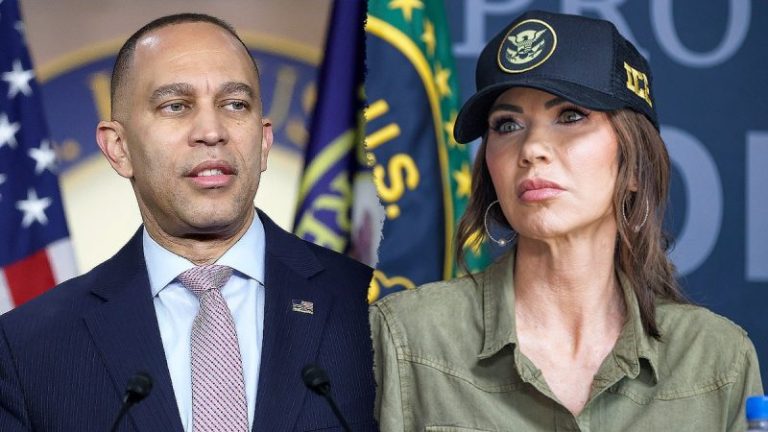
House Democratic Leader Hakeem Jeffries, D-N.Y., directed some heated remarks at a Trump administration Cabinet official whose department has been dominating headlines in recent weeks.

‘What is clear is that Kristi Noem is completely and totally unqualified. She should have never been confirmed by Senate Republicans,’ Jeffries said of the Department of Homeland Security (DHS) secretary during a Monday press conference. ‘It’s disgraceful that she’s there. She should be run out of town as soon as possible.’

Criticism against Noem, DHS, and Immigrations and Customs Enforcement (ICE) has intensified on the left in the wake of a deadly ICE-involved shooting in Minneapolis last week.

An ICE agent shot and killed a U.S. citizen, 37-year-old Renee Nicole Good, who allegedly presented a threat to ICE agents as they attempted to conduct enforcement operations. Partisan fissures have since erupted over which side was acting improperly when the deadly incident occurred.

‘Kristi Noem, the Department of Homeland Security and ICE, they’re totally out of control. And the American people want these extremists to be reined in,’ Jeffries said on Monday.

He said Good ‘should be alive today’ and accused both Noem and the ICE agent who shot Good of a ‘depraved indifference toward human life.’

Video of last week’s incident appears to show Good’s car making contact with the ICE agent who shot her before he opened fire. Arguments have since raged over whether she was deliberately getting in the way or even weaponizing her car, or whether she was trying to drive away.

Federal officials like Noem have defended the agent as acting in self-defense while accusing Good of trying to actively impede ICE activity in the Democrat-controlled city.

Democrats, including Minneapolis Mayor Jacob Frey and Minnesota Gov. Tim Walz, have accused ICE and Republican officials of stoking fear and tension in the city while demanding the federal government cease current operations there immediately.

Now Democrats in Congress have been threatening to withhold support from funding DHS unless significant reforms are made — a threat Jeffries alluded to during his press conference.

‘What’s in front of us right now is a spending bill that will go either one of two ways. Either Republicans will continue their my-way-or-the-highway approach as it relates to the Homeland Security bill — and if that happens, then it’s going to be on them to figure out a path forward,’ Jeffries began.

‘Alternatively, particularly in the face of the tragedy…there’s some commonsense measures that need to be put in place so that ICE can conduct itself in a manner that is at least consistent with every other law enforcement agency in the United States of America, at the state, local and federal level.’

The deadline to finish federal funding and avert a partial government shutdown is at the end of day on Jan. 30.

Fox News Digital reached out to DHS for a response.

This post appeared first on FOX NEWS

As protests spread across Iran and the government responds with lethal force, amid increasing reports claiming thousands have been killed, a growing question is being debated by analysts and Iranians alike: Is the Islamic Republic facing its most serious threat since the 1979 revolution, or does it still retain enough coercive power to survive?

For Mehdi Ghadimi, an Iranian journalist who spent decades protesting the regime before being forced to leave the country, this moment feels fundamentally different from anything that came before.

‘From 1999, when I was about fifteen, until 2024, when I was forced to leave Iran, I took part in every street protest against the Islamic Republic,’ Ghadimi told Fox News Digital. ‘For roughly half of those years, I supported the reformist movement. But after 2010, we became certain that the Islamic Republic is not reformable, that changing its factions is a fiction.’

According to Ghadimi, that realization gradually spread across Iranian society, culminating in what he describes as a decisive shift in the current unrest.

‘For the first time in the 47 years of struggle by the Iranian people against the Islamic Republic, the idea of returning to the period before January 1979 became the sole demand and the central point of unity among the people,’ he said. ‘As a result, we witnessed the most widespread presence of people from all cities and villages of Iran in the streets, on a scale unprecedented in any previous protests.’

Ghadimi claimed the chants on the streets reflected that shift. Instead of demanding economic relief or changes to dress codes, protesters openly called for the fall of the Islamic Republic and the return of the Pahlavi dynasty.

‘At that point, it no longer seemed that we were merely protesting,’ he said. ‘We were, in fact, carrying out a revolution.’

Still, Ghadimi was clear about what he believes is preventing the regime’s collapse.

‘The answer is very clear,’ he said. ‘The government sets no limit for itself when it comes to killing its own people.’

He added that Tehran appears reassured by the lack of consequences for its actions. ‘It has also been reassured by the behavior of other countries that if it manages to survive, it will not be punished for these blatant crimes against humanity,’ he said. ‘The doors of diplomacy will always remain open to them, even if their hands are stained with blood.’

Ghadimi described how the regime cut off internet access to disrupt coordination between protesters and opposition leadership abroad. He said that once connectivity was severed, the reach of video messages from the exiled Prince Reza Pahlavi dropped dramatically.

While Iranian voices describe a revolutionary moment, security and policy experts caution that structural realities still favor the regime.

Javed Ali, an associate professor at the Gerald R. Ford School of Public Policy, said the Islamic Republic is facing far more serious threats to its grip on power than in years past, driven by a convergence of military, regional, economic and diplomatic pressures.

‘The IRGC is in a much weaker position following the 12-day war with Israel last summer,’ Ali said, citing ‘leadership removals, ballistic missile and drone capabilities that were used or damaged, and an air and radar defense network that has been significantly degraded.’

Ali said Iran’s regional deterrence has also eroded sharply. ‘The so-called Axis of Resistance has been significantly weakened across the region,’ he said, pointing to setbacks suffered by Hamas, Hezbollah, the Houthis and Shiite militias allied with Tehran.

Internally, Ali said demographic pressure is intensifying the challenge. ‘Iran’s younger population is even more frustrated than before with deteriorating economic conditions, ongoing social and cultural restrictions and repeated violent crackdowns on dissent,’ he said.

Ali also pointed to shifting external dynamics that are limiting Tehran’s room to maneuver, including what he described as a stronger U.S.-Israel relationship tied to the Netanyahu-Trump alliance. He added that there are ‘possible joint operations already underway to support the protest movement inside Iran.’

Israeli security sources, speaking on background, said Israel has no such interest in intervening in a way that would allow Tehran to redirect domestic unrest outward.

‘Everyone understands it is better to sit and wait quietly and not attract the fire toward Israel,’ one source said. ‘The regime would like to make this about Israel and the Zionist enemy and start another war to repress internal protests.’

‘It is not Israel against Iran,’ the source added. ‘We recognize that the regime has an interest in provoking us, and we do not want to contribute to that.’

The source said a collapse of the Islamic Republic would have far-reaching consequences. ‘If the regime falls, it will affect the entire Middle East,’ the official said. ‘It could open a new era.’

Ali said Iran is increasingly isolated diplomatically. ‘There is growing isolation from Gulf monarchies, the fall of Assad in Syria and only muted support from China and Russia,’ he said.

Despite those pressures, Ali cautioned that Iran’s coercive institutions remain loyal.

‘I think the IRGC, including Basiji paramilitary elements, along with the Ministry of Intelligence, are still loyal to the regime out of a mix of ideology, religion, and self-interest,’ he said, citing ‘power, money and influence.’

Whether fear of collapse could drive insiders to defect remains unclear. ‘Whether there are insiders willing to flip because of a sense of imminent collapse of the clerical structure is hard to know,’ Ali said.

He placed the probability of an internal regime collapse at ‘25% or less,’ calling it ‘possible, but far less probable.’

For now, Iran appears caught between two realities: a population increasingly unified around the rejection of the Islamic Republic, and a security apparatus still willing to use overwhelming force to preserve it.

As Ali noted, pressure alone does not bring regimes down. The decisive moment comes only when those ordered to enforce repression decide it is no longer in their interest to do so.

Despite the scale of unrest, Ghadimi cautioned that the outcome remains uncertain.

‘After these four hellish days, without even knowing the fate of our friends and loved ones who went into the streets, or whether they were alive or not, it is truly difficult for me to give you a clear assessment and say whether our revolution is now moving toward victory or not,’ he said.

He recalled a message he heard repeatedly before leaving Iran, across cities and social classes.

‘The only thing I consistently heard was this: ‘We have nothing left to lose, and even at the cost of our lives, we will not retreat one step from our demand for the fall of the Islamic Republic,’’ Ghadimi said. ‘They asked me to promise that now that I am outside Iran, I would be their voice.’

‘That spirit is what still gives my heart hope for victory,’ he added. ‘But my mind tells me that when mass killing carries no punishment, and when the government possesses enough bullets, guns and determination to suppress it, even if it means killing millions, then victory would require a miracle.’

This post appeared first on FOX NEWS

A bipartisan group of lawmakers is introducing a bill aimed at restricting any unauthorized military action by President Donald Trump, amid growing debate over his comments about acquiring Greenland ‘one way or the other.’

Rep. Bill Keating, D-Mass., is leading the legislation along with Reps. Steny Hoyer, D-Md., Brendan Boyle, D-Pa., and Don Bacon, R-Neb., according to POLITICO.

‘This is about our fundamental shared goals and our fundamental security, not just in Europe, but in the United States itself,’ Keating said in a statement to the outlet.

The group involved in the effort is soliciting broader support for the legislation and say they hope additional Republicans will back the effort to restrict funding for any unauthorized military action against U.S. allies.

In a letter to colleagues, Keating said ‘this legislation takes a clear stand against such action and further supports NATO allies and partners,’ according to POLITICO.

While the measure does not specifically name any specific countries, it is clearly in response to Trump’s repeated threats against Greenland.

Keating said the decision to omit Greenland’s name was meant to broaden the legislation’s focus. He said he met with the Danish Ambassador and the head of Greenland representation.

‘This isn’t just about Greenland. This is about our security,’ Keating said.

Keating also said he believes slashing funding is the most impactful way to disincentivize Trump administration officials from taking action.

‘War powers are important, but we’ve seen with Democratic and Republican presidents that that’s not as effective,’ he said. ‘It’s hard to get around having no funds or not allowing personnel to do it.’

This comes after the Senate advanced a bipartisan resolution last week that would limit Trump’s ability to conduct further attacks against Venezuela after the U.S. military’s recent move to strike the country and capture its president, Nicolás Maduro. The Upper Chamber could pass the measure later this week, although its future in the House remains uncertain despite some support from Republicans.

On Greenland, administration officials are openly weighing options such as military force to take the Danish territory, a move that would violate NATO’s Article V, which states that an attack on one member is an attack on all of them and could end the alliance of more than 75 years.

‘We are going to do something on Greenland, whether they like it or not,’ Trump said on Friday. ‘Because if we don’t do it, Russia or China will take over Greenland, and we’re not going to have Russia or China as a neighbor.’

Greenland Prime Minister Jens-Frederik Nielsen and four party leaders reaffirmed last week that the self-governing island has no interest in becoming part of the U.S.

‘We don’t want to be Americans, we don’t want to be Danes, we want to be Greenlanders,’ the leaders said, adding that Greenland’s ‘future must be decided by the Greenlandic people.’

Danish Prime Minister Mette Frederiksen, French President Emmanuel Macron, German Chancellor Friedrich Merz, British Prime Minister Keir Starmer, as well as the leaders of Italy, Spain and Poland, also signed a letter stating: ‘Greenland belongs to its people. It is for Denmark and Greenland, and them only, to decide on matters concerning Denmark and Greenland.’

The chance of expanding U.S. control over Greenland has drawn mixed reactions from Congress. While most Democrats have opposed the idea, some Republicans have voiced support for pursuing closer ties with the territory.

Rep. Randy Fine, R-Fla., who introduced legislation to make it the 51st U.S. state, although he said the best way to acquire Greenland is voluntarily.

‘I think it is in the world’s interest for the United States to exert sovereignty over Greenland,’ Fine told Fox News Digital.

This post appeared first on FOX NEWS

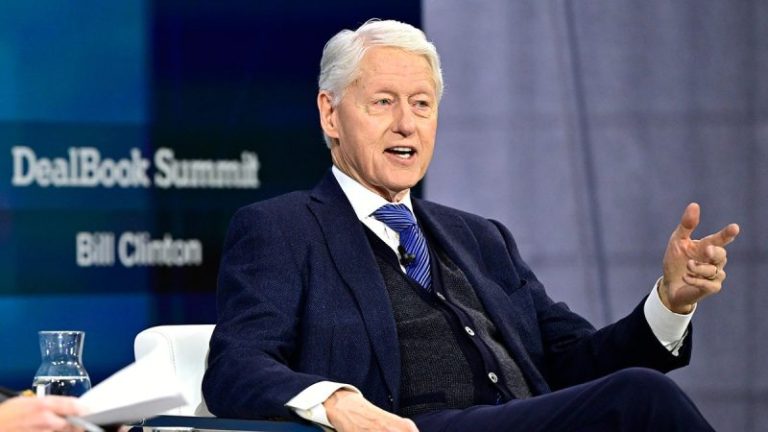
Former President Bill Clinton has been summoned to appear on Capitol Hill Tuesday morning, as Republicans threaten a possible criminal referral if the ex-commander-in-chief skips out.

He and former Secretary of State Hillary Clinton have both been subpoenaed to appear before the House Oversight Committee for separate closed-door depositions for the panel’s investigation into Jeffrey Epstein.

Clinton was scheduled to appear Tuesday morning at 10 a.m., but it’s not clear whether he will do so. The deposition is expected to move forward regardless.

A spokeswoman for the committee told Fox News Digital on Friday that neither had confirmed their scheduled dates at that point.

‘The Clintons have not confirmed their appearances for their subpoenaed depositions. They are obligated under the law to appear, and we expect them to do so. If the Clintons do not appear at their depositions, the House Oversight Committee will initiate contempt of Congress proceedings,’ the spokeswoman said.

Both Clintons were originally scheduled to appear before the committee in October, but their deposition dates were postponed while the panel was in talks with their attorneys.

Their deposition dates were delayed again when House Oversight Committee Chairman James Comer, R-Ky., was informed the former first couple would be attending a funeral.

‘They’re saying now that he’s going to a funeral on that day, so we’ve been going back and forth with the lawyer,’ Comer told Fox News Digital in December. ‘We’re going to hold him in contempt if he doesn’t show up for his deposition.’

The House Oversight Committee would need to advance a contempt resolution before it’s considered by the entire chamber. If a simple majority votes to hold someone in contempt of Congress, a criminal referral is then traditionally made to the Department of Justice.

A criminal contempt of Congress charge is a misdemeanor that carries a punishment of up to one year in jail and a maximum $100,000 fine if convicted.

In the absence of mutually agreed-upon new dates, new subpoenas were issued for Bill and Hillary Clinton to appear on Jan. 13 and Jan. 14, respectively.

They were two of 10 people who Comer initially subpoenaed in the House’s Epstein investigation after a unanimous bipartisan vote directed him to do so last year.

Clinton was known to be friendly with the late pedophile before his federal charges but was never implicated in any wrongdoing related to him.

Fox News Digital reached out to the Clintons’ lawyer and Bill Clinton’s spokesperson to ask whether he would appear Tuesday, but did not receive a response.

This post appeared first on FOX NEWS

The Trump administration’s renewed interest in tapping Venezuela’s mineral reserves could carry with it ‘serious risk,’ an expert on illicit economies has warned in the wake of the capture of Nicolás Maduro.

A day after the U.S. military captured Maduro in Caracas, Trump administration officials highlighted their interest in the country’s critical mineral potential.

Commerce Secretary Howard Lutnick told reporters on Jan. 4, ‘You have steel, you have minerals, all the critical minerals. They have a great mining history that’s gone rusty,’ he said aboard Air Force One alongside President Donald Trump.

Lutnick also said that Trump ‘is going to fix it and bring it back – for the Venezuelans.’

‘Venezuela’s gold, critical mineral and rare earth potential is substantial, which makes mining resources very much on the menu for Trump,’ Bram Ebus told Fox News Digital.

‘But this illicit economy involves extreme violence,’ he said, before describing abuses that include forced labor, criminal control of mining zones and punishments such as ‘hands being cut off for theft.’

Ebus cautioned that without strict safeguards, transparency and security, Trump’s efforts to tap Venezuela’s mineral wealth could entangle the U.S. in criminal networks.

‘The sector is already dominated by transnational crime syndicates, deeply implicated in human rights abuses, and intertwined with Chinese corporate interests,’ Ebus, the founder of Amazon Underworld, a research collective covering organized crime, said. ‘If corporations or foreign private security firms were to become directly involved in mining in Venezuela’s Amazon region, the situation could deteriorate rapidly and violently.’

Despite the renewed focus on oil and mineral wealth, ‘when it comes to mining, the situation is more complex than oil,’ Ebus added. ‘The illicit extraction of gold, tungsten, tantalum, and rare earth elements is largely controlled by Colombian guerrilla organizations, often working in collaboration with corrupt Venezuelan state security forces. Much of this output currently ends up in China.’

Ebus also described dire conditions inside mining zones. ‘Mining districts are effectively run by criminal governance,’ he explained. ‘Armed groups decide who can enter or leave an area, tax legal and illegal economic activity, and enforce their own form of justice.’ He also described how ‘punishments for breaking rules can include expulsion, beatings, torture or death.’

‘We have documented summary executions, decapitations, and severe physical mutilation, such as hands being cut off for theft,’ he added. ‘Sexual exploitation, forced labor, and torture are widespread with crimes not limited to non-state actors.’ 

He also noted that ‘Venezuelan state forces, including the army, National Guard, and intelligence services are deeply involved and work in direct collaboration with organized crime groups.’

Ebus described how Colombia’s largest guerrilla organizations, including the ELN and factions such as the Segunda Marquetalia, along with Venezuelan organized crime groups operating locally – or ‘sistemas’ – dominate illegal mining operations, noting that ‘there are at least five major ‘sindicatos’ operating across Bolívar state alone.’

‘Together, all these actors make up the core criminal panorama of Venezuela’s mining sector,’ Ebus added.

In 2016, Maduro established the Orinoco Mining Arc, a 111,843-square-kilometer zone rich in gold, diamonds, coltan and other minerals.

The area has since become synonymous with illicit mining and corrupt officials.

In 2019, the U.S. sanctioned Venezuelan gold exports with at least 86% of the country’s gold reportedly being produced illegally and often controlled by criminal gangs.

However, from a U.S. perspective, Ebus said, the objective behind critical minerals could be limiting China’s access.

‘With gold prices expected to peak around 2026, access to gold represents a major benefit for national economies and government investment stability,’ he said. ‘Beyond gold, controlling critical mineral supply chains offers enormous geopolitical leverage for the U.S., especially if it allows it to deny access to China.’

This post appeared first on FOX NEWS

Iran is not merely experiencing another wave of street protests. It is facing a crisis that strikes at the core of the Islamic Republic—and, for the first time in years, places the regime’s survival in real doubt.

Across Iran, demonstrations sparked by economic collapse and corruption have rapidly transformed into direct challenges to clerical rule. Security forces have responded with live fire, mass arrests, and communications blackouts. International reporting cites hundreds of people killed and thousands detained. Internet shutdowns point to a regime determined to suppress not only dissent, but proof of it.

Iran has behaved this way before. What has changed is the strategic environment—and the growing sense among Iranians that the system itself is failing.

Still, one must be clear-eyed: Iran’s leaders will not go quietly. They do not see themselves as ordinary autocrats clinging to power. In their own theology, they see themselves as executing Allah’s will.

A Regime That Sees Repression as Divine Duty

Since 1979, the Islamic Republic has framed its authority through velayat-e faqih—the rule of the Islamic jurist. Under this doctrine, Supreme Leader Ayatollah Ali Khamenei is not simply a political figure. He is the guardian of an Islamic revolution believed to be divinely sanctioned.

That theological worldview directly shapes how the regime responds to dissent. When Iranian security forces fire into crowds, the regime does not see itself as suppressing political opposition; it sees itself as crushing heresy, sedition, and rebellion against God’s order. Protesters are routinely labeled ‘corrupt on earth,’ a Quranic phrase historically used to justify severe punishment.

Public condemnation and moral appeals alone will not move Tehran. Its rulers believe endurance, sacrifice, and violence are virtues—especially when used to preserve the revolution.

Even regimes driven by religious certainty can collapse once their power structures fracture.

Why this moment differs from 2009—or 2022

Iran has seen mass protests before. In 2009, the Green Movement threatened the regime after a disputed election. In 2022, nationwide protests erupted following the death of Mahsa Amini, a 22-year-old Iranian woman who died in morality-police custody after being detained for allegedly violating Iran’s hijab rules. Each time, the regime survived.

Several factors suggest this moment is different.

First, the economy is far worse. Iran faces sustained currency devaluation, unemployment, and inflation that has crushed the middle class and hollowed out state legitimacy. That pressure is compounded by a deepening water crisis that has crippled agriculture, strained urban life, and fueled unrest in multiple provinces. Economic despair is no longer peripheral; it now sits at the center.

Beyond economics, Iran’s external deterrence has eroded. The war with Israel in 2025 inflicted real damage. Senior Iranian commanders were killed. Air defenses were penetrated. Missile and drone infrastructure was disrupted. Iran’s aura of invulnerability—carefully cultivated over decades—was badly shaken.

At the same time, Iran’s proxy network is under strain. Hamas has been devastated. Hezbollah has suffered significant losses and now faces domestic pressure in Lebanon. The Houthis remain disruptive but isolated. Tehran’s so-called ‘axis of resistance’ looks less like an unstoppable force and more like a series of costly liabilities.

Most importantly, the regime’s coercive apparatus is under stress. And this is where the future of Iran will be decided.

Watch the IRGC and the Basij—the outcome may hinge on their choices

No institutions matter more right now than the Islamic Revolutionary Guard Corps (IRGC) and its paramilitary arm, the Basij.

Often described as the regime’s ‘eyes and ears,’ the Basij are not a conventional military force but a nationwide population-control and internal surveillance network. Embedded in neighborhoods, universities, factories, and mosques, they monitor dissent, identify protest organizers, and move quickly to intimidate or detain them—often before demonstrations can spread. 

During past unrest, including the 2009 Green Movement and the 2022 Mahsa Amini protests, Basij units played a central role in suppressing resistance through beatings, arrests, and close coordination with IRGC security forces. Their value to the regime lies not in battlefield strength, but in omnipresence and ideological loyalty.

Their mission is to control dissent at the local level—before it becomes national. As long as the Basij remain loyal and effective in towns, neighborhoods, and campuses, the regime can contain unrest. If they hesitate, defect, or stand aside, Tehran’s grip weakens rapidly.

The Basij are the real instrument of population control. If the regime is forced to deploy the IRGC widely for internal order, it signals that local control has failed—and that the system is under far greater strain.

The Trump administration should be careful not to hand Tehran the propaganda victory it wants. Loud declarations about regime change from Washington risk delegitimizing Iranian voices. Support the people. Isolate the killers. Let the regime own its crimes.

The IRGC, by contrast, controls the military and functions as an economic empire. Beyond internal security, the IRGC also shapes Iran’s foreign policy—overseeing missile forces, regional proxies, and external operations. It exists to defend the revolution abroad, while the Basij exists to control society at home.

Over the past three decades, the IRGC has embedded itself in Iran’s most important industries—energy, construction, telecommunications, transportation, ports, and black-market finance. Entire sectors of the Iranian economy now depend on IRGC-controlled firms and foundations.

This creates a decisive tension. On one hand, the IRGC has every reason to defend the regime that enriched it. On the other, prolonged instability, sanctions, and economic collapse threaten the very assets the Guards control. At some point, self-preservation may begin to compete with ideological loyalty.

That is why Iran’s future may depend less on what protesters do in the streets—and more on whom the IRGC ultimately chooses to back.

Three outcomes appear plausible.

The first is repression. The Basij could maintain local control while the IRGC backs the Supreme Leader, allowing the regime to crush dissent, and impose order through overwhelming force. This would preserve the Islamic Republic, but at the cost of deeper isolation and long-term decay.

The second is continuity without clerical dominance. A ‘soft coup’ could sideline aging clerics in favor of a military-nationalist leadership that preserves core power structures while shedding the regime’s most unpopular religious figures. The system would remain authoritarian—but altered.

The third is fracture. If parts of the Basij splinter or stand aside—and the IRGC hesitates to intervene broadly—the regime’s internal control could unravel quickly. This is the least likely outcome, but the most transformative—and the one most favorable to long-term regional stability.

Revolutions tend to succeed not because crowds grow larger, but because security forces eventually stop obeying orders.

America’s strategic objective: clarity without ownership

The United States must be disciplined about its goal.

America should not seek to ‘run Iran,’ redraw its culture, or impose a leader. That approach has failed elsewhere. But neither should Washington pretend neutrality between an abusive theocracy and a population demanding dignity.

Our strategy is clear:

Prevent Iran from acquiring nuclear weapons.

End Iran’s export of terrorism and proxy war.

Push Iran toward regional stability rather than disruption.

Encourage a government that derives legitimacy from its people, not coercion.

Achieving that outcome requires pressure without provocation.

What the Trump administration and allies should do now

First, expose repression relentlessly. Iran’s internet blackouts are a weapon. The U.S. and allies should support every lawful means of keeping Iranians connected and atrocities visible.

Second, target the regime’s enforcers—not the public. Sanctions should focus on specific IRGC units, Basij commanders, judges, and security officials responsible for killings and mass arrests. Collective punishment only strengthens regime propaganda.

Third, signal consequences—and off-ramps. Those ordering violence must know they will be held accountable. Those who refuse unlawful orders should know the world is watching—and remembering.

Fourth, deter external escalation. Tehran may try to unify the nation through confrontation abroad. Strong regional missile defense, maritime security, and allied coordination reduce the regime’s ability to change the subject with war.

Finally, do not hand Tehran the propaganda victory it wants. Loud declarations about regime change from Washington risk delegitimizing Iranian voices. Support the people. Isolate the killers. Let the regime own its crimes.

The bottom line

Iran’s rulers believe they are carrying out divine will. That makes them dangerous—and stubborn. But it does not make them immortal.

Every revolutionary regime eventually faces a moment when fear stops working, money runs out, and loyalty fractures. Iran may be approaching that moment now.

The outcome will not be decided by speeches in Washington, but by choices in Tehran—especially inside the IRGC.

If the Guards conclude their future lies with the people rather than the clerics, Iran could finally turn a page. If they do not, repression will prevail—for a time.

America’s task is not to force history, but to shape the conditions under which it unfolds—with care, strategy, and moral clarity.

Because when the Islamic Republic finally faces its reckoning, the world must be ready—not to occupy Iran, but to ensure that what replaces the tyranny is not simply the same regime in a different uniform.

This post appeared first on FOX NEWS

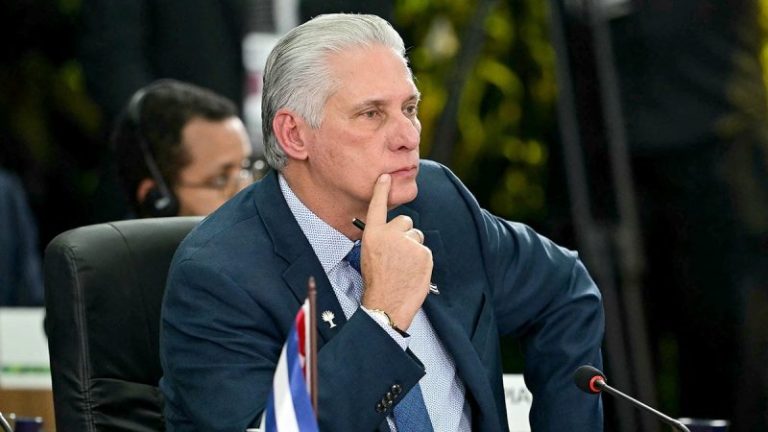
Cuban President Miguel Díaz-Canel Bermúdez declared Sunday that the island nation would defend itself ‘to the last drop of blood,’ responding to pressure from U.S. President Donald Trump to strike a deal with Washington. 

President Trump had spoken about Cuba in a Truth Social post earlier in the day, urging that ‘they make a deal, BEFORE IT IS TOO LATE.’

‘Those who blame the Revolution for the severe economic shortages we suffer should hold their tongues out of shame. Because they know it and acknowledge it: they are the fruit of the draconian measures of extreme strangulation that the U.S. has been applying to us for six decades and now threatens to surpass,’ the Cuban wrote on X, according to a translation of the Spanish-language post. 

‘#Cuba is a free, independent, and sovereign nation. No one dictates what we do. Cuba does not aggress; it is aggressed upon by the United States for 66 years, and it does not threaten; it prepares, ready to defend the Homeland to the last drop of blood,’ he wrote in another post, according to the translation.

U.S. Rep. Carlos Gimenez, R-Fla., who was born in Cuba, responded to the foreign figure’s post.

‘You dictators, henchmen, and executioners of the Cuban nation think you own the island. You don’t have much time left,’ he declared, according to the translation of his post, also written in Spanish.

Trump declared in a Truth Social post on Sunday, ‘Cuba lived, for many years, on large amounts of OIL and MONEY from Venezuela. In return, Cuba provided ‘Security Services’ for the last two Venezuelan dictators, BUT NOT ANYMORE! Most of those Cubans are DEAD from last weeks U.S.A. attack, and Venezuela doesn’t need protection anymore from the thugs and extortionists who held them hostage for so many years.

‘Venezuela now has the United States of America, the most powerful military in the World (by far!), to protect them, and protect them we will. THERE WILL BE NO MORE OIL OR MONEY GOING TO CUBA – ZERO! I strongly suggest they make a deal, BEFORE IT IS TOO LATE,’ he warned.

Rep. Gimenez thanked the president.

‘I was born in Cuba & forced from home shortly after the Communist takeover. Today, I represent my community in Congress. Thank you, President Trump, first Venezuela & next is Cuba. We will be forever grateful. Our hemisphere must be the hemisphere of liberty,’ the lawmaker wrote in a post on X.

This post appeared first on FOX NEWS