Author

admin

Browsing

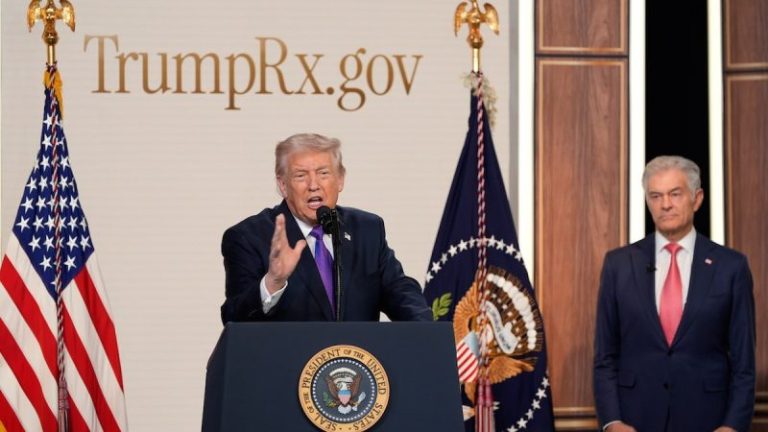
When President Donald Trump announced ‘TrumpRx’ in early February, a weight I’ve carried my entire adult life suddenly lifted from my shoulders. The website offers life-saving medications at much lower prices than normal, based on the president’s promise to give Americans the same prescription drug costs as patients in other developed countries. I can personally attest that such equal treatment — a policy known as ‘most favored nation’ pricing — is urgently needed for people who struggle with chronic disease.

I’ve had debilitating asthma since I was a child. I’ve been able to manage it thanks to a prescription drug which blocks lung inflammation and keeps my airways open. The few times I’ve gone off the medication, I’ve ended up in the emergency room, unable to breathe. That nearly happened four years ago in what I thought was the worst possible place — on the other side of the world, unable to contact my doctors or go to my pharmacy.

My family and I were in Italy, on a trip to honor my mother. She had recently been diagnosed with cancer and my brother and I scheduled the trip in between her chemo treatments, when she would be well enough to travel. She had always wanted to go there with us. But in our rush to get two families and three little kids packed, I accidentally grabbed a nearly empty inhaler.

I realized my mistake a few days into the trip, when I looked at the inhaler and saw that I only had two doses left. I wasn’t just worried about my health, though, of course, that was paramount. I worried how I’d afford the drug if I even found it in Italy.

I’ve organized my professional life around access to insurance that covers my medication, given its longstanding retail price $600 for a month’s supply. For 25 years, I’ve grappled with denied coverage letters, premium tier prescription charts and the constant worry that we would have to cut back on necessities to get my medication. At the time, in Italy, I was already paying a few hundred dollars a month for the drug — a lot, but a bargain compared to its normal price.

But I had no choice. I had to get my medication. After a few minutes of searching, I found an Italian pharmacy across town. I walked there immediately, trying to control my racing thoughts of what might happen. I knew that if I couldn’t get the drug, I couldn’t get safely back to the U.S.

Fifteen minutes later, in tears I walked out, drug in hand. It cost me only 30 euros or about $35.

At first, I was both relieved and grateful. But by the end of the day, I was scratching my head. Why was it $600 in the U.S. while Italians could get it for next to nothing? In the days that followed, I discovered that the answer is beyond complicated.

It’s affected by everything from a lack of price transparency to the meddling of middlemen who jack up costs. It’s also true that foreign countries have been negotiating the prices of prescription drugs for decades, forcing Americans to cover the enormous cost of pharmaceutical development while they pay far below market prices.

Whatever the reason, the system doesn’t work for Americans. Brand name prescription prices in the U.S. are more than four times higher than prices in other wealthy countries. As many as 18 million Americans have struggled to buy the prescriptions they need in recent years.

I’m now using a generic version of the drug that costs significantly less. But that doesn’t change the fact that I, like many other Americans with chronic disease, have paid through the nose for decades on end, only to find the medication I needed in Italy for what seemed like pennies.

I wasn’t just worried about my health, though, of course, that was paramount. I worried how I’d afford the drug if I even found it in Italy.

Trump is fighting to fix this broken system. Before launching TrumpRx, he reached 16 deals with pharmaceutical companies to charge most-favored-nation prices. As a lifelong conservative, I’m typically uncomfortable with this kind of government intervention in the market. But other countries have already intervened and people like me have paid the price.

If pharmaceutical companies need the extra money, they should take it up with other countries that negotiated them down first. Then they could recoup their costs on the backs of others, not simply by charging more in the U.S. Bottom line, there’s no good reason why 340 million Americans should pay so much more than hundreds of millions of people who live in Europe and Asia.

I will always be grateful that my medication was so affordable in Italy back in 2022. It may very well have saved my life. But I’m even more grateful that President Trump is finally lowering prices for every American here at home.

This post appeared first on FOX NEWS

Ex-Victoria’s Secret mogul Les Wexner’s lawyer was caught on a hot mic jokingly threatening to ‘kill’ him if he continued giving long answers to questions during his deposition on Jeffrey Epstein by the House Oversight Committee.

The moment was caught after the committee released its full, nearly five-hour deposition of 88-year-old Wexner as part of its ongoing probe into Jeffrey Epstein’s network.

Several hours into the deposition, while Wexner was giving a particularly long-winded answer, Wexner’s attorney leaned over to him and whispered in his ear, ‘I’m going to f—ing kill you if you answer another question with more than five words, okay?’

Both Wexner and his attorney laughed after this statement, indicating Wexner understood it as a joke. The lawyer proceeded to instruct Wexner to ‘answer the question,’ laughing more.

Shortly before this exchange, the attorney had urged Wexner to ‘answer the question,’ saying, ‘I’m sure we all appreciate the stories, we’re just trying to answer questions that they actually want answered,’ referring to the House committee.

The Oversight Committee heard from Wexner, a billionaire fashion mogul best known for his work in revolutionizing the Victoria’s Secret store chain, about his involvement with Epstein, whom Wexner characterized as strictly a business associate rather than a close friend.

Despite being named a co-conspirator in a recently uncovered FBI document from 2019, Wexner said that he has never been directly contacted by either the FBI or the Department of Justice. He maintained his total innocence during the deposition, saying, ‘I was naïve, foolish, and gullible to put any trust in Jeffrey Epstein. He was a con man. And while I was conned, I have done nothing wrong and have nothing to hide. I completely and irrevocably cut ties with Epstein nearly twenty years ago when I learned that he was an abuser, a crook, and a liar.’

The committee stated it was releasing the full deposition with ‘no spin,’ saying, ‘The American people deserve to see the testimony for themselves—transparency matters.’

Wexner is the founder of L Brands, formerly called The Limited, through which he acquired well-known companies Victoria’s Secret, Bath & Body Works, Express, and Abercrombie & Fitch, among others. He is no longer associated with Victoria’s Secret. He was one of Epstein’s first major clients as a financial advisor, with Epstein being granted power of attorney over Wexner’s vast wealth. Wexner also sold his Manhattan townhouse to Epstein, which was later discovered to be one of the locations where federal authorities accused Epstein of abusing young women and girls under 18.

Despite this, Wexner stated that he always kept his relationship with Epstein as strictly professional, saying, ‘I don’t think I ever went to lunch, or dinner, a movie or had a cup of coffee with Jeffrey,’ adding, ‘My focus was on my business and on community.’

Wexner said he severed ties with Epstein in 2007 after learning of an investigation and discovering that Epstein had misappropriated funds from him and his family. He said a substantial amount of the money was returned. 

Wexner also testified that he was not aware of Epstein ever staying at a guesthouse on his New Albany, Ohio, estate, where Maria Farmer is said to have been abused by Epstein and associate Ghislaine Maxwell. He maintained that he only had knowledge of Epstein staying at a nearby neighbor’s residence. Pressed on whether he denies Farmer’s testimony that she was abused on his property, he stated, ‘I never met her, didn’t know she was here, didn’t know she was abused.’

He categorically denied any knowledge of either Epstein or Maxwell arranging women for prominent individuals. He also categorically denied ever having a sexual encounter with anyone introduced by Maxwell and Epstein or having any sexual relationship with Epstein himself.

He further denied any sexual contact or knowledge of another prominent Epstein victim, Virginia Giuffre.

Wexner was also asked about his knowledge of Epstein and President Donald Trump’s relationship. He said that he does not think they were friends, but said Epstein ‘held him out as a friend.’

Committee members also questioned Wexner on a note he wrote in a birthday book to Epstein in which he drew breasts with the caption, ‘Dear Jeffrey, I wanted to get you what you want, so here it is … Your friend, Leslie.’

Wexner confirmed that he wrote the note but dismissed it, saying, ‘He was a bachelor, so I drew a pair of boobs as kind of a joke, offhandedly, I would say.’

Wexner is the fourth person appearing before the House Oversight Committee in its Epstein probe.

Fox News Digital’s Liz Elkind contributed to this report.

This post appeared first on FOX NEWS

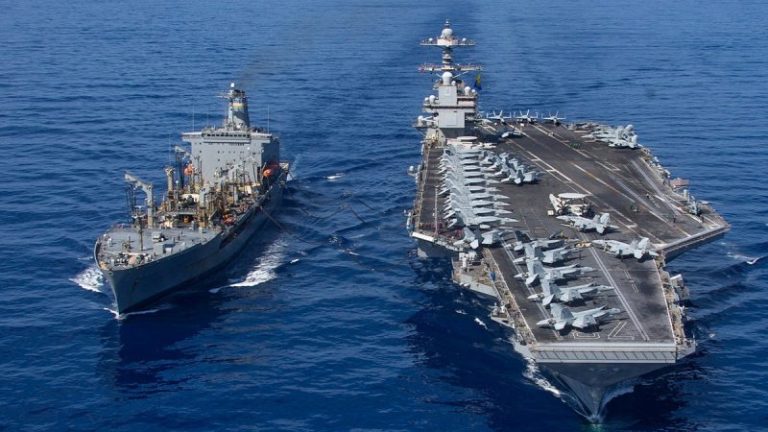
The Pentagon is deploying the USS Gerald R. Ford to the Middle East, creating a rare two-carrier presence in the region as tensions with Iran rise and questions swirl about possible U.S. military action.

The Ford will reinforce the USS Abraham Lincoln already operating in theater, significantly expanding American airpower at a moment of heightened regional uncertainty.

While officials have not announced imminent action, the dual-carrier presence increases the Pentagon’s flexibility — from deterrence patrols to sustained strike operations — should diplomacy falter.

The largest aircraft carrier in the world

The Gerald R. Ford is the largest and most advanced aircraft carrier ever built.

Commissioned in 2017, the nuclear-powered warship stretches more than 1,100 feet and displaces more than 100,000 tons of water. It serves as a floating air base that can operate in international waters without relying on host-nation approval — a key advantage in politically sensitive theaters.

Powered by two nuclear reactors, the ship has virtually unlimited range and endurance and is designed to serve for decades as the backbone of U.S. naval power projection.

How much airpower does it carry?

A typical air wing aboard the Ford includes roughly 75 aircraft, though the exact mix depends on mission requirements.

Those aircraft can include F/A-18 Super Hornets, stealth F-35C Joint Strike Fighters, EA-18G Growler electronic warfare jets, E-2D Hawkeye early warning aircraft and MH-60 helicopters.

In a potential conflict with Iran, several of those platforms would be central. 

The F-35C is designed to penetrate contested airspace and carry out precision strikes against heavily defended targets. The Growler specializes in jamming enemy radar and communications — a critical capability against Iran’s layered air defense systems. 

The E-2D extends surveillance hundreds of miles, helping coordinate air and missile defense.

Together, they give commanders options ranging from deterrence patrols to sustained strike operations.

Built for higher combat tempo

What separates the Ford from earlier carriers is its ability to generate more sorties over time.

Instead of traditional steam catapults, it uses an electromagnetic aircraft launch system, or EMALS, allowing aircraft to launch more smoothly and at a faster pace. The system is designed to reduce stress on jets and increase operational tempo.

The ship also features advanced arresting gear and a redesigned flight deck that allows more aircraft to be staged and cycled efficiently.

In a high-intensity scenario — particularly one involving missile launches or rapid escalation — the ability to launch and recover aircraft quickly can be decisive.

How it compares to the Lincoln

While both the Ford and the Abraham Lincoln are 100,000-ton, nuclear-powered supercarriers capable of carrying roughly 60 aircraft to 75 aircraft, they represent different generations of naval design.

The Lincoln is a Nimitz-class carrier commissioned in 1989 and part of a fleet that has supported decades of operations in the Middle East. The Ford is the Navy’s next-generation carrier and the lead ship of its class.

The key difference is efficiency and output. 

The Ford was built to generate a higher sustained sortie rate using its electromagnetic launch system, along with a redesigned flight deck and upgraded power systems. In practical terms, both ships bring substantial strike capability — but the Ford is designed to launch and recover aircraft faster over extended operations, giving commanders greater flexibility if tensions escalate.

How it defends itself

The Ford does not sail alone. It operates as the centerpiece of a carrier strike group that typically includes guided-missile destroyers, cruisers and attack submarines.

Those escort ships provide layered air and missile defense, anti-submarine protection and additional strike capability.

The carrier itself carries defensive systems including Evolved Sea Sparrow Missiles, Rolling Airframe Missiles and the Phalanx Close-In Weapon System — designed to intercept incoming threats at close range.

That defensive posture is especially relevant in the Middle East.

Iran has invested heavily in anti-ship ballistic missiles, cruise missiles, armed drones, naval mines and fast-attack craft operated by the Islamic Revolutionary Guard Corps. The Gulf region presents a dense and complex threat environment, even for advanced U.S. warships.

Why two carriers matter

With both the Ford and the Lincoln in theater, commanders gain more than just added firepower. Two carriers allow the U.S. to sustain a higher tempo of operations, distribute aircraft across multiple areas, or maintain continuous presence if one ship needs to reposition or resupply.

Dual-carrier deployments are relatively uncommon and typically coincide with periods of heightened regional tension.

The timing — as negotiations with Tehran continue — underscores the strategic message. Carriers are often deployed not only to fight wars, but to prevent them.

By positioning both ships in the region, Washington is signaling that if diplomacy falters, military options will already be in place.

This post appeared first on FOX NEWS

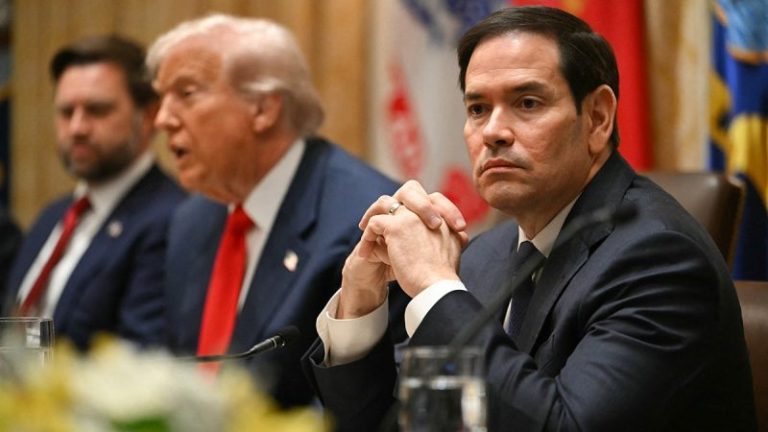
President Donald Trump on Wednesday signed a presidential memorandum directing the U.S. to withdraw from 66 international organizations, ordering executive departments and agencies to cease participation in and funding of entities the administration says no longer serve U.S. interests.

The memorandum follows a State Department review ordered earlier this year under Executive Order 14199 and applies to 35 non-United Nations organizations and 31 United Nations entities, according to the White House.

In the memorandum, Trump said he reviewed Secretary Rubio’s findings and determined it is ‘contrary to the interests of the U.S. to remain a member of, participate in, or otherwise provide support’ to the listed organizations.

The order directs all executive departments and agencies to take immediate steps to effectuate the withdrawals as soon as possible. For United Nations entities, withdrawal means ceasing participation in or funding to the extent permitted by law.

The administration framed the move as part of Trump’s broader ‘America First’ agenda aimed at restoring American sovereignty and ending taxpayer support for organizations it views as wasteful, ineffective or contrary to U.S. interests. 

Review of additional international organizations remains ongoing, according to the White House.

Secretary of State Marco Rubio said the withdrawals fulfill a key commitment of Trump’s presidency.

‘Today, President Trump announced the U.S. is leaving 66 anti-American, useless, or wasteful international organizations,’ Rubio said in a post on X. ‘Review of additional international organizations remains ongoing.’

Rubio said the administration concluded the institutions were ‘redundant in their scope, mismanaged, unnecessary, wasteful, poorly run, captured by the interests of actors advancing their own agendas contrary to our own, or a threat to our nation’s sovereignty, freedoms, and general prosperity.’

‘It is no longer acceptable to be sending these institutions the blood, sweat, and treasure of the American people, with little to nothing to show for it,’ Rubio said. ‘The days of billions of dollars in taxpayer money flowing to foreign interests at the expense of our people are over.’

The list includes organizations involved in areas such as climate, energy, development, governance, migration and gender policy, according to the White House. The White House published the full list alongside the order.

Rubio said the withdrawals reflect a shift in how the administration views international engagement.

‘We will not continue expending resources, diplomatic capital, and the legitimizing weight of our participation in institutions that are irrelevant to or in conflict with our interests,’ Rubio said. ‘We seek cooperation where it serves our people and will stand firm where it does not.’

The White House and the State Department did not immediately respond to Fox News Digital’s request for comment.

This post appeared first on FOX NEWS

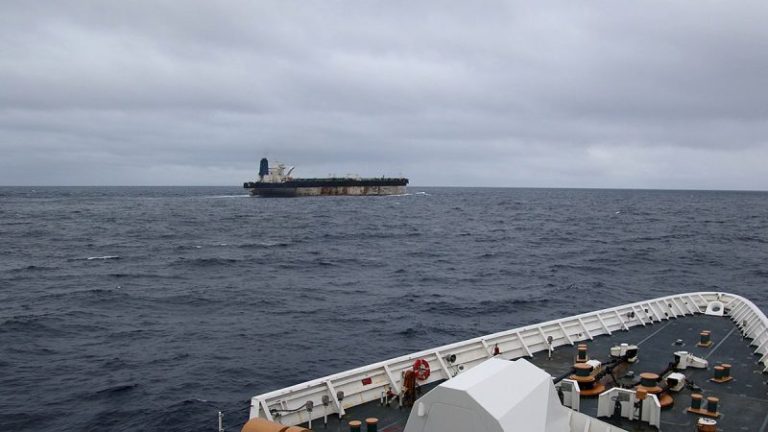
The seizure of a Russian-linked oil tanker in the North Atlantic has highlighted ‘worry’ among NATO and Nordic-Baltic governments over dark fleet vessels and the type of crews onboard, according to a maritime intelligence analyst.

U.S. military and Coast Guard personnel boarded the Marinera between Iceland and the U.K. Wednesday as it operated under deceptive shipping practices, including flying a false flag and violating sanctions.

According to Reuters, Russian authorities demanded the humane treatment and repatriation of the crew members.

Windward maritime intelligence analyst Michelle Wiese Bockmann claimed the Marinera’s ownership had just been transferred to Burevestmarin LLC, a Russian company.

‘We do not know the status of these sailors and seafarers, who are Russian nationals,’ Wiese Bockmann told Fox News Digital. ‘That lack of clarity is common with dark fleet tankers.

‘The Marinera did have its ownership transferred to a newly formed Russian company, with the registered owner, ship manager and commercial manager being Burevestmarin LLC.’

She also suggested NATO and the Nordic-Baltic 8+ group of governments have been ‘worried’ about sanctioned oil tankers with unauthorized personnel onboard, including ‘armed guards.’

‘Increasingly, and I know the Nordic Baltic 8+ governments are worried about the fact that you are having unauthorized people also on board, also known as armed guards,’ Wiese Bockmann said. ‘But it is highly irregular.

‘Armed guards are rarely seen and typically used on ships that are transiting the Gulf of Aden or the Red Sea and are therefore assessed as at risk from attack by Houthis or pirates,’ she added.

After the seizure, White House press secretary Karoline Leavitt rejected Russian demands for special treatment of the Marinera’s crew during her regular briefing Wednesday.

‘This was a Venezuelan shadow fleet vessel that had transported sanctioned oil,’ Leavitt said.

‘The vessel was deemed stateless after flying a false flag, and it had a judicial seizure order. And that’s why the crew will be subject to prosecution.’

Russia’s Foreign Ministry said it was ‘closely following’ the situation, according to the state-run TASS news agency.

Wiese Bockmann noted that dark fleet crews are often multinational, typically involving a Russian master with Chinese, Indian or Filipino crew members.

‘There is a blurring of commercial and military shipping around the dark fleet,’ she said. ‘What we’re seeing now is something that has really only emerged in the last six or seven months.’

European authorities have also begun holding crews accountable, particularly when captains are ‘facilitating dangerous deceptive shipping practices, such as spoofing and going dark,’ she explained.

‘The EU recently sanctioned the captain of a tanker who refused orders from the Estonian navy (Jaguar) to be stopped for inspection last May. And the French charged a captain over his refusal to comply with orders and failure to justify a flag’s nationality after authorities intercepted a dark fleet tanker in the Atlantic last October,’ Wiese Bockmann added.

As previously reported by Fox News Digital, a second vessel, the M. Sophia, was also boarded in international waters near the Caribbean while en route to Venezuela.

Fox News Digital has reached out to the White House for comment.

This post appeared first on FOX NEWS

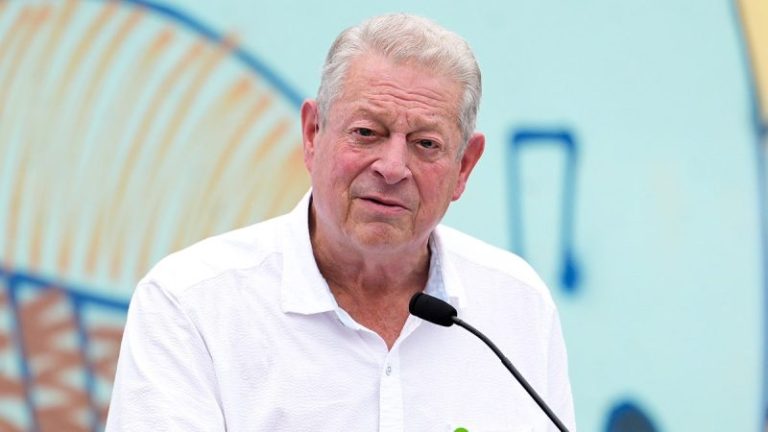
Former Vice President Al Gore on Wednesday condemned President Donald Trump’s move to withdraw the U.S. from United Nations-linked climate initiatives.

Gore claimed in a post on X that ‘the most significant challenge of our lifetimes’ is ‘the climate crisis.’ 

‘The ongoing work of the IPCC, UNFCCC, and other global institutions remains essential to safeguarding humanity’s future,’ he asserted, referring to the Intergovernmental Panel on Climate Change (IPCC), the United Nations Framework Convention on Climate Change (UNFCC).

‘By withdrawing from the IPCC, UNFCCC, and the other vital international partnerships, the Trump Administration is undoing decades of hard-won diplomacy, attempting to undermine climate science, and sowing distrust around the world,’ he wrote.

Trump issued a memorandum ordering U.S. withdrawal from the two initiatives that Gore mentioned as well as scads of other entities.

The president’s memorandum lists the Intergovernmental Panel on Climate Change under a grouping of ‘Non-United Nations Organizations.’ But the website ipcc.ch states, ‘The Intergovernmental Panel on Climate Change (IPCC) is the United Nations body for assessing the science related to climate change.’

In the memorandum, the president declared that he has ‘determined that it is contrary to the interests of the United States to remain a member of, participate in, or otherwise provide support to the organizations listed in section 2 of this memorandum.’

Secretary of State Marco Rubio said in a statement, ‘As this list begins to demonstrate, what started as a pragmatic framework of international organizations for peace and cooperation has morphed into a sprawling architecture of global governance, often dominated by progressive ideology and detached from national interests.’

Gore, who served as vice president alongside Democratic President Bill Clinton, lost the 2000 presidential contest to Republican George W. Bush.

This post appeared first on FOX NEWS

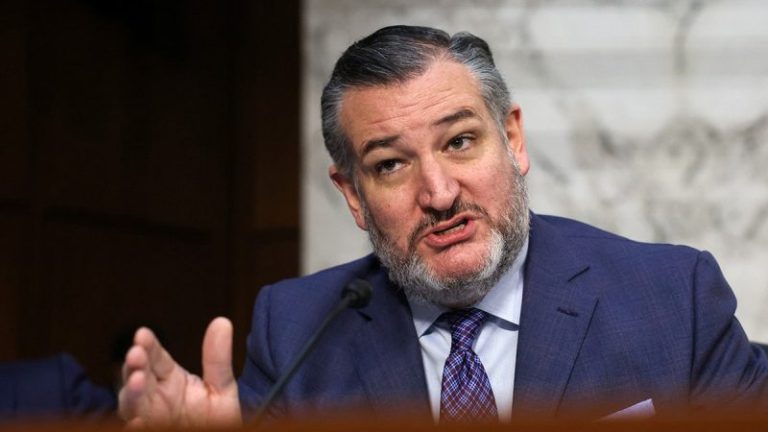
Sen. Ted Cruz, R-Texas, on Wednesday called on Congress during a Senate hearing to impeach two federal judges, making his most elaborate case yet for imposing the extraordinary sanction on a pair of closely scrutinized jurists.

Cruz acknowledged that impeaching federal judges is exceedingly rare — 15 have been impeached in history, typically for straightforward crimes like bribery — but the Texas Republican argued it was warranted for judges James Boasberg and Deborah Boardman.

‘Rarer still, until now, were the deeper offenses the framers feared most — judges who, without necessarily breaking a criminal statute, violate the public trust, subvert the constitutional order or wield their office in ways that injure society itself,’ Cruz said. ‘That is why, throughout history, Congress recognized that impeachable misconduct need not be criminal.’

Cruz, a Senate Judiciary Committee member with an extensive legal background, said the House needed to initiate impeachment proceedings over controversial gag orders Boasberg signed in 2023 and a sentence Boardman handed down last year in the case of Justice Brett Kavanaugh’s attempted assassin.

Impeachment proceedings must be initiated in the House and typically run through the House Judiciary Committee.

Russell Dye, a spokesman for the GOP-led committee, said ‘everything is on the table’ when asked if Chairman Jim Jordan, R-Ohio, was open to the idea. If the House were to vote in favor of impeachment, it would then advance to the Senate. Two-thirds of senators would need to vote to convict the judges and remove them, a highly improbable scenario because the vote would require some support from Democrats.

Cruz’s counterpart at the hearing, Sen. Sheldon Whitehouse, D-R.I., defended the judges and accused Republicans of threatening impeachment as an effort to intimidate the judiciary because it routinely issues adverse rulings against the Trump administration.

‘There was a time when I’d have hoped a Senate Judiciary subcommittee would not be roped into a scheme to amplify pressure and threats against a sitting federal judge,’ Whitehouse said. ‘But here we are.’

In the case of Boardman, a Biden appointee, the judge sentenced Sophie Roske, who previously went by Nicholas Roske, to eight years in prison after the Department of Justice sought a 30-year sentence. Roske pleaded guilty to attempting to murder Kavanaugh. Boardman said she factored into her sentence that Roske identified as transgender and therefore faced unique adversity.

Cruz argued Democrats’ concerns about threats that judges have faced for ruling against President Donald Trump fell on deaf ears, in his view, because they did not speak out about Boardman’s leniency toward Roske.

‘My Democrat colleagues on this committee do not get to give great speeches about how opposed they are to violence against the judiciary, and, at the same time, cheer on a judge saying, ‘Well, if you attempt to murder a Supreme Court justice, and you happen to be transgender, not a problem. We’re going to deviate downward by more than two decades,” Cruz said.

In the case of Boasberg, former special counsel Jack Smith subpoenaed several Republican Congress members’ phone records while conducting an investigation into the 2020 election and Trump’s role in the Jan. 6 Capitol riot. Smith sought gag orders so that the senators would not immediately be notified about the subpoenas, and Boasberg authorized those orders.

Prosecutors seeking gag orders is not unusual, but senators have layers of protection from prosecution under the Constitution. The targeted Republicans have decried the subpoenas, saying their rights were violated.

Smith and an official representing the federal courts have both said that Boasberg was not notified that the subpoenas and gag orders were related to members of Congress.

Rob Luther, a law professor at George Mason University, was a witness for Republicans at the hearing and said Boasberg still should not have signed the gag orders without knowing who they applied to. Luther cited stipulations included in the orders.

‘One must ask on what basis Judge Boasberg found that the disclosure of subpoenas would result in destruction of or tampering with evidence, intimidation of potential witnesses, and cause serious jeopardy to the investigation, end quote,’ Luther said. ‘Did Judge Boasberg merely rubber stamp the requested gag order, or was he willfully blind?’

Smith’s actions also aligned with a DOJ policy at the time that did not require the special counsel to alert the court that the subpoenas targeted senators, a point raised by Sen. John Kennedy, R-La., during the hearing. Luther said the policy did not matter.

‘DOJ policy does not supplant federal law,’ he said.

This post appeared first on FOX NEWS

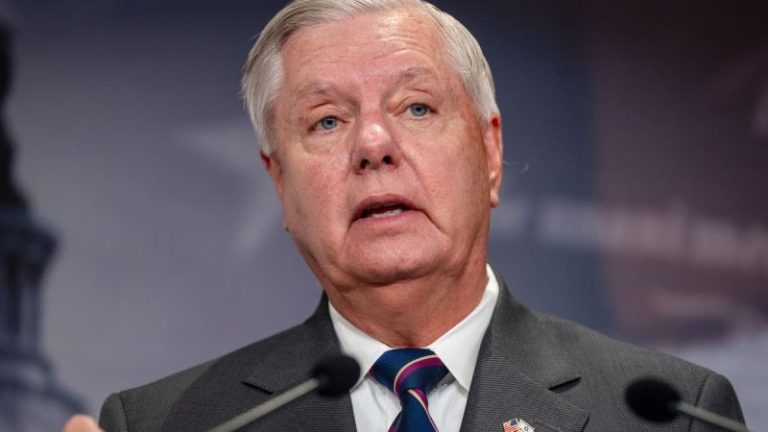
Sen. Lindsey Graham announced Wednesday that President Donald Trump has approved a Russian sanctions bill designed to pressure Moscow to end its war with Ukraine.

Graham revealed the development in a post on X, describing it as a pivotal shift in the U.S. approach to the Russia-Ukraine conflict. 

‘After a very productive meeting today with President Trump on a variety of issues, he greenlit the bipartisan Russia sanctions bill that I have been working on for months with Senator Blumenthal and many others,’ Graham said. 

‘This will be well-timed, as Ukraine is making concessions for peace and Putin is all talk, continuing to kill the innocent.’

According to the Sanctioning Russia Act of 2025, the bipartisan legislation is designed to grant Trump sweeping, almost unprecedented, authority to economically isolate Russia and penalize major global economies that continue to trade with Moscow and finance its war against Ukraine.

Most notably, the bill would require the United States to impose a 500% tariff on all goods imported from any country that continues to purchase Russian oil, petroleum products or uranium. The measure would effectively squeeze Russia financially while deterring foreign governments from undermining U.S. sanctions.

‘This bill will allow President Trump to punish those countries who buy cheap Russian oil fueling Putin’s war machine,’ Graham said.

‘This bill would give President Trump tremendous leverage against countries like China, India and Brazil to incentivize them to stop buying the cheap Russian oil that provides the financing for Putin’s bloodbath against Ukraine.’

Graham said voting could take place as early as next week and that he is looking forward to a strong bipartisan vote.

The move on the Russian sanctions bill follows another sharp escalation in America’s clampdown on Moscow. Earlier Wednesday, U.S. forces reportedly seized an oil tanker attempting to transport sanctioned Venezuelan oil to Russia.

Graham publicly celebrated the seizure in another post on X, describing it as part of a broader winning streak of U.S. intervention aimed at Venezuela and Cuba. 

In the post, he also took aim at critics such as Sen. Rand Paul, who has opposed the bill, arguing that it would damage America’s trade relations with much of the world.

Fox News Digital reached out to the White House for comment.

This post appeared first on FOX NEWS

Iran is rebuilding nuclear sites damaged in previous U.S. strikes and ‘preparing for war,’ despite engaging in talks with the Trump administration, according to a prominent Iranian opposition figure.

Alireza Jafarzadeh, deputy director of the Washington office of the National Council of Resistance of Iran (NCRI), said newly released satellite images also prove the regime has accelerated its efforts to restore its ‘$2 trillion’ uranium enrichment capabilities.

‘The regime has clearly stepped up efforts to rebuild its uranium enrichment capabilities,’ Jafarzadeh told Fox News Digital. ‘It is preparing itself for a possible war by trying to preserve its nuclear weapons program and ensure its protection.’

‘That said, the ongoing rebuilding of Iran’s uranium enrichment capabilities is particularly alarming as the regime is now engaged in nuclear talks with the United States,’ he added.

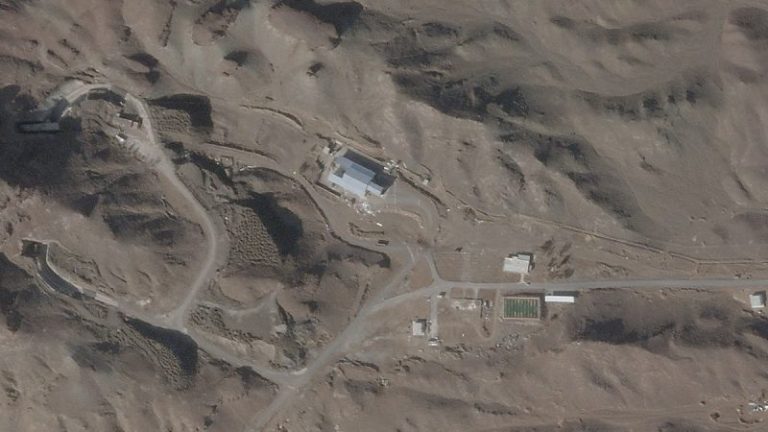
New satellite images released by Earth intelligence monitor, Planet Labs, show reconstruction activity appears to be underway at the Isfahan complex.

Isfahan is one of three Iranian uranium enrichment plants targeted in the U.S. military operation known as ‘Midnight Hammer.’

The June 22 operation involved coordinated Air Force and Navy strikes on the Fordow, Natanz and Isfahan facilities.

Despite the damage, the satellite images show Iran has buried entrances to a tunnel complex at the site, according to Reuters.

Similar steps were reportedly taken at the Natanz facility, which houses two additional enrichment plants.

‘These efforts in Isfahan involve rebuilding its centrifuge program and other activities related to uranium enrichment,’ Jafarzadeh said.

The renewed movements come as Iran participated in talks with the U.S. in Geneva.

On Thursday, President Donald Trump warned that ‘bad things’ would happen if Iran did not make a deal.

While the talks were aimed at curbing Iran’s nuclear program in exchange for sanctions relief, Jafarzadeh argues that for the regime, talks would be nothing more than a tactical delay.

‘Supreme Leader Ali Khamenei agreed to the nuclear talks as it would give the regime crucial time to avoid or limit the consequences of confrontation with the West,’ he said.

Jafarzadeh also described the regime spending at least ‘$2 trillion’ on nuclear capabilities, which he said ‘is higher than the entire oil revenue generated since the regime came to power in Iran in 1979.’ 

‘Tehran is trying to salvage whatever has remained of its nuclear weapons program and quickly rebuild it,’ he said. ‘It has heavily invested in the nuclear weapons program as a key tool for the survival of the regime.’

Jafarzadeh is best known for publicly revealing the existence of Iran’s Natanz nuclear site in 2002, which led to inspections by the International Atomic Energy Agency and intensified global scrutiny of Tehran’s nuclear ambitions.

‘The insistence of the Iranian regime during the nuclear talks on maintaining its uranium enrichment capabilities, while rebuilding its damaged sites, is a clear indication that Supreme Leader Ali Khamenei has no plans to abandon its nuclear weapons program,’ he said.

The National Council of Resistance of Iran, led by Maryam Rajavi, exposed for the first time the nuclear sites in Natanz, Arak, Fordow and more than 100 other sites and projects, Jafarzadeh said, ‘despite a massive crackdown by the regime on this movement.’

This post appeared first on FOX NEWS

When Nicolás Maduro was removed from power by the United States, many in Washington expected the U.S. to rally behind Venezuela’s most prominent opposition leader.

Instead, the Trump administration moved to engage a longtime Maduro loyalist, signaling a transition strategy driven less by democratic symbolism than by concerns over stability on the ground.

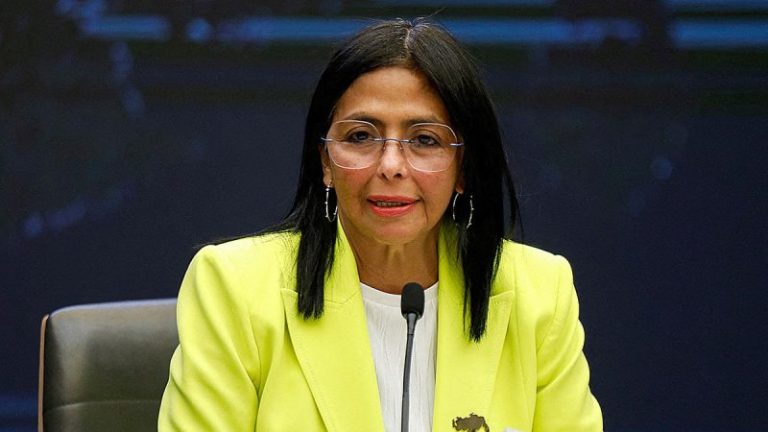
The approach sidelined María Corina Machado, the opposition leader who claims the strongest popular mandate and international profile, while elevating Delcy Rodríguez, Maduro’s vice president and a central figure in the outgoing regime.

Administration officials and outside analysts say the shift reflects a calculated effort to avoid a power vacuum and maintain control during a fragile transition, even as it complicates Washington’s longstanding support for Venezuela’s democratic opposition. 

And President Donald Trump is betting Rodríguez now lives in fear of what might happen to her if she defies the U.S. 

Trump, describing his phone call with Rodríguez, said she offered: ‘We’ll do whatever you need.’

‘I think she was quite gracious,’ he said. 

But in a separate interview with The Atlantic he warned: ‘If she doesn’t do what’s right, she is going to pay a very big price, probably bigger than Maduro.’

Following Maduro’s removal, Delcy Rodríguez was sworn in as Venezuela’s interim president after the Supreme Court ruled she should assume power in his absence. 

Under Venezuela’s constitution, the vice president can serve on an interim basis while the country determines whether and when new elections will be held. While the constitution generally calls for elections within 30 days if a president is permanently unable to serve, authorities have so far described Maduro’s removal as temporary, allowing Rodríguez to remain in office as the timeline for a political transition is debated.

A classified CIA intelligence assessment examined who would be best positioned to lead a temporary government in Caracas, Venezuela, and maintain short-term stability, a source familiar with the intelligence told Fox News Digital. The report, requested by senior policymakers and presented to Trump, aimed to offer the president ‘comprehensive and objective analysis’ on possible scenarios after Maduro’s capture.

A source familiar with the assessment told Fox News Digital that the assessment attempted to analyze the domestic situation in Venezuela, but did not describe how Maduro could lose power or advocate for his removal.

Trump senior policymakers requested the assessment — specifically one that addressed who would be best able to stabilize Venezuela ‘immediately’ following a Maduro removal. 

‘There was sentiment among senior officials that Machado lacked the necessary support in Venezuela if Maduro was to be removed,’ the source familiar told Fox News Digital. 

One of the reasons for that, the source told Fox News Digital, was because Machado was not in Venezuela, though she has vowed to return. 

The report found Rodríguez would be best positioned to lead a temporary government in Caracas, Venezuela, and Gonzalez and Machado would struggle to gain support from security services. 

While Machado has been widely embraced by Western governments and democracy advocates, U.S. officials and analysts say that support has not translated into leverage over Venezuela’s military or security services.

Trump’s skepticism also has been shaped by frustration from his first term, when international backing and opposition momentum failed to produce a transfer of power.

‘Machado has an inherent problem from the get-go,’ said Pedro Garmendia, a Venezuela expert and Washington-based geopolitical risk analyst. ‘She doesn’t control troops or hold any sort of power in Venezuela.’

At the same time, ‘Rodríguez is an ideologue,’ he said. ‘In the long term, the Trump administration might find itself having trouble reining her in.’

Trump has been more blunt in explaining why the administration has not rallied behind Machado. Speaking after the operation that removed Maduro from power, Trump questioned whether she could lead Venezuela in a transition, saying she lacked sufficient support inside the country. 

‘I think it would be very tough for her to be the leader,’ Trump said. ‘She doesn’t have the support within or the respect within the country.’

A Washington Post report had claimed that Trump was upset Machado accepted this year’s Nobel Peace Prize — an award he coveted and that she dedicated to him. But the White House insisted Trump’s actions were the result of internal briefings.

‘President Trump is routinely briefed on domestic political dynamics all over the world. The President and his national security team are making realistic decisions to finally ensure Venezuela aligns with the interests of the United States, and becomes a better country for the Venezuelan people,’ said White House press secretary Karoline Leavitt. 

Rubio has sought to frame the decision as mission-driven rather than personal, pointing to past U.S. interventions as cautionary examples. 

‘I have tremendous admiration for María Corina Machado. I have admiration for Edmundo,’ Rubio said Sunday on CBS’ ‘Face the Nation.’ ‘But there’s the mission that we are on right now. … A lot of people analyze everything that happens in foreign policy through the lens of Iraq, Libya, or Afghanistan. This is not the Middle East. This is the Western Hemisphere, and our mission here is very different.’

The administration’s caution also is shaped by a long history of U.S. intervention in Latin America, where American-backed coups and political engineering have left deep skepticism toward Washington’s motives. Installing an opposition leader immediately after a U.S. military operation, analysts warn, could revive those suspicions and undermine any transition before it begins.

‘If they were to bring María Machado and presumably Edmundo González back to the country and install them as president, it would look a lot like the United States installing a new president,’ said Eric O’Neill, a former FBI counterintelligence operative. ‘That would actually cause civil unrest.’

‘Venezuelans are proud people, and they need to elect their next president,’ O’Neill added.

But Garmendia said Rodríguez is ‘just as illegitimate as Maduro was — and probably even less popular.’ 

He said Rodríguez lacks the charisma and mass appeal that traditionally have sustained Venezuela’s ruling movement, and that her authority rests largely on internal bargaining and elite control rather than public support.

In the interim, locals have reports of armed gangs patrolling the streets. Venezuelan authorities have detained at least 14 journalists since Maduro’s capture, according to the union representing Venezuelan reporters. 

‘There’s going to be a lot of instability in the next couple of weeks,’ Garmendia said.

This post appeared first on FOX NEWS