Author

admin

Browsing

House Oversight Committee Chairman James Comer, R-Ky., will accuse top Minnesota government officials of being ‘asleep at the wheel’ at the start of his panel’s high-profile hearing into alleged fraud.

In Comer’s opening statement, obtained by Fox News Digital, he is expected to question whether ‘Governor Tim Walz, Attorney General Keith Ellison, and Minnesota’s Democratic leadership’ were negligent or ‘complicit’ in the growing scandal.

‘Minnesota’s social services — which are funded by you, the American taxpayer — are being ripped off. The most vulnerable are suffering as a result,’ Comer will say, according to his prepared remarks. 

‘The fraudsters — many of whom are from Minnesota’s Somali community — have stolen from programs meant to feed needy kids, provide services to autistic children, house low-income and disabled Americans, and provide healthcare to vulnerable Medicaid recipients.’

Federal prosecutors in Minnesota have charged multiple people with stealing more than $240 million from the Federal Child Nutrition Program through the Minnesota-based nonprofit Feeding Our Future.

However, the probe has since widened to multiple state-run programs being investigated for potential fraud. Childcare providers receiving state funding, mainly within the Somali community, are also under scrutiny.

U.S. attorneys have alleged that billions more dollars could have fallen prey to fraud in the state, something Walz has pushed back on while accusing Republicans of politicizing the scandal.

‘Fraudsters like these take millions to enrich themselves while providing nothing, overstating, or outright faking the services. How many children have gone hungry because fraudsters stole money that was intended to provide them with food?’ Comer will say.

‘How many autistic children were denied services because fraudsters instead sent this money overseas? How many low-income seniors, people with disabilities, or those with mental illnesses were denied access to housing because fraudsters drained resources and pocketed the money for themselves?’

Comer will argue in his statement that the revelations so far are ‘just the tip of the iceberg.’

The Wednesday hearing, which kicks off at 10 a.m. ET, will feature testimony from three Republicans in the state legislature.

Comer summoned Walz and Ellison for a follow-up hearing on Feb. 10, but it’s not yet clear if they will attend.

House Majority Whip Tom Emmer, R-Minn., will also take part in Wednesday’s hearing, Fox News Digital was told. Emmer is a longtime critic of Walz’s administration and represents a district that’s home to two out of three of the hearing’s GOP witnesses.

This post appeared first on FOX NEWS

A bipartisan group of senators is still working on a fix for the now-expired Obamacare subsidies and believe that they may be nearing a proposal that could hit the Senate floor.

The confab, which met a handful of times during Congress’ holiday break, adjourned once more behind closed doors on Monday night. Sens. Susan Collins, R-Maine, and Bernie Moreno, R-Ohio, are leading the talks among several Senate Republicans and Democrats looking for a compromise solution.

Most who attended the meeting were tight-lipped on specifics of the still-simmering proposal, but Collins noted the plan was similar to the initial offering from her and Moreno.

‘Parts of the bill are similar to what Senator Moreno and I proposed originally, with a two-year extension, with some reforms in the first year and then more substantial reforms in the second year,’ she said.

Their original plan — one of several floating around in the upper chamber — would have extended the subsidies by two years, put an income cap onto the credits for households making up to $200,000 and eliminated zero-cost premiums as a fraud preventive measure by requiring a $25 minimum monthly payment.

Sen. Tim Kaine, D-Va., one of the lawmakers who has routinely attended the meetings, said the talks were going well.

‘We had a really good discussion last night,’ Kaine said. ‘I don’t want to characterize it other than we had a really good discussion.’

And Senate Majority Leader John Thune, R-S.D., said that he had gotten an update on negotiations from Moreno Tuesday morning and believed that the bipartisan huddles had been productive.

Still, any plan that hits the floor has to hit several benchmarks for Republicans, including antifraud guardrails, a transition into health savings accounts (HSAs) and more stringent anti-abortion language.

‘The keys are reforms, obviously, and then how do you navigate [the Hyde Amendment],’ Thune said. ‘I think that’s probably the most challenging part of this. But again, I think there’s potentially a path forward, but it’s something that has to get a big vote, certainly a big vote.’

The Hyde Amendment issue is a barrier for both sides of the aisle, given that Senate Republicans demand that changes be made to the subsidies, and more broadly Obamacare, to prevent any taxpayer dollars from funding abortions.

That debate received a wrinkle Tuesday when President Donald Trump told House Republicans ‘you have to be a little flexible’ when it comes to the Hyde Amendment.

That triggered mixed reactions from Republicans in the upper chamber.

Sen. James Lankford, R-Okla., said that he had ‘no idea the context’ of Trump’s remarks but affirmed that he was ardently against funding abortions.

‘I’m saying I’m not flexible in the value of human life,’ Lankford said. ‘Life is valuable. I don’t believe some children are disposable, and some children are valuable. I think all children are valuable.’

Senate Democrats largely viewed Trump’s comments as a sign of progress — that maybe Republicans would budge on the Hyde issue. But flexibility goes both ways, and Sen. Ron Wyden, D-Ore., and top-ranking Democrat on the Senate Finance Committee, wasn’t ready to budge on the matter.

‘I am not going to open the door to Hyde, given what happens and what has been seen historically when you do that,’ he said. ‘If you open the door, it will get drafty in a hurry, and I’m not going to let it happen.’

Moreno signaled that Republicans might have to make a compromise on the issue if they wanted to move ahead with any kind of healthcare fix that could pass muster in the Senate.

He noted that there was a sense that ‘maybe the Obamacare language wasn’t as adherent to that philosophy [of Hyde] as it should be.’

‘But that’s not something that we’re looking — able to change right now,’ he said. ‘Because, quite frankly, if you put Hyde up to a vote among Democrats today, as opposed to Democrats 20 years ago, it would probably fail 46 to one on the Democrat side. So unfortunately, most Democrats today feel that there should be federal funding for abortion.’

This post appeared first on FOX NEWS

The U.K. and France signed a declaration Tuesday pledging troops for Ukraine under a future peace deal and with security guarantees supported by the U.S. and allied partners.

The declaration was adopted in Paris by the Coalition of the Willing and sets out what leaders said was a framework for lasting peace between Ukraine and Russia, set in international law and the principles of the United Nations Charter.

Russia’s full-scale invasion of Ukraine in 2022, triggered Europe’s largest conflict since World War II.

The new agreement says that Ukraine’s sovereignty and its ability to defend itself are non-negotiable elements of any peace deal and warned that its self-defense is essential to its own security and wider Euro-Atlantic stability.

Under the plan, a multinational force for Ukraine would be deployed once a ceasefire is in place, aimed at deterring any Russian aggression and supporting the rebuilding of Ukraine’s military.

The force would be European-led with proposed support from the U.S.

The declaration also commits the Coalition to security guarantees that would be activated once a ceasefire begins.

These include commitments to support Ukraine militarily, diplomatically and economically in the event of a future armed attack by Russia.

A key U.S. role is outlined in plans for a continuous, U.S.-led ceasefire monitoring and verification mechanism, with contributions from partners.

The U.S. would participate in a special commission to manage ceasefire breaches, attribute responsibility and determine solutions.

Coalition members also agreed to carry on with long-term military support for Ukraine and pledged defense cooperation, including training, defense production and intelligence sharing.

Leaders also announced the creation of a permanent U.S.-Ukraine-Coalition coordination cell based at the Coalition’s headquarters in Paris.

The declaration was unveiled at a joint news conference by French President Emmanuel Macron, Ukrainian President Volodymyr Zelenskyy and U.K. Prime Minister Keir Starmer.

This followed talks in Paris which were attended by Jared Kushner and the U.S. special envoy, Steve Witkoff.

This post appeared first on FOX NEWS

President Donald Trump has adopted an interventionist posture to justify toppling dictator Nicolás Maduro’s regime in Venezuela and has signaled he’ll take the same approach with other Latin American countries next as his administration seeks to assert dominance in the Western Hemisphere.

Interventionism is a foreign policy approach by which one country intervenes in another state’s affairs. The U.S. has engaged in several interventions abroad, including launching an invasion of Iraq in 2003 that led to the toppling of Iraqi dictator Saddam Hussein’s regime. 

While Trump has blasted previous administrations for actions in the Middle East and vowed he would bring an end to ‘endless wars’ while ushering in an ‘America First’ agenda prioritizing U.S. interests, Trump signed off on conducting a ‘large scale strike’ against Venezuela and capturing Maduro Saturday, prompting concern, primarily from Democrats, about starting another lengthy conflict. 

The strikes in Venezuela come on the heels of several other major military operations from the Trump administration, including strikes in Nigeria on Christmas Day against Islamic State militants in response to attacks against Christians in the region, strikes in Syria in December against Islamic State operatives after an ambush against U.S. troops there, and strikes in June against the Iranian nuclear sites of Fordow, Natanz and Isfahan. 

But unlike the strikes in the Middle East, the operations in Venezuela require additional U.S. involvement. Trump said Sunday that the U.S. will run Caracas, Venezuela, until a safe transition can occur, thrusting the U.S. into the most significant military intervention of Trump’s presidencies as he wages a campaign to ‘reassert American dominance in the Western Hemisphere.’

‘Trump has never been an advocate of regime change, but that is what he has on his hands now. Unlike the Fordow strikes, where Trump acted and then said, ‘The fight is over,’ he will not have that luxury here in Venezuela,’ retired Rear Adm. Mark Montgomery, now a senior fellow with the Foundation for the Defense of Democracies, said in a statement Saturday. 

Most Republicans have backed Trump’s actions in Venezuela, although some from the more anti-interventionist camp of the GOP have voiced skepticism, including outgoing Rep. Marjorie Taylor Greene, R-Ga., who said in a social media post Saturday, ‘This is what many in MAGA thought they voted to end.’

Meanwhile, Democrats have issued caution that the U.S. may be entangling itself in another complicated conflict. For example, Senate Minority Leader Chuck Schumer, D-N.Y., claimed that the U.S. is on the path to another ‘endless war.’

‘The American people are worried that this is creating an endless war,’ Schumer said in an interview with ABC News Sunday. ‘The very thing that Donald Trump campaigned against over and over and over again was no more endless wars. And, right now, we’re headed right into one with no barriers, with no discussion.’

Trump announced Saturday that U.S. special forces conducted a strike against Caracas, Venezuela, and seized Maduro and his wife, Cilia Flores. The two were taken to New York and appeared in a Manhattan federal court on Monday on drug charges. Both pleaded not guilty. 

In addition to running Venezuela, Trump said the U.S. was ‘ready to stage a second and much larger attack’ if needed in Caracas. Likewise, he signaled Sunday that other Latin American countries could also face regime change, singling out Cuba and issuing a word of caution to Colombia’s president, Gustavo Petro.

‘Cuba only survives because of Venezuela,’ Trump said.

‘Colombia is very sick too — run by a sick man who likes making cocaine and sending it to the United States, and he’s not going to be doing it very long,’ Trump said. 

Trump’s words and actions come as he’s revived the Monroe Doctrine, rebranded as the ‘Don-roe Doctrine,’ that originally sought to limit European influence in Latin America and to protect U.S. influence in the region.

The Monroe Doctrine, first introduced in 1823 by President James Monroe, specifically cautioned European nations against further colonization in Central and South America. Later, it was used to justify U.S. actions in the region as an ‘international police power’ under former President Theodore Roosevelt, according to the National Archives.

‘The Monroe Doctrine is a big deal. But we’ve superseded it by a lot, by a lot,’ Trump said Saturday. ‘They now call it the ‘Don-roe Doctrine.’ … We sort of forgot about it. It was very important, but we forgot about it. We don’t forget about it anymore. Under our new national security strategy, American dominance in the Western Hemisphere will never be questioned again.’

Katherine Thompson, a senior fellow in defense and foreign policy studies at the libertarian think tank the Cato Institute, told Fox News Digital Tuesday it’s too early to tell if Trump’s future approach to the Western Hemisphere will include more interventionist activity.

However, she said the ‘expansive’ definition of what America’s core interests are ‘opens the administration up to risk of strategic drift away from the ‘America First’ framework, diminishes the principle of prioritization and allows greater tolerance for an interventionist approach.’ 

So far, Trump has claimed his actions in Venezuela are complementary to his ‘America First’ priorities because he wants the U.S. to have ‘good neighbors.’ 

Retired Vice Adm. Robert Harward, a Jewish Institute for National Security of America (JINSA) 2022 General and Admirals Program participant and a member of JINSA’s Iran Policy Project, said Trump’s actions in Venezuela are on the same page as the president’s ‘America First’ agenda.

That means holding other nations who mistreat their people accountable for their own benefit and for the benefit of the American people, he said. 

‘They’re clearly aligned. This is exactly what he’s talked about. … This is an accountability for them,’ Harward said.

For those concerned about the U.S. military’s actions in Venezuela, Vice President JD Vance has attempted to soothe their fears. Vance leans toward the non-interventionist wing of the Trump administration and historically has backed a foreign policy doctrine that supports minimal interference with other nations’ affairs.

‘I understand the anxiety over the use of military force, but are we just supposed to allow a communist to steal our stuff in our hemisphere and do nothing?’ Vance said in a social media post Sunday. ‘Great powers don’t act like that.’ 

Secretary of State Marco Rubio claimed the U.S. did not require approval from Congress to conduct the strike since it wasn’t an ‘invasion’ and claimed actions in Caracas, Venezuela, were part of a ‘law enforcement function to capture a drug trafficker.’ 

The Trump administration repeatedly stated that it did not recognize Maduro as a legitimate head of state and insisted he was the leader of a drug cartel. 

But lawmakers, especially Democrats, have called into question the legality of the operation in Venezuela, which was conducted without Congress’ approval. 

‘This has been a profound constitutional failure,’ the top Democrat on the Senate Armed Services Committee, Sen. Jack Reed, D-R.I., said in a statement Saturday. ‘Congress — not the President — has the sole power to authorize war. Pursuing regime change without the consent of the American people is a reckless overreach and an abuse of power.

‘The question now is not whether Maduro deserved removal — it is what precedent the United States has just set, and what comes next.’ 

This post appeared first on FOX NEWS

Sen. Tim Kaine, D-Va., wants Congress to take a more active role as a check on the Trump administration’s use of military force following the surprise weekend operation in Venezuela, and he plans to force a vote on legislation that would halt further military action in the country without lawmakers’ approval.

Kaine joined a chorus of congressional Democrats who were frustrated at President Donald Trump’s decision to strike Venezuela’s capital of Caracas, and subsequent capture of Venezuelan President Nicolás Maduro and his wife without oversight or approval from Congress.

Congressional Democrats have long been frustrated at Congress’ diminished role in decision-making since Trump took office last year, particularly over continued strikes in the Caribbean ahead of Operation Absolute Resolve on Saturday.

Kaine argued on a call with reporters that Congress has the constitutional authority to weigh in on military action and was frustrated throughout Trump’s second term that the check and balance was being bowled over.

‘It’s time for Congress to get its a– off the couch and do what the Constitution mandates that we do — the Constitution we take an oath to,’ Kaine said over the weekend. ‘We have to put this before the American people, not just in private settings, but in public hearings by the key oversight committees, Intelligence, Armed Services, Foreign Relations in both houses, and explore whether the United States should enter into yet another war with unforeseen consequences.’

Kaine again plans to bring a war powers resolution for a vote in the Senate, which is expected to come to the floor this week.

It’s not the first time he has tried to reassert Congress’ authority when it comes to the administration’s use of military action. Kaine earlier this year forced a vote on a war powers resolution following Trump’s strike on Iranian nuclear facilities. That resolution failed on a largely party-line vote, save for Sen. Rand Paul, R-Ky., who joined all Senate Democrats in support.

The Virginia Democrat’s latest effort would prevent further military action in Venezuela without congressional approval.

Senate Minority Leader Chuck Schumer, D-N.Y., who is a co-sponsor on the latest war powers resolution along with Kaine and Paul, said he would ensure the measure would get ‘adequate floor time so we could debate and discuss this.’

Schumer is also pushing for hearings to investigate the strikes and capture of Maduro and noted that he spoke with top Democrats on several committees who contended their Republican colleagues ‘have expressed a lot of troublesome comments about what Trump is doing and the way he is doing it.’

‘We’re going to be pushing our Republican colleagues to stand up for the American people, to get this done,’ Schumer said. ‘Congress should not be sidelined as the Trump administration gets sucked into another nation-building quagmire, and we’re going to hold them accountable, protect American lives, to protect America’s interests.’

Another issue that many congressional Democrats have is that lawmakers weren’t notified of the strikes until after the fact. Secretary of State Marco Rubio argued over the weekend that it would have been risky to notify lawmakers in advance given the sensitive nature of the operation. Trump charged that Congress was kept in the dark because lawmakers leak. 

Senate Majority Leader John Thune, R-S.D., who didn’t receive notification of the operation until afterward, said that he was ‘comfortable’ with the timing. 

‘They didn’t tell me ahead of time,’ Thune said. ‘But I think there’s a reason why, like I said, before notification of Congress in advance of really critical and hypersensitive missions, to me, seems ill-advised anyway.’

This post appeared first on FOX NEWS
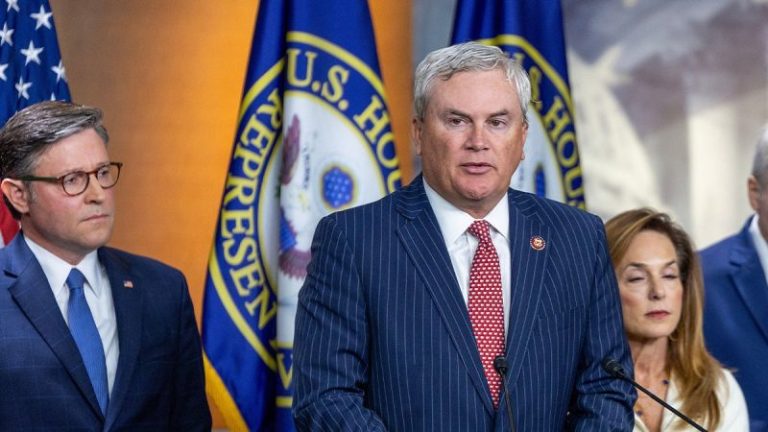
House Freedom Caucus leaders are drawing battle lines as lawmakers return to Capitol Hill for the second half of the 119th Congress.

The conservative group’s board of directors is sending a seven-page letter to Speaker Mike Johnson, R-La., outlining proposed policy goals on a vast array of topics from American elections, to immigration, to federal spending, taking on ‘rogue’ judges, and housing affordability.

It comes ahead of a policy forum that Johnson is hosting on Tuesday to lay out the House GOP’s agenda for 2026. Republicans are expected to huddle from 9:30 am to 6 pm at the Trump Kennedy Center, where they’ll hear from committee leaders and President Donald Trump.

Trump’s remarks are expected to rally Republicans around passing their legislative goals for the year, but several people told Fox News Digital they also anticipate him focusing heavily on the U.S. government’s recent operation in Venezuela.

The first policy goal listed by the Freedom Caucus is forcing the Senate to take up the Safeguard American Voter Eligibility (SAVE) Act, which passed the House early last year.

They’re also calling on Congress to pass legislation limiting early voting and reforming the census to only count American citizens.

On fiscal year (FY) 2026 appropriations, conservatives are calling on the House to ‘reduce or — at bare minimum keep flat total federal discretionary spending levels’ according to the document first obtained by Fox News Digital.

The recently released $174 billion spending bill that the House is expected to vote on this week would reduce current funding levels for the agencies it covers if were to pass.

Congress has yet to release information on six of its 12 remaining spending bills, however, while lawmakers face a Jan. 30 deadline to avert a government shutdown.

The Freedom Caucus is also urging Congress to crack down on the recent fraud scandal taking over Minnesota’s social programs by eliminating ‘all programs exposed as rampant with fraud and place punitive measures on states such as Minnesota that have allowed rampant fraud.’

‘Federal prosecutors have estimated that widespread fraud in Minnesota tied to Somali day care centers, COVID-era meal programs, housing, and special needs assistance programs alone could exceed $9 billion,’ the document said. ‘These revelations are startling, but just a drop in the bucket for a federal government that’s estimated to lose between $233 and $521 billion annually to fraud, according to government watchdog agencies.’

The document called for the denaturalization and deportation of ‘anyone who has committed fraud against the American taxpayer,’ specifically naming Minnesota’s Somali community, though doing so would likely require court intervention.

Conservatives’ policy roadmap also called on Congress to ‘freeze all immigration to the U.S., except for (very) temporary tourist visas’ for a temporary amount of time in order to revamp the U.S. immigration system as a whole.

In a section called ‘Stop Rogue, Activist Judges,’ the House Freedom Caucus urged the House to move forward on impeaching U.S. federal Judge James Boasberg ‘such as Judge Deborah Boardman, for reducing the sentence of a man who plotted and took steps to kill a Supreme Court Justice due to her indefensible views about transgenderism.’

An earlier push by conservatives to impeach Boasberg failed to gain traction among the wider House GOP conference, though the chamber passed ‘The No Rogue Rulings Act’ to limit the ability of district judges like Boasberg to issue nationwide injunctions.

The policy roadmap also called to radically shift America’s global priorities by completely removing the U.S. from the United Nations and halting all funding to the international body.

‘The UN is openly hostile to the United States, yet we remain its biggest source of funding. President Trump has significantly reduced wasteful spending on dangerous UN entities like UNRWA, and now Congress should go even further by enacting legislation such as H.R. 1498, the DEFUND Act, to completely withdraw the United States from the United Nations (UN) and end all funding and participation,’ the passage read.

Another section calls for banning stock trading for members of Congress, which Johnson said he would be in favor of last year.

The push to ban stock trading has gained rare bipartisan support among both Republicans and Democrats, but no such bill has yet seen a House floor vote.

Banning Sharia Law in the U.S. is also listed as one of the group’s policy goals, an effort that’s been led by Texas-based Freedom Caucus members like Reps. Chip Roy, R-Texas, and Keith Self, R-Texas, so far this Congress.

While it was founded as a group that was frequently adversarial to Republican leaders for not being conservative enough, the House Freedom Caucus has gradually gained influence within the House GOP during the 119th Congress.

Its chairman, Rep. Andy Harris, R-Md., has frequently stood alongside Johnson in his push for conservative legislative goals.

Johnson notably spoke at the group’s 10th anniversary celebration late last year. Harris and Roy also made a public show of unity alongside House GOP leaders during the recent government shutdown.

Republicans are going into this year, however, grappling with a razor-thin House majority and what’s expected to be a tough November election cycle.

This post appeared first on FOX NEWS
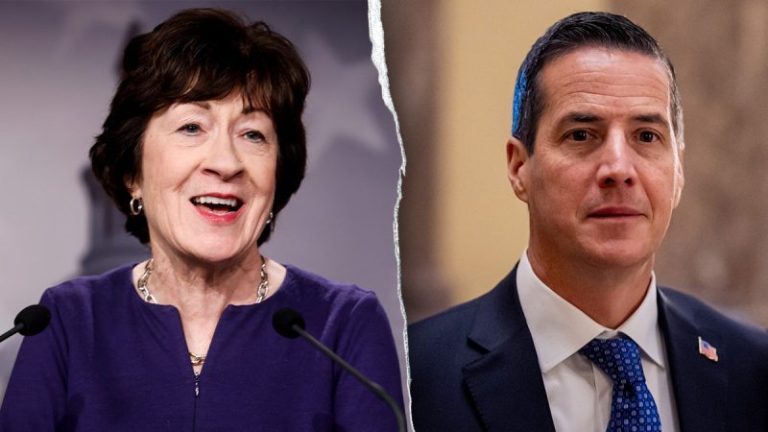
A select group of lawmakers received their first closed-door briefing on Capitol Hill on Monday following the Trump administration’s weekend military strikes in Venezuela and the capture of President Nicolás Maduro — a meeting that quickly divided along political lines.

The roughly two-hour meeting deep in the bowels of Congress featured top administration officials providing a classified briefing to congressional leaders and the chairs and ranking members of the armed services, intelligence and foreign relations committees. 

None of the Trump officials, who included Secretary of State Marco Rubio, Attorney General Pam Bondi, CIA Director John Ratcliffe, Joint Chiefs of Staff Chair Gen. Dan ‘Raizin’ Caine and Secretary of War Pete Hegseth, spoke after the meeting. 

But a handful of lawmakers did, and questions still lingered about what exactly would come next for U.S. involvement in the country, if other similar operations would be carried out across the globe, and who exactly was running Venezuela.

House Speaker Mike Johnson, R-La., said that there was no expectation that the U.S. would be on the ground, nor would there be any ‘direct involvement in any other way beyond just coercing the interim government to to get that going.’

‘We are not at war,’ Johnson said. ‘We do not have U.S. armed forces in Venezuela, and we are not occupying that country.’

‘This is not a regime change,’ he continued. ‘This is a demand for change of behavior by a regime. The interim government is stood up now, and we are hopeful that they will be able to correct their action.’

House Foreign Affairs Committee Chair Brian Mast, R-Fl., echoed Johnson, and reiterated that the operation was a ‘specific law enforcement function that took place that took a significant obstacle out of the way for the Venezuelan people to go chart a new future.’ 

He didn’t expect further military action from the Trump administration in the country, either. 

‘These things are done before breakfast,’ Mast said. ‘They don’t do protracted war operations.’

However, Senate Minority Leader Chuck Schumer, D-N.Y., countered that the lengthy meeting ‘posed far more questions than it ever answered.’ 

One growing point of contention among lawmakers is just how directly involved the U.S. will be, given that Trump said that the U.S. would govern the country until a proper transition of power happened. 

Schumer said that the plan presented behind closed doors or the U.S. running Venezuela ‘is vague, based on wishful thinking and unsatisfying.’

‘I did not receive any assurances that we would not try to do the same thing in other countries,’ he said. ‘And in conclusion, when the United States engages in this kind of regime change and so called nation building, it always ends up hurting the United States. I left the briefing feeling that it would again.’

Schumer, along with Sens. Tim Kaine, D-Va., Adam Schiff, D-Calif., and Rand Paul, R-Ky., plan to force a vote later in the week on a war powers resolution that, if passed, would require the administration to get congressional approval before taking further military action in Venezuela. 

Senate Majority Leader John Thune, R-S.D., said that he was satisfied with the briefing and that ‘it was a very comprehensive discussion.’

Lawmakers will get another bite at the apple later in the week when Trump officials again return to Congress to provide a full briefing to lawmakers on Operation Absolute Resolve. 

Sen. Mark Warner, D-Va., and the top-ranking Democrat on the Senate Select Committee on Intelligence, lauded the military for a ‘brilliant execution’ of the mission, and noted that the region was better off without Maduro.

But, like Schumer, he was still searching for the next step. 

‘The question becomes, as policymakers, what happens the day after,’ Warner said. 

This post appeared first on FOX NEWS
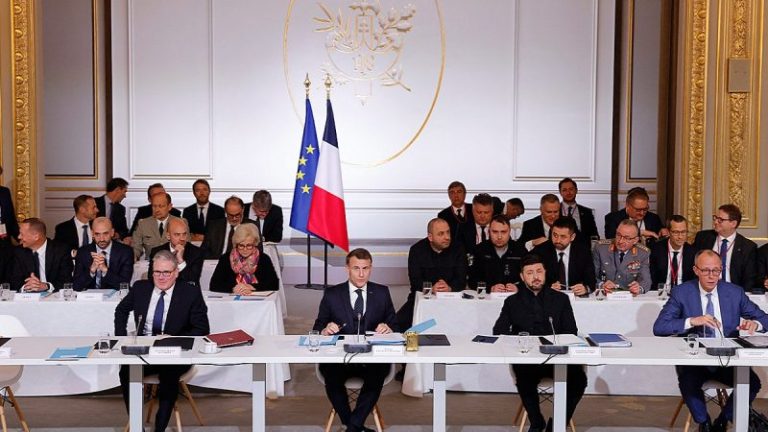
Switzerland announced Monday that it has frozen assets held in the country tied to Venezuelan President Nicolás Maduro and his associates following the U.S. capture of the leader in Caracas. 

‘On 5 January 2026, the Federal Council decided to freeze any assets held in Switzerland by Nicolás Maduro and other persons associated with him with immediate effect,’ the Swiss Federal Department of Foreign Affairs (FDFA) said. 

The decision, which will remain in effect for four years, aims to prevent the transfer of assets amid concerns that the funds were acquired illegally through a regime long accused of widespread corruption, according to the agency. The freeze does not apply to members of the current government, and Reuters reported that the order will affect 37 people. 

Should future legal proceedings ‘reveal that the funds were illicitly acquired, Switzerland will endeavour to use them for the benefit of the Venezuelan people,’ the FDFA said.

The council added that the asset freeze builds on existing sanctions against Venezuela, first imposed in 2018 under the Embargo Act, which includes restrictions on economic resources, travel, and specific goods. 

The new measure, enacted under the Foreign Illicit Assets Act (FIAA), now targets prominent individuals who were not covered in previous Swiss sanctions and are perceived as supporting the Venezuelan regime.

According to the FDFA, the decision was not made based on Maduro’s capture nor the legitimacy of his removal but amid concerns that his home country or others could launch legal action later to recover the potentially illegally acquired assets. 

Freezing the assets now acts as a ‘precautionary measure’ meant to preserve them for potential future proceedings, according to the Swiss authorities. 

‘The reasons behind Mr Maduro’s fall from power do not play a decisive role in asset freezes under the FIAA,’ the Federal Council said in a statement. 

‘Nor does the question of whether the fall from power occurred lawfully or in violation of international law. The decisive factor is that a fall from power has occurred and that it is now possible that the country of origin will initiate legal proceedings in the future with regard to illicitly acquired assets.’

Authorities added that the government is monitoring the situation closely and is calling for the peaceful de-escalation of the ‘volatile’ situation.

‘The situation is volatile, and several scenarios are possible in the coming days and weeks,’ the FDFA said. ‘Switzerland is closely monitoring the situation in Venezuela. It has called for de-escalation, restraint and compliance with international law, including the prohibition of the use of force and the principle of respect for territorial integrity. Switzerland has also repeatedly offered its good offices to all sides in order to find a peaceful solution to the situation.’

This post appeared first on FOX NEWS
A deepening political realignment across Latin America came into focus over the weekend at a summit of the Community of Latin American and Caribbean States, or CELAC, and sharpened further Monday at the United Nations Security Council, where governments publicly split over the U.S. role in the capture of Venezuelan strongman Nicolás Maduro.

At CELAC, several leftist governments attempted to push through a joint statement condemning Maduro’s detention. The effort failed after a bloc of countries consisting of Argentina, Bolivia, Paraguay, Peru, Ecuador, El Salvador, Panama, the Dominican Republic, and Trinidad and Tobago blocked consensus, preventing the regional body from issuing a unified defense of the Venezuelan leader, Merco Press agency reported.

The breakdown exposed growing fractures within what has long been a left-leaning regional forum and underscored the erosion of automatic solidarity with Caracas.

Melissa Ford Maldonado, director of the Western Hemisphere Initiative at the America First Policy Institute, said the fractures reflect a broader regional reckoning with the consequences of socialist and narco-authoritarian rule.

‘We are witnessing a regional awakening across Latin America,’ Maldonado told Fox News Digital. ‘The failure of socialism, communism and narco-authoritarian rule has become impossible to ignore.’

The shift is increasingly visible at the ballot box, where voters in several countries — last month alone in Chile and Honduras — have moved away from entrenched left-wing governments and toward right-of-center leaders campaigning on themes of security, sovereignty, border control and law and order — messages that echo aspects of President Donald Trump’s political approach in the United States.

‘The developments at CELAC this weekend reflect that reality,’ Maldonado said. ‘The fact that several governments blocked a collective defense of Nicolás Maduro shows how divided the authoritarian left has become. Venezuela has become a cautionary tale.’

That division carried over into the Security Council on Monday, where Latin American and Caribbean states took sharply different positions, with some openly backing Washington and others denouncing the U.S. action as a violation of international law.

Argentina emerged as the most forceful regional supporter of the United States, praising President Donald Trump and framing Maduro’s capture as a decisive blow against organized crime.

‘The Government of the Argentine Republic values the decision and determination demonstrated by the President of the United States of America and his government, and the recent actions taken in Venezuela that resulted in the capture of dictator Nicolás Maduro, leader of the Cartel of the Suns,’ Argentina’s representative Francisco Fabián Tropepi told the council, adding the Maduro regime ‘has not only constituted a direct threat to the citizens systematic violation of human rights in the state appropriation of the country’s resources and destruction of democratic institutions, but also to the entire region by leading and exploiting its networks of drug trafficking and organized crime.’

Paraguay echoed that framing, claiming Maduro’s continued presence ‘was a threat to the region,’ adding that ‘the removal of the leader of a terrorist organization should immediately lead to the restoration of democracy and the rule of law in Venezuela, making it possible for the will of the people, expressed at the ballot box, to become the foundation for the country’s reconstruction,’ its representative Marcelo Eliseo Scappini Ricciardi said.

Other CELAC members took the opposite view, condemning the U.S. action and warning that it set a dangerous precedent.

Brazil ‘categorically and firmly’ rejected what it called armed intervention on Venezuelan territory, describing the capture of Maduro as ‘a very serious affront to the sovereignty of Venezuela and an extremely dangerous precedent for the entire international community.’ 

Mexico denounced the operation as a violation of the U.N. Charter, arguing that external efforts to impose political change historically worsen conflicts and destabilize societies. Chile also condemned what it called unilateral military action and warned against foreign interference, while Cuba and Nicaragua delivered blistering denunciations of Washington, accusing the United States of imperial aggression and calling for Maduro’s immediate release.

The split at the U.N. mirrored the breakdown at CELAC, where governments increasingly appear unwilling to speak with one voice on Venezuela, even as they stop short of endorsing U.S. military force.

According to Maldonado, ‘Governments are increasingly forced to choose between defending failed autocracies, corruption and repression or responding to their own citizens,’ she said. ‘More governments are unwilling to carry that burden.’

Maldonado described Maduro’s capture as a break with decades of U.S. restraint in the region, ‘It shows that the United States is deadly serious about defending itself and the hemisphere, about stopping the flow of drugs, dismantling cartel-state alliances and about fighting back against the influence of China, Russia and Iran in our neighborhood.’

She argued that the regional reaction, split though it is, reflects a broader ideological shift.

‘There is a clear rightward shift underway in the region, and it is a healthy one,’ Maldonado said. ‘It reflects a growing alignment around the core principles of freedom, liberty, personal responsibility, national sovereignty and prosperity.’

While critics at the U.N. warned that U.S. action risks undermining international law, supporters argue the status quo had already collapsed under the weight of Venezuela’s humanitarian and security crisis.

‘Venezuela’s collapse has taught the region what happens when the state becomes your everything,’ Maldonado said. ‘When the state controls your job, your housing, your healthcare, your education, your courts and your information, freedom becomes conditional.’

This post appeared first on FOX NEWS

Kristi Noem will reportedly join President Donald Trump and 12 Latin American leaders at his resort in Florida for a ‘Shield of the Americas’ summit Saturday after her ouster as the Secretary of Homeland Security and appointment by President Donald Trump to be special envoy for the new coalition of nations. 

On Thursday, Trump announced Noem would be exiting her role as Homeland Security secretary and would be appointed a Special Envoy for the ‘Shield of the Americas,’ a summit for which will be held at the president’s resort in Doral, Florida, on Saturday. The new coalition of 13 countries has been formed to advance strategies that will tackle mass illegal immigration, narco-terrorist gangs and cartels. 

‘After years of neglect, President Trump established the ‘Donroe Doctrine’ to restore American preeminence in the Western Hemisphere. His efforts have been a tremendous success – our southern border is secure, Latin American countries are working with us to defeat the cartels, and illegitimate dictator Nicolas Maduro is facing justice for his crimes in the Southern District of New York – ushering in historic economic cooperation with Venezuela,’ said White House spokesperson Anna Kelly ahead of the summit. 

‘The President has successfully strengthened our relationships in our own backyard to make the entire region safer and more stable, and this weekend’s ‘Shield of the Americas’ Summit will encapsulate all of his work to Make America, and our partners, Strong Again,’ she continued.

Members of Trump’s Cabinet, including Secretary of State Marco Rubio, Secretary of War Pete Hegseth, Secretary of Commerce Howard Lutnick and United States Trade Representative Jamieson Greer, will also be at the Saturday summit. 

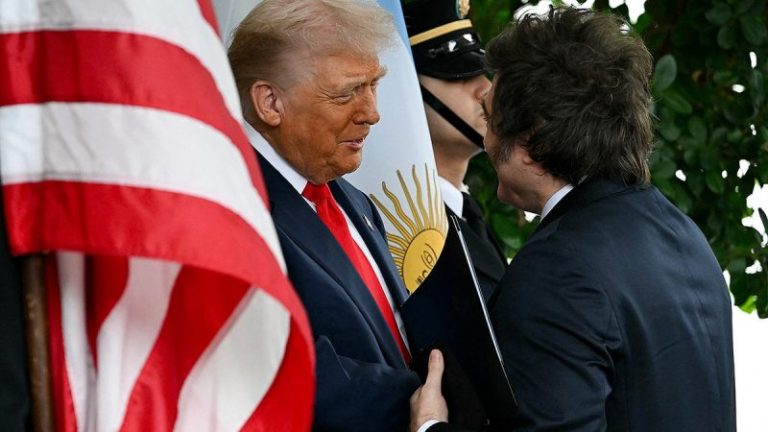
The leaders from other nations who will be present are Argentina’s Javier Milei, El Salvador’s Nayib Bukele Ortez, Bolivia’s Rodrigo Paz Pereira, Costa Rica’s Rodrigo Chaves Robles, Panama’s José Raúl Mulino Quintero, and Trinidad and Tobago’s Kamla Persad-Bissessar, Chile’s Jose Antonio Kast, the Dominican Republic’s Luis Rodolfo Abinader Corona, Ecuador’s Daniel Roy Gilchrist Noboa Azín, Guyana’s Mohamed Irfaan Ali, Honduras’ Nasry ‘Tito’ Asfura, and Paraguay’s Santiago Peña.

Noem confirmed Friday, speaking from Nashville, that she will be at the summit, according to the Associated Press. Noem reportedly added that the president will announce ‘a big agreement’ detailing ‘how we’re going to go after cartels and drug trafficking in the entire Western Hemisphere.’ 

On Friday, Hegseth led a strategic conference in Doral with representatives of 17 different Caribbean, Central American and South American countries throughout the Western Hemisphere. During the conference, they signed a joint security declaration, reaffirming their commitment to peace and sovereignty in the region. According to a source familiar with the plans for the summit, the president plans to celebrate this achievement with attendees.

‘Secretary Noem helped usher in the most secure border in history, deported hundreds of thousands of criminal illegal aliens, and executed record-setting counter-drug operations against cartels. All of this great experience positions Noem well to ensure American preeminence in the entire Western Hemisphere in her new role as Special Envoy to the Shield of the Americas,’ White House spokesperson Olivia Wales said. ‘This historic new security initiative, led by Secretary Noem, will advance cutting-edge strategies to defeat narco-terrorist cartels and stop illegal mass migration to make America and the entire Western Hemisphere safer.’

On Thursday, Rubio said he looked forward to working with Noem as Special Envoy for The Shield of the Americas, and echoed the comments from the White House about her experience.

‘Kristi has achieved incredible results as Secretary of Homeland Security and will be a tremendous asset in our effort to promote security and prosperity in the Western Hemisphere,’ Rubio said on X after Trump named Noem to her new post. 

Related Article

Capitol Hill Dems hail Trump’s DHS ouster of Noem after heated Senate hearing
This post appeared first on FOX NEWS