Author

admin

Browsing

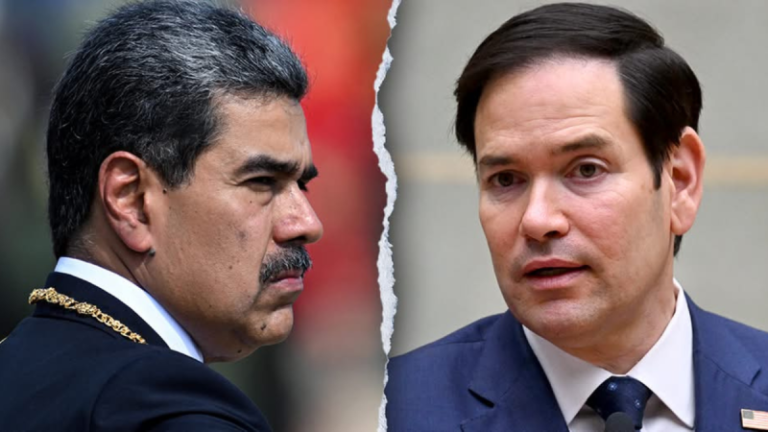
Cuban leaders should be concerned following the U.S. military operation in Venezuela and the arrest of Nicolás Maduro, Secretary of State Marco Rubio said Saturday, as President Donald Trump signaled that his administration could shift its focus to the Caribbean island.

Cuba has long maintained a presence in Venezuela, with intelligence agents and security personnel embedded amid close relations between Havana and Caracas.

Rubio, the son of Cuban immigrants, said Venezuela’s spy agency was ‘basically full of Cubans,’ as was Maduro’s security detail.

‘One of the biggest problems Venezuelans have is they have to declare independence from Cuba,’ he said during a news conference in which officials revealed details of the military operation. ‘They tried to basically colonize it from a security standpoint.’

He added that the communist island was ‘a disaster. It’s run by incompetent, senile men — and in some cases, not senile, but incompetent nonetheless.’

The secretary has repeatedly denounced Cuba and its leadership as a dictatorship and a failed state.

‘If I lived in Havana, and I was in the government, I’d be concerned — at least a little bit,’ Rubio said.

Trump said Cuba was something his administration would ‘end up talking about because Cuba is a failing nation right now — a very badly failing nation.’

‘And we want to help the people,’ he added. ‘It’s very similar in the sense that we want to help the people in Cuba, but we also want to help the people who were forced out of Cuba and are living in this country.’

Maduro and his wife, Cilia Flores, were taken by U.S. forces and brought aboard the USS Iwo Jima. They were expected to be transported to the U.S. to face federal charges.

The couple, along with other Venezuelan officials, face ‘drug trafficking and narco-terrorism conspiracies,’ according to an unsealed indictment posted on social media Saturday by U.S. Attorney General Pam Bondi.

They are accused of partnering with drug cartels to traffic drugs into the U.S.

Maduro and his wife ‘will soon face the full wrath of American justice on American soil in American courts,’ Bondi wrote.

They are charged with narco-terrorism conspiracy, cocaine importation conspiracy, possession of machine guns and destructive devices, and conspiracy to possess machine guns and destructive devices against the U.S.

This post appeared first on FOX NEWS

A South Korean court sentenced former President Yoon Suk Yeol to life in prison Thursday for leading an insurrection after declaring martial law in December 2024.

Yoon was found guilty of abuse of authority and masterminding the insurrection.

Yoon, 65, denied the charges and argued that he had presidential authority to declare martial law and that his action was aimed at sounding the alarm over opposition parties’ obstruction of government.

Prosecutors said in January that Yoon’s ‘unconstitutional and illegal emergency martial law undermined the function of the National Assembly and the Election Commission … actually destroying the liberal democratic constitutional order.’

Yoon’s attempt to impose martial law lasted roughly six hours, sparking mass street protests before parliament quickly voted it down.

Under South Korean law, masterminding an insurrection carries a maximum sentence of death or life imprisonment. Prosecutors hadsought the death penalty.

While courts last imposed a death sentence in 2016, South Korea has not carried out an execution since 1997.

Yoon is expected to appeal the ruling.

Yoon faces eight ongoing trial proceedings and was already given a five-year prison sentence last month in a separate case on charges including obstructing authorities’ attempts to arrest him following his martial law declaration. He has appealed that sentence.

Reuters contributed to this report.

This post appeared first on FOX NEWS

The Department of Government Efficiency (DOGE) said Friday that federal agencies have terminated or reduced 55 contracts over the last three days with a combined ceiling value of $1.6 billion, claiming $542 million in savings.

DOGE, whose name nods to Elon Musk’s high-profile involvement, was launched during the opening days of President Donald Trump’s second administration as part of a broader effort to reshape federal spending and bureaucracy.

While Musk has since stepped back from the project, elements of the DOGE framework remain active across federal agencies.

In a post on X, the department wrote: ‘Contracts Update! Over the last 3 days, agencies terminated and descoped 55 wasteful contracts with a ceiling value of $1.6B and savings of $542M.’

The post listed several examples, including what it described as ‘a $47M State Dept. program support contract for ‘Africa / Djibouti, Somalia armored personnel carriers and Somalia National Army crew’,’ and ‘a $19.5M HHS IT Services contract for support for National Institute of Environmental Health Sciences in designing, creating, updating, maintaining, and archiving online communications.’

DOGE also referenced ‘a $151k DoW education services contract for ‘Director’s Development Program in Leadership – Partnership course to be held at Northwestern University’,’ according to the post.

Screenshots shared with the DOGE post show federal contract records matching the descriptions and dollar amounts cited.

One screenshot shows a contract record tied to Somalia, listing professional program management support under a federal services code and identifying the country of service origin as Somalia. The contract description references support related to armored personnel carriers and Somalia National Army crews in Djibouti and Somalia.

A second screenshot shows an IT management support services contract based in the United States, categorized under computer systems design services. The description outlines work for the National Institute of Environmental Health Sciences focused on maintaining and managing online communications, including websites, webpages, mobile tools and social media platforms.

The DOGE post did not provide additional details about when the contracts were originally awarded, how much funding had already been obligated or spent, or which agency actions produced the savings figure cited in the post.

The announcement comes amid heightened scrutiny this week over several Somali-owned, government-funded daycare facilities in Minnesota that have been accused of fraudulently collecting millions of dollars worth of taxpayer funds.

Fox News Digital has reached out to the White House, DOGE, the State Department and HHS for additional information.

This post appeared first on FOX NEWS

Former special counsel Jack Smith used a closed-door deposition with House Republicans last month to defend his investigations into Donald Trump’s alleged effort to subvert the 2020 presidential election and his alleged retention of certain classified documents, using the hours-long testimony to forcefully dispute the notion that his team had acted politically, and citing what he described as ample evidence to support the indictments that had been levied against Trump. 

‘I made my decisions in the investigation without regard to President Trump’s political association, activities, beliefs, or candidacy in the 2024 presidential election,’ Smith told members of the House Judiciary Committee in the Dec. 17 interview.

The interview was Smith’s first time appearing before Congress since he left his role as special counsel in 2024. And while much of the information was not new, the exchange was punctuated by sharp exchanges with Republicans on the panel, both on the strength of the case, and on his own actions taken during the course of the probe — most recently, on the tolling records his team sought from a handful of Republican lawmakers over the course of the investigation. Republicans have assailed the records as being at odds with the speech or debate clause of the Constitution.  

‘I made my decisions in the investigation without regard to President Trump’s political association, activities, beliefs, or candidacy in the 2024 presidential election,’ Smith told the committee. ‘We took actions based on what the facts, and the law required — the very lesson I learned early in my career as a prosecutor.’

Republicans on the panel ultimately opted to publish the redacted transcript on New Year’s Eve, a decision that may have helped dull the impact of any news the 255-page document may have generated amid the broader hustle and bustle of the holiday season.

Here are some of the biggest moments and notable exchanges from the eight-hour hearing. 


New political tensions 

Smith was tapped by former Attorney General Merrick Garland in 2022 to investigate the alleged effort by Trump and his allies to overturn the results of the 2020 election, as well as Trump’s keeping of allegedly classified documents at his Mar-a-Lago residence in Palm Beach after leaving office in 2020. Smith had brought charges against Trump in both cases.

The charges were dropped after Trump’s election, in keeping with a longstanding Justice Department policy that discourages investigating sitting presidents for federal criminal charges, and Smith resigned from his role shortly after.

If nothing else, Smith’s Dec. 17 testimony underscored just how much has changed since Trump’s reelection in 2024. 

Trump, for his part, has used his first year back in office to follow through on his promises to go after his perceived political ‘enemies,’ including by revoking security clearances of many individuals, including employees of a D.C.-based law firm that represents Smith, and taking other punitive measures to punish or fire FBI agents involved in the Jan. 6, 2021, investigation.

During his testimony last month, Smith fiercely disputed the notion that Trump’s remarks about the 2020 election results would be protected by the First Amendment. 

‘Absololutely not,’ he said in response to a lawyer for Republicans on the House Judiciary Committee.

The lawyer then ticked through a ‘long list of disputed elections’ in U.S. history and former presidents who have spoken out about ‘what they believed to be fraud,’ or other issues regarding election integrity. ‘I think you would agree that those types of statements are sort of at the core of the First Amendment rights of a presidential candidate, right?’

‘There is no historical analog for what President Trump did in this case,’ Smith said immediately. 

‘Powerful’ evidence

Smith told members that the special counsel ultimately gathered evidence against Trump that was, in his view, sufficient to secure a conviction.

‘He made false statements to state legislatures, to his supporters in all sorts of contexts and was aware in the days leading up to Jan. 6th that his supporters were angry when he invited them, and then he directed them to the Capitol,’ Smith said of Trump’ actions in the run-up to Jan. 6. 

‘Now, once they were at the Capitol and once the attack on the Capitol happened, he refused to stop it. He instead issued a tweet that, without question in my mind, endangered the life of his own vice president,’ Smith added. ‘And when the violence was going on, he had to be pushed repeatedly by his staff members to do anything to quell it.’

Other possible co-conspirators had not been charged, as Smith noted at one point during the interview. 

But Smith said in the testimony that his team had developed ‘proof beyond a reasonable doubt’ that Trump ‘engaged in a criminal scheme to overturn the results of the 2020 election and to prevent the lawful transfer of power.’

They’d also developed what he described as ‘powerful evidence’ that Trump willfully retained highly classified documents after leaving office in January 2021 at his private Mar-a-Lago residence, and was obstructing the government’s efforts to recover the records.

Smith’s team had not determined how to proceed for possible ‘co-conspirators’

Smith said that, when the special counsel wound down in the wake of the 2024 elections, his team had not determined whether to charge the key Trump allies who may or may not have acted as co-conspirators, including Rudy Giuliani, Sidney Powell and John Eastman.

‘As we stated in the final report, we analyzed the evidence against different co-conspirators,’ Smith said. Smith reiterated his allegation that Trump was ‘the most culpable’ and ‘most responsible’ person for the alleged attempts to subvert the 2020 election results. 

He said the special counsel had ‘determined that we did have evidence to charge people at a certain point in time.’ 

But at the time the investigation was wound down, they had not made ‘final determinations about that at the time that President Trump won reelection, meaning that our office was going to be closed down.’

He lamented the ousting of DOJ, FBI officials 

Smith used his opening remarks to lament the ousting of FBI agents and Justice Department officials involved in the Jan. 6 investigations.

‘I am both saddened and angered that President Trump has sought revenge against career prosecutors, FBI agents, and support staff simply for doing their jobs and for having worked on those cases,’ Smith said.

His remarks came after the FBI in recent months ousted a handful of personnel involved in the Jan. 6 investigations, an effort individuals familiar with the action described to Fox News at the time as an act of ‘retaliation.’

Thousands of FBI personnel in February were forced to fill out a sprawling questionnaire asking employees detailed questions about any role they may have played in the investigation into the Jan. 6, 2021, U.S. Capitol riots — ranging from whether they had testified in any criminal trials to when they last participated in investigation-related activity.

Smith’s team didn’t tell the courts that subpoenaed phone records belonged to lawmakers

Smith was grilled during the deposition about the highly scrutinized subpoenas his team issued to phone companies for data belonging to House and Senate lawmakers as part of his investigation, saying they aligned with the Justice Department’s policy at the time.

Smith said the Public Integrity Section signed off on the subpoenas, a point corroborated by records previously released by Grassley’s office. 

Those records also showed that the Public Integrity Section told prosecutors to be wary of concerns lawmakers could raise about the Constitution’s speech or debate clause, which gives Congress members added protections.

The subpoenas to the phone companies were accompanied by gag orders blocking the lawmakers from learning about the existence of the subpoenas for at least one year. Smith said the D.C. federal court, which authorized the gag orders, would not have been aware that they applied to Congress members.’I don’t think we identified that, because I don’t think that was Department policy at the time,’ Smith said.

Asked during the deposition about who should be held accountable for lawmakers who felt that the seizure of a narrow set of their phone data was a constitutional violation, Smith said Trump should be held accountable.

‘These records are people, in the case of the Senators, Donald Trump directed his co-conspirators to call these people to further delay the proceedings,’ Smith said.

‘He chose to do that. If Donald Trump had chosen to call a number of Democratic Senators, we would have gotten toll records for Democratic Senators. So responsibility for why these records, why we collected them, that’s — that lies with Donald Trump,’ he said.

This post appeared first on FOX NEWS

Ukraine orchestrated a fake hit on one of Russia’s enemies who has fought alongside Ukrainian forces, tricking the Kremlin into paying out a $500,000 bounty Kyiv used to fund its war effort. 

The subject of the supposed Dec. 27 assassination was Denis Kapustin, also known as ‘White Rex,’ the leader of the right-wing Russian Volunteer Corps, a group fighting for the overthrow of Vladimir Putin, Metro UK reported. 

However, Kapustin is alive despite claims from the Ukrainian Armed Forces last week that he was killed by an FPV drone in the southern Zaporizhzhia region.

‘We will definitely avenge you, Denis. Your legacy lives on,’ the RVC group wrote on Telegram last week. 

On Thursday, the Defence Intelligence of Ukraine (GUR) confirmed this was part of a special operation to save Kapustin’s life and, in the process, earn $500,000.

‘Welcome back to life,’ HUR General Kyrylo Budanov, who heads Ukraine’s military intelligence agency, said while congratulating Kapustin and his team on a successful intelligence operation, News.com.au, an Australian news website, reported. 

After Russia’s invasion of Ukraine in 2022, Kapustin founded the RVC to fight alongside the Ukrainian army.

The group, which was banned in Russia as a terrorist organization, was known for staging cross-border attacks in Russia’s Belgorod and Kursk regions. He had twice been sentenced in absentia to life imprisonment by kangaroo courts in Russia, The Sun reported. 

In March 2024, the RVC stormed into Russia and clashed with security forces before capturing Russian soldiers.

Ukraine and Russian are in the middle of peace talks mediated by President Donald Trump. The deal is close, but Ukrainian leaders have said the sticking point remains the issue of disputed territories.  

This post appeared first on FOX NEWS
New York City’s new mayor wasted little time drawing ideological lines, using his swearing-in ceremony to double down on campaign promises filled with government-led solutions — a sharp contrast with free-market principles Republicans warn are increasingly under threat amid an evolving understanding of socialism among younger audiences.

‘We will draw this city closer together,’ Zohran Mamdani, a socialist, said at his ceremony on Thursday. ‘We will replace the frigidity of rugged individualism with the warmth of collectivism. If our campaign demonstrated that the people of New York yearn for solidarity, then let this government foster it.’ 

His aims were echoed by his supporters at his inauguration — including Rep. Alexandria Ocasio-Cortez, D-N.Y., one of the most progressive lawmakers on Capitol Hill.

‘We have chosen that over the distractions of bigotry and barbarism of extreme income inequality,’ Ocasio-Cortez said of Mamdani’s visions for government-led programs like universal child care.

Mamdani’s victory over independent candidate Andrew Cuomo was made possible in part by his stunning success among younger voters ages 18-29. Exit polling from the election’s results indicated he captured as much as 75% of that vote. 

Ronald Suny, professor emeritus of political science and history at the University of Chicago, said the support of younger voters for an openly socialist candidate didn’t come as a surprise.

‘Socialism has now become the catchphrase for the opposition to free-market or neoliberal capitalism, which is the idea that the market can do it all. Huge swaths of the lower and middle classes have not increased their well-being or their real incomes in the last 50 years,’ Suny said.

Suny believes younger audiences have embraced socialism as a way to describe an ideal — even if they don’t have a good sense of what socialism means in practice. That’s dovetailed with the rise of Mamdani and other progressives promising to use the power of government to create a more even playing field on issues like the cost of living, housing, transportation and healthcare.

It’s a semantic change, some argue.

Jason Palmer, co-founder of TOGETHER!, a youth-centered organization that promotes political engagement at the collegiate level, first noticed a change in the way students talked about socialism around three years ago.

‘I started noticing it about 2022 — and it’s really connected to affordability. A lot of young people feel like nothing is affordable to them. They can’t buy a house. One thing that came up a lot on the campaign trail is they can’t even afford to pay the rent deposit,’ Palmer said.

‘I’ve spoken to a lot of them, and I always ask them, ‘What does socialism mean to you?’ They say, ‘Well, I don’t know the official definition, but here’s what it means to me. It means equality, it means fairness, it means an even playing field with higher taxes on the rich, a more equitable society.’’

Rep. Byron Donalds, R-Fla., attributed shifts in how socialism is viewed to shortcomings in education.

‘Our K-12 system — we failed to actually educate people about the implications of economic policy and the way it overlays into cultural frameworks of societies,’ Donalds said. ‘[Socialism] empowers government, makes government be more heavy-handed, driving choices, as opposed to letting people do that.’

Donalds’ concern stems from his conviction that socialism is at odds with the principles of American freedom. In his view, it’s overly reliant on a top-down power structure.

‘It always leads to a destruction of liberties,’ Donalds said. ‘There has to be some omnipotent person at the top who makes all the decisions.’

Donalds pointed to the mass starvation and political repression of socialist regimes in Cuba, North Korea, China and Venezuela. 

Fellow Republican Rep. Maria Elvira Salazar, R-Fla., echoed similar alarm as she introduced a bill condemning the horrors of socialism earlier this year.

‘I represent district No. 27 in Miami, Florida — a bastion of hundreds of thousands of Cubans, Nicaraguans and Venezuelans who have fled, who have escaped from despicable horrors you cannot imagine produced by that ideology,’ Salazar said in a floor speech.

But Suny, who studies social change in socialist countries, believes that political framing in the U.S. has inadvertently contributed to a renewed interest in socialism. He argues that younger voters might find themselves unconvinced by a repeated emphasis on socialism’s most grievous failures and don’t see mass starvation in the cards when politicians float government-led child care programs or government-owned supermarkets.

‘[Critics] don’t emphasize elements like turning peasant countries into industrial countries, village countries into urban countries, teaching literacy to the whole population, a number of other things, right?’ Suny said.

Palmer, the co-founder of TOGETHER!, noted that shifting understandings of socialism may vary greatly regionally. He pointed out that Mamdani’s success in New York would likely prove less effective among young voters in Virginia, Pennsylvania or other states.

‘It does play differently with different audiences,’ Palmer said.

Polling by Gallup last year showed that approval surrounding capitalism sank nationally with younger audiences, while socialism’s standing rose. Only 31% of Democrats under 50 have a positive view of capitalism, a drop from 54% in 2010. 

Inversely, Gallup’s findings also showed that the favorability of socialism climbed among younger audiences. Notably, 49% of respondents between the ages of 18 and 34 said they held a positive view of socialism, while 46% said they held a negative view. 

This post appeared first on FOX NEWS

A super PAC aligned with President Donald Trump has nearly $300 million in its war chest heading into the 2026 midterms, according to records filed with the Federal Election Commission (FEC) on Thursday.

MAGA Inc. reported $294 million in cash on hand in its latest campaign finance disclosure, which the super PAC said will be used to support candidates aligned with the president’s agenda.

‘Thanks to President Trump’s leadership, MAGA Inc will have the resources to help candidates who support President Trump’s America First agenda of securing our border, keeping our streets safe, supercharging our economy, and making life more affordable for all Americans,’ a MAGA Inc. spokesperson said in a statement, according to the New York Post.

The super PAC raised $102 million in the second half of 2025, including 25 donations of at least $1 million.

The largest contribution came from OpenAI president and co-founder Greg Brockman, who donated $25 million in September.

Brockman said in a post on X this week that he had become more politically active in 2025, including through political contributions that reflect ‘support for policies that advance American innovation and constructive dialogue between government and the technology sector.’

The fundraising haul came even though Trump is not on the ballot this year, underscoring the super PAC’s focus on supporting Republicans in upcoming races.

MAGA Inc. did not play a significant role in the 2022 midterms, opting instead to save its money for Trump’s 2024 campaign.

The super PAC spent $456 million supporting Trump’s bid to return to the White House, according to OpenSecrets, a nonprofit organization that tracks campaign finance data.

MAGA Inc. launched ads in November backing Republican candidate Matt Van Epps, who was endorsed by Trump and went on to defeat Democrat Aftyn Behn in a Tennessee congressional race.

Elon Musk, the billionaire technology entrepreneur and chief executive of SpaceX and Tesla, has signaled an openness to supporting Republican candidates in the midterms.

‘America is toast if the radical left wins,’ he posted on X on Thursday. ‘They will open the floodgates to illegal immigration and fraud.’

Fox News Digital’s Paul Steinhauser contributed to this report.

This post appeared first on FOX NEWS

A Washington, D.C., grandmother who lost her grandson to gun violence delivered a fiery defense of President Donald Trump during a Black History Month celebration Wednesday at the White House.

Forlesia Cook’s grandson, Marty William McMillan Jr., was killed in 2017 at the age of 22. Cook has since spoken publicly about the loss, including testifying before Congress about his killing.

After Trump invited Cook to say a few words at the event, she used the moment to defend him, urging critics to ‘get off the man’s back.’

‘I love him, I don’t want to hear nothing you got to say about that racist stuff,’ she said. ‘And don’t be looking at me on the news, hating on me because I’m standing up for somebody that deserves to be standing for.’

Cook’s voice grew louder as she continued.

‘Get off the man’s back,’ she said. ‘Let him do his job. He’s doing the right thing. Back up off him.’

She ended her remarks by declaring, ‘And grandma said it.’

The East Room crowd erupted in applause and cheers.

Trump appeared to welcome the praise, joking that she should run for public office.

‘Wow, that’s pretty good,’ Trump said. ‘When is she running for office? Forlesia, when are you running for office? You have my endorsement.’

Cook also thanked Trump for calling the National Guard to the capital and praised his tough-on-crime approach.

‘One thing I like about him, he keeps it real, just like grandma,’ she said. ‘I appreciate that because I can trust him.’

The White House event marked the annual celebration of Black History Month.

Trump also addressed the death of the Rev. Jesse Jackson, saying, ‘I wanted to begin by expressing a sadness at the passing of a person who was, I knew very well, Jesse was a piece of work. He was a piece of work, but he was a good man.’

‘I just want to pay my highest respects to Reverend Jesse Jackson,’ Trump added, calling him ‘a real hero’ and saying, ‘he really was special, with lots of personality, grit and street smarts.’

The president also announced that former Housing and Urban Development (HUD) Secretary Ben Carson would receive the Presidential Medal of Freedom.

Fox News Digital’s Jasmine Baehr contributed to this report.

This post appeared first on FOX NEWS
‘What’s in a name? That which we call a rose, by any other name would smell as sweet.’ That question, posed by Juliet in Shakespeare’s ‘Romeo and Juliet,’ seems to now occupy much of Washington. At a Christmas party with many media from Washington, the question was put to me more succinctly and repeatedly as ‘can they do that?’ The ‘that’ was the renaming of the Kennedy Center as the Trump-Kennedy Center. Soon, courts may have to face this quintessentially Shakespearean question, ‘for never was a story of more woe.’ 

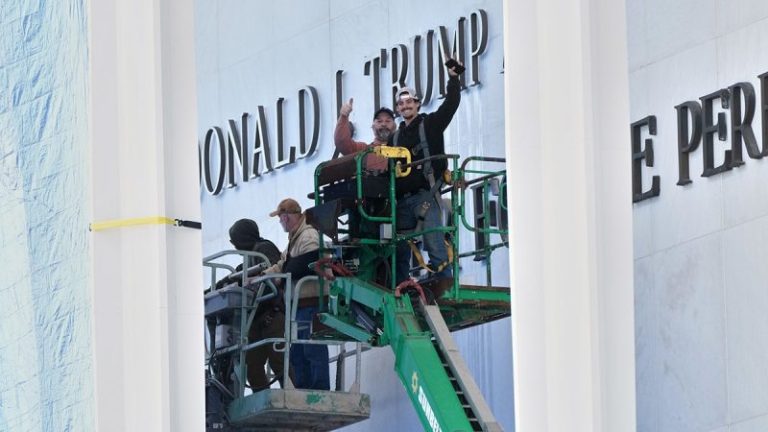
Around Christmas, Ohio Democratic Rep. Joyce Beatty, an ex-officio member of the board, announced her lawsuit over the name change.  

As a threshold matter, I will address the legal rather than policy basis for the change. Many of us chafed at the renaming of the center, which was a memorial to an assassinated president. However, what people want to know is whether the change can be challenged. The answer is yes, but it will not necessarily be easy or certain in its outcome. 

The center was originally built as the National Cultural Center in a 1958 law. It was renamed the John F. Kennedy Center by an act of Congress in 1964 as a living memorial.

The key issue is how that designation was made. It was contained in a statute passed by Congress. Titled John F. Kennedy Center for the Performing Arts, 20 U.S.C. 3, states that ‘no additional memorials or plaques in the nature of memorials shall be designated or installed in the public areas of the John F. Kennedy Center for the Performing Arts.’ 

There are exceptions in sections 2 and 3 of the provision: 

‘(2) Paragraph (1) of this subsection shall not apply to—

(A) any plaque acknowledging a gift from a foreign country; 

(B) any plaque on a theater chair or a theater box acknowledging the gift of such chair or box; and 

(C) any inscription on the marble walls in the north or south galleries, the Hall of States, or the Hall of Nations acknowledging a major contribution; …

(3) For purposes of this subsection, testimonials and benefit performances shall not be construed to be memorials.’ 

The language supports a congressional intent to insulate the memorial from any changes or dilutions. The specificity of the exceptions to plaques for donors suggests that other major changes, such as a name change, are barred under federal law. Moreover, the center is named by an act of Congress. It is hard to find any authority of the board that would undo or delegate that power. 

There is a legitimate question whether a name change is an ‘additional memorial or plaque,’ but it would seem to be so. If a simple plaque to donors had to be expressly exempted, giant letters dedicating the center to an additional person would seem to fall within the congressional intent.

Still, the Trump administration could quote the servant Sampson from ‘Romeo and Juliet’ and tell a court to ‘take it in what sense thou wilt,’ but the statute does not expressly say that name changes are a memorial. 

Challengers could argue that, under the board’s interpretation, any memorial established by Congress, from the Lincoln Memorial to the Kennedy Presidential Library, could be renamed or hyphenated.  

If a court agrees that the statute reflects a clear congressional intent to bar any change to the memorial, the question is how it can be challenged.

In any legal challenge, the advantage would likely rest with the challengers if they can meet the standing requirements.

Kerry Kennedy, the daughter of Robert F. Kennedy and sister of Health and Human Services Secretary Robert F. Kennedy Jr., announced that, ‘Three years and one month from today, I’m going to grab a pickax and pull those letters off that building, but I’m going to need help holding the ladder. Are you in? Applying for my carpenter’s card today, so it’ll be a union job!!!’ 

I would not recommend that approach. Most attorneys strive to keep their clients from falling from great heights.  

The question is, who has standing to challenge the change. Are Kennedy family members injured in a concrete way to satisfy standing? Associational standing from historical preservation groups can be tricky. However, some may soon test those waters. 

The most obvious way to address the issue is for Congress to be heard. It can either ratify the board decision, or it could expressly declare the change to be invalid and clarify that ‘additional memorial’ encompasses any name change. Either resolution may prove difficult with the heavily divided Congress. Soon a judge may join Romeo in his lament: ‘O, teach me how I should forget to think!’

In any legal challenge, the advantage would likely rest with the challengers if they can meet the standing requirements. Otherwise, the name could remain by default … or until another administration decides to make another change to the center previously known as the Kennedy Center. 

Of course, today Juliet might resolve the naming problem in a similar fashion with a hyphenated marital name of Juliet Capulet-Montague, though it clearly would have gone over as poorly as the Trump-Kennedy name. It clearly does not smell as sweet to many.

I expect both court and congressional action to follow. Absent a quick resolution by Congress (which seems unlikely), this could result in years of litigation. 

However, both sides might be wise to heed Shakespeare’s warning in another play that, ‘where two raging fires meet together, they do consume the thing that feeds their fury.’ 

This post appeared first on FOX NEWS

President Donald Trump spent the first year of his second White House term signing a torrent of executive orders aimed at delivering on several major policy priorities, including slashing federal agency budgets and staffing, implementing a hard-line immigration crackdown and invoking emergency authority to impose steep tariffs on nearly every U.S. trading partner.

The pace of Trump’s executive actions has far outstripped that of his predecessors, allowing the administration to move quickly on campaign promises. But the blitz has also triggered a wave of lawsuits seeking to block or pause many of the orders, setting up a high-stakes confrontation over the limits of presidential power under Article II and when courts can — or should — intervene.

Lawsuits have challenged Trump’s most sweeping and consequential executive orders, ranging from a ban on birthright citizenship and transgender service members in the military to the legality of sweeping, DOGE-led government cuts and the president’s ability to ‘federalize’ and deploy thousands of National Guard troops.

Many of those questions remain unresolved. Only a few legal fights tied to Trump’s second-term agenda have reached final resolution, a point legal experts say is critical as the administration presses forward with its broader agenda.

Trump allies have argued the president is merely exercising his powers as commander in chief. 

Critics counter that the flurry of early executive actions warrants an additional level of legal scrutiny, and judges have raced to review a crushing wave of cases and lawsuits filed in response.

WINS:

Limits on nationwide injunctions

In June 2025, the Supreme Court sided with the Trump administration 6-3 in Trump v. CASA, a closely watched case centered on the power of district courts to issue so-called universal or nationwide injunctions blocking a president’s executive orders. 

Though the case ostensibly focused on birthright citizenship, arguments narrowly focused on the authority of lower courts’ ability to issue nationwide injunctions and did not wade into the legality of Trump’s order, which served as the legal pretext for the case. The decision had sweeping national implications, ultimately affecting the more than 310 federal lawsuits that had been filed at the time challenging Trump’s orders signed in his second presidential term.

Justices on the high court ultimately sided with U.S. Solicitor General John Sauer, who had argued to the court that universal injunctions exceeded lower courts’ Article III powers under the Constitution, telling justices that the injunctions ‘transgress the traditional bounds of equitable authority,’ and ‘create a host of practical problems.’

The Supreme Court largely agreed. Justices ruled that plaintiffs seeking nationwide relief must file their lawsuits as class action challenges. This prompted a flurry of action from plaintiffs in the weeks and months that followed as they raced to amend and refile relevant complaints to lower courts.

Firing independent agency heads 

The Supreme Court also signaled openness to expanding presidential authority over independent agencies.

Earlier in 2025, the justices granted Trump’s request to pause lower-court orders reinstating two Democratic appointees — National Labor Relations Board (NLRB) member Gwynne Wilcox and Merit Systems Protection Board (MSPB) member Cathy Harris, two Democrat appointees who were abruptly terminated by the Trump administration. It also suggested the Supreme Court is poised to pare back a 90-year-old precedent in Humphrey’s Executor, a 1935 ruling that prohibits certain heads of multi-member, congressionally created federal regulatory agencies from being fired without cause.

It is not the only issue in which the justices appeared inclined to side with Trump administration officials and either overturn or pare back Humphrey’s protections.

In December, the Supreme Court heard oral arguments in Trump v. Slaughter, a similar case centered on Trump’s attempt to fire a member of the Federal Trade Commission without cause. Justices seemed likely to allow the firing to proceed and to weaken Humphrey’s protections for similarly situated federal employees, though the extent that justices will move to dilute an already watered-down court ruling remains unclear.

The high court will also review another case centered on Trump’s ability to remove Federal Reserve Board Governor Lisa Cook early in 2026.

LOSSES:

Tariffs 

While it’s rarely helpful to speculate on how the Supreme Court might rule on a certain case, court watchers and legal experts overwhelmingly reached a similar consensus after listening to oral arguments in Learning Resources v. Trump, the case centered on Trump’s use of an emergency wartime law to enact his sweeping tariff plan. 

At issue in the case is Trump’s use of the International Emergency Economic Powers Act (IEEPA) to enact his steep 10% tariffs on most imports. The IEEPA law gives the president broad economic powers in the event of a national emergency tied to foreign threats. But it’s unclear if such conditions exist, as voiced by liberal and conservative justices in their review of the case earlier in 2025.

Several justices also noted that the statute does not explicitly reference tariffs or taxes, a point that loomed large during oral arguments.

A ruling against the administration would deliver a major blow to Trump’s signature economic policy. 

Court watchers and legal experts said after arguments that a Trump administration win could be more difficult than expected, though each cautioned it is hard to draw conclusions from roughly two hours of oral arguments, a fraction of the total time justices spend reviewing a case.

Jonathan Turley, a law professor and Fox News contributor, said in a blog post that the justices ‘were skeptical and uncomfortable with the claim of authority, and the odds still favored the challengers.’

‘However, there is a real chance of a fractured decision that could still produce an effective win for the administration,’ Turley added.

Brent Skorup, a legal fellow at the CATO Institute, told Fox News Digital in an emailed statement that members of the court seemed uncomfortable with expanding presidential power over tariffs.

‘Most justices appeared attentive to the risks of deferring to a president’s interpretation of an ambiguous statute and the executive branch ‘discovering’ new powers in old statutes,’ Skorup said.

Birthright citizenship

The Supreme Court has agreed to review Trump’s executive order restricting birthright citizenship, one of the most legally consequential actions of his second term.

At issue is an executive order Trump signed on his first day back in office that would deny automatic U.S. citizenship to most children born to illegal immigrant parents or parents with temporary legal status, a sweeping change critics say would upend roughly 150 years of constitutional precedent.

The order immediately sparked a flurry of lawsuits in 2025 filed by dozens of U.S. states and immigrants’ rights groups. Opponents have also argued that the effort is an unconstitutional and ‘unprecedented’ one that would threaten some 150,000 children in the U.S. born annually to parents of noncitizens and an estimated 4.4 million American-born children under 18 who are living with an illegal immigrant parent, according to data from the Pew Research Center. 

To date, no court has sided with the Trump administration’s interpretation of the 14th Amendment, though multiple district courts have blocked the order from taking force.

While it’s unclear how the high court might rule, the lower court rulings suggest the Trump administration might face a steep uphill battle in arguing the case before the Supreme Court in early 2026.

The court said in early December it will hold oral arguments in the case in 2026, between February and April, with a ruling expected by the end of June. 

This post appeared first on FOX NEWS