Author

admin

Browsing

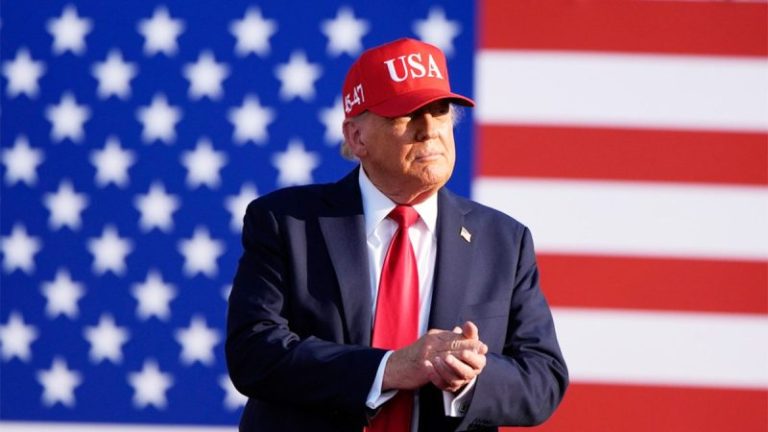
January 2026 marks one year into President Donald Trump’s second term, and there can be no honest conversation without acknowledging that he is one of the most consequential presidents in American history. Love him or loathe him, Trump remains the fixed star around which our politics has revolved for the better part of a decade. Every debate, whether on leadership, law, legacy or lack thereof, turns on the outsized presence of one man. His shadow looms across every institution sacred to America, from colleges to the church to the Capitol, forcing each to declare with whom it stands and why. 

Trump has not simply challenged institutions; he has recharted their course. He has created a political environment where presence, leverage and speed prevail — conditions future leaders will inherit whether they admire his legacy or admonish it. What matters now is not merely what Trump disrupted, but what he set in motion. Among other things, Trump reminds us how quickly and how personally a single executive can impact law, markets and society, for better or worse. 

Long after the rallies fade and the indictments recede, Trump’s imprint will continue to shape American life. A remade Supreme Court of hand-picked justices has altered constitutional doctrine for generations to come. Capital markets have come to treat presidential volatility as a warning sign and tradable risk. Tariffs, trade and industrial policy have been recast as blunt instruments of executive will, designed to serve voters as much as economists. Even the once-fringe world of digital assets and crypto has been reframed from libertarian experiment to strategic asset class challenging sovereignty, regulation and power. 

In many other ways, Trump has altered expectations as much as outcomes. He mandated institutions to move faster and challenged political actors to think bigger. That inheritance will not be easily unwound. History’s students of power understand that consequence is measured not only by outcomes, but by what follows, and few made that point more clearly than Henry Kissinger. ‘Trump may be one of those figures in history who appears from time to time to mark the end of an era and to force it to give up its old pretenses.’

More than anyone else, Trump recognizes that power today flows not only from institutions but from attention. From the time he entered the arena, Trump has perfected one principle: never surrender the stage. Pundits once mocked his early bid for office as self-promotion. It became a populist revolt instead. His blunt voice pierces decades of polite debate. While Washington was accustomed to civility, his words are often raw, sometimes reckless, but always real. Trump’s mastery of attention strains conventional guardrails and has exposed institutional rot long ignored. He leverages disruption to push the boundaries of trust and normalize chaos, conflict and controversy. 

The Trump presidency breaks precedent almost daily — so often it is futile to flag and hard to keep score. He confronts China’s mercantilism with tariffs when others fear retaliation. He moved the U.S. Embassy to Jerusalem, upending decades of diplomatic orthodoxy. He stepped across the DMZ to meet North Korean leader Kim Jong Un and rolled out the red carpet for Russian President Vladimir Putin. He bombs Venezuelan speed boats presumed to carry contraband and dares the reigning despot to respond, let alone retaliate. And he brusquely deports the undocumented with steely bravado. All of which would have been derided or thought folly not long ago, but now is political reality.  

Supporters see courage; opponents see chaos. Two things can be true. Trump leads by instinct, improvising his own score to the established symphony of power. Policy wonks measure process; his allies measure presence. Rallies replaced town halls. Tweets replaced press conferences. Identity replaced ideology. To millions who felt unseen, he proved they exist. He showed up, stood up and spoke up in a way American presidents never have, and may never again.

Every scandal was forecast as fatal. None has been. Each prosecution, revelation and rebuke only deepened the myth. His mug shot became merchandise, his trials became theater, his adversaries became amplifiers. History honors endurance as much as elegance, if not more. Trump embodies that fact. Cast down, counted out and condemned by critics, his ascendance reflects the character of a long ignored American electorate — disruptive, defiant, determined to be seen.  

Grave legal and ethical questions have dogged the president to be sure. But the paradox persists: efforts to diminish Trump through lawfare have mostly enlarged and emboldened him politically and prompted questions as to whether prosecution has advanced justice or accelerated division. 

Washington still misunderstands the Trump phenomenon. He thrives on friction, force and fear. Attention is both fuel and fortress. While pundits count approval ratings, he commandeers airtime. Flooding the zone is more than a football play; it is a governing philosophy for Trump, who understands that in today’s politics, silence equals extinction. The simple act of tagging opponents with amusingly accurate nicknames bespeaks both instinct and popular appeal; at the same time brilliant and brutal.

Populism in America is cyclical. President Andrew Jackson fought banks; politician William Jennings Bryan fought barons; Louisiana Gov. and then Sen. Huey Long fought inequality; Trump fights systems of every stripe. His crusade is part grievance and part gospel, speaking to a republic that distrusts its own elite institutions and their caretakers. Trump excels at stretching politics into follow-through performance. After all, who else would dare prepend his name to the John F. Kennedy Center for Performing Arts and the U.S. Institute of Peace in real time. 

Foreign-policy mandarins dismiss his unorthodox diplomacy, yet the Abraham Accords reordered alliances few believed possible. Energy independence became a reality under his watch. Europe, once warned about Russian gas dependency, now concedes he was right. NATO member states shoulder greater — though not altogether equitable — burdens. Even critics grudgingly credit him for forcing movement on issues long considered intractable, thus the Nobel nominations. 

American politics has long relished showmanship and public performance, from Jefferson’s pamphlets to Lincoln’s debates. Trump is the latest iteration of that tradition, and the most complete legacy of the social media age. He channels a culture that values performance as proof of conviction. As such, he reflects some of our own national contradictions: moral yet mercenary, religious yet rebellious, democratic yet drawn to dominance.

Scholars will debate Trump’s impact for decades, but his ubiquity is unquestionable. He imbues every poll, every platform, every party calculus. Democrats campaign against him; Republicans campaign around him. He remains bolder and busier than ever. Trump did not just reform the GOP; he broke the mold and recast it as Trump, MAGA and America First. 

Every scandal was forecast as fatal. None has been. Each prosecution, revelation and rebuke only deepened the myth. His mug shot became merchandise, his trials became theater, his adversaries became amplifiers.

Trump’s evangelical supporters remind us that the great men of old were seldom polished and never perfect. Moses killed, yet led his people to freedom. David sinned, yet ruled with vision. Paul persecuted, yet became the greatest apostle. Scripture teaches that imperfection often precedes purpose, and greatness is rarely graceful. The Christian faithful rely on these proverbial lessons when explaining their loyal and unapologetic allegiance to such a coarse Christian. Unlike Elijah, it will be impossible to take up his mantle.

While canonizing Trump would be a stretch, dismissing him would be dishonest. From TV ownership to tariffs to trade and beyond, Trump compels America to confront convention and contradiction at the same time. He challenges America’s heritage of confidence and doubt, conviction and compassion, strength and restraint. And challenges us to rethink long-held axioms. 

Sports analysts often speak of exceptionally gifted athletes as ‘generational talent’ — those who have the extraordinary ability to change the game. That is Trump.

For those hoping to walk in his shoes, there is no blueprint for replication. He ushered in a unique political reality that history must acknowledge even if it cannot be repeated. As the most consequential political figure of this century thus far, Donald Trump offers history a compelling study in transformational leadership. He is implacable, irreplaceable and impossible to ignore. There has never been, nor will there ever be, another like him. 

Foremost and finally, Trump embodies a new political maxim for today’s America. If you dare to lead, you do not have to be perfect, but you must be present. 
This post appeared first on FOX NEWS

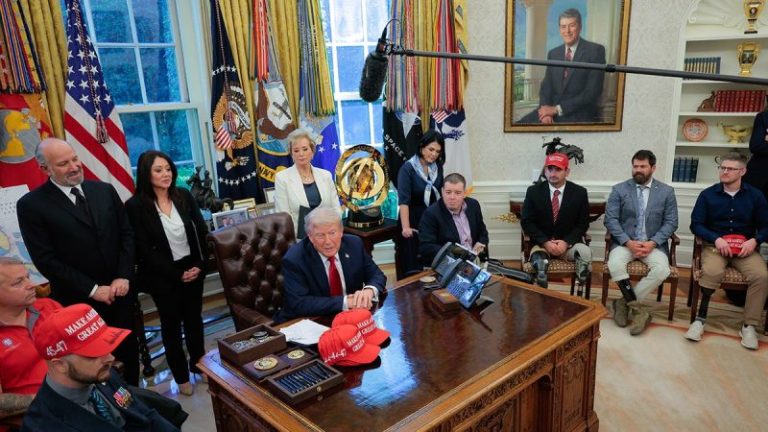
President Donald Trump spent the first year of his second White House term signing a torrent of executive orders aimed at delivering on several major policy priorities, including slashing federal agency budgets and staffing, implementing a hard-line immigration crackdown and invoking emergency authority to impose steep tariffs on nearly every U.S. trading partner.

The pace of Trump’s executive actions has far outstripped that of his predecessors, allowing the administration to move quickly on campaign promises. But the blitz has also triggered a wave of lawsuits seeking to block or pause many of the orders, setting up a high-stakes confrontation over the limits of presidential power under Article II and when courts can — or should — intervene.

Lawsuits have challenged Trump’s most sweeping and consequential executive orders, ranging from a ban on birthright citizenship and transgender service members in the military to the legality of sweeping, DOGE-led government cuts and the president’s ability to ‘federalize’ and deploy thousands of National Guard troops.

Many of those questions remain unresolved. Only a few legal fights tied to Trump’s second-term agenda have reached final resolution, a point legal experts say is critical as the administration presses forward with its broader agenda.

Trump allies have argued the president is merely exercising his powers as commander in chief. 

Critics counter that the flurry of early executive actions warrants an additional level of legal scrutiny, and judges have raced to review a crushing wave of cases and lawsuits filed in response.

WINS:

Limits on nationwide injunctions

In June 2025, the Supreme Court sided with the Trump administration 6-3 in Trump v. CASA, a closely watched case centered on the power of district courts to issue so-called universal or nationwide injunctions blocking a president’s executive orders. 

Though the case ostensibly focused on birthright citizenship, arguments narrowly focused on the authority of lower courts’ ability to issue nationwide injunctions and did not wade into the legality of Trump’s order, which served as the legal pretext for the case. The decision had sweeping national implications, ultimately affecting the more than 310 federal lawsuits that had been filed at the time challenging Trump’s orders signed in his second presidential term.

Justices on the high court ultimately sided with U.S. Solicitor General John Sauer, who had argued to the court that universal injunctions exceeded lower courts’ Article III powers under the Constitution, telling justices that the injunctions ‘transgress the traditional bounds of equitable authority,’ and ‘create a host of practical problems.’

The Supreme Court largely agreed. Justices ruled that plaintiffs seeking nationwide relief must file their lawsuits as class action challenges. This prompted a flurry of action from plaintiffs in the weeks and months that followed as they raced to amend and refile relevant complaints to lower courts.

Firing independent agency heads 

The Supreme Court also signaled openness to expanding presidential authority over independent agencies.

Earlier in 2025, the justices granted Trump’s request to pause lower-court orders reinstating two Democratic appointees — National Labor Relations Board (NLRB) member Gwynne Wilcox and Merit Systems Protection Board (MSPB) member Cathy Harris, two Democrat appointees who were abruptly terminated by the Trump administration. It also suggested the Supreme Court is poised to pare back a 90-year-old precedent in Humphrey’s Executor, a 1935 ruling that prohibits certain heads of multi-member, congressionally created federal regulatory agencies from being fired without cause.

It is not the only issue in which the justices appeared inclined to side with Trump administration officials and either overturn or pare back Humphrey’s protections.

In December, the Supreme Court heard oral arguments in Trump v. Slaughter, a similar case centered on Trump’s attempt to fire a member of the Federal Trade Commission without cause. Justices seemed likely to allow the firing to proceed and to weaken Humphrey’s protections for similarly situated federal employees, though the extent that justices will move to dilute an already watered-down court ruling remains unclear.

The high court will also review another case centered on Trump’s ability to remove Federal Reserve Board Governor Lisa Cook early in 2026.

LOSSES:

Tariffs 

While it’s rarely helpful to speculate on how the Supreme Court might rule on a certain case, court watchers and legal experts overwhelmingly reached a similar consensus after listening to oral arguments in Learning Resources v. Trump, the case centered on Trump’s use of an emergency wartime law to enact his sweeping tariff plan. 

At issue in the case is Trump’s use of the International Emergency Economic Powers Act (IEEPA) to enact his steep 10% tariffs on most imports. The IEEPA law gives the president broad economic powers in the event of a national emergency tied to foreign threats. But it’s unclear if such conditions exist, as voiced by liberal and conservative justices in their review of the case earlier in 2025.

Several justices also noted that the statute does not explicitly reference tariffs or taxes, a point that loomed large during oral arguments.

A ruling against the administration would deliver a major blow to Trump’s signature economic policy. 

Court watchers and legal experts said after arguments that a Trump administration win could be more difficult than expected, though each cautioned it is hard to draw conclusions from roughly two hours of oral arguments, a fraction of the total time justices spend reviewing a case.

Jonathan Turley, a law professor and Fox News contributor, said in a blog post that the justices ‘were skeptical and uncomfortable with the claim of authority, and the odds still favored the challengers.’

‘However, there is a real chance of a fractured decision that could still produce an effective win for the administration,’ Turley added.

Brent Skorup, a legal fellow at the CATO Institute, told Fox News Digital in an emailed statement that members of the court seemed uncomfortable with expanding presidential power over tariffs.

‘Most justices appeared attentive to the risks of deferring to a president’s interpretation of an ambiguous statute and the executive branch ‘discovering’ new powers in old statutes,’ Skorup said.

Birthright citizenship

The Supreme Court has agreed to review Trump’s executive order restricting birthright citizenship, one of the most legally consequential actions of his second term.

At issue is an executive order Trump signed on his first day back in office that would deny automatic U.S. citizenship to most children born to illegal immigrant parents or parents with temporary legal status, a sweeping change critics say would upend roughly 150 years of constitutional precedent.

The order immediately sparked a flurry of lawsuits in 2025 filed by dozens of U.S. states and immigrants’ rights groups. Opponents have also argued that the effort is an unconstitutional and ‘unprecedented’ one that would threaten some 150,000 children in the U.S. born annually to parents of noncitizens and an estimated 4.4 million American-born children under 18 who are living with an illegal immigrant parent, according to data from the Pew Research Center. 

To date, no court has sided with the Trump administration’s interpretation of the 14th Amendment, though multiple district courts have blocked the order from taking force.

While it’s unclear how the high court might rule, the lower court rulings suggest the Trump administration might face a steep uphill battle in arguing the case before the Supreme Court in early 2026.

The court said in early December it will hold oral arguments in the case in 2026, between February and April, with a ruling expected by the end of June. 

This post appeared first on FOX NEWS

With margins tight in both chambers, control of Congress in 2026 is expected to hinge on a small group of competitive Senate contests and House districts sensitive to national trends. As America plunges into a new year, here are the races that are most likely to define the midterm races.

Senate majority-making or majority-breaking races to watch

Senate Republicans are looking to maintain their razor-thin majority after flipping the upper chamber in 2024. There are 33 seats in-cycle in the forthcoming midterms, which often act as a check on an incumbent president’s performance.

The GOP is hoping to replicate the Election Day successes that helped preserve its majority at the midpoint of President Donald Trump’s first term, entering 2026 with what many analysts consider a favorable map.

Georgia

 Georgia is the top prize of Senate Republicans and their campaign arm, the National Republican Senatorial Committee (NRSC). Incumbent Sen. Jon Ossoff, D-Ga., is vulnerable in his first attempt at re-election to the Senate and will be met with the full weight of the NRSC’s campaign war chest. 

Before the general election, Republicans will first have to let the dust settle on a bloody, four-way primary fight among Reps. Buddy Carter, R-Ga., Mike Collins, R-Ga., former University of Tennessee head football coach Derek Dooley and horse trainer Reagan Box. Republicans’ prized candidate, Georgia Gov. Brian Kemp, opted not to enter the contest, leaving a wide open playing field for the GOP to fight over. 

North Carolina

In the heat of the Senate advancing Trump’s ‘big, beautiful bill,’ Sen. Thom Tillis, R-N.C., announced his retirement. What would likely have been a gimme race for the GOP has now turned into a wide open contest for an open seat. 

Democrats believe they can flip the seat for the first time since 2008 and hope that former North Carolina Gov. Roy Cooper will carry them to victory and provide a crucial win to tip the balance of power. Republicans scored their preferred candidate, too, in former Republican National Committee Chair Michael Whatley. He will have a primary challenge though from Michele Morrow. 

Michigan

 Similar to North Carolina, Democrats lost their incumbent Sen. Gary Peters, D-Mich., to retirement. Both parties are now gunning for the open seat, but Democrats’ have a tangled primary to survive first before their true candidate emerges. 

Rep. Haley Stevens, D-Mich., state Sen. Mallory McMorrow and physician Abdul El-Sayed, are all in on the Democratic side, while Trump and Republicans have coalesced behind former Rep. Mike Rogers, who narrowly lost to Sen. Elissa Slotkin last year. 

Maine

 Incumbent Sen. Susan Collins, R-Maine, is Senate Democrats’ top target in the midterms. Collins, who is looking to score a sixth term in the Senate, could face a formidable opponent in the general election with the full backing of Senate Minority Leader Chuck Schumer, D-N.Y., or an upstart progressive candidate that’s looking to throw a wrench into Democrats’ plans. 

There are several local candidates that have jumped in on both sides of the race, but the main contenders are Collins, popular Democratic Gov. Janet Mills and oyster farmer Graham Platner, who has rubbed shoulders with progressive heavyweights Sen. Bernie Sanders, I-Vt., and Rep. Alexandria Ocasio-Cortez, D-N.Y. 

Ohio

 Sen. Jon Husted, R-Ohio, who was appointed to replace Vice President JD Vance earlier this year, will look to finish out the remaining two years of his predecessor’s term. But he’ll face a tough opponent in former Sen. Sherrod Brown, D-Ohio, who narrowly lost last year.  

Schumer and Democrats scored their best chance at picking up a seat in Ohio, again trying to turn the state purple after Brown’s loss to Sen. Bernie Moreno, R-Ohio. And there will be eye-popping amounts of money thrown at this contest. 

New Hampshire

 Democrats took yet another hit from the retirement train when Sen. Jeanne Shaheen, D-N.H., announced she’d leave Congress at the end of her term. That has opened up the field to several familiar Republican names jumping into the contest in the hopes of turning part of the Granite State red. 

Republicans have two prime candidates, former Sen. John Sununu, R-N.H., and former Rep. Scott Brown, R-Mass., who also served as an ambassador for Trump, to pick from. Meanwhile, Rep. Chris Pappas, D-N.H., is the likely heir apparent on the Democratic side. 

House races that will decide the majority

Control of the House is likely to hinge on fewer than two dozen districts nationwide, as both parties focus their resources on a small set of competitive seats that could decide the chamber. The battlegrounds span suburbs, rural communities and diverse metro areas, underscoring how varied the path to a majority has become.

Colorado’s 8th District, Northern Denver suburbs and Greeley

 With GOP Rep. Gabe Evans defending the seat, Colorado’s 8th District remains one of the most competitive House districts in the country. Drawn as a true swing seat after redistricting, it has flipped parties in back-to-back cycles and is often decided by slim margins.

Whether Latino and working-class voters break decisively toward one party and whether the race is decided by a narrow margin. A comfortable win here typically signals momentum heading into other battleground House races.

Iowa’s 1st District, Eastern Iowa

With a history of close results, Iowa’s 1st District is once again a top battleground as Republican Rep. Mariannette Miller-Meeks seeks re-election.

The district spans college towns, rural counties and small manufacturing hubs, creating an electorate that frequently splits its ticket. Even as Iowa trends red at the presidential level, the seat continues to hover in toss-up territory and is often among the last House races decided on election night.

New Jersey’s 7th District, North Jersey suburbs

Held by GOP Rep. Tom Kean Jr., New Jersey’s 7th is a high-income, college-educated suburban district that has repeatedly swung with the national political climate and historically punished incumbents during unfavorable cycles.

Whether suburban voters continue drifting away from Republicans or stabilize in a midterm environment. A shift here would offer an early read on how educated suburbs are responding to the party in power.

New York’s 17th District, Hudson Valley and NYC’s northern suburbs

New York’s 17th District, which previously backed former President Joe Biden, is represented by GOP Rep. Mike Lawler and is expected to play an outsized role in determining House control.

Whether Democrats can effectively harness heavy national spending and messaging in a district expected to draw intense attention.

Pennsylvania’s 7th District, Lehigh Valley and Allentown

Held by Republican Rep. Chris Mackenzie, Pennsylvania’s 7th is a true purple district in a must-win swing state. This area is made up of a politically diverse electorate that has previously mirrored statewide results.

Economic pressures and immigration debates are expected to shape how working-class and Latino voters approach the race.

California’s 22nd District, Central Valley

California’s 22nd, represented by GOP Rep. David Valadao, has remained a perennial battleground for more than a decade, shaped by its agricultural economy and a large Latino electorate sensitive to turnout swings.

Whether Democrats can boost turnout enough to flip the seat, and whether Central Valley races help offset Republican gains elsewhere in the country.

This post appeared first on FOX NEWS

: This was the kind of prison break officials say could have changed the region, and perhaps even the world, overnight.

Nearly 6,000 ISIS detainees, described by a senior U.S. intelligence official as ‘the worst of the worst,’ were being held in northern Syria as clashes and instability threatened the Kurdish-led Syrian Democratic Forces, the guards responsible for keeping the militants locked away and preventing a feared ISIS resurgence. U.S. officials believed that if the prisons collapsed in the chaos, the consequences would be immediate.

‘If these 6,000 or so got out and returned to the battlefield, that would basically be the instant reconstitution of ISIS,’ the senior intelligence official told Fox News Digital.

In an exclusive interview, the official walked Fox News Digital step by step through the behind-the-scenes operation that moved thousands of ISIS detainees out of Syria and into Iraqi custody, describing a multi-agency scramble that unfolded over weeks, with intelligence warnings, rapid diplomacy and a swift military lift.

The risk, the official explained, had been building for months. In late October, Director of National Intelligence Tulsi Gabbard began to assess that Syria’s transition could tip into disorder and create the conditions for a catastrophic jailbreak.

The ODNI sent the official to Syria and Iraq at that time to begin early discussions with both the SDF and the Iraqi government about how to remove what the official repeatedly described as the most dangerous detainees before events overtook them.

Those fears sharpened in early January as fighting erupted in Aleppo and began spreading eastward. Time was running out to prevent catastrophe. ‘We saw this severe crisis situation,’ the official said.

According to the source, the ODNI oversaw daily coordination calls across agencies as the situation escalated. The official said Secretary of State Marco Rubio was ‘managing the day to day’ on policy considerations, while the ODNI drove a working group that kept CENTCOM, diplomats and intelligence officials aligned on the urgent question: how to keep nearly 6,000 ISIS fighters from slipping into the fog of war.

The Iraqi government, the official said, understood the stakes. Baghdad had its own reasons to move quickly, fearing that if thousands of detainees escaped, they would spill across the border and revive a threat Iraq still remembers in visceral terms.

The official described Iraq’s motivation bluntly: leaders recognized that a massive breakout could force Iraq back into a ‘2014 ISIS is on our border situation once more.’

The U.S. Embassy in Baghdad, the official said, played a pivotal role in smoothing the diplomatic runway for what would become a major logistical undertaking.

Then came the physical lift. The official credited CENTCOM’s surge of resources to make the plan real on the ground, saying that ‘moving in helicopters’ and other assets enabled detainees to be removed in a compressed timeframe.

‘Thanks to the efforts… moving in helicopters, moving in more resources, and then just logistically making this happen, we were able to get these nearly 6000 out in the course of just a few weeks,’ the official said.

The SDF, he said, had been securing the prisons, but its attention was strained by fighting elsewhere, fueling U.S. fears that a single breach could spiral into a mass escape. Ultimately, detainees were transported into Iraq, where they are now held at a facility near Baghdad International Airport under Iraqi authority.

The next phase, the official said, is focused on identification and accountability. FBI teams are in Iraq enrolling detainees biometrically, the official said, while U.S. and Iraqi officials examine what intelligence can be declassified and used in prosecutions.

‘What they were asking us for, basically, is giving them as much intelligence and information that we have on these individuals,’ the official said. ‘So right now, the priority is on biometrically identifying these individuals.’

The official said the State Department is also pushing countries of origin to take responsibility for their citizens held among the detainees.

‘State Department is doing outreach right now and encouraging all these different countries to come and pick up their fighters,’ he said.

While the transfer focused strictly on ISIS fighters, the senior intelligence official said families held in camps such as al-Hol were not part of the operation, leaving a major unresolved security and humanitarian challenge.

The camps themselves were under separate arrangements, the official said, and responsibility shifted as control on the ground evolved. 

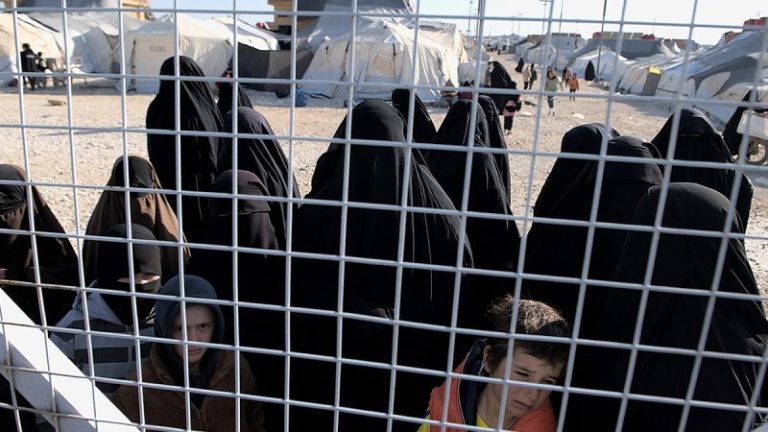
According to the official, the Syrian Democratic Forces and the Syrian government reached an understanding that Damascus would take over the al-Hol camp, which holds thousands of ISIS-affiliated women and children.

‘As you can see from social media, the al-Hol camp is pretty much being emptied out,’ the official said, adding that it ‘appears the Syrian government has decided to let them go free,’ a scenario the official described as deeply troubling for regional security. ‘That is very concerning.’

The fate of the families has long been viewed by counterterrorism officials as one of the most complicated, unresolved elements of the ISIS detention system. Many of the children have grown up in camps after ISIS lost territorial control, and some are now approaching fighting age, raising fears about future radicalization and recruitment.

For now, the official said, intelligence agencies are closely tracking developments after a rapid operation that, in their view, prevented thousands of experienced ISIS militants from reentering the battlefield at once and potentially reigniting the group’s fighting force. 

‘This is a rare good news story coming out of Syria,’ the official concluded.

This post appeared first on FOX NEWS

The debate over U.S. missile defense is increasingly focused on space, and defense experts argue that stopping threats in the earliest moments after launch could determine whether the homeland remains protected against Russia and China’s expanding arsenals.

At a policy discussion marking roughly a year since the rollout of the ‘Golden Dome’ homeland defense initiative, former senior defense officials said the United States can no longer rely primarily on deterrence and retaliation to shield the country from missile attacks.

‘I think geography is no longer’ a shield, former Air Force Undersecretary Kari Bingen said during a C-SPAN panel Friday. ‘There are different types of threats that can reach the homeland.’

The Golden Dome initiative stems from a January 2025 executive order signed by President Donald Trump directing the Pentagon to accelerate development of a next-generation homeland missile defense architecture. The order calls for integrating existing ground-based interceptors with advanced tracking networks, new space-based sensors and potentially space-based interceptors capable of detecting and defeating ballistic, cruise and hypersonic missile threats earlier in flight.

Administration officials have framed the effort as a response to rapid modernization by Russia and China. 

Russia has fielded new intercontinental ballistic missiles and hypersonic glide vehicles designed to penetrate missile defenses, while China has expanded its nuclear arsenal and constructed hundreds of new missile silos in recent years. 

Both countries have invested heavily in maneuverable reentry vehicles and countermeasures intended to complicate U.S. interception efforts.

Stopping missiles early

Supporters of a stronger space layer argue that intercepting a missile early in flight — before it can deploy warheads or countermeasures — simplifies the defensive challenge and reduces the strain on systems closer to U.S. territory.

‘It gives the ability to neutralize before they manifest here at home,’ missile defense expert Thomas Karako said, referring to space-enabled capabilities that could track and potentially intercept threats sooner in their trajectory.

Karako said there is ‘a compelling case’ for space-based interceptors ‘not just against nonnuclear attack but even limited nuclear attacks,’ arguing that raising the threshold for adversaries contemplating a strike strengthens deterrence overall.

‘If you raise the threshold for having enough capability to meaningfully invest in enemies … there’s goodness in there,’ he said.

Panelists emphasized that the objective is not absolute protection against thousands of intercontinental ballistic missiles, but improving the odds of defeating smaller or more limited attacks, including those that could involve large salvos or advanced countermeasures.

Threats are evolving

Melissa Dalton, a former senior Pentagon official, said missile and drone use has become increasingly normalized in recent conflicts, lowering the perceived threshold for employment.

‘They don’t respect the boundaries,’ Dalton said, noting the growing frequency of missile and drone attacks.

Bingen argued that the U.S. historically leaned heavily on the threat of retaliation to deter attacks but that changing technologies and adversary capabilities require a broader approach.

‘Americans would be surprised how reliant we have been on vulnerability and retaliation,’ she said.

Space and integration challenges

While space-based missile defense once drew skepticism due to cost and technical hurdles, Karako said advances in commercial launch and satellite technology have changed the feasibility calculus.

‘This is not the Soviet Union in the ’80s or the ’90s,’ he said. ‘The technology has evolved quite a bit.’

Still, experts acknowledged that integration — linking sensors, interceptors and command-and-control systems at machine speed — may be the most difficult challenge.

‘We have to remember this is a layered defense system,’ Bingen said. ‘We’re not asking the space layer to do it all.’

Participants also stressed that any major expansion of homeland missile defense will require bipartisan political support to endure through election cycles and shifting budget priorities.

‘If you don’t persuade people what it’s about, it will never be built,’ Karako said.

Officials have floated an aggressive timeline — including a three-year push to stand up initial capabilities — but the Golden Dome is still in early development, with much of the work focused on planning, prototypes and initial contracts. Significant technical and acquisition hurdles remain, particularly for any space-based interceptor layer, which defense officials acknowledge would take years to fully field.

The effort marks a broader shift in how the U.S. approaches homeland defense. Rather than relying mainly on midcourse interceptors and the threat of retaliation, Golden Dome is designed to push defenses earlier in a missile’s flight — and further into space — with the goal of stopping threats before they can deploy countermeasures or overwhelm existing systems.

This post appeared first on FOX NEWS

The number of American citizens arrested and held in Venezuela has risen in recent months, according to a new report.

Several Americans have been detained by Venezuelan security forces as the Trump administration stepped up efforts to isolate President Nicolás Maduro, including sanctions enforcement and an expanded military presence in the Caribbean, The New York Times reported.

A U.S. official familiar with the matter, speaking on condition of anonymity, told the outlet that while some detainees face what Venezuelan authorities describe as legitimate criminal charges, Washington is considering designating at least two Americans as ‘wrongfully detained.’

.’

This can speed up diplomatic efforts to secure their release.

Those arrested currently are said to include three Venezuelan-American dual nationals and two U.S. citizens with no known ties to Venezuela, the official told the outlet.

Maduro’s government has long been accused by U.S. officials and critics of using detained foreign nationals as leverage in negotiations with the U.S.

President Trump has made the release of Americans held overseas a priority during both of his presidencies. During his first term, he followed a campaign of maximum pressure against Maduro.

On his return to office in January, Trump also sent envoy Richard Grenell to Caracas to push for a prisoner agreement.

Grenell met Maduro in person and was tasked with securing the return of detained Americans, announcing he was bringing home six who had been imprisoned, per Reuters.

In May, Venezuela also released a U.S. Air Force veteran who had been detained for roughly six months. 

Joseph St Clair, who served in Afghanistan, had traveled to South America for treatment for post-traumatic stress disorder.

In July, as reported by Fox News Digital, 10 more Americans and U.S. permanent residents were released after a prisoner swap that saw more than 250 Venezuelans held in El Salvador also returned home. The U.S. State Department confirmed that release on July 18, 2025.

‘Our commitment to the American people is clear: we will safeguard the well-being of U.S. nationals both at home and abroad and not rest until all Americans being held hostage or unjustly detained around the world are brought home,’ Secretary of State Marco Rubio said at the time.

.

That diplomatic push led to talks between U.S. and Venezuelan officials and resulted in the release of at least 16 American citizens and permanent residents by mid-2025.

Those negotiations were later suspended as the administration shifted toward broader pressure.

The U.S. began expanding sanctions enforcement, redeploying naval assets to the Caribbean, and increased operations targeting vessels allegedly linked to drug-trafficking networks tied to Maduro’s regime.

Meanwhile, the New York Times reported Wednesday that among those Americans currently reported missing is James Luckey-Lange, 28, of Staten Island, New York, who went missing after crossing Venezuela’s southern border in early December.

Luckey-Lange is the son of musician Diane Luckey, known as Q Lazzarus.

Another former detainee, Renzo Huamanchumo Castillo, a Peruvian-American, told the outlet he was arrested last year and accused of terrorism and plotting to kill Mr. Maduro.

‘We realized afterward, I was just a token,’ he said. He was released in the July prisoner swap after months of harsh detention.

At least two others with U.S. ties remain imprisoned, according to their families: Aidel Suarez, a U.S. permanent resident born in Cuba, and Jonathan Torres Duque, a Venezuelan-American, according to reporting by The New York Times.

The exact number of newly detained Americans has not been publicly disclosed by U.S. officials.

Fox News Digital has reached out to the Department of State for comment.

This post appeared first on FOX NEWS

Momentum on a 20-point peace plan to end the war between Russia and Ukraine is faltering after President Vladimir Putin accused Kyiv of targeting a residence linked to him, a claim Moscow says leaves little room for compromise at the negotiating table.

The accusation comes as Ukrainian President Volodymyr Zelenskyy has been pressing a 20-point peace proposal as a counteroffer to a 28-point framework floated by the Trump administration before Thanksgiving. Zelenskyy was expected to present the plan directly to President Donald Trump during a meeting at Mar-a-Lago, part of what he described as ‘some of the most active diplomatic days of the year.’

Russia claims Ukraine launched a large-scale drone attack early Monday against a presidential residence in the Novgorod region, involving 91 long-range drones that were intercepted by Russian air defenses.

Russia’s defense ministry released footage of a masked soldier standing next to drone wreckage it said was recovered from the attack, claiming the drone carried a high-explosive warhead ‘filled with a large number of striking elements’ intended to hit civilian targets.

The Kremlin has described the site as a presidential residence in the Novgorod region, one of several state-owned properties associated with Putin, though it has not said he was present at the time.

Kremlin officials quickly branded the incident ‘terrorist’ activity, warning it would force Russia to harden its negotiating position. 

‘This terrorist action is aimed at collapsing the negotiation process,’ Kremlin spokesperson Dmitry Peskov told reporters Tuesday. ‘The diplomatic consequence will be to toughen the negotiating position of the Russian Federation.’

Zelenskyy’s proposal calls for Western-backed security guarantees resembling NATO’s Article 5, a halt in fighting along current battle lines in contested regions, and the creation of demilitarized zones overseen by international forces — provisions Moscow has long opposed. The Ukrainian plan also rejects formal recognition of Russian control over occupied territory, a key point of divergence from the U.S. framework.

Ukraine has flatly denied responsibility for the alleged attack. Foreign Minister Andrii Sybiha said Russia has offered no evidence ‘because there’s none,’ accusing Moscow of leaning on a familiar strategy. 

‘Russia has a long record of false claims — it’s their signature tactic,’ Sybiha said in a post to the social platform X.

Zelenskyy told reporters that Ukraine had discussed the allegation with U.S. officials. ‘They’ve talked through the details. And we understand that it’s fake. And thanks to their technical opportunities, they can verify that it’s fake,’ he said.

Ukrainian officials argue the allegation fits a broader Kremlin playbook: using unproven claims to justify escalation or deflect blame as diplomacy intensifies. Kyiv has warned Moscow may be using the episode to lay the groundwork for new strikes, including against government buildings in the Ukrainian capital, while portraying Russia as the aggrieved party in peace talks.

The dispute has also drawn in Trump, who met with Zelenskyy in Florida Friday and later spoke by phone with Putin. Putin raised the alleged incident during their call.

‘I was very angry about it,’ Trump told reporters, adding that the U.S. was still working to determine what actually happened. ‘We’ll find out,’ he said.

Matthew Whitaker, the U.S. ambassador to NATO, said on Fox Business that Washington is investigating Russia’s claim

‘It’s unclear whether it actually happened,’ Whitaker said. ‘We’re going to get to the bottom of the intelligence.’

This post appeared first on FOX NEWS

Russian President Vladimir Putin used his New Year’s address to deliver a blunt message to the West and to his own troops: Russia is not backing down in Ukraine.

As 2026 arrived in Russia’s far eastern regions, Putin vowed victory in the nearly four-year war, praising Russian soldiers and framing the conflict as a fight for the nation’s survival — even as the United States ramps up diplomatic efforts aimed at ending the bloodshed.

‘We believe in you and our victory,’ Putin said in remarks broadcast nationwide and released by the Kremlin on Wednesday. Addressing troops directly, he congratulated ‘all our soldiers and commanders’ and pledged continued support for what Moscow calls its ‘special military operation.’

Putin cast the war as a struggle for Russia’s homeland, ‘truth and justice,’ signaling determination to press ahead despite mounting losses and international pressure.

In a separate message, ex-President Dmitry Medvedev — Putin’s security council deputy — said of victory in Ukraine: ‘I sincerely believe that it is near.’ Echoing Putin, he spoke of ‘our great and invincible Russia.’

The defiant tone comes as the war approaches grim milestones. On Jan. 12, Russia’s invasion of Ukraine will surpass the 1,418 days the Soviet Union fought Nazi Germany in Europe during World War II. On Feb. 24, the conflict will enter its fourth year. Western estimates place the number of killed and wounded at more than 1 million — a figure the Kremlin disputes.

Putin’s rhetoric stood in sharp contrast to renewed diplomatic activity led by Washington.

Ukrainian President Volodymyr Zelenskyy met with U.S. President Donald Trump at Trump’s Mar-a-Lago resort in Florida on Sunday, as the White House explores possible paths to end Europe’s largest land war since World War II.

After the meeting, Trump said Ukraine and Russia were ‘closer than ever’ to peace, while acknowledging that major obstacles — particularly territorial disputes — remain unresolved. Reuters separately reported that Trump and Zelenskyy discussed potential U.S. troop involvement as part of broader security guarantees, though no decisions were announced.

Reuters contributed to this report.

This post appeared first on FOX NEWS

The U.S. Department of the Treasury on Wednesday sanctioned four companies operating in Venezuela’s oil sector and identified four oil tankers as blocked property, saying the move targets oil traders involved in alleged sanctions-evasion that helps finance Nicolás Maduro’s regime.

Treasury said the vessels, some described as part of a ‘shadow fleet’ serving Venezuela, ‘continue to provide financial resources that fuel Maduro’s illegitimate narco-terrorist regime’ in Tuesday’s press release.

‘President Trump has been clear: We will not allow the illegitimate Maduro regime to profit from exporting oil while it floods the United States with deadly drugs,’ Treasury Secretary Scott Bessent said. ‘The Treasury Department will continue to implement President Trump’s campaign of pressure on Maduro’s regime,’ he added.

Treasury said the sanctions block property and interests in property of the designated entities within U.S. jurisdiction and generally prohibits Americans from transactions involving them.

The action follows U.S. measures against Venezuela’s state-run oil company Petroleos de Venezuela, S.A. (PDVSA).

OFAC designated PDVSA in January 2019 under Executive Order 13850, and President Trump later took additional steps to block PDVSA in August 2019 under Executive Order 13884, Treasury said.

Treasury said Wednesday’s move also complements actions announced Dec. 11 and Dec. 19 targeting PDVSA-linked officials, associates and vessels.

OFAC designated Corniola Limited and Krape Myrtle Co LTD and identified the tanker NORD STAR as blocked property. OFAC also designated Winky International Limited and identified ROSALIND, also known as LUNAR TIDE, as blocked property. OFAC designated Aries Global Investment LTD and identified the tankers DELLA and VALIANT as blocked property, Treasury said.

Treasury said blocked property within U.S. jurisdiction must be reported to OFAC, and warned that violations of U.S. sanctions may result in civil or criminal penalties.

Treasury said the goal of sanctions is to bring about a positive change in behavior, noting there is a formal process for seeking removal from an OFAC list consistent with U.S. law.

This post appeared first on FOX NEWS

The Department of Justice (DOJ) on Wednesday outlined a list of its accomplishments during President Donald Trump’s first year back in office, arguing that the agency has ended the political weaponization it says existed under the Biden administration.

The DOJ claimed in a statement posted on X that it has ‘turned around’ the agency, restoring fairness and law enforcement priorities.

‘Instead of keeping Americans safe, the Biden DOJ weaponized its power against political opponents: conservatives, parents, pro-lifers, Christians, and most of all, President Trump,’ the DOJ stated.

The DOJ said that after President Trump inherited a justice system it described as ‘in chaos,’ he charged the department with restoring ‘integrity, accountability and equal justice under the law.’

‘In 2025, the DOJ returned to its core mission: upholding the rule of law, vigorously prosecuting criminals, and keeping the American people safe,’ the department wrote.

The announcement comes as the Trump administration continues to face legal challenges and the Justice Department faces potential legal action after missing a statutory deadlinedeadline to release documents related to Jeffrey Epstein under the Epstein Files Transparency Act.

The DOJ outlined 10 ‘wins’ since President Trump took office on Jan. 20, including efforts to pursue major fraud cases, particularly in Minnesota, which it described as ‘rife with fraud.’

According to the DOJ, 98 people have been charged — including 85 individuals identified as being of Somali descent — in Medicaid fraud and related case programs, leading to 64 convictions to date.

The statement outlines actions taken to roll back policies it said were targeting conservatives and parents, reduce crime nationwide, increase law enforcement activity in major cities, seize record amounts of illegal drugs and secure favorable rulings at the Supreme Court.

On Wednesday, FBI Director Kash Patel wrote on X that the bureau is working to restore trust in federal law enforcement.

‘Dismantling public corruption is a top priority of our leadership team here — we’ve worked day and night on that mission and will continue to do so until justice is done,’ he wrote.

The Justice Department said more enforcement actions are planned in 2026, signaling an escalation of arrests, court victories and action ‘against those who threaten the safety and well-being of the American people.’

This post appeared first on FOX NEWS