Author

admin

Browsing

The Trump administration announced a $2 billion pledge for United Nations humanitarian aid Monday and warned agencies must ‘adapt, shrink, or die’ under its overhaul, according to a statement from the Department of State.

The new package comes as the administration reins in traditional foreign assistance and pushes humanitarian organizations to meet stricter standards on efficiency, accountability and oversight.

‘Individual U.N. agencies will need to adapt, shrink, or die,’ the statement said after outlining what it called ‘several key benefits for the United States and American taxpayers.’

‘The United States is pledging an initial $2 billion anchor commitment to fund life-saving assistance activities in dozens of countries,’ the State Department said.

The administration also said that the contribution is expected to shield tens of millions of people from hunger, disease, and the devastation of war in 2026 alone, with a new model significantly reducing costs. 

‘Because of enhanced efficiency and hyper-prioritization on life-saving impacts, this new model is expected to save U.S. taxpayers nearly $1.9 billion compared to outdated grant funding approaches,’ the statement said.

Secretary of State Marco Rubio said the approach is intended to force long-standing reforms across the U.N. system and reduce the U.S. financial burden.

‘This new model will better share the burden of U.N. humanitarian work with other developed countries and will require the U.N. to cut bloat, remove duplication, and commit to powerful new impact, accountability, and oversight mechanisms,’ Rubio said in a post on X.

The pledge is smaller than previous U.S. contributions, which officials said had grown to between $8 billion and $10 billion annually in voluntary humanitarian funding in recent years.

Administration officials said those funding levels were unsustainable and lacked sufficient accountability.

Jeremy Lewin, the State Department’s senior official overseeing foreign assistance, underscored the administration’s position during a press conference in Geneva.

‘The piggy bank is not open to organizations that just want to return to the old system,’ Lewin said in the statement. ‘President Trump has made clear that the system is dead.’

The funding commitment is part of a newly signed Memorandum of Understanding between the U.S. and the U.N. Office for the Coordination of Humanitarian Affairs (OCHA).

The agreement replaces project-by-project grants with consolidated, flexible pooled funding administered at the country or crisis level.

Tom Fletcher, the U.N.’s top humanitarian official and head of OCHA, welcomed the agreement, calling it a major breakthrough. ‘It’s a very significant landmark contribution,’ Fletcher said, according to the Associated Press.

U.S. Ambassador to the United Nations Mike Waltz also said the deal would deliver more focused, results-driven aid aligned with U.S. foreign policy interests, while the State Department warned future funding will depend on continued reforms.

This post appeared first on FOX NEWS

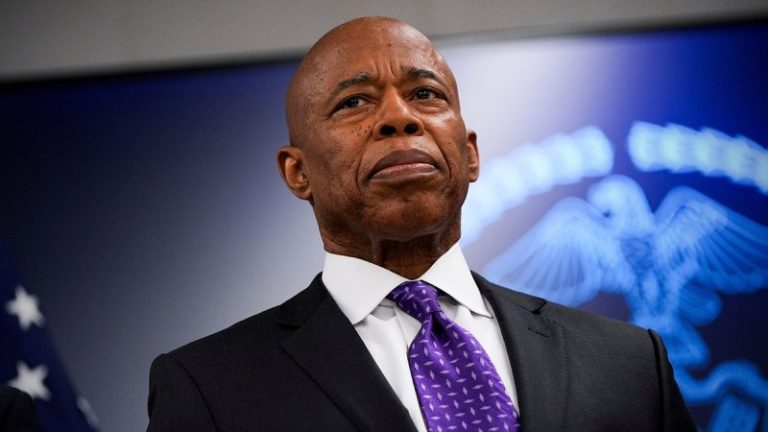
Outgoing New York City Mayor Eric Adams argued that the Biden administration’s Justice Department engaged in ‘lawfare’ against the former president’s political opponents, including himself on corruption allegations and President Donald Trump over issues such as mishandling classified documents.

‘I think what we have witnessed under President Biden’s Justice Department, Americans should never have to live through that again,’ Adams said on Monday during an appearance on Fox News’ ‘The Story.’

‘You saw everyday Americans who fought for the education of their children being put on watch lists, I think that you saw what happened with Charlie Kirk, when you saw the raiding of President Trump’s home. Debates should have happened … I think that you’re seeing the clear indication that the Justice Department under the previous administration used lawfare to go after those who disagree with them,’ he added.

Asked if he felt as angry about the alleged weaponization of the DOJ before he was targeted, Adams said ‘personal experience allows us to see firsthand the abuse.’

‘I spent my entire life, not only as a police officer, but as a state senator and borough president fighting against injustices,’ Adams said. ‘There’s a real history, a rich history, of me standing up and fighting what the criminal justice system should never be. Yes, that anger was there long before I was a target, but what I saw happen while I was the mayor is really deplorable, and we saw what happened to President Trump’s family as well.’

‘If you were to go back and look at my life story on criminal justice reform and not abuse, it goes back to being a young man who was abused at the hands of law enforcement,’ he continued. ‘And so I’ve always been a clear voice, and it really personalized it of what I was fighting for years because I experienced the lawfare myself.’

Adams was indicted in September 2024 on federal corruption charges related to bribery, wire fraud and accepting illegal foreign campaign contributions from Turkish officials and businessmen. He pleaded not guilty to all charges.

The mayor has insisted that the case was politically motivated over his criticism of how the Biden administration handled illegal immigration, but prosecutors in the Southern District of New York said in court filings that the investigation began in September 2021, before Adams’ public criticism of the government’s immigration policies or his mayoral election win.

The charges were dropped earlier this year at the request of the Trump administration.

Adams is set to leave office at the turn of the new year, when Mayor-elect Zohran Mamdani will be sworn in.

This post appeared first on FOX NEWS

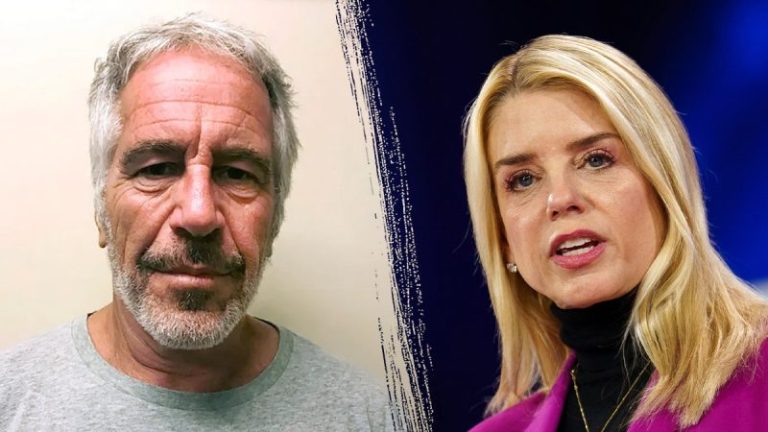
Department of Justice officials are facing threats of legal action after the department missed the Epstein Files Transparency Act’s stated deadline to publish all its documents related to Jeffrey Epstein – but the law may lean in the DOJ’s favor.

DOJ officials have continued to review and upload the files more than a week after the congressionally mandated Dec. 19 due date, spurring Democrats and some Republicans to call for a range of consequences, from contempt to civil litigation. The DOJ is, however, defending the drawn-out release process, suggesting that rushing to publish piles of unexamined material would also flout the law.

Deputy Attorney General Todd Blanche said in a recent interview on ‘Meet the Press’ there was ‘well-settled law’ that supported the DOJ missing the transparency bill’s deadline because of a need to meet other legal requirements in the bill, like redacting victim-identifying information.

The bill required the DOJ to withhold information about potential victims and material that could jeopardize open investigations or litigation. Officials could also leave out information ‘in the interest of national defense or foreign policy,’ the bill said, while keeping visible any details that could embarrass politically connected people.

Last week, the DOJ revealed that two of its components, the FBI and the U.S. attorney’s office in the Southern District of New York, had just gathered and submitted more than 1 million additional pages of potentially responsive documents related to Epstein’s and Ghislaine Maxwell’s sex trafficking cases for review.

The ‘mass volume of material’ could ‘take a few more weeks’ to sift through, the DOJ said in a statement on social media, adding that the department would ‘continue to fully comply with federal law and President Trump’s direction to release the files.’ 

The DOJ’s concerns about page volume and redaction requirements echo those frequently raised in similar litigation surrounding compliance with Freedom of Information Act requests, where courts have stepped in to balance competing interests of parties in the cases rather than attempting to force compliance on an unrealistic timetable.

The conservative legal watchdog Judicial Watch has seen mixed success over the years in bringing FOIA lawsuits, showcasing the court’s role in mediating such disputes.

Judicial Watch brought several lawsuits against the government over Hillary Clinton’s private email server scandal, leading a federal judge at one point to allow the conservative watchdog to move forward with questioning Clinton aides as part of a discovery process as it sought records on the matter. The decision was later reversed at the appellate court level.

In a separate case, the appellate court sided with Judicial Watch by reversing a lower court ruling as part of a longstanding legal battle the watchdog waged with the DOJ over obtaining Acting Attorney General Sally Yates’ emails. The D.C. Circuit Court found that the DOJ could not withhold email attachments from Yates’ account and ordered further review on the matter.

In the current controversy over the Epstein files, lawmakers are pressuring the DOJ by threatening a combination of political and legal remedies over the 30-day deadline and over what they view as excessive redactions. 

Senate Minority Leader Chuck Schumer, D-N.Y., vowed to bring a resolution up for a vote when the Senate returns from the holidays that would direct the Senate to initiate a lawsuit against the DOJ for failing to comply with the transparency act’s requirements.

‘The law Congress passed is crystal clear: release the Epstein files in full, so Americans can see the truth,’ Schumer said. ‘Instead, the Trump Department of Justice dumped redactions and withheld the evidence — that breaks the law.’

Reps. Ro Khanna, D-Calif., and Thomas Massie, R-Ky., who spearheaded the transparency bill, warned that they plan to pursue contempt proceedings against Attorney General Pam Bondi in light of the DOJ missing the deadline and making perceived over-redactions.

A group of mostly Democratic senators also called on the DOJ inspector general to investigate the department’s compliance with the law.

The DOJ has maintained that releasing unreviewed documents would violate the law, saying last week that it had ‘lawyers working around the clock to review and make the legally required redactions.’

This post appeared first on FOX NEWS

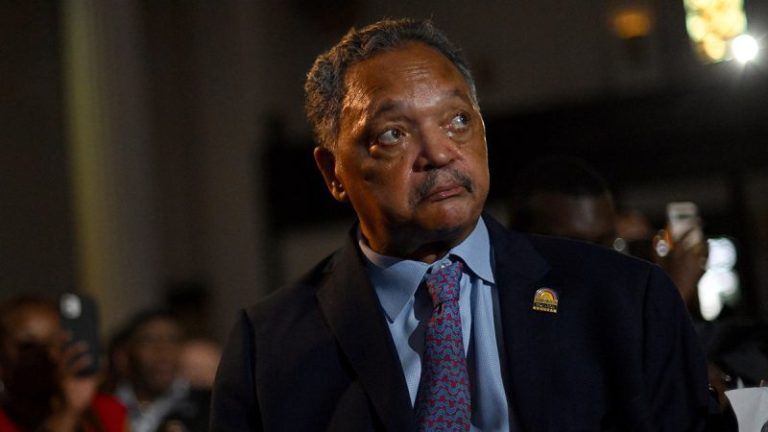
Vice President JD Vance, former Vice President Kamala Harris and former President Barack Obama were among the prominent political figures who issued statements following the death of Rev. Jesse Jackson Sr. The civil rights leader and two-time Democratic presidential primary candidate was 84.

Vance indicated that one of his family members voted for Jackson in the 1988 Democratic presidential primary and for Trump in the 2016 Republican presidential primary.

‘I have a close family member who voted in two presidential primaries in her entire life. Donald Trump in 2016 and Jesse Jackson in 1988,’ Vance wrote in a post on X. ‘RIP Jesse Jackson.’

Former Vice President Kamala Harris recalled getting positive reactions from others when she had a ‘Jesse Jackson for President’ bumper sticker on her car when she was a law student.

‘As a young law student, I would drive back and forth from Oakland, where I lived, to San Francisco, where I went to school. I had a bumper sticker in the back window of my car that read: ‘Jesse Jackson for President.’ As I would drive across the Bay Bridge, you would not believe how people from every walk of life would give me a thumbs up or honk of support. They were small interactions, but they exemplified Reverend Jackson’s life work — lifting up the dignity of working people, building community and coalitions, and strengthening our democracy and nation,’ she noted in a post on X.

‘I was proud to partner with and learn from him on this work throughout my career, and I am so grateful for the time we spent together this January. Reverend Jackson was a selfless leader, mentor, and friend to me and so many others,’ she wrote.

Former President Barack Obama noted in a statement that he and former first lady Michelle Obama ‘were deeply saddened to hear about the passing of a true giant, the Reverend Jesse Jackson.’

‘Michelle got her first glimpse of political organizing at the Jacksons’ kitchen table when she was a teenager. And in his two historic runs for president, he laid the foundation for my own campaign to the highest office of the land,’ Obama noted. ‘Michelle and I will always be grateful for Jesse’s lifetime of service, and the friendship our families share.’

This post appeared first on FOX NEWS

Generally speaking, nobody outside of Washington, D.C., brunch spots cares very much what happens at think tanks. But recent upheavals at the Heritage Foundation are not only making news, they are potentially framing what the Republican Party will look like after President Trump leaves office.

The current kerfuffle at Heritage, the nation’s leading conservative think tank, began on Oct. 30, when its president, Kevin Roberts, gave a speech defending Tucker Carlson for interviewing a snarky young Holocaust denier.

‘The Heritage Foundation didn’t become the intellectual backbone of the conservative movement by canceling our own people or policing the consciences of Christians, and we won’t start doing that now,’ Roberts said.

A pitter-patter of outraged resignations came almost immediately, even after Roberts apologized for his remarks, but last week, almost two months later, nearly an entire division of Heritage’s legal and economic experts jumped ship to former Vice President Mike Pence’s Advancing American Freedom (AAF).

The significant question in all of this is whether Roberts playing footsie with antisemites is the real or only reason why so many top experts joined the exodus to Pence’s outfit, and there is some reason to be dubious.

Take for example Trump’s zealous use of tariffs in international trade. This kind of protectionism is constitutionally anathema to exactly the type of conservative economist who prowled the halls of Heritage, but the think tank itself was standing by the president’s policies.

Add to this that Heritage seems to be leaning heavily into Vice President JD VanceJD Vance’s 2028 presidential ambitions, in fact Roberts’ original video may have been intended for the veep who is close with Carlson and has made fighting globalism and saving small industrial towns the centerpiece of his national message.

The problem is that most of the longtime Heritage economists really like globalism and think saving ‘Nowhere, Ohio’ from oblivion is a pipe dream. Now, they truly have no seat at the table, either at Heritage or in the Trump administration.

Such tensions also exist in foreign policy and immigration, and a cynic might suggest that the Heritage bleedout is just another example of conservatives with strong ideological differences from Trump deciding it’s no longer working to cozy up to him, and taking whatever current moral outrage is available as an offramp.

This is exactly what Pence did after the Capitol riots of Jan. 6, 2021, leading him to found AAF, which, by the way, is as anti-tariffs as the day is long.

In this fight for the soul of the Republican Party and conservative movement, both Heritage and AAF are redefining what a think tank is and what it does, in important ways.

Traditionally, wealthy donors would give money to guys with good hair to get elected and also fund bald guys at think tanks, who were rarely seen or heard from, to produce the actual policy. But voters have seen through this, leading the think tanks to more direct outreach to the public.

In the 2024 election, Heritage’s ‘Project 2025’ was a headline story for months, something completely unprecedented in the history of presidential politics for a think tank. Today, through moves such as hiring Moms for Liberty co-founder Tiffany Justice, Heritage is committing to more populism and activism and less back-room algebra.

AAF is starting to play this game too. The think tank put out a satirical X post comparing the flood of Heritage staffers coming their way to a college football team dominating in the transfer portal, another hint that more than moral outrage was at play here.

The headwind that AAF is likely to run into with conservative voters in their anti-populism efforts is that populism is popular, and globalism, along with many other core tenets of the pre-Trump GOP, isn’t.

The best chance for AAF, and it’s not a bad one, is to focus on lowering prices by lowering tariff. But a conservative think tank yelling that prices are too high while the GOP holds the White House and Congress is a nightmare for Republican midterm hopes.

The more vital question is what American voters want more, deeper discounts on foreign goods from China or functional communities where they can raise their families? For AAF to succeed it must address the latter, not just the former.

In Vance’s, and increasingly Heritage’s, vision of America, our small industrial towns see a revival through tariffs and foreign investment. In AAF’s vision, those towns may continue to wither, but Americans are free to move to where the jobs and abundance are.

Neither proponents of these visions can guarantee the success of their proposed programs, but the ‘save our towns’ side is currently in power and ascending. If AAF wants to change that, it needs more than moral outrage. It needs to convince Americans that globalism really wasn’t so bad, and that it is time to return to it.

This post appeared first on FOX NEWS

President Donald Trump said Sunday that peace talks to end the war in Ukraine are close to completion after a meeting in Florida with Ukrainian President Volodymyr Zelenskyy, with both leaders citing major progress on a 20-point plan while acknowledging unresolved disputes over territory, ceasefire terms and Ukrainian approval.

Trump and Zelenskyy spoke to reporters following their meeting at Mar-a-Lago, describing weeks of negotiations involving U.S., Ukrainian, European Union and NATO officials that have moved a potential peace framework close to the finish line, though several high-stakes issues remain unresolved.

Trump said negotiations have intensified over the past month and suggested discussions are far more advanced than at any previous point in the war, while cautioning that final agreements depend on resolving a small number of difficult questions.

‘We could be very close,’ Trump said. ‘There are one or two very thorny issues, very tough issues. But I think we’re doing very well. We made a lot of progress today, but really, we’ve made it over the last month. This is not a one-day process. It’s very complicated stuff.’

Zelenskyy echoed that assessment, confirming that negotiators have largely agreed on the framework of a deal and crediting sustained diplomacy across multiple international meetings leading up to the Florida talks.

He said negotiations have taken place over several weeks in cities including Geneva, Miami, Berlin and at Mar-a-Lago in Palm Beach, with American and Ukrainian teams working toward a shared peace framework.

‘We discussed all the aspects of the peace framework, which includes – and we have great achievements – a 20-point peace plan, 90% agreed,’ Zelenskyy said.

Both leaders said European and NATO officials were closely involved in the process, with a joint call held following the meeting that included senior leaders from across the continent and international institutions.

Zelenskyy said teams are expected to meet again in the coming weeks to finalize remaining issues and that Trump has agreed to potentially host further talks in Washington with European leaders and a Ukrainian delegation.

Despite the progress, territory – particularly the status of Donbas – remains one of the most difficult unresolved issues, with Trump and Zelenskyy acknowledging differing positions between Ukraine and Russia.

Trump suggested that time could be a critical factor in negotiations, warning that delays could result in further territorial losses as fighting continues.

‘Some of that land has been taken,’ Trump said. ‘Some of that land is maybe up for grabs, but it may be taken over the next period of a number of months. Are you better off making a deal now?’

Zelenskyy stressed that any final agreement would need to comply with Ukrainian law and reflect the will of the Ukrainian people, potentially requiring parliamentary approval or a national referendum.

‘Our society, too, has to choose and decide who has to vote, because it’s their land – the land not of one person,’ Zelenskyy said. ‘It’s the land of our nation for a lot of generations.’

Trump said polling shows strong public support for ending the war and reiterated his desire to bring the conflict to a close, citing the scale of casualties on both sides.

‘We want to see it ended,’ Trump said. ‘I want it ended because I don’t want to see so many people dying. We’re losing massive numbers of people – the biggest by far since World War II.’

This post appeared first on FOX NEWS

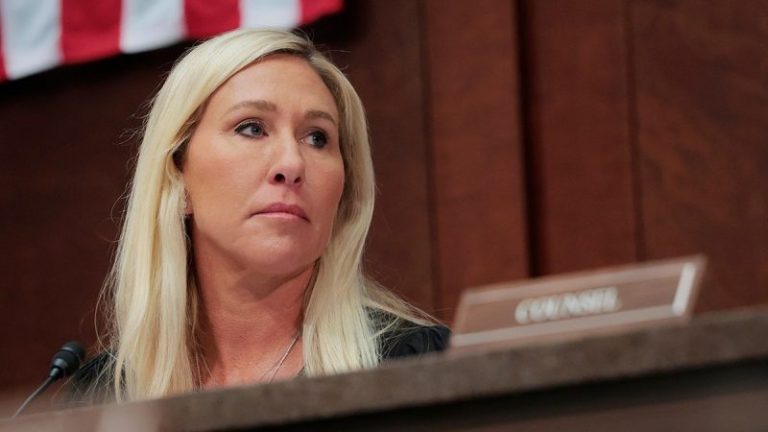
Rep. Marjorie Taylor Greene, R-Ga., on Sunday called for President Trump to only focus on America’s needs as the president meets with Ukrainian President Volodymyr Zelenskyy and Israeli Prime Minister Benjamin Netanyahu.

The president has been heavily involved in the Russia-Ukraine and Israel-Hamas conflicts since returning to the White House.

Trump met with Zelenskyy on Sunday at Mar-a-Lago to discuss a peace plan aimed at ending the Russia-Ukraine war that began with an invasion by Moscow in February 2022.

Netanyahu arrived in Florida on Sunday ahead of their scheduled meeting on Monday at Trump’s estate to address Israel’s conflicts in the Middle East. It will be the sixth meeting of the year between the two leaders.

Greene, responding to Trump’s meeting with Zelenskyy and Netanyahu, said that the Trump administration should address the needs of Americans rather than becoming further involved in global conflicts.

‘Zelensky today. Netanyahu tomorrow,’ she wrote on X.

‘Can we just do America?’ the congresswoman continued.

The congresswoman has been a vocal critic of supplying U.S. military aid to foreign countries amid the conflicts in Europe and the Middle East.

She has also referred to Zelenskyy as ‘a dictator who canceled elections’ and labeled Israel’s military campaign in Gaza as a genocide and humanitarian crisis.

This comes after Taylor Greene, who is set to resign from the House in January, had a public spat with Trump over the past few months as Trump took issue with the Georgia Republican’s push to release documents related to the investigations into deceased sex predator Jeffrey Epstein.

Trump had withdrawn his endorsement of Greene and called her a ‘traitor’ over the public feud.

This post appeared first on FOX NEWS

The global lithium market endured a bruising 2025, with persistent oversupply and softer-than-expected electric vehicle (EV) demand driving prices for the battery metal to multi-year lows.

Lithium carbonate prices in North Asia slipped below US$9,550 per metric ton in February — their weakest level since 2021 — triggering production cuts and project delays, particularly in Australia and China. Despite brief rallies later in the year, prices remained under pressure, reflecting a market struggling to absorb rapid supply growth.

That imbalance has been years in the making. Global lithium carbonate output surged 192 percent between 2020 and 2024 while demand lagged, leaving the market with a large surplus.

Analysts estimate that supply exceeded demand by more than 150,000 metric tons in both 2023 and 2024, with inventories continuing to cap price recovery in 2025. Although the surplus is shrinking, high stockpiles have kept prices rangebound, with lithium carbonate largely hovering near US$10,000 for much of the year.

Volatility punctuated the lithium industry in the second half of 2025.

Prices rebounded sharply in July on supply cut speculation, briefly pushing lithium carbonate to an 11 month high above US$12,000 before retreating as producers denied meaningful reductions and inventories remained ample.

Policy uncertainty in the US, including threats to EV incentives, and regulatory signals from China further weighed on sentiment, underscoring the market’s sensitivity to both geopolitics and headlines.

Despite the prolonged downturn, analysts increasingly view 2025 as a potential inflection point. With roughly a third of global production estimated to be unprofitable at current prices, further supply rationalization appears likely.

Forecasts point to a sharply narrower surplus in 2025 and a possible deficit emerging in 2026, suggesting that while lithium’s near-term outlook remains constrained, the sector’s long-term fundamentals — driven by electrification, the energy transition and data-intensive technologies — remain intact.

Lithium in 2025: A tale of two markets

In contrast, the second half of 2025 saw a boost in prices across the lithium space as market fundamentals improved due to Contemporary Amperex Technology (SZSE:300750,HKEX:3750) curtailing operations at the Jianxiawo lepidolite mine in early August. Despite reports that Jianxiawo would restart operations in December, it is unclear if the mine, which is one of the world’s largest, is back in operation.

Concern over the removed supply pushed carbonate prices higher from mid-October through the end of the year, when they rose from US$10,417.37 to US$14,131.44, a 34 percent increase.

Battery energy storage demand key to lithium growth

Another trend Klein pointed to was the rapid growth in the battery energy storage system (BESS) market, which is expected to grow by 44 percent in 2025, representing a quarter of all battery demand.

“We’ve been talking about BESS being a very fast, growing and big part of the market, but it’s now become the consensus opinion that it’s very strong not only in China, but elsewhere,” said Klein.

Although BESS is one of the fastest-growing segments of the battery market, Klein believes its growth potential is not fully understood. “The market’s probably still underestimating that narrative about battery energy storage,” he said, adding that it is only now starting to be understood by people who are in the industry.

“But for the broader, generalist investor who still equates lithium with EVs, they don’t fully understand the battery energy storage angle, so I think they’re still underestimating that,” said Klein. The market is projected to balloon from US$13.7 billion in 2024 to US$43.4 billion by 2030, growing at a compound annual growth rate of 21.3 percent.

Industry analysts expect BESS installations could expand from roughly 205 gigawatt-hours in 2024 to between 520 and 700 gigawatt-hours by 2030, driven by renewable integration, grid stability needs and declining costs.

While EVs have dominated the lithium narrative, Del Real said the real opportunity was “never just a play on EVs or hybrids — it was a play on grid storage, energy storage,” with cheaper battery cells unlocking faster adoption.

That mispricing has created a contrarian opportunity, he added, noting that lithium’s neglect over the past six months has rewarded patient investors. “It’s lonely in the forest sometimes,” Del Real said. But when sentiment turns, “the re-rating can be spectacularly profitable if you know how to play it.”

Lithium exploration budgets evaporate

Lithium exploration budgets were sharply reduced in 2025 as miners retrenched amid prolonged price weakness.

S&P Global’s 2025 corporate exploration strategies study shows that spending on lithium and other critical minerals exploration fell significantly, even as overall non-ferrous exploration dipped only slightly.

Lithium, which had previously broken the US$1 billion mark for exploration spending, saw its allocation cut as junior companies tightened their belts and delayed programs. Cuts were most pronounced in traditional exploration hubs such as Canada, Australia and the US, where weakened junior sectors hit budgets hardest; meanwhile, regions like Chile, Peru and Saudi Arabia recorded relative gains in broader exploration funding.

Lithium remains a structurally important exploration commodity despite a sharp pullback in spending, Kevin Murphy, director of metals and mining research at S&P Global, said during a December webinar.

Murphy described the metal’s rise over the past decade as a “lithium renaissance.”

Once “completely inconsequential for exploration,” lithium has become the third most explored commodity globally over the past five years, underscoring how central it has become to future-facing supply chains.

However, that momentum stalled in 2025 as ongoing price weakness forced a reset. Murphy said lithium exploration budgets were “absolutely gutted,” falling to roughly half of 2024 levels, a decline he described as expected given depressed prices and the completion of several late-stage programs that wrapped up in late 2024 and early 2025.

“The lithium price has been depressed for too long for the budgets to be resilient,” he said, framing the downturn as cyclical rather than structural.

Lithium stocks stage H2 rally

Speaking at this year’s Benchmark Week event in November, Sean Gilmartin, senior equity analyst at Bloomberg, explained that lithium equities staged a sharp rebound in H2 after years of underperformance.

After lagging broader materials and chemical indexes for much of the first half of the year, lithium stocks surged in the second half of the year, closely tracking rising spot prices.

“Over a three year window, lithium names were still very much lagging,” Gilmartin said, “but we’ve flipped the script in a few months. Year-to-date, we’re seeing on average 47 percent gains, closely aligned with spot markets.”

He attributed the turnaround to stronger-than-expected lithium demand, particularly from BESS, as well as supply curtailments in China, which have tightened the market.

Despite the rebound, he cautioned that volatility remains a defining feature of the lithium equities space.

“You need to have a long-term view, and you have to be very adherent to your thesis,” Gilmartin said, noting that the demand story remains intact and that fundamentals continue to support growth through 2026 and beyond.

Securities Disclosure: I, Georgia Williams, hold no direct investment interest in any company mentioned in this article.

This post appeared first on investingnews.com

(TheNewswire)


THIS NEWS RELEASE IS INTENDED FOR DISTRIBUTION IN CANADA ONLY AND IS NOT INTENDED FOR DISTRIBUTION TO UNITED STATES NEWSWIRE SERVICES OR DISSEMINATION IN THE UNITED STATES.

TORONTO, ONTARIO (December 22, 2025) TheNewswire – Laurion Mineral Exploration Inc. (TSX.V: LME|OTC: LMEFF|FSE: 5YD) (‘LAURION’ or the ‘Corporation’) is pleased to announce that it has closed its previously-announced non-brokered private placement (the ‘Private Placement’) consisting of flow-through units (the ‘FT Units’). Pursuant to the Private Placement, the Corporation issued 4,619,130 FT Units at a subscription price of $0.33 per FT Unit, for aggregate gross proceeds to the Corporation of $1,524,313.

Each FT Unit consists of one common share of the Corporation (each, a ‘FT Share‘) and one-half of one common share purchase warrant (each, a ‘Warrant‘). Each Warrant entitles the holder thereof to acquire one non flow-through common share of the Corporation at a price of $0.39 per share for a period of 24 months from the date of issuance. The FT Shares and the Warrants comprising the FT Units qualify as ‘flow-through shares’, as defined in subsection 66(15) of the Income Tax Act (Canada) (the ‘Tax Act‘).

The gross proceeds of the Private Placement will be used for ‘Canadian exploration expenses’ (within the meaning of the Tax Act), which will qualify, once renounced, as ‘flow-through mining expenditures’, as defined in the Tax Act, which will be renounced with an effective date of no later than December 31, 2025 (provided the subscriber deals at arm’s length with the Corporation at all relevant times) to the initial purchasers of FT Units in an aggregate amount not less than the gross proceeds raised from the issue of the FT Units. LAURION intends to allocate the proceeds from the Private Placement to advance the Corporation’s 2026 drill program on the Ishkõday property. Planned drilling will focus on key areas within the A-Zone/McLeod and CRK Trend, as well as the historic Sturgeon River Mine area. These zones have been prioritized based on their structural characteristics, surface observations and past drill results, as LAURION continues to build on its growing understanding of the broader mineralized system.

‘This financing enables us to keep advancing our disciplined, technically driven approach to unlocking the potential of the Ishkõday system,’ said Cynthia Le Sueur-Aquin, President and CEO. ‘We are targeting areas with strong structural and geological signals, guided by strong technical fundamentals and a clear strategy for long-term value creation.’

In connection with the Private Placement, certain arm’s-length finders received an aggregate of $66,559 as a cash finder’s commission and an aggregate of 201,693 finder’s warrants. Each finder’s warrant entitles the holder thereof to acquire one non flow-through common share of the Corporation at a price of $0.33 per share for a period of 24 months from the date of issuance.

Pursuant to applicable Canadian securities laws, all securities issued pursuant to the Private Placement are subject to a hold period of four months and one day, expiring on April 23, 2026. The Private Placement remains subject to the final approval of the TSX Venture Exchange (the ‘TSXV‘).

About LAURION Mineral Exploration Inc.


The Corporation is a mid-stage junior mineral exploration and development company listed on the TSXV under the symbol LME and on the OTCPINK under the symbol LMEFF. LAURION now has 278,716,413 outstanding shares, of which approximately 73.6% are owned and controlled by insiders who are eligible investors under the ‘Friends and Family’ categories.


LAURION’s emphasis is on the exploration and development of its flagship project, the 100% owned mid-stage 57 km2 Ishkõday Project, and its gold-rich polymetallic mineralization.


LAURION’s chief priority remains maximizing shareholder value. A large portion of the Corporation’s focus in this regard falls within the scope of its mineral exploration activities and more specifically, advancing the Ishkõday Project. A consequence of LAURION’s success and advancement over the past several years is that the Corporation has become positioned as an acquisition target for appropriate potential acquirors. Accordingly, the Corporation’s Board of Directors is aware that possible strategic alternatives and transactional opportunities may arise and/or could be procured in the short or medium terms. The Corporation will promptly issue a press release if any material change occurs.


FOR FURTHER INFORMATION, CONTACT:


LAURION Mineral Exploration Inc.


Cynthia Le Sueur-Aquin – President and CEO

Tel: 1-705-788-9186 Fax: 1-705-805-9256


Douglas Vass – Investor Relations Consultant

Email: info@laurion.ca


Website: http://www.LAURION.ca


Follow us on: X (@LAURION_LME), Instagram (laurionmineral) and LinkedIn ()


Caution Regarding Forward-Looking Information


This press release contains forward-looking statements, which reflect the Corporation’s current expectations regarding future events including with respect to LAURION’s business, operations and condition, management’s objectives, strategies, beliefs and intentions, the use of proceeds of the Private Placement, the Corporation’s ability to advance, expand and/or develop the Ishkõday Project and any possible strategic alternatives and transactional opportunities that may arise and/or could be procured in the future with respect to the Corporation. The forward-looking statements involve risks and uncertainties. Actual events and future results, performance or achievements expressed or implied by such forward-looking statements could differ materially from those projected herein including as a result of a change in the trading price of the common shares of LAURION, the TSXV not providing its final approval for the Private Placement (including the payment of finders’ fees in connection therewith) or any strategic alternatives or transactional opportunities, the interpretation and actual results of current exploration activities, future prices of gold and/or other metals, and those factors disclosed in the Corporation’s publicly filed documents. Investors should consult the Corporation’s ongoing quarterly and annual filings, as well as any other additional documentation comprising the Corporation’s public disclosure record, for additional information on risks and uncertainties relating to these forward-looking statements. The reader is cautioned not to rely on these forward-looking statements. Subject to applicable law, the Corporation disclaims any obligation to update these forward-looking statements. All sample values are from grab samples and channel samples, which by their nature, are not necessarily representative of overall grades of mineralized areas. Readers are cautioned to not place undue reliance on the assay values reported in this press release.


NEITHER THE TSX VENTURE EXCHANGE NOR ITS REGULATION SERVICE PROVIDER (AS THAT TERM IS DEFINED IN THE POLICIES OF THE TSX VENTURE EXCHANGE) ACCEPTS RESPONSIBILITY FOR THE ADEQUACY OR ACCURACY OF THE CONTENT OF THIS NEWS RELEASE.


Copyright (c) 2025 TheNewswire – All rights reserved.

News Provided by TheNewsWire via QuoteMedia

This post appeared first on investingnews.com

Lundin Mining (TSX:LUN,OTC Pink:LUNMF) has agreed to sell its Eagle mine and Humboldt mill in Michigan to Talon Metals (TSX:TLO,OTCID:TLOFF), pivoting its US-based operations to focus on domestic supply.

The transaction will see Lundin Mining receive 275.2 million Talon shares, representing 18.4 percent of Talon’s outstanding equity, with a total implied value of approximately US$83.7 million based on recent trading prices.

Following the deal, Lundin Mining’s stake in Talon will rise to 19.99 percent.

The Eagle mine, acquired by Lundin Mining in 2013, has produced more than 194,000 metric tons of nickel and 185,000 metric tons of copper. It had generated over US$3.2 billion in revenue as of the third quarter of 2025.

The strategic rationale for the deal centers on consolidating US nickel-copper assets under a single operator, while allowing Lundin Mining to concentrate on its larger-scale copper operations in Brazil and Chile.

Talon will operate the Eagle mine and Humboldt mill while adding new exploration opportunities, including the Tamarack project and its newly discovered Vault zone. Discovered through recent drilling, Vault features 47.33 meters of 11.01 percent nickel and 11.4 percent copper, as well as platinum-group metals.

“The combination of Talon and Eagle will create a pure-play US nickel company anchored by the Eagle mine, the only primary nickel mine currently operating in the United States,” said Lundin Mining President and CEO Jack Lundin.

“This transaction unlocks meaningful synergies, including the opportunity to leverage the Humboldt Mill as a shared, centralized processing facility,’ the executive added.

Darby Stacey, who has managed Eagle mine operations since commissioning, will assume the role of CEO and director of Talon. Lundin Mining will nominate Jack Lundin and Juan Andrés Morel to Talon’s reconstituted 10 member board.

The deal also includes arrangements such as a production payment agreement for non-Eagle ore processed at the Humboldt mill, transitional services provided by Lundin Mining and investor rights protections.

The transaction is expected to close in early January 2026, pending approval from the TSX and customary closing conditions. Talon will continue to trade on the TSX under the symbol TLO.

Securities Disclosure: I, Giann Liguid, hold no direct investment interest in any company mentioned in this article.

This post appeared first on investingnews.com