

Author

admin

Browsing

Both major and junior gold stocks are seeing heightened interest in 2025 amid a surging gold price, which has climbed more than 50 percent since the start of the year and set dozens of new record highs along the way.

The yellow metal’s staggering rise has been fueled by numerous factors, including economic chaos caused by an ever-changing US trade and tariff policy, uncertainty stemming from geopolitical conflicts in the Middle East and Eastern Europe and, most recently, the shutdown of the US federal government.

These events have driven investors to look to safe-haven assets like gold as a hedge to provide greater stability to their portfolios, and experts have weighed in on just how high gold could rise.

What does this gold bull run mean for junior gold companies?

Data for this article was retrieved on December 1, 2025, using TradingView’s stock screener, and only companies with market capitalizations greater than C$10 million at that time are included.

1. San Lorenzo Gold (TSXV:SLG)

Year-to-date gain: 641.18 percent
Market cap: C$55.06 million
Share price: C$0.80

San Lorenzo Gold is an exploration company working to advance its Salvadora project in the Chañaral province of Chile. The property consists of 25 exploration and nine exploitation concessions covering an area of 8,796 hectares, and hosts a large copper and gold porphyry system with several significant targets.

According to the project page, the site geology resembles that of the nearby Codelco-owned Salvador copper mine, which has operated since the early 1950s and is expected to continue until the mid-2060s following an expansion.

San Lorenzo’s share price gained significantly in the first quarter starting on March 3, when the company announced a significant discovery hole, the first of three holes drilled at Salvadora’s Cerro Blanco gold-copper target.

The discovery hole demonstrated an average grade of 1.04 grams per metric ton (g/t) gold over a broad 153.5 meters starting at a depth of 229 meters, including an intersection grading 12.78 g/t gold over 3.8 meters.

The same day, it also released partial results for the first of three holes drilled at its Arco de Oro gold target. They returned multiple instances of high-grade gold, including 5.61 g/t gold over 6.6 meters at a depth of 15.7 meters and 4.8 g/t gold over 23.3 meters 174.4 meters from surface.

Assays for the remaining holes were released in mid-March and April, respectively. San Lorenzo released the most recent results from exploration on August 6, reporting that an induced polarization geophysical survey at Salvadora identified multiple prospective anomalies that would be the focus of its upcoming drill program.

San Lorenzo announced on September 24 that it initiated the aforementioned drill program, with plans in place for a minimum of three holes at Cerro Blanco and four holes at Arco de Oro.

After leveling out in Q2, company shares began gaining momentum in early August, largely continuing to move through the rest of Q3 and into Q4. Shares of San Lorenzo jumped to a year-to-date high of C$0.86 on October 23.

2. Prospector Metals (TSXV:PPP)

Year-to-date gain: 833.31 percent
Market cap: C$129.56 million
Share price: C$1.12

Prospector Metals is exploring its flagship ML gold project near Dawson City in Yukon, Canada.

The 10,869 hectare property is located within the Tintina Gold Belt, which hosts significant historic mining operations and current exploration and development projects. The ML project’s Skarn Ridge and North Vein targets were the focus of significant historical work through 2008, including 117 diamond drill holes. According to Prospector, historical work also led to the discovery of more than two dozen untested high-grade gold surface occurrences.

A maiden drill program at the site commenced on June 23, with the primary focus on the Bueno target, which delivered rock samples with grades up to 156 g/t during May 2025 exploration. The program will include testing of six targets, including Bueno, identified during the company’s 2024 exploration program.

After trending upwards throughout the year from their start of C$0.12, shares of Prospector surged from C$0.31 to C$1.17 when it reported the discovery of the new TESS gold-copper zone on October 1. The company reported a drill hole intersected the broad, high-grade zone, with an average grade of 13.79 g/t gold from 62 meters to 106 meters downhole, including 288 g/t over 1 meter within 21.93 g/t over 24.65 meters. The hole also intersected the North Vein zone from 138 meters to 145.36 meters downhole, over which it had an average grade of 5.69 g/t gold.

Prospector CEO Rob Carpenter said, “The discovery represents an exciting new style of gold mineralization for the ML project. The high-grade and near surface intercept occurs within a distinct zone that is coincident with a diagnostic surface geochemical signature.” He indicated that the company has traced the trend on the surface for at least 500 meters.

Shares of Prospector reached a year-to-date high of C$1.30 the following day.

On November 26, Prospector reported the final assays from its drill program, including an interval at the TESS Zone grading 7.29 g/t gold and 0.91 percent copper over 14 meters, as well as one in the Skarn Ridge Zone that graded 2.04 g/t gold and 0.42 percent copper over 27 meters. Carpenter said the company is planning a fully funded drill program to extend the zones along trend and test new targets.

3. PPX Mining (TSXV:PPX)

Year-to-date gain: 785.71 percent
Market cap: C$219.63 million
Share price: C$0.31

PPX Mining is a precious metals company that is focused on its Igor project, which contains the operating Callanquitas underground mine, located in the Otuzco province of Northern Peru.

An updated resource estimate for Callanquitas released by the company in January 2024 showed a measured and indicated oxide resource of 81,090 ounces of gold and 2.9 million ounces of silver. The inferred resource as sulfides stands at 34,450 gold equivalent ounces from ore grading 4.63 g/t gold equivalent.

According to a prefeasibility study for Igor amended in January 2022, the 1,300 hectare site previously hosted small-scale mining operations and holds a 50 MT per day gold-processing plant from the 1980s.

In November 2024, PPX started construction of a 350 metric ton per day carbon-in-leach and flotation plant that will be used to process oxide and sulfide ore from Callanquitas.

The latest construction update came on September 24, when the company said development was continuing at an accelerated pace while it worked on parallel activities. These advancements included the installation of leach tanks and the assembly of the crushing line. In all, the PPX reported that construction was 55 percent complete.

Meanwhile, exploration at Callanquitas carried on during the third quarter, with PPX reporting assay results on August 20. In that release, the company said it had encountered a highlighted grade of 3.55 g/t gold over 4.2 meters, which included an intersection of 5.16 g/t gold over 2 meters.

Additionally, PPX announced on September 11 that it had closed an upsized non-brokered private placement for gross proceeds of C$2.58 million, which will be used for ongoing exploration at Callanquitas.

The following month, the company announced a binding letter of intent with Glencore (LSE:GLEN,OTC Pink:GLCNF) for a strategic investment, offtake agreement and technical collaboration, which it closed in December.

The investment results in gross proceeds of C$19.92 million for PPX, which will be used to advance a variety of work at the project, including the construction, commissioning and start-up of the plant. Additionally, under the agreement, Glencore has the right to acquire 100 percent of precious metals concentrate from the Igor project and plant beginning once the plant is commissioned.

Shares of PPX Mining reached a year-to-date high of C$0.48 on October 8.

4. Pelangio Exploration (TSXV:PX)

Year-to-date gain: 728.57 percent
Market cap: C$56.03 million
Share price: C$0.29

Pelangio Exploration is a gold exploration company with projects in Ghana and Canada. In Ghana, it owns two large-scale gold projects, the Manfo property and the Obuasi property. The latter is located 4 kilometers along strike and adjacent to AngloGold Ashanti’s (NYSE:AU,JSE:ANG) high-grade Obuasi mine.

Much of Pelangio’s market moving news came in the second half of the year.

In July, the company kicked off a high-resolution aeromagnetic drone survey at its Manfo and Nkosuo deposits. The following month, Pelangio announced the completion of an updated mineral resource estimate for Manfo covering four gold deposits, including the Nkasu deposit, which was not included in the maiden resource estimate.

The updated resource shows a total indicated mineral resource of 441,000 ounces of gold at an average grade of 1.16 g/t gold, up 126 percent from the maiden resource estimate, and a total inferred mineral resource of 396,000 ounces of gold at an average grade of 0.77 g/t gold, up 395 percent.

In September, Pelangio shared its plans for a US$7.6 million staged exploration program including up to 45,000 meters of drilling. Then, on October 22, the company closed the last tranche of a non-brokered private placement for gross proceeds of C$4.5 million.

Shares of Pelangio reached a year-to-date high of C$0.29 on December 1.

5. Kirkland Lake Discoveries (TSXV:KLDC)

Year-to-date gain: 650 percent
Market cap: C$49.97 million
Share price: C$0.30

Kirkland Lake Discoveries is a gold and copper exploration company focused on projects in its district-scale land package located in the Kirkland Lake area of Ontario, Canada.

Its holdings span an area of approximately 38,000 hectares in the Abitibi Greenstone Belt and are broadly divided into KL West and KL East, which contain the Goodfish-Kirana and Lucky Strike gold projects, respectively, among others.

On April 29, the company expanded KL West’s southern portion by entering into a mining option agreement with Val-d’Or Mining (TSXV:VZZ) to acquire a 100 percent interest in the Winnie Lake and Amikougami properties, and mining claim purchase agreements with two vendors for further claims around the Winnie Lake Pluton.

On August 6, Kirkland Lake initiated the inaugural diamond drill program at the site, designed to follow up on historic drill results and recent surface exploration. Early results from the program came on August 12 when the company reported the discovery of an intrusion-related system at KL West’s Winnie showing.

Next, on August 26, Kirkland expanded the mineralized system after intersecting semi-massive and massive sulfide mineralization across three additional holes at KL West, with assay results pending.

On September 23, Kirkland Lake announced a C$7 million private placement with a significant portion coming from investors Eric Sprott, Rob McEwen and Crescat Capital. It had been upsized to C$14 million as of October 3.

Drilling at KL West resulted in a new gold discovery 2 kilometers northeast of the Winnie Shaft, the company reported on October 27, which Kirkland says is an intrusive-related mineralizing system centered on the Winnie Pluton with a 17 kilometer perimeter. The testing confirmed a distinct and coexisting copper-rich massive sulfide system as well.

In late November, Kirkland commenced a fully funded 25,000 diamond drill program focused on KL West and ‘surrounding structures associate with the Winnie Lake Stock.’

Shares of Kirkland Lake reached a year-to-date high of C$0.39 on October 28.

Securities Disclosure: I, Melissa Pistilli, hold no direct investment interest in any company mentioned in this article.

This post appeared first on investingnews.com

Copper prices were volatile in 2025 due to supply-side constraints, high demand and geopolitical concerns.

Experts are calling for many of these trends to carry over into 2026, sending the market into deficit.

Beyond supply and demand fundamentals, copper will also be met with global uncertainty as China continues with its recovery efforts, the US pursues new trade plans, including a renegotiation of the Canada-US-Mexico trade pact, and XXX pressures to end the ongoing conflict in Eastern Europe.

Copper supply in 2026

A significant copper story that developed in 2025 was strained supply. Throughout the year, significant events dragged on the availability of mined copper, delaying its arrival to global markets.

Early on, there was a temporary shutdown of BHP’s (ASX:BHP,NYSE:BHP,LSE:BHP) Escondida mine, the largest copper mine in the world. However, the most significant disruption came late in the year, when 800,000 metric tons (MT) of wet material poured into the primary Grasberg block cave (GBC) at Freeport-McMoRan’s (NYSE:FCX) Grasberg mine in Indonesia. The incident cost seven workers their lives and halted production across the operation.

While the company plans to restart the Big Gossan and Deep Level zones before the end of 2025, a phased restart at the GBC won’t start until the middle of 2026, with full operations not resuming until 2027.

Elsewhere, a seismic event at Ivanhoe Mines’ (TSX:IVN,OTCQX:IVPAF) Kamoa-Kakula mine in the Democratic Republic of Congo (DRC) in May caused flooding and forced the temporary suspension of mining activities. Although some underground operations have resumed, the company is focused on dewatering the lower portions of the mine.

Since the incident, Ivanhoe has been processing stockpiled materials, but in an update on December 3, it suggested that those stores will be depleted during the first quarter of 2026. Subsequently, it has set its 2026 guidance at 380,000 to 420,000 MT before ramping back up to the 500,000 to 540,000 MT range in 2027.

“Grasberg remains a significant disruption that will persist through 2026, and the situation is similar to constraints at Ivanhoe Mines’ Kamoa-kakula, which experienced output cuts this year,’ he said.

‘We believe these outages will keep the market in deficit in 2026.’

Some relief on the copper supply side may come from the restart of operations at First Quantum Minerals’ (TSX:FM,OTC Pink:FQVLF) Cobre Panama mine. It was forced to shut down in November 2023 after Panama’s supreme court cancelled new 20 year mining contract signed in October 2023. This past Septembe, the Panamanian government ordered a review of the mining lease to restart operations at the site in late 2025 or early 2026.

Similar to Grasberg, restarting mining operations may take some time to return to full production, causing a lag before material from the mine can ease undersupplied market conditions.

Copper demand in 2026

Copper demand is on the rise due to demand from the energy transition, artificial intelligence (AI) and the expansion of data centers, as well as the rapid urbanization of the Global South. However, in 2025, significant demand was also driven by US tariff concerns, as traders have worked to import refined material into the country.

“A huge amount of this tightness has to do with US tariff concerns with refined copper inflows into the US having jumped MT over the year, putting inventory in the country to 750,000 MT,” she said.

Scott-Gray pointed to a “perfect storm” brewing in 2025’s fourth quarter , including a warming outlook driven by easing China-US tensions, US interest rate cuts and China’s 15th five year plan, set to run from 2026 to 2031.

Historically, one of the biggest demand drivers for copper has been the Chinese real estate sector; however, tighter regulations, high debt and low liquidity led to its collapse in 2021, even though the Chinese government has instituted several policies over the past several years to stimulate the sector, to no avail.

According to Reuters, Chinese home prices are set to fall 3.7 percent in 2025, and are expected to decline into the new year as well. Despite these issues, the Chinese economy proved to be robust in 2025 and is expected to post growth of 4.9 percent in 2025 and 4.8 percent in 2026, fueled by high-tech exports.

Additionally, the five-year plan outlays upgrades to the metals sector and growth in new energy.

“Weakness in the property market is likely to continue in 2026, but the story for copper is constructive. Policy focus and capital are expected to prioritize expanding the electricity grid, upgrading manufacturing, renewables and AI-related data centers. These copper-intensive areas are set to more than compensate for a subdued property market, yielding net growth in China’s copper demand next year,” White said.

Copper crunch keeps building

“These things are taking years to fix — so let’s say it takes some of them a year to get fixed and back on track, some of them two years. We’re looking at 2027; by then, the copper demand side will have kicked up even more. My base case is actually for copper deficits to broaden in the next couple of years, then just continue broadening,” he said.

The supply side is also facing headwinds as new operations haven’t come online to replace existing mines that are increasingly challenged by declining grades. While there is new supply in the pipeline, like Arizona Sonoran Copper Company’s (TSX:ASCU,OTCQX:ASCUF) brownfield Cactus project and the Rio Tinto (ASX:RIO,NYSE:RIO,LSE:RIO) and BHP joint venture Resolution project, both in Arizona, they’re still years away.

“While new projects may add tonnage at the margin, demand growth is likely to outpace any supply additions, which points to further supply deficits that escalate over the coming years,” White said.

A May 1 report by the UN Conference on Trade and Development notes that demand is expected to grow by 40 percent by 2040, requiring US$250 billion in investment capital and the construction of 80 new mines.

The report stated that half of the world’s copper reserves are currently located in just five countries.

Chile, Australia, Peru, the DRC and Russia, with structural challenges setting up that go beyond declining grades, most notably geopolitical risk and long mining times.

The scale of the challenges was recently outlined in a report from Wood Mackenzie, which forecast demand increasing by 24 percent to 43 million MT per year by 2035. To balance the market, the report states that 8 million MT of new supply will be required, along with 3.5 million MT from scrap.

Investor takeaway

Overall, according to the International Copper Study Group’s (ICSG) most recent forecast, released on October 8, mine production is expected to increase 2.3 percent in 2026 to 23.86 million MT.

However, refined production is only predicted to increase by 0.9 percent to 28.58 million MT.

Regarding demand, the group stated that refined copper use is expected to grow by 2.1 percent to 28.73 million MT in 2026, outpacing production growth and leading to a 150,000 MT deficit by the end of the year.

White is bullish on copper in 2026, citing low inventories and mine and concentrate deficits. He also suggested tariff threats may not be over, and that regional price differentials and high physical premiums are likely to continue.

With copper deficits expected to accelerate in 2026, prices are set up to hit record highs. Scott-Gray said 2026 could see the average price climb to US$10,635 per MT, with higher prices likely to be off-putting to more price-sensitive buyers.

Additionally, with long-term premiums near record highs, she said market players may look to make purchases on a “just-in-time” basis from alternative sources, such as bonded warehouses or directly from smelters.

Depending on price and supply, consumers could also look to swap out copper for aluminum where practical, though Scott-Gray noted that the switch would have its own limitations.

In data provided by Scott-Gray from StoneX’s Base Metal Front Desk Call, 40 percent of respondents to an LME Metals Poll believe that copper will be the best-performing base metal in 2026.

Securities Disclosure: I, Dean Belder, hold no direct investment interest in any company mentioned in this article.

This post appeared first on investingnews.com

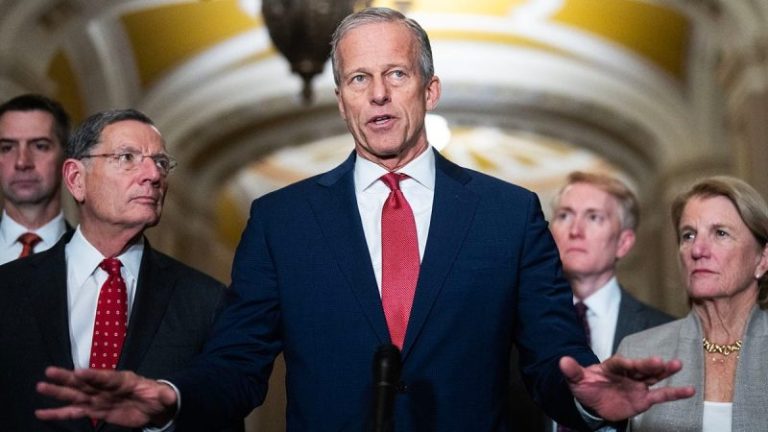
Senate Republicans have finally landed on a plan to tackle expiring Obamacare subsidies to counter Senate Democrats, but both are likely to fail in a vote set for later this week. 

Senate Majority Leader John Thune, R-S.D., announced Tuesday that Republicans had coalesced around a proposal from Sens. Bill Cassidy, R-La., who chairs the Senate health panel, and Mike Crapo, R-Idaho, who chairs the Senate Finance Committee, to counter Democrats’ legislation. 

The Senate is set to vote on the dueling proposals on Thursday. 

Cassidy and Crapo’s plan was given the thumbs up by the majority of Republicans during the conference’s closed-door meeting Tuesday afternoon, Thune said. 

Their proposal, which was unveiled Monday night but has been in the works for weeks, would abandon the enhanced premium subsidies in favor of health savings accounts (HSAs), funneling the money that has gone directly to insurers through the program to consumers instead.

Thune argued that Senate Democrats’ plan, which was unveiled by Senate Minority Leader Chuck Schumer, D-N.Y., last week and would extend the subsidies for three years, would do little to curb the cost of healthcare in the country, and instead benefit affluent Americans and insurance companies. 

‘This program desperately needs to be reformed,’ Thune said. ‘The Democrats have decided we’re not going to do anything to reform it. And so we’ll see where the votes are on Thursday. But we will have an alternative that we will put up that reflects the views of the Republicans here in the United States Senate about how to make health insurance more affordable in this country, how to ensure that it’s not the insurance companies that are getting enriched, that it’s actually benefiting the patient.’

Republicans’ decision comes as more and more proposals were pitched among their ranks, reaching nearly half a dozen plans on the table for lawmakers to choose from. 

Cassidy and Crapo’s plan would seed HSAs with $1,000 for people ages 18 to 49 and $1,500 for those 50 to 65 for people earning up to 700% of the poverty level. In order to get the pre-funded HSA, people would have to buy a bronze or catastrophic plan on an Obamacare exchange.

The bill also includes provisions reducing federal Medicaid funding to states that cover illegal immigrants, requirements that states verify citizenship or eligible immigration status before someone can get Medicaid, a ban on federal Medicaid funding for gender transition services and nixing those services from ‘essential health benefits’ for ACA exchange plans, and inclusion of Hyde Amendment provisions to prevent taxpayer dollars from funding abortions through the new HSAs.

Both plans are likely to fail, however, given that Senate Democrats have rejected doing away with the subsidies in favor of HSAs, and Republicans contend that reforms to the credits — like income caps and more stringent enforcement on taxpayer dollars funding abortions — are must-haves for their support. 

Schumer argued that the ‘only realist path’ to preventing premiums from hiking ahead of the end of the year deadline to extend the subsidies would be for Republicans to cross the aisle and vote for their plan. He charged that the GOP’s plan was a ‘phony proposal’ that did nothing to extend the sunsetting subsidies. 

‘That’s what’s driving the price up, and they’re doing nothing about it,’ Schumer said. ‘The bill not only fails to extend the tax credits, it increases costs, adds tons of new abortion restrictions for women, expands junk fees, and permanently funds the cost-sharing reductions. Their bill is junk insurance. It’s been repudiated in the past.’

Both sides face a math problem in mustering bipartisan support for their respective proposals. And it’s unlikely that lawmakers break ranks from their party’s position, meaning both bills are doomed to fail. For some, the debate has devolved into a finger-pointing contest on which side was actually serious about addressing the growing healthcare affordability issue. 

‘It’s not a realistic plan that the Democrats have,’ Sen. Markwayne Mullin, R-Okla., said. ‘If the Democrats were actually coming to the table, I’d say, yes, we need to, but what they’re doing isn’t realistic.’ 

Before Thune’s announcement, Sen. Chris Murphy, D-Conn., said that Republicans were in charge, not Democrats. 

‘They’re in charge of putting together the votes to pass something,’ Murphy said. ‘And so far, they have done zero outreach on this issue of any significance to Democrats, as far as I can tell.’ 

This post appeared first on FOX NEWS

Republican Rep. Thomas Massie of Kentucky announced on Tuesday that he had introduced a measure to remove the U.S. from the North Atlantic Treaty Organization, arguing that the decades-old alliance is obsolete, has been costly for American taxpayers and puts the nation at risk of engagement in foreign wars.

‘NATO is a Cold War relic. The United States should withdraw from NATO and use that money to defend our country, not socialist countries. Today, I introduced HR 6508 to end our NATO membership,’ Massie said in a post on X.

GOP Rep. Anna Paulina Luna of Florida shared Massie’s post and wrote, ‘Co-sponsoring this.’

‘NATO was created to counter the Soviet Union, which collapsed over thirty years ago. Since then, U.S. participation has cost taxpayers trillions of dollars and continues to risk U.S. involvement in foreign wars. Our Constitution did not authorize permanent foreign entanglements, something our Founding Fathers explicitly warned us against. America should not be the world’s security blanket—especially when wealthy countries refuse to pay for their own defense,’ Massie said, according to a press release.

Republican Sen. Mike Lee of Utah introduced the ‘Not a Trusted Organization Act,’ or ‘NATO Act’ in the Senate earlier this year — Massie is now fielding companion legislation in the House.

Article 13 of the North Atlantic Treaty stipulates that ‘After the Treaty has been in force for twenty years, any Party may cease to be a Party one year after its notice of denunciation has been given to the Government of the United States of America, which will inform the Governments of the other Parties of the deposit of each notice of denunciation.’

The proposal advanced by Lee and Massie would use this escape hatch to extract the U.S. from the longstanding NATO alliance.

‘Consistent with Article 13 of the North Atlantic Treaty, done at Washington April 4, 1949, not later than 30 days after the date of the enactment of this Act, the President shall give notice of denunciation of the North Atlantic Treaty for purposes of withdrawing the United States from the North Atlantic Treaty Organization,’ the proposal declares.

‘No funds authorized to be appropriated, appropriated, or otherwise made available by any Act may be used to fund, directly or indirectly, United States contributions to the common-funded budgets of the North Atlantic Treaty Organization, including the civil budget, the military budget, or the Security Investment Program,’ the text of the measure stipulates.

This post appeared first on FOX NEWS

A biopic about Brazil’s jailed former president Jair Bolsonaro is in production, his son Carlos has confirmed.

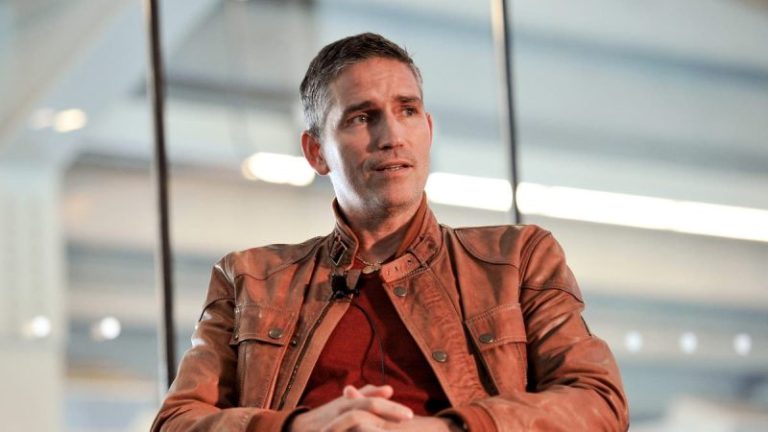
In a post shared on X after his brother, Flavio, entered the country’s 2026 presidential race, Carlos lavished praise on American actor Jim Caviezel, who stars as the ex-president in the film.

‘Jim Caviezel, thank you for everything,’ Carlos wrote, describing the ‘Passion of the Christ’ actor as a figure whose legacy would be ‘admired by good people and envied by those who seek destruction.’

Carlos added that working with Caviezel had given him ‘one of the greatest gifts’ of his life, before closing with, ‘God, Jesus and Freedom.’

Caviezel has been linked to far-right conspiracy circles in the U.S. and has drawn scrutiny over the political messaging in some of his roles.

He also famously starred as Jesus in Mel Gibson’s ‘The Passion of the Christ’ and ‘The Sound of Freedom.’

According to The Guardian, the biopic, ‘Dark Horse,’ presents a heroic vision of Jair Bolsonaro and is based on Bolsonaro’s successful 2018 campaign for the presidency.

It is directed by Cyrus Nowrasteh and written by former Bolsonaro Culture Secretary Mário Frias.

Jair Bolsonaro remains in prison after receiving a 27-year sentence for attempting to overturn the 2022 election results.

Authorities said he orchestrated a plot to invalidate President Luiz Inácio Lula da Silva’s victory, leading to his imprisonment in September.

In addition to his sentence, a separate ruling has barred him from holding office until 2030, effectively ending his political career.

From prison, the former president issued a rare public endorsement naming Flávio as his preferred successor.

According to The Associated Press, Flávio, 44, has confirmed through his Senate office that he will run in the October 2026 presidential election against the candidate of the Liberal Party.

Flávio, who is the eldest of the brothers, described his decision to run as ‘irreversible,’ setting up a direct challenge to President Lula, who is seeking a fourth nonconsecutive term.

‘It is with great responsibility that I confirm the decision of Brazil’s greatest political and moral leader, Jair Messias Bolsonaro, to entrust me with the mission of continuing our national project,’ Flávio wrote on X.

His office also confirmed he has visited his father in prison.

Production on ‘Dark Horse’ is expected to continue into 2026, with filming planned in both Brazil and Mexico.

This post appeared first on FOX NEWS

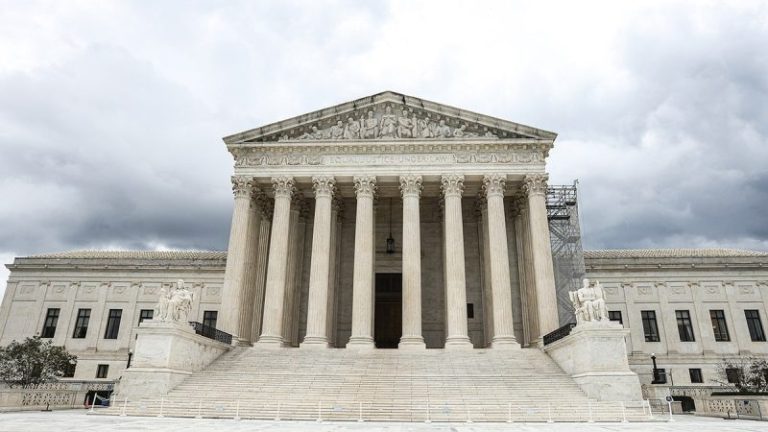
On Friday, the Supreme Court announced that it would hear challenges to President Donald Trump’s executive order to end birthright citizenship. The Fourteenth Amendment automatically makes all babies born on American territory citizens. Trump’s effort to overturn the traditional reading of the constitutional text and history should not succeed.

Ratified in 1868, the Fourteenth Amendment provided a constitutional definition of citizenship for the first time. It declares that ‘all persons born or naturalized in the United States, and subject to the jurisdiction thereof, are citizens of the United States and of the state wherein they reside.’ In antebellum America, states granted citizenship: they all followed the British rule of jus soli (citizenship determined by place of birth) rather than the European rule of jus sanguinis (citizenship determined by parental lineage). As the 18th-century English jurist William Blackstone explained: ‘the children of aliens, born here in England, are, generally speaking, natural-born subjects, and entitled to all the privileges of such.’ Upon independence, the American states incorporated the British rule into their own laws.

Congress did not draft the Fourteenth Amendment to change this practice, but to affirm it in the face of the most grievous travesty in American constitutional history: slavery. In Dred Scott v. Sandford (1857), Chief Justice Roger Taney concluded that slaves — even those born in the United States — could never become American citizens. According to Taney, the Founders believed that Black Americans could never become equal, even though the Constitution did not exclude them from citizenship nor prevent Congress or the states from protecting their rights.

The Fourteenth Amendment directly overruled Dred Scott. It forever prevents the government from depriving any ethnic, religious or political group of citizenship.

The only way to avoid this clear reading of the constitutional text is to misread the phrase ‘subject to the jurisdiction thereof.’ Claremont Institute scholars (many of whom I count as friends) laid the intellectual foundations for the Trump executive order; they argue that this phrase created an exception to jus soli. Claremont scholars Edward Erler and John Eastman argue that ‘subject to the jurisdiction thereof’ requires that a citizen not only be born on American territory, but that his parents also be legally present. Because aliens owe allegiance to another nation, they maintain, they are not ‘subject to the jurisdiction’ of the United States.

The Claremont Institute reading implausibly holds that the Reconstruction Congress simultaneously narrowed citizenship for aliens even as it dramatically expanded citizenship for freed slaves. There is little reason to understand Reconstruction — which was responsible for the greatest expansion of constitutional rights since the Bill of Rights — in this way.

This argument also misreads the text of ‘subject to the jurisdiction thereof.’ Everyone on our territory, even aliens, falls under the jurisdiction of the United States. Imagine reading the rule differently. If aliens did not fall within our jurisdiction while on our territory, they could violate the law and claim that the government had no jurisdiction to arrest, try and punish them.

Critics, however, respond that ‘subject to the jurisdiction thereof’ must refer to citizen parents or risk being redundant when being born on U.S. territory. But at the time of the Fourteenth Amendment’s ratification, domestic and international law recognized that narrow categories of people could be within American territory but not under its laws. Foreign diplomats and enemy soldiers occupying U.S. territory, for example, are immune from our domestic laws even when present on our soil. A third important category demonstrates that ‘subject to the jurisdiction thereof’ was no mere surplusage. At the time of Reconstruction, American Indians residing on tribal lands were not considered subject to U.S. jurisdiction. Once the federal government reduced tribal sovereignty in the late 19th and early 20th centuries, it extended birthright citizenship to Indians in 1924.

The Fourteenth Amendment’s drafting supports this straightforward reading. The 1866 Civil Rights Act, passed just two years before ratification of the Fourteenth Amendment, extended birthright citizenship to those born in the U.S. except those ‘subject to any foreign power’ and ‘Indians not taxed.’ The Reconstruction Congress passed the Fourteenth Amendment because of uncertainty over federal power to enact the 1866 Act. If the Amendment’s drafters had wanted ‘jurisdiction’ to exclude children of aliens, they could have simply borrowed the exact language from the 1866 Act to extend citizenship only to those born to parents with no ‘allegiance to a foreign power.’

We have few records of the Fourteenth Amendment’s ratification debates in state legislatures, which is why constitutional practice and common-law history are of such central importance. But the few instances in which Congress addressed the issue appear to support birthright citizenship. When the Fourteenth Amendment came to the floor, for example, congressional critics recognized the broad sweep of the birthright citizenship language. Pennsylvania Sen. Edgar Cowan asked supporters of the amendment: ‘Is the child of the Chinese immigrant in California a citizen? Is the child born of a Gypsy born in Pennsylvania a citizen?’ California Sen. John Conness responded in the affirmative. Conness would lose re-election due to anti-Chinese sentiment in California.

Courts have never questioned this understanding of the Fourteenth Amendment. In United States v. Wong Kim Ark (1898), the Supreme Court upheld the citizenship of a child born in San Francisco to Chinese parents. The Chinese Exclusion Acts barred the parents from citizenship, but the government could not deny citizenship to the child. The Court declared that ‘the Fourteenth Amendment affirms the ancient and fundamental rule of citizenship by birth within the territory, in the allegiance and protection of the country, including all children here born of resident aliens.’ The Court rejected the claim that aliens are not within ‘the jurisdiction’ of the United States. Critics respond that Wong Kim Ark does not apply to illegal aliens because the parents were in the United States legally. But at the time, the federal government had yet to pass comprehensive immigration laws that distinguished between legal and illegal aliens. The parents’ legal status made no difference.

President Trump is entitled to ask the Court to overturn Wong Kim Ark. But his administration must persuade the justices to disregard the plain text of the Constitution, the weight of the historical evidence from the time of the Fourteenth Amendment’s ratification and more than 140 years of unbroken government practice and judicial interpretation. 

A conservative, originalist Supreme Court is unlikely to reject the traditional American understanding of citizenship held from the time of the Founding through Reconstruction to today.

This post appeared first on FOX NEWS

When the South Korean boy band/K-pop sensation BTS takes the stage in Seoul this June, ending a four-year touring hiatus, it will mark more than just a comeback — it will validate one of the shrewdest soft-power decisions in recent memory.  

In 2022, at the absolute apex of their global dominance, the group’s seven members chose to fulfill their mandatory military service rather than seek exemptions, which would almost certainly been granted. Their management company, HYBE, supported the decision. The world got a masterclass in how cultural power is created. 

The cynics predicted career suicide. Instead, BTS demonstrated that soft power isn’t built on avoiding obligations — it’s built on embracing them. When they reunite on stage, they’ll do so with enhanced credibility, having proven their success didn’t exempt them from the responsibilities of ordinary citizens. Americans remember Elvis taking a similar course at the height of his fame.  

The great thing about soft power is that, while generated by creative individuals and companies, it’s to the entire nation’s benefit. Like economic and martial power, soft power generates influence that can be used to bolster a nation’s standing. Examples of soft power abound from Britain’s cricket legacy and rock ’n’ roll ‘invasion’ of the 1960s to French and Italian cinema to America’s NBA, jazz music and Hollywood’s entertainment machine. Now, South Korea is stepping up.

Thus, it is almost tragic that while BTS was serving in the military, the ecosystem that made the band possible faces mounting scrutiny. South Korea has become expert at creating cultural phenomena that captivate the world — and equally expert at treating the architects of that success with suspicion once they achieve scale. This is a pattern South Korea cannot afford.   

South Korea’s cultural preeminence did not emerge from a government plan. It sprang from creative ambition, commercial ruthlessness, and just enough regulatory space for experimentation. The K-pop system requires massive capital investment, sophisticated global distribution and executives willing to bet nine figures on whether teenagers in Jakarta and São Paulo will stream the same songs. 

Yet, there’s a reflex in South Korean public life that treats popularity itself as evidence of wrongdoing. Bang Si-hyuk, the producer who built HYBE and shaped BTS into a global phenomenon, now faces legal scrutiny over stock transactions — the kind of corporate governance questions that seem to emerge almost inevitably once South Korean companies achieve sufficient scale.   

The particulars matter less than the pattern: bold risk-taking generates soft power, then invites investigation once it succeeds. 

Executives who might build the next BTS or international TV steaming sensation like, ‘Crash Landing on You,’ watch what happens to those who came before and recalibrate their ambition accordingly. In cultural soft power, this reflex is potentially fatal. 

South Korea’s competitors are watching. China has spent billions trying to manufacture soft power through state-directed enterprises. The PRC has largely failed — because audiences smell propaganda. South Korean free enterprise is succeeding in creating cultural exports that are simultaneously local and universal, specific enough to feel authentic in Seoul and accessible enough to travel across the globe.  

This is South Korea’s opportunity. Japan was given a similar window in the 1990s with anime and video games, but largely failed to capitalize on the trend because of governmental missteps. South Korea could easily repeat that mistake and lose the global influence that comes with serious national soft power. 

South Korea needs to recognize soft-power assets as strategic resources. France protects its luxury brands because Paris recognizes these companies project French taste globally in ways no government agency could. South Korea should ask: What institutional arrangements allow us to maintain standards while protecting our champions? 

South Korea’s cultural preeminence did not emerge from a government plan. It sprang from creative ambition, commercial ruthlessness, and just enough regulatory space for experimentation. 

BTS’s decision to fulfill their national military service obligations demonstrates what’s possible when artists, companies and national interest align voluntarily. HYBE supported that choice. But South Korea can’t count on such choices being made repeatedly if the system treats success as inherently suspect.

In June 2026, when BTS embarks on a global tour generating billions in economic impact and incalculable goodwill toward South Korea, remember this moment almost didn’t happen. The members could have sought exemptions. Instead, they chose service and came back stronger. 

But South Korea can’t count on such choices if the message to cultural entrepreneurs is that success invites scrutiny. The next generation is watching, deciding whether to aim for global impact or settle for domestic safety.

South Korea stumbled into becoming a cultural superpower. It doesn’t have to stumble out of it. But that requires recognizing that the bold, imperfect figures who build global cultural enterprises are assets to be protected, not problems to be managed. 

BTS made their choice — they bet on their country. Now, South Korea needs to decide if it’s going to bet on the people who create the next BTS, or put them under investigation instead. 

This post appeared first on FOX NEWS

Democratic Sen. Tammy Duckworth of Illinois fired back at Vice President JD Vance after he likened her sparring session with Secretary of State Marco Rubio during a Senate Foreign Relations Committee hearing about America’s Venezuela policy to an argument between the fictional character Forrest Gump and Isaac Newton.

‘Watching Tammy Duckworth obsessively interrupt Marco Rubio during this hearing is like watching Forest Gump argue with Isaac Newton,’ Vance quipped in a Wednesday post on X.

Duckworth responded, ‘Forrest Gump ran toward danger in Vietnam. Your boss ran to his podiatrist crying bone spurs. Petty insults at the expense of people with disabilities won’t change the fact that you’re risking troops’ lives to boost Chevron’s stock price. It’s my job to hold you accountable.’

Other Democrats also responded to Vance.

Democratic Rep. Shri Thanedar of Michigan shared Vance’s post and wrote, ‘Imagine watching Forrest Gump and your takeaway is to mock people with disabilities.’

‘That’s a U.S. Senator doing her job. This is a random troll tweeting at her,’ Illinois Gov. JB Pritzker wrote in a post on X.

‘Comparing @SenDuckworth to Forrest Gump is classless and disgraceful. She’s a veteran who lost her legs fighting for this country. If you had any honor, you’d take this post down. But you work for Trump, so clearly you have none,’ Democratic Rep. John Garamendi of California declared in a post.

Duckworth served in the Illinois Army National Guard and was deployed to Iraq in 2004, according to a biography on her Senate website, which notes that ‘On November 12, 2004, her helicopter was hit by an RPG and she lost her legs and partial use of her right arm.’

She noted in 2022 social media posts that an RPG ‘tore through the cockpit of the helicopter I was co-piloting. The blast cost me my legs, partial use of my right arm and nearly my life,’ she noted.

Vance added in another post, ‘Thank God we have a Secretary of State who knows his facts AND has the patience of Job. Great job, @SecRubio.’ 

This post appeared first on FOX NEWS

Here’s a quick recap of the crypto landscape for Monday (January 12) as of 9:00 a.m. UTC.

Get the latest insights on Bitcoin, Ether and altcoins, along with a round-up of key cryptocurrency market news.

Bitcoin and Ether price update

Bitcoin (BTC) was priced at US$90,643.88, down by 0.2 percent over 24 hours.

Bitcoin price performance, January 12, 2025.

Chart via TradingView

Ether (ETH) was priced at US$3,111.86, up by 0.3 percent over the last 24 hours.

Altcoin price update

  • XRP (XRP) was priced at US$2.05, down by 2.5 percent over 24 hours.
  • Solana (SOL) was trading at US$139.67, up by 2.1 percent over 24 hours.

Today’s crypto news to know

South Korea lifts 9-year ban on corporate crypto

South Korea has lifted a nine-year ban on corporate crypto investing, allowing public companies and professional investors to allocate up to 5% of their equity capital to digital assets.

The country’s Financial Services Commission (FSC) said eligible assets will be limited to the top 20 cryptocurrencies by market capitalization traded on the country’s five licensed exchanges.

The shift reverses years of policy that kept institutional money out of the market and left crypto trading dominated by retail investors.

Regulators estimate that restrictive rules contributed to roughly US$110 billion in crypto capital outflows in 2025. Meanwhile, legislators framed the move as part of the government’s 2026 economic growth strategy aimed at modernizing capital markets and retaining domestic investment.

While stablecoins are not yet included, authorities said discussions on their treatment are ongoing.

Coinbase warns it may pull support from US Senate Crypto Bill

Coinbase is threatening to withdraw its backing for a major US Senate crypto bill if lawmakers impose limits on stablecoin rewards beyond enhanced disclosure requirements.

According to Bloomberg, the dispute centers on proposed language that would restrict platforms from offering yield on stablecoins unless they operate as regulated banking institutions.

The company argues that such provisions would give banks an unfair advantage and undermine competition from crypto-native firms.

The warning comes ahead of a January 15 markup set by Senate Banking Committee Chair Tim Scott, after repeated legislative delays throughout 2025.

Coinbase CEO Brian Armstrong has previously said banks are likely to lobby for exclusive control over stablecoin yield as adoption grows. While Coinbase has applied for a national trust charter that could eventually allow it to offer rewards under stricter rules, the firm is pushing to preserve non-bank models.

Dubai bans privacy tokens, tightens stablecoin rules

Dubai’s financial regulator has banned privacy-focused crypto tokens and tightened its stablecoin framework as part of a broader overhaul of digital asset rules.

The Dubai Financial Services Authority (DFSA) said privacy coins are incompatible with anti–money laundering and sanctions compliance standards and will no longer be permitted in the Dubai International Financial Centre.

Under the updated regime, only fiat-backed stablecoins supported by high-quality, liquid assets will qualify as stablecoins, while algorithmic models will be treated as ordinary crypto tokens.

The rules take effect January 12 and reflect a shift away from regulator-approved token lists toward firm-led suitability assessments. Licensed companies will now be responsible for determining whether crypto assets meet regulatory standards and must keep those assessments under ongoing review.

Securities Disclosure: I, Meagen Seatter, hold no direct investment interest in any company mentioned in this article.
Securities Disclosure: I, Giann Liguid, hold no direct investment interest in any company mentioned in this article.
This post appeared first on investingnews.com

President Donald Trump paused during a restaurant stop in Iowa after a patron asked if he could pray for him ahead of the president’s remarks near Des Moines.

Video shared on X by White House aide Margo Martin shows the moment unfolding inside the Machine Shed restaurant, where a man from the crowd addressed Trump directly.

‘Can I pray for you real quick?’ the man asked.

‘Absolutely! Come on. Let’s go,’ Trump replied, bowing his head as the man began to pray.

The brief prayer thanked God for the president and asked for wisdom, discernment, peace and protection, as others in the restaurant joined in.

‘Lord God, we give thanks for this president,’ the man said during the prayer, ‘Lord, thank you for him and the potential. Thank you for continuing wisdom, we pray for discernment. Pray for hope, we pray for more peace, Lord.’

The prayer from the restaurant patron drew several ‘Amens’ from the surrounding crowd.

The unscripted moment occurred as Trump made a stop at the Iowa restaurant before heading to deliver a speech in the Des Moines area to kick off his 2026 midterm campaign.

The video shows patrons standing nearby as the prayer concluded, followed by applause and words of praise: ‘Amen, praise God.’

The White House has recently shared a national invitation to prayer and spiritual re-dedication ahead of the United States’ 250th anniversary. 

In a statement released by the administration, Trump encouraged Americans to pray for the nation and its people, saying the country has long been ‘sustained and strengthened by prayer.’

Trump added that as the nation prepares to mark 250 years since its founding, Americans should ‘rededicate ourselves to one nation under God.’

The White House was contacted for additional context on the stop and the timing of the visit.

This post appeared first on FOX NEWS