Author

admin

Browsing

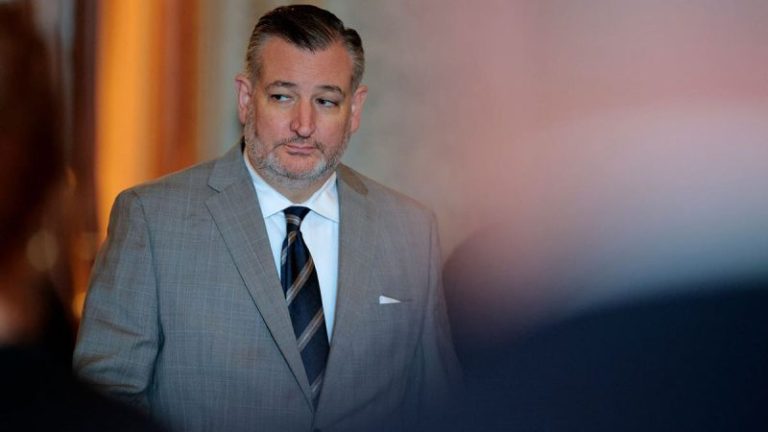
Sen. Ted Cruz called for the U.S. to arm Iranian protesters Tuesday as unrest continues inside the nation and Iran-backed militias issued threats against Washington.

‘We should be arming the protesters in Iran. NOW,’ Cruz wrote in a post on X.

‘For the Iranian people to overthrow the Ayatollah — a tyrant who routinely chants ‘death to America’ — would make America much, much safer,’ the Texas Republican added.

Cruz was responding to another post from Tehran Bureau, which cited a source inside Iran detailing what was described as a rapidly deteriorating situation on the ground as security forces continued to crack down on demonstrations.

‘From trusted source in Tehran: Tell all of your friends [abroad] — everyone you know: there is absolutely nothing else we can do here inside Iran,’ the post read.

‘They are killing people in such ways, they’ve descended upon people so brutally, they’re attacking us in such ways… We’ve lost so many lives that no one dares go out anymore. They shoot directly with bullets. They kill outright. And even after killing, they come and behead you, and do countless other violent things to you,’ it continued.

‘Going out into the streets is literally suicide. It’s not about bravery anymore. It’s madness. You go out and they shoot you point-blank. They don’t even ask why you came. They just kill you,’ the post continued. ‘There is absolutely no way for us to gather unless we had weapons, unless we were armed like them. Otherwise they have weapons everywhere.’

According to the Human Rights Activists News Agency, activist groups estimate that more than 6,000 people have been killed in Iran, with additional cases still under review.

The protests began in late December amid widespread anger over economic hardship, political repression and corruption, according to reports.

Cruz’s post came after armed militias aligned with Iran warned the U.S. they would retaliate against any American attack on the Islamic Republic, as the Trump administration moved forces into the region.

Kataib Hezbollah in Iraq said it was prepared for ‘total war’ if the U.S. attacked Iran, according to The Associated Press.

Abu Hussein al-Hamidawi, the group’s leader, said the ‘enemies’ of the Islamic Republic would face ‘the bitterest forms of death.’

‘You will taste every form of deadly suffering, nothing of you will remain in our region, and we will strike terror in your hearts,’ the statement read.

Meanwhile, Yemen’s Houthis also threatened to restart attacks on vessels in the Red Sea, releasing a video Monday showing a ship engulfed in flames, captioned: ‘Soon,’ The Associated Press reported.

As previously reported by Fox News Digital, President Donald Trump said Iran appeared to be seeking negotiations with the U.S. amid the growing military buildup, telling Axios, ‘They want to make a deal. I know so. They called on numerous occasions. They want to talk.’

The USS Abraham Lincoln arrived in the Middle East on Monday as unrest inside Iran continued to escalate.

Fox News Digital has reached out to Sen. Ted Cruz for comment.

This post appeared first on FOX NEWS

Sydney, Australia (ABN Newswire) – BPH Energy Limited (ASX:BPH) announced that it has received binding commitments from new and existing sophisticated investors to raise approximately $1.2 million (before costs) (‘Placement’). The Placement will comprise the issue of 134,222,222 new fully paid ordinary shares (‘Placement Shares’) in the Company at an issue price of $0.009 per share. The Placement Shares will be issued pursuant to the Company’s existing placement capacity under ASX Listing Rule 7.1 and 7.1A.

HIGHLIGHTS

– Binding commitments received to raise approximately $1.2 million through a Placement at $0.009 per share

– Placement participants will receive 1 Attaching Option for each New Share subscribed for under the Placement, exercisable at $0.03 per share, with an expiry date being the same as the Options to be issued under the Options Prospectus dated 2 December 2025

– BPH funded to execute its next phase of hydrocarbon and Cortical Dynamics investments

– The Federal Court hearing for the PEP-11 judicial review application is scheduled for February 20 and 23, 2026

Placement participants will receive 1 free Attaching Option for each Placement Share subscribed for under the Placement, exercisable at $0.03 each with an expiry date being the same as the options to be issued under the Options Prospectus dated 2 December 2025 (‘Attaching Options’).

Oakley Capital Partners Pty Limited (‘Oakley Capital’) and 62 Capital Limited (’62 Capital’) acted as Joint Lead Managers for the Placement. Oakley Capital and 62 Capital will be paid a cash fee of 6% on funds raised under the Placement and an aggregate of 33,555,555 Broker Options (‘Broker Options’) on the same terms as the Attaching Options.

The Attaching Options and Broker Options will be issued on the same day as the Options to be issued under the Options Prospectus and the Company intends to apply for quotation of the Options subject to the Company meeting ASX quotation requirements.

Commenting on the capital raising, Executive Director Mr David Breeze said:

‘We are pleased to have received strong support in the Placement. The funding allows BPH to accelerate the exploration programs to unlock the potential on our gas projects especially with the current gas supply crisis as well as assist the next phase of associate Cortical Dynamic Limited’s expansion. The funding also leaves BPH well-placed ahead of the Federal Court hearing for the PEP-11 judicial review scheduled for February 20 and 23, 2026, where the PEP-11 Joint Venture will seek to overturn the Federal Government’s rejection of the PEP-11 permit extension’

USE OF FUNDS

The proceeds raised under the Placement provide BPH with an enhanced cash position to fund its hydrocarbon projects and to assist in the continued development of Cortical Dynamics.

The intended use of funds will be for:

– $0.85 million – Funding for exploration and development of oil and gas investments

– $0.1 million – For working capital including costs of the offer

– $0.25 million – Funding for Cortical Dynamics

PLACEMENT DETAILS

The Placement offer price of $0.009 per share represents a 18.2% discount to BPH’s last price of $0.0011 per share on Thursday, 8 January 2026, and a 7.8% discount to the 15-day VWAP of $0.00976 per share.

Settlement of the Placement is expected to be completed on or around 14 January 2026.

A total of 12,259,551 Placement Shares, 134,222,222 free Attaching Options, and 33,555,555 Broker Options (pro rata to their management of the Placement) will be issued under ASX Listing Rule 7.1. A total of 121,962,671 Placement Shares will be issued under ASX Listing Rule 7.1A.

The Attaching Options and Broker Options will be issued following the close of the Offer under the Options Prospectus dated 2 December 2025.

Placement Shares will rank equally with existing fully paid ordinary shares.

The Company will issue a supplementary Options Prospectus as soon as possible.

About BPH Energy Limited:

BPH Energy Limited (ASX:BPH) is an Australian Securities Exchange listed company developing biomedical research and technologies within Australian Universities and Hospital Institutes.

The company provides early stage funding, project management and commercialisation strategies for a direct collaboration, a spin out company or to secure a license.

BPH provides funding for commercial strategies for proof of concept, research and product development, whilst the institutional partner provides infrastructure and the core scientific expertise.

BPH currently partners with several academic institutions including The Harry Perkins Institute for Medical Research and Swinburne University of Technology (SUT).

Source:
BPH Energy Limited

Contact:
David Breeze
admin@bphenergy.com.au
www.bphenergy.com.au
T: +61 8 9328 8366

News Provided by ABN Newswire via QuoteMedia

This post appeared first on investingnews.com

A pair of Senate Republicans are demanding that Department of Homeland Security (DHS) Secretary Kristi Noem lose her job in the wake of a pair of fatal shootings in the midst of the agency’s immigration operations in Minnesota. 

Sens. Lisa Murkowski, R-Alaska, and Thom Tillis, R-N.C., are no strangers to being critical of the Trump administration, and have again broken from their party in calling for Noem to either step aside or be fired by President Donald Trump. 

They join several Senate Democrats who have demanded accountability for the fatal shootings of Alex Pretti and Renee Nicole Good in the midst of DHS’ immigration operations in Minneapolis, Minn. It also comes as Senate Democrats are threatening to shut the government down in their bid to sideline the DHS funding bill. 

When pressed on whether Noem should resign, Murkowski noted that she voted for her confirmation last year.

‘I think the President needs to look at who he has in place as the Secretary of Homeland Security. I would not support her again, and I think it probably is time for her to step down,’ she said. 

Trump on Tuesday said that Noem was doing a ‘very good job.’ When asked if she would be stepping down, he said ‘no.’ 

Tillis, who has made a habit of going after Trump officials in the last several months and accusing them of giving the president bad policy advice, was more biting in his assessment of Noem’s performance, and extended that breakdown to White House Deputy chief of staff Stephen Miller, who similarly accused Pretti of being a domestic terrorist. 

He charged that ‘people like Noem are squandering’ Trump’s ability to codify policy and open the door to a discussion on immigration reform — something both sides of the aisle have desired for some time. 

‘I don’t know if it’s lost yet, but if it is an opportunity lost, I put it squarely on the shoulders of people like Noem and Stephen Miller,’ Tillis said. ‘Those two people told the president, before they even had any incident report whatsoever, that the person who died was a terrorist. I mean, that is amateur hour at its worst.’

When asked about Noem’s choice to label Pretti as a domestic terrorist, Murkowski said that the DHS head has an ‘obligation to control these situations that are under her jurisdiction, and she has not done so.’ 

Murkowski contended that accountability in the situation goes all the way to the top rung of leadership. 

‘I think you have a secretary right now who needs to be accountable to to the chaos and some of the tragedy that we have seen,’ Murkowski said. 

And Tillis, when asked if Noem should be removed from her position, said ‘100%,’ but stopped short of supporting impeachment. 

‘I’m not going to get into impeachment,’ Tillis said. ‘I think it should be a management decision. She needs to go.’

Fox News Digital reached out to DHS.

This post appeared first on FOX NEWS

Perth, Australia (ABN Newswire) – Locksley Resources Limited (ASX:LKY,OTC:LKYRF) (FRA:X5L) (OTCMKTS:LKYRF) announced the successful completion of a heavily oversubscribed capital raising (‘Placement’), securing firm commitments to raise approximately A$17 million via a placement of new shares at A$0.24 per share to domestic and international professional and institutional investors.

HIGHLIGHTS

– A$17 million raised at A$0.24 per share through an oversubscribed placement to domestic and international institutional and sophisticated investors

– Cornerstone U.S. institutional support provides strong strategic validation of Locksley’s role in advancing onshore supply of antimony and rare earths for U.S. national security and industrial supply chains

– Strengthened balance sheet enables rapid progression of Locksley’s U.S. Mine to Market strategy while complementing ongoing engagement with federal funding and grant programs

– Funding accelerates drilling, downstream technology development, and project execution, while deepening engagement with U.S. institutional partners and key government agencies

– Locksley Investor Webinar – See link below

The Placement was led by well established U.S. institutional investors, providing a strong endorsement of Locksley’s strategy to deliver a fully integrated U.S. based ‘Mine to Market’ critical minerals supply chain. Their participation brings not only capital but aligned sector expertise and ongoing engagement that supports the Company’s downstream development objectives within the United States.

The raise was conducted under the Company’s refreshed placement capacity pursuant to ASX Listing Rules 7.1 and 7.1A, following shareholder approval at the Annual General Meeting held on 28 November 2025.
Strategic Execution Enabled by the Placement

Proceeds from the Placement will accelerate execution across the following:

– Rapid Advancement of drilling, assay programs and structural mapping to define mineralisation across the Mojave Project

– Acceleration of downstream processing and American-made conversion planning for antimony products

– Enhanced positioning for engagement with federal level funding initiatives, supporting Locksley’s role within the U.S. critical minerals ecosystem

– Accelerated progression toward first-mover status in restoring domestic U.S antimony supply, aligned with national security and industrial demand

– Continuous parallel execution of permitting, stakeholder engagement, engineering and project scheduling

Locksley Managing Director, Kerrie Matthews, commented:

‘The depth of support across both international and Australian institutional markets represents a strong validation of our strategic pathway. In particular, the strong level of U.S. participation aligns directly with our downstream ambitions and reinforces the commercial relevance of our development plan.

The involvement of leading U.S. institutional investors is more than capital allocation; it is a strategic endorsement of Locksley’s emerging role within the domestic U.S critical minerals sector. This support comes at a time when the U.S administration is emphasising critical minerals as a national security priority and seeking to reduce reliance on foreign-controlled processing capacity.

With this institutional backing, Locksley is positioned to advance its contribution to a U.S. based supply chain for antimony and rare earths.

Importantly, this funding allows us to execute at pace while continuing to progress federal engagement initiatives. The capital secures our ability to accelerate exploration, development planning, and downstream partnerships, unlocking the full potential of the Mojave Project.

We are delighted to welcome these new investors to the register and look forward to working with partners who can support our long-term growth agenda.’

Investor Webinar – U.S Development Progression & Execution Strategy

Locksley invites shareholders and investors to attend a live Investor Webinar to discuss recent milestones and provide an update on the advancement of its U.S Mine to Market execution pathway and upcoming development milestones.

ZOOM WEBINAR: TUESDAY, 9th DECEMBER 2025 at 1:00pm AEDT / 10:00am AWST
REGISTRATION LINK:
https://www.abnnewswire.net/lnk/85LT5VD6

Placement Details:

The Placement was managed by Alpine Capital Pty Ltd and Titan Partners Group, a division of American Capital Partners, acting as Joint Lead Managers.

Settlement of the Placement is expected to occur on or around 11 December 2025, with new shares to rank equally with existing fully paid ordinary shares. An Appendix 2A and cleansing notice will be released to the ASX in due course.

The Placement is structured under a single tranche comprising 70,833,334 new Securities to raise approximately A$17,000,000, conducted under the placement capacity of the Offer in accordance with ASX LR 7.1 & LR 7.1A.

About Locksley Resources Limited:

Locksley Resources Limited (ASX:LKY,OTC:LKYRF) (FRA:X5L) (OTCMKTS:LKYRF) is an ASX listed explorer focused on critical minerals in the United States of America. The Company is actively advancing exploration across two key assets: the Mojave Project in California, targeting rare earth elements (REEs) and antimony. Locksley Resources aims to generate shareholder value through strategic exploration, discovery and development in this highly prospective mineral region.

Mojave Project

Located in the Mojave Desert, California, the Mojave Project comprises over 250 claims across two contiguous prospect areas, namely, the North Block/Northeast Block and the El Campo Prospect. The North Block directly abuts claims held by MP Materials, while El Campo lies along strike of the Mountain Pass Mine and is enveloped by MP Materials’ claims, highlighting the strong geological continuity and exploration potential of the project area.

In addition to rare earths, the Mojave Project hosts the historic ‘Desert Antimony Mine’, which last operated in 1937. Despite the United States currently having no domestic antimony production, demand for the metal remains high due to its essential role in defense systems, semiconductors, and metal alloys. With significant surface sample results, the Desert Mine prospect represents one of the highest-grade known antimony occurrences in the U.S.

Locksley’s North American position is further strengthened by rising geopolitical urgency to diversify supply chains away from China, the global leader in both REE & antimony production. With its maiden drilling program planned, the Mojave Project is uniquely positioned to align with U.S. strategic objectives around critical mineral independence and economic security.

Tottenham Project

Locksley’s Australian portfolio comprises the advanced Tottenham Copper-Gold Project in New South Wales, focused on VMS-style mineralisation

Source:
Locksley Resources Limited

Contact:
Kerrie Matthews
Chief Executive Officer
Locksley Resources Limited
T: +61 8 9481 0389
Kerrie@locksleyresources.com.au

Jane Morgan
Investor and Media Relations
T: +61 (0) 405 555 618
jm@janemorganmanagement.com.au

News Provided by ABN Newswire via QuoteMedia

This post appeared first on investingnews.com

Questcorp Mining Inc. (CSE: QQQ,OTC:QQCMF) (OTCQB: QQCMF) (FSE: D910) (the ‘Company’ or ‘Questcorp’) announces that it will offer (the ‘Offering’) up to 5,769,231 flow-through units (each, an ‘FT Unit’), at a price of $0.13 per FT Unit, for gross proceeds of up to $750,000, by way of non-brokered private placement. Each FT Unit will consist of one common share of the Company, issued as a flow-through share within the meaning of the Income Tax Act (Canada), and one-half-of-one share purchase warrant (each whole warrant, a ‘Warrant’). Each Warrant will entitle the holder to purchase an additional common share of the Company at a price of $0.20 for a period of twenty-four months.

The Company anticipates the net proceeds raised from the Offering will be used to conduct exploration of the Company’s North Island Copper Property, located on Vancouver Island, British Columbia.

The Company may pay finders’ fees to eligible parties who have assisted in introducing subscribers to the Offering. All securities issued in connection with the Offering will be subject to restrictions on resale for a period of four-months-and-one-day in accordance with applicable securities laws. Completion of the Offering remains subject to receipt of regulatory approval.

Final Tranche Closing

The Company also announces that it has closed the final tranche of its previously announced non-brokered private placement and has issued a further 1,266,667 units (each, an ‘NFT Unit‘), at a price of $0.15 per NFT Unit, for gross proceeds of $190,000. Each NFT Unit consists of one common share, and one-half of one Warrant.

No finders’ fees were paid in connection with closing of the final tranche. All securities issued in the final tranche are subject to restrictions on resale until April 9, 2026 in accordance with applicable securities laws.

About Questcorp Mining Inc.

Questcorp Mining Inc. is engaged in the business of the acquisition and exploration of mineral properties in North America, with the objective of locating and developing economic precious and base metals properties of merit. The Company holds an option to acquire an undivided 100% interest in and to mineral claims totaling 1,168.09 hectares comprising the North Island Copper Property, on Vancouver Island, British Columbia, subject to a royalty obligation. The Company also holds an option to acquire an undivided 100% interest in and to mineral claims totaling 2,520.2 hectares comprising the La Union Project located in Sonora, Mexico, subject to a royalty obligation.

Contact Information

Questcorp Mining Corp.

Saf Dhillon, President & CEO

Email: saf@questcorpmining.ca
Telephone: (604) 484-3031

This news release includes certain ‘forward-looking statements’ under applicable Canadian securities legislation. Forward-looking statements are necessarily based upon a number of estimates and assumptions that, while considered reasonable, are subject to known and unknown risks, uncertainties, and other factors which may cause the actual results and future events to differ materially from those expressed or implied by such forward-looking statements. Such factors include, but are not limited to: general business, economic, competitive, political and social uncertainties, uncertain capital markets; and delay or failure to receive board or regulatory approvals. There can be no assurance that the geophysical surveys will be completed as contemplated or at all and that such statements will prove to be accurate, as actual results and future events could differ materially from those anticipated in such statements. Accordingly, readers should not place undue reliance on forward-looking statements. The Company disclaims any intention or obligation to update or revise any forward-looking statements, whether as a result of new information, future events or otherwise, except as required by law.

To view the source version of this press release, please visit https://www.newsfilecorp.com/release/277245

News Provided by Newsfile via QuoteMedia

This post appeared first on investingnews.com

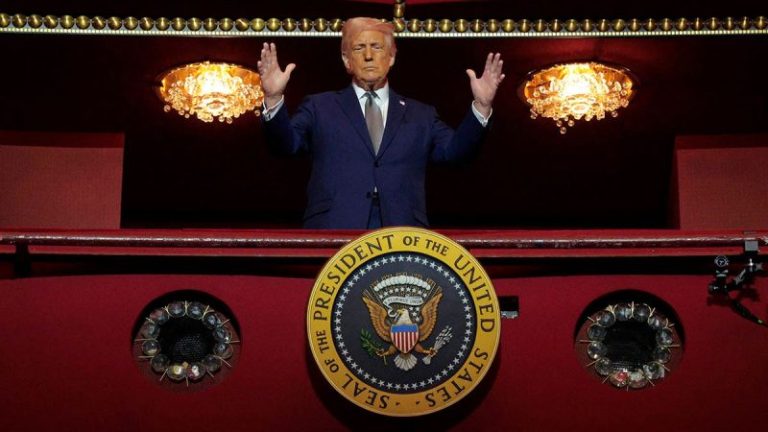
President Donald Trump spearheaded major changes to the Kennedy Center Honors ahead of the highly anticipated awards ceremony. 

Founded in 1978, the Kennedy Center Honors recognize a handful of performing artists every year for their lifetime contributions to culture. The Kennedy Center Honors, which are presented by the John F. Kennedy Center for the Performing Arts in Washington, D.C., are considered the nation’s top lifetime achievement award for the performing arts.

After returning to the White House in January, Trump, 79, became chairman of the Kennedy Center board and has since undertaken efforts to reshape the honors program — pushing for a glitzier, star-studded celebration. 

In August, Trump announced this year’s lineup of honorees, which included country legend George Strait, Hollywood star Sylvester Stallone, rock band KISS, Broadway icon Michael Crawford and Grammy Award-winning singer Gloria Gaynor.

‘The 48th Kennedy Center Honorees are outstanding people, incredible, we can’t wait… in a few short months since I became chairman of the board, the Kennedy Center, we’ve completely reversed the decline of this cherished national institution,’ he said in his speech.

From overhauling the honoree selection process to unveiling a new medallion, here’s a breakdown of how the Kennedy Center Honors have been revamped under Trump. 

Trump-led selection process 

Since the Kennedy Honors’ inception, the honorees were chosen by a bipartisan committee that worked with the Kennedy Center’s artistic staff, the Board of Trustees, external arts advisors, and the Center’s president and Honors team. 

While U.S. presidents have historically participated in the ceremonial aspects of the Honors including hosting a White House reception and attending the gala, they typically have not been directly involved in the selection process. 

However, Trump said he played a major role in choosing the 2025 honorees during an August event at the Kennedy Center to announce the recipients. 

Though there was a Special Honors Advisory Committee that made recommendations, Trump appeared to confirm that he made the final choices.

When reporters asked Trump how involved he was in selecting the 2025 honorees, he responded, ‘I was about 98% involved… they all came through me.’

‘I turned down plenty, they were too woke,’ he continued. ‘I had a couple of wokesters. No, we have great people. This is very different than it used to be.’

While taking aim at the state of Hollywood awards shows, Trump took a swipe at the Oscars.

‘Look at the Academy Awards — it gets lousy ratings now, it’s all woke,’ he said. ‘All they do is talk about how much they hate Trump, but nobody likes that. They don’t watch anymore…’

Trump concluded his ‘very long answer’ by saying he ‘was very involved’ in the selection of the Kennedy Center Honorees.

New medallion

For 47 years, the medallion received by the honorees had remained unchanged. The Honors medal hung from wide satin ribbon in five bright rainbow colors that formed a V-shape around the honoree’s neck. 

The gold circular medallion was shaped like a starburst and featured an abstract representation of the Kennedy Center building and was handmade by the same family for nearly five decades. Throughout the awards show’s history, the medallions were handmade by the Baturin’s, a Washington D.C.- based family of artisans and metalworkers. 

In a press release issued on Tuesday, the Kennedy Center announced that the medallions ‘have been re-imagined and donated by Tiffany & Co.’

‘As the first American high jewelry house, Tiffany & Co. has played a defining role in American luxury culture for nearly two centuries – making them the ideal collaborator to design the Honors medallion,’ the press release continued. 

‘The brand-new medallion features a gold disc etched on one side with a depiction of the Kennedy Center. The building is flanked by rainbow colors representing the breadth of the arts celebrated when receiving the Honor. The reverse side bears the Honorees’ names in script above the date of the Medallion Ceremony, December 6, 2025. The medallion hangs from a navy-blue ribbon, a color associated with dignity and tradition.’

Massive governance shake-up ahead of the Honors

n February, Trump announced a major shakeup of the Kennedy Center leadership. He revealed that he had decided to immediately fire multiple Kennedy Center board members appointed by former President Joe Biden and other prior trustees, including the chairman, and fill that role himself.

Trump claimed he and the former chair David Rubenstein along with the ousted board members ‘do not share [the same] vision for a Golden Age in Arts and Culture,’ according to his announcement on Truth Social.

‘We will soon announce a new Board, with an amazing Chairman, DONALD J. TRUMP!’ he added. 

Trump also criticized Kennedy Center programming, including drag shows, under the prior administration.

‘Just last year, the Kennedy Center featured Drag Shows specifically targeting our youth — THIS WILL STOP. The Kennedy Center is an American Jewel, and must reflect the brightest STARS on its stage from all across our Nation. For the Kennedy Center, THE BEST IS YET TO COME!’ Trump said on Truth Social. 

He later replaced the former members with 14 other members, including allies including second lady Usha Vance and ‘God Bless the USA’ singer Lee Greenwood. 

The new board elected Trump as chairman on Feb. 12. Trump dismissed long-serving Kennedy Center president Deborah Rutter and appointed his ally Ric Grenell – who became the U.S.’s first openly gay cabinet member under the first Trump administration when he served as acting director of national intelligence – as interim executive director amid the board overhaul. 

More mainstream-pop culture class of nominees 

The 2025 honorees including KISS, Gloria Gaynor, George Strait, Sylvester Stallone and Michael Crawford indicated a shift toward recognizing artists from more mainstream, pop culture fields rather than the cross-disciplinary lineups of prior years. 

During the first two decades after the Honors were founded, the recipients were mainly from the world of classical arts with some notable exceptions including actor James Cagney, actress Lucille Ball and film director Elia Kazan. 

In the mid-1990s, the Honors began expanding toward mainstream entertainment, honoring more pop musicians, rock artists, film and television actors and Broadway stars. The expansion accelerated through the 2000s and 2010s and into the 2020s.

In addition to mainstream artists, past honoree classes have always included representation from classical music, jazz, dance, opera or composition.  However, 2025’s lineup features no honoree from those disciplines, marking a first in modern program history.

The 2025 honorees chosen under Trump’s direction are entirely from rock, disco, country, film and Broadway.

In the Kennedy Honors Center’s August press release announcing the honorees, Grenell said, ‘For nearly half a century, this tradition has celebrated those whose voices and visions tell our nation’s story and share it with the world.’ ‘This year’s Honorees have left an indelible mark on our history, reminding us that the arts are for everyone.’

Trump will host the Honors 

At the August event to announce the honorees, Trump announced that he will host the Kennedy Center Honors gala, becoming the first president in history to host the event. 

‘I’ve been asked to host. I said, I’m the President of the United States. Are you fools asking me to do that? ‘Sir, you’ll get much higher ratings.’ I said ‘I don’t care. I’m President of the United States, I won’t do it.’ They said, ‘Please,” Trump told reporters.

Trump went on to say that his Chief of Staff Susie Wiles also asked him to host the Honors. 

‘I said, ‘OK, Susie, I’ll do it.’ That’s the power she’s got,’ he said. ‘So I have agreed to host. Do you believe what I have to do? And I didn’t want to do it, OK? They’re going to say, ‘He insisted.’ I did not insist, but I think it will be quite successful, actually.’ 

‘It’s been a long time. I used to host ‘The Apprentice’ finales and we did rather well with that,’ Trump added, referring to his long-running NBC reality competition show.

‘So I think we’re going to do very well, because we have some great honorees, some really great ones.’

During Trump’s first term, he and First Lady Melania Trump did not attend the Honors or host the traditional White House reception for the honorees.

In 2017, honorees including Norman Lear and dancer Carmen de Lavallade announced that they would not attend a White House reception hosted by Trump in protest.

The White House subsequently issued a statement that read: ‘The president and first lady have decided not to participate in this year’s activities to allow the honorees to celebrate without any political distraction.’

Trump and Melania also did not attend in 2018 and 2019. In 2020, the Honors were postponed due to the COVID-19 pandemic and instead took place in May 2021, with a revamped format including smaller, socially-distanced and virtual tributes.

The 48th Annual Kennedy Center Honors will take place on Dec. 7 at the Kennedy Center in Washington, D.C. and will air Dec. 23 on the CBS Television Network and on Paramount+

This post appeared first on FOX NEWS

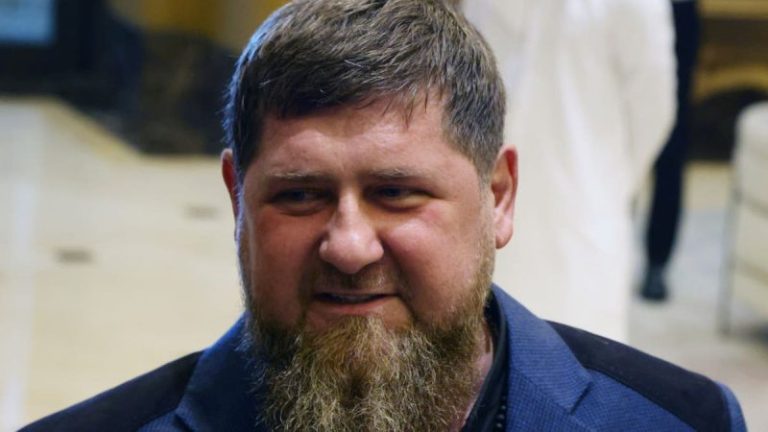
Chechen leader Ramzan Kadyrov’s threats against Ukraine following a drone strike echo a 2022 plot to infiltrate Kyiv and target President Volodymyr Zelenskyy, a former Ukrainian government official has said.

The leader’s latest threat came after a Ukrainian drone reportedly struck a high-rise building near Kadyrov’s home in Grozny on Nov. 5.

The strike prompted the Chechen strongman to vow retaliation in an online video post, according to Reuters.

‘This new threat would just be another assassination threat for Zelenskyy. The Chechens are really serious about revenge,’ a former government official told Fox News Digital.

‘But in Kyiv they are not panicking about this like they were in 2022,’ the former official said under condition of anonymity.

‘Zelenskyy is now better protected, feels more powerful and is less fragile,’ they said.

The recent Ukrainian strike, reported by Reuters, hit the 28-story Grozny-City tower that sits roughly 830 meters from Kadyrov’s home.

Kadyrov, who is loyal to Russia, later allegedly confirmed the attack in a Telegram post, stating there were no casualties, but he condemned the strike as making ‘no tactical sense.’ 

He also warned that retaliation was imminent.

‘Starting tomorrow and in the course of the week, the Ukrainian fascists will be feeling a stern response,’ he threatened.

Unlike Ukraine’s strike, he added, ‘we will not be making a cowardly strike on peaceful targets,’ per Reuters.

Ukrainian attacks have hit sites in Chechnya before now, including a police barracks and a training academy. Chechen units were also deployed during Russia’s 2022 invasion and were among the Kremlin’s most loyal forces.

At the time of the 2022 invasion, the official said there was intense anxiety in Kyiv.

‘At the beginning of the large-scale invasion in 2022, Chechens were sent to Kyiv to murder top politicians,’ the former official said.

‘This included Volodymyr Zelenskyy and top politicians from the government and security services and Parliament, and many other agencies.

‘Zelenskyy and Yermak were very scared,’ they claimed. ‘They were calling from the office, asking some people in the military and security service to secure the metro station in Kyiv.’

The source said one metro station in Kyiv was a potential infiltration route for the Chechens into Zelenskyy’s presidential bunker.

At the time, the station in Kyiv that was deep underground and near the presidential bunker, was viewed as the most vulnerable entry route, the source said.

‘They were afraid that Chechens would get to the bunker through this metro station, but in the end the Chechens were killed before they reached Kyiv.

‘They tried to reach Kyiv, somehow downtown, somehow via the river, but it’s quite a complicated way to get there,’ the former official said.

Meanwhile, with the Nov. 5. Grozny strike landing so close to his home, Kadyrov, already one of Putin’s most aggressive enforcers, is signaling a harsher stance as attacks reach inside Russian territory.

The Moscow Times reported that the drone struck a building that houses regional government offices, including the Chechen Security Council and agencies connected to tourism and religious affairs.

Despite the rhetoric, the former Ukrainian official claimed Zelenskyy is unfazed this time around.

‘These days, Zelenskyy isn’t afraid of Kadyrov’s actions against him or the Ukrainian people. Zelenskyy is feeling very powerful right now,’ they added.

Fox News Digital has reached out to Zelenskyy’s office for comment.

This post appeared first on FOX NEWS
For Social Security it has been a miserable year. 

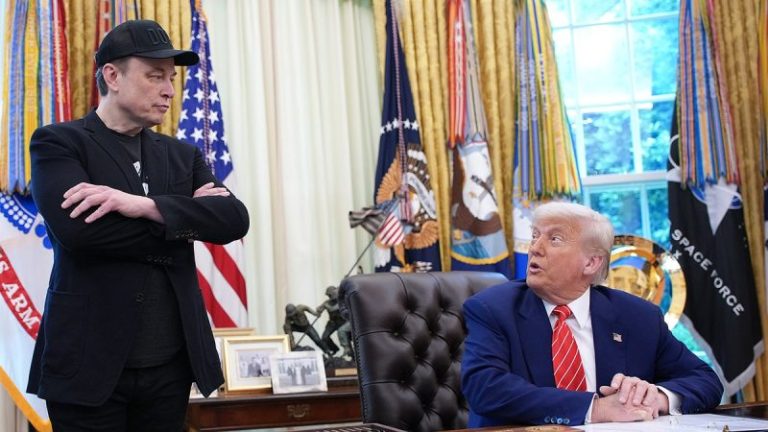
After President Donald Trump unleashed Elon Musk and DOGE on the Social Security Administration, the agency lost more staff in a shorter period of time than ever before in its 90-year history. Fortunately, public outcry and pushback from congressional Democrats saved Social Security from a 50% cut to staffing and the closure of scores of field offices as Trump and his administration had announced back in March. So, somehow, those dedicated workers remaining at the Social Security Administration have still managed to keep the agency running — without missing a single monthly benefit payment. 

There are not many public or private insurers in the world who can claim to never have missed a monthly benefit payment in 90 years. 

This is good news for 71 million Americans — many of whom depend on their earned benefit every month as a lifeline. But we are not out of the woods yet. The agency has been gutted. Enormous damage has been done to customer service and to the agency’s ability to process claims.

Just as many are demanding that Trump’s deep cuts to healthcare be restored, so too must Trump’s deep cuts to Social Security be restored, as the two are inextricably linked. Sixty-four million Medicare recipients will see a reduction in their Social Security benefits in 2026 due to Trump’s Medicare price hikes that will cut into their Social Security cost-of-living adjustment (COLA), making life more expensive for seniors. This is the greatest erosion of the Social Security COLA in nearly a decade, and the first time that Medicare premiums exceeded $200 per month. 

With the Social Security Administration’s staffing now reduced to a 60-year low and baby boomers swelling the number of active beneficiaries to an all-time high, the agency is struggling badly, and the American people are paying the price. Wait times to get to a person in a field office or to talk to a person on the 1-800 line have become longer and longer.  

As the Trump administration claims that things have never been better, millions of Americans are having a very different experience. In fact, more people today now die waiting in line for their initial disability determination than at any time since President Dwight Eisenhower signed the disability portion of the act into law in 1956. Even just recently, Trump and DOGE risked 300 million Americans’ personal data from the Social Security Administration. They have robbed Americans of customer service and peace of mind.

Conditions have grown so bad – Nancy Altman, president of Social Security Works, has called for Social Security Commissioner Frank Bisignano’s resignation. It proves to be a telling illustration of the deep concern experts have for the damage done to the agency. 

None of this had to happen. It was made to happen. As a candidate, Trump vowed all through the campaign that he would protect Social Security. Instead, he wrecked the program’s customer service, took a chainsaw to its functions and maligned its reputation with false claims of waste, fraud and abuse.

In a time of great political division, Social Security remains the most strongly supported program in America. In fact, 80% of Americans are concerned whether Social Security will be available when they retire and want it to be strengthened, made better — not hacked to pieces, privatized or liquidated. 

This is a democracy moment. Social Security should be a bipartisan issue. All lawmakers — Republicans, Democrats and Independents alike — need to come together to deliver on its promise of a secure retirement after a lifetime of hard work. 

This post appeared first on FOX NEWS
 

Congress released a $900 billion defense bill that reshapes U.S. economic and military competition with China by imposing new investment restrictions, banning a range of Chinese-made technologies from Pentagon supply chains, and expanding diplomatic and intelligence efforts to track Beijing’s global footprint. 

The legislation, which authorizes War Department spending at $8 billion above the White House’s request, includes a 4% pay raise for enlisted service members, expands counter-drone authorities, and directs new investments in the Golden Dome missile defense shield and nuclear modernization programs. 

It also extends Pentagon support to law enforcement operations at the southwest border and strengthens U.S. posture in the Indo-Pacific, including funding for Taiwan’s security cooperation program.

In a victory for conservative privacy hawks like House Judiciary Committee Chairman Jim Jordan, R-Ohio, the legislation includes a non-defense provision that would mandate FBI disclosure when the bureau was investigating presidential candidates and other candidates for federal office.

That measure was the subject of party in-fighting last week when Rep. Elise Stefanik, R-N.Y., whom Speaker Mike Johnson, R-La., had appointed chairwoman of House GOP leadership, publicly accused the speaker of kowtowing to Democrats and allowing that provision to be removed.

Johnson said he was blindsided by Stefanik’s anger and was unaware of her concerns when she had made them public.

Stefanik later claimed victory on X, stating the provision had been reinstated after a conversation between herself, Johnson and President Donald Trump. 

Coverage of in vitro fertilization (IVF) for military families, which became a flashpoint in recent days, is not included in the final NDAA. Neither are provisions preempting states from regulating AI or banning a U.S. central bank digital currency (CBDC). 

Republicans have pushed the CBDC prohibition as a privacy and civil-liberties measure, arguing that a government-issued digital dollar could give federal agencies the ability to monitor or restrict individual transactions. 

House aides said the anti-CBDC language became tied to a separate housing-policy package known as ‘Road to Housing,’ and the concessions required to keep both items together were unacceptable.

The bill also establishes a new ‘Artificial Intelligence Futures Steering Committee’ charged with producing long-range forecasts and policy recommendations for advanced AI systems, including artificial general intelligence.

The legislation takes aim at long-standing bottlenecks in the defense industrial base by authorizing new investment tools, expanding multi-year procurement for high-demand munitions and platforms, and overhauling portions of the acquisition system to speed the fielding of commercial and emerging technologies. 

Alongside those reforms, lawmakers approved new ‘right-to-repair’ style requirements that force contractors to provide the technical data the Pentagon needs to maintain and sustain major weapons systems—a change intended to reduce vendor lock-in and ease chronic maintenance delays across the fleet.

One major section of the bill establishes a far-reaching outbound investment screening system, requiring U.S. companies and investors to alert the Treasury Department when they back certain high-risk technologies in China or other ‘countries of concern.’ The measure gives Treasury the ability to block deals outright, forces detailed annual reporting to Congress, and grants new authorities to sanction foreign firms tied to China’s military or surveillance networks. Lawmakers cast the effort as a long-overdue step to keep U.S. capital from fueling Beijing’s development of dual-use technologies.

The bill also includes a procurement ban targeting biotechnology providers that would bar the Pentagon from contracting with Chinese genetic sequencing and biotech firms linked to the People’s Liberation Army or China’s security services. 

Additional sourcing prohibitions restrict the War Department from purchasing items such as advanced batteries, photovoltaic components, computer displays, and critical minerals originating from foreign entities of concern, further tightening U.S. supply chains away from China. They also require the department to phase out the use of Chinese-made computers, printers and other tech equipment.

Beyond economic measures, the NDAA directs the State Department to deploy a new cadre of Regional China Officers at U.S. diplomatic posts around the world, responsible for monitoring Chinese commercial, technological, and infrastructure activities across every major geographic region, including Beijing’s Belt and Road Initiative.

The NDAA contains several Israel-related provisions, including a directive for the Pentagon to avoid participating in international defense exhibitions that bar Israeli involvement. It authorizes funding for  Iron Dome, David’s Sling, and Arrow – the missile defense programs the U.S. operates with Isra

The bill also requires biennial reports comparing China’s global diplomatic presence to that of the United States. The Pentagon is separately directed to strengthen U.S. posture in the Indo-Pacific by extending the Pacific Deterrence Initiative and expanding cooperative training and industrial-base initiatives with regional allies, including Taiwan and the Philippines.

The legislation reauthorizes the Ukraine Security Assistance Initiative at $400 million per year for fiscal years 2026 and 2027. Congress will also require more frequent reporting on allied contributions to Ukraine to track how European partners support Kyiv.

The bill repeals two long-dormant war authorizations tied to earlier phases of U.S. military involvement in Iraq, while leaving the primary post-9/11 counterterrorism authority untouched. Lawmakers said the final text includes repeals of the 1991 Gulf War AUMF and the 2002 Iraq War AUMF, both of which successive administrations have said are no longer operationally necessary. The 1991 authorization approved the U.S.-led effort to expel Iraqi forces from Kuwait, and the 2002 authority permitted the invasion of Iraq under President George W. Bush.

Both parties have debated winding down these authorizations for years, arguing they no longer reflect current U.S. missions in the Middle East. Presidents from both parties, including Trump, have maintained that modern military operations in the region do not rely on either statute and that the commander in chief already holds sufficient Article II authority to defend U.S. personnel when required. Repeal also answers long-running concerns in Congress about outdated war authorities being used as secondary legal justifications for actions far from their original intent, such as the 2020 strike on Iranian Gen. Qassem Soleimani.

The NDAA does not touch the 2001 Authorization for Use of Military Force, which remains the central legal basis for U.S. counter-terror operations against al-Qaeda, ISIS, and associated groups. That post-9/11 statute continues to underpin nearly all active U.S. counter-terror missions worldwide.

House aides said leaders in their chamber hoped to consider the bill as soon as this week. It will first need to go through the House Rules Committee, the final gatekeepers before legislation gets a chamber-wide vote. It could hit that panel as early as Tuesday afternoon.

Then it will head for a vote in the Senate before reaching Trump’s desk for his signature.

This post appeared first on FOX NEWS