Author

admin

Browsing

The UK government is set to unseal a first batch of key documents relating to Peter Mandelson’s appointment as ambassador to the U.S., MPs were told Monday.

The disclosure, set for ‘early March,’ follows a Commons motion ordering the release of files related to Mandelson’s vetting for the post and comes in the wake of his arrest on suspicion of misconduct in public office.

‘The government expects to be able to publish the first tranche of documents very shortly, in early March,’ Darren Jones, chief secretary to Prime Minister Keir Starmer, told the House of Commons.

‘I should, however, inform the House that it remains the case that a subset of this first tranche of documents is currently subject to the ongoing Metropolitan Police investigation,’ he said.

Jones added that ‘a small portion of that material engages matters of national security or international relations’ and would be handled through the Intelligence and Security Committee, in line with the will of the House.

As previously reported by Fox News Digital, a Metropolitan Police spokesperson confirmed in a statement Monday that officers had arrested a 72-year-old man at an address in Camden and took him to a London police station for questioning.

The arrest follows revelations about Mandelson’s links to convicted sex offender Jeffrey Epstein and comes days after former Prince Andrew was detained.

The investigation relates to allegations that Mandelson shared confidential government information with Epstein while serving as business secretary.

Police had opened a criminal inquiry after the government passed on communications between the former ambassador and the disgraced financier.

Emails released by the U.S. Department of Justice also appeared to show Mandelson sharing market-sensitive information with Epstein during the 2008 financial crisis.

Mandelson has denied wrongdoing and said he does not recall the alleged disclosures and apologized to Epstein’s victims for maintaining contact with him after his conviction.

On Feb. 4, Starmer told the Commons: ‘I’m as angry as anyone about what Mandelson has been up to. The disclosures … are utterly shocking and appalling. He has betrayed our country. He has lied repeatedly. He is responsible for a litany of deceit.’

Starmer later said that if he had known then what he knows now, Mandelson ‘would never have been anywhere near government.’

Mandelson, an architect of New Labour, was appointed U.S. ambassador before being dismissed in September 2025 as scrutiny over his links to Epstein intensified. 

He resigned from the Labour Party and stepped down from the House of Lords.

As U.S. ambassador, Mandelson scored an early victory by ensuring Britain was the first country to agree to a deal with the U.S. to lower some of President Donald Trump’s tariffs, but was fired a few months later.

Starmer has also faced calls to step down over Mandelson’s appointment, Reuters reported.

Related Article

Keir Starmer’s chief of staff resigns after recommending Epstein-connected ambassador
This post appeared first on FOX NEWS

FBI Director Kash Patel and Deputy Director Dan Bongino pushed back against a blistering report from an alliance of active-duty and retired FBI personnel that portrayed the bureau as directionless under its new leadership, defending sweeping reforms they say have delivered major gains in accountability and public safety.

‘When the director and I moved forward with these reforms, we expected some noise from the small circle of disgruntled former agents still loyal to the old Comey–Wray model,’ Bongino told Fox News Digital Wednesday. 

‘That was never our audience. Our responsibility is to the American people. And under the new leadership team, the bureau is delivering results this country hasn’t seen in decades — tighter accountability, tougher performance standards, billions saved and a mission-first culture. That’s how you restore trust.’

New York Post columnist and Fox News contributor Miranda Devine said last week that an internal 115-page report from FBI active-duty and retired agents and analysts heavily criticized Patel and Bongino since they took on their respective jobs earlier this year.

The alliance criticized Patel as ‘in over his head’ and Bongino as ‘something of a clown,’ according to The New York Post.

The outlet said the 115-page assessment was written in the style of an FBI intelligence product and analyzed reports from 24 FBI sources and sub-sources who described their experiences inside the bureau.

Devine said Patel was described by multiple internal sources as inexperienced, with one source saying he ‘has neither the breadth of experience nor the bearing an FBI director needs to be successful.’

Patel told Fox News Digital the FBI is ‘operating exactly as the country expects.’

‘Every reform we carried out this year had a single goal — build an FBI that is faster, stronger, more accountable and fully aligned with protecting the American people. We streamlined the structure, pushed talent from Washington back into the field, expanded our national security capabilities with new tools like the counter-drone school, overhauled FOIA responsiveness and eliminated billions in waste,’ he said.

‘The impact is undeniable — historic drops in crime, major takedowns of criminal and extremist networks and record-setting arrests across violent crime, espionage, terrorism and child exploitation.’

This post appeared first on FOX NEWS

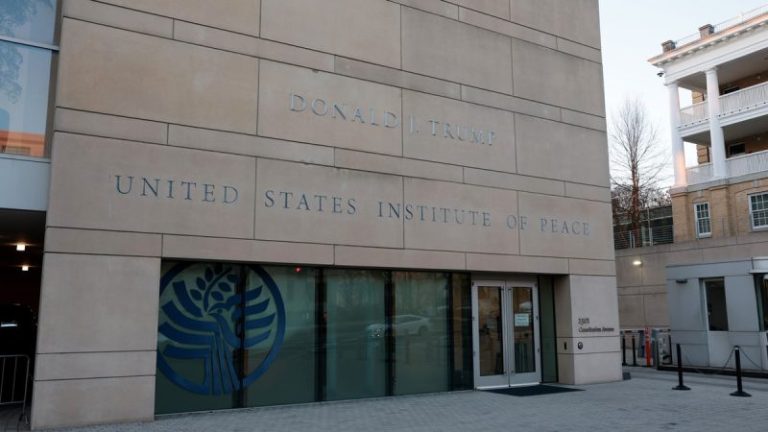
The U.S. Institute of Peace has been formally rebranded as the Donald J. Trump Institute of Peace, marking the latest step in the president’s months-long effort to dismantle the congressionally created agency.

The name change comes after a turbulent year for the organization, which the Trump administration has sought to shut down while shifting its authority to the Department of Government Efficiency (DOGE).

The institute has been fighting the move in federal court, but layoffs proceeded after an appeals court stayed a lower-court ruling that temporarily blocked the administration’s plan.

The agency’s website briefly went offline Wednesday morning before returning with promotion for Trump’s upcoming peace-agreement ceremony between the Democratic Republic of Congo and Rwanda.

White House spokesperson Anna Kelly defended the renaming, telling Fox News Digital the former institute had been ‘a bloated, useless entity that blew $50 million per year while delivering no peace.’

‘Now, the Donald J. Trump Institute of Peace, which is both beautifully and aptly named after a President who ended eight wars in less than a year, will stand as a powerful reminder of what strong leadership can accomplish for global stability,’ Kelly said. 

She added Trump ‘ended eight wars in less than a year,’ framing the institute’s new name as recognition of his ‘peace through strength’ approach.

‘Congratulations, world!’ Kelly said.

Secretary Marco Rubio echoed that sentiment in a post responding to the announcement.

‘President Trump will be remembered by history as the President of Peace,’ Rubio wrote. ‘It’s time our State Department display that.’

The U.S. Institute of Peace was created by Congress in 1984 as a nonpartisan organization supporting conflict-prevention and peace-building efforts abroad. The dismantling and rebranding into a Trump-named entity represents one of the most sweeping agency overhauls of Trump’s second term.

Earlier this year, U.S. District Judge Beryl Howell ruled that the administration’s shutdown effort was unlawful. But the ruling was stayed on appeal, clearing the way for terminations to move forward in July as the administration restructured the agency and continued transferring functions elsewhere.

The institute did not immediately respond to Axios’ request for comment on the rebranding or the status of its ongoing legal challenge.

The State Department did not immediately respond to Fox News Digital’s request for comment.

This post appeared first on FOX NEWS

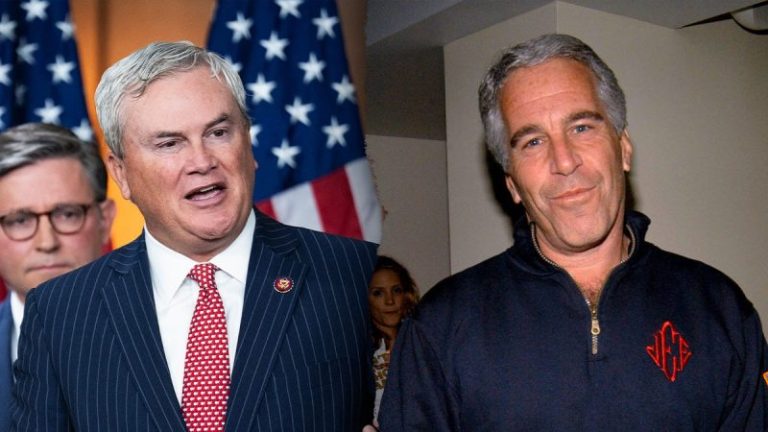
House Oversight Committee Chairman James Comer, R-Ky., is accusing Democrats on his panel of selectively releasing information related to Jeffrey Epstein.

It came hours after committee Democrats released photos and videos capturing what they called ‘never-before-seen’ views of Epstein’s private compound in the U.S. Virgin Islands.

But Comer told Fox News Digital that many of those images published by Democrats were already released by Project Veritas founder James O’Keefe, now the head of O’Keefe Media Group.

‘Ranking Member Robert Garcia and Democrats on the Oversight Committee continue to embarrass themselves,’ Comer said on Wednesday.

‘Throughout the course of our investigation, Democrats have cherry-picked documents and doctored some of them, and now they are chasing headlines by slapping ‘never-before-seen’ on images and video that were reported by O’Keefe Media Group months ago. The only thing ‘never-before-seen’ is such a reckless Ranking Member.’

It came after Oversight Democrats publicized images from Epstein’s island, Little Saint James, including images that appear to show a room with a dentist’s chair and a chalkboard that has words like ‘power,’ ‘deception,’ and ‘appear’ written on it.

O’Keefe himself accused committee Democrats on X of publishing the images with redactions while claiming he himself posted similar photos without information blotted out.

Ranking Member Rep. Robert Garcia, D-Calif., said in a press release when that first crop came out, ‘These new images are a disturbing look into the world of Jeffrey Epstein and his island. We are releasing these photos and videos to ensure public transparency in our investigation and to help piece together the full picture of Epstein’s horrific crimes…It’s time for President Trump to release all the files, now.’

Roughly 18 minutes after Fox News Digital reached out for a response to Comer’s statement, House Oversight Committee Democrats posted on X that they were releasing ‘an additional 150+ photos and videos sent to our committee from Epstein Island.’

The tranche includes images of a framed photo of Epstein and Ghislaine Maxwell meeting the pope. 

Another image of a framed photo appears to show two different people’s hands latched together, while others show works of art — including a lamp whose base resembles a naked woman’s torso.

One photo shows a Samsung computer that appears to reflect several different security camera angles, only three of which look functional and which show the outdoors.

Another image appears to show a nightstand that holds a sleeping mask and a box of tissues, among others.

A spokesperson for the House Oversight Committee majority pledged the panel will release more files soon while criticizing Democrats for what they called a selective release.

‘The House Oversight Committee has received approximately 5,000 documents in response to Chairman Comer’s subpoenas to J.P. Morgan and Deutsche Bank, as well as his request to the U.S. Virgin Islands. The Majority is reviewing these materials and will make them public soon, just as the Committee has already done with the more than 65,000 pages produced during this investigation,’ the spokesperson said.

‘It is odd that Democrats are once again releasing selective information, as they have done before. The last time Democrats cherry-picked and doctored documents, their attempt to construct yet another hoax against President Trump completely collapsed.’

Comer has already released thousands of pages’ worth of documents related to his committee’s Epstein investigation.

Democrats have accused him of running cover for President Donald Trump, who was previously friends with Epstein but has denied and never been implicated in any wrongdoing related to the late pedophile.

Republicans in turn have accused Democrats of sabotaging a bipartisan probe in order to create a false narrative about Trump.

This post appeared first on FOX NEWS

President Donald Trump is on board with releasing the video footage of the second strike targeting an alleged drug boat on Sept. 2. 

The Trump administration is currently facing heightened scrutiny for its strikes against alleged drug smugglers in the Caribbean, amid confirmation from the White House that the U.S. military conducted a second strike against one of the vessels after the first strike left survivors. 

Trump shared footage of the first strike, and said Wednesday he supported releasing documentation of the second strike as well. 

‘I don’t know what they have, but whatever they have we’d certainly release. No problem,’ Trump told reporters on Wednesday.

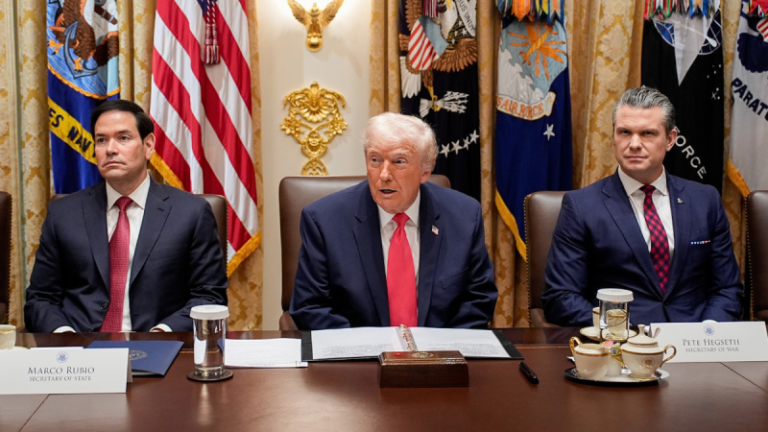
Secretary of War Pete Hegseth told reporters Tuesday that he watched the first strike live, but left for a meeting and did not learn of the second strike until later. 

The White House said Monday that Hegseth had authorized Adm. Frank ‘Mitch’ Bradley to conduct the strikes, and that Bradley was the one who ordered and directed the second one. 

At the time of the Sept. 2 strike, Bradley was serving as the commander of Joint Special Operations Command, which falls under U.S. Special Operations Command. He is now the head of U.S. Special Operations Command.

According to Hegseth, conducting the subsequent strike against the alleged drug boat was the right call. 

‘Admiral Bradley made the correct decision to ultimately sink the boat and eliminate the threat,’ Hegseth said Tuesday. 

Hegseth and the White House have faced additional questions about the legality of the strikes targeting alleged drug smugglers, after the Washington Post reported on Friday that Hegseth verbally ordered everyone onboard the alleged drug boat to be killed in a Sept. 2 operation.

The Post reported that a second strike was conducted to take out the remaining survivors on the boat. 

Meanwhile, the White House has disputed that Hegseth ever gave an initial order to ensure that everyone on board was killed, when asked specifically about Hegseth’s instructions.

On Capitol Hill though, lawmakers on both sides of the aisle are pushing for greater oversight and accountability on the strikes, amid concerns the second strike targeting survivors was illegal. 

Despite previous efforts in recent months to introduce a war powers resolution to curb Trump’s ability to conduct these strikes that failed to garner enough Republican support for passage, Senate Minority Leader Chuck Schumer, D-N.Y., Tim Kaine, D-Va., Adam Schiff, D-Calif., and Rand Paul, R-Ky., introduced another war powers resolution on Wednesday to bar Trump from using U.S. armed forces to engage in hostilities within or against Venezuela.

‘Although President Trump campaigned on no more wars, he and his Administration are unilaterally moving us closer to one with Venezuela — and they are doing so without providing critical information to the American people about the campaign’s overall strategy, its legal rationale, and the potential fallout from a prolonged conflict, which includes increased migration to our border,’ Kaine said in a statement on Wednesday. 

The Trump administration has conducted more than 20 strikes against alleged drug boats in Latin American waters, and has enhanced its military presence in the Caribbean to align with Trump’s goal to crack down on drugs entering the U.S.

This post appeared first on FOX NEWS

Absent direct military action, President Donald Trump is running low on options amid his standoff with Venezuelan President Nicolás Maduro, according to experts.

Strikes near Venezuelan waters aimed at drug traffickers, sanctions and a $50 million bounty have so far been unsuccessful in forcing Maduro, whom the U.S. has designated as a leader of the Tren de Aragua drug cartel, to step down from power.

After repeated threats, adversaries may now view a lack of direct military action as a sign of weakness from the U.S. But Maduro is in an equally difficult position — his own military capabilities are dwarfed in comparison to Trump’s, and experts say China and Russia lack the will to directly challenge the U.S. in its own hemisphere.

Meanwhile, the clock is ticking: Trump’s unprecedented military buildup in the Caribbean — including sending the world’s largest aircraft carrier to the region — is taking away resources from other theaters.

Katherine Thompson, a senior fellow in defense and foreign policy studies at the libertarian think tank the Cato Institute, said that there are very few tools left at Trump’s disposal to oust Maduro, aside from a targeted strike against the Venezuelan leader or a land invasion. 

While the White House has not directly said that it is seeking regime change, recent media reports indicate that Trump and Maduro have spoken about the Venezuelan leader departing his post.

Thompson noted that previous efforts to squeeze out Maduro, including imposing sanctions on Venezuela and backing opposition leader Juan Guaidó during Trump’s first term, have proven unsuccessful. 

‘It does not seem like there is — outside of the military option — anything new on the table that hasn’t really been tried,’ Thompson said.

Even so, Thompson cast doubt on whether military action would prove successful. 

‘If the offer on the table from the Trump administration is we’re going to potentially execute an invasion unless you talk to us, perhaps that’s a strong enough diplomatic, strategic move that gets Maduro to capitulate,’ Thompson said. ‘But it just doesn’t seem like we’re picking up that many signals from the Maduro regime that that is going to be palatable.’ 

Meanwhile, Thompson said that adversaries like Russia and China are probably confused about why the Trump administration has fixated on the Maduro regime, which doesn’t jeopardize U.S. interests as much as other actors, when the Trump administration has adopted an ‘American First’ mantra. 

‘I imagine for them, it’s probably a bit puzzling, if they’re looking at it through a real, brass tacks, realist lens, why this administration would be prioritizing ousting the Maduro regime, as opposed to conflicts in other theaters,’ Thompson said.

As a result, the Trump administration’s actions focusing on Venezuela likely leave a bit of ‘befuddlement’ on the part of Russia and China about how serious the U.S. is about putting American interests first, Thompson said.

She added that China may be wondering if the U.S. diverting resources, such as directing the aircraft carrier USS Gerald R. Ford to the Caribbean, could provide an opportunity for it to invade Taiwan if the U.S. is tied up with operations in Venezuela. Multiple U.S. officials have said they believe China will be capable of invading Taiwan by 2027. 

Will Russia and China back Venezuela? 

While there may be greater interest from China to take action within its own theater, experts agreed it was unlikely that Russia or China would actually get involved and back Venezuela should military operations between the U.S. and Caracas escalate — even though Moscow and Beijing are strategic allies with Venezuela. 

Some analysts said Maduro would find himself largely isolated if Trump launched military strikes against Venezuela. Russia, still consumed by its war in Ukraine, is unlikely to offer anything beyond denunciations of U.S. action, and China, despite years of deep economic engagement with Caracas, is also expected to stop well short of military involvement, they said. 

From Moscow’s perspective, there is both ideological and strategic discomfort with an American intervention — but little appetite or capability to counter it.

‘Moscow opposes unilateral U.S. military intervention, especially when aimed at toppling a friendly authoritarian regime. That said, Russia lacks the will and ability to stop U.S. intervention in this part of the world should Trump decide to go that route,’ said John Hardie, a Russian military analyst at the Foundation for Defense of Democracies (FDD).

Hardie said Russia is watching Washington’s internal debate carefully. 

‘Analysts in Moscow interpret the internal debate in Washington over Venezuela as evidence that although Republican views on foreign policy are shifting, the more traditional, hawkish camp still retains influence,’ Hardie said. ‘This whole episode probably also reinforces Russian views of Trump as unpredictable and impulsive, though I suspect Moscow is glad to see Trump prioritizing the Western Hemisphere over other regions more central to Russian interests.’

China’s likely response would mirror its recent behavior in other conflicts. Beijing has major financial stakes in Venezuela but has shown little willingness to risk confrontation with the United States, especially in the Western Hemisphere.

Jack Burnham, a China analyst at FDD, said Maduro should take note of how China behaved during the 12-Day War, when Iran came under intense U.S.- and Israeli-led strikes.

‘If Maduro is expecting support from China, he should have had his expectations corrected by Tehran’s recent experience under fire,’ Burnham said. ‘Despite China providing key war-related materials to Iran prior to the 12 Day War, once the conflict escalated, Beijing stood down, content to stand on the sidelines and offer statements.’

Burnham said that same pattern would likely apply now: ‘If American military action accelerates, look for Beijing to engage in a war of words rather than send badly needed supplies to Caracas.’

Trump’s crusade against drugs

The Trump administration has beefed up its military presence off the coast of Venezuela and has adopted a hard-line approach to address the flow of drugs into the U.S. For example, it designated drug cartel groups like Tren de Aragua, Sinaloa and others as foreign terrorist organizations in February.

The Trump administration has repeatedly said it does not recognize Maduro as a legitimate head of state, but instead, a leader of a drug cartel. In August, the Trump administration upped the reward for information leading to Maduro’s arrest to $50 million, labeling him ‘one of the largest narco-traffickers in the world.’

On Sunday, Trump confirmed that he spoke to Maduro over the phone last week, after the New York Times reported that the two had talked, but declined to provide specifics on what they discussed. However, The Miami Herald reported on Sunday that Trump gave Maduro an ultimatum, guaranteeing the Venezuelan leader and his family safety — if he resigned immediately. 

The White House did not provide comment when asked if the Trump administration is pushing a regime change, and whether Maduro had been offered any incentives to step down. However, the officials said all options are on the table to mitigate the influx of drugs into the U.S. 

‘President Trump has been clear in his message to Maduro: stop sending drugs and criminals to our country,’ White House spokesperson Anna Kelly said in a statement to Fox News Digital on Tuesday. ‘The President is prepared to use every element of American power to stop drugs from flooding in to our country.’

The White House did not respond to a request for comment from Fox News Digital on The Miami Herald’s report. 

Additionally, the New York Post reported on Tuesday that U.S. officials are discussing potentially sending Maduro to Qatar, although officials familiar with Qatar’s role in the negotiations said Maduro will not head there. It’s unclear where Maduro would flee to, and no countries have confirmed they will accept him. 

Trump’s reported negotiation with Maduro comes as the strikes in the Caribbean are facing heightened scrutiny from the legal community and lawmakers.

While lawmakers have questioned the legality of the strikes since the beginning, the attacks have come under renewed scrutiny after the Washington Post reported on Friday that Secretary of War Pete Hegseth verbally ordered everyone onboard the alleged drug boat to be killed in a Sept. 2 operation. The Post reported that a second strike was conducted to take out the remaining survivors on the boat. 

On Monday, the White House confirmed that a second strike had occurred, but disputed that Hegseth ever gave an initial order to ensure that everyone on board was killed when asked specifically about Hegseth’s instructions.

The White House also said Monday that Hegseth had authorized Adm. Frank ‘Mitch’ Bradley to conduct the strikes, and that Bradley was the one who ordered and directed the second one. 

At the time of the Sept. 2 strike, Bradley was serving as the commander of Joint Special Operations Command, which falls under U.S. Special Operations Command. He is now the head of U.S. Special Operations Command. 

According to Hegseth, carrying out a subsequent strike on the alleged drug boat was the right call. 

‘Admiral Bradley made the correct decision to ultimately sink the boat and eliminate the threat,’ Hegseth said Tuesday. 

Altogether, the Trump administration has conducted more than 20 strikes against alleged drug boats in Latin American waters, and has enhanced its military presence in the Caribbean to align with Trump’s goal to crack down on drugs entering the U.S.

The last confirmed strike occurred on Nov. 15. Hegseth said Tuesday that although there has been a pause in strikes in the Caribbean because alleged drug boats are becoming harder to find, the Trump administration’s crusade against drugs will continue. 

‘We’ve only just begun striking narco-boats and putting narco-terrorists at the bottom of the ocean because they’ve been poisoning the American people,’ Hegseth said Tuesday. 

This post appeared first on FOX NEWS

President Donald Trump said Iran appears to be looking to negotiate with the U.S. amid a growing military buildup in the Middle East.

In a Monday interview with Axios, Trump suggested that Tehran had reached out on ‘numerous occasions’ and ‘want[s] to make a deal.’

‘They want to make a deal. I know so. They called on numerous occasions. They want to talk,’ the president told the outlet.

According to U.S. officials, also cited by Axios, any potential agreement would need Tehran to remove all enriched uranium, cap its long-range missile stockpile, a change in support for regional proxy forces, and cease independent uranium enrichment, terms Iranian leaders have not agreed to.

Trump also described the situation with Iran as ‘in flux,’ and pointed to the arrival of what he called ‘a big armada next to Iran. Bigger than Venezuela,’ referencing the recent deployment of U.S. naval assets.

As previously reported by Fox News Digital, the USS Abraham Lincoln aircraft carrier entered CENTCOM waters in the Indian Ocean on Monday amid increasing threats from Iran, a senior U.S. official said.

Trump had told reporters Jan. 21, ‘We have a big flotilla going in that direction, and we’ll see what happens. We have a big force going towards Iran. I’d rather not see anything happen, but we’re watching them very closely.’

The U.S. military buildup comes amid widespread unrest inside Iran following protests that began Dec. 28.

According to a recent report from Human Rights Activists News Agency (HRANA), the confirmed death toll from the protests has reached 5,848, with an additional 17,091 deaths under investigation.

Supreme Leader Ayatollah Ali Khamenei has been sheltering in a fortified underground facility, according to Iran International.

Trump is expected to hold further consultations this week, Axios said, before adding that White House officials said an attack is still on the table.

Fox News Digital has reached out to the White House for comment.

This post appeared first on FOX NEWS
A top Senate Republican is demanding that the heads of several immigration-focused units at the Department of Homeland Security (DHS) testify publicly before the Senate. 

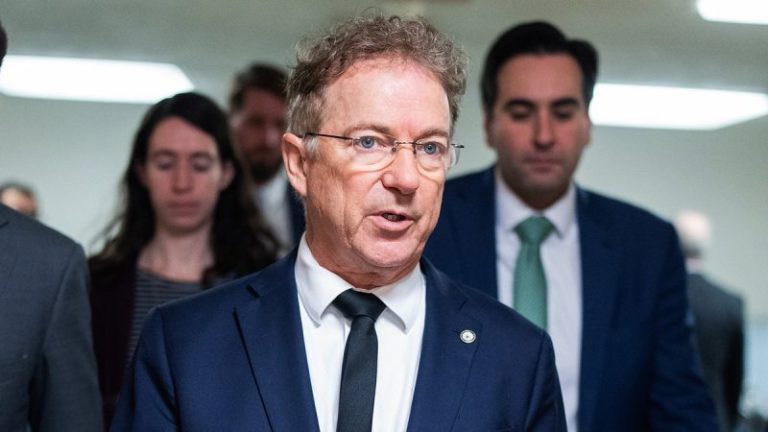
Sen. Rand Paul, R-Ky., called on the heads of Immigration and Customs Enforcement (ICE), Customs and Border Patrol (CBP) and the U.S. Citizenship and Immigrations Services (USCIS) to come before his panel, the Senate Homeland Security and Governmental Affairs Committee, next month. 

In three separate letters to acting ICE Director Todd Lyons, CBP Commissioner Rodney Scott and USCIS Director Joseph Edlow, Paul noted that DHS had received ‘an exceptional amount of funding to secure our borders and enforce our immigration laws.’

‘Congress has an obligation to conduct oversight of those tax dollars and ensure the funding is used to accomplish the mission, provide proper support for our law enforcement, and, most importantly, protect the American people,’ Paul wrote.

‘I write to request your testimony before the U.S. Senate Committee on Homeland Security and Governmental Affairs at an open hearing by February 12, 2026,’ he continued. ‘Please provide your availability to appear before the Committee by the close of business on January 28, 2026.’

Paul’s request comes on the heels of the second fatal shooting involving a border patrol agent and U.S. citizen in the last month since the Trump administration ordered DHS to enter Minnesota. 

Alex Pretti and Renee Nicole Good were both fatally shot by border patrol agents, which has prompted pushback from Senate Democrats and some Republicans on the Trump administration’s activity in the state. 

But Paul’s request is more focused on the funding element of the situation.

Senate Democrats are gearing up to block the upcoming DHS funding bill, which could thrust the government into another shutdown. And Paul wants to know how the billion already allocated to the agency, likely through President Donald Trump’s ‘one, big beautiful bill,’ are being used. 

Paul’s request also comes as DHS Secretary Kristi Noem is set to appear before the Senate Judiciary Committee in early March after several months of not responding to a pair of requests from Senate Judiciary Chair Chuck Grassley, R-Iowa.

This post appeared first on FOX NEWS
The White House appears to be rejecting Democrats’ demands in the burgeoning government funding fight, as the chances of a partial shutdown grow larger by the day.

Senate Minority Leader Chuck Schumer, D-N.Y., is threatening that Democrats will vote against the massive federal spending bill set to get a vote this week unless funding for the Department of Homeland Security (DHS) is stripped out and renegotiated.

Republicans have already signaled they’re not inclined to do so, which White House Press Secretary Karoline Leavitt reaffirmed during her Monday afternoon press conference.

Leavitt also pointed out that all the bills wrapped into the massive spending package are the product of bipartisan negotiations between the House and Senate — meaning Democrats already had a say in the legislation they are now rejecting.

‘At this point, the White House supports the bipartisan work that was done to advance the bipartisan appropriations package, and we want to see that passed,’ President Donald Trump’s spokeswoman said. 

‘Policy discussions on immigration in Minnesota are happening. Look, the president is leading those discussions, as evidenced by his correspondence with Governor Walz this morning. But that should not be at the expense of government funding for the American people.’

Democrats are coming out against the DHS funding bill en masse in the wake of another deadly federal law enforcement-involved shooting in Minneapolis. A Border Patrol agent shot Alex Pretti, a nurse who worked with veterans at the Minneapolis Veterans Affairs Medical Center, during a wider protest against Trump’s immigration crackdown in the city.

Both Republicans and Democrats have called for investigations into the fatal encounter, but only Democrats are threatening to put federal funding at risk.

Leavitt pointed out that the DHS funding portion would also allocate dollars to the Federal Emergency Management Agency (FEMA), not just the Border Patrol and Immigration and Customs Enforcement (ICE) spending that Democrats object to.

‘We are in the midst of the storm that took place over the weekend, and many Americans are still being impacted by that. So we absolutely do not want to see that funding lapse,’ she said. ‘We want the Senate to move forward with passing the bipartisan appropriations package that was negotiated on a bipartisan basis.’

The legislation negotiated between Republicans and Democrats already includes guardrails for ICE, including mandating body-worn cameras and more training on public engagement and de-escalation.

But Pretti’s killing and DHS’s handling of it infuriated Democrats — at least several of whom will be needed to meet the Senate’s 60-vote threshold to advance the legislation.

Senate Republicans had wanted to pass the package as early as Thursday and send it to Trump’s desk just before the Jan. 30 shutdown deadline.

Senate Democrats held a private, caucus-wide call on the matter on Sunday, after which a source familiar told Fox News Digital that Schumer’s plan was to reject any DHS bill without several reforms, but that the broader, five-bill funding package could move ahead. 

‘Basically, DHS is the problem and should be split from the package,’ they said.

But with Senate Majority Leader John Thune, R-S.D., taking the first procedural step to set up this week’s vote on the larger package on Monday, Democrats’ prospects of strong-arming the GOP are thin.

Even if Senate Democrats did prevail, it’s virtually guaranteed that Congress would miss the Friday shutdown deadline at this point.

Any changes to the spending package would require it to return to the House to be considered again, despite it passing the lower chamber last week.

But a House GOP leadership source told Fox News Digital of that prospect on Saturday, ‘We passed all 12 bills over to the Senate, and they still have six in their possession that they need to pass to the president. We have no plan to come back next week.’

Fox News Digital reached out to Schumer’s office for a response.

This post appeared first on FOX NEWS
President Donald Trump announced in a Truth Social post on Tuesday that he would ‘fully and completely’ terminate any documents signed by former President Joe Biden’s autopen, including pardons and commutations.

‘Any and all Documents, Proclamations, Executive Orders, Memorandums, or Contracts, signed by Order of the now infamous and unauthorized ‘AUTOPEN,’ within the Administration of Joseph R. Biden Jr., are hereby null, void, and of no further force or effect,’ Trump wrote.

‘Anyone receiving ‘Pardons,’ ‘Commutations,’ or any other Legal Document so signed, please be advised that said Document has been fully and completely terminated, and is of no Legal effect. Thank you for your attention to this matter!’

This post appeared first on FOX NEWS