Author

admin

Browsing

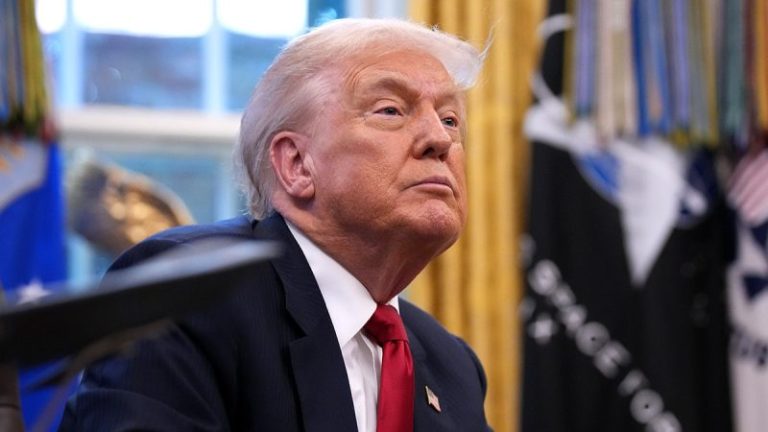
President Donald Trump announced in a Truth Social post on Tuesday that he would ‘fully and completely’ terminate any documents signed by former President Joe Biden’s autopen, including pardons and commutations.

‘Any and all Documents, Proclamations, Executive Orders, Memorandums, or Contracts, signed by Order of the now infamous and unauthorized ‘AUTOPEN,’ within the Administration of Joseph R. Biden Jr., are hereby null, void, and of no further force or effect,’ Trump wrote.

‘Anyone receiving ‘Pardons,’ ‘Commutations,’ or any other Legal Document so signed, please be advised that said Document has been fully and completely terminated, and is of no Legal effect. Thank you for your attention to this matter!’

This post appeared first on FOX NEWS

: Last week, Taiwan President William Lai unveiled a massive $40 billion supplemental defense procurement proposal, casting it as proof that the independently ruled, democratic island is serious about countering escalating military pressure from the People’s Republic of China (PRC). The PRC has not governed Taiwan for even a single day but claims it as its territory.

A State Department spokesperson told Fox News Digital that, ‘We welcome Taiwan’s announcement of a new $40 billion special defense procurement budget. Consistent with the Taiwan Relations Act and more than 45 years of commitment across multiple U.S. Administrations, the United States supports Taiwan’s acquisition of critical defense capabilities, commensurate with the threat it faces.’ 

The spokesperson also commended Taipei, ‘We also welcome the Lai administration’s recent commitments to increase defense spending to at least 3% of GDP by 2026 and 5% of GDP by 2030, which demonstrates resolve to strengthen Taiwan’s self-defense capabilities.’

The American Institute in Taiwan (AIT) – the de facto American embassy – responded very positively almost immediately after Lai’s proposal was announced. Courtney Donovan Smith, a political columnist for the Taipei Times, told Fox News Digital that the strong support from AIT, ‘Amounts to a public American stamp of approval.’

A day after Lai’s announcement, Taiwan’s Defense Minister, Wellington Koo, told the media that preliminary talks have already been held with the United States about the kinds of weapons it wants to buy as part of this budget that would run from 2026 to 2033. But Koo said he could not make any details of discussions public until Congress receives a formal notification.

Yet some in Taiwan expressed concern that the language from the administration was somewhat understated, and didn’t come from senior-enough officials. 

Those worried about what they perceive as a muted tone from the Trump administration wondered if the timing could be sensitive, coming shortly after President Trump and Chinese leader Xi Jinping agreed to a trade deal, and just days after Xi phoned Trump to reiterate Beijing’s claims over Taiwan, claims the U.S. ‘acknowledges’ but does not accept.

Even so, Taipei-based political risk analyst and Tamkang University assistant professor Ross Feingold told Fox News Digital that U.S. support fundamentally has not shifted and that when it comes to U.S. weapons sales to Taiwan, ‘If Taiwan is a willing buyer, the Trump administration is likely to be a willing seller.’

Also causing distress to the fragile egos of China’s communist leaders is Japan’s new Prime Minister Sanae Takaichi, a conservative who became Japan’s first female prime minister in October. She appeared to break long-standing Japanese strategic ambiguity over Taiwan when, asked on Nov. 7 in parliament whether a Chinese attack on Taiwan would qualify as ‘a situation threatening Japan’s survival.’

Takaichi didn’t deflect with a ‘I don’t comment on hypotheticals.’ Instead, she said, ‘If there are battleships and the use of force, no matter how you think about it, it could constitute a survival-threatening situation.’

Under Japan’s 2015 security law, that designation could allow Japanese military action in defense of an ally.

China predictably lashed out, immediately calling her remarks ‘egregious.’ A Chinese diplomat in Osaka escalated further, reposting coverage on X with a threat-like warning: ‘The dirty head that sticks itself in must be cut off.’

Kerry K. Gershaneck, a visiting scholar at National Chengchi University and a former U.S. Marine counterintelligence officer, told Fox News Digital that the U.S. needed to clearly denounce China for threats against Japan and the Japanese prime minister. Gershaneck warned that Asian allies remember past U.S. abandonment’ under what he called the ‘do not provoke China!’ policy of the Obama administration. ‘Unless high-level Washington officials signal stronger support, he said, ‘the Trump 47 administration risks going down in history as Barack Hussein Obama’s third term.’

Feingold noted that while Takaichi’s stance was enthusiastically received in Taiwan, the excitement ‘was unsustainable and not based on a formal policy decision by Japan to defend Taiwan.’

Following reports that President Trump phoned the Japanese prime minister and requested that she dial down talk about Taiwan, Japan’s Chief Cabinet Secretary Kihara Minoru issued a strong denial, saying Trump did not advise Takaichi to ‘temper the tone of her comments about Taiwan.’

While the geopolitical shifts grabbed headlines, Lai’s real challenge is domestic. Taiwan has a single-chamber legislature, and Lai’s Democratic Progressive Party does not have a majority.

Cheng Li-wun, the new chair of the main opposition Kuomintang (KMT), campaigned against boosting defense spending to 5% of GDP and has repeatedly argued Taiwan is ‘not an ATM’ for ‘unreasonable’ military budgets. The KMT supports renewed engagement with Beijing and acceptance of the ‘1992 Consensus,’ a proposed framework that allows both sides to claim there is ‘one China’ while interpreting the meaning differently. Lai rejects that position entirely, calling it a path toward subordination to China.

Bryce Barros, associate fellow at GLOBSEC and a former U.S. Senate national security advisor, told Fox News Digital that there are serious hurdles. ‘Opposition leaders have cited cuts to other essential services like healthcare, lack of details on how the budget will be paid for and concerns over more hostilities with China,’ he said. But Barros said the head of the de facto American embassy has called for bipartisan support for the bill, and he noted Lai needs only six opposition defections for the vote to pass.

Analysts also stress the proposal is not solely for U.S. weapons. Lai wants major investment in domestic defense manufacturing, including a ‘dome’ anti-missile system, which could help blunt accusations of excessive spending to curry favor with Washington. But the plan still faces a volatile parliament and certain retaliation from China.

This post appeared first on FOX NEWS

The Department of Justice (DOJ) on Friday charged five men from across the U.S. with running an online ‘child exploitation enterprise’ called ‘Greggy’s Cult,’ that allegedly used Discord servers to terrorize, blackmail and coerce minors into ‘horrific acts of self-harm.’

The indictment unsealed by federal prosecutors charges five individuals with ‘conspiracy to produce child pornography, conspiracy to receive and distribute child pornography, and conspiracy to communicate interstate threats.’

Hector Bermudez, 29, of Queens, New York; Zachary Dosch, 26, of Albuquerque, New Mexico; Rumaldo Valdez, 22, of Honolulu, Hawaii; David Brilhante, 28, of San Diego, California; and Camden Rodriguez, 22, of Longmont, Colorado, were arrested Tuesday will be arraigned in the Eastern District of New York at a later date, according to the DOJ.

Prosecutors described a ‘nightmarish platform on the internet,’ alleging that ‘Greggy’s Cult’ carried out ‘depraved conduct’ that included ‘repeatedly encouraging victims to kill themselves or encouraging them to insert household objects into their genitals or anus.’

‘These five defendants allegedly targeted vulnerable children and others via online platforms – they exploited, threatened, and harassed them, and encouraged horrific acts of self-harm,’ FBI director Kash Patel said in a statement. ‘The FBI is sending a message to those individuals involved in criminal activity through violent online networks: you can’t hide in the shadows hovering over a keyboard – we will find and hold accountable those who participate in these illegal and heinous acts.’

The indictment stated that the defendants allegedly engaged in the ‘production and distribution of child sex abuse material’ between January 2020 and January 2021, and also participated in other forms of ‘exploitation and harassment’ of both minors and adults.

According to prosecutors, the defendants and other members of ‘Greggy’s Cult’ met on Discord servers and ‘directed minor victims, who had joined a video call on either Discord or another video conferencing platform, to engage in sexually explicit or other degrading conduct.’

The group is also accused of finding victims on gaming platforms such as Roblox and Counter-Strike: Global Offensive.

The cult members allegedly captured screenshots and screen recordings of the ‘sexually explicit conduct’ before sharing it to other Discord servers and with each other, according to the DOJ.

Attorney General Pam Bondi reacted to the indictment, stating that ‘no child should ever be terrorized or exploited online, and no online platform should give refuge to predators.’

‘The Department of Justice will continue to protect children, support survivors, and hold accountable anyone who preys on the vulnerable – online or offline – with every tool we have,’ Bondi added.

Prosecutors also accused the defendants of extorting their targets, alleging that they tried to frame the adult victims as pedophiles or send malware to minor victims, which was then used as ‘leverage to get the victims to engage in degrading acts on camera.’

The defendants were allegedly able to convince victims to commit acts of ‘degradation,’ including having them be ‘owned’ by a member of the cult to demonstrate loyalty, or writing the names of cult members on their bodies, which prosecutors referred to as ‘fansigning.’

Acting Assistant Attorney General Matthew Galeotti of the DOJ’s Criminal Division said in a statement that the defendants were charged with an ‘unspeakable act of coercing and blackmailing children and adults to engage in self-harm and other degrading acts.’

U.S. Attorney Joseph Nocella Jr. for the Eastern District of New York called the alleged conduct ‘monstrous,’ adding that children were ‘at times driven to the brink of suicide.’

The DOJ stated that ‘Greggy’s Cult’ formed before the emergence of the ‘764’ network, another online child-exploitation group that the FBI has launched an intensified effort to take down.

Members of ‘764’ allegedly use popular online platforms such as Discord, Telegram and Roblox to recruit and manipulate minors.

This post appeared first on FOX NEWS

In March, President Donald Trump announced the Air Force’s new F-47 stealth fighter, built by Boeing.  So where is the Navy’s secret new carrier plane?

Fifteen years ago, the U.S. Navy read the signals from China and secretly started development of a long-range, stealthy plane to launch from aircraft carriers.  The Navy’s newest bird is more like a fighter-bomber, with the AI smarts to lead drones into combat and enough range to scare China.

Today that plane – known only as F/A-XX or fighter attack, experimental – is ready to go. Both Boeing and Northrop Grumman have flown test planes. Their prototypes are waiting in the wings; or rather, in discreet guarded hangars, most likely in Missouri and Florida. 

Yet, for some reason, the Pentagon isn’t in the mood to make the ‘downselect’ purchase decision. The delay is shocking and dangerous.

Congress wants the Navy plane so much they added nearly $1 billion to the budget to accelerate F/A-XX. ‘The U.S. Navy needs sixth-generation fighters. I’m concerned that any hesitancy on our part to proceed with the planned procurement of the sixth-gen fighters for the Navy will leave us dangerously outmatched in a China fight,’ Rep. Ken Calvert, R-Calif., the head of the House Appropriations Subcommittee on Defense, said on May 14. 

Of course, U.S. Navy F/A-18EFs have pounded Middle East targets during various air campaigns for almost three decades.  Just look at the damage they did to Houthi missile sites and weapons caches in Yemen during Operation Rough Rider this past spring.  But for the fierce fighting scenarios of the Pacific, the Navy pilots that fly from aircraft carriers need a new plane. 

All that President Trump has to do now is take this opportunity to pick the best plane for the Navy.

Here are six things to know about the Navy’s secretive project.

The Navy has not let us see photographs of the F/A-XX, obviously. Tantalizing concept art released over the summer reveals a smooth stealth shape, with a cockpit canopy similar to the F-35.  The diamond or delta-wing shape provides lift and range, especially at higher cruise altitudes. 

  In April, the Navy announced F/A-XX would have at least 25% more range than current fighters.  The range could be up to 1,000 miles, according to a top analyst’s estimate. Add in air refueling, longer-range missiles, and you have the ability to take the fight all across the Pacific.  I can tell you this: the Navy has been short of a true long-range fighter since the retirements of the A-6 Intruder and the F-14 Tomcat of TOPGUN fame, so range is a priority.

  While the F-35C excels with just one engine, the Navy preference has always been for two engines, due to all that flying over water. You won’t see the engines because they are tucked inside the plane to diminish heat signature. U.S. engine technology is far ahead of China’s, in areas like thermal management and overall thrust. 

Early stealth aircraft like the SR-71, F-117 and the B-2 sported flat black coatings to help absorb radar waves.  The current trend in stealth materials is an avian grey, like the B-21 Raider bomber now in production.  Fortunately, the U.S. is the world leader in aerospace-grade carbon fiber composites.

  Expect an impressive bomb bay for internal carriage of long-range missiles.  Current fighters like the Superhornet hang missiles from hard points under the wings.  To achieve stealth, the FA-XX will follow the path of the F-35C, and tuck missiles inside.  Sawtooth bomb bay doors help maintain the aircraft’s stealth profile.

Part of the Navy’s plan is to stock carriers with drone refuelers like the new MQ-25 Stingray to accompany the F/A-XX on its stealthy missions.  Since you ask, no, drones cannot do it all.  Naval strike demands payload to carry heavy bombs and missiles.  Plus, it turns out a pilot is pretty useful. The FA-XX can also control wingmen drones in the battlespace. With FA/XX, the Navy can target enemy ships, land bases, and radar sites.

Trump certainly understands the value of stealth after the B-2 bomber’s obliteration of Iran’s nuclear sites.  It’s unclear whether anyone has laid out for the president just how a massive risk the Pentagon is taking with naval aviation by slowing down F/A-XX.

Please note that China flew a stealthy demonstrator designed for carrier landings over a year ago.  On Nov. 7, China commissioned its third carrier, the Fujian, and is laying modules for a fourth carrier — designed to be bigger than the USS Gerald R. Ford and to run on nuclear power for the first time. In a few years, China may have six of its own carriers. That’s a serious threat.

Put simply, the Navy must have this long-range, stealthy fighter. The idea is to pair the FA/XX with long-range missiles so the carrier airwing regains the long-range punch they will need to maneuver and strike against China in the Pacific.

No one wants to say this, but without FA-XX, the carrier mission may diminish in the future.    

It’s past time for President Trump to make a decision. 

This post appeared first on FOX NEWS

White House envoy Steve Witkoff is in Moscow is set to meet Russian President Vladimir Putin Tuesday after a whirlwind weekend of negotiations with Ukraine aimed at securing a peace deal.

All eyes are on Putin as Witkoff and Jared Kushner, President Donald Trump’s son-in-law and occasional foreign policy envoy, feel out whether Putin might agree to the 19-point proposal they finalized with Ukrainian counterparts following initial U.S.-Russian talks.

The latest round of diplomacy represents the most active push toward a potential settlement since the full-scale invasion in 2022, but negotiators acknowledge that significant obstacles remain. Core disputes over territory, Ukraine’s long-term security arrangements, and the conditions for any ceasefire are unresolved, and officials say progress will depend on whether Putin shows flexibility during this week’s meetings.

After an initial 28-point plan brokered by Witkoff and Russian envoy Kirill Dmitriev was viewed by Kyiv as too favorable to Moscow, U.S. and Ukrainian officials went back to the drawing board. They met in Geneva at the end of November to work through a trimmed-down version of the plan and again over the weekend in Florida to hammer out additional details.

Both sides said the talks were productive but offered no specifics on which issues still divide them.

‘So much work remains,’ Secretary of State Marco Rubio said after the meeting. ‘But today was again a very productive and useful session where I think additional progress was made.’

‘There’s a good chance we can make a deal,’ Trump said.

Despite the momentum, the two sides remain far apart. Several of the most sensitive issues were left for a meeting between principal leaders.

Russia insists Ukraine cannot join the North Atlantic Treaty Organization — even though Ukraine amended its constitution to make NATO membership a national objective. In the original 28-point plan, Russia also demanded Ukraine reduce its peacetime armed forces to 600,000.

European and Ukrainian officials instead floated an 800,000 cap, according to the Financial Times. Ukraine currently fields around 880,000 troops, up from about 209,000 before the 2022 invasion.

The largest impasse remains territorial concessions. A draft of the earlier proposal suggested recognizing Crimea and large parts of the Luhansk, Donetsk, Kherson and Zaporizhzhia regions as de facto Russian.

Complicating the process is the sudden removal of Ukrainian President Volodymyr Zelenskyy’s chief of staff and chief negotiator, Andriy Yermak, who resigned after a corruption probe led to a raid of his home. Yermak had publicly insisted days earlier that Ukraine would not give up land for peace. 

‘Not a single sane person today would sign a document to give up territory,’ he told The Atlantic magazine. 

Putin said at the end of November he was ready for ‘serious’ talks but also asserted that Russia has the upper hand and would halt fighting only if Ukrainian forces withdraw from territory it has recaptured on the front lines.

‘If they don’t withdraw, we will achieve this by force,’ he said.

Analysts say Washington still has levers it could use if negotiations stall, including tightening sanctions and expanding military assistance to Ukraine. But many of the most powerful economic measures — such as penalties on major Russian energy and financial entities — are already in place, and the U.S. has provided Ukraine with tens of billions of dollars in military aid since 2022. 

That leaves a narrower set of options if the talks reach an impasse.

Trump has voiced frustration with the slow pace of diplomacy in recent days, saying publicly that he believed a resolution ‘should have happened a long time ago,’ though officials have not indicated that Washington is preparing to walk away from the talks.

This post appeared first on FOX NEWS

The House unanimously passed a bill on Monday barring anyone linked to Hamas’ Oct. 7, 2023 attack on Israel from moving to the United States.

It’s a rare moment of bipartisanship on the topic of Israel, an issue that’s otherwise exacerbated deep fractures within both parties in the House of Representatives — particularly for Democrats.

The Republican-led legislation is called the ‘No Immigration Benefits for Hamas Terrorists Act of 2025’ and was introduced by Rep. Tom McClintock, R-Calif.

It passed the House by voice vote on Monday afternoon, meaning it advanced with unanimous approval without lawmakers taking individual votes on the bill.

‘There are still some things we can come together on in this body, and one of them is opposition to Hamas and the terrorism they unleashed on civilians in Israel more than two years ago,’ McClintock told Fox News Digital.

‘What this does is place them in the same category as Nazi collaborators in the Holocaust, which are also referenced in the Immigration Nationality Act.’

The bill now heads to the U.S. Senate, where a parallel effort was introduced earlier this year by Sens. Marsha Blackburn, R-Tenn., and Jacky Rosen, D-Nev.

McClintock told Fox News Digital he was hopeful the Senate would take up the bill — while noting it passed the House last term as well without the upper chamber taking action.

‘The repeated actions of the House in passing this bill, I think, will hopefully inspire the Senate to take it up this year and send it to the president,’ he said. ‘It’s important for two reasons. Number one, to prevent a future Joe Biden from admitting such people, and to empower a future Donald Trump presidency to keep them out.’

The legislation would amend existing U.S. immigration law to deem ‘any alien who carried out, participated in, planned, financed, afforded material support to, or otherwise facilitated any of the attacks against Israel initiated by Hamas beginning on October 7, 2023’ inadmissible to the country.

It would also add Hamas and Palestinian Islamic Jihad to the list of terror groups whose members and supporters are barred from the U.S. under the Immigration and Nationality Act.

It comes after a Gazan native, Mahmoud Amin Ya’qub Al-Muhtadi, who was residing in Louisiana, was arrested earlier this year over his alleged involvement in the Oct. 7 attack.

This post appeared first on FOX NEWS

President Donald Trump threw himself in the middle of Honduras’ razor-thin presidential race on Monday, warning that there would be ‘hell to pay’ if election officials altered the results.  

Writing on Truth Social, Trump, without offering evidence, accused Honduras of ‘trying to change the results.’

‘If they do, there will be hell to pay! The people of Honduras voted in overwhelming numbers on November 30th,’ Trump said.

The president’s remarks came hours after Ana Paola Hall, president of the National Electoral Council, wrote on X that the preliminary rapid reporting system that began providing results Sunday night had reached its conclusion with votes 57% tallied.

Their count showed a close race between two conservative candidates, Nasry Asfura of the National Party and Salvador Nasralla of the Liberal Party, with Asfura holding a narrow lead of only a few hundred votes. Rixi Moncada, the democratic socialist LIBRE candidate, trailed roughly 20 percentage points behind.  

‘It is imperative that the Commission finish counting the Votes,’ Trump wrote. ‘Hundreds of thousands of Hondurans must have their Votes counted. Democracy must prevail!’

Officials have said the count would continue but did not specify when updated totals would be released, and parts of the council’s online system appeared to have been taken down.

Just before the freeze, Trump had endorsed Asfura, calling him the ‘only Honduran candidate his administration would work with and saying he would fight ‘narco-communists’ alongside the U.S.

Both leading candidates have pointed to the close tally as evidence that they are ahead – though both men have stopped short of declaring victory.

Trump’s announcement that he would pardon former Honduran President Juan Orlando Hernández, who is now serving a 45-year U.S. sentence – also loomed large over the race, underscoring how U.S. politics can intrude in the country’s politics.

Trump’s latest warning injects new pressure into an already hostile post-election environment. The outcome will determine whether the Latin American country shifts away from the ruling LIBRE party and have deep impacts on its future relationship with Washington.

This post appeared first on FOX NEWS

President Donald Trump is continuing to advocate for the Senate GOP to nix the filibuster.

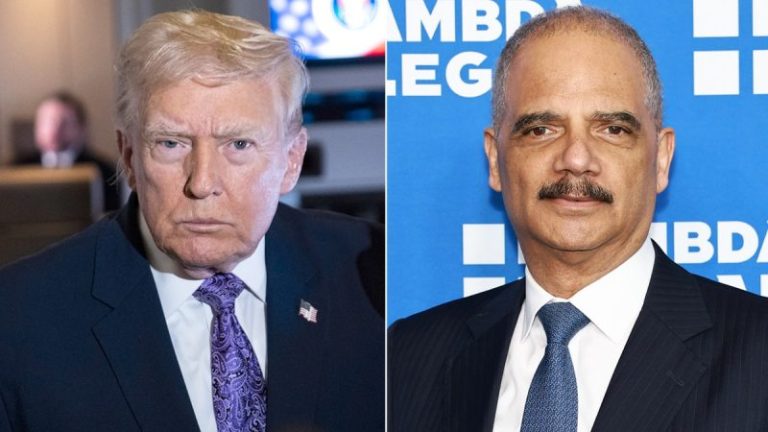
In a Monday Truth Social post, the president shared a video featuring clips of former Attorney General Eric Holder, who opined that if Democrats win a ‘trifecta’ in the 2028 elections, the prospect of expanding the Supreme Court should be under consideration. 

Holder made the comment while speaking with Ben Meiselas, co-founder of MeidasTouch, which posted the video last month.

In the Monday Truth Social post, Trump referred to Holder, who served under Democratic President Barack Obama, as an ‘Obama sycophant’ and said that ‘Eric Holder (known as ‘FAST AND FURIOUS’) just gave a Speech where he emphatically stated, above all else, that Democrats will PACK the Supreme Court of the United States if they get the chance. The word is, he wants 21 Radical Left Activist Judges, not being satisfied with the heretofore 15 that they were seeking.’

Trump suggested that eliminating the filibuster would enable Republicans to win in the 2026 midterm elections and the 2028 White House contest.

‘It will be 21, they will destroy our Constitution, and there’s not a thing that the Republicans can do about it unless we TERMINATE THE FILIBUSTER, which will lead to an easy WIN of the Midterms, and an even easier WIN in the Presidential Election of 2028,’ he asserted.

‘Why would the Republicans even think about giving them this opportunity? The American People don’t want gridlock, they want their Leaders to GET THINGS DONE — TERMINATE THE FILIBUSTER, AND HAVE THE MOST SUCCESSFUL FOUR YEARS IN THE HISTORY OF OUR COUNTRY, BY FAR, WITH NOT EVEN THE HINT OF A SHUTDOWN OF OUR GREAT NATION ON JANUARY 30TH!’ Trump declared in the post.

This post appeared first on FOX NEWS

The White House confirmed and defended conducting a second strike against alleged drug smugglers in the Caribbean in September, amid the Trump administration’s crusade targeting the influx of drugs into the U.S. 

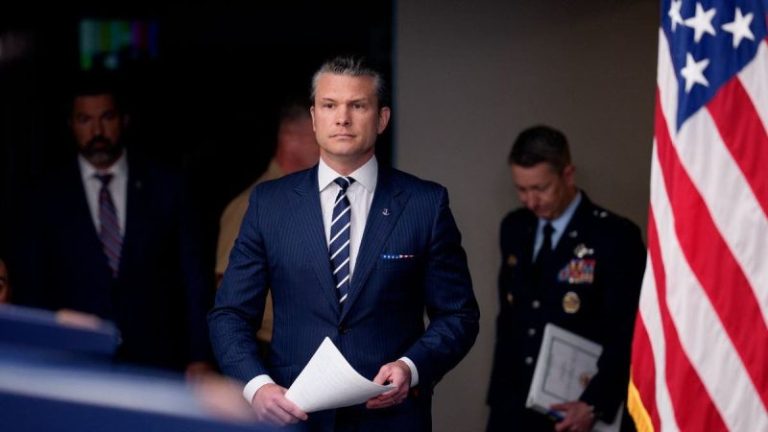
The White House’s statement comes after the Washington Post reported Friday that Secretary of Defense Pete Hegseth verbally ordered that a Sept. 2 attack kill everyone on board the alleged drug boat, drawing scrutiny from lawmakers who are requesting additional oversight into the strikes. The Post reported that a second strike was conducted to take out the remaining survivors on the boat. 

Although the Pentagon pushed back against the report, White House press secretary Karoline Leavitt did not deny that a second strike occurred and told reporters Monday that the strike Sept. 2 was conducted ‘in self-defense’ in international waters ‘in accordance with the law of armed conflict.’ 

The White House said Monday that Hegseth authorized the second strike, but the head of U.S. Special Operations Command, Adm. Frank ‘Mitch’ Bradley, ordered and directed it. At the time of the strike, Bradley was serving as the commander of Joint Special Operations Command, which falls under U.S. Special Operations Command. 

‘On September 2nd, Secretary Hegseth authorized Admiral Bradley to conduct these kinetic strikes,’ Leavitt said. ‘Admiral Bradley worked well within his authority and the law, directing the engagement to ensure the boat was destroyed and the threat to the United States of America was eliminated.’

When asked to confirm that Bradley was the one who ordered the second strike, Leavitt said that he was ‘well within his authority to do so,’ but declined to disclose whether the second strike was ordered because there were survivors remaining from the first strike. 

Leavitt also disputed that Hegseth ever gave an initial order to ensure that everyone on board was killed, when asked specifically about Hegseth’s instructions. 

‘I would reject that the secretary of War ever said that,’ Leavitt said. ‘However, the president has made it quite clear that if narco-terrorists, again, are trafficking illegal drugs toward the United States, he has the authority to kill them.’

The White House’s statements on the matter don’t completely align with the Pentagon’s. On Friday, the Pentagon denied the Post’s reporting in its entirety. 

‘We told the Washington Post that this entire narrative was false yesterday,’ Pentagon spokesperson Sean Parnell said in a post on social media Friday. ‘These people just fabricate anonymously sourced stories out of whole cloth. Fake News is the enemy of the people.’ 

The Pentagon did not immediately respond to a request for comment from Fox News Digital.

Meanwhile, the report has prompted lawmakers on both sides of the aisle to ask additional questions about the operations, and press for additional oversight. 

‘This committee is committed to providing rigorous oversight of the Department of Defense’s military operations in the Caribbean,’ Reps. Mike Rogers, R-Ala., and Adam Smith, D-Wash., who lead the House Armed Services Committee, said in a statement on Saturday. ‘We take seriously the reports of follow-on strikes on boats alleged to be ferrying narcotics in the SOUTHCOM region and are taking bipartisan action to gather a full accounting of the operation in question.’

Spokespeople for the committee did not respond to a request for comment from Fox News Digital regarding the nature of these additional oversight efforts. 

Additionally, the top Democrat on the Senate Foreign Relations Committee, Sen. Jeanne Shaheen, D-N.H., said Monday that she is calling for an investigation into the matter as well, and said that Hegseth ‘owes answers to the American people immediately.’

The Trump administration has carried out more than 20 strikes against alleged drug boats in Latin American waters, and has bolstered its military presence in the Caribbean to align with Trump’s goal to crack down on the influx of drugs into the U.S.

The White House also confirmed Monday that Trump is slated to hold a meeting on Monday evening to discuss future actions concerning Venezuela. 

This post appeared first on FOX NEWS
Russia criticized the U.S.’ proposed Golden Dome missile defense system Monday, warning it could destabilize global nuclear deterrence, according to reports.

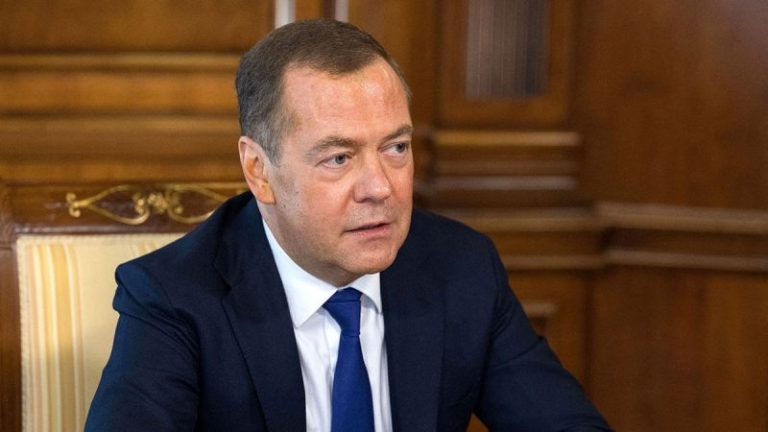
According to TASS, Deputy Chairman of the Russian Security Council Dmitry Medvedev told Kommersant newspaper that the ambitious project is extremely ‘provocative.’

‘Problems in the strategic sphere resulting from destabilizing U.S. actions only continue to grow. It is enough to recall the highly provocative anti-missile project ‘Golden Dome for America,’’ he said, TASS reported.

‘It fundamentally contradicts the assertion of the inseparable interrelationship between offensive and defensive strategic arms, which, by the way, was enshrined in the preamble of New START,’ Medvedev added, citing the treaty that protects U.S. national security by placing limits on Russia’s deployed intercontinental nuclear weapons.

A defense expert says Russia’s reaction underscores the Golden Dome’s power as a geopolitical signal to the world.

‘Even before it has been built, the dome is military focused and politically focused and an incredible bargaining chip with U.S. adversaries,’ defense expert Cameron Chell told Fox News Digital.

‘In this case, it is Russia and China in particular, in terms of how the U.S. postures for negotiating peace terms, treaty terms and whether the U.S. will be negating their already existing arsenal,’ the Draganfly CEO claimed.

The Golden Dome is a long-term missile defense concept aimed at protecting North America from ballistic, cruise and hypersonic missile threats.

Chell spoke after the Pentagon released its National Defense Strategy on Jan. 23, outlining a renewed focus on homeland defense, expanded missile defense, counter-drone systems, cyber capabilities and long-range strike forces.

The planned Golden Dome missile defense shield is designed to defeat ‘large missile barrages and other advanced aerial attacks,’ the strategy said, while also hardening military and key civilian infrastructure against cyber strikes as Russia and China continue expanding their hypersonic weapons programs.

As previously reported by Fox News Digital, China has also pushed back against the Golden Dome missile defense initiative, accusing Washington of undermining global strategic stability and risking the weaponization of outer space.

‘There’s big value in the talk and the build-out of Golden Dome, even long before it gets built, not to mention the research and technology development that comes out of it,’ Chell said.

‘The posturing and the economic benefits of building something like this are also factored into why the dome is so important.’

The project’s sheer scale is expected to drive its strategic impact but could also come with an enormous price tag.

‘The dome is going to take trillions to build and is the largest military project, probably the largest engineering and technology project ever attempted, so there are going to be challenges getting it done,’ Chell explained.

‘The U.S. has ten years of planning, including where they are going to have communication links, radar systems, and early warning systems.’ That planning, Chell noted, is shifting focus north.

‘In order to protect the U.S., you want to take things down before they get over the top of the country,’ Chell said.

‘Places like Canada, or even further north, become the dropping ground. You want to get these threats as soon as possible.’

Canada and Greenland are viewed by U.S. defense planners as critical for radar coverage, space tracking and early-warning infrastructure.

‘The idea is something being shot down from space, but to do that you need very detailed landscape data of the entire North and you need access to the North,’ Chell said.

President Trump has long argued the U.S. must control Greenland for national security reasons, citing its strategic Arctic location and natural resources.

‘There needs to be infrastructure and oversight in the far north, in Canada, in Greenland, and places like that,’ Chell said. ‘All that planning has to be done well ahead of time, before we have anything operational.’

Chell also pointed to the potential role of drones in supporting the Golden Dome’s broader mission.

‘Drones could be part of informing the Golden Dome as reconnaissance, surveillance and intelligence tools,’ he said, adding that the ‘entire military complex is integrated.’

Fox News Digital has reached out to the Department of War for comment.

This post appeared first on FOX NEWS