
Author

admin

Browsing

Here are some charts that reflect our areas of focus this week at


XLU Leads with New High

Even though the Utilities SPDR (XLU) cannot keep pace with the Technology SPDR (XLK) and Communication Services SPDR (XLC), it is in a leading uptrend. XLU formed a cup-with-handle from November to July and broke to new highs the last two weeks. ETFs hitting new highs are in strong uptrends and should be on our radar.


Metal Mania in 2025

In a tribute to Ozzy, metals are leading the way higher in 2025. The PerfChart below shows year-to-date performance for the continuous futures for 12 commodities. Copper, Platinum and Palladium are up more than 45% year-to-date, while Gold is up 28.38% and Silver is up 35.30%. QQQ is up 10.52% year-to-date, but lagging these metals. The other commodities are mixed.


Multi-Year Highs for Silver and Copper

The next chart shows 11 year bar charts for five metals. Gold broke out in early 2024 and led the metals move with an advance the last 21 months. Silver and copper broke out to multi-year highs. Platinum broke above its 2021 high and Palladium got in the action with an 18 month high. There is a clear message here: metals are moving higher and leading as a group.  


Home Construction Hits Moment of Truth

The Home Construction ETF (ITB) hit its moment of truth as it rose to its falling 40-week SMA. Notice that ITB failed just below this moving average in August 2023. During the 2023-2024 uptrend, the 40-week SMA was more friendly as ITB reversed near this level in October 2023 and June 2024. ITB surged to the falling 40-week SMA in July, but the long-term trend is down and this area could be its nemesis.

Thanks for Tuning in!

See TrendInvestorPro.com for more


The chart of Meta Platforms, Inc. (META) has completed a roundtrip from the February high around $740 to the April low at $480 and all the way back again.  Over the last couple weeks, META has now pulled back from its retest of all-time highs, leaving investors to wonder what may come next.

Is this the beginning of a new downtrend phase for META?  Or just a brief pullback before a new uptrend phase propels META to new all-time highs?

Today we’ll look at two potential scenarios, including the double top pattern and the cup and handle pattern, and share which technical indicators and approaches could help us determine which path plays out into August.

The double top scenario basically means that the late July retest of the previous all-time high was the end of the recent uptrend phase.  The double top pattern is literally when a major resistance level is set and then retested.  The implication is that a lack of willing buyers means the uptrend is exhausted, and there is nowhere to go but down.

While the 21-day exponential moving average is currently in play for META, I would say that a break below the 50-day moving average could confirm this as the correct scenario.  If that smoothing mechanism does not hold, then the price action would imply less of a pullback and more like the beginning of a real distribution phase.

What is META pulls back but then resumes an uptrend phase, leading META to another new all-time high?  That would result in a confirmed cup and handle pattern, created by a large rounded bottoming pattern followed by a brief pullback.  The key to this pattern is the “rim” of the cup, which sits right at $740 for META.

Given the pullback META has demonstrated so far in July, I would say that a break above the $740 level would basically confirm a bullish cup and handle pattern.  That would suggest much more upside potential for META, as the stock would literally go into previously uncharted territory.

So how can we determine which scenario is more likely to play out?  This is where we need to incorporate more technical indicators into the discussion, as a way to further validate and confirm our investment thesis.

Just to review, I think a break above $740 would confirm a bullish cup and handle pattern.  I would also say that a break below the $680 level, which would represent a move below the 50-day moving average as well as the June swing lows, would basically confirm a bearish double top pattern.

We can also use the Relative Strength Index (RSI) to help determine whether META remains in a bullish trend phase.  During bull phases, the RSI rarely gets below 40, because buyers usually step in to “buy the dips” and keep the momentum fairly constructive.  So if the price would break down, and the RSI would not hold that crucial 40 level, that could mean a bearish outlook is warranted.

Finally, we can use volume-based indicators to assess whether moves in the price are supported by stronger volume readings.  Here I’ve included the Accumulation/Distribution Line, which tracks the trend in daily volume readings over time.  We can see that the high in July resulted in a divergence, as the A/D line was trending lower.  If the A/D line would break below its June and July lows, marked by a dashed red line, that would represent a bearish volume reading for META.

Technical analysis is less about predicting the future, and more about determining the most probable scenarios based on our analysis of trend, momentum, and volume.  I hope this discussion shows how the outlook for META can be easily determined and tracked using the best practices of technical analysis!

RR#6,

Dave

PS- Ready to upgrade your investment process?  Check out my free behavioral investing course!

David Keller, CMT

President and Chief Strategist

Sierra Alpha Research LLC

marketmisbehavior.com

https://www.youtube.com/c/MarketMisbehavior

Disclaimer: This blog is for educational purposes only and should not be construed as financial advice.  The ideas and strategies should never be used without first assessing your own personal and financial situation, or without consulting a financial professional.  

The author does not have a position in mentioned securities at the time of publication.    Any opinions expressed herein are solely those of the author and do not in any way represent the views or opinions of any other person or entity.

Markets don’t usually hit record highs, risk falling into bearish territory, and spring back to new highs within six months. But that’s what happened in 2025.

In this special mid-year recap, Grayson Roze sits down with David Keller, CMT, to show how disciplined routines, price-based signals, and a calm process helped them ride the whipsaw instead of getting tossed by it. You’ll see what really happened under the surface, how investor psychology drove the swings, and the exact StockCharts tools they leaned on to stay objective. 

If you’re focused on protecting capital, generating income, and sleeping well at night while still capturing the upside, this is a must-watch. Discover which charts deserve your attention now, what to ignore, and how to prep for the back half of 2025. 

This video premiered on July 23, 2025. Click on the above image to watch on our dedicated Grayson Roze page on StockCharts TV.

You can view previously recorded videos from Grayson at this link.

The S&P 500 ($SPX) just logged its fifth straight trading box breakout, which means that, of the five trading ranges the index has experienced since the April lows, all have been resolved to the upside.

How much longer can this last? That’s been the biggest question since the massive April 9 rally. Instead of assuming the market is due to roll over, it’s been more productive to track price action and watch for potential changes along the way. So far, drawdowns have been minimal, and breakouts keep occurring. Nothing in the price action hints at a lasting change — yet.

While some are calling this rally “historic,” we have a recent precedent. Recall that from late 2023 through early 2024, the index had a strong start and gave way to a consistent, steady trend.

From late October 2023 through March 2024, the S&P 500 logged seven consecutive trading box breakouts. That streak finally paused with a pullback from late March to early April, which, as we now know, was only a temporary hiccup. Once the bid returned, the S&P 500 went right back to carving new boxes and climbing higher.

New 52-Week Highs Finally Picking Up

If there’s been one gripe about this rally, it’s that the number of new highs within the index has lagged. As we’ve discussed before, among all the internal breadth indicators available, new highs almost always lag — that’s normal. What we really want to see is whether the number of new highs begins to exceed prior peaks as the market continues to rise, which it has, as shown by the blue line in the chart below.

As of Wednesday’s close, 100 S&P 500 stocks were either at new 52-week highs or within 3% of them. That’s a strong base. We expect this number to continue rising as the market climbs, especially if positive earnings reactions persist across sectors.

Even when we get that first day with 100+ S&P 500 stocks making new 52-week highs, though, it might not be the best time to initiate new longs.

The above chart shows that much needs to align for that many stocks to peak in unison, which has historically led to at least a short-term consolidation, if not deeper pullbacks — as highlighted in yellow. Every time is different, of course, but this is something to keep an eye on in the coming weeks.

Trend Check: GoNoGo Still “Go”

The GoNoGo Trend remains in bullish mode, with the recent countertrend signals having yet to trigger a greater pullback.

Active Bullish Patterns

We still have two live bullish upside targets of 6,555 and 6,745, which could be with us for a while going forward. For the S&P 500 to get there, it will need to form new, smaller versions of the trading boxes.

Failed Bearish Patterns

In the chart below, you can view a rising wedge pattern on the recent price action, the third since April. The prior two wedges broke down briefly and did not lead to a major downturn. The largest pullbacks in each case occurred after the S&P 500 dipped below the lower trendline of the pattern.

The deepest drawdown so far is 3.5%, which is not exactly a game-changer. Without downside follow-through, a classic bearish pattern simply can’t be formed, let alone be broken down from.

We’ll continue to monitor these formations as they develop because, at some point, that will change.

Is the market’s next surge already underway? Find out with Tom Bowley’s breakdown of where the money is flowing now and how you can get in front of it.

In this video, Tom covers key moves in the major indexes, revealing strength in transports, small caps, and home construction. He identifies industry rotation signals, which are pointing to aluminum, recreational products, and furnishings. Tom then demonstrates how to use StockCharts’ tools to scan for momentum stocks in emerging leadership groups — see why SGI tops Tom’s list. He ends with a discussion of post-earnings reactions from major names like GOOGL, TSLA, IBM, and LVS. 

And, of course, Tom wraps every idea with clear chart setups you can act on today. 

This video premiered on July 24, 2025. Click this link to watch on Tom’s dedicated page.

Missed a session? Archived videos from Tom are available at this link.

Here are some charts that reflect our areas of focus this week at


XLU Leads with New High

Even though the Utilities SPDR (XLU) cannot keep pace with the Technology SPDR (XLK) and Communication Services SPDR (XLC), it is in a leading uptrend. XLU formed a cup-with-handle from November to July and broke to new highs the last two weeks. ETFs hitting new highs are in strong uptrends and should be on our radar.


Metal Mania in 2025

In a tribute to Ozzy, metals are leading the way higher in 2025. The PerfChart below shows year-to-date performance for the continuous futures for 12 commodities. Copper, Platinum and Palladium are up more than 45% year-to-date, while Gold is up 28.38% and Silver is up 35.30%. QQQ is up 10.52% year-to-date, but lagging these metals. The other commodities are mixed.


Multi-Year Highs for Silver and Copper

The next chart shows 11 year bar charts for five metals. Gold broke out in early 2024 and led the metals move with an advance the last 21 months. Silver and copper broke out to multi-year highs. Platinum broke above its 2021 high and Palladium got in the action with an 18 month high. There is a clear message here: metals are moving higher and leading as a group.  


Home Construction Hits Moment of Truth

The Home Construction ETF (ITB) hit its moment of truth as it rose to its falling 40-week SMA. Notice that ITB failed just below this moving average in August 2023. During the 2023-2024 uptrend, the 40-week SMA was more friendly as ITB reversed near this level in October 2023 and June 2024. ITB surged to the falling 40-week SMA in July, but the long-term trend is down and this area could be its nemesis.

Thanks for Tuning in!

See TrendInvestorPro.com for more


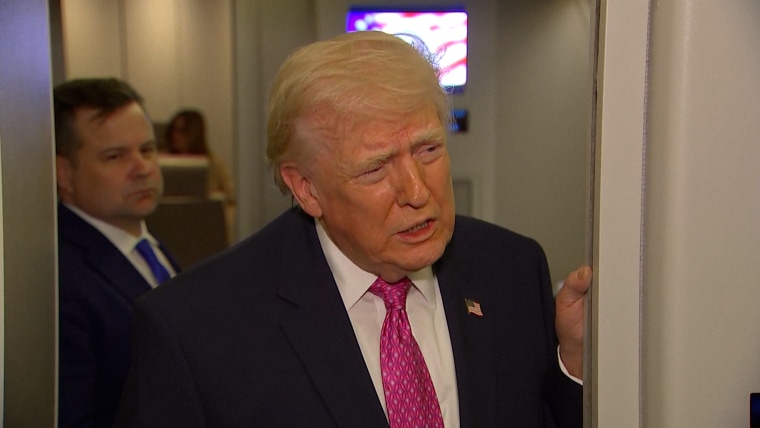
Trump’s China trip is becoming a major business and diplomatic event.

The White House is lining up a heavyweight group of CEOs for the visit to Beijing next week, with invitations going to leaders from Nvidia, Apple, Exxon, Boeing, Qualcomm, Blackstone, Citigroup and Visa, according to a report by Semafor.

The timing is crucial as President Donald Trump is heading to Beijing after the fragile trade truce struck at the South Korea summit in October 2025.

The administration appears to want the business elite in the room for the next phase of bargaining.

The message seems simple: Washington is not just taking a diplomatic trip, it is staging a commercial one.

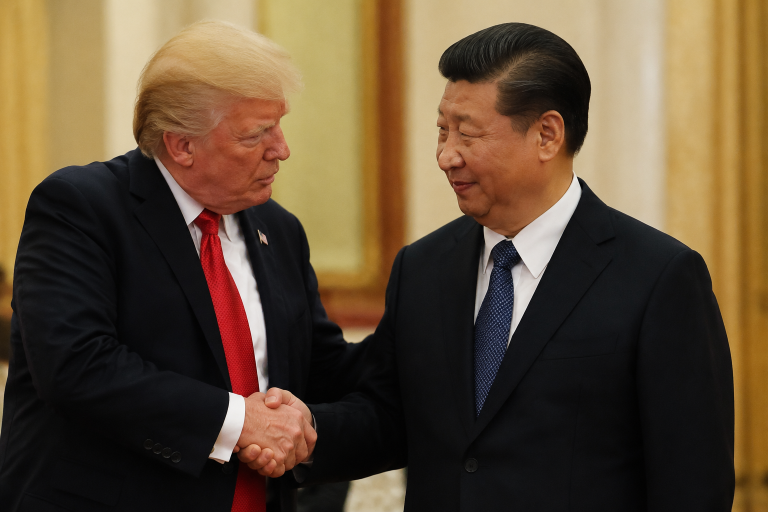
And for executives whose revenues, supply chains, or market access run through China, the chance to be seen beside Trump and Xi Jinping is hard to ignore.

Trump’s China visit: A delegation chosen for leverage

The invite list includes Nvidia CEO Jensen Huang, which is the clearest signal that technology policy remains central.

Huang has been trying to preserve access to China for the company’s AI chips, and he told Reuters that it would be “a privilege” and “a great honor” to represent the United States if invited.

Apple is there for a different reason: supply chain exposure.

China remains the core of the company’s manufacturing base, so any escalation in tariffs, export controls, or political friction can quickly flow through to margins and production risk.

Exxon’s inclusion points to energy diplomacy, as the administration looks for Chinese purchases of American oil, LNG and other commodities that can narrow the trade gap.

Boeing may be the most commercially obvious name, as CEO Kelly Ortberg told Reuters in April that Boeing was counting on the Trump administration to help unlock a long-awaited major order from China.

The talks could cover as many as 500 737 MAX jets, plus widebody aircraft, which would be a major win for Boeing after years of strain.

Deals are possible, but expectations are modest

The harder truth is that this summit is not being sold as a breakthrough moment.

The senior officials want to keep expectations low, with one goal being a modest extension of the trade truce rather than a sweeping reset.

The business delegation seems like a way to show momentum without promising too much.

That does not mean there is nothing on the table as the US wants more Chinese buying of soybeans, beef and Boeing aircraft, while China is pressing Washington to ease some semiconductor export controls and loosen restrictions on chipmaking equipment and advanced memory chips.

The two sides are also weighing formal discussions on AI, which would add another layer of strategic significance to Huang’s presence.

Why investors should care

For markets, the trip matters more for preventing new tensions than for announcing big deals.

A smooth visit with visible CEO participation would support the idea that Washington and Beijing are trying to de-risk the relationship rather than blow it up again.

That would be positive for global equities, semiconductors, industrials and shippers alike.

Nvidia investors will watch for any hint that export restrictions could soften.

Boeing holders will focus on whether China’s long-delayed order finally lands.

And the broader market will be reading the optics as carefully as the communiques.

The post Why has Trump invited Apple, Nvidia and Exxon CEOs on his China trip? appeared first on Invezz

The FTSE 100 Index remained in a narrow range this week as traders watched the developments in the Middle East, where odds of a deal between the US and Iran rose. It also wavered because of the weak HSBC earnings. 

This article looks at some of the top FTSE 100 and FTSE 250 shares to watch next week, including popular names like Burberry, Vodafone, BT Group, and ITV.

Vodafone and the BT Group to release their numbers 

Telecommunications companies have remained in a tight range in the past few weeks as they are less affected by the ongoing US-Iran war. Vodafone Group stock was trading at 116p on Friday, down slightly from the year-to-date high of 120p. It remains much higher than the 2024 low of 55.25p.

BT Group, on the other hand, has also done well and is loitering at the highest level since in years. It has jumped by over 140% from its lowest level during the pandemic.

As we wrote earlier this week, analysts believe that BT Group’s growth will remain under pressure in the coming years as the broadband segment continues to lose customers. The company expects to lose over 800k customers in the last financial year, lower than the previous estimate of over 1 million.

BT has offset the ongoing revenue decline by cutting costs and exiting most of its international business. It is also addressing the business segment, which has been a top laggard over the years.

Vodafone, on the other hand, has been in a turnaround process in the past few years. This turnaround has seen it exit some of the large markets and increase its presence in others, such as Kenya. Traders will put more emphasis on the German service business.

Burberry’s results to focus on the Chinese business 

Burberry Group will be the top FTSE 100 company to watch next week as it releases its financial results. These numbers come as the stock was trading at 1,200, up from last year’s low of 553p.

The company has done well because of the ongoing turnaround efforts, which have focused on introducing more British-focused designs and growing its Chinese sales. 

Its main challenge is that the Chinese business remains under pressure as growth for luxury brands in the country fades. It has also faced challenges because of the ongoing US-Iran war, which has affected its business in the Middle East as tourist growth fades.

National Grid to release earnings as JP Morgan slashes target 

National Grid stock will be in the spotlight as the company publishes its financial results next week. These numbers come a few days after analysts at JPMorgan slashed the target to 1,400p from the previous 1,450p. Morningstar analysts have a target of 1,440p.

National Grid has already warned that its EPS will drop by 1%, while its capital expenditure will soar as it increases its grid presence in key markets. It expects to spend £70 billion through FY31.

ITV to publish its financial results 

ITV,  a former FTSE 100 company now in the FTSE 250 Index, will be in the spotlight next week as it publishes its numbers.

The ITV share price was trading at 82p, up sharply from the year-to-date low of 71.15p. It rose after reports that Sky was considering buying its broadcast channels for £1.6 billion. Such a deal would create a top 3 UK streamer to compete with companies like Netflix and YouTube.

The most recent results showed that two-thirds of its revenue now comes from ITV Studios and M&E digital. Its studios revenue rose by 5% to £2.13 billion, while advertising rose by 5% amid the shift in streaming.

The post Top FTSE 100 and 250 shares to watch: Burberry, ITV, Vodafone, BT, National Grid appeared first on Invezz

The IAG share price retreated today, May 8, and then pared back some of those losses after the company published its results, which provided more color on how the ongoing war has affected its business. It retreated to 372p and then rebounded to 390p. 

IAG flags Iran war risks

International Consolidated Airlines Group, the parent company of top airlines like British Airways, Iberia, LEVEL, and Aer Lingus, has pulled back from the year-to-date high as investors assessed the impact of the ongoing Iranian crisis. 

This crisis has led to higher jet oil prices, including some shortages, in key areas like Europe and Asia. They have more than doubled, a move that has mostly affected unhedged airlines. 

IAG has been less affected by the crisis as it spends millions of dollars each year to hedge these risks. It is well-hedged for the rest of the year at 70% and the management expects to recover around 60% of this through revenue and cost management.

At the same time, it runs a highly diversified business model, with most of its revenue coming from the transatlantic routes. 

The company published strong numbers today, even as it warned about margins. Its revenue jumped by 1.9% YoY to 7.18 billion euros in the first quarter, while its operating profit jumped by 77%. This growth was largely because of its revenue growth and offset by the relatively higher energy prices. 

British Airways made over 3.38 billion pounds, making it the biggest part of its business. It was followed by Iberia, which made 1.8 billion euros. Aer Lingus made 420 million euros.

Additionally, its loyalty business, which is a capital-light segment, grew by 10% as its profit margin jumped to 20.1%. Its revenue jumped to 579 million pounds.This business enables customers to collect rewards such as upgrades and car rentals. It has become an important part of most airlines, with analysts seeing them as banks. IAG made a net profit of 301 million euros, while its total liquidity jumped to over 12.7 billion.

The main risk that IAG stock faces is a prolonged war that pushes jet fuel prices much higher. While Trump has signaled that he wants the war to end, Iran and Israel have other ideas. It is also highly unlikely that Trump will get a better deal. For one, any deal will require the US to end its sanctions and release Iranian funds, a move that Israel will blast. 

Therefore, there is still a risk that the war will last longer, which will hurt the ongoing recovery. On the positive side, the war may end soon, leading to lower prices and recovery in Middle East travel.

IAG share price technical analysis

IAG stock chart | Source: TradingView

The daily chart shows that the IAG stock price has crawled back in the past few days. It has jumped from the war low of 335p to the current 390p. A closer look shows that it has formed a down-gap and moved above the 50-day and 100-day moving averages. 

Therefore, despite the rising risks, there is a likelihood that the stock will keep rising as bulls target the key resistance level at 413p. A move above that price will point to more gains, potentially to the resistance level at 450p. 

The post IAG share price forecast ahead of earnings as it flags jet fuel risks appeared first on Invezz

Is the market’s next surge already underway? Find out with Tom Bowley’s breakdown of where the money is flowing now and how you can get in front of it.

In this video, Tom covers key moves in the major indexes, revealing strength in transports, small caps, and home construction. He identifies industry rotation signals, which are pointing to aluminum, recreational products, and furnishings. Tom then demonstrates how to use StockCharts’ tools to scan for momentum stocks in emerging leadership groups — see why SGI tops Tom’s list. He ends with a discussion of post-earnings reactions from major names like GOOGL, TSLA, IBM, and LVS. 

And, of course, Tom wraps every idea with clear chart setups you can act on today. 

This video premiered on July 24, 2025. Click this link to watch on Tom’s dedicated page.

Missed a session? Archived videos from Tom are available at this link.