
Author

admin

Browsing

Most U.S. data breach disclosures explain what information was leaked and any protective steps available to consumers.

At the federal level, the Federal Trade Commission advises that after a breach involving sensitive personal information, consumers may consider placing a credit freeze to help prevent new credit accounts from being opened in their name.

Many people place that credit freeze and assume they’re protected. But a credit freeze is not a comprehensive block against identity theft. It stops most new credit applications, but it doesn’t prevent the misuse of your Social Security number or account takeovers.

Get my best tech tips, urgent security alerts and exclusive deals delivered straight to your inbox. Plus, you’ll get instant access to my Ultimate Scam Survival Guide — free when you join my CYBERGUY.COM newsletter.

What a credit freeze actually does

A credit freeze, also called a security freeze, limits access to your credit report at Equifax, Experian, and TransUnion. Under federal law, placing a freeze is free. When a freeze is in place, most lenders can’t access your credit file to evaluate applications for new credit cards or lines of credit. If a creditor can’t see your credit report, the application will usually be denied.

You can manage your credit freeze with each bureau individually. With Experian, for example, you sign in to your free online account at Experian’s credit freeze page and then place, lift, or schedule a thaw; you can also call Experian’s toll-free number (888-397-3742). If you plan to apply for credit, you must lift the freeze beforehand.

A credit freeze blocks most new accounts that require a credit check. It does not extend beyond your credit file.

Some identity protection services offer a credit lock feature that allows you to restrict access to your credit file through a mobile app. Like a freeze, it can limit new credit checks. The main difference is convenience, as you can typically turn it on or off quickly without logging into a bureau’s website or calling by phone.

Credit freezes can’t stop every form of identity theft

A credit freeze blocks new credit accounts, but it does not stop many common forms of identity theft that do not require a credit check.

  • Account takeovers: If someone has access to an existing credit card or bank account, they don’t need to open a new line of credit. They can change the email address, phone number, or mailing address tied to the account and begin making charges.
  • Tax identity theft: A fraudulent federal tax return does not need a credit check. If someone files a return using your SSN before you do, the IRS may reject your legitimate filing.
  • Employment fraud: If your SSN is used for employment, it will not appear as a credit inquiry. Instead, the earnings may be recorded under your Social Security record.
  • Government benefits fraud: Unemployment insurance and other state-administered benefits do not require a traditional credit check.
  • Medical identity theft: A stolen identity can be used to get medical treatment. Bills may not appear until the provider sends the account to collections.

What happens when the fraud doesn’t involve a credit inquiry?

When identity theft happens outside the credit approval process, there is no automatic reversal. Each category of fraud is handled by a different agency or company.

  • If a fraudulent tax return is filed, you must work directly with the IRS and submit Form 14039, Identity Theft Affidavit. The IRS may require identity verification before releasing a refund.
  • If your SSN is used for employment, you must contact the Social Security Administration to correct your earnings record.
  • If government benefits are fraudulently claimed in your name, the state agency is involved. There is no federal clearinghouse.
  • If medical debt appears in collections, you must dispute it with both the provider and the collection agency, often in writing.

There is no single agency coordinating these corrections. You’re responsible for identifying the fraud, filing the appropriate reports, and tracking responses across agencies.

If a freeze isn’t the end, what is?

A credit freeze addresses risks tied to new credit applications. Identity theft often goes beyond that. Comprehensive identity protection typically includes credit monitoring across all three major bureaus, alerts for new inquiries or accounts, and monitoring for exposed personal information such as Social Security numbers, driver’s license numbers, passport details, email addresses, and passwords.

Some services also monitor public records, address changes, identity verification activity, and even suspicious financial transactions when accounts are linked. Early alerts can help you spot fraud before it spreads.

If identity theft does occur, recovery can be complicated. Some identity protection plans provide access to fraud resolution specialists who help contact creditors, place fraud alerts, dispute unauthorized accounts, and prepare required documentation. Many also include identity theft insurance to help cover eligible recovery expenses, such as lost wages or legal fees.

No service can prevent every form of identity theft. But layered monitoring, fast alerts, and guided recovery support can make the damage easier to contain and resolve.

See my tips and best picks on Best Identity Theft Protection at Cyberguy.com.

Kurt’s key takeaways

A credit freeze is a smart move after a data breach, but it is only one layer of protection. Many forms of identity theft do not involve a credit check, which means they can happen quietly and take time to fix. Real protection comes from understanding the gaps, monitoring your accounts, and acting quickly if something looks wrong. The more proactive you are, the easier recovery becomes.

Have you placed a credit freeze, and did you know it does not protect against every type of identity theft? Let us know your thoughts by writing to us at Cyberguy.com.

Get my best tech tips, urgent security alerts and exclusive deals delivered straight to your inbox. Plus, you’ll get instant access to my Ultimate Scam Survival Guide — free when you join my CYBERGUY.COM newsletter.

Copyright 2026 CyberGuy.com.  All rights reserved.
This post appeared first on FOX NEWS

Is the concept of ‘equal time’ outdated on today’s broadcast networks? The Federal Communications Commission put regulations on the books in 1934 requiring equal air time for political candidates during an election season. But that doesn’t extend to cable, or to streaming, or to the booming podcast world. You could get technical and claim the broadcast networks often come to people today via cable or satellite connections, not an antenna.

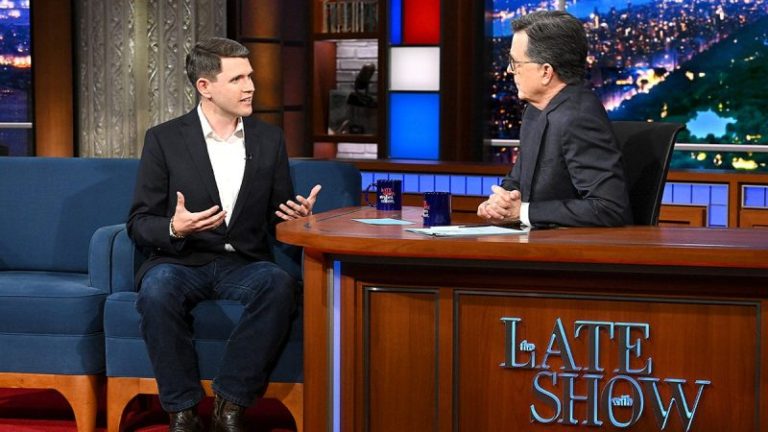
FCC Chairman Brendan Carr recently suggested late-night comedy shows and daytime talk shows like ABC’s ‘The View’ could be evaluated for potential violations of the old equal-time rules. On Monday, Feb. 16, ‘Late Show’ host Stephen Colbert gaudily announced that he invited Texas state Democrat Rep. James Talarico for an interview, but lawyers told him ‘in no uncertain terms’ that he couldn’t do this, so he posted a Talarico interview on YouTube instead. When that YouTube video drew over 8 million views, it was painted by liberal journalists as a great victory over President Donald Trump. But Trump never objected to this interview.

Colbert had to unfurl the nightly rant about being a courageous dissident and all that rot: ‘Donald Trump’s administration wants to silence anyone who says anything bad about Trump on TV, because all Trump does is watch TV, OK? He’s like a toddler with too much screen time. He gets cranky and then drops a load in his diaper.’

Then, surprisingly, CBS put out a statement that suggested Colbert was a liar, that the interview was not banned: ‘The show was provided legal guidance that the broadcast could trigger the FCC equal time rule for two other candidates, including Rep. Jasmine Crockett.’ On Tuesday, Colbert sputtered. ‘They know damn well that every word of my script last night was approved by CBS’s lawyers.’

Colbert wasn’t in danger of having to invite Texas Republican Sen. John Cornyn. He might have to interview Crockett – who appeared on the show last year, before she was a candidate. This whole stunt could be painted as a campaign booster for Talarico, who raised millions of dollars off the appearance. 

Then came the weirdness of CBS News covering this spat, giving both sides equal time and weight. On Wednesday’s ‘CBS Mornings,’ reporter Elaine Quijano ran the opposing views, and then added another liberal view: ‘Monday was the first known time a late night talk show changed its programming since the FCC issued its new guidance. Anna Gomez, the only Democratic-appointed FCC commissioner, worries that decision could enable censorship.’

The ‘PBS News Hour’ also turned to Gomez for an attack on Trump and Carr: ‘Anything they don’t like, they want to control and they want to censor.’ Defunded PBS still sounds bitter.

The supreme irony in this entire kerfuffle is that Colbert represents the exact opposite of equal time. Overall, Alex Christy of NewsBusters reported that from September 2022 through Thursday, Colbert has brought on 230 liberal or Democrat guests, to only one Republican – and that Republican was former Rep. Liz Cheney after she was drummed out of office in a primary. So, let’s wink and say 231 to zero.

CBS could easily change the name of its late-night comedy show to ‘The People’s Republic of Colbert.’ Anyone who wants to end their day by listening to a long interview with Vermont Independent Sen. Bernie Sanders is not looking for giggles. But that’s what viewers found on January 20. Colbert announced with fanfare that this was the 19th time he’d platformed Sanders.

This is not a ‘bona fide news interview,’ if we’re going to use FCC lingo. It’s the lamest kind of ‘Sunset Semester’ socialism session. ‘Define oligarchy for us’ isn’t even a question. It’s a prompt.

But Colbert also put this ball on the tee for Bernie:  ‘This is a red-letter day for you. Here you are administering the oath of office to Mayor Mamdani and I just—you’ve been fighting, you’ve been carrying the banner of democratic socialists for a long time. What was that like to swear in the first Democratic Socialist mayor of a major city?’ He found it ‘extremely gratifying.’

When that YouTube video drew over 8 million views, it was painted by liberal journalists as a great victory over President Donald Trump. But Trump never objected to this interview.

It was the same situation with Talarico – two Democrats talking like Democrats. Colbert nudged: ‘It’s not the first time you’ve caused some drama. ‘FCC opening probe into The View after appearance by Talarico.’ Do you mean to cause trouble?’

Overall, the late-night ‘comedy’ show guest count in 2025 was overwhelmingly stacked: 99% of the political guests are liberals or Democrats. It’s the same on ‘The View.’ In 2025, Whoopi & Co. interviewed 128 liberals or Democrats to two Republicans or sort-of conservatives. Again, that’s being generous. The two are now former Rep. Marjorie Taylor Greene, who was fulminating against Trump, and Cheryl Hines, who was forced into defending her husband, HHS Secretary Robert F. Kennedy Jr.

These are the shows that are the most passionately painting themselves as brave upholders of Democracy when they practice nothing of the sort. Only one side is worth hearing, and the other side is only worth smearing. 

This post appeared first on FOX NEWS

A bipartisan, bicameral group of U.S. lawmakers set off to Denmark to reassure the NATO ally amid President Donald Trump’s push for a takeover of Greenland.

The group was mostly made of Democrats, but included two Republicans: Sen. Lisa Murkowski, R-Alaska, and Sen. Thom Tillis, R-N.C.

Senate Foreign Relations Committee Ranking Member Jeanne Shaheen, D-N.H., Sen. Chris Coons, D-Del., Sen. Dick Durbin, D-Ill., Murkowski, Tillis, Rep. Gregory Meeks, D-N.Y., Rep. Sarah McBride, D-Del., Rep. Madeleine Dean, D-Pa., and Rep. Sara Jacobs, D-Calif., were among those who traveled to Europe for meetings with Danish and Greenlandic officials. Some members of the delegation are expected to go to the World Economic Forum in Davos, Switzerland, next week.

‘The trip will highlight bipartisan support for our allies in the Kingdom of Denmark and discuss how to deepen this partnership in line with our shared principles of sovereignty and self-determination, and in the face of growing challenges around the world, especially bolstering Arctic security and promoting stronger trade relations between the two countries,’ a statement Shaheen issued prior to the visit read.

Coons, who led the delegation, underscored the lawmakers’ desire to ‘reaffirm Congress’ commitment’ to Denmark, calling it one of the U.S.’s ‘oldest, strongest NATO allies.’

‘A great day leading our bipartisan delegation to Copenhagen meeting with Danish and Greenlandic officials to reaffirm Congress’ commitment to one of our oldest, strongest NATO allies. In an increasingly unstable world In which our adversaries are cooperating, our alliances are more important than ever,’ he wrote in a post on X.

The visit comes as Trump’s renewed push for the U.S. to takeover Greenland continues to draw criticism from both sides of the aisle and some of America’s allies.

‘That rhetoric doesn’t just undermine our bilateral relationship, it undermines the NATO alliance at a time when our adversaries seek to benefit from division,’ Shaheen said during a speech at the University of Copenhagen.

The trip began before Trump announced on Saturday planned tariffs for Denmark and several European nations in a bid to force a deal for the U.S. purchase of Greenland. 

While the lawmakers were visiting, Denmark saw massive protests of crowds voicing their opposition to the U.S. taking the semiautonomous Danish territory. Thousands gathered across the country to show their solidarity with Greenland. The crowds chanted ‘Greenland is not for sale’ and held banners with slogans such as ‘Hands off Greenland,’ according to Reuters.

‘I am very grateful for the huge support we as Greenlanders receive… we are also sending a message to the world that you all must wake up,’ Julie Rademacher, chair of Uagut, an organization for Greenlanders in Denmark, told Reuters.

‘Greenland and the Greenlanders have involuntarily become the front in the fight for democracy and human rights,’ she added.

Trump has insisted that the U.S. needs Greenland for purposes of national security, saying that Russia and China were eyeing the island. 

During her speech at the University of Copenhagen, Shaheen argued that Trump’s approach is unnecessary, saying the U.S. already has pathways to secure its interests in the Arctic.

‘Anything the president might want — whether it is U.S. bases to defend against Arctic threats or critical minerals deals — the leaders of Denmark and Greenland have made clear they are happy to partner with us. So, the threats are not only unnecessary, they are also counterproductive, and they risk undermining the broader NATO Alliance in the process,’ Shaheen added.

In an exclusive interview with Fox News Digital, U.S. ambassador to NATO Matthew Whitaker pushed back against growing European backlash over Washington’s focus on Greenland after France announced new military exercises with Denmark, saying Arctic security is a core American defense interest and that Europe ‘has a tendency to overreact.’

Americans appear divided on the idea, however, with 86% of voters nationwide saying they would oppose military action to take over Greenland, according to a Quinnipiac University poll. The survey found that voters opposed any U.S. effort to buy Greenland by a 55%–37% margin, suggesting the idea has yet to gain broad support among American voters.

Fox News Digital’s Efrat Lachter and Amanda Macias contributed to this report.

This post appeared first on FOX NEWS

Rio Silver Inc. (‘Rio Silver’ or the ‘Company’) is pleased to announce that it has settled an aggregate of $293,250 of indebtedness (the ‘Debts’) through (1) the issuance of an aggregate of 1,396,428 common shares of the Company at a deemed issuance price of $0.21 per share, of which 976,190 shares were issued to non-arm’s length creditors; and (2) the issuance of an aggregate of 420,238 common share purchase warrants entitling the holders to purchase an aggregate of 420,238 common shares of the Company at a price of $0.28 per share until December 31, 2028, none of which share purchase warrants were issued to non-arm’s length creditors. All common shares and share purchase warrants issued to settle the Debts will be subject to a hold period expiring May 1, 2026. Completion of the securities for debt transaction will allow the Company to improve its current working capital deficiency position.

About Rio Silver Inc.

Rio Silver Inc. (TSX-V: RYO | OTC: RYOOF) is a Canadian resource company advancing high-grade, silver-dominant assets in Peru, the world’s second-largest silver producer. The Company is focused on near-term development opportunities within proven mineral belts and is supported by a seasoned technical and operational team with deep experience in Peruvian geology, underground mining, and district-scale exploration. With a clear development strategy, and a growing portfolio of highly prospective silver assets, Rio Silver is establishing the foundation to become one of Peru’s next emerging silver producers. Learn more at www.riosilverinc.com.

ON BEHALF OF THE BOARD OF DIRECTORS OF Rio Silver INC.

Chris Verrico
President, Chief Executive Officer and a Director

To learn more or engage directly with the Company, please contact:

Christopher Verrico, President and CEO
Tel: (604) 762-4448
Email: chris.verrico@riosilverinc.com
Website: www.riosilverinc.com

Neither the TSX Venture Exchange nor its Regulation Services Provider (as that term is defined in the policies of the TSX Venture Exchange) accepts responsibility for the adequacy or accuracy of this release.

Cautionary Note Regarding Forward-Looking Information: This news release includes forward-looking statements that are subject to risks and uncertainties. All statements within, other than statements of historical fact, are to be considered forward looking. Although the Company believes the expectations expressed in such forward-looking statements are based on reasonable assumptions, such statements are not guarantees of future performance and actual results or developments may differ materially from those in forward-looking statements. Factors that could cause actual results to differ materially from those in forward-looking statements include market prices, exploitation and exploration successes, continued availability of capital and financing, and general economic, market or business conditions. There can be no assurances that such statements will prove accurate and, therefore, readers are advised to rely on their own evaluation of such uncertainties. We do not assume any obligation to update any forward-looking statements.

News Provided by GlobeNewswire via QuoteMedia

This post appeared first on investingnews.com

Here’s a quick recap of the crypto landscape for Monday (October 27) as of 9:00 a.m. UTC.

Get the latest insights on Bitcoin, Ether and altcoins, along with a round-up of key cryptocurrency market news.

Bitcoin and Ether price update

Bitcoin (BTC) was priced at US$115,014, a 0.9 percent increase in 24 hours. Its lowest valuation of the day was US$113,083, and its highest was US$116,032.

Bitcoin price performance, October 27, 2025.

Chart via TradingView.

Bitcoin (BTC) climbed to two week highs on Monday, breaking above US$115,600 as investors priced in expectations of an interest rate cut from the US Federal Reserve later this week.

The cryptocurrency has now risen for five consecutive sessions, with Sunday’s (October 26) 2.6 percent gain pushing Bitcoin past the 50 day exponential moving average at US$114,176. Technical analysts see the move as a potential prelude to a fresh rally, contingent on continued market support and Fed signals.

Trader Ted Pillows noted on X that Bitcoin has “fully reclaimed the US$114,000 support zone” and emphasized that the next key hurdle is US$118,000. He added that, if momentum holds, “a new ATH could happen in 1–2 weeks.”

Market watchers are now closely monitoring the Fed meeting for confirmation of rate cut expectations, which could provide further bullish fuel for Bitcoin and broader crypto markets.

Ether (ETH) was priced at US$4,167.45, a 1.5 percent increase in 24 hours. Its lowest valuation of the day was US$4,053.35, and its highest was US$4,246.23.

Altcoin price update

  • Solana (SOL) was priced at US$200.39, trading flat over the last 24 hours. Its lowest valuation of the day was US$197.24, and its highest was US$205.03.
  • XRP was trading for US$2.62, a decrease of 0.7 percent over the last 24 hours. Its lowest valuation of the day was US$2.60, while its highest was US$2.67.

ETF data and derivatives trends

Bitcoin derivatives metrics indicate ongoing caution and positioning for downside risk.

Liquidations for Bitcoin contracts have totaled approximately US$6.42 million in the last four hours, the majority of which were long positions, reflecting short-term selling pressure.

Ether liquidations showed a similar pattern, with long positions dominating US$15.55 million in liquidations, though long and short liquidations were more evenly split.

Futures open interest for Bitcoin fell 0.5 percent to US$75.51 billion, and Ether futures declined 0.57 percent to US$49.89 billion, suggesting modest rotation or renewed altcoin activity.

The perpetual funding rate for Bitcoin was 0.008 and 0.009 for Ether, indicating a mild long bias among remaining positions. Bitcoin’s relative strength index stood at 54.84, reflecting neutral to moderately bullish momentum and room for price growth before overextended conditions.

Today’s crypto news to know

Binance eyes US return after Trump pardon for CZ

Binance is weighing a US market re-entry following President Donald Trump’s pardon of founder Changpeng Zhao, exploring options to consolidate its American affiliate or allow direct access for US investors, Bloomberg said.

The pardon clears Zhao’s 2023 conviction for failing to maintain anti-money laundering controls, restoring his ability to lead financial ventures. Hours after the announcement, Zhao expressed ambitions to make the US “the capital of crypto” and expand Web3 globally. Binance’s BNB token jumped 8 percent in response. Zhao currently oversees a blockchain ecosystem with around US$8.7 billion in assets, ranking third behind Ether and Solana.

Japan’s first regulated yen stablecoin launches

JPYC launched Japan’s first regulated yen-pegged stablecoin on Monday.

The stablecoin aligns with Japan’s Payment Services Act, requiring full reserve backing in yen deposits and government bonds. JPYC aims to issue 10 trillion yen (US$67 billion) over three years, challenging the US-dominated stablecoin market where USDC holds roughly US$40 billion.

The framework prioritizes consumer protection and financial stability, lessons drawn from the 2022 TerraUSD collapse.

JPYC offers zero-fee issuance, redemption and transfers, earning income via interest on reserves in deposits and government bonds. Each transfer is capped at 1 million yen under the regulatory structure.

American Bitcoin boosts strategic reserve to 3,865 BTC

American Bitcoin (ABTC) expanded its strategic reserve to 3,865 BTC, acquiring 1,414 BTC through both open market purchases and in-house mining, according to a company release.

The accumulation lifts the company’s Satoshis per share metric to 418, a 52 percent increase since September 1.

Integrated mining enables ABTC to secure BTC at lower costs than external acquisitions, giving it a structural advantage over competitors.

Securities Disclosure: I, Giann Liguid, hold no direct investment interest in any company mentioned in this article.

This post appeared first on investingnews.com

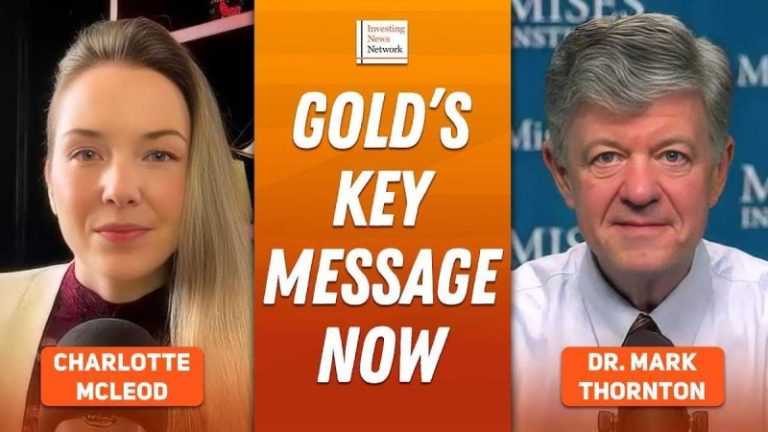
Dr. Mark Thornton, senior fellow at the Mises Institute, discusses the factors that have taken the gold price to all-time highs. In his view, the key driver is government actions like overspending, borrowing and money printing, none of which are likely to abate soon.

He also shares his bullish outlook for silver.

Securities Disclosure: I, Charlotte McLeod, hold no direct investment interest in any company mentioned in this article.

This post appeared first on investingnews.com

Coelacanth Energy Inc. (TSXV: CEI,OTC:CEIEF) (‘Coelacanth’ or the ‘Company’) is pleased to provide the following update:

BANK CREDIT FACILITY
Coelacanth has signed an agreement to increase its bank credit facility from $52 million to $80 million with closing expected in mid-November. The Company estimates net bank debt relative to the credit facility to be $43 million as at September 30, 2025. The additional liquidity provided will be used, in part, to fund the fall drilling program noted below.

OPERATIONS UPDATE
Coelacanth is currently drilling 3 additional wells in the Lower Montney on its 5-19 Pad at Two Rivers East. Completions are anticipated for late November for an on-stream date of early February 2026. Coelacanth’s last 3 wells on the pad tested a combined 4,872 boe/d (60% light oil) and similar results are expected(1).

Coelacanth is currently producing 4 of its 9 wells on the 5-19 pad plus its legacy production at Two Rivers West. Based on field estimates, current production is approximately 4,400 boe/d (40% light oil). The remaining 5 wells are scheduled to come on production sequentially from mid-November until year-end. Test production on the 5 remaining wells was approximately 6,400 boe/d on a combined basis but net of flush production and declines, Coelacanth estimates production will be approximately 8,400 boe/d (40% light oil) at year-end and then exceed 10,000 boe/d in February 2026 when the new wells are on production (1).

Coelacanth’s business plan includes delineating and developing its large Montney resource that includes 4 potential Montney benches on its 150 section contiguous block of land at Two Rivers in northeast British Columbia.

(1) See ‘Test Results and Initial Production Rates’.

HEDGE POSITION

In conjunction with the drilling program and anticipated new wells coming on production, Coelacanth has placed the following hedges:

Product Quantity Price
($ CAD)
Reference
Point
Period
Natural Gas 10,000 gj/d 2.03 Station 2 Nov-Dec 2025
Natural Gas 5,000 gj/d 2.10 Station 2 Dec 2025
Natural Gas 10,000 gj/d 2.49 Station 2 Jan-Mar 2026
Light Oil 500 bbls/d 86.86 WTI Nov 2025-Apr 2026


Coelacanth is pleased with the results to date and the progression of the business plan.

FOR FURTHER INFORMATION PLEASE CONTACT:

Coelacanth Energy Inc.
2110, 530 – 8th Ave SW
Calgary, Alberta T2P 3S8
Phone: 403-705-4525
www.coelacanth.ca

Mr. Robert J. Zakresky
President and Chief Executive Officer

Mr. Nolan Chicoine
Vice President, Finance and Chief Financial Officer

NEITHER THE TSX VENTURE EXCHANGE NOR ITS REGULATION SERVICES PROVIDER (AS THAT TERM IS DEFINED IN THE POLICIES OF THE TSX VENTURE EXCHANGE) ACCEPTS RESPONSIBILITY FOR THE ADEQUACY OR ACCURACY OF THIS RELEASE.

Oil and Gas Terms
The Company uses the following frequently recurring oil and gas industry terms in the news release:

Liquids
Bbls Barrels
Bbls/d Barrels per day
NGLs Natural gas liquids (includes condensate, pentane, butane, propane, and ethane)


Natural Gas
Mcf Thousands of cubic feet
Mcf/d Thousands of cubic feet per day
MMcf/d Millions of cubic feet per day


Oil Equivalent
Boe Barrels of oil equivalent
Boe/d Barrels of oil equivalent per day


Disclosure provided herein in respect of a boe may be misleading, particularly if used in isolation. A boe conversion rate of six thousand cubic feet of natural gas to one barrel of oil equivalent has been used for the calculation of boe amounts in the news release. This boe conversion rate is based on an energy equivalency conversion method primarily applicable at the burner tip and does not represent a value equivalency at the wellhead.

Product Types
The Company uses the following references to sales volumes in the news release:

Natural gas refers to shale gas
Oil refers to tight oil
NGLs refers to butane, propane and pentanes combined
Liquids refers to tight oil and NGLs combined
Oil equivalent refers to the total oil equivalent of shale gas, tight oil, and NGLs combined, using the conversion rate of six thousand cubic feet of shale gas to one barrel of oil equivalent as described above.

Forward-Looking Information

This news release contains forward-looking statements and forward-looking information within the meaning of applicable securities laws. The use of any of the words ‘expect’, ‘anticipate’, ‘continue’, ‘estimate’, ‘may’, ‘will’, ‘should’, ‘believe’, ‘intends’, ‘forecast’, ‘plans’, ‘guidance’ and similar expressions are intended to identify forward-looking statements or information.

More particularly and without limitation, this document contains forward-looking statements and information relating to the Company’s oil, NGLs and natural gas production and capital programs. The forward-looking statements and information are based on certain key expectations and assumptions made by the Company, including expectations and assumptions relating to prevailing commodity prices and exchange rates, applicable royalty rates and tax laws, future well production rates, the performance of existing wells, the success of drilling new wells, the availability of capital to undertake planned activities and the availability and cost of labor and services.

Although the Company believes that the expectations reflected in such forward-looking statements and information are reasonable, it can give no assurance that such expectations will prove to be correct. Since forward-looking statements and information address future events and conditions, by their very nature they involve inherent risks and uncertainties. Actual results may differ materially from those currently anticipated due to a number of factors and risks. These include, but are not limited to, the risks associated with the oil and gas industry in general such as operational risks in development, exploration and production, delays or changes in plans with respect to exploration or development projects or capital expenditures, the uncertainty of estimates and projections relating to production rates, costs and expenses, commodity price and exchange rate fluctuations, marketing and transportation, environmental risks, competition, the ability to access sufficient capital from internal and external sources and changes in tax, royalty and environmental legislation. The forward-looking statements and information contained in this document are made as of the date hereof for the purpose of providing the readers with the Company’s expectations for the coming year. The forward-looking statements and information may not be appropriate for other purposes. The Company undertakes no obligation to update publicly or revise any forward-looking statements or information, whether as a result of new information, future events or otherwise, unless so required by applicable securities laws.

Test Results and Initial Production Rates

The 5-19 Lower Montney well was production tested for 9.4 days and produced at an average rate of 377 bbl/d oil and 2,202 mcf/d gas (net of load fluid and energizing fluid) over that period which includes the initial cleanup where only load water was being recovered. At the end of the test, flowing wellhead pressure and production rates were stable.

The A5-19 Basal Montney well was production tested for 5.9 days and produced at an average rate of 117 bbl/d oil and 630 mcf/d gas (net of load fluid and energizing fluid) over that period which includes the initial cleanup where only load water was being recovered. At the end of the test, flowing wellhead pressure and production rates were stable.

The B5-19 Upper Montney well was production tested for 6.3 days and produced at an average rate of 92 bbl/d oil and 2,100 mcf/d gas (net of load fluid and energizing fluid) over that period which includes the initial cleanup where only load water was being recovered. At the end of the test, flowing wellhead pressure and production rates were stable.

The C5-19 Lower Montney well was production tested for 5.8 days and produced at an average rate of 736 bbl/d oil and 2,660 mcf/d gas (net of load fluid and energizing fluid) over that period which includes the initial cleanup where only load water was being recovered. At the end of the test, flowing wellhead pressure and production rates were stable.

The D5-19 Lower Montney well was production tested for 12.6 days and produced at an average rate of 170 bbl/d oil and 580 mcf/d gas (net of load fluid and energizing fluid) over that period which includes the initial cleanup where only load water was being recovered. At the end of the test, flowing wellhead pressure and production rates were stable. The D5-19 Lower Montney well was tied into the 16-03 facility and produced an average rate of 546 bbl/d oil, 2,659 mcf/d natural gas, and 48 bbl/d NGLs, for a total average rate of 1,037 boe/d, on a sales basis, over the first 30 days of in-line production (IP30).

The E5-19 Lower Montney well was production tested for 11.4 days and produced at an average rate of 312 bbl/d oil and 890 mcf/d gas (net of load fluid and energizing fluid) over that period which includes the initial cleanup where only load water was being recovered. At the end of the test, flowing wellhead pressure was stable, and production was starting to decline. The E5-19 Lower Montney well was tied into the 16-03 facility, and produced an average rate of 854 bbl/d oil, 2,660 mcf/d natural gas, and 49 bbl/d NGLs, for a total average rate of 1,346 boe/d, on a sales basis, over the first 30 days of in-line production (IP30).

The F5-19 Lower Montney well was production tested for 4.9 days and produced at an average rate of 728 bbl/d oil and 1,607 mcf/d gas (net of load fluid and energizing fluid) over that period which includes the initial cleanup where only load water was being recovered. At the end of the test, flowing wellhead pressure and production rates were stable. The F5-19 Lower Montney well was tied into the 16-03 facility, and produced an average rate of 745 bbl/d oil, 3,121 mcf/d natural gas, and 58 bbl/d NGLs, for a total average rate of 1,037 boe/d, on a sales basis, over the first 22 days of in-line production.

The G5-19 Lower Montney well was production tested for 7.1 days and produced at an average rate of 415 bbl/d oil and 1,489 mcf/d gas (net of load fluid and energizing fluid) over that period which includes the initial cleanup where only load water was being recovered. At the end of the test, flowing wellhead pressure and production rates were stable.

The H5-19 Lower Montney well was production tested for 8.1 days and produced at an average rate of 411 bbl/d oil and 1,166 mcf/d gas (net of load fluid and energizing fluid) over that period which includes the initial cleanup where only load water was being recovered. At the end of the test, flowing wellhead pressure was stable and production was starting to decline.

The reference under the ‘Operations Update’ to the last 3 wells drilled refers to the F5-19, G5-19, and H5-19 wells.

The reference under the ‘Operations Update’ to the remaining 5 wells are scheduled to come on production refers to the 5-19, A5-19, B5-19, G5-19, and H5-19 wells.

A pressure transient analysis or well-test interpretation has not been carried out on these nine wells and thus certain of the test results provided herein should be considered to be preliminary until such analysis or interpretation has been completed. Test results and initial production rates disclosed herein, particularly those short in duration, may not necessarily be indicative of long-term performance or of ultimate recovery.

Any references to peak rates, test rates, IP30, IP90, IP180 or initial production rates or declines are useful for confirming the presence of hydrocarbons, however, such rates and declines are not determinative of the rates at which such wells will continue production and decline thereafter and are not indicative of long-term performance or ultimate recovery. IP30 is defined as an average production rate over 30 consecutive days, IP90 is defined as an average production rate over 90 consecutive days and IP180 is defined as an average production rate over 180 consecutive days. Readers are cautioned not to place reliance on such rates in calculating aggregate production for the Company.

To view the source version of this press release, please visit https://www.newsfilecorp.com/release/272489

News Provided by Newsfile via QuoteMedia

This post appeared first on investingnews.com

Apex Resources (TSXV:APX,OTC:SLMLF) is a mineral exploration company with a diversified North American portfolio, combining near-term tungsten-gold opportunities in British Columbia with district-scale lithium potential in Nevada.

The company’s flagship Lithium Creek project in Churchill County, Nevada, represents a new lithium-brine discovery opportunity. Geophysical and gravity surveys have outlined extensive low-resistivity zones and complex basin structures—hallmarks of major brine systems—defining multiple drill targets. Just 70 km east of Reno and 30 minutes from Tesla’s Gigafactory, Lithium Creek is strategically positioned within the U.S. battery manufacturing corridor.

Drilling at the Jersey-Emerald project

The Jersey-Emerald project, Apex’s flagship Canadian asset, is a past-producing mine complex hosting tungsten, zinc, lead, gold, and molybdenum. Located 10 km southeast of Salmo, BC, it includes the former Emerald and Jersey mines—once among Canada’s largest producers. Apex is applying modern exploration and geophysics to expand critical mineral zones and identify new targets across the 17,500-hectare property.

Company Highlights

  • Critical-minerals focus: Apex’s portfolio is anchored by lithium, tungsten and zinc, all designated as critical by Canada and the US.
  • Precious-Metals (Gold&Silver) are important by-products at Jersey-Emerald
  • Diversified exploration pipeline: Active drill program at Jersey-Emerald (tungsten-gold-zinc) while preparing to drill Lithium Creek in Nevada.
  • Large-scale opportunity: Apex controls contiguous and nearby claim blocks around Salmo, BC, including Jersey-Emerald and Ore Hill, forming a multi-deposit critical- and precious-metal exploration district spanning more than 17,500 hectares with several historic mines, hosting Tungsten, Zinc, Lead, Silver, Gallium, Germanium, Indium, Bismuth, Tellurium and Molybdenum.
  • Strong early results in USA: Lithium Creek brine samples up to 393 mg/L lithium, with geophysics outlining multiple deep-basin anomalies.
  • Historic infrastructure advantage in Canada: More than $100 million in existing underground workings at Jersey-Emerald; year-round road, rail and power access to both BC projects.
  • Tier-1 jurisdictions: Stable, mining-friendly locations in British Columbia and Nevada with clear permitting frameworks.
  • Experienced leadership: Proven technical and capital-markets expertise led by CEO Ron Lang and a board made up of seasoned exploration and mining professionals.

This Apex Resources profile is part of a paid investor education campaign.*

Click here to connect with Apex Resources (TSXV:APX,OTC:SLMLF) to receive an Investor Presentation

This post appeared first on investingnews.com

Copper Quest Exploration Inc. (CSE: CQX; OTCQB: IMIMF; FRA: 3MX) (‘ Copper Quest ‘ or the ‘ Company ‘) is pleased to announce that it has entered into a definitive agreement to acquire a 100% interest in the Kitimat Copper-Gold Project (the ‘Project’), located approximately 10 kilometers northwest of the deep-water port community of Kitimat, British Columbia.

PROJECT OVERVIEW

The Kitimat Copper-Gold Project covers approximately 2,954 hectares within the Skeena Mining Division of northwestern British Columbia. The Project is year-round road-accessible via a network of logging and mineral exploration roads extending north from Kitimat. The property benefits from exceptional infrastructure, being within 10 km of tidewater, 1.5 km of rail, and 6 km of high-voltage hydroelectric transmission lines.

Geologically, the Project is situated within the Stikine Terrane, a prolific belt that hosts numerous porphyry copper-gold systems and is underlain by Late Triassic volcanic rocks intruded by Jurassic diorite and granodiorite bodies of the Coast Plutonic Complex. The Project’s principal target areas is the Jeannette Cu-Au Zone displaying alteration and mineralization interpreted to represent low-level intermediate to low-sulfidation epithermal expressions of a larger Cu-Au porphyry system.

HISTORICAL EXPLORATION & HIGHLIGHTS

Exploration on the Kitimat property dates back to the late 1960s, with multiple operators conducting geochemical, geophysical, and drilling campaigns. The most significant historical work was conducted by Decade Resources Ltd. (2010), which completed 16 diamond drill holes totaling 4,437.5 meters in the Jeannette Cu-Au Zone. Notable results include:

  • Hole J-7: 117.07 m grading 1.03 g/t Au, 0.54% Cu, from 1.52 m to 118.60 m.
  • Hole J-1: 103.65 m grading 1.00 g/t Au, 0.55% Cu, from 9.15 m to 112.80 m.
  • Hole J-2: 107.01 m grading 0.80 g/t Au, 0.45% Cu, from 6.10 m to 113.11 m.
  • Hole J-8: 112.20 m grading 0.41 g/t Au, 0.33% Cu, from 11.89 m to 124.09 m.

The mineralized intervals encountered in the 2010 drilling demonstrate continuous near-surface copper-gold mineralization extending over significant widths, remain open at depth within the Jeannette Zone, and occur within a broader hydrothermal system that is interpreted to extend laterally beyond the area tested.

ACQUISITION DETAILS

Under the terms of the agreement Copper Quest has until January 5, 2026 to complete a due diligence review of the Project. Upon successful review, the Company will issue 2,000,000 common shares to the vendor, Bernie Kreft, on January 6, 2026, as full consideration for the acquisition. The Project is subject to a 2.5% net smelter return (NSR) royalty, of which 40% may be repurchased by the Company for CAD $1,000,000. Copper Quest will also retain a right of first refusal on any transaction involving the sale of the remaining royalty interest. Copper Quest has until

Mr. Kreft is a well-known Canadian prospector, entrepreneur, and former star of the Discovery Channel’s Yukon Gold television series. He has a long track record of successful mineral discoveries and project generation across British Columbia and Yukon.

A finder’s fee is payable in connection with the acquisition.

MANAGEMENT COMMENTS

Brian Thurston , CEO of CopperQuest, commented:

‘The addition of the Kitimat Copper-Gold Project demonstrates Copper Quest’s continued effort to add shareholder value through the acquisition of critical mineral projects. This project is ideally located with exceptional infrastructure, in a proven geological belt known for hosting major copper-gold systems. The strong historical drill results from the Jeannette zone speak to the potential of a larger near-surface mineralized system. We look forward to advancing this asset as part of our growing copper-gold portfolio.’

NEXT STEPS

  • The Company plans to leverage artificial intelligence (AI) analysis to integrate all historical and modern exploration data to establish a comprehensive geological and geophysical model for the Kitimat Porphyry Project and improve targeting precision.
  • Additional geological mapping, sampling, and geophysical surveys may be completed to refine priority drill targets as required. Field work could include ground magnetics, induced polarization (IP), and passive seismic to better define subsurface structure and mineralization trends.
  • A follow-up drill program would test key targets within the interpreted geology and surrounding high-grade corridors.

QUALIFIED PERSON

Brian G. Thurston, P.Geo., the Company’s President and CEO and a qualified person as defined by National Instrument 43-101 – Standards of Disclosure for Mineral Projects, has reviewed and approved the technical information in this news release.

ABOUT COPPER

Despite surging demand, global copper supply remains constrained. Ore grades are declining at major mines, permitting timelines for new projects have lengthened, and geopolitical tensions are reshaping supply chains toward stable, transparent jurisdictions. Governments in Canada, the U.S., and allied nations have increasingly identified copper as a strategic and critical metal necessary for economic and national security. Within this context, Copper Quest’s acquisition of the Kitimat Copper-Gold Project in British Columbia positions the Company to advance a discovery-stage asset in one of the world’s safest and most infrastructure-rich mining jurisdictions — precisely when new, scalable copper sources are most needed.

ABOUT Copper Quest Exploration Inc.

Copper Quest (CSE: CQX; OTCQB: IMIMF; FRA: 3MX) is focused on building shareholder value through the acquisition, exploration and development of its North American Critical Mineral portfolio of assets. The Company’s land package currently comprises five projects that span over 40,000+ hectares in great mining jurisdictions.

Copper Quest has a 100% interest in the Stars Property, a porphyry copper-molybdenum discovery, covering 9,693 hectares in central British Columbia’s Bulkley Porphyry Belt. Contiguous to the Stars Property, Copper Quest has a 100% interest in the 5,389-hectare Stellar Property. CQX also has an earn-in option up to 80% and joint-venture agreement on the 4,700-hectare porphyry copper-molybdenum Rip Project, also in the Bulkley Porphyry Belt.

Copper Quest has a 100% interest in the Nekash Copper-Gold Project, a porphyry exploration opportunity located in Lemhi County, Idaho, along the prolific Idaho-Montana porphyry copper belt that hosts world-class systems such as Butte and CUMO. The project is fully road-accessible via maintained U.S. highways and forest service roads and currently consists of 70 unpatented federal lode claims covering 585 hectares.

Copper Quest has a 100% interest in the Thane Project located in the Quesnel Terrane of Northern BC which spans over 20,658 ha with 10 high-priority targets identified demonstrating significant copper and precious metal mineralization potential.

Copper Quest’s leadership and advisory teams are senior mining industry executives who have a wealth of technical and capital markets experience and a strong track record of discovering, financing, developing, and operating mining projects on a global scale. Copper Quest is committed to sustainable and responsible business activities in line with industry best practices, supportive of all stakeholders, including the local communities in which it operates. The Company’s common shares are principally listed on the Canadian Stock Exchange under the symbol ‘CQX’. For more information on Copper Quest, please visit the Company’s website at www.copper.quest .

On behalf of the Board of Copper Quest Exploration Inc.

Brian Thurston, P.Geo.
Chief Executive Officer and Director
Tel: 778-949-1829

For further information contact:

Investor Relations
info@copper.quest

Forward Looking Information

This news release contains certain ‘forward-looking information’ and ‘forward-looking statements’ (collectively, ‘ forward-looking statements ‘) within the meaning of applicable securities legislation. All statements, other than statements of historical fact included herein, including without limitation, future operations and activities of Copper Quest, are forward-looking statements. Forward-looking statements are frequently, but not always, identified by words such as ‘expects’, ‘anticipates’, ‘believes’, ‘intends’, ‘estimates’, ‘potential’, ‘possible’, and similar expressions, or statements that events, conditions, or results ‘will’, ‘may’, ‘could’, or ‘should’ occur or be achieved. Forward-looking statements reflect the beliefs, opinions and projections on the date the statements are made and are based upon a number of assumptions and estimates based on or related to many of these factors. Such factors include, without limitation, risks associated with possible accidents and other risks associated with mineral exploration operations, the risk that the Company will encounter unanticipated geological factors, risks associated with the interpretation of exploration results, the possibility that the Company may not be able to secure permitting and other governmental clearances necessary to carry out the Company’s exploration plans, the risk that the Company will not be able to raise sufficient funds to carry out its business plans, and the risk of political uncertainties and regulatory or legal changes that might interfere with the Company’s business and prospects. Readers should not place undue reliance on the forward-looking statements and information contained in this news release concerning these items. The Company does not assume any obligation to update the forward-looking statements of beliefs, opinions, projections, or other factors, should they change, except as required by applicable securities laws.

The Canadian Securities Exchange has not reviewed, approved or disapproved the contents of this press release, and does not accept responsibility for the adequacy or accuracy of this release.

News Provided by GlobeNewswire via QuoteMedia

This post appeared first on investingnews.com

A small contingent of Senate Republicans again joined with Senate Democrats to reject President Donald Trump’s tariffs — this time on Canadian goods.

The Senate advanced a resolution from Sen. Tim Kaine, D-Va., on a bipartisan basis to terminate the emergency powers Trump used to declare retaliatory tariffs against Canada earlier this year.

Roughly the same core group of Republicans, Susan Collins of Maine, Rand Paul and Mitch McConnell of Kentucky, and Lisa Murkowski of Alaska, joined Senate Democrats to reject the duties. Sen. Thom Tillis, R-N.C., opted to vote against this latest attempt to reject Trump’s tariffs. 

‘The vice president came up yesterday to try to corral Republicans at their lunch,’ Kaine said before the lunch. ‘That shows the White House is worried about defectors on this.’

Indeed, their votes against Trump’s tariffs on Canada came after Vice President JD Vance warned Republicans that it would be a ‘huge mistake’ to break with the White House on the president’s tariff strategy, and he argued that using duties on countries across the globe offered leverage to generate better trade deals in return.

Paul, one of the co-sponsors of Kaine’s resolution, has consistently rejected Trump’s usage of tariffs and argued that it was a tax on consumers in the U.S. rather than on foreign countries.

He noted that the message it would send to the White House, despite pressure from Vance to support Trump’s duties, was ‘that a rule by emergency is not what the Constitution intended, that taxes are supposed to originate in the House of Representatives.’

The resolution was in response to Trump’s usage of the International Emergency Economic Powers Act in July to impose tariffs on Canadian goods. The tariffs on the country vary, with Trump initially placing 35% duties on the country earlier this year, along with a blanket 50% tariff on steel from other countries.

However, he recently cranked up the tariffs on Canada by 10% following an ad that ran last week that featured former President Ronald Reagan, which used audio from the former president’s 1987 ‘Radio Address to the Nation on Free and Fair Trade.’

Trump railed against the ad, which was run by the government of Ontario, Canada, and declared, ‘ALL TRADE NEGOTIATIONS WITH CANADA ARE HEREBY TERMINATED,’ in a post on Truth Social.

The latest tariff vote is the second in a trio of resolutions from Kaine and several Senate Democrats. Despite the resolution terminating Trump’s emergency powers on tariffs in Brazil and Canada both advancing in the Senate, they will likely stall in the House.

McConnell staked his position against the tariffs in a statement, where he argued that retaliatory tariffs have negatively affected Kentucky farmers and distillers.

‘Tariffs make both building and buying in America more expensive. The economic harms of trade wars are not the exception to history, but the rule. And no cross-eyed reading of Reagan will reveal otherwise,’ he said. ‘This week, I will vote in favor of resolutions to end emergency tariff authorities.’

This post appeared first on FOX NEWS