
Author

admin

Browsing

If you’re over 50 and maxing out your 401(k), there’s a big change coming in 2026 that could affect how much tax you pay on your ‘catch-up contributions.’ While it’s mostly about taxes and retirement planning, there’s an unexpected side effect: scammers are circling. Every time your financial habits or personal data become public, it’s a chance for fraudsters to try to exploit you. Here’s what’s changing, why it matters, and how to protect yourself before the scammers come knocking.

Get my best tech tips, urgent security alerts, and exclusive deals delivered straight to your inbox. Plus, you’ll get instant access to my Ultimate Scam Survival Guide – free when you join my CYBERGUY.COM newsletter

What’s changing with 401(k) catch-up contributions

Right now, if you’re over 50, you can make extra contributions to your 401(k) on top of the standard annual limit ($23,500 in 2025). These ‘catch-up’ contributions are typically tax-deferred, meaning the money comes out of your paycheck before tax and grows tax-free until retirement.

But starting in 2026, for anyone earning more than $145,000 in the previous year, these catch-up contributions will no longer be tax-deferred. Instead, they’ll become like the Roth 401(k), meaning you pay taxes on the money now, but it grows tax-free and can be withdrawn tax-free in retirement.

That sounds simple, but it creates a ripple effect:

  • High earners will see less take-home pay now.
  • Tax planning gets trickier, and some people may consider restructuring their accounts or investment strategies.
  • And, most importantly for CyberGuy readers: these changes create new opportunities for scammers.

Why the new rules could attract scammers

Scammers constantly look for financially active retirees. When rules like this change, fraudsters send out emails, calls, or letters pretending to be financial advisors, IRS agents, or plan administrators. Their goal? To trick you into giving away account numbers, Social Security details, or direct-deposit information.

Some common scam tactics to watch for:

  • Fake ‘plan update’ emails claiming you need to verify your 401(k) contributions due to the law change.
  • Roth conversion scam calls claiming you can ‘avoid extra taxes’ by transferring your account through a third-party ‘advisor.’
  • Urgency and fear tactics, such as ‘Act now, or lose your retirement benefits!’

Even savvy retirees can be caught off guard, especially when the message sounds official and references real tax law changes.

How to protect yourself from 401(k) scams and data theft

With new 401(k) rule changes taking effect, scammers are using the confusion to trick retirees and workers alike. Follow these steps to stay alert, safeguard your savings, and protect your personal data from being stolen or misused.

1) Know the legitimate changes

Start by understanding Secure 2.0 and how catch-up contributions will be taxed. Reliable sources include your plan administrator, the IRS website, or a licensed tax advisor. Staying informed helps you spot fake claims before they cause harm.

2) Use a personal data removal service

For retirees, this extra layer of protection keeps sensitive information out of reach from scammers who exploit tax changes, Roth conversions, and retirement updates. While you can manually opt out of data brokers and track your information, that process takes time and effort. A personal data removal service automates the task by contacting over 420 data brokers on your behalf. It also reissues removal requests if your data reappears and shows you a dashboard of confirmed removals.

While no service can guarantee the complete removal of your data from the internet, a data removal service is really a smart choice. They aren’t cheap, and neither is your privacy. These services do all the work for you by actively monitoring and systematically erasing your personal information from hundreds of websites. It’s what gives me peace of mind and has proven to be the most effective way to erase your personal data from the internet. By limiting the information available, you reduce the risk of scammers cross-referencing data from breaches with information they might find on the dark web, making it harder for them to target you.

Check out my top picks for data removal services and get a free scan to find out if your personal information is already out on the web by visiting Cyberguy.com

Get a free scan to find out if your personal information is already out on the web: Cyberguy.com

3) Verify every call and email, plus use antivirus software

If you get a call or email about your 401(k), don’t assume it’s real. Hang up or delete it, then contact your plan administrator directly using official contact details. Avoid clicking links or downloading attachments from unknown messages.

The best way to safeguard yourself from malicious links that install malware, potentially accessing your private information, is to have strong antivirus software installed on all your devices. This protection can also alert you to phishing emails and ransomware scams, keeping your personal information and digital assets safe.

Get my picks for the best 2025 antivirus protection winners for your Windows, Mac, Android & iOS devices at Cyberguy.com

4) Monitor your credit and accounts

Cybercriminals often use personal information from earlier data leaks or data brokers. Watch your credit reports and account activity closely. Early detection can stop suspicious transactions before they escalate.

5) Set up alerts and freezes if necessary

Ask your bank and retirement plan to enable transaction alerts. You can also temporarily freeze your credit to prevent anyone from opening new accounts in your name. This is especially useful during times of financial change.

6) Educate friends and family

Scammers often target retirees and their relatives who help manage finances. Remind your loved ones never to share account details over the phone or email. Protecting everyone in your household keeps scammers from finding weak links.

Kurt’s key takeaways

As 2026 approaches, the new 401(k) rule changes will reshape how millions of Americans manage their retirement savings. Staying informed, cautious, and proactive can protect your financial future. Scammers thrive on confusion, but by verifying information, monitoring your accounts, and removing your personal data from risky sites, you can stay one step ahead. Remember, the more control you take over your privacy, the harder it becomes for criminals to exploit it.

Have you taken steps to see where your personal data is exposed, and what did you find most surprising when you checked? Let us know by writing to us at Cyberguy.com

Get my best tech tips, urgent security alerts, and exclusive deals delivered straight to your inbox. Plus, you’ll get instant access to my Ultimate Scam Survival Guide – free when you join my CYBERGUY.COM newsletter

Copyright 2025 CyberGuy.com. All rights reserved.
This post appeared first on FOX NEWS

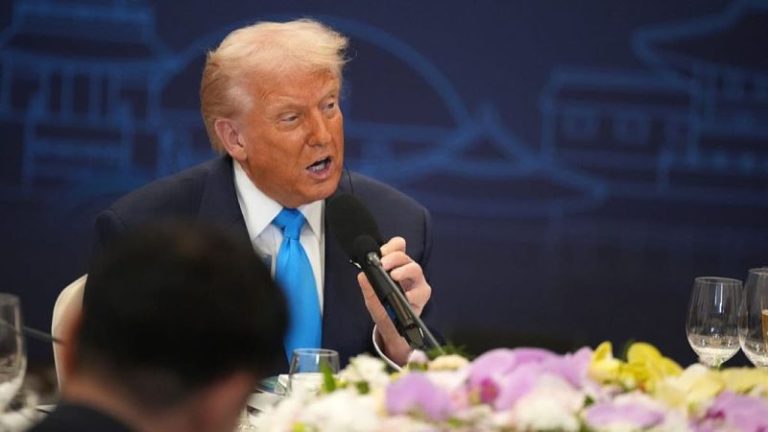
President Donald Trump offered new details about his upcoming meeting with Chinese President Xi Jinping on Wednesday, saying he expected the meeting to last several hours.

Trump made the comments during a diplomatic dinner hosted by South Korean President Lee Jae‑myung on Wednesday. Trump was caught on a hot mic as he sat down for the meal, saying his meeting with Xi on Thursday morning would last ‘three to four hours.’

‘We’re going to have something that’s going to be very, very satisfactory to China and to us. I think we’re gonna have a — I think it’s going to be a very good meeting. I look forward to it tomorrow morning when we meet,’ Trump said.

During his formal remarks, Trump also said he was confident that South Korea’s conflict with North Korean dictator Kim Jong Un would ‘work out very well.’

‘You have a neighbor that hasn’t been as nice as they could be, and I think they will be. I know Kim Jong Un very well, and I think things will work out very well,’ he said.

Trump said earlier this week that he would be open to meeting with Kim during his time in South Korea. Trump is entering the final leg of his five-day Asia trip on Wednesday, having already visited Japan earlier this week.

‘I’d love to meet with him if he’d like to meet. I got along great with Kim Jong Un. I liked him, he liked me,’ Trump said during a gaggle on Air Force One on Monday.

Trump met with Kim multiple times during his first term, becoming the first U.S. president to set foot in North Korea. No meeting has been announced for this week, however.

Trump’s talks with his South Korean counterpart come as the two countries move closer to completing a new trade agreement.

Henry Haggard, former minister counselor for political affairs at the U.S. Embassy in Seoul, told Fox News Digital, ‘Trump’s main objective in meeting Lee Jae-myung is to secure a trade deal and, along with that, $350 billion in investments in the United States.’

‘He will also seek to push Lee to commit to a stronger stance against China, and to increase defense spending. Lee will seek to charm Trump, as the key to keeping the bilateral relationship on track is for Lee to have a stronger relationship with Trump.’

Lee is head of a left-leaning government that has so far shown reluctance to enhance South Korea’s partnership with the U.S. for fear of provoking Chinese backlash.

Fox News’ Efrat Lachter contributed to this report.

This post appeared first on FOX NEWS

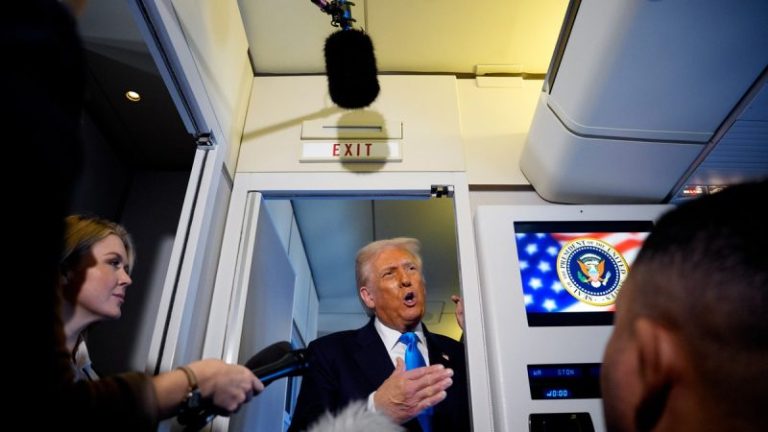
President Donald Trump spoke to the press while en route to South Korea on Tuesday aboard Air Force One and made remarks about his authority to deploy U.S. military forces domestically — something that will likely draw legal and political concerns.

Trump was traveling to the Asia-Pacific Economic Cooperation (APEC), where he is scheduled to meet with Chinese President Xi Jinping.

During the media availability, Trump claimed he could deploy U.S. military forces into American cities if necessary, claiming that ‘the courts wouldn’t get involved.’

When speaking with reporters, he said he would consider using the military beyond the National Guard if the need arises.

‘I would do that if it was necessary,’ he said. ‘It hasn’t been necessary. We’re doing a great job without that.’

Trump also argued that, as president, he has the power to take such an action.

‘If I want to enact a certain act, I’m allowed to do it routinely,’ he said. ‘I’d be allowed to do whatever I want… You understand that the courts wouldn’t get involved. Nobody would get involved.’

He added, ‘I could send the Army, Navy, Air Force, Marines. I can send anybody I wanted, but I haven’t done that because we’re doing so well.’

Trump made it a point to use San Francisco as an example, describing how federal officials were ‘all set to go last Saturday’ to intervene in the city but held off after local leaders asked for a chance to handle it themselves.

‘We would have solved that problem in less than a month,’ he said, adding that federal intervention ‘would go a lot quicker and it’s much more effective.’

He also emphasized what he described as progress in other parts of the U.S.

‘Memphis is making tremendous progress,’ Trump said. ‘It’s down, I think, almost 70%, 60–70%. And within two or three weeks it would be down to almost no crime.’

The president is scheduled to meet with Xi on Wednesday to discuss fentanyl trafficking, trade policy and border security.

This post appeared first on FOX NEWS

Senate Republicans offered a rare rebuke against President Donald Trump and his trade strategy on Tuesday, despite still remaining largely in lockstep amid the ongoing government shutdown.

A handful of Senate Republicans joined Senate Democrats to end Trump’s use of emergency powers to implement steep, 50% tariffs on Brazil. While the resolution, led by Sen. Tim Kaine, D-Va., advanced from the upper chamber, it can’t be taken up in the House until early next year.

That’s because House Republicans recently passed a rule that would not allow the chamber to consider legislation dealing with Trump’s tariffs until January of next year.

Five Senate Republicans, Sens. Susan Collins of Maine, Lisa Murkowski of Alaska, Mitch McConnell and Rand Paul of Kentucky, and Thom Tillis of North Carolina, joined all Senate Democrats to advance the resolution with a 52-48 vote.

Their defection from their GOP colleagues comes after Vice President JD Vance warned lawmakers not to vote against Trump’s usage of tariffs during Senate Republicans’ closed-door lunch earlier on Tuesday.

Vance argued after the lunch that tariffs give Trump leverage to craft new trade deals that benefit the country and urged Republicans not to break ranks against the president.

‘To vote against that is to strip that incredible leverage from the president of the United States. I think it’s a huge mistake and I know most of the people in there agree with me,’ he said.

Trump initially used emergency powers to enact stiffer tariffs on Brazil in July and argued ‘that the scope and gravity of the recent policies, practices, and actions of the Government of Brazil constitute an unusual and extraordinary threat’ to the U.S.

It’s not the first time the Senate has disapproved of Trump’s tariffs. Earlier this year, Republicans joined Democrats to rebuke Trump’s emergency declaration for 25% tariffs against Canada, and they tried and failed to reject his use of global tariffs. 

Kaine also has plans to bring two more resolutions, one to block tariffs on Canadian goods and the other on Trump’s global tariffs, later this week.

‘It makes no sense to impose tariffs on Brazil, and it’s just being done to back up the president’s friend,’ Kaine told reporters ahead of the vote.

Kaine was referring to former Brazilian President Jair Bolsonaro, who at the time of Trump’s declaration, was being prosecuted for an attempted coup after an election loss in 2022. He was sentenced to 27 years in prison in September.

Paul argued that ’emergencies are like war, famine, tornado, not liking someone’s tariffs is not an emergency.’

‘Tariffs are an import tax, they are a tax, not a tax on China,’ Paul said. ‘It’s a tax on the people who buy stuff from China, which are mostly Americans. Taxes are supposed to originate in the House, so I will continue to vote to end the emergency.’

When asked why more Senate Republicans hadn’t joined him on his tariff position, Paul said, ‘Fear.’

This post appeared first on FOX NEWS

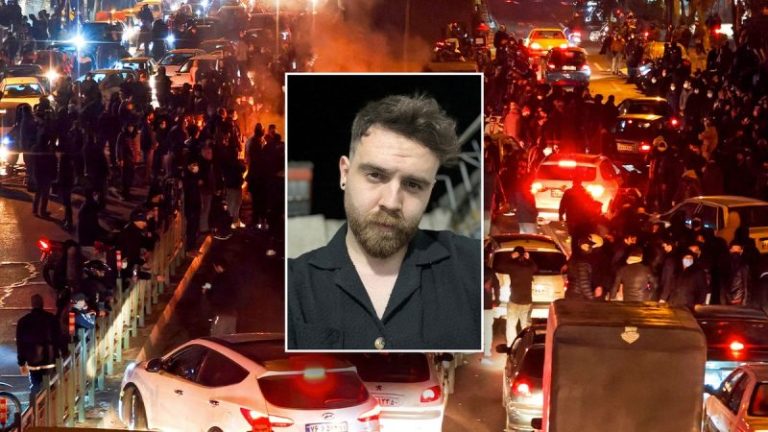
Sen. Lindsey Graham, R-S.C., is calling for the end of the Iranian regime amid ongoing protests and as the country holds its breath to see if a 26-year-old protester will be executed, something President Donald Trump has said could trigger U.S. intervention.

‘I read with great sadness and heartache about the pending execution of Erfan Soltani, a 26-year-old shopkeeper. He is facing death at the hands of the ayatollah simply for protesting in the street for a better life. His family is calling on the world to come to their son’s aid,’ Graham wrote in a post on X along with an article about Soltani.

‘I hope and pray that the execution does not go forward and this young man does not forfeit his life because he wants to live in freedom without fear,’ the senator added. ‘This regime must fall, and the Iranian people must have a better life.’

Graham said that he believes if the regime falls and the ‘murderous ayatollah running Iran’ is gone, the impact on the region ‘would be incredibly positive.’ He also warned, however, that if Iran’s Supreme Leader Ayatollah Ali Khamenei were to remain in power, it would be ‘a giant step backward into the darkness.’

Soltani’s story has spread in recent days as the unrest in Iran continues. The 26-year-old was arrested in Fardis and was sentenced to death after an expedited trial, according to ABC News, which cited Soltani’s second cousin, Somayeh.

‘As someone who is an activist myself and who has fought this regime for many years, I felt it was my right — and my duty — to be Erfan’s voice outside the country, despite all the pressure and sanctions that fall on families,’ Somayeh, who is based in Germany, told ABC News.

Iranians began protesting in late December amid worsening economic conditions. Earlier this month, the regime instituted a nationwide internet blackout, blocking demonstrators from contacting each other or the outside world amid international fears that protesters would be met with violence and death.

On Jan. 2, just days after the protests erupted, Trump said the U.S. was ‘locked and loaded’ and ready to take action if the regime used violence against demonstrators. One day after the threat was made, the U.S. captured Venezuelan dictator Nicolás Maduro, adding weight to Trump’s words, though no known action has been taken yet.

Trump claimed on Wednesday the administration was told ‘on good authority’ that the killing in Iran had stopped.

‘We’ve been told that the killing in Iran is stopping, and it’s stopped and stopping, and there’s no plan for executions or an execution,’ Trump said in the Oval Office. ‘So, I’ve been told that on good authority. We’ll find out about it.’

On Friday, he seemed to double down on the idea that the regime had stopped using violence when he issued a Truth Social post saying that Iran had cancelled over 800 scheduled hangings.

‘I greatly respect the fact that all scheduled hangings, which were to take place yesterday (over 800 of them), have been cancelled by the leadership of Iran,’ Trump wrote on Truth Social.

The fate of Soltani remains unclear, as does the prospect of U.S. intervention in Iran.

This post appeared first on FOX NEWS

As protests spread across Iran and security forces intensify their crackdown, former political prisoners are warning that what is visible on the streets represents only a fraction of the violence unfolding behind prison walls.

In interviews with Fox News Digital, three former detainees described a system designed not just to punish dissent, but to break it through solitary confinement, beatings, medical neglect and threats of execution. Their accounts span nearly two decades, from the 2009 uprising to the ‘Woman, Life, Freedom’ movement and the current wave of unrest, pointing to what they describe as a consistent and escalating pattern of abuse.

Maryam Shariatmadari, one of the faces of the ‘Girls of Revolution Street’ protests against Iran’s mandatory hijab laws, was sentenced to one year in prison in March 2018 for what authorities described as ‘encouraging corruption by removing her hijab.’

Speaking this week, Shariatmadari said the scale of the current protests has pushed the regime beyond its capacity to detain demonstrators.

‘According to the testimonies of eyewitnesses, the suppressive forces of the Islamic Republic … are delivering ‘final shots’ to wounded protesters, killing them on the spot,’ she said. ‘This has been unprecedented over the past 47 years and indicates that the number of detainees has become so large that the Islamic Republic no longer has the capacity to hold them and is killing them without any form of trial.’

She said that while detainees in earlier uprisings were transferred to prisons or unofficial ‘safe houses,’ authorities expanded detention during the 2022 ‘Woman, Life, Freedom’ protests to schools, ambulances and food transport vehicles.

‘They used ambulances and food transport vehicles to detain protesters, something I believe to be unprecedented in human history,’ Shariatmadari said.

Inside detention facilities, she described systematic abuse.

‘These include beatings, transfers to prisons without separation based on the type of offense, and the deliberate incitement of other inmates to harass and abuse us,’ she said.

One of her most traumatic experiences occurred during interrogation.

‘I was ordered to remove my clothes and remain completely naked for a body search while cameras were present,’ Shariatmadari said. ‘I knew that men were watching me, and I could hear their voices.’

She also recalled being denied urgent medical care after an injury.

‘Only after approximately 24 hours was I taken to a hospital to undergo surgery,’ she said. ‘I believe this happened as a result of media pressure and public support.’

Eight hours a day, blindfolded

Shariatmadari’s husband, Mehdi Ghadimi, a freelance journalist who worked with reformist newspapers Etemad and Shargh, was arrested in January 2023 during protests and taken to an undisclosed location. He spent nearly his entire detention in solitary confinement.

‘I was interrogated twice daily, morning and afternoon, for eight hours with my eyes blindfolded,’ Ghadimi said.

In the final days of his detention, he was transferred to a shared cell, where he encountered detainees from across Iranian society.

‘I encountered students, workers, technical specialists and others who had been arrested during the Woman, Life, Freedom movement,’ he said.

According to Ghadimi, detainees accused of supporting the Pahlavi dynasty were beaten more severely.

‘Because their slogans and symbols supported the Pahlavi dynasty, they were beaten far more than the others,’ he said.

Based on his experience, he warned that current detainees are likely to face even harsher treatment.

‘I can only imagine that this time all detainees will face similarly brutal treatment,’ Ghadimi said, adding that Iran’s judiciary chief has publicly signaled a hard line.

Ghadimi, who fled the country in 2024, also cited figures circulating among activists claiming well over the 2,600 reported, likely dwarfing that number. He said the number of detainees is likely far higher than the 10,000 reported.

‘On the other side of those bars is hell’

Shabnam Madadzadeh, who was imprisoned during the 2009 uprising, said watching the current protests has revived memories of extreme brutality and raised fears of mass executions.

‘What immediately comes to my mind is the regime’s sheer brutality in torture and killing,’ Madadzadeh said.

She said detention facilities were already overflowing during the 2009 protests.

‘There was no space left for detainees. Even the solitary cells were overflowing with people,’ she said.

Madadzadeh recalled interrogators accusing nearly everyone arrested of links to the Mujahedin-e Khalq and described torture and beatings ‘to the point of killing.’

One threat made to her during interrogation still haunts her.

‘He told me: ‘If we are going to be overthrown, we will kill all of you. We will leave no one alive,’’ she said.

She warned that the current internet blackout has heightened the danger for detainees.

‘We truly do not know what level of brutality is currently taking place inside the prisons,’ Madadzadeh said, adding that information reaching her suggests the regime is seeking to carry out executions quickly.

Citing Iran’s past, she warned of the risk of mass killings similar to the 1988 executions of political prisoners.

‘Today, at a moment when the regime is on the brink of collapse, there is a real danger that such a massacre could be repeated,’ she said.

Madadzadeh said young detainees are likely facing forced confessions, mock executions and threats of sexual violence.

‘Whatever I do to you, no one will hear your voice,’ an interrogator once told her, she recalled.

She also emphasized the suffering of families searching for loved ones.

‘Families are moving between detention centers, prisons, morgues and cemeteries,’ she said. ‘This uncertainty itself is the greatest form of torture.’

As the protests continue, all three former prisoners said the outside world must not look away.

‘The first thing I expect the free world to understand is the true voice of the people inside Iran,’ Shariatmadari said. ‘The people of Iran are united in their demand for regime change and want to restore Iran to its former dignity, a dignity in which human rights and human worth were respected.’

Ghadimi echoed that warning.

‘Without a doubt, when the regime displays such open violence in the streets, even worse atrocities occur behind prison walls,’ he said. ‘I can only imagine that this time all detainees will face similarly brutal treatment.’

For Madadzadeh, the danger is immediate.

‘The world must respond decisively to this brutality,’ she said. ‘Every minute of delay costs lives.’

She called for concrete international action.

‘Force the regime to allow independent visits to prisons and to the secret detention centers run by the IRGC and the Ministry of Intelligence,’ Madadzadeh said. ‘Lives depend on it.’

Together, their testimonies paint a stark picture of Iran’s prisons as the hidden front line of repression and a warning that what remains unseen may be even more deadly than what is already visible in the streets.

This post appeared first on FOX NEWS

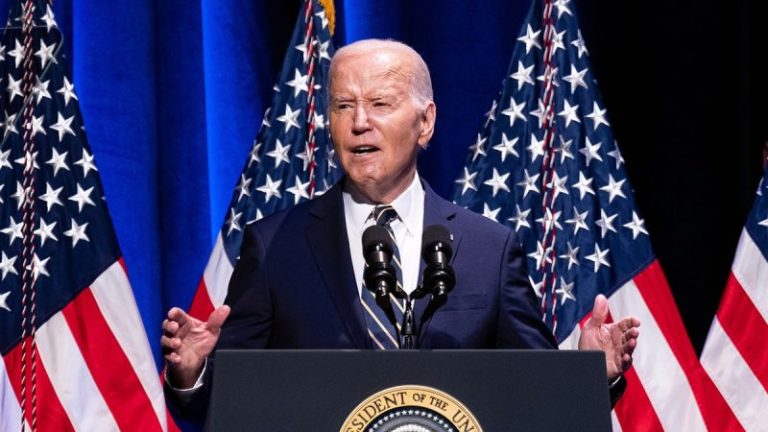
House Oversight Committee Chair James Comer, R-Ky., is demanding the Department of Justice (DOJ) conduct a ‘comprehensive’ investigation into former President Joe Biden’s autopen use.

The committee’s GOP majority released a 100-page report on Tuesday morning detailing findings from its months-long probe into Biden’s White House, specifically whether his inner circle covered up signs of mental decline in the ex-president, and if that alleged cover-up extended to executive actions signed via autopen without Biden’s full awareness.

‘Faced with the cognitive decline of President Joe Biden, White House aides — at the direction of the inner circle — hid the truth about the former president’s condition and fitness for office,’ the report said.

The report also detailed a ‘haphazard documentation process’ for pardons made by Biden, which the committee argued left room for doubt over whether the former president made those decisions himself.

‘In the absence of sufficient contemporaneous documentation indicating that cognitively deteriorating President Biden himself made a given executive decision, such decisions do not carry the force of law and should be considered void,’ the GOP report said.

‘The Department of Justice should immediately conduct a review of all executive actions taken by President Biden between January 20, 2021, and January 19, 2025. Given the patterns and findings detailed herein, this review should focus particularly on all acts of clemency. However, it should also include all other types of executive actions.’

In addition to concerns about who signed off on Biden’s executive actions, Comer spent part of the report raising concerns about Hunter Biden’s role in the pardon process.

Fox News Digital previously reported that ex-Biden Chief of Staff Jeff Zients told investigators that Hunter Biden was in the room for some pardon discussions — specifically the controversial preemptive pardons the ex-president gave to his relatives.

‘It was towards the end,’ said a portion of Zients’ transcript included in the report. ‘What comes to mind is the family discussions. But I don’t know — that doesn’t mean that was it. It was the pardons towards the end, very end of the administration. And I think it was a few meetings, not many meetings.’

Comer’s report said, ‘Zients testified that President Biden included his son, Hunter Biden, in the decision-making process for and meetings about pardons.’

‘This apparently included the meeting to discuss the pardons of five Biden family members, Dr. Anthony Fauci, General Mark Milley, and the members of Congress who served on the Select Subcommittee to Investigate the January 6th attack on the United States Capitol, and their staff,’ the report said.

The Oversight Committee called a total of 14 witnesses across three months, mainly consisting of top Biden administration aides — including some who had known him for decades.

Despite nearly 47 hours of interviews and sworn depositions, however, Comer suggested he believed aides covered for Biden even in the committee room.

‘Throughout the Committee’s investigation, senior Biden White House aides presented a perspective of President Biden’s cognitive health completely disconnected from that of the American public,’ the report said.

‘Not one of the Committee’s 14 witnesses was willing to admit that they ever had a concern about President Biden being in cognitive decline. In fact, numerous witnesses could not recall having a single conversation about President Biden’s cognitive health with anyone inside or outside of the White House.’

Comer spent a significant amount of time in the report criticizing former White House physician Dr. Kevin O’Connor. O’Connor’s sworn deposition was among the shortest sit-downs of the investigation, with the doctor having invoked the Fifth Amendment for all questions save for his name.

In a letter obtained by Fox News Digital alongside the report, Comer called for the D.C. Health Board of Medicine to investigate O’Connor — and potentially bar him from practicing medicine.

The GOP report called O’Connor’s alleged decision to not conduct a cognitive exam with Biden during his four-year term ‘reckless’ and accused him of making ‘grossly misleading medical assessments.’

‘His refusal to answer questions about the execution of his duties as physician to the president — combined with testimony indicating that Dr. O’Connor may have succumbed to political pressure from the inner circle, influencing his medical decisions and aiding in the cover-up — legitimizes the public’s concerns that Dr. O’Connor was not forthright in carrying out his ultimate duties to the country,’ the report said.

‘The Committee recommends that the District of Columbia Board of Medicine review the actions taken by Dr. O’Connor while serving as the White House physician to President Biden for any potential wrongdoing in the medical care of the former president –– including whether Dr. O’Connor produced false or misleading medical reports to the American people.’

O’Connor’s lawyers previously told Fox News Digital that he invoked the Fifth Amendment over concerns that the scope of the committee’s probe could run afoul of doctor-patient confidentiality standards.

Biden’s allies have repeatedly denounced Comer’s probe as political and having no basis in reality. 

Multiple people who spoke with the committee have argued that concerns about Biden’s mental acuity were made worse by the media and Republican pundits, particularly after his disastrous June 2024 debate against current President Donald Trump.

In an interview with The New York Times in July, Biden affirmed he ‘made every decision’ on his own.

This post appeared first on FOX NEWS

President Donald Trump told U.S. troops aboard the USS George Washington at Japan’s Yokosuka Naval Base on Tuesday that the ‘first batch of missiles for Japan’s F-35 fighter jets ‘will arrive this week,’ suggesting that U.S. defense deliveries to Tokyo are moving ahead of schedule.

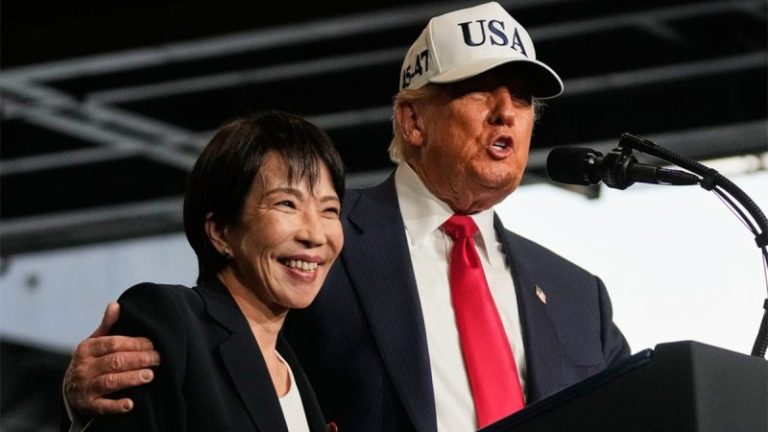
The comments came during Trump’s hour-long remarks to sailors as part of his wider Asia trip, which included a stop in Malaysia before Japan, where he met with the country’s first female prime minister, Sanae Takaichi, and signed a new U.S.-Japan framework agreement on rare earth minerals. Later this week, Trump is expected to meet with Chinese President Xi Jinping.

Washington has approved several large arms sales to Japan, including advanced AIM-120 AMRAAM and AIM-9X air-to-air missiles designed for F-35s.

Trump praised the U.S.’ alliance with Japan, calling it ‘one of the most remarkable relationships in the entire world.’

Prime Minister Takaichi, sharing the stage with Trump, said Japan was ‘committed to fundamentally reinforcing its defense capability’ and ‘ready to contribute even more proactively to peace and stability in the region.’

Trump also touted Japan’s and the U.S.’ stock markets reaching record highs, saying it was a sign that ‘we’re doing something right.’

Trump’s appearance underscored Washington’s deepening security cooperation with Tokyo as regional tensions with China and North Korea persist. Ahead of his Asia trip this week, Trump has made repeated invitations to meet North Korean leader Kim Jong Un, though no concrete preparations are underway.

This post appeared first on FOX NEWS

Russian President Vladimir Putin is tightening his grip on power by elevating younger loyalists amid growing instability inside the Kremlin as he ages, according to reports.

On Sunday, The Telegraph reported that Putin, 73, who has ruled Russia for more than two decades, is ‘running out of cards to play’ as pressure mounts both domestically and abroad. 

The Federal Security Service (FSB) also opened a criminal case against exiled businessman Mikhail Khodorkovsky and 22 members of the Anti-War Committee of Russia, accusing them of plotting a seizure of power, per reports. Khodorkovsky spent a decade in a Siberian prison before founding the Anti-War Committee in 2022.

John Herbst, Senior Director of the Eurasia Center at the Atlantic Council and former U.S. ambassador to Ukraine, told the U.K. outlet that ‘the Kremlin is falling into paranoia.’

‘All the people around him have started thinking about a world beyond Putin, so he has arranged his own elite in a really careful way, so there are no clear seams along which it would kind of rip apart,’ Henry Hale, Professor of Political Science and International Affairs at George Washington University, told Fox News Digital. 

‘He also has members of his own family now that are starting to rise in the ranks. One of the ones that has gotten the most attention is Anna Evgenievna Tsivilyova, née Putina,’ Hale said. 

Tsivilyova, 52, is Putin’s first cousin once removed and currently heads the Defenders of the Fatherland Foundation, a state-run organization that supports Russian soldiers and veterans. 

She has also served as chair of the board of the Kolmar Group, one of Russia’s largest coal companies.

‘The younger people are being brought up by the older generation integrated seamlessly into the power pyramid,’ Hale said.

‘Putin is worried about what happens as he ages and if you don’t provide some opportunity for younger people to rise up, you know, then the regime might come under some pressure.’

‘These people can be trusted because they’re related to people close to Putin, and they can also be young and energetic. The younger people are being brought up by the older generation, integrated seamlessly into the power pyramid,’ Hale added.

In 2023, Wagner Group leader Yevgeny Prigozhin staged a brief mutiny, sending his fighters toward Moscow before abruptly standing down only to die weeks later in a plane crash. 

Now, the Kremlin’s focus has shifted to silencing opposition abroad. 

‘Tensions remain within the elite and Putin wants to get rid of any possible risks,’ Hale said. ‘The 2023 incident was a warning from Putin to his own elite, his own inner circle, not to dare try anything. Putin and his people are watching each other carefully and so don’t try anything funny,’ Hale added.

Recently, western sanctions, less oil revenue, and war costs could push Russia toward recession.  

The Treasury Department under President Donald Trump sanctioned Russia’s two largest oil producers, Rosneft and Lukoil, escalating pressure on the Kremlin to end its war in Ukraine. 

According to reports, the Russian government could raise taxes and increase domestic borrowing to close the gap.

‘Putin has weathered the main crisis that the full-scale invasion of Ukraine brought Russia, which was the initial shock of the invasion and its failure to take Ukraine in a matter of days,’ Hale added. 

‘But war brings uncertainty and there’s a risk of disastrous defeat, underperforming expectations. All the people around him start thinking about a world beyond Putin.’

‘That said, well, I think Putin’s regime is fairly stable at the moment,’ Hale concluded.

Fox News Digital has reached out to the Kremlin for comment.

This post appeared first on FOX NEWS

U.S. airline travelers are beginning to feel the effects of the ongoing government shutdown. And with no clear end in sight, it’s increasingly likely that Americans could be grappling with flight delays and cancellations just ahead of the Thanksgiving holiday.

Tuesday marks Day 28 of the shutdown. It’s also the first day that air traffic controllers and other federal workers will see a paycheck showing $0 — putting added strain on a sector that is already dealing with a declining workforce and difficult employment conditions.

‘This Democrat-led shutdown is putting an unnecessary strain on our nation’s aviation system, putting more flights at risk for delays or cancellation,’ Rep. Troy Nehls, R-Texas, chair of the House Transportation Committee’s aviation subcommittee, told Fox News Digital.

After speaking with air traffic controllers directly, Nehls said, ‘They’ve shared their growing concerns about fatigue, distraction and financial hardship as they continue performing essential work without pay.’

‘The busy holiday season is quickly approaching, and the traveling public deserves a safe, efficient, and reliable travel experience. If Senate Democrats continue to refuse to do the right thing and pass the clean continuing resolution, the situation will only get worse,’ Nehls said.

Still, the looming payday hasn’t loosened Senate Democrats from their dug-in position. 

Sen. Andy Kim, D-N.J., argued that the blame game against Democrats over air traffic controllers, and other looming issues like federal food benefits soon running out of money, were ‘all things that the Republicans have been cutting back on.’ 

He noted to Fox News Digital that the administration fired hundreds of Federal Aviation Administration (FAA) employees earlier this year based on recommendations from the Department of Government Efficiency (DOGE). 

‘These are things that they’ve constantly been attacking and putting the strain and pressure on air traffic controllers, and now they’re pretending like they care about this, and I just find that to be disingenuous,’ Kim said. ‘And it’s just using our federal workers as pawns when we know that this administration has done everything that they could to decimate and dismantle our civil service and our public service.’

The Senate may vote on a bill this week from Sen. Ted Cruz, R-Texas, that would pay air traffic controllers, but so far Senate Majority Leader John Thune, R-S.D., has not teed it up. Thune said they’d ‘see what the temperature is of our senators’ on that and other funding issues, but he reiterated that the easiest way to pay all federal workers would be to reopen the government. 

Sen. Richard Blumenthal, D-Conn., echoed a sentiment many Senate Democrats have shared about Cruz’s bill and others like it that would incrementally fund parts of the government; it can’t give President Donald Trump ‘carte blanche to do what he wants.’ 

When asked by Fox News Digital about criticism from Republicans over congressional Democrats’ role in air traffic controllers missing a pay day, he said, ‘Air traffic controllers have been really admirable in coming to work and doing their job.’

Cruz said that he hoped his bill would get a shot, and when asked what his message to Republicans would be to get the bill on the floor, he said, ‘That the Democrats not paying air traffic controllers is reckless.’  

Some 13,000 air traffic controllers are employed across the U.S. Many already work six days per week, faced with a long-simmering shortage of employees.

Because air traffic controllers are deemed essential workers, they are made to work during shutdowns without pay. Instead, they are expected to get back pay when the shutdown is over.

Transportation Secretary Sean Duffy warned late last week that it would mean that many air traffic controllers would be forced to take on another job to make ends meet.

‘If you have a controller that’s working six days a week but has to think about, ‘How am I going to pay the mortgage, how am I to make the car payment, how am I going to put food on my kid’s table?’ They have to make choices, and the choice they’re making is to take a second job,’ Duffy said. ‘I don’t want them delivering for DoorDash. I don’t want them driving Uber. I want them coming to their facilities and controlling the airspace.’

And the effects are being felt already, even far outside of Washington, D.C., where Congress is still gridlocked over federal spending.

Los Angeles International Airport, one of the world’s busiest airports, was forced to issue a temporary ground stop on Sunday morning due to a shortage of air traffic controllers.

It was just one of 22 locations that faced disruptions over air traffic controller shortages on Sunday, Duffy told ‘Sunday Morning Futures.’

There were more than 3,300 delayed flights across the U.S. as of late Monday afternoon, according to airline tracker FlightAware. There were more than 8,700 delays on Sunday.

And several airports, including in Dallas, Austin and Newark, were all under ‘ground delay’ or ‘ground stop’ advisories early Monday evening, according to advisory bulletins from the FAA. Each advisory was due to staffing issues. 

Sen. Roger Marshall, R-Kan., noted that there were ‘three or four’ fast-approaching pressure points, including the payday for air traffic controllers, that could shake loose deeply entrenched Senate Democrats. 

He noted that it wouldn’t be something inside the walls of Congress that could force negotiations, but ‘something extraneous that forces us to come together.’

‘I think the air traffic control has the most potential to light this place up,’ he told Fox News Digital. ‘If the senators can’t go home Thursday night because of air traffic control issues, then I think it really could be a pressure point.’

This post appeared first on FOX NEWS