First Majestic Silver (TSX:AG,NYSE:AG) CEO Keith Neumeyer’s silver price prediction of over US$100 per ounce came true in 2026. When will silver prices make a more lasting hold in triple digit territory?
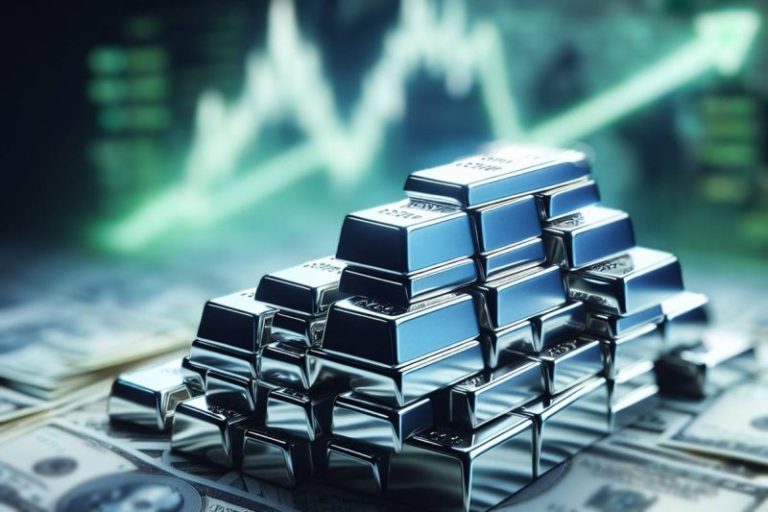
The silver price was up over 189 percent year-on-year as of March 2, 2026, on the back of economic uncertainty and ongoing geopolitical tensions, as well as support from long-term demand fundamentals.
The silver price broke through its previous all-time high in October 2025, blasting through the US$50 per ounce mark. From then, it rallied to new highs again and again.
Only a few weeks into 2026, the price of silver finally hit triple digits when it overtook the US$100 level. It went on to rise to its latest all-time high of US$121.62, which it set on January 29, 2026.
The catalysts for silver’s price surge above the critical US$100 level included the trade tensions between the US and Europe following US President Donald Trump’s renewed bid for Greenland; Trump’s public statements about possible military airstrikes on Iran; and a significant structural supply deficit exacerbated by increased institutional investment demand.
Well-known figure Keith Neumeyer, CEO of First Majestic, had frequently said he believes the white metal could hit the US$100 mark or even reach as high as US$130 per ounce.
Neumeyer has voiced this opinion often over the past decade. He put up a US$130 price target in a November 2017 interview with Palisade Radio, when silver was just US$17 per ounce. He reiterated his triple-digit silver price forecast in multiple interviews with Kitco over the years, including one in March 2023.
In 2024, Neumeyer made his US$100 silver call in a conversation with ITM Trading’s Daniela Cambone at the Prospectors & Developers Association of Canada (PDAC) convention, and in April of that year he acknowledged his reputation as the ‘triple-digit silver guy’ on the Todd Ault Podcast.
Speaking with Chris Marcus of Arcadia Economics on January 16, 2026, a day after the price of silver had broken through US$93 per ounce for the first time, Neumeyer stated that “triple digits is definitely on its way.” He was finally proven right less than two weeks later.
At times Neumeyer has been even bolder, suggesting in 2016 that silver could reach US$1,000 if gold were to hit US$10,000.
In order to better understand where Neumeyer’s opinion comes from and why a triple-digit silver price finally materialized, it’s important to take a look at the factors that affect the metal’s movements, as well as where prices have been in the past and where other industry insiders think silver could be headed.
First, let’s dive a little deeper into Neumeyer’s US$100 silver prediction.
Why has Neumeyer called for a US$100 silver price?
Neumeyer’s belief that silver could hit US$100 is based on a variety of factors, including its consistent deficit, its industrial demand and how undervalued it is compared to gold.
When he first made the prediction more than a decade ago, there was significant distance for silver to go before it could reach the success Neumeyer had boldly predicted.
Neumeyer expected a triple-digit silver price in part because he believed the market cycle could be compared to the year 2000, when investors were sailing high on the dot-com bubble and the mining sector was down. He believed it was only a matter of time before the market corrected, like it did in 2001 and 2002, and commodities would see a big rebound in pricing. It was during 2000 that Neumeyer himself invested heavily in mining stocks and came out on top.
“I’ve been calling for triple-digit silver for a few years now, and I’m more enthused now,” Neumeyer said at an event in January 2020, noting that there are multiple factors behind his reasoning. “But I’m cautiously enthused because, you know, I thought it would have happened sooner than it currently is happening.”
Another factor driving Neumeyer’s position is his belief that the silver market is in a deficit at a time when demand is rising from new industrial sectors. In a December 2023 interview with Kitco, Neumeyer stressed that silver is more than just a poor man’s gold and he spoke to silver’s important role in electric vehicles and solar cells.
In line with this view on silver, First Majestic is a member of a consortium of silver producers that in January 2024 sent a letter to the Canadian government urging that silver be recognized as a critical mineral.
Silver’s inclusion on the list would allow silver producers to accelerate the development of strategic projects with financial and administrative assistance from the government.
In this 2024 PDAC interview, Neumeyer once again highlighted what he says is a sizable imbalance in the silver’s supply-demand picture. “We’re six years into this deficit. The deficit in 2024 looks like it’s gonna be bigger than 2023, and why is that? Because miners aren’t producing enough silver for the needs of the human race,” he said.
More controversially, Neumeyer is of the opinion that the white metal will eventually become uncoupled from its sister metal gold, and should be seen as a strategic metal due to its necessity in many everyday appliances, from computers to electronics, as well as the technologies mentioned above. He has also stated that silver production has gone down in recent years, meaning that contrary to popular belief, he believes the metal is actually a rare commodity.
Neumeyer’s March 2023 triple-digit silver call was a long-term call, and he explained that while he believed gold would break US$3,000 that year, he thought silver will only reach US$30. However, once the gold-silver ratio is that unbalanced, he believes that silver will begin to take off, and it would just need a catalyst.
‘It could be Elon Musk taking a position in the silver space,’ Neumeyer said. ‘There’s going to be a catalyst at some time, and headlines in the Wall Street Journal might talk about the silver supply deficit … I don’t know what the catalyst will be, but investors and institutions will wake up to the fundamentals of the metal, and that’s when it will start to move.’
In 2024, gold experienced a resurgence in investor attention as the potential for US Federal Reserve interest rate cuts came into view. In an interview with Cambone at PDAC 2024, Neumeyer countered that perception, stating, “There’s a rush into gold because of the de-dollarization of the world. It has nothing to do with the interest rates.”
In an April 2025 Money Metals podcast, Neumeyer reiterated his belief that silver is in an extreme supply deficit and that eventually silver prices will have to rise in order to incentivize silver miners to dig up more of the metal.
‘You need triple-digit silver just to motivate the mining companies to start investing again because the mining companies aren’t going to make the investment because there’s just so much risk in it,’ he said.
After the price of silver surged from the US$50 level up into more than US$70 per ounce in late December 2025, Neumeyer actually cautioned investors not to get too excited about a potential quick run to US$100 during an interview with The Deep Dive.
“I’m crossing my fingers that it doesn’t go to US$100 on this move. I don’t think that would be particularly healthy at all. I would prefer to see it start to slow down here and chalk a little bit sideways for two to three months and find a level that people can get use to. It’s going to take sometime for people to get used to US$70 silver,” he advised.
While he admitted high silver prices are great for silver producers such as First Majestic and their shareholders, he said “personally, I’d rather see some stability,” and have silver reach triple digits in 12 to 24 months out so that the mining sector has more time to react and better take advantage of higher silver prices.
A month later, when silver was above US$100 per ounce, during an interview with Kitco at the 2026 Vancouver Resource Investment Conference (VRIC), Neumeyer said, “calling triple digit silver and it’s actually happening is pretty interesting,” but he believes it’s still early stages in this new bull market and he’s done predicting metals prices.
“What we do know is that we’ve created a new pricing paradigm, we’re not going back to the old pricing that we’re all used to over the past 20 or 30 years,” he added.
What factors affect the silver price?
In order to glean a better understanding of the precious metal’s chances of breaching the US$100 range again, it’s important to examine the elements that could push it to that level or pull it further away.
The strength of the US dollar and Fed rate changes are factors that will continue to affect the precious metal, as are geopolitical issues and supply and demand dynamics.
Although Neumeyer believes that the ties that bind silver to gold need to be broken, the reality is that most of the same factors that shape the price of gold also move silver.
For that reason, it’s helpful to look at gold price drivers when trying to understand silver’s price action. Silver is, of course, the more volatile of the two precious metals, but nevertheless it often trades in relative tandem with gold.
First, it’s useful to understand that higher interest rates are generally negative for gold and silver, while lower rates tend to be positive. That’s because when rates are higher, investment demand shifts to products that can accrue interest.
The Fed’s rate moves have played a key role in pumping up silver prices over the past year. However, Trump doesn’t think Fed Chair Jerome Powell is lowering rates fast enough.
Trump’s feud with the Fed over interest rates escalated in early January 2026 when the US Department of Justice served the Fed with grand jury subpoenas targeting Powell with a criminal indictment. The uncertainty over Fed independence is driving gold prices higher as investors expect a weaker dollar.
While central bank actions are important for gold, and by extension silver, another key price driver lately has been geopolitical uncertainty. The past decade has been filled with major geopolitical events such as the Israel-Hamas conflict, the Russia-Ukraine war, and rising tensions between the US and other countries including Russia, China and Iran, and more recently Venezuela, Canada and Denmark.
Trump’s tariffs have also rattled stock markets and ratcheted up the level of economic uncertainty pervading the landscape in 2025 and continuing into this year. This has proved price positive for gold and silver, with silver outperforming gold in the last year.
However, silver’s industrial side can not be ignored. In an economically uncertain environment, the industrial case of silver could weaken in the short term, but in the longer term silver’s demand side is still highly prospective for larger gains.
Samuelson explained in March 2025 that silver is particularly vulnerable to a supply shock as the London Bullion Market Association’s physical silver supplies had already decreased by 30 to 40 percent, while gold had only lost 3 to 4 percent.
The next month, Smirnova explained that silver has been in a supply deficit of 150 million to 200 million ounces annually, but production has been stagnant or declining over the past decade.
Looking at the runup in silver prices into the triple digits that occurred in late 2025 to early 2026, this structural supply-demand deficit, magnified by an explosion in industrial demand for solar energy and AI data centers, played an outsized role. Further adding fuel to the fire was record-low physical inventory levels in COMEX and Shanghai vaults, which caused a shift from ‘paper’ silver to physical hoarding.
Higher industrial demand from emerging sectors due to factors like the transition to renewable energy and the emergence of AI technology will be highly supportive for the metal over the next few years. Solar panels are an especially exciting sector as manufacturers have found increasing the silver content increases energy efficiency.
Frank Holmes of US Global Investors (NASDAQ:GROW) said in a December interview that silver’s “ability to be a transformative part of renewable energy,” particularly in solar panels, is an outsized factor in the latest run in the silver price. “And I don’t think that is going to go away,” he added.
Could silver hit US$100 per ounce again?
It seems likely that we will reach a US$100 per ounce silver price again in 2026 as there is plenty of support for Neumeyer’s belief that the metal is undervalued and that “ideal conditions are present for silver prices to rise.”
For much of 2025, silver and gold rose higher on factors including persistent inflationary pressures brought on by Trump’s aggressive tariff announcements and the ongoing geopolitical risks in the Middle East. The commodity’s price uptick also came on the back of very strong silver investment demand.
In the fourth quarter, silver rapidly outpaced gold’s gains, and by early January silver reached US$95, more than doubling in value from its Q3 close of US$46. It continued higher to breach US$120 by the end of the month.
While silver and gold prices both pulled back significantly over the following days, silver spent February consolidating and stabilized above the US$80 mark in the second half of the month.
On March 1, the silver price once again approached the US$100 mark as the US started a war with Iran, peaking at US$96.40 before seeing a smaller pull back.
As silver’s momentum continues upwards and the price stabilizes at these higher values, silver market experts are agreeing with Neumeyer’s triple-digit silver hypothesis that the price of silver still has further room to grow.
“You know, whether in the short term or the long term, one way or another, we’re going to run into a supply demand brick wall. And when that day happens, we could see triple-digit silver prices in a very, very short period of time,” he said. “I figure it’s going to be US$200 to US$400 an ounce, at least, before this is all over.”
This set up bodes well for those not only invested in physical silver, but in silver mining stocks as well.
“I have to be honest, I was not necessarily expecting triple-digit silver this quite this fast,” he said. “I was saying, if and when we break through US$54 silver, then the path of least resistance becomes a conservative, measured move target of US$96 or within a few pennies … So, I’m not really surprised at all, and in fact, I think we’re headed higher in the fullness of time.’
Penny sees Fed policy actions as a potential catalyst for silver’s next leg up.
“I think it’ll be the Fed’s response to the next crisis that causes the big move, the 1979 moment where you go up,” he explained, noting that in 1979, the price of silver went up 700 percent in 12 months. “I think that that moment still lies ahead. It’ll be the Fed’s response to the next crisis that is the catalyst for that huge move.”
Eugenia Mykuliak, founder and executive director of B2PRIME Group, shared another reason she believes Fed rate cuts are bullish for silver.
In late January, Citigroup (NYSE:C) analysts upgraded their silver forecast to US$150 per ounce in the second quarter of 2026. ‘We expect the bullish factors to stay intact in the very near term, supporting strong investment/speculation demand and likely leading to further physical tightening in major ex-US trading hubs,’ said the firm.
FAQs for silver
Why is silver so cheap?
The primary reason that silver is sold at a significant discount to gold is supply and demand, with more silver being mined annually. While silver does have both investment and industrial demand, the global focus on gold as an investment vehicle, including countries stockpiling gold, can overshadow silver.
Additionally, jewelry alone is a massive force for gold demand.
There is an abundance of silver — according to the US Geological Survey, to date 1,740,000 metric tons (MT) of silver have been discovered, while only 244,000 MT of gold have been found, a ratio of about 1 ounce of gold to 7.1 ounces of silver. In terms of output, 26,000 MT of silver were mined in 2025 compared to 3,300 MT for gold.
Looking at these numbers, that puts gold and silver production at about a 1:7.88 ratio last year, while the price ratio on March 3, 2026, was around 1:62 — a huge disparity.
Can silver hit $1,000 per ounce?
As things are now, it seems unlikely, and at the same time almost a possibility, that silver will ever reach highs of US$1,000 per ounce, which Keith Neumeyer predicted in 2016 could happen if gold ever climbed to US$10,000 per ounce.
This is related to the gold to silver production ratio discussed above. At the time of the 2016 prediction, this ratio was around 1 ounce of gold to 9 ounces of silver, or 1:9.
If silver was priced according to production ratio today, when gold is at US$5,000 per ounce, then silver should be around US$555. However, the gold to silver pricing ratio today is around 1:62, although that’s a bit lower than the typical range of 1:70 to 1:90. In early March 2026, gold is trading around US$5,100 per ounce and silver is about US$82 per ounce.
Is silver really undervalued?
Many experts believe that silver is undervalued compared to fellow currency metal gold. As discussed, their production and price ratios are currently incredibly disparate.
While investment demand is higher for gold, silver has seen increasing time in the limelight in recent years, including a 2021 silver squeeze that saw new entrants to the market join in.
Another factor that lends more intrinsic value to silver is that it’s an industrial metal as well as a precious metal. It has applications in technology and batteries — both growing sectors that will drive demand higher.
Silver’s two sides have remained prominent as the market navigates persistent supply shortages and shifting investor sentiment. Following a record high in 2022, according to data from the Silver Institute, silver demand reached 1.16 billion ounces in 2024, supported by a fourth consecutive year of record industrial fabrication at 680.5 million ounces. However, total 2024 demand saw a 3 percent decline due to a 22 percent drop in physical investment, which hit a five-year low as Western investors took profits at higher prices.
Is silver better than gold?
There are merits for both metals, especially as part of a well-balanced portfolio. As many analysts point out, silver has been known to outperform its sister metal gold during times of economic prosperity and expansion.
On the other hand, during economic uncertainty silver values are impacted by declines in fabrication demand.
Silver’s duality as a precious and industrial metal also provides price support. As a report from the CPM Group notes, “it can be seen that silver in fact almost always (but not always) out-performs gold during a gold bull market.”
At what price did Warren Buffet buy silver?
Warren Buffett’s Berkshire Hathaway (NYSE:BRK.A) bought up 37 percent of global silver supply between 1997 and 2006. Silver ranged from US$4 to US$10 during that period.
In fact, between July 1997 and January 1998 alone, the company bought about 129 million ounces of the metal, much of which was for under US$5. Adjusted for inflation, the company’s purchases in that window cost about US$8.50 to US$11.50.
How to invest in silver?
There are a variety of ways to get into the silver market. For example, investors may choose to put their money into silver-focused stocks by buying shares of companies focused on silver mining and exploration, or even precious metals royalty stocks. As a by-product metal, investors can also gain exposure to silver through some gold companies.
There are also silver exchange-traded funds that give broad exposure to silver companies and the metal itself, while more experienced traders may be interested in silver futures. And of course, for those who prefer a more tangible investment, purchasing physical bullion in silver bar and silver coin form is also an option.
Securities Disclosure: I, Melissa Pistilli, hold no direct investment interest in any company mentioned in this article.
This post appeared first on investingnews.com