
Author

admin

Browsing

“TODAY” co-anchor Savannah Guthrie will return to the NBC morning show on April 6, as investigators continue to search for her 84-year-old mother in Arizona.

In her first interview since Nancy Guthrie went missing in February, Savannah Guthrie told Hoda Kotb she believes returning to “TODAY” is “part of my purpose right now” — even if it’s hard to imagine coming back to a workplace “of joy and lightness.”

“I can’t come back and try to be something that I’m not. But I can’t not come back because it’s my family,” Guthrie said in the interview about returning to work. “I don’t know if I can do it. I don’t know if I’ll belong anymore, but I would like to try. I would like to try.”

“I’m not gonna be the same. But maybe it’s like that old poem, ‘More beautiful in the broken places,’” she added.

Tune into “Savannah Speaks: A Dateline Special” at 9 p.m. EST on NBC.

Kotb revealed Guthrie’s return Friday on “TODAY.” Her co-host, Craig Melvin, added that the team “can’t wait to welcome her back with open arms.”

“It’s where she belongs. It’s where we all want her to be,” Melvin said.

A spokesperson for “TODAY” did not have additional comment.

Nancy Guthrie was reported missing Feb. 1 after she did not show up at a friend’s house for virtual church services, authorities said. She was last seen the previous night around 9:45 p.m. after having dinner at her daughter Annie Guthrie’s home.

Authorities have described the case as a possible kidnapping or abduction, but clues have been scarce. The Pima County Sheriff’s Office has not publicly specified a motive.

Guthrie told Kotb that her religious faith is “how I will stay connected to my mom.” She alluded to her mother’s experience with loss after her husband, Charles Guthrie, died at the age of 49 in 1988.

“I saw her belief. I saw her faith. She taught me, she taught all of us,” said Guthrie, who was 16 at the time of her father’s death. “I may not do it as well as her, but I will do it. I will do it for my kids. I will. I will not fall apart. I will not let whoever did this take my children’s mother from them.”

Guthrie repeated her pleas for information about her mother’s possible abduction, saying in part: “We need someone to tell the truth. I have no anger in my heart. I have hope in my heart. I have love. But this family needs peace.”

“We need an answer, and someone has it in their power to help,” she added.

Guthrie also opened up about her visit earlier this month to the New York City set of the “TODAY” show, describing her NBC colleagues as her “greater family.”

“I really wanted to come and see everybody. I just love this beautiful place that we call home, where we get to come and be every day,” she said, adding, “When times are hard, you want to be with your family.”
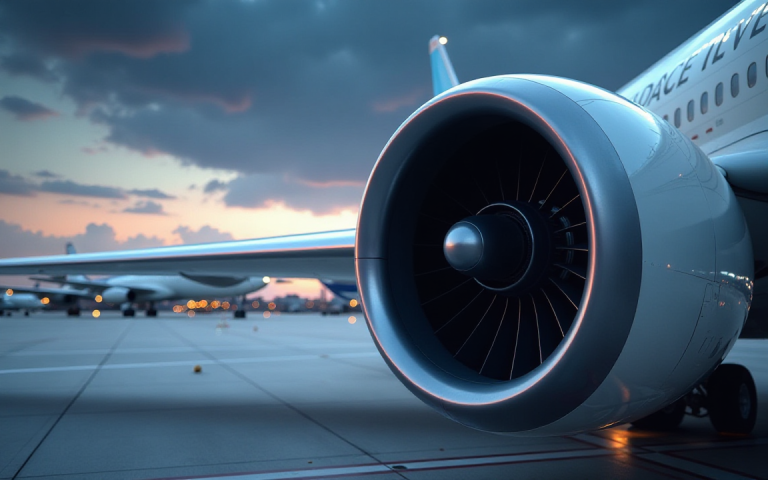

Rolls-Royce share price has held steady in the past two days, helped by the company’s reassurance that its business was still firing on all cylinders despite the ongoing weakness in its business. RR rose to 1,200p on Monday, up from the month’s low of 1.093p.

Rolls-Royce Holdings helped by its diversification and execution

Rolls-Royce Holdings and other companies in the civil aviation industry are facing major headwinds this year, including the recent collapse of Spirit Airlines, a top player in the low-cost industry.

Jer fuel prices have soared, and traffic in some regions, especially in the Middle East has slowed dramatically amid the ongoing US-Iran war.

Rolls-Royce is exposed to this weakness, especially if the crisis escalates as jet fuel shortages in Europe may affect its operations. A good example of this is Lufthansa, which has slashed 20,000 short-haul flights.

In a statement at its annual general meeting last week, the management maintained that it had started the year well and that it was on track to hit its target, which includes an underlying profit of between £4 billion and £4.2 billion and a free cash flow of between £3.6 billion and £3.8 billion.

The management noted the large engine flying hours rose by 5% to 115% of 2019 levels in the first quarter. It expects that the LFH will be between 115% and 120% of 2019 levels.

These numbers are important because of the company’s business model, which includes offering services to airlines using its engines. These companies pay per engine flight hour, meaning that it only makes money when the engine is flying.

Notably, the management noted that there was  a significant recovery in the EFH in the Middle East, with that of the Trent XWB being above the pre-conflict levels. EFH has remained strong in other regions, with the management noting that most of the flight cancellations were in the narrow body segment.

Additionally, Rolls-Royce is seeing strong orders for its engines despite the ongoing challenges in the industry. For example, it received orders for the Trent 1000 XE, which will be on eight Boeing planes in April. The company may also benefit when Trump visits China, where airlines are expected to make orders of over 500 planes.

Additionally, the company has become a major player in the data center industry, where it is providing solutions to companies and utilities. Its backlog in the power sector rose to £7.3 billion. The company is also aiming to become a major player in the Small Modular Reactor industry, where it has started receiving orders.

Rolls-Royce share price technical analysis

RR stock chart | Source: TradingView 

The daily timeframe chart shows that the Rolls-Royce stock price has rebounded in the past few days. This rebound happened after forming a double-bottom pattern at $1,093 and a neckline at 1,322p.

The stock is attempting to move above the 50-day Exponential Moving Average (EMA). Also, the Relative Strength Index (RSI) has turned around and is attempting to cross 50. 

Therefore, the combination of the double-bottom pattern and the rising RSI means the stock will rebound, initially to 1,322p followed by the all-time high of 1,413p. A drop below the key support at 1,093p will invalidate the bullish outlook.

The post Rolls-Royce share price flags a rare bullish pattern: is it about to soar? appeared first on Invezz

Global markets begin May on an uneasy footing, with the Middle East conflict dominating the outlook and keeping oil prices volatile.

The ongoing Iran crisis has heightened concerns around supply disruptions, shipping routes and inflation, prompting fresh engagement between US President Donald Trump and major energy executives, including Chevron, on stabilising markets.

Brent crude remains elevated after sharp swings in the previous session.

In Asia, trading is slightly firmer, supported by record closes on Wall Street and thin holiday volumes.

Meanwhile, in Japan, companies are accelerating the shift toward automation as labour shortages deepen.

Trump leans on oil chiefs

Trump’s meeting with Chevron and other energy leaders says a lot about how Washington is handling the Iran shock.

The talks covered US oil production, futures, shipping and natural gas, with the White House focused on what it would take to keep pressure on Tehran while limiting the damage to American consumers.

Officials also pointed to tools already in play, including a Jones Act waiver, Strategic Petroleum Reserve loans and looser refinery rules.

The message is clear: the administration wants leverage over Iran, but it also wants to stop the oil spike from becoming a political problem at home.

Oil remains volatile

Oil is still trading like a headline market.

Brent jumped to $126.41 a barrel on Thursday, its highest since March 2022, before easing to $114.01 as the July contract took over from the expiring June contract.

West Texas Intermediate also swung sharply, closing at $105.07 after touching $110.93 intraday.

By Friday morning, Brent was around $111.66 and US crude at $105.53, which shows how quickly the market is resetting rather than calming down.

The Strait of Hormuz remains closed, Trump is due more briefings on military options, and Iran is warning of retaliation if attacks resume.

Asia catches a lift

Asian equities are starting the session with a modest bid, even though many markets are shut for May Day.

Tokyo’s Nikkei 225 rose 0.7% to 59,687.65, while Australia’s S&P/ASX 200 climbed 1% to 8,750.40.

US futures are also higher after Thursday’s record closes on Wall Street, where strong profits from Alphabet, Caterpillar and others helped the S&P 500 finish its best month in more than five years.

The catch is that oil is still high enough to keep inflation fears alive. So this is not a clean risk-on move.

It is a thin-holiday rally, helped by earnings and a brief pause in the worst of the energy panic.

JAL turns to robots

Japan Airlines is moving ahead with a test that feels very much like the future arriving early.

The carrier and a robotics company will trial humanoid robots at Tokyo’s Haneda Airport next month, with the machines helping with baggage handling, cabin cleaning and ground support equipment.

The video teaser and industry coverage frame the move as part of Japan’s broader labour squeeze, where airport work is physically demanding and staffing is getting harder.

The post Morning brief: Trump stirs oil fears, Asia climbs, Japan bets on robots appeared first on Invezz

U.S. stocks rose Wednesday and global oil prices fell in yet another volatile trading session as traders and investors were buffeted by constant headlines about the war in Iran.

News of a 15-point U.S. peace plan proposal sparked hopes early in the day that the Trump administration was moving to end its monthlong war against Iran. Initially, the S&P 500 and the Nasdaq 100 futures rose more than 1%.

But reports that Iran had responded negatively to the proposal briefly knocked index futures off their pre-market highs and lifted oil prices off their morning lows.

Despite the early setback, stocks closed the trading day higher. At 4 p.m. ET, the S&P 500 index was up about 0.4%, the Nasdaq Composite closed 0.7% higher, and the Dow jumped 305 points. The Russell 2000 index of smaller companies rose 1.1%.

The price of U.S. crude oil also traded off its lowest levels of the day and was down only 1.4% to about $90 per barrel by late afternoon. West Texas Intermediate crude oil has soared more than 30% since the start of the war on Feb. 28. The cost per barrel is up 50% since the beginning of the year.

International Brent crude prices traded near breakeven, at around $102 per barrel. The price of heating oil, a proxy for jet fuel, dropped 6%.

The global price of oil directly affects what Americans pay at the gas pump and what it costs them to heat and cool their homes. The average nationwide price of unleaded gas Wednesday was $3.98 per gallon, according to AAA data.

“Markets desperately want to believe in the positive,” UBS Global Wealth Management chief economist Paul Donovan wrote. “Focus on the apparent 15-point US plan to end the war has received more attention than Iranian dismissals of this, or the fact that passage through the Strait of Hormuz is minimal.”

Iran’s response to the U.S. proposal included a list of five conditions for ending the war, according to Iranian state TV, which cited a senior political-security official with knowledge of the details of the proposal.

Pakistan has also offered to mediate talks to end the hostilities, four sources told NBC News. A Persian Gulf official said Pakistan had been passing messages between the two countries for the past two days.

An in-person meeting between the U.S. and Iran could be held in the coming days, two sources added.

But President Donald Trump has continued to give conflicting signals.

On March 16, Trump said he was delaying his scheduled visit to China “by a month or so” to monitor the war. On Monday, he said the Strait of Hormuz would be “open very soon.”

And on Tuesday, Trump told reporters in the Oval Office, “This war has been won.” At the same time, the U.S. is sending more than 1,000 additional troops to the Middle East, sources said.

A motorist drives past a sign displaying prices at a gas station in Oakland, Calif., on Tuesday.Godofredo A. Vásquez / AP

Since the war started, the market has experienced several days like this, when markets are whipsawed by constant back-and-forth comments.

“There’s really no way to know at this point what the facts are regarding the state of negotiations, as neither side has any real incentive to conduct talks via the press, so expect more whipsaw action as things continue to progress,” analysts at Bespoke Investment Group wrote in a client note.

They added that the “ongoing tensions continue to support higher prices [and] stoke inflation concerns” and are likely to cause central banks to remain on hold, rather than cut rates.

On the contrary, traders believe the European Central Bank and the Bank of England will both raise interest rates.

“Uncertainty remains high,” analysts at ING wrote in a note Wednesday morning. “Overall, volatility remains elevated and a geopolitical risk premium persists.”

In the 18 trading sessions since the war began, U.S. oil prices have closed down only five times. Likewise, over the same period, the S&P 500 has closed higher only seven times. Three of those higher closes were only fractional.

After Wednesday’s close, the Nasdaq was down nearly 6% for the year, while the S&P 500 was on track for a 3.5% loss so far. The majority of those losses were concentrated in the weeks since the war began.

Meanwhile, the Strait of Hormuz, through which 20% of the world’s oil supply typically passes, has remained at a near standstill since the war began.

On Monday, just five ships passed through the strait, according to data compiled by S&P Global Market Intelligence. On Tuesday, the total was six. On many days since the war started, not a single ship has passed through.

However, some of the ships passing through the strait have taken an unusual course that put them close to the Iranian coastline, potentially signaling that Tehran was keeping a tight grip on traffic flows. Two Indian ships were granted passage Tuesday after a deal with Iran, Bloomberg News reported. The Iranian navy also guided the ships.

Otherwise, hundreds of other ships loaded up with cargo, oil and liquefied natural gas remain stuck.

WASHINGTON — On Sunday, Senate Majority Leader John Thune, R-S.D., discussed an off-ramp with President Donald Trump to reopen TSA and end the long lines and delays at airports.

It would fund all of the Department of Homeland Security except for ICE, which Democrats have refused to support without new limitations on immigration enforcement operations, two sources with knowledge of the conversation told NBC News.

White House aides initially conveyed the idea to Trump and, after that briefing, Thune spoke with the president, the two sources said. Thune discussed the idea with Republicans on Capitol Hill, one of the sources said. The second source said it’s seen by numerous Republicans as a viable path to break the logjam.

ICE would be funded separately by Republicans in a party-line “reconciliation” bill that can pass without the need for any Democratic support later in the year.

The Department of Homeland Security has been shut down for more than a month, and while key operations, such as TSA and the Federal Emergency Management Agency, are still operating, many of those employees are working without pay. As NBC News reported this weekend, more than 400 TSA officers have quit since the shutdown began. Immigration and Customs Enforcement is also shut down, but its employees are being paid through Trump’s big beautiful bill passed last year.

Republicans believe that the off-ramp Trump and Thune discussed would win support from Democrats, who have offered to fund noncontroversial parts of the Department of Homeland Security on the Senate floor while the two parties continue to negotiate on immigration.

But Trump rejected it — as he made clear in a Truth Social post Sunday night.

“I don’t think we should make any deal with the Crazy, Country Destroying, Radical Left Democrats unless, and until, they Vote with Republicans to pass ‘THE SAVE AMERICA ACT,’” Trump wrote, while instead calling on Republicans to “Kill the Filibuster, and stay in D.C. for Easter, if necessary.”

Trump’s first two ideas aren’t viable. Democrats are determined to sink the SAVE America Act, which doesn’t have enough support to pass. And Republicans have made clear they lack the votes to nuke the filibuster. They may, however, cancel recess if there’s still no deal by the end of this week.

The conversation with Thune and Trump was first reported by Punchbowl News.

Speaking Monday in Memphis, Tennessee, the president doubled down on his demands to pair Homeland Security funding with the voting bill.

“You don’t have to take a fast vote. Don’t worry about Easter, going home. In fact, make this one for Jesus. OK, make this one for Jesus,” Trump said, adding: “The most important part of homeland security is voter ID and proof of citizenship. Nobody can vote on Homeland Security without voter ID or proof of citizenship.”

Senate Minority Leader Chuck Schumer’s office said that Democrats will again seek unanimous consent to fund just the TSA on the Senate floor Monday, for the eighth time.

Republicans have so far rejected those stand-alone bills.

If Trump were to change his mind and accept the Thune-GOP idea, it carries benefits for both parties. For Republicans, they could avoid giving into Democratic demands, such as requiring immigration enforcement officers to remove their masks and requiring judicial warrants to conduct raids. For Democrats, they could keep their fingerprints off ICE funding, which has become toxic with their base since Homeland Security agents killed protesters Alex Pretti and Renee Good in Minneapolis.

“We can be out of this shutdown by the end of the week,” Sen. John Kennedy, R-La., said Sunday. “Here’s what we do. The Democrats are amenable to opening up everything at DHS but ICE. We should accept that. The very next day, we should file a budget resolution through reconciliation that funds ICE as we deem appropriate. We don’t need Democratic votes to do that.”

Democrats are also planning to seize on the Trump social media post to argue that he owns the shutdown and travel chaos.

Reconciliation bills are arduous, requiring near-unanimous support among Republicans, especially given the tiny House majority. There has been deep skepticism that the party could pull it off, even if it tried. But needing to fund an agency like ICE would raise the impetus to use that path.

Under the “big, beautiful bill” passed by Republicans last year, ICE received a cash infusion of about $75 billion for the next four years to help carry out Trump’s mass deportation program.

The path comes with another possible upside for the White House: Some Trump allies have proposed reconciliation to approve supplemental funding for Trump’s war in Iran. It’s not clear that could win enough Democratic support.

On Thursday, USD/JPY crashed over 500 pips in a matter of hours. Japan’s Ministry of Finance confirmed it had bought yen and sold dollars — its first such operation since 2024.

The yen carry trade is one of the most consequential yet least discussed forces inside the US stock market. For years, investors in the S&P 500 have benefited from it without knowing it existed.

That era is now under serious, structural pressure — and Thursday was not a one-off, but a reminder of yet one more risk that investors need to price.

The invisible engine behind the US bull market

The mechanics are straightforward. Investors borrow yen at Japan’s near-zero interest rates, convert the proceeds into dollars, and park the money in US assets.

The profit comes from the gap between Japanese and American rates, amplified by leverage.

The scale of this trade is estimated anywhere between $4 trillion and $20 trillion, depending on how broadly you measure it.

Every time an investor buys an S&P 500 index fund, some portion of the buying pressure underneath that market has been financed by borrowed yen. US investors have been free riders on Japanese monetary policy for the better part of three decades.

The cheap yen was so reliable, so constant, that it became invisible, just part of the water markets swim in.

The Bank of Japan is now, slowly and deliberately, draining that water.

August 2024 was the warning. Thursday is the reminder.

The clearest preview of what a carry trade unwind looks like came on August 5, 2024.

The BOJ raised rates slightly, the yen strengthened, and traders rushed to unwind positions.

As a result, the Nikkei fell 12% in a single session, its worst day since 1987. The S&P 500 dropped 3%.

The VIX exploded to 65, a level associated with COVID and the 2008 financial crisis, though it recovered quickly because the BOJ blinked almost immediately, walking back its hawkish signals.

That was a partial unwind. What we are dealing with now is a more advanced version of the same setup, except the conditions are worse.

The yen has been weaker for longer, meaning more carry trade has accumulated.

The BOJ is more serious about normalisation this time. And the political environment surrounding the dollar has become genuinely unpredictable.

Thursday’s move, when USD/JPY collapsed from 160.73 to test 155.55 in hours, is the same mechanism, triggered again.

That was the yen’s strongest single-day rally in over three years.

Each intervention is a stress test for carry positions. Each one forces leveraged players to reassess.

The Fed is trapped, and that makes everything worse

Normally, the Federal Reserve would be the stabilising force in a scenario like this. Right now, it is caught between competing pressures that leave it with no clean option.

Inflation is not cooperating. The PCE price index rose 0.7% month-on-month in March, the strongest gain since June 2022.

The Federal Reserve decided to keep rates steady because it cannot credibly cut rates without signalling it has abandoned its inflation mandate.

At the same time, the current US administration has been loudly and publicly pressuring the Fed to ease policy, eroding the perception of institutional independence that underpins the dollar’s safe-haven status.

If the Fed cuts, the dollar weakens, the yen strengthens, and carry trades unwind. If the Fed holds, US growth softens, corporate earnings face pressure, and the stock market weakens anyway.

If the administration successfully undermines Fed credibility, the dollar loses its premium and carry trades unwind for a different reason.

No exit avoids some degree of pressure on the positions that have been quietly financing the bull market.

What US investors are not paying attention to

When carry trades unwind, the selling is fast and indiscriminate. Liquidity evaporates.

The most obvious targets are the largest, and that is most liquid US equities. And this means that big tech gets hit first and hardest. Correlations across asset classes collapse toward one.

Diversification fails exactly at the moment it is needed most. This is what happened in August 2024, briefly, and it recovered because conditions allowed it. The same escape hatch looks narrower today.

There is a specific metric worth watching, which is the USD/JPY itself. A sustained move toward 150 or below would signal genuine stress in carry positions.

It functions as a leading indicator for US equity volatility — more reliable in many ways than the VIX, which tends to react after the fact.

The BOJ currently sits at a 0.75% policy rate against the Fed’s 3.5–3.75%. That gap is still wide, but the direction of travel has changed on both sides. Markets are pricing another BOJ hike by June. Every hike is a slow squeeze. Every squeeze eventually finds a weak point.

Thursday’s intervention did not break the carry trade.

But the regime that made it invisible and safe is cracking, and the US stock market is more exposed to that crack than most investors currently appreciate.

The post Yen carry trade cracks are showing, and Wall Street isn't ready appeared first on Invezz

At least 40% of Russia‘s oil export capacity is at a halt following Ukrainian drone attacks, a disputed attack on a major pipeline and the seizure of tankers, according to Reuters calculations based on market data.

The shutdown is the most severe oil supply disruption in the modern history of Russia, the world’s second largest oil exporter, and has hit Moscow just as oil prices exceeded $100 a barrel due to the Iran war.

Russia’s oil output is one of the main sources of revenue for the national budget and is central to the $2.6 trillion economy.

An oil tanker moored in Novorossiysk, Russia, in 2022.AP

Ukraine intensified drone attacks on Russia‘s oil and fuel export infrastructure this month, hitting all three of Russia‘s major western oil export ports, including Novorossiysk on the Black Sea and Primorsk and Ust-Luga on the Baltic Sea.

According to Reuters calculations, about 40% of Russia‘s crude oil export capabilities — or around 2 million barrels per day, were shut as of Wednesday after the most recent attack.

That includes Primorsk and Ust-Luga as well as the Druzhba pipeline, which runs through Ukraine to Hungary and Slovakia.

Kyiv has also targeted pipeline oil pumping stations and refineries. Kyiv says it aims to diminish Moscow’s oil and gas revenue, which accounts for around a quarter of Russia‘s state budget proceeds, and weaken its military might.

Russia says the Ukrainian strikes are terrorist attacks and has tightened security across its 11 time zones.

Firefighters extinguish a blaze at a chemical transport terminal at Russia’s Ust-Luga port on Jan. 21, 2024. Local media reported that Ukrainian drones attacked the port.Telegram Channel of head of the Kingisepp district via AP

Ukraine said that part of the Druzhba pipeline was damaged by Russian strikes at the end of January, while both Slovakia and Hungary demanded Kyiv restart the supplies immediately.

The Novorossiysk oil terminal, which can handle up to 700,000 bpd, has been loading oil below plan since damage from a heavy Ukrainian drone attack early this month.

In addition, frequent seizures of Russia-related tankers in Europe have disrupted 300,000 bpd of Arctic oil exports flowing from the port of Murmansk, traders said.

With its westward export routes under fire, Moscow must rely on oil exports to Asian markets, but those routes are limited due to capacity, traders said.

Russia continues uninterrupted supplies via pipelines to China, including the Skovorodino-Mohe and Atasu-Alashankou routes, as well as ESPO Blend exports by sea via the port of Kozmino.

Together, the three routes account for some 1.9 million bpd of oil.

Russia also continues to load oil from its two far eastern Sakhalin projects, shipping about 250,000 bpd from the island.

Traders also say that Russia is supplying the refineries in neighboring Belarus with around 300,000 bpd of oil.

The two pilots killed in the collision between a passenger jet and a Port Authority fire truck at New York’s LaGuardia Airport late Sunday have been identified as Antoine Forest and Mackenzie Gunther.

The pair have yet to be officially named by authorities, who have said only that both pilots of the Canada Air Express plane died and that they were based in Canada. Their identities were confirmed by Canadian news reports and by a college that one pilot attended.

Antoine Forest, one of the pilots who reportedly died in the LaGuardia plane collision.via Facebook

The Federal Aviation Administration, the National Transportation Safety Board and other agencies are investigating the crash. They will seek to determine how the truck was able to cut across the jet’s path moments after it touched down on the runway.

Here’s what we know about the fatal crash.

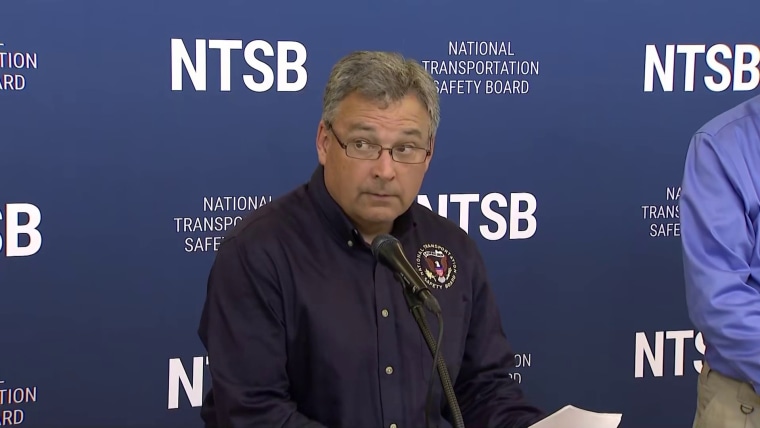
At a news conference Tuesday afternoon, NTSB officials released preliminary information gleaned from the final three minutes of the plane’s cockpit voice recorder that showed that the fire truck was cleared to cross the runway 20 seconds before the crash.

At 2 minutes and 22 seconds, the flight crew checked in with the tower at LaGuardia, said Doug Brazy, NTSB’s senior aviation investigator.

At 2 minutes and 17 seconds, the tower cleared the airplane to land on Runway 4.

Brazy said that at 1 minute and 3 seconds, an airport vehicle made a radio transmission to the tower but that the transmission was “stepped on” by another radio transmission. NTSB Chairwoman Jennifer Homendy said that means there was some sort of interference with the transmission.

At 54 seconds, the tower advised the flight crew that the plane was at a stable approach, Brazy said.

At 40 seconds, the LaGuardia tower asked which vehicle needed to cross a runway. Brazy said the fire truck made a transmission to the tower, which the tower acknowledged. At 25 seconds, the truck requested permission to cross Runway 4. Brazy said that at 20 seconds, the tower cleared the truck to cross.

At 17 seconds, the fire truck read back the runway crossing clearance, he said. According to Brazy, the tower instructed a Frontier Airlines flight to hold position, and at 9 seconds, the tower told the fire truck to stop.

At 8 seconds, there was a sound consistent with the airplane’s landing gear touching down on the runway, he said. At 6 seconds, there was a pilot transfer of controls. Homendy told reporters that the first officer was flying the plane and transferred control to the captain.

At 4 seconds, the tower again instructed the fire truck to stop, Brazy said.

Listen up, flyers: United Airlines said it will start removing passengers from flights who refuse to wear headphones while listening to content on their personal devices, and such behavior could lead to a permanent ban.

The airline revised its contract of carriage on Feb. 27 to include the new provision, which sits under the ‘refusal of transport’ section that outlines the instances in which United can boot its passengers from flights.

According to the document, United reserves the right to refuse transport — on a permanent basis — to any passenger who listens to their entertainment on speaker.

It also states that any passenger who causes United ‘any loss, damage or expense of any kind,’ may be responsible for reimbursing the airline.

‘We’ve always encouraged customers to use headphones when listening to audio content — and our Wi-Fi rules already remind customers to use headphones,’ United said in a statement. ‘With the expansion of Starlink, it seemed like a good time to make that even clearer by adding it to the contract of carriage.’

Passengers who forgot their headphones at home can request a free pair on their flight, if they’re available, according to United’s in-flight entertainment information.

The move inspired a strong reaction online.

‘One would think this is common sense and airlines would have in their rules,’ said one Reddit user. ‘Now let’s have the same rule for airline lounges.’

Others complained that this has become increasingly common on flights, especially among those with small children.

‘As a flight attendant; we have to tell people literally every flight,’ another person said on Reddit. ‘It makes our jobs harder when we’re stuck policing common courtesy instead of just focusing on service & safety.’

This post appeared first on NBC NEWS

Airbus reported a sharp decline in first-quarter earnings on Tuesday, as supply chain disruptions—particularly engine shortages—curbed aircraft deliveries and weighed on profitability.

Adjusted operating profit fell 52% year-on-year to 300 million euros, well below analyst expectations of 348 million euros.

Revenue declined 7% to 12.65 billion euros in the three months to March 31, though slightly above consensus estimates of 12.39 billion euros.

Net profit also dropped 26% to 586 million euros.

The world’s largest planemaker delivered 114 commercial aircraft during the quarter, down 16% from 136 a year earlier and trailing Boeing, which delivered 143 aircraft over the same period.

Despite the weaker performance, Airbus maintained its full-year delivery target of around 870 aircraft for 2026, compared with 793 deliveries in 2025.

Engine shortages and supply issues persist

A key factor behind the slowdown has been ongoing delays in engine deliveries from Pratt & Whitney, a subsidiary of RTX Corporation.

Airbus said the shortage has forced it to slow production of its best-selling A320 jets, even as demand remains strong.

Chief Executive Guillaume Faury acknowledged the ongoing dispute with the supplier, stating:

“We’ve not come to the point where we have an agreement,” Faury said, “but we continue to work both ways — the dispute on the one hand and a negotiation on the other hand to constructively resolve the disagreement we have.”

The company had already initiated steps earlier this year to enforce its contractual rights against the engine maker due to supply shortfalls.

Additional supply chain challenges, including delays in sourcing components such as seats and toilets, have further complicated production timelines.

Airbus has previously trimmed delivery targets in multiple years due to these persistent bottlenecks.

An administrative delay affecting nearly 20 aircraft destined for Chinese customers also contributed to the first-quarter delivery shortfall, though the issue has since been resolved.

Outlook steady despite challenges

Despite near-term headwinds, Airbus reiterated its production and financial targets, signaling confidence in its ability to navigate supply constraints.

The company continues to aim to produce between 70 and 75 A320-family aircraft per month by the end of 2027.

It also reaffirmed plans to ramp up production across other models, including the A220, A330, and A350 in the coming years.

For 2026, Airbus expects adjusted EBIT of around 7.5 billion euros and free cash flow before customer financing of approximately 4.5 billion euros.

Faury noted that geopolitical risks remain a factor, particularly in the Middle East, but emphasized that demand has held up.

“The operating environment remains dynamic and complex. We are closely monitoring the potential impact from the fast-changing situation in the Middle East,” Faury said. “In commercial aircraft, we continue to ramp up and produce as per our plan while navigating the shortage of Pratt & Whitney engines.”

High jet fuel prices are also supporting demand for fuel-efficient aircraft, even as some airlines adjust flight frequencies.

However, persistent supply-chain disruptions have weighed on investor sentiment, with Airbus shares down more than 16% since the start of the year.

Meanwhile, Boeing has regained momentum, supported by improving operations and stronger delivery performance.

Airbus now faces the challenge of accelerating production in the remaining quarters of the year to meet its delivery targets while resolving ongoing supply constraints.

The post Airbus profit halves as engine delays curb deliveries appeared first on Invezz