
Author

admin

Browsing

LOS ANGELES — A jury found Meta and YouTube negligent in the design or operation of their social media platforms, producing a bellwether verdict in the first lawsuit to take tech giants to trial for social media addiction.

The Los Angeles County Superior Court jury said that Meta’s and YouTube’s negligence were a substantial factor in causing harm to the plaintiff, identified in court by her initials, K.G.M., and that the companies failed to adequately warn users of the dangers of Instagram (Meta’s platform) and YouTube (which is owned by Google).

It awarded K.G.M. $3 million in compensatory damages, finding Meta 70% responsible for harm caused to the now 20-year-old plaintiff, and YouTube responsible for 30%.

The trial, which began last month in a Los Angeles County courtroom and included testimony from Mark Zuckerberg and other tech executives, was the first in a consolidated group of cases brought against Meta and other companies by more than 1,600 plaintiffs, including over 350 families and over 250 school districts.

Outside the courtroom, families who say their children were harmed by social media embraced as they celebrated the verdict, telling reporters they feel “vindicated.”

Spokespeople for Meta and Google said the companies disagree with the verdict and plan to appeal.

“Teen mental health is profoundly complex and cannot be linked to a single app,” a Meta spokesperson said. “We will continue to defend ourselves vigorously as every case is different, and we remain confident in our record of protecting teens online.”

José Castañeda, a spokesperson for Google, also said the case “misunderstands YouTube, which is a responsibly built streaming platform, not a social media site.”

In a joint statement, co-lead counsel for K.G.M. said the verdict is “a historic moment” for thousands of children and their families.

“But this verdict is bigger than one case,” the lawyers said. “For years, social media companies have profited from targeting children while concealing their addictive and dangerous design features. Today’s verdict is a referendum — from a jury, to an entire industry — that accountability has arrived.”

The jury decided on $2.1 million in punitive damages for Meta and $900,000 for YouTube, totaling $3 million. It’s a small fraction of the $1 billion in punitive damages the plaintiff’s counsel sought.

Plaintiff K.G.M., center, arrives at Los Angeles County Superior Court on Feb. 26.Mario Tama / Getty Images file

K.G.M.’s lead attorney, Mark Lanier, has said he hopes the proceedings produce transparency and accountability “so that the public can see that these companies have been orchestrating an addiction crisis in our country and, actually, the world.”

The plaintiff was a minor at the time of the incidents outlined in her lawsuit. K.G.M. testified in court that her nearly nonstop use of social media caused or contributed to depression, anxiety and body dysmorphia. It “really affected my self-worth,” she said last month.

Speaking about her social media use, K.G.M. testified that she felt she wanted to constantly be on the platforms and feared missing out if she wasn’t.

Attorneys for Meta and YouTube have disputed claims brought by the plaintiff, arguing their platforms aren’t purposefully harmful and addictive.

A spokesperson for Meta said K.G.M.’s “profound challenges” weren’t caused by social media and pointed to “significant emotional and physical abuse” that she experienced when she was younger.

In his closing argument, an attorney for YouTube said there wasn’t a single mention of addiction to that platform in K.G.M.’s medical records.

The verdict comes after jurors in a separate trial in New Mexico held Meta liable for failing to protect children from online predators and sexual exploitation on Facebook and Instagram.

The New Mexico jury found Tuesday that Meta violated the state’s consumer protection laws and ordered it to pay $375 million in civil penalties. Meta has said it disagrees with the verdict and plans to appeal.

In Los Angeles, deliberations took longer, wrapping up after nearly 44 hours over nine days. The jurors had told Judge Carolyn B. Kuhl that they were having trouble coming to a consensus on one defendant.

Social media companies have historically been shielded by Section 230, a provision added to the Communications Act of 1934 that says internet companies aren’t liable for the content users post.

Meta CEO Mark Zuckerberg leaves Los Angeles County Superior Court on Feb. 18. Kyle Grillot / Bloomberg via Getty Images file

K.G.M.’s lawsuit was the first civil action seeking to hold the platforms accountable for allegedly causing addiction and mental health problems.

TikTok and Snap, who were also named as defendants in K.G.M.’s lawsuit, reached settlements before the trial. They remain defendants in a series of similar lawsuits expected to go to trial this year.

Matt Bergman, founding attorney of the Social Media Victims Law Center — which is representing hundreds of plaintiffs in state and federal proceedings — said the jury’s decision Wednesday “establishes a framework for how similar cases across the country will be evaluated and demonstrates that juries are willing to hold technology companies accountable when the evidence shows foreseeable harm.”

“Families pursuing justice in other jurisdictions can now point to this outcome as proof that these claims deserve to be heard and taken seriously,” Bergman said in a statement.

Lanier told NBC News in an interview that this was the most difficult case he’s tried in his 42 years as a lawyer.

“I think the jury understood that they were the very first case in the history of our country to look at social media addiction, and they wanted to leave no question, but that they seriously considered the evidence,” Lanier said. “So they took forever, then they looked carefully at each of the questions and answered everyone was, yes, guilty.”

California Attorney General Rob Bonta also weighed in on the Los Angeles and New Mexico verdicts, writing in an X statement that California “looks forward to holding Meta accountable in our own upcoming August trial in the Bay Area.”
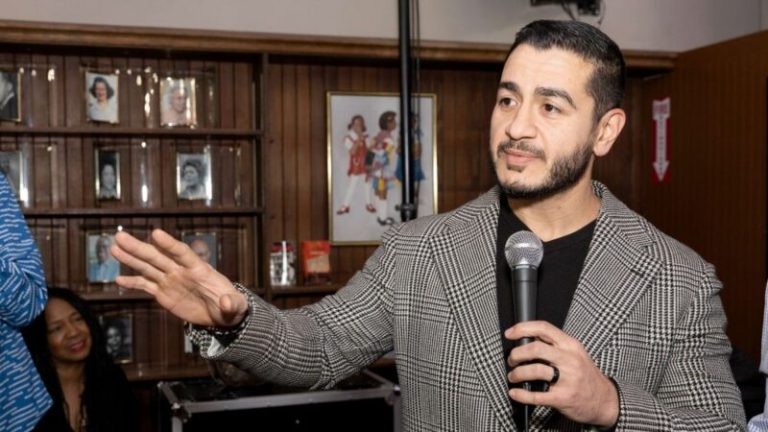

Democratic Michigan Senate candidate Abdul El-Sayed is facing pushback from conservatives on social media and the Republican he’s running against over an appearance where he was accused of equating the “radicalism” of Iran with the “MAGA movement.”

“There are many people who see the downfall of the regime as a good thing, but the question of whether or not it was pursued legally, that’s a different question,” the progressive candidate told “America’s Newsroom” on Wednesday. El-Sayed was responding to controversy over a Washington Free Beacon report on leaked audio of him explaining why he shouldn’t take a public position on the death of former Iran Supreme Leader Khamenei because of people in Dearborn, Michigan, who are “sad.”

“Whether or not its worth $31 billion of our taxes and counting a billion dollars a day, that’s another thing. Whether or not we should be paying higher rates at the pump every single time we try to just get where we’re going and pump gas… that [is] a big question, and I’ll tell you what, there are a lot of people who are really sad about the fact that they thought that the era of foreign wars, of never-ending regime change wars were over, and here we are.”

During another point in the interview, El-Sayed was asked, “Would we all not be better off if the radicals in Iran did not make decisions for the people?”

DEMOCRATS TEAM UP WITH FAR-LEFT STREAMER WHO ONCE SAID ‘AMERICA DESERVED 9/11’

El-Sayed responded, “Radicalism of any sort is bad, which is why this MAGA movement taking us into yet another war in my lifetime, and I’m only 41, is so ridiculous.”

El-Sayed quickly faced pushback from Republicans who accused him of not sufficiently explaining his comments in the leaked audio and equating the ayatollah’s regime with the Trump administration. 

“Democrats in 2026,” GOP communicator Matt Whitlock posted on X. “Abdul Al Sayed is asked point blank if the world is better off without the world’s largest state sponsor of terror. And gives a word salad about how the Ayatollah’s radicalism and Trump’s MAGA support are the same.”

“Democrat Abdul El-Sayed compares the Trump administration to the Ayatollah,” the Republican National Committee account posted on X. 

“What?!” Mark Levin Show producer Rich Sementa posted on X

MICHIGAN SENATE CANDIDATE RESPONDS TO BACKLASH OVER KHAMENEI COMMENTS, CALLS IRAN CONFLICT ‘WAR WE DON’T NEED

The campaign of Republican Senate candidate former Rep. Mike Rogers also took aim at El-Sayed.

“You would think sympathizing with a terrorist regime would be disqualifying, but apparently, for Democrats, it’s a fast pass to the front of the primary,” Alyssa Brouillet, Rogers’ campaign communications director, told Fox News Digital. “No amount of Abdul’s attempts to distract or deflect will be enough to hide how dangerous he and the Democrat party really are for Michigan.”

El-Sayed also faced some push back online over his answer to a question about his upcoming event with progressive commentator Hasan Piker, who has been accused of making antisemitic remarks and downplaying the October 7 massacre by Hamas.

“To me, it’s about speaking to a broader audience,” El-Sayed explained. “I’m wanting to speak with Hasan’s audience too.”

Fox News Digital reached out to El-Sayed’s campaign for comment. 

The Senate race in battleground Michigan is one of a handful in this year’s midterm elections that will determine if the Republicans hold their 53-47 majority in the chamber. Michigan, where Democratic Sen. Gary Peters is retiring, is one of the National Republican Senatorial Committee’s (NRSC) top targets as they try to not only hold onto their seats, but also possibly expand their majority.

Rogers, a former FBI special agent who later served as chair of the House Intelligence Committee during his tenure in Congress, launched his campaign last April. Rogers is making his second straight run for the Senate, after narrowly losing the 2024 election to now-Sen. Elissa Slotkin in the race to succeed Democratic Sen. Debbie Stabenow, who retired. Slotkin, who vastly outspent Rogers, only edged him by roughly 19,000 votes, or a third of a percentage point.

Michigan’s Democratic Senate primary will be held on Aug 4 as El-Sayed squares off against Michigan state Sen. Mallory McMorrow and Democratic Rep. Haley Stevens to earn the chance to replace Peters in November.

A Rhode Island Democratic state representative is facing blowback on social media after claiming that a mural of Iryna Zarutska, the Ukrainian woman whose brutal murder while riding a North Carolina train sparked national outrage, doesn’t reflect the “values” of the city of Providence.

“Ultimately, we want to make sure that every community member who calls Providence home feels safe,” Rep. David Morales told local media about a mural of Zarutska facing calls to be removed from the exterior of an LGBTQ+ club in downtown Providence.

“We can both agree that this mural behind us does not reflect Providence’s values nor does it reflect the creativity that we would want to see in our city.”

The lawmaker’s comments immediately sparked negative reactions from conservatives on social media after they were posted by the conservative influencer account End Wokeness in a post that has been viewed over 1 million times. 

CHARLOTTE RAIL MURDER SUSPECT LINKED TO INMATE RELEASE APPROVED UNDER EX-DEM GOVERNOR, GOP ALLEGES

“What are his values?” Tesla and SpaceX CEO Elon Musk, who is reportedly involved in the mural project, posted on X.

“He cites people wanting to be ‘safe’ as a reason to destroy a mural on a private building meant to honor a murdered woman,” Red State writer Bonchie posted on X. “You can’t imagine how crazy Democrats are in these blue bastions. You think what you see on MSNBC is nuts? It’s even worse in their bubble cities.”

“Honoring the memory of a Ukrainian immigrant who had her throat slit on public transportation by a repeat offender with 14 prior arrests doesn’t reflect Providence’s values????” Defending Education communications director Erika Sanzi posted on X.

“What ‘value’ does the mural not reflect?” Republican Rep. Chip Roy posted on X.

“Iryna’s death highlights the consequences of warped policies that keep violent criminals out of jail,” Heritage Foundation President Kevin Roberts posted on X. “Memorializing her reminds us that those policies create more victims and should be eliminated. Telling that those aren’t Rep. Morales’ ‘values.’”

“True,” Texas GOP Sen. Ted Cruz posted on X. “Dems would prefer a mural celebrating her murderer.”

“Providence had a George Floyd mural and nobody called it divisive,” GOP strategist and commentator Mehek Cooke posted on X. “Iryna got murdered by a man arrested over a dozen times, and a city couldn’t let her face stay on a wall because the donor list was inconvenient. We means-test grief now.”

CNN commentator Scott Jennings referred to Morales as a “deranged lunatic” in a post on X.

Fox News Digital reached out to Morales’s office for comment but did not receive a response.

Morales responded to Musk on X in a post clarifying what his “values” are. 

“Not to exploit the death of a refugee to push an agenda centered around fear and division,” Morales wrote. “My values, like many of our neighbors in Providence, is to protect our immigrant neighbors from ICE’s state-sanctioned violence and supporting our refugee neighbors with authentic care.”

CHARLOTTE LIGHT-RAIL STABBING MURDER SPURS LANDMARK CRIMINAL JUSTICE REFORM FROM NORTH CAROLINA REPUBLICANS

The mayor of Providence, Democrat Brett P. Smiley, has also spoken out against the mural.

“The murder of the individual depicted in this mural was a devastating tragedy, but the misguided, isolating intent of those funding murals like this across the country is divisive and does not represent Providence,” Smiley said. “I continue to encourage our community to support local artists whose work brings us closer together rather than further divides us.”

Zarutska, a 23-year-old refugee who fled her country after the Russian invasion, was brutally stabbed to death in an unprovoked attack while riding the Lynx Blue Line light rail in Charlotte, N.C., last year. 

The suspect, Decarlos Brown Jr., 34, is charged with violence against a railroad carrier and mass transportation system resulting in death, which is a capital offense under federal law.

Records from the North Carolina Department of Adult Correction show Brown has a prior criminal history, including convictions for larceny, breaking and entering and armed robbery. He served five years in prison starting in 2015.

Zarutska’s death prompted questions about soft on crime policies adopted by many Democratic-run cities. President Donald Trump spotlighted the killing during his State of the Union address last month. 

“Iryna was riding home on the train when a deranged monster, who had been arrested over a dozen times and was released through no-cash bail, stood up and viciously slashed a knife through her neck and body,” Trump said.

Fox News Digital’s Louis Casiano contributed to this report.

Nio stock price has pulled back in the past few days, mirroring the performance of other Chinese electric vehicles. It was trading at $5.90 on Tuesday, down substantially from the year-to-date high of $7.01. Still, the stock is showing some bullish signals, which may lead to a strong comeback in the near term.

Nio stock price technical analysis points to a rebound 

The daily chart shows that the Nio stock price has pulled back in the past few days, moving from a high of $7 to the current $6. This retreat happened as investors booked profits after its double-digit gains.

On the positive side, this retreat seems to be part of the series of higher highs and higher lows that it has formed in the past few months.

Another positive is that the stock has remained above the 100-day Exponential Moving Average (EMA), a sign that bulls remain in control for now.

The stock has now moved slightly below the 38.2% Fibonacci retracement level. At the same time, the Relative Strength Index (RSI) has slumped below the neutral point at 50. The Stochastic Oscillator has also dropped below the oversold level  

Therefore, the most likely scenario is where the stock resumes the uptrend and moves to the key resistance level at $8, its highest point on October 1 last year. Such a move will be 35% increase from the current level and will be confirmed if it moves above the key resistance level at $7.

Nio share price chart | Source: TradingView 

Top Catalysts for Nio shares

There are some potential catalysts for the Nio stock price. The most important is that the company’s deliveries are rising and its profitability is improving.

Its recently released delivery numbers showed that it sold 29,356 vehicles in April this year, up by 22.8% from the same period last month. It brought the number of total deliveries year-to-date to 112,821, a 71% growth rate.

Its growth has beaten other companies in the industry. For example, in a recent report. BYD said that its vehicle deliveries dropped for eight consecutive months as competition rose. It sold 314,100 passenger cars in April this year.

Similarly, Nio’s growth was better than that of XPeng, which delivered 31,011 vehicles, up by 13% YoY. Li Auto’s deliveries rose slightly to 34,085 from 33,940 in April last year.

Nio’s sales are being boosted by the popular ES8 vehicle, which has become one of the most popular brands in China. 

It is now banking on the ES9 vehicle, which has moved into pre-sales, with the deliveries meant to happen on May 29. The new vehicle started selling at 529,000 CNY or $77,000, with the most premium one selling for 658k or $96,000.

The company has also started selling L80, the flagship brand of its ONVO brand that starts at $35,000. 

All this is happening at a time when the company has started being profitable. It made a $40 million profit in the fourth quarter of last year, and the management believes that the trend will continue in the foreseeable future.

The company’s sales jumped by 75% in the fourth quarter, with analysts expecting the upcoming results to show that its revenue rose by 109% to CNY 25.2 billion. For the year, the annual revenue will be CNY 130 billion, up by nearly 50%.

Additionally, the ongoing Iran war has pushed fuel prices higher, which will lead to more demand for electric vehicles in China and other markets.

The post Nio stock price has slipped this month: here’s why it may rebound soon appeared first on Invezz

Markets are starting on Wednesday with a rare mix of relief and caution.

Relief, because the latest signals from Washington and Tehran point to a possible easing in the Strait of Hormuz standoff.

Caution, because the region is still fragile and energy traders are not ready to price in a clean resolution.

At the same time, AI-linked chip stocks are pushing sentiment higher in Asia, led by Samsung’s surge into a new valuation tier.

And in crypto, Strategy’s latest numbers show just how quickly a one-way bitcoin bet can turn more complicated.

Hormuz pause

Trump’s decision to pause the operation to reopen the Strait of Hormuz is the biggest geopolitical market signal in the group this morning.

The US President is holding “Project Freedom” for a short period to see whether an agreement with Iran can be finalized and signed.

That leaves traders with a narrow but important window with lower immediate escalation risk, but no durable solution yet.

Oil softens

Oil traders are still reacting more to the possibility of supply relief than to any confirmed breakthrough.

Brent crude fell to $107.98 a barrel and WTI to $100.44 after Trump hinted at progress with Iran and paused the escort mission in Hormuz.

The move matters because the strait remains one of the most sensitive chokepoints in global energy.

Even a short pause in military protection changes the tone of the market. For now, the message is not that the crisis is over.

Samsung milestone

Samsung has become the latest proof that the AI trade still has room to run.

The company’s market value climbed above $1 trillion, making it only the second Asian company, after TSMC, to reach that level.

The stock jumped about 12% as South Korea’s KOSPI broke above 7,000 for the first time, powered by a broad semiconductor rally.

The driver is familiar as investors continue to reward companies tied to AI chips, memory demand, and the infrastructure behind them.

Strategy’s shift

Strategy’s latest quarter shows the limits of a pure Bitcoin treasury model when markets turn.

The company reported a first-quarter net loss of $12.54 billion, driven by Bitcoin weakness, and said the company remained the largest corporate holder of Bitcoin with 818,334 coins.

More notably, other reports around the earnings call said the company was willing to sell Bitcoin if needed to help pay preferred dividends, a notable break from its old “never sell” stance.

That is an important evolution as it does not mean Strategy is abandoning its thesis, but the balance between conviction and funding flexibility seems to be changing.

Investors should read that as maturity, not panic, but also as a reminder that leverage cuts both ways.

The post Morning brief: Oil eases, Samsung surges, Strategy blinks on BTC appeared first on Invezz

The South African rand continued its strong momentum today, reaching its lowest level since April 22nd as a carry trade opportunity emerged. The USD/ZAR pair dropped to 16.4, down sharply from the year-to-date high of 16.90.

Carry trade opportunity strengthens

The USD/ZAR exchange rate continued its recent downward trend this week as the carry trade opportunity strengthened. A carry trade is a situation where investors borrow a low-yielding currency and invest in a higher-yielding one.

In this case, investors are borrowing the 3.75% yielding US dollar and allocating in the 6.75% yielding South African rand.

The case for the carry trade opportunity emerged after analysts at BNP Paribas predicted that the South African Reserve Bank (SARB) will change its tone and start hiking interest rates this year. It is pricing in two rate hikes this year, which will push the headline inflation to 7.25%.

This will be a big reversal as the central bank has been in a strong downward trend, bringing them from a high of 8.25% last year to 6.75% today. These cuts emerged as inflation continued falling before Donald Trump started his war against Iran.

Recently, however, South Africa’s inflation has started amid the war. The most recent data shows that the headline consumer price index rose to 3.1% in March from 3% in February and SARB believes that prices will hit 4% soon. For example, petrol prices have jumped by over 60% since the war started.

On the other hand, the Federal Reserve delivered its interest rate decision on Wednesday last week. As was widely expected, the bank left interest rates between 3.50% and 3.75%. Most notably, officials hinted that they may cut interest rates later this year.

Looking ahead, the USD/ZAR pair will react to the upcoming US non-farm payrolls (NFP) data, which will come out on Friday this week. Economists expect the upcoming report to show that the economy created 60k jobs in April, much lower than the previous 153k. The unemployment rate is expected to remain at 4.3%.

USD/ZAR technical analysis 

USDZAR price chart | Source: TradingView

The four-hour chart shows the USD to ZAR exchange rate has been in a strong downward trend and is now hovering at its lowest level since April 22nd.

It has dropped below the important support level at 16.51, its lowest level on March 3 this year. This was an important level as it was the neckline of the double-top pattern. A double-top is one of the most common bearish reversal signs in technical analysis.

The pair has remained below the 50-day and 100-day Exponential Moving Averages (EMA) and the Supertrend indicator.

Therefore, the pair will likely continue falling in the near term, potentially to the key support at 16.14. On the flip side, the pair may rebound and retest the resistance at 16.5 and then resume the downward trend.

The post USD/ZAR forecast: South African rand surges as a carry trade emerges appeared first on Invezz

Federal authorities are investigating a close call this week involving a military helicopter and a United Airlines plane approaching John Wayne Airport in Santa Ana.

United Airlines Flight 589 was approaching the airport in Orange County around 8:40 p.m. Tuesday when a Sikorsky Black Hawk helicopter crossed its path, according to the Federal Aviation Administration.

Pilots on the United Airlines plane were advised by air traffic control to watch for the military helicopter flying near the airport, United Airlines said.

“They saw the helicopter, and also received a traffic alert, which they responded to by leveling the aircraft,” United said.

The United flight with 162 passengers and six crew members landed safely.

The new investigation comes a week after the FAA issued a new airport safety order designed to improve safety near airports where helicopters cross both arrival and departure paths. The order suspends use of visual separation between airplanes and helicopters and requires air traffic controllers to use radar to manage lateral and vertical separation between aircraft.

A close call earlier this month between a twin-engine Beechcraft 99 and helicopter at Hollywood Burbank Airport was cited by federal authorities as a key factor behind a new airport safety measure.

In another example, the agency said American Airlines Flight 1657 was cleared to land at San Antonio International Airport when a police helicopter was on its final approach path. The helicopter turned to avoid the American Airlines plane, the FAA said.

The new requirement applies to more than 150 of the nation’s busiest airports and extends a restriction already in place at Ronald Reagan Washington National Airport.

The upgraded safety measure was rolled out after a year-long FAA safety team review. In a news release, the FAA also referenced the Jan. 29 American Airlines jet and Army Black Hawk crash that killed 67 people. A key factor in the crash was the placement of a helicopter route in the approach path of Reagan National Airport’s secondary runway, the NTSB board said, also identifying air traffic controllers’ over reliance on asking helicopter pilots to avoid other aircraft as a factor.

They operate in different worlds — one in conservative political media, the other in Bitcoin infrastructure — but Ben Shapiro and Jack Mallers share a common thread: both have turned unconventional bets into substantial personal fortunes by building platforms that challenge how money and information flow in America.

Estimates of the Ben Shapiro net worth range between $50 million and $65 million, while Jack Maller’s net worth is pegged at approximately $50 million as of 2024 — figures that reflect not just individual success, but the commercial power of building loyal, ideologically aligned audiences.

Ben Shapiro: the media empire behind the number

Born in Los Angeles in 1984, Shapiro skipped two grades before graduating from Yeshiva University High School at 16, then earned his Juris Doctor from Harvard Law School in 2007.

He briefly practised law before returning to what he had already been doing since the age of 17: writing.

By the time he co-founded The Daily Wire in 2015, he was already a nationally syndicated columnist with a well-established following.

The Daily Wire is the engine of Shapiro’s wealth. The conservative news and opinion platform has grown into a full media empire, generating hundreds of millions of dollars in annual revenue.

Its subscription arm, DailyWire+, delivers a recurring income stream through premium video, podcasts, and original film productions.

Shapiro remains its most prominent face as editor emeritus, and his flagship programme, The Ben Shapiro Show, is one of the most-downloaded political podcasts in the United States — syndicated across more than 200 radio markets and supported by substantial advertising and licensing deals.

Beyond The Daily Wire, Shapiro earns royalties from a catalogue of bestselling books, including The Right Side of History and The Authoritarian Moment.

He commands speaking fees reported to reach tens of thousands of dollars per engagement at universities and political conferences, and holds a reported stock portfolio spanning Tesla, Microsoft, and Amazon, alongside a real estate portfolio across multiple US locations.

The wide variance in net worth estimates — from as low as $20 million to as high as $65 million — reflects the difficulty of assessing private holdings.

Many of his business arrangements and investment positions are not publicly disclosed, leaving third-party analysts to rely on visible income streams and educated inference.

Jack Mallers: building Bitcoin’s payment rails

Where Shapiro’s wealth is rooted in media, Mallers’ is rooted in infrastructure.

Born on 9 April 1994 and raised in Chicago, Mallers comes from a family steeped in financial markets: his grandfather, Bill Mallers Sr., was a futures trader, and his father, Bill Mallers Jr., was a prominent figure in the Chicago futures exchange community.

His interest in Bitcoin began in the early 2010s, when he recognised the potential of digital currencies to reshape global finance.

His first major product was Zap, a Bitcoin wallet built on the Lightning Network — a second-layer protocol that conducts transactions off-chain, dramatically increasing speed and cutting costs.

Zap was available across iOS, Android, Windows, macOS, and Linux, and its open-source model attracted a developer community that helped validate both the technology and Mallers’ vision.

That foundation led to Strike, launched in 2020. Strike allows users to send and receive Bitcoin instantly with minimal fees, and crucially, to convert between Bitcoin and local fiat currencies — bridging the gap between cryptocurrency and everyday financial life.

The application is designed for accessibility, targeting users with no prior cryptocurrency experience as much as seasoned holders.

Strike’s global profile rose sharply in 2021, when it partnered with the Salvadoran government to help build the payments infrastructure underpinning El Salvador’s historic adoption of Bitcoin as legal tender.

That same year, the company raised $80 million in a Series B funding round, substantially boosting its valuation and, by extension, the value of Mallers’ equity stake.

His personal Bitcoin holdings — the precise size of which has never been disclosed — are believed to be substantial given his status as an early adopter and long-standing advocate.

The appreciation of Bitcoin’s value over the years has likely contributed meaningfully to his net worth alongside his equity in Strike.

As of 2024, Mallers’ estimated net worth of $50 million reflects his stake in Strike, his Bitcoin holdings, and income from speaking engagements at cryptocurrency conferences, where he is a frequently sought-after voice.

Two fortunes, one pattern

The financial trajectories of Shapiro and Mallers are built on the same underlying logic: identify a system that isn’t working for your audience, build a credible alternative, and monetise the loyalty that follows.

For Shapiro, that system was mainstream media. For Mallers, it was traditional payment infrastructure.

Both have faced volatility — Shapiro in the form of advertiser pressure and political controversy, Mallers in the form of a cryptocurrency market that can swing his holdings’ value dramatically within a single quarter.

And in both cases, diversification has been the hedge: multiple income streams, recurring revenue models, and long-term asset positions that reduce dependence on any single source.

The post From media to crypto: Ben Shapiro, Jack Mallers' rise in alternative finance appeared first on Invezz

U.S. stocks surged Monday, after President Donald Trump announced that he was postponing all military strikes on Iranian power plants for a five-day period.

Trump said the U.S. and Iran had engaged in what he called “very good and productive conversations regarding a complete and total resolution of our hostilities in the Middle East.”

Reporting about the nature and timing of these “conversations” evolved over the course of the day, and included conflicting accounts from various stakeholders.

But for markets, the talks offered a glimmer of hope that a path toward the de-escalation of the conflict — and the oil crisis it created — were within reach.

Iranian state media responded to Trump’s post by saying the U.S. president has “backed down” after Iran’s firm response.

Trump, however, said that Iran had “called” to discuss trying to resolve the war diplomatically.

“They want to make a deal, and we are very willing to make it,” Trump told reporters before boarding Air Force One in Florida.

The Strait of Hormuz, a crucial transit point for global oil supplies, could be “open very soon,” Trump added, but he provided few details.

Experts and analysts quickly pointed out that even if the fighting were to end this week, it would still take months for the strait to reopen.

The S&P 500 and Nasdaq 100 futures initially soared about 3% on Trump’s post shortly after 7 a.m. ET. By the time the closing bell rang, both indexes still recorded significant gains, but less than futures had indicated early in the morning. The S&P 500 closed up 1.1% and the Nasdaq Composite ended the day higher by 1.4%.

The gains were also broad based, with every S&P sector ending the day higher.

The Dow Jones Industrial Average also shot higher immediately after Trump’s statement. By the end of the trading session, the Dow was higher by 631 points, and the Russell 2000 index closed up 2.7%.

It was the best day for the S&P, Nasdaq and Dow since Feb. 6.

Oil prices plunged around 11% and U.S. crude oil settled for the day at $88.13 per barrel. International Brent crude oil fell to $99.94 per barrel, settling under $100 per barrel for the first time since March 11.

Still, crude oil prices have risen more than 30% since the war began on Feb. 28, and more than 50% since the start of the year.

Trump’s Monday announcement on social media came after the president on Saturday said that he had given the Iranian regime 48 hours to “fully open, without threat, the Strait of Hormuz.” That ultimatum was set to expire Monday night.

U.S. natural gas prices dropped 6% Monday, European natural gas futures slid 9% and heating oil prices dropped 12%. Heating oil futures can also be a proxy for the price of jet fuel.

U.S. Treasury bonds also rose in the minutes after Trump’s comments, and the yields which guide borrowing rates for consumers dropped after posting big moves higher on Thursday and Friday on rising inflation fears stemming from soaring energy prices. Yields were down only slightly in mid-morning trading after the statements from Iranian media and Trump.

Investors were already grappling with how to trade headlines about the war before Monday’s volatility.

“Investors have two related problems in pricing risks around the Gulf war,” UBS economist Paul Donovan said in a note on Monday before Trump’s post. “Statements from top U.S. administration officials give different and at times contradictory assessments of the war; in the absence of measurable objectives, this is all markets have to respond to. The result is volatility.”

Venezuela’s oil exports surged in April to their highest level in more than seven years, as increased shipments to the United States, India, and Europe underscored a steady recovery in the country’s energy sector following recent geopolitical shifts.

According to shipping data and internal documents from state oil company PDVSA, exports rose 14% month-on-month to 1.23 million barrels per day (bpd), marking the strongest monthly performance since late 2018.

The rise reflects both higher crude output and the continued unwinding of inventories accumulated during earlier sanctions-related disruptions.

Exports climb to multi-year high

A total of 66 vessels departed Venezuelan waters in April, up from 61 ships in March, highlighting increased shipping activity as global demand for the country’s crude strengthened.

The gains were driven in part by expanded sales to refiners in the United States, alongside continued flows to India and Europe.

The improvement follows a supply agreement reached earlier this year between Washington and Caracas under US oversight, which eased restrictions on Venezuelan oil exports.

The agreement, coupled with US licenses, has enabled trading houses such as Vitol and Trafigura to resume handling cargoes from PDVSA, directing shipments to key international markets.

Venezuela’s export recovery also comes amid broader disruptions in global oil supply, particularly linked to geopolitical tensions in the Middle East, which have tightened markets and increased demand for alternative crude sources.

March rebound laid groundwork for April surge

April’s strong performance builds on a notable rebound in March, when exports first surpassed the 1 million bpd mark after several months below that level.

In March, Venezuela shipped around 1.08–1.09 million bpd of crude and refined products, supported by increased purchases from India and shipments to the Caribbean for storage.

A total of 60 vessels departed the country during the month, carrying both crude and approximately 360,000 metric tons of petrochemicals and byproducts.

The recovery from February levels—when exports averaged about 737,000 bpd—was driven by rising production and efforts by trading firms and partners to drain accumulated inventories.

Chevron also played a role in boosting shipments, with exports from its joint ventures increasing during the period.

The arrival of larger tankers, particularly those bound for India, helped accelerate loading operations at Venezuela’s main oil terminal, further supporting export growth.

Sanctions relief and output recovery support outlook

The recent surge in exports reflects a broader turnaround in Venezuela’s oil sector following years of sanctions and declining production.

The January agreement between the US and Venezuela’s interim government, alongside the capture of President Nicolás Maduro, marked a turning point by reopening access to key markets and enabling foreign partners to re-engage in the country’s energy industry.

Since then, Venezuela has been steadily increasing crude output while reducing stockpiles, allowing more barrels to reach international buyers.

The post Venezuela’s oil exports hit 7-year high on US, India demand appeared first on Invezz