Author

admin

Browsing

WASHINGTON — The Senate agreed unanimously early Friday to fund the Department of Homeland Security, but without funding for immigration enforcement and deportation operations.

Senators approved the package at 2:20 a.m. by voice vote following a marathon session.

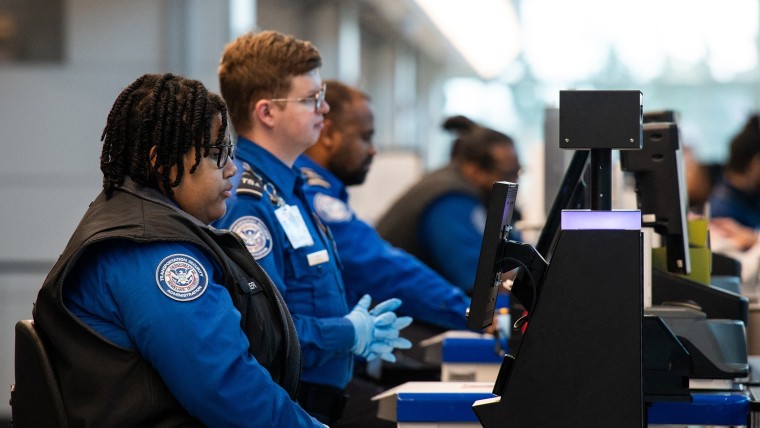
The 42-day funding lapse has seen them go without pay, leading many to call out of work and causing long lines at airports. While the measure still needs to pass the House, the Senate vote paves the way to allow airports to fully function again.

The legislation would fund all of DHS except Immigration and Customs Enforcement and Customs and Border Protection, which Democrats have refused to vote for without significant reforms to immigration raids and deportation practices.

The deal followed arduous bipartisan negotiations that occurred in fits and starts over the last six weeks, succumbing to the impasse around policy changes to immigration enforcement. Under the new plan, Democrats get their weeks-long demand to fund the department with the exceptions of ICE or CBP, but also without the restrictions they sought on how immigration officers may conduct operations.

“This could have been done three weeks ago,” Senate Minority Leader Chuck Schumer, D-N.Y., said. “This is exactly what we wanted.”

Long wait lines at a TSA checkpoint at New York’s LaGuardia airport Friday.Gabrielle Korein / NBC News

The bill faces an uncertain future in the Republican-controlled House. It is expected to have President Donald Trump’s support, which could help corral conservatives who have been skeptical about splitting off ICE funding from the underlying bill.

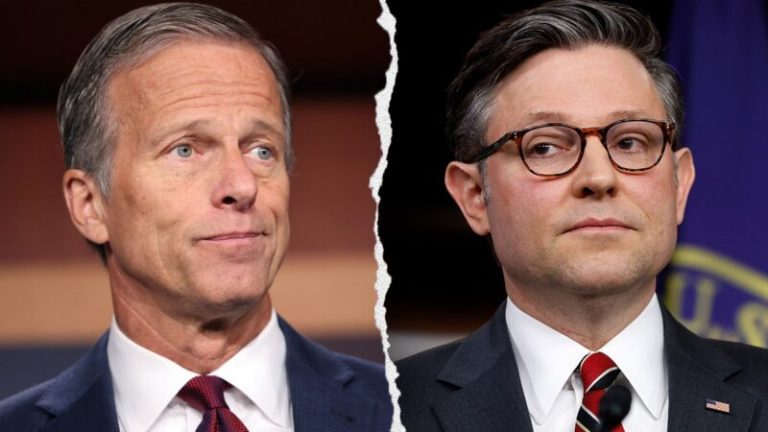
“Hopefully they’ll be around, and we can get at least a lot of the government opened up again, and then we’ll go from there,” Senate Majority Leader John Thune, R-S.D., said of the House and a potential vote on Friday. He said he texted with Speaker Mike Johnson, R-La., on Thursday night.

The Senate adjourned for a two-week recess, leaving the House with few options other than to accept their bill as written.

Thune separately blamed Democrats. “President Trump should never have had to step in to rescue TSA workers and U.S. air travel. We are here because, thanks to Democrats’ determined refusal to reach an agreement, there will be no Homeland Security funding bill this year.”

Speaking after the vote, Schumer said: “In the wake of the murders of Renee Good and Alex Pretti, Senate Democrats were clear. No blank check for a lawless ICE and Border Patrol.”

He added that the “long overdue agreement” funds TSA, the Coast Guard, the Federal Emergency Management Agency and the Cybersecurity and Infrastructure Security Agency, and “strengthens security at the border and the ports of entry, and keeps Americans safe.”

He added that the deal “could have been accomplished weeks ago if Republicans hadn’t stood in the way.”

The White House and Republicans declined to grant Democrats’ demands to restrict Trump’s immigration practices. They now plan to pursue the remainder for funding for ICE and CBP in a separate party-line bill, which they could also use to pass Iran war funding and elements of the Trump-backed SAVE America Act.

Senate Republicans held a vote open for hours Thursday as the two sides continued to negotiate, having traded offers for days.

Trump, meanwhile, announced earlier Thursday that he would instruct newly sworn-in Homeland Security Secretary Markwayne Mullin to “immediately pay our TSA Agents in order to address this Emergency Situation.”

That move may not be needed if the House passes the Senate legislation, according to a senior administration official, who said the White House is waiting to see what will happen.

This official also said the funds to pay TSA agents would come from the so-called One Big Beautiful Bill, the tax-cut and spending legislation Trump signed into law in July. It’s not clear exactly how that would work, but the administration has dipped into those unspent funds before to cover pay gaps during funding lapses.

The House can either debate and vote out the Senate-passed measures in the Rules Committee before bringing them to the floor under a simple majority vote, or Johnson can seek to fast-track it to the floor.

The House was set to hold an unrelated vote at 10 a.m. before leaving for recess.

We’d like to hear from you about how you’re experiencing the partial government shutdown, whether you’re a TSA agent who can’t work right now or a federal employee who is feeling the effects at your agency. Please contact us at tips@nbcuni.com or reach out to us here.

TSA officers missed their first full paychecks in mid-March, leading many to call out of work. Call-out rates for TSA officers have exceeded 11% nationally, with rates at some airports passing 40%.

Trump sent ICE agents to airports to help TSA earlier this week. Unlike TSA officers, ICE agents continue to receive paychecks during the partial shutdown as a result of funding from the so-called One Big Beautiful Bill, a sweeping GOP domestic policy package, that Trump signed into law last year.

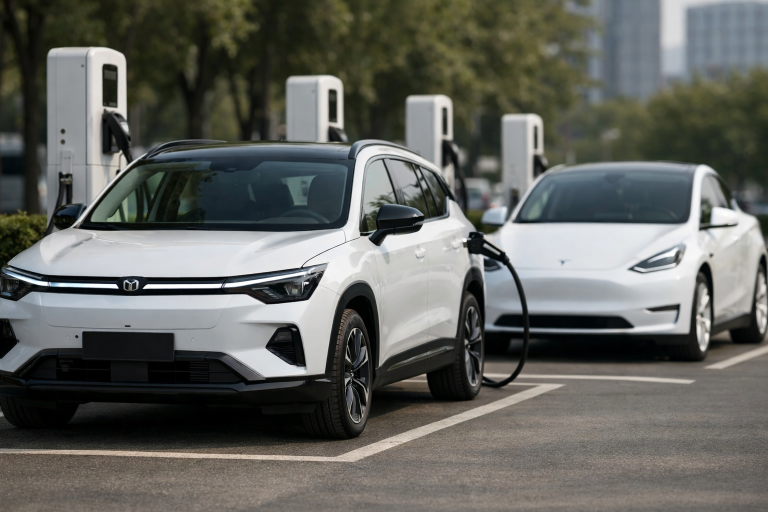
Almost €200 billion is set to be committed across the European Economic Area and Switzerland to build out the electric-vehicle ecosystem, underlining the scale of the region’s effort to strengthen its position in batteries, vehicle production and charging infrastructure.

Most of the planned investment is expected to flow into battery plants, vehicle factories and public charging networks, according to new research.

Germany accounts for the largest national share, drawing 23% of the total, which reflects both its importance to Europe’s industrial base and its central role in the region’s automotive transition.

Where the money is going

The bulk of the capital is being directed towards the core building blocks of the EV supply chain.

Battery production and related supply-chain projects, together with vehicle manufacturing, account for around €120 billion of the total pipeline, making them the clear focus of the investment wave.

That concentration is significant because Europe has long been trying to reduce its dependence on imported battery technology while ensuring its carmakers can remain competitive in the shift from combustion engines to electric models.

Public charging infrastructure is also drawing a substantial share of planned spending, reflecting the need to support EV adoption not just through manufacturing capacity but through practical day-to-day usability.

The investment picture suggests Europe is no longer focused only on boosting EV sales.

It is also trying to secure the industrial backbone that sits behind the market, from raw materials processing and battery assembly to final vehicle production and consumer charging access.

Europe’s battery race

The wider context remains challenging.

China manufactured more than 80% of the world’s batteries in 2025, including those used in transport and energy storage, highlighting how far ahead it remains in the global battery race.

By contrast, only about a third of the EVs sold in Europe currently use batteries produced within the continent.

That gap has been a long-standing concern for policymakers and industry groups, who argue that Europe risks losing both industrial capacity and strategic autonomy unless it builds a stronger domestic battery base.

Still, the announced pipeline points to a meaningful shift.

If all planned projects are completed, Europe would in theory be able to meet future battery demand from within the region.

That would mark a substantial improvement in self-sufficiency, even if delivery risk remains high and timelines vary widely from one market to another.

Germany leads the regional push

Germany stands out as the biggest beneficiary of the planned spending, taking nearly a quarter of the total.

That reflects the country’s deep manufacturing base, its large domestic car industry and its role as a hub for the wider European supply chain.

Many of the world’s largest battery producers have already established a presence there, while German automakers are investing heavily in the transition to electric mobility.

The country’s position has made it a natural magnet for capital as Europe tries to scale up both battery output and vehicle assembly.

France and Spain are also emerging as important destinations, particularly in EV charging.

Even so, the build-out remains uneven across the region, and that unevenness could become a constraint if charging networks fail to keep pace with production ambitions.

Policy and delivery risks

Policy will play a major role in determining whether the investment pipeline translates into real industrial strength.

The European Commission’s approach to the 2035 phase-out of new combustion-engine car sales has faced opposition from countries including Germany, Italy and several states in Central and Eastern Europe, showing that the regulatory path remains contested.

Even with that uncertainty, more than half of the tracked investment has come from countries that have opposed parts of the 2035 framework, suggesting industry is still willing to commit capital despite political friction.

Campaign group E-Mobility Europe says the investment has already supported the creation of more than 150,000 jobs across EEA countries, with a further 300,000 possible if all announced projects go ahead.

That leaves Europe with a clear opportunity, but not a guaranteed outcome.

The pace at which projects are commissioned, the consistency of charging investment and the stability of policy will determine whether the region can turn a large capital pipeline into a durable EV manufacturing and infrastructure base.

The post Can Europe’s €200 billion EV push break China’s battery dominance? appeared first on Invezz

The FTSE 100 Index remained in a narrow range this week as traders watched the developments in the Middle East, where odds of a deal between the US and Iran rose. It also wavered because of the weak HSBC earnings. 

This article looks at some of the top FTSE 100 and FTSE 250 shares to watch next week, including popular names like Burberry, Vodafone, BT Group, and ITV.

Vodafone and the BT Group to release their numbers 

Telecommunications companies have remained in a tight range in the past few weeks as they are less affected by the ongoing US-Iran war. Vodafone Group stock was trading at 116p on Friday, down slightly from the year-to-date high of 120p. It remains much higher than the 2024 low of 55.25p.

BT Group, on the other hand, has also done well and is loitering at the highest level since in years. It has jumped by over 140% from its lowest level during the pandemic.

As we wrote earlier this week, analysts believe that BT Group’s growth will remain under pressure in the coming years as the broadband segment continues to lose customers. The company expects to lose over 800k customers in the last financial year, lower than the previous estimate of over 1 million.

BT has offset the ongoing revenue decline by cutting costs and exiting most of its international business. It is also addressing the business segment, which has been a top laggard over the years.

Vodafone, on the other hand, has been in a turnaround process in the past few years. This turnaround has seen it exit some of the large markets and increase its presence in others, such as Kenya. Traders will put more emphasis on the German service business.

Burberry’s results to focus on the Chinese business 

Burberry Group will be the top FTSE 100 company to watch next week as it releases its financial results. These numbers come as the stock was trading at 1,200, up from last year’s low of 553p.

The company has done well because of the ongoing turnaround efforts, which have focused on introducing more British-focused designs and growing its Chinese sales. 

Its main challenge is that the Chinese business remains under pressure as growth for luxury brands in the country fades. It has also faced challenges because of the ongoing US-Iran war, which has affected its business in the Middle East as tourist growth fades.

National Grid to release earnings as JP Morgan slashes target 

National Grid stock will be in the spotlight as the company publishes its financial results next week. These numbers come a few days after analysts at JPMorgan slashed the target to 1,400p from the previous 1,450p. Morningstar analysts have a target of 1,440p.

National Grid has already warned that its EPS will drop by 1%, while its capital expenditure will soar as it increases its grid presence in key markets. It expects to spend £70 billion through FY31.

ITV to publish its financial results 

ITV,  a former FTSE 100 company now in the FTSE 250 Index, will be in the spotlight next week as it publishes its numbers.

The ITV share price was trading at 82p, up sharply from the year-to-date low of 71.15p. It rose after reports that Sky was considering buying its broadcast channels for £1.6 billion. Such a deal would create a top 3 UK streamer to compete with companies like Netflix and YouTube.

The most recent results showed that two-thirds of its revenue now comes from ITV Studios and M&E digital. Its studios revenue rose by 5% to £2.13 billion, while advertising rose by 5% amid the shift in streaming.

The post Top FTSE 100 and 250 shares to watch: Burberry, ITV, Vodafone, BT, National Grid appeared first on Invezz

Trump’s China trip is becoming a major business and diplomatic event.

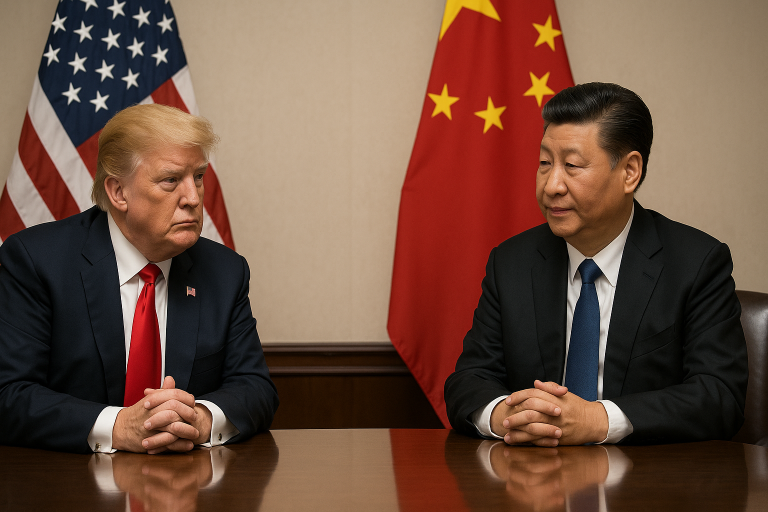
The White House is lining up a heavyweight group of CEOs for the visit to Beijing next week, with invitations going to leaders from Nvidia, Apple, Exxon, Boeing, Qualcomm, Blackstone, Citigroup and Visa, according to a report by Semafor.

The timing is crucial as President Donald Trump is heading to Beijing after the fragile trade truce struck at the South Korea summit in October 2025.

The administration appears to want the business elite in the room for the next phase of bargaining.

The message seems simple: Washington is not just taking a diplomatic trip, it is staging a commercial one.

And for executives whose revenues, supply chains, or market access run through China, the chance to be seen beside Trump and Xi Jinping is hard to ignore.

Trump’s China visit: A delegation chosen for leverage

The invite list includes Nvidia CEO Jensen Huang, which is the clearest signal that technology policy remains central.

Huang has been trying to preserve access to China for the company’s AI chips, and he told Reuters that it would be “a privilege” and “a great honor” to represent the United States if invited.

Apple is there for a different reason: supply chain exposure.

China remains the core of the company’s manufacturing base, so any escalation in tariffs, export controls, or political friction can quickly flow through to margins and production risk.

Exxon’s inclusion points to energy diplomacy, as the administration looks for Chinese purchases of American oil, LNG and other commodities that can narrow the trade gap.

Boeing may be the most commercially obvious name, as CEO Kelly Ortberg told Reuters in April that Boeing was counting on the Trump administration to help unlock a long-awaited major order from China.

The talks could cover as many as 500 737 MAX jets, plus widebody aircraft, which would be a major win for Boeing after years of strain.

Deals are possible, but expectations are modest

The harder truth is that this summit is not being sold as a breakthrough moment.

The senior officials want to keep expectations low, with one goal being a modest extension of the trade truce rather than a sweeping reset.

The business delegation seems like a way to show momentum without promising too much.

That does not mean there is nothing on the table as the US wants more Chinese buying of soybeans, beef and Boeing aircraft, while China is pressing Washington to ease some semiconductor export controls and loosen restrictions on chipmaking equipment and advanced memory chips.

The two sides are also weighing formal discussions on AI, which would add another layer of strategic significance to Huang’s presence.

Why investors should care

For markets, the trip matters more for preventing new tensions than for announcing big deals.

A smooth visit with visible CEO participation would support the idea that Washington and Beijing are trying to de-risk the relationship rather than blow it up again.

That would be positive for global equities, semiconductors, industrials and shippers alike.

Nvidia investors will watch for any hint that export restrictions could soften.

Boeing holders will focus on whether China’s long-delayed order finally lands.

And the broader market will be reading the optics as carefully as the communiques.

The post Why has Trump invited Apple, Nvidia and Exxon CEOs on his China trip? appeared first on Invezz

A federal judge in California has blocked the Trump administration from designating Anthropic as a supply chain risk to national security and cutting off the AI company’s work with federal agencies.

Anthropic sued the Defense Department and other federal agencies this month after the Pentagon labeled it a “supply-chain risk to national security.” President Donald Trump said he would also ban the use of Anthropic’s products across other federal agencies.

“Defendants’ designation of Anthropic as a ‘supply chain risk’ is likely both contrary to law and arbitrary and capricious,” U.S. District Judge Rita Lin of Northern California wrote in her order Thursday night. “The Department of War provides no legitimate basis to infer from Anthropic’s forthright insistence on usage restrictions that it might become a saboteur.”

Lin paused her order for a week to allow the administration time to appeal.

The Defense Department and the White House did not immediately respond to a request for comment Thursday evening.

“We’re grateful to the court for moving swiftly, and pleased they agree Anthropic is likely to succeed on the merits,” an Anthropic spokesperson said in a statement Thursday. “While this case was necessary to protect Anthropic, our customers, and our partners, our focus remains on working productively with the government to ensure all Americans benefit from safe, reliable AI.”

The supply chain risk designation requires the Pentagon and its contractors to stop using Anthropic’s commercial AI services for all defense business.

Defense Secretary Pete Hegseth said on X in late February that he was issuing a directive to give the company the “supply chain risk” label. Trump also said he was ordering all federal agencies, including the Treasury and State departments, to cease using Anthropic’s AI technology.

“The record reflects that the Challenged Actions were taken without any meaningful notice or pre-deprivation process (and, in the case of the Presidential Directive and the Hegseth Directive, without any post-deprivation process either),” Lin wrote in her order.

The order Thursday also bars other agencies from cutting off their work with Anthropic. Lin wrote that the order restores the status quo.

“This Order does not require the Department of War to use Anthropic’s products or services and does not prevent the Department of War from transitioning to other artificial intelligence providers, so long as those actions are consistent with applicable regulations, statutes, and constitutional provisions,” the order said.

Anthropic filed two lawsuits against the Defense Department — one in U.S. District Court for Northern California and the other in U.S. Circuit Court of Appeals for Washington, D.C. — alleging that the federal government’s moves go beyond a normal contract dispute and instead are an “unlawful campaign of retaliation” that followed months of heated negotiations about how the military should be able to use Anthropic’s AI systems.

Anthropic had sought stronger guarantees that the Pentagon would not use its AI systems for autonomous weapons or mass domestic surveillance.

Anthropic is the creator of the Claude chatbot system and the only AI company whose services were cleared for use on the Defense Department’s classified networks.

Hours after Hegseth’s announcement last month, OpenAI CEO Sam Altman said his company had reached an agreement with the Pentagon to use its services in classified settings.

Lin wrote: “Although Anthropic was on notice that the government objected to its contracting terms, it had no notice or opportunity to object before Defendants publicly barred it from all federal government work and blacklisted it with private companies working with the U.S. military. It also had no notice or opportunity to object to the factual basis for its designation as a supply chain risk, which it learned of in this litigation.”

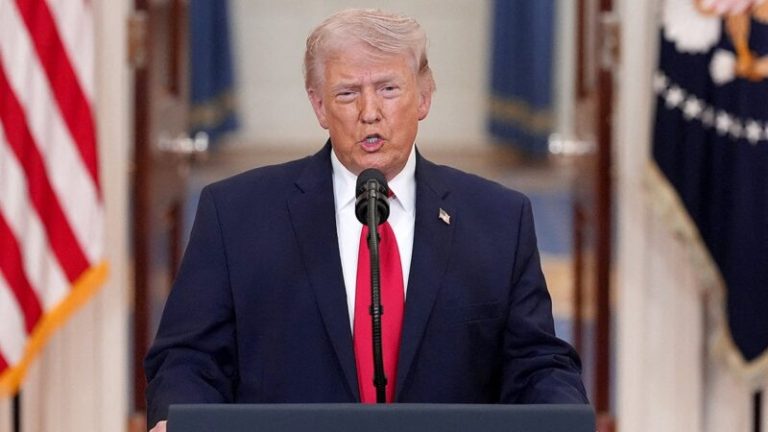
President Donald Trump addressed the nation Wednesday night, saying the United States’ “core strategic objectives” in Iran are “nearing completion” just a month after Operation Epic Fury began and warned that the U.S. will hit Tehran “extremely hard” over the next several weeks.

“Tonight, I’m pleased to say that these core strategic objectives are nearing completion,” the president said, touting the United States military and their “extraordinary” efforts.

Here are the top five takeaways from the president’s address: 

Trump says Operation Epic Fury is ‘nearing completion’

President Trump told Americans Wednesday night that after 32 days of Operation Epic Fury, Iran is “essentially really no longer a threat.” 

The president, upon the announcement of Operation Epic Fury, detailed the United States’ objectives. Trump said, “We are systematically dismantling the regime’s ability to threaten America or project power outside of their borders.”

“That means eliminating Iran’s navy, which is now absolutely destroyed, hurting their air force and their missile program at levels never seen before, and annihilating their defense industrial base,” the president said Wednesday night.

INSIDE IRAN’S MILITARY: MISSILES, MILITIAS AND A FORCE BUILT FOR SURVIVAL

“We’ve done all of it,” he continued. “Their navy is gone. Their air force is gone. Their missiles are just about used up or beaten. Taken together, these actions will cripple Iran’s military, crush their ability to support terrorist proxies and deny them the ability to build a nuclear bomb.” 

“Our armed forces have been extraordinary,” the president said. “There’s never been anything like it militarily. Everyone is talking about it.” 

“And tonight, I’m pleased to say that these core strategic objectives are nearing completion,” he said.

Meanwhile, the president thanked U.S. allies in the Middle East — “Israel, Saudi Arabia, Qatar, the UAE, Kuwait and Bahrain.”

“They’ve been great, and we will not let them get hurt or fail in any way, shape or form,” he said.

“I’ve made clear from the beginning of Operation Epic Fury that we will continue until our objectives are fully achieved, thanks to the progress we’ve made,” he said. “I can say tonight that we are on track to complete all of America’s military objectives shortly. Very shortly.”

The president warned that the U.S. is “going to hit them extremely hard over the next two to three weeks.”

“We’re going to bring them back to the Stone Ages where they belong,” he said. “In the meantime, discussions are ongoing. Regime change was not our goal. We never said regime change, but regime change has occurred because of all of their original leaders’ deaths. They’re all dead. The new group is less radical and much more reasonable.”

Trump says rising gas prices in the US are ‘short term’

Since Operation Epic Fury began, gas prices in the United States have increased. The president acknowledged that development, and expressed confidence that those increases are “short term.”

The average price of a gallon of gas surpassed $4 Tuesday, a first since 2022. 

“Many Americans have been concerned to see the recent rise in gasoline prices here at home,” the president said. “The short-term increase has been entirely the result of the Iranian regime launching deranged terror attacks against commercial oil tankers and neighboring countries that have nothing to do with the conflict.”

WHY TRUMP, IRAN SEEM LIGHT-YEARS APART ON ANY POSSIBLE DEAL TO END THE WAR

“This is yet more proof that Iran can never be trusted with nuclear weapons. They will use them, and they will use them quickly. It would lead to decades of extortion, economic pain and instability worse than we can ever imagine,” the president said. “The United States has never been better prepared economically to confront this threat. You all know that we built the strongest economy in history.”

The president touted the economy under his leadership, saying that he has “taken a dead and crippled country — I hate to say that, but we were dead and crippled country after the last administration — and made it the hottest country anywhere in the world by far, with no inflation, record-setting investments coming into the United States, over $18 trillion and the highest stock market ever with 53 all-time record highs in just one year.”

The president said those economic gains “all positioned us to get rid of a cancer that has long simmered.”

“It’s known as the nuclear Iran, and they didn’t know what was coming. They’ve never imagined it,” he said. “Remember, because of our drill baby drill program, America has plenty of gas. We have so much gas.”

The president said that, under his leadership, the U.S. is the “number one producer of oil and gas on the planet without even discussing the millions of barrels that we’re getting from Venezuela because of the Trump administration’s policies. We produce more oil and gas than Saudi Arabia and Russia combined.”

“Think of that — Saudi Arabia and Russia combined,” he continued. “And that number will soon be substantially higher than that. There’s no country like us anywhere in the world.”

The president stressed that “the hard part is done.”

“When this conflict is over, the strait will open up. Naturally. It’ll just open up naturally. They’re going to want to be able to sell oil because that’s all they have to try and rebuild,” he said. “It will resume the flowing and the gas prices will rapidly come back down.”

The president said it was necessary to “take that little journey to Iran to get rid of this horrible threat with our historic tax cuts, where people are just now talking about receiving larger refunds than they ever thought possible, they are getting so much more money than they thought. That’s from the great big, beautiful bill.”

He added: “Our economy is strong and improving by the day and it will soon be roaring back like never before. It will top the levels that it was a month ago.”

Trump thanks US troops for work in Middle East, Venezuela

The president began his address Wednesday night by thanking U.S. troops for “the massive job they did in taking the country of Venezuela in a matter of minutes.”

“That hit was quick, lethal, violent and respected by everyone all over the world,” Trump said, referring to the January operation.

“We’re working along with Venezuela are, in a true sense, joint venture partners,” Trump said. “We’re getting along incredibly well in the production and sale of massive amounts of oil and gas — the second-largest reserves on Earth after the United States of America.”

POLL POSITION: WHERE TRUMP STANDS AMONG AMERICANS AS HE FACES THE NATION IN PRIMETIME

Shifting to Operation Epic Fury and the progress made, the president honored “the 13 American warriors who have laid down their lives and this fight to prevent our children from ever having to face a nuclear Iran.”

“Twice this past month, I have traveled to Dover Air Force Base, and it’s been something I wanted to be with those heroes as they return to American soil,” he said. “And I was with them and their families, their parents, their wives, their husbands.”

“We salute them, and now we must honor them by completing the mission for which they gave their lives,” the president said. “And every single one of the people, their loved one said, please, sir, please finish the job, every one of them, and we are going to finish the job and we’re going to finish it very fast. We’re getting very close.”

Trump urges Americans to keep the Iran conflict ‘in perspective’

“It’s very important that we keep this conflict in perspective,” the president said. “American involvement in World War One lasted one year, seven months and five days.”

“World War Two lasted for three years, eight months and 25 days,” he continued. “The Korean War lasted for three years, one month and two days. The Vietnam War lasted for 19 years, five months and 29 days.”

“Iraq went on for eight years, eight months and 28 days,” the president said.

“We are in this military operation, so powerful, so brilliant against one of the most powerful countries for 32 days,” he said. “And the country has been eviscerated and, essentially, is really no longer a threat.”

FOX NEWS LIVE UPDATES ON THE U.S. WAR WITH IRAN

Trump said that Iran was “the bully of the Middle East, but they’re the bully no longer.”

“This is a true investment in your children and your grandchildren’s future,” he said. “The whole world is watching, and they can’t leave the power, strength and brilliance. They just can’t believe what they’re seeing. They leave it to your imagination, but they can’t believe what they’re seeing — The brilliance of the United States military.”

He added: “Tonight, every American can look forward to a day when we are finally free from the wickedness of Iranian aggression and the specter of nuclear blackmail. Because of the actions we have taken, we are on the cusp of ending Iran’s sinister threat to America and the world. And I’ll tell you, the world is watching.”

Trump rips into Obama’s Iran Nuclear Deal

President Trump said ending former President Barack Obama’s Iran nuclear deal was among his top achievements as president, telling the nation he was “honored” to do it.

“I terminated Barack Hussein Obama’s Iran nuclear deal disaster,” Trump said. “Obama gave them $1.7 billion in cash. Green, green cash took it out of banks from Virginia, D.C. and Maryland. All the cash they had.”

The president went on to say that Obama “flew it by airplanes in an attempt to buy their respect and loyalty. But it didn’t work.”

“They laughed at our president and went on with their mission to have a nuclear bomb,” Trump said. “His Iran deal would have led to a colossal arsenal of massive nuclear weapons for Iran, and they would have had them years ago, and they would have used them, would have been a different world.”

The president said, “There would have been no Middle East and no Israel right now, in my opinion, the opinion of a lot of great experts, had I not terminated that terrible deal that I was so honored to do it.”

“I was so proud to do it It was so bad right from the beginning,” he said. “Essentially, I did what no other president was willing to do.”

He added: “They made mistakes, and I am correcting them.”

The president said his “first preference was always the path of diplomacy, yet the regime continued their relentless quest for nuclear weapons and rejected every attempt at an agreement.”

“For this reason, in June, I ordered a strike on Iran’s key nuclear facilities and Operation Midnight Hammer. And nobody’s ever seen anything like it. Those beautiful B-2 bombers performed magnificently,” he said. “We totally obliterated those nuclear sites.”

But the president said the Iranian regime “then sought to rebuild their nuclear program at a totally different location, making clear they had no intention of abandoning their pursuit of nuclear weapons.”

President Donald Trump is expected to address the nation at 9 p.m. Eastern Time Wednesday about U.S. operations in Iran after one month of combat. 

The message will be an “important update” about the war, White House press secretary Karoline Leavitt wrote on X. 

The president will give an operational update on the mission known as Operation Epic Fury and is expected to reiterate the two-to-three week timeline for a drawdown of the operation that he gave in comments to reporters Tuesday, a White House official told Fox News Digital Wednesday. 

“He will highlight the United States military’s success in achieving all of its stated goals prior to the operation: destroy Iran’s deadly ballistic missiles and production facilities, annihilate their Navy, ensure their terrorist proxies can no longer destabilize the region and guarantee that Iran can never obtain a nuclear weapon,” the official added.

US EYES SEIZING IRAN’S OIL LIFELINE — BUT IT MAY NOT CRIPPLE TEHRAN

Trump told reporters Tuesday he expected the mission to end in two to three weeks. He posted on Truth Social Wednesday that Iran had asked for a ceasefire, but the U.S. was not open to negotiation until the Strait of Hormuz is open for shipping. 

“We will consider when Hormuz Strait is open, free, and clear,” Trump said. “Until then, we are blasting Iran into oblivion or, as they say, back to the Stone Ages!” 

Iran’s Foreign Ministry spokesperson, Esmail Baghaei, said the claim that Iran had asked for a ceasefire was “false and baseless,” according to Iranian state TV. 

Trump has sent mixed signals in recent days, at times suggesting the conflict could end soon while also threatening intensified strikes if Iran does not meet U.S. demands.

The president told multiple news outlets Wednesday he is strongly considering pulling the U.S. out of NATO over frustrations at what he sees as insufficient military support from allied countries in the Middle East. 

“I was never swayed by NATO,” Trump told The Telegraph in an interview published Wednesday.

European nations so far have resisted pressure to offer warships to reopen commerce in the Strait of Hormuz, through which 20% of the world’s oil supply typically passes. The average price of a gallon of gas surpassed $4 Tuesday, a first since 2022. 

Several key European allies have moved to restrict U.S. military access as the Trump administration presses forward with operations against Iran. Spain has closed its airspace to U.S. aircraft tied to strikes and France is imposing limits on certain overflights carrying military supplies.

PRESIDENT TRUMP SAYS US COULD FINISH IRAN OPERATION WITHIN TWO TO THREE WEEKS

“We’ve been there automatically, including Ukraine. Ukraine wasn’t our problem. It was a test, and we were there for them, and we would always have been there for them. They weren’t there for us.”

Administration officials have suggested U.S. objectives in the conflict are nearing completion, raising the possibility that Trump could outline a path toward winding down operations.

At the same time, thousands of paratroopers from the 82nd Airborne division and a task force of 2,500 Marines from the USS Tripoli have reached the Central Command theater in recent days, raising speculation of a potential ground invasion. 

The USS George H.W. Bush, an aircraft carrier with 6,000 sailors, deployed Tuesday to join the USS Abraham Lincoln already in theater.

Operation Epic Fury began Feb. 28. 

Since then, U.S. forces have struck more than 12,000 targets inside Iran and damaged or destroyed 155 naval ships, according to the Central Command. Thirteen U.S. service members have died in the operations, and 350 have been injured.  

The 48-day Department of Homeland Security shutdown is one step closer to ending after the Senate moved to fund most of the department Thursday morning.

The Senate agreed via voice vote to send a bipartisan deal funding the whole department except for President Donald Trump’s immigration enforcement and border security efforts to the House for consideration.

The chamber is not expected to vote on the legislation until House lawmakers return to Washington on April 13. 

The Senate vote follows GOP leaders endorsing a two-track approach to funding DHS on Wednesday, with President Trump giving lawmakers a hard deadline to end the record-breaking funding lapse. 

HOUSE CONSERVATIVES RAGE AGAINST SENATE DHS SHUTDOWN DEAL

The Senate bill accomplishes the first phase of the plan by working with Democrats to fund as much of DHS as possible on a bipartisan basis. However, it would zero out funding for ICE and much of the Border Patrol, save for $11 billion in customs funding going to the agency. Additionally, $10 billion teed up for ICE won’t be funded under the measure.

As for ICE and the Border Patrol, Republicans have said they will seek three full years of funding for both of these agencies in a party-line budget reconciliation package that will bypass Democrats’ opposition. Trump says he wants the forthcoming bill on his desk by June 1.

“We are going to work as fast, and as focused, as possible to replenish funding for our Border and ICE Agents, and the Radical Left Democrats won’t be able to stop us,” Trump wrote on Truth Social on Wednesday. 

The Senate bill’s passage on Thursday was a déjà vu moment for Senate Majority Leader John Thune, R-S.D., who helped steer the same measure through the upper chamber last week.

But House GOP leadership sharply rejected it, calling the measure’s exclusion of ICE and CBP money a “crap sandwich” and warning about the risks of funding those entities using the budget reconciliation process. The chamber then put forward a rival proposal that Senate Minority Leader Chuck Schumer, D-N.Y., made clear was “dead on arrival” in the Senate. 

Thune said shortly after the vote that he was hopeful the House would move onto the bill quickly, and that the next step would be budget reconciliation. Still, he blamed Senate Democrats, and not Republicans in-fighting at the finish line, for the current position Congress was in. 

“I think this whole where we are is just a regrettable place. We have the Democrats who are holding the appropriations process hostage and their anti-law enforcement, open borders, defund the police wing is the ascendant wing,” Thune said. “And there, I think everybody’s afraid of them, and so we’re stuck in a spot that’s just not good for the country, the future of the appropriations process, or, for that matter, the future of the Senate.” 

House Speaker Mike Johnson, R-La., appeared to relent Wednesday after Trump issued a statement outlining an end to the shutdown that appeared to side with Thune’s two-part approach to funding the department. 

GOP INFIGHTING, DEMOCRATS’ UNMET DEMANDS AND A CLEAR WINDFALL: WHO’S WINNING AND LOSING THE DHS SHUTDOWN

As the DHS shutdown drags on, Trump and congressional Republicans are gambling that budget reconciliation will be the way to fund immigration enforcement for several years to come. Some Republicans have floated funding ICE not just through Trump’s term, but for up to a decade.

The GOP used the same process to fund ICE last year, teeing up $75 billion for enforcement operations for the next four fiscal years.

But the party-line process comes with a host of challenges that could test Republican unity in an election year.

GOP lawmakers will have to identify spending cuts to pay for it. When Republicans used the process to pass Trump’s One Big Beautiful Bill Act in July 2025, lawmakers nearly stumbled at the finish line over disagreements on cuts to federal Medicaid spending and food assistance programs.

Without a looming deadline like the expiration of Trump’s 2017 tax cuts that Republicans extended in July 2025 through the “big, beautiful bill,” some GOP lawmakers have voiced concern that the party will stay unified.

Republicans have proposed adding other issues into the reconciliation mix, including supplemental funding for the Iran war, affordability measures, the president’s tariff regime and pieces of the election integrity-focused SAVE America Act.

The budget reconciliation process allows a party with control of the White House and both chambers of Congress to pass tax and spending priorities with a simple majority threshold, though the process is governed by stringent requirements for what is eligible to be included.

Punting ICE and CBP money to a future spending bill could also negatively affect support staff employed by both agencies who have not been paid during the seven-week shutdown.

Democrats have repeatedly blocked funding for ICE and the Border Patrol in the Senate since the beginning of the shutdown in mid-February. Though none of their proposals to reform immigration enforcement have been adopted, Democratic leaders claimed victory on Wednesday. 

“Throughout this fight, Senate Democrats never wavered,” Senate Minority Leader Chuck Schumer, D-N.Y., said Wednesday. “We were clear from the start: fund critical security, protect Americans, and no blank check for reckless ICE and Border Patrol enforcement. 

“We were united, held the line, and refused to let Republican chaos win.”

The Senate deal funding most of DHS could still face roadblocks in the House. A handful of conservatives have already said they will vote “no” while using the same messaging employed by House GOP leadership to oppose the bill last week.

“Let’s make this simple: caving to Democrats and not paying CBP and ICE is agreeing to defund Law Enforcement and leaving our borders wide open again,” Rep. Scott Perry, R-Pa., wrote on social media Wednesday. “If that’s the vote, I’m a NO.”

U.S. stocks and bonds sold off Thursday and oil continued its weekslong upward trajectory, as optimism faded about possible peace talks or a U.S.-Iran ceasefire.

The price of U.S. crude oil rose near $95 per barrel, up more than 4%. International Brent crude rose 5%, to more than $109 per barrel. Since the war started, the cost of U.S. crude oil is up more than 40%. Since the start of the year, it has risen more than 60%.

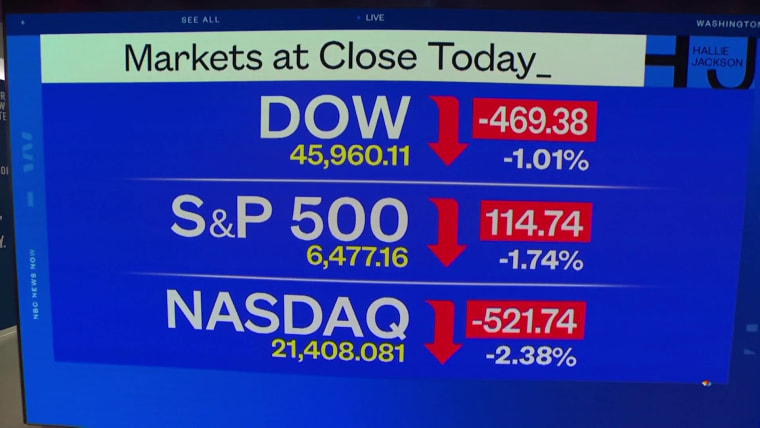
The S&P 500 closed down by 1.7%, the Dow tumbled 470 points and the Russell 2000 ended the day down 1.7%. For the S&P 500, Thursday was its worst single day since the war began.

The Nasdaq Composite fared the worst though, and dropped nearly 2.4%, pushing the index into correction territory. A correction is when an index falls 10% or more from its most recent all-time high. As of Thursday’s close, the index is now down 10.9% from its October high.

Heating oil, a proxy for jet fuel prices, also spiked 8% on Thursday afternoon. The nationwide average price of unleaded gas was $3.98 a gallon.

Nonetheless, Trump downplayed the severity of the oil and gas price spikes.

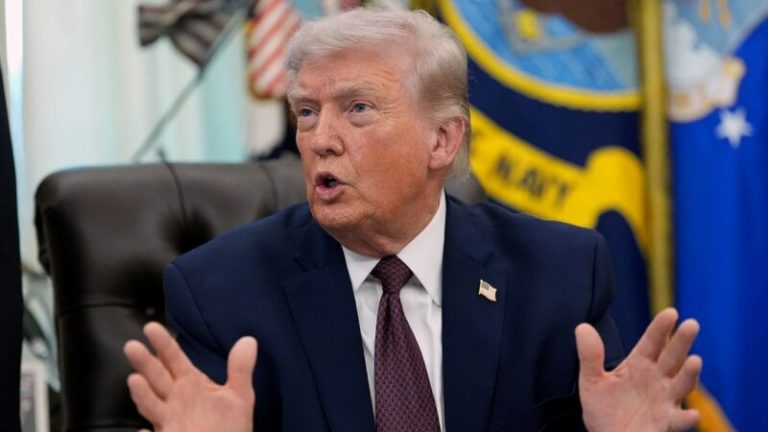
Energy prices “have not gone up as much as I thought,” Trump said at a Cabinet meeting in Washington.

The military campaign is “not over, so maybe it’ll go up a little bit more,” Trump said. “It’s all going to come back down to where it was and probably lower.”

Trump also cast doubt on a deal with Iran. “They are begging to work out a deal,” he said. “I don’t know if we’ll be able to do that. I don’t know if we’re willing to do that.”

But analysts widely believe that oil prices will continue to remain elevated over the long run, factoring in the risk that shippers will now have to assume for oil tankers that transit through the Strait of Hormuz.

Also impacting market sentiment was a report from the Organisation for Economic Co-operation and Development, which predicted that as a result of the war with Iran, the average inflation rate for G20 countries this year would rise to 4%, up from its December prediction of 2.8%. The United States is a member of the OECD.

Bonds also sold off, driving yields higher. The 10-year U.S. Treasury bond yield rose to 4.42%. The yield on 20-year bond hit 4.97% and the 30-year yield hit 4.93%.

Treasury yields, especially for the 10-year bond, heavily influence consumer lending rates. As a result, mortgage rates have risen from around 6% at the start of the war on Feb. 28 to more than 6.5% as of Thursday afternoon.

Stock indexes in Asia had already begun to sell off overnight. China’s Shanghai index and Hong Kong’s Hang Seng index both fell 1%, while Korea’s Kospi slid 3.2%.

These indexes were also weighed down by big drops in shares of tech companies, including Samsung, after Google revealed a new, more efficient use of storage and memory systems for artificial intelligence.

The Stoxx 600 in Europe followed, closing down more than 1%. Flagship stock indexes in Germany, France and the U.K. also ended the trading session down by around 1%.

The IAG share price retreated today, May 8, and then pared back some of those losses after the company published its results, which provided more color on how the ongoing war has affected its business. It retreated to 372p and then rebounded to 390p. 

IAG flags Iran war risks

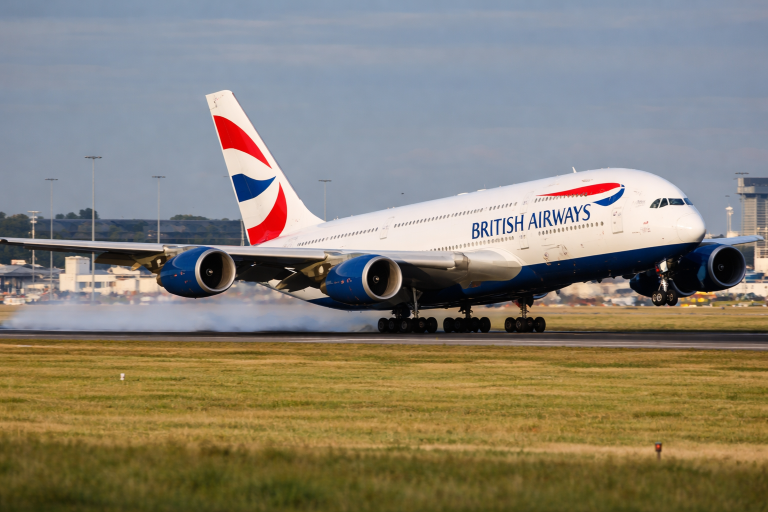
International Consolidated Airlines Group, the parent company of top airlines like British Airways, Iberia, LEVEL, and Aer Lingus, has pulled back from the year-to-date high as investors assessed the impact of the ongoing Iranian crisis. 

This crisis has led to higher jet oil prices, including some shortages, in key areas like Europe and Asia. They have more than doubled, a move that has mostly affected unhedged airlines. 

IAG has been less affected by the crisis as it spends millions of dollars each year to hedge these risks. It is well-hedged for the rest of the year at 70% and the management expects to recover around 60% of this through revenue and cost management.

At the same time, it runs a highly diversified business model, with most of its revenue coming from the transatlantic routes. 

The company published strong numbers today, even as it warned about margins. Its revenue jumped by 1.9% YoY to 7.18 billion euros in the first quarter, while its operating profit jumped by 77%. This growth was largely because of its revenue growth and offset by the relatively higher energy prices. 

British Airways made over 3.38 billion pounds, making it the biggest part of its business. It was followed by Iberia, which made 1.8 billion euros. Aer Lingus made 420 million euros.

Additionally, its loyalty business, which is a capital-light segment, grew by 10% as its profit margin jumped to 20.1%. Its revenue jumped to 579 million pounds.This business enables customers to collect rewards such as upgrades and car rentals. It has become an important part of most airlines, with analysts seeing them as banks. IAG made a net profit of 301 million euros, while its total liquidity jumped to over 12.7 billion.

The main risk that IAG stock faces is a prolonged war that pushes jet fuel prices much higher. While Trump has signaled that he wants the war to end, Iran and Israel have other ideas. It is also highly unlikely that Trump will get a better deal. For one, any deal will require the US to end its sanctions and release Iranian funds, a move that Israel will blast. 

Therefore, there is still a risk that the war will last longer, which will hurt the ongoing recovery. On the positive side, the war may end soon, leading to lower prices and recovery in Middle East travel.

IAG share price technical analysis

IAG stock chart | Source: TradingView

The daily chart shows that the IAG stock price has crawled back in the past few days. It has jumped from the war low of 335p to the current 390p. A closer look shows that it has formed a down-gap and moved above the 50-day and 100-day moving averages. 

Therefore, despite the rising risks, there is a likelihood that the stock will keep rising as bulls target the key resistance level at 413p. A move above that price will point to more gains, potentially to the resistance level at 450p. 

The post IAG share price forecast ahead of earnings as it flags jet fuel risks appeared first on Invezz