Author

admin

Browsing

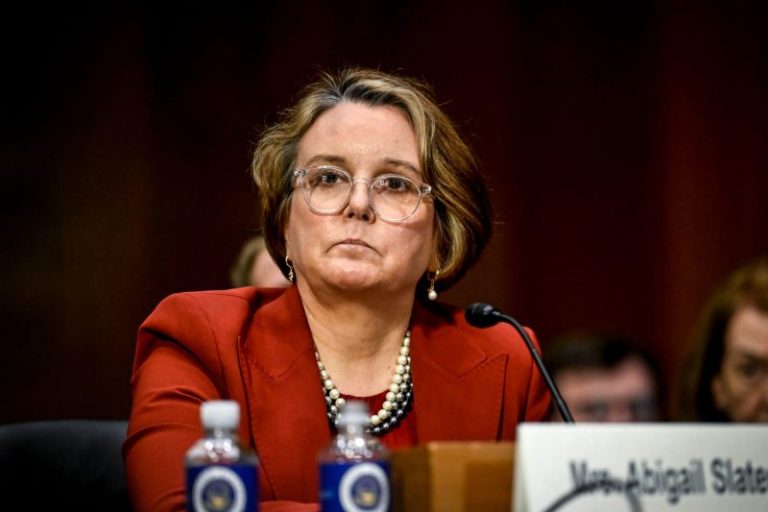
The head of the Justice Department’s antitrust unit said Thursday she is leaving the role, effective immediately, at a critical moment for corporate mergers in America.

Gail Slater, the assistant attorney general in charge of the Antitrust Division, wrote on X: ‘It is with great sadness and abiding hope that I leave my role as AAG for Antitrust today.’

Slater continued, ‘It was indeed the honor of a lifetime to serve in this role. Huge thanks to all who supported me this past year, most especially the men and women of’ the Department.

The White House referred questions to the Justice Department.

Attorney General Pam Bondi said in a statement, “On behalf of the Department of Justice, we thank Gail Slater for her service to the Antitrust Division which works to protect consumers, promote affordability, and expand economic opportunity.”

Slater is leaving just as media giants Netflix and Paramount Skydance battle for control of Warner Bros. Discovery.

President Donald Trump had said he was going to get involved in reviewing whichever Warner Bros. deal proceeds, an uncommon occurrence in antitrust matters.

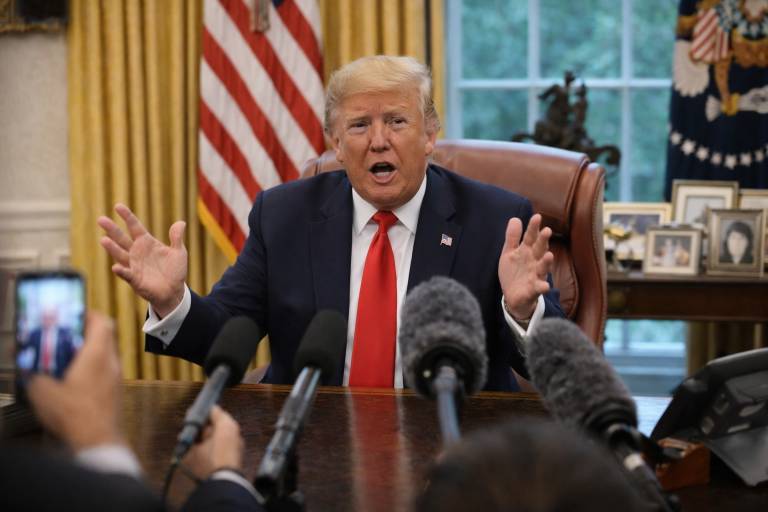
But in an interview with NBC News, Trump slightly changed his tune. ‘I’ve been called by both sides, it’s the two sides, but I’ve decided I shouldn’t be involved,’ he said.

‘The Justice Department will handle it.’

Trump has met with executives from both of Warner Bros.’ bidders.

The Justice Department will also head to court in weeks in a bid to challenge concert venue manager Live Nation’s ownership of Ticketmaster.

Shares of Live Nation jumped as much as 5.8% after Slater announced her departure. By 1 p.m. ET, the rally had abated to around 2.5%.

When the Senate confirmed Slater, 78 senators from both sides of the aisle voted in her favor. Only 19 opposed her confirmation.

This week, her deputy in the Antitrust Division also departed.

Mark Hamer, deputy assistant attorney general for the Antitrust Division, wrote on LinkedIn, ‘Decided the time is right for me to return to private practice.’ He praised Slater as a ‘leader of exceptional wisdom, strength and integrity.’

This post appeared first on NBC NEWS

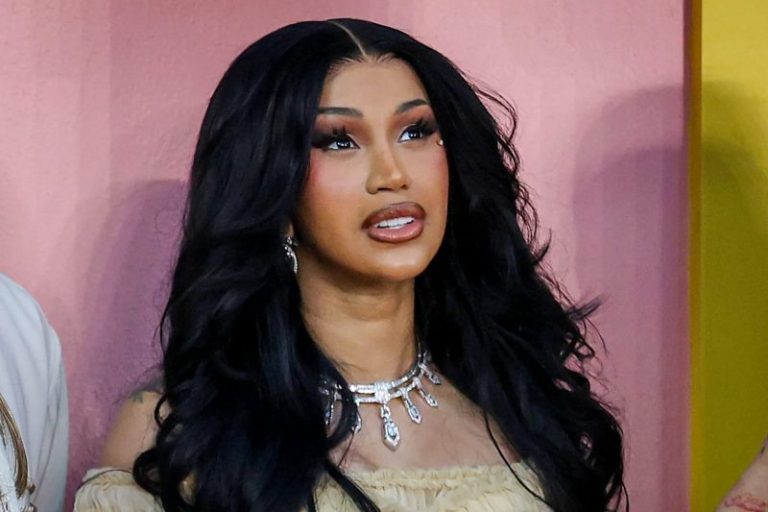
CHICAGO — Cardi B was part of Bad Bunny’s Super Bowl halftime show. What she did exactly, well, that turned into a perplexing question for two major prediction markets.

At least one Kalshi trader filed a complaint with the Commodity Futures Trading Commission over how the prediction market handled Sunday’s appearance by the Grammy-winning rapper. The result of a similar event contract on Polymarket also drew the ire of some users on that platform.

Prediction markets provide an opportunity to trade — or wager — on the result of future events. The markets are comprised of typically yes-or-no questions called event contracts, with the prices connected to what traders are willing to pay, which theoretically indicates the perceived probability of an event occurring.

The buy-in for each contract ranges from $0 to $1 each, reflecting a 0% to 100% chance of what traders think could happen.

More than $47.3 million was wagered on Kalshi’s market for “ Who will perform at the Big Game? ” A Polymarket contract had more than $10 million in volume.

Celebrities including Pedro Pascal, Karol G and Cardi B during the Super Bowl halftime show on Sunday.Kevin Mazur / Getty Images for Roc Nation

Cardi B joined singers Karol G and Young Miko and actors Jessica Alba and Pedro Pascal on a starry front porch during the halftime spectacle. She danced to the music, but it was unclear whether she was singing along during the show, which included performances by Ricky Martin and Lady Gaga.

Due to “ambiguity over whether or not Cardi B’s attendance at the 2026 Super Bowl halftime show constituted a qualifying ‘performance,’” Kalshi cited one of its rules in settling the market at the last price before trading was paused: $0.74 for No holders and $0.26 for Yes holders. The platform returned all the money to its users.

Polymarket’s contract was resolved as Cardi B had performed, but the yes was disputed. A final decision on the contract is expected to be announced on Wednesday.

In the CFTC complaint — first reported by the Event Horizon newsletter and posted by Front Office Sports — the trader alleges that Kalshi violated the Commodity Exchange Act with how it resolved the Cardi B contract. The trader — a Yes holder — is seeking $3,700.

A CFTC spokesman declined comment on Wednesday.

The Super Bowl capped a big NFL season for prediction markets.

Kalshi reported a daily record high of more than $1 billion in total trading volume on the day of the game, an increase of more than 2,700% compared to last year’s Super Bowl. The season-long total for all Super Bowl winner futures was $828.6 million, up more than 2,000% from last year.

The increased activity on Sunday caused some deposit issues. Kalshi co-founder Luana Lopes Lara posted on X on Monday that the “traffic spike was way bigger than our most optimistic forecasts.” She said the platform had reimbursed processing fees on the effected deposits and added credits to users who experienced delays.

Robinhood Markets highlighted the strength of its prediction markets when it announced its financial results for the fourth quarter and full 2025 on Tuesday.

“I think we are just at the beginning of a prediction market super cycle that could drive trillions in annual volume over time,” CEO Vlad Tenev said during an earnings call. “This year is going to be a big year. Olympics are going on right now. World Cup coming in the summer.”

This post appeared first on NBC NEWS

The United States is two months into its most consequential military operation since Iraq.

Oil prices have surged more than 55%, and the IMF has cut its global growth forecast.

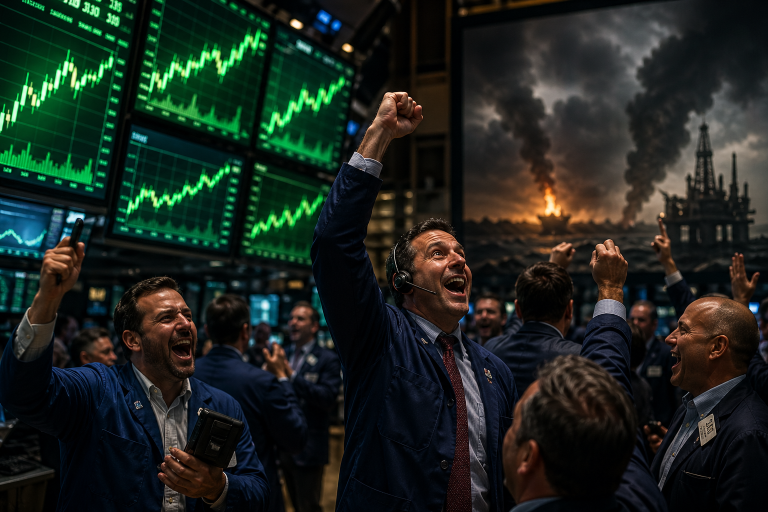
At the same time, the S&P 500 just closed above 7,000 for the first time in history. US market indices are surging.

This contradiction explains what is happening in the world, and what is happening on Wall Street may be the most important financial story of 2026.

The scale of the supply shock

Almost 2 months into the war, Supreme Leaders have been eliminated, allies have fallen out, the Strait of Hormuz has been closed, and energy shocks are threatening economies around the world.

Brent crude jumped from $72 a barrel before the war to nearly $120 at its peak, a surge of more than 65%. Gas prices at the pump rose 37% nationally to $4.10 a gallon.

The IMF responded by cutting its 2026 global growth forecast to 3.1% and raising its inflation outlook to 4.4%.

Treasury yields climbed 50 basis points to 4.4% as the Fed’s rate-cut path clouded over considerably.

The S&P 500 fell 8% from the start of the war to its March 30 low. Five consecutive weekly declines, a streak that has only happened twice in fifteen years.

For a moment, the market appeared to be treating the conflict with the seriousness the macro data suggested it deserved.

From nadir to all-time high in three weeks

By April 15, the S&P 500 had crossed 7,000 for the first time ever. The Nasdaq had rallied more than 18% from its March lows.

The rebound from trough to all-time high was faster than the COVID recovery in 2020 and faster than the tariff-shock bounce in April 2025. The war was still active.

The Strait remained effectively closed. Iran’s leadership was fractured and unresponsive at the negotiating table.

The initial catalyst was a two-week ceasefire announced on April 7, which triggered massive short-covering after hedge funds had spent weeks building bearish positions.

That mechanical dynamic gave the rally its early fuel.

What sustained it was a combination of forces largely disconnected from the geopolitical situation.

86% of S&P 500 companies reporting earnings beat analyst expectations, AI and semiconductor stocks resumed their structural uptrend, and investors leaned into what traders have started calling the “TACO” trade, shorthand for “Trump Always Chickens Out,” buying every dip on the assumption that Trump would de-escalate before economic pain became politically unmanageable.

As of Monday morning, Iran sent Washington a new proposal through Pakistani mediators. Iran is willing to reopen the Strait of Hormuz, extend the ceasefire toward a permanent end to the war, and defer nuclear negotiations to a later stage.

And just like that, markets continue their rally into pre-market trading.

Why the headline index number can mislead

Technology stocks represent nearly half the S&P 500 by market capitalisation and are running on an entirely separate fundamental story, one built around AI infrastructure spending, cloud revenue and semiconductor demand that is largely immune to oil prices.

Strip out the Magnificent Seven and their AI-adjacent peers, and the rest of the index has had a considerably more difficult two months.

Europe and Asia, far more dependent on Middle Eastern energy imports, saw the MSCI ex-US index fall more than 10% in March alone.

American consumers are paying $4.10 a gallon at the pump.

What looks like broad market resilience is, in large part, a handful of mega-cap technology companies pulling the index to records while energy-sensitive sectors absorb real damage beneath the surface.

Diminishing returns on peace headlines

The behavioural pattern worth watching closely is not the rallies themselves but their shrinking magnitude.

Each time there is a new deal announced, the market rallies, but the positive responses to each new announcement diminish, and investors are becoming fatigued.

Markets have been conditioned by fifteen years in which every major crisis, from the European debt shock to COVID to last year’s tariff volatility, was eventually resolved through policy intervention.

Buying dips has been the most consistently profitable strategy of the modern investing era, and that track record shapes how risk gets processed today, often before the underlying facts have resolved.

The sequencing problem in Iran’s new proposal

Iran’s latest offer contains a structural detail that markets appear to be pricing past.

Trump’s two stated war objectives were to strip Iran of its enriched uranium stockpile and suspend enrichment for at least a decade.

The Iranian proposal sequences the deal so that the Strait reopens and the blockade lifts first, with nuclear talks beginning only afterwards.

That sequencing would return to Iran its primary source of negotiating leverage before Washington has secured a single nuclear concession.

The White House has received the proposal but did not indicate willingness to explore it on those terms.

That leaves markets facing a narrower set of realistic near-term outcomes than current prices reflect. The war continues with oil staying well above $100 and Q2 earnings guidance written against an energy shock rather than pre-war assumptions.

Talks collapse again, and the Strait remains closed into the second half of the year. Or a deal gets done on terms that fall well short of Trump’s original nuclear objectives.

The S&P 500 at 7,000 is pricing a clean resolution. The diplomatic picture this week is not that.

Ultimately, this is a market that has been so thoroughly trained by repeated policy interventions — quantitative easing, tariff reversals, Fed pivots, ceasefire announcements — that it has lost the ability to sit with genuine uncertainty.

It defaults to optimism because optimism has been rewarded every single time for nearly a decade and a half.

The muscle memory of buying dips has overridden the analytical instinct to ask what if this time it doesn’t resolve?

The post Has Wall St been bailed out so many times it can no longer price a crisis? appeared first on Invezz

A year ago, Donald Trump called it Liberation Day.

Today, 330,000 American businesses are filing to get their money back, and the President is on television telling them not to.

The refund portal opened on April 20, 2026. By that point, the Supreme Court had already ruled 6-3 that Trump’s signature trade policy was unconstitutional.

What followed is one of the stranger episodes in modern American economic history: a government simultaneously required by court order to refund $166 billion, and a president publicly lobbying companies to leave that money on the table.

How this started and who actually paid?

On April 2, 2025, “Liberation Day,” Trump announced sweeping country-by-country levies under the International Emergency Economic Powers Act, plus a 10% global baseline on virtually all imports.

The stated logic was that foreign countries would bear the cost.

The data demolished that claim almost immediately.

The New York Federal Reserve tracked the burden through the year. From January through August 2025, US importers absorbed 94% of tariff costs.

By November, foreign exporters had adjusted slightly, but US firms and consumers were still on the hook for 86%.

The National Bureau of Economic Research put the total domestic burden at 94%, the Kiel Institute said 96% and AlixPartners, which works directly with corporate supply chains, found that 80-85% of all tariff costs were absorbed domestically, either by companies swallowing the hit, passing it to customers, or some combination of both.

The Tax Foundation estimates the 2025 tariffs amounted to a $1,000 average tax increase per US household.

Yale’s Budget Lab put the GDP growth drag at 0.5 percentage points for the year.

Jerome Powell stated in March 2026 that tariffs were adding between half and three-quarters of a percentage point to inflation.

The largest US tax increase as a share of GDP since 1993, and the burden fell almost entirely on American businesses and the people who shop at them.

The corporate damage, by name and number

The automotive sector took the sharpest blow.

Tariffs on imported vehicles and parts have cost the industry $35.4 billion since their implementation, according to financial filings analysis.

GM, Ford, and Stellantis alone absorbed a combined $6 billion in 2025.

Toyota projected a $9.5 billion impact on its US operations for the fiscal year.

Retail was next. Gap estimated the tariff hit at $100-150 million.

Levi Strauss paid enough in duties on denim and apparel imports that its CFO publicly confirmed an expected $80 million refund.

McCormick warned investors that tariffs could cost $70 million in a single fiscal year because black pepper, cinnamon, and vanilla come from exactly the countries Washington decided to target.

Many firms delayed the consumer impact by selling through pre-tariff inventory, pricing goods based on what they paid before Liberation Day rather than what imports cost after.

That buffer ran out by year-end.

By late 2025, the Council on Foreign Relations found Americans were bearing tariff costs at rates as high as 100% for many consumer durable goods.

The SC ruling and the $166 billion question

On February 20, 2026, the Supreme Court ruled 6-3 that IEEPA does not authorise the president to impose tariffs.

The majority opinion was that the power to impose tariffs is a branch of the taxing power, and that belongs to Congress under Article I of the Constitution.

Every tariff imposed under IEEPA, including the Liberation Day levies and all country-specific reciprocal duties, was declared invalid from the moment it was first collected.

Penn Wharton projects total refunds could reach $175 billion.

CBP estimates $166 billion across 53 million shipments from more than 330,000 importers.

The refund portal, called CAPE, went live on April 20 and processes claims electronically within 60-90 days of acceptance.

Although the portal opened just days ago, as of April 14, only 56,497 importers had completed the bank registration required to receive payment, meaning the majority of eligible companies hadn’t even taken the first step toward collecting money legally owed to them.

“I’ll remember them”

A day after the portal opened, Trump appeared on CNBC’s Squawk Box.

He was asked about Apple and Amazon, two of the most prominent companies that had not filed.

He called it “brilliant” if they chose not to. “I’ll remember them,” he said.

Apple is in active negotiations about US manufacturing commitments and cannot afford to antagonise Washington. Amazon runs one of the largest cloud infrastructure businesses serving the federal government.

For both, filing a legally valid refund claim carries real political cost.

The President was explicitly asking corporations to voluntarily forfeit money a 6-3 Supreme Court said the government illegally collected.

A Citi analysis from April 10 quantifies what is at stake by company.

Walmart is owed an estimated $10.2 billion, Target $2.2 billion, Nike $1 billion, Kohl’s $550 million, Gap $400 million, and Macy’s $320 million.

The shippers, FedEx, UPS, and DHL, all filed on Day 1 and pledged to pass refunds back to customers.

Costco had been fighting since November 2025, filing a federal lawsuit before the Supreme Court even ruled, and has committed to returning money through lower prices.

These companies calculated that the legal and reputational cost of not filing outweighed the political risk.

What this means for investors?

Most companies that reported earnings recently left refund income entirely out of their forward guidance, and that is the right call for now.

The administration has signalled it will contest refunds aggressively.

Trump pivoted to Section 122 of the Trade Act of 1974, the same day the Court ruled, attempting to reconstruct tariff authority through a different legal mechanism, and that is already being challenged in court.

Section 232 tariffs on steel, aluminium, autos, copper, and lumber remain fully intact and are not part of this refund process at all, so the automotive industry’s cost structure has not changed.

The refund, if and when it flows, represents a one-time balance sheet event for retailers. That means potential cash for buybacks, debt repayment, or price reductions.

Investors pricing in refund windfalls before the legal picture settles are getting ahead of themselves.

A trade policy that cost the domestic industry tens of billions, added nearly a percentage point to inflation, and was struck down by the Supreme Court still permanently altered the supply chain landscape.

Companies rerouted sourcing, built new supplier relationships, and restructured procurement. Some of that rewiring is irreversible regardless of what happens in court.

The full cost of Liberation Day will never appear in any refund figure.

The post Why does Trump not want US businesses to claim tariff refunds? appeared first on Invezz

KPMG is cutting around 10% of its US audit partners, marking a significant step in efforts to improve productivity after years of unsuccessful attempts to encourage voluntary retirements.

The move was disclosed during a meeting on Wednesday, where attendees were told the size of the audit partnership had become misaligned with the firm’s business needs, according to people familiar with the matter.

The reduction is expected to affect several dozen partners, although KPMG did not disclose an exact figure.

The decision comes as the firm seeks to streamline operations under new leadership, following the appointment of Tim Walsh as chief executive of the US business nine months ago.

Walsh, a long-time veteran of KPMG’s audit division, has since introduced changes to leadership within the audit and assurance practice.

Partnership size under scrutiny

The cuts reflect broader concerns about the scale of KPMG’s audit partnership relative to both its business volume and its competitors.

The firm’s audit unit has been viewed as larger than those of rival Big Four firms, including Deloitte, EY, and PwC.

KPMG’s most recent transparency report shows it has around 1,400 partners and managing directors in its audit and assurance division, though the firm does not break out the number of partners specifically.

Despite the reductions, KPMG emphasised that its audit partner base remains strong and positioned for future growth.

“This action is connected to a multiyear strategy to align the size, shape, and skills of our team to the power of our audit platform to best serve our clients and protect the capital markets,” KPMG said.

“Our audit partner complement remains robust, and we are in a better position to welcome more people into our partnership over time.”

Voluntary exits fall short

The decision to proceed with cuts follows years of efforts to reduce partner numbers through voluntary retirement programmes.

Financial Times reported, citing people familiar with the situation, that those initiatives consistently failed to attract the level of participation needed to achieve the firm’s restructuring goals. 

As a result, the firm has opted for a more direct approach to recalibrate its workforce.

Social media forums used by KPMG employees indicated that members of the audit and assurance partnership were informed of the cuts during the Wednesday meeting, with affected individuals notified the same day.

Partners leaving the firm will receive compensation and support as part of their exit.

Partners who are leaving will receive financial packages and placement support, “reflecting the value they have delivered for KPMG and our clients”, the firm said. 

KPMG remains the smallest of the Big Four accounting firms, but has modestly expanded its presence in the US audit market.

The firm audited 9.8% of US-listed companies in 2025, up from 9.2% the previous year, according to Audit Analytics.

The post KPMG cuts US audit partners by 10% in push to boost productivity appeared first on Invezz

Prediction markets are supposed to turn public information into prices.

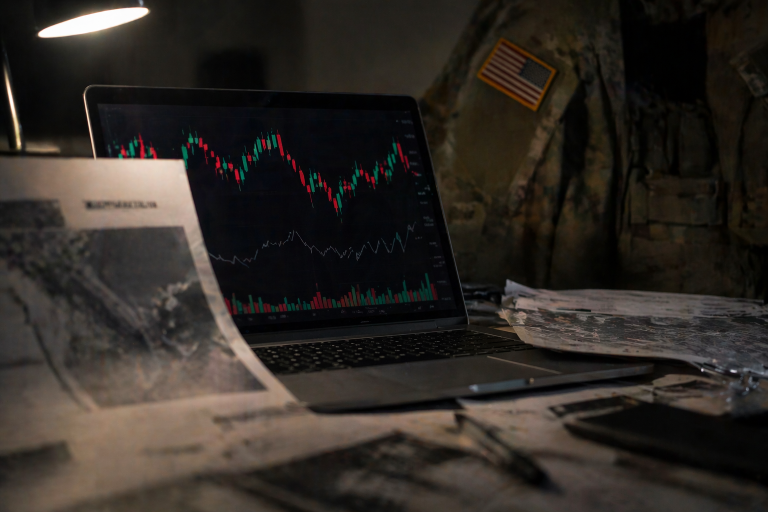
In the case now unfolding around Polymarket, prosecutors say the opposite happened as a US Army soldier allegedly used classified knowledge about a secret military operation to bet on the outcome.

According to Thursday’s unsealed indictment and the CFTC’s civil complaint, Gannon Ken Van Dyke staked about $33,034 and allegedly walked away with roughly $409,881 after wagering on Venezuela-linked event contracts tied to Nicolás Maduro’s capture.

When a classified operation becomes a trading signal

The government says Van Dyke was not an outside spectator.

Prosecutors allege he was involved in the planning and execution of “Operation Absolute Resolve,” the US military mission to capture Maduro and his wife, Cilia Flores.

The indictment says he had access to sensitive, nonpublic, classified information from at least Dec. 8, 2025, through at least Jan. 6, 2026, and that he signed nondisclosure agreements covering Western Hemisphere operations.

Officials say he was stationed at Fort Bragg and had been an active-duty Army soldier for years.

That access, prosecutors allege, became the basis for trading on Polymarket.

The DOJ says Van Dyke created an account around Dec. 26, 2025 and made about 13 bets from Dec. 27 through Jan. 2.

His bets were on the “Yes” side of markets, including “Maduro out by January 31, 2026,” “US forces in Venezuela by January 31, 2026,” “Will the US invade Venezuela by January 31, 2026,” and “Trump invokes War Powers against Venezuela.”

The total outlay was about $33,034, according to the indictment.

The bet paid off as soon as the raid became public

The timing is the heart of the case.

Prosecutors say that in the predawn hours of Jan. 3, 2026, US special forces apprehended Maduro and Flores in Caracas, and hours later the president publicly announced the operation.

After that announcement, Polymarket resolved several of the relevant contracts to “Yes,” including “Maduro out by January 31, 2026” and “US forces in Venezuela by January 31, 2026.”

The DOJ says Van Dyke’s profits totaled about $409,881.

The complaint adds a detail that makes the trade look less like luck and more like advanced positioning.

It says Van Dyke used the Polymarket handle “Burdensome-Mix” and bought more than 436,000 “Yes” shares in the Maduro-out contract between Dec. 30 and Jan. 2.

The CFTC says those trades generated more than $404,000 in profit.

Read more- Inside $170M Iran ceasefire bets: Polymarket faces scrutiny surge

Regulators are treating this as a market-structure case

The enforcement response is broader than one trader.

The DOJ charged Van Dyke with unlawful use of confidential government information for personal gain, theft of nonpublic government information, commodities fraud, wire fraud, and making an unlawful monetary transaction.

The CFTC filed a parallel civil complaint seeking restitution, disgorgement, civil monetary penalties, trading and registration bans, and a permanent injunction.

The CFTC said this is its first insider-trading case involving event contracts and its first use of the so-called “Eddie Murphy Rule” for misuse of government information.

A concealment narrative strengthens the fraud case

Prosecutors also say the story did not end once the contracts were settled.

The indictment alleges Van Dyke withdrew most of the proceeds, moved about 437,859 USDC.e to a foreign cryptocurrency vault.

He then shifted roughly 444,209 USDC.e into a newly created brokerage account.

It further says he later asked Polymarket to delete his account and changed the email on his crypto exchange account to obscure his identity.

The post How a US soldier won $410K on Polymarket betting on Maduro raid appeared first on Invezz

LOS ANGELES — The world’s biggest social media companies face several landmark trials this year that seek to hold them responsible for harms to children who use their platforms. Opening statements for the first, in Los Angeles County Superior Court, begin this week.

Instagram’s parent company Meta and Google’s YouTube will face claims that their platforms deliberately addict and harm children. TikTok and Snap, which were originally named in the lawsuit, settled for undisclosed sums.

“This was only the first case — there are hundreds of parents and school districts in the social media addiction trials that start today, and sadly, new families every day who are speaking out and bringing Big Tech to court for its deliberately harmful products,” said Sacha Haworth, executive director of the nonprofit Tech Oversight Project.

At the core of the case is a 19-year-old identified only by the initials “KGM,” whose case could determine how thousands of other, similar lawsuits against social media companies will play out. She and two other plaintiffs have been selected for bellwether trials — essentially test cases for both sides to see how their arguments play out before a jury and what damages, if any, may be awarded, said Clay Calvert, a nonresident senior fellow of technology policy studies at the American Enterprise Institute.

It’s the first time the companies will argue their case before a jury, and the outcome could have profound effects on their businesses and how they will handle children using their platforms.

KGM claims that her use of social media from an early age addicted her to the technology and exacerbated depression and suicidal thoughts. Importantly, the lawsuit claims that this was done through deliberate design choices made by companies that sought to make their platforms more addictive to children to boost profits. This argument, if successful, could sidestep the companies’ First Amendment shield and Section 230, which protects tech companies from liability for material posted on their platforms.

“Borrowing heavily from the behavioral and neurobiological techniques used by slot machines and exploited by the cigarette industry, Defendants deliberately embedded in their products an array of design features aimed at maximizing youth engagement to drive advertising revenue,” the lawsuit says.

Executives, including Meta CEO Mark Zuckerberg, are expected to testify at the trial, which will last six to eight weeks. Experts have drawn similarities to the Big Tobacco trials that led to a 1998 settlement requiring cigarette companies to pay billions in health care costs and restrict marketing targeting minors.

“Plaintiffs are not merely the collateral damage of Defendants’ products,” the lawsuit says. “They are the direct victims of the intentional product design choices made by each Defendant. They are the intended targets of the harmful features that pushed them into self-destructive feedback loops.”

The tech companies dispute the claims that their products deliberately harm children, citing a bevy of safeguards they have added over the years and arguing that they are not liable for content posted on their sites by third parties.

“Recently, a number of lawsuits have attempted to place the blame for teen mental health struggles squarely on social media companies,” Meta said in a recent blog post. “But this oversimplifies a serious issue. Clinicians and researchers find that mental health is a deeply complex and multifaceted issue, and trends regarding teens’ well-being aren’t clear-cut or universal. Narrowing the challenges faced by teens to a single factor ignores the scientific research and the many stressors impacting young people today, like academic pressure, school safety, socio-economic challenges and substance abuse.”

A Meta spokesperson said in a recent statement that the company strongly disagrees with the allegations outlined in the lawsuit and that it’s “confident the evidence will show our longstanding commitment to supporting young people.”

José Castañeda, a Google Spokesperson, said that the allegations against YouTube are “simply not true.” In a statement, he said, “Providing young people with a safer, healthier experience has always been core to our work.”

The case will be the first in a slew of cases beginning this year that seek to hold social media companies responsible for harming children’s mental well-being.

In New Mexico, opening statements begin Monday for trial on allegations that Meta and its social media platforms have failed to protect young users from sexual exploitation, following an undercover online investigation. Attorney General Raúl Torrez in late 2023 sued Meta and Zuckerberg, who was later dropped from the suit.

Prosecutors have said that New Mexico is not seeking to hold Meta accountable for its content but rather its role in pushing out that content through complex algorithms that proliferate material that can be harmful, saying they uncovered internal documents in which Meta employees estimate that about 100,000 children every day are subjected to sexual harassment on the company’s platforms.

Meta denies the civil charges while accusing Torrez of cherry-picking select documents and making “sensationalist” arguments. The company says it has consulted with parents and law enforcement to introduce built-in protections to social media accounts, along with settings and tools for parents.

A federal bellwether trial beginning in June in Oakland, California, will be the first to represent school districts that have sued social media platforms over harms to children.

In addition, more than 40 state attorneys general have filed lawsuits against Meta, claiming it is harming young people and contributing to the youth mental health crisis by deliberately designing features on Instagram and Facebook that addict children to its platforms. The majority of cases filed their lawsuits in federal court, but some sued in their respective states.

TikTok also faces similar lawsuits in more than a dozen states.

This post appeared first on NBC NEWS

The operator of roughly 180 Eddie Bauer stores across the U.S. and Canada has filed for Chapter 11 bankruptcy protection, blaming declining sales and a litany of other industry headwinds.

The bankruptcy filing marks the third time in a little over two decades for the storied-but-now-tired brand that began as a Seattle fishing shop, later outfitted the first American to climb Mount Everest and made thousands of newfangled down jackets and sleeping bags for the military during World War II.

Eddie Bauer LLC said Monday it had entered into a restructuring pact with its secured lenders as it made the filing in the U.S. Bankruptcy Court for the District of New Jersey.

Most Eddie Bauer retail and outlet stores in the U.S. and Canada will remain open as the company winds down certain locations. It noted that it will conduct a court-supervised sales process, and if a sale can’t be executed, it will begin a wind-down of its U.S. and Canadian operations.

“This is not an easy decision,” said Marc Rosen, CEO of Catalyst Brands, which maintains the license to operate Eddie Bauer stores in the U.S. and Canada. “However, this restructuring is the best way to optimize value for the retail company’s stakeholders and also ensure Catalyst Brands remains profitable and with strong liquidity and cash flow.”

Eddie Bauer’s stores outside of the U.S. and Canada are operated by other licensees, are not included in the Chapter 11 filings, and will stay open, according to the release.

Authentic Brands Group continues to own the intellectual property associated with the Eddie Bauer brand and may license the brand to other operators, the company said. The operations of other brands in the Catalyst Brands portfolio are not affected by this filing and will continue in the normal course, according to the company.

Eddie Bauer’s e-commerce and wholesale operations will also not be impacted by the wind down, as they are operated by a company called Outdoor 5, LLC. That was a transition it made in January and became effective Feb. 2.

Eddie Bauer joins a growing list of U.S. retailers this year that are closing stores, as companies reorganize under bankruptcy protection or pare down their operations to focus on the most profitable businesses.

The parent company of Saks Fifth Avenue said last month that it was seeking bankruptcy protection, buffeted by rising competition and the massive debt it took on to buy its rival in the luxury sector, Neiman Marcus, just over a year ago. A few days later, the parent company said it was closing most of its Saks Off 5th stores.

Amazon said earlier this month that it was closing almost all of its Amazon Go and Amazon Fresh locations within days as it narrows its focus on food delivery and its grocery chain, Whole Foods Market.

Eddie Bauer’s namesake founder — an avid outdoorsman — started the company in Seattle in 1920 as Bauer’s Sports Shop, according to the brand’s website. In 1945, after making more than 50,000 jackets for the military, it launched a mail-order catalog.

“Bauer’s Sports Shop was not just a place where people purchased clothing and gear, it was a community hub where folks gathered to share their wisdom, learn, and talk about their experiences in the outdoors,” the website says.

The company created an American goose-down insulated jacket, known as the “Skyliner,” in 1936, and it became the company’s first patented jacket. It also outfitted the first American to climb Mount Everest — James W. Whittaker — with an Eddie Bauer parka in 1963.

After Bauer retired in 1968 and sold the business to his partner, the outdoor brand shifted more toward casual apparel and was bought by General Mills Inc. in 1971 and then by Spiegel Inc. in 1988. After Spiegel filed for bankruptcy in 2003 and most of its assets were sold, the remainder of the company was reorganized in 2005 as Eddie Bauer Holdings Inc.

In June 2009, Eddie Bauer filed bankruptcy and was acquired by Golden State Capital, the following month. In 2021, it was acquired by Authentic Brands and SPARC Group LLC.

A year ago, Catalyst was formed by the merger of SPARC and JCPenney, which Simon Property Group and fellow mall landlord Brookfield bought out of bankruptcy.

Rosen noted that even prior to the inception of Catalyst Brands last year, Eddie Bauer was in a “challenged situation.”

“Over the past year, these challenges have been exacerbated by various headwinds, including increased costs of doing business due to inflation, ongoing tariff uncertainty, and other factors,” he said.

He noted that while Catalyst’s leadership was able to make improvements in product development and marketing, those changes could not be implemented fast enough to fully address the problems created over several years.

Eddie Bauer had nearly 600 stores at its peak in 2001, according to CoStar Group Inc., a commercial real estate data firm.

In a note published earlier this month, Neil Saunders, managing director of GlobalData Retail, wrote that while the Eddie Bauer name is “well known,” the brand hasn’t kept pace with rivals like Swedish outdoor brand Fjallraven and Canadian label Arc’teryx. He also cited issues with quality deteriorating, which, for an outdoor brand measured by the performance of its products, is very problematic.

“And for many younger shoppers, the brand is seen as somewhat old-fashioned and a bit irrelevant,” he said.

This post appeared first on NBC NEWS

“What is said in the room stays in the room.” That’s the unwritten rule of diplomatic talks.

But the US President has a different approach. He posts about it. A lot.

In the past two weeks, as American and Iranian delegations worked through Pakistani mediators to put a formal peace framework in place, Trump published over 900 words about the war on Truth Social in a single morning.

He contradicted his own senior officials on live television. He told reporters details of a nuclear agreement that Iran immediately denied ever agreeing to.

And on Thursday, he ordered the US Navy to “shoot and kill any boat” laying mines in the Strait of Hormuz.

The talks are now in limbo.

The post that broke the room

The clearest picture of how the posts are affecting diplomacy came not from Iran but from inside Trump’s own administration.

Multiple senior officials spoke anonymously to the Wall Street Journal and CNN this week, describing what one source characterised as the president’s “leadership and decision-making pathologies.”

That kind of language, from officials inside the White House, is extraordinary.

The specific incident that triggered the alarm was when Trump told reporters that Vice President JD Vance would not be travelling to Islamabad to lead the next round of talks, citing unspecified security concerns.

At the same moment, UN Ambassador Mike Waltz and Energy Secretary Chris Wright were on separate television programs saying the opposite.

Eventually, Vance did make the trip. Trump was wrong, and his officials had to publicly clean it up in real time.

That same week, Trump claimed publicly that Iran had agreed to an “unlimited” suspension of its nuclear program.

Iran’s foreign ministry spokesperson Esmaeil Baghaei denied it within hours in a statement to Iranian state broadcaster IRIB.

Whatever the actual state of the negotiations at that moment, the public denial handed hardliners in Tehran a domestic gift they did not have to work for.

“No pressure” with a blockade running

On April 20, Trump published a series of posts on Truth Social.

He covered comparisons to previous US conflicts, dismissed suggestions that Israel had pushed the US into the war and declared that his eventual deal would be “FAR BETTER” than Obama’s 2015 nuclear agreement.

He wrote that he is “under no pressure whatsoever,” which may be true politically, but sits oddly next to a US naval blockade of Iranian ports that remains in full effect.

The blockade is the part that is doing the most economic damage and the least diplomatic work right now.

Bloomberg reported this week, citing two US officials familiar with the matter, that the blockade — combined with Trump’s social media posts — has been directly “detrimental to ongoing negotiations.”

The Pakistanis, who have invested significant political capital in positioning themselves as the trusted go-between, are finding it harder to keep both sides at the table when the American president is publicly escalating between sessions.

Then on Thursday, Trump posted on Truth Social that he has ordered the Navy to “shoot and kill any boat” laying mines near the Strait of Hormuz, adding that minesweeping operations would continue “at a tripled up level.”

Oil markets, which had started to price in a diplomatic resolution, moved sharply on the news.

Iran’s own dysfunction is real, but it is not the whole story

It would be incomplete to frame this as entirely a problem of Trump’s making. Iran’s government is genuinely fractured on how to respond.

Trump described it as “seriously fractured” in his ceasefire extension post on April 21, and he is not wrong. Different factions inside the Iranian system are pulling in different directions, and the absence of a unified proposal from Tehran is a real obstacle.

Mahdi Mohammadi, an adviser to Iranian Parliament Speaker Ghalibaf, who has led the Iranian negotiating delegation, did not help matters when he said publicly that “the losing side cannot dictate terms” and that the ceasefire extension “means nothing.”

Former Mossad chief Yossi Cohen, speaking at an event in Jerusalem, cautioned that no agreement would change Iran’s “fundamental ambitions.”

The ceasefire extension Trump announced last week did not include an end date, which removed one source of pressure on Iran.

His advisers warned him privately that an open-ended extension could allow Tehran to run out the clock. There is no public indication that the warning changed anything.

The market signal worth watching

When the first ceasefire was agreed in early April, international oil prices fell 13% almost immediately, and S&P 500 futures pointed to a 2% open.

That is how sensitive energy markets are to every word out of this process. The “shoot to kill” post this week reversed a portion of that move.

What is becoming clear is that markets are essentially trading Trump’s Truth Social feed, with the Strait of Hormuz as the underlying asset. Every post that sounds like escalation pushes oil up.

Every post that sounds like a deal pushes it down.

The problem is that neither movement is necessarily connected to what is actually happening in the negotiating room, because the posts themselves have become part of the negotiation, and not in a way that is helping.

Trump still insists time is not his adversary.

The ceasefire, extended without a deadline, is beginning to look like proof of exactly that.

The post Inside the diplomatic fallout from Trump's Truth Social war commentary appeared first on Invezz

For at least two decades, former Amazon executive Dave Clark ended his work week the same way: a standing Friday date night with his wife, Leigh Anne.

Over dinner, the Clarks would talk through the “peak and pit” of their weeks. The ritual often revolved around Amazon, where Clark played a central role in building the logistics infrastructure that helped launch the e-commerce era.

During those years, Leigh Anne was a sounding board for her husband. In the process, she had a front-row seat to Amazon’s growth from what she called “a baby to a behemoth.”

By the time Clark left Amazon in 2022, he was CEO of the Worldwide Consumer division and one of billionaire founder Jeff Bezos’ top lieutenants.

Dave Clark at Auger headquarters Monday.David Jaewon Oh for NBC News

But these days, Fridays for the Clarks look very different.

Their dinner date has morphed into afternoon cocktails — a bourbon with Diet Coke for her and a Manhattan for him. And the conversation isn’t focused on Amazon anymore. It’s about Auger, the supply-chain startup they run together.

In their first joint interview from Auger’s Seattle office, the Clarks described how their marriage and complementary skill sets are shaping the company.

“We’ve been together for so long that we kind of just read each other’s minds,” Leigh Anne said. Working together, she said, “felt like a natural fit.”

This post appeared first on NBC NEWS