Author

admin

Browsing

A bill to end the record-breaking U.S. government shutdown is headed to President Donald Trump’s desk after more than 42 days.

Federal funding legislation aimed at opening the government passed in the House Wednesday evening, ending the weeks-long fiscal standoff that has largely paralyzed Congress since Oct. 1. Republicans on the House floor erupted in cheers when the bill prevailed while the majority of Democrats quietly exited the chamber.

The White House said Trump would sign the bill at 9:45 p.m. this evening.

Six Democrats voted with all but two Republicans to pass the bill with a 222 to 209 margin. The Democrats who voted in favor of the legislation are Reps. Tom Suozzi, D-N.Y., Henry Cuellar, D-Texas, Adam Gray, D-Calif., Marie Gluesenkamp Perez, D-Wash, and Don Davis, D-N.C.

When the House took its initial vote on federal funding legislation on Sept. 19, just one Democrat — Golden — voted with the GOP.

The vast majority of House Democrats opposed the bill, however, including their senior ranks.

House Minority Leader Hakeem Jeffries, D-N.Y., reiterated to reporters hours before the vote that Democrats were frustrated the bill did not do anything about COVID-19 pandemic-era healthcare subsidies under Obamacare, also known as the Affordable Care Act (ACA). Those enhanced tax credits expire this year.

‘House Democrats are here on the Capitol steps to reiterate our strong opposition to this spending bill because it fails to address the Republican healthcare crisis, and it fails to extend the Affordable Care Act tax credit,’ Jeffries said.

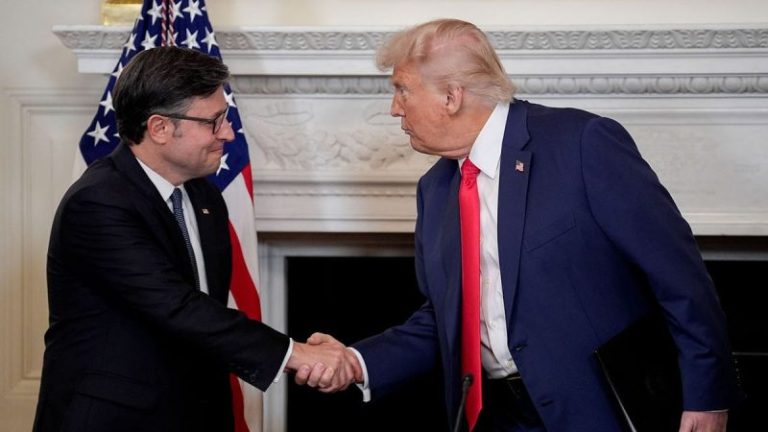
House Speaker Mike Johnson, R-La., sounded optimistic in comments to reporters Wednesday morning ahead of the vote, however.

‘I wanted to come out and say that we believe the long national nightmare will be over tonight,’ Johnson said. ‘It was completely and utterly foolish and pointless in the end.’

Some drama threatened to crack House GOP unity earlier in the day, however, as some Republicans in the lower chamber seethed over a last-minute provision added to the bill that allows senators whose communications were tapped during former Special Counsel Jack Smith’s probe to sue the federal government for $500,000 each.

Reps. Chip Roy, R-Texas, Austin Scott, R-Ga., and Morgan Griffith, W.Va., all shared concerns with the measure but said they would not extend the government shutdown over it.

Johnson appeared to placate their and others’ concerns, at least for now, with a promise to vote next week on separate legislation repealing that provision.

Rep. Greg Steube, R-Fla., told reporters he would vote against the bill over its inclusion, however.

‘I’m not voting to send Lindsey Graham half a million dollars,’ he told reporters.

He and Rep. Thomas Massie, R-Ky., voted against the final bill, but their opposition was not enough to sink legislation.

Meanwhile, the shutdown’s effects on the country have grown more severe by the day.

Many of the thousands of air traffic controllers and Transportation Security Administration (TSA) agents who had to work without pay were forced to take second jobs, causing nationwide flight delays and cancellations amid staffing shortages at the country’s busiest airports. Millions of Americans who rely on federal benefits were also left in limbo as funding for critical government programs ran close to drying out.

At the heart of the issue was Democratic leaders’ refusal to back any funding bill that did not also extend the enhanced Obamacare subsidies. Democrats argued it was their best hope of preventing healthcare price hikes for Americans across the U.S.

Republicans agreed to hold conversations on reforming what they saw as a broken healthcare system, but they refused to pair any partisan priority with federal funding.

In the end, a compromise led by the Senate — which saw eight Democrats in the upper chamber join colleagues to pass the bill in a 60 to 40 vote — included a side deal guaranteeing the left a vote on extending the enhanced subsidies sometime in December.

Johnson has made no such promise in the House, however.

And the lack of a guarantee on extending those subsidies has angered progressives and Democratic leaders.

‘What were Republicans willing to give in the end, other more than a handshake deal to take a future vote on extending the healthcare subsidies?’ Rep. Shomari Figures, D-Ala., said Wednesday. ‘We all know that a future vote is the equivalent of asking two wolves and a chicken to vote on what’s for dinner. It is dead on arrival.’

Republican Study Committee Chairman August Pfluger, R-Texas, criticized Democrats for prolonging the shutdown for little payoff.

‘They literally got absolutely nothing except for a total and complete surrender, that accomplished nothing more than hurting American families,’ he said.

The bill kicks the current federal funding fight to Jan. 30, by which point House GOP leaders said they were confident they’ll finish work on a longer-term deal for fiscal year 2026.

It also includes full-year federal spending for the Department of Agriculture, the legislative branch, and the Department of Veterans Affairs — three of 12 annual appropriations bills that Congress is tasked with passing annually.

‘There are nine remaining bills, and we’d like to get all of those done in the next few weeks. And, so, [House Appropriations Committee Chairman Tom Cole, R-Okla.] and his appropriators will be working overtime,’ House Majority Leader Steve Scalise, R-La., told Fox News Digital.

Asked if he thought they’d get it done by that date, Cole said, ‘I think we can.’

This post appeared first on FOX NEWS

The record-breaking U.S. government shutdown appears to be on a path to finally ending after 43 days.

Federal funding legislation aimed at opening the government survived a key test vote in the House later Wednesday, teeing it up for final passage in a matter of hours.

That means the bill could hit President Donald Trump’s desk as soon as Wednesday night, likely ending what has been the longest shutdown in U.S. history.

The White House announced that Trump would sign the bill in a statement of administration policy obtained by Fox News Digital.

‘The Administration urges every Member of Congress to support this responsible, good faith product to finally put an end to the longest shutdown in history,’ the statement said.

The bill advanced through a procedural hurdle known as a rule vote, which is where lawmakers decide whether to allow legislation to get debated before a final vote on passage.

Rule votes generally fall along partisan lines and are not an indication of whether a bill will be bipartisan.

The vast majority of House Democrats still oppose the bill, but it’s possible that at least several moderates will defy their leaders to support it.

House Minority Leader Hakeem Jeffries, D-N.Y., reiterated to reporters hours before the vote that Democrats were frustrated the bill did not do anything about COVID-19 pandemic-era healthcare subsidies under Obamacare, also known as the Affordable Care Act (ACA). Those enhanced tax credits expire this year.

‘House Democrats are here on the Capitol steps to reiterate our strong opposition to this spending bill because it fails to address the Republican healthcare crisis, and it fails to extend the Affordable Care Act tax credit,’ Jeffries said.

House Speaker Mike Johnson, R-La., sounded optimistic in comments to reporters Wednesday morning ahead of the vote.

‘I wanted to come out and say that we believe the long national nightmare will be over tonight,’ Johnson said. ‘It was completely and utterly foolish and pointless in the end.’

Meanwhile, the shutdown’s effects on the country have grown more severe by the day.

Many of the thousands of air traffic controllers and Transportation Security Administration (TSA) agents who had to work without pay were forced to take second jobs, causing nationwide flight delays and cancellations amid staffing shortages at the country’s busiest airports. Millions of Americans who rely on federal benefits were also left in limbo as funding for critical government programs ran close to drying out.

At the heart of the issue was Democratic leaders’ refusal to back any funding bill that did not also extend the enhanced Obamacare subsidies. Democrats argued it was their best hope of preventing healthcare price hikes for Americans across the U.S.

Republicans agreed to hold conversations on reforming what they saw as a broken healthcare system, but they refused to pair any partisan priority with federal funding.

In the end, a compromise led by the Senate — which saw eight Democrats in the upper chamber join colleagues to pass the bill in a 60 to 40 vote — included a side deal guaranteeing the left a vote on extending the enhanced subsidies sometime in December.

Johnson has made no such promise in the House, however.

And the lack of a guarantee on extending those subsidies has angered progressives and Democratic leaders.

‘What were Republicans willing to give in the end, other more than a handshake deal to take a future vote on extending the healthcare subsidies?’ Rep. Shomari Figures, D-Ala., said Wednesday. ‘We all know that a future vote is the equivalent of asking two wolves and a chicken to vote on what’s for dinner. It is dead on arrival.’

The full House will now vote on the legislation during the 7 p.m. hour.

The bill kicks the current federal funding fight to Jan. 30, by which point House GOP leaders said they were confident they’ll finish work on a longer-term deal for fiscal year 2026.

‘There are nine remaining bills, and we’d like to get all of those done in the next few weeks. And, so, [House Appropriations Committee Chairman Tom Cole, R-Okla.] and his appropriators will be working overtime,’ House Majority Leader Steve Scalise, R-La., told Fox News Digital.

Asked if he thought they’d get it done by that date, Cole said, ‘I think we can.’

This post appeared first on FOX NEWS

Altius Minerals (TSX:ALS,OTCQX:ATUSF) is making a bet on a lithium market recovery, agreeing to acquire Lithium Royalty (TSX:LIRC) in a C$520 million deal that will expand its exposure to battery metals.

Under a definitive agreement announced by the two companies on Monday (December 22), Altius plans to purchase all of the issued common and convertible common shares of Lithium Royalty for C$9.50 each.

The amount will be paid as either C$9.50 in cash or 0.24 of a common Altius share, according to shareholders’ election.

For Altius, the acquisition will allow it to bring a portfolio of 37 lithium royalties into its fold. None of them involve streams, and they span projects from production through early exploration.

Four of the royalties are tied to producing assets, three of which were commissioned in 2025 and are currently ramping up or expanding. Another 12 projects are in advanced stages with completed economic studies, while three to five additional assets are targeting startup between 2026 and 2030.

The company said the portfolio is geographically concentrated in lower-risk jurisdictions, with most assets located in Canada, Australia and South America, and diversified across both brine-based and hard-rock lithium production.

At the current spot price, Altius expects the acquired royalties to contribute between US$29 million and US$43.7 million in annual revenue by the end of the decade. Lithium carbonate equivalent prices fell to multi-year lows in 2025, holding below US$9,000 per metric ton for most of the year, even as demand continues to expand beyond electric vehicles.

Altius said global lithium demand is expected to exceed 1.5 million metric tons of lithium carbonate equivalent in 2025, with supply deficits potentially re-emerging as early as 2026 after years of oversupply.

Altius Chief Executive Brian Dalton said lithium has “emerged as a mainstream scale mined commodity,” and described the acquired portfolio as featuring “very long resource lives,” strong cost positioning and low jurisdictional risk.

A special shareholders’ meeting is scheduled to happen no later than March 10, 2026.

If approved, the deal is expected to close in the first quarter of 2026, after which Lithium Royalty shares will be delisted and the company will cease to be a reporting issuer in Canada.

Securities Disclosure: I, Giann Liguid, hold no direct investment interest in any company mentioned in this article.

This post appeared first on investingnews.com

Craig Hemke, publisher of TFMetalsReport.com, shares his thoughts on the gold and silver markets heading into 2026, outlining why he remains bullish.

‘Just keep adding some — it’s your protection against the madness. It’ll get you through the storm,’ he said. ‘It preserves your net worth from the destruction of these bankers and politicians.’

Securities Disclosure: I, Charlotte McLeod, hold no direct investment interest in any company mentioned in this article.

This post appeared first on investingnews.com

Vice President JD Vance praised President Donald Trump’s ‘bulldozer’ approach to public health, calling it a necessary force that ‘just had to happen,’ during remarks at Wednesday’s Make America Healthy Again (MAHA) summit.

The summit, held at the Waldorf Astoria in Washington, D.C., was centered on Health and Human Services (HHS) Secretary Robert F. Kennedy Jr.’s MAHA movement — aimed at improving nutrition, eliminating toxins, preserving natural habitats and fighting the chronic disease epidemic in the U.S.

‘That is a good summary of Donald J. Trump is that he takes a bulldozer to Overton windows every single day,’ Vance told the HHS secretary during the event. ‘It just had to happen… One of the criticisms that Bobby will always get, and I always think it’s such b——-, excuse my language… [is that] sometimes there’s this attack where people say that conclusion is not supported by the science, or this or that conclusion is a conspiracy theory.’

‘Science, as practiced in its best form, is that if you disagree with it, then you ought to criticize it, and you ought to argue against it. You can’t shut down the debate,’ Vance continued. ‘If you look at all the big public health debates that we’ve had in this country over the last 20 or 30 years… they tried to silence the people who were saying things that were outside the Overton window. As we found out the hard way over the last few years, it was very often that people who were outside the Overton window were actually right, and all the experts were wrong.’

Vance went on to say the country could not advance unless Americans become comfortable with people who are ‘willing to challenge orthodoxy.’

He also vowed to keep Appalachia in the forefront of the conversation, noting residents have higher premature mortality rates due to a long history of being failed by the public health system.

‘You know what really p—– people off — when they realize that their loved ones are dying much sooner than everybody else,’ said Vance, whose autobiography, ‘Hillbilly Elegy,’ details his own upbringing in Appalachia. ‘That is a big part of the story of what’s going on in Appalachia, and why I think so many people in Appalachia feel left behind.’

He described himself as ‘the golden boy’ of Appalachia, admitting he feels guilt about the many people who grew up in families like his and have not had an easy life or the same amount of economic opportunity.

‘That gives me a sense of purpose because I want those people to have the same opportunities that I’ve had,’ Vance said. ‘But it also gives me a great sense of anger, because we never should have gotten to the point that we are today. The reason that we have, is because of failed leadership over generations.’

When discussing the people of Appalachia, he said they are people who, ‘though they don’t have much, would take the shirt off their back and give it to a complete stranger, because that’s what you do.’

‘If you go back to America’s biggest wars — World War I, World War II, Vietnam — which were the counties that filled their draft quotas with volunteers instead of with draftees?’ Vance posed. ‘It’s very often the parts in deep Appalachia where you’ve got grinding poverty, but you’ve also got this incredible love of country.’

‘So if any place in this country deserves not to be left behind, it’s Appalachia… These are people who deserve to live better, healthier lives, but they really have been left behind by this country’s leadership,’ Vance added.

This post appeared first on FOX NEWS

Sen. Bernie Sanders, I-Vt., accused President Donald Trump of working to push the U.S. and the rest of the globe in the direction of ‘authoritarianism.’

‘Trump’s hostility toward Europe has little to do with his absurd and irrational arguments over Greenland. It has everything to do with his efforts to undermine democracy and move this country and the world toward authoritarianism. Trump does not like free elections, a free media or the right of people to dissent,’ Sanders claimed in a statement posted on X.

‘That is why he hates Europe, with its strong democratic governance, social safety net, and commitment to peacefully resolving disputes. That is why he is sending ICE to invade American cities,’ the left-wing lawmaker continued.

Sanders claimed the president would prefer a world controlled by wealthy ‘oligarchs.’

‘Let’s be clear. Trump would prefer the world to be ruled by his fellow multi-billionaire oligarchs, like his good friends in Saudi Arabia and Russia. These dictators crush political dissent, jail their opponents, and engage in massive kleptocracy,’ he asserted.

‘As patriotic Americans who believe in our Constitution and the rule of law, we will stand with those heroes and heroines who gave their lives to defend our freedoms. Now, in this dangerous moment in American history, it is imperative that all of us, regardless of our political views, come together to confront the grave threat of authoritarianism,’ he declared.

Fox News Digital reached out to the White House for comment.

This post appeared first on FOX NEWS

The holiday season brings more than festive cheer, as for investors, it may signal the start of the so-called Santa Claus rally.

The Santa Claus rally is a period between the final trading days of December and the first days of January when stocks tend to climb. While this seasonal uptick isn’t guaranteed, historical data shows that markets rise more often than not during this window, driven by investor optimism, low trading volumes and year-end portfolio adjustments.

Historically, the last five trading days of December and the first two of January have been a period of above-average stock gains, offering a short, sharp rally for markets heading into the new year.

According to the Stock Trader’s Almanac, the Santa Claus rally has delivered an average gain of 1.3 percent for the S&P 500 (INDEXSP:.INX) since 1950. The phenomenon was first documented in 1972 by Yale Hirsch, founder of the Almanac, and continues to shape investor expectations today.

As for whether 2025 will deliver a Santa Claus rally to close out the year, after a choppy first half for December, markets have shown signs that a late-year recovery is possible.

When does the Santa Claus rally start?

The Santa Claus rally typically occurs over the final five trading days of December and the first two trading days of January. For 2025, the rally window begins on Wednesday, December 24, and runs through Monday, January 5, if historical patterns hold.

This narrow window often yields modest, yet consistent, returns for investors who time the market correctly.

While the rally’s timeframe is traditionally short, its effects can ripple through the market into early January. Essentially, a strong performance during this period can set the tone for January.

However, the exact timing of the Santa Claus rally can vary. Some analysts suggest that the rally has started earlier in recent years as investors attempt to front run the effect by increasing their positions in mid-December. This shift may blur the lines between the Santa Claus rally and broader December market upswings.

Will 2025 deliver a Santa Claus Rally?

This year, the S&P 500 fell during the middle of the month following a cooler-than-expected, albeit controversial, inflation report, which raised hopes for additional interest-rate cuts next year.

Despite this downturn, analysts note that a weak start to December has often failed to derail Santa’s run. Since 1950, the S&P 500 finished the Santa Claus rally period higher in 77 percent of years, even after early-month declines. By the end of the week, the index had already regained some ground, and it continued higher in the days leading up to Christmas.

“Barring any major shocks, it will be hard to fight the overwhelmingly positive seasonal period we are entering and the cleaner positioning set-up,” Goldman Sachs’ (NYSE:GS) trading desk team wrote in a note to clients, as reported by Bloomberg. ‘While we don’t necessarily see a dramatic rally, we do think there is room to go up from here into year end.”

Jeffrey Hirsch, editor-in-chief of the Stock Trader’s Almanac and Yale Hirsch’s son, also weighed in on the markets.

“It looks like (the Santa Claus rally) is set up and we can make another high by the end of the year,” he told MarketWatch. Hirsch cited cooler inflation readings and slower job growth in November, which may give the Federal Reserve room to cut interest rates in 2026.

It remains to be seen whether these predictions will come true, or if the market will be weighed down by factors including recent volatility in technology and artificial-intelligence-linked stocks.

Is the Santa Claus rally reliable?

Despite skepticism in some quarters, historical data supports the existence of the Santa Claus rally, and it is well documented.

Historically, the Santa Claus rally has been a relatively consistent period of gains. That said, historical patterns do not guarantee results, and not every year delivers the expected results. The S&P 500 lost about half a percentage point during the Santa rally period in 2024, and consecutive losses are rare but possible.

Columnist Mark Hulbert has expressed skepticism about the event in the past, noting that there is no definitive evidence that the market consistently outperforms during this period.

“An analysis of the past century reveals that the stock market in the weeks prior to Christmas is no more likely to rally than at other times of the year. (I suggest investors) ignore any arguments based on an alleged Santa Claus Rally,” Hulbert warned in an opinion piece posted on MarketWatch in 2018.

In 2019, for example, the market experienced volatility in December, defying the usual pattern.

In a December 2025 interview with CNBC, Jeffrey Hirsch cautioned that failure to rally is not an immediate bear-market signal, but rather “a flag to start looking at the other data — whether it’s seasonal indicators or other fundamental or technical measures.”

Despite the varying takes, many investors view the rally as a psychological phenomenon — one that influences market sentiment even if the returns are marginal.

Strategies for the Santa Claus rally

Now that the Santa Claus rally seems to be underway, investors interested in joining in have a variety of options, including domestic markets, international diversification or targeted sector plays such as mega-cap tech stocks.

As always, consulting with a financial advisor and conducting thorough research remains essential. While the Santa Claus rally offers potential rewards, market conditions can shift quickly, making flexibility and prudence key to success.

Securities Disclosure: I, Giann Liguid, hold no direct investment interest in any company mentioned in this article.

This post appeared first on investingnews.com

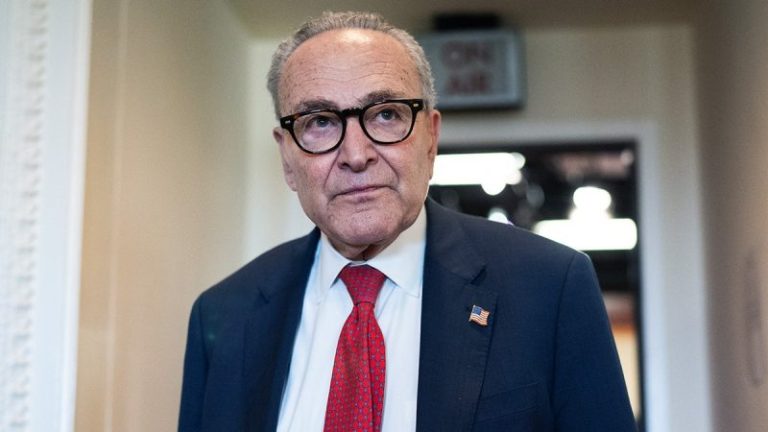
Frustration is boiling over among Democratic ranks against Senate Minority Leader Chuck Schumer, D-N.Y., after walking away from the longest government shutdown on record largely empty-handed.

Some argue that Schumer squandered key leverage and failed to steer his caucus through the chaos to victory. 

‘I think that people did what they could to get us out of the shutdown, but what has worked in the past isn’t working now,’ Sen. Elissa Slotkin, D-Mich., said. ‘And so, we need to meet the moment, and we’re not doing that.’

Slotkin, like others in the Senate Democratic caucus, ‘wanted something deliverable on the price of healthcare.’ The core of their shutdown strategy was to force Republicans and President Donald Trump to make a deal on expiring Obamacare subsidies, but that didn’t happen. 

Sen. Bernie Sanders, I-Vt., argued that getting rid of Schumer would be difficult. 

‘Chuck Schumer is part of the establishment,’ Sanders told MSNBC. ‘You can argue, and I can make the case, that Chuck Schumer has done a lot of bad things, but getting rid of him — who’s going to replace him?’

Other Democrats weren’t so resigned.

Graham Platner, a Democratic Senate candidate running to replace Sen. Susan Collins, R-Maine, placed the collapse of Senate Democrats’ unified front squarely on leadership. 

‘The Democratic Party at the leadership level has become entirely feckless,’ Platner said in a video posted by Our Revolution, a political action organization started as an offshoot of Sanders’ presidential campaign. 

‘What happened last night is a failure of leadership in the most clear terms,’ he said after the Senate passed the bipartisan deal Monday, sending it to the House. ‘Sen. Schumer is the minority leader. It is his job to make sure his caucus is voting along the lines of what’s going to be good for the people of the United States. He could not maintain that.’ 

Schumer and congressional Democrats walked away from the shutdown stalemate in the Senate largely empty-handed, save for some victories on ensuring furloughed federal workers would receive back pay, the reversals of firings made by the Trump administration during the shutdown and future protections for workers.  

Still, they fell far short of their goal to extend the expiring subsidies, which are set to sunset at the end of this year. 

Those subsidies, initially passed as an emergency response to COVID-19 in 2021, were always supposed to be temporary. But Democrats fear that their sudden expiration could leave millions of policyholders with substantially higher premiums overnight if allowed to expire.

But as mounting pressure grew — and no sign of Republicans wavering on the subsidies — eight Democrats voted to put the government on the path to reopening. 

To some onlookers, Schumer had held the party line for as long as possible.

Sen. Catherine Cortez Masto, D-Nev., one of the eight Democrats who voted with Republicans to reopen the government, said she respected Schumer’s leadership.

‘He’s done a good job,’ Masto said. ‘He kept us in the loop and was open to our conversations.’

Sen. Chris Murphy, D-Conn., argued that the problem wasn’t Schumer, it was his colleagues. 

‘Sen. Schumer didn’t want this to be the outcome, and I pressed hard for it not to end like this,’ Murphy said. ‘He didn’t succeed, let’s not sugarcoat that. But the problem is, the problem exists, inside the caucus. The caucus has to solve it.’

Republicans, however, spent much of the shutdown arguing that Schumer had waged the shutdown to appease his base — a base that had wanted to see some sort of resistance to Trump.

‘This is how it always would end,’ Sen. Ted Cruz, R-Texas, said on Monday evening. ‘Chuck Schumer has a political problem. He’s afraid of being primaried from the left. And so, the Democrats inflicted this shutdown on the American people in order to prove to their radical left-wing base that they hate Donald Trump.’

‘I think a lot of Americans have suffered as a result of this political stunt,’ Cruz added.

On the other hand, many Democrats made it clear they believed Schumer had failed to effectively mount resistance to Trump’s agenda on healthcare.

CNN data analyst Harry Enten compiled polls dating back to 1985 comparing the popularity of Democratic leaders among Democratic voters. Schumer, he found, was the least popular of them all. 

‘Chuck Schumer — his days are over. If he cannot keep his caucus together, he needs to go,’ Sunny Hostin, a co-host of ‘The View,’ told audiences on Monday.

‘Chuck Schumer has not met this moment, and Senate Democrats would be wise to move on from his leadership,’ Rep. Mike Levin, D-Calif., said.

California Gov. Gavin Newsom summed up his thoughts in a one-word post to X. 

‘Pathetic,’ Newsom said.

This post appeared first on FOX NEWS

This week, the technology sector remained the dominant force shaping overall market trends in the US, despite the ongoing complexity of macroeconomic and geopolitical conditions.

The partial US government shutdown continued to delay key economic reports, creating a data vacuum that heightened reliance on soft data like consumer sentiment surveys. Notably, the University of Michigan’s Consumer Sentiment Index held steady at a subdued 55, reflecting persistent concerns about high prices and a challenging labor market.

Meanwhile, Canada reported a surprising gain of 60,400 jobs in September, with employment increases concentrated in full-time positions and manufacturing. The unemployment rate held steady at 7.1 percent, defying expectations and signaling a cautious stabilization after recent job losses.

Investor appetite for AI and related innovation remained high, pushing the Nasdaq Composite (INDEXNASDAQ:.IXIC) and S&P 500 (INDEXSP:.INX) to record or near-record levels midweek. However, ongoing trade frictions between the US and China continue posing risks to semiconductor supply chains and international tech trade flows.

On Friday (October 10), China introduced additional export restrictions on rare earth metals and related refining technologies, expanding controls to five more elements critical for electronics, defense and high-tech industries. US President Donald Trump responded by threatening to escalate tariffs on Chinese imports and warned of the potential cancellation of his upcoming meeting with President Xi Jinping at APEC in South Korea.

The news sent major stock indexes lower, with the S&P 500 seeing its largest decline since tariffs were first announced in April and the Nasdaq Composite losing 3.56 percent. The Philadelphia SE Semiconductor Index led losses, pulling back 6.32 percent.

After a nearly three-year rally fueled by enthusiasm for AI, concerns among analysts and investors about elevated valuations and concentrated exposure in AI-related companies continue to emerge.

The Bank of England’s Financial Policy Committee warned of an increased risk of market correction, particularly in AI-focused tech firms, due to stretched valuations. They noted high market concentration in the S&P 500’s top five companies, many being AI-centric. Disappointing AI adoption or increased competition could trigger a downturn by reassessing high earnings expectations. Bottlenecks in AI advancements also pose valuation risks.

Similarly, IMF Managing Director Kristalina Georgieva warned that AI-fueled global stock prices are overvalued and vulnerable to a sudden correction. She cited weakening job creation and US tariffs as “troubling signs” that could lead to instability and dampen global growth.

Analysts from JPMorgan Chase & Co. (NYSE:JPM) also wrote in a Monday (October 6) note that AI-related debt has reached US$1.2 trillion, making it the largest segment in the investment-grade market. AI companies now represent 14 percent of the high-grade market, exceeding US banks. However, this debt is primarily in investment-grade bonds from companies with strong balance sheets,

This complex interplay of cautious optimism underscores the evolving narratives dominating the tech market.

Three tech stocks that moved markets this week

1. Advanced Micro Devices (NASDAQ:AMD)

AMD’s stock opened over 31 percent higher on Monday after announcing a multi-year deal to supply up to 6 gigawatts of AI chips to OpenAI, starting with its MI450 series in the second half of 2026.

The company extended its gains on Tuesday (October 7) after Jefferies upgraded the stock rating to “buy” as other brokerages hiked their price targets. The news helped temper losses seen throughout the tech sector as trade tensions escalated on Friday.

The partnership grants OpenAI warrants to acquire up to 160 million shares of AMD, representing around 10 percent ownership upon achieving deployment milestones. This deal positions AMD as a major AI hardware supplier and represents a challenge to Nvidia’s dominance in the sector.

2. Intel (NASDAQ:INTC)

Intel shares jumped as much as 3.05 percent on Friday after the company unveiled its Panther Lake architecture, the first PC processor built on its advanced 18A semiconductor manufacturing process, with high-volume production beginning later this year at its Fab 52 facility in Arizona.

Panther Lake is set to significantly enhance power efficiency and performance, delivering an anticipated 50 percent increase in CPU and GPU capabilities compared to earlier generations. This chip is designed for premium laptops and is central to Intel’s plan to re-establish its leadership in semiconductor manufacturing within the US.

Intel also previewed its first 18A-based server processor, Clearwater Forest, slated for release in the first half of 2026. Panther Lake is scheduled for commercial availability in early 2026, coinciding with major consumer electronics shows.

3. Tesla (NASDAQ:TSLA)

Tesla released the long-awaited lower-priced versions of the Model Y and Model 3 on Tuesday, with the Model Y Standard starting at US$39,990.

After an initial rally on Monday following a weekend teaser of the announcement, shares fell by as much as 4.57 percent after an underwhelming reaction to modest price cuts and the vehicles’ lack of key features present in the pricier models.

The company also reportedly paused large-scale production of its humanoid robot Optimus due to technical difficulties and faced a new preliminary safety investigation by the NHTSA into its Full Self-Driving system, covering nearly 2.9 million vehicles amid reports of traffic law violations.

Company announcements helped Intel and AMD weather sector-wide losses on Friday

Chart courtesy of Google Finance

ETF performance

This week, the iShares Semiconductor ETF (NASDAQ:SOXX) only declined by about 6.27 percent, while the Invesco PHLX Semiconductor ETF (NASDAQ:SOXQ) pulled back by approximately 6.49 percent.

For its part, the VanEck Semiconductor ETF (NASDAQ:SMH) only lost 5.86 percent.

These losses occurred against a backdrop of heightening trade tensions between tech’s two largest markets.

Other tech market news

            Tech news to watch next week

            Next week, investors will be closely monitoring a slate of important earnings reports from leading financial and technology companies, including JPMorgan Chase, Bank of America Corp (NYSE:BAC), Goldman Sachs (NYSE:GS), Morgan Stanley (NYSE:MS), IBM, Intel and Tesla.

            Additionally, the US government’s shutdown resolution or extension will affect the release of vital economic data, influencing market sentiment and investment strategies.

            On the policy front, investors should watch for Federal Reserve communications for clues on interest rate directions, as well as progress in US-China trade negotiations, which will undoubtedly define the near-term trajectory of the tech market.

            Securities Disclosure: I, Meagen Seatter, hold no direct investment interest in any company mentioned in this article.

            This post appeared first on investingnews.com