Author

admin

Browsing

Former White House press secretary Karine Jean-Pierre told House investigators that she did not see a change in former President Joe Biden’s competency over several years, but she acknowledged that he was ‘not the same speaker he was when she met him.’

Jean-Pierre was the latest in a string of former Biden White House officials to be interviewed by House Oversight Committee investigators over an alleged cover-up of the ex-president’s mental acuity.

She did not speak to reporters on her way into the interview just off Capitol Hill, nor did she speak after the nearly five-hour, closed-door transcribed interview.

But a source familiar with the interview shared with Fox News Digital that Jean-Pierre told investigators that while working for Biden in various capacities from 2009 to 2025, ‘she did not see a change in President Biden’s competency.’

‘She did acknowledge President Biden is not the same speaker he was when she met him,’ the source noted.  ‘She does not know why his speaking changed and never asked him.’

Jean-Pierre, who is one of the most high-profile figures from the Biden administration to appear before the committee, was among those who publicly defended Biden after his June 2024 debate against then-presidential candidate Donald Trump.

During the debate, Jean-Pierre said she was told by ‘senior staff that President Biden had a cold,’ the source said.

Shortly after the debate, she told reporters at a press briefing in early July that Biden was ‘as sharp as ever.’

Jean-Pierre told investigators that talking points were entered into her binder for press briefings by ‘various advisors,’ but specifically ones related to Biden’s health and mental acuity ‘were handled exclusively at the senior level.’

She cited the ‘cheap fakes’ talking point, which at the time, Jean-Pierre charged were people online manipulating videos of Biden to mislead the public on his health and cognitive ability. She told investigators that point in particular ‘appeared as a talking point in her binder, but she does not know specifically who added it.’

She also said that she never spoke with anyone in the White House ‘personally concerned about President Biden’s health.’

Jean-Pierre began her role as White House press secretary in 2022, shortly after former White House press secretary Jen Psaki left the position, and she stayed on until the end of Biden’s presidency in January.

But her relationship with Biden-world became estranged after her departure from the Democratic Party earlier this year, which was announced in a press release for her forthcoming book, ‘Independent: A Look Inside a Broken White House, Outside the Party Lines.’

Jean-Pierre’s appearance before investigators came as House Oversight Committee Chair James Comer, R-Ky., said earlier this week that his panel’s ongoing probe into Biden’s use of an autopen was coming to its conclusion.

The focus in particular was whether top officials engaged in a cover-up of Biden’s mental and physical state in the White House, and whether any executive actions or a litany of pardons were approved via autopen without the then-president’s full awareness.

Comer said heading into the hearing that one of the questions at the top of his mind were whether ‘these pardons and executive orders [are] legal?’

‘I don’t think anyone’s going to argue that the process that was used for these autopens is the ideal process,’ Comer said. ‘And what we’ve seen with the emails that have surfaced in the last week — even the Merrick Garland Department of Justice was very concerned about how this administration was using the autopen.’

‘When people in the Department of Justice email people who they believe were the ones making the decisions on the autopen,’ he continued. ‘And asked the question via email from the Department of Justice, ‘Does the president even know who they just pardoned?’ I mean, that’s very concerning.’ 

Fox News Digital reached out to Jean-Pierre’s lawyers and Biden’s office but did not immediately receive a response.

This post appeared first on FOX NEWS

Tight export controls out of the Democratic Republic of Congo (DRC) added tailwinds to cobalt prices in Q3, prompting market watchers to anticipate a shift from oversupply to balance in the coming months.

After starting the year at lows unseen since 2016 (US$21,502 per metric ton), cobalt began to rebound in Q2.

Prices for the metal then flatlined in the US$33,300 to US$37,000 range from the end of March through September, but a sharp rally in late October sent values to US$47,110, a level last reached in January 2023.

Cobalt price, October 25, 2024, to October 23, 2025.

Chart via Trading Economics.

Much of the cobalt story this year has been dominated by the February export suspension out of the DRC, which supplies roughly three-quarters of the world’s cobalt. The initial curtailment was expected to last four months in an effort to rein in oversupply and stem a price plunge below US$10 per pound, the lowest point in over 20 years.

The supply glut has been attributed to a surge in output driven largely by China’s CMOC Group (OTC Pink:CMCLF, SHA:603993), which has rapidly expanded production at two major DRC mines.

Cobalt supply expected to swing from surplus to balance

Cobalt supply has surged over the past five years, with global mine production more than doubling from 140,000 metric tons in 2020 to 290,000 metric tons in 2024. The bulk of this growth has come out of DRC, with annual output rising from 175,000 metric tons in 2023 to 220,000 metric tons in 2024. This rapid growth has far outpaced demand from the electric vehicle (EV) sector and other end-use industries, resulting in significant market oversupply.

In June, the DRC extended its export halt through September, a move that supported higher price levels.

“Trade statistics for cobalt hydroxide imports into China in June showed the first drop in material following the export ban enforcement in late February,” wrote Fastmarkets’ Rob Searle in a June market update.

“With a typical lead time of around three months, we expected June to be the first month of lower volumes. Cobalt hydroxide imports fell 62 percent in June and are expected to remain at low levels through to the end of December or early 2026. Should the export ban end as planned on September 22, the end of the year is the earliest we can expect to see new feed into the Chinese market from the DRC,’ the battery metals expert continued.

As the deadline for the export halt extension drew near, prices began to climb amid rumors that officials in Kinshashe would implement quotas to continue curbing the market saturation.

After eight months of restricted trade, the Authority for the Regulation and Control of Strategic Mineral Substances’ Markets (ARECOMS), announced it was enacting a quota system aimed at stabilizing global supply and prices.

The output cap will permit the export of 18,125 metric tons of DRC cobalt for the remainder of 2025.

“In 2026, the annual quota is set at 96,600t, of which 87,000t will be distributed to producers on a pro rata basis, with 9,600t retained under ARECOMS’ discretionary control,” a September Benchmark Mineral Intelligence report notes. “The framework will run through 2027, with adjustments possible if officials deem the market ‘imbalanced.”

The restrictions lifted cobalt prices to a 32 month high of US$48,570 on October 23.

Strong cobalt demand projected for next two years

Although the cobalt market remains oversupplied, demand has steadily increased alongside ballooning output, reaching record levels of more than 200,000 metric tons in 2024.

“The primary growth driver of this (growth) is the electric vehicle market, combined with portables, which is the second biggest battery market,” explained Benchmark’s William Talbot during a July Cobalt Institute webinar.

The alloy and military applications segment also experienced growth.

Talbot went on to note that despite reports that EV demand is waning in some regions, broad demand remains robust, and EVs that utilize cobalt battery chemistries “are still growing at pace.”

“If we look at the EV picture year-to-date in 2025, we’ve had more than 30 percent growth compared to the same period last year in unit terms,” he explained.

Cobalt price growth to continue into 2026

The cobalt market is entering a phase of continued volatility and structural change, shaped by shifting supply sources, evolving policy frameworks and growing geopolitical tension, as per Benchmark’s Talbot and the Cobalt Institute.

Looking ahead, Benchmark expects Indonesia to overtake the DRC as the key source of new supply by the late 2020s, as projects such as Kalimantan Ferro Nickel ramp up and few new developments emerge in the DRC.

On the demand side, Talbot said the outlook remains “fairly robust,” with EV growth driving consumption, despite some policy headwinds in the US. He pointed to China’s planned ban on lithium iron phosphate (LFP) battery technology, which he said “is supportive of cobalt-containing chemistries” such as nickel cobalt manganese (NCM).

Rising geopolitical tensions are also reshaping the cobalt supply chain.

“Major players are increasingly cognizant of where their materials come from,” Talbot said, citing new US and European investment in strategic and ESG-compliant cobalt projects.

Talbot added that the cobalt value chain has made “leaps and bounds” in sustainability, with roughly 80 percent of refined cobalt now assessed under the Responsible Minerals Initiative — a key factor for automakers and original equipment manufacturers under tightening compliance requirements.

While Benchmark remains cautious with projections, analysts at Project Blue say cobalt prices could rebound sharply in 2026 and 2027 as the DRC enforces its new export cap of 96,600 metric tons per year.

“Such constraints could lift cobalt prices toward historical real levels of over US$20 per pound,” reads a Project Blue report, noting that the quota “came in lower than many expected,” but aligns with its call for a rebalanced market.

According to Project Blue, at least 100,000 metric tons of exports would be needed next year to maintain equilibrium. Accounting for shipping delays and processing losses, only 85,000 to 90,000 metric tons are expected to reach end users — creating a structural deficit that should continue to support prices. The quota framework could also spur domestic refining as export restrictions make long-term storage of cobalt hydroxide costly.

Industry observers warn that producers — especially copper-cobalt miners such as CMOC — may need to adopt financial hedging and adjust production plans to navigate the added bureaucracy and potential export delays.

Similarly, Fastmarkets expects the DRC’s new rules to support cobalt prices, which have already soared more than 240 percent since February, Alexander Cook wrote in an LME Week recap. Fastmarkets assessed cobalt hydroxide prices at US$19.50 to US$20.20 on October 14, up from just US$5.65 in February.

The restrictions have sharply curtailed available volumes — much of which are already locked into long-term contracts — leaving the spot market increasingly constrained, wrote Cook.

Market participants expect further gains, though analysts caution that such elevated prices could push some battery makers to accelerate the shift toward cobalt-free chemistries such as LFP.

While the quota system has bolstered prices in the short term, the long-term outlook remains uncertain.

Analysts note that cobalt’s fate is increasingly tied to copper market dynamics and the pace of EV demand recovery, with downstream buyers and automakers reassessing cobalt’s role in next-generation batteries.

Securities Disclosure: I, Georgia Williams, hold no direct investment interest in any company mentioned in this article.

This post appeared first on investingnews.com

LaFleur Minerals Inc. (CSE: LFLR,OTC:LFLRF) (FSE: 3WK0) (‘LaFleur Minerals’ or the ‘Company’ or ‘Issuer’) is pleased to announce that, further to its news releases dated December 15, 2025, and December 16, 2025, the Company has completed its previously announced non-brokered private placement of units of the Company (the ‘LIFE Units’) at a price of $0.50 per Unit under the Listed Issuer Financing Exemption (as defined herein) for an upsized amount and gross proceeds of $4,695,000 (the ‘LIFE Offering’). The Company also announces that it has closed its previously announced Flow-Through Offering (the ‘FT Units’) at a price of $0.60 per flow-through unit for an oversubscribed amount and gross proceeds of $2,205,421.

With both these financings closed, upsized due to demand and oversubscribed, LaFleur is now funded for the restart of its Beacon Gold Mill, intending to source mineralized material from its nearby Swanson Gold Project, and starting with an estimated 10,000-20,000 metric tons (mt) of mineralized stockpiles remaining on the site of its wholly-owned Beacon Gold Mill.

FMI Securities Inc. acted as a special advisor and selling group member on the closed LIFE and FT Offerings, along with participation from other key investment banks and advisory firms such as Red Cloud Securities Inc., Ventum Financial Corp., Canaccord Genuity Group Inc., Research Capital Corp., Raymond James Ltd. and Stonegate Securities Ltd.

Beacon Gold Mill: A Strategic, High-Value Infrastructure Asset

The Company is uniquely positioned as one of the few junior gold companies in Canada that owns a fully permitted, existing gold mill, providing a clear pathway to cash flow without the long timelines, dilution, and capital intensity typically associated with mill construction. The completion of these financings materially de-risks LaFleur’s business model, enabling the Company to advance directly into gold production at its Beacon Gold Mill while simultaneously unlocking value from its nearby Swanson Gold Project. This vertically integrated strategy allows LaFleur to control the full value chain, from mineralized material to doré, creating the potential for early revenue generation, margin capture, and shareholder value accretion.

LaFleur’s wholly-owned Beacon Gold Mill represents a rare and highly strategic asset within the Abitibi Gold Belt. The 750 tpd mill is fully constructed, in good condition, permitted, historically proven, and ready for restart of operations, significantly reducing execution risk and capital requirements compared to greenfield development scenarios. With funding now secured, the Company intends to restart mill operations and advance toward gold production, with impending Preliminary Economic Assessment (‘PEA’) results expected mid-January, positioning LaFleur as the newest producer in one of the world’s most prolific gold districts. Led by Environmental Resources Management (ERM), a global mining, sustainability, and environmental consulting firm with extensive technical mining expertise, the PEA is conducted for the purpose of evaluating the restart of gold production at LaFleur’s wholly-owned and recently refurbished Beacon Gold Mill using mineralized material from its nearby Swanson Gold Deposit, both located in the recognized mining camp of Val-d’Or, Québec. Ownership of the Beacon Gold Mill provides LaFleur with operational flexibility and optionality, including the ability to process mineralized material from its own project and potentially third-party feed from regional deposits, creating additional revenue opportunities beyond its core assets.

Swanson Gold Project: High-Grade Feed Potential Close to the Mill

The Swanson Gold Project, located in close proximity to the Beacon Gold Mill, is a cornerstone of LaFleur’s production strategy. The project hosts various showings of high-grade gold mineralization within the Abitibi Greenstone Belt, positioned in an area renowned for producing over 200 million ounces of gold historically. The Company plans to advance Swanson as a primary source of mill feed, leveraging short haul distances to reduce operating costs and enhance project economics. With funding in place, LaFleur can aggressively advance exploration and development activities at Swanson, targeting the definition of near-surface, high-grade zones that could be rapidly transitioned into production. This approach supports a low-capex, staged production model designed to generate cash flow while continuing to grow the resource base.

Beacon-Swanson Synergy: A Clear Path to Value Creation

The combination of a wholly-owned, restart-ready gold mill and a nearby, district-scale gold project with high-grade potential, positions LaFleur Minerals as a differentiated junior gold company with a clear and executable growth strategy. Being funded enables the Company to move decisively toward production, reduce financing risk, and focus on operational execution. Management believes this milestone places LaFleur in a strong position to deliver near-term production, establish cash flow, and build a scalable gold platform in Québec, creating long-term value for shareholders as the Company advances toward becoming a sustainable gold producer.

Financing Details

Each Unit of the LIFE Offering consists of one common share in the capital of the Company (a ‘LIFE Share‘) and one transferrable common share purchase warrant (a ‘LIFE Warrant‘). Each Warrant entitled the holder to purchase one additional common share at a price of $0.75 for a period of 36 months from the date of issuance. Subject to compliance with applicable regulatory requirements and in accordance with National Instrument 45-106 – Prospectus Exemptions (‘NI 45-106‘), the LIFE Offering was made to purchasers’ resident in all provinces of Canada, except Quebec, pursuant to the listed issuer financing exemption under Part 5A of NI 45-106 (the ‘Listed Issuer Financing Exemption‘). The securities offered under the Listed Issuer Financing Exemption are not subject to a hold period in accordance with applicable Canadian securities laws.

Each Unit of the Flow-Through Offering consists of one common share in the capital of the Company, to be issued as a ‘flow-through share’ within the meaning of the Income Tax Act (Canada) and the Taxation Act (Québec) (each, a ‘FT Share‘), and one transferrable common share purchase warrant (a ‘FT Warrant‘). Each Warrant entitled the holder to purchase one additional common share at a price of $0.75 for a period of 24 months from the date of issuance. The Warrants are subject to an accelerated expiry upon thirty (30) business days’ notice from the Company in the event the closing price of the Company’s common shares on the Canadian Securities Exchange (the ‘CSE‘) is equal to or above a price of $0.90 for fourteen (14) consecutive trading days any time after closing of the Offering.

In connection with the LIFE and FT Offerings, the Company paid an aggregate cash finder fee of $480,229.43 and issued an aggregate of 909,466 non-transferable finders’ warrants (each, a ‘Finder’s Warrant‘). Each Finder’s Warrant entitles the holder to acquire one common share in the capital of the Company at a price of $0.75 each for a period of 24 months from the date of issuance, all in accordance with the policies of the CSE.

The gross proceeds from the LIFE Offering will be used for the advancement of exploration initiatives at the Company’s Swanson Gold Project and for operational purposes for the restart of gold production operations at the Company’s wholly-owned Beacon Gold Mill, in addition to working capital and general corporate expenses.

This news release is not an offer to sell or the solicitation of an offer to buy the securities in the United States or in any jurisdiction in which such offer, solicitation or sale would be unlawful prior to qualification or registration under the securities laws of such jurisdiction. The securities referred to in this news release have not been, nor will they be, registered under the United States Securities Act of 1933, as amended (the ‘U.S. Securities Act’), and such securities may not be offered or sold within the United States or to, or for the account or benefit of, U.S. persons absent an exemption from registration under the U.S. Securities Act and applicable U.S. state securities laws. ‘United States’ and ‘U.S. person’ are as defined in Regulation S under the U.S Securities Act.

About LaFleur Minerals Inc.

LaFleur Minerals Inc. (CSE: LFLR,OTC:LFLRF) (FSE: 3WK0) is focused on the development of district-scale gold projects in the Abitibi Gold Belt near Val-d’Or, Québec. Our mission is to advance mining projects with a laser focus on our resource-stage Swanson Gold Deposit and the Beacon Gold Mill, which have significant potential to deliver long-term value. The Swanson Gold Project is approximately 18,304 hectares (183 km2) in size and includes several prospects rich in gold and critical metals previously held by Monarch Mining, Abcourt Mines, and Globex Mining. LaFleur has recently consolidated a large land package along a major structural break that hosts the Swanson, Bartec, and Jolin gold deposits and several other showings which make up the Swanson Gold Project. The Swanson Gold Project is easily accessible by road allowing direct access to several nearby gold mills, further enhancing its development potential. Lafleur Mineral’s fully refurbished and permitted Beacon Gold Mill is capable of processing over 750 tonnes per day and is being considered for processing mineralized material at Swanson and for custom milling operations for other nearby gold projects.

ON BEHALF OF LaFleur Minerals INC.

Paul Ténière, M.Sc., P.Geo.
Chief Executive Officer
E: info@lafleurminerals.com
LaFleur Minerals Inc.
1500-1055 West Georgia Street
Vancouver, BC V6E 4N7

Neither the Canadian Securities Exchange nor its Regulation Services Provider accepts responsibility for the adequacy or accuracy of this news release.

Cautionary Statement Regarding ‘Forward-Looking’ Information

This news release includes certain statements that may be deemed ‘forward-looking statements’. All statements in this new release, other than statements of historical facts, that address events or developments that the Company expects to occur, are forward-looking statements. Forward-looking statements are statements that are not historical facts and are generally, but not always, identified by the words ‘expects’, ‘plans’, ‘anticipates’, ‘believes’, ‘intends’, ‘estimates’, ‘projects’, ‘potential’ and similar expressions, or that events or conditions ‘will’, ‘would’, ‘may’, ‘could’ or ‘should’ occur. Forward-looking statements in this news release include, without limitation, statements related to the anticipated use of proceeds from the LIFE Offering. Although the Company believes the expectations expressed in such forward-looking statements are based on reasonable assumptions, such statements are not guarantees of future performance and actual results may differ materially from those in the forward-looking statements. Factors that could cause the actual results to differ materially from those in forward-looking statements include market prices, continued availability of capital and financing, and general economic, market or business conditions. Investors are cautioned that any such statements are not guarantees of future performance and actual results or developments may differ materially from those projected in the forward-looking statements. Forward-looking statements are based on the beliefs, estimates and opinions of the Company’s management on the date the statements are made. Except as required by applicable securities laws, the Company undertakes no obligation to update these forward-looking statements in the event that management’s beliefs, estimates or opinions, or other factors, should change.

THIS NEWS RELEASE IS NOT FOR DISTRIBUTION TO U.S. NEWSWIRE SERVICES FOR DISSEMINATION IN THE UNITED STATES

To view the source version of this press release, please visit https://www.newsfilecorp.com/release/279262

News Provided by Newsfile via QuoteMedia

This post appeared first on investingnews.com

Ross Beaty of Equinox Gold (TSX:EQX,NYSEAMERICAN:EQX) and Pan American Silver (TSX:PAAS,NASDAQ:PAAS) shares his thoughts on gold and silver’s record-setting runs.

While high prices are exciting, he noted that even US$50 per ounce silver is good for miners.

‘At the end of the day, there’s still great value in the silver equities,’ Beaty said.

Securities Disclosure: I, Charlotte McLeod, hold no direct investment interest in any company mentioned in this article.

This post appeared first on investingnews.com
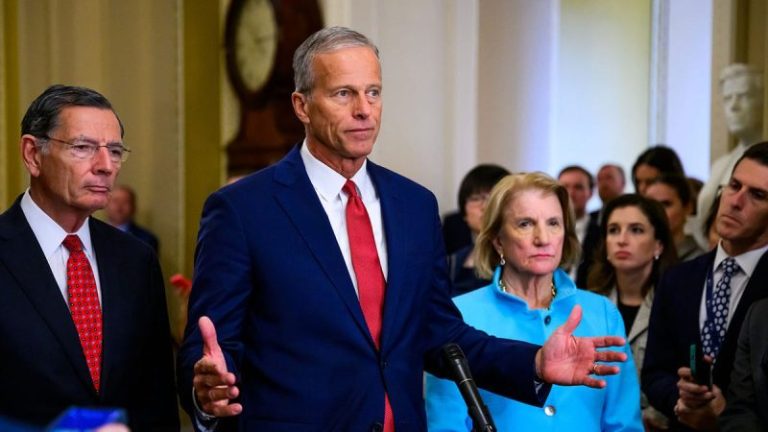
Lawmakers are divided on whether to tone down heated rhetoric after conservative activist Charlie Kirk was shot and killed at Utah Valley University on Wednesday, reigniting debate over the role fiery language plays in America’s surge of political violence.

Political violence has been a steady constant in recent years, including a pair of assassination attempts against President Donald Trump in 2024 and the slaying of a Democratic state lawmaker in Minnesota earlier this year.

Kirk’s death has again reignited the discussion on what role political rhetoric, be it inside the walls of Congress or around the country, has to play in political violence in the U.S.

‘This is on all of us, right?’ Rep. Jared Moskowitz, D-Fla., told Fox News Digital. ‘I mean, you know, everyone’s been ramping up the rhetoric, right?

‘If the left is going to blame the right, and the right is going to blame the left, and we’re going to continue to say ‘It’s your fault,’ and we’re not collectively going to try to bring it down together, then this cycle is just going to continue to go on.’

And Republican leaders are hoping to turn the temperature down in Congress in the wake of Kirk’s death.

‘I’m trying to turn the temperature down around here,’ House Speaker Mike Johnson, R-La., said. ‘I always do that. I’ve been very consistent.’

Senate Majority Whip John Barrasso, R-Wyo., told Fox News Digital he believed reining in hostile or divisive rhetoric is ‘always a conversation with people in leadership.’

‘And it should be in both parties to make sure that you don’t incite this kind of an activity,’ he said.  ‘And you just don’t know somebody, and based on their mental health, what kind of activity they may — what role that may play in this. We still don’t know what’s happened here.’

Some lawmakers fear that the escalation in political violence has America returning to the violent and chaotic time of the 1960s, which saw the assassinations of civil rights leaders Dr. Martin Luther King Jr., Medgar Evers, John F. Kennedy and his brother and presidential hopeful Robert F. Kennedy, among others.

‘The message was love and not violence,’ Rep. Glenn Ivey, D-Md., said of the turmoil in the 1960s. ‘So, you know, returning to a message like that could be good, but it didn’t change the outcome of the assassinations during that era. So, I don’t know that there’s an easy answer.’

Still, emotions were running high on the Hill in the days following the shooting at Utah Valley University, which resulted in a two-day manhunt and the eventual arrest of 22-year-old Tyler Robinson.

When asked how much of a role rhetoric had to play in Kirk’s slaying, Rep. Ralph Norman, R-S.C., said, ‘A lot.’

‘You say you’re a Nazi and a fascist and a threat to democracy, how does that help? If you disagree on issues, that’s one thing, but [you’re] not saying that,’ Norman said. ‘The left is a poster child.’

Sen. Bernie Moreno, R-Ohio, told Fox News Digital he had known Kirk for a decade and noted that the late founder of Turning Point USA ‘stood for the open exchange of ideas.’

‘I think what we have to learn from that is that we need to go back to the principles that built this country, which is that it is actually a positive and healthy thing to debate ideas,’ Moreno said. ‘We don’t have to be mad at each other because we have a different point of view, let alone escalate the violence.’

But Moreno noted that for the last decade, Trump and Republicans like himself have been compared to Adolf Hitler, Nazi sympathizers and fascists, ‘which the Democrats do every single day.’

‘What’s the problem?’ Moreno said. ‘Like, you signed up for politics, you got to be able to have a thick skin. It’s not about that. It’s about that you send a message to crazy people, that says, ‘You’re actually doing a good deed if you kill somebody who would otherwise be a Nazi and a fascist who will end our democracy.”

Trump put the blame, in part, on Democrats in an address to the nation on Wednesday night, where he charged that ‘those on the radical left have compared wonderful Americans like Charlie to Nazis and the world’s worst mass murderers and criminals.’

He repeated that sentiment during an appearance on ‘Fox & Friends’ Friday morning when he was asked about radical elements on the conservative side of the aisle.

‘I’ll tell you something that’s gonna get me in trouble, but I couldn’t care less,’ Trump said. ‘The radicals on the right oftentimes are radical because they don’t want to see crime. The radicals on the left are the problem.’

When asked for his response to Trump’s address, Senate Minority Leader Chuck Schumer, D-N.Y., said, ‘This is a time that all Americans should come together and feel and mourn what happened.

‘Violence affects so many different people, so many different political persuasions,’ he said. ‘It is an infliction on America, and coming together is what we ought to be doing, not pointing fingers to blame.’

This post appeared first on FOX NEWS

Taiwan’s foreign minister says China has ‘clearly become a troublemaker that is maliciously attempting to disrupt the cross-strait status quo and intimidate peaceful countries.’

In exclusive comments to Fox News Digital, Foreign Minister Lin Chia-lung said China’s intensifying ‘authoritarian expansionism not only directly threatens Taiwan’s security and democratic system but also poses significant challenges to peace and stability in the Indo-Pacific region and around the world.’

‘Last June,’ Lin said, ‘[Chinese] aircraft carriers Liaoning and Shandong maneuvered beyond the second island chain, marking China’s first simultaneous, dual-carrier deployment into the Western Pacific. These developments demonstrate that Beijing’s expansionist ambitions extend far beyond Taiwan and pose an increasingly serious threat to the security and stability of the Indo-Pacific region and the world.’

Communist China was founded in 1949 and has not ruled Taiwan for a single day. Officially known as the Republic of China (ROC), Taiwan is currently recognized by eleven small countries, plus the Holy See. Beijing nonetheless rejects the reality of nearly 80 years of separate rule, describing Taiwan as a ‘sacred and inseparable part of China’s territory.’

China’s posture toward independently ruled Taiwan has hardened in recent years as President Xi Jinping removed term limits and consolidated near-total power. While earlier Chinese statements included talk of ‘peaceful unification,’ Beijing now openly threatens to use force. 

In 2024, Xi directed the Chinese military to complete preparations for a Taiwan operation by 2027. Most defense analysts agree that an invasion would be costly, bloody and highly risky for China, Taiwan and any countries that come to Taiwan’s aid, such as the United States or Japan.

Lin echoed those warnings that a conflict in the Taiwan Strait would reverberate worldwide. ‘Peace and stability across the Taiwan Strait are vital to global security and prosperity,’ Lin said, noting that approximately 90% of the world’s most advanced semiconductors are produced in Taiwan and that roughly 50% of global commercial shipping passes through the strait. He added that Taiwan is grateful to the United States and other partners for resisting China’s efforts to unilaterally alter the status quo.

The foreign minister said Taiwan’s central role in geopolitics, technology and supply chains ensures that Washington places a high priority on cross-strait stability. He said U.S. policymakers understand that Taiwan’s semiconductor industry and related supply chains are critical to American economic security.

‘There is clear strategic continuity between the policies of President Trump’s first and second terms,’ said Lin, adding that Taiwan’s government will seek ways to coordinate with the United States ‘through values-based, alliance and economic diplomacy.’

Commenting on Washington’s Indo-Pacific strategy, Lin said, ‘The Trump administration and U.S. Congress continue to demonstrate a steadfast commitment to safeguarding peace and security across the Indo-Pacific region,’ Lin said, ‘which was emphasized in the 2025 National Security Strategy (NSS).’ The foreign minister also noted that ‘the recent NSS released by the Trump administration underscored Taiwan’s geopolitical importance as a link between the Northeast and Southeast Asian theaters.’

Lin said Taiwan is working to rebalance trade with the United States while strengthening strategic cooperation on AI. ‘The Trump administration’s AI Action Plan,’ he said, ‘underscores the importance of innovation, infrastructure and international cooperation for AI development.’ 

He also touted Taiwan’s growing investments in the U.S., including a $165 billion commitment by Taiwan Semiconductor Manufacturing Company (TSMC) in Arizona, and said Taipei is working to make it easier for Taiwanese companies trying to invest in the U.S.. ‘Against the backdrop of U.S.-China strategic competition and the restructuring of global supply chains,’ said Lin, ‘Taiwan’s enterprises understand the remarkable potential of investing in the United States.’

The foreign minister said Taiwan appreciates increasing American military support, highlighting that ‘Last December, the United States approved an arms sales package to Taiwan totaling $11 billion as well as signing the Taiwan Assurance Implementation Act and the National Defense Authorization Act for Fiscal Year 2026. These measures underscore the firm bipartisan support for Taiwan in the U.S. government.’

But he stressed that Taiwan is accelerating its own defense investments. ‘Last year, [Taiwan] President Lai Ching-te announced that Taiwan’s defense budget would increase to over 3% of GDP by 2026 and rise to 5% by 2030,’ he said. While parts of that plan have faced resistance in the opposition-led legislature, both major parties have publicly backed closer security cooperation with the United States and a stronger deterrence posture.

This post appeared first on FOX NEWS

The horror that unfolded at Utah Valley University is still hard to process. A few minutes into a joyous meeting before thousands of people, conservative activist Charlie Kirk was gunned down in cold blood. 

As they tried to make sense of this senseless murder, the broadcast networks roughly suggested that Kirk was shot because he was ‘polarizing.’ ABC correspondent Kyra Phillips explained that Kirk was ‘known for his outspoken views on politics, culture, religion, often taking his messages to colleges and universities, sparking sometimes pretty heated debates on campus.’ 

Reporter Aaron Katersky added, ‘there were people on both sides debating whether he should even be allowed to bring his message, often loyal to the agenda of President Trump, to campus.’ White House reporter Mary Bruce doubled down: ‘It’s no secret that Kirk has said a number of controversial things over the years, in particular about DEI, Jews, women, LGBTQ community, people of color.’ 

As Kirk was bleeding out, ABC News was suggesting this was how ‘pretty heated debates’ ended on campus, and that maybe it wouldn’t have happened if Kirk’s ‘controversial’ appearance hadn’t been ‘allowed.’ 

Leftists surely found Kirk’s conservative arguments ‘polarizing’ ‘divisive,’ and ‘controversial.’ But they seem to lack any introspection inside the liberal bubbles of their ‘news’ networks. Spreading their leftist arguments on DEI or LGBTQ or abortion or Trump — often implying that dissent is unacceptably hateful — somehow never polarizes people and is somehow the opposite of controversy. How can their sweet reason be ‘controversial?’ 

By the time the Wednesday evening newscasts came on, there was an appropriate tone of horror at the shooting. But on Thursday, ‘CBS Mornings’ co-host Nate Burleson told former House Speaker Kevin McCarthy that Kirk’s speech was ‘offensive to specific communities’ and asked if Republicans needed to watch their mouths. ‘Speaking of this tragedy, is this a moment for your party to reflect on political violence? Is it a moment for us to think about the responsibility of our political leaders and their voices and what it does to the masses as they get lost in misinformation or disinformation that turns into and spills into political violence?’ 

McCarthy tried to stay on a unifying message, but Burleson’s question was ‘offensive to specific communities,’ in this case the Trump-voting half of America. Everyone who agreed with Kirk on many issues felt like this could have been the violent fate of any conservative speaker out in public, especially on ‘progressive’ campuses. 

Kirk’s alleged assassin was not a Republican. CBS didn’t wonder if the shooter had been influenced by wild leftist rhetoric from any kind of media or political figure. The rhetoric of the Left is somehow always above scrutiny. 

The morning after the murder, NPR turned to Kyle Spencer, a leftist author of a 2022 book about ‘The Untold Story About America’s Ultraconservative Youth Movement And Its Plot For Power.’ She claimed ‘Charlie really positioned himself as somebody who was supporting Whiteness, White people, White culture and the White culture of this country against what he saw as efforts that were efforts to create equity in the country and to support the disenfranchised.’ 

‘Public’ broadcasting is deeply suffused with the ‘DEI ethic’ that they must ‘center the marginalized,’ and so anyone who opposes the Black left should be marginalized as a far-right racist fringe. But they loved Black Lives Matter and their racial ‘reckoning’ in 2020. 

As news bubbled up that there were political markings on the shooter’s ammunition, on Thursday’s ‘World News Tonight’ on ABC, they took the reports of ‘anti-fascist’ and pro-transgender messaging and dumbed them down. Matt Gutman could only say law-enforcement sources found ‘a high-powered rifle wrapped in a towel, and three unspent cartridges inscribed with words and symbols. Tonight, authorities [are] working on what the markings might mean.’ 

Leftists surely found Kirk’s conservative arguments ‘polarizing’ ‘divisive,’ and ‘controversial.’ But they seem to lack any introspection inside the liberal bubbles of their ‘news’ networks. 

On Friday, authorities revealed one shell casing read: ‘Hey fascist! Catch!’ Another said ‘O bella ciao, bella ciao,’ which refers to a leftist song celebrating the end of Italian fascist dictator Benito Mussolini, but the left still uses it against the current conservative Italian Prime Minister Giorgia Meloni. 

The news networks have spent the last 10 years wildly using terms like ‘fascist’ and ‘authoritarian’ to describe not just President Donald Trump, but Republicans and conservatives in general. By contrast, the radical left ‘Antifa’ movement has largely escaped any critical scrutiny and in recent years, the media have pretended that this is some sort of kooky invention of conspiracy theorists. 

When the network newscasts casually allow Democrats to compare Trump to Adolf Hitler and suggest he and his voters are an ‘existential threat’ to democracy, they are the ones raising national tensions. Not conservatives.

This post appeared first on FOX NEWS

Investor Insight

Silver Dollar Resources is repositioning its flagship La Joya silver-gold-copper project to unlock high-grade underground potential in Mexico’s prolific Durango-Zacatecas silver belt. Strengthened by the all-share sale of its Ranger-Page project to Bunker Hill Mining, the company offers investors leveraged exposure to near-term silver (zinc-lead) production in Idaho’s Silver Valley, while remaining fully funded to advance exploration across its core portfolio through 2026.

Overview

Silver Dollar Resources (CSE:SLV,OTCQX:SLVDF,FSE:4YW) is a precious metals exploration company focused on advancing high-grade silver and gold opportunities in Mexico. The company’s primary asset is the La Joya silver-gold-copper project, located in the southern portion of the Durango-Zacatecas silver belt, one of the world’s most productive silver regions.

La Joya has been the subject of extensive historical exploration, including more than 51,600 meters of drilling across 182 drill holes. This work outlined multiple mineralized zones, including the Main Mineralized Trend, Santo Niño and Coloradito. Silver Dollar is re-evaluating the project with an underground-focused exploration model, supported by structural analysis, underground sampling and reassessment of historic drill core to identify higher-grade targets at depth.

The company also owns the Nora silver-gold project in Durango, Mexico, which hosts the historic Candy mine and epithermal vein system that has returned high-grade surface sampling results. In addition, Silver Dollar holds an equity position in Bunker Hill Mining following the sale of the Ranger-Page project, providing equity exposure to the planned production restart in Idaho’s Silver Valley in the first 2026.

Silver Dollar is supported by an experienced management and technical team with expertise in underground exploration, epithermal systems and project evaluation. With a strong treasury, active exploration programs and multiple upcoming catalysts, the company is positioned to deliver exploration progress through 2026.

Company Highlights

  • 100 percent owned La Joya project, an advanced-stage silver-gold-copper system in Mexico’s Durango-Zacatecas silver belt
  • La Joya was originally proposed as an open pit in 2013 based on US$24 silver, US$1,200 gold and US$3 copper
  • Strategic shift toward evaluating La Joya’s high-grade underground potential supported by new 3D geological modeling, underground sampling, and drill target development
  • Completed sale of the Ranger-Page project to Bunker Hill Mining, providing equity exposure to a near-term US silver producer
  • Fully funded to carry out planned exploration programs through 2026
  • Largest shareholder is mining investor Eric Sprott, with approximately 17.5 percent ownership
  • Multiple exploration catalysts planned, including drilling at La Joya in early 2026

Key Projects

La Joya Silver-Gold-Copper Project

The La Joya project is Silver Dollar’s 100 percent owned flagship asset. It is located within the Durango-Zacatecas silver belt, which hosts numerous past-producing and operating mines, including assets operated by First Majestic Silver, Grupo México, Industrias Peñoles and Pan American Silver.

Historical exploration at La Joya outlined multiple zones of mineralization, including the Main Mineralized Trend, Santo Niño and Coloradito, with mineralization occurring as skarn, replacement and vein-style systems. Previous work was largely oriented toward evaluating open-pit potential.

Silver Dollar is advancing a reinterpretation of La Joya as a potential high-grade underground system. Recent work includes:

  • Underground sampling from historic workings, returning values of up to 2,753 grams per metric ton (g/t) silver equivalent
  • Identification of the Central Dyke zone over approximately 770 meters, including a sample returning 3,513 g/t (~124 oz/ton) silver
  • Discovery of the Brazo zone, located approximately 1 kilometer west of the Main Mineralized Trend, with Phase II drilling returning up to 451 g/t silver over 5 meters
  • The Brazo Zone provides evidence of deeper, high-grade mineralization at La Joya
  • Development of new 3D geological models is in progress incorporating the large database of structural, geochemical and fault-kinematic analysis

Silver Dollar plans to advance a new phase of drilling at La Joya in the first quarter of 2026, with a focus on testing high-grade underground targets identified through recent modeling and sampling.

Nora Silver-Gold Project

The Nora project is located in Durango, Mexico, within the same regional silver trend as several major operations. The property hosts an epithermal vein system known as the Candy vein.

Geological mapping and surface sampling have returned high-grade gold, silver and base metal values, including samples grading up to 29.61 g/t gold and 2,215 g/t silver, along with locally elevated copper, lead and zinc values.

In 2025, Silver Dollar identified the North Canyon zone, located approximately 1.5 kilometers north of the historic Candy mine. Channel sampling returned 162 g/t silver equivalent over 12.48 meters within a broad oxidation zone. Ongoing mapping and trenching are being used to define drill targets for potential drill testing in the first quarter of 2026.

Ranger-Page Project (Sold)

Silver Dollar acquired the Ranger-Page silver-lead-zinc project in Idaho’s Silver Valley in August 2024 and agreed to sell the asset to neighbor Bunker Hill Mining in October 2025 for C$3.5 million, payable by the issuance of 23,333,334 Bunker Hill shares at a deemed price of C$0.15 per share. The sale closed in December and the value of those Bunker Hill shares at the time of closing was approximately $5.8 million.

The Ranger-Page project is geologically contiguous with the Bunker Hill mine system. The transaction provides Silver Dollar with equity exposure to Bunker Hill’s planned production restart in the first half of 2026. Teck Resources owns ~32 percent of Bunker Hill and has life-of-mine off-take agreement for 100 percent of the zinc and lead production. Silver Dollar expects Bunker Hill to receive increased analyst coverage and a higher valuation next year as production commences.

Red Lake Area Properties

Silver Dollar also holds two 100 percent owned gold grassroots exploration properties in Ontario’s Red Lake mining division: Pakwash Lake and Longlegged Lake. Early-stage work has included airborne magnetic surveys, geological mapping and surface sampling, identifying structural and geophysical targets associated with the Pakwash Lake Fault Zone.

While not a primary focus, the properties provide optionality in a well-established gold district with major Kinross Gold discovery drilling on the Dixie Halo property that adjoins both properties to the north.

Management Team

Gregory Lytle — President, CEO and Director

Gregory Lytle has more than 20 years of experience advising mineral exploration companies on corporate strategy, capital markets and communications. Prior to becoming CEO in 2025, Lytle served as a consultant to Silver Dollar and has facilitated more than $100 million in financings for mining-sector clients.

J.J. (Jeff) Smulders — CFO, Corporate Secretary and Director

Jeff Smulders has more than 45 years of experience in accounting, taxation and financial management. He has provided financial consulting services to public and private companies for more than 25 years.

Bruce MacLachlan — Independent Director

Bruce MacLachlan is an exploration professional with more than four decades of experience across grassroots and advanced-stage projects. He has worked with companies including Noranda, Hemlo Gold, Battle Mountain and Noront.

Guillermo Lozano-Chávez — Independent Director

Guillermo Lozano-Chávez is a geologist with more than 40 years of experience in exploration and mine management across the Americas. He previously served as vice president of exploration at First Majestic Silver.

Dale Moore — Exploration Manager and Qualified Person

Dale Moore is an underground-focused geologist with more than a decade of experience in Idaho’s Coeur d’Alene Mining District. His work includes major deposits such as Lucky Friday and the Galena Complex, and he leads technical work at La Joya.

Mark Malfair — Country Manager, Mexico

Mark Malfair is a bilingual geologist with more than 25 years of experience in exploration and project management in Mexico, including previous work at Chesapeake Gold’s Metates project.

This post appeared first on investingnews.com

The gold price declined from its recent all-time highs this week, sinking to nearly US$4,000 per ounce and recording its biggest one-day decline in more than 12 years.

Silver took a similar hit, slipping back below the US$50 per ounce level.

The drops have been attributed to factors like a stronger US dollar and lower US-China tensions, as well as profit taking, potentially from traders who are new to the market.

Many experts have been anticipating a correction for the metals — their latest rise has been quick, and no asset can go straight up forever.

However, there’s also a broad consensus that gold has entered a new phase. For example, Patrick Tuohy of Goldstrom believes gold won’t fall below US$3,000 again.

Here’s what Tuohy said:

‘Is this a short-term phenomenon that’s going to have some some dynamics that are going to turn it on its head and it reverses 50, 60 percent? I don’t believe that is the case. I think within our group … the consensus is that it’s unlikely that we’ll see gold below US$3,000 again in our lifetimes. So let’s say that that’s the floor. That’s a fairly significant move from where we were two years ago. So that’s comfortable.’

Next week, all eyes will be on the US Federal Reserve, which is set to meet from October 28 to 29. CME Group’s (NASDAQ:CME) FedWatch tool shows strong expectations for another interest rate cut.

While the release of US government data has been affected by the ongoing shutdown, September consumer price index numbers were released on Friday (October 24).

The report was the first major piece of federal economic data to come out since the shutdown began, and it has confirmed expectations of another rate reduction.

Bullet briefing — What’s next for gold and silver?

Gold and silver prices perked up to end the week, rising to the US$4,100 and US$48.60 levels, respectively. But with the metals still off from their all-time highs, investors are wondering what’s next.

Opinions vary, but I’ve pulled together a couple of quotes that illustrate what I’m hearing.

First is Ed Steer of Ed Steer’s Gold and Silver Digest. He’s well known for his commentary on the precious metals space, and he weighed in on what’s next for silver, saying that today really is different compared to the other times silver rose to the US$50 level.

Here’s how he explained it:

‘It’s irrelevant what the price is today. You look at the big picture, and look at the fact that the BRICS+ have become an absolutely awesome juggernaut, and it’s absolutely unstoppable. And as we shift from the west to the east, as this continues economically, financially, it’s impossible to say where this is going to end up.

‘But what we’re living right now is we’re living through a major, major shift in financial power, from one area of the world to another, and we’re going to be — they’re going to be writing about this 1,000 years from now. So we’re living through history.’

Next we have Don Durrett of GoldStockData.com. This interview is from the week before last, so it’s a little older, but definitely still relevant. I’ve kept thinking about a comment Durrett made about one way we can tell the gold cycle is still early. This is what he said:

The thing that really reveals how early we are is the stock market is only 2 percent from an all-time high. What in the world is the stock market doing at an all-time high and gold at an all-time high? Those are antagonistic. Gold is supposed to be a hedge against uncertainty. The stock market is supposed to show basically confidence.

And so if you have an all-time high, people should be confident. Everything’s fine. We don’t need this. But people are not confident. People have said this is the most scary bull market ever. Nobody really believes in it, right? … So the question is, who’s telling the truth? Is the stock market telling the truth at an all time high, or is it gold is telling the truth? Well, it’s pretty obvious that gold’s the one telling the truth.

In It To Win It interview

Finally, if you’d like to hear more from me, I was recently interviewed by Steve Barton of In It To Win It.

Securities Disclosure: I, Charlotte McLeod, hold no direct investment interest in any company mentioned in this article.

This post appeared first on investingnews.com
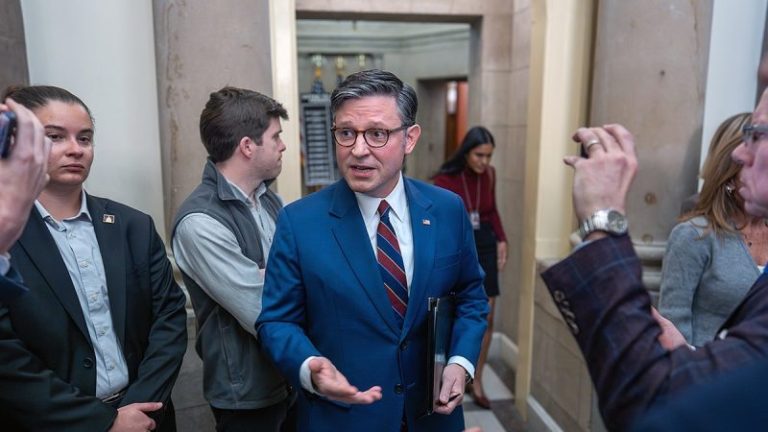
Last-minute closed-door talks between Senate Republicans and Democrats failed to prevent a ‘nuclear option’ in the upper chamber, as frustrations on both sides killed a deal to move ahead with President Donald Trump’s nominees.  

Lawmakers were inching closer to a deal that would have allowed sub-Cabinet-level nominees to be voted on in bunches, but neither side could reach a final agreement.

Senate Republicans argued that a majority of their counterparts agreed with the new proposal, but that Senate Minority Leader Chuck Schumer, D-N.Y., was still standing in the way.

‘I think the majority of Democrats are on board with it,’ Sen. James Lankford, R-Okla., told Fox News Digital. ‘And Schumer is blocking it from actually having consent to come to the floor.’

The failed deal was a modified version of a proposal first unveiled by Senate Democrats in 2023, and would have allowed 15 nominees to be batched together en bloc and voted on while still requiring two hours of debate for the group.

But when Lankford brought the proposal to the floor for consideration, Sen. Brian Schatz, D-Hawaii, blocked it.

Schatz argued that Senate Republicans were trying to rush through the negotiating process ahead of their plan to leave Washington for the weekend.

‘What they’re asking for is unanimity, and we don’t have it,’ he said. ‘And so, if you’re interested in enacting this on a bipartisan basis, the process for doing that — It is available to you. But again, it’s more a matter of running out of patience than running out of time.’

Senate Majority Leader John Thune, R-S.D., fired back ‘how much time is enough?’

‘Give me a break,’ he said. ‘Two years. Not long enough. How about eight months? Eight months of this.’

With the prospects of bipartisan deal to move nominees through Democrats’ blockade, Senate Republicans are expected to continue down the path of the ‘nuclear option.’

That means that their initial proposal, which would allow for an unlimited number of sub-cabinet level nominees to be voted on en bloc with 30 hours of debate tacked on, is expected to pass with a simple majority, and effectively change the confirmation process in the Senate.

‘We are achingly close to doing this like adults,’ Schatz said.

This post appeared first on FOX NEWS